

Party speakers have evolved dramatically over the past few years, transforming from simple Bluetooth boxes into full entertainment systems packed with features that would have seemed futuristic just a decade ago. Today's party speakers don't just play music—they create entire audiovisual experiences with synchronized lighting, karaoke capabilities, and wireless connectivity that rivals professional DJ equipment.
The challenge for buyers is navigating the massive range of options, from budget-friendly portable units to premium powerhouses that cost as much as a decent used car. Two speakers that perfectly illustrate this spectrum are the Philips TAX5206 and the JBL PartyBox Ultimate. At the time of writing, these products sit at opposite ends of the party speaker market, with the Philips positioned as an affordable all-in-one solution while the JBL commands premium pricing for professional-grade performance.
Before diving into specifics, it's worth understanding what separates party speakers from regular home audio equipment. Party speakers prioritize volume output (measured in watts RMS—the continuous power a speaker can handle), bass response (low-frequency reproduction that you feel as much as hear), and features that enhance social experiences like lighting effects and microphone inputs.
The most critical performance metric is sound pressure level (SPL), measured in decibels. A good party speaker should hit at least 100 dB to fill a large room, while premium models can exceed 115 dB—loud enough to satisfy a block party. Equally important is maintaining audio clarity at high volumes, as many speakers introduce distortion when pushed to their limits.
Battery life becomes crucial for outdoor use, while connectivity options determine how easily guests can queue up their favorite songs. Modern party speakers also include features like True Wireless Stereo (TWS), which allows two speakers to work together for stereo sound, and app control for customizing sound profiles and lighting effects.
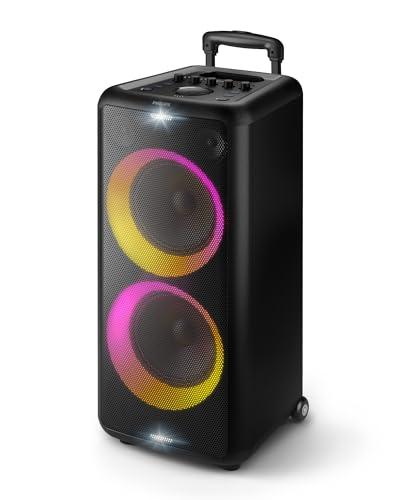
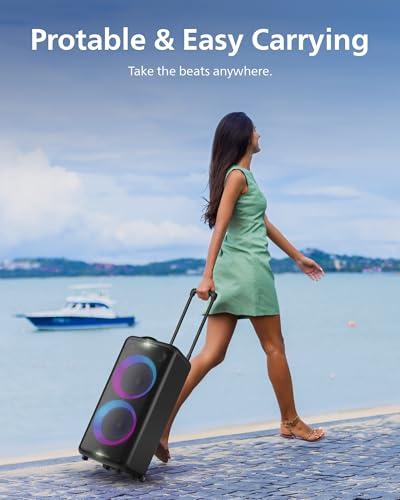
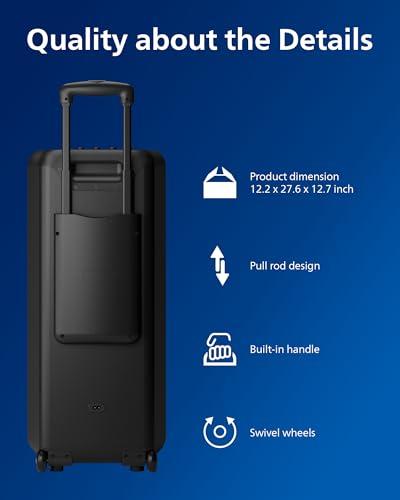
The Philips TAX5206, released in recent years as part of Philips' push into the portable audio market, represents the "Swiss Army knife" approach to party speakers. It packs karaoke features, party lighting, and genuine portability into a package that won't break the bank. The speaker features a trolley design with wheels and a telescoping handle, making it look more like carry-on luggage than traditional audio equipment.
On the opposite end sits the JBL PartyBox Ultimate, launched in 2024 as JBL's flagship party speaker. This beast weighs nearly 90 pounds and represents JBL's answer to the question: "What if we built a party speaker with absolutely no compromises on audio performance?" The Ultimate incorporates cutting-edge features like Dolby Atmos support and Wi-Fi 6 connectivity—technologies that didn't exist in party speakers just a few years ago.
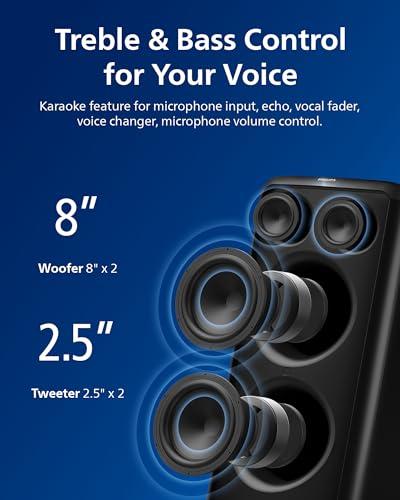
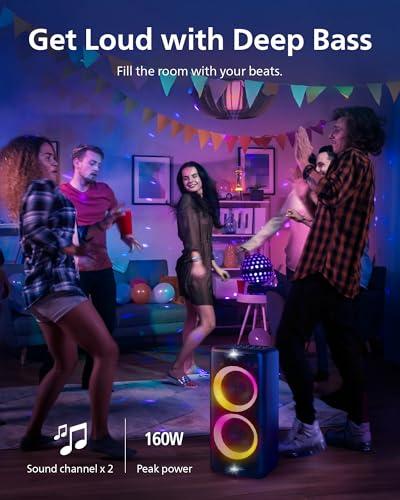
The performance gap between these speakers is immediately apparent in their power specifications. The Philips TAX5206 delivers 80 watts RMS with a maximum output of 160 watts, using a traditional 2-way driver configuration with dual 8-inch woofers and 2.5-inch tweeters. This setup handles frequency response from 40Hz to 20kHz, covering the full range of human hearing.
In contrast, the JBL PartyBox Ultimate pumps out a massive 1100 watts RMS through a sophisticated 3-way driver system. Its dual 9-inch woofers, 4.5-inch midrange drivers, and 2.75-inch tweeters create a more detailed soundstage with better separation between low, mid, and high frequencies. The frequency response extends down to 30Hz, reaching deeper into sub-bass territory where you feel sound as much as hear it.
Our research into professional reviews and user feedback reveals a clear performance hierarchy. The Philips TAX5206 receives mixed marks for bass performance, with reviewers describing it as adequate but not exceptional. One detailed technical review rated its bass reproduction at 5 out of 10, noting that even with bass settings maximized, the low-end response remains "mediocre at best." However, the same review praised its maximum volume capability, giving it a perfect score for loudness relative to its size and price category.
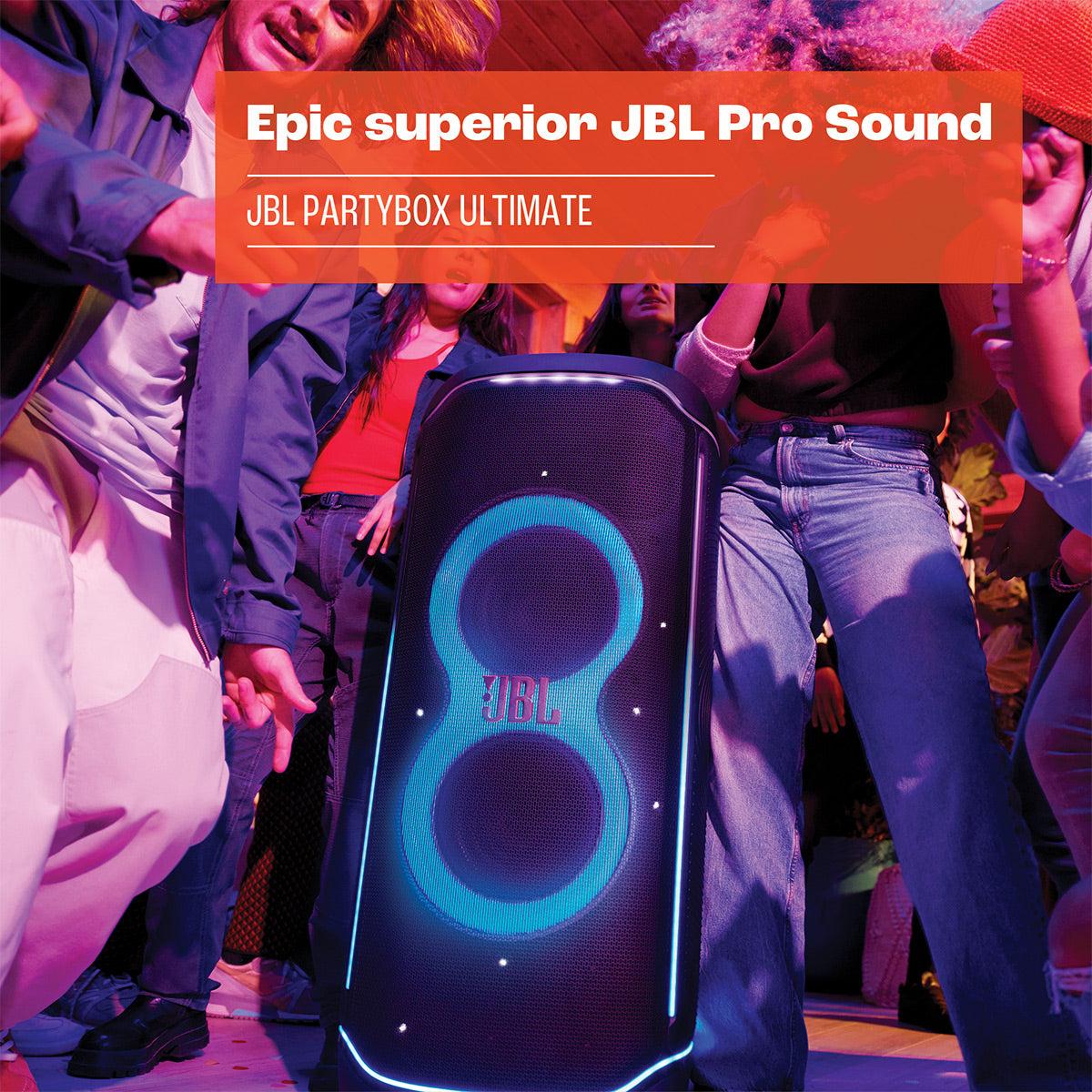
The JBL PartyBox Ultimate, meanwhile, consistently earns praise for what users describe as "thunderous bass" and "physically felt" low-frequency impact. Professional testing measured it at 109.4 dB output, with users reporting that it maintains clarity even when pushed to maximum volume. The bass performance is reportedly 20% stronger than JBL's previous flagship PartyBox 1000, demonstrating tangible improvements in low-frequency reproduction.
Beyond raw power numbers, sound quality becomes the real differentiator. The Philips TAX5206 uses basic audio processing with manual treble and bass controls, similar to stereo systems from the 1990s. While this keeps costs down and operation simple, it means users must manually adjust settings for different music genres and room acoustics.
The JBL PartyBox Ultimate incorporates sophisticated digital signal processing (DSP) that would have been found only in professional studio equipment a decade ago. Its self-tuning acoustic calibration uses built-in microphones to analyze room acoustics and automatically adjust the frequency response for optimal performance. This technology, borrowed from high-end home theater systems, ensures consistent sound quality whether the speaker is placed indoors, outdoors, or in acoustically challenging environments.
The JBL's Dolby Atmos support over Wi-Fi adds another dimension—literally. Dolby Atmos creates a three-dimensional soundfield that places audio elements in specific spatial locations around the listener. While this technology has been standard in movie theaters and premium home theaters for years, the PartyBox Ultimate is among the first party speakers to offer this immersive audio experience.
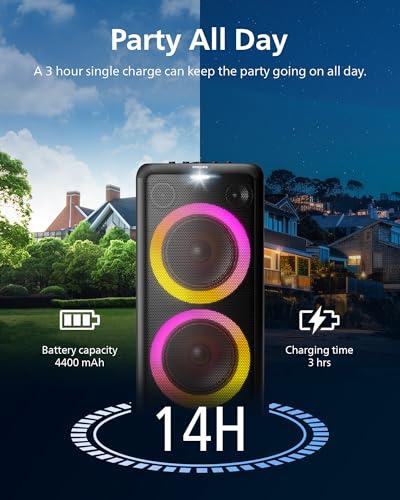
Here's where the fundamental design philosophies become clear. The Philips TAX5206 weighs just 23 pounds and runs on a built-in 4400mAh lithium-ion battery for up to 14 hours. This genuine portability means you can take it anywhere—beach parties, camping trips, or backyard gatherings—without worrying about power outlets.
The speaker also functions as a power bank, providing 5V/1A output to charge phones or tablets. This dual-purpose design reflects modern consumer expectations that devices should serve multiple functions rather than single purposes.
The JBL PartyBox Ultimate, at 87 pounds, requires careful consideration of placement. Despite having wheels and a handle, it's designed more for semi-permanent installation than casual transport. More critically, it lacks a battery entirely, requiring constant AC power connection. This design choice prioritizes maximum performance over portability—every ounce of weight goes toward larger drivers and more powerful amplification rather than battery cells.
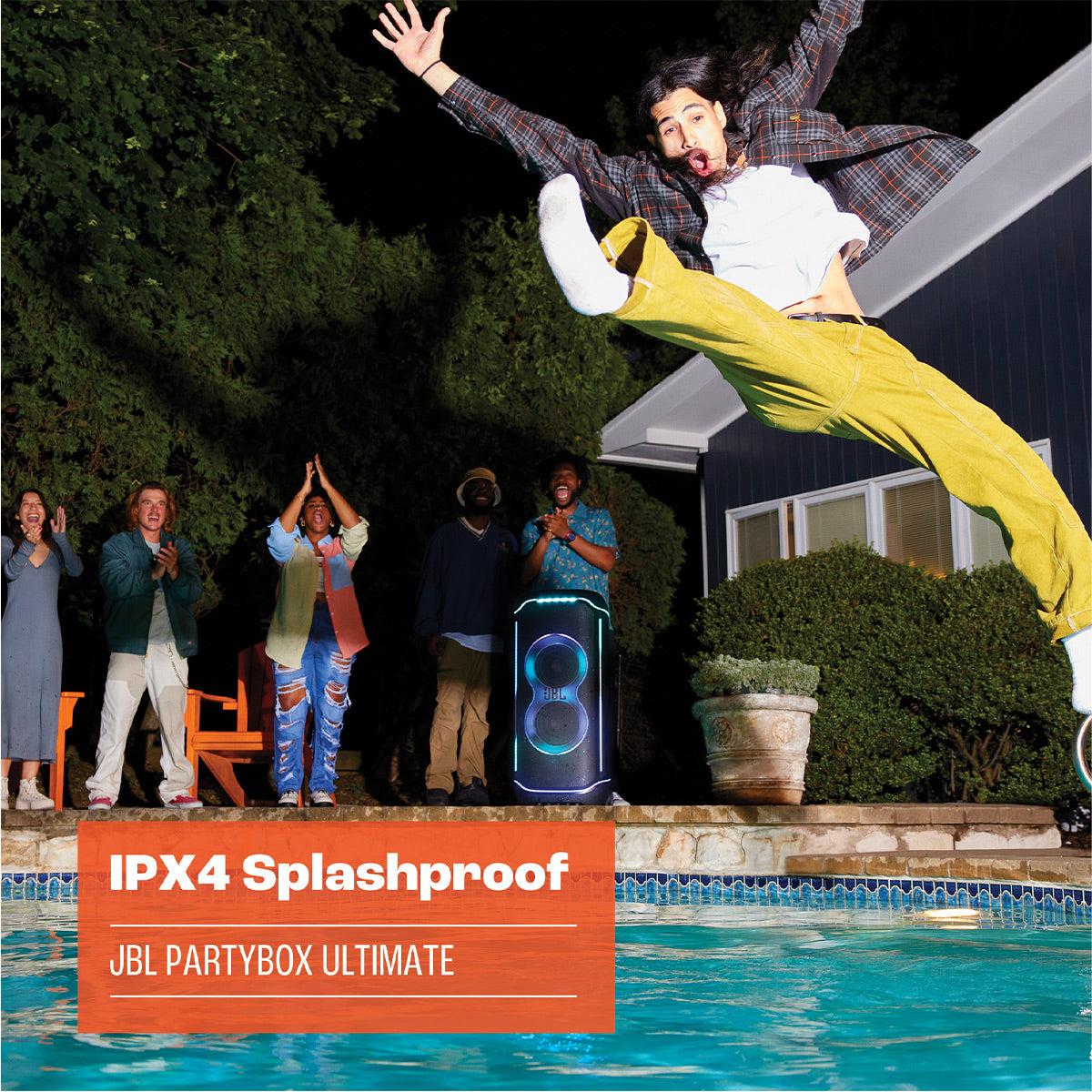
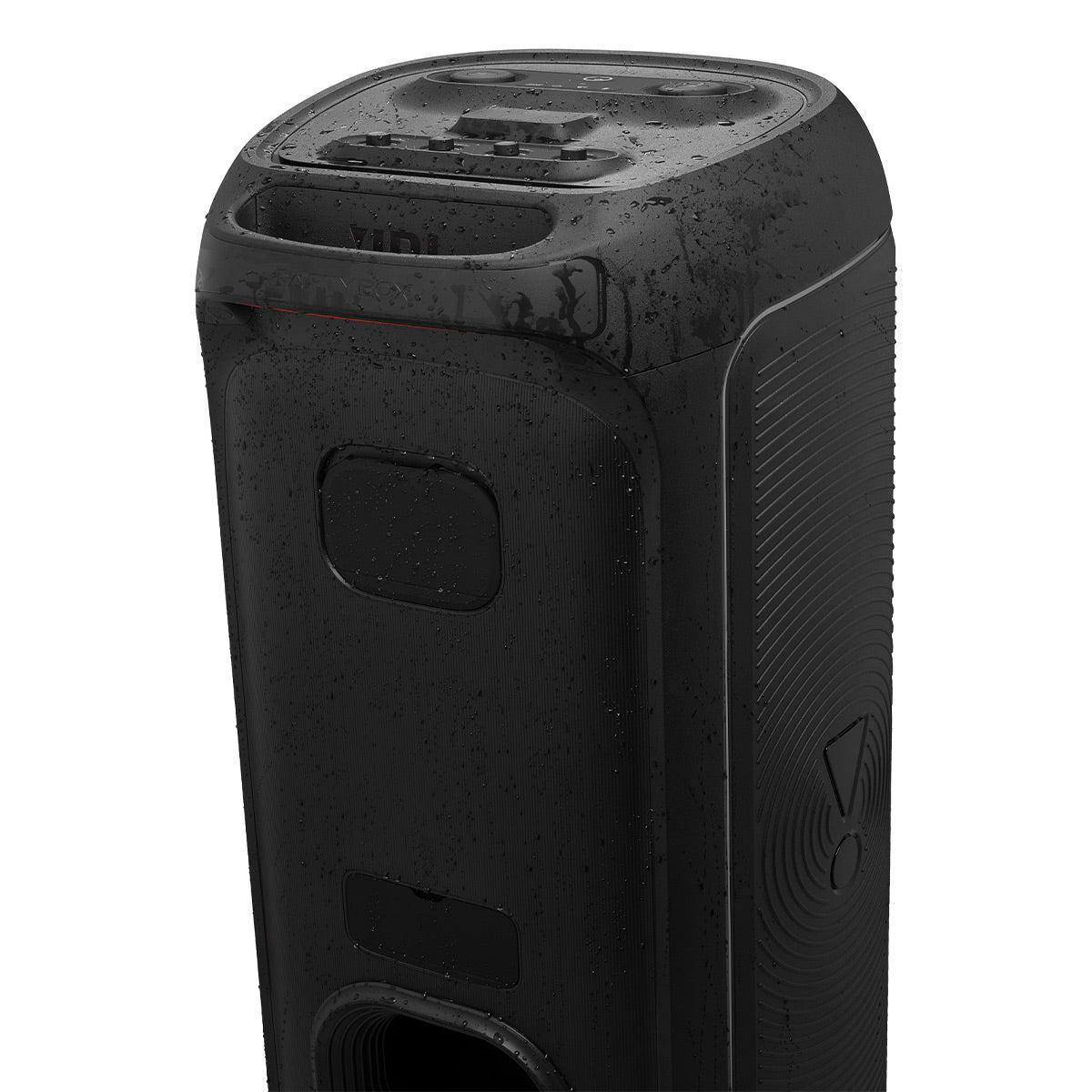
The JBL does include IPX4 splash protection, meaning it can handle poolside placement and light rain, but you'll need extension cords and weatherproof outlets for outdoor use.
Modern party speakers succeed or fail based on their interactive features, and both speakers take different approaches to entertainment enhancement.
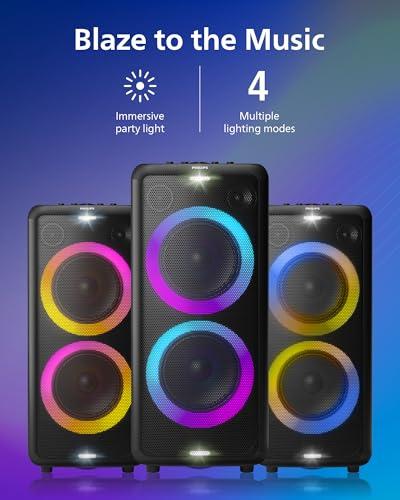
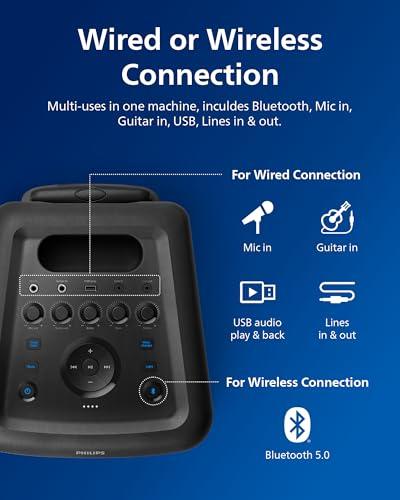
The Philips TAX5206 focuses heavily on karaoke functionality with dedicated 6.3mm microphone and guitar inputs, each with independent volume controls. The karaoke features include echo control, vocal fader, and voice changer effects that can transform performances into entertainment spectacles. A ring of LED lights synchronized to the music provides basic but effective visual enhancement with four selectable modes plus strobe effects.
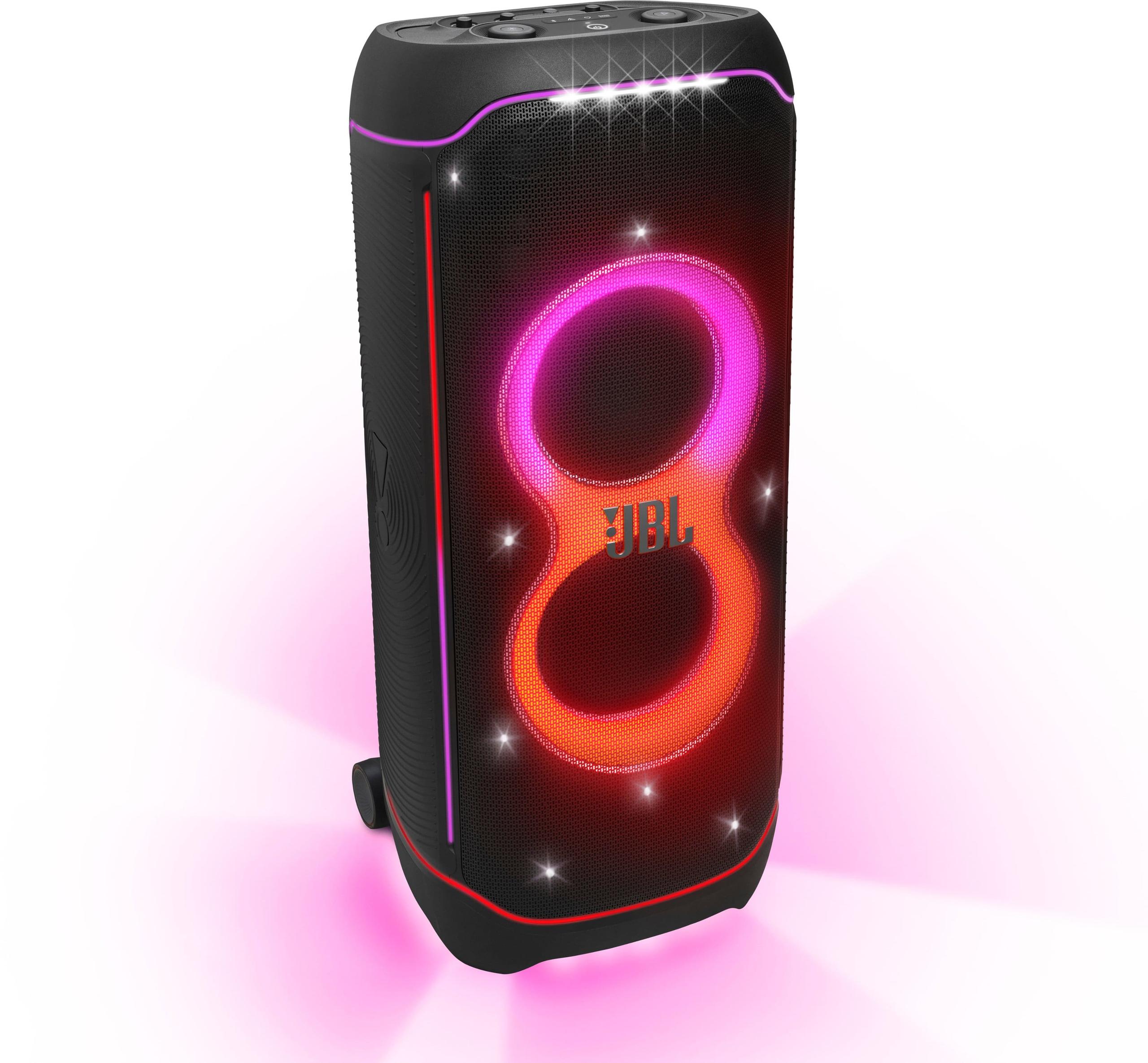
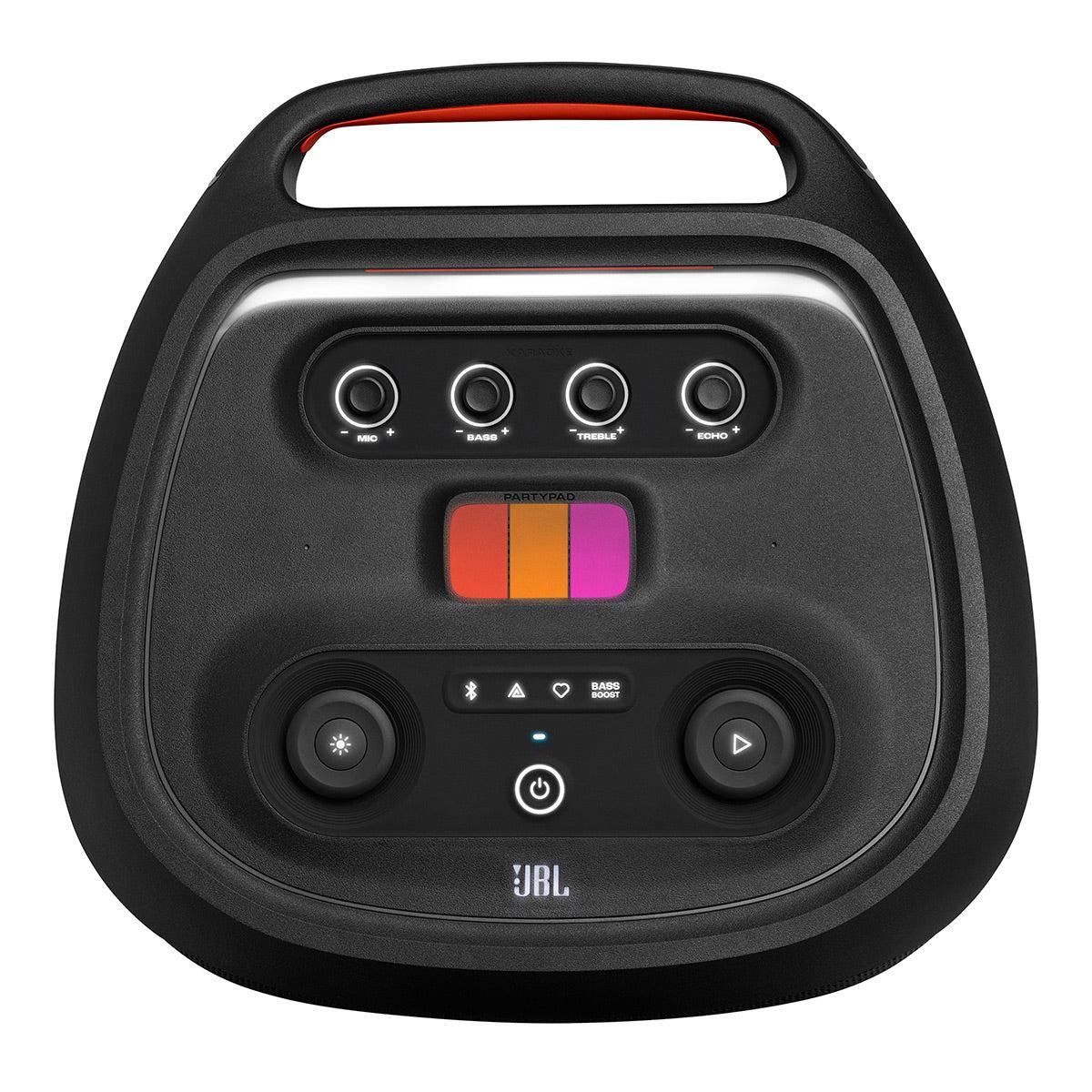
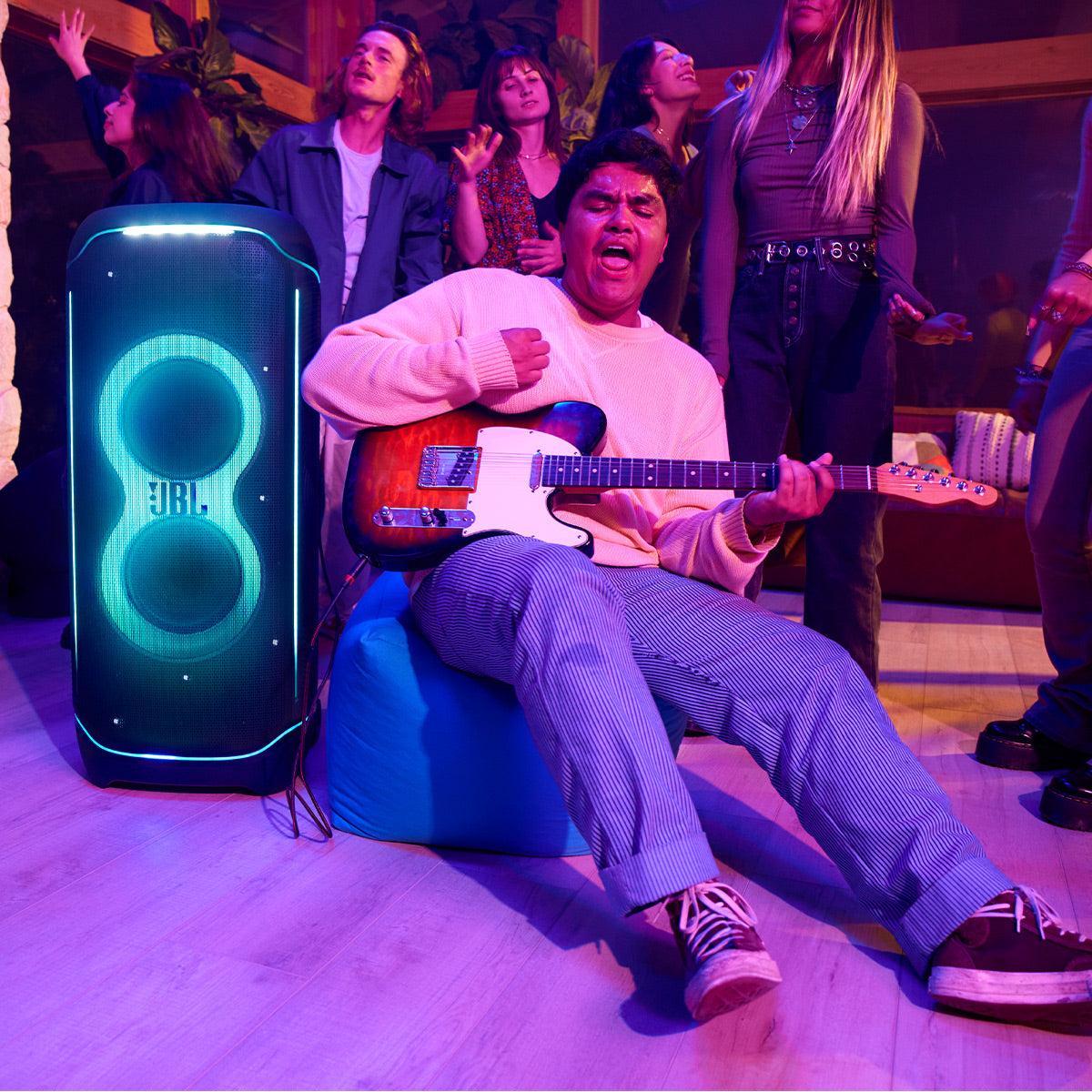
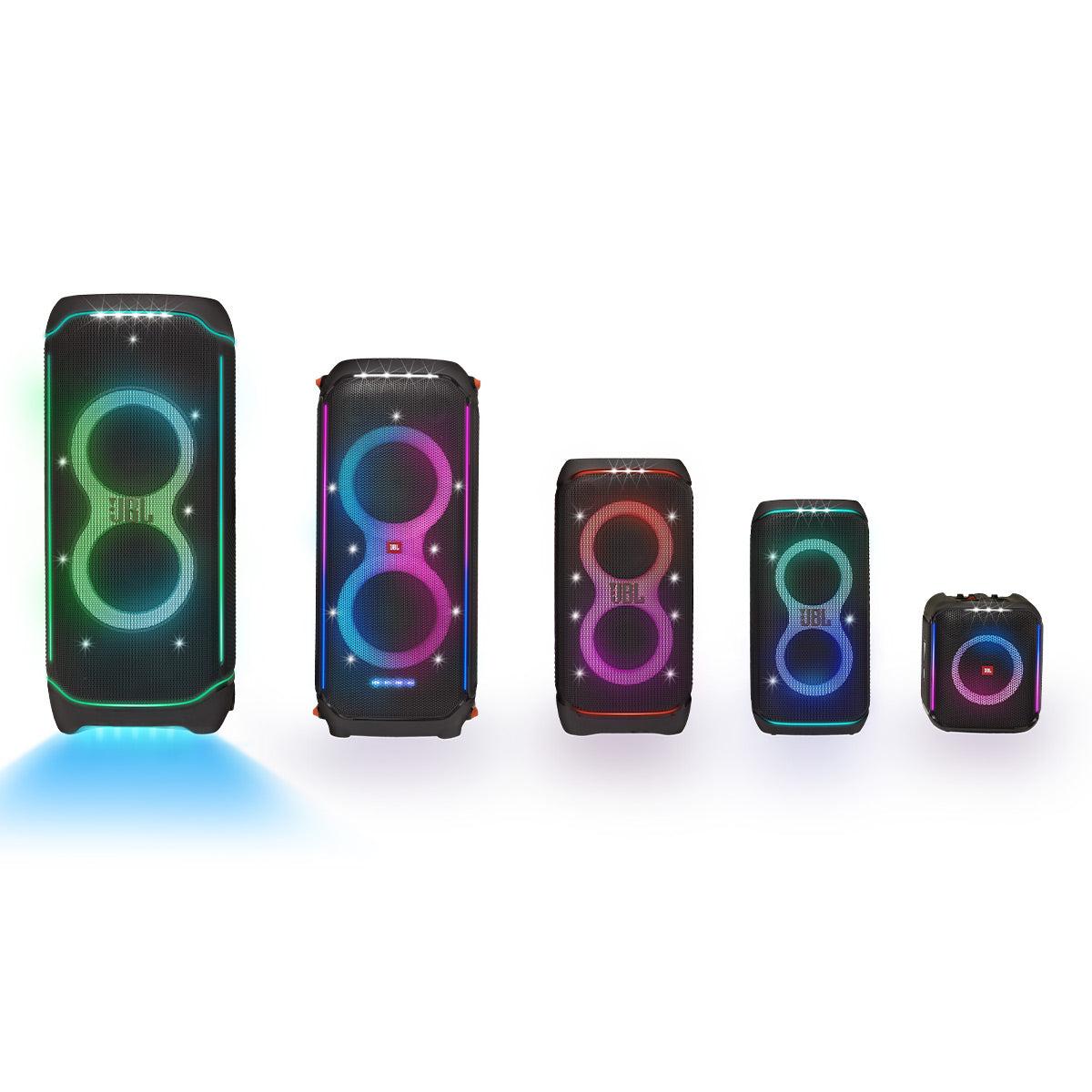
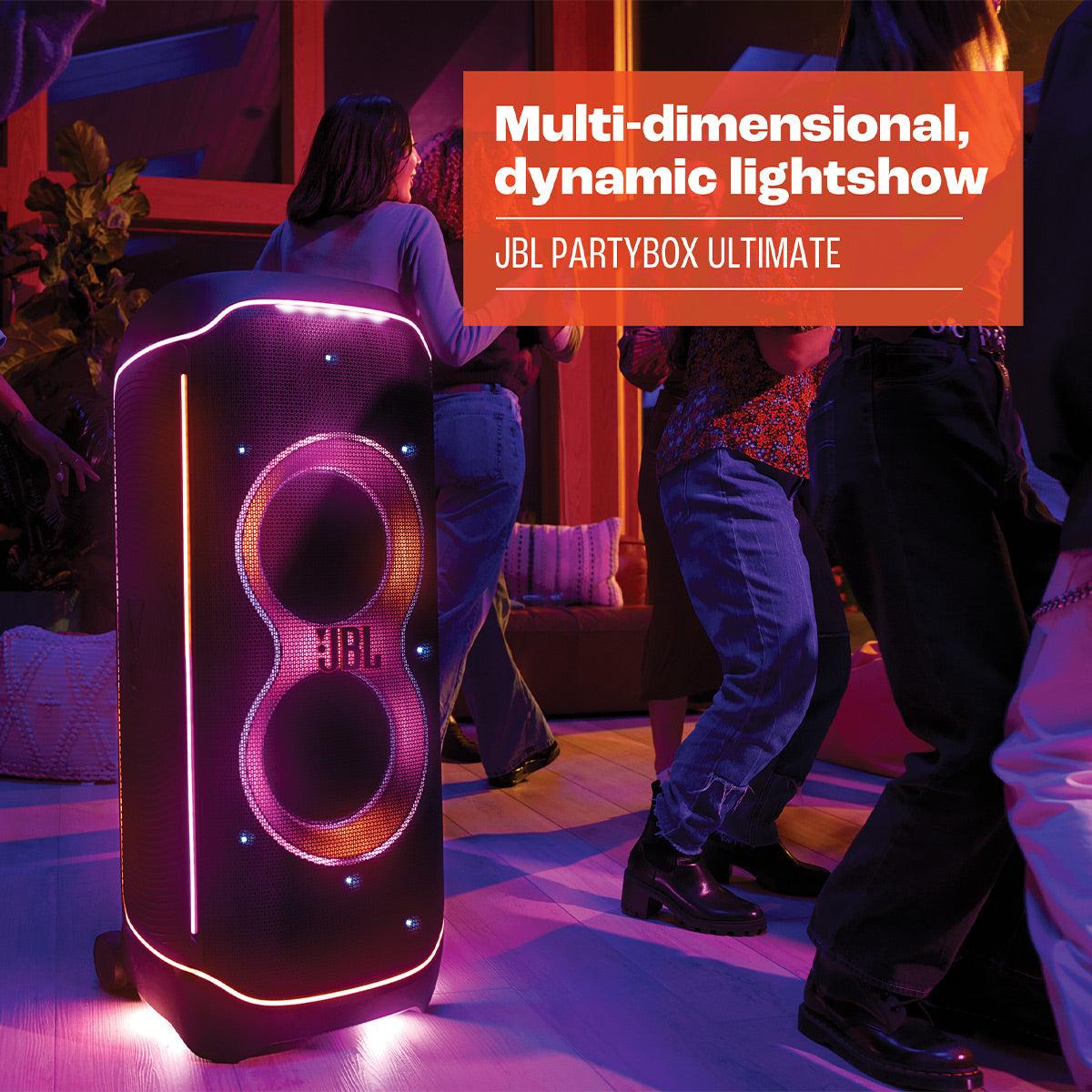
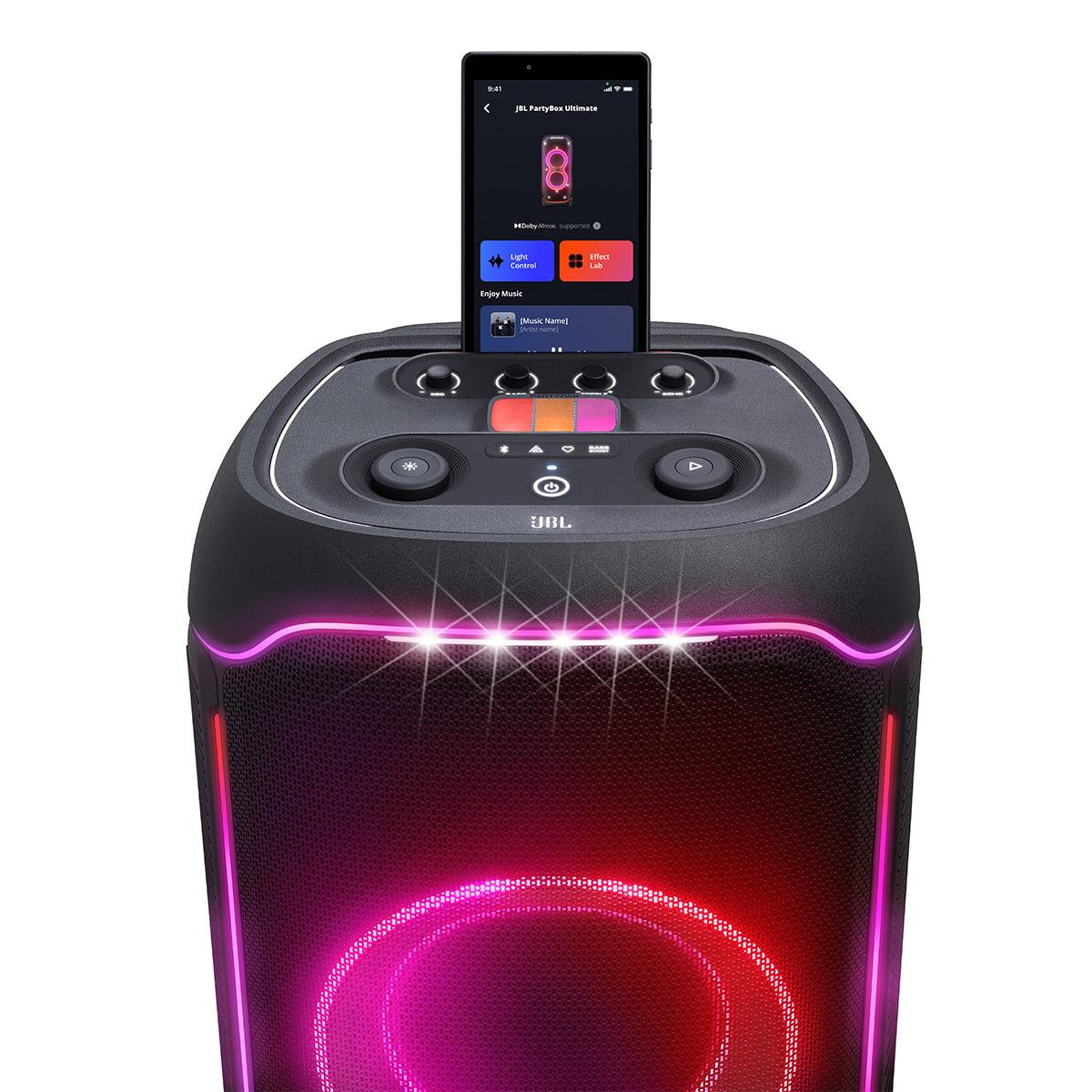
The JBL PartyBox Ultimate elevates party features to professional levels. Its multi-dimensional lighting system includes starry night effects, light trails, strobes, and ground projection that creates an immersive visual experience. The JBL PartyPad—an interactive DJ control surface on the speaker's top panel—lets users trigger sound effects, filters, and audio manipulations in real-time, essentially turning anyone into a DJ.
Both speakers handle karaoke well, but the JBL's professional-grade inputs and processing provide noticeably cleaner vocal reproduction and more sophisticated echo effects.
The connectivity differences highlight how rapidly this technology has evolved. The Philips TAX5206 uses Bluetooth 5.0 with a 10-meter range, plus USB playback supporting MP3, WAV, WMA, and FLAC files. It includes 3.5mm auxiliary input and output for daisy-chaining multiple speakers, though this requires physical cables.
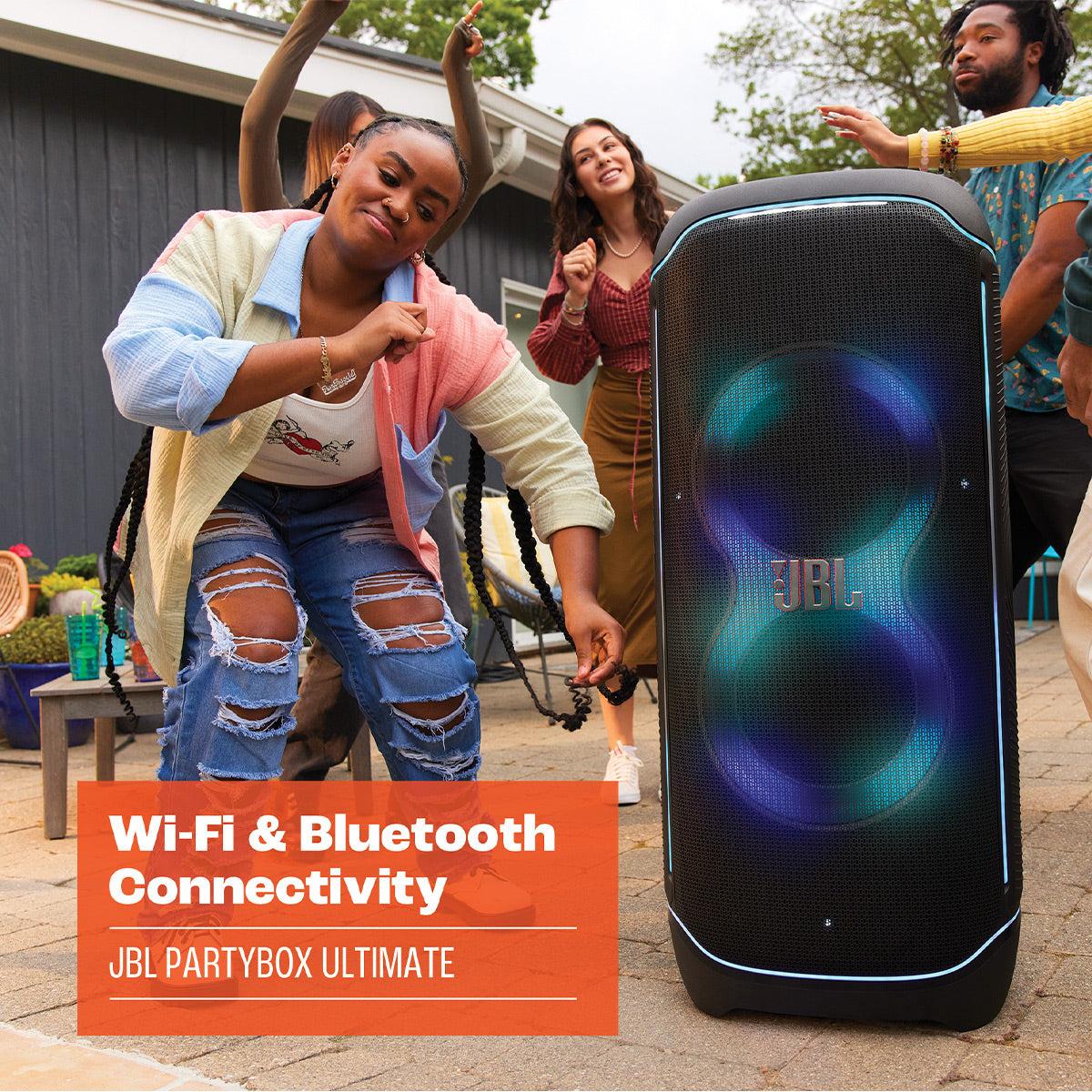
The JBL PartyBox Ultimate represents the current state of wireless audio technology. Wi-Fi 6 (802.11ax) provides high-bandwidth streaming that doesn't compete with Bluetooth for wireless spectrum, enabling features like Dolby Atmos that require more data than Bluetooth can handle. AirPlay and Chromecast built-in support direct streaming from smartphones and tablets without requiring dedicated apps.
The JBL's True Wireless Stereo capability allows multiple PartyBox speakers to work together wirelessly, creating distributed audio systems for large venues. The JBL One app provides comprehensive control over EQ settings, lighting customization, and multi-speaker management from smartphones.
While neither speaker is designed primarily for home theater use, their different approaches offer insights for users considering dual-purpose applications.
The Philips TAX5206 lacks the audio inputs typically needed for TV connection, limiting its home theater potential. However, its compact size and battery operation make it suitable for outdoor movie nights or basement rec room entertainment where traditional surround sound systems aren't practical.
The JBL PartyBox Ultimate offers more home theater potential through its advanced connectivity options. AirPlay and Chromecast support enable wireless audio from streaming devices, while the 3.5mm output can connect to TV headphone jacks. The Dolby Atmos capability over Wi-Fi could theoretically provide immersive movie audio, though the speaker's bass-heavy tuning favors music over dialogue clarity.
For dedicated home theater use, both speakers would serve better as supplements to traditional surround sound systems rather than replacements.
At the time of writing, these speakers occupy vastly different price points, with the JBL costing roughly six times more than the Philips. This price difference reflects fundamental differences in target markets and performance expectations.
The Philips TAX5206 delivers exceptional value for users prioritizing versatility and affordability. It includes every feature most people associate with party speakers—loud audio, karaoke capability, party lighting, and true portability—at a price point accessible to casual entertainers. The 14-hour battery life adds significant utility that premium speakers often sacrifice for maximum performance.
The JBL PartyBox Ultimate justifies its premium pricing through professional-grade performance and features that weren't available at any price just a few years ago. Its power output and sound quality can replace professional DJ equipment costing thousands of dollars, while features like multi-speaker wireless linking and app-based customization provide scalability for serious entertainers.
The decision between these speakers ultimately depends on your specific needs and circumstances rather than simply which is "better."
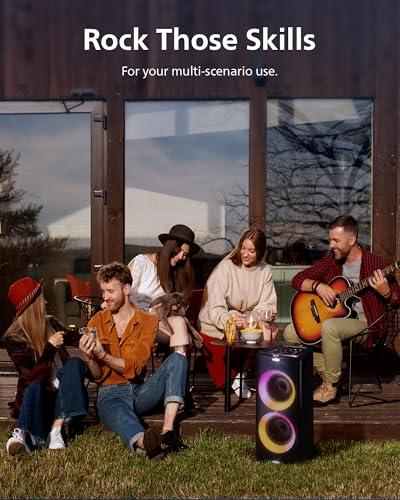
Choose the Philips TAX5206 if you value flexibility and portability above maximum performance. It's ideal for users who host small to medium gatherings (10-50 people), need battery operation for outdoor events, or want a complete party solution without complexity or high costs. The speaker excels at backyard barbecues, beach parties, camping trips, and karaoke nights where its voice-changing effects and portable design provide maximum entertainment value.
The JBL PartyBox Ultimate makes sense for serious entertainers who regularly host large gatherings, have dedicated entertainment spaces, or need professional-grade audio performance. If you're filling spaces equivalent to large backyards, community centers, or outdoor festivals, the JBL's massive power output and sophisticated features justify the investment. It's also appropriate for users planning to link multiple speakers for distributed audio systems or those who prioritize cutting-edge features like Dolby Atmos and advanced app control.
These speakers represent different points in party speaker evolution. The Philips TAX5206 embodies the mature, refined approach to portable party audio—proven technologies packaged efficiently for maximum value. The JBL PartyBox Ultimate showcases where the industry is heading, incorporating technologies like Wi-Fi 6, Dolby Atmos, and advanced DSP that will likely become standard in future generations.
Both approaches have merit. The Philips offers a complete, practical solution for most users' needs, while the JBL pushes the boundaries of what's possible in consumer party audio. Your choice should align with both your current needs and how you expect to use party speakers in the coming years.
The party speaker market continues evolving rapidly, with manufacturers adding features like wireless charging pads, advanced voice assistants, and even more sophisticated lighting effects. However, the fundamental trade-offs between portability and performance, features and simplicity, and cost and capability remain constant considerations for any buyer navigating this exciting but complex category.
| Philips TAX5206 | JBL PartyBox Ultimate |
|---|---|
| Power Output - Determines maximum volume and room-filling capability | |
| 80W RMS / 160W Max (good for small-medium gatherings) | 1100W RMS (fills spaces equivalent to two basketball courts) |
| Driver Configuration - Affects sound quality and frequency range | |
| 2-way: 2x 8" woofers, 2x 2.5" tweeters | 3-way: 2x 9" woofers, 2x 4.5" midrange, 2x 2.75" tweeters |
| Portability - Critical for outdoor events and transport | |
| 23 lbs with wheels, telescoping handle, 14-hour battery | 87 lbs with wheels, requires AC power (not truly portable) |
| Battery Life - Enables outdoor use without power outlets | |
| 14 hours built-in battery + power bank function | No battery (must stay plugged in) |
| Connectivity - Determines streaming quality and device compatibility | |
| Bluetooth 5.0, USB, 3.5mm aux in/out | Wi-Fi 6, Bluetooth 5.3, AirPlay, Chromecast, multi-speaker linking |
| Audio Processing - Impacts sound optimization and user convenience | |
| Manual bass/treble controls only | Dolby Atmos, self-tuning room calibration, app-based EQ |
| Karaoke Features - Important for party entertainment and vocals | |
| Dual mic/guitar inputs, echo control, voice changer | Dual mic inputs, guitar input, professional karaoke EQ, DJ effects pad |
| Light Show - Creates party atmosphere and visual impact | |
| LED ring with 4 modes + strobe (basic but effective) | Multi-dimensional RGB: starry effects, light trails, ground projection |
| Multi-Speaker Support - Allows system expansion for larger venues | |
| Wired daisy-chain via 3.5mm cable | Wireless True Stereo pairing and multi-speaker linking via app |
| Weather Protection - Determines outdoor durability | |
| Basic splash resistance | IPX4 splashproof rating (handles poolside use) |
| Target User - Who each speaker serves best | |
| Budget-conscious users, small gatherings, portability priority | Large venues, professional use, maximum performance priority |
The JBL PartyBox Ultimate is significantly better for large outdoor parties due to its massive 1100W RMS power output that can fill spaces equivalent to two basketball courts. The Philips TAX5206 with 80W RMS is better suited for small to medium gatherings of 10-50 people.
Only the Philips TAX5206 offers battery operation with up to 14 hours of playtime from its built-in 4400mAh battery. The JBL PartyBox Ultimate requires constant AC power connection and has no battery, making it unsuitable for locations without electrical outlets.
The JBL PartyBox Ultimate delivers significantly superior bass with dual 9" woofers that extend down to 30Hz and provide physically felt low-frequency impact. The Philips TAX5206 has adequate bass from its 8" woofers but reviewers consistently rate it as mediocre compared to premium alternatives.
Both speakers excel at karaoke but in different ways. The Philips TAX5206 includes dedicated karaoke features like voice changer effects and vocal fader controls. The JBL PartyBox Ultimate offers professional-grade microphone inputs and superior vocal clarity, plus DJ effects through its PartyPad control surface.
The Philips TAX5206 is much more portable at 23 pounds with a trolley design, wheels, and telescoping handle. The JBL PartyBox Ultimate weighs 87 pounds and requires two people to move despite having wheels, making it better suited for semi-permanent placement.
The JBL PartyBox Ultimate offers advanced connectivity with Wi-Fi 6, Bluetooth 5.3, AirPlay, and Chromecast support, plus wireless multi-speaker pairing. The Philips TAX5206 uses standard Bluetooth 5.0 connectivity and requires physical cables for multi-speaker setups.
The Philips TAX5206 offers exceptional value for budget-conscious buyers, including karaoke features, lighting, and true portability at an affordable price point. The JBL PartyBox Ultimate justifies its premium pricing through professional-grade performance and advanced features for serious entertainers.
Neither speaker is optimized for home theater, but the JBL PartyBox Ultimate offers better potential through AirPlay/Chromecast connectivity and Dolby Atmos support. Both are bass-heavy and tuned for music rather than dialogue clarity, making them better as supplements to traditional surround sound systems.
The JBL PartyBox Ultimate features a sophisticated multi-dimensional lighting system with starry effects, light trails, strobes, and ground projection that far surpasses the Philips TAX5206's basic LED ring with four modes. However, the Philips offers adequate lighting for most casual party needs.
The JBL PartyBox Ultimate includes comprehensive app control through JBL One for EQ settings, lighting customization, and multi-speaker management. The Philips TAX5206 relies on physical controls and doesn't offer smartphone app integration.
The Philips TAX5206 is ideal for beginners due to its simple operation, affordable price, genuine portability, and inclusion of all essential party features without complexity. The JBL PartyBox Ultimate is better suited for experienced users who need maximum performance and advanced features.
The JBL PartyBox Ultimate can reach over 109 dB while maintaining clarity even at maximum volume, making it suitable for large venues and outdoor events. The Philips TAX5206 provides good loudness for its size category but may introduce distortion when pushed to extreme volumes, performing best at moderate to high levels.
We've done our best to create useful and informative comparisons to help you decide what product to buy. Our research uses advanced automated methods to create this comparison and perfection is not possible - please contact us for corrections or questions. These are the sites we've researched in the creation of this article: youtube.com - documents.philips.com - cutetechgadgets.com - odpbusiness.com - usa.philips.com - hitechers.com - youtube.com - documents.philips.com - youtube.com - walmart.com - walmart.com - device.report - flipkart.com - brightstarcomp.com - youtube.com - philips.co.in - documents.philips.com - fullspecs.net - documents.philips.com - audioadvice.com - youtube.com - crutchfield.com - youtube.com - youtube.com - youtube.com - youtube.com - versus.com - youtube.com - rtings.com - youtube.com - youtube.com - jbl.com - pcx.com.ph - global.jbl.com - gzhls.at - electronicexpress.com - harmanaudio.in - jbl.com - dell.com - robot-advance.com - device.report - ro.harmanaudio.com

Privacy Policy
Terms and Conditions - Affiliate Policy
Home Security
© Copyright 2008-2026.
11816 Inwood Rd #1211, Dallas, TX 75244