

When you're planning a party, the speaker can make or break the entire experience. The wrong choice leaves your guests straining to hear music over conversation, while the right one transforms any space into an electric dance floor. Today's party speakers have evolved far beyond simple boom boxes—they're entertainment systems packed with lighting effects, DJ controls, and enough power to rattle windows three blocks away.
Two speakers have caught our attention as representing completely different philosophies in party audio: Samsung's MX-ST40F and JBL's PartyBox Ultimate. One prioritizes portability and versatility, while the other focuses purely on maximum impact. Understanding which approach suits your needs requires diving deep into what makes each speaker tick.
Party speakers exist in a unique audio category where traditional hi-fi rules don't apply. Instead of precise imaging and flat frequency response, these speakers prioritize maximum volume without distortion, bone-rattling bass, and visual excitement through synchronized lighting effects. The best party speakers also include interactive features like karaoke inputs, DJ effects, and the ability to connect multiple units for even bigger sound.
The most critical performance metric for party speakers is dynamic range—the difference between the quietest and loudest sounds they can reproduce cleanly. This determines whether your speaker maintains clarity when pushed to party volumes, or starts sounding muddy and compressed. Equally important is bass extension—how low those deep frequencies can go—since the physical sensation of bass is what gets people moving.
Total harmonic distortion (THD) becomes crucial at high volumes. While audiophile speakers aim for under 0.1% THD, party speakers can get away with higher distortion levels because the party environment masks subtle artifacts. However, the difference between 1% and 5% THD at maximum volume means the difference between crisp, punchy sound and ear-splitting harshness.
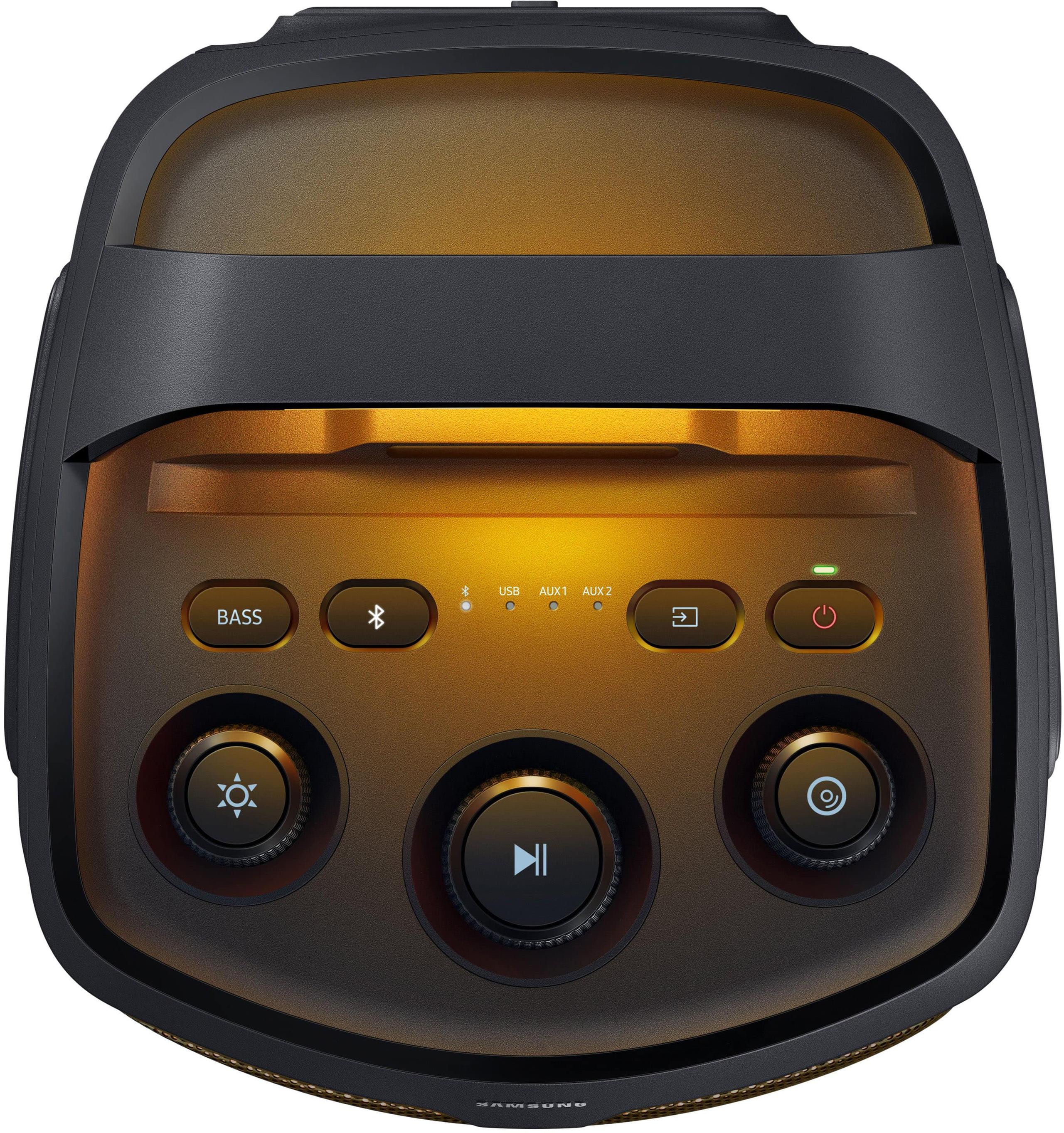
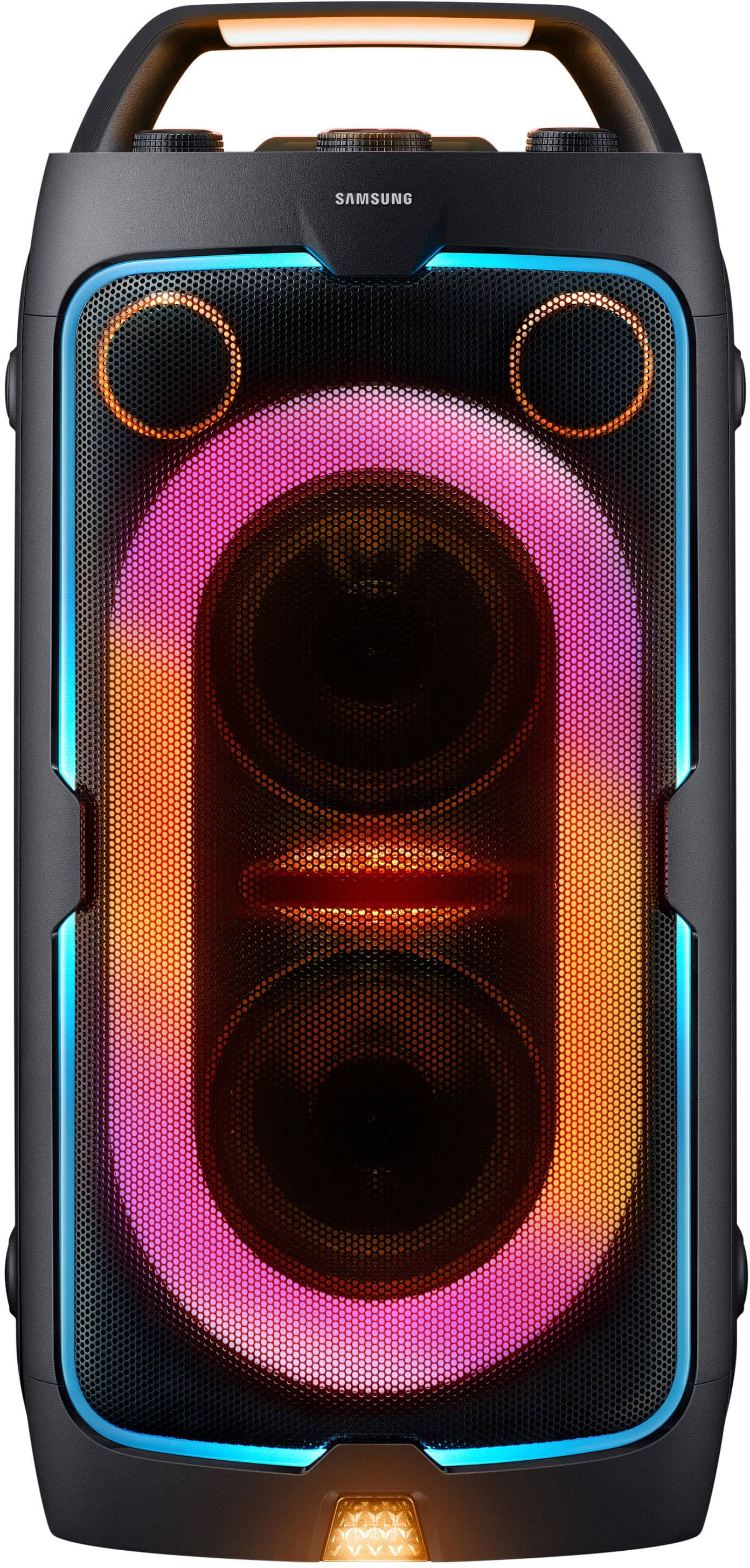
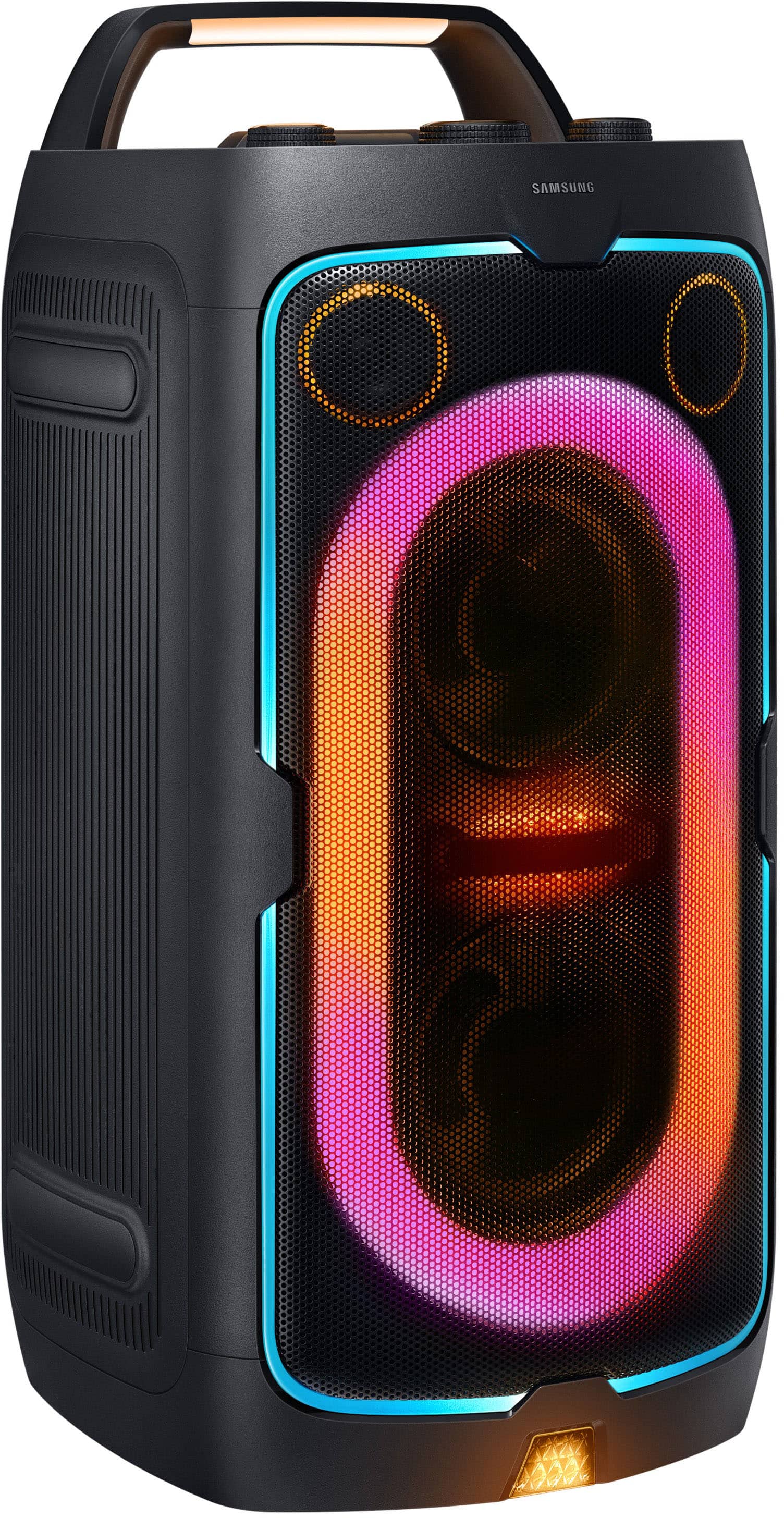
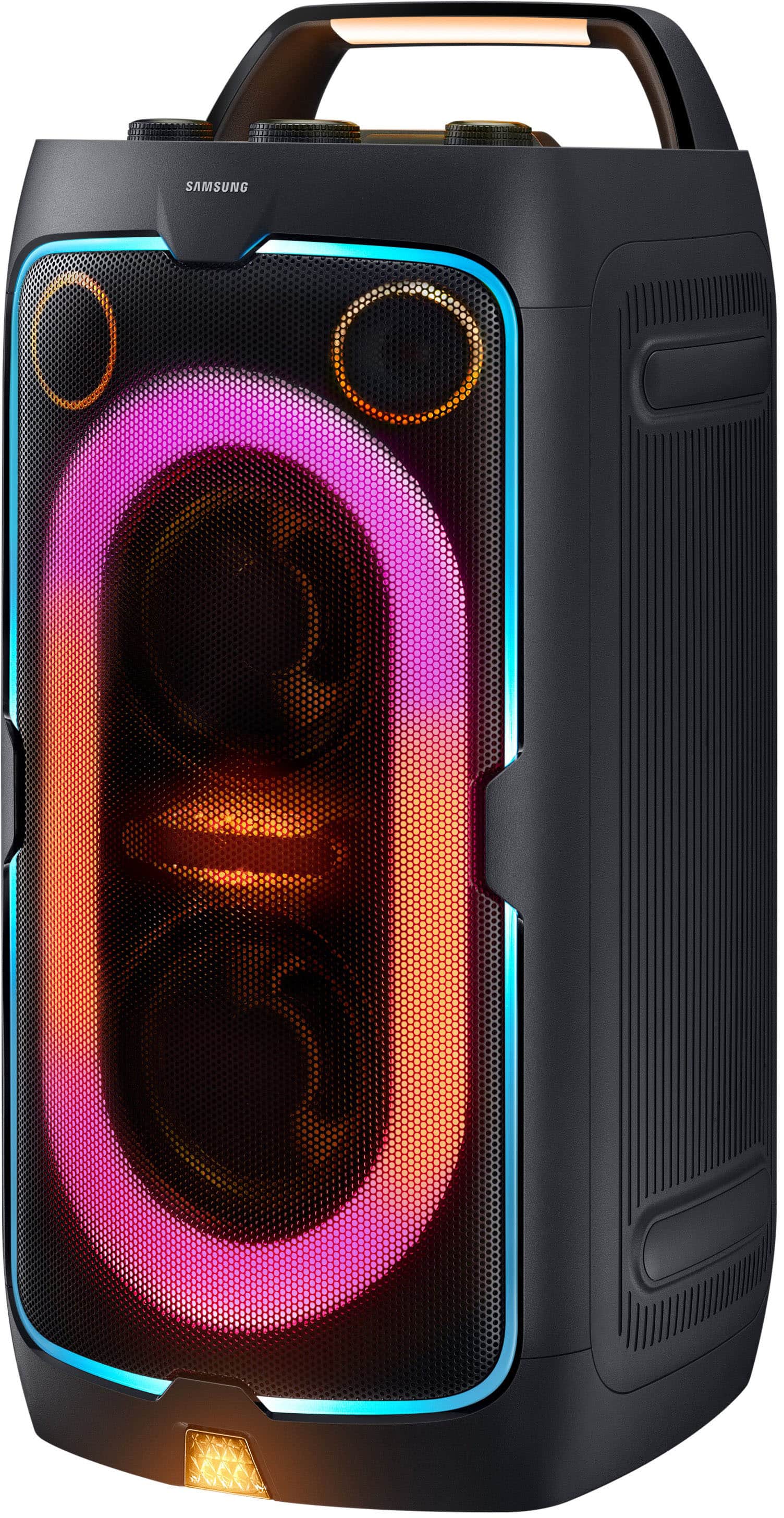
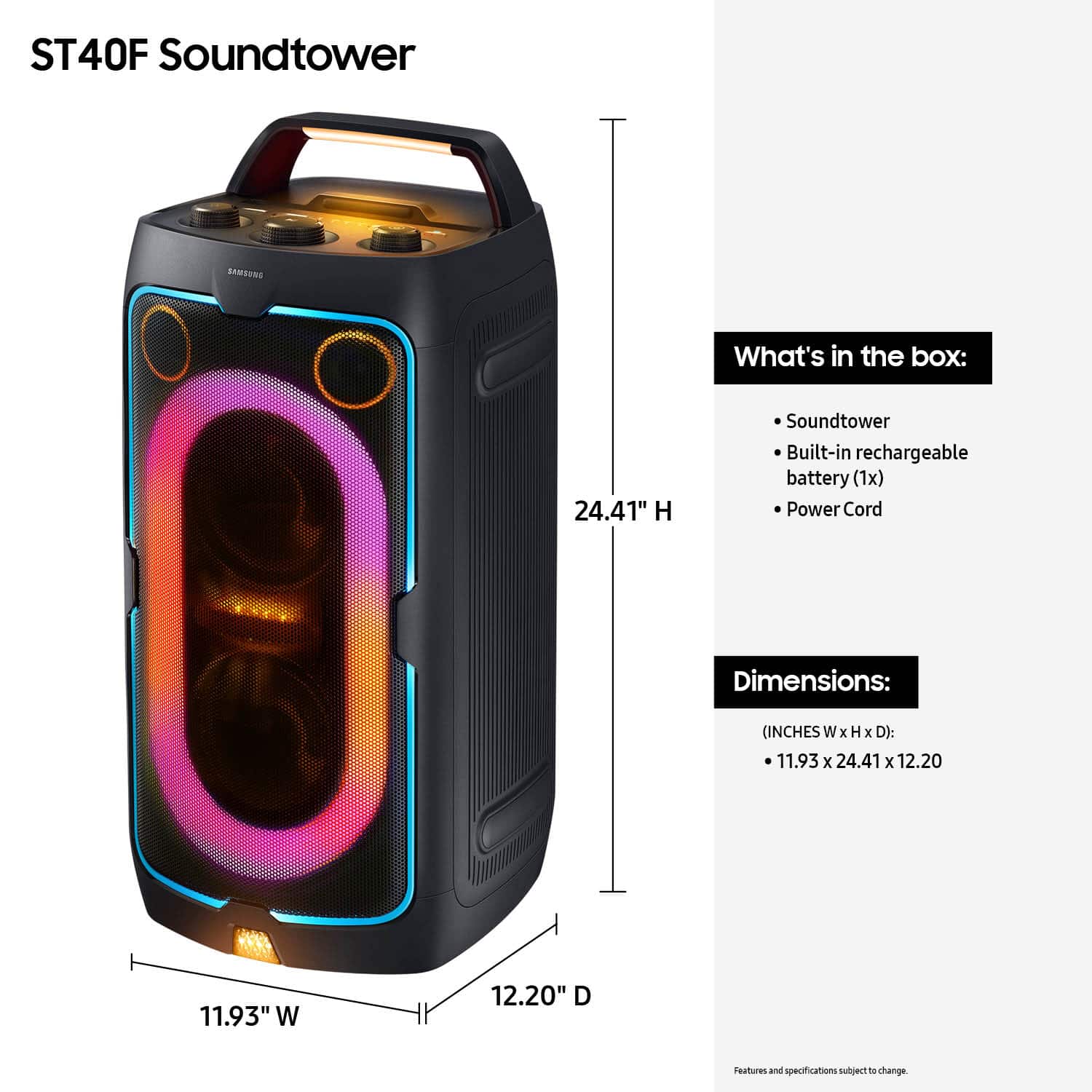
Released in 2024, the Samsung MX-ST40F represents Samsung's entry into the competitive portable party speaker market. At first glance, it's a compact tower that you can easily grab by its integrated handle and carry to any gathering. But this unassuming speaker packs thoughtful engineering that sets it apart from generic party speakers flooding the market.
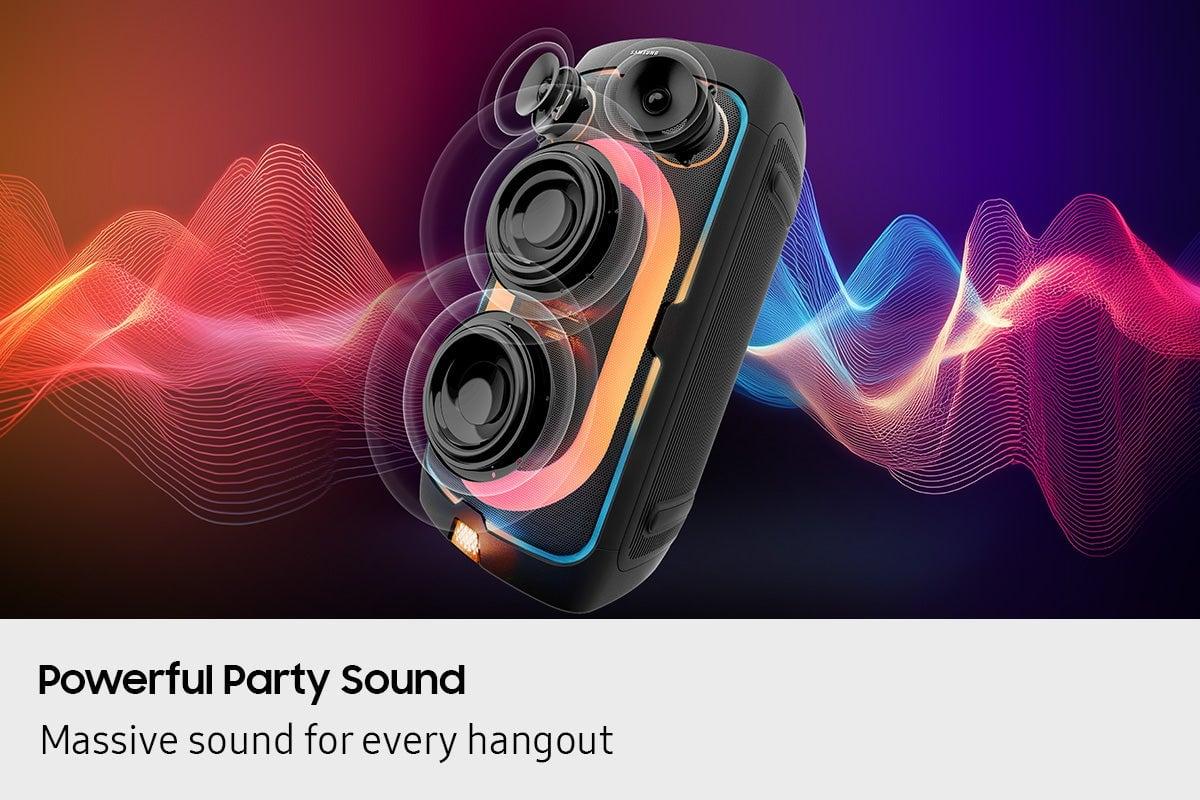
The MX-ST40F delivers 160 watts in AC mode and 80 watts when running on battery power—a clever dual-power approach that balances performance with portability. Those numbers might seem modest compared to larger speakers, but Samsung's engineering team focused on efficiency. The speaker uses two 5.25-inch woofers paired with dual 20mm dome tweeters enhanced with waveguide technology—a curved acoustic lens that shapes how sound disperses from the tweeter, ensuring consistent frequency response whether you're standing directly in front or off to the side.
What makes the Samsung MX-ST40F particularly interesting is its three customizable bass modes: Deep, Punchy, and Gentle. This isn't just marketing fluff—each mode actually reshapes the speaker's frequency response curve to emphasize different aspects of the low end. Deep mode extends the lowest frequencies for hip-hop and electronic music, Punchy mode tightens the mid-bass for rock and pop, while Gentle mode reduces bass impact for acoustic music or late-night listening.
The speaker's Auracast technology deserves special attention. This relatively new Bluetooth standard allows up to ten MX-ST40F speakers to connect wirelessly, creating a synchronized sound system that can fill massive spaces. Unlike older speaker pairing methods that often suffer from audio delays between units, Auracast maintains tight synchronization across all connected speakers.
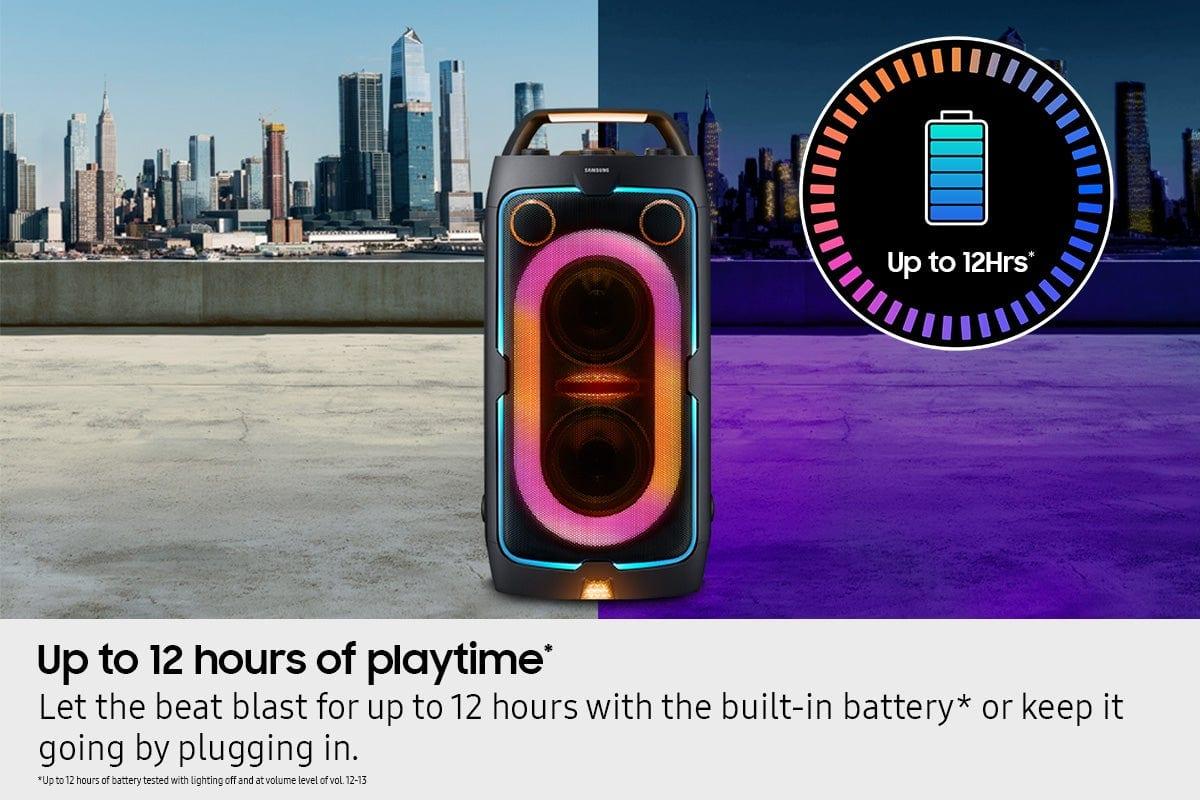
Battery life claims of 12 hours sound impressive, but real-world testing reveals the usual gap between laboratory conditions and party reality. With lights flashing and volume at party levels, expect closer to 5-6 hours—still respectable for all-day outdoor events. The replaceable battery system means you can swap in a fresh battery pack for extended parties, a thoughtful touch that many competitors overlook.
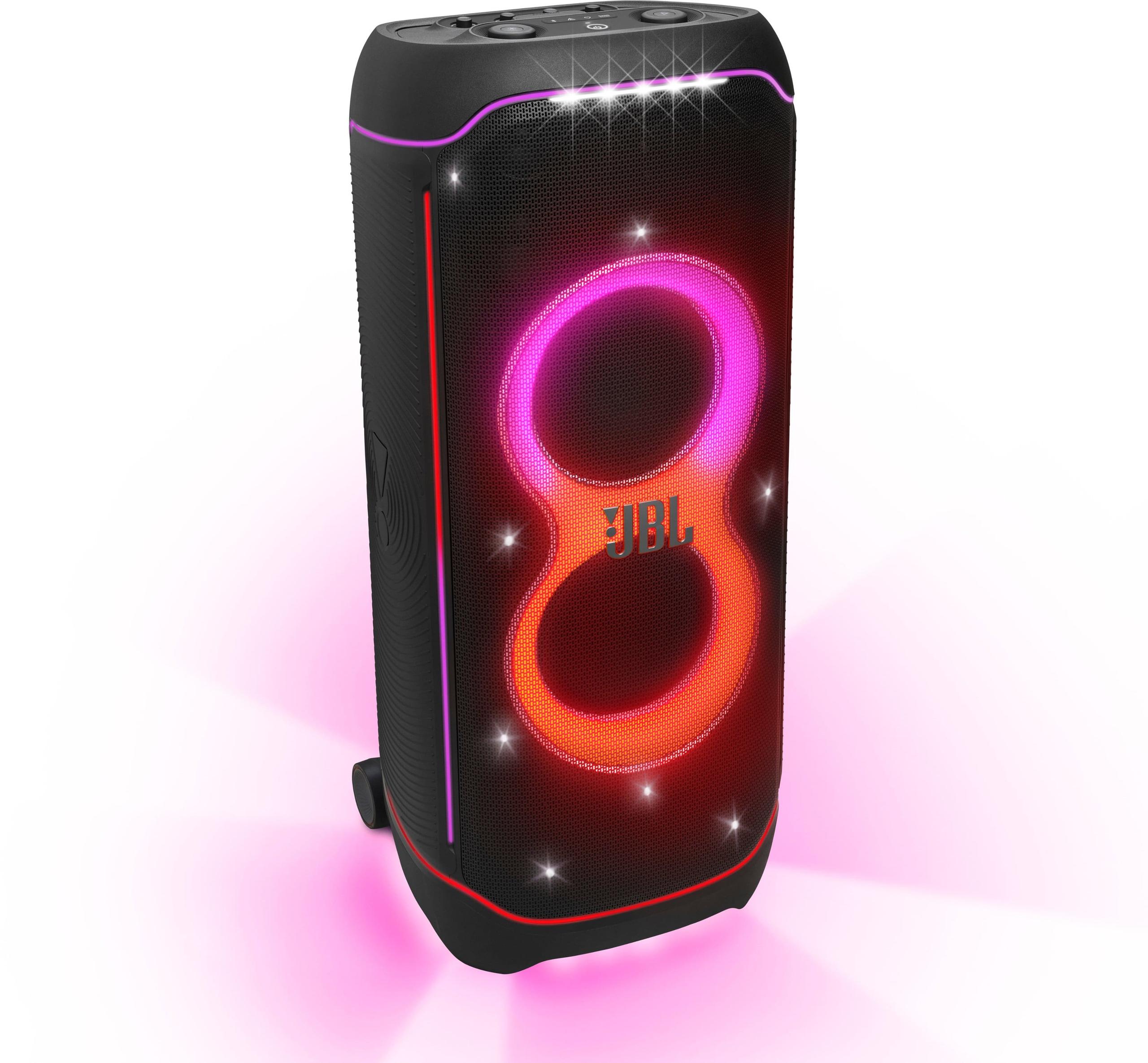
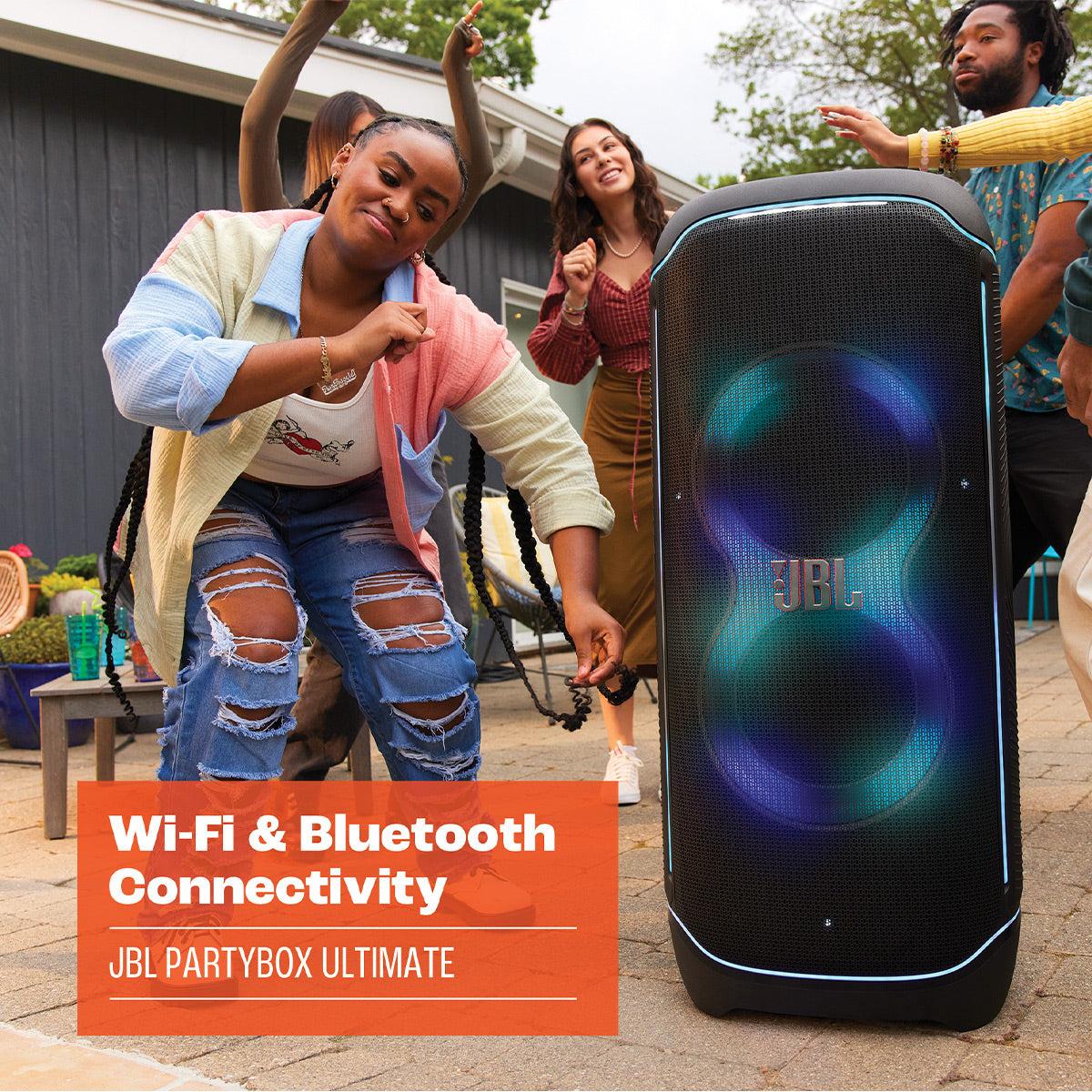
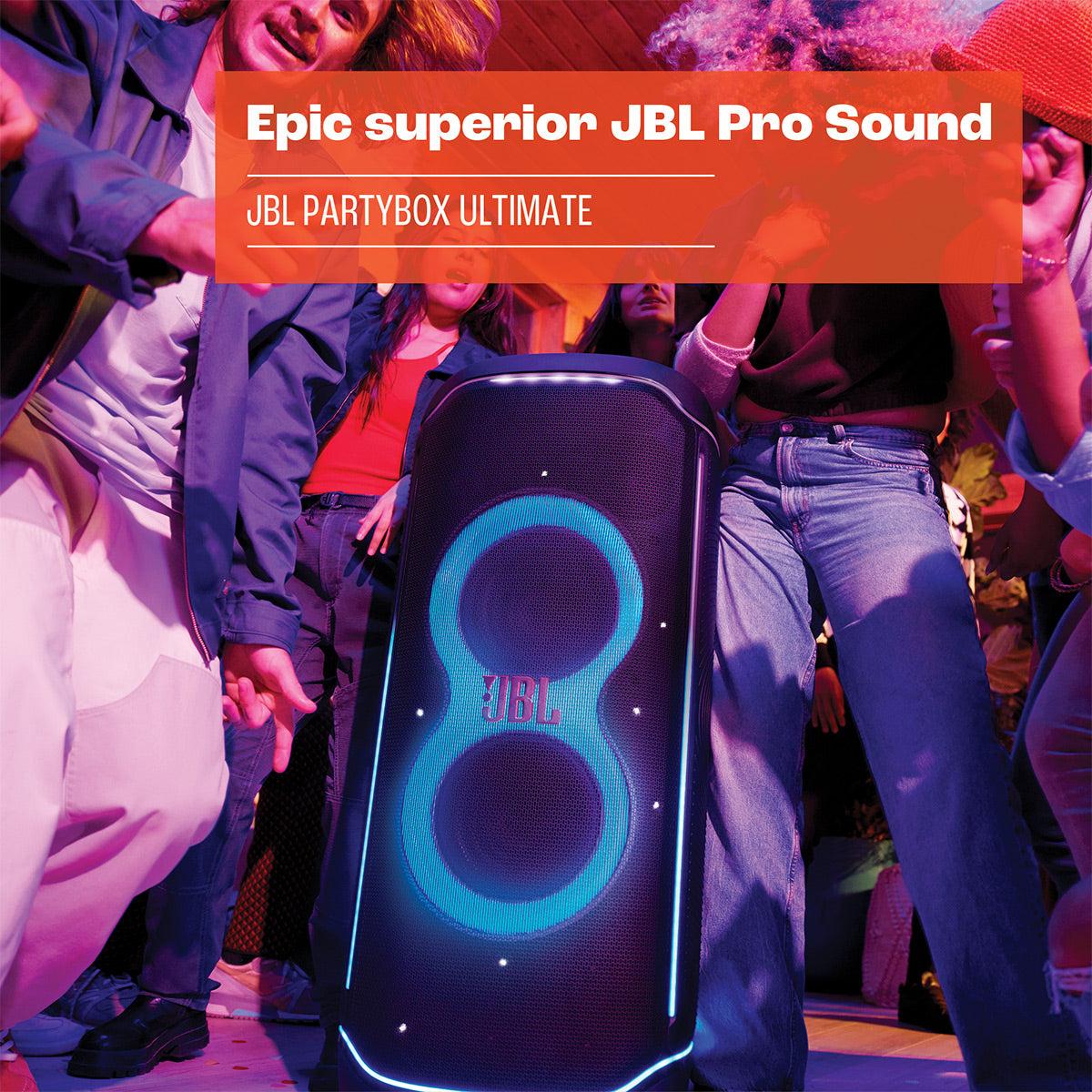
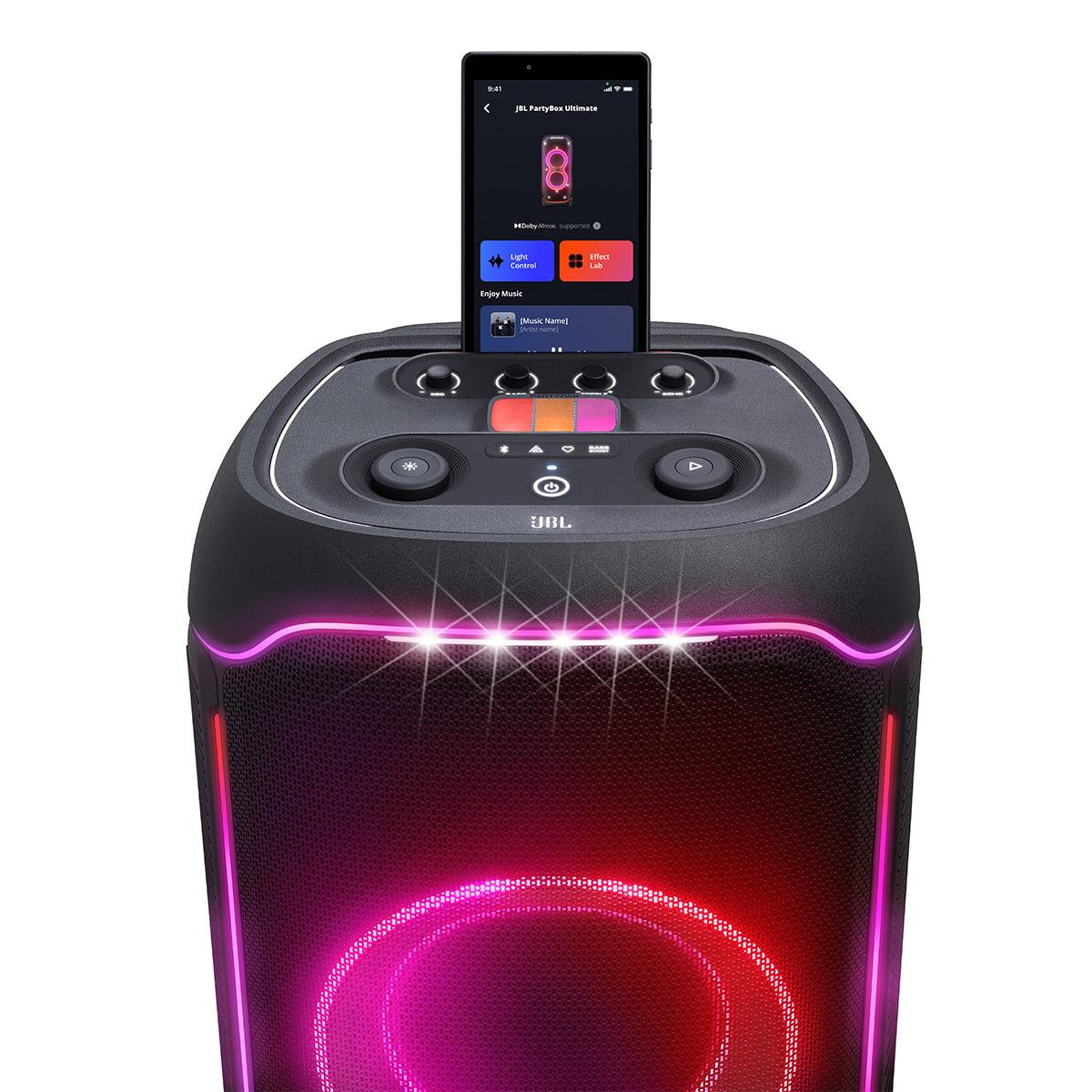
JBL launched the PartyBox Ultimate in 2024 as their flagship party speaker, and the "Ultimate" name isn't hyperbole. This massive speaker delivers 1,100 watts RMS through a sophisticated three-way driver system: dual 9-inch woofers, 4.5-inch midrange drivers, and 2.75-inch tweeters. That's more than six times the power output of the Samsung MX-ST40F, and you feel every watt.
The driver configuration reveals JBL's professional audio heritage. By using dedicated midrange drivers, the PartyBox Ultimate avoids the compromises inherent in two-way speaker designs. The woofers can focus entirely on deep bass reproduction without handling midrange frequencies that can cause distortion when mixed with low-end. This separation allows each driver to operate in its optimal range, maintaining clarity even at ear-splitting volumes.
Perhaps the most significant technical advancement is Dolby Atmos support over Wi-Fi. Traditional party speakers produce stereo sound, but Dolby Atmos creates three-dimensional soundscapes with overhead effects and precise positioning of instruments in virtual space. When streaming compatible content via Wi-Fi, the PartyBox Ultimate can reproduce the immersive audio experience typically found only in high-end home theaters.
The speaker's self-tuning capability uses built-in microphones to analyze room acoustics and automatically adjust the frequency response. Whether placed in a reflective indoor space or an open outdoor area, the speaker optimizes its sound profile within seconds of powering on. This adaptive technology eliminates the guesswork that often leaves party speakers sounding boomy in corners or thin in open spaces.
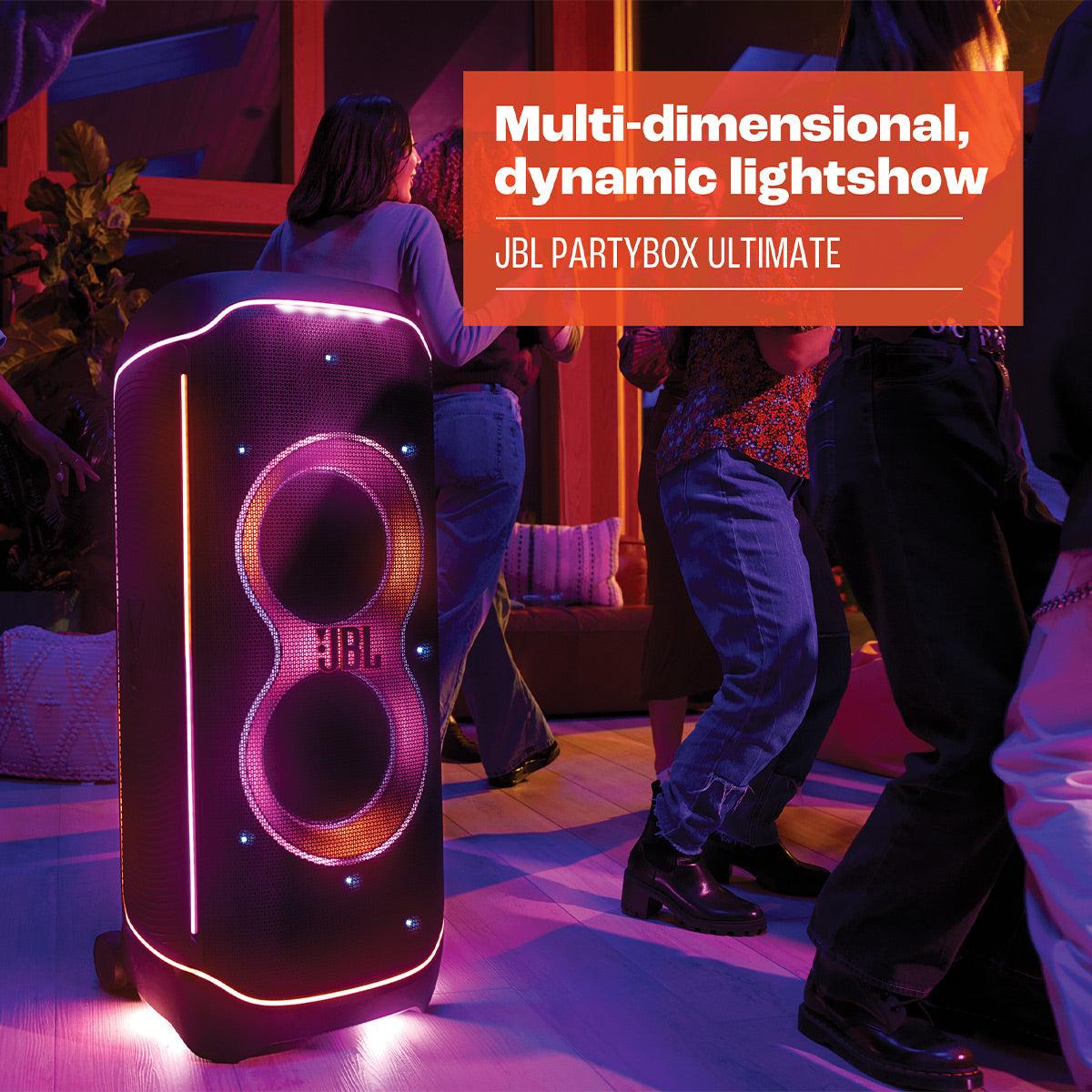
Visual impact comes from the most sophisticated lighting system we've seen in a party speaker. Beyond basic RGB color changes, the PartyBox Ultimate features starry night effects, light trails, strobes, and even ground projection. These aren't just decorative—the lighting responds dynamically to music, creating visual rhythms that enhance the auditory experience.
The power difference between these speakers isn't just academic—it translates to dramatically different capabilities. The Samsung MX-ST40F produces solid volume for gatherings up to about 30-40 people in typical residential settings. Push it beyond 75% volume, and you'll start hearing compression and distortion as the amplifier and drivers reach their limits.
The JBL PartyBox Ultimate, with nearly seven times more power, operates in a completely different league. Independent measurements show it reaching over 109 decibels—loud enough to potentially damage hearing with prolonged exposure, and certainly loud enough to be heard blocks away. More importantly, it maintains clean, undistorted sound even at these extreme levels thanks to its robust amplification and large drivers.
This power difference becomes crucial in outdoor environments where sound dissipates quickly. The Samsung works well for backyard parties within a reasonable distance from the speaker. The JBL can fill baseball fields, large outdoor weddings, or festival-sized gatherings without breaking a sweat.
Both speakers emphasize bass, but their approaches differ significantly. The Samsung MX-ST40F uses dual 5.25-inch woofers with its three bass modes to tailor the low-end response. In Deep mode, it produces satisfying bass that you can feel in your chest at moderate volumes—perfect for getting people moving in smaller spaces.
The JBL PartyBox Ultimate employs dual 9-inch woofers that move significantly more air. The larger cone area and increased power handling create bass that doesn't just sound deep—it creates physical pressure waves you feel throughout your body. This visceral bass response triggers the physiological reaction that makes people want to dance, explaining why professional DJs prefer speakers with large woofers for dance floors.
Frequency response measurements tell the technical story. The Samsung extends reasonably well into the 40-50 Hz range, covering most music content adequately. The JBL reaches down to 30 Hz with authority, reproducing the deepest synthesizer notes and kick drum fundamentals that smaller speakers simply can't handle.
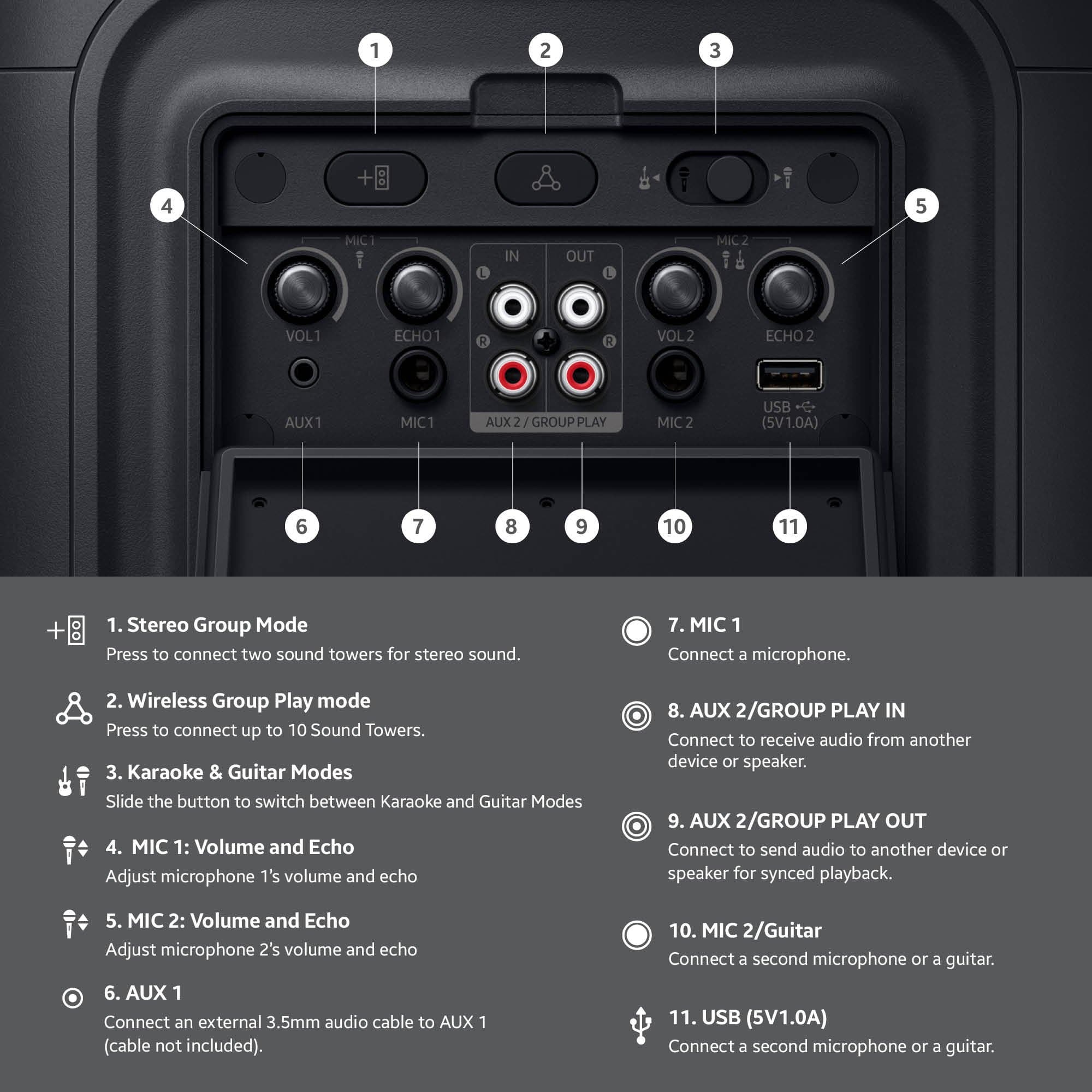
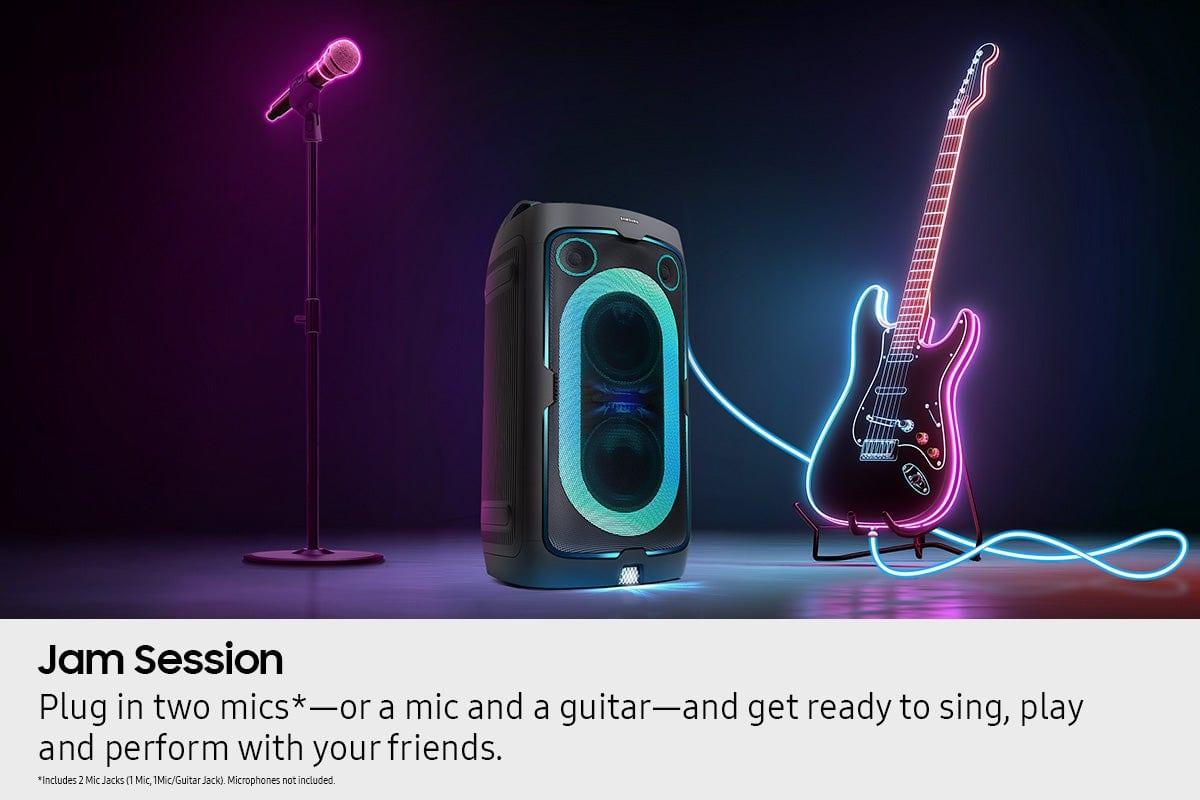
The Samsung MX-ST40F wins decisively in versatility. Its comprehensive connectivity includes Bluetooth 5.4 with multi-device pairing, USB input for direct playback, analog input for older devices, and the innovative Auracast multi-speaker connection. The karaoke features are particularly well-implemented, with dual microphone inputs, voice effects, a 12-sound sampler, and even voice recording capability.
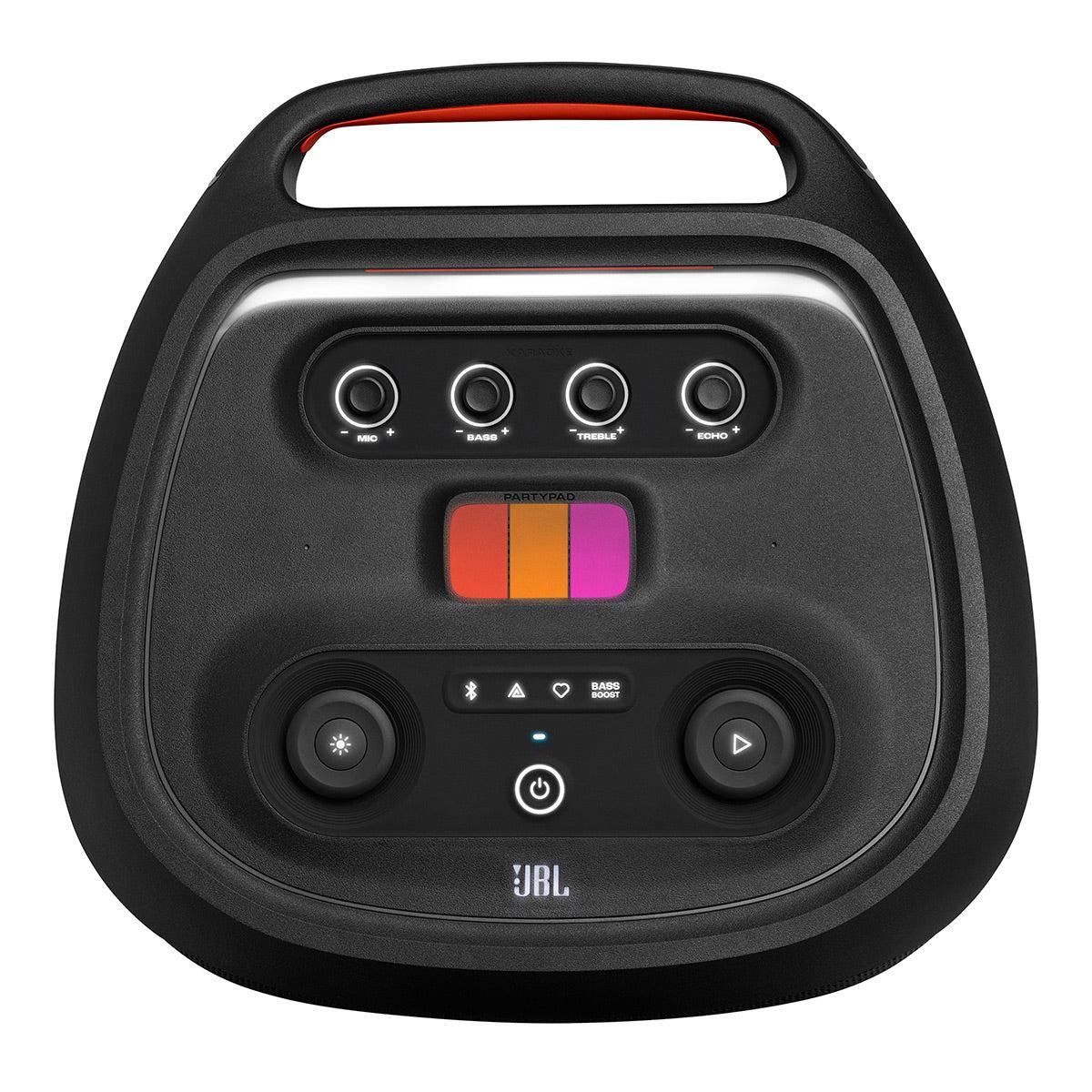
The JBL PartyBox Ultimate focuses on fewer features but executes them at a higher level. Its PartyPad DJ control surface lets you trigger effects and manipulate sound in real-time—a feature that justifies its presence at actual DJ events. The Wi-Fi connectivity enables high-resolution streaming and Dolby Atmos, while multiple input options support professional microphones and instruments.
For home theater use, the JBL offers intriguing possibilities. Its Dolby Atmos processing and room-filling power could serve as an unconventional but effective home theater system for users who prioritize impact over refinement. The Samsung, while lacking surround sound processing, offers more flexibility for multi-room audio systems through its Auracast connectivity.
At the time of writing, the Samsung MX-ST40F costs roughly half what you'll pay for the JBL PartyBox Ultimate, making the value equation complex. The Samsung delivers approximately 80% of the party experience for 50% of the cost—a compelling proposition for most consumers.
However, value depends entirely on your specific needs. If you regularly host large outdoor gatherings or need to fill substantial venues with sound, the JBL's additional capability isn't just nice to have—it's necessary. No amount of Samsung speakers can match the physical presence and clean output of the JBL at extreme volumes.
The portability factor significantly impacts long-term value. The Samsung's battery operation and manageable weight mean you'll actually use it for camping trips, beach parties, tailgating, and other mobile scenarios. The JBL's 87-pound weight and AC power requirement limit it to locations with electrical infrastructure, potentially reducing how often you use such an expensive purchase.
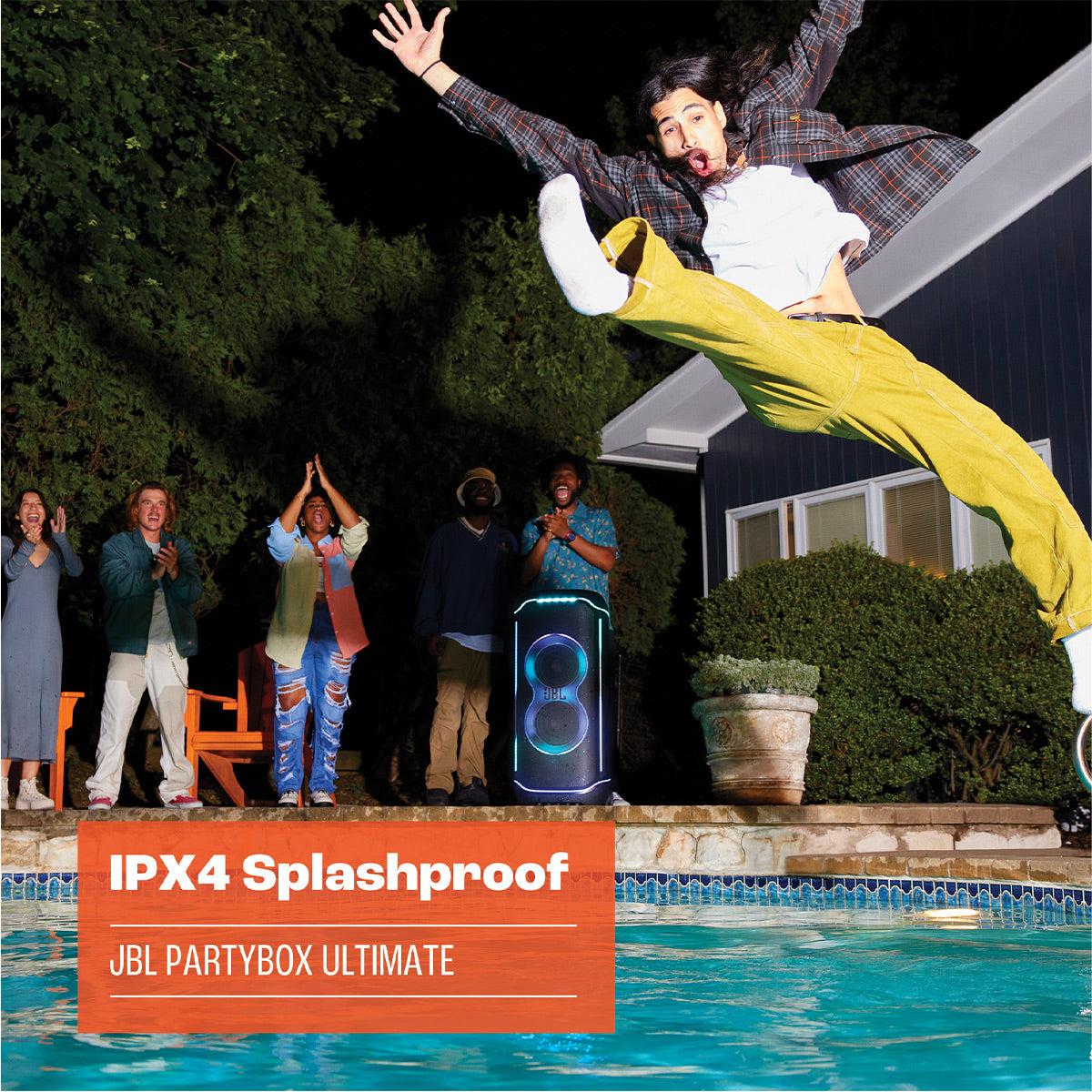
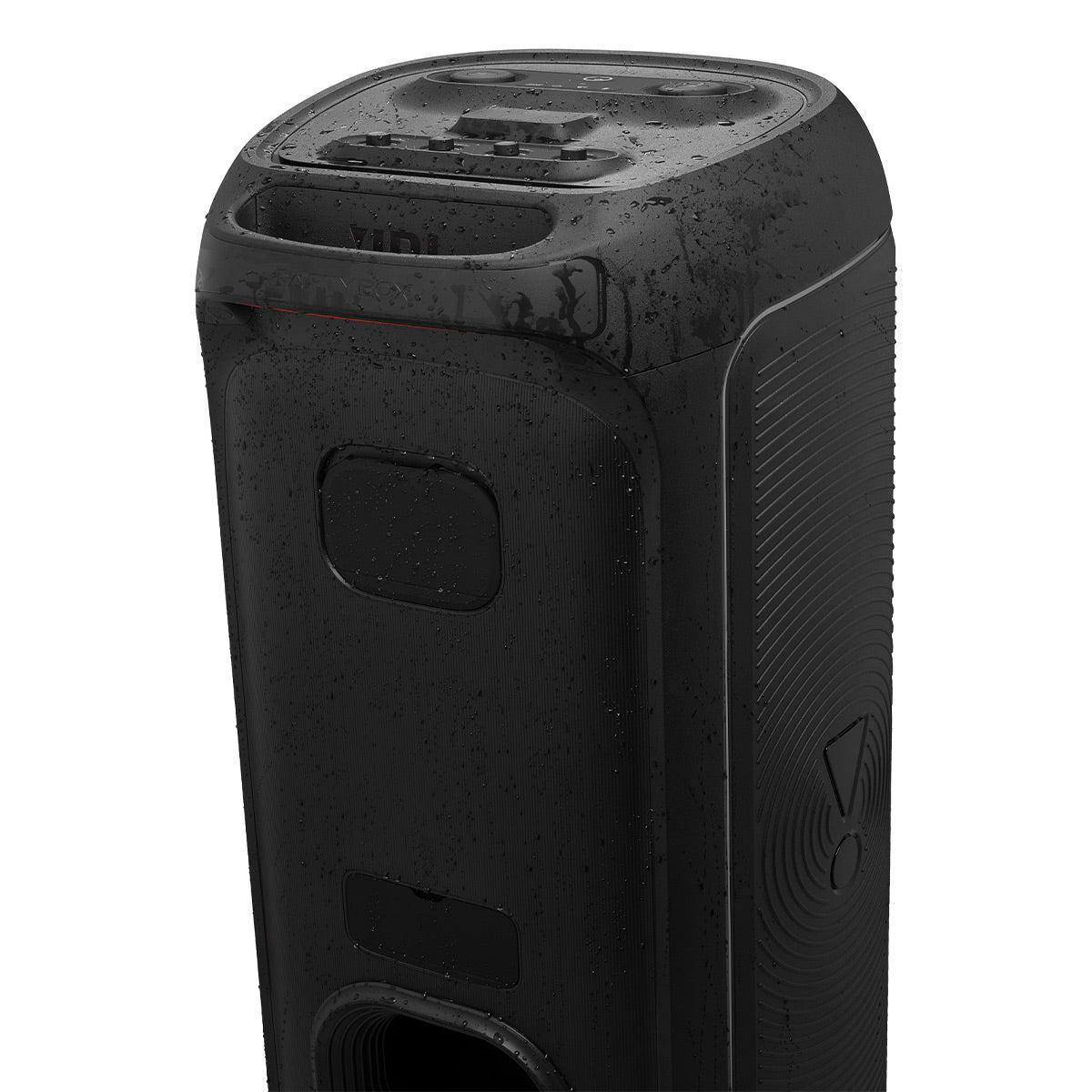
Durability considerations favor both speakers differently. The Samsung's IPX4 splash resistance protects against weather and spills—crucial for outdoor use. The JBL's professional-grade construction should withstand heavy use, but its size makes it more susceptible to transport damage.
Choose the Samsung MX-ST40F if you value versatility above all else. It's the swiss army knife of party speakers—competent in numerous scenarios without excelling in any single area. The battery operation alone opens up use cases impossible with AC-only speakers. Its karaoke features and sound customization options make it genuinely fun to use, not just loud.
The Samsung makes perfect sense for house parties, backyard gatherings, camping trips, and any scenario where you need good sound without overwhelming power. Its ability to connect multiple units via Auracast means you can start with one speaker and expand your system over time.
Choose the JBL PartyBox Ultimate when maximum impact is non-negotiable. If you're hosting wedding receptions, large outdoor events, or any gathering where background music isn't enough—where you need sound that commands attention and gets people moving—the JBL's overwhelming power advantage justifies its cost and bulk.
The JBL also makes sense as a semi-permanent installation for dedicated party spaces, pool areas, or entertainment rooms where you can take advantage of its advanced features like Dolby Atmos and room tuning. Its DJ-oriented features and extreme output make it suitable for users who take their party hosting seriously.
Both speakers succeed brilliantly at their intended purposes. The Samsung MX-ST40F democratizes party audio, bringing professional features and solid performance to a broader audience. The JBL PartyBox Ultimate serves users who demand ultimate performance regardless of cost or convenience.
Your decision should align with how you actually party. If you're typically hosting 10-30 people in residential settings and value the freedom to take your music anywhere, the Samsung provides better practical value. If you regularly entertain larger groups and can accommodate a powerful, stationary speaker, the JBL delivers an experience that smaller speakers simply cannot match.
The beauty of today's party speaker market is that both approaches have merit. You're choosing between excellent portability with good performance, or ultimate performance with acceptable portability. Either way, your parties are going to sound significantly better than they did with that old Bluetooth speaker you've been using.
| Samsung MX-ST40F | JBL PartyBox Ultimate |
|---|---|
| Power Output - Determines maximum volume and room-filling capability | |
| 160W AC / 80W Battery (good for 20-40 people) | 1,100W RMS (fills venues with 100+ people) |
| Speaker Configuration - Affects sound quality and frequency separation | |
| 2x 5.25" woofers, 2x 20mm tweeters (two-way design) | 2x 9" woofers, 2x 4.5" midrange, 2x 2.75" tweeters (three-way professional setup) |
| Portability - Critical for outdoor events and mobility | |
| Built-in handle, 28 lbs, 12-hour battery (truly portable) | Wheels and handle, 87 lbs, AC power only (semi-portable) |
| Bass Customization - Lets you tailor sound to music genre and preference | |
| 3 bass modes (Deep, Punchy, Gentle) plus 4 sound modes | Fixed tuning optimized for maximum impact |
| Multi-Speaker Connectivity - Expands your sound system for larger events | |
| Auracast wireless linking up to 10 speakers | Traditional wireless pairing and daisy chaining |
| Interactive Features - Entertainment value beyond just playing music | |
| Dual mic/guitar inputs, 12 sound samplers, voice effects, karaoke recording | PartyPad DJ controls, professional mic inputs, real-time effects |
| Lighting System - Visual impact for party atmosphere | |
| Customizable RGB with 6 patterns via smartphone app | Multi-dimensional RGB, starry effects, strobes, ground projection |
| Advanced Audio Technology - Premium features that enhance sound quality | |
| Waveguide tweeters for even dispersion | Dolby Atmos over Wi-Fi, self-tuning room calibration |
| Weather Resistance - Protection for outdoor use | |
| IPX4 splashproof rating | Not specified (indoor/covered use recommended) |
| Value Proposition - Performance per dollar considerations | |
| Excellent features-to-cost ratio for versatile use | Premium pricing justified by professional-grade performance |
The Samsung MX-ST40F is ideal for small house parties with 20-40 people. Its 160W power output provides plenty of volume for residential spaces, while the built-in battery means you can place it anywhere without worrying about power outlets. The customizable bass modes let you adjust the sound for different music genres throughout the night.
The JBL PartyBox Ultimate is significantly louder with 1,100W RMS output—nearly seven times more powerful than the Samsung MX-ST40F. It can fill large outdoor venues, wedding receptions, or festival-sized spaces with clean, undistorted sound that the Samsung simply cannot match at those volumes.
Only the Samsung MX-ST40F offers battery operation, providing up to 12 hours of wireless use (closer to 5-6 hours with lights and high volume). The JBL PartyBox Ultimate requires AC power, making it unsuitable for camping, beach trips, or locations without electrical access.
The Samsung MX-ST40F offers more comprehensive karaoke features including dual mic inputs, voice effects, 12 sound samplers, voice recording, and voice removal for singing along to regular tracks. While the JBL PartyBox Ultimate has professional mic inputs, it focuses more on DJ features than karaoke functionality.
The JBL PartyBox Ultimate produces much deeper, more physical bass thanks to its dual 9-inch woofers compared to the Samsung MX-ST40F's 5.25-inch drivers. However, the Samsung offers three customizable bass modes (Deep, Punchy, Gentle) that let you tailor the low-end response to your preferences and music type.
Both speakers support multi-speaker connections but use different technologies. The Samsung MX-ST40F uses Auracast to wirelessly connect up to 10 speakers with perfect synchronization. The JBL PartyBox Ultimate supports traditional wireless pairing and wired daisy chaining for connecting multiple units.
The Samsung MX-ST40F is far more portable at 28 pounds with a built-in handle and battery operation. The JBL PartyBox Ultimate weighs 87 pounds and requires wheels for transport, plus you need access to electrical outlets, making it better suited for semi-permanent installations.
Neither speaker is specifically designed for home theater use, but the JBL PartyBox Ultimate offers Dolby Atmos support over Wi-Fi, which can provide immersive surround sound effects for movies. Both speakers prioritize party-focused features over the balanced sound preferred for home theater applications.
The Samsung MX-ST40F provides exceptional value, delivering about 80% of the party experience at roughly half the cost. It includes comprehensive features like battery operation, karaoke capabilities, and multi-speaker connectivity. The JBL PartyBox Ultimate costs significantly more but offers professional-grade performance for users who need maximum volume and impact.
The Samsung MX-ST40F has IPX4 splashproof rating, protecting it from water splashes and light rain from any angle. The JBL PartyBox Ultimate doesn't specify water resistance, so it's best used under covered areas or indoors to protect your investment.
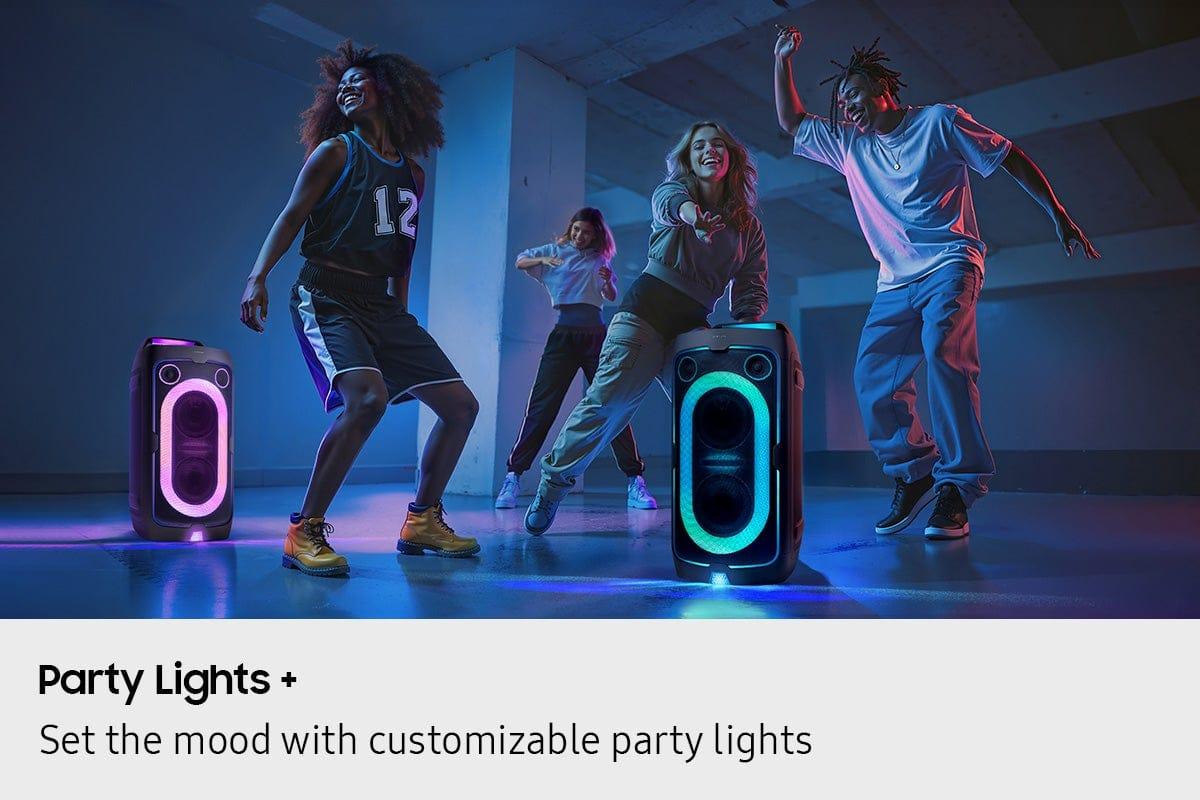
The JBL PartyBox Ultimate features more sophisticated lighting with multi-dimensional RGB effects, starry patterns, strobes, and ground projection that create dramatic visual impact. The Samsung MX-ST40F offers customizable RGB lighting with 6 patterns controlled via smartphone app—less elaborate but still engaging for parties.
The JBL PartyBox Ultimate is better suited for DJ use with its PartyPad control surface for real-time effects, professional-grade inputs, and extreme volume capability. While the Samsung MX-ST40F includes DJ effects and samplers, its lower power output limits it to smaller venues and casual DJ applications.
We've done our best to create useful and informative comparisons to help you decide what product to buy. Our research uses advanced automated methods to create this comparison and perfection is not possible - please contact us for corrections or questions. These are the sites we've researched in the creation of this article: samsung.com - samsung.com - youtube.com - samsung.com - youtube.com - thefrogpadappliances.com - bestbuy.com - standardtvandappliance.com - samsung.com - youtube.com - youtube.com - youtube.com - news.samsung.com - videoandaudiocenter.com - arrowassociatedstores.com - shopjetson.com - audioadvice.com - youtube.com - crutchfield.com - youtube.com - youtube.com - youtube.com - youtube.com - versus.com - youtube.com - rtings.com - youtube.com - youtube.com - jbl.com - pcx.com.ph - global.jbl.com - gzhls.at - electronicexpress.com - harmanaudio.in - jbl.com - dell.com - robot-advance.com - device.report - ro.harmanaudio.com

Privacy Policy
Terms and Conditions - Affiliate Policy
Home Security
© Copyright 2008-2026.
11816 Inwood Rd #1211, Dallas, TX 75244