




True wireless earbuds have completely transformed how we listen to music, take calls, and consume audio content. Without any wires connecting the earbuds to each other or your device, they offer unprecedented freedom of movement. But this category spans an enormous range—from ultra-budget options that barely work to premium flagship models that rival high-end headphones.
The challenge for buyers is understanding what you actually get for your money. At the time of writing, JBL's lineup perfectly illustrates this divide. The JBL Vibe Beam sits at the budget end, while the JBL Tour Pro 3 represents their premium flagship. The price difference between these models is nearly 10-to-1, which raises an obvious question: what exactly are you paying for?
When shopping for true wireless earbuds, you're essentially balancing five key factors: sound quality, battery life, comfort, advanced features, and build quality. The tricky part is that improvements in each area often come with significant cost increases.
Sound quality depends primarily on the drivers—tiny speakers inside each earbud. Larger drivers generally produce better bass, while specialized driver types like balanced armature drivers excel at reproducing high frequencies with precise detail. The frequency response range tells you how low and high the earbuds can reproduce sound, measured in Hertz (Hz). Human hearing typically spans 20Hz to 20,000Hz, so earbuds that exceed this range can capture audio details you might not consciously hear but can feel.
Battery life involves two components: the earbuds themselves and the charging case. Most earbuds provide 6-12 hours of playback, while the case adds multiple additional charges. Features like active noise cancellation (ANC) significantly reduce battery life by requiring extra processing power.
Advanced features separate budget from premium models. ANC uses microphones and processing to actively cancel external noise. Transparency modes let you hear your surroundings without removing the earbuds. Spatial audio creates a three-dimensional sound experience that makes music feel like it's coming from around you rather than inside your head.
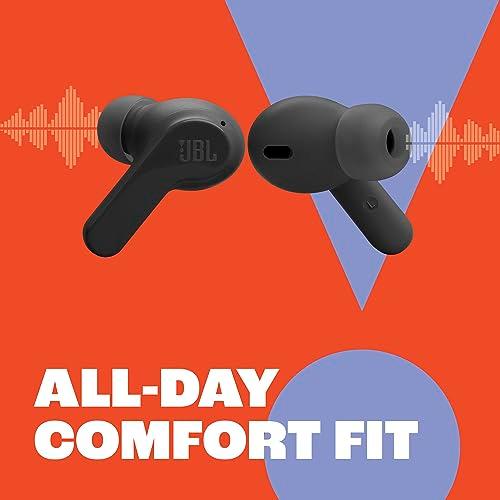
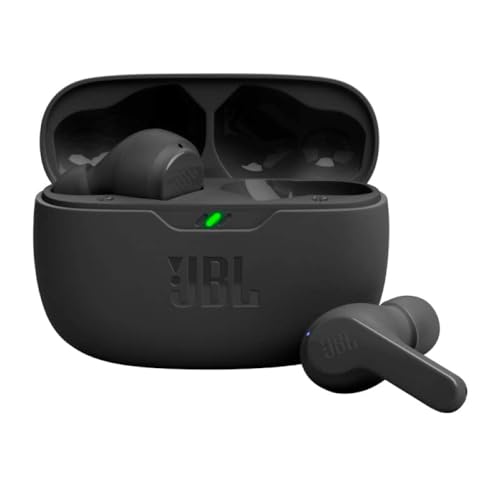
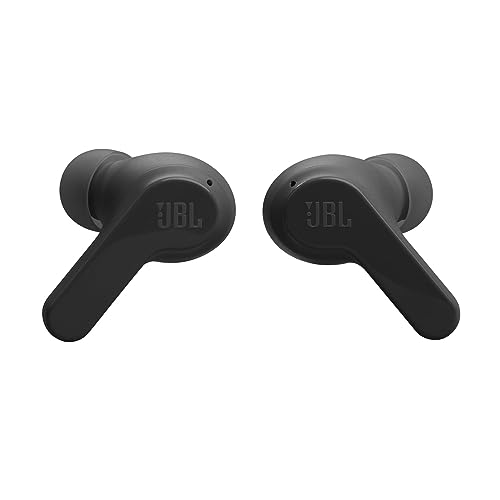
The JBL Vibe Beam, released in 2022, represents JBL's approach to ultra-affordable wireless audio. These earbuds focus on delivering the essential true wireless experience without compromising on the basics. They weigh just 4.4 grams per earbud—light enough that you'll forget you're wearing them.
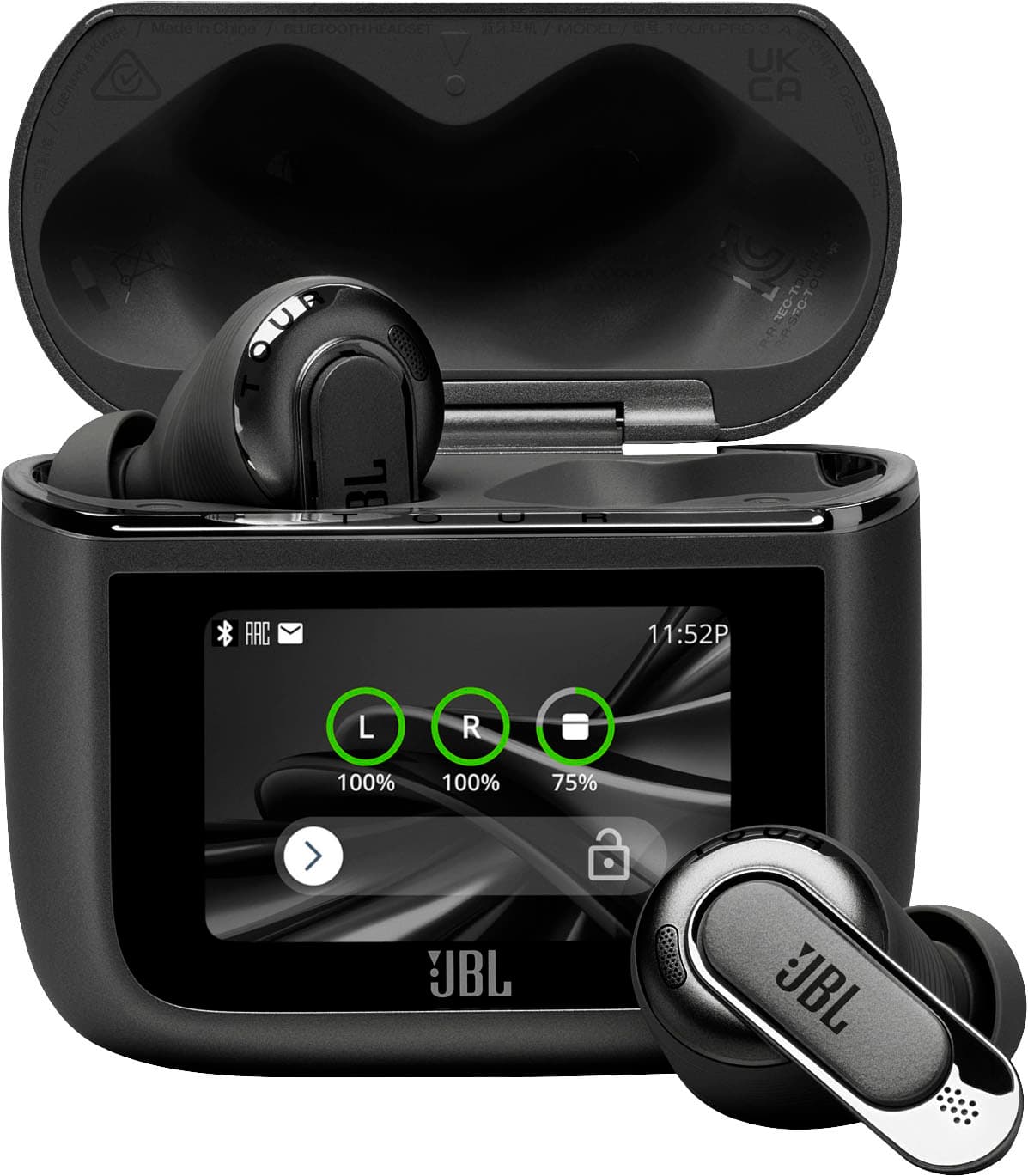
The JBL Tour Pro 3, launched in 2024, showcases JBL's latest innovations and premium engineering. At 5.6 grams per earbud, they're noticeably heavier but pack significantly more technology. The most striking feature is the smart charging case with an actual touchscreen display—something that seemed like science fiction just a few years ago.
The two-year gap between releases matters more than you might expect. Bluetooth technology, battery chemistry, and audio processing have all improved dramatically. The Tour Pro 3 benefits from these advances, while the Vibe Beam represents the impressive capabilities achievable at budget prices using slightly older technology.
This comparison reveals one of the most significant differences you'll encounter in wireless earbuds: single-driver versus hybrid multi-driver systems. The Vibe Beam uses a single 8mm dynamic driver in each earbud. Dynamic drivers work like tiny versions of regular speakers, with a moving coil and magnet that vibrate a diaphragm to produce sound. They're particularly good at reproducing bass frequencies and creating the punchy, energetic sound that JBL calls "Deep Bass Sound."
The Tour Pro 3 employs a hybrid system combining a 10mm dynamic driver with a 5.1mm x 2.8mm balanced armature driver. Balanced armature drivers work differently—they use a tiny armature that pivots between magnets, creating incredibly precise movement. This design excels at reproducing high frequencies with exceptional detail and clarity. Having both driver types means the Tour Pro 3 can leverage the dynamic driver's bass prowess while using the balanced armature for crisp highs and detailed midrange.
The frequency response numbers tell the story. The Vibe Beam covers 20Hz to 20,000Hz—exactly the range of human hearing. The Tour Pro 3 extends from 20Hz all the way to 40,000Hz. While you can't consciously hear frequencies above 20,000Hz, they contribute to the overall audio experience by preserving harmonics and spatial information that your brain processes subconsciously.
In practical terms, this translates to noticeable differences when listening. The Vibe Beam delivers enjoyable, bass-forward sound that makes most music genres sound engaging and fun. Vocals come through clearly, and there's enough detail in the highs to avoid muddiness. For casual listening—whether it's pop music during workouts or podcasts during commutes—the sound quality easily exceeds expectations for the price point.
The Tour Pro 3 offers a more sophisticated audio experience. The hybrid drivers create better instrument separation, meaning you can distinguish individual instruments in complex musical arrangements. The soundstage—how wide and dimensional the music sounds—is noticeably larger. Bass is tighter and more controlled, while highs sparkle with detail that reveals subtle elements in familiar songs.
The Tour Pro 3 also supports LDAC, Sony's high-quality Bluetooth audio codec that transmits three times more data than standard Bluetooth. If you stream high-quality music files or use services like Tidal or Amazon Music HD, LDAC preserves more of the original recording's detail.
Battery life represents one of the most practical considerations for wireless earbuds. Dead earbuds are useless earbuds, regardless of how good they sound. Both models handle this challenge differently, reflecting their target markets and feature sets.
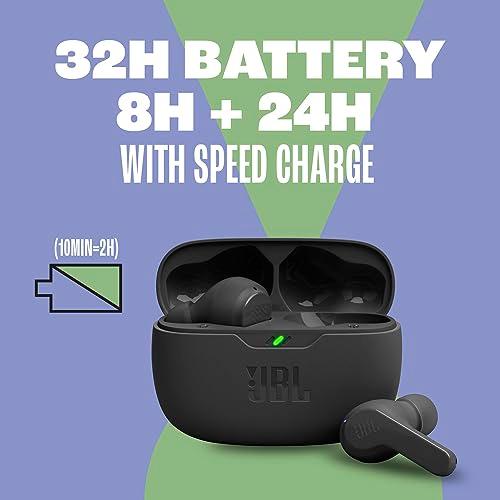
The Vibe Beam provides 8 hours of playback per charge, with the case holding enough power for an additional 24 hours—32 hours total. This is solid performance for budget earbuds, easily lasting through most daily use patterns. The 48mAh battery in each earbud and 530mAh case battery are appropriately sized for the power requirements of basic wireless functionality.
The Tour Pro 3 delivers 11 hours per charge without active noise cancellation, dropping to 8 hours with ANC enabled. The case provides 32-33 additional hours, bringing the total to 43-44 hours depending on usage. These numbers are impressive, but they tell only part of the story.
The Tour Pro 3's 850mAh case battery does more than just charge the earbuds. It powers the touchscreen display, handles wireless audio transmission when used as a dongle, and supports the various smart features. This multi-functionality means the case serves as a genuine computing device rather than simple battery storage.
Both models support fast charging, but the implementation differs. The Vibe Beam provides 2 hours of playback from a 10-minute charge—perfect for quick top-ups before heading out. The Tour Pro 3 offers 3 hours from a 10-minute charge, reflecting its more efficient power management and larger battery capacity.
For most users, either battery solution works well for daily use. The Vibe Beam's 32 hours total easily covers a work week with moderate use. The Tour Pro 3's 44 hours becomes valuable for frequent travelers or users who prefer longer intervals between charging sessions.
This comparison starkly illustrates how feature sets can differ between budget and premium products. The Vibe Beam focuses on executing the essentials extremely well: reliable wireless connectivity, decent sound quality, comfortable fit, and adequate battery life. It includes Smart Ambient technology with Ambient Aware and TalkThru modes, allowing you to stay aware of your surroundings or have quick conversations without removing the earbuds.
The Tour Pro 3 layers on advanced technologies that fundamentally change the user experience. True Adaptive Noise Cancellation 2.0 measures environmental noise over 50,000 times per second, automatically adjusting to maintain optimal cancellation. This isn't just about blocking steady background noise—the system adapts to sudden changes like a train entering a station or someone starting a lawnmower nearby.
The spatial audio implementation deserves special attention. JBL Spatial 360 with head tracking transforms any stereo audio content into an immersive three-dimensional experience. As you move your head, the audio adjusts to maintain the illusion that sounds are coming from fixed positions in space around you. This works particularly well for movies and immersive gaming, creating a home theater-like experience from regular earbuds.
The smart charging case represents perhaps the most innovative feature. The 1.45-inch touchscreen lets you control music playback, adjust volume, manage calls, and access various settings without touching your phone. During our research into user experiences, this initially seemed gimmicky, but practical use reveals genuine utility. You can check battery levels, see caller ID information, browse playlists, and even use the case as a flashlight.
More impressively, the case functions as a wireless audio transmitter. Plug it into an airplane entertainment system, computer, or any device with a headphone jack, and it wirelessly transmits audio to the earbuds. This "Everywhere Entertainment" capability eliminates the need for dongles or adapters when traveling or working at different locations.
Voice call quality has become increasingly important as remote work and video calls dominate professional communication. The difference between these models reflects the growing sophistication of wireless earbuds as communication devices.
The Vibe Beam uses standard microphones with basic processing for calls. Voice quality is adequate for casual conversations, though background noise can interfere in challenging environments. The VoiceAware feature lets you control how much of your own voice you hear during calls, which improves the calling experience by reducing that "talking in a tunnel" sensation.
The Tour Pro 3 employs a six-microphone system with beamforming technology and AI-enhanced processing. Two beamforming outer microphones on each earbud focus on your voice while suppressing background noise. The JBL Crystal AI algorithm further processes the audio to enhance clarity and reduce wind noise through the hydrodynamic windproof design.
This sophisticated microphone array makes a substantial difference for professional use. Whether you're taking client calls from a busy coffee shop or joining video conferences from various locations, the Tour Pro 3's communication quality approaches what you'd expect from dedicated headsets designed specifically for calls.
The construction quality differences reflect each product's intended lifespan and usage patterns. The Vibe Beam uses appropriate materials for its price point—they feel solid without being premium. The IP54 water and dust resistance rating means they'll handle sweat during workouts and light rain during commutes, though you shouldn't submerge them.
The Tour Pro 3 features more robust construction throughout. The IP55 rating provides superior protection against water and dust ingress. The materials feel more substantial, and the precision of fit and finish reflects the higher manufacturing standards typical of premium products.
For long-term durability, the Tour Pro 3's higher-grade components and more sophisticated assembly suggest better reliability over years of use. However, both products should provide reliable service with reasonable care—the question is whether the premium construction justifies the price difference for your specific needs.
While both products work well for casual TV watching, the Tour Pro 3's advanced features make it genuinely useful for home theater applications. The spatial audio processing can transform regular TV content into a more immersive experience, particularly effective for movies and shows mixed for surround sound.
The wireless transmitter functionality becomes particularly valuable here. You can connect the charging case to your TV's audio output and have personal wireless audio without disturbing others. This works especially well for late-night viewing when you want full dynamic range without waking family members.
The Vibe Beam works fine for basic TV audio, though without spatial processing or advanced features, it's more of a convenience solution than an enhancement to your viewing experience.
At the time of writing, the price difference between these models is dramatic—nearly 10-to-1. This gap raises important questions about value and feature necessity. The Vibe Beam proves that excellent basic wireless functionality doesn't require a premium price. You get reliable Bluetooth connectivity, enjoyable sound quality, adequate battery life, and reasonable build quality.
The Tour Pro 3 justifies its premium pricing through genuine innovation and superior performance across every category. Active noise cancellation, spatial audio, the smart charging case, premium build quality, and exceptional call quality create a fundamentally different user experience.
However, value isn't just about features—it's about matching capabilities to your actual needs. Many users will find the Vibe Beam's feature set completely adequate for their listening habits and usage patterns.
The Vibe Beam makes sense for budget-conscious buyers who want reliable wireless earbuds without premium features. Students, casual listeners, people new to wireless earbuds, or anyone needing a backup pair will find exceptional value. If your primary uses are music during workouts, podcasts during commutes, or casual phone calls, the feature limitations won't impact your experience.
The Tour Pro 3 targets users who can benefit from its advanced capabilities. Frequent travelers who need active noise cancellation, audio enthusiasts who want superior sound quality, professionals requiring exceptional call quality, or technology enthusiasts attracted to innovative features like the smart case will find the premium price justified.
The middle ground consideration is important here. The dramatic difference between these models means many users might find better value in JBL's intermediate offerings that provide active noise cancellation and premium features at more moderate pricing.
Choose the JBL Vibe Beam if you want excellent basic wireless functionality at an accessible price. They excel as an introduction to quality wireless audio without requiring significant investment. The lightweight, comfortable design and reliable performance make them ideal for users who prioritize simplicity and value.
Choose the JBL Tour Pro 3 if you want cutting-edge features and superior performance across all categories. The active noise cancellation, spatial audio, smart case functionality, and premium build quality create a flagship experience that justifies the higher cost. They're particularly valuable for users who spend significant time in noisy environments, frequently travel, or use earbuds for professional communication.
The key insight is that both products excel within their intended markets. The Vibe Beam proves that budget doesn't mean compromise on core functionality, while the Tour Pro 3 demonstrates what's possible when engineering resources focus on advancing the entire user experience rather than just hitting a price point.
Your choice should align with both your budget and your actual usage patterns. If the advanced features of the Tour Pro 3 won't enhance your daily experience, the Vibe Beam delivers exceptional value. But if you can benefit from active noise cancellation, superior audio quality, and innovative features, the premium investment pays dividends in improved daily experiences.
| JBL Vibe Beam True Wireless Earbuds | JBL Tour Pro 3 True Wireless Earbuds |
|---|---|
| Driver Technology - Determines sound quality and detail reproduction | |
| Single 8mm dynamic driver (good bass, simple design) | Hybrid dual-driver: 10mm dynamic + balanced armature (superior detail and separation) |
| Frequency Response - Range of sounds the earbuds can reproduce | |
| 20 Hz - 20 kHz (covers full human hearing range) | 20 Hz - 40 kHz (extended range for enhanced audio detail) |
| Active Noise Cancellation - Essential for noisy environments | |
| None (passive isolation only) | True Adaptive Noise Cancellation 2.0 (measures 50,000x per second) |
| Battery Life - Critical for all-day use | |
| 8 hours + 24 hours case = 32 hours total | 11 hours (8 with ANC) + 33 hours case = 44 hours total |
| Weight Per Earbud - Impacts comfort during extended wear | |
| 4.4g (ultra-lightweight for all-day comfort) | 5.6g (heavier due to premium components) |
| Water Resistance - Protection for workouts and weather | |
| IP54 (sweat and splash resistant) | IP55 (superior water and dust protection) |
| Smart Features - Advanced functionality beyond basic audio | |
| Smart Ambient (Ambient Aware, TalkThru modes) | Spatial 360 audio, head tracking, smart charging case display |
| Charging Case Innovation - Convenience and additional functionality | |
| Standard charging case with LED indicators | Smart case with 1.45" touchscreen, wireless audio transmitter |
| Microphone System - Call quality for work and personal use | |
| Basic microphone with VoiceAware | 6-microphone array with beamforming and AI processing |
| Bluetooth Codec Support - Audio quality over wireless connection | |
| Standard Bluetooth codecs | LDAC support for high-quality wireless audio |
| Target User - Who gets the best value from each product | |
| Budget-conscious users wanting reliable wireless basics | Premium users needing ANC, superior audio, and smart features |
The biggest difference is that the JBL Vibe Beam is a budget-friendly model focused on essential wireless functionality, while the JBL Tour Pro 3 is a premium flagship with advanced features like active noise cancellation, spatial audio, and a smart charging case with touchscreen display. The Tour Pro 3 costs roughly 10 times more but offers significantly more sophisticated technology.
The JBL Tour Pro 3 delivers superior sound quality with its hybrid dual-driver system (10mm dynamic + balanced armature drivers) and extended frequency response up to 40kHz. The JBL Vibe Beam uses a single 8mm driver that produces enjoyable, bass-forward sound but lacks the detail and clarity of the Tour Pro 3.
No, only the JBL Tour Pro 3 features active noise cancellation with True Adaptive Noise Cancellation 2.0 technology. The JBL Vibe Beam relies on passive noise isolation from the earbud seal in your ear, which is less effective at blocking environmental noise.
The JBL Tour Pro 3 excels at phone calls with its six-microphone system, beamforming technology, and AI processing for crystal-clear voice transmission. The JBL Vibe Beam provides adequate call quality for casual use but can't match the professional-grade communication capabilities of the Tour Pro 3.
The JBL Vibe Beam offers 8 hours per charge plus 24 additional hours from the case (32 hours total). The JBL Tour Pro 3 provides 11 hours per charge (8 with ANC on) plus 33 hours from the case (44 hours total), making it better for extended use and travel.
The JBL Vibe Beam is more comfortable for extended wear due to its ultra-lightweight 4.4g per earbud design. The JBL Tour Pro 3 weighs 5.6g per earbud and may feel heavier during long listening sessions, though both models feature ergonomic designs with multiple eartip sizes.
Both models work well for workouts, but the JBL Vibe Beam has advantages due to its lighter weight and lower cost if damaged. The JBL Tour Pro 3 offers superior water resistance (IP55 vs IP54) but costs significantly more to replace if lost or damaged during exercise.
The JBL Tour Pro 3 is excellent for TV and movies thanks to its spatial audio with head tracking that creates an immersive surround sound experience. The smart charging case can also connect directly to TV audio outputs as a wireless transmitter. The JBL Vibe Beam works fine for basic TV audio but lacks these advanced features.
The JBL Tour Pro 3 is superior for travel with active noise cancellation for flights, longer battery life, and the unique ability to connect the charging case to airplane entertainment systems. The JBL Vibe Beam is more portable and less expensive to replace if lost while traveling.
Yes, both the JBL Vibe Beam and JBL Tour Pro 3 work with the JBL Headphones app for sound customization. However, the Tour Pro 3 offers more advanced personalization features including Personi-Fi 3.0 for customized sound profiles and support for high-quality LDAC audio codec.
The JBL Vibe Beam is ideal for beginners due to its affordable price, simple operation, and excellent basic wireless functionality. It's perfect for trying true wireless earbuds without a major investment. The JBL Tour Pro 3 is better suited for experienced users who know they want premium features.
The JBL Tour Pro 3 justifies its premium price if you need active noise cancellation, superior audio quality, professional call capabilities, or innovative features like the smart charging case. However, the JBL Vibe Beam offers exceptional value for users who just want reliable wireless earbuds for casual listening and don't need advanced features.
We've done our best to create useful and informative comparisons to help you decide what product to buy. Our research uses advanced automated methods to create this comparison and perfection is not possible - please contact us for corrections or questions. These are the sites we've researched in the creation of this article: bestbuy.com - jbl.com - rtings.com - jbl.com - youtube.com - youtube.com - audio46.com - jbl.com - soundguys.com - bestbuy.com - walmart.com - uclastore.com - bestbuy.com - manuals.plus - techradar.com - sweetwater.com - news.jbl.com - youtube.com - harmanaudio.com - jbl.com - krazykileys.ca - jbl.com - shop.menshealth.com - sweetwater.com

Privacy Policy
Terms and Conditions - Affiliate Policy
Home Security
© Copyright 2008-2026.
11816 Inwood Rd #1211, Dallas, TX 75244