



When shopping for wireless earbuds today, you'll quickly discover that the market spans from affordable options under $50 to premium models costing several hundred dollars. This dramatic price range reflects vastly different approaches to design, features, and sound quality. Two earbuds that perfectly illustrate this divide are the JBL Vibe Beam and the Audio-Technica ATH-TWX9 – products that, at the time of writing, represent opposite ends of the value spectrum while still targeting everyday users.
The JBL Vibe Beam, released in 2023, positions itself as a budget-friendly option that doesn't skimp on the essentials. Meanwhile, the Audio-Technica ATH-TWX9 represents the company's premium wireless offering, packed with advanced features and audiophile-focused engineering. Understanding which approach suits your needs requires diving into what makes each product tick and where they excel or fall short.
Before comparing specific models, it's worth understanding what separates great wireless earbuds from mediocre ones. The technology has evolved dramatically since the first truly wireless models hit the market around 2016. Early versions suffered from connection drops, poor battery life, and inconsistent sound quality. Today's earbuds benefit from improved Bluetooth chips, better battery technology, and more sophisticated digital signal processing.
The most critical factors for most users are sound quality, battery life, comfort, and reliability. Sound quality involves how accurately the earbuds reproduce music across the frequency spectrum – from deep bass notes around 20Hz to crisp highs extending up to 20kHz or beyond. Battery life determines how long you can use them before needing to recharge, while comfort affects whether you can wear them for hours without discomfort.
Beyond these basics, premium features like active noise cancellation (ANC) use microphones and digital processing to cancel out external sounds, while codec support determines how efficiently audio data transmits from your device to the earbuds. Higher-quality codecs like aptX Adaptive can deliver better sound quality than standard SBC, especially when streaming from compatible devices.
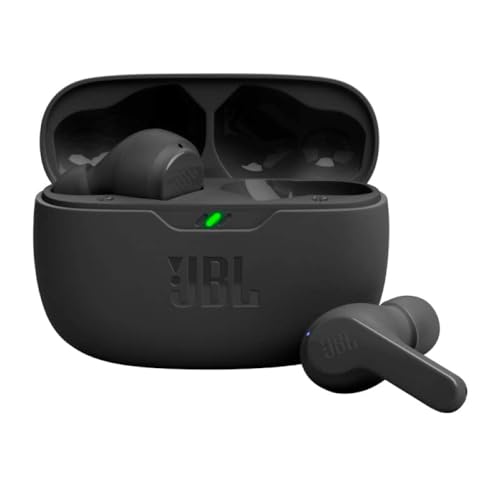
The JBL Vibe Beam takes a straightforward approach to wireless audio: deliver solid performance at an accessible price point. JBL, a brand with decades of audio experience, leverages their expertise in consumer-friendly sound tuning to create earbuds that prioritize what most people want – punchy bass, reliable connectivity, and exceptional battery life.
At the heart of each Vibe Beam earbud sits an 8mm dynamic driver, which is relatively large for this price category. Dynamic drivers work by using a magnetic coil attached to a diaphragm that vibrates to produce sound waves. Larger drivers generally move more air, which typically translates to better bass response and overall volume capability. JBL tunes these drivers with their "Deep Bass Sound" signature, emphasizing low-frequency reproduction that makes hip-hop, electronic music, and pop tracks feel more impactful.
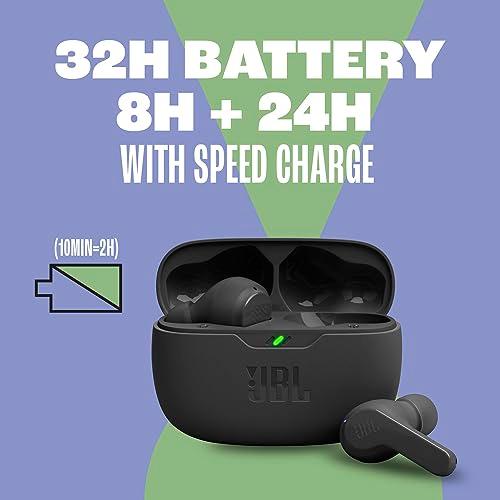
The battery performance is where the Vibe Beam truly shines. With 8 hours of playback from the earbuds themselves and an additional 24 hours stored in the charging case, you're looking at 32 total hours of listening time. This crushes many competitors in both budget and premium categories. The speed charging feature adds practicality – just 10 minutes of charging provides two extra hours of playback, perfect for those rushed mornings when you forgot to charge overnight.
JBL includes Smart Ambient technology, which encompasses two useful modes: Ambient Aware and TalkThru. Ambient Aware lets environmental sounds mix with your music, helping you stay aware of traffic or announcements. TalkThru mode temporarily lowers your music volume and amplifies voices around you, making quick conversations possible without removing the earbuds. These features use the built-in microphones to capture external audio and blend it with your music through digital processing.
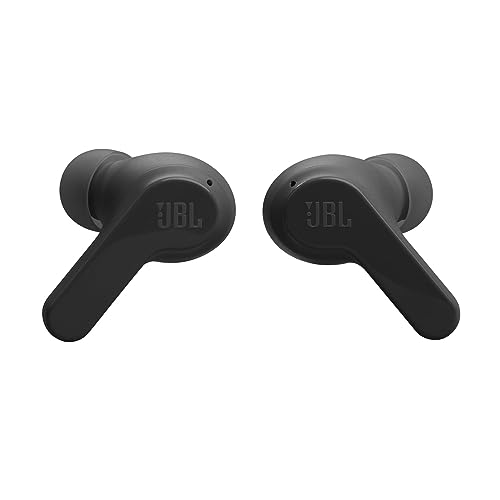
The build quality reflects the price point but includes thoughtful touches. The IP54 rating means the earbuds can handle splashes, sweat, and dust – essential for workouts or outdoor use. The stick-closed design provides a secure fit for most ear shapes, though the three included ear tip sizes might not accommodate everyone perfectly.
However, our research into user and professional reviews reveals some limitations. Sound quality, while adequate for casual listening, doesn't match the clarity and detail of premium alternatives. The frequency response shows some inconsistencies, particularly in the treble range where certain sounds can appear either dull or harsh. The lack of active noise cancellation means you'll hear more environmental noise, though the passive isolation from a good ear tip seal helps somewhat.
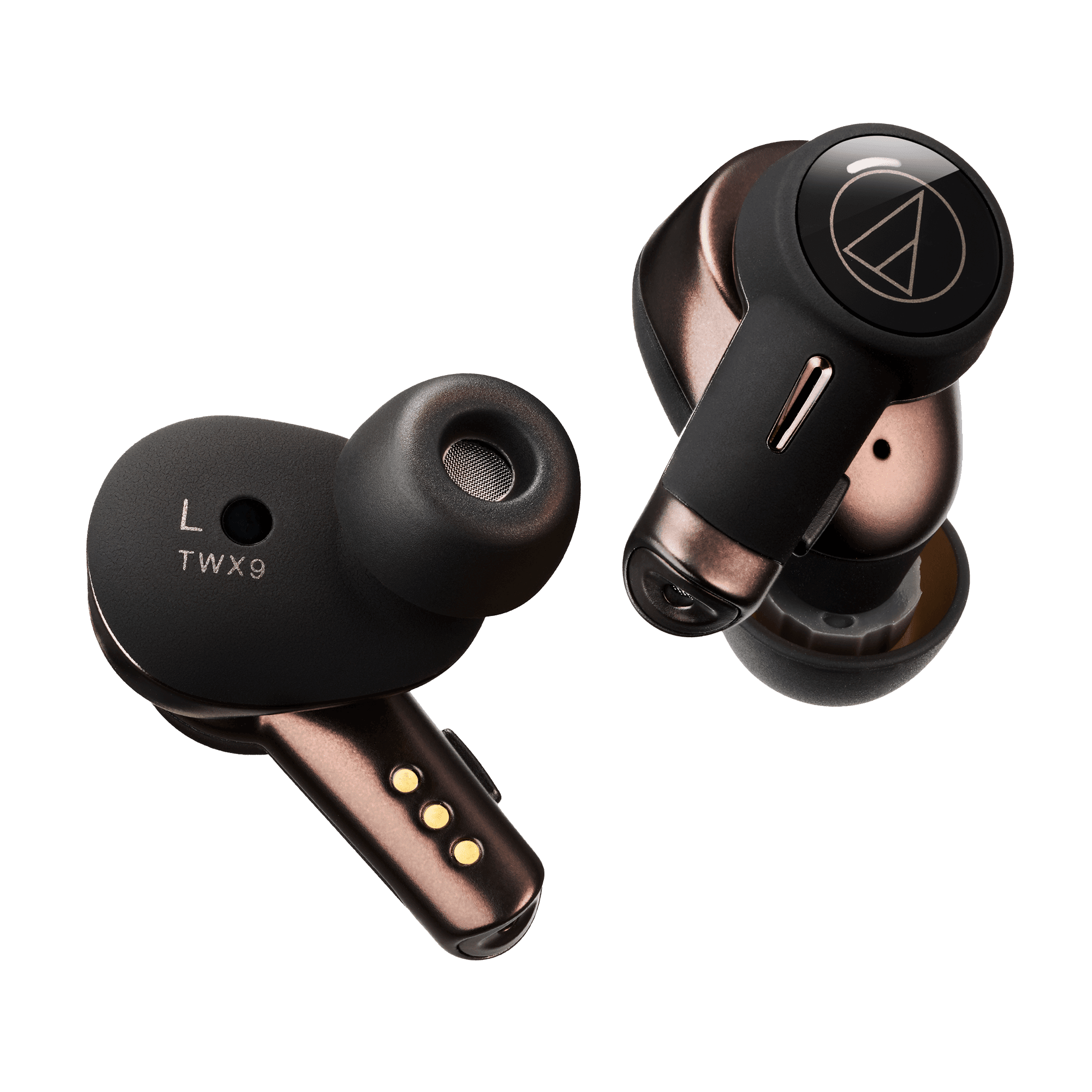
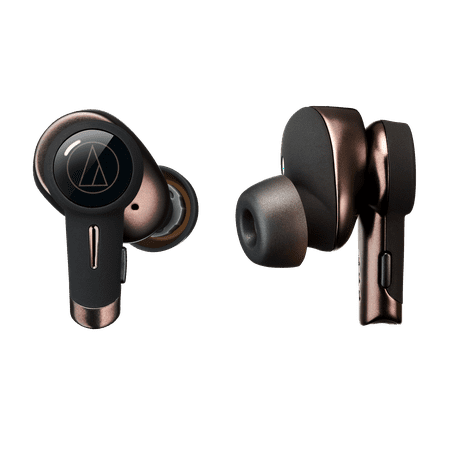
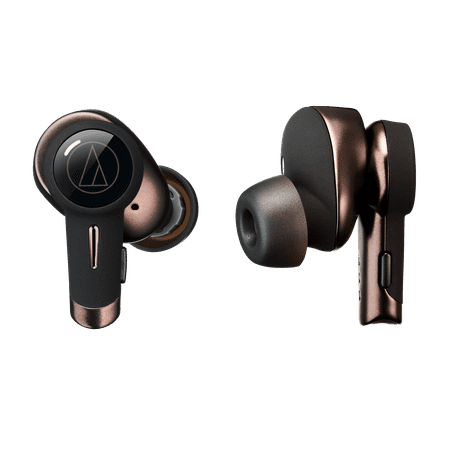
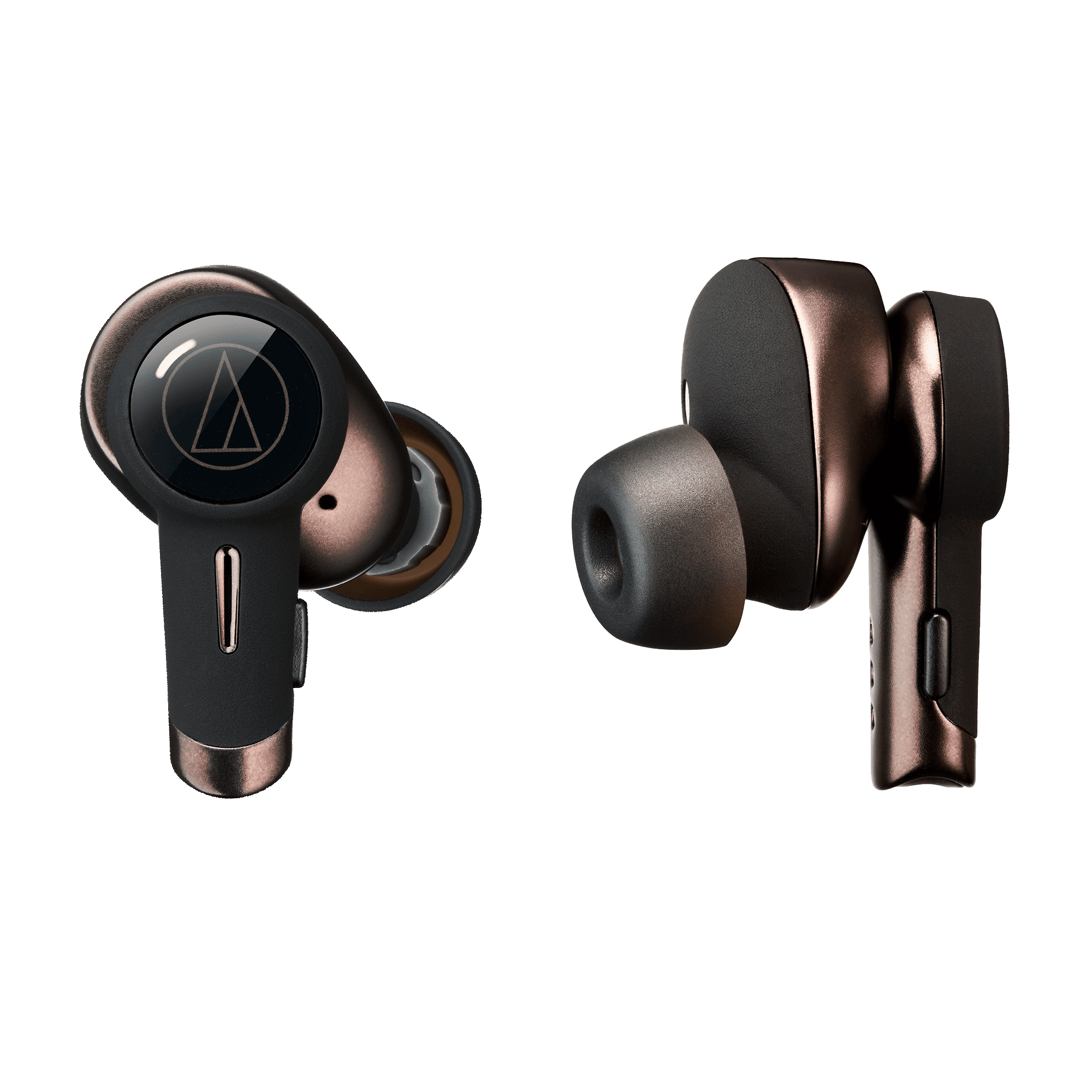
The Audio-Technica ATH-TWX9 represents a completely different philosophy. Audio-Technica, renowned for their professional audio equipment and turntables, brings decades of acoustic engineering to the wireless earbud space. These earbuds target users who prioritize sound quality and are willing to invest in advanced features.
The 5.8mm drivers might seem smaller than the Vibe Beam's 8mm units, but driver size alone doesn't determine quality. Audio-Technica engineers these drivers for high-resolution audio reproduction, with a frequency response extending from 10Hz to an impressive 40kHz – well beyond human hearing but indicating the driver's capability to reproduce complex harmonic content that contributes to perceived audio quality.
Active noise cancellation is where the ATH-TWX9 demonstrates its premium positioning. The digital hybrid ANC system uses both feedforward and feedback microphones to capture noise from different directions, then generates inverse sound waves to cancel unwanted audio. Multiple preset modes (Home, Office, Train, Airplane) optimize the cancellation for different environments, while an automatic mode continuously adjusts based on detected noise levels.
The codec support reveals another layer of sophistication. While the Vibe Beam relies on standard SBC and AAC codecs, the ATH-TWX9 supports Qualcomm's aptX Adaptive. This codec dynamically adjusts bitrate and quality based on connection stability and content type, potentially delivering higher fidelity audio than basic codecs. For users with compatible Android devices or newer computers, this can mean noticeably better sound quality.
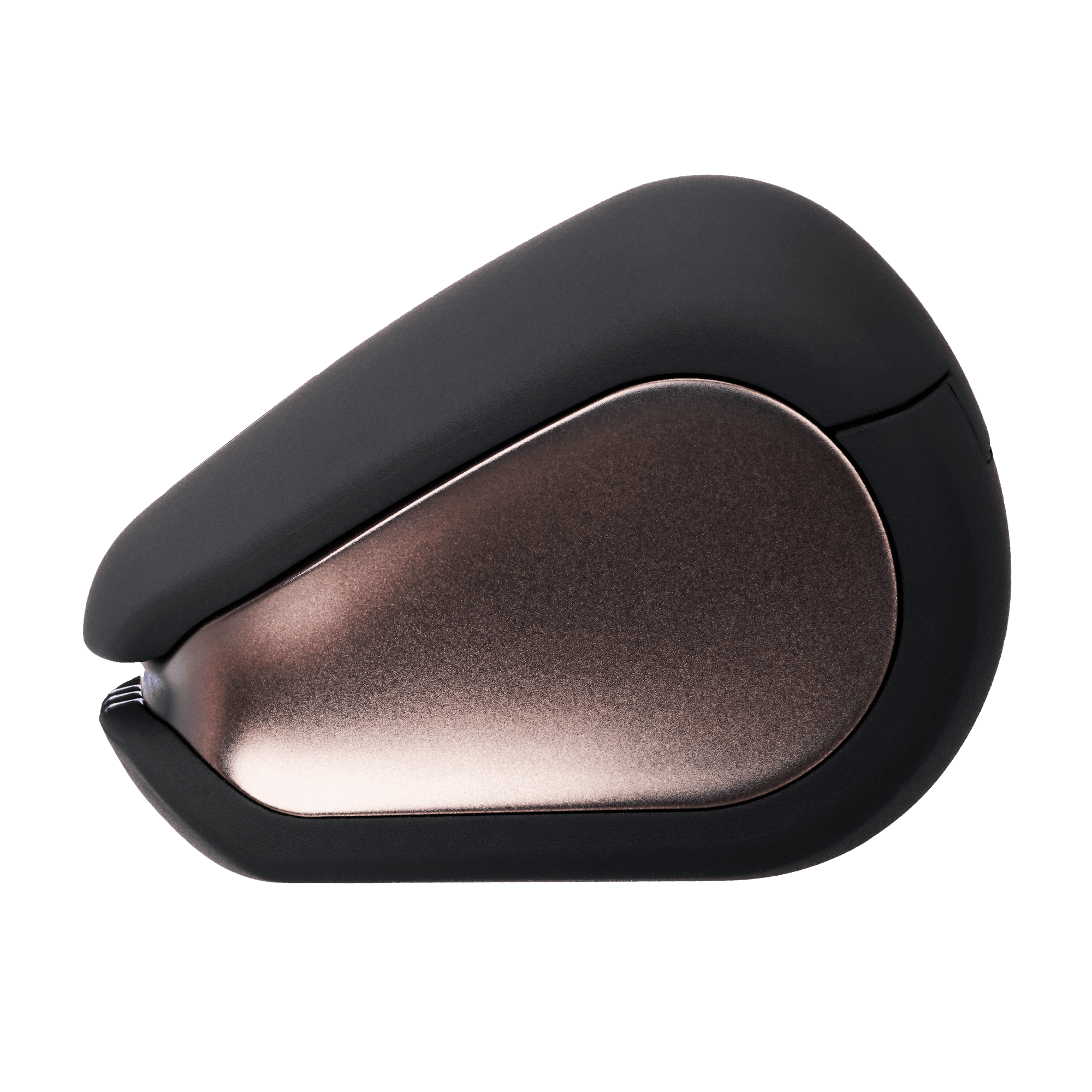
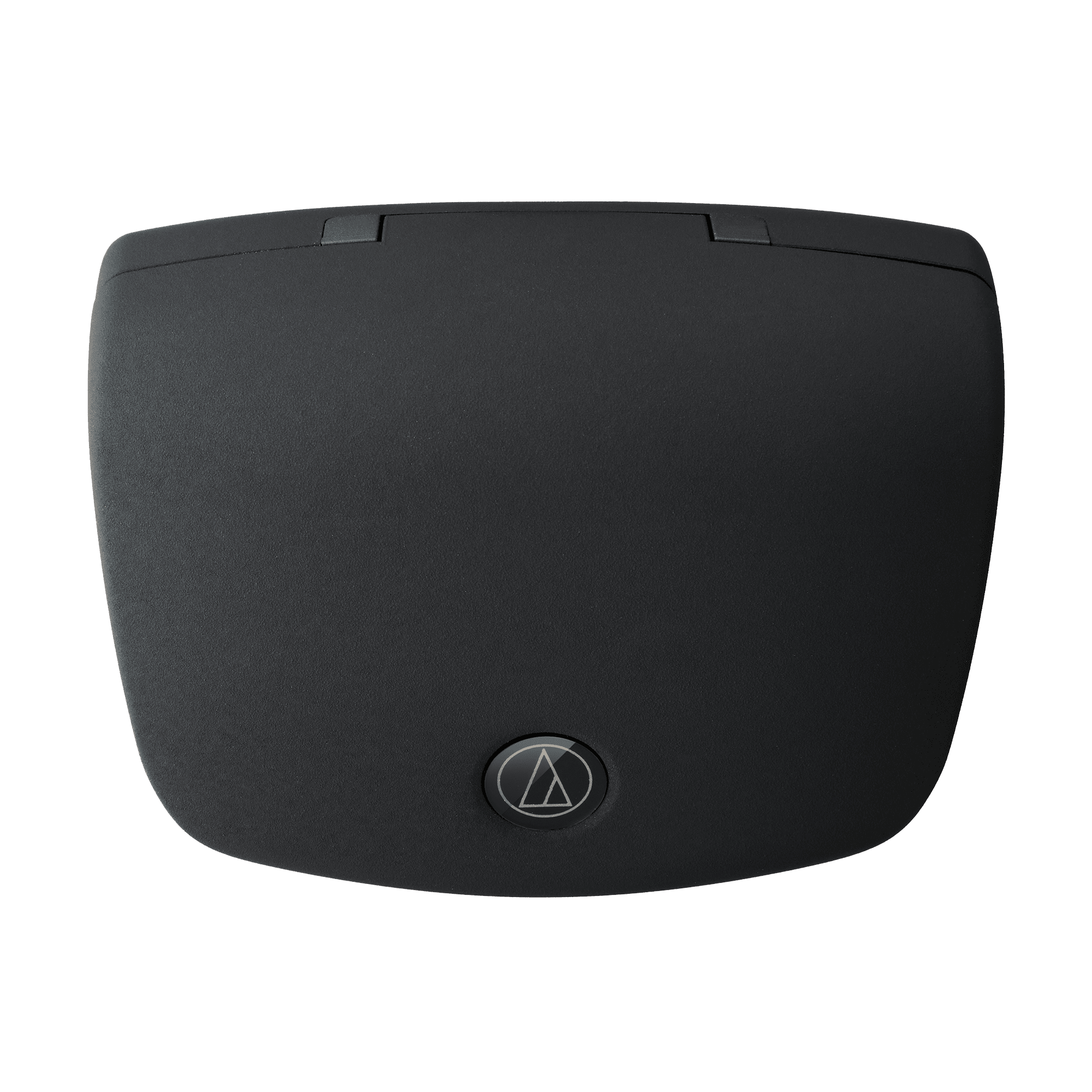
Audio-Technica includes an unusual feature: deep-UV LED sterilization built into the charging case. When you place the earbuds in the case, UV-C light sanitizes the surfaces, potentially eliminating bacteria and viruses. While this might seem gimmicky, it addresses legitimate hygiene concerns for devices that sit in your ears for hours.
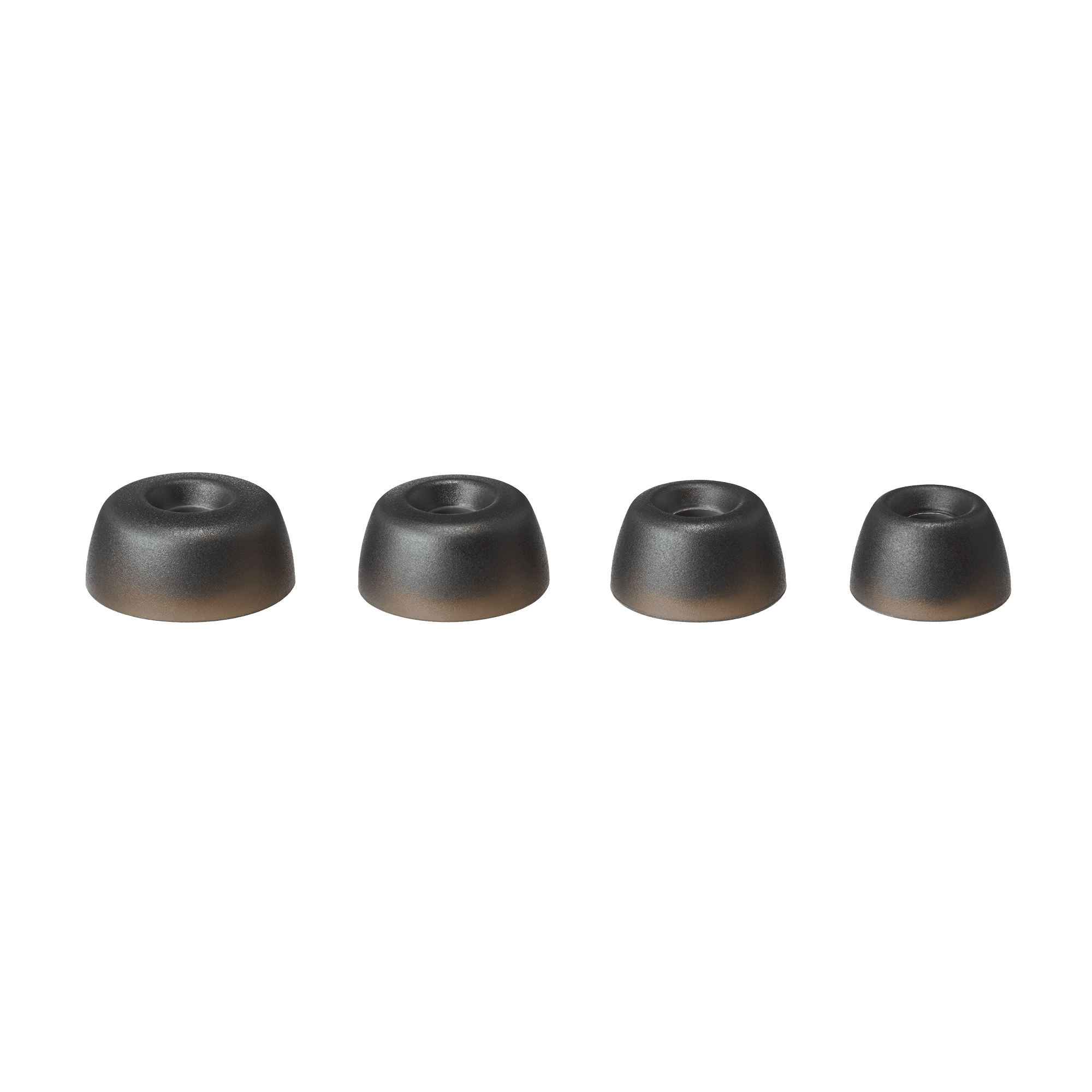
The customization options are extensive. Twelve different ear tip sizes and styles ensure nearly everyone can find a perfect fit, crucial for both comfort and optimal sound quality. The Audio-Technica Connect app provides detailed EQ controls, letting you fine-tune the sound signature to match your preferences or compensate for hearing differences.
Battery life, while shorter than the Vibe Beam at 6+18.5 hours total, remains reasonable for most users. The wireless charging case adds convenience, though it takes longer to fully recharge compared to JBL's more efficient charging system.
The performance gap between these earbuds is most apparent in sound quality, which makes sense given their price difference. The JBL Vibe Beam delivers a consumer-friendly sound that emphasizes bass and midrange presence. This tuning works well for mainstream music genres and creates an engaging listening experience for casual users. However, the sound lacks the refinement and detail retrieval of premium alternatives.
Professional reviews consistently note that the Vibe Beam's sound quality ranks poorly compared to other options in comprehensive testing. The bass, while prominent, can overwhelm midrange details, and the treble response shows irregularities that affect clarity. For podcasts, audiobooks, and casual music listening, these limitations might not bother you. But if you're particular about audio quality or listen to complex music with subtle details, the shortcomings become more apparent.
The Audio-Technica ATH-TWX9 approaches sound reproduction with audiophile sensibilities. The frequency response is more neutral and balanced, allowing individual instruments and voices to occupy their own space in the mix. The extended high-frequency response captures details like room ambiance and instrument textures that cheaper earbuds often miss. Bass response is present but controlled, providing foundation without muddying other frequencies.
For home theater use, the difference becomes even more pronounced. While neither earbud replaces a proper surround sound system, the ATH-TWX9's superior soundstage and detail resolution make movie dialogue clearer and sound effects more immersive. The low-latency mode helps synchronize audio with video, reducing the lip-sync delays that can plague wireless audio. The Vibe Beam, while functional for casual video watching, doesn't offer the same level of refinement.
Noise management represents another significant difference between these models. The JBL Vibe Beam relies entirely on passive isolation – the physical seal created by the ear tips blocking external sound. This approach works reasonably well for mid and high-frequency noises like conversations or air conditioning, but struggles with low-frequency rumble from engines, trains, or construction.
The Smart Ambient features partially address this limitation by giving you control over how much external sound you want to hear. This is particularly useful when walking in traffic or working in an office where you need to remain somewhat aware of your surroundings.
The ATH-TWX9's active noise cancellation represents a more sophisticated approach. The system continuously monitors external noise and generates inverse sound waves to cancel unwanted audio. The multiple preset modes optimize performance for different environments – airplane mode targets the steady drone of jet engines, while train mode handles the varied noise patterns of rail travel.
However, ANC isn't magic. It works best on steady, predictable sounds and has less effect on sudden noises like voices or door slams. The system also consumes battery power, which explains part of the ATH-TWX9's shorter battery life compared to the Vibe Beam.
For commuting or travel, the difference is substantial. The ATH-TWX9 can transform a noisy environment into a peaceful listening space, while the Vibe Beam leaves you more connected to your surroundings – which might be preferable for safety in some situations.
Battery performance affects daily usability more than any spec sheet can convey. The JBL Vibe Beam's 32-hour total battery life means you can go over a week without finding a charging cable, assuming typical usage patterns. This is particularly valuable for travelers, students, or anyone who frequently forgets to charge their devices.
The speed charging feature adds another layer of practicality. Those 10-minute top-ups that provide two hours of playback can save your commute or workout when you discover dead earbuds. The charging case itself is compact and lightweight, making it easy to carry without adding bulk to your pocket or bag.
The ATH-TWX9's 24.5-hour total battery life, while shorter, still covers most users' weekly needs. The wireless charging case offers convenience – you can drop it on a Qi pad without fumbling with cables. However, the longer full-charge time of 2.5 hours means more planning is required to ensure your earbuds stay powered.
Battery degradation over time affects both models, but the Vibe Beam's larger initial capacity provides more buffer as the lithium-ion cells inevitably lose capacity with age and charging cycles.
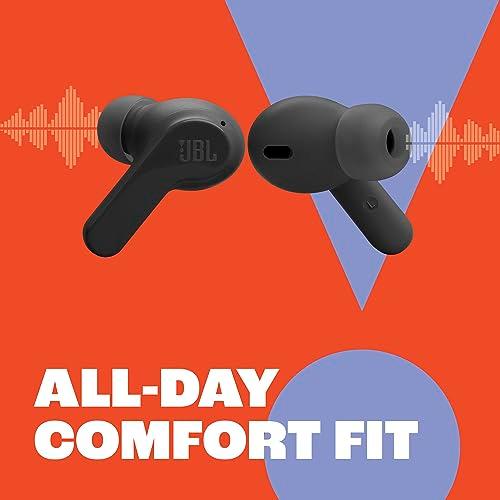
Comfort becomes increasingly important as usage time extends, and both earbuds take different approaches to achieving all-day wearability. The JBL Vibe Beam uses a stick-closed design that many users find secure and comfortable. At just 4.4 grams per earbud, they're among the lighter options available. However, the three included ear tip sizes might not accommodate all ear shapes perfectly.
The Audio-Technica ATH-TWX9 addresses fit more comprehensively with twelve different ear tip options. This extensive selection increases the likelihood of finding a perfect match for your ear canal shape and size. Proper fit isn't just about comfort – it dramatically affects sound quality and noise isolation. A poor seal reduces bass response and allows external noise to interfere with your music.
Weight-wise, the 5.4-gram ATH-TWX9 earbuds are slightly heavier but use premium materials that feel more substantial and durable. The additional weight is rarely noticeable during normal use.
The JBL Vibe Beam makes the most sense for users who prioritize value and battery life over absolute sound quality. If you're a student on a tight budget, someone who needs all-day battery life for long commutes, or a casual listener who primarily enjoys bass-heavy music genres, these earbuds deliver solid performance without breaking the bank. They're also ideal for users who want water resistance for workouts or outdoor activities.
The Audio-Technica ATH-TWX9 justifies its premium price for users who can appreciate and benefit from its advanced features. If you're an audio enthusiast who notices differences in sound quality, a frequent traveler who needs effective noise cancellation, or someone who values premium build quality and unique features like UV sterilization, the investment makes sense.
For home theater use, the ATH-TWX9 provides a significantly better experience with clearer dialogue, better spatial positioning, and reduced latency. However, both models work adequately for casual video streaming and gaming.
These earbuds succeed in their respective categories because they prioritize different aspects of the wireless audio experience. The JBL Vibe Beam proves that good wireless earbuds don't require a premium price tag, especially if you value battery life and basic functionality over audiophile-level sound quality. The Audio-Technica ATH-TWX9 demonstrates what's possible when engineering and features take priority over price optimization.
At the time of writing, the price gap between these models reflects genuine differences in performance, features, and build quality. Neither is objectively better than the other – they simply serve different needs and budgets. Your choice should align with how you plan to use wireless earbuds and what aspects of the experience matter most to you.
The wireless earbud market continues evolving rapidly, with improvements in battery technology, sound quality, and features appearing regularly. However, the fundamental trade-offs between price, performance, and features remain, making both the budget-focused Vibe Beam and premium ATH-TWX9 relevant choices for their intended audiences.
| JBL Vibe Beam True Wireless Earbuds | Audio-Technica ATH-TWX9 Noise-Canceling Wireless Earbuds |
|---|---|
| Sound Quality - The most noticeable difference in daily use | |
| 8mm drivers with bass-heavy tuning, adequate for casual listening | 5.8mm high-res drivers with balanced audiophile tuning, superior detail |
| Active Noise Cancellation - Essential for commuting and travel | |
| None (passive isolation only) | Digital hybrid ANC with multiple modes and automatic adjustment |
| Battery Life - Determines how often you need to charge | |
| 8hrs + 24hrs case = 32hrs total (industry-leading for the price) | 6hrs + 18.5hrs case = 24.5hrs total (adequate but shorter) |
| Charging Speed - Critical when you're in a hurry | |
| 10 minutes = 2 hours playback (excellent speed charging) | 2.5 hours for full charge (slower overall charging) |
| Audio Codec Support - Affects sound quality from compatible devices | |
| Standard SBC/AAC (basic but universal compatibility) | aptX Adaptive + Snapdragon Sound (higher quality with compatible devices) |
| Water Resistance - Important for workouts and weather | |
| IP54 earbuds, IPX2 case (better protection for active use) | IPX4 earbuds (good splash protection but lower rating) |
| Fit Customization - Crucial for comfort and sound isolation | |
| 3 ear tip sizes included (limited options) | 12 different ear tip sizes/types (extensive customization) |
| Smart Features - Convenience and unique capabilities | |
| Smart Ambient modes, VoiceAware, Find My Buds | UV sterilization case, multipoint pairing, low latency mode |
| Weight - Affects long-term comfort | |
| 4.4g per earbud (lightweight for extended wear) | 5.4g per earbud (slightly heavier but premium materials) |
| Price Category - The fundamental value proposition | |
| Budget-friendly with exceptional battery life | Premium with advanced features and superior audio quality |
The Audio-Technica ATH-TWX9 delivers significantly better sound quality with its high-resolution 5.8mm drivers and balanced audiophile tuning. The JBL Vibe Beam offers adequate sound with bass-heavy tuning suitable for casual listening, but professional reviews consistently rate its audio quality as below average compared to other options.
Only the Audio-Technica ATH-TWX9 features active noise cancellation with digital hybrid technology and multiple preset modes. The JBL Vibe Beam relies solely on passive noise isolation, though it includes Smart Ambient modes that let you control how much outside sound you hear.
The JBL Vibe Beam provides exceptional battery life with 8 hours per charge plus 24 hours from the case (32 total hours). The Audio-Technica ATH-TWX9 offers 6 hours per charge plus 18.5 hours from the case (24.5 total hours), which is still adequate but notably shorter.
The JBL Vibe Beam is better suited for workouts with its IP54 water and dust resistance rating and lightweight 4.4g design. The Audio-Technica ATH-TWX9 has a lower IPX4 rating and is slightly heavier at 5.4g per earbud, making it less ideal for intense exercise.
The Audio-Technica ATH-TWX9 offers superior comfort customization with 12 different ear tip sizes and premium materials. The JBL Vibe Beam is lighter and uses an ergonomic design, but only includes 3 ear tip sizes, which may not fit all users perfectly.
Both earbuds handle calls adequately, but the Audio-Technica ATH-TWX9 provides clearer call quality with dual MEMS microphones and beamforming technology. The JBL Vibe Beam includes VoiceAware technology that lets you control how much of your own voice you hear during calls.
The JBL Vibe Beam charges much faster with speed charging that provides 2 hours of playback from just 10 minutes of charging. The Audio-Technica ATH-TWX9 takes 2.5 hours for a full charge but offers wireless charging convenience.
Both the JBL Vibe Beam and Audio-Technica ATH-TWX9 work with iPhone and Android devices via Bluetooth 5.2. However, the ATH-TWX9 offers additional benefits with Android devices that support aptX Adaptive codec for higher quality audio streaming.
The Audio-Technica ATH-TWX9 is superior for travel thanks to its active noise cancellation with airplane and train modes, plus multipoint pairing to connect to multiple devices simultaneously. The JBL Vibe Beam offers longer battery life for extended trips but lacks noise cancellation.
Yes, both models have companion apps. The JBL Vibe Beam works with the JBL Headphones App for basic EQ customization and feature control. The Audio-Technica ATH-TWX9 uses the Audio-Technica Connect app with more extensive customization options including detailed EQ controls and low latency mode.
The JBL Vibe Beam provides exceptional value in the budget category with industry-leading battery life and practical features. The Audio-Technica ATH-TWX9 justifies its premium pricing with superior sound quality, active noise cancellation, and advanced features like UV sterilization.
Both the JBL Vibe Beam and Audio-Technica ATH-TWX9 support mono listening, allowing you to use either earbud independently. This feature is useful for staying aware of your surroundings or extending battery life during long listening sessions.
We've done our best to create useful and informative comparisons to help you decide what product to buy. Our research uses advanced automated methods to create this comparison and perfection is not possible - please contact us for corrections or questions. These are the sites we've researched in the creation of this article: bestbuy.com - jbl.com - rtings.com - jbl.com - youtube.com - youtube.com - audio46.com - jbl.com - soundguys.com - bestbuy.com - walmart.com - uclastore.com - bestbuy.com - manuals.plus - digitaltrends.com - audio-technica.com - dhrme.nl - youtube.com - stereonet.com - youtube.com - youtube.com - audio-technica.com - soundguys.com - audio-technica.com - thomannmusic.com - soundguys.com - majorhifi.com - 9to5toys.com - audio-technica.com - loudnwireless.com - youtube.com - audio46.com - digitaltrends.com - voltmusicstore.com - houseofstereo.com - electronicexpress.com - newegg.com - youtube.com - sea.audio-technica.com - bhphotovideo.com - datavision.com - audio-technica.com - audioxpress.com - audiojunction.com.au - bestofhighend.com - techjioblog.com - audio-technica.co.jp - 9to5toys.com - audio-technica.com.hk - audio-technica.com - audio-technica.com - hiconsumption.com

Privacy Policy
Terms and Conditions - Affiliate Policy
Home Security
© Copyright 2008-2026.
11816 Inwood Rd #1211, Dallas, TX 75244