

The budget true wireless earbud market has exploded in recent years, transforming from a luxury category dominated by Apple's AirPods into an incredibly competitive space where you can get surprisingly good performance for under $50. Two standout contenders that consistently appear in "best budget earbuds" discussions are the JLab Go Pop+ and the JBL Vibe Beam. While both offer wireless convenience without breaking the bank, they take fundamentally different approaches to delivering value.
After researching extensive user feedback and professional reviews, it's clear that these earbuds represent two distinct philosophies in budget audio design. The JLab Go Pop+ prioritizes cramming as many premium features as possible into an ultra-affordable package, while the JBL Vibe Beam focuses on delivering better raw audio performance through larger drivers and established brand expertise. Understanding these differences is crucial to making the right choice for your needs.
Before diving into specifics, it's worth understanding what separates good budget earbuds from disappointing ones. At this price level, you're inevitably making compromises compared to premium models, but the best budget options still deliver on the fundamentals that matter most for daily use.
Sound quality remains paramount, but it's not just about how good they sound—it's about whether they sound good for the types of music you actually listen to. A pair of earbuds with booming bass might be perfect for hip-hop fans but terrible for podcast listeners. Battery life becomes critical since you can't rely on premium fast-charging cases or wireless charging conveniences. Comfort and fit matter even more in budget models because you can't afford custom molding or premium materials that compensate for poor ergonomics.
Build quality and durability represent perhaps the biggest gamble in budget audio. While you shouldn't expect the same longevity as $200+ models, the difference between earbuds that last six months versus three years often comes down to smart engineering choices rather than expensive materials.
Finally, features and connectivity increasingly separate the winners from the also-rans. Basic Bluetooth pairing is table stakes—what matters is whether the earbuds offer useful customization options, stable connections, and thoughtful extras that improve daily use.
The fundamental distinction between the JLab Go Pop+ and JBL Vibe Beam lies in their design priorities, and this difference shapes everything from their sound signatures to their long-term value propositions.
The JLab Go Pop+, released in 2023, represents JLab's philosophy of democratizing premium features. JLab built their reputation by taking technologies typically reserved for expensive earbuds and finding ways to implement them affordably. The Go Pop+ includes Bluetooth 5.3 (the latest version at the time of writing), comprehensive app customization, environmental awareness modes, and Google Fast Pair integration—features you'd typically find on earbuds costing three times more.
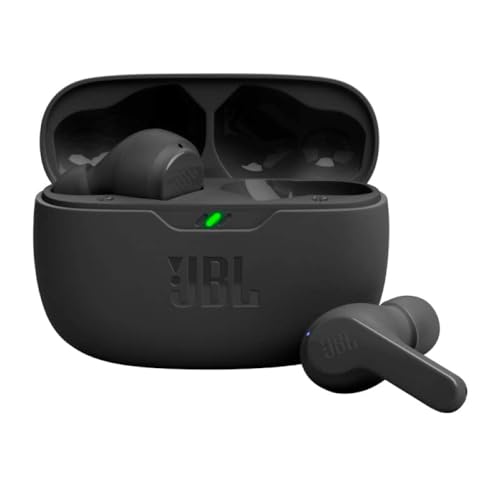
The JBL Vibe Beam, also arriving in 2023, takes a different approach rooted in JBL's decades-long reputation in professional and consumer audio. Rather than maximizing feature count, JBL focused on delivering better fundamental audio performance through larger 8mm drivers (compared to the Go Pop+'s 6mm units) and their proprietary "Deep Bass Sound" tuning. This reflects JBL's belief that most users would prefer better-sounding earbuds with fewer bells and whistles.
Both approaches have merit, but they appeal to different types of users. The JLab strategy works well for tech-savvy buyers who want to customize their experience and appreciate having the latest connectivity standards. The JBL approach appeals to users who primarily care about how their music sounds and trust an established audio brand to get the tuning right out of the box.
When it comes to sound quality, the most immediately obvious difference between these earbuds is driver size. The JBL Vibe Beam's 8mm drivers provide a significant advantage in potential volume and bass impact compared to the JLab Go Pop+'s 6mm units. Larger drivers can move more air, which translates to deeper bass response and generally more dynamic sound reproduction.
In practice, this size difference is immediately noticeable when listening to bass-heavy genres. The JBL Vibe Beam delivers what reviewers consistently describe as punchy, impactful low-end that makes hip-hop, EDM, and pop music feel more engaging. JBL's "Deep Bass Sound" tuning emphasizes these lower frequencies in a way that feels satisfying rather than overwhelming, though some technical measurements suggest the frequency response includes some irregular peaks and dips that might not appeal to audio purists.
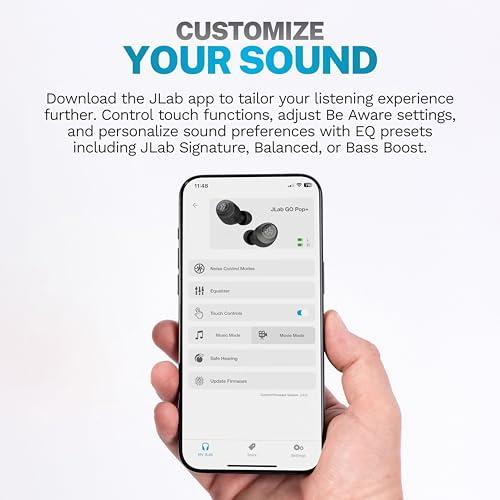
The JLab Go Pop+ takes a different approach to audio quality, compensating for its smaller drivers through extensive customization options. The JLab app provides a full parametric equalizer along with presets like "JLab Signature," "Balanced," and "Bass Boost." This flexibility means that while the Go Pop+ might not have the immediate bass impact of the Vibe Beam, you can tune it to match your preferences over time.
From our research into user experiences, the customization advantage of the JLab Go Pop+ becomes more valuable the longer you own the earbuds. Many users report discovering new sound profiles months after purchase, effectively getting multiple pairs of earbuds from a single purchase. The JBL Vibe Beam, by contrast, sounds great immediately but offers limited ability to adapt to changing tastes or different types of content.
Frequency response—how well earbuds reproduce different pitches from low bass to high treble—reveals interesting differences between these models. The JLab Go Pop+ aims for a more neutral, balanced presentation across the frequency spectrum (20 Hz to 20 kHz), which works well for a variety of music genres and spoken content like podcasts. The JBL Vibe Beam deliberately emphasizes bass frequencies while potentially under-representing mid-range frequencies where vocals live, creating a more exciting but less accurate sound signature.
For home theater use, both earbuds offer surprisingly decent performance given their budget positioning, though neither includes advanced features like surround sound processing or ultra-low latency modes found in gaming-focused models. The JLab Go Pop+'s Movie Mode reduces audio delay to under 200 milliseconds, which helps keep dialogue synchronized with video content. The JBL Vibe Beam doesn't specify its latency characteristics, though Bluetooth 5.2 generally provides acceptable performance for casual video watching.
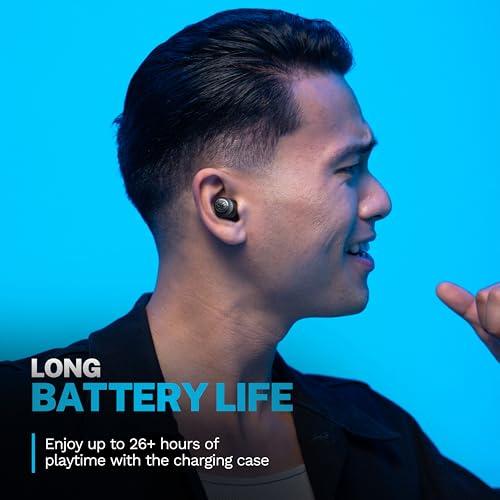
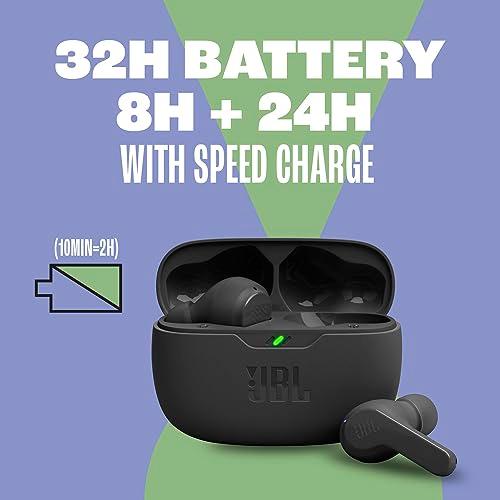
Battery performance represents perhaps the clearest advantage for the JLab Go Pop+, and it's an area where the differences have real-world impact on daily usability. The Go Pop+ delivers over 35 hours of total listening time—9 hours from each earbud plus an additional 26 hours from the charging case. This compares favorably to the JBL Vibe Beam's 32 hours total (8 hours per earbud plus 24 hours from the case).
While a three-hour difference might seem minor, it translates to meaningful convenience advantages. The longer single-earbud runtime of the JLab Go Pop+ means fewer interruptions during long flights, work sessions, or study periods. The extra case capacity provides peace of mind for travelers or anyone who might forget to charge their earbuds regularly.
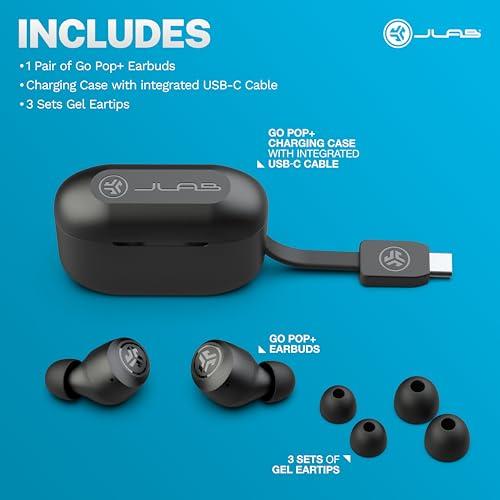
More importantly, the JLab Go Pop+ includes an integrated USB-C charging cable built directly into the case. This seemingly simple feature eliminates one of the most common frustrations with wireless earbuds: forgetting your charging cable. The integrated cable means you can charge your earbuds from any USB port without carrying additional accessories, making the Go Pop+ significantly more convenient for travel or office use.
Both earbuds offer quick charging capabilities, but the JLab Go Pop+ provides more specific and impressive claims: 10 minutes of charging delivers one full hour of playback. This rapid charging helps mitigate the inconvenience when you do run out of battery, getting you back to listening quickly.
Battery chemistry and management might seem like boring technical details, but they significantly impact long-term ownership satisfaction. Both earbuds use lithium-ion polymer batteries, which are standard for portable electronics. However, the JLab Go Pop+'s longer runtime suggests either more efficient power management or larger battery capacity within the size constraints. Over time, this efficiency advantage should translate to better battery longevity as the cells age.
Physical design plays a crucial role in daily satisfaction with any earbuds, but it's especially important in budget models where you can't rely on premium materials to compensate for poor ergonomics. The JLab Go Pop+ and JBL Vibe Beam take different approaches to achieving comfortable, secure fits.
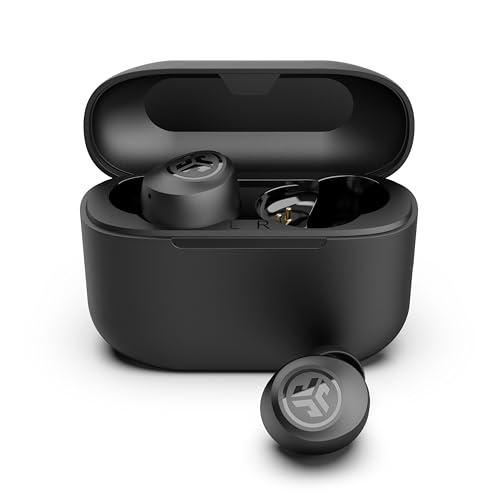
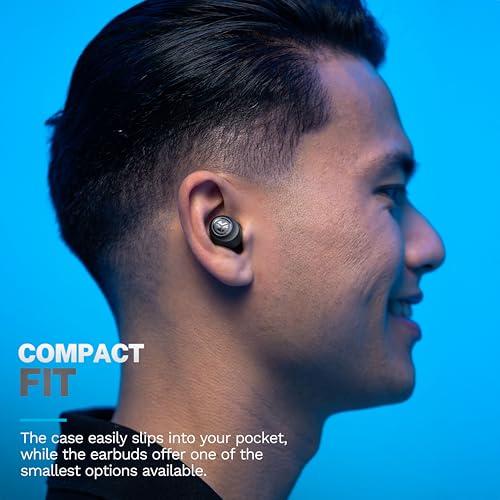
The JLab Go Pop+ prioritizes lightweight construction, with each earbud weighing just 3.9 grams (7.8 grams total for the pair). This ultra-light design reduces ear fatigue during extended listening sessions, making them particularly suitable for users who wear earbuds for hours at a time. The compact form factor that JLab describes as "perfectly pocket-sized" also contributes to portability, though some users might prefer a more substantial feel that suggests durability.
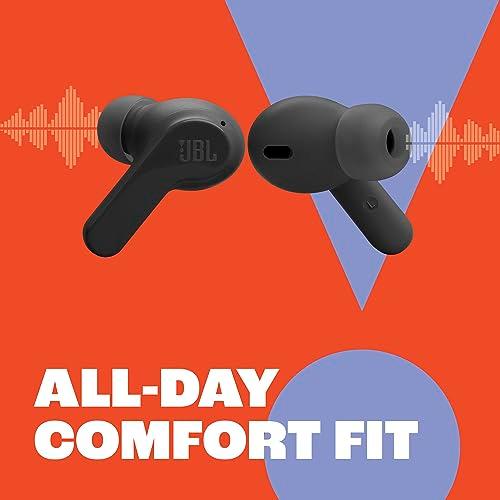
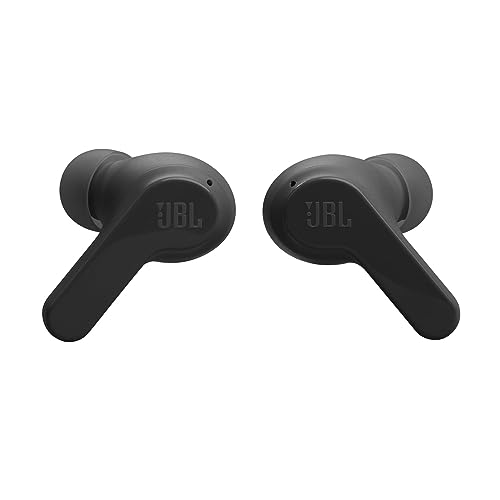
The JBL Vibe Beam uses what JBL calls a "stick-closed design," which creates a more secure seal in the ear canal. This design choice improves passive noise isolation (blocking outside sound through physical seal rather than electronic processing) and enhances bass response by preventing sound leakage. However, some users report that this more secure fit can become uncomfortable during long sessions, and the stick design might not work well for all ear shapes.
Both earbuds include multiple silicone ear tip sizes, but finding the right fit is more critical for the JBL Vibe Beam due to its emphasis on creating a tight seal. A poor fit not only affects comfort but significantly degrades the bass performance that represents the Vibe Beam's main selling point.
IPX4 water resistance is standard on both models, providing protection against sweat and light splashes. This rating means you can confidently use either pair for workouts or outdoor activities, though neither is suitable for swimming or heavy rain exposure. The JLab Go Pop+'s lighter weight gives it a slight advantage for fitness use, as the earbuds are less likely to shift during movement.
The connectivity differences between these earbuds highlight how rapidly wireless technology has evolved and why staying current matters for long-term satisfaction. The JLab Go Pop+ includes Bluetooth 5.3, the latest version available at the time of writing, while the JBL Vibe Beam uses the older Bluetooth 5.2 standard.
Bluetooth 5.3 brings several practical improvements over 5.2, including better connection stability, lower power consumption, and enhanced security features. More importantly, it includes support for newer audio codecs and connection protocols that weren't available in earlier versions. While both earbuds support the standard SBC and AAC codecs that work with all phones, having the latest Bluetooth version provides better future-proofing as streaming services and phone manufacturers adopt newer standards.
The JLab Go Pop+'s support for Google Fast Pair represents a significant convenience advantage for Android users. Fast Pair eliminates the traditional Bluetooth pairing process, automatically connecting the earbuds to your phone and syncing them across all your Google-connected devices. If you've ever struggled with traditional Bluetooth pairing or forgotten which device your earbuds were last connected to, Fast Pair feels almost magical in its simplicity.
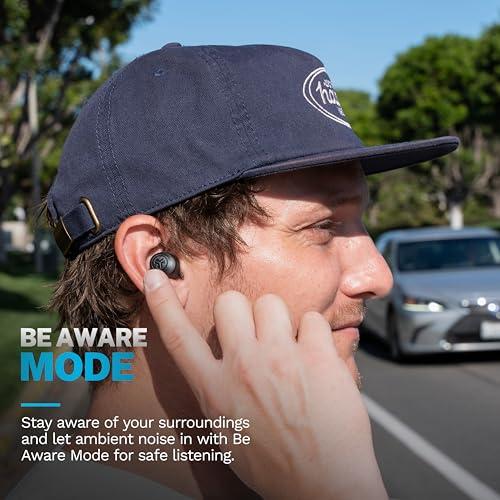
Environmental awareness features represent another area where the JLab Go Pop+ pulls ahead. The "Be Aware" mode uses the earbuds' microphones to amplify outside sounds, allowing you to hear traffic, conversations, or announcements without removing the earbuds. This feature proves invaluable for commuting, office use, or any situation where you need to maintain situational awareness while listening to audio.
The JBL Vibe Beam lacks equivalent awareness features, requiring you to physically remove an earbud or pause your audio to hear the outside world. For some users, this isn't a significant limitation, but for others, especially those who use earbuds throughout their workday, the absence of pass-through audio can be genuinely inconvenient.
Mobile app support increasingly separates good earbuds from great ones, and this represents perhaps the starkest difference between these two models. The JLab Go Pop+ offers comprehensive integration with the JLab app, providing customization options typically found only on much more expensive earbuds.
The JLab app includes a full parametric equalizer, allowing you to adjust specific frequency ranges rather than choosing from simple presets. This level of control means you can compensate for hearing differences, optimize for specific music genres, or adjust the sound for different environments. The app also allows custom button mapping, so you can assign specific functions to different tap patterns based on your usage habits.
Additionally, the JLab app provides detailed battery indicators for both earbuds and the case, firmware update notifications, and access to features like Movie Mode for reduced audio latency. The app even includes a "Safe Hearing" section that can help prevent long-term hearing damage by monitoring your listening habits and volume levels.
The JBL Vibe Beam offers basic app support through the JBL Headphones app, but the functionality is significantly more limited. You can access a few EQ presets and adjust some basic settings, but there's no custom EQ, no advanced customization options, and fewer ongoing feature updates compared to the JLab ecosystem.
From a long-term ownership perspective, app support affects how well your earbuds adapt to changing needs. The JLab Go Pop+'s extensive customization means the earbuds can evolve with your preferences, while the JBL Vibe Beam's limited app integration means you're largely stuck with the out-of-box experience.
Voice call quality often gets overlooked in earbud reviews, but it's increasingly important as remote work and phone-based communication become more common. Both earbuds include multiple microphones for voice pickup and noise cancellation, but their implementations differ significantly.
The JLab Go Pop+ uses two MEMS (Micro-Electro-Mechanical Systems) microphones with what JLab calls "1-mic ENC + DNS Algorithm" for background noise reduction. MEMS microphones are essentially tiny mechanical microphones that convert sound waves into electrical signals through microscopic moving parts. They're preferred in earbuds because they're small, power-efficient, and relatively immune to vibration and temperature changes.
The Environmental Noise Canceling (ENC) system uses one microphone to pick up your voice and another to monitor background noise, then digitally subtracts the unwanted sounds. The Digital Noise Suppression (DNS) algorithm provides additional processing to clean up the audio signal before transmitting it to the other party.
The JBL Vibe Beam also includes MEMS microphones, but user feedback suggests the implementation isn't as effective at isolating background noise. Several reviewers specifically mentioned wishing the Vibe Beam's microphone performance was better for calls, particularly in noisy environments.
VoiceAware technology on the JBL Vibe Beam allows you to hear your own voice during calls, which helps avoid the "talking in a tunnel" sensation common with sealed earbuds. However, this feature doesn't address the fundamental microphone pickup and noise canceling performance that determines how you sound to others.
For users who frequently take calls, especially in noisy environments like coffee shops or open offices, the JLab Go Pop+'s superior microphone processing represents a significant practical advantage.
While neither earbud is specifically designed for home theater use, both can serve as convenient alternatives to traditional headphones for TV watching, gaming, or movie streaming. The key considerations are audio latency (delay between video and sound), battery life for extended viewing sessions, and sound quality for dialogue clarity.
Audio latency becomes critical when watching video content because even small delays between lip movements and sound can be distracting. The JLab Go Pop+'s Movie Mode specifically addresses this issue by reducing latency to under 200 milliseconds, which is generally imperceptible to most users. Music Mode prioritizes audio quality over latency, giving you options based on your content type.
The JBL Vibe Beam doesn't specify its latency characteristics, though Bluetooth 5.2 generally provides acceptable performance for casual video watching. However, without a dedicated low-latency mode, you might notice slight sync issues with certain devices or streaming services.
For extended viewing sessions, the JLab Go Pop+'s superior battery life becomes advantageous. Nine hours of continuous playback per earbud means you can watch multiple movies or binge entire seasons without interruption. The JBL Vibe Beam's eight-hour runtime is still respectable but might require charging breaks during very long sessions.
Dialogue clarity depends largely on how well each earbud reproduces mid-range frequencies where human voices live. The JLab Go Pop+'s more balanced frequency response generally provides clearer speech reproduction, while the JBL Vibe Beam's bass-heavy tuning might make voices sound slightly recessed or unclear, particularly in action movies with prominent soundtracks.
Neither earbud includes advanced features like surround sound processing or dedicated gaming modes, but both provide significantly better sound isolation than traditional TV speakers, allowing you to hear subtle audio details without disturbing others in your household.
After extensive research into user experiences and technical specifications, clear patterns emerge regarding which earbud serves different types of users best.
Choose the JLab Go Pop+ if you:
Choose the JBL Vibe Beam if you:
At the time of writing, both earbuds represent excellent value in the budget wireless category, but they excel in different areas that appeal to different user priorities.
The JLab Go Pop+ stands out as the more complete package for most users, offering premium features typically found on earbuds costing significantly more. Its combination of exceptional battery life, comprehensive app support, latest Bluetooth standards, and thoughtful convenience features like the integrated charging cable create a user experience that feels surprisingly premium. The extensive customization options mean these earbuds can adapt to changing needs and preferences over time, providing better long-term value.
The JBL Vibe Beam excels in delivering immediate audio satisfaction, particularly for users who prioritize bass response and overall sound impact. JBL's audio expertise shines through in the tuning and driver implementation, creating earbuds that sound engaging right out of the box. For users who primarily care about how their music sounds and don't need extensive customization or advanced features, the Vibe Beam provides excellent audio performance at a competitive price.
For most buyers seeking maximum functionality and future-proofing in budget earbuds, the JLab Go Pop+ offers the more compelling value proposition. However, bass enthusiasts and users who prefer established audio brand pedigree will find the JBL Vibe Beam delivers more immediately satisfying sound quality.
The choice ultimately depends on whether you prioritize feature richness and long-term flexibility (Go Pop+) or immediate audio satisfaction and brand reputation (Vibe Beam). Both represent smart purchases in their own right, but understanding these fundamental differences ensures you'll choose the pair that best matches your specific needs and listening habits.
| JLab Go Pop+ True Wireless Earbuds | JBL Vibe Beam True Wireless Earbuds |
|---|---|
| Driver Size - Larger drivers typically deliver more bass and volume | |
| 6mm dynamic drivers | 8mm dynamic drivers (33% larger for better bass impact) |
| Total Battery Life - Critical for daily use without frequent charging | |
| 35+ hours (9h earbuds + 26h case) | 32 hours (8h earbuds + 24h case) |
| Bluetooth Version - Newer versions offer better stability and features | |
| Bluetooth 5.3 (latest standard with improved connectivity) | Bluetooth 5.2 (solid but older standard) |
| EQ Customization - Ability to tune sound to your preferences | |
| Full custom EQ via JLab app with multiple presets | Basic EQ presets only, limited customization |
| Charging Convenience - How easy it is to keep them powered | |
| Integrated USB-C cable in case (no extra cables needed) | Standard charging case (requires separate USB-C cable) |
| Smart Features - Modern conveniences that improve daily use | |
| Google Fast Pair, Be Aware Mode, Movie/Music modes | Basic connectivity, limited smart features |
| Weight Per Earbud - Affects comfort during extended wear | |
| 3.9g each (ultra-lightweight design) | Weight not specified (likely heavier due to larger drivers) |
| Water Resistance - Protection against sweat and moisture | |
| IPX4 (sweat and splash resistant) | IP54 earbuds, IPX2 case (better dust protection) |
| Microphone Quality - Important for clear phone calls | |
| 2x MEMS mics with Environmental Noise Canceling + DNS | MEMS mics with basic noise processing |
| Audio Codecs - Affects sound quality with different devices | |
| SBC, AAC (universal compatibility) | SBC, AAC (universal compatibility) |
| Quick Charge - How fast you can get back to listening | |
| 10 minutes = 1 hour playback | 10 minutes = 2 hours playbook (faster charging) |
| App Support - Ongoing features and customization options | |
| Comprehensive JLab app with custom controls, EQ, safe hearing | Basic JBL Headphones app with limited features |
The JBL Vibe Beam delivers more impactful bass thanks to its larger 8mm drivers compared to the JLab Go Pop+'s 6mm drivers. However, the JLab Go Pop+ offers superior customization with a full EQ in its app, allowing you to tune the sound exactly to your preferences. For immediate bass satisfaction, choose the JBL Vibe Beam. For long-term flexibility and personalized sound, the JLab Go Pop+ is better.
The JLab Go Pop+ provides up to 9 hours of playback per earbud, while the JBL Vibe Beam offers up to 8 hours. For total battery life including the case, the JLab Go Pop+ delivers 35+ hours compared to the JBL Vibe Beam's 32 hours. The JLab Go Pop+ wins in battery longevity.
The JLab Go Pop+ has superior call quality with dual MEMS microphones and Environmental Noise Canceling technology that reduces background noise. The JBL Vibe Beam also has MEMS microphones but users report less effective noise isolation during calls. For frequent phone calls, the JLab Go Pop+ is the better choice.
The JLab Go Pop+ weighs only 7.8g total for both earbuds, making them ultra-lightweight and comfortable for extended wear. The JBL Vibe Beam uses a stick-closed design that creates a secure seal but may feel less comfortable over time. For all-day comfort, the JLab Go Pop+ has the advantage due to its lighter weight.
Both earbuds offer sweat resistance, but the JLab Go Pop+ has IPX4 rating and superior stability during movement due to its lightweight design. The JBL Vibe Beam offers IP54 rating for better dust protection but may be less secure during vigorous exercise. The JLab Go Pop+ is generally better for fitness activities.
The JLab Go Pop+ offers comprehensive app integration with custom EQ, personalized touch controls, safe hearing monitoring, and multiple listening modes. The JBL Vibe Beam has basic app support with limited EQ presets and fewer customization options. The JLab Go Pop+ clearly wins in app functionality and ongoing feature updates.
The JLab Go Pop+ includes a dedicated Movie Mode that reduces audio latency to under 200ms, keeping dialogue synchronized with video. The JBL Vibe Beam doesn't specify latency optimization for video content. For home theater use and media consumption, the JLab Go Pop+ is specifically designed to handle video better.
The JLab Go Pop+ uses the latest Bluetooth 5.3 technology with Google Fast Pair support for Android devices, providing more stable connections and easier pairing. The JBL Vibe Beam uses Bluetooth 5.2 with standard pairing processes. The JLab Go Pop+ offers more advanced and reliable connectivity features.
The JLab Go Pop+ features a Be Aware Mode that uses the microphones to let ambient sound through, perfect for staying alert while commuting or exercising. The JBL Vibe Beam lacks this environmental awareness feature, requiring you to remove an earbud to hear outside sounds. The JLab Go Pop+ is safer for outdoor use.
The JLab Go Pop+ includes an integrated USB-C cable built into the charging case, eliminating the need to carry separate charging cables. The JBL Vibe Beam uses a traditional charging case that requires a separate USB-C cable. The JLab Go Pop+ is significantly more convenient for travel and daily use.
Both earbuds offer water resistance, but the JBL Vibe Beam has a slight edge with IP54 rating for dust protection versus the JLab Go Pop+'s IPX4 rating. However, the JLab Go Pop+ comes with a two-year warranty and has proven reliability based on user reviews. Both should handle daily use well, with the JBL Vibe Beam offering marginally better environmental protection.
The JLab Go Pop+ provides exceptional value with premium features like Bluetooth 5.3, comprehensive app support, integrated charging cable, and the longest battery life in its category. The JBL Vibe Beam offers strong audio performance and brand reputation but fewer advanced features. For most users seeking maximum features per dollar, the JLab Go Pop+ delivers superior overall value.
We've done our best to create useful and informative comparisons to help you decide what product to buy. Our research uses advanced automated methods to create this comparison and perfection is not possible - please contact us for corrections or questions. These are the sites we've researched in the creation of this article: whathifi.com - jlab.com - soundguys.com - avrilmarieaalund.com - jlab.com - bestbuy.com - jlab.com - shop.ncsu.edu - jlab.com - techgearlab.com - youtube.com - manuals.plus - jlab.com - jlab.com - versus.com - help.jlab.com - bestbuy.com - bestbuy.com - jbl.com - rtings.com - jbl.com - youtube.com - youtube.com - audio46.com - jbl.com - soundguys.com - bestbuy.com - walmart.com - uclastore.com - bestbuy.com - manuals.plus

Privacy Policy
Terms and Conditions - Affiliate Policy
Home Security
© Copyright 2008-2026.
11816 Inwood Rd #1211, Dallas, TX 75244