


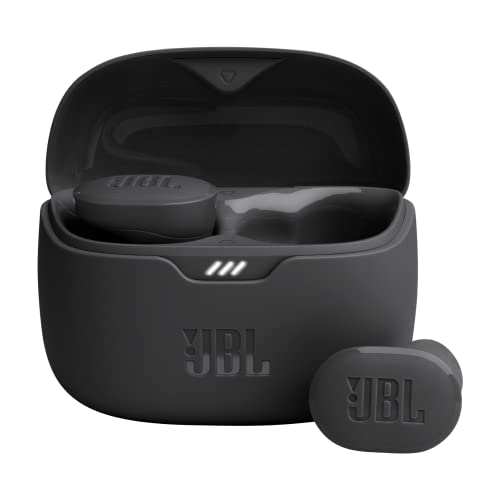



Choosing the right wireless earbuds can feel overwhelming with so many options flooding the market. JBL has simplified this decision somewhat by creating two distinct products that serve different needs and budgets. The JBL Vibe Beam and JBL Tune Buds represent JBL's approach to covering both entry-level and mid-tier segments without the confusion of overlapping features.
Both earbuds launched in 2023, representing JBL's response to rapidly evolving wireless audio technology. Since their release, they've benefited from firmware updates that have improved connectivity stability and added features like enhanced ambient modes. The wireless earbud market has matured significantly since the first AirPods launched in 2016, and these JBL models reflect how much technology has improved at accessible price points.
True wireless earbuds have revolutionized portable audio by eliminating all cables, including the wire that traditionally connected left and right earpieces. This freedom comes with trade-offs in battery life, connectivity complexity, and the risk of losing tiny components.
The most critical considerations when evaluating wireless earbuds include sound quality, battery performance, comfort for extended wear, and feature sets that match your lifestyle. Active Noise Cancellation (ANC) has become increasingly important – this technology uses microphones to detect external sound and generates opposing sound waves to cancel it out. It's particularly valuable in noisy environments like airplanes, offices, or busy streets.
Bluetooth connectivity versions matter more than most people realize. Newer versions like Bluetooth 5.3 offer better power efficiency, more stable connections, and lower latency (the delay between audio being sent and heard). LE Audio, a recent addition to Bluetooth standards, allows for more efficient streaming and features like audio sharing between multiple listeners.
At the time of writing, the JBL Vibe Beam positions itself as an exceptional value proposition, typically priced around 40% less than the JBL Tune Buds. This isn't just a minor price difference – it reflects genuinely different target markets and feature sets.
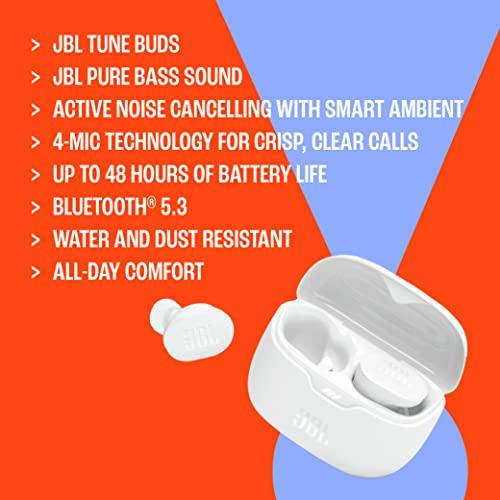
The most significant distinction is Active Noise Cancellation. The Tune Buds include full ANC technology, while the Vibe Beam relies entirely on passive noise isolation. Passive isolation works by physically blocking sound through the earbud's fit in your ear canal, while active cancellation uses electronic processing to eliminate ambient noise.
Driver size represents another key difference. The Vibe Beam uses 8mm dynamic drivers, while the Tune Buds feature larger 10mm drivers. Driver size isn't everything in audio quality, but larger drivers generally produce fuller sound with better bass response and overall dynamics.
The connectivity story also differs significantly. The Tune Buds support Bluetooth 5.3 with LE Audio capabilities, while the Vibe Beam uses Bluetooth 5.2. This translates to better multi-device connectivity and more efficient power usage for the Tune Buds.
Sound quality often determines long-term satisfaction with earbuds, and both JBL models take different approaches to audio reproduction.
The JBL Vibe Beam delivers what JBL calls "Deep Bass Sound" through its 8mm drivers. Based on extensive user feedback and professional reviews, these earbuds produce a balanced sound signature with enhanced but not overwhelming bass response. The frequency response spans 20 Hz to 20 kHz, covering the full range of human hearing. At 100 dB sensitivity, they can produce satisfying volume levels even from smartphones with modest amplification.
Most listeners find the Vibe Beam's sound signature pleasing across various music genres. The bass provides satisfying punch for hip-hop and electronic music without muddying vocals or instruments in the midrange. The treble remains clear without becoming harsh, though some users note slight inconsistencies with very bright recordings.
The JBL Tune Buds employ "Pure Bass Sound" technology through their larger 10mm drivers. This results in a more V-shaped sound profile – enhanced bass and treble with slightly recessed midrange. This tuning particularly benefits bass-heavy genres like EDM, house, and modern pop music. The larger drivers provide better dynamics and a fuller soundstage, though like most closed-back in-ear designs, they can't match the spacious presentation of over-ear headphones.
Professional reviews consistently note that the Tune Buds produce more detailed audio across the frequency spectrum. The 32-ohm impedance and 101 dB sensitivity indicate these earbuds can handle more power and produce louder, cleaner sound than the Vibe Beam's 16-ohm, 100 dB specification.
Both models support customization through the JBL Headphones app, which includes parametric EQ controls. This feature proves invaluable for tailoring sound to personal preferences or compensating for hearing differences.
Battery life often determines daily usability more than any other single factor. Both JBL models excel here, but with different strengths.
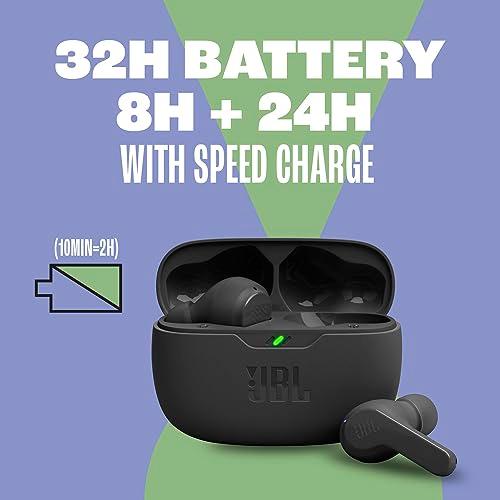
The Vibe Beam provides up to 32 hours of total listening time – 8 hours from the earbuds themselves plus 24 additional hours from the charging case. This performance remains consistent regardless of feature usage since there's no battery-draining ANC to worry about. The speed charging feature delivers 2 hours of playback from just 10 minutes of charging, which proves invaluable when you're rushing out the door.
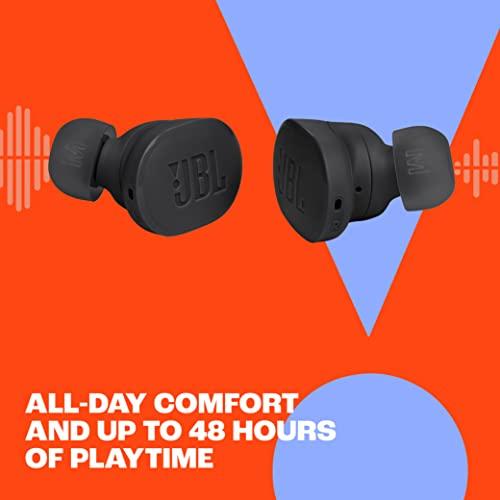
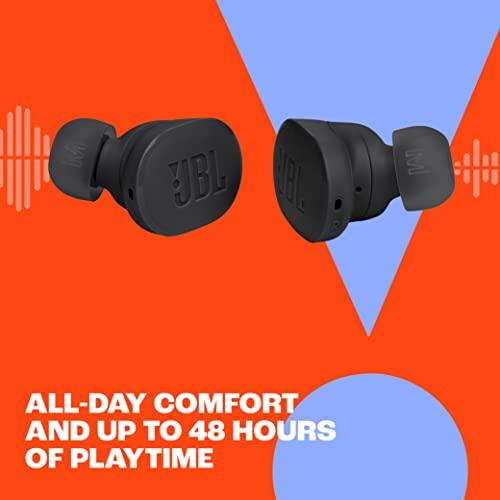
The Tune Buds offer even more impressive battery performance: up to 48 hours total when ANC is disabled (12 hours earbuds + 36 hours case) or 40 hours with ANC active (10 hours + 30 hours). The 15-minute speed charge provides 4 hours of playback, nearly doubling the Vibe Beam's quick-charge capability.
These battery specifications put both models among the category leaders. For comparison, Apple's AirPods Pro typically provide around 24-30 hours total battery life, making both JBL options substantially better for extended use without charging access.
The USB-C charging standard used by both models represents a practical advantage over Lightning-based alternatives, especially as USB-C becomes universal across devices.
Comfort determines whether you'll actually want to wear earbuds for extended periods. Both JBL models approach this challenge differently.
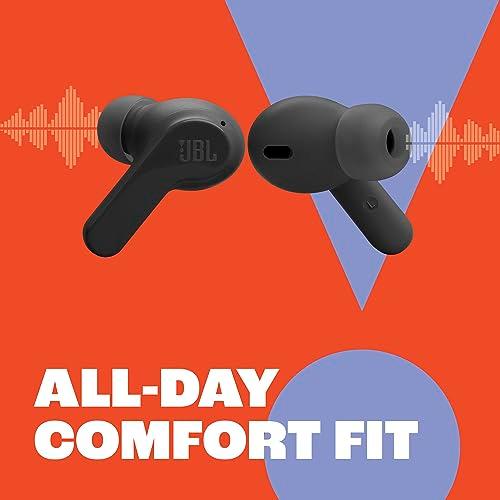
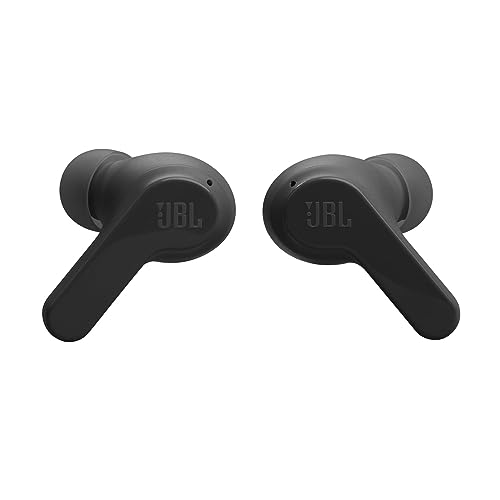
The Vibe Beam uses what JBL calls an "ergonomic stick-closed design." This means they extend slightly from your ear with a closed acoustic design that naturally blocks external sound. At 4.4 grams per earbud, they're extremely lightweight. User feedback consistently praises their comfort during long listening sessions.
The stick design provides practical advantages beyond comfort. It positions the microphones further from your ear canal, improving call quality. The design also makes the earbuds easier to grip when inserting or removing them.
The Tune Buds employ a more traditional "bud" design that sits deeper in the ear canal. JBL describes this as providing "natural isolation" through the oval tube design that adapts to your ear's shape. While slightly heavier, users report excellent comfort levels.
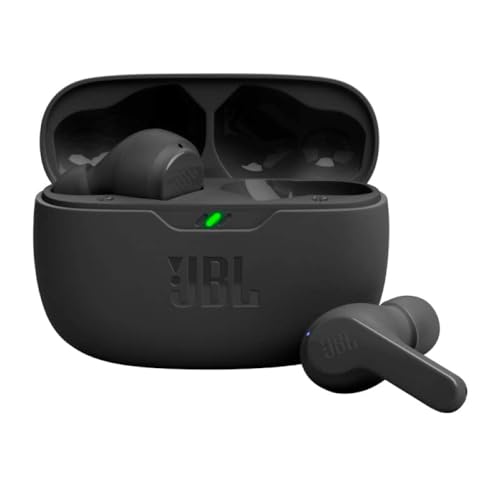
Both models include three sizes of silicone ear tips, crucial for achieving proper fit. The right fit affects everything from comfort to sound quality to battery life – poorly fitting earbuds work harder to maintain Bluetooth connectivity and may not seal properly for optimal bass response.
Modern wireless earbuds succeed or fail based on their smart features and connectivity reliability.
The Vibe Beam includes JBL's Smart Ambient technology with Ambient Aware and TalkThru modes. Ambient Aware lets you hear your surroundings while listening to music – essential for safety when walking or cycling. TalkThru mode lowers music volume and amplifies voices, allowing quick conversations without removing the earbuds.
Bluetooth 5.2 connectivity provides stable pairing and efficient power consumption. The earbuds support independent use (you can use just one earbud), and the JBL Headphones app offers customization options including EQ adjustment and control remapping.
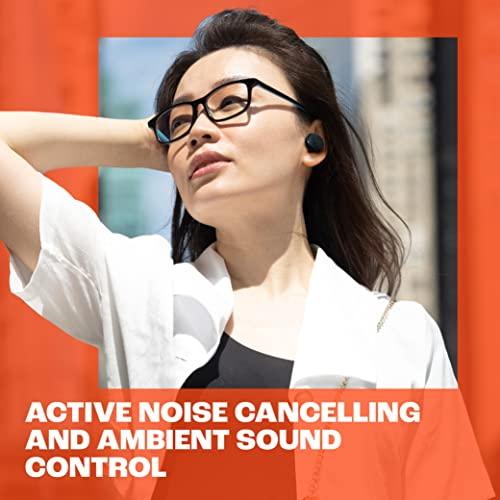
The Tune Buds significantly expand the feature set. Active Noise Cancellation uses the 4-microphone array (2 per earbud) to actively cancel ambient noise. While reviews indicate the ANC performance isn't class-leading compared to Sony or Bose alternatives, it provides meaningful noise reduction for daily use.
Bluetooth 5.3 with LE Audio support enables several advanced features. Multi-device connectivity lets you pair with two devices simultaneously – extremely useful for switching between phone and computer audio. Google Fast Pair streamlines connection to Android devices.
The Smart Audio and Video modes optimize performance for different content types. Smart Video mode reduces latency for better audio-video synchronization, though some lag remains that makes them unsuitable for serious gaming or video editing.
The microphone performance gap between these models is substantial and worth considering if you make frequent calls.
The Vibe Beam includes a standard microphone system with VoiceAware technology. VoiceAware lets you control how much of your own voice you hear during calls, reducing the "speaking into a vacuum" sensation common with sealed earbuds. Call quality is adequate in quiet environments, but background noise can overwhelm the basic noise suppression.
The Tune Buds employ 4-microphone technology with advanced processing. This system more effectively isolates your voice from background noise, making calls clearer for both you and the person you're speaking with. Professional reviews consistently rate the Tune Buds' call quality as significantly superior, particularly in challenging acoustic environments.
For occasional personal calls, the Vibe Beam suffices. For work calls, video conferences, or frequent phone use, the Tune Buds' investment in microphone technology pays dividends.
While neither model is specifically designed for home theater use, their low-latency performance matters for TV and movie watching.
Both earbuds exhibit some audio delay when watching video content, typical of most Bluetooth earbuds. The Tune Buds' Smart Video mode reduces this latency somewhat, but neither model achieves the near-zero delay required for critical video sync.
For casual Netflix watching or YouTube viewing, both work acceptably. The Tune Buds' ANC capability actually provides an advantage here – it blocks household noise that might otherwise interfere with dialogue comprehension.
However, if home theater audio is a priority, dedicated low-latency headphones with 2.4GHz wireless transmission or wired connections remain superior choices.
Both models feature IP54 water and dust resistance ratings for the earbuds themselves. This rating indicates protection against dust ingress and splashes from any direction – suitable for workouts, light rain, and daily use. The Vibe Beam case carries an IPX2 rating (splash resistant), while the Tune Buds case lacks specific water resistance rating.
Build quality feels solid on both models relative to their price points. The charging cases close securely and protect the earbuds well. Some users report difficulty removing earbuds from the Vibe Beam's case due to its compact design, though this improves with familiarity.
The JBL Vibe Beam excels as an entry point into quality wireless earbuds. At the time of writing, its pricing makes premium features accessible to budget-conscious buyers. The exceptional 32-hour battery life, comfortable fit, and reliable performance make it ideal for students, casual listeners, or anyone seeking their first wireless earbuds.
Choose the Vibe Beam if you primarily listen to music and podcasts, make occasional calls, and don't need active noise cancellation. Its simplicity becomes an advantage – fewer features mean fewer potential issues and more consistent battery life.
The JBL Tune Buds justify their premium through genuinely useful advanced features. Active noise cancellation, superior call quality, extended battery life, and advanced connectivity make them worthwhile for commuters, frequent travelers, or anyone who spends significant time in noisy environments.
Choose the Tune Buds if you work in open offices, travel regularly, make frequent calls, or want the latest Bluetooth technology. The ANC alone can transform the listening experience in challenging acoustic environments.
Both earbuds succeed in their intended markets. The Vibe Beam represents exceptional value – it's hard to find comparable battery life and comfort at its price point. The Tune Buds offer premium features at mid-tier pricing, competing effectively against more expensive alternatives.
The decision ultimately depends on whether Active Noise Cancellation and advanced connectivity features justify the price premium. For most casual users, the Vibe Beam provides everything needed for enjoyable wireless audio. For users with specific needs like noise cancellation or superior call quality, the Tune Buds deliver meaningful improvements that justify their higher cost.
Neither choice disappoints – JBL has created two distinct products that serve different needs without overlap or compromise. This clear differentiation makes the decision easier: identify your priorities, consider your budget, and choose accordingly.
| JBL Vibe Beam True Wireless Earbuds | JBL Tune Buds True Wireless Earbuds |
|---|---|
| Active Noise Cancellation - Essential for noisy environments like commuting or offices | |
| None (passive isolation only) | Yes, with Smart Ambient modes |
| Driver Size - Larger drivers typically produce fuller sound and better bass | |
| 8mm dynamic drivers | 10mm dynamic drivers |
| Total Battery Life - Critical for all-day use without frequent charging | |
| 32 hours (8h earbuds + 24h case) | 48 hours without ANC (12h + 36h) / 40 hours with ANC (10h + 30h) |
| Speed Charging - How much playtime you get from a quick charge | |
| 2 hours from 10 minutes charging | 4 hours from 15 minutes charging |
| Bluetooth Version - Newer versions offer better connectivity and power efficiency | |
| Bluetooth 5.2 | Bluetooth 5.3 with LE Audio support |
| Multi-Device Connectivity - Ability to stay connected to multiple devices simultaneously | |
| Single device connection | Multi-point connection (two devices) |
| Call Quality Technology - Important for work calls and video conferences | |
| Standard microphone with VoiceAware | 4-microphone array with advanced noise suppression |
| Water Resistance - Protection level for workouts and weather | |
| IP54 earbuds, IPX2 case | IP54 earbuds, standard case |
| Weight Per Earbud - Affects comfort during extended wear | |
| 4.4g (very lightweight) | Not specified (slightly heavier but comfortable) |
| App Features - Customization and control options | |
| JBL Headphones App with EQ and basic controls | JBL Headphones App with advanced EQ, ANC control, and Smart modes |
| Target User - Who each product serves best | |
| Budget-conscious users, casual listeners, first-time wireless buyers | Commuters, frequent callers, users wanting premium features at mid-tier pricing |
The JBL Vibe Beam offers exceptional value for budget-conscious buyers, delivering 32-hour battery life and comfortable fit at an entry-level price. The JBL Tune Buds justify their higher cost with Active Noise Cancellation, superior call quality, and 48-hour battery life. Choose the Vibe Beam for basic wireless audio needs, or the Tune Buds if you need noise cancellation and premium features.
Yes, the JBL Tune Buds deliver superior sound quality with larger 10mm drivers compared to the Vibe Beam's 8mm drivers. The Tune Buds produce fuller bass response, better dynamics, and more detailed audio across all frequencies. However, the Vibe Beam still offers excellent sound quality for its price range with balanced audio and customizable EQ through the JBL app.
The JBL Tune Buds offer longer battery life with up to 48 hours total (12 hours earbuds + 36 hours case) when ANC is off, or 40 hours with ANC active. The JBL Vibe Beam provides 32 hours total (8 hours + 24 hours case). Both models include fast charging, but the Tune Buds deliver 4 hours of playback from a 15-minute charge versus 2 hours for the Vibe Beam.
No, only the JBL Tune Buds feature Active Noise Cancellation with Smart Ambient modes. The JBL Vibe Beam relies solely on passive noise isolation through their closed design and ear tip seal. If you need active noise cancellation for commuting, offices, or travel, the Tune Buds are the clear choice.
Both the JBL Vibe Beam and JBL Tune Buds receive excellent comfort ratings from users. The Vibe Beam weighs just 4.4g per earbud with an ergonomic stick design, while the Tune Buds use a traditional bud design that sits deeper in the ear canal. Both include multiple ear tip sizes for optimal fit and comfort during extended wear.
Yes, both the JBL Vibe Beam and JBL Tune Buds support independent earbud use, allowing you to use either the left or right earbud alone for mono listening. This feature is useful for staying aware of your surroundings or extending battery life during long listening sessions.
The JBL Tune Buds significantly outperform the JBL Vibe Beam for phone calls with their 4-microphone technology and advanced noise suppression. This makes calls much clearer in noisy environments. The Vibe Beam handles basic calls adequately but struggles with background noise. For work calls or frequent phone use, choose the Tune Buds.
Both the JBL Vibe Beam and JBL Tune Buds feature IP54 water and dust resistance, making them suitable for workouts, light rain, and daily use. The Vibe Beam charging case has IPX2 splash resistance. Neither model is fully waterproof, but both handle sweat and moisture well during exercise.
The JBL Tune Buds support multi-point connectivity, allowing simultaneous connection to two devices like your phone and laptop. The JBL Vibe Beam connects to one device at a time. The Tune Buds also feature Bluetooth 5.3 with LE Audio support for better connectivity compared to the Vibe Beam's Bluetooth 5.2.
Yes, both the JBL Vibe Beam and JBL Tune Buds work with the JBL Headphones app for sound customization. The app provides parametric EQ controls, preset sound modes, and the ability to remap touch controls. The Tune Buds offer additional app features for controlling ANC and Smart Ambient modes.
For casual movie watching, both the JBL Vibe Beam and JBL Tune Buds work well, though some audio delay is present as with most Bluetooth earbuds. The Tune Buds include a Smart Video mode to reduce latency and their ANC helps block household distractions during viewing. Neither model is ideal for critical video sync applications like gaming.
First-time wireless earbud buyers should consider the JBL Vibe Beam for its simplicity, excellent value, and reliable performance without overwhelming features. The JBL Tune Buds are better for users who specifically need Active Noise Cancellation, superior call quality, or premium features. The Vibe Beam provides an excellent introduction to wireless audio at an accessible price point.
We've done our best to create useful and informative comparisons to help you decide what product to buy. Our research uses advanced automated methods to create this comparison and perfection is not possible - please contact us for corrections or questions. These are the sites we've researched in the creation of this article: bestbuy.com - jbl.com - rtings.com - jbl.com - youtube.com - youtube.com - audio46.com - jbl.com - soundguys.com - bestbuy.com - walmart.com - uclastore.com - bestbuy.com - manuals.plus - rtings.com - jbl.com - youtube.com - jbl.com - soundguys.com - ro.harmanaudio.com - audio46.com - bestbuy.com - majorhifi.com - jbl.com - crutchfield.com - jblstore.com.ph - kh.jbl.com - in.jbl.com - bestbuy.com - uclastore.com - jbl.com - jbl.com.tw

Privacy Policy
Terms and Conditions - Affiliate Policy
Home Security
© Copyright 2008-2026.
11816 Inwood Rd #1211, Dallas, TX 75244