





The wireless earbuds market has exploded over the past few years, transforming from a luxury tech accessory into an essential daily companion for millions of people. Whether you're commuting to work, hitting the gym, or taking important video calls, the right pair of earbuds can dramatically improve your audio experience. But with options ranging from ultra-budget models to premium flagship products, choosing the right pair can feel overwhelming.
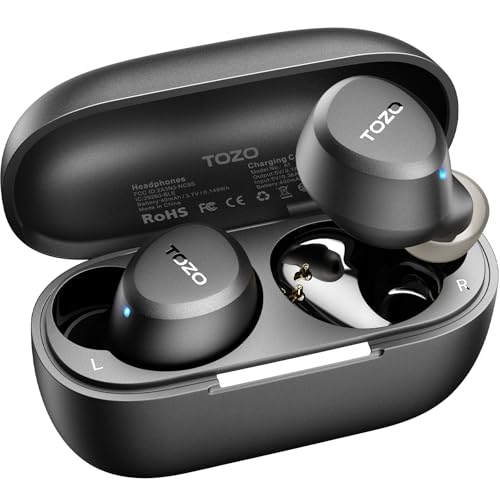
Today, we're comparing two earbuds that couldn't be more different: the budget-friendly TOZO A1 and the premium JBL Tour Pro 3. These products represent opposite ends of the wireless earbuds spectrum, and understanding their differences will help you make the right choice for your needs and budget.
Before diving into our comparison, it's worth understanding what makes wireless earbuds tick and what features actually matter in daily use. At their core, all wireless earbuds need to accomplish the same basic tasks: deliver good sound quality, maintain a stable Bluetooth connection, and provide comfortable all-day wear.
However, the execution of these fundamentals varies dramatically across price points. Budget earbuds like the TOZO A1 focus on getting the basics right without unnecessary complexity. Premium options like the JBL Tour Pro 3 layer on advanced features like active noise cancellation (ANC)—which uses microphones to detect and cancel out background noise—and high-resolution audio codecs that can transmit more detailed sound information than standard Bluetooth.
The key considerations when choosing earbuds include sound quality, battery life, comfort, call quality, water resistance, and smart features. At the time of writing, budget earbuds typically cost under $50, mid-range options fall between $100-200, and premium models can exceed $300.
The pricing difference between these two products is substantial. The TOZO A1 sits firmly in the ultra-budget category, while the JBL Tour Pro 3 commands premium pricing that's roughly ten times higher. This massive price gap reflects fundamentally different design philosophies rather than just feature differences.
TOZO's approach with the A1 is refreshingly straightforward: deliver solid wireless audio basics without breaking the bank. There's no fancy packaging, premium materials, or cutting-edge features—just reliable Bluetooth earbuds that get the job done. This strategy works particularly well for first-time wireless earbud buyers or those who need a backup pair for the gym.
JBL's strategy with the Tour Pro 3 is the complete opposite. Released in 2024, it represents the company's flagship vision of what wireless earbuds should be: a comprehensive audio solution packed with the latest technology. The premium pricing reflects not just better components, but years of audio engineering research and development costs.
Sound quality is where these two products diverge most dramatically, and it's largely due to their driver technology—the tiny speakers inside each earbud that convert electrical signals into sound waves.
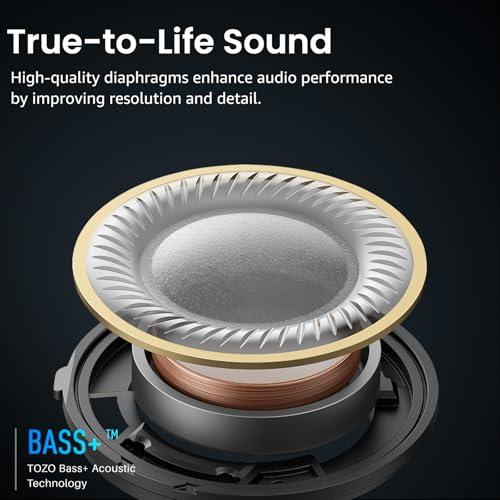
The TOZO A1 uses a single 6mm dynamic driver in each earbud. Dynamic drivers work like tiny versions of traditional speakers, with a cone that moves back and forth to create sound waves. The 6mm size is relatively small, which helps keep the earbuds lightweight but limits their ability to produce deep bass and detailed highs.
Based on user reviews and professional evaluations, the A1 delivers a mid-focused sound signature that works well for vocals and podcasts. The bass is present but not overpowering, and the treble is clear enough for most casual listening. However, the single-driver design means you won't get the kind of instrument separation and soundstage width that more expensive earbuds can provide.
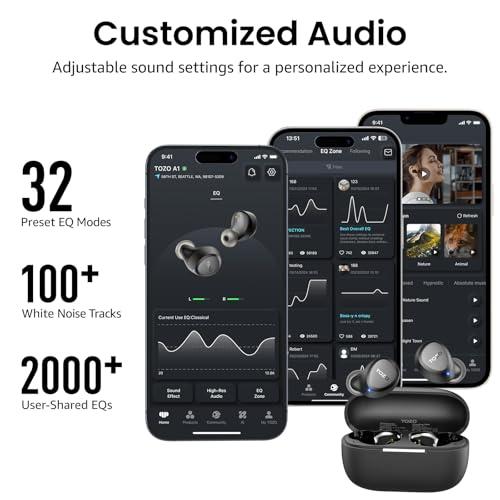
The A1 supports the TOZO app, which offers 32 preset EQ modes. EQ (equalizer) settings allow you to adjust different frequency ranges—like boosting bass or reducing treble—to match your preferences or the type of music you're listening to. While this level of customization is impressive for the price point, the underlying hardware limitations mean there's only so much improvement you can achieve through software adjustments.
The JBL Tour Pro 3 takes a completely different approach with its hybrid dual-driver system. Each earbud contains both a 10mm dynamic driver and a 5.1mm balanced armature driver. This combination is like having two specialized speakers working together: the larger dynamic driver handles bass and midrange frequencies, while the balanced armature driver focuses on crisp, detailed highs.
Balanced armature drivers are more expensive to manufacture but offer several advantages. They're more efficient than dynamic drivers and can reproduce high frequencies with exceptional clarity and detail. This is why many professional in-ear monitors used by musicians and sound engineers rely on balanced armature technology.
The Tour Pro 3 also supports LDAC, Sony's high-resolution audio codec that can transmit three times more data than standard Bluetooth codecs like SBC. Think of codecs as different languages for transmitting audio—some can convey more nuanced information than others. LDAC support means the earbuds can reproduce subtle details in well-recorded music that would be lost with lower-quality transmission methods.
Professional reviews consistently praise the Tour Pro 3's ability to create a wide soundstage—the sense that instruments and vocals are positioned in three-dimensional space around your head rather than just coming from two points in your ears. This creates a more immersive listening experience, especially for complex recordings with multiple instruments.
This is perhaps the most significant functional difference between these products. The TOZO A1 has no active noise cancellation whatsoever, while the JBL Tour Pro 3 features what JBL calls "True Adaptive Noise Cancellation 2.0."
Active noise cancellation uses external microphones to detect ambient sound, then generates "anti-noise" signals to cancel out unwanted background noise. It's particularly effective against constant, low-frequency sounds like airplane engines, air conditioning, or traffic noise. The technology requires additional processing power, microphones, and battery life, which explains why it's typically found only in more expensive earbuds.
The Tour Pro 3's ANC system measures environmental noise over 50,000 times per second and adapts its response accordingly. This "adaptive" approach means the earbuds can automatically adjust their noise cancellation intensity based on your surroundings—stronger cancellation in noisy environments, lighter cancellation in quieter spaces to preserve battery life.
Without ANC, the TOZO A1 relies entirely on passive noise isolation—the physical blocking of sound by the ear tips creating a seal in your ear canal. While this can be somewhat effective, it can't match the ambient noise reduction that active cancellation provides.
For home use or quiet office environments, the lack of ANC isn't a major limitation. However, if you frequently find yourself in noisy environments—commuting on public transportation, working in busy cafes, or traveling by airplane—the absence of ANC becomes a significant disadvantage. You'll need to turn up your music volume to overcome background noise, which can be fatiguing over time and potentially damaging to your hearing.
Battery life is one area where both products perform reasonably well, though the JBL Tour Pro 3 has a clear advantage in per-charge longevity.
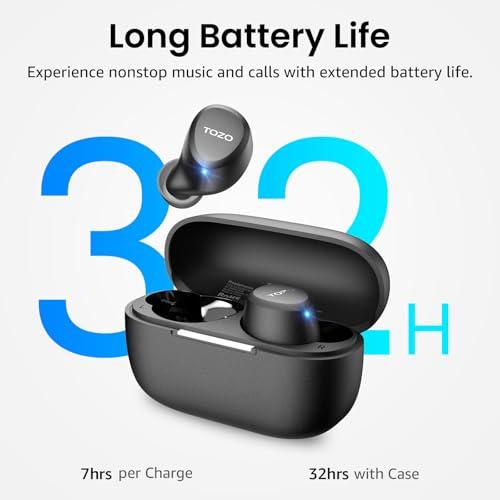
The TOZO A1 provides up to 7 hours of listening time per charge, with the charging case extending total playtime to around 32 hours. These numbers are quite competitive for budget earbuds and should easily handle most daily use scenarios. The 2-hour charging time from empty is also reasonable.
The Tour Pro 3 offers superior endurance with up to 11 hours per charge when ANC is disabled, or 8 hours with noise cancellation active. The charging case provides multiple additional charges for a total of 44 hours (ANC off) or 32 hours (ANC on). The quick-charge feature—3 additional hours from just 10 minutes of charging—is particularly useful for those inevitable moments when you grab your earbuds only to discover they're nearly dead.
For most users, both products offer sufficient battery life for daily use. The Tour Pro 3's longer single-charge duration means fewer interruptions during long flights or work sessions, while the A1's more modest but still adequate performance won't leave most users wanting.
The difference in call quality between these products is substantial and reflects their different target audiences.
The TOZO A1 uses a basic dual-microphone setup with AI-enhanced noise cancellation for calls. User reviews consistently indicate that while call quality is acceptable in quiet environments, the earbuds struggle in noisy situations. The microphones tend to pick up background noise, and your voice may sound too quiet to the person on the other end. Wind noise is particularly problematic, making outdoor calls challenging.
The JBL Tour Pro 3 employs a sophisticated 6-microphone array with beamforming technology. Beamforming uses multiple microphones to focus on your voice while suppressing sounds coming from other directions. The JBL Crystal AI algorithm further enhances voice clarity by processing your speech in real-time to reduce distortion and improve intelligibility.
The Tour Pro 3 also features a "smart call equalizer" that automatically adjusts for different speaking volumes—amplifying quiet talkers or reducing the volume of loud talkers. This attention to call quality detail makes sense given the product's premium positioning and likely use by business professionals who depend on clear communication.
For occasional personal calls, the A1's call quality is serviceable. However, if you regularly take important work calls or participate in video conferences, the Tour Pro 3's superior call technology justifies the price difference.
Comfort is highly individual, but there are some general principles that apply to most users.
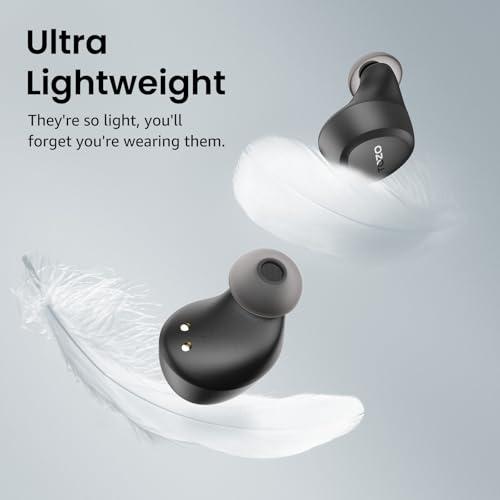
The TOZO A1 excels in this area thanks to its ultra-lightweight design. At just 3.7 grams per earbud, they're among the lightest wireless earbuds available. The compact, stem-free design means they sit flush with your ears and don't protrude noticeably. This makes them particularly suitable for users with smaller ears who often struggle with the fit of larger earbuds.
The A1 comes with five different ear tip sizes, from XS to XXL, ensuring most users can find a proper seal. The lightweight design means you can wear them for extended periods without the fatigue that heavier earbuds can cause.
However, this ultra-light design comes with trade-offs. Some users report that the A1 can fall out during vigorous exercise or when wearing helmets. The minimal weight means there's less surface area in contact with your ear, potentially reducing stability during movement.
The Tour Pro 3 weighs 5.6 grams per earbud—still quite light by industry standards but noticeably heavier than the A1. The additional weight comes from the more complex internal components and premium materials. JBL includes both silicone and foam ear tips, with foam tips providing better noise isolation but potentially less comfort for extended wear.
The Tour Pro 3's design prioritizes secure fit over minimal weight, making it better suited for active use or situations where you can't afford to have an earbud fall out.
This is perhaps where the philosophical differences between these products are most apparent.
The TOZO A1 keeps things simple with basic touch controls that handle play/pause, track skipping, and call management. The earbuds support independent use—you can use just one earbud while the other charges, effectively doubling your battery life for lighter listening sessions. The TOZO app provides those 32 EQ presets we mentioned earlier, but the overall feature set is deliberately minimal.
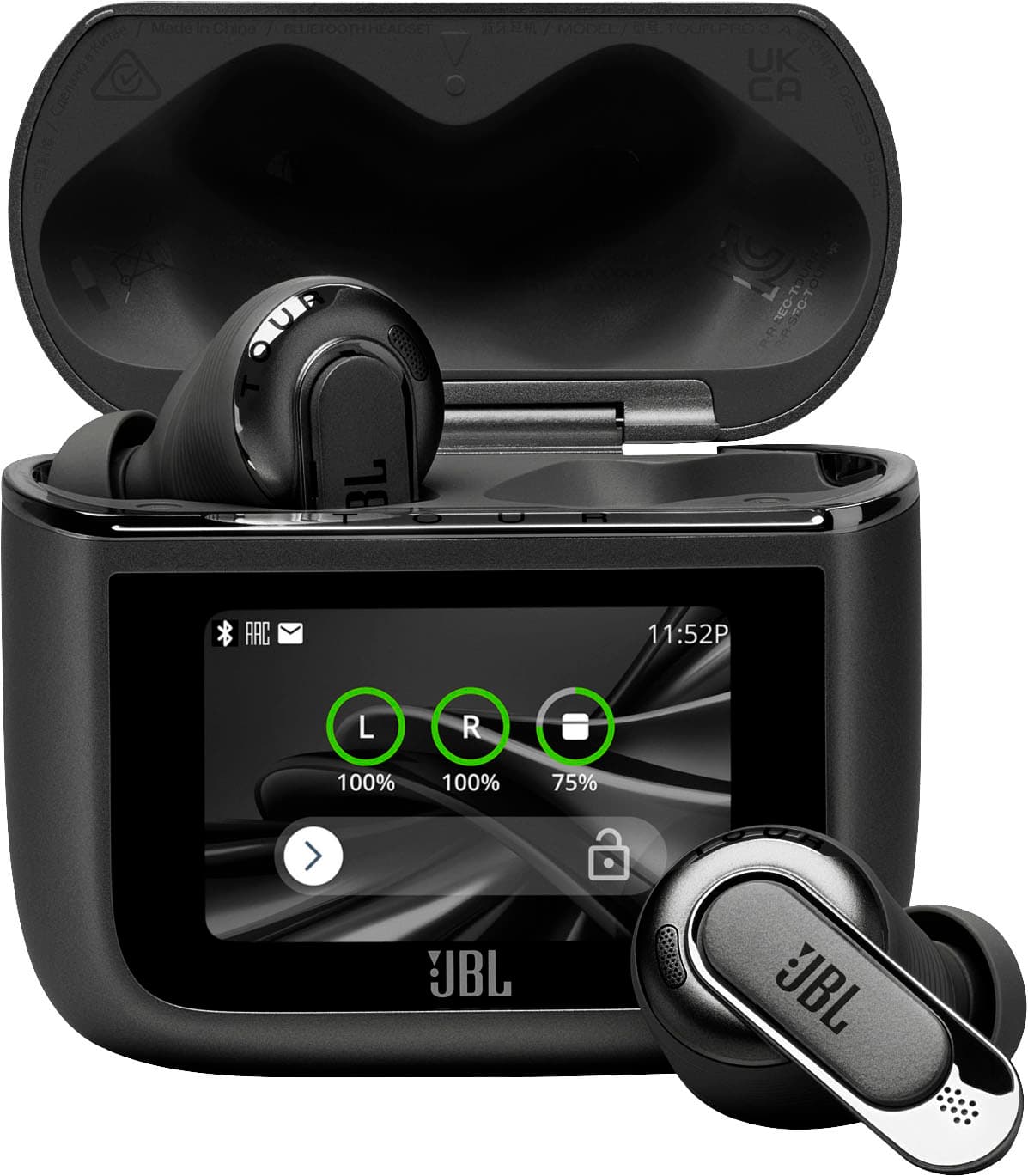
The JBL Tour Pro 3 is essentially a showcase for modern wireless earbud technology. The standout feature is the smart charging case with its touchscreen display. This 1.45-inch screen lets you control music playback, view caller information, adjust settings, and even display custom wallpapers—all without touching your phone.
More impressively, the case can function as a wireless audio transmitter. You can plug it into airplane entertainment systems, gaming consoles, or computers using the included USB-C to 3.5mm adapter, then wirelessly stream audio to your earbuds. This solves the common problem of wanting to use wireless earbuds with devices that don't have Bluetooth capability.
The Tour Pro 3 also supports Auracast, a relatively new Bluetooth standard that allows audio sharing with multiple devices. Imagine being able to share your music or podcast with friends' compatible earbuds, or joining a public audio broadcast in places like museums or airports.
JBL Spatial 360 with head tracking creates an immersive audio experience by making sounds appear to come from fixed positions in space, even when you move your head. While this feature works best with specially designed content, it can enhance the listening experience for movies and certain music recordings.
Based on our research and analysis of user feedback, here's how these products align with different user needs:
While neither product is specifically designed for home theater use, they can serve as personal audio solutions in certain scenarios.
The TOZO A1 works adequately for casual TV watching or late-night viewing when you don't want to disturb others. However, the lack of low-latency codecs means you might notice slight audio delay when watching video content, which can be distracting.
The JBL Tour Pro 3 is much better suited for home entertainment use. The superior sound quality and JBL Spatial 360 technology can create a more immersive experience for movies and shows. The case's transmitter functionality is particularly useful—you can connect it to your TV's headphone output and enjoy wireless convenience without worrying about Bluetooth compatibility or audio delay issues.
For serious home theater enthusiasts, dedicated over-ear headphones would still be the better choice, but the Tour Pro 3 represents a reasonable compromise between convenience and performance.
After evaluating both products extensively, it's clear that the TOZO A1 and JBL Tour Pro 3 serve completely different market segments and user needs.
The TOZO A1 succeeds brilliantly at its intended purpose: delivering reliable wireless audio at an accessible price point. For users who primarily listen to podcasts, make phone calls, and enjoy casual music listening, the A1 provides everything necessary without unnecessary complexity or cost. The ultra-lightweight design and long battery life make it an excellent choice for daily use, and the risk of loss or damage is minimized by the low replacement cost.
The JBL Tour Pro 3 justifies its premium pricing through genuinely advanced technology and superior performance across virtually every metric. The dual-driver audio system, effective noise cancellation, exceptional call quality, and innovative smart case features create a comprehensive audio solution that can adapt to various use scenarios.
At the time of writing, the price difference between these products is substantial—roughly ten times higher for the JBL. However, this isn't simply a case of paying more for marginal improvements. These are fundamentally different products designed for different users with different needs and budgets.
For most casual users, the TOZO A1 represents exceptional value and will satisfy their wireless audio needs completely. For demanding users who prioritize audio quality, advanced features, and professional-grade call performance, the JBL Tour Pro 3 offers genuinely superior capabilities that justify the investment.
The key is honest self-assessment: consider how you actually use earbuds, what environments you'll use them in, and what features matter most to your daily routine. Both products excel within their intended niches, and choosing the right one comes down to matching your specific needs and budget with the appropriate level of capability and sophistication.
| TOZO A1 Wireless Earbuds | JBL Tour Pro 3 True Wireless Earbuds |
|---|---|
| Driver Technology - Determines sound quality and detail reproduction | |
| Single 6mm dynamic driver (good for basics) | Hybrid dual-driver: 10mm dynamic + 5.1mm balanced armature (premium audio) |
| Active Noise Cancellation - Essential for noisy environments | |
| None (passive isolation only) | True Adaptive Noise Cancellation 2.0 (measures 50,000x per second) |
| Audio Codecs - Affects wireless sound quality | |
| AAC/SBC (standard Bluetooth quality) | LDAC + AAC/SBC (Hi-Res Audio certified, 3x more data) |
| Battery Life Per Charge - How long before needing to recharge | |
| 7 hours | 11 hours (ANC off) / 8 hours (ANC on) |
| Total Battery Life with Case - Complete usage before wall charging | |
| 32 hours | 44 hours (ANC off) / 32 hours (ANC on) |
| Weight Per Earbud - Critical for all-day comfort | |
| 3.7g (ultra-lightweight, ideal for small ears) | 5.6g (heavier but more secure fit) |
| Call Quality Technology - Important for work and phone calls | |
| 2 microphones with basic AI (struggles in noise) | 6 microphones with beamforming + JBL Crystal AI (professional grade) |
| Smart Features - Advanced functionality beyond basic audio | |
| Touch controls, 32 EQ presets via app | Smart touchscreen case, wireless transmitter, Auracast, head tracking |
| Water Resistance - Protection against sweat and weather | |
| IPX5 (workout and light rain safe) | IPX5 (same protection level) |
| Bluetooth Technology - Connection stability and range | |
| Bluetooth 5.3 (single device pairing) | Bluetooth 5.3 (multipoint pairing, Fast Pair support) |
| Target User - Who gets the best value | |
| Budget-conscious, casual listeners, small ears | Audiophiles, professionals, frequent travelers, tech enthusiasts |
The JBL Tour Pro 3 delivers significantly better sound quality with its hybrid dual-driver system featuring a 10mm dynamic driver and balanced armature driver. This setup provides clearer highs, deeper bass, and better instrument separation compared to the TOZO A1's single 6mm dynamic driver. The JBL Tour Pro 3 also supports Hi-Res Audio with LDAC codec, while the TOZO A1 uses standard AAC/SBC codecs.
No, only the JBL Tour Pro 3 has active noise cancellation with its True Adaptive Noise Cancellation 2.0 technology that adapts to your environment 50,000 times per second. The TOZO A1 lacks active noise cancellation entirely and relies only on passive noise isolation from the ear tip seal, making it less effective in noisy environments.
The TOZO A1 excels in comfort with its ultra-lightweight 3.7g design, making it ideal for users with smaller ears and extended wear. The JBL Tour Pro 3 weighs 5.6g per earbud, which is still comfortable but heavier. The TOZO A1 is better for casual, long-duration listening, while the JBL Tour Pro 3 offers a more secure fit for active use.
The JBL Tour Pro 3 offers superior battery performance with 11 hours per charge (ANC off) and 44 hours total with the case. The TOZO A1 provides 7 hours per charge and 32 hours total. Both use USB-C charging, but the JBL Tour Pro 3 includes wireless charging and quick-charge features that give 3 hours of playback from just 10 minutes of charging.
The JBL Tour Pro 3 is significantly better for calls with its 6-microphone array, beamforming technology, and JBL Crystal AI algorithm that ensures clear voice transmission even in noisy environments. The TOZO A1 has basic dual microphones that work adequately in quiet settings but struggle with background noise and wind, making your voice sound too soft.
Both the TOZO A1 and JBL Tour Pro 3 have identical IPX5 water resistance ratings, making them suitable for workouts, sweat, and light rain. However, the TOZO A1's ultra-lightweight design may be less secure during vigorous exercise, while the JBL Tour Pro 3 offers better stability for active use.
The JBL Tour Pro 3 features extensive smart capabilities including a touchscreen charging case, wireless audio transmitter functionality, Auracast audio sharing, and comprehensive app control. The TOZO A1 offers basic touch controls and 32 preset EQ modes through the TOZO app, but lacks advanced features like multipoint pairing or smart case functionality.
This depends on your needs and budget. The TOZO A1 offers exceptional value for budget-conscious buyers who want reliable wireless audio basics without premium features. The JBL Tour Pro 3 justifies its higher cost with superior sound quality, active noise cancellation, professional call quality, and innovative smart features that appeal to demanding users and tech enthusiasts.
Only the JBL Tour Pro 3 supports multipoint Bluetooth pairing, allowing connection to multiple devices like your phone and laptop simultaneously. The TOZO A1 connects to one device at a time, requiring manual disconnection and reconnection when switching between devices, which is typical for budget earbuds.
The JBL Tour Pro 3 is better suited for home entertainment with its superior sound quality, JBL Spatial 360 technology for immersive audio, and the charging case's ability to connect to TVs via the included USB-C to 3.5mm adapter. The TOZO A1 works for casual TV watching but may have slight audio delay and lacks the sound quality for an engaging home theater experience.
The TOZO A1 is ideal for first-time buyers due to its simple operation, comfortable lightweight design, and low-risk investment for testing the wireless earbud format. The straightforward controls and reliable basic functionality make it easy to adapt to wireless audio without overwhelming features or complexity that characterize the JBL Tour Pro 3.
The TOZO A1 works well for casual listening across most genres with its balanced mid-focused sound signature, though it may lack detail for complex music. The JBL Tour Pro 3 excels with all music genres thanks to its dual-driver system providing accurate bass, clear mids, and detailed highs, making it particularly suitable for audiophiles who appreciate nuanced sound reproduction and instrument separation.
We've done our best to create useful and informative comparisons to help you decide what product to buy. Our research uses advanced automated methods to create this comparison and perfection is not possible - please contact us for corrections or questions. These are the sites we've researched in the creation of this article: bestbuy.com - izreview.com - tozostore.com - youtube.com - youtube.com - bestbuy.com - mryouwho.com - versus.com - walmart.com - scarbir.com - versus.com - youtube.com - youtube.com - youtube.com - tozostore.com - review-rating.com - us.smartprix.com - tozostore.com - newegg.com - tozostore.com - bestbuy.com - newegg.com - versus.com - tozostore.com - bestbuy.com - manuals.plus - walmart.com - independenttourist.com - techradar.com - sweetwater.com - news.jbl.com - youtube.com - harmanaudio.com - jbl.com - krazykileys.ca - jbl.com - shop.menshealth.com - sweetwater.com

Privacy Policy
Terms and Conditions - Affiliate Policy
Home Security
© Copyright 2008-2026.
11816 Inwood Rd #1211, Dallas, TX 75244