



True wireless earbuds have completely transformed how we listen to music, take calls, and consume media. Gone are the days of tangled wires and limited mobility—modern earbuds deliver surprisingly powerful audio in incredibly small packages. But with hundreds of options flooding the market, choosing the right pair can feel overwhelming.
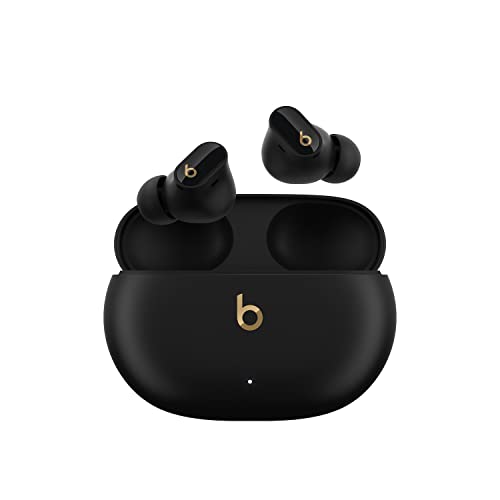
Today we're comparing two earbuds that represent very different approaches to wireless audio: the budget-focused JBL Vibe Beam and the feature-rich Beats Studio Buds Plus. These aren't direct competitors in price, but they both target everyday users who want reliable wireless audio without breaking the bank. Understanding their differences will help you decide which approach better fits your needs and budget.
Before diving into specifics, it's worth understanding what separates good earbuds from great ones. The most critical factors are sound quality, battery life, and comfort—these basics must work well regardless of price. Beyond that, premium features like active noise cancellation (ANC), advanced microphones for calls, and smart connectivity separate budget options from mid-range models.
Active noise cancellation deserves special explanation since it's a major differentiator. ANC uses microphones to detect external sounds, then creates "anti-noise" sound waves to cancel them out. This technology is particularly effective against consistent, low-frequency sounds like airplane engines or air conditioning, though it's less effective against sudden, sharp sounds like voices or car horns.
Sound quality involves several technical aspects. Driver size (the tiny speakers inside each earbud) affects how much air can be moved, influencing bass response and overall volume. Frequency response describes how well earbuds reproduce different sound frequencies—human hearing typically spans 20Hz to 20kHz, so earbuds covering this full range can reproduce everything we can hear. Impedance (measured in ohms) indicates how much power the earbuds need to drive sound, while sensitivity (measured in decibels) shows how loud they can get with a given amount of power.
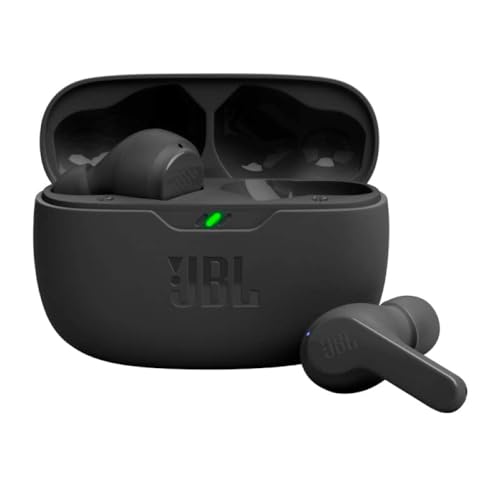
The JBL Vibe Beam represents JBL's approach to delivering their signature sound at an accessible price point. JBL has spent decades perfecting audio engineering, from professional studio monitors to consumer headphones, and the Vibe Beam brings this expertise to the budget wireless market. These earbuds focus on the fundamentals: good sound, long battery life, and reliable connectivity without unnecessary complexity.
Released in 2023, the Beats Studio Buds Plus marked a significant evolution from the original Studio Buds that launched in 2021. Apple's acquisition of Beats has resulted in steady improvements to their wireless offerings, and the Plus model introduced substantial upgrades to noise cancellation, call quality, and audio processing. These improvements reflected broader industry trends toward more sophisticated audio processing and better integration across device ecosystems.
The timing of these releases is important—both products benefit from mature Bluetooth 5.2 and 5.3 technology, which offers more stable connections and better power efficiency than earlier wireless standards. The earbuds market has also seen dramatic improvements in battery technology and miniaturization, allowing longer playback times in smaller packages.
Sound quality represents the most fundamental difference between these earbuds, and the approaches couldn't be more different. The JBL Vibe Beam uses 8mm dynamic drivers—relatively large for budget earbuds—paired with JBL's Deep Bass Sound tuning. This tuning philosophy emphasizes low-frequency response without overwhelming the mids and highs, creating what many describe as a "fun" sound signature that makes music feel more engaging.
What's particularly impressive about the JBL Vibe Beam is their customization options. The JBL Headphones app includes a parametric equalizer, which lets you adjust specific frequency ranges to match your preferences. This level of control is rare in budget earbuds and allows you to fine-tune the sound for different music genres or personal taste. Whether you prefer more vocal clarity for podcasts or extra bass for electronic music, the app gives you that flexibility.
The Beats Studio Buds Plus takes a completely different approach with their custom two-layer transducer system. This advanced driver design creates cleaner bass response and ultra-low distortion, meaning the earbuds can play louder without the harsh, fuzzy sound that plagues cheaper models. The acoustic platform includes three carefully designed vents per earbud that serve dual purposes: they improve audio precision by managing air pressure, and they reduce the "plugged ear" sensation that makes some earbuds uncomfortable during extended listening.
However, the Beats Studio Buds Plus come with a significant limitation—no equalizer adjustment. You're stuck with Beats' house sound, which emphasizes bass and treble while maintaining clear mids. This tuning works brilliantly for hip-hop, pop, and electronic music, but some listeners find the enhanced treble fatiguing during long listening sessions. If you're sensitive to bright sounds or prefer a more neutral presentation, this could be a dealbreaker.
In terms of raw audio quality, our research into expert and user reviews consistently shows the Beats Studio Buds Plus delivering superior technical performance. They handle complex musical passages with better separation between instruments, and their bass response has more depth and control. The JBL Vibe Beam, while impressive for their price category, can't quite match this level of refinement.
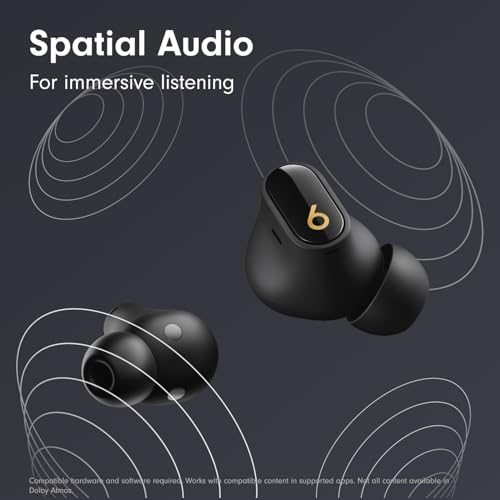
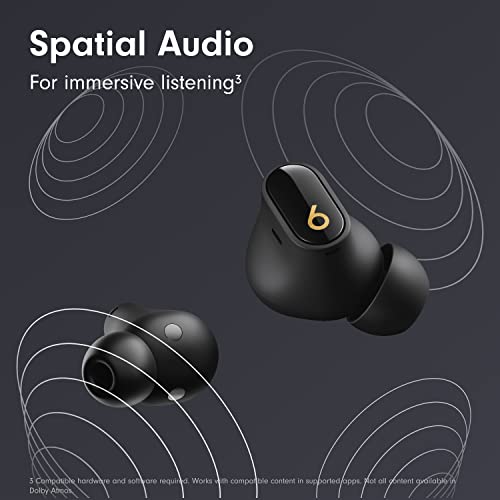
For home theater use, both earbuds support standard Bluetooth audio codecs (SBC and AAC), but neither includes aptX or LDAC for higher-quality wireless transmission. The Beats Studio Buds Plus offer Spatial Audio support, which creates a more immersive experience when watching compatible content on Apple devices, though this feature has limited utility with most home theater setups.
This represents the biggest practical difference between these earbuds. The JBL Vibe Beam relies entirely on passive noise isolation—the physical seal created by the ear tips blocking external sound. While this works reasonably well for consistent background noise, it can't adapt to changing environments or actively counter specific frequencies.
The JBL Vibe Beam does include Smart Ambient technology, which offers Ambient Aware and TalkThru modes. Ambient Aware lets external sound blend with your music, useful for staying aware of your surroundings while walking or cycling. TalkThru mode lowers music volume and amplifies voices, so you can have quick conversations without removing the earbuds. These features work well for their intended purposes, but they're not substitutes for proper active noise cancellation.
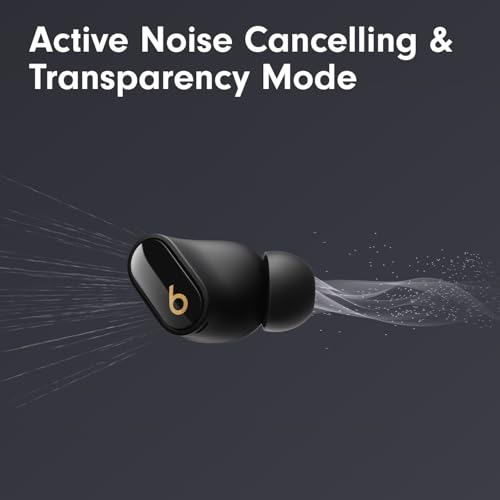
The Beats Studio Buds Plus include genuine active noise cancellation that represents a substantial upgrade over the original Studio Buds. The system uses three microphones per earbud—each three times larger than the previous generation—to detect and counter external noise. According to our research into professional testing, these earbuds can reduce external noise by approximately 80%, making them genuinely effective for commuting, air travel, and working in noisy environments.
What's particularly impressive is how the improved ANC handles different types of noise. Low-frequency sounds like airplane engines or air conditioning are nearly eliminated, while mid-frequency noise like office chatter is significantly reduced. The system struggles more with sudden, high-frequency sounds—this is normal for ANC technology, but it's worth understanding the limitations.
The Beats Studio Buds Plus also feature an enhanced Transparency mode that's reportedly twice as effective as the previous generation. This mode uses the same microphones that power ANC to pipe in external sound, allowing natural conversations and environmental awareness without removing the earbuds. The implementation feels more natural than many competitors, without the artificial or overly amplified feeling that plagues some transparency modes.
For users who frequently travel, work in noisy offices, or live in busy urban environments, the ANC capability of the Beats Studio Buds Plus justifies the price premium. However, if you primarily listen in quiet environments like home or office, the passive isolation of the JBL Vibe Beam may be perfectly adequate.
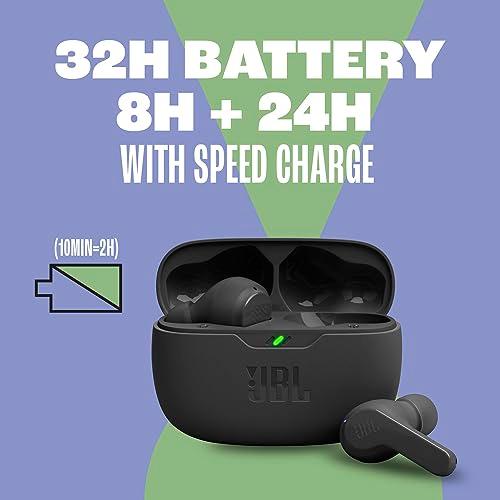
Battery life represents one area where the JBL Vibe Beam truly excels. With 8 hours of continuous playback from the earbuds themselves and an additional 24 hours from the charging case, you're looking at 32 total hours of listening time. This matches or exceeds earbuds costing significantly more, and the single-charge duration of 8 hours is particularly impressive for budget earbuds.
The speed charging feature delivers 2 hours of playback from just 10 minutes of charging—a lifesaver when you're rushing out the door with dead earbuds. The charging case uses USB-C, which has become the standard for modern devices, eliminating the need to carry multiple charging cables.
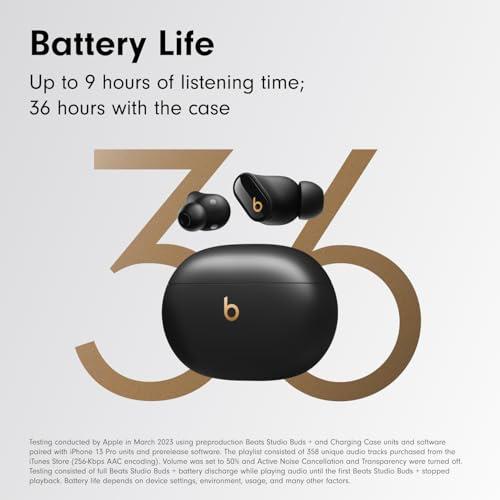
The Beats Studio Buds Plus offer competitive but more complex battery performance due to their power-hungry ANC system. With ANC disabled, you'll get up to 9 hours from the earbuds and 36 total hours with the case—actually slightly better than the JBL. However, enable ANC and those numbers drop to 6 hours per charge and 30 total hours. This is still respectable performance, but the variability means you need to manage your usage based on whether you need noise cancellation.
The Fast Fuel charging provides 1 hour of playback from 5 minutes of charging, which is slightly less generous than JBL's offering but still useful for emergency top-ups. The charging case also uses USB-C but lacks wireless charging, which feels like a missed opportunity at this price point.
For most users, both earbuds provide more than enough battery life for daily use. The JBL Vibe Beam edge out slightly for users who prioritize consistent, long battery life, while the Beats Studio Buds Plus offer more total capacity when ANC isn't needed.
Modern earbuds need to excel at voice calls, and this represents another significant performance gap. The JBL Vibe Beam include standard microphones with VoiceAware technology, which lets you control how much of your own voice you hear during calls. This helps reduce the "talking in a tunnel" sensation that can make phone calls feel unnatural.
While adequate for calls in quiet environments, our research suggests the JBL Vibe Beam struggle in noisier situations. Background noise can overwhelm the voice pickup, and the noise suppression isn't sophisticated enough to handle challenging acoustic environments.
The Beats Studio Buds Plus represent a substantial upgrade in call quality, using three microphones per earbud with advanced voice-targeting algorithms. The microphones are notably larger than the previous generation, improving sensitivity and voice pickup quality. Professional reviews consistently praise the call quality as rivaling premium options like AirPods Pro, with excellent background noise rejection and clear voice transmission.
This difference becomes crucial if you take frequent work calls, especially in noisy environments like cafes, airports, or busy streets. The Beats Studio Buds Plus will make you sound professional and clear, while the JBL Vibe Beam might require finding quieter spaces for important calls.
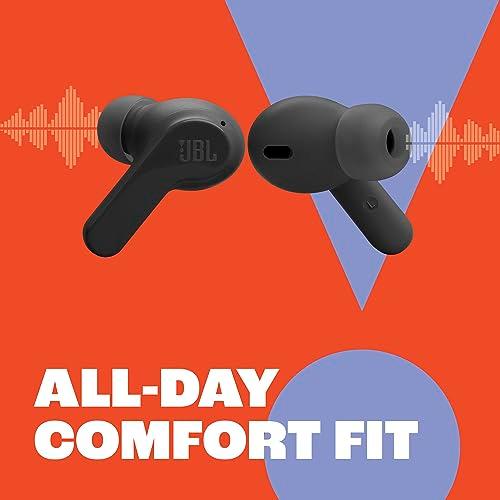
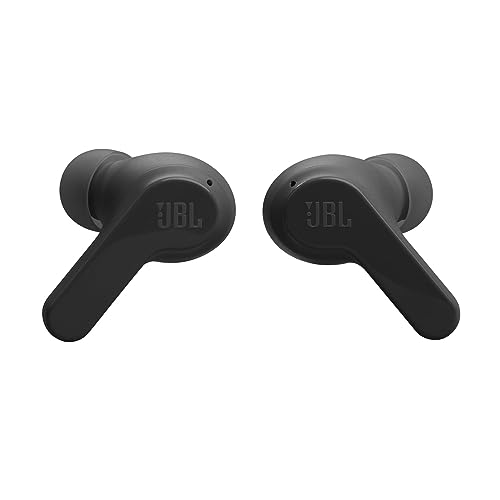
Both earbuds prioritize comfort, but they achieve it through different approaches. The JBL Vibe Beam are remarkably lightweight at just 4.4 grams per earbud, using an ergonomic "stick-closed" design that fits flush with your ear. The three included ear tip sizes help most users achieve a secure seal, though some users with smaller or larger ears might struggle with the limited size options.
The IP54 rating provides excellent protection against both water and dust, making these earbuds suitable for workouts, outdoor activities, and everyday wear in various weather conditions. The "54" designation means they're completely dust-tight and can handle water splashes from any direction—better protection than many competitors.
The Beats Studio Buds Plus use a compact, stemless design that some users find more discreet than traditional earbud shapes. At 5 grams per earbud, they're still lightweight, and the four ear tip sizes (XS through L) accommodate a wider range of ear shapes. The IPX4 rating provides splash protection but isn't as comprehensive as the JBL's dust protection.
Build quality feels more premium on the Beats Studio Buds Plus, with better materials and tighter manufacturing tolerances. The unique transparent color option adds visual appeal, though it's more of a style choice than a functional advantage.
For extended listening sessions, both earbuds are comfortable enough for most users, though the lighter weight of the JBL Vibe Beam gives them a slight edge for all-day wear.
This category showcases the Beats Studio Buds Plus at their best. These earbuds offer genuine cross-platform compatibility, working seamlessly with both iOS and Android devices. On iOS, you get AirPods-like features including one-touch pairing, automatic device switching, and hands-free Siri activation. Android users benefit from Google Fast Pair, device switching, and Google Assistant integration.
The Find My integration works on both platforms, helping locate misplaced earbuds through the respective device location services. Spatial Audio support creates a more immersive listening experience with compatible content, though this feature is currently limited to Apple's ecosystem.
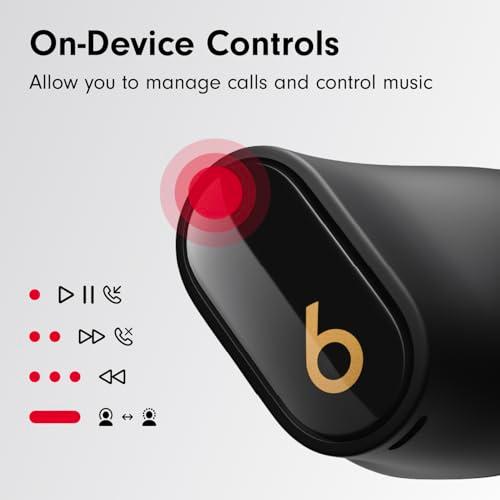
The JBL Vibe Beam offer more basic smart features through the JBL Headphones app. While you get customizable touch controls, Find My Buds functionality, and the crucial EQ adjustments, the overall feature set is more limited. The app works well for what it does, but it can't match the seamless ecosystem integration of the Beats.
For users heavily invested in Apple or Google ecosystems, the Beats Studio Buds Plus provide a more integrated experience that justifies the price premium. If you primarily want earbuds that play music reliably without complex smart features, the JBL Vibe Beam deliver everything you need.
The choice between these earbuds ultimately depends on your priorities and budget constraints. At the time of writing, the JBL Vibe Beam represent exceptional value in the budget category, typically selling for around one-third the price of the Beats Studio Buds Plus. This price difference reflects genuine capability gaps, but it also means each product excels in its intended market segment.
Choose the JBL Vibe Beam if you want reliable, long-lasting earbuds that deliver good sound quality without premium features. They're perfect for casual listeners, students, or anyone who needs dependable earbuds for music, podcasts, and occasional calls. The exceptional battery life makes them ideal for long commutes or travel, and the sound customization options let you tailor the audio to your preferences.
The Beats Studio Buds Plus justify their higher price with features that genuinely improve daily usability. If you commute on public transportation, work in noisy environments, or take frequent calls, the active noise cancellation and superior microphone performance provide real benefits. The premium audio processing and smart features create a more polished experience that feels appropriate for the price premium.
Neither option is perfect—the JBL Vibe Beam lack the refinement and advanced features of pricier models, while the Beats Studio Buds Plus miss some expected premium touches like wireless charging and sound customization. However, both earbuds succeed admirably at their intended price points and use cases.
For most users, the decision comes down to whether you need active noise cancellation and premium call quality enough to justify spending roughly three times more. If those features matter to your daily routine, the Beats Studio Buds Plus deliver excellent value for a mid-range product. If reliable basics are sufficient, the JBL Vibe Beam offer some of the best performance available at their price point.
| JBL Vibe Beam True Wireless Earbuds | Beats Studio Buds Plus True Wireless Earbuds |
|---|---|
| Active Noise Cancellation - Essential for commuting and noisy environments | |
| None (passive isolation only with Smart Ambient modes) | Yes, with 1.6x more ANC power than previous generation |
| Driver Technology - Affects sound quality and bass response | |
| 8mm dynamic drivers with JBL Deep Bass Sound tuning | Custom two-layer transducer for cleaner bass and ultra-low distortion |
| Sound Customization - Ability to adjust audio to your preferences | |
| Full parametric EQ available in JBL Headphones app | No EQ options available (locked to Beats house sound) |
| Battery Life per Charge - Critical for all-day use without case | |
| 8 hours continuous playback | 9 hours (ANC off) / 6 hours (ANC on) |
| Total Battery Life with Case - Important for travel and extended use | |
| 32 hours total (8h + 24h case) | 36 hours (ANC off) / 30 hours (ANC on) |
| Call Quality - Crucial for work calls and phone conversations | |
| Standard mics with VoiceAware, struggles in noisy environments | Triple-microphone array with voice-targeting, rivals premium earbuds |
| Water/Dust Resistance - Protection for workouts and outdoor use | |
| IP54 (complete dust protection + splash resistant) | IPX4 (splash resistant only, no dust protection) |
| Weight per Earbud - Affects comfort during extended wear | |
| 4.4g (ultra-lightweight for all-day comfort) | 5g (still lightweight but slightly heavier) |
| Smart Features - Integration with phones and voice assistants | |
| Basic features: Find My Buds, touch controls, app customization | Advanced: Cross-platform pairing, Spatial Audio, Find My support, voice assistant |
| Bluetooth Version - Affects connection stability and power efficiency | |
| Bluetooth 5.2 | Bluetooth 5.3 |
| Quick Charging - How much playback from short charging sessions | |
| 10 minutes = 2 hours playback | 5 minutes = 1 hour playback |
| Transparency Mode - Ability to hear surroundings while listening | |
| Ambient Aware and TalkThru modes via Smart Ambient technology | Enhanced Transparency mode (2x better than previous generation) |
The Beats Studio Buds Plus deliver superior sound quality with their custom two-layer transducer system that produces cleaner bass and ultra-low distortion. However, the JBL Vibe Beam offer customizable EQ settings through their app, allowing you to adjust the sound to your preferences. For most listeners, the Beats Studio Buds Plus provide more refined audio, but the JBL Vibe Beam give you more control over the sound signature.
No, only the Beats Studio Buds Plus feature active noise cancellation (ANC) with 1.6x more power than the previous generation. The JBL Vibe Beam rely on passive noise isolation and Smart Ambient technology with Ambient Aware and TalkThru modes, but they don't have true ANC capabilities.
The JBL Vibe Beam provide 8 hours of continuous playback per charge, while the Beats Studio Buds Plus offer 6 hours with ANC on or 9 hours with ANC off. For consistent battery life, the JBL Vibe Beam are more predictable, but the Beats Studio Buds Plus can last longer when you don't need noise cancellation.
The Beats Studio Buds Plus are significantly better for calls, featuring a triple-microphone array with voice-targeting algorithms that rival premium earbuds like AirPods Pro. The JBL Vibe Beam have standard microphones with VoiceAware technology but struggle in noisy environments.
Both earbuds work for exercise, but the JBL Vibe Beam have superior protection with an IP54 rating (dust-tight and splash-resistant) compared to the Beats Studio Buds Plus IPX4 rating (splash-resistant only). The JBL Vibe Beam are also lighter at 4.4g per earbud versus 5g for the Beats.
The JBL Vibe Beam provide exceptional value in the budget category with solid sound quality, excellent battery life, and customizable EQ. The Beats Studio Buds Plus justify their higher price with active noise cancellation, superior call quality, and premium audio processing. Your choice depends on whether you need advanced features or prefer basic reliability at a lower cost.
Yes, both the JBL Vibe Beam and Beats Studio Buds Plus work with iPhone and Android devices. However, the Beats Studio Buds Plus offer better cross-platform integration with features like one-touch pairing, automatic device switching, and Find My support on both iOS and Android.
The JBL Vibe Beam have a slight comfort advantage due to their lighter weight (4.4g vs 5g) and ergonomic stick-closed design. However, the Beats Studio Buds Plus offer four ear tip sizes compared to three for the JBL Vibe Beam, which may provide a better fit for some users.
Both earbuds support standard Bluetooth audio codecs for TV watching, but neither is optimized for home theater use. The Beats Studio Buds Plus offer Spatial Audio support for more immersive content on compatible Apple devices, while the JBL Vibe Beam provide basic stereo audio. For dedicated home theater use, consider wired headphones or TV-specific wireless options instead.
The JBL Vibe Beam charging case provides 24 additional hours of playback for 32 hours total, while the Beats Studio Buds Plus case offers 27 hours (ANC off) or 21 hours (ANC on) for up to 36 hours total. Both cases charge via USB-C, but neither supports wireless charging.
The Beats Studio Buds Plus offer more advanced smart features including cross-platform compatibility, Spatial Audio, and seamless device switching. The JBL Vibe Beam provide essential app features like customizable EQ, Find My Buds, and touch control settings. If you want extensive smart features, choose the Beats Studio Buds Plus; for basic app functionality with sound customization, the JBL Vibe Beam are sufficient.
Only the JBL Vibe Beam offer sound customization through a parametric EQ in the JBL Headphones app, allowing you to adjust specific frequency ranges. The Beats Studio Buds Plus don't include any EQ options, so you're limited to their fixed sound signature that emphasizes bass and treble.
We've done our best to create useful and informative comparisons to help you decide what product to buy. Our research uses advanced automated methods to create this comparison and perfection is not possible - please contact us for corrections or questions. These are the sites we've researched in the creation of this article: bestbuy.com - jbl.com - rtings.com - jbl.com - youtube.com - youtube.com - audio46.com - jbl.com - soundguys.com - bestbuy.com - walmart.com - uclastore.com - bestbuy.com - manuals.plus - soundguys.com - loudnwireless.com - beatsbydre.com - rtings.com - soundguys.com - youtube.com - cnet.com - soundguys.com - recordingnow.com - youtube.com - cornellstore.com - youtube.com - beatsbydre.com.cn - soundguys.com - techradar.com - youtube.com - techgearlab.com - beatsbydre.com - youtube.com - apple.com - electronics.woot.com

Privacy Policy
Terms and Conditions - Affiliate Policy
Home Security
© Copyright 2008-2026.
11816 Inwood Rd #1211, Dallas, TX 75244