

True wireless earbuds have completely transformed how we listen to music, take calls, and consume audio content. Gone are the days when you had to choose between tangled wires or mediocre sound quality. Today's market offers everything from incredible budget options to premium models packed with cutting-edge technology, but choosing between them can feel overwhelming.
The real question isn't just about sound quality anymore—it's about finding the right balance of features, performance, and value for your specific needs. Some people want the absolute best noise cancellation for their daily commute, while others prioritize all-day battery life for long work sessions. Understanding these trade-offs is crucial when comparing products like the JBL Vibe Beam and Apple AirPods 4 ANC, which represent two fundamentally different approaches to wireless audio.
Before diving into specifics, let's talk about what actually matters in wireless earbuds. Audio quality remains paramount—this includes not just how music sounds, but how well the earbuds handle different frequencies (the range from deep bass notes to crisp highs). The driver size and type significantly impact this; larger drivers typically produce better bass, while the tuning determines whether earbuds sound balanced or emphasize certain frequencies.
Battery performance has become increasingly critical as we rely on earbuds throughout the day. Single-charge duration determines how long you can listen without interruption, while total battery capacity (including the charging case) affects your weekly charging routine. Fast charging capabilities can be a lifesaver when you're rushing out the door with dead earbuds.
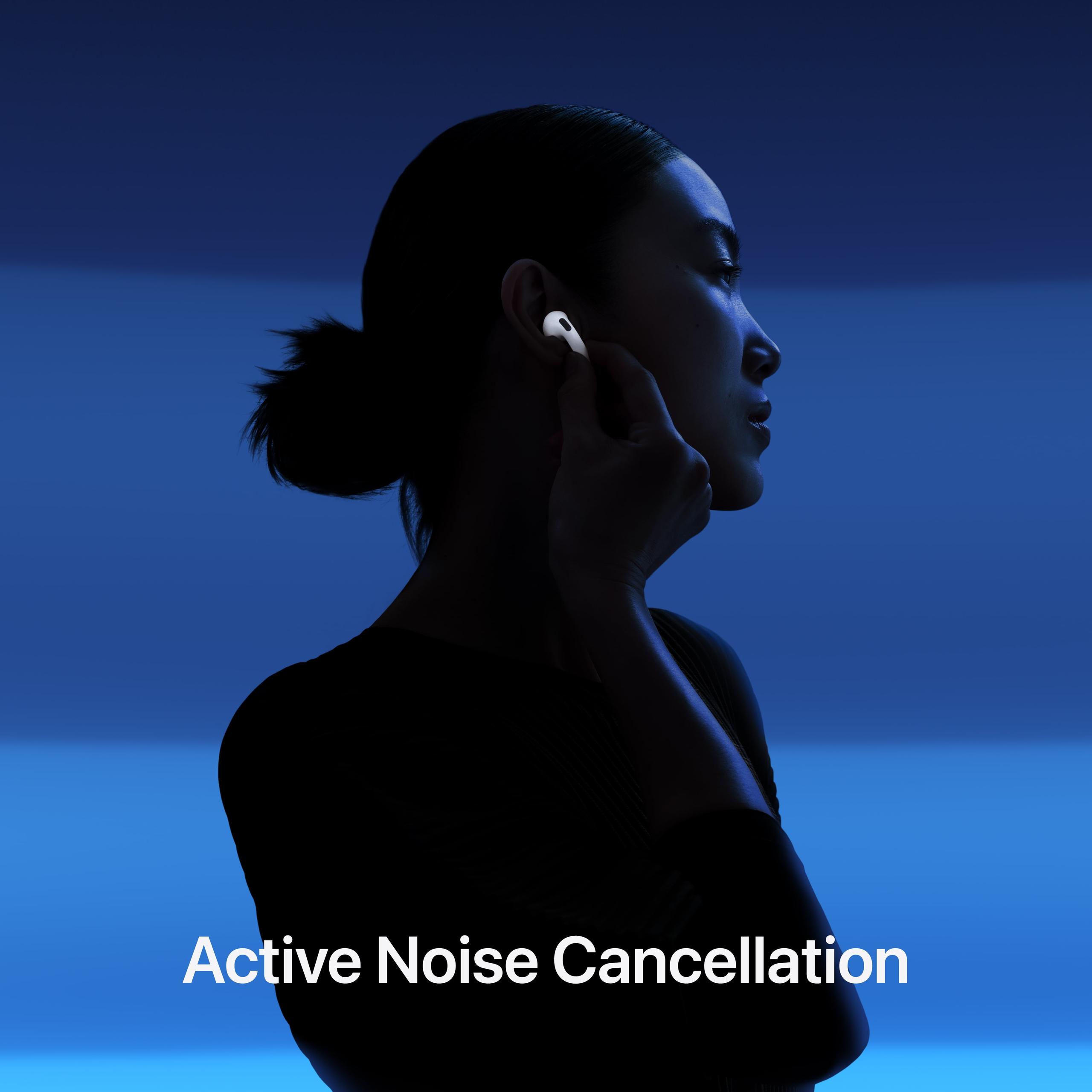
Active Noise Cancellation (ANC) represents one of the biggest technological advances in recent years. This feature uses microphones to detect external sounds and generates opposite sound waves to cancel them out—particularly effective against constant, low-frequency noises like airplane engines or air conditioning systems. Not all earbuds include ANC, and there's often a trade-off between this feature and battery life.
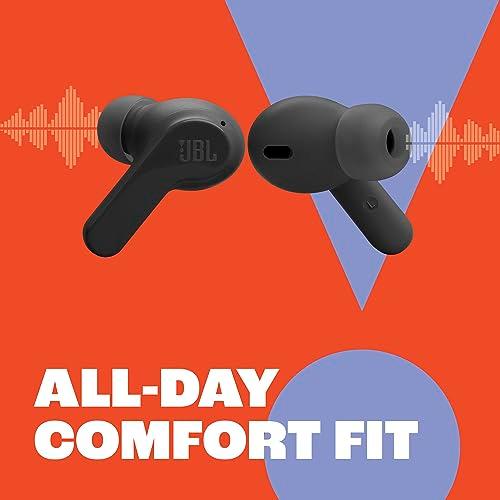
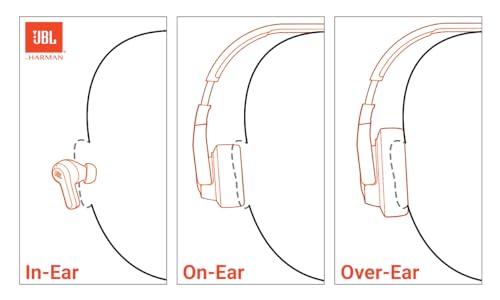
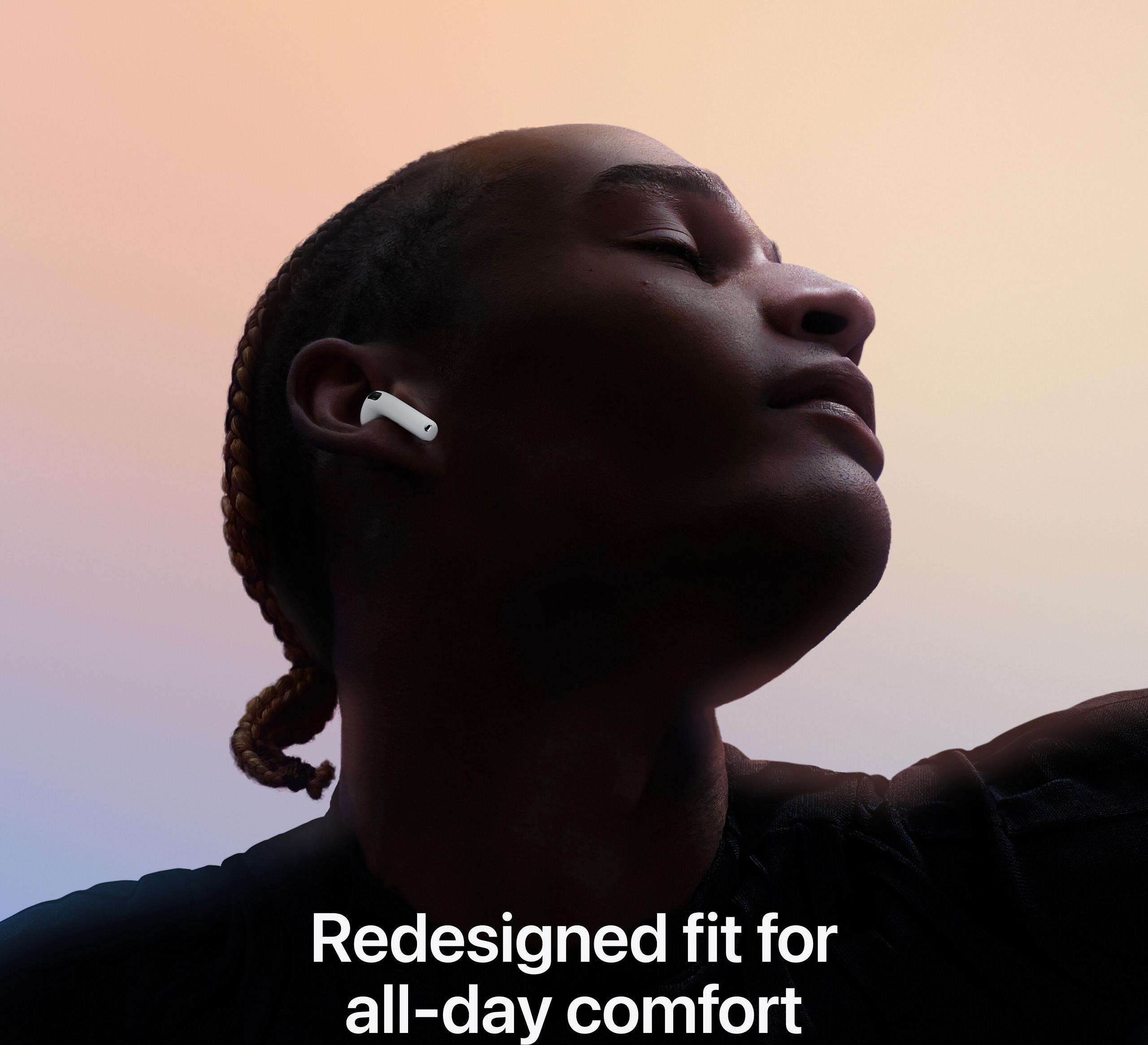
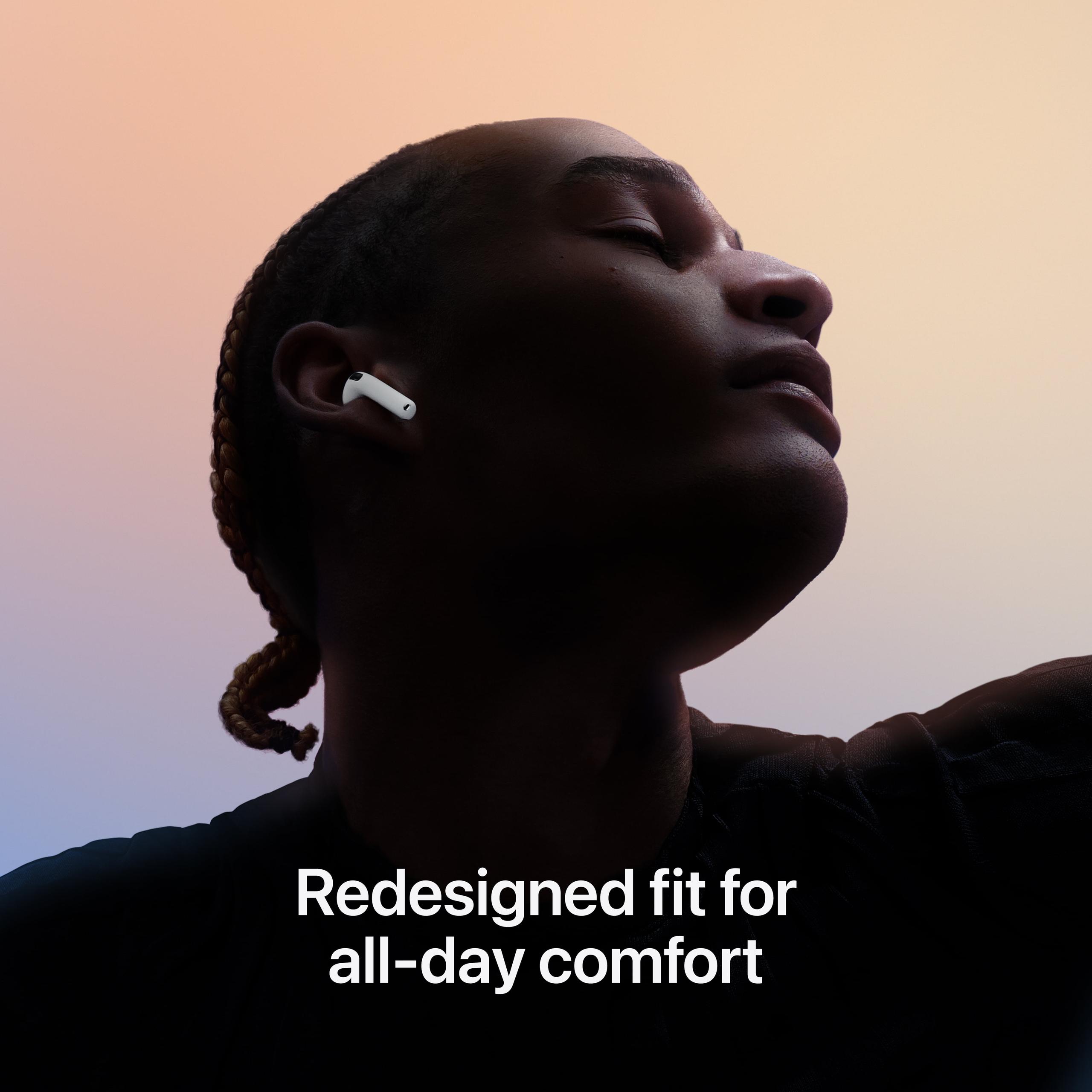
Comfort and fit directly impact your listening experience and how long you can wear earbuds without discomfort. Some designs use interchangeable ear tips for a customized fit, while others adopt a one-size-fits-all approach. The materials used and overall weight distribution play crucial roles in long-term comfort.
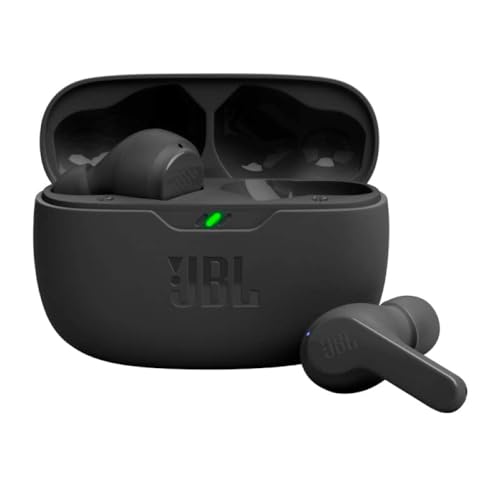
The JBL Vibe Beam, released in 2023, represents JBL's commitment to delivering premium features at an accessible price point. At roughly one-fourth the cost of premium competitors (at the time of writing), these earbuds focus on core performance areas like battery life, sound quality, and practical features without the premium price tag.
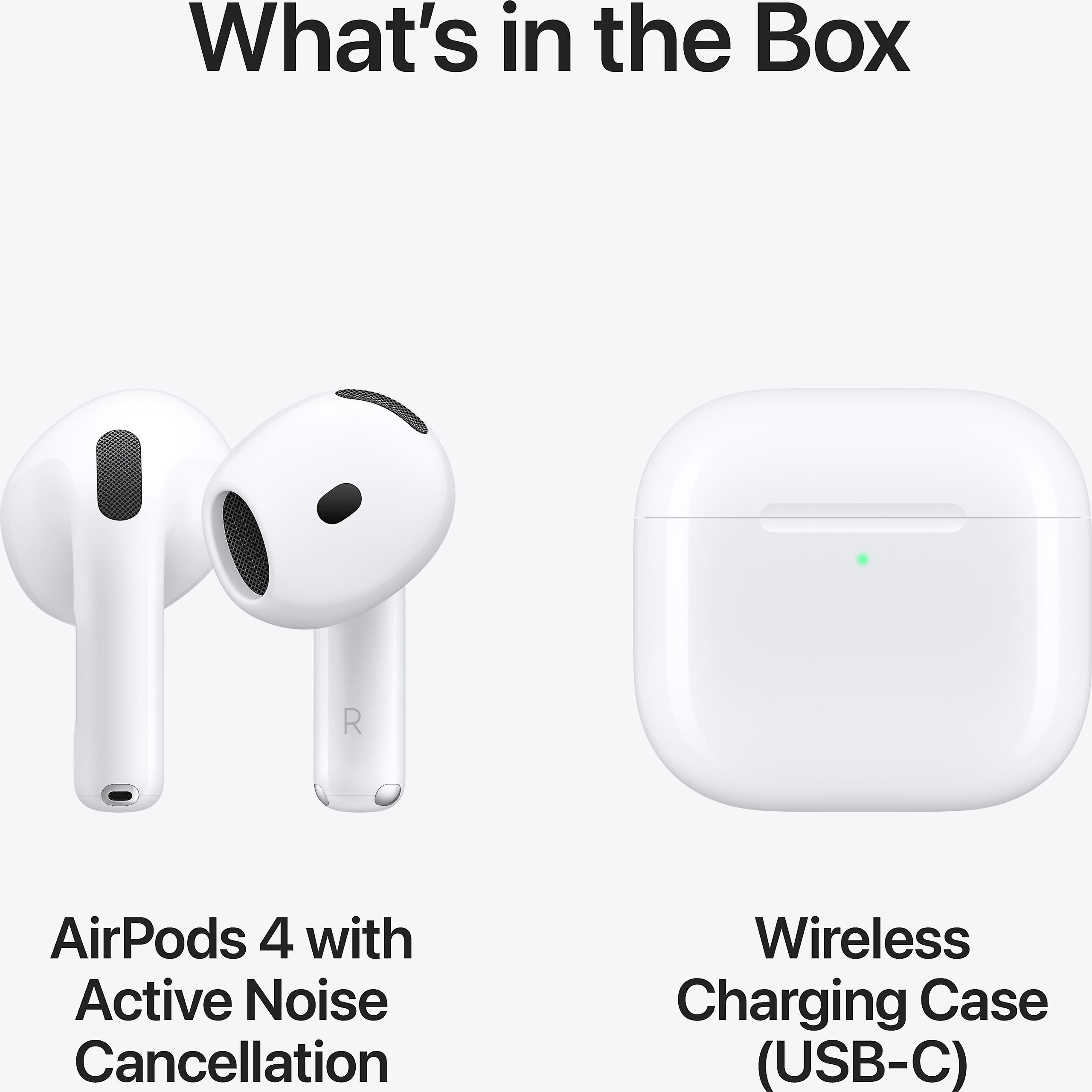
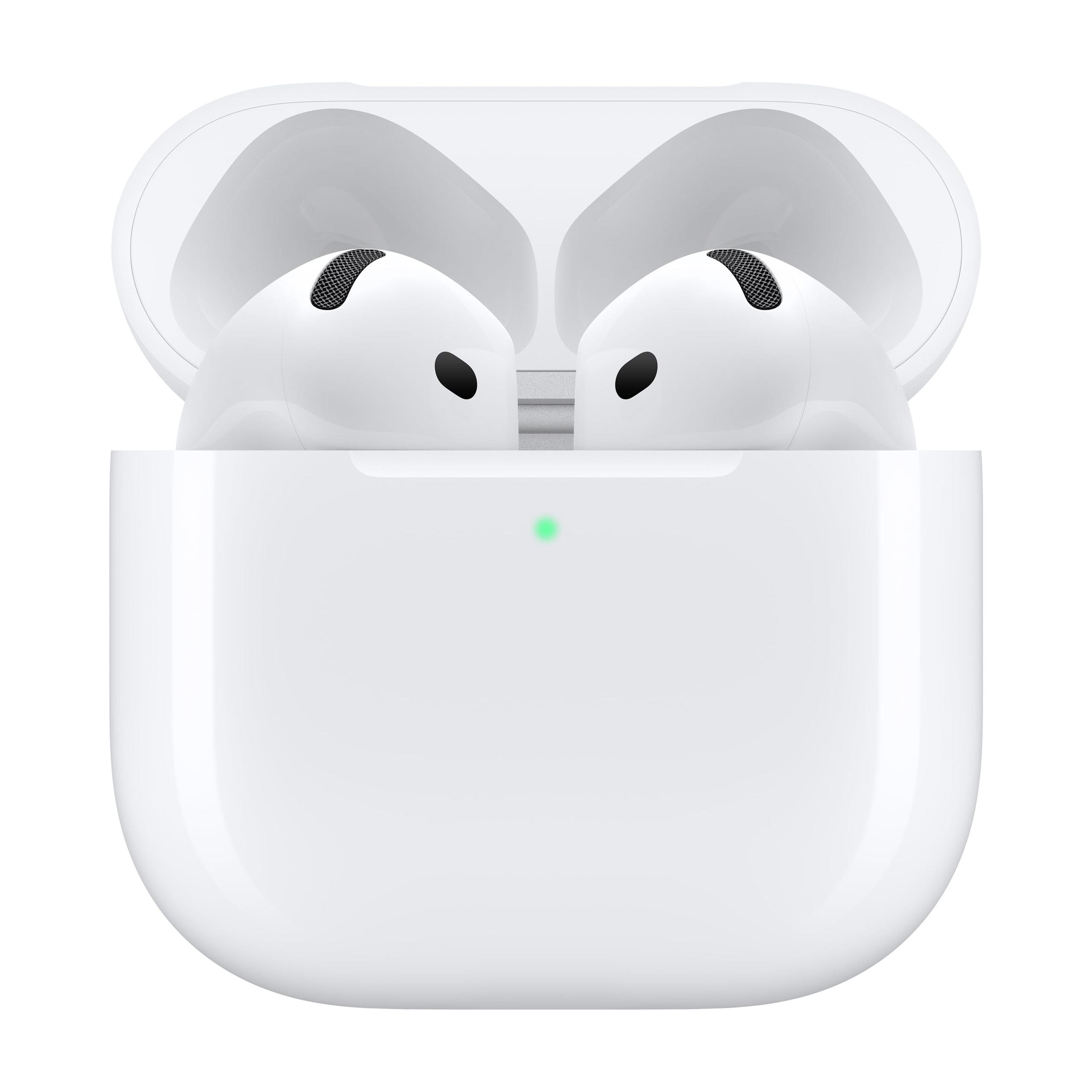
The Apple AirPods 4 ANC, launched in 2024, showcases Apple's latest technological advances in their popular earbud lineup. These represent Apple's attempt to bring active noise cancellation to their standard AirPods design, incorporating their newest H2 chip and advanced computational audio features. The price reflects this premium positioning, typically costing about four times more than budget alternatives.
When it comes to audio performance, both earbuds take distinctly different approaches that cater to different listening preferences and use cases.
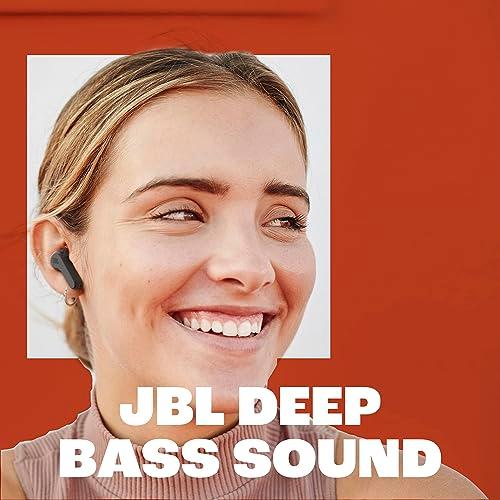
The JBL Vibe Beam features JBL's signature "Deep Bass Sound" tuning, powered by 8mm dynamic drivers—relatively large for earbuds in this price category. This tuning philosophy emphasizes lower frequencies without completely overwhelming the midrange and treble. Based on extensive user feedback and expert reviews, the sound signature provides clear vocals and instruments with that extra punch in the bass region that makes electronic music, hip-hop, and rock genres particularly engaging.
What sets the JBL Vibe Beam apart in its price category is the comprehensive customization available through the JBL Headphones app. The parametric equalizer allows users to adjust specific frequency bands, essentially letting you tailor the sound signature to your preferences. This level of control typically appears in much more expensive earbuds, making it a standout feature for the price point.
The Apple AirPods 4 ANC takes a more sophisticated approach with their custom high-excursion Apple driver paired with a custom high dynamic range amplifier. The H2 chip enables computational audio features that automatically optimize sound based on your ear shape and fit—a technology called Adaptive EQ. Rather than letting users manually adjust frequencies, Apple's approach analyzes your ear canal and automatically compensates for any acoustic variations.
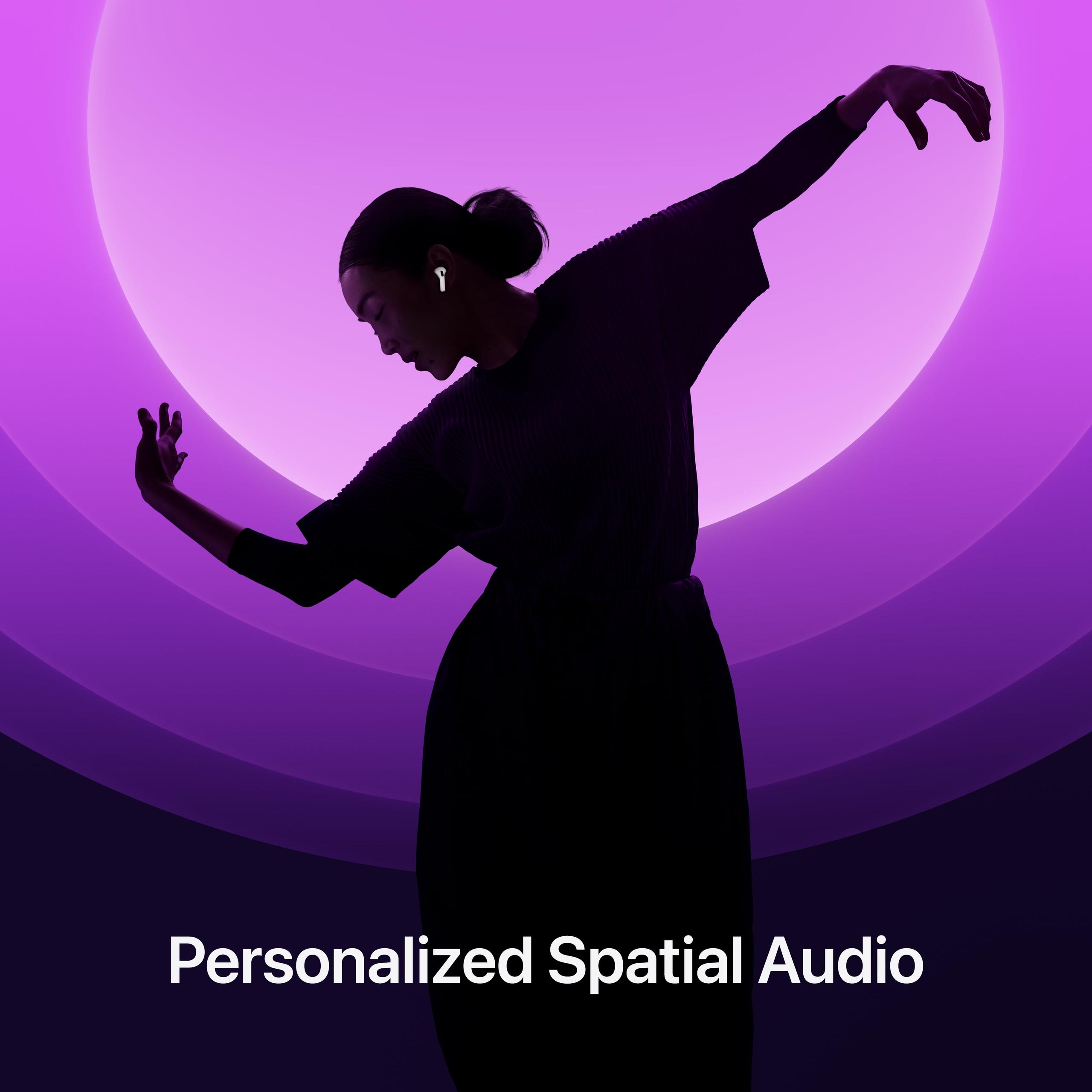
Apple's Personalized Spatial Audio represents a significant technological advancement, creating a three-dimensional soundstage that tracks your head movements. This feature particularly shines when watching movies or listening to specially mixed music, creating an immersive experience that can make you feel like you're sitting in a concert hall or movie theater. For home theater applications, this spatial audio technology can complement your main entertainment system by providing a personal surround sound experience during late-night viewing.
The frequency response for both models covers the full audible spectrum from 20Hz to 20kHz, but their tuning philosophies differ significantly. The JBL Vibe Beam provides more user control and bass emphasis, while the Apple AirPods 4 ANC focuses on automatic optimization and spatial enhancement.
This category represents perhaps the most significant difference between these two products, both in terms of technology and real-world performance.
The JBL Vibe Beam relies on passive noise isolation through its "stick-closed" design. This physical approach uses the earbuds themselves and the ear tips to create a seal that blocks external sound. This method works particularly well for mid-to-high frequency sounds like conversations, keyboard typing, or air conditioning units. The Smart Ambient technology adds intelligence to this passive approach, offering "TalkThru" mode that lowers your music and amplifies nearby voices for quick conversations, and "Ambient Aware" mode that lets in environmental sounds for safety awareness.
However, passive isolation has limitations. Low-frequency sounds like airplane engines, bus rumble, or construction noise can still penetrate this physical barrier. This is where active noise cancellation technology shows its superiority.
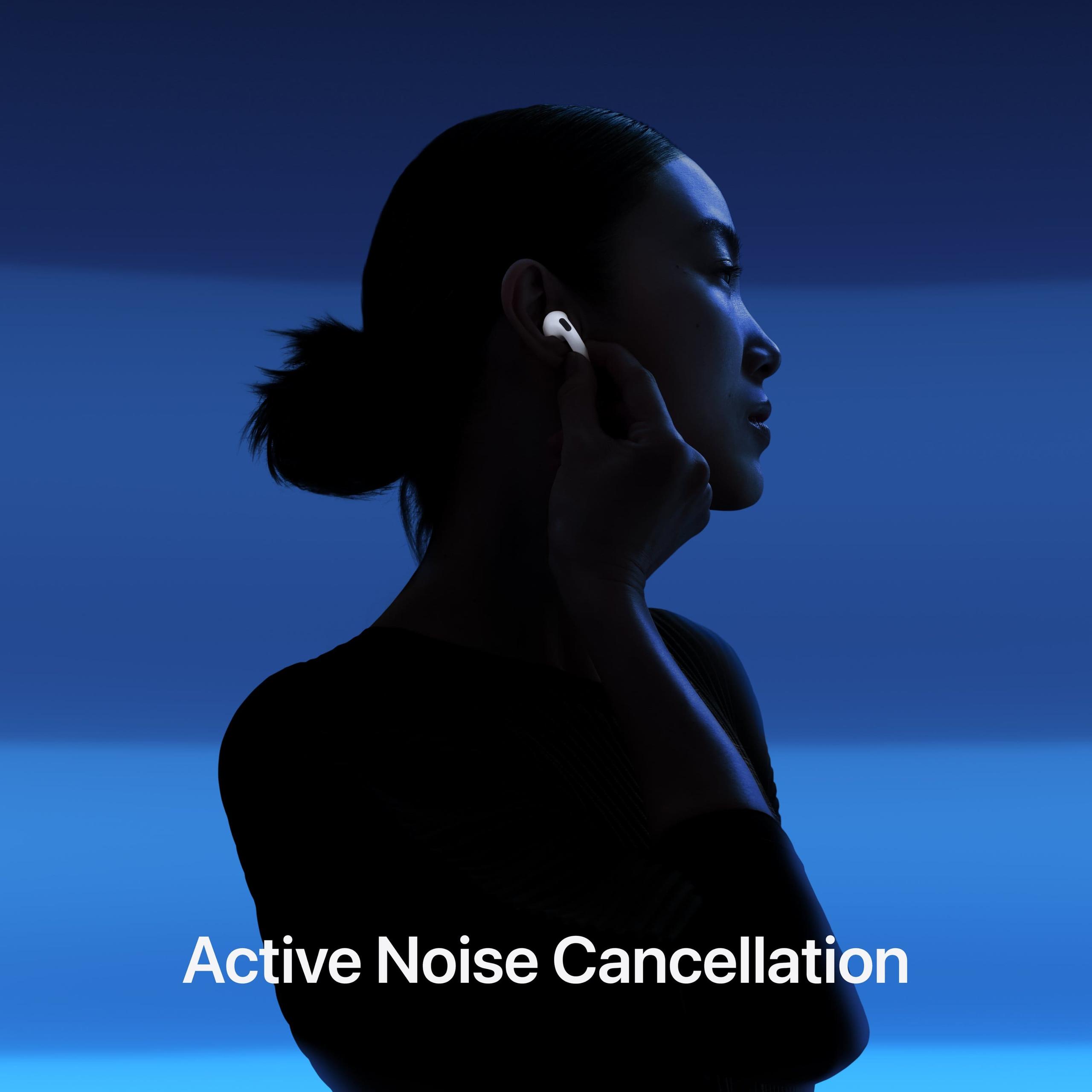
The Apple AirPods 4 ANC incorporates true Active Noise Cancellation powered by the H2 chip. This system uses outward-facing microphones to detect environmental noise and generates precise anti-noise signals to cancel it out before it reaches your ears. The effectiveness against low-frequency, constant sounds is remarkable—transforming noisy airplane cabins into quiet listening environments and making subway commutes far more pleasant.
Apple's Adaptive Audio feature represents the next evolution in noise control, automatically blending ANC and Transparency modes based on your environment. If you're walking through a busy intersection, it might reduce noise cancellation to keep you aware of traffic. In a quiet library, it maximizes noise reduction for concentration. This dynamic adjustment happens continuously without user intervention.
Conversation Awareness adds another layer of intelligence, automatically detecting when you're speaking and lowering your audio volume while enhancing nearby voices. This feature eliminates the common awkwardness of trying to have a conversation while wearing noise-canceling earbuds.
For most users, the difference between passive and active noise control is substantial. If you frequently travel, work in noisy environments, or need to concentrate in shared spaces, active noise cancellation provides tangible benefits that can justify the higher price point.
Battery performance often determines daily usability more than any other single factor, and here we see interesting trade-offs between raw capacity and feature sophistication.
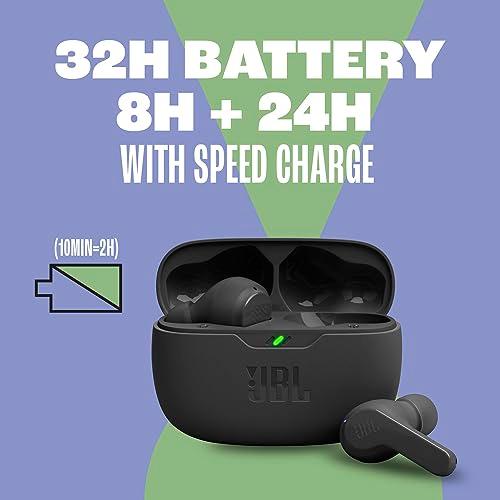
The JBL Vibe Beam excels in this category with impressive endurance numbers. Eight hours of continuous playback from a single earbud charge sets a high bar, especially in this price range. The charging case provides an additional 24 hours, bringing total capacity to 32 hours. This means you could theoretically go over a week of typical usage without needing to plug in the case.
The fast charging implementation deserves special mention—ten minutes of charging provides two hours of playback. This speed charging capability can be crucial when you're running late but need your earbuds for a long commute or work session. The complete charging cycle takes under two hours, making overnight charging unnecessary for most users.
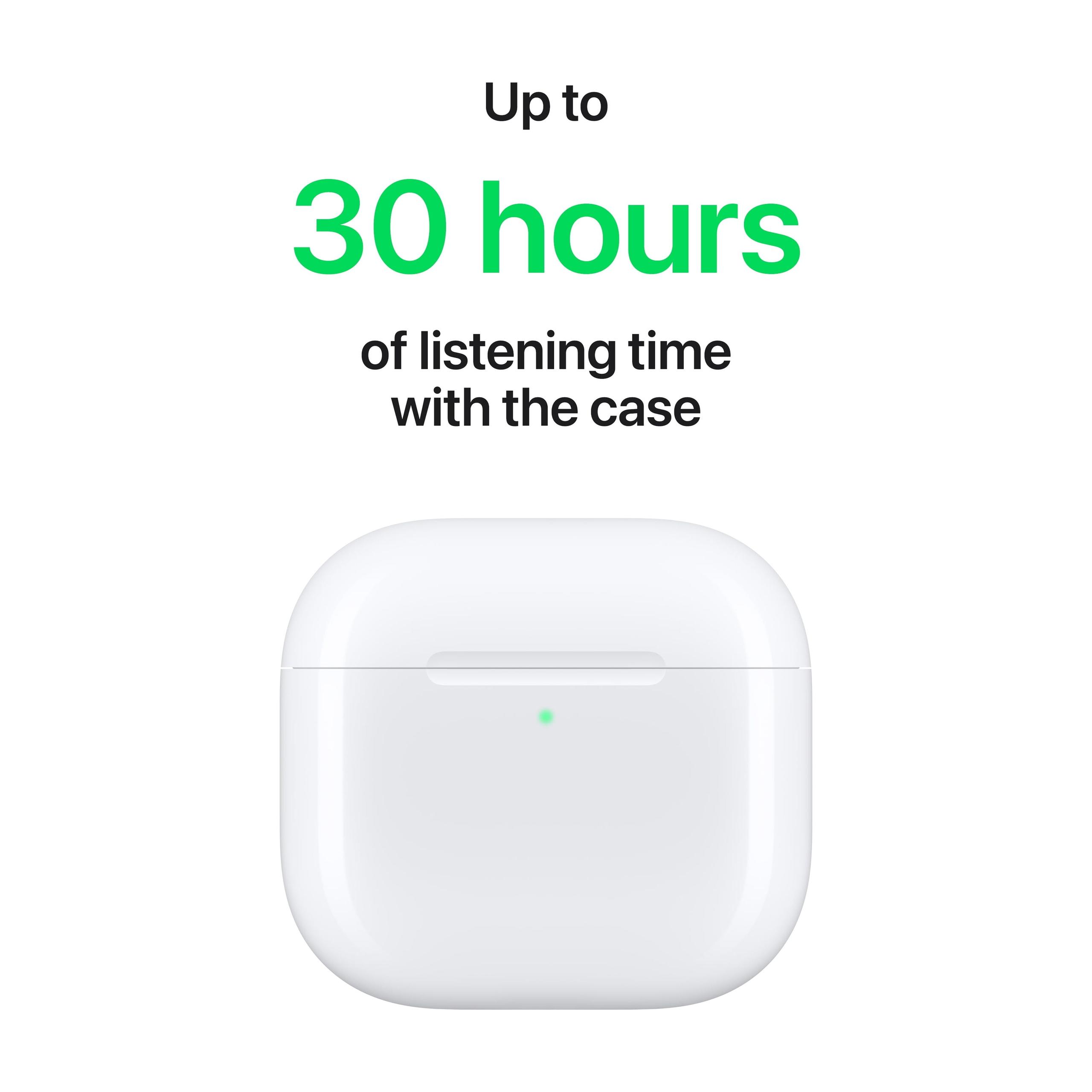
The Apple AirPods 4 ANC faces the inherent challenge that active noise cancellation significantly impacts battery consumption. With ANC enabled, you get four hours of listening time per charge, rising to five hours with noise control disabled. The charging case provides an additional 20-25 hours depending on ANC usage, totaling around 30 hours.
While these numbers appear lower than the JBL Vibe Beam, the real-world difference might be less significant than it initially appears. Most users don't listen continuously for eight hours straight, and the case provides ample backup power for typical daily usage patterns. The automatic in-ear detection also helps preserve battery by pausing audio when earbuds are removed.
For users who prioritize maximum battery life—perhaps those with long commutes, extended work sessions, or irregular charging opportunities—the JBL Vibe Beam provides a clear advantage. However, if you can manage with 4-5 hours of continuous use and prefer the advanced features, the Apple AirPods 4 ANC offers acceptable endurance.
Both products prioritize comfort but take different approaches to achieving all-day wearability.
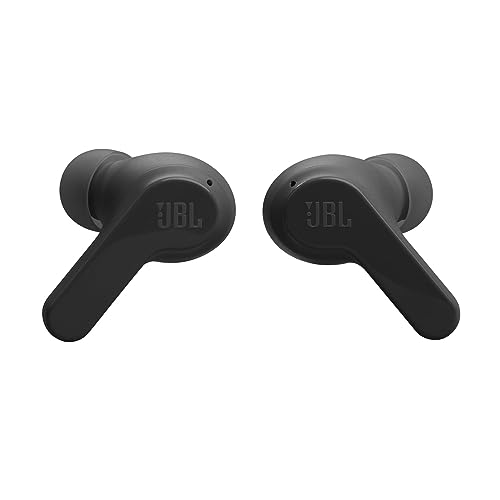
The JBL Vibe Beam uses an ergonomic stick-closed design that creates a secure fit while enhancing the passive noise isolation that improves bass response. At 4.4 grams per earbud, they're lightweight enough for extended wear. The inclusion of three different ear tip sizes allows most users to find a comfortable, secure fit. The IP54 water and dust resistance rating makes them suitable for workouts and outdoor activities, while the charging case receives an IPX2 rating for splash protection.
User feedback consistently highlights the comfort level, with many reporting they can wear these earbuds for hours without discomfort. However, some users with specific ear shapes report difficulty achieving a secure fit during vigorous activities, suggesting the universal design doesn't work perfectly for everyone.
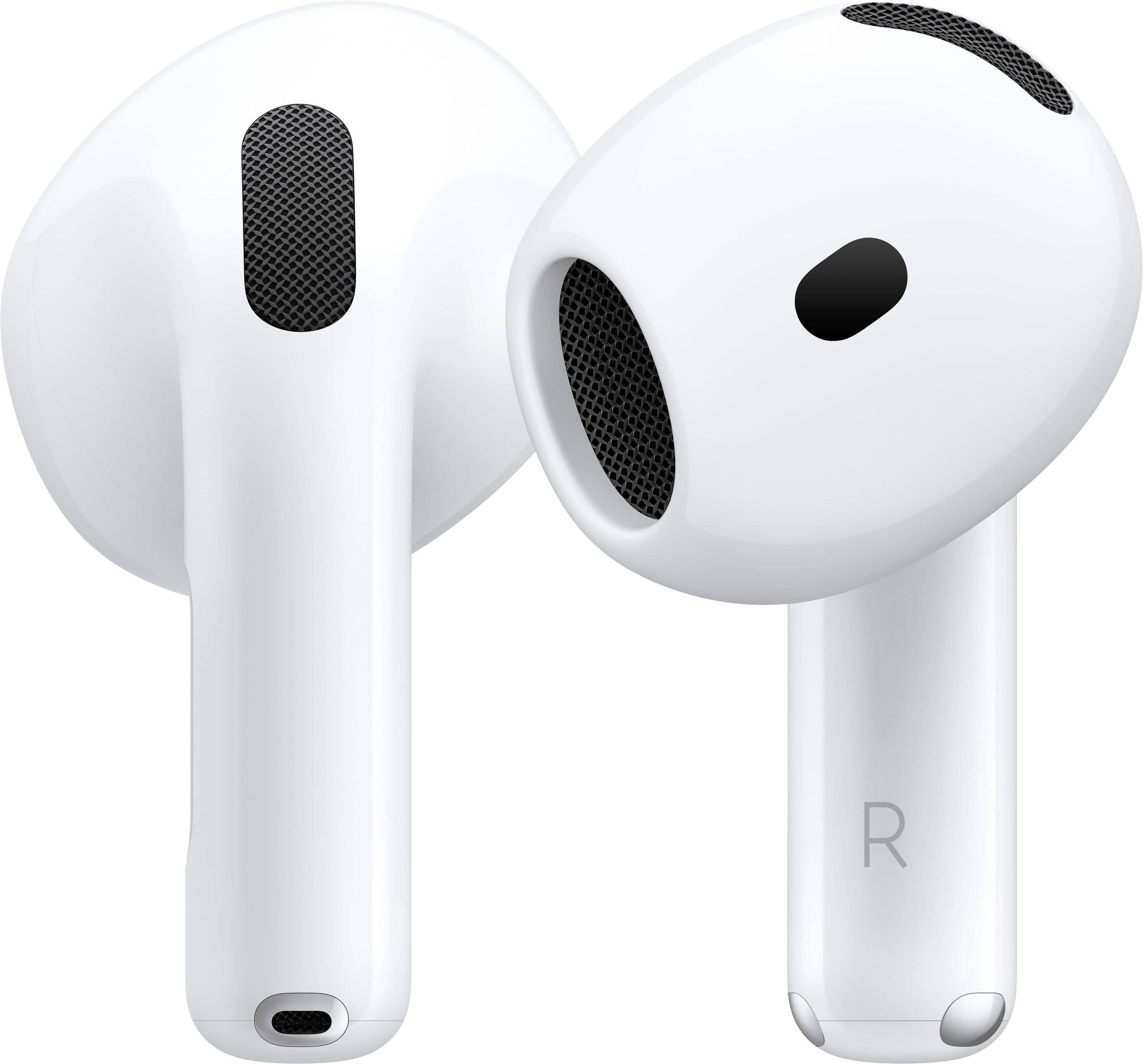
The Apple AirPods 4 ANC features a refined contour design with a shorter stem, weighing in at 4.3 grams per earbud. The premium materials and build quality are immediately apparent, reflecting Apple's attention to manufacturing details. However, Apple's one-size-fits-all approach means there are no interchangeable ear tips—the fit you get is what you get.
This design philosophy works well for many users, but it can be problematic for those whose ears don't match Apple's target dimensions. Unlike the JBL Vibe Beam, there's no option to try different sizes for a better fit. The IP54 rating matches JBL's earbuds for water and dust resistance.
The build quality difference becomes apparent in long-term use. Apple's premium materials and manufacturing standards typically result in better durability and more consistent quality control, though this comes at a significant cost premium.
This category highlights the philosophical differences between these two products most clearly.
The JBL Vibe Beam takes a universal approach, working effectively with any Bluetooth-enabled device regardless of operating system. The JBL Headphones app provides comprehensive control over EQ settings, ambient sound modes, and firmware updates. The "Find My Buds" feature helps locate missing earbuds by playing an audible tone—a practical feature that works across platforms.
The app integration feels complete without being overwhelming. You can adjust the parametric EQ to your preferences, fine-tune the ambient sound settings, and access regular firmware updates that add features and improve performance. This cross-platform compatibility makes them equally effective whether you use Android, iOS, Windows, or other devices.
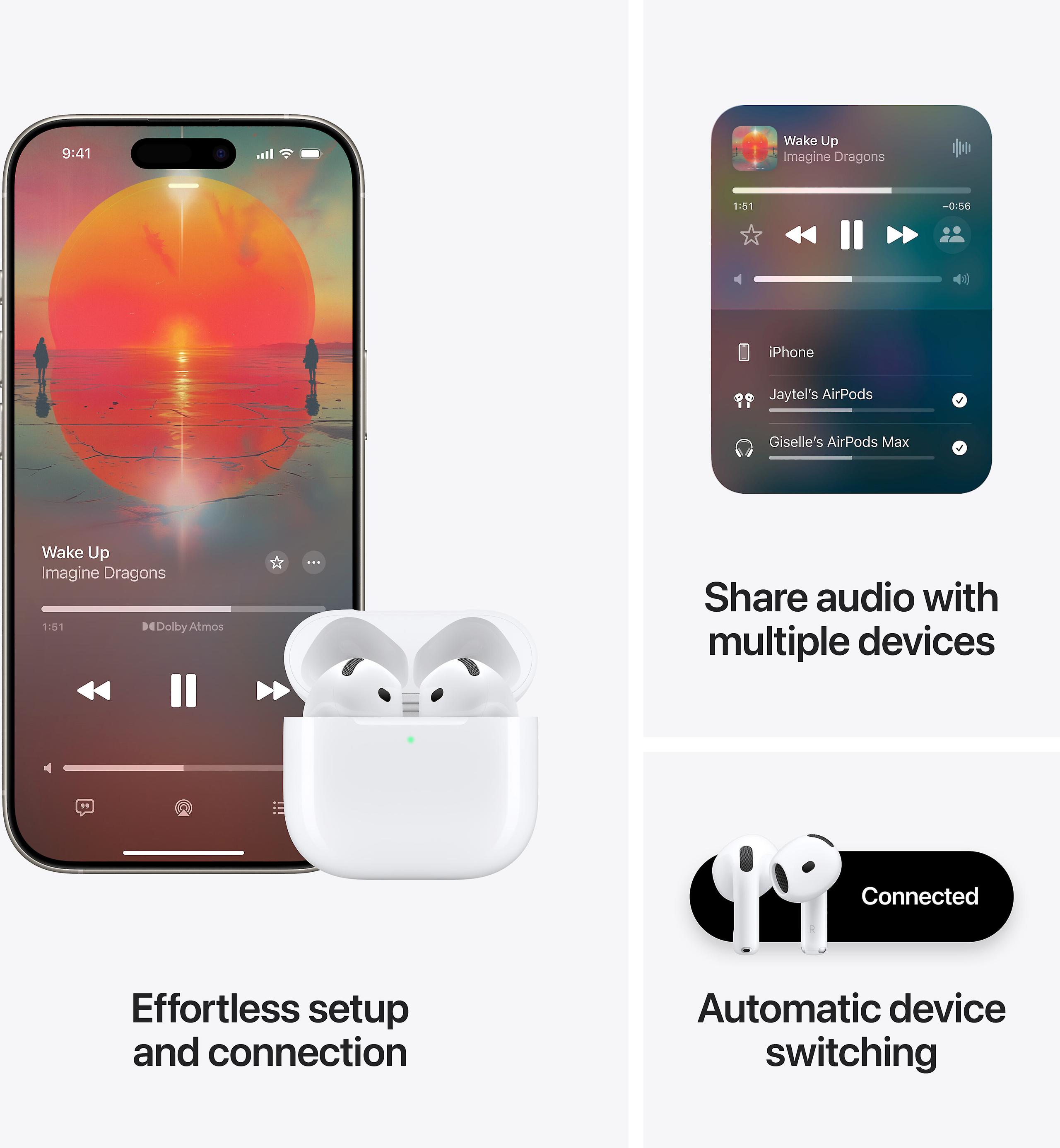
The Apple AirPods 4 ANC shines within the Apple ecosystem but can feel limited outside it. Features like automatic device switching, in-ear detection, and Spatial Audio optimization work seamlessly if you own multiple Apple devices. The H2 chip enables advanced computational audio features that automatically optimize performance without user intervention.
However, many of these smart features require iOS devices to function properly. Android users can connect and listen to music, but they'll miss out on the advanced features that justify the premium price. This ecosystem dependency can be either a major advantage (if you're fully invested in Apple products) or a significant limitation (if you use mixed platforms).
The latest Bluetooth 5.3 implementation in the Apple AirPods 4 ANC provides improved connection stability and power efficiency compared to the Bluetooth 5.2 in the JBL Vibe Beam, though both versions offer reliable connectivity for typical use cases.
At the time of writing, the price difference between these products is substantial—the Apple AirPods 4 ANC typically costs about four times more than the JBL Vibe Beam. This significant price gap requires careful consideration of what additional features justify the premium.
The JBL Vibe Beam represents exceptional value in the budget wireless earbud category. You're getting comprehensive app features, excellent battery life, solid build quality, and surprisingly good sound quality at a price point that makes them accessible to most consumers. The compromises are reasonable: no active noise cancellation, occasional fit issues for some users, and microphone performance that's adequate but not exceptional.
For many users, these trade-offs are entirely acceptable. If you primarily listen to music at home, in quiet offices, or during commutes on relatively quiet transportation, the passive noise isolation combined with the excellent battery life and sound quality provides tremendous value.
The Apple AirPods 4 ANC justifies its premium pricing through advanced technology and ecosystem integration. Active noise cancellation, Spatial Audio, the H2 chip's computational features, and seamless Apple device integration represent genuine technological advantages. The build quality, customer support, and brand reputation add additional value for users who prioritize these factors.
However, the value proposition becomes questionable if you don't need active noise cancellation or don't own multiple Apple devices. Much of the premium you're paying goes toward features that may not impact your daily experience significantly.
The decision between these products ultimately depends on your specific use cases, device ecosystem, and budget priorities.
Choose the JBL Vibe Beam if you value exceptional battery life, want comprehensive customization options, use multiple device platforms, or simply want the best performance possible in the budget category. They're perfect for users who primarily listen in moderately quiet environments and don't need active noise cancellation. The superior water resistance also makes them ideal for active lifestyles or outdoor use.
These earbuds excel for home use, office environments with moderate noise levels, and situations where all-day battery life is crucial. The customizable EQ makes them adaptable to different music genres, and the Smart Ambient features provide practical benefits for daily use.
Choose the Apple AirPods 4 ANC if you frequently deal with noisy environments, are deeply invested in the Apple ecosystem, or prioritize cutting-edge features like Spatial Audio and computational optimization. They're the clear choice for frequent travelers, commuters on noisy transportation, or anyone who works in loud environments.
For home theater applications, the Spatial Audio feature can provide an impressive personal surround sound experience, though this requires Apple content or compatible streaming services to fully realize the benefits.
The active noise cancellation alone can justify the premium for users who spend significant time in airplanes, trains, or other consistently noisy environments. The difference between passive and active noise control in these situations is transformative.
Consider your long-term usage patterns when making this decision. If you're someone who uses earbuds for several hours daily in various environments, the premium features of the Apple AirPods 4 ANC might provide enough daily benefit to justify the higher cost. If you're a casual listener or primarily use earbuds in quiet environments, the JBL Vibe Beam offers exceptional value without meaningful compromises.
Both products represent strong options in their respective categories, but they serve different users with different priorities. The key is honestly assessing your needs, budget, and device ecosystem to determine which approach better matches your personal audio requirements.
| JBL Vibe Beam True Wireless Earbuds | Apple AirPods 4 Active Noise Cancellation Earbuds |
|---|---|
| Price Category - Budget vs Premium positioning | |
| Budget-friendly (under $50) | Premium tier (4x more expensive) |
| Release Date - Technology generation | |
| 2023 release | 2024 release with latest features |
| Active Noise Cancellation - Game-changer for noisy environments | |
| None (passive isolation only) | Advanced ANC with H2 chip processing |
| Battery Life (Single Charge) - Critical for all-day use | |
| 8 hours (exceptional for price range) | 4 hours with ANC, 5 hours without |
| Total Battery Life - Weekly usage without charging | |
| 32 hours (8h + 24h case) | 30 hours (varies with ANC usage) |
| Driver Size - Impacts bass response and overall sound | |
| 8mm dynamic drivers (large for budget tier) | Custom Apple driver (size not specified) |
| Water Resistance - Protection for active use | |
| IP54 earbuds, IPX2 case (superior protection) | IP54 earbuds and case |
| Weight Per Earbud - Comfort during extended wear | |
| 4.4g (lightweight design) | 4.3g (premium materials) |
| Bluetooth Version - Connection stability and efficiency | |
| 5.2 (reliable, good power efficiency) | 5.3 (latest standard, enhanced stability) |
| Sound Customization - Personalization options | |
| Full parametric EQ via JBL app | Adaptive EQ (automatic optimization only) |
| Ambient Sound Modes - Environmental awareness | |
| TalkThru & Ambient Aware (manual control) | Adaptive Audio with Conversation Awareness |
| Spatial Audio - Immersive listening experience | |
| Not available | Personalized Spatial Audio with head tracking |
| Platform Compatibility - Device ecosystem flexibility | |
| Universal (works fully with any Bluetooth device) | Optimized for Apple ecosystem (limited on Android) |
| Fast Charging - Emergency power when needed | |
| 10 minutes = 2 hours playback | Quick charging available |
| Fit Customization - Comfort for different ear shapes | |
| 3 eartip sizes included | One-size-fits-all design (no tip options) |
The JBL Vibe Beam delivers excellent sound quality with JBL's signature Deep Bass Sound tuning, featuring 8mm dynamic drivers that provide punchy bass and clear mids. The Apple AirPods 4 ANC offers more sophisticated audio processing with Personalized Spatial Audio and Adaptive EQ that automatically optimizes sound based on your ear shape. For bass-heavy music genres like hip-hop and electronic, the JBL Vibe Beam excels, while the Apple AirPods 4 ANC provides better overall balance and spatial effects for all music types.
Active noise cancellation in the Apple AirPods 4 ANC makes a significant difference if you frequently travel, commute on noisy transportation, or work in loud environments. The JBL Vibe Beam uses passive noise isolation, which works well for moderate noise levels like office chatter or air conditioning. If you primarily listen at home or in quiet spaces, the passive isolation of the JBL Vibe Beam may be sufficient and offers much better value.
The JBL Vibe Beam provides up to 8 hours of continuous playbook on a single charge, making them ideal for long work days or extended listening sessions. The Apple AirPods 4 ANC offers 4-5 hours depending on whether noise cancellation is enabled. For users who need maximum battery endurance, the JBL Vibe Beam clearly wins with double the single-charge duration.
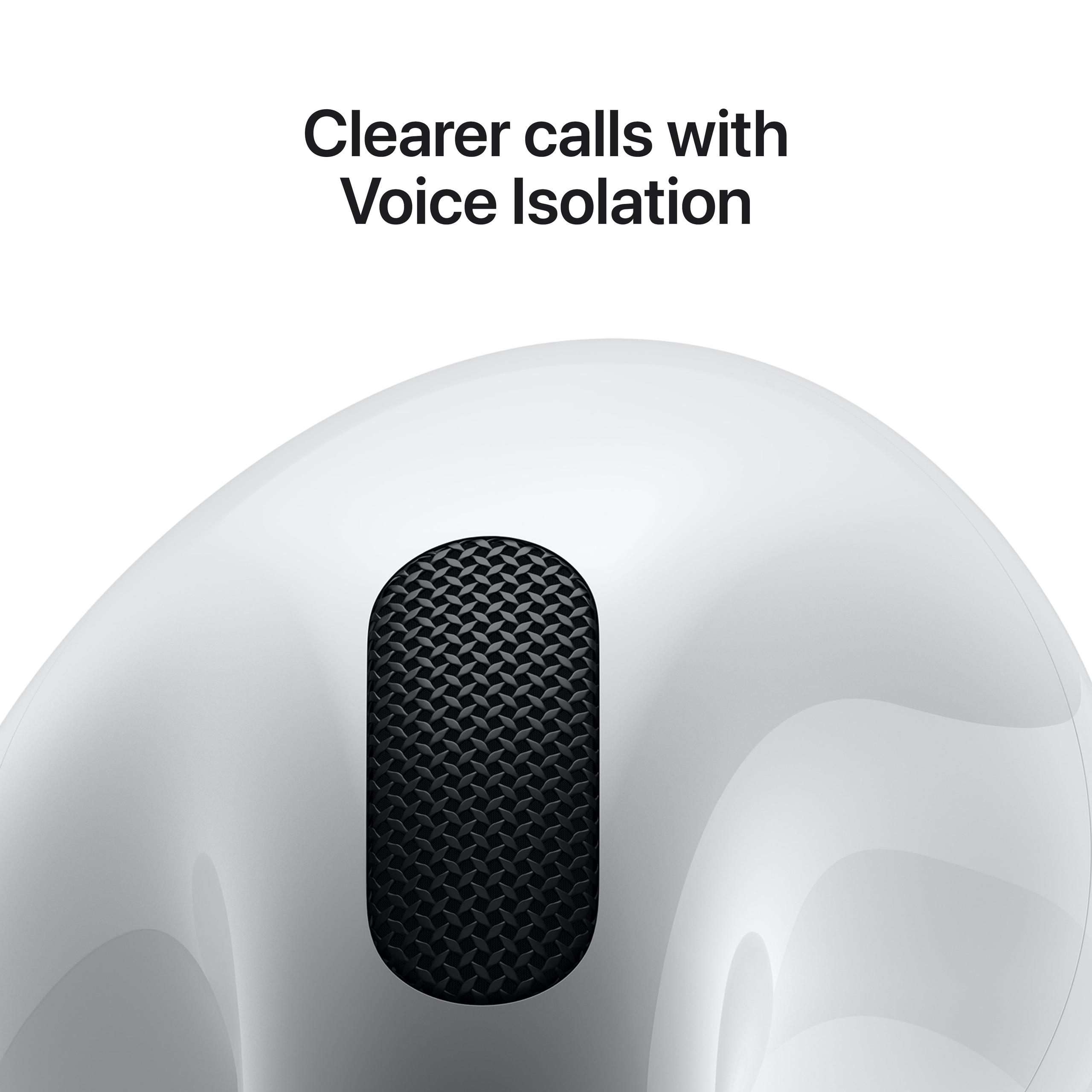
Both earbuds handle calls well, but with different strengths. The JBL Vibe Beam includes VoiceAware technology that lets you control how much of your own voice you hear during calls. The Apple AirPods 4 ANC features Voice Isolation technology and advanced microphones that reduce background noise for clearer calls in loud environments. For frequent video calls in noisy spaces, the Apple AirPods 4 ANC provides superior call quality.
Both earbuds prioritize comfort with lightweight designs around 4.3-4.4 grams per earbud. The JBL Vibe Beam includes three different eartip sizes for a customized fit, while the Apple AirPods 4 ANC uses a one-size-fits-all approach. Users with average ear shapes typically find both comfortable, but the JBL Vibe Beam offers better fit customization for various ear sizes.
The JBL Vibe Beam features superior water resistance with an IP54 rating, making them excellent for workouts, running, and outdoor activities. The Apple AirPods 4 ANC also has IP54 rating but costs significantly more to replace if damaged. For active users who prioritize durability and affordability, the JBL Vibe Beam provides better peace of mind during intense workouts.
The JBL Vibe Beam works excellently with Android devices, providing full access to all features through the JBL Headphones app, including EQ customization and ambient sound controls. The Apple AirPods 4 ANC will connect to Android phones for basic music and calls, but many advanced features like Spatial Audio and automatic optimization require iOS devices. Android users get much better value and functionality with the JBL Vibe Beam.
For movie watching, the Apple AirPods 4 ANC excels with Personalized Spatial Audio that creates an immersive surround sound experience, especially when paired with Apple devices and compatible content. The active noise cancellation also helps you focus on dialogue without distractions. The JBL Vibe Beam provides good audio quality for movies but lacks the spatial effects and noise cancellation that enhance the viewing experience.
Both earbuds offer fast charging capabilities. The JBL Vibe Beam provides 2 hours of playback from just 10 minutes of charging, which is excellent for emergency power. The Apple AirPods 4 ANC also includes fast charging but the exact specifications vary. For users who frequently forget to charge their earbuds, both options provide quick power-ups, though the JBL Vibe Beam has more clearly defined fast charging benefits.
The JBL Vibe Beam provides exceptional value, offering premium features like 32-hour total battery life, customizable EQ, and solid build quality at a budget-friendly price. The Apple AirPods 4 ANC costs approximately four times more but includes advanced features like active noise cancellation and Spatial Audio. For users who don't need ANC or Apple ecosystem integration, the JBL Vibe Beam delivers much better value.
The JBL Vibe Beam offers extensive customization through the JBL Headphones app, including a parametric EQ that lets you adjust specific frequency ranges to match your preferences. The Apple AirPods 4 ANC uses Adaptive EQ that automatically adjusts sound based on your ear fit, but provides limited manual customization options. Users who want control over their sound signature will prefer the JBL Vibe Beam's comprehensive customization features.
The Apple AirPods 4 ANC is specifically designed for travelers with active noise cancellation that effectively blocks airplane engines, train noise, and other constant sounds. The seamless device switching and premium build quality also suit frequent travel. While the JBL Vibe Beam offers longer battery life which benefits travelers, the lack of active noise cancellation makes them less ideal for noisy transportation. For frequent flyers and commuters, the Apple AirPods 4 ANC provides a significantly better travel experience.
We've done our best to create useful and informative comparisons to help you decide what product to buy. Our research uses advanced automated methods to create this comparison and perfection is not possible - please contact us for corrections or questions. These are the sites we've researched in the creation of this article: bestbuy.com - jbl.com - rtings.com - jbl.com - youtube.com - youtube.com - audio46.com - jbl.com - soundguys.com - bestbuy.com - walmart.com - uclastore.com - bestbuy.com - manuals.plus - tomsguide.com - apple.com - youtube.com - apple.com - staples.com - support.apple.com - connection.com - support.apple.com - pcrichard.com - adorama.com - zones.com - cdw.com

Privacy Policy
Terms and Conditions - Affiliate Policy
Home Security
© Copyright 2008-2026.
11816 Inwood Rd #1211, Dallas, TX 75244