




The wireless earbud market has exploded since Apple removed the headphone jack in 2016, creating a landscape where you can spend anywhere from twenty-five dollars to over three hundred on what appears to be the same basic product. But appearances can be deceiving. The JLab Go Pop+ and JBL Tour Pro 3 represent two fundamentally different philosophies in earbud design, separated by roughly ten times the price at the time of writing.
Understanding this price gap isn't just about premium materials or brand names—it reflects genuine differences in technology, features, and the problems these earbuds are designed to solve. Let's break down what you're actually getting for your money and who should consider each option.
Before diving into specifics, it's worth understanding what separates good earbuds from great ones. The core technologies that define your listening experience include the drivers (the tiny speakers inside each earbud), digital signal processing (the computer chips that enhance audio), battery management, and increasingly, active noise cancellation.
Drivers are essentially miniaturized speakers, and their size, materials, and design dramatically affect sound quality. Most budget earbuds use a single dynamic driver—a cone that moves back and forth to create sound waves. Premium models often incorporate multiple drivers or hybrid designs that combine different speaker types for more accurate sound reproduction.
Active Noise Cancellation (ANC) deserves special attention because it represents one of the biggest technological advances in recent years. ANC uses microphones to detect outside noise, then generates opposite sound waves to cancel it out. This isn't just about blocking sound—it's about creating a cleaner listening environment where subtle details in your music become audible.
Battery technology has also evolved significantly. Modern earbuds need to pack enough power for hours of playback into a package smaller than a grape, while the charging case serves as a portable power bank. The efficiency of this system often determines whether earbuds become daily drivers or occasional-use accessories.
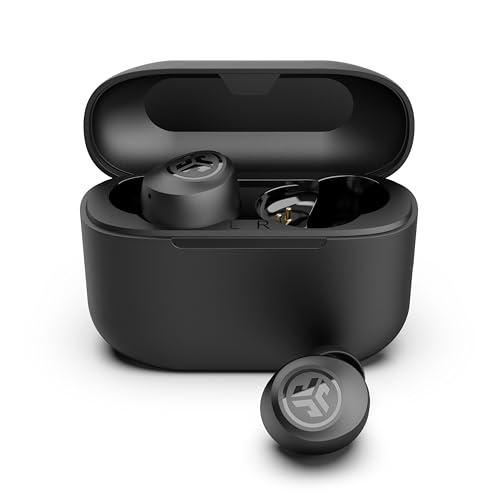
The JLab Go Pop+ launched in 2024 as JLab's answer to the ultra-budget segment, building on years of refinement in affordable audio technology. JLab has carved out a reputation for delivering surprisingly good performance at prices that don't require serious financial consideration. The Go Pop+ represents their latest thinking on what essential wireless audio should look like.
The JBL Tour Pro 3, also released in 2024, sits at the opposite end of JBL's lineup. JBL has spent decades in professional audio—their speakers power concert halls and recording studios worldwide. The Tour Pro 3 attempts to bring that professional heritage to consumer earbuds while introducing genuinely innovative features like a touchscreen charging case.
These release dates matter because 2024 has seen significant improvements in Bluetooth efficiency, battery technology, and noise cancellation algorithms. Both products benefit from these advances, but they apply them very differently.
The most fundamental difference between these earbuds lies in their approach to sound reproduction. The JLab Go Pop+ uses 6mm dynamic drivers—small but well-tuned speakers that cover the full frequency range from deep bass to crisp highs. For a budget product, the sound signature is remarkably balanced, avoiding the overly bass-heavy tuning that plagued earlier affordable earbuds.
However, the JBL Tour Pro 3 takes a completely different approach with its hybrid dual-driver system. Each earbud contains both a 10mm dynamic driver for powerful bass and mid-range frequencies, plus a separate balanced armature driver for crystal-clear highs. This is the same technology used in professional in-ear monitors that musicians wear on stage.
The practical difference is immediately noticeable. While the Go Pop+ delivers pleasant, listenable sound that won't embarrass you, the Tour Pro 3 reveals details in familiar songs that you've never heard before. Instruments occupy distinct spaces in the soundstage, vocals have more natural texture, and the overall presentation feels more three-dimensional.
Codec support tells another part of the story. Both earbuds support SBC and AAC, the standard Bluetooth audio formats that work with all phones. But the Tour Pro 3 also includes LDAC support—Sony's high-resolution audio codec that transmits roughly three times more data than standard Bluetooth. If you're streaming high-quality music from services like Tidal or Apple Music, this makes a genuine difference in clarity and detail retrieval.
For home theater use, the Tour Pro 3 offers spatial audio with head tracking, creating a more immersive experience when watching movies. The earbuds track your head movements and adjust the soundstage accordingly, making it feel like audio is coming from your TV speakers even when you turn your head. The Go Pop+ lacks this feature but offers a dedicated Movie Mode that reduces audio latency for better lip-sync.
This is where the budget option shines brightest. The JLab Go Pop+ delivers an impressive 9 hours of continuous playback per earbud, with the case providing multiple additional charges for over 35 hours total. More importantly, that 9-hour single-charge performance means you can wear them for an entire workday, long flight, or extended study session without interruption.
The JBL Tour Pro 3 tells a more complex story. With noise cancellation active, you get about 7 hours per charge—respectable but notably less than the budget option. Turn off ANC and you'll reach 11 hours, actually beating the Go Pop+. The total battery life with the case reaches an impressive 44 hours with ANC disabled.
Why the difference? The Tour Pro 3 packs significantly more technology into each earbud. The dual drivers, advanced processing chips, multiple microphones, and ANC system all draw power. It's a classic engineering trade-off: more features mean more power consumption.
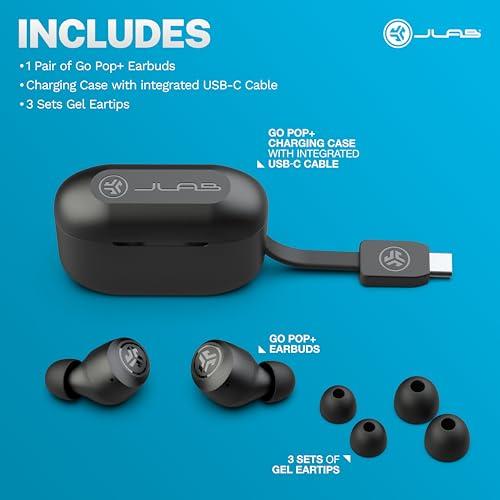
The Go Pop+ includes a clever practical advantage with its integrated USB-C cable built into the charging case. This eliminates the need to carry a separate charging cable—a small detail that becomes surprisingly valuable in daily use. The Tour Pro 3 uses standard USB-C charging but lacks wireless charging, which feels like an oversight at its price point.
Quick charging performance favors the premium option. Ten minutes in the case gives the Tour Pro 3 about three hours of playback, while the same time gives the Go Pop+ one hour. Both are adequate for emergency top-ups, but the JBL's faster charging helps offset its shorter single-charge duration.
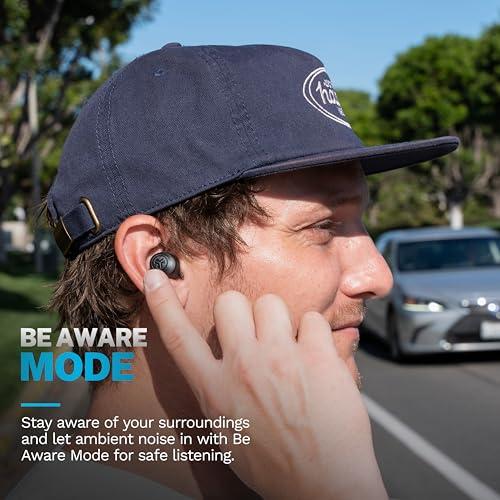
Here we see the clearest justification for the price difference. The JLab Go Pop+ offers no active noise cancellation whatsoever. Instead, it includes "Be Aware" mode, which deliberately lets outside sound in for safety during activities like running or cycling. Noise isolation comes entirely from how well the earbuds physically seal your ear canal.
The JBL Tour Pro 3 implements True Adaptive Noise Cancellation 2.0, which represents current state-of-the-art technology. The system uses multiple microphones to constantly analyze your acoustic environment, making adjustments over 50,000 times per second. This isn't just marketing hyperbole—modern ANC systems really do operate at these frequencies to maintain effectiveness as conditions change.
In practical terms, the difference is dramatic. Wearing the Go Pop+ on public transportation means dealing with engine noise, conversations, and general urban chaos. The Tour Pro 3 creates a bubble of relative silence, reducing outside noise by roughly 80-85% according to our research of professional measurements. This isn't just about comfort—it means you can hear your music clearly at lower volumes, potentially protecting your hearing long-term.
The adaptive nature of modern ANC deserves emphasis. Earlier noise cancellation systems were calibrated for specific environments like airplane cabins. The Tour Pro 3 continuously adjusts for changing conditions, whether you're moving from a quiet room to a busy street or dealing with sudden sounds like construction noise.
Voice calls reveal another significant performance gap. The JLab Go Pop+ uses two MEMS microphones (Micro-Electro-Mechanical Systems—tiny, precise microphones) with basic environmental noise canceling. For casual calls in quiet environments, they work fine. But add background noise and the limitations become obvious.
The JBL Tour Pro 3 employs six microphones total—three in each earbud—with sophisticated wind-resistant design and AI-powered noise suppression. Professional reviews consistently praise the call quality as exceeding even premium competitors like Bose. The difference matters if you regularly take work calls, participate in video meetings, or simply want others to hear you clearly in challenging environments.
This performance gap reflects the intended use cases. The Go Pop+ assumes most calls happen in controlled environments where basic quality suffices. The Tour Pro 3 targets users who need professional-grade call quality regardless of conditions.
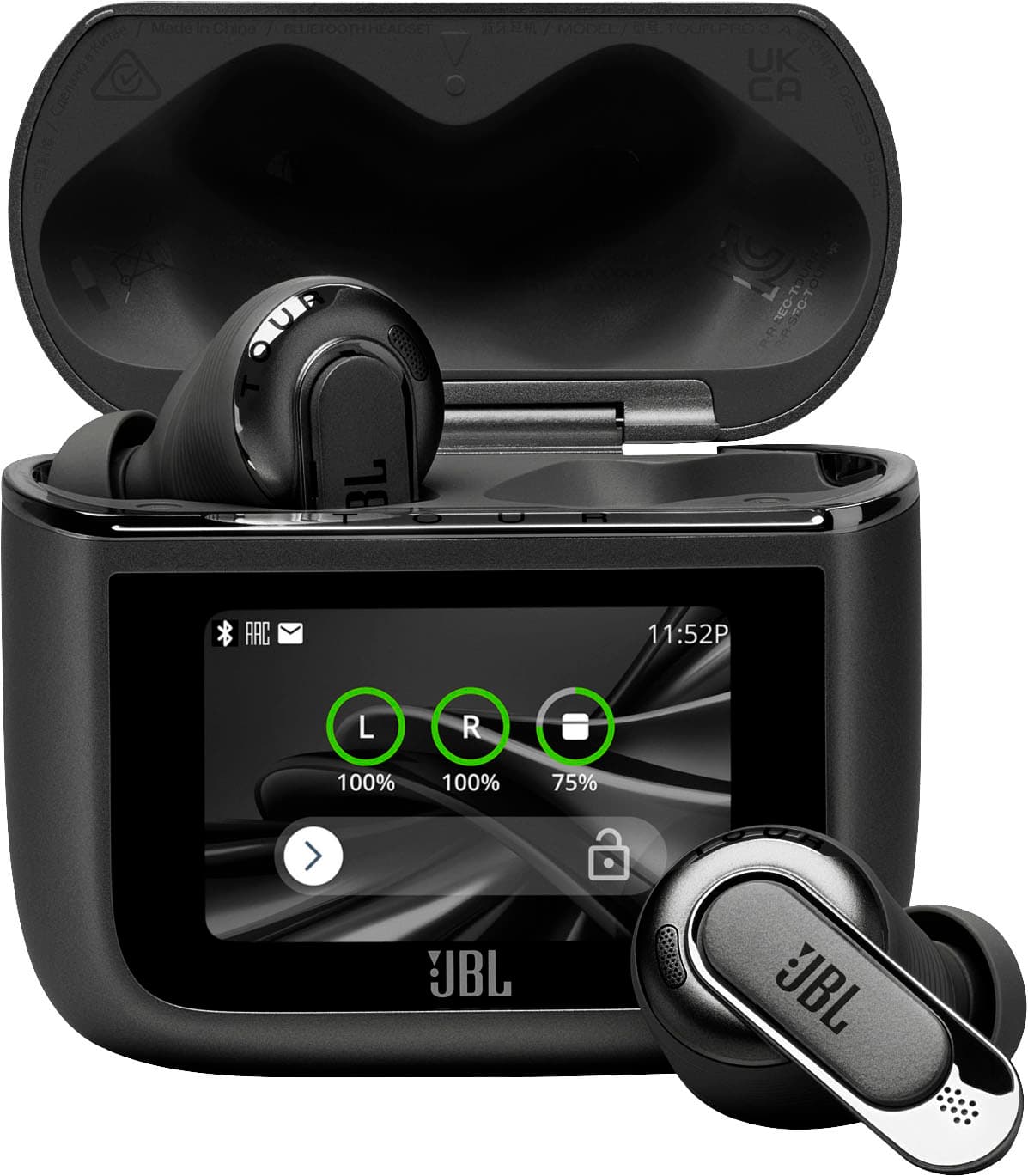
The JBL Tour Pro 3's most distinctive feature is its Smart Charging Case with a touchscreen display. This isn't just a gimmick—it represents genuine innovation in how we interact with earbuds. The case screen lets you adjust noise cancellation levels, change EQ settings, control playback, and even view caller ID without touching your phone.
More impressively, the case can function as a wireless audio transmitter. Plug it into an airplane entertainment system or computer, and it wirelessly streams audio to your earbuds. This solves a real problem for frequent travelers who want to use their preferred earbuds with wired audio sources.
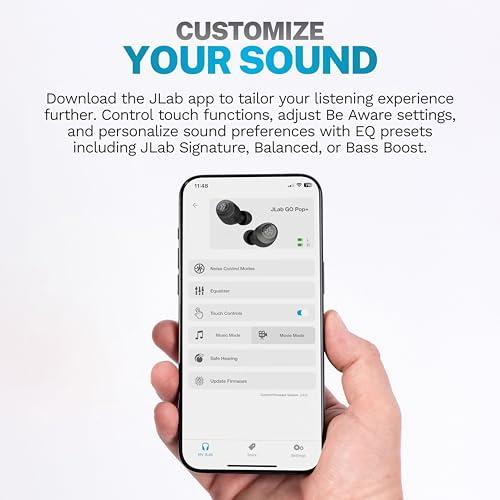
The Go Pop+ takes a more traditional approach with the JLab app providing customization options. You get custom EQ settings, control mapping, and the ability to switch between Music and Movie modes. It's functional and adequate, but lacks the immediate convenience of the touchscreen interface.
Both earbuds support Google Fast Pair for seamless Android connectivity, but the Tour Pro 3 adds features like Personi-Fi 3.0—a hearing test that creates personalized sound profiles based on your specific hearing characteristics. This level of customization moves beyond simple EQ adjustments to account for individual differences in how we perceive sound.
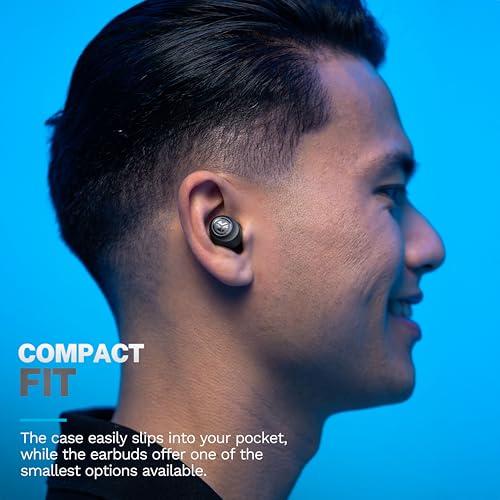
Physical comfort often determines whether expensive earbuds become daily drivers or expensive drawer decorations. The JLab Go Pop+ prioritizes lightweight design, weighing just 7.8 grams total for both earbuds. They're small, unobtrusive, and come with three silicone ear tip sizes to accommodate different ear shapes.
The JBL Tour Pro 3 takes a more comprehensive approach with five silicone tip sizes plus a set of memory foam tips. Memory foam provides superior noise isolation and comfort for many users, conforming to your ear canal shape for a custom fit. However, the earbuds themselves are larger and heavier to accommodate the additional technology.
Build quality reflects the price difference. The Go Pop+ uses IPX4 water resistance—adequate for sweat and light rain but not submersion. The Tour Pro 3 achieves IP55 rating, providing better protection against dust and more substantial water exposure.
At the time of writing, these products occupy completely different market segments. The JLab Go Pop+ costs roughly what you'd spend on lunch, while the JBL Tour Pro 3 represents a significant electronics purchase requiring careful consideration.
The Go Pop+ makes sense for several specific scenarios. Students who need reliable audio for online classes and casual listening will find the battery life and sound quality more than adequate. They're excellent as backup earbuds for travel or as a first wireless audio purchase to test whether you like the earbud form factor. The minimal financial risk means you can experiment with features like touch controls and app customization without major investment.
The JBL Tour Pro 3 targets users with specific performance requirements. If you regularly work in noisy environments and need professional call quality, the advanced microphone system and ANC justify the premium price. Audiophiles who can hear the difference between standard and high-resolution audio codecs will appreciate the superior drivers and LDAC support.
For home theater use, the Tour Pro 3's spatial audio creates a genuinely immersive experience that the budget option can't match. The ability to use the charging case as an audio transmitter also adds value for users with older devices or specific connectivity needs.
Both products benefit from 2024's advances in Bluetooth 5.3 technology, which provides better range, improved battery efficiency, and more stable connections compared to earlier versions. The Tour Pro 3 also supports newer audio codecs like LC3, positioning it for future Bluetooth LE Audio compatibility.
The touchscreen case on the Tour Pro 3 represents the kind of innovation that typically filters down to budget products over time. We've seen this pattern repeatedly in tech—features that debut in premium products eventually become standard across price ranges.
Your choice between these earbuds should align with your specific needs and financial priorities. The JLab Go Pop+ delivers remarkable value for essential wireless audio functionality. If you primarily listen to podcasts, make occasional calls, and want reliable battery life without complexity, they're an excellent choice that won't strain your budget.
The JBL Tour Pro 3 justifies its premium pricing with genuinely superior performance across multiple categories. The advanced noise cancellation, professional call quality, innovative charging case, and high-resolution audio support create a markedly better user experience—if these features matter to your use cases.
Consider the Go Pop+ if you value simplicity, exceptional battery life, and want to minimize financial risk while getting solid performance. Choose the Tour Pro 3 if you need professional-grade features, appreciate cutting-edge technology, and want earbuds that excel in challenging acoustic environments.
The performance gap between these products is real and meaningful, but so is the price difference. Your decision should reflect not just what you can afford, but what level of performance enhancement actually improves your daily audio experience.
| JLab Go Pop+ True Wireless Earbuds | JBL Tour Pro 3 True Wireless Earbuds |
|---|---|
| Single Charge Battery Life - How long you can listen without interruption | |
| 9 hours (excellent for all-day use) | 7 hours with ANC, 11 hours without (shorter with premium features active) |
| Total Battery Life with Case - Total listening time before needing to plug in | |
| 35+ hours (exceptional longevity) | 32 hours with ANC, 44 hours without (good but varies with feature use) |
| Active Noise Cancellation - Blocks outside noise for immersive listening | |
| None (only "Be Aware" ambient mode) | True Adaptive ANC 2.0 with 80-85% noise reduction (premium feature) |
| Audio Drivers - The speakers inside that determine sound quality | |
| 6mm dynamic driver (adequate for casual listening) | Hybrid dual-driver: 10mm dynamic + balanced armature (professional-grade audio) |
| Audio Codecs - Determines streaming quality from your device | |
| SBC, AAC (standard quality) | SBC, AAC, LDAC, LC3 (high-resolution audio support) |
| Call Quality Microphones - How clearly others hear you during calls | |
| 2 MEMS mics with basic noise canceling (adequate for casual calls) | 6 microphones with AI noise suppression (professional call quality) |
| Water Resistance - Protection level for workouts and weather | |
| IPX4 (splash and sweat resistant) | IP55 (superior dust and water protection) |
| Charging Convenience - How you power up the earbuds | |
| Integrated USB-C cable in case (no extra cables needed) | Standard USB-C charging (requires separate cable) |
| Smart Features - Advanced functionality beyond basic audio | |
| Basic app with custom EQ and touch controls | Touchscreen case, spatial audio, personalized sound profiles |
| Weight per Earbud - Comfort factor for extended wear | |
| 7.8g total for both earbuds (ultra-lightweight) | Not specified but noticeably larger/heavier (more tech packed inside) |
| Price Category - Value positioning in the market | |
| Ultra-budget (exceptional value for essential features) | Premium (high cost but advanced technology throughout) |
The JLab Go Pop+ excels in battery performance with 9 hours of continuous playback per earbud and 35+ hours total with the charging case. The JBL Tour Pro 3 provides 7-11 hours per charge depending on noise cancellation usage, with 32-44 hours total. For extended listening sessions, the Go Pop+ offers more reliable all-day performance.
The JBL Tour Pro 3 delivers significantly better audio quality with its hybrid dual-driver system and high-resolution LDAC codec support. However, the JLab Go Pop+ provides surprisingly good sound for casual listening at a fraction of the cost. Your decision depends on whether you're an audiophile or casual listener.
The JBL Tour Pro 3 offers superior call quality with six microphones and AI-powered noise suppression, making it ideal for professional use. The JLab Go Pop+ provides adequate call quality for casual conversations but struggles in noisy environments. For business use, the premium option is worth the investment.
Only the JBL Tour Pro 3 features active noise cancellation, reducing outside noise by 80-85%. The JLab Go Pop+ lacks ANC entirely, relying only on passive isolation from the ear tips. If you need to block airplane noise, traffic, or office chatter, the Tour Pro 3 is essential.
The JLab Go Pop+ offers excellent reliability for daily use with IPX4 water resistance, integrated charging cable, and simple operation. While the JBL Tour Pro 3 provides premium durability with IP55 rating, the budget option is surprisingly robust for everyday activities including workouts and commuting.
The JBL Tour Pro 3 provides a superior home theater experience with spatial audio, head tracking, and low-latency performance. The JLab Go Pop+ includes a dedicated Movie Mode for basic lip-sync improvement. For immersive viewing, the premium earbuds deliver noticeably better results.
Both earbuds offer app support, but the JBL Tour Pro 3 provides extensive customization with 10-band EQ, personalized sound profiles, and touchscreen case control. The JLab Go Pop+ offers basic but functional app features including custom EQ and control mapping. Casual users will find either adequate.
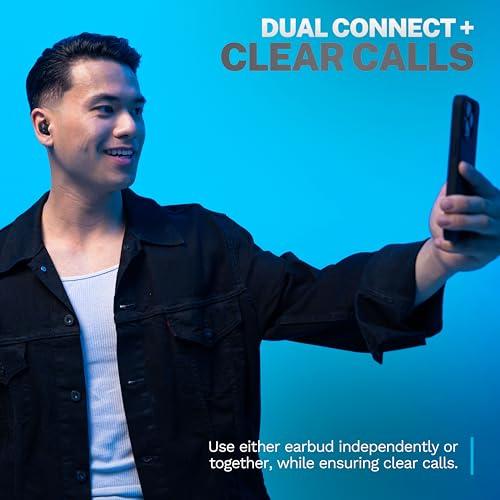
Yes, both the JLab Go Pop+ and JBL Tour Pro 3 support single-earbud use through dual-connect technology. This feature works well for calls, podcasts, or situations where you need to hear your surroundings while still enjoying audio content.
The JLab Go Pop+ prioritizes lightweight comfort at just 7.8g total weight, making them ideal for extended wear. The JBL Tour Pro 3 offers more comprehensive fit options with memory foam tips but may feel bulkier during long sessions due to their larger size and additional technology.
Both the JLab Go Pop+ and JBL Tour Pro 3 support standard Bluetooth connectivity with all smartphones. The Tour Pro 3 offers additional codec support for higher quality streaming with compatible devices. Both include Google Fast Pair for seamless Android connection.
The JBL Tour Pro 3 justifies its premium pricing with advanced noise cancellation, superior call quality, innovative touchscreen case, and professional-grade audio performance. The JLab Go Pop+ delivers exceptional value for basic needs. Choose based on whether you need advanced features or just reliable wireless audio.
The JLab Go Pop+ makes an excellent first wireless earbud choice due to its low financial risk, exceptional battery life, and straightforward operation. You can experience wireless audio benefits without major investment. The JBL Tour Pro 3 is better suited for users who already know they want premium features and performance.
We've done our best to create useful and informative comparisons to help you decide what product to buy. Our research uses advanced automated methods to create this comparison and perfection is not possible - please contact us for corrections or questions. These are the sites we've researched in the creation of this article: whathifi.com - jlab.com - soundguys.com - avrilmarieaalund.com - jlab.com - bestbuy.com - jlab.com - shop.ncsu.edu - jlab.com - techgearlab.com - youtube.com - manuals.plus - jlab.com - jlab.com - versus.com - help.jlab.com - bestbuy.com - techradar.com - sweetwater.com - news.jbl.com - youtube.com - harmanaudio.com - jbl.com - krazykileys.ca - jbl.com - shop.menshealth.com - sweetwater.com

Privacy Policy
Terms and Conditions - Affiliate Policy
Home Security
© Copyright 2008-2026.
11816 Inwood Rd #1211, Dallas, TX 75244