

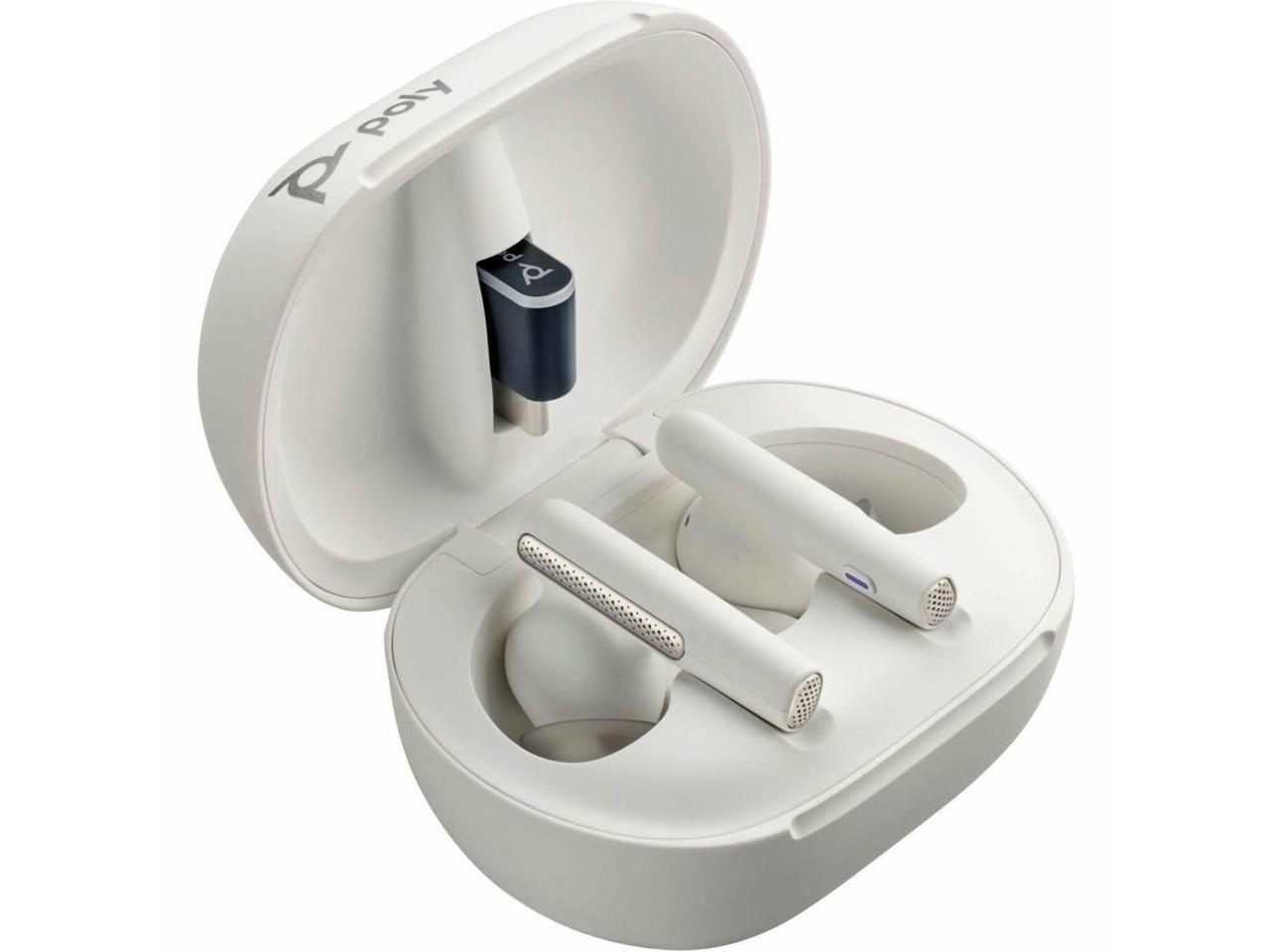
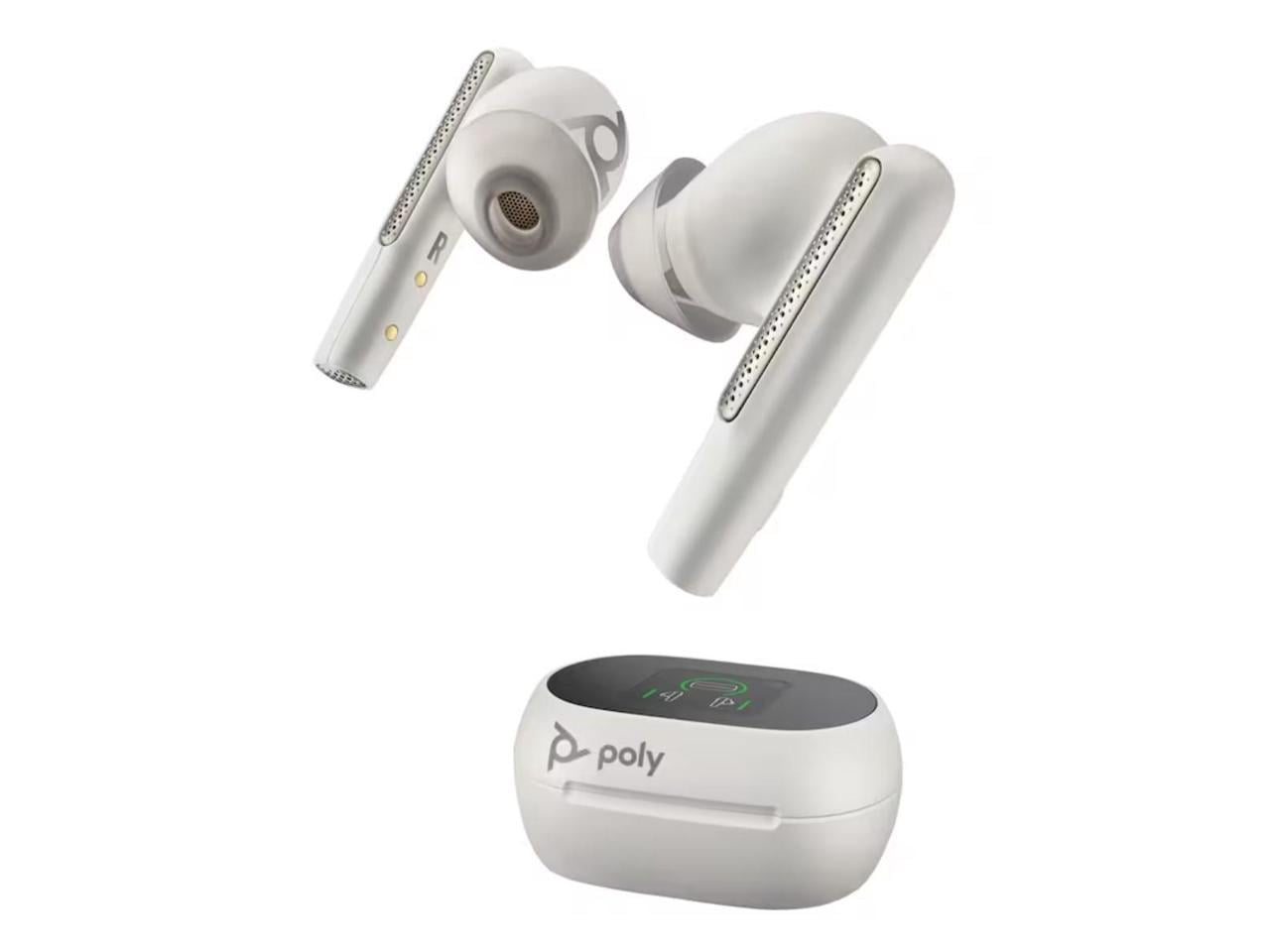
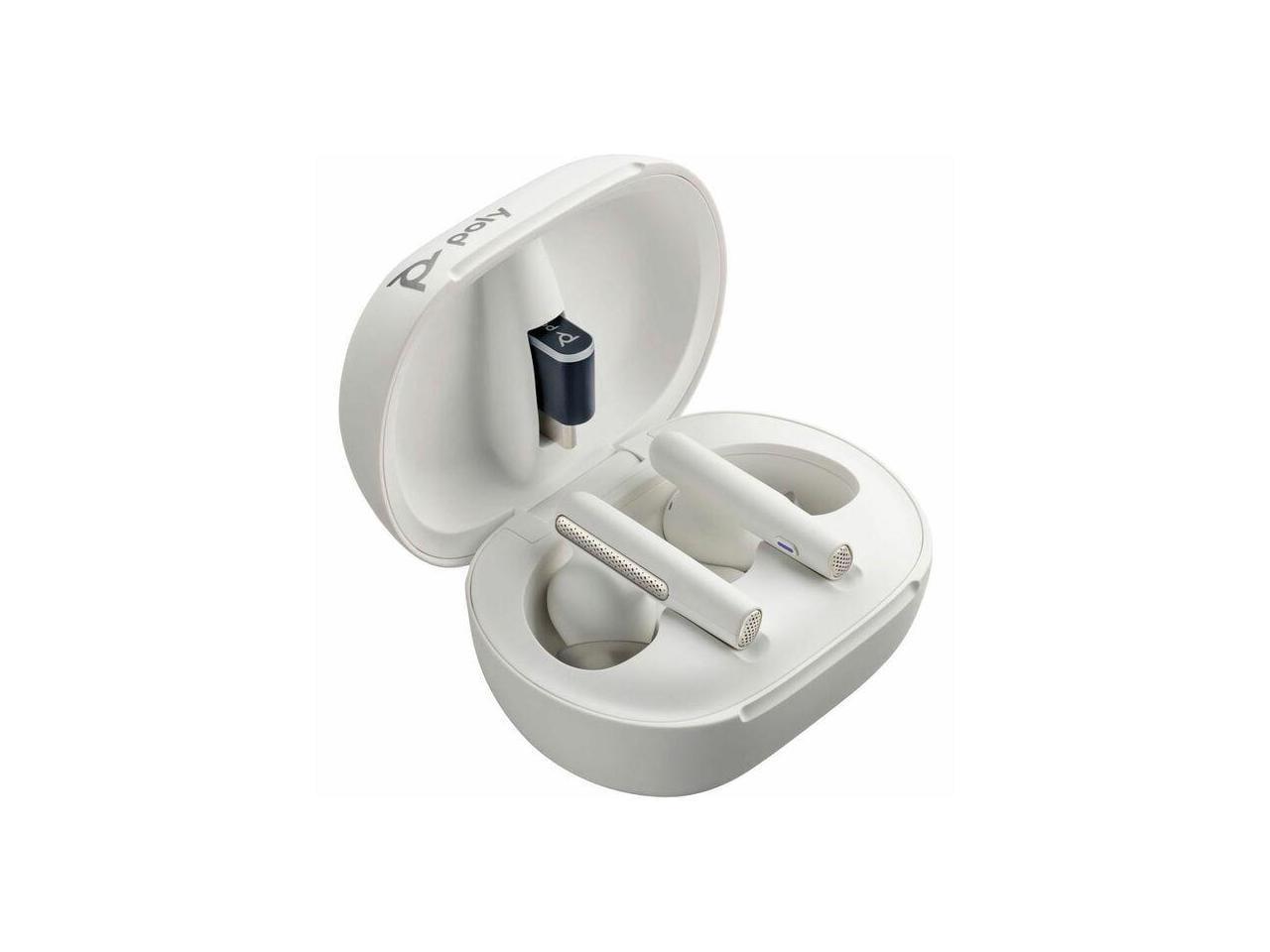
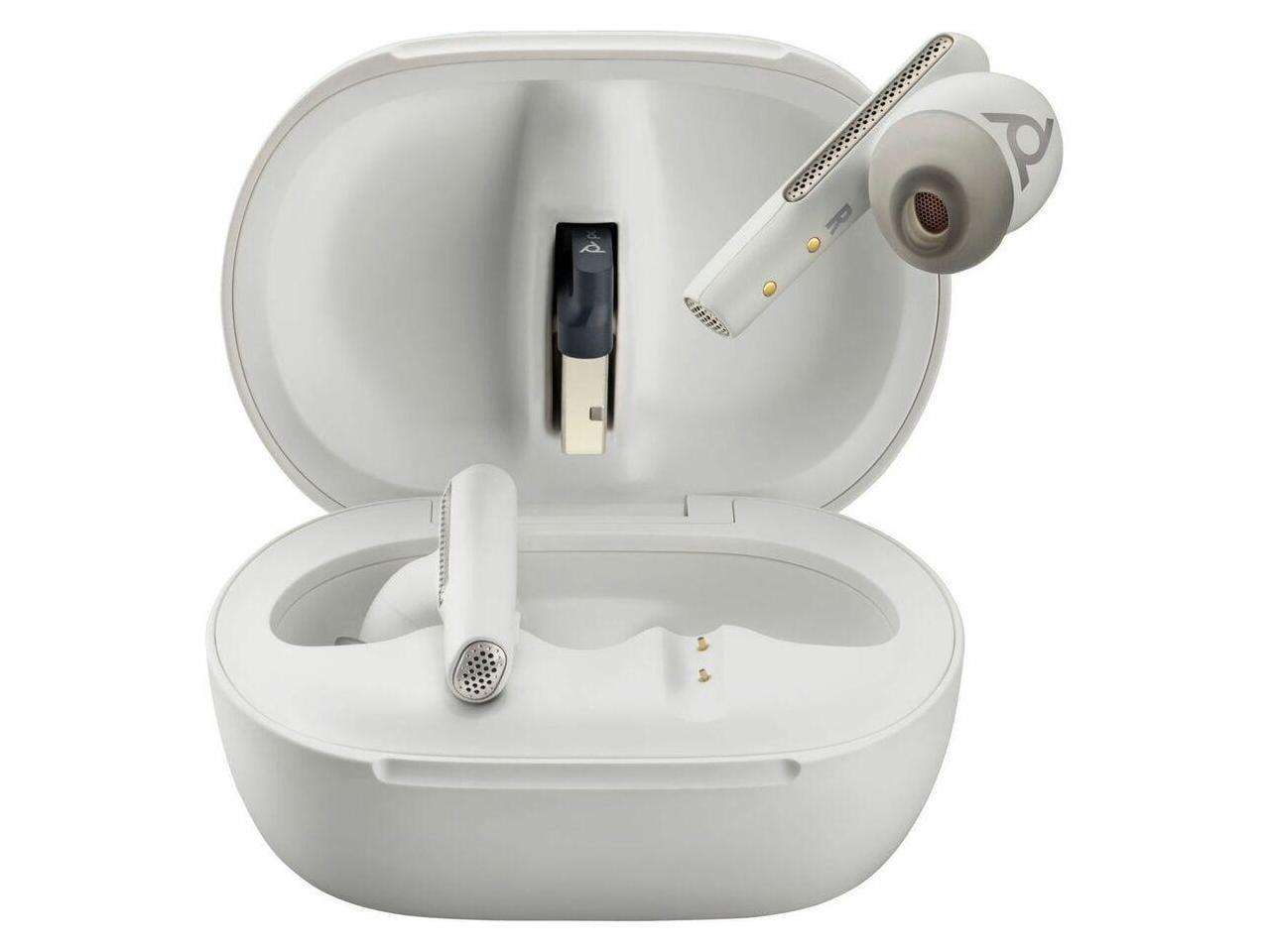

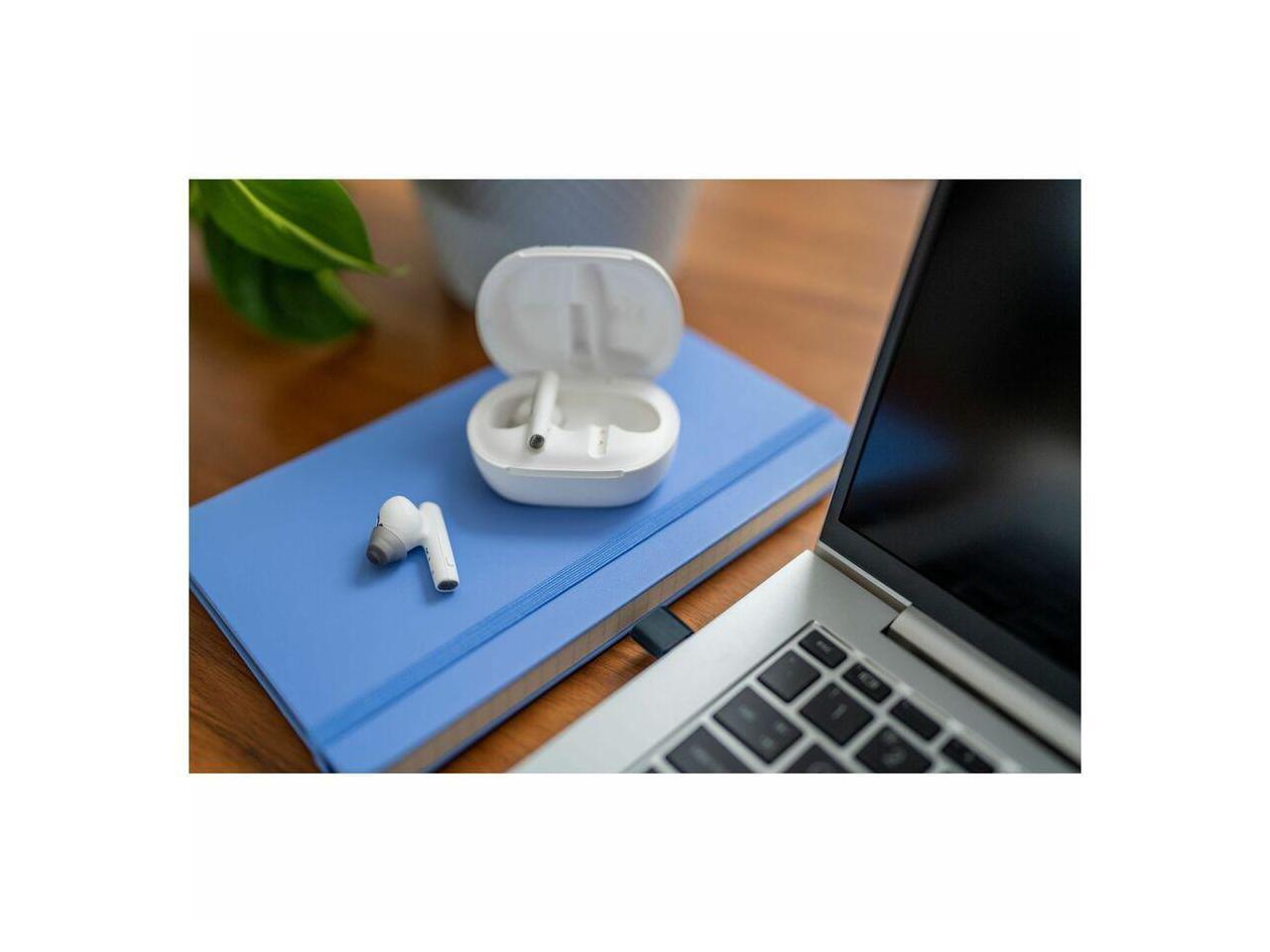

When you're shopping for true wireless earbuds, the sheer number of options can be overwhelming. But sometimes, comparing two products from completely different price tiers can actually help clarify what matters most in your decision. Today, we're looking at the Poly Voyager Free 60+ UC and the JBL Vibe Beam – two earbuds that, at the time of writing, sit at opposite ends of the pricing spectrum but share some interesting similarities.
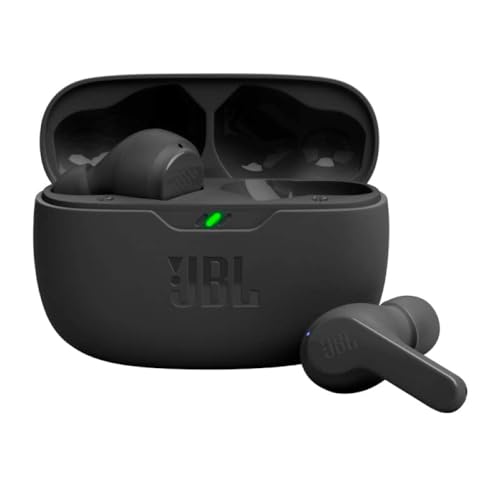
The Poly Voyager Free 60+ UC, released in 2022, positions itself as a premium business communication tool with a price tag that reflects its professional aspirations. Meanwhile, the JBL Vibe Beam, also launched around the same timeframe, aims to deliver solid performance at a budget-friendly price point that's roughly one-tenth the cost of the Poly model.
Before diving into specifics, it's worth understanding what makes earbuds tick. At their core, these devices need to handle three main jobs: playing audio that sounds good, picking up your voice clearly during calls, and staying comfortable in your ears for extended periods. Everything else – noise cancellation, smart features, battery life – builds on these fundamentals.
The technology inside earbuds has evolved rapidly since 2020. Bluetooth 5.0 and later versions brought more stable connections and better power efficiency. Active Noise Cancellation (ANC) – technology that uses microphones to detect outside noise and creates opposite sound waves to cancel it out – has trickled down from premium headphones to more affordable earbuds. Meanwhile, computational audio processing has gotten smarter, with AI-powered features that can distinguish between different types of background noise.
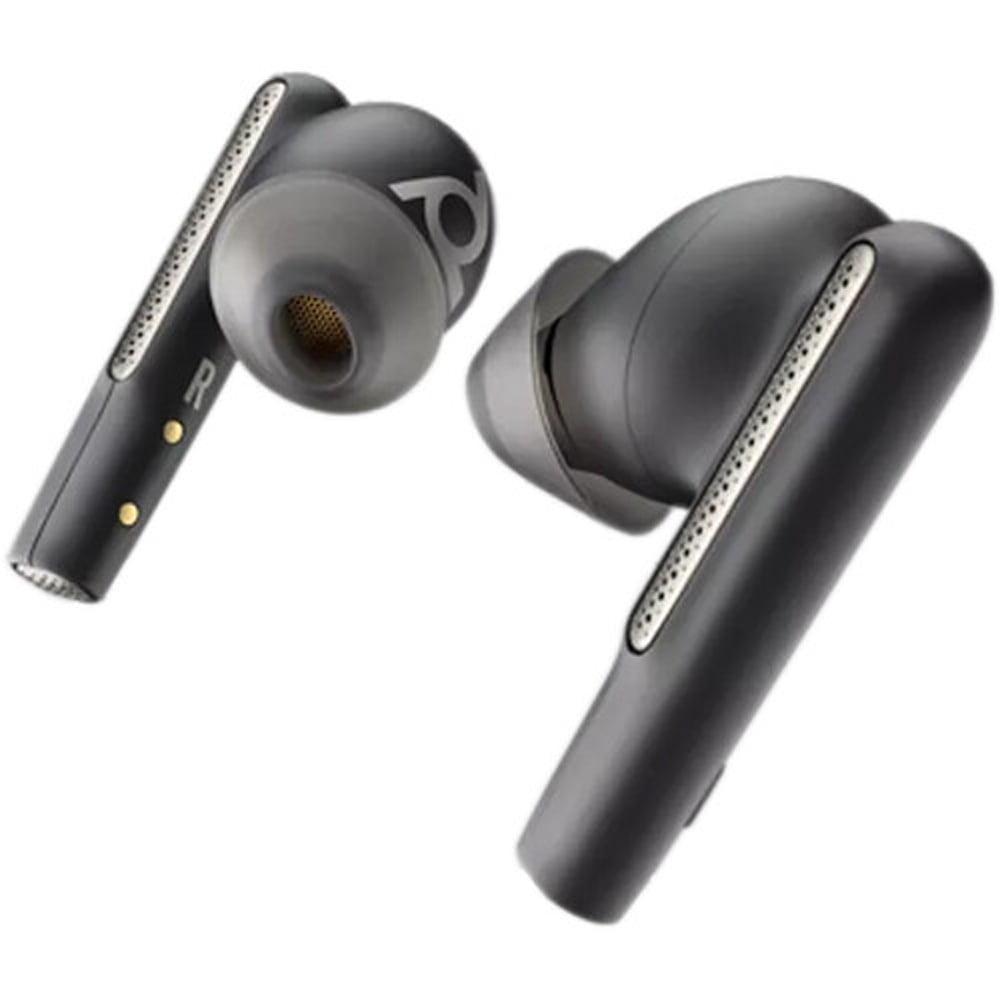
The Poly Voyager Free 60+ UC uses 10mm drivers – the tiny speakers inside each earbud – which are larger than what you'll find in many competitors. These drivers are tuned specifically for both professional calls and music listening, creating what Poly calls a "hi-fi" sound signature. In practice, this means the audio aims for accuracy and clarity rather than emphasizing any particular frequency range.
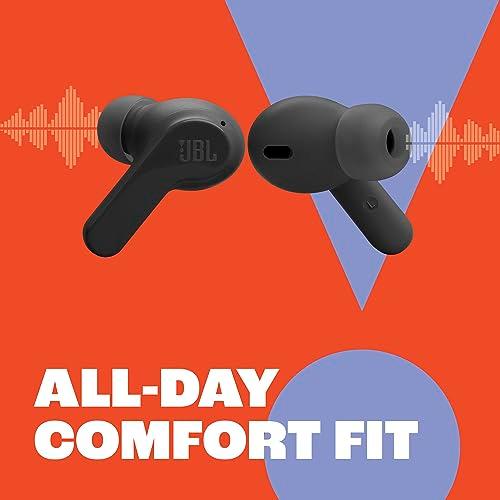
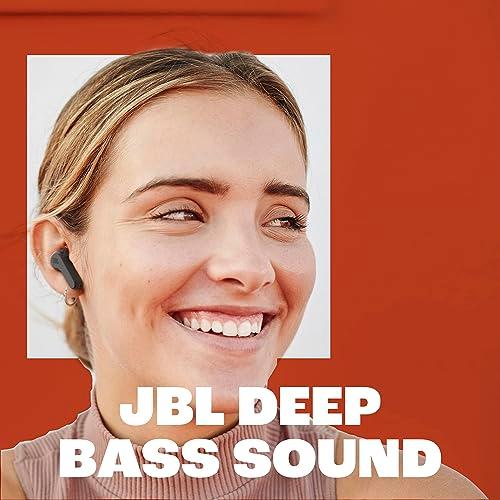
The JBL Vibe Beam, on the other hand, uses 8mm drivers but implements JBL's signature "Deep Bass Sound" tuning. This isn't just marketing speak – it's a deliberate sound signature that emphasizes lower frequencies to create more impactful bass response. The earbuds cover the full 20Hz to 20kHz frequency range that human ears can detect, with a sensitivity rating of 100dB, meaning they can get quite loud without requiring much power from your device.
Based on user feedback and professional reviews we've analyzed, the JBL Vibe Beam delivers surprisingly robust audio quality for its price point. Multiple users have compared it favorably to earbuds costing several times more, particularly praising its bass response and overall clarity. The customizable EQ (equalizer) available through JBL's smartphone app adds significant value here – you can adjust the sound signature to match your preferences or different music genres.
The Poly Voyager Free 60+ UC, meanwhile, focuses on balanced reproduction that works equally well for music and spoken content. This makes sense given its business focus, where you might jump from a conference call to background music throughout the day.
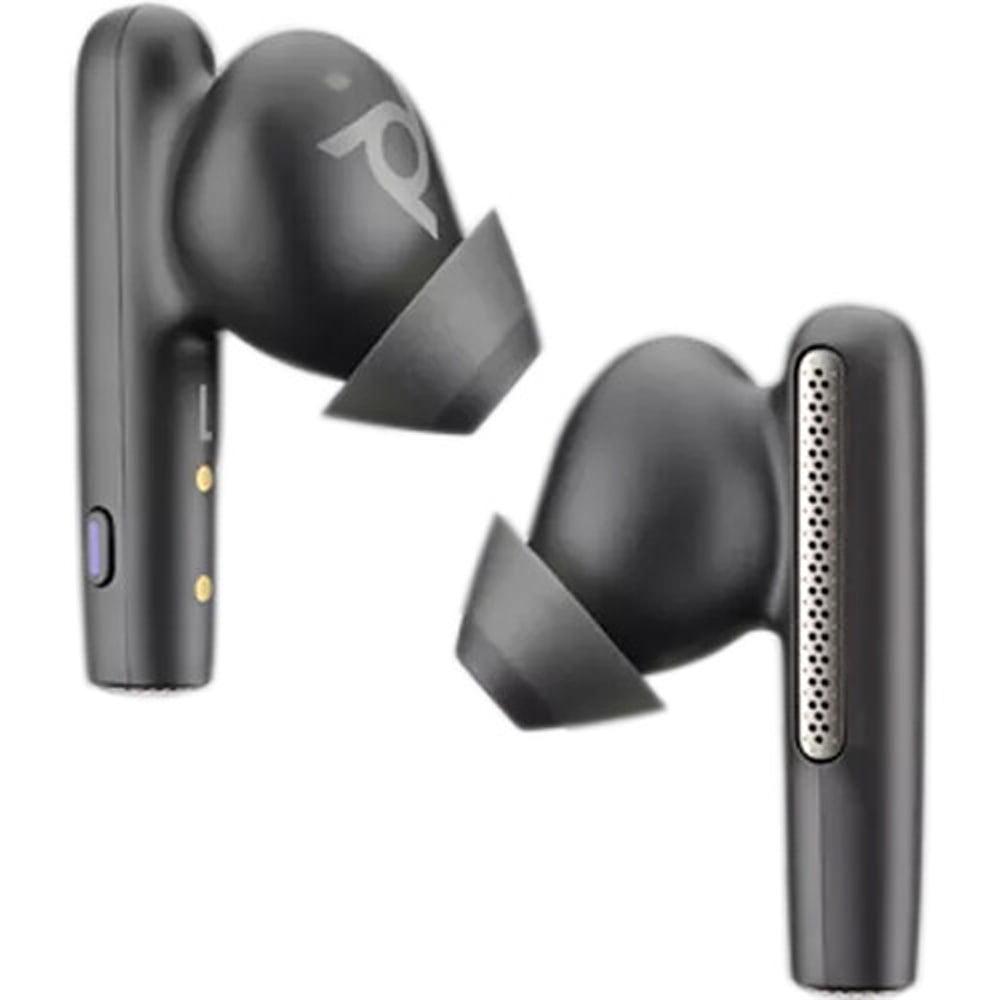
This is where the Poly Voyager Free 60+ UC truly justifies its premium positioning. Each earbud contains three separate microphones that work together in what's called a "microphone array." This system uses triangulation – the same principle GPS uses to determine location – to pinpoint your voice while filtering out surrounding noise.
The technical implementation is impressive: the three microphones in each earbud capture sound from different angles, and Poly's processing algorithms analyze these signals to separate your voice from background noise. This is enhanced by WindSmart technology, which specifically targets the whooshing sounds that wind makes across microphones – a common problem when taking calls outdoors.
Adding another layer is Poly's NoiseBlockAI, which uses machine learning to identify and eliminate specific types of background noise. Unlike simple noise reduction that just lowers overall background volume, this system can distinguish between a barking dog, keyboard typing, or air conditioning and selectively filter each type of sound.
The JBL Vibe Beam takes a more straightforward approach with standard microphones and basic noise reduction. While it includes VoiceAware technology – which lets you control how much of your own voice you hear during calls – it lacks the sophisticated voice isolation of the Poly model.
From our research into user experiences, this difference is immediately apparent in real-world use. The Poly Voyager Free 60+ UC consistently delivers clearer calls in noisy environments, making it genuinely useful for professional situations where call quality matters.
The Poly Voyager Free 60+ UC features what Poly calls "adaptive hybrid Active Noise Cancellation." This system uses external microphones to detect ambient noise, then generates opposite sound waves through the earbuds' speakers to cancel out unwanted sounds. The "adaptive" part means it automatically adjusts based on how the earbuds fit in your ears and the type of noise in your environment.
This ANC implementation includes two transparency modes that let you tune back into your surroundings without removing the earbuds. This is particularly valuable in office environments where you need to stay aware of conversations or announcements while maintaining focus on your work.
The JBL Vibe Beam completely lacks Active Noise Cancellation, instead relying on passive isolation from its "stick-closed" design and silicone ear tips. However, it does offer Smart Ambient technology with two clever features: TalkThru automatically lowers your music volume and amplifies voices when someone wants to talk to you, while Ambient Aware lets you hear your surroundings while keeping your music playing.
While these ambient features are useful, they're fundamentally different from ANC. Passive isolation can effectively block higher-frequency sounds like chatter or air conditioning, but struggles with low-frequency rumble from engines or HVAC systems. For many users, especially those not regularly in noisy environments, this difference may not be crucial.
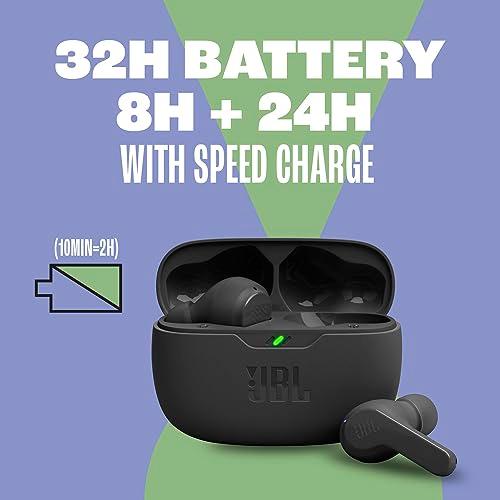
Battery life represents one area where the budget option significantly outperforms its premium competitor. The JBL Vibe Beam delivers up to 8 hours of playback from the earbuds themselves, with an additional 24 hours stored in the charging case, totaling 32 hours. The quick-charge feature provides 2 hours of playback from just 10 minutes of charging.
The Poly Voyager Free 60+ UC offers up to 5.5 hours of talk time from the earbuds, with 16.5 hours total when including the charging case. While respectable, this falls well short of the JBL's endurance. The Poly model does support Qi wireless charging, which adds convenience, but this doesn't offset the significant battery life difference.
This battery advantage makes the JBL Vibe Beam particularly appealing for travel or situations where charging opportunities are limited. The ability to go more than a day of heavy use without needing to plug in is genuinely valuable.
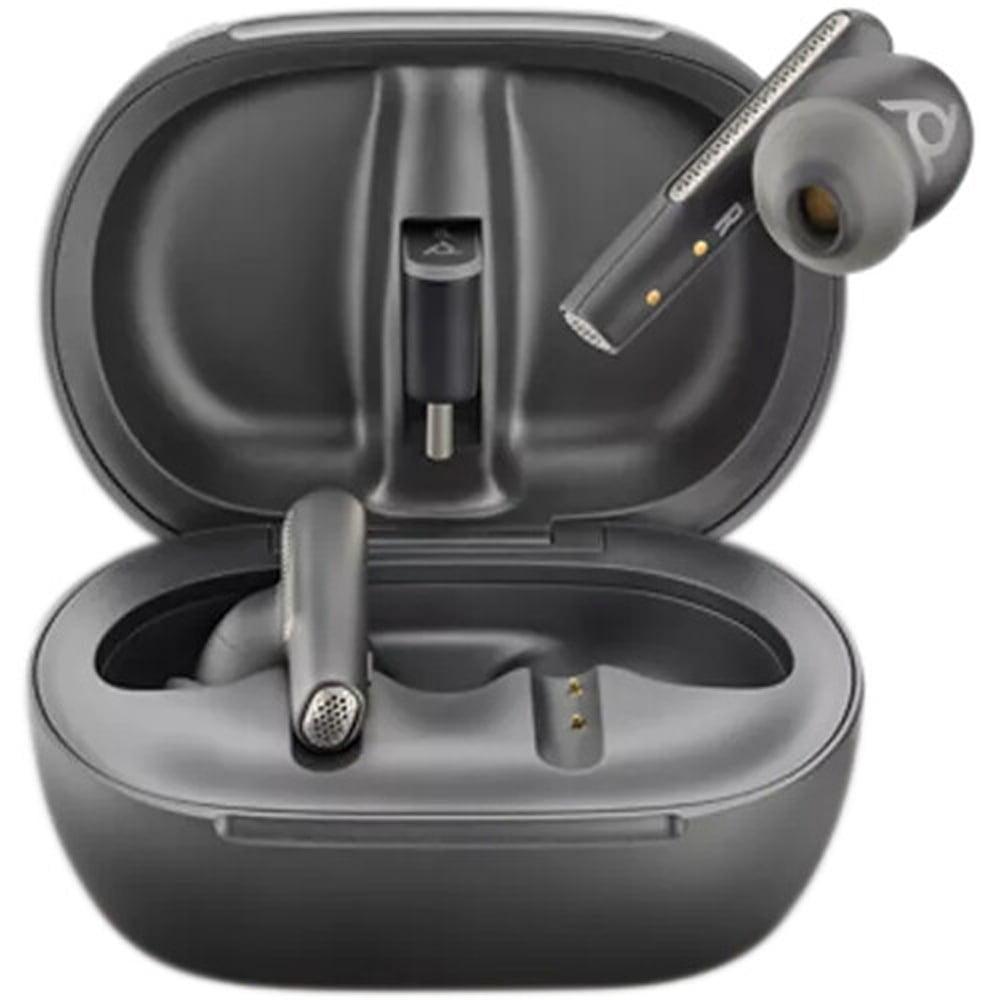
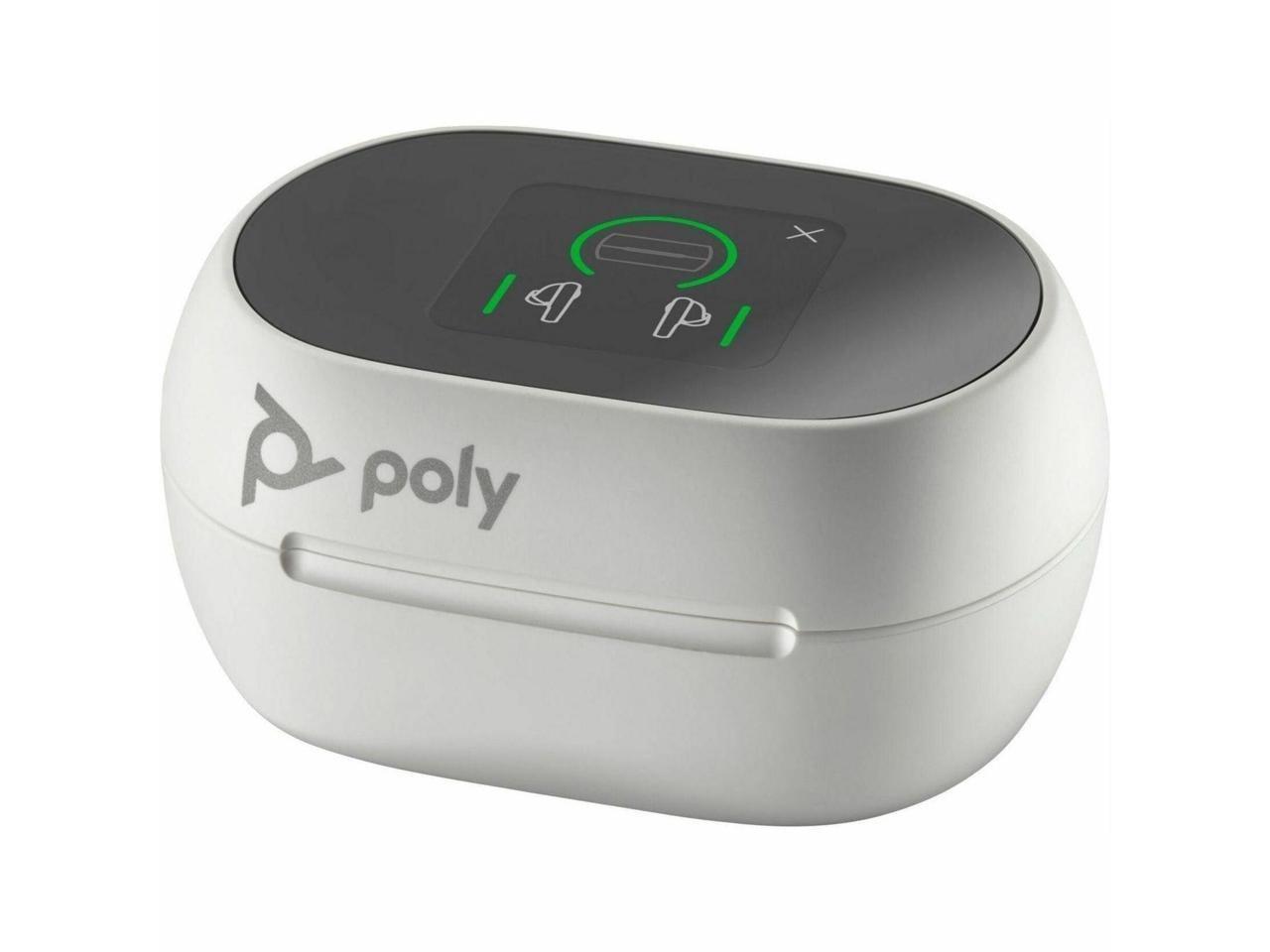
The Poly Voyager Free 60+ UC showcases several unique features that justify its professional positioning. The charging case includes a color touchscreen display – essentially a tiny computer that lets you control calls, adjust volume, and switch between paired devices without touching your phone or computer. This might seem gimmicky, but for professionals juggling multiple devices throughout the day, it's genuinely useful.
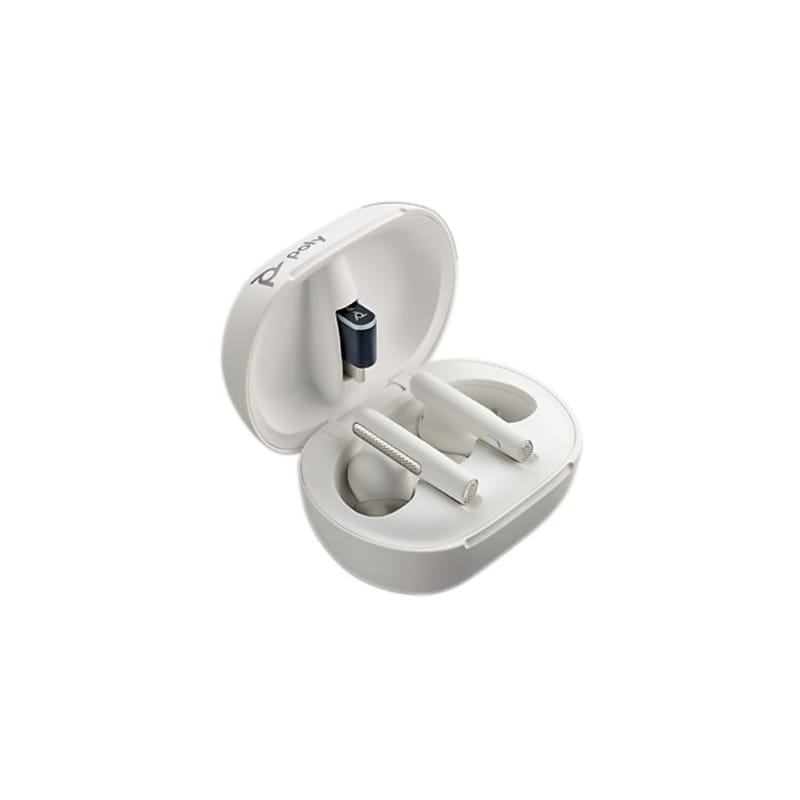
The inclusion of a BT700 Bluetooth adapter enhances PC connectivity, ensuring stronger, more reliable connections for video calls. The case also features a 3.5mm audio input, allowing you to connect to airplane entertainment systems or other non-Bluetooth devices using an included cable.
Multipoint connectivity lets the Poly Voyager Free 60+ UC connect to two devices simultaneously – your phone and computer, for example. This means you can take a call on your phone while working on your laptop without manually switching connections.
The JBL Vibe Beam keeps things simpler but still includes thoughtful touches. The JBL Headphones app provides extensive customization options, including a parametric EQ that lets you fine-tune the sound signature. The "Find My Buds" feature helps locate misplaced earbuds by playing a tone.
However, the JBL model lacks multipoint connectivity, connecting to only one device at a time. For users who frequently switch between phone and computer, this limitation can be frustrating.
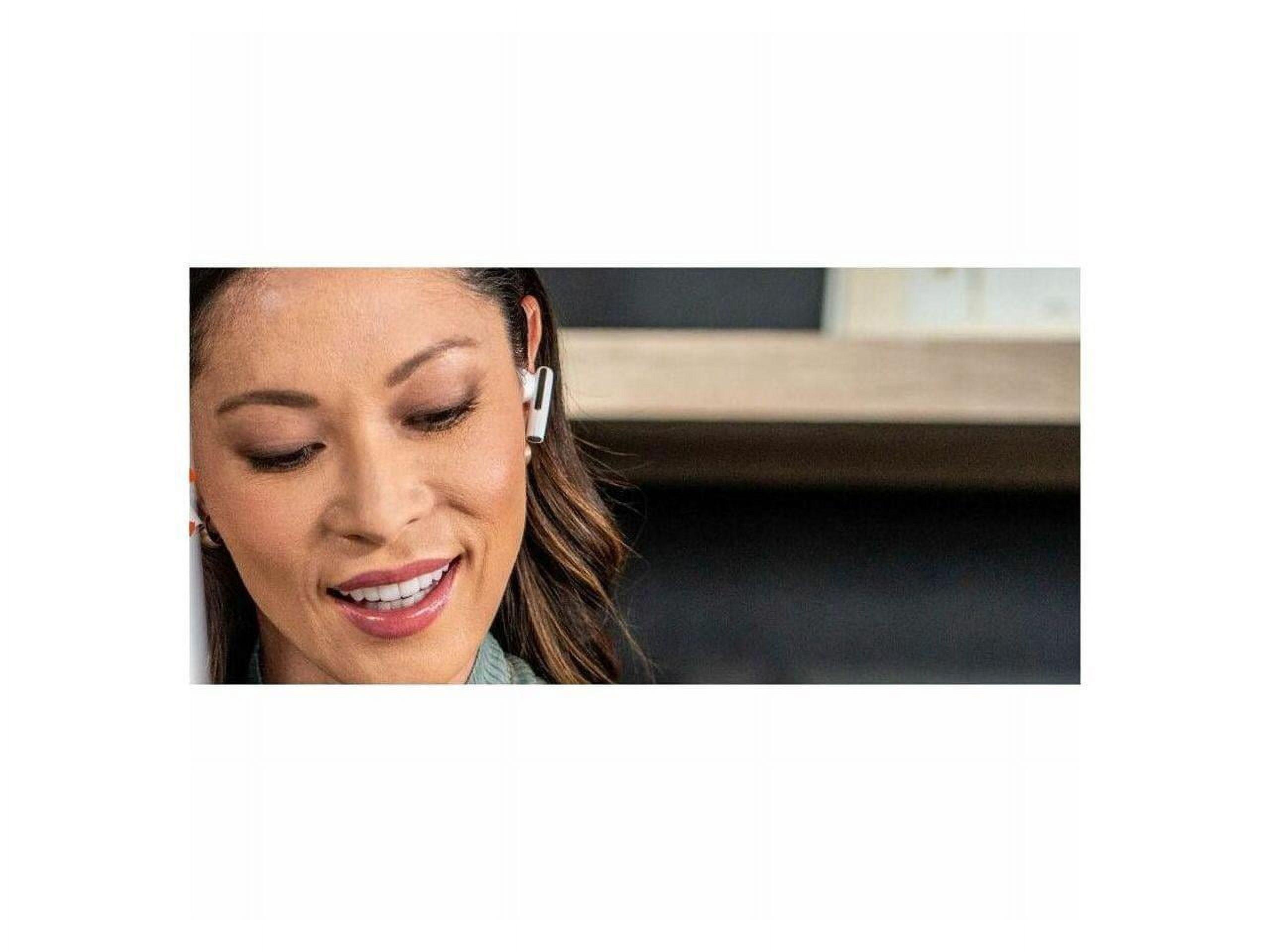
Both earbuds prioritize comfort, but with different approaches. The Poly Voyager Free 60+ UC weighs 5.8 grams per earbud and uses premium materials designed for all-day professional wear. The design emphasizes discreteness – looking professional in business settings.
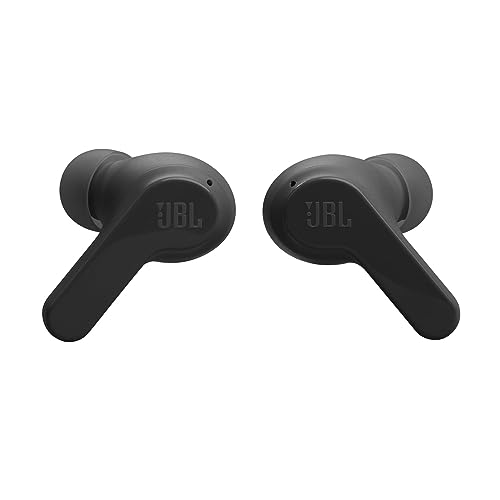
The JBL Vibe Beam is actually lighter at 4.4 grams per earbud, using an ergonomic "stick-closed" design that enhances both comfort and passive noise isolation. The closed design also improves bass response by better sealing the ear canal.
Both models offer water resistance, though with different ratings. The JBL Vibe Beam provides IP54 protection for the earbuds (dust and splash resistant) and IPX2 for the charging case. This makes them suitable for workouts and light rain exposure.
At the time of writing, these products represent vastly different value propositions. The JBL Vibe Beam delivers exceptional performance per dollar, offering features and sound quality that compete with models costing several times more. Users consistently praise its audio quality, battery life, and overall reliability at its price point.
The Poly Voyager Free 60+ UC commands a premium price but delivers genuinely premium features for its target audience. The advanced microphone array, ANC, smart charging case, and professional software integration create a package that's genuinely different from consumer-focused earbuds.
Neither product is specifically designed for home theater use, but both can serve as wireless audio solutions for TV watching. The JBL Vibe Beam would be the more practical choice here, offering longer battery life for extended viewing sessions and better bass response for movie soundtracks.
The Poly Voyager Free 60+ UC's 3.5mm input capability could theoretically connect to some TV systems, but the professional focus and higher price make it less practical for entertainment use.
The decision between these earbuds ultimately comes down to use case and budget priorities.
Choose the Poly Voyager Free 60+ UC if you're a business professional who takes frequent calls, works in noisy environments, needs reliable connectivity across multiple devices, and values premium features like ANC and smart case controls. The advanced microphone technology alone justifies the investment for users who depend on clear communication for their livelihood.
The JBL Vibe Beam makes more sense for general consumers seeking excellent audio quality, impressive battery life, and solid everyday functionality at an accessible price point. It's particularly appealing for students, casual listeners, or anyone wanting quality earbuds without premium pricing.
For most users, the JBL Vibe Beam offers better overall value. It delivers core earbud functionality very well while adding useful features like customizable EQ and ambient sound modes. The exceptional battery life alone makes it practical for daily use.
However, if your work depends on clear communication or you frequently find yourself in challenging acoustic environments, the Poly Voyager Free 60+ UC's specialized features create genuine productivity benefits that justify its premium pricing.
The choice isn't really between good and better – it's between different tools optimized for different jobs. Understanding which job matches your needs will point you toward the right earbuds for your situation.
| Poly Voyager Free 60+ UC Wireless Earbuds | JBL Vibe Beam True Wireless Earbuds |
|---|---|
| Driver Size - Larger drivers typically produce fuller sound with better bass | |
| 10mm drivers with hi-fi tuning | 8mm dynamic drivers with JBL Deep Bass Sound |
| Microphone Array - Critical for call clarity in noisy environments | |
| Three microphones per earbud with voice triangulation and WindSmart technology | Standard microphone setup with basic noise reduction |
| Active Noise Cancellation - Essential for focus in open offices or travel | |
| Adaptive hybrid ANC with two transparency modes | No ANC, only Smart Ambient technology (TalkThru/Ambient Aware) |
| Battery Life - Total playback time affects daily usability | |
| 5.5h earbuds + 16.5h case = 22h total | 8h earbuds + 24h case = 32h total |
| Quick Charging - How fast you can get back to listening | |
| 15 minutes = 1 hour talk time | 10 minutes = 2 hours playback |
| Bluetooth Version - Affects connection stability and power efficiency | |
| Bluetooth 5.3 with multipoint connectivity | Bluetooth 5.2, single device connection only |
| Water Resistance - Important for workouts and outdoor use | |
| IP54 rating | IP54 earbuds, IPX2 charging case |
| Weight Per Earbud - Impacts long-term comfort | |
| 5.8g per earbud | 4.4g per earbud |
| Special Features - Unique capabilities that justify the price difference | |
| Color touchscreen case, BT700 USB adapter, 3.5mm wired option, Microsoft Teams certified | Customizable EQ via app, Find My Buds, VoiceAware for calls |
| Target User - Who each product serves best | |
| Business professionals needing premium call quality | Budget-conscious consumers wanting entertainment-focused audio |
| Charging Case - Convenience features for daily use | |
| Smart case with touchscreen controls and Qi wireless charging | Standard case with USB-C charging only |
| Sound Customization - Ability to personalize audio experience | |
| Fixed professional tuning optimized for calls and music | Full parametric EQ and sound presets via JBL Vibe Beam app |
The Poly Voyager Free 60+ UC is significantly better for business calls. It features a three-microphone array in each earbud that uses voice triangulation to isolate your voice from background noise, plus WindSmart technology for outdoor calls. The JBL Vibe Beam has basic microphones suitable for casual calls but lacks the advanced noise reduction needed for professional use.
Only the Poly Voyager Free 60+ UC has true Active Noise Cancellation (ANC) with adaptive hybrid technology that automatically adjusts to your environment. The JBL Vibe Beam doesn't have ANC but offers Smart Ambient technology with TalkThru and Ambient Aware modes that help you stay aware of your surroundings.
The JBL Vibe Beam offers significantly better battery life with 8 hours from the earbuds and 32 hours total with the charging case. The Poly Voyager Free 60+ UC provides 5.5 hours of talk time and 16.5 hours total with the case, making the JBL model better for all-day use.
The Poly Voyager Free 60+ UC supports multipoint connectivity, allowing connection to two devices simultaneously (like your phone and laptop). The JBL Vibe Beam only connects to one device at a time, requiring manual switching between devices.
Both offer good music quality but with different approaches. The JBL Vibe Beam emphasizes bass with its Deep Bass Sound tuning and offers customizable EQ through the JBL app. The Poly Voyager Free 60+ UC provides more balanced, professional-grade audio tuning. For entertainment, most users prefer the JBL's sound signature.
Both earbuds offer water resistance but not full waterproofing. The JBL Vibe Beam has IP54 rating for dust and splash resistance, while the Poly Voyager Free 60+ UC also offers similar protection. Both are suitable for workouts and light rain but shouldn't be submerged.
The Poly Voyager Free 60+ UC has a unique color touchscreen charging case that lets you control calls, volume, and device switching without touching your phone. It also supports Qi wireless charging. The JBL Vibe Beam has a standard charging case with USB-C charging only.
Yes, both the JBL Vibe Beam and Poly Voyager Free 60+ UC support mono listening, allowing you to use either earbud independently. This is useful for staying aware of your surroundings or extending battery life during long calls.
The JBL Vibe Beam is lighter at 4.4g per earbud compared to 5.8g for the Poly Voyager Free 60+ UC. Both are designed for extended wear, but the JBL's ergonomic stick-closed design and lighter weight typically provide better long-term comfort for most users.
Both earbuds support voice assistants like Siri, Google Assistant, and Alexa through touch controls. The Poly Voyager Free 60+ UC is also Microsoft Teams certified for business environments, while the JBL Vibe Beam works with standard voice assistant functions.
The JBL Vibe Beam offers exceptional value for general consumers, delivering solid audio quality, great battery life, and useful features at a budget-friendly price. The Poly Voyager Free 60+ UC provides premium value for business professionals who need superior call quality and advanced features, justifying its higher cost for professional use.
The JBL Vibe Beam offers extensive sound customization through the JBL Headphones app, including parametric EQ and sound presets. The Poly Voyager Free 60+ UC has fixed professional tuning optimized for both calls and music but lacks user-customizable EQ settings, focusing instead on consistent performance across different audio types.
We've done our best to create useful and informative comparisons to help you decide what product to buy. Our research uses advanced automated methods to create this comparison and perfection is not possible - please contact us for corrections or questions. These are the sites we've researched in the creation of this article: soundguys.com - headsetsdirect.com - youtube.com - vivo.tech - headsetadvisor.com - hp.com - headsetadvisor.com - hp.com - gadgetoid.com - hp.com - hp.com - youtube.com - headsetsdirect.com - lexair.com - content.shi.com - docs.poly.com - hp.com - bestbuy.com - h20195.www2.hp.com - vivo.tech - hp.com - insight.com - cdw.com - hp.com - trustedreviews.com - hp.com - youtube.com - bestbuy.com - jbl.com - rtings.com - jbl.com - youtube.com - youtube.com - audio46.com - jbl.com - soundguys.com - bestbuy.com - walmart.com - uclastore.com - bestbuy.com - manuals.plus

Privacy Policy
Terms and Conditions - Affiliate Policy
Home Security
© Copyright 2008-2026.
11816 Inwood Rd #1211, Dallas, TX 75244