




True wireless earbuds have completely transformed how we listen to music, take calls, and consume media. Gone are the days of tangled wires and limited mobility—these tiny powerhouses pack impressive audio technology, noise cancellation, and smart features into compact packages that disappear into your ears. But with so many options flooding the market, choosing the right pair can feel overwhelming.
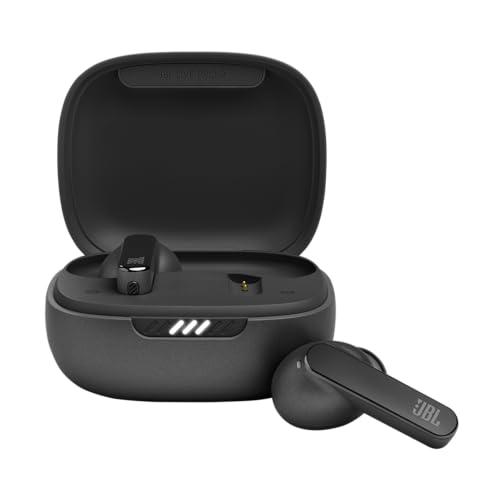
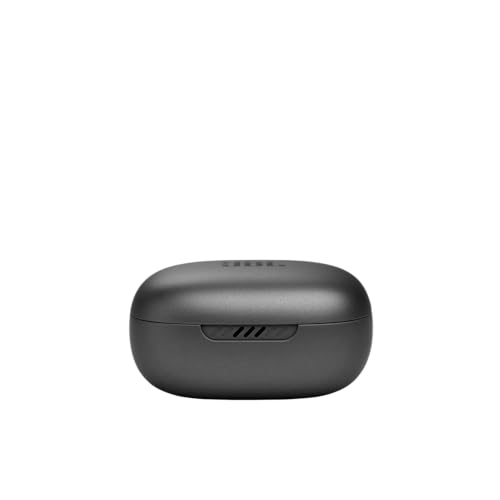
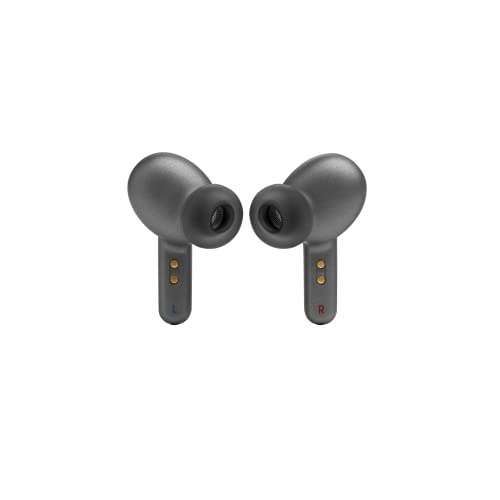
JBL, a brand synonymous with quality audio for over 75 years, offers two compelling options that showcase different approaches to premium earbuds. The JBL Live Pro 2, released in 2022, positioned itself as an accessible entry into high-end features without the flagship price tag. The JBL Tour Pro 3, launched in 2024, represents JBL's latest flagship thinking—pushing boundaries with innovative smart case technology and refined audio engineering.
Understanding which model suits your needs requires diving deep into what makes each special and where they excel. Let's break down everything you need to know to make the right choice.
Before comparing specific models, it's worth understanding what separates good earbuds from great ones. The most important factors include audio quality (how music actually sounds), active noise cancellation effectiveness (blocking unwanted sounds), battery life, build quality, and increasingly, smart features that enhance daily use.
Audio quality depends on several technical components working together. Driver size and type determine how sound is produced—larger drivers typically handle bass better, while specialized drivers can focus on specific frequency ranges. Frequency response tells you the range of sounds the earbuds can reproduce, measured in hertz (Hz). Human hearing spans roughly 20Hz to 20,000Hz, so earbuds covering this range can theoretically reproduce all audible sounds.
Codec support also matters significantly for audio quality. Think of codecs as different languages your earbuds and phone use to communicate audio data. Basic codecs like SBC work everywhere but compress audio heavily. Advanced codecs like LDAC (used by Sony and some other manufacturers) can transmit much more audio detail, resulting in noticeably better sound quality—but only when your source device supports it.
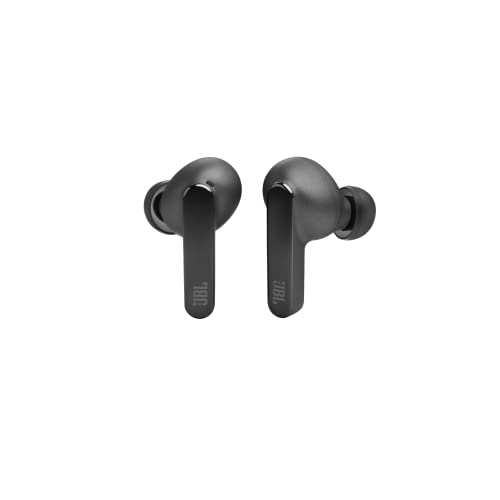
The JBL Live Pro 2 takes a straightforward approach with single 11mm dynamic drivers in each earbud. These drivers cover the full frequency range of 20Hz to 20kHz and deliver JBL's signature sound profile—a V-shaped response that emphasizes bass and treble while keeping midrange vocals present but not overwhelming. This tuning works exceptionally well for modern music genres like pop, hip-hop, and electronic music where punchy bass and sparkling highs create excitement.
In our research across professional reviews and user feedback, the Live Pro 2's sound consistently receives praise for its engaging, fun character. The bass has real impact without becoming muddy, and the treble provides detail without harshness. However, this tuning can make some acoustic music or classical pieces sound less natural than they should.
The JBL Tour Pro 3 represents a significant technical advancement with its hybrid dual-driver system. Each earbud contains both a 10mm dynamic driver and a smaller 5.1mm x 2.8mm balanced armature driver. This setup divides labor: the dynamic driver handles bass and midrange frequencies where it excels, while the balanced armature driver focuses on high frequencies where its precision and speed shine.
This dual-driver approach yields noticeably better audio separation and detail retrieval. Complex musical passages that might sound congested on single-driver earbuds maintain clarity on the Tour Pro 3. The frequency response extends to 40kHz—well beyond human hearing but indicative of the driver's capability to handle audio details that contribute to overall sound quality even if we can't consciously hear those high frequencies.
Perhaps more importantly, the Tour Pro 3 supports LDAC codec on Android devices. LDAC can transmit roughly three times more audio data than standard Bluetooth codecs, preserving much more of the original recording's detail. When listening to high-quality music sources on Android phones that support LDAC, the difference becomes quite apparent—instruments have better separation, vocals sound more natural, and the overall presentation feels more spacious and refined.
The Tour Pro 3 also introduces JBL Spatial 360 with head tracking—a feature that transforms regular stereo music into an immersive 3D-like experience. Using accelerometers and gyroscopes, the earbuds track your head movements and adjust the audio accordingly, making it seem like sounds originate from fixed points in space around you. While this might sound gimmicky, it actually creates a more speaker-like listening experience that reduces listener fatigue during long sessions.
For home theater use, this spatial audio processing can enhance movie watching significantly. The Tour Pro 3's smart case can even connect directly to your TV or streaming device via its audio transmitter functionality, potentially offering better sound quality than your TV's built-in speakers while maintaining the immersive spatial effect.
Both models feature active noise cancellation (ANC)—technology that uses microphones to detect ambient sound and generates opposing sound waves to cancel it out. However, their implementations differ substantially in sophistication and effectiveness.
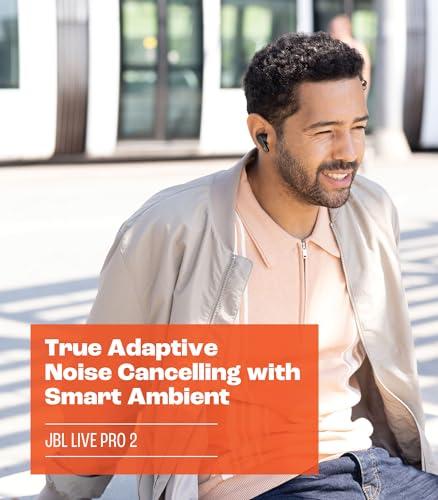
The Live Pro 2 employs True Adaptive Noise Cancelling that adjusts to your environment automatically. In practice, this works well for consistent noise sources like airplane engines, air conditioning, or bus rumbles. The system effectively reduces these low-frequency sounds that typically penetrate passive isolation, making commutes and travel significantly more pleasant. For office environments with steady background noise like computer fans and distant conversations, the Live Pro 2 performs admirably.
Based on comprehensive reviews from audio testing sites, the Live Pro 2's ANC blocks a substantial amount of low-frequency noise while maintaining decent performance in the midrange frequencies where human voices typically sit. However, it can struggle somewhat with sudden, sharp sounds or highly variable noise environments.
The Tour Pro 3 takes noise cancellation to another level with its True Adaptive Noise Cancellation 2.0 system. This advanced implementation measures environmental changes over 50,000 times per second—an almost incomprehensible frequency that ensures nearly instantaneous adaptation to changing conditions. In real-world terms, this means the Tour Pro 3 can quickly adjust when you move from a quiet room to a busy street, or when the airplane you're on changes engine pitch during takeoff.
Expert reviews consistently rate the Tour Pro 3's ANC as blocking approximately 85% of background noise across a wider frequency range than the Live Pro 2. This translates to better isolation not just from low rumbles, but also from mid-frequency sounds like conversations and higher-pitched noises like keyboard clicking or air conditioning units.
Both models offer adjustable ANC levels and transparent modes that let environmental sound through when needed. However, the Tour Pro 3 provides six levels of ANC adjustment compared to the Live Pro 2's more basic options, allowing for more precise tuning to your environment and preferences.
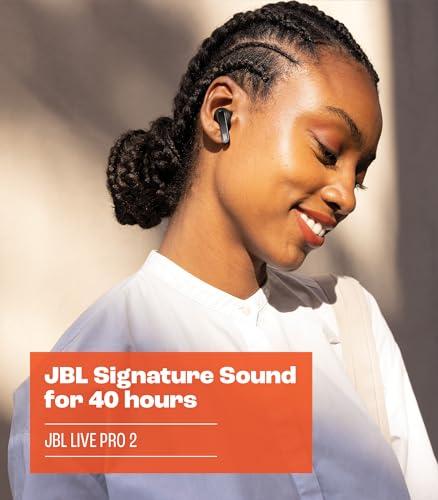
Battery performance often determines whether earbuds become daily companions or occasional accessories. The Live Pro 2 delivers solid endurance with 10 hours of continuous playback per charge when ANC is disabled, dropping to 8 hours with noise cancellation active. The charging case provides an additional 30 hours, bringing total listening time to 40 hours—impressive for earbuds in this category.
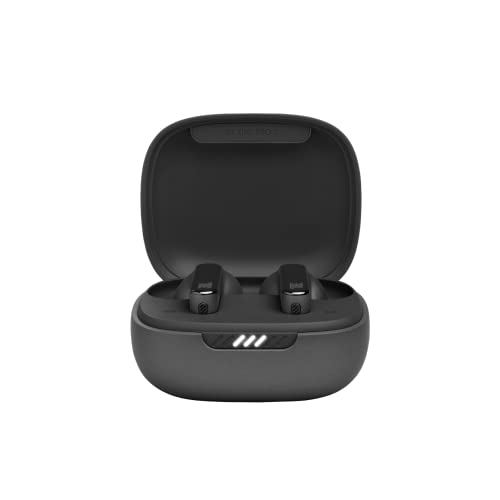
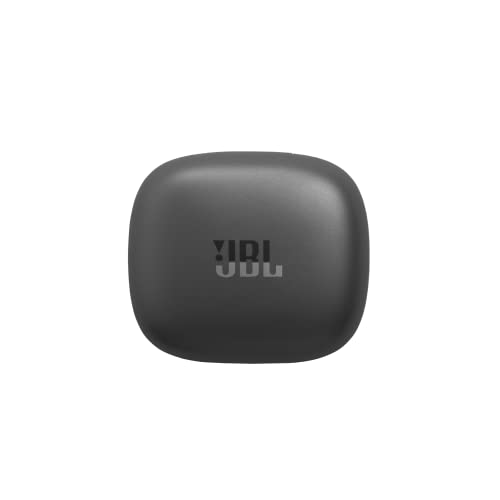
The charging case supports both USB-C wired charging and Qi wireless charging, reaching full charge in about 2 hours via cable or 4 hours wirelessly. For emergency situations, 15 minutes of charging provides approximately 4 hours of listening time, which can save you when running late with dead earbuds.
The Tour Pro 3 edges ahead with 11 hours per charge (ANC off) and the same 8 hours with ANC enabled. More significantly, its larger case battery provides 33 additional hours for a total of 44 hours. While this might seem like a modest improvement, that extra 4 hours of total battery life can mean the difference between making it through a long international flight or needing to ration your listening time.
Interestingly, the Tour Pro 3's quick charging is slightly faster despite providing less emergency juice—10 minutes yields 3 hours of playback. This reflects the more advanced power management in the newer model, though in practical terms, both earbuds charge quickly enough for most users' needs.
At the time of writing, these battery specifications place both models among the better-performing options in their respective price ranges, though flagship models from competitors like Sony and Bose typically match or exceed these numbers.
Durability matters significantly for devices you'll use daily and potentially during exercise or travel. The Live Pro 2 carries an IPX5 rating, meaning it can handle water jets from any direction—sufficient protection for sweaty workouts, unexpected rain, or accidental spills. Each earbud weighs just 4.8 grams, making them comfortable for extended wear.
However, user feedback suggests the Live Pro 2's fit can be inconsistent. The Oval Tubes design, which mimics the ear canal's natural shape, works well for many users but can lead to earbuds popping out during movement if you don't achieve a proper seal. This seems particularly common during talking or physical activity, and the lack of stability fins compounds the issue for some users.
The Tour Pro 3 improves on build quality with an IP55 rating—protection against both dust ingress and water jets. This higher rating makes them more suitable for outdoor activities and dusty environments. At 5.6 grams per earbud, they're slightly heavier but still comfortable for most users.
More importantly, user reviews suggest the Tour Pro 3 achieves a more secure fit thanks to its refined ergonomics and the inclusion of foam ear tips alongside traditional silicone options. Foam tips conform more closely to your ear canal, often providing better passive isolation and a more secure fit, though they require replacement more frequently than silicone tips.
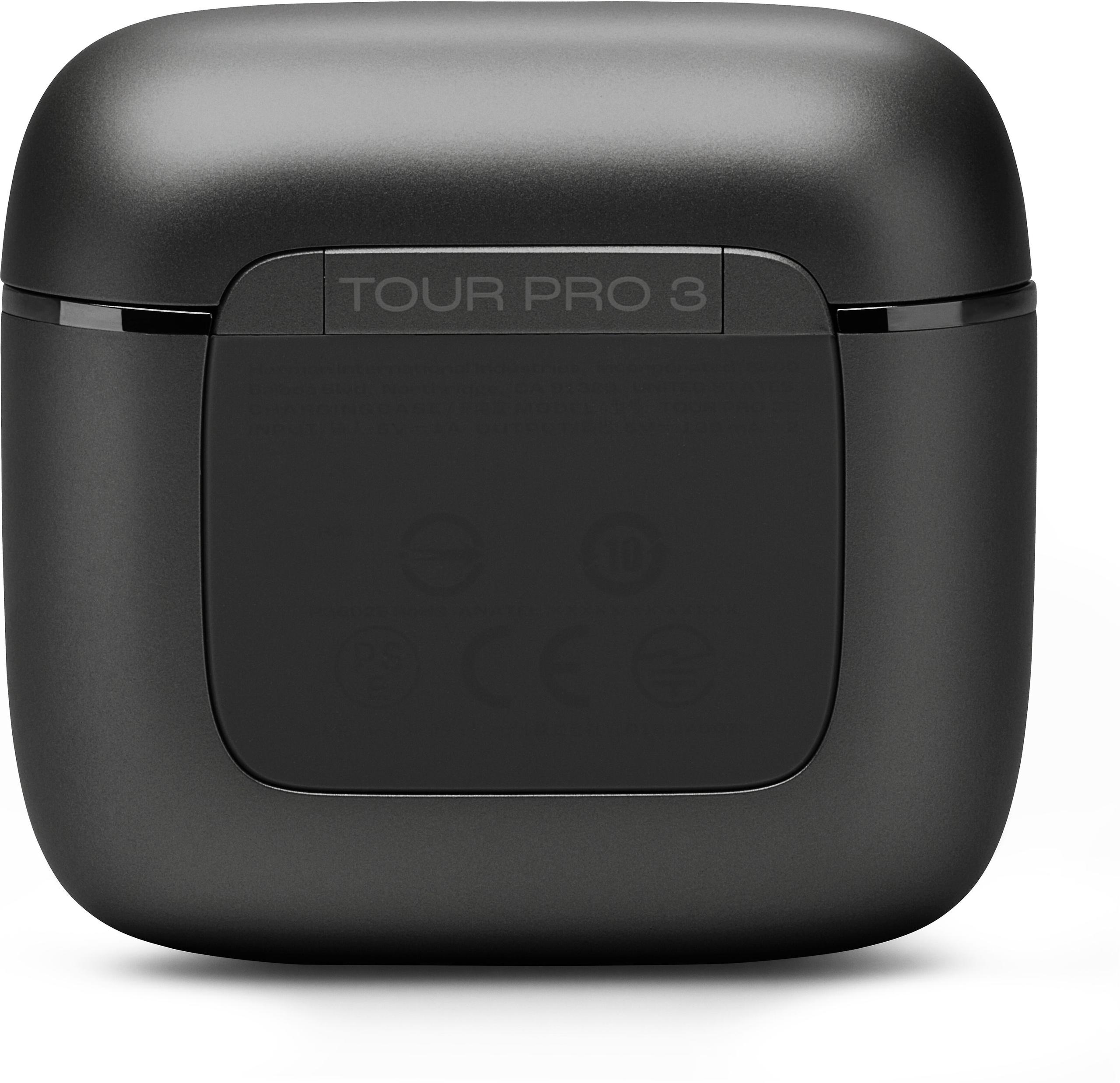
Both models feature premium build materials and solid construction quality typical of JBL's recent products. The Tour Pro 3's smart case, in particular, feels substantial and well-engineered despite its additional complexity.
Here's where the models diverge most dramatically. The Live Pro 2 focuses on core functionality done well. It offers Bluetooth 5.2 connectivity with multipoint connection support, allowing simultaneous connection to two devices—handy for switching between your phone and laptop without manual reconnection. The JBL Headphones app provides a 10-band equalizer for sound customization, ANC level adjustment, and touch control customization.
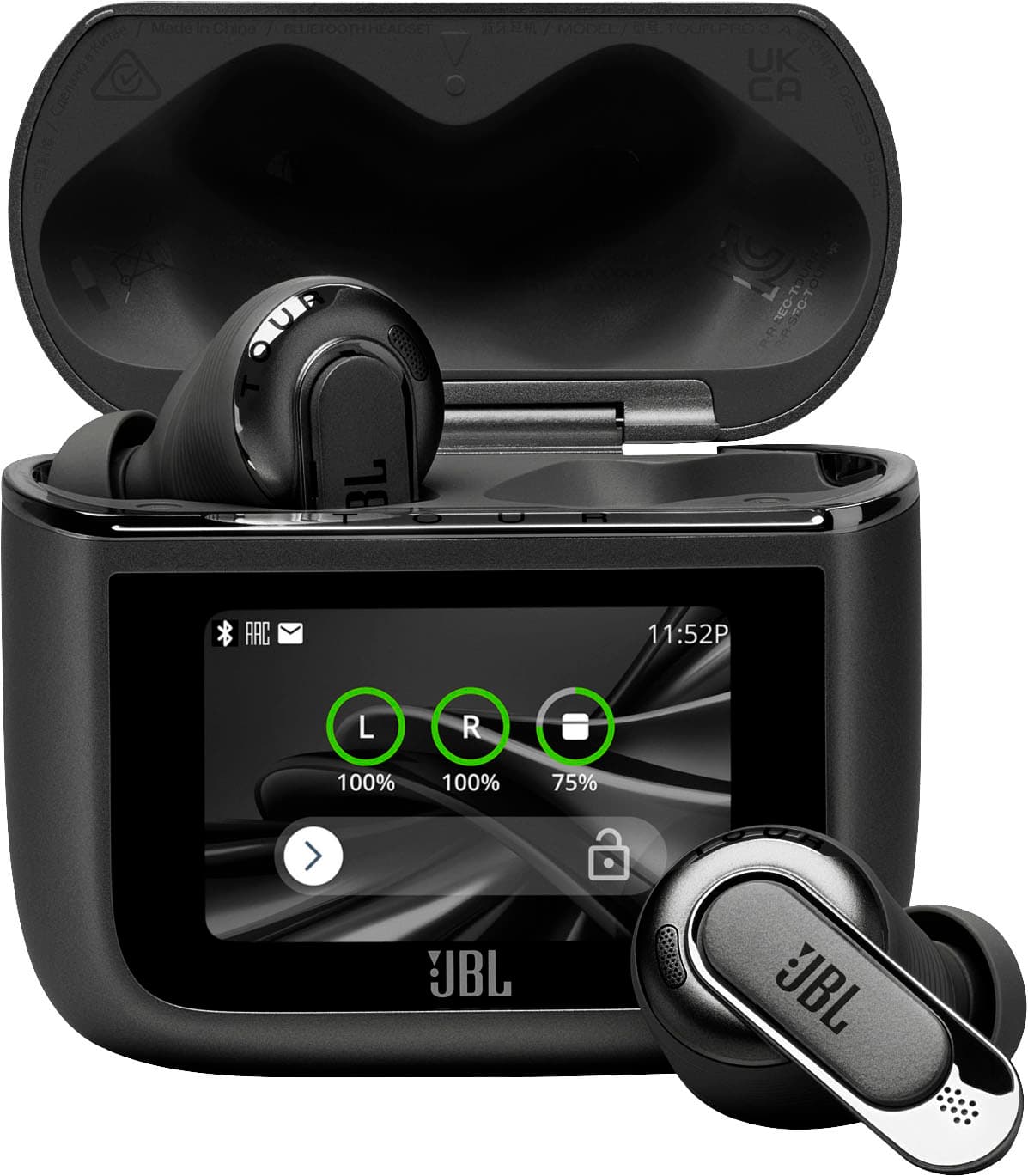
The Tour Pro 3 ventures into genuinely innovative territory with its smart charging case. This isn't just a larger screen—it's a completely reimagined approach to earbud control. The case features a touchscreen display that shows media information, caller ID, and provides direct control over music playback and calls without touching your phone.
More impressively, the case functions as a wireless audio transmitter. You can connect it via USB-C or the included 3.5mm adapter to airplane entertainment systems, gaming consoles, or older audio equipment, then wirelessly stream that audio to your earbuds. This eliminates the need for airline-provided headphones and can significantly improve audio quality from various sources.
The case also supports Auracast technology—a relatively new Bluetooth standard that allows audio sharing with multiple devices. While Auracast adoption is still limited, this future-proofs the Tour Pro 3 for emerging use cases like sharing audio in group settings or accessing public audio broadcasts.
For connectivity, the Tour Pro 3 uses Bluetooth 5.3 with more reliable multipoint performance and support for both Google Fast Pair and Microsoft Swift Pair, ensuring smooth setup regardless of your device ecosystem.
Both models feature six microphones for call handling, but their performance differs noticeably. The Live Pro 2 provides adequate call quality in quiet environments but struggles with background noise separation. Technical reviews consistently note that voice quality sounds somewhat thin and dark, and the microphones have difficulty isolating speech from moderate ambient noise.
The Tour Pro 3 addresses these limitations with JBL Crystal AI algorithm processing and a hydrodynamic windproof design. User feedback and professional reviews indicate significantly clearer voice transmission, even in challenging conditions like windy environments or busy streets. The smart call equalizer automatically adjusts for different voice volumes, helping balance conversations between quiet and loud talkers.
For business users or anyone who takes frequent calls, the Tour Pro 3's superior microphone system justifies much of the price premium on its own.
At the time of writing, the Live Pro 2 typically retails for significantly less than the Tour Pro 3, though exact pricing fluctuates with sales and market conditions. The Live Pro 2 frequently appears at promotional prices that make it an exceptional value proposition for users seeking premium features without flagship costs.
For most users prioritizing core earbud functionality—good sound quality, effective noise cancellation, solid battery life, and reliable connectivity—the Live Pro 2 delivers everything needed at an attractive price point. The V-shaped sound signature suits popular music genres well, the ANC handles common noise scenarios effectively, and the 40-hour total battery life easily handles daily use.
The Tour Pro 3 commands a significant premium but justifies it through genuinely innovative features and measurably superior performance. The dual-driver audio system provides noticeably better sound quality, particularly for complex music. The advanced ANC system blocks more noise across a wider frequency range. The smart case offers unique functionality that adds real utility for travelers and tech enthusiasts.
However, the Tour Pro 3's value proposition depends heavily on whether you'll actually use its advanced features. If you never travel, rarely take calls, and primarily listen to bass-heavy music genres, the audio improvements may not justify the significant price difference.
The Live Pro 2 makes the most sense for budget-conscious buyers who want premium earbud features without paying flagship prices. They're ideal for fitness enthusiasts who need reliable water resistance, commuters requiring good noise cancellation and long battery life, and casual listeners who prefer JBL's fun, bass-forward sound signature. Students, in particular, will appreciate the strong value proposition and reliable multipoint connectivity for switching between phone and laptop audio.
The Tour Pro 3 targets audio enthusiasts who appreciate refined sound quality and cutting-edge features. They're worth the premium for frequent travelers who'll benefit from the case's audio transmission capabilities, business professionals requiring superior call quality, and tech enthusiasts who want the latest innovations. The spatial audio processing also makes them excellent for home theater use when connected to TVs or streaming devices.
If you're building a home theater setup and want wireless earbuds that can enhance your viewing experience, the Tour Pro 3's smart case transmission feature and spatial audio processing provide unique value. You can connect the case directly to your TV or streaming device for potentially better audio quality than built-in TV speakers while maintaining the immersive spatial effect.
Choose the JBL Live Pro 2 if you prioritize value over premium features, need reliable water resistance for workouts, prefer strong bass emphasis, and don't require hi-res audio codec support. They offer exceptional performance for users seeking solid functionality across all core earbud features without premium pricing.
Choose the JBL Tour Pro 3 if audio quality is your top priority, you frequently travel and would utilize the case transmission features, call quality is crucial for work, you want the latest noise cancellation technology, or the smart case features align with your usage patterns. The price premium is justified through genuinely innovative features and superior performance metrics.
Both models represent JBL's commitment to quality audio and thoughtful engineering. Your decision should ultimately align with your budget, listening preferences, and which advanced features you'll actually use in daily life. The Live Pro 2 proves you don't need to spend flagship money for premium performance, while the Tour Pro 3 demonstrates what's possible when pushing the boundaries of what earbuds can do.
| JBL Live Pro 2 | JBL Tour Pro 3 |
|---|---|
| Driver Technology - Determines audio quality and detail | |
| Single 11mm dynamic driver per earbud | Hybrid dual-driver: 10mm dynamic + 5.1mm balanced armature |
| Frequency Response - Range of sounds the earbuds can reproduce | |
| 20Hz - 20kHz (covers full human hearing range) | 20Hz - 40kHz (extended range for better detail retrieval) |
| Hi-Res Audio Codec Support - Critical for Android users with quality music sources | |
| SBC, AAC only (standard quality) | SBC, AAC, LDAC (3x more audio data than standard) |
| Active Noise Cancellation - Effectiveness at blocking unwanted sounds | |
| True Adaptive ANC (good for consistent noise) | True Adaptive ANC 2.0 (blocks ~85% of noise, adapts 50,000x/second) |
| Battery Life Per Charge - Daily listening without case | |
| 10 hours (ANC off), 8 hours (ANC on) | 11 hours (ANC off), 8 hours (ANC on) |
| Total Battery Life - Complete listening time with case | |
| 40 hours (10+30) | 44 hours (11+33) |
| Durability Rating - Protection against water and dust | |
| IPX5 (water resistant, good for workouts) | IP55 (dust + water resistant, better for outdoor use) |
| Smart Case Features - Advanced functionality beyond basic charging | |
| Standard charging case with wireless charging | Touchscreen case, audio transmitter, Auracast sharing |
| Weight Per Earbud - Comfort during extended wear | |
| 4.8g (very lightweight) | 5.6g (slightly heavier but still comfortable) |
| Bluetooth Version - Connection stability and features | |
| Bluetooth 5.2 with multipoint connection | Bluetooth 5.3 with enhanced multipoint |
| Spatial Audio - 3D sound experience | |
| Not available | JBL Spatial 360 with head tracking |
| Call Quality - Microphone performance for phone calls | |
| 6 mics, adequate quality, struggles with background noise | 6 mics with AI processing, windproof design, superior clarity |
| Release Year - Technology generation and future support | |
| 2022 (established, proven technology) | 2024 (latest features, future-proofed) |
The JBL Tour Pro 3 delivers superior sound quality thanks to its hybrid dual-driver system, combining a 10mm dynamic driver with a balanced armature driver for better detail and separation. The JBL Live Pro 2 uses a single 11mm driver that sounds good but can't match the clarity and precision of the Tour Pro 3's dual-driver setup.
The JBL Tour Pro 3 offers slightly better battery life with 11 hours per charge and 44 hours total with the case. The JBL Live Pro 2 provides 10 hours per charge and 40 hours total. Both offer excellent all-day listening, but the Tour Pro 3 gives you that extra edge for long trips.
The JBL Tour Pro 3 features significantly more advanced noise cancellation with its 2.0 system that adapts over 50,000 times per second and blocks approximately 85% of background noise. The JBL Live Pro 2 has good adaptive noise cancellation but can't match the Tour Pro 3's effectiveness in challenging environments.
The JBL Tour Pro 3 justifies its higher price through superior audio drivers, advanced noise cancellation, the innovative smart charging case, and better call quality. However, the JBL Live Pro 2 offers excellent value for users who don't need the premium features and want solid performance at a lower price point.
Both models work well for fitness, but the JBL Live Pro 2 might be slightly better for intense workouts due to its lighter weight (4.8g vs 5.6g) and proven IPX5 water resistance. The JBL Tour Pro 3 has superior IP55 protection against dust and water, making it better for outdoor activities in dusty environments.
The JBL Tour Pro 3 features a revolutionary smart charging case with a touchscreen display that controls music and calls without touching your phone. It also functions as an audio transmitter, letting you connect to airplane entertainment systems or TVs wirelessly. The JBL Live Pro 2 has a standard charging case with basic wireless charging.
The JBL Tour Pro 3 significantly outperforms the JBL Live Pro 2 for phone calls, featuring AI-powered voice processing and windproof design for clear conversations even in noisy environments. The Live Pro 2 provides adequate call quality but struggles with background noise separation.
Only the JBL Tour Pro 3 supports high-resolution audio through LDAC codec on Android devices, transmitting three times more audio data than standard Bluetooth. The JBL Live Pro 2 is limited to standard SBC and AAC codecs, which still sound good but can't match the Tour Pro 3's detail and clarity.
The JBL Tour Pro 3 excels for home theater with its smart case that can connect directly to TVs and streaming devices, plus JBL Spatial 360 technology that creates an immersive 3D audio experience. The JBL Live Pro 2 works fine for TV watching but lacks the advanced features that make the Tour Pro 3 special for home entertainment.
Both models offer comfortable fits, but the JBL Tour Pro 3 generally achieves a more secure seal thanks to included foam ear tips and refined ergonomics. The JBL Live Pro 2 features Oval Tubes design that works well for many users but may pop out during movement if you don't get the right fit.
Both models support multipoint connection to two devices simultaneously, but the JBL Tour Pro 3 offers more reliable switching with Bluetooth 5.3 and enhanced device management. The JBL Live Pro 2 handles multipoint well with Bluetooth 5.2, making both good choices for users switching between phone and laptop audio.
Choose the JBL Live Pro 2 if you want excellent performance at great value and don't need premium features. Pick the JBL Tour Pro 3 if you prioritize the best audio quality, advanced noise cancellation, innovative smart case features, and superior call quality. The Tour Pro 3 is worth the premium for audio enthusiasts and frequent travelers.
We've done our best to create useful and informative comparisons to help you decide what product to buy. Our research uses advanced automated methods to create this comparison and perfection is not possible - please contact us for corrections or questions. These are the sites we've researched in the creation of this article: rtings.com - rtings.com - crutchfield.com - majorhifi.com - loudnwireless.com - techradar.com - youtube.com - youtube.com - wifihifi.com - scarbir.com - youtube.com - versus.com - jbl.com - rtings.com - boizoff.com - crutchfield.com - whathifi.com - hu.harmanaudio.com - robot-advance.com - youtube.com - youtube.com - jbl.com.sg - kh.jbl.com - jbl.com - jbl.com - walmart.com - youtube.com - bestbuy.com - versus.com - techradar.com - sweetwater.com - news.jbl.com - youtube.com - harmanaudio.com - jbl.com - krazykileys.ca - jbl.com - shop.menshealth.com - sweetwater.com

Privacy Policy
Terms and Conditions - Affiliate Policy
Home Security
© Copyright 2008-2026.
11816 Inwood Rd #1211, Dallas, TX 75244