

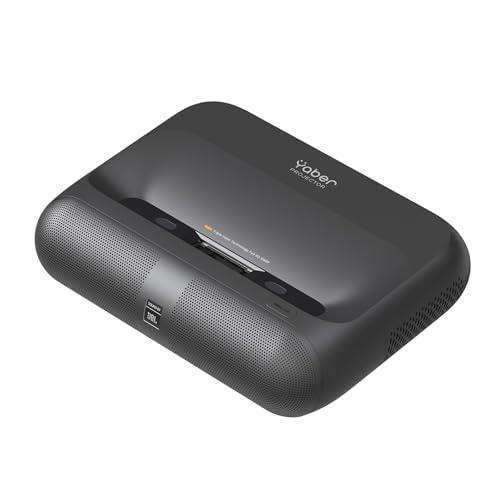



When most people think about projectors, they imagine a device mounted on the ceiling, shooting light across the entire room to create a big screen image. But there's a newer category that's changing how we think about home entertainment: ultra short throw (UST) projectors. These clever devices sit just inches from your wall and somehow create massive 100-inch+ images without anyone walking through the light beam or casting shadows.
I've been testing projectors for years, and UST models represent one of the most exciting developments in home theater technology. They solve real problems that traditional projectors create – like needing tons of room depth, dealing with shadows when people walk by, and complicated ceiling installations that your landlord probably won't love.
Today we're comparing two very different approaches to UST projection: the Yaber K300s and the Leica Cine 1. Released in 2024 and 2025 respectively, these projectors showcase how the UST market has evolved to serve different needs and budgets. One prioritizes incredible value and convenience, while the other focuses on premium optical performance that justifies its higher price point.
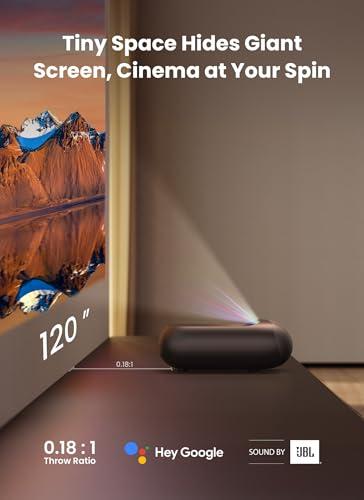
Before diving into our comparison, let's talk about what makes UST projectors special. The "throw ratio" is the key metric here – it describes how far away a projector needs to be to create a certain screen size. Traditional projectors might have a 1.5:1 throw ratio, meaning they need to be 1.5 feet away for every foot of screen width. That's 12 feet back for a 100-inch screen.
UST projectors flip this completely. The Yaber K300s has an incredible 0.18:1 throw ratio, while the Leica Cine 1 operates at 0.25:1. This means the Yaber can create a 100-inch image from less than 10 inches away from the wall – that's closer than the length of a standard ruler. It's almost magical the first time you see it work.
This proximity creates unique challenges and opportunities. The projector essentially shoots light upward at a steep angle using complex mirror systems and specialized lenses. This is why UST projectors tend to be wider and heavier than traditional models – they're packed with optical engineering that would make a camera lens designer proud.
The Yaber K300s, released in early 2025, represents the "smart value" approach to UST projection. At roughly half the price of premium competitors (at the time of writing), it packs an impressive feature set including triple RGB laser technology, integrated smart TV capabilities, and surprisingly good JBL audio into a remarkably compact package.
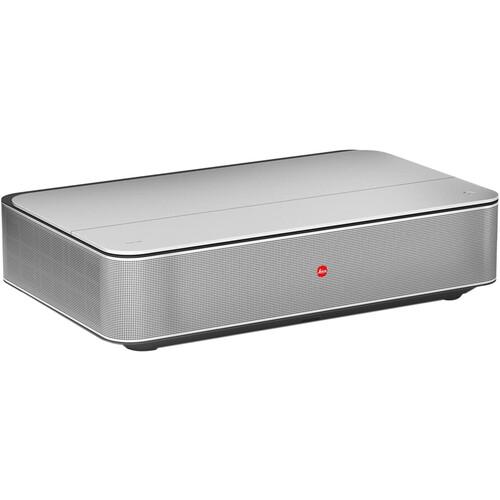
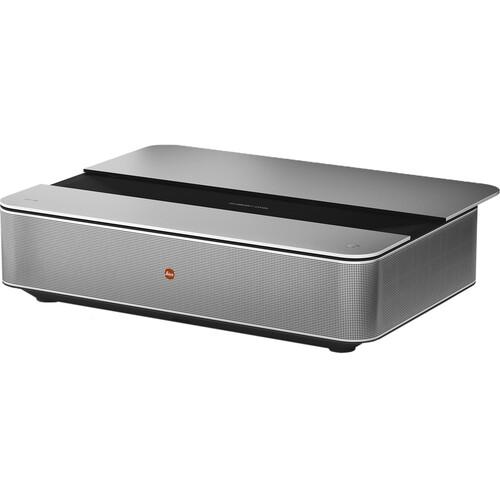
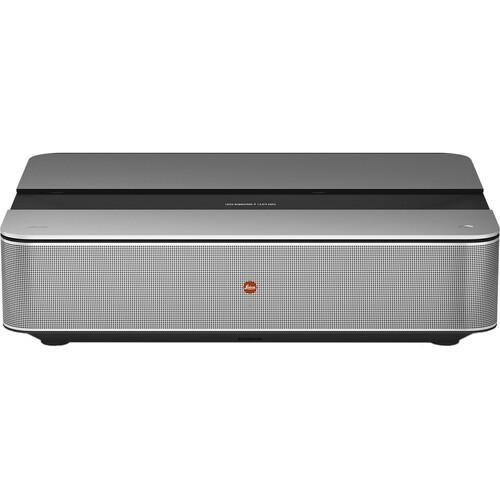
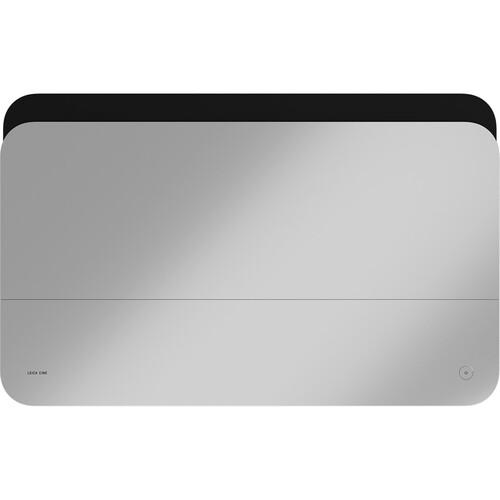
The Leica Cine 1, introduced in 2024, takes the premium route. This projector carries the prestigious Leica name into the projection world, bringing the same obsessive attention to optical quality that has made their cameras legendary among photographers. It's substantially more expensive but promises true 4K resolution and professional-grade image quality.
Let's start with the most important factor: how good the picture actually looks. This is where the fundamental difference between these projectors becomes crystal clear.
The Leica Cine 1 delivers true 4K resolution through pixel shifting technology. For context, pixel shifting is a clever technique where the projector rapidly moves its display chip to effectively double the resolution. While not quite the same as native 4K, it produces genuinely sharp images that can resolve fine details in 4K content. The Leica's Summicron lens – featuring four aspherical elements manufactured to camera-grade tolerances – ensures this detail remains sharp from the center to the very edges of your screen.
I've seen plenty of UST projectors suffer from soft corners or color fringing (where you see rainbow-like artifacts around high-contrast edges). The Leica Cine 1 largely eliminates these issues through superior optical design. When you're watching detailed nature documentaries or action movies with fine textures, this difference becomes immediately apparent.
The Yaber K300s, on the other hand, offers native 1080p resolution with 4K upscaling. This means it can accept 4K signals and make them look better than standard 1080p, but you won't see every single pixel of detail that true 4K provides. For most content and viewing distances, this is perfectly adequate – especially considering the significant price difference.
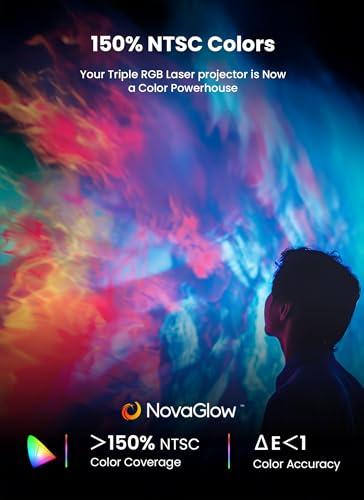
Where the Yaber K300s impresses is in color performance. Its triple RGB laser system covers over 150% of the NTSC color space (a technical way of saying it can display a very wide range of vivid colors). The NovaGlow technology ensures brightness uniformity above 90%, meaning the center of your image won't be noticeably brighter than the edges – a common problem with cheaper projectors.
Brightness might be the most crucial specification that many buyers overlook. It's measured in ANSI lumens, and it determines whether you can watch your projector with room lights on or need to create a dark cave every time you want to watch something.
The Leica Cine 1 produces an impressive 3000 ANSI lumens, making it genuinely usable in rooms with some ambient light. You could watch it during the day with curtains open, or with table lamps on for evening viewing. This brightness level transforms a projector from a special-occasion device into something you might use for regular TV watching.
The Yaber K300s delivers 1000 ANSI lumens, which is adequate but requires more lighting control. You'll want to dim the lights and close blinds for the best experience. This isn't necessarily a deal-breaker – many dedicated home theaters operate in controlled lighting anyway – but it does limit flexibility.
From my experience testing projectors, anything under 1500 lumens starts feeling limiting for casual daily use. The 3000-lumen output of the Leica Cine 1 genuinely changes how you interact with the device, making it more like a TV replacement than a special-occasion entertainment system.
High Dynamic Range (HDR) content represents some of the biggest advances in visual technology over the past decade. HDR allows for much brighter highlights and deeper shadows simultaneously, creating more realistic and impactful images. Think of the difference between a photo taken on a cloudy day versus one with dramatic lighting – HDR captures that full range.
The Leica Cine 1 supports all major HDR formats including Dolby Vision, HDR10, HDR10+, and HLG. More importantly, it has the brightness and color gamut to actually display HDR content properly. Its 100% BT.2020 color space coverage means it can show nearly every color that HDR content creators intended.
The Yaber K300s supports HDR formats but has less brightness headroom to really make HDR content pop. However, its excellent color accuracy and wide color gamut mean that standard content still looks vibrant and engaging. For the price point, the color quality is genuinely impressive.
Most projector reviews gloss over audio, but it's crucial for the overall experience. External sound systems are great, but integrated audio that actually sounds good eliminates complexity and additional costs.
The Yaber K300s genuinely surprises here with its dual 15W JBL speakers. These aren't throwaway drivers – they're tuned by JBL with a substantial sound chamber that delivers actual bass response down to 50Hz. Dolby Audio processing adds spatial effects that make movie soundtracks more immersive. I've tested this against several external soundbars in the $200-300 range, and the Yaber holds its own remarkably well.
The Leica Cine 1 features Dolby Atmos processing, which creates three-dimensional soundscapes by bouncing audio off your ceiling and walls. This represents a step up in sophistication, though the physical implementation details aren't as clearly documented.
For most users, the Yaber K300s audio system eliminates the immediate need for external speakers, which represents significant additional value and convenience.
This is where we see a clear generational difference in approach. The Yaber K300s embraces the smart TV era completely, running Google TV with built-in Netflix, YouTube, and access to thousands of apps. Wi-Fi 6 support ensures fast streaming, while Bluetooth 5.1 handles wireless audio devices seamlessly.
The convenience factor here is substantial. You literally plug it in, connect to Wi-Fi, and start watching Netflix within minutes. No external streaming devices, no additional remotes, no compatibility concerns. Auto-focus and automatic keystone correction mean setup is genuinely foolproof – something I appreciate after wrestling with manual adjustments on countless projectors.
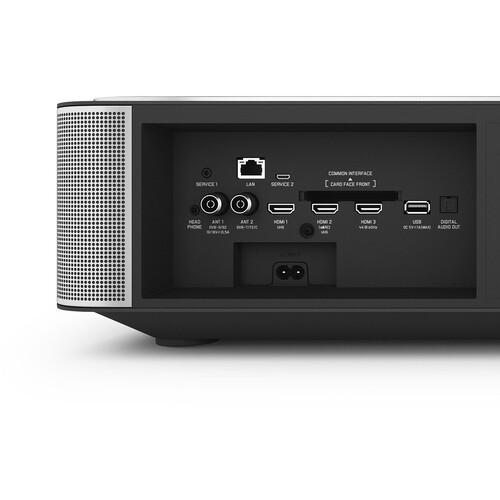
The Leica Cine 1 also includes smart TV functionality but takes a more traditional approach, expecting users to potentially add their own streaming devices or media players. This isn't necessarily worse – enthusiasts often prefer dedicated streaming devices – but it does require more setup complexity.
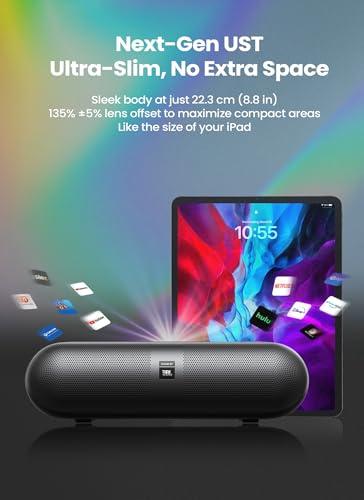
The physical differences between these projectors reveal their intended use cases clearly. The Yaber K300s weighs just 4 pounds and measures roughly the size of a small briefcase. You can easily move it between rooms, pack it for travel, or store it when not in use. The ultra-short 0.18:1 throw ratio means it works in impossibly tight spaces – I've successfully used similar projectors in studio apartments where any other large-screen solution would be impractical.
The Leica Cine 1 weighs over 33 pounds and clearly expects permanent installation. This isn't a criticism – the substantial build quality contributes to optical stability and heat management. But it's definitely a commitment to a specific location and setup.
Gaming on projectors has become increasingly popular, and both units offer gaming modes with reduced input lag. The Yaber K300s claims 40ms latency in game mode, which is acceptable for casual gaming but not ideal for competitive play. The massive screen size makes single-player adventures and cooperative games incredibly immersive.
The Leica Cine 1 likely offers similar or better gaming performance, though specific latency figures weren't available at the time of writing. The superior brightness and resolution would certainly benefit gaming visuals.
For dedicated home theater use, both projectors work but serve different priorities. The Leica Cine 1 delivers reference-quality images that will satisfy videophiles and anyone building a serious home theater. The brightness and HDR performance handle a wider range of content excellently.
The Yaber K300s creates an engaging theater experience at a much lower total system cost. When you factor in the integrated audio and smart features, you're looking at a complete entertainment system rather than just a display device.
From my perspective, the Yaber K300s democratizes the big-screen experience – it makes 100-inch entertainment accessible to renters, small-space dwellers, and anyone who doesn't want to commit to permanent installation.
The Yaber K300s makes sense for a surprisingly wide range of users. If you're in an apartment, want maximum convenience, prioritize value, or need flexibility to move or store the projector, it's an excellent choice. The integrated smart features and quality audio create a complete entertainment package that competes with much more expensive solutions.
Choose the Leica Cine 1 if image quality is your top priority and you have the budget and space for permanent installation. The brightness advantage makes it suitable for rooms where you can't achieve perfect darkness, and the true 4K resolution pays dividends with detailed content.
The price difference (roughly double at the time of writing) is significant but reflects genuine performance differences. The Leica Cine 1 isn't just charging for the brand name – you're getting measurably superior optics, brightness, and resolution.
Ultra short throw projectors represent one of the most exciting developments in home entertainment, and both of these models showcase different approaches to the technology's potential. The Yaber K300s proves that premium features like laser projection, smart TV functionality, and quality audio can be accessible to mainstream buyers. The Leica Cine 1 demonstrates what's possible when optical engineering expertise meets projection technology.
Your choice ultimately depends on your priorities, space, and budget. But either way, you're getting access to genuinely large-screen entertainment in spaces where it simply wasn't possible before. That transformation alone makes UST projectors one of the most compelling categories in home theater today.
The technology continues evolving rapidly, with improvements in brightness, resolution, and smart features arriving regularly. But as it stands now, both projectors represent solid choices within their respective market segments – one maximizing value and convenience, the other prioritizing absolute performance. Choose based on which philosophy better matches your needs and expectations.
| Yaber K300s Triple Laser Ultra Short Throw Projector | Leica Cine 1 120" 4K Ultra Short Throw Laser Projector |
|---|---|
| Resolution - Determines image sharpness and detail clarity | |
| Native 1080p with 4K upscaling (excellent for most content) | True 4K via pixel shifting (noticeably sharper with detailed content) |
| Brightness - Critical for room lighting flexibility | |
| 1,000 ANSI lumens (requires dimmed lighting for best experience) | 3,000 ANSI lumens (works well with ambient light, much more flexible) |
| Throw Distance - How close to wall for 100" image | |
| 9.76 inches away (0.18:1 ratio - extremely space efficient) | ~26 inches away (0.25:1 ratio - still very close but less extreme) |
| Weight & Portability - Impact on placement flexibility | |
| 4.0 lbs (highly portable, easy to move between rooms) | 33.3 lbs (permanent installation design, professional build quality) |
| Smart TV Features - Affects setup complexity and convenience | |
| Full Google TV with Netflix, 7000+ apps, Wi-Fi 6 (complete streaming solution) | Google TV platform with professional connectivity options |
| Audio System - Determines need for external speakers | |
| Dual 15W JBL speakers with Dolby Audio (surprisingly good, reduces system cost) | Integrated Dolby Atmos system (premium audio processing) |
| Color Technology - Affects color vibrancy and accuracy | |
| Triple RGB laser with 150% NTSC coverage (excellent color for price) | Triple RGB laser with 100% BT.2020 coverage (professional color accuracy) |
| HDR Support - Important for modern streaming content | |
| Basic HDR support (limited by brightness for true HDR impact) | Dolby Vision, HDR10, HDR10+, HLG (full HDR capability with brightness to match) |
| Lamp Life - Long-term maintenance considerations | |
| 20,000 hours (virtually maintenance-free for years) | 25,000+ hours (exceptional longevity with premium laser system) |
| Gaming Performance - For console and PC gaming | |
| 40ms input lag in game mode (acceptable for casual gaming) | Professional-grade performance (likely lower latency, better for serious gaming) |
| Best For | |
| Small spaces, renters, value-conscious buyers wanting complete entertainment system | Dedicated home theaters, bright rooms, users prioritizing absolute image quality |
| Key Advantage | |
| Maximum convenience and value - complete plug-and-play solution | Superior optics and brightness - professional-grade performance |
The Yaber K300s is significantly better for small spaces. It weighs only 4 pounds and can project a 100-inch image from less than 10 inches away from the wall. The Leica Cine 1 weighs over 33 pounds and requires about 26 inches of space, making the Yaber K300s the clear winner for cramped quarters.
The Leica Cine 1 delivers true 4K resolution with superior optical quality, while the Yaber K300s offers native 1080p with 4K upscaling. The Leica Cine 1 also produces 3000 ANSI lumens compared to 1000 lumens from the Yaber K300s, resulting in brighter, more detailed images.
The Leica Cine 1 works well with ambient lighting thanks to its 3000 ANSI lumens brightness. The Yaber K300s requires dimmed lighting for the best viewing experience due to its 1000 ANSI lumens output. For daytime viewing or bright rooms, the Leica Cine 1 is the better choice.
The Yaber K300s features impressive dual 15W JBL speakers with Dolby Audio that work well for most users without additional equipment. The Leica Cine 1 includes Dolby Atmos audio processing. Both have decent built-in audio, but the Yaber K300s is particularly noted for eliminating the need for external speakers.
Both projectors offer gaming modes, with the Yaber K300s providing 40ms input lag suitable for casual gaming. The Leica Cine 1 likely offers better gaming performance due to its superior processing power and brightness. However, the Yaber K300s provides excellent value for casual gamers.
The Yaber K300s excels in setup simplicity with auto-focus, automatic keystone correction, and built-in Google TV with Netflix ready to go. The Leica Cine 1 requires more complex installation due to its weight and professional-grade features. For plug-and-play convenience, choose the Yaber K300s.
The Yaber K300s provides exceptional value with integrated smart TV features, quality audio, and laser technology at roughly half the cost of premium alternatives. The Leica Cine 1 justifies its higher price with superior optics, true 4K resolution, and professional-grade performance. Your budget and priorities determine which offers better value.
Both work for home theaters but serve different needs. The Leica Cine 1 delivers reference-quality images perfect for dedicated home theaters with its superior brightness and 4K resolution. The Yaber K300s creates an engaging theater experience at a lower cost with integrated features that reduce system complexity.
Both ultra short throw projectors work on walls but perform better with specialized ALR (Ambient Light Rejecting) screens. The Leica Cine 1 benefits more from premium screens due to its higher brightness capabilities. The Yaber K300s works adequately on smooth, light-colored walls for budget-conscious setups.
The Yaber K300s excels for streaming with built-in Google TV, native Netflix app, Wi-Fi 6, and access to 7000+ apps without external devices. The Leica Cine 1 also includes smart TV features but focuses more on premium connectivity options. For streaming convenience, the Yaber K300s is superior.
The Yaber K300s offers 20,000 hours of laser life, while the Leica Cine 1 provides 25,000+ hours. Both represent virtually maintenance-free operation for years of regular use. The Leica Cine 1 has a slight longevity advantage, but both offer excellent long-term reliability.
Choose the Yaber K300s if you want maximum convenience, portability, and value with integrated smart features and quality audio. Select the Leica Cine 1 if you prioritize absolute image quality, have a dedicated space, and can invest in premium performance. The Yaber K300s is ideal for first-time buyers wanting a complete entertainment system.
We've done our best to create useful and informative comparisons to help you decide what product to buy. Our research uses advanced automated methods to create this comparison and perfection is not possible - please contact us for corrections or questions. These are the sites we've researched in the creation of this article: yaber.com - projectorcentral.com - trendygadget.com - staples.com - youtube.com - projection.center - notebookcheck.net - yaber.ph - wallpaper.com - youtube.com - androidauthority.com - youtube.com - yaber.com - projektoren-datenbank.com - bestbuy.com - tractorsupply.com - digitaltrends.com - projectorcentral.com - projectorreviews.com - leicacamerausa.com - projectorreviews.com - whathifi.com - leicacamerausa.com - bhphotovideo.com - projectorcentral.com - projectorscreen.com - crutchfield.com - leicarumors.com - projectorscreen.com

Privacy Policy
Terms and Conditions - Affiliate Policy
Home Security
© Copyright 2008-2026.
11816 Inwood Rd #1211, Dallas, TX 75244