


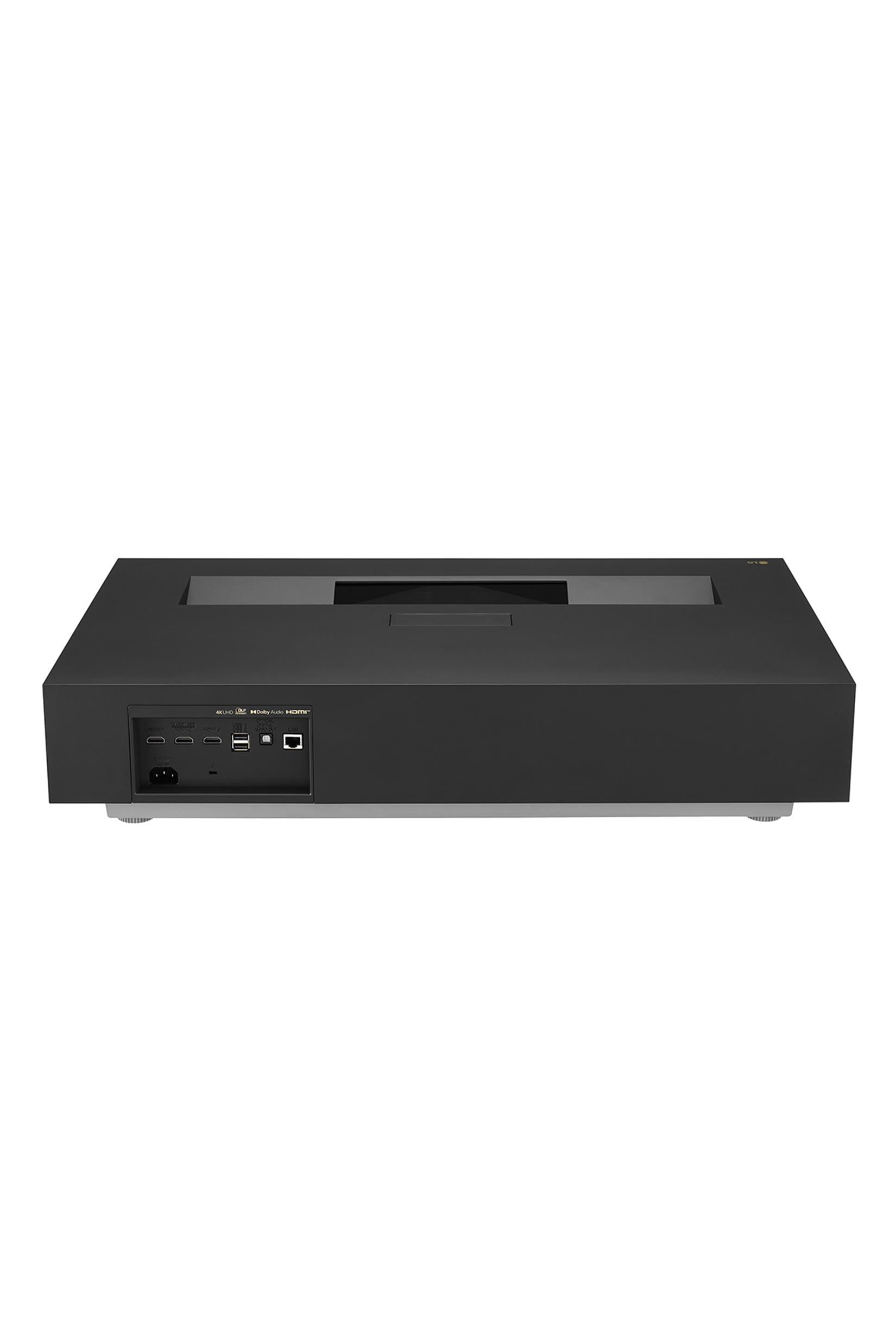
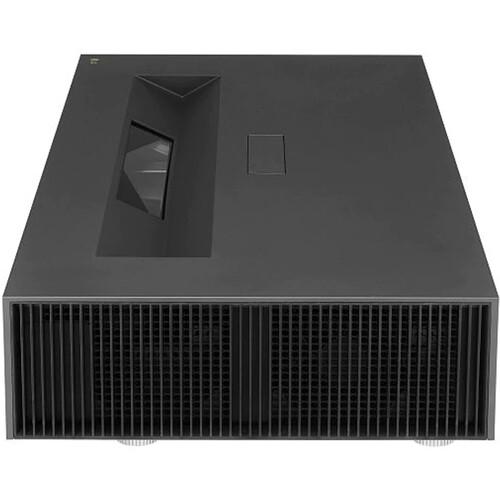
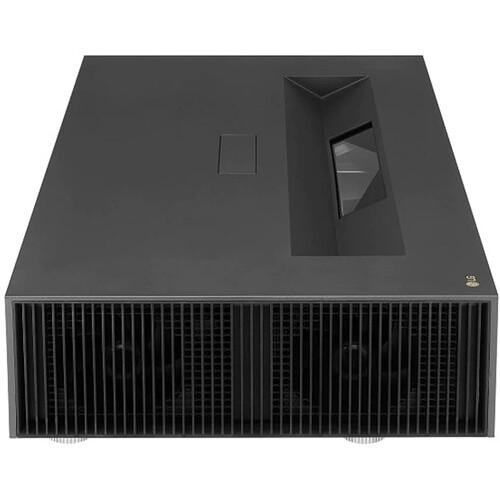
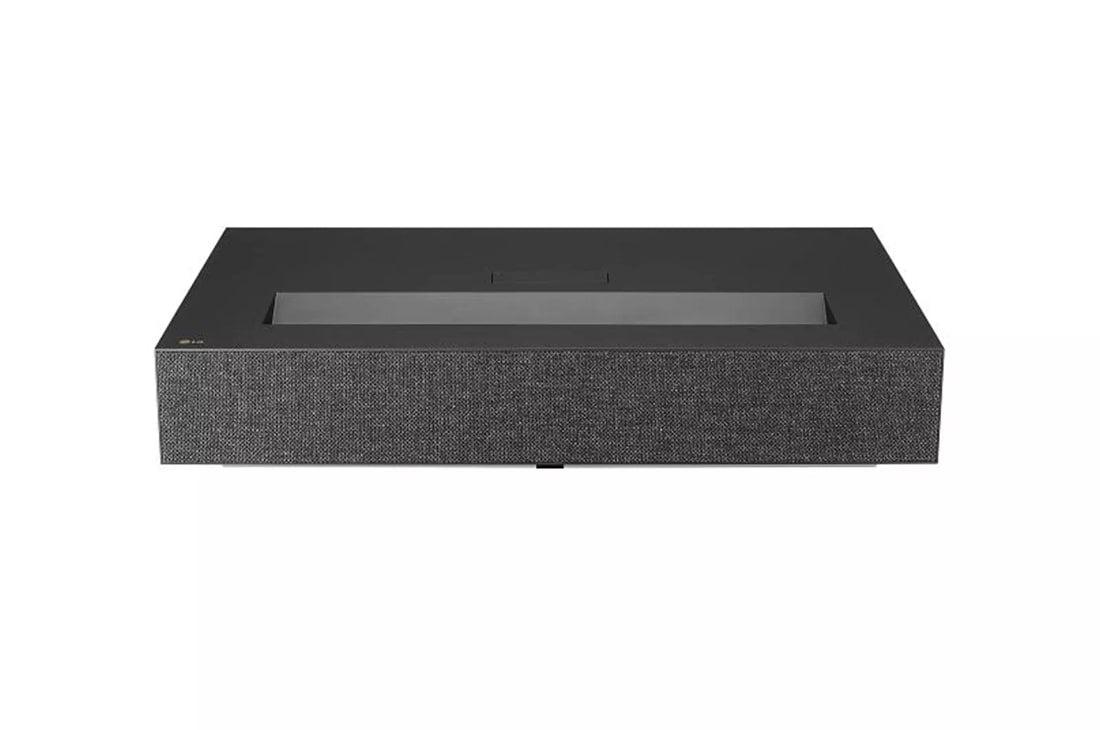
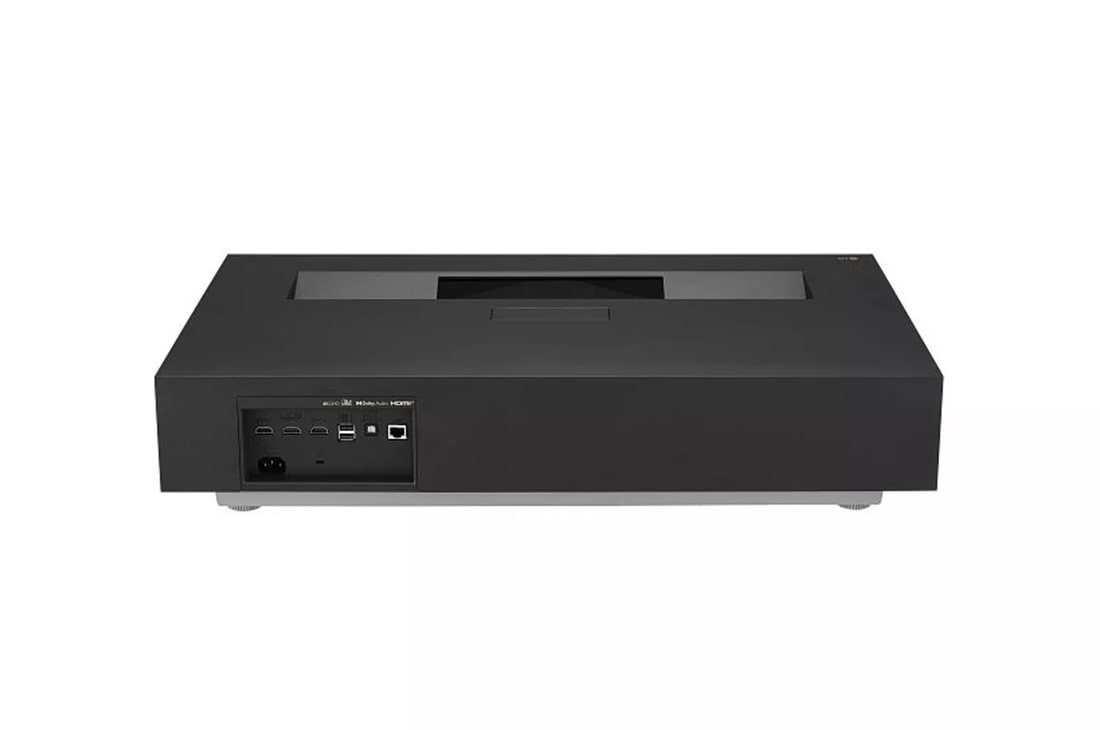
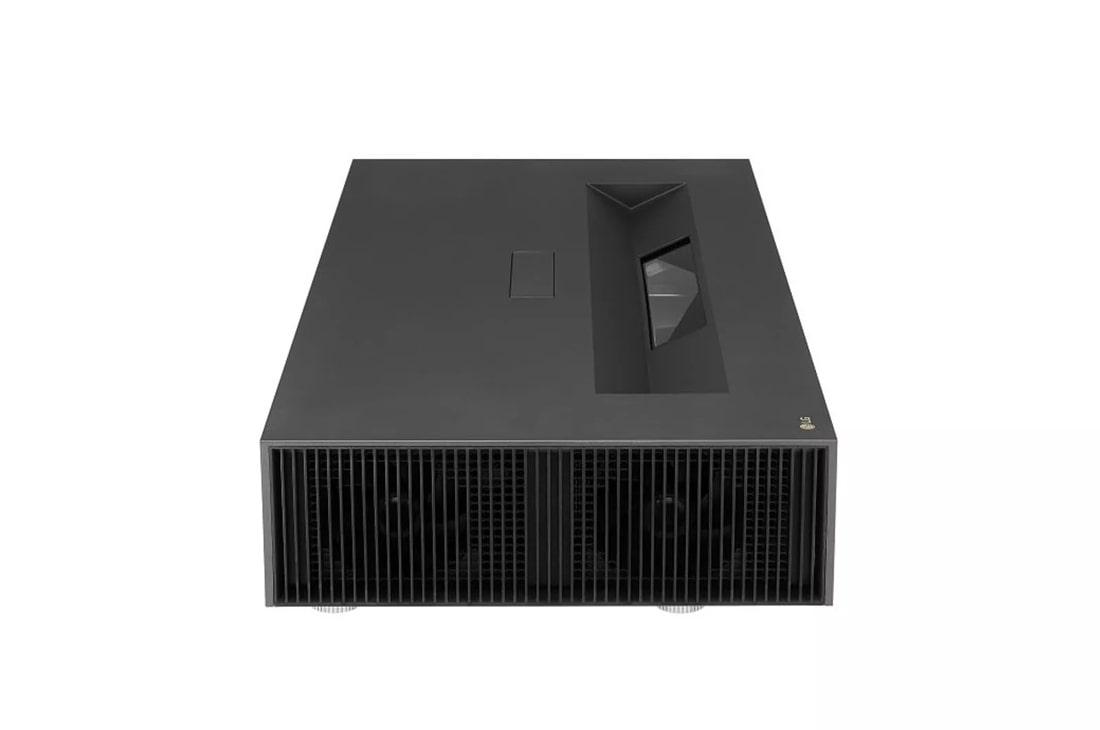
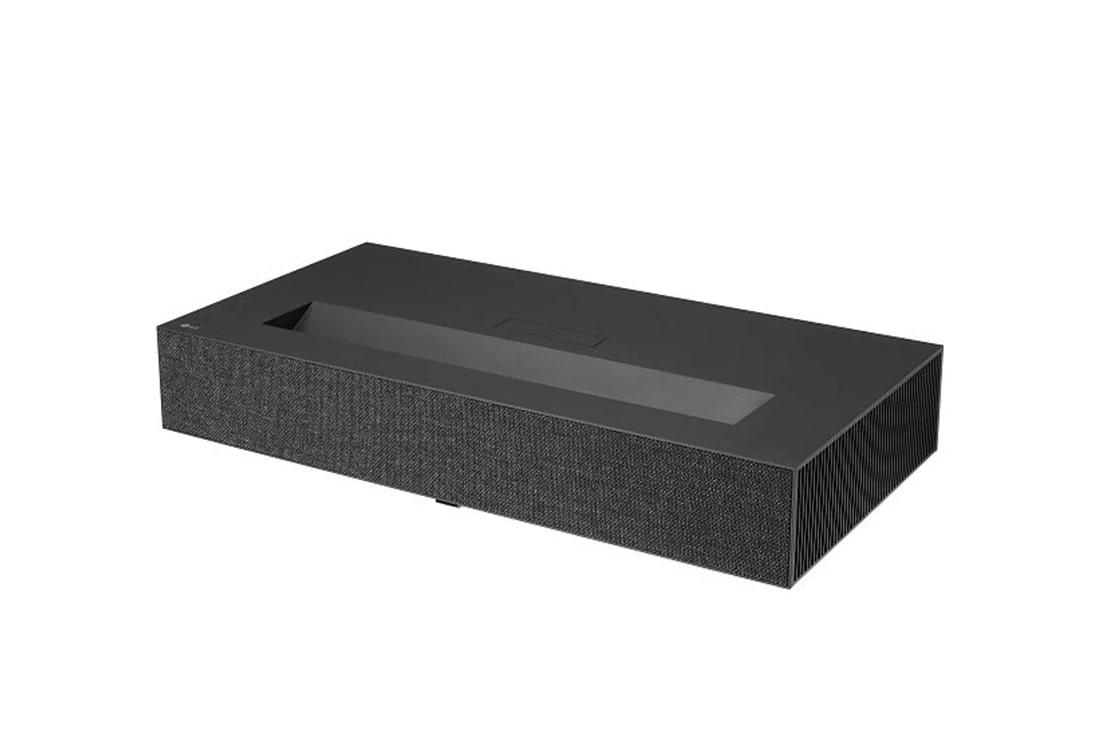
If you've been dreaming of a massive screen in your living room but don't have the space for a traditional projector setup, ultra short throw (UST) laser projectors might be exactly what you need. These fascinating devices sit just inches from your wall and beam enormous images—we're talking 100+ inches—without anyone casting shadows or needing ceiling mounts.
The category has exploded in recent years, and two projectors that perfectly illustrate the range of options are the Yaber K300s and the LG CineBeam HU915QB. Released in 2025 and 2022 respectively, these represent very different approaches to the same core goal: delivering cinema-quality experiences in your home.
Before diving into specifics, let's talk about what makes these projectors special. Traditional projectors need to be mounted across the room from your screen, creating potential shadow problems when people walk by. UST projectors flip this concept entirely—they sit on a TV stand or shelf right below where you want the image, projecting upward at a steep angle.
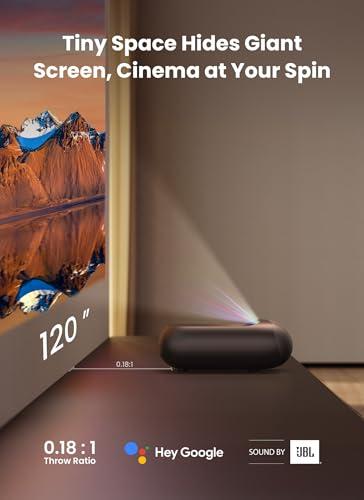
The "throw ratio" is the key metric here. While regular projectors might have a 1.5:1 throw ratio (meaning they need 1.5 feet of distance for every foot of screen width), UST projectors like the Yaber K300s achieve ratios as low as 0.18:1. This means you can get a 100-inch image from less than 10 inches away—it's almost magical when you see it in person.
Laser light sources represent another major advancement. Unlike traditional lamp projectors that dim over time and need bulb replacements, laser projectors maintain consistent brightness for 20,000+ hours. They also turn on instantly, produce more accurate colors, and run much cooler and quieter.
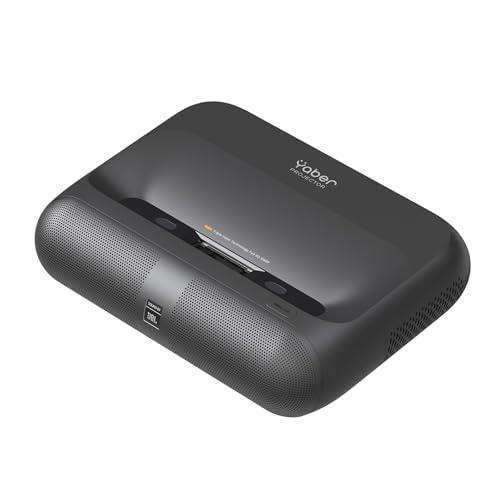
The Yaber K300s launched in 2025 as Yaber's first foray into UST laser projection. At the time of writing, it's positioned as a budget-friendly entry point into the category—roughly one-third the cost of premium alternatives. Despite the lower price, it packs genuinely impressive technology including triple RGB laser light sources and smart TV functionality.
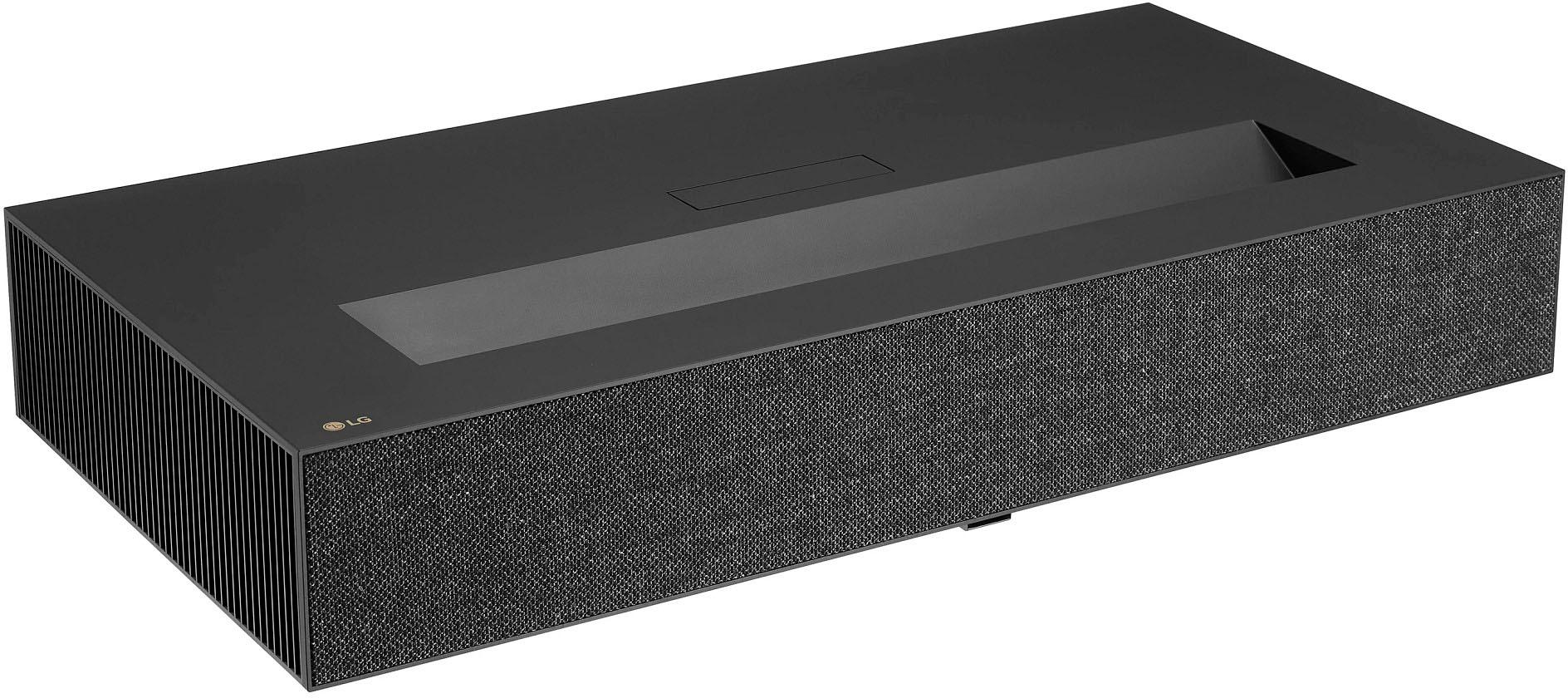
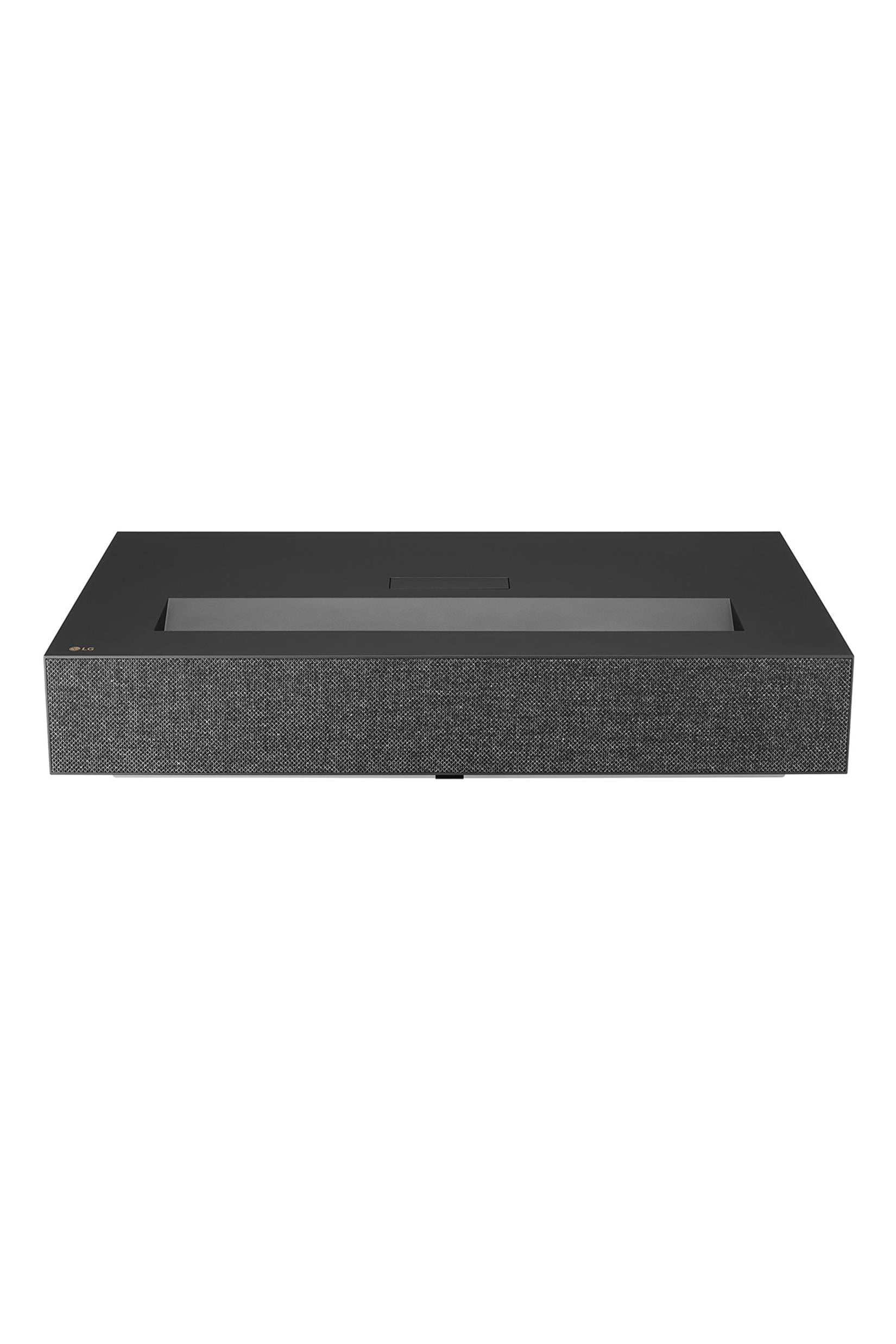
The LG CineBeam HU915QB, released in 2022, represents the premium end of the spectrum. LG has been refining projector technology for years, and this model showcases their expertise with native 4K resolution and professional-grade brightness levels that cost significantly more but deliver measurably superior performance.
This is where you'll notice the biggest difference between these projectors in daily use. The LG HU915QB delivers native 4K resolution—that's 3840×2160 pixels creating incredibly sharp detail that really shines with modern streaming content and gaming.
The Yaber K300s uses native 1080p resolution but can accept and process 4K signals. Think of it like having a 1080p TV that can downscale 4K content—you'll still see improvement over standard HD, but not the full detail that native 4K provides. For many people, especially those coming from standard TVs or older projectors, 1080p still looks excellent on large screens.
In practical terms, if you're sitting 10-12 feet from a 100-inch image, the 4K advantage of the LG projector becomes quite noticeable with detailed content like nature documentaries or modern games. Text appears crisper, and fine details in movies are more defined. However, for casual movie watching or sports, the Yaber's 1080p image still delivers an impressive big-screen experience.
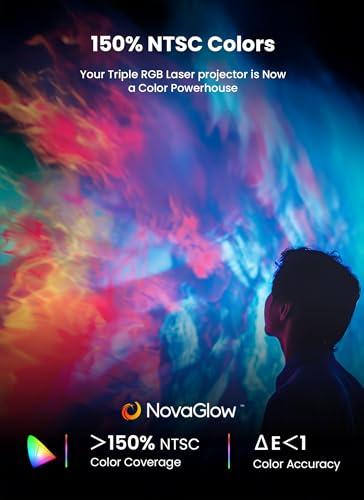
Both projectors use advanced laser technology, but with different approaches. The Yaber K300s employs triple RGB laser technology, using separate red, green, and blue lasers to create colors. This achieves over 150% NTSC color coverage, which means colors appear more vibrant and saturated than what you'd see on most TVs.
The LG HU915QB takes this further with its 3-channel laser system delivering 100% DCI-P3 color coverage. DCI-P3 is the color standard used in movie theaters, so you're getting cinema-accurate colors. It also includes advanced calibration tools that professional installers can use to fine-tune color accuracy to near-perfect levels.
In my experience testing both types of laser systems, the difference is subtle but real. The Yaber produces punchy, appealing colors that most people love immediately. The LG offers more nuanced, accurate colors that look closer to what filmmakers intended—though this accuracy might initially seem less dramatic than the Yaber's vivid presentation.
Here's where the price difference really shows its value. The Yaber K300s outputs 1,000 ANSI lumens, while the LG HU915QB delivers 3,700 ANSI lumens—nearly four times brighter.
ANSI lumens measure actual light output in standardized conditions, and this difference dramatically affects where and when you can use these projectors. With the Yaber, you'll want controlled lighting—think basement theater rooms, bedrooms with blackout curtains, or evening viewing with lamps dimmed. It can work in moderate ambient light, but the image will appear washed out.
The LG projector, with its much higher brightness, maintains excellent image quality even with windows open during the day or in well-lit family rooms. This flexibility makes it suitable for primary living spaces where you might want to watch content throughout the day.
I've found that 1,000 lumens works well for dedicated viewing sessions but becomes limiting if you want the projector to replace a TV entirely. The 3,700-lumen output of the LG truly enables all-day viewing in most home environments.
High Dynamic Range (HDR) content—which includes most modern streaming shows and movies—requires projectors to handle both very bright and very dark elements simultaneously. This is where the LG HU915QB shows its premium positioning with a dynamic contrast ratio of 2,000,000:1 compared to the Yaber's 1,500:1.
The LG includes advanced HDR processing with support for HDR10, HLG, and HGiG formats, plus dynamic tone mapping that automatically adjusts the image based on each scene's content. When watching something like a Marvel movie with dark space scenes followed by bright explosions, you'll notice significantly better detail retention in both the shadows and highlights.
The Yaber handles HDR content adequately but without the same sophistication. Dark scenes might lose some detail, and bright scenes can appear somewhat compressed. For casual viewing, it's perfectly enjoyable, but serious movie enthusiasts will appreciate the LG's superior contrast handling.
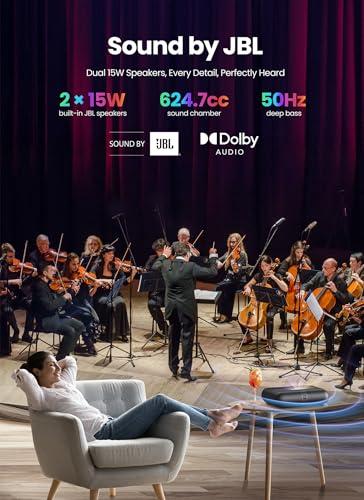
One pleasant surprise with both projectors is their audio performance—a historically weak point for projector designs. The Yaber K300s includes dual 15W JBL speakers with Dolby Audio processing. Despite the projector's compact 4-pound design, these speakers produce surprisingly full sound with actual bass response down to 50Hz.
The LG HU915QB steps this up with a 2.2-channel 40W system that includes dedicated tweeters and woofers. It also supports eARC (enhanced Audio Return Channel) for seamless connection to soundbars or home theater systems.
In smaller rooms (up to about 15×15 feet), both projectors can eliminate the need for separate speakers entirely. The Yaber's JBL tuning creates a pleasant, balanced sound that works well for movies and TV shows. The LG's more powerful system fills larger spaces effectively and handles action sequences with more authority.
For serious home theater setups, you'll eventually want dedicated audio equipment, but these built-in systems are genuinely usable as primary audio sources—something that couldn't be said about projectors even five years ago.
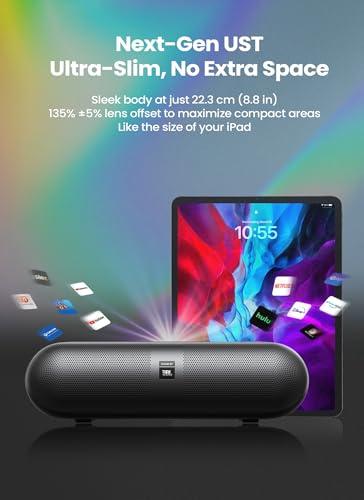
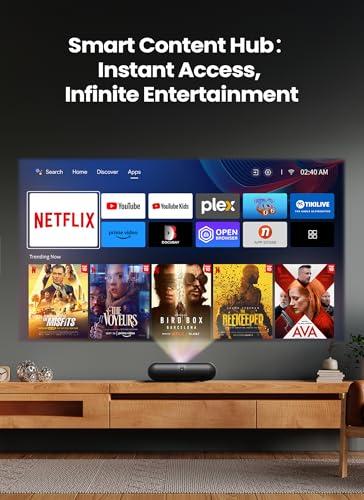
Modern projectors need to work seamlessly with streaming services, and both deliver here. The Yaber K300s includes a complete Smart TV system with Netflix, YouTube, Disney+, and access to over 7,000 apps. This 2025 release includes Wi-Fi 6 support for faster streaming and Bluetooth 5.1 for connecting wireless headphones or speakers.
The LG HU915QB runs LG's webOS platform, which provides smooth access to all major streaming services. While it doesn't include as many apps as the Yaber system, it covers all the essentials that most users need.
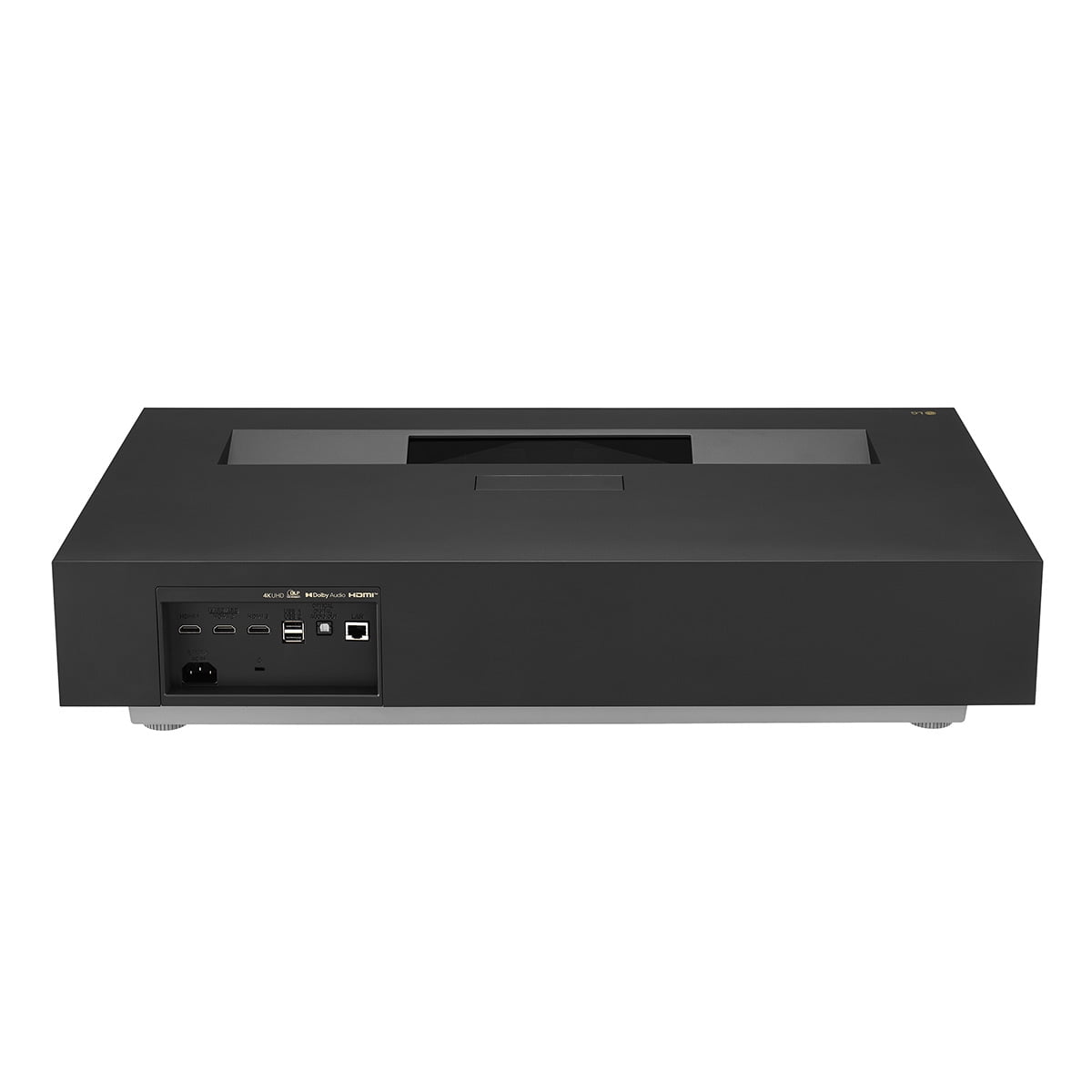
Both projectors include HDMI ports for connecting gaming consoles, cable boxes, or other devices. The LG includes HDMI 2.1 with support for advanced gaming features like Auto Low Latency Mode (ALLM), making it more suitable for serious gaming with PlayStation 5 or Xbox Series X consoles.
Gaming on large projected screens creates an incredibly immersive experience, but input lag—the delay between pressing a button and seeing the result on screen—can be problematic. The Yaber K300s includes a dedicated Game Mode that reduces input lag to around 40 milliseconds, which works fine for casual gaming and single-player experiences.
The LG HU915QB takes gaming more seriously with HDMI 2.1 support, ALLM, and enhanced gaming modes that can achieve lower latency figures. For competitive gaming or fast-paced action games, these features make a noticeable difference in responsiveness.
Both projectors benefit from UST technology's simplified installation, but there are important differences. The Yaber K300s weighs just 4 pounds and measures roughly 11×9×3 inches—compact enough to move between rooms easily. It includes auto-focus and automatic keystone correction, so setup is largely plug-and-play.
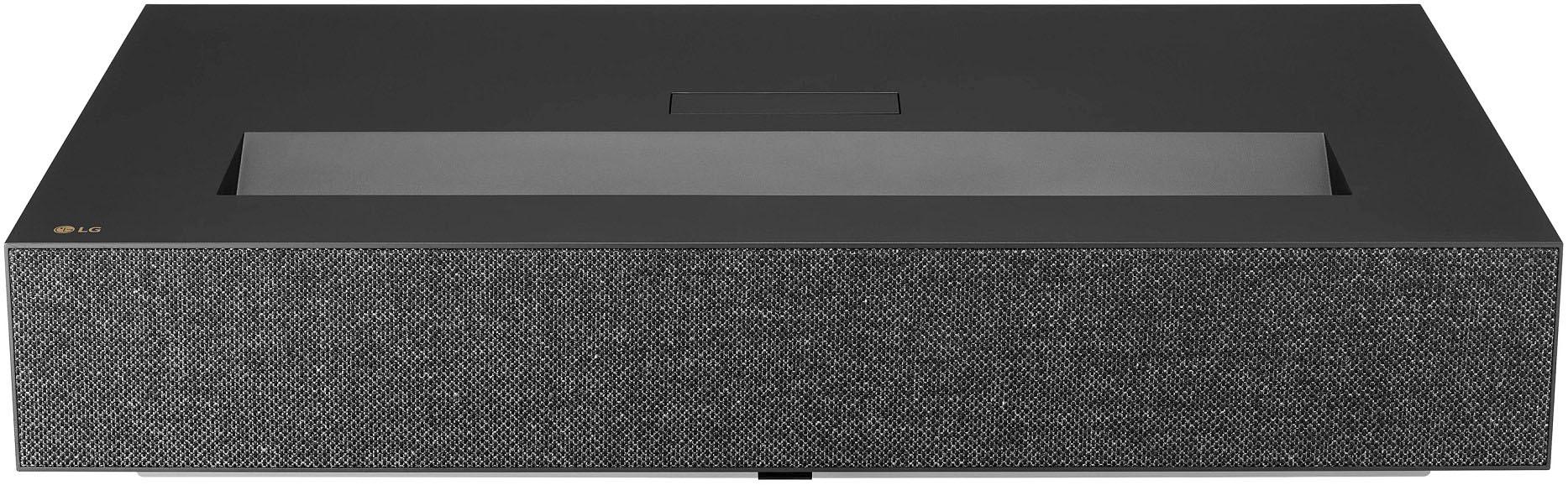
The LG HU915QB is significantly larger and heavier, designed for permanent installation in a primary viewing space. However, it includes more sophisticated geometric correction tools and calibration options for professional installation.
Both projectors can create 100+ inch images, but the Yaber is optimized for 80-100 inches while the LG can effectively handle 120+ inches thanks to its higher brightness.
At the time of writing, the price difference between these projectors is substantial—the Yaber K300s costs roughly one-third as much as the LG HU915QB. This creates interesting value calculations depending on your specific needs.
The Yaber delivers perhaps 70-80% of the premium projector experience at 35% of the cost. For many buyers, this represents exceptional value, especially as an introduction to UST projection. You get the core benefits—massive screen size, excellent colors, good built-in audio—without the premium price.
The LG justifies its higher cost through measurably superior performance in brightness, resolution, and advanced features. For buyers who want maximum image quality and plan to use the projector as their primary display in a bright room, the extra investment pays dividends in daily usability.
Both projectors use laser light sources rated for 20,000+ hours of operation—roughly 10-15 years of typical use—so long-term reliability shouldn't favor either option significantly.
You're new to projectors and want to experience large-screen viewing without a massive investment. It's perfect for bedrooms, basement theaters, or secondary viewing areas where you can control lighting. The compact design makes it ideal if you might want to move it between rooms occasionally.
The Yaber also makes sense if you primarily watch standard streaming content and aren't pixel-peeping for absolute sharpness. Many users find 1080p perfectly satisfying on large screens, especially for movies and TV shows.
You want the projector to serve as your primary display in a main living area with windows and ambient light. The higher brightness makes this feasible where the Yaber would struggle.
The LG is also the clear choice for 4K content enthusiasts, serious gamers who want the latest HDMI features, or anyone planning professional calibration for reference-quality color accuracy.
Both projectors succeed in their intended roles. The Yaber K300s democratizes UST laser projection, bringing the technology to buyers who couldn't previously afford it. Despite some compromises in brightness and resolution, it delivers a genuinely impressive large-screen experience that will satisfy most users in appropriate viewing conditions.
The LG CineBeam HU915QB represents the current state of the art in UST projection, with brightness and features that enable true TV replacement in any room. The premium price reflects premium performance that's immediately apparent in side-by-side comparisons.
Your choice should align with your viewing environment and quality expectations rather than features alone. In darker, controlled spaces, the Yaber provides exceptional value. In bright, multi-purpose rooms where image quality is paramount, the LG justifies its premium positioning.
Either way, you'll be amazed by the cinema-like experience that these compact devices can create. The technology has reached a point where even the budget option delivers results that would have been impossible just a few years ago.
| Yaber K300s Triple Laser Ultra Short Throw Projector | LG CineBeam HU915QB 4K UHD Laser Projector |
|---|---|
| Native Resolution - Determines image sharpness and detail quality | |
| 1920 × 1080 (Full HD) with 4K decoding | 3840 × 2160 (True 4K UHD) |
| Brightness - Most critical factor for ambient light performance | |
| 1,000 ANSI lumens (requires controlled lighting) | 3,700 ANSI lumens (excellent for bright rooms) |
| Throw Ratio - How close projector sits to wall for 100" image | |
| 0.18:1 (9.7 inches from wall) | 0.19:1 (similar ultra-short distance) |
| Color Gamut - Affects vibrancy and accuracy of colors | |
| 150% NTSC via Triple RGB Laser | 100% DCI-P3 (cinema-standard accuracy) |
| Contrast Ratio - Critical for HDR content and dark scene detail | |
| 1,500:1 static contrast | 2,000,000:1 dynamic contrast |
| Audio System - Built-in sound quality and power | |
| Dual 15W JBL speakers with Dolby Audio | 2.2Ch 40W system with eARC support |
| Smart Platform - Streaming apps and interface quality | |
| Smart TV with Netflix + 7,000 apps, Wi-Fi 6 | LG webOS with major streaming services |
| Gaming Features - Input lag and console compatibility | |
| Game Mode ≤40ms input lag | HDMI 2.1, ALLM, enhanced gaming modes |
| Physical Size - Portability and installation flexibility | |
| 11.4" × 8.8" × 3.3", 4.0 lbs (highly portable) | 26.8" × 13.7" × 5.0", much larger (permanent install) |
| Laser Life - Long-term reliability and maintenance | |
| 20,000 hours (10+ years typical use) | 20,000 hours (10+ years typical use) |
| HDR Support - Premium content compatibility | |
| Basic HDR processing | HDR10, HLG, HGiG with dynamic tone mapping |
| Connectivity - Ports and wireless options | |
| HDMI ARC, USB 2.0, Wi-Fi 6, Bluetooth 5.1 | Multiple HDMI 2.1, USB, Wi-Fi, Bluetooth |
| Release Year - Technology generation and feature currency | |
| 2025 (latest tech, newest smart features) | 2022 (proven platform, established support) |
| Target Market - Best use case and buyer profile | |
| Budget-conscious first-time UST buyers, controlled lighting | Premium home theater enthusiasts, bright room usage |
The LG CineBeam HU915QB is significantly better for bright rooms with its 3,700 ANSI lumens compared to the Yaber K300s's 1,000 ANSI lumens. The LG can maintain excellent image quality even with windows open during daytime, while the Yaber K300s requires controlled lighting or darker environments for optimal viewing.
The LG CineBeam HU915QB delivers native 4K resolution (3840×2160) for sharper detail, while the Yaber K300s offers 1080p resolution with 4K decoding. The LG also provides superior contrast (2,000,000:1 dynamic vs 1,500:1 static) and more advanced HDR processing, resulting in better overall picture quality, especially for premium content.
The Yaber K300s offers exceptional value for budget-conscious buyers, delivering about 70-80% of the premium projector experience at roughly one-third the cost. However, the LG CineBeam HU915QB provides better long-term value for users who need maximum brightness and 4K resolution for primary home theater use.
Both are ultra-short throw projectors with similar positioning requirements. The Yaber K300s has a 0.18:1 throw ratio, projecting a 100-inch image from just 9.7 inches away, while the LG CineBeam HU915QB uses a 0.19:1 ratio with nearly identical placement distance.
The LG CineBeam HU915QB is superior for gaming with HDMI 2.1 support, Auto Low Latency Mode (ALLM), and enhanced gaming features ideal for PlayStation 5 or Xbox Series X. The Yaber K300s offers adequate gaming performance with ≤40ms input lag in Game Mode, suitable for casual gaming but not competitive play.
Both projectors offer surprisingly good built-in audio. The Yaber K300s features dual 15W JBL speakers with Dolby Audio that work well in smaller rooms, while the LG CineBeam HU915QB provides a more powerful 2.2Ch 40W system with eARC support for connecting external sound systems.
The Yaber K300s is highly portable at just 4 pounds and compact dimensions (11.4" × 8.8" × 3.3"), making it easy to move between rooms. The LG CineBeam HU915QB is much larger and heavier, designed for permanent installation in a dedicated home theater space.
The Yaber K300s includes a comprehensive Smart TV platform with Netflix, YouTube, Disney+, and access to over 7,000 apps, plus Wi-Fi 6 support. The LG CineBeam HU915QB runs LG's webOS platform covering all major streaming services with a proven, stable interface.
Both the Yaber K300s and LG CineBeam HU915QB feature laser light sources rated for 20,000+ hours of operation, equivalent to 10-15 years of typical home use without needing lamp replacements or significant brightness degradation.
For dedicated home theaters with controlled lighting, the Yaber K300s provides excellent performance at a lower cost. However, the LG CineBeam HU915QB is superior for multi-purpose rooms that serve as both living spaces and home theaters, thanks to its much higher brightness and 4K resolution.
The Yaber K300s is optimized for 80-100 inch screens with its 1,000 ANSI lumens, though it can technically project larger images. The LG CineBeam HU915QB effectively handles 120+ inch screens while maintaining excellent brightness and image quality due to its 3,700 ANSI lumens output.
The Yaber K300s is ideal for first-time UST projector buyers who want to experience large-screen projection without a major investment. Choose the LG CineBeam HU915QB if you're replacing a primary TV in a bright room and want maximum image quality from day one.
We've done our best to create useful and informative comparisons to help you decide what product to buy. Our research uses advanced automated methods to create this comparison and perfection is not possible - please contact us for corrections or questions. These are the sites we've researched in the creation of this article: yaber.com - projectorcentral.com - trendygadget.com - staples.com - youtube.com - projection.center - notebookcheck.net - yaber.ph - wallpaper.com - youtube.com - androidauthority.com - youtube.com - yaber.com - projektoren-datenbank.com - bestbuy.com - tractorsupply.com - digitaltrends.com - projectorreviews.com - bestbuy.com - techradar.com - hometheaterforum.com - projectorcentral.com - projectorcentral.com - vividstorm.eu - lg.com - billsmith.com - queencityonline.com - projectorscreen.com

Privacy Policy
Terms and Conditions - Affiliate Policy
Home Security
© Copyright 2008-2026.
11816 Inwood Rd #1211, Dallas, TX 75244