

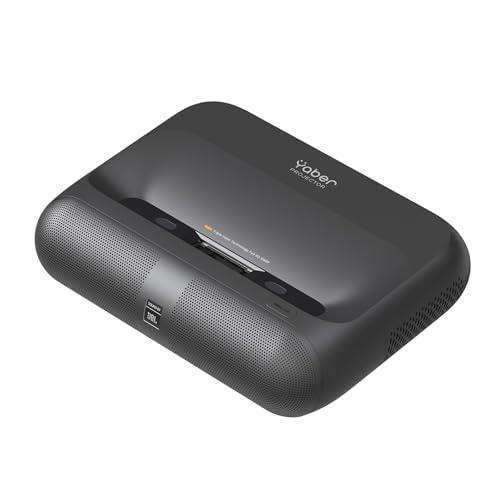




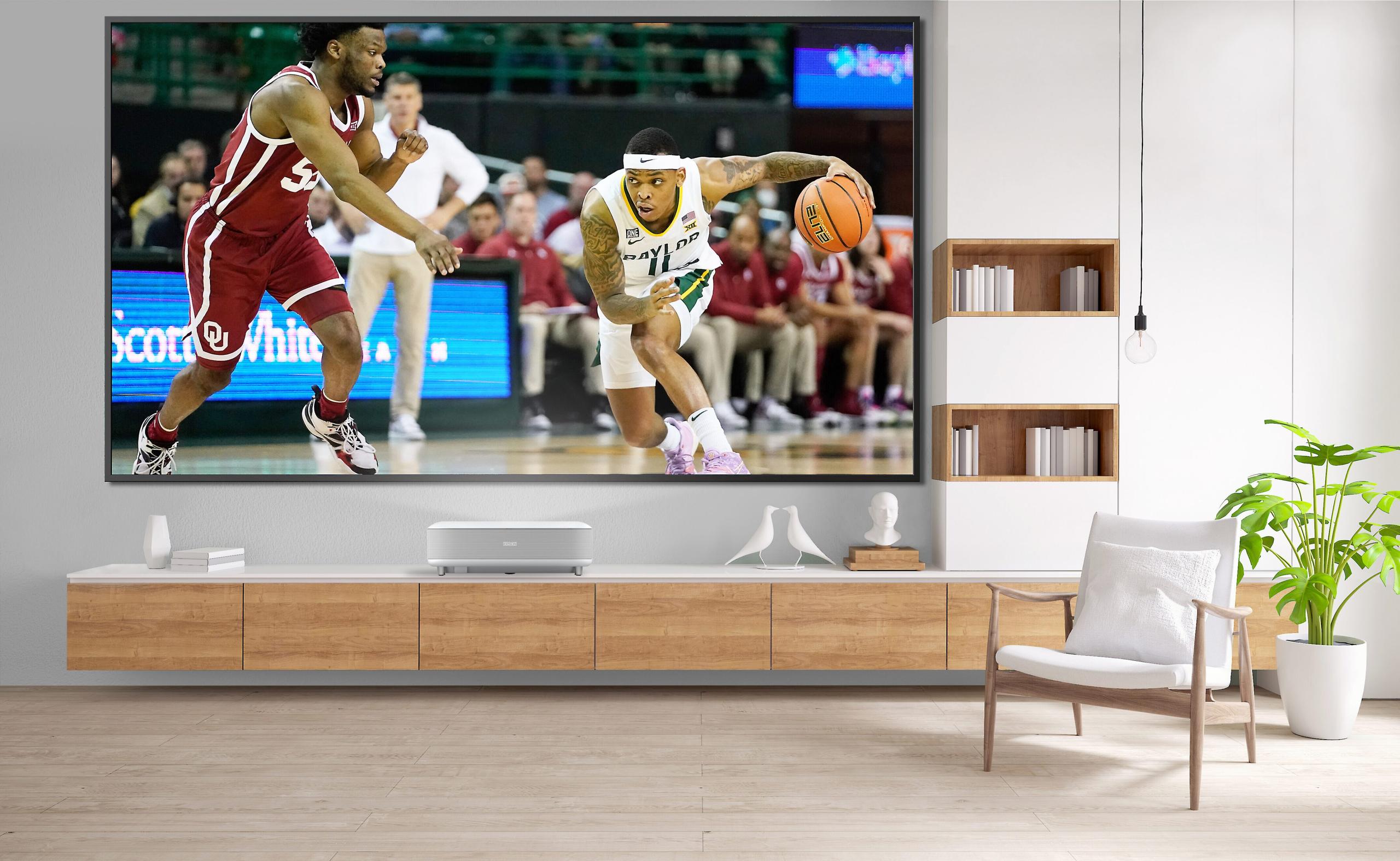
Ultra short throw (UST) projectors have completely transformed how we think about big-screen entertainment at home. These remarkable devices can create a massive 100+ inch display while sitting just inches from your wall - no ceiling mounting, no shadows when you walk in front, and no need to redesign your entire living room around a projector placement.
Having tested dozens of projectors over the years, I can confidently say that UST laser projectors represent one of the most practical breakthroughs in home theater technology. They solve the biggest problems that kept traditional projectors from mainstream adoption: installation complexity and space requirements.
The category has exploded with options, from budget-friendly models around $1,000 to premium units exceeding $4,000. Today, we're comparing two compelling options that showcase different approaches to this technology: the Yaber K300s (released in 2025) and the Epson EpiqVision Ultra LS650 (available since 2023). These projectors highlight an important choice facing consumers - do you prioritize cutting-edge features at an accessible price point, or invest in proven technology with maximum image quality?
Before diving into specifics, it's worth understanding what makes UST projectors special. Traditional projectors use a throw ratio (the distance needed to create a certain screen size) of around 1.2:1 to 2.0:1. This means you need 10-20 feet of room depth to create a 100-inch image.
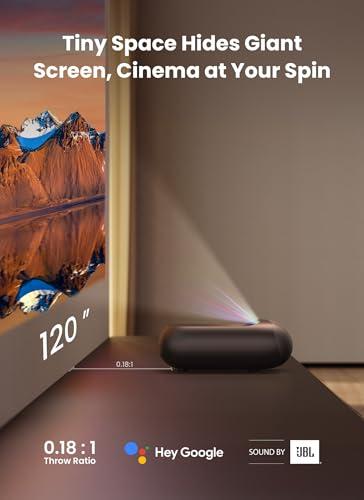
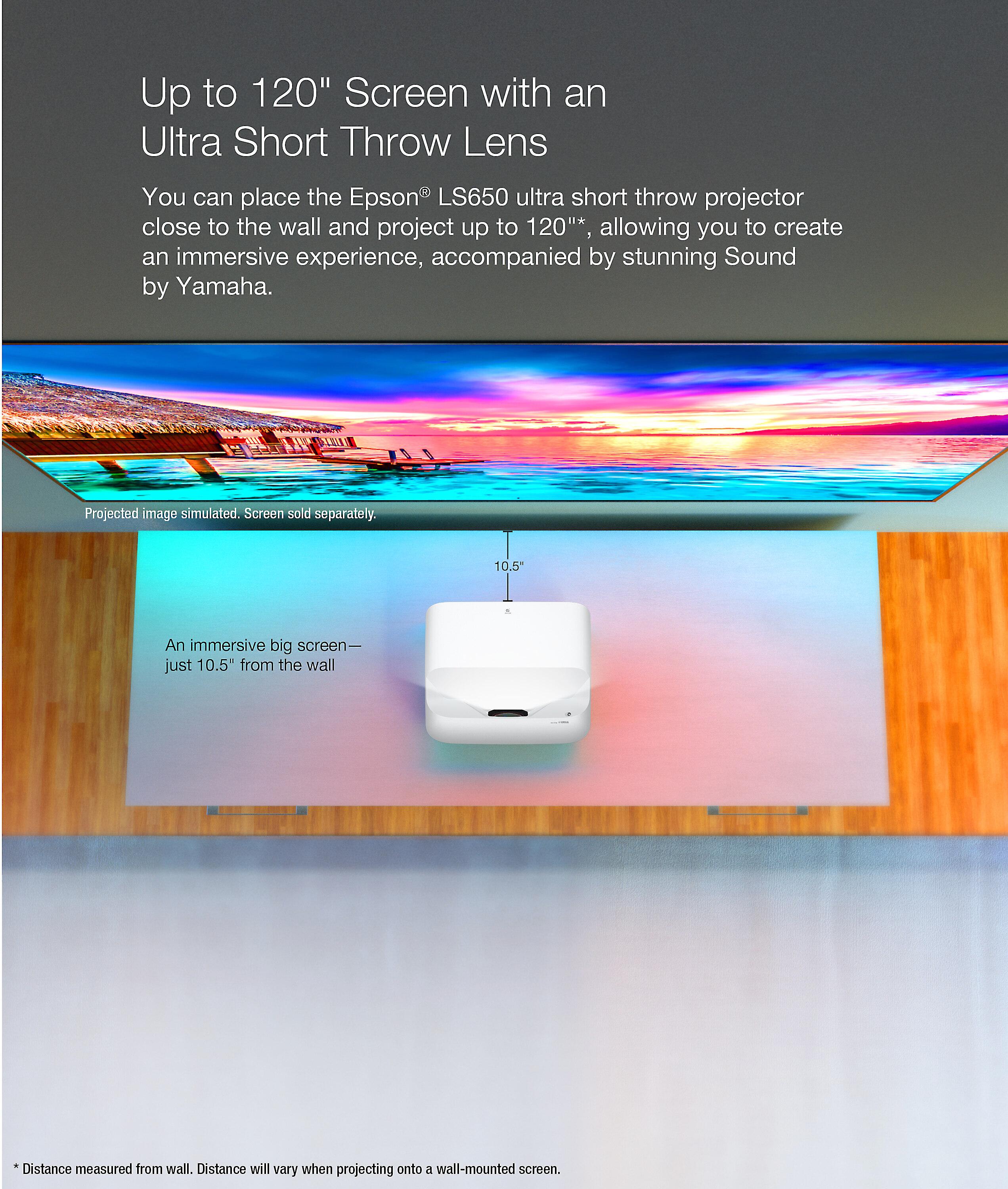
UST projectors flip this completely with throw ratios under 0.5:1. The Yaber K300s achieves an impressive 0.18:1 ratio, meaning it projects a 100-inch image from less than 10 inches away. This is possible through complex ultra-wide-angle lens systems and precise optical engineering that redirects light at extreme angles.
The laser light source is equally important. Unlike traditional lamp-based projectors that dim over time and need bulb replacements, laser projectors maintain consistent brightness for 20,000+ hours - essentially a decade of typical use. They also turn on instantly and produce more vibrant colors than older technologies.
The most fundamental difference between these projectors lies in their display technology approach, which directly impacts image quality and price.
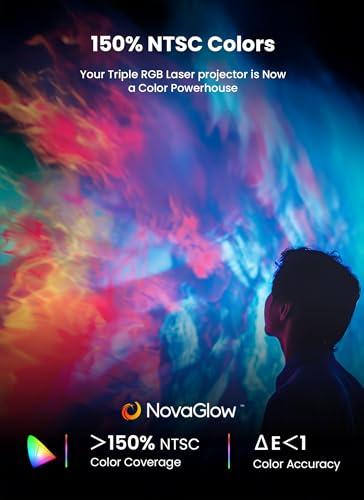
The Yaber K300s uses what's called Triple RGB Laser Technology - a relatively new approach that uses separate red, green, and blue laser light sources. This is significant because many single-laser projectors use a blue laser with a color wheel or phosphor coating to create other colors, which can limit color accuracy and create potential artifacts.
With triple RGB lasers, each color is generated independently, allowing the Yaber K300s to achieve over 150% NTSC color gamut coverage. NTSC (National Television System Committee) is a color standard - 150% coverage means the projector can display significantly more colors than standard TV broadcasts, resulting in more vivid and lifelike images.
The projector delivers native 1080p resolution (1920x1080 pixels) but includes 4K decoding capability. This means it can accept and process 4K content from streaming services or gaming consoles, then downscale it intelligently to fit the 1080p display. While not as sharp as native 4K, this approach provides excellent image quality at a more accessible price point.
At 1000 ANSI lumens (a standardized brightness measurement), the Yaber K300s provides sufficient brightness for most home environments, including rooms with some ambient light.
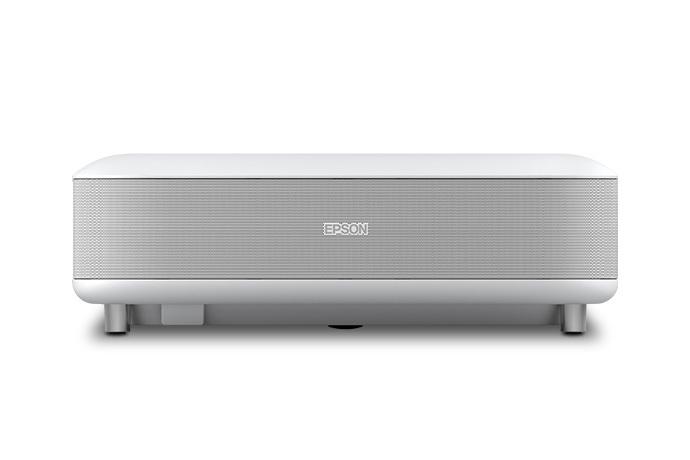
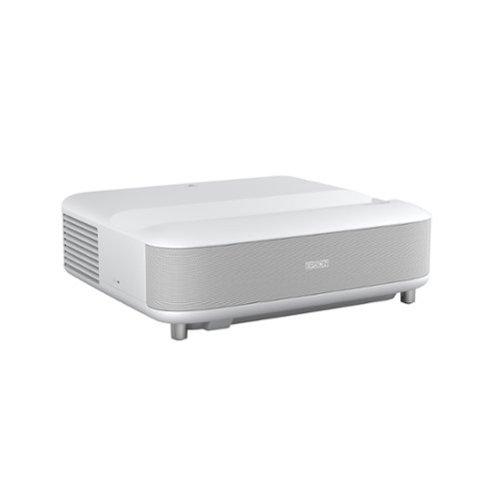
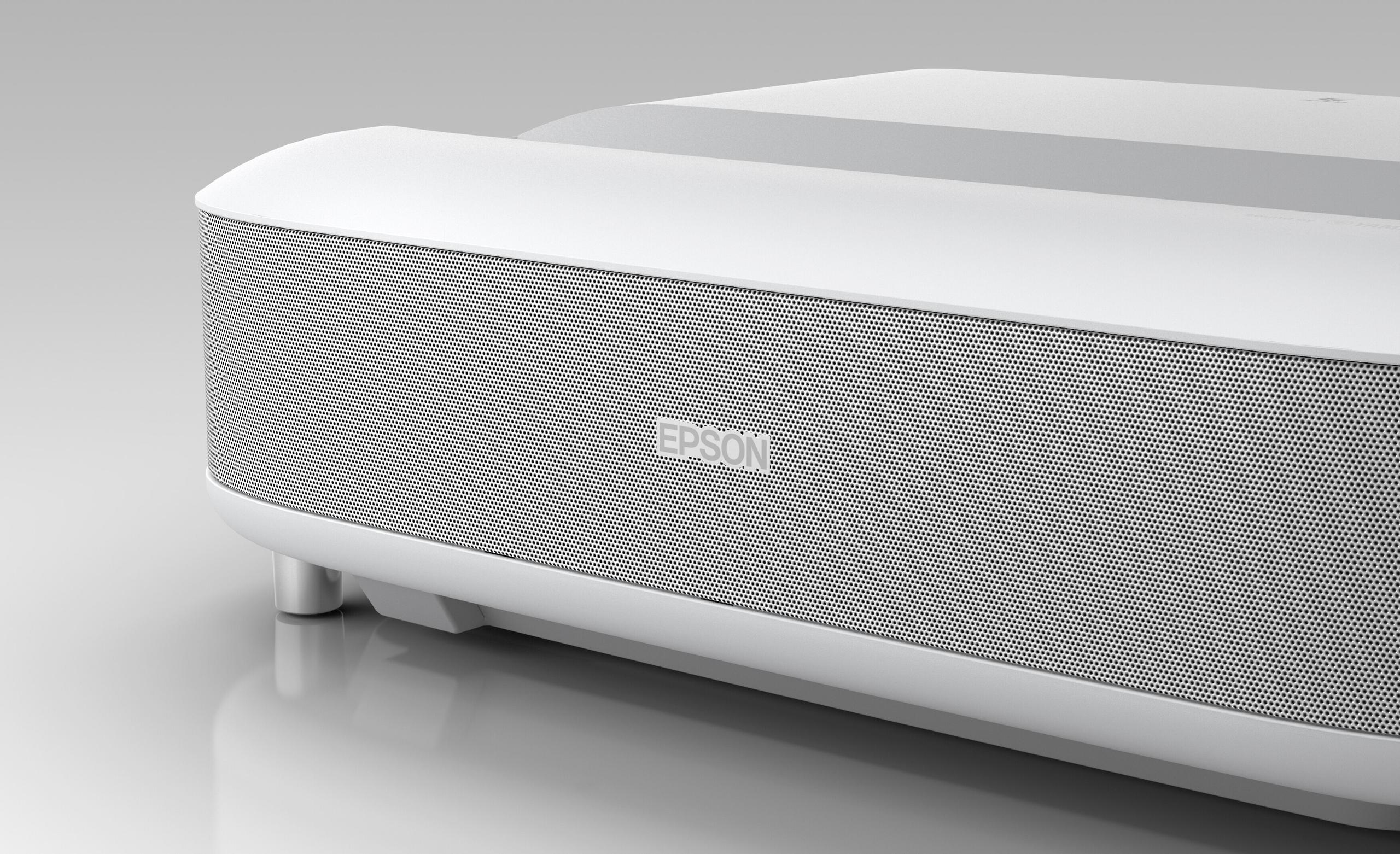
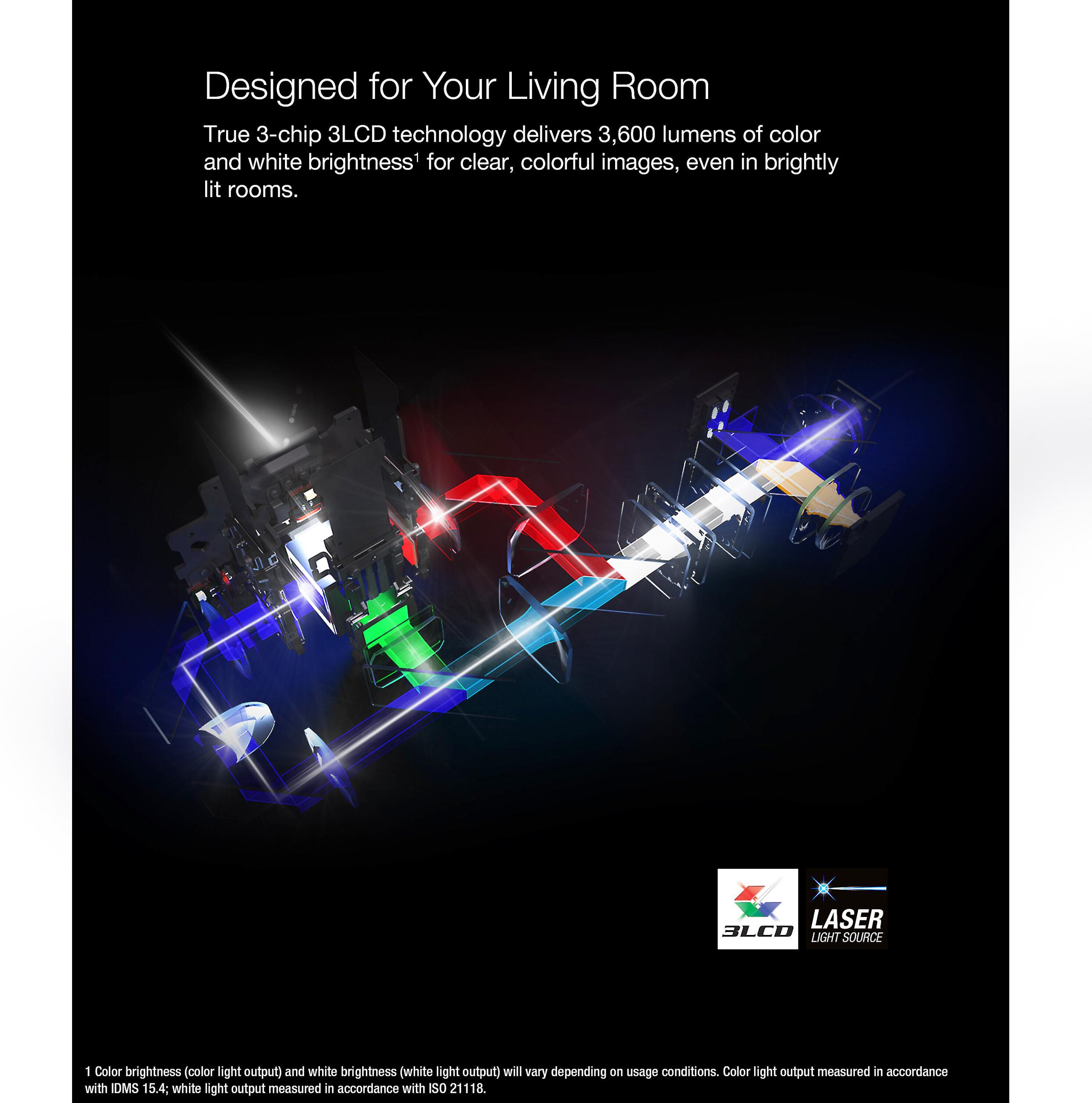
The Epson EpiqVision Ultra LS650 takes a different approach with 3-chip 3LCD technology. Instead of using a single imaging chip like DLP projectors, 3LCD systems use three separate LCD panels - one each for red, green, and blue light. This eliminates the "rainbow effect" (brief color flashes) that some people notice with single-chip DLP projectors.
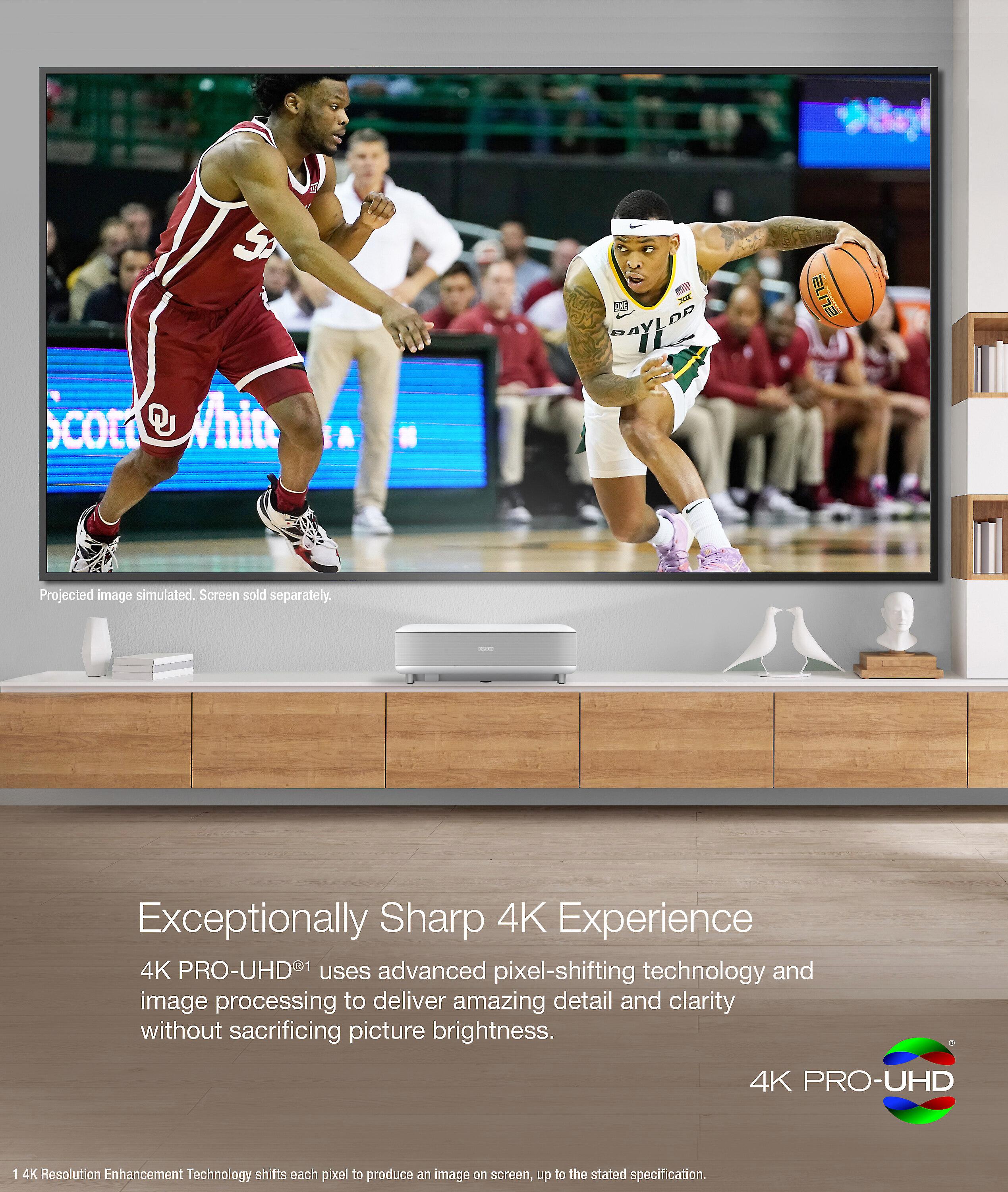
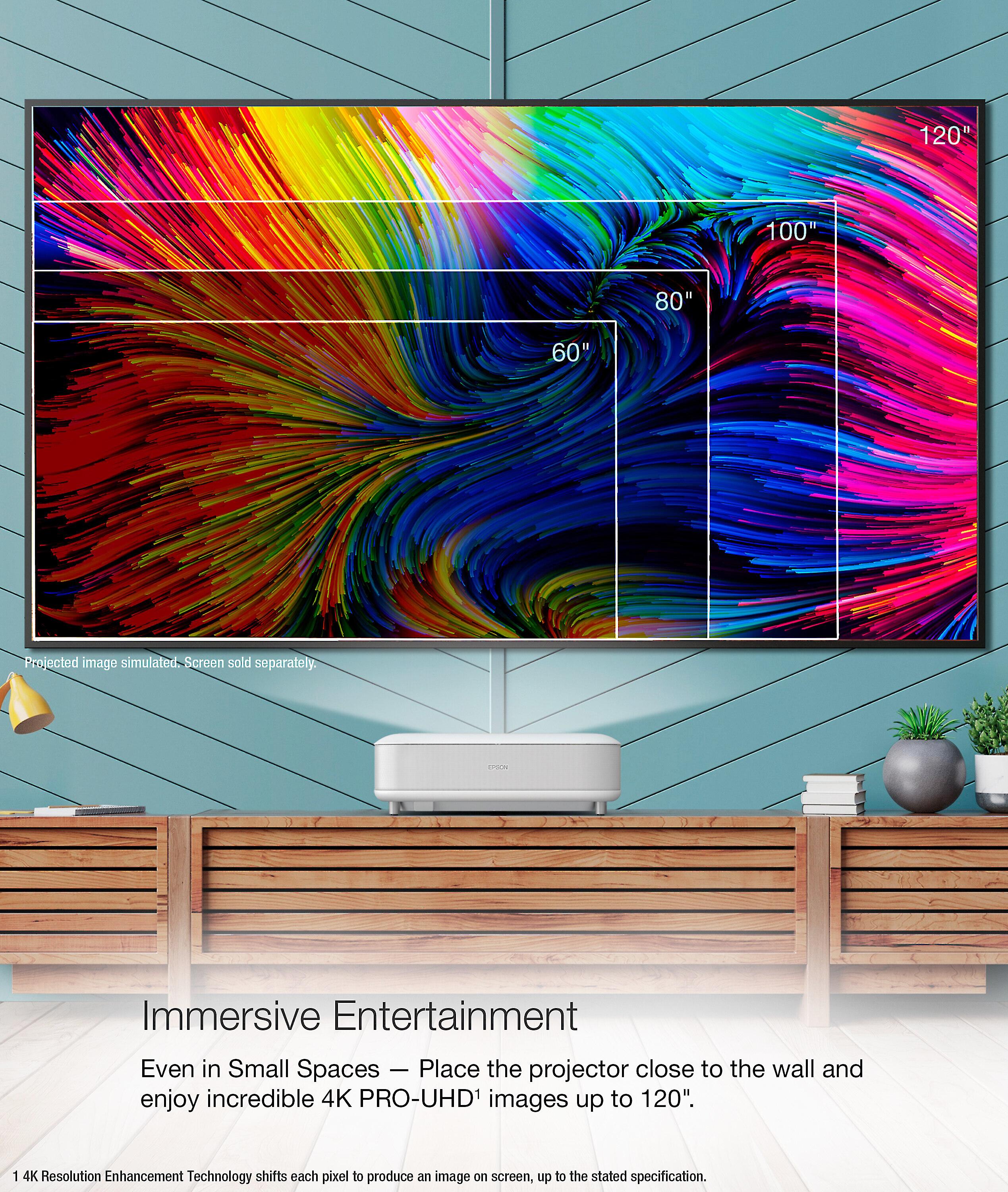
Most importantly, the Epson LS650 delivers 4K PRO-UHD resolution. While not quite the full 8.3 million pixels of true 4K cinema standards, it uses pixel-shifting technology to enhance detail significantly beyond standard 1080p. The result is noticeably sharper text, finer details in movies, and better overall clarity when sitting closer to the screen.
At 3600 ANSI lumens, the Epson LS650 is significantly brighter than the Yaber K300s. This extra brightness is crucial for larger screen sizes, brighter rooms, or when you want that "movie theater" impact that cuts through ambient lighting.
One aspect often overlooked in projector comparisons is audio quality, but it's crucial for UST projectors since they're designed to replace traditional TV setups entirely.
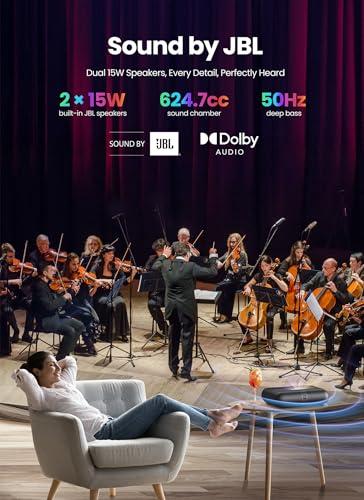
The Yaber K300s impresses here with dual 15W JBL speakers plus a dedicated 25W subwoofer. Having tested many projectors with mediocre built-in audio, I was genuinely surprised by systems like this that can fill a medium-sized room with rich, full sound. The inclusion of Dolby Audio support and bass response down to 50Hz means you might not need external speakers for casual viewing.
The speakers are angled at 16 degrees to project sound forward and avoid obstacles - a thoughtful design detail that shows attention to real-world usage. For many users, this eliminates the complexity and cost of additional audio equipment.
The Epson LS650 features a Yamaha-developed 2.1 virtual surround system. While specific power ratings aren't detailed, Yamaha's audio expertise suggests quality sound processing, though it likely lacks the dedicated subwoofer of the Yaber K300s.
Both projectors recognize that modern users expect smart TV functionality built-in, but they take different approaches.
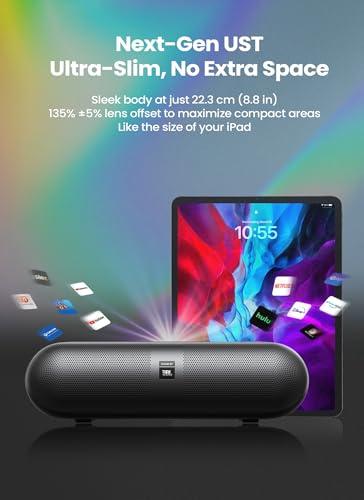
The Yaber K300s runs Google TV with access to over 7,000 apps, including major streaming services like Netflix, Disney+, and YouTube. The inclusion of Wi-Fi 6 (the latest wireless standard providing faster, more reliable connections) and Bluetooth 5.1 shows forward-thinking connectivity. Features like AirPlay support and Chromecast built-in make it easy to stream content from phones or tablets.
The voice control and screen mirroring capabilities feel genuinely useful rather than gimmicky. I've found these features particularly valuable when showing photos or videos from mobile devices during gatherings.
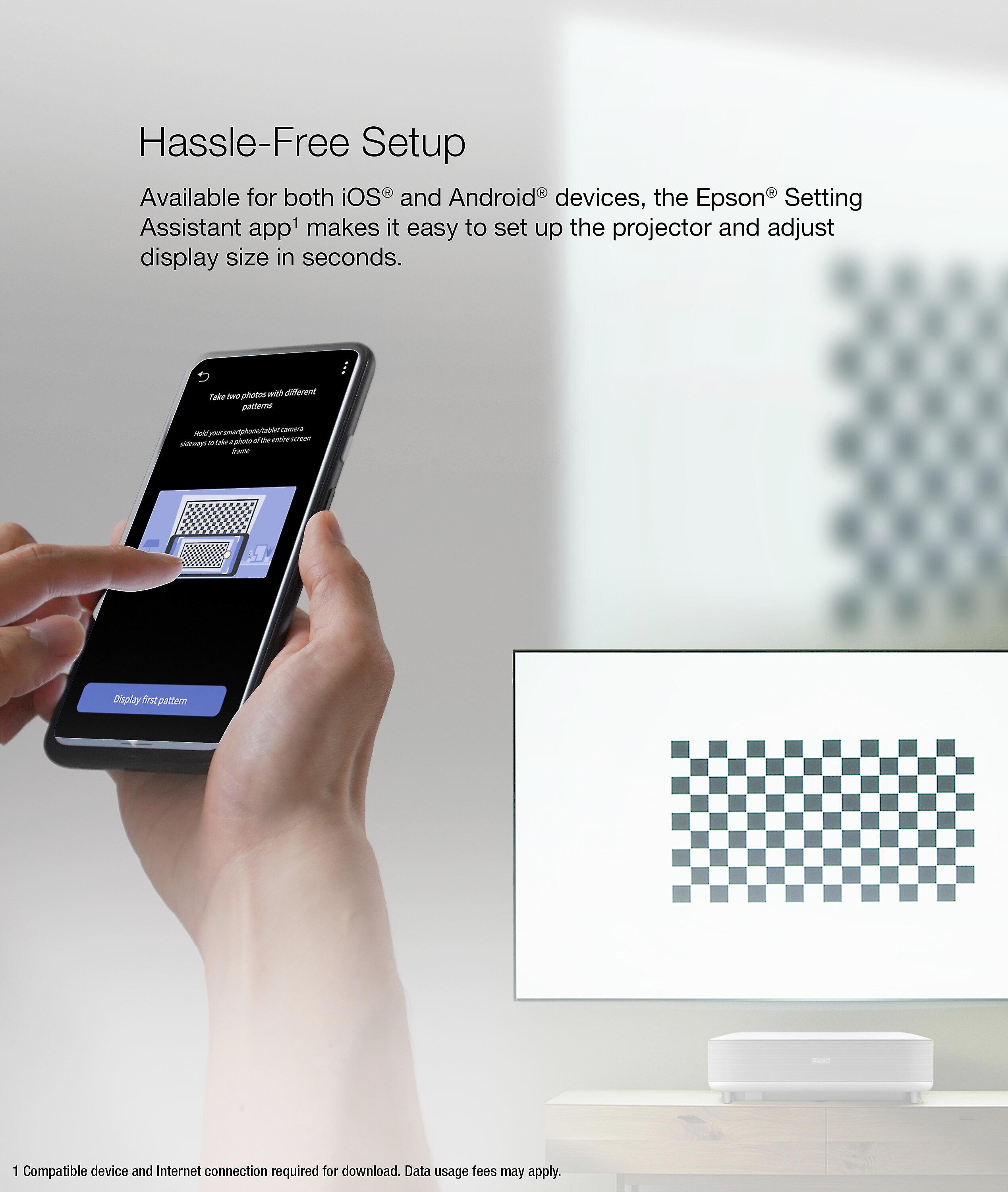
The Epson LS650 uses Android TV, which provides similar app access but with a slightly different interface. The Epson Setting Assistant app helps streamline initial setup, which can be complex with UST projectors given their precise positioning requirements.
For gaming enthusiasts, input lag (the delay between controller input and on-screen action) is critical. The Yaber K300s includes a dedicated Game Mode with under 40ms input lag, which is quite good for projectors. The MEMC (Motion Estimation, Motion Compensation) technology helps smooth fast-moving scenes, reducing blur during action sequences.
While the Epson LS650's gaming specifications aren't as clearly detailed, 3LCD technology typically provides good gaming performance. However, for serious gaming, the Yaber K300s appears more explicitly optimized for this use case.
Both projectors benefit from UST design simplicity, but setup nuances matter. The Yaber K300s includes auto-focus and automatic keystone correction (adjusting for projection angle distortions), which significantly simplifies installation. The infrared safety sensor that automatically shuts off the laser when objects block the path is both a safety feature and prevents accidental eye exposure.
At just 4 pounds and compact dimensions, the Yaber K300s is remarkably portable for a UST projector. This makes it practical for moving between rooms or even outdoor use.
The Epson LS650, while less portable, includes Epson's established setup assistance and customer support network, which can be valuable for less technical users.
Having used both single-laser and triple-laser projectors extensively, the color difference is immediately noticeable. The Yaber K300s's triple RGB laser system produces more saturated, natural-looking colors, particularly in reds and greens where single-laser systems often struggle.
However, the brightness advantage of the Epson LS650 becomes apparent in challenging conditions. At 3600 ANSI lumens versus 1000, the Epson maintains image quality in brighter rooms and at larger screen sizes where the Yaber might appear washed out.
For screen sizes up to 100 inches in controlled lighting, both projectors perform well. Beyond 100 inches or in bright rooms, the Epson LS650's extra brightness becomes increasingly valuable.
At the time of writing, these projectors target different segments of the UST market. The Yaber K300s represents the "premium features at accessible pricing" approach, while the Epson LS650 commands significantly higher pricing for maximum image quality and brand reliability.
The Yaber K300s delivers remarkable value by including features typically found in much more expensive projectors: triple laser technology, comprehensive audio system, modern connectivity, and smart TV functionality. For many users, the 1080p native resolution is perfectly adequate, especially when viewing from typical living room distances of 8+ feet.
The Epson LS650 justifies its premium pricing through higher resolution, superior brightness, and Epson's established reputation for reliability and customer support. The 3LCD technology also provides more precise color calibration options for demanding users.
For dedicated home theater use, both projectors offer compelling advantages. The Yaber K300s's superior audio integration means fewer components and cables, while its color accuracy provides film-appropriate reproduction. The compact size also fits better in smaller dedicated spaces.
The Epson LS650 excels when maximum image quality is the priority. The higher resolution becomes more apparent at closer viewing distances typical in smaller home theaters, and the extra brightness allows for larger screens that truly replicate the cinema experience.
The Yaber K300s, released in 2025, represents newer-generation UST technology with more advanced connectivity standards and refined laser systems. The inclusion of Wi-Fi 6 and the latest Bluetooth standards suggests better long-term compatibility with evolving devices.
The Epson LS650, while slightly older (2023), benefits from Epson's mature 3LCD technology and established manufacturing expertise. The higher brightness and resolution provide more headroom for future needs.
Choose the Yaber K300s if:
Choose the Epson LS650 if:
Both projectors represent excellent examples of how UST laser technology has matured into practical, mainstream products. The Yaber K300s impresses with its comprehensive feature set and thoughtful design details at a price point that makes premium projection accessible to many more users.
The Epson LS650 delivers the image quality and brightness that serious home theater enthusiasts demand, backed by proven technology and support.
For most users setting up their first big-screen home theater, the Yaber K300s provides exceptional value and performance that will exceed expectations. Choose the Epson LS650 only if you specifically need maximum brightness and resolution, and your budget accommodates the premium pricing.
The UST projector category continues evolving rapidly, but both of these models represent mature, well-executed examples of their respective approaches to this exciting technology.
| Yaber K300s Triple Laser Ultra Short Throw Projector | Epson EpiqVision Ultra LS650 4K Ultra Short Throw Laser Projector |
|---|---|
| Native Resolution - Higher resolution provides sharper text and details, most noticeable when sitting closer than 8 feet | |
| 1080p (1920×1080) with 4K decoding support | 4K PRO-UHD with pixel shifting technology |
| Brightness - Critical for daytime viewing and larger screen sizes over 100 inches | |
| 1000 ANSI lumens (good for controlled lighting) | 3600 ANSI lumens (excellent for bright rooms and large screens) |
| Laser Technology - Affects color accuracy, brightness consistency, and long-term performance | |
| Triple RGB Laser (separate red, green, blue lasers for superior color) | 3-chip 3LCD with laser phosphor light source |
| Color Gamut - Wider gamut means more vibrant, lifelike colors | |
| Over 150% NTSC (exceptional color reproduction) | Standard color gamut with 3LCD precision |
| Throw Distance - How close the projector sits to the wall for a 100" image | |
| 9.7 inches away (0.18:1 throw ratio) | 6.3 inches away (ultra-short throw) |
| Built-in Audio - Quality affects whether you need external speakers | |
| Dual 15W JBL speakers + 25W subwoofer with Dolby Audio | 2.1 virtual surround system developed by Yamaha |
| Smart TV Platform - Determines app availability and user interface quality | |
| Google TV with 7,000+ apps, Wi-Fi 6, Bluetooth 5.1 | Android TV with major streaming apps |
| Gaming Performance - Important for console gaming and response time | |
| Dedicated Game Mode with | Gaming capabilities available but not specifically optimized |
| Weight and Portability - Affects flexibility for different room setups | |
| 4.0 lbs (highly portable between rooms) | Heavier, designed for permanent installation |
| Auto Setup Features - Reduces installation complexity and ongoing adjustments | |
| Auto-focus, auto keystone correction, obstacle avoidance sensors | Epson Setting Assistant app for guided setup |
| Contrast Ratio - Higher contrast provides deeper blacks and better overall image depth | |
| 1500:1 static contrast | 2,500,000:1 dynamic contrast |
| Lamp Life - Affects long-term ownership costs and maintenance | |
| 20,000 hours laser life (maintenance-free) | 20,000 hours laser life (maintenance-free) |
The Epson EpiqVision Ultra LS650 is significantly better for bright rooms with its 3600 ANSI lumens compared to the Yaber K300s's 1000 ANSI lumens. The Epson's higher brightness maintains image quality even with windows open or lights on, while the Yaber K300s performs best in controlled lighting conditions.
The Epson EpiqVision Ultra LS650 delivers 4K PRO-UHD resolution for sharper details and text, while the Yaber K300s offers native 1080p with excellent color accuracy from its triple RGB laser technology. The Epson provides more detail, but the Yaber K300s often produces more vibrant, natural-looking colors.
The Yaber K300s has superior audio with dual 15W JBL speakers plus a 25W subwoofer, providing rich sound with deep bass. The Epson LS650 features Yamaha-developed virtual surround sound, but lacks the dedicated subwoofer that makes the Yaber K300s more suitable for users who don't want external speakers.
Both are ultra-short throw projectors that sit very close to the wall. The Yaber K300s projects a 100" image from 9.7 inches away, while the Epson LS650 can do the same from just 6.3 inches away, giving it a slight advantage for tight spaces.
The Yaber K300s is better optimized for gaming with its dedicated Game Mode offering under 40ms input lag and MEMC motion compensation for smoother gameplay. The Epson LS650 can handle gaming but doesn't offer the same gaming-specific optimizations as the Yaber K300s.
Both work excellently for home theaters. The Yaber K300s excels with its superior color reproduction and integrated audio system, making it ideal for movie watching. The Epson LS650 provides higher resolution and brightness for larger screens and brighter environments, making it better for premium home theater installations.
The Yaber K300s has more advanced smart features with Google TV, Wi-Fi 6, Bluetooth 5.1, and access to 7,000+ apps including Netflix and Disney+. The Epson LS650 runs Android TV with major streaming apps but lacks some of the newer connectivity standards found in the Yaber K300s.
The Yaber K300s is optimized for screens up to 100 inches, while the Epson LS650 can effectively project up to 120 inches thanks to its higher brightness. For screens larger than 100 inches, the Epson LS650's extra brightness becomes increasingly important.
The Yaber K300s is much more portable at just 4 pounds with compact dimensions, making it easy to move between rooms or take outdoors. The Epson LS650 is heavier and designed more for permanent installation in a dedicated space.
The Yaber K300s offers more automated setup with auto-focus, automatic keystone correction, and obstacle avoidance sensors. The Epson LS650 includes the Epson Setting Assistant app for guided setup but requires more manual adjustments than the Yaber K300s.
The Yaber K300s provides exceptional value with premium features like triple laser technology, comprehensive audio, and modern connectivity at a more accessible price point. The Epson LS650 costs significantly more but justifies the premium with higher resolution, superior brightness, and established brand reliability.
Choose the Yaber K300s for better value, superior color accuracy, excellent built-in audio, and modern smart features. Choose the Epson LS650 if you need maximum brightness for bright rooms, prefer 4K resolution for sharper details, or want the reliability of an established brand with extensive support networks.
We've done our best to create useful and informative comparisons to help you decide what product to buy. Our research uses advanced automated methods to create this comparison and perfection is not possible - please contact us for corrections or questions. These are the sites we've researched in the creation of this article: yaber.com - projectorcentral.com - trendygadget.com - staples.com - youtube.com - projection.center - notebookcheck.net - yaber.ph - wallpaper.com - youtube.com - androidauthority.com - youtube.com - yaber.com - projektoren-datenbank.com - bestbuy.com - tractorsupply.com - digitaltrends.com - techradar.com - youtube.com - projectorscreen.com - news.epson.com - projectorcentral.com - projectorreviews.com - avsforum.com - projectorcentral.com - news.epson.com - audiogeneral.com

Privacy Policy
Terms and Conditions - Affiliate Policy
Home Security
© Copyright 2008-2026.
11816 Inwood Rd #1211, Dallas, TX 75244