


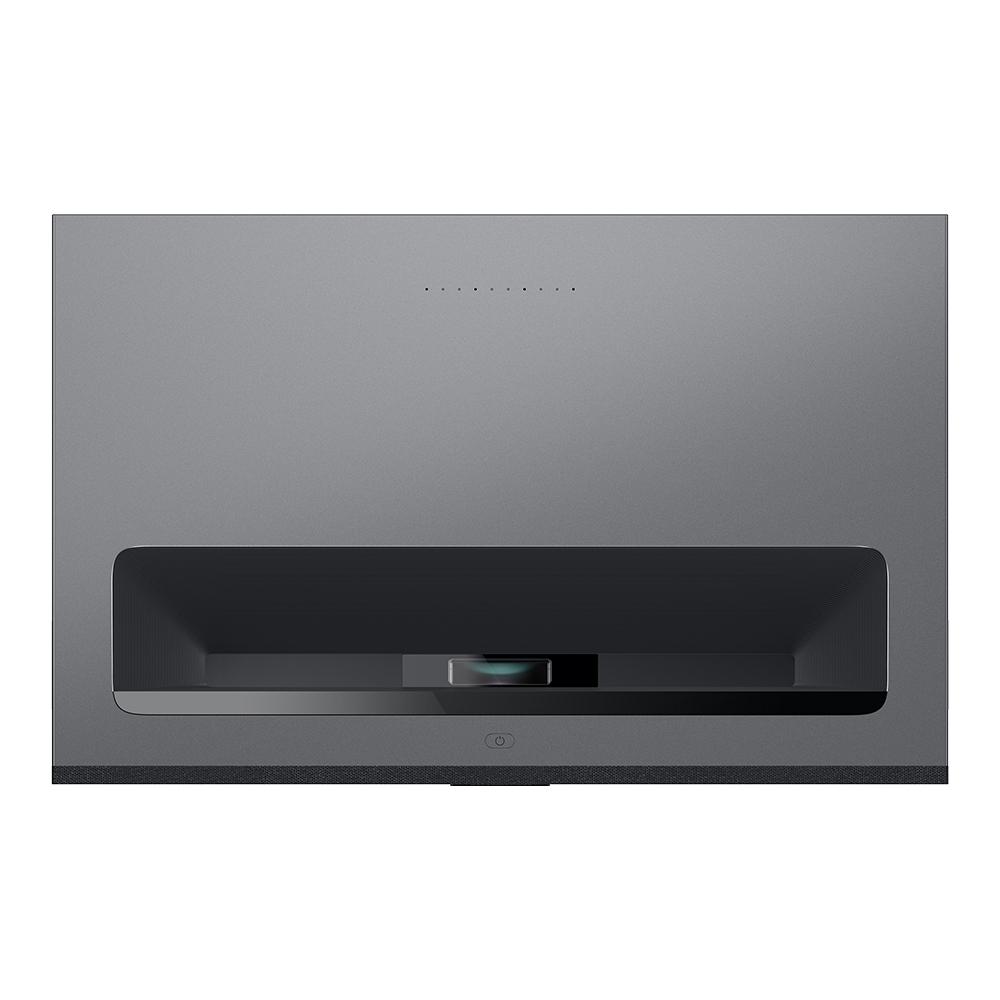
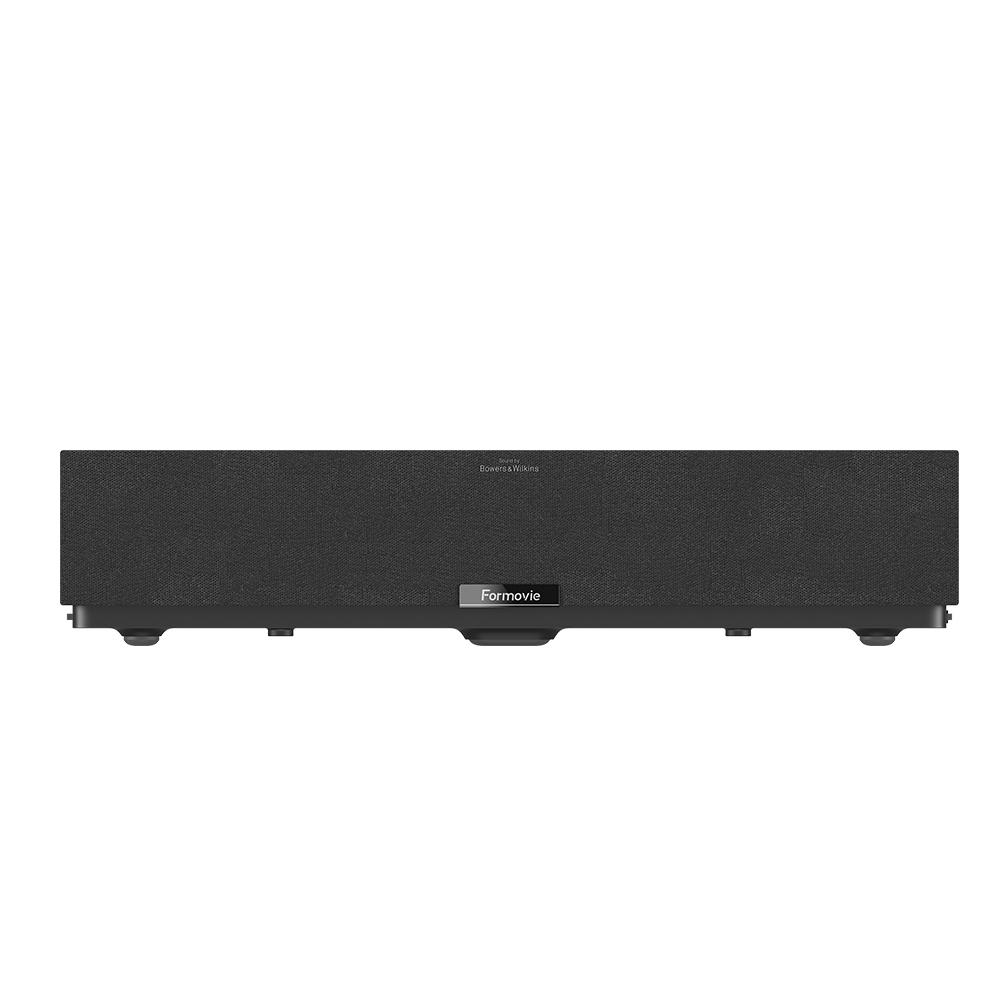
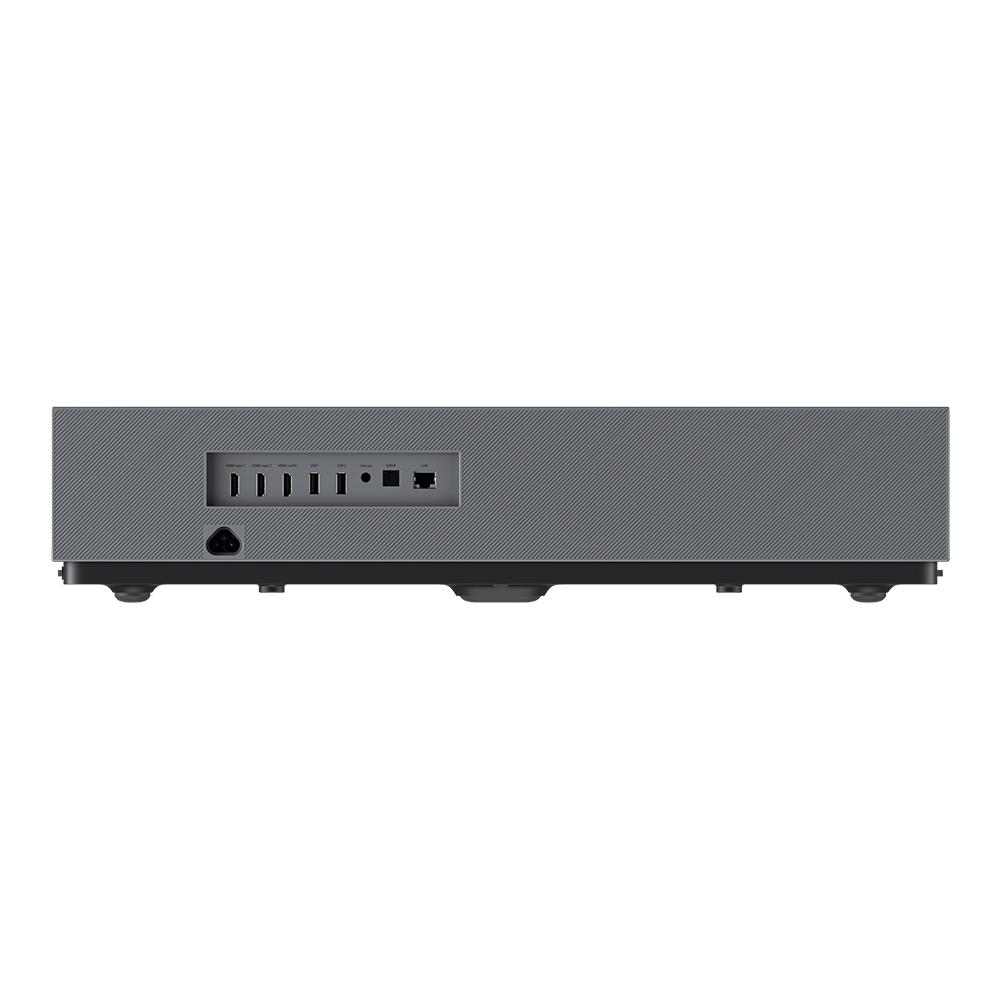
When most people think about getting a massive TV experience at home, they imagine mounting an 85-inch display on their wall and hoping their wallet survives. But there's another way to get that cinema-sized screen without breaking the bank or your back trying to mount a giant TV: ultra short throw laser projectors.
These remarkable devices have quietly revolutionized home entertainment. Instead of needing a projector mounted on your ceiling with cables snaking everywhere, ultra short throw (UST) projectors sit just inches from your wall and beam massive images upward. It's like having a magic box that transforms any wall into a movie theater screen.
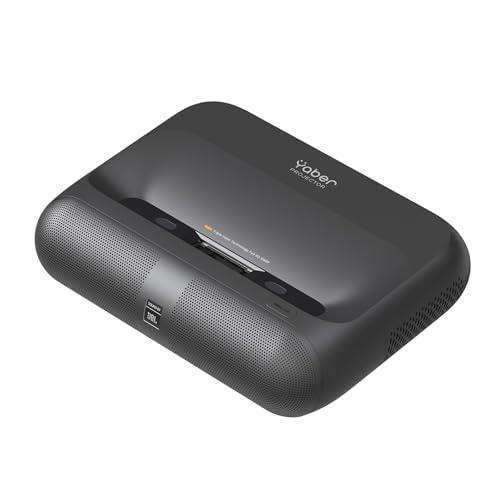
Today, we're comparing two compelling options that represent different approaches to this technology: the budget-friendly Yaber K300s and the premium Formovie Theater. Both launched in recent years as manufacturers pushed to make this once-exclusive technology more accessible, but they target very different buyers with distinct performance profiles.
Before diving into these specific models, let's understand what makes UST projectors special. Traditional projectors need to be positioned far from the screen – often requiring ceiling mounts and complex installations. Ultra short throw projectors flip this concept entirely, using specialized optics and mirrors to project large images from extremely close distances.
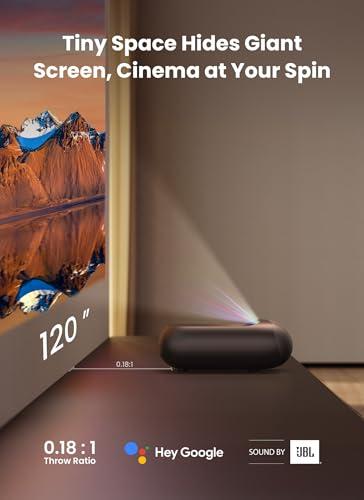
The "throw ratio" is the key metric here – it measures how far the projector needs to be from the screen relative to the image width. A traditional projector might have a throw ratio of 1.2:1, meaning it needs to be 1.2 times the screen width away from the wall. UST projectors typically have throw ratios under 0.4:1, with the best models achieving ratios around 0.18:1 to 0.23:1.
What this means in practical terms is transformative. The Yaber K300s can project a 100-inch diagonal image while sitting just under 10 inches from your wall. That's genuinely impressive engineering that eliminates most installation headaches while delivering cinema-scale visuals in compact living spaces.
The laser light source represents another major advancement. Unlike traditional projector lamps that dim over time and need replacement every few thousand hours, laser projectors maintain consistent brightness for 20,000+ hours – essentially the lifetime of the device. Laser light sources also enable much wider color gamuts, meaning they can display colors that traditional projectors simply can't reproduce.
The Yaber K300s, released in 2024, represents the democratization of UST laser projection. At the time of writing, it's positioned as a budget-friendly entry point that brings this premium technology to mainstream consumers without requiring a massive financial commitment.
Meanwhile, the Formovie Theater takes a different approach. Released around the same timeframe, it targets enthusiasts who want significantly higher performance and are willing to pay roughly three times more to get it. This price difference – substantial but not extreme in the projector world – reflects meaningful technology upgrades rather than just premium branding.
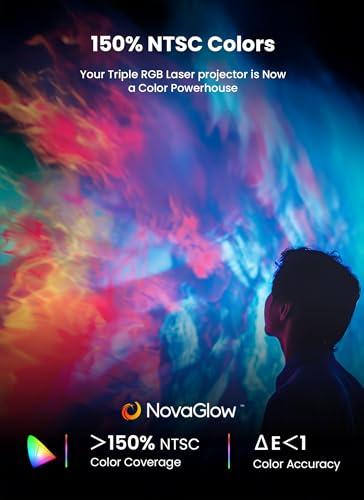
Both projectors use triple laser light sources, but they implement this technology differently. The K300s uses what Yaber calls "NovaGlow" technology with their triple RGB laser system, while the Formovie Theater employs the more advanced ALPD 4.0 (Advanced Laser Phosphor Display) technology, which represents a 30% improvement over the previous ALPD 3.0 generation.
Here's where we encounter the most significant difference between these projectors: native resolution. The Formovie Theater delivers true 4K UHD (3840 x 2160 pixels), while the Yaber K300s provides 1080p (1920 x 1080) with 4K decoding support.
This difference matters more than the raw numbers suggest. When you're projecting images 80-150 inches diagonal, every pixel counts. At typical viewing distances of 8-12 feet, the difference between 1080p and 4K becomes clearly visible on screens larger than about 100 inches. Text looks sharper, fine details in movies become more apparent, and the overall image has that crisp, almost three-dimensional quality that makes premium displays special.
However, the K300s shouldn't be dismissed. Its 1080p resolution remains excellent for most content, especially at the 80-100 inch screen sizes where this projector performs best. The 4K decoding means it can accept 4K signals from your streaming devices and gaming consoles, then intelligently downscale them to 1080p. You're getting most of the benefit of 4K source material, just not every single pixel of detail.
The color performance tells an interesting story. The Yaber K300s achieves 150% coverage of the NTSC color standard, which translates to vibrant, saturated colors that really pop off the screen. The Formovie Theater covers 107% of the much more demanding Rec.2020 color standard, which represents a wider overall color gamut but with more accurate, cinema-standard color reproduction.
Think of it this way: the K300s gives you colors that look amazing and engaging, while the Formovie Theater gives you colors that look exactly as the filmmaker intended. Both approaches have merit depending on your preferences and content.
Brightness might be the most crucial specification for determining how and where you can use these projectors. Measured in ANSI lumens, brightness determines how well the projector performs with ambient light and how large you can make the image while maintaining quality.
The Formovie Theater produces 2,800 ANSI lumens compared to the K300s's 1,000 ANSI lumens. This nearly 3:1 difference is immediately noticeable in real-world use. The Formovie Theater can handle moderately lit rooms during daytime viewing and maintains excellent image quality on screens up to 150 inches diagonal.
The K300s, while significantly dimmer, still delivers a compelling experience in the right environment. In a dedicated home theater room or living room with controlled lighting, 1,000 lumens provides a satisfying, cinema-like experience on screens up to about 100 inches. The challenge comes with ambient light – even moderate room lighting can wash out the image and reduce contrast significantly.
This brightness difference fundamentally affects how you'll use these projectors. The Formovie Theater works as a TV replacement that you can watch anytime, while the K300s works best as a dedicated evening entertainment system when you can control the lighting.
I've found that brightness requirements vary significantly based on content type. Dark, cinematic movies look stunning on lower-brightness projectors in controlled environments, while bright sports content or daytime TV viewing demands higher output levels. The Formovie Theater's extra brightness provides flexibility that extends its usability throughout the day.
Both projectors include high-quality integrated sound systems, which is crucial for UST projectors since they're designed as complete entertainment solutions. However, their audio approaches reflect their different market positions.
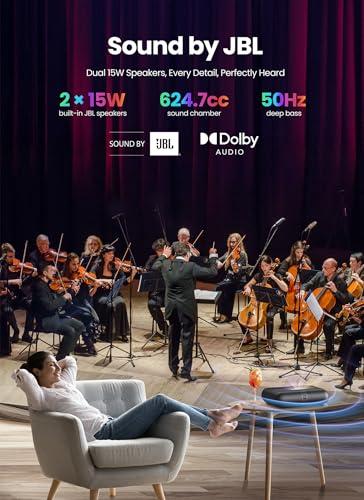
The Yaber K300s features dual 15W JBL-tuned speakers with Dolby Audio support. The forward-firing design helps project sound toward the listening area, and the overall system delivers surprisingly robust audio for a projector in this price category. The 30W total power output provides sufficient volume for medium-sized rooms, and the audio quality easily surpasses most TV built-in speakers.
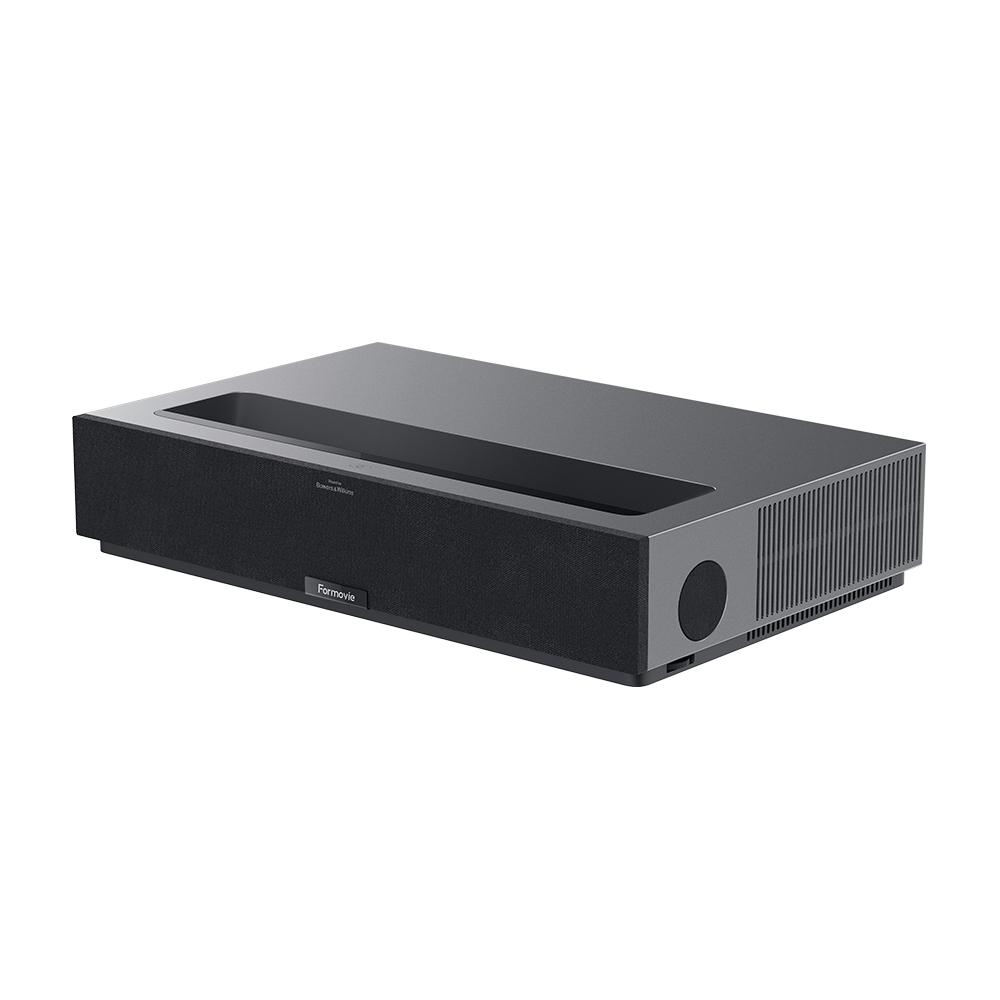
The Formovie Theater takes audio seriously with its 30W Bowers & Wilkins sound system. Bowers & Wilkins has a reputation for premium audio equipment, and their involvement shows in the refined sound quality. The system supports Dolby Atmos, which creates a three-dimensional soundscape that can actually make you feel like sounds are coming from above, behind, and around you rather than just from the projector's location.
For many users, these integrated audio systems eliminate the need for separate soundbars or speaker systems, simplifying setup and reducing costs. However, serious audio enthusiasts will likely want to connect external systems through the projectors' eARC (enhanced Audio Return Channel) ports, which both models support.
Gaming on projectors has evolved dramatically in recent years, and both models include features specifically designed for gamers. The Formovie Theater supports Auto Low Latency Mode (ALLM), which automatically detects gaming signals and switches to a low-lag mode without manual intervention. Combined with HDMI 2.1 support, it can handle the latest gaming consoles at their full capabilities.
The Yaber K300s includes a dedicated Game Mode that achieves input lag under 40 milliseconds, which is perfectly acceptable for casual gaming. While it lacks some of the advanced features of higher-end models, it provides a responsive gaming experience that most players will find satisfactory.
Both projectors include MEMC (Motion Estimation, Motion Compensation) processing, which reduces motion blur in fast-moving content like sports or action games. This feature analyzes the motion in each frame and creates intermediate frames to smooth out movement, resulting in clearer, more fluid visuals during rapid action sequences.
Modern projectors need to function as smart TVs, and both models deliver comprehensive streaming capabilities, though through different approaches.
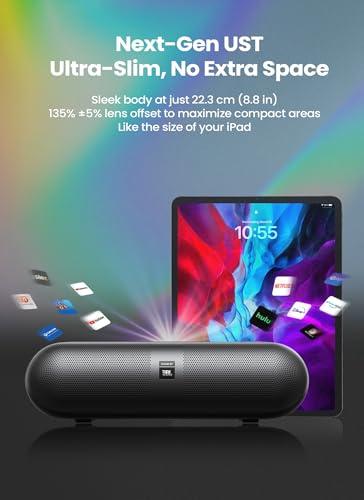
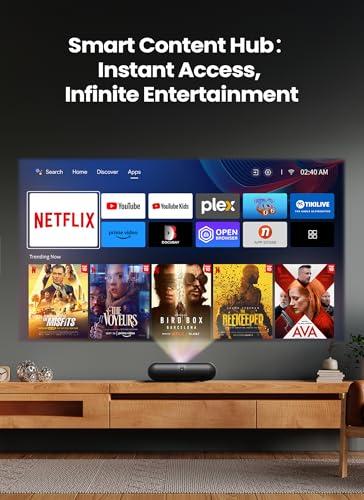
The Yaber K300s includes a Google TV 4K dongle that provides access to over 7,000 apps, including Netflix, YouTube, Prime Video, and Disney+. The inclusion of native Netflix support is particularly noteworthy, as many projectors struggle with Netflix's content protection requirements. Wi-Fi 6 support ensures fast streaming performance, while Bluetooth 5.1 enables easy connection to wireless headphones and speakers.
The Formovie Theater runs Android TV 11 directly, providing a more integrated experience with full Chromecast functionality. The interface feels more polished and responsive, and the three HDMI 2.1 inputs provide flexibility for connecting multiple high-end sources like gaming consoles, Apple TV, and cable boxes simultaneously.
Both projectors support voice control and screen mirroring from smartphones and tablets, making them easy to integrate into existing smart home ecosystems. The setup process for both is refreshingly simple – unlike traditional projectors that require extensive calibration and adjustment, both models include automatic focus and keystone correction that get you up and running quickly.
One of the biggest advantages of UST projectors is their installation simplicity, and both models excel here. The K300s can project its maximum 100-120 inch image from just 9-10 inches away from the wall, while the Formovie Theater achieves 80 inches from 5.5 inches away and can go up to 150 inches when placed about 19 inches from the wall.
Both projectors include automatic focus systems that use time-of-flight sensors to measure distance and adjust the lens accordingly. This means the image stays sharp even if you move the projector or if the floor settles slightly over time. The automatic keystone correction handles minor placement angles, though serious enthusiasts will want to ensure proper alignment for optimal results.
The compact form factors of both projectors – roughly the size of a small desktop computer – make them easy to position and move when needed. Unlike ceiling-mounted projectors that become permanent room fixtures, these can be relocated for parties, moved seasonally, or taken to different rooms as needed.
The value proposition of these projectors depends heavily on your specific needs and budget constraints. At the time of writing, the price difference between these models is substantial but reflects meaningful performance improvements rather than just premium branding.
The Yaber K300s represents exceptional value for buyers wanting to experience UST laser projection without a massive financial commitment. It delivers the core benefits – huge screen size, easy installation, quality audio, and smart features – at a price point that competes favorably with premium large-screen TVs. For dedicated home theater rooms or controlled lighting environments, it provides an experience that rivals much more expensive systems.
The Formovie Theater justifies its higher price through significant performance advantages. The 4K resolution, nearly triple brightness output, and premium audio system create a qualitatively different experience. It's genuinely competitive with flagship UST projectors while maintaining a more reasonable price point than ultra-premium models.
Consider the total cost of ownership as well. Both projectors eliminate the need for professional installation, expensive mounts, and potentially expensive screens (though a quality UST screen does improve performance). The laser light sources should last the lifetime of the devices, eliminating ongoing lamp replacement costs.
After extensive consideration of both projectors' capabilities, here's my recommendation for different user scenarios:
Choose the Yaber K300s if you're new to UST projection, have a dedicated viewing room where you can control lighting, and want to maximize value. It's perfect for movie enthusiasts who primarily watch content in the evening and don't need daytime TV functionality. The 1080p resolution is perfectly adequate for screens up to 100 inches, and the overall experience will likely exceed your expectations for the price point.
The Formovie Theater makes sense for users who want a true TV replacement that works well in any lighting condition. If you consume significant amounts of 4K content, want the flexibility to use your display throughout the day, or need a screen larger than 100 inches, the extra investment delivers meaningful benefits. It's also the better choice for gaming enthusiasts who want the latest features and lowest possible input lag.
Both projectors represent the maturation of UST laser technology from expensive novelties to mainstream entertainment solutions. The K300s democratizes the technology, while the Formovie Theater delivers premium performance at a still-reasonable price point. Your choice depends on your budget, room conditions, and performance expectations – but either way, you're getting access to genuinely impressive technology that would have seemed impossible just a few years ago.
The future of home entertainment increasingly points toward these kinds of flexible, high-performance solutions that eliminate the compromises we've accepted with traditional displays. Whether you choose the value-focused K300s or the performance-oriented Formovie Theater, you're stepping into that future today.
| Yaber K300s Triple Laser Ultra Short Throw Projector | Formovie Theater Ultra Short Throw Triple Laser Projector |
|---|---|
| Native Resolution - Critical for image sharpness on large screens | |
| 1080p (1920 x 1080) with 4K decoding support | True 4K UHD (3840 x 2160) native resolution |
| Brightness - Determines room versatility and daytime viewing ability | |
| 1,000 ANSI lumens (requires controlled lighting for best results) | 2,800 ANSI lumens (excellent for bright rooms and daytime use) |
| Light Source Technology - Affects color accuracy and longevity | |
| Triple RGB laser with NovaGlow technology | ALPD 4.0 triple laser (30% more advanced than ALPD 3.0) |
| Color Gamut - Impact on color vibrancy and accuracy | |
| 150% NTSC coverage (vibrant, saturated colors) | 107% Rec.2020 coverage (cinema-accurate color reproduction) |
| Maximum Screen Size - How big you can go while maintaining quality | |
| Up to 120" diagonal (optimal at 80-100") | Up to 150" diagonal with maintained brightness |
| Throw Distance - How close to wall for large image | |
| 0.18:1 ratio (100" image from 9.7 inches away) | 0.23:1 ratio (80" from 5.5", 150" from 19.3") |
| Audio System - Built-in sound quality and power | |
| Dual 15W JBL speakers with Dolby Audio (30W total) | 30W Bowers & Wilkins system with Dolby Atmos support |
| Smart Platform - Streaming capabilities and app ecosystem | |
| Google TV 4K dongle with 7,000+ apps including Netflix | Android TV 11 with full Chromecast and comprehensive app support |
| Gaming Features - Input lag and console compatibility | |
| Game Mode with ≤40ms latency, MEMC motion compensation | ALLM, HDMI 2.1 support, advanced gaming features |
| Connectivity Options - Ports and wireless capabilities | |
| Wi-Fi 6, Bluetooth 5.1, HDMI ARC, USB 2.0, LAN port | Three HDMI 2.1 inputs, eARC, Wi-Fi 6, premium connectivity |
| Contrast Ratio - Depth of blacks and image punch | |
| 1,500:1 (good for the price category) | 3,000:1 (excellent contrast for deep, punchy images) |
| Setup and Calibration - Ease of installation | |
| Auto focus, auto keystone correction, compact design | 8-point keystone correction, professional calibration options |
| Target Market Position - Who each projector is designed for | |
| Budget-conscious buyers wanting UST laser experience | Enthusiasts seeking premium performance without flagship pricing |
The primary difference is resolution and brightness. The Yaber K300s offers 1080p resolution with 1,000 ANSI lumens at a budget-friendly price, while the Formovie Theater delivers true 4K resolution with 2,800 ANSI lumens for premium performance. The Formovie also includes advanced features like Dolby Atmos audio and HDMI 2.1 connectivity.
The Formovie Theater is significantly better for bright rooms with its 2,800 ANSI lumens output - nearly three times brighter than the Yaber K300s. The K300s works best in controlled lighting or evening use, while the Formovie can handle moderate ambient light throughout the day.
Both can create large images, but with different capabilities. The Yaber K300s projects up to 120 inches diagonal (optimal at 80-100 inches), while the Formovie Theater can go up to 150 inches while maintaining better brightness and image quality at larger sizes.
The Yaber K300s offers exceptional value for budget-conscious buyers, delivering core ultra short throw features at a fraction of premium projector costs. The Formovie Theater provides better value for performance-focused users who need 4K resolution, higher brightness, and advanced features.
Both are ultra short throw projectors requiring minimal space. The Yaber K300s can project a 100-inch image from just 9.7 inches away, while the Formovie Theater creates an 80-inch image from 5.5 inches away and 150 inches from about 19 inches away.
The Formovie Theater is superior for gaming with Auto Low Latency Mode (ALLM), HDMI 2.1 support, and advanced gaming features. The Yaber K300s includes a Game Mode with under 40ms latency that's suitable for casual gaming but lacks the premium gaming features.
The Formovie Theater features a premium 30W Bowers & Wilkins sound system with Dolby Atmos support for spatial audio. The Yaber K300s includes dual 15W JBL speakers with Dolby Audio - excellent for the price but not quite matching the Formovie's audio sophistication.
Yes, both excel in home theater applications. The Yaber K300s is perfect for dedicated theater rooms with controlled lighting, while the Formovie Theater works better as a TV replacement that functions well in various lighting conditions throughout your home.
Both offer comprehensive smart features. The Yaber K300s includes a Google TV 4K dongle with 7,000+ apps including Netflix, while the Formovie Theater runs Android TV 11 directly with full Chromecast integration and more premium interface experience.
The difference becomes noticeable on screens larger than 100 inches. The Yaber K300s's 1080p resolution is excellent for most viewing at 80-100 inch sizes, while the Formovie Theater's true 4K provides sharper text, finer details, and better overall clarity, especially on large screens.
Both projectors feature simple installation with automatic focus and keystone correction. The Yaber K300s offers basic auto-adjustment features, while the Formovie Theater includes more advanced 8-point keystone correction and professional calibration options for optimal setup.
For first-time buyers on a budget who can control room lighting, the Yaber K300s provides an excellent introduction to ultra short throw technology. If you want premium performance and room versatility from day one, the Formovie Theater offers a more future-proof investment with superior capabilities.
We've done our best to create useful and informative comparisons to help you decide what product to buy. Our research uses advanced automated methods to create this comparison and perfection is not possible - please contact us for corrections or questions. These are the sites we've researched in the creation of this article: yaber.com - projectorcentral.com - trendygadget.com - staples.com - youtube.com - projection.center - notebookcheck.net - yaber.ph - wallpaper.com - youtube.com - androidauthority.com - youtube.com - yaber.com - projektoren-datenbank.com - bestbuy.com - tractorsupply.com - digitaltrends.com - techradar.com - projectorcentral.com - rtings.com - formovie.com - projectorreviews.com - projectorcentral.com - projectorscreen.com - projectorcentral.com - nothingprojector.com - formovie.com

Privacy Policy
Terms and Conditions - Affiliate Policy
Home Security
© Copyright 2008-2026.
11816 Inwood Rd #1211, Dallas, TX 75244