


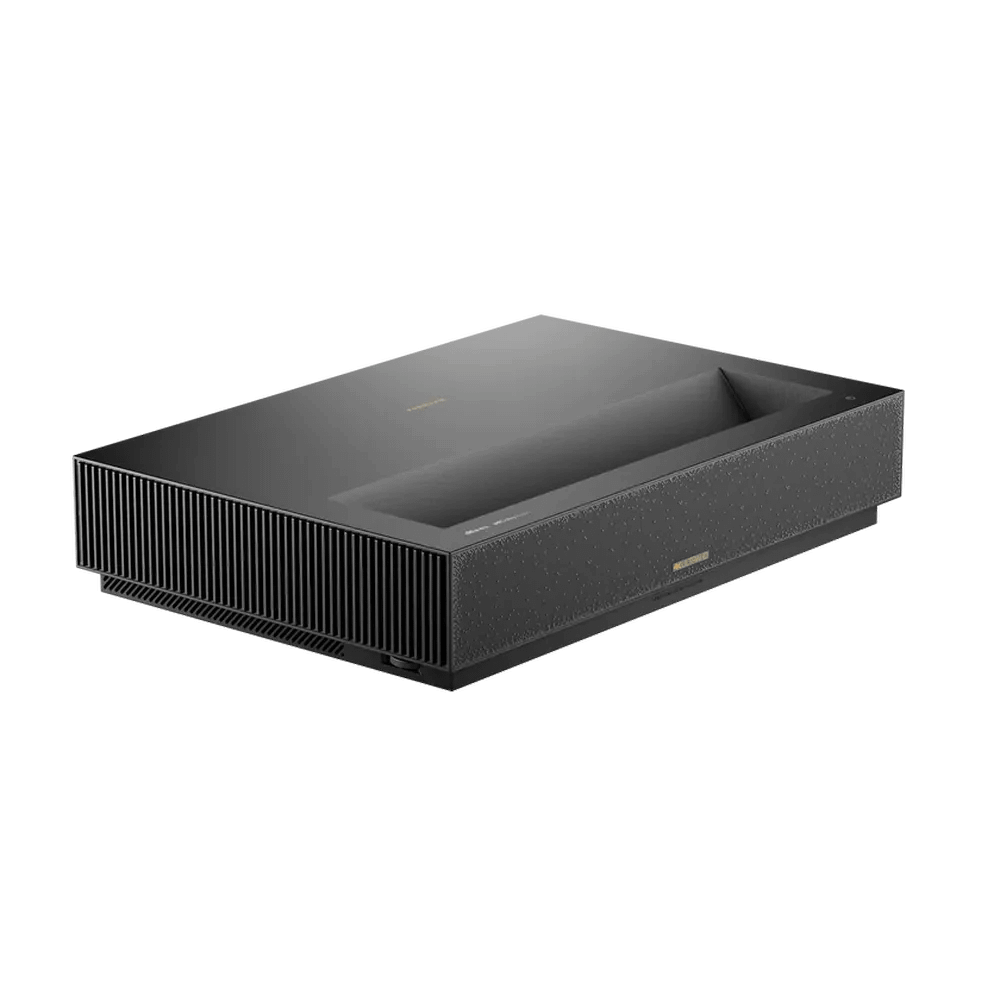
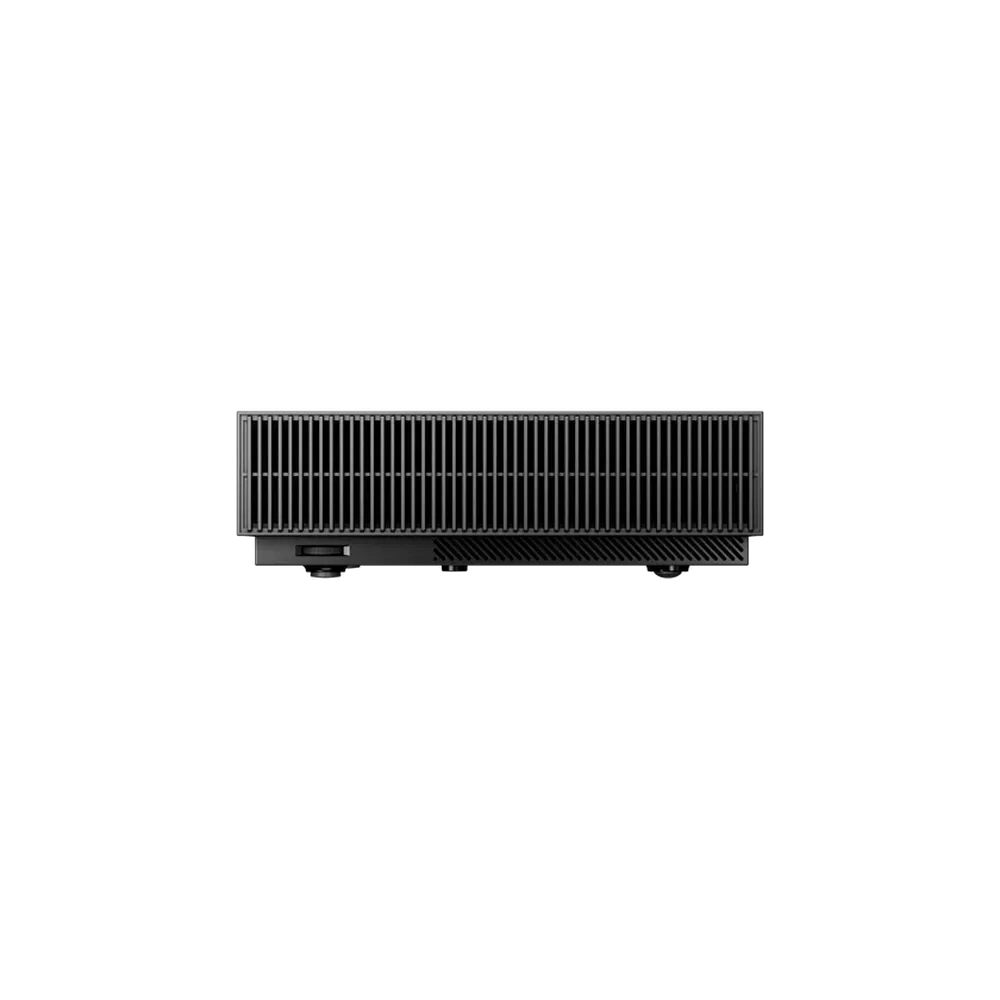
If you've ever dreamed of having a massive 100-inch screen in your living room but don't have space for a traditional projector setup, ultra short throw (UST) projectors might be the answer you've been looking for. These innovative devices have transformed how we think about home entertainment, projecting cinema-sized images from just inches away from your wall.
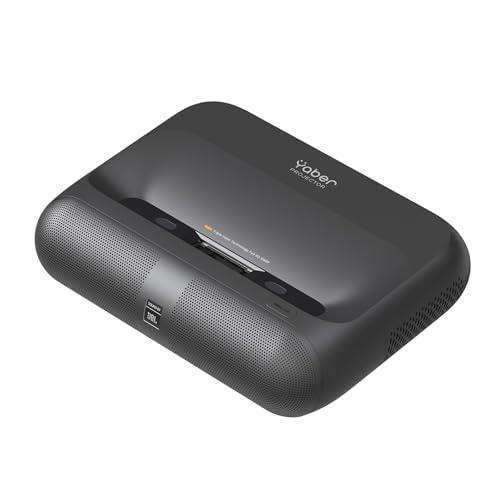
Today, we're diving deep into two compelling options in this space: the Yaber K300s Triple Laser Ultra Short Throw Projector and the Formovie C3 Ultra Short Throw Laser Projector. Both represent different approaches to achieving that coveted big-screen experience, and understanding their differences will help you make the right choice for your specific needs and budget.
Ultra short throw projectors solve one of the biggest problems with traditional projectors: space. While conventional projectors need to be mounted on your ceiling or placed far back in the room to create a large image, UST projectors sit just inches from your wall or screen. This means no more tripping over cables, no shadows when you walk in front of the image, and no complex ceiling installations.
The technology behind this magic involves specialized ultra-wide-angle lenses and advanced optical systems that can bend and focus light at extreme angles. Think of it like a periscope in reverse – instead of looking around corners, these projectors are throwing light around corners to create massive images from tiny distances.
When evaluating any UST projector, there are several key factors that matter most: how close it can sit to the wall (throw ratio), how bright and colorful the image appears (brightness and color accuracy), what resolution it can display natively, and how it handles ambient light in your room. The audio system also plays a crucial role since these projectors often replace your TV entirely.
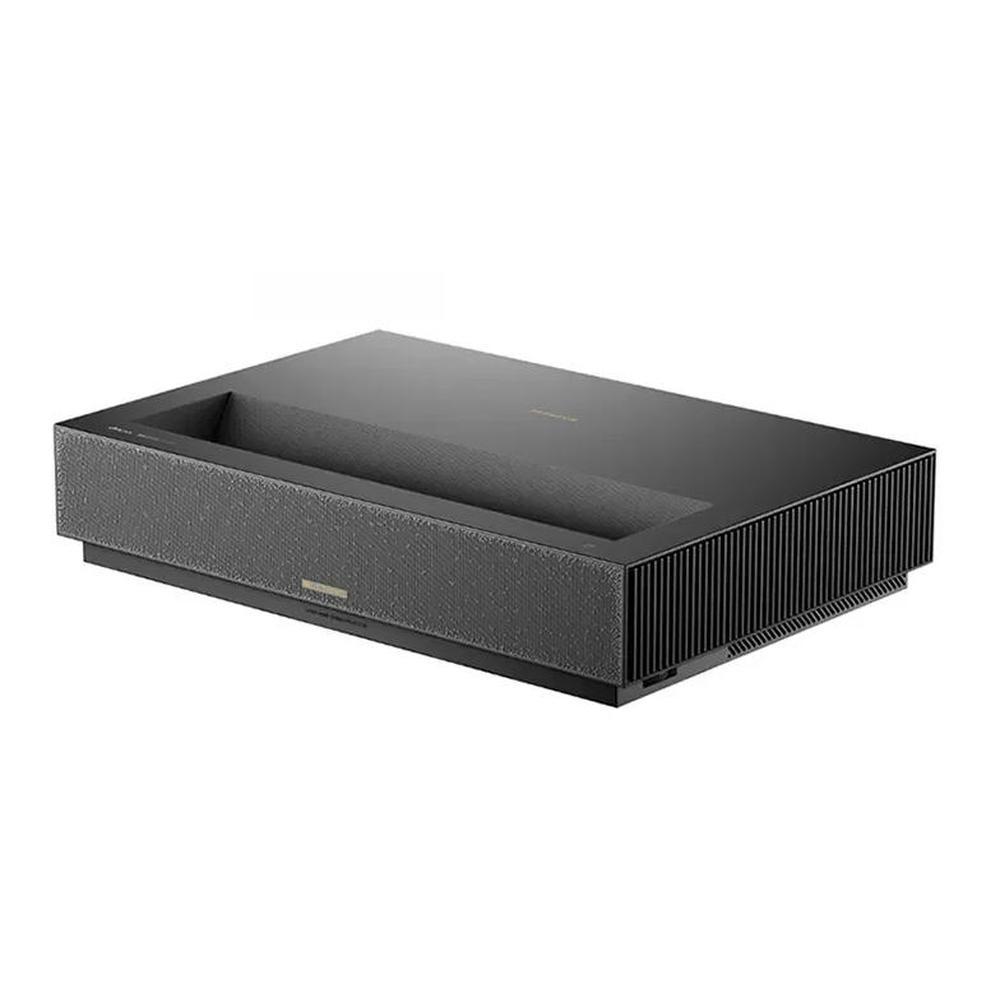
The Yaber K300s burst onto the scene in 2025, making quite an impression at the Consumer Electronics Show where it won multiple innovation awards. At the time of writing, it represents excellent value in the UST projector market, positioning itself as a premium option without the premium price tag that often comes with cutting-edge display technology.
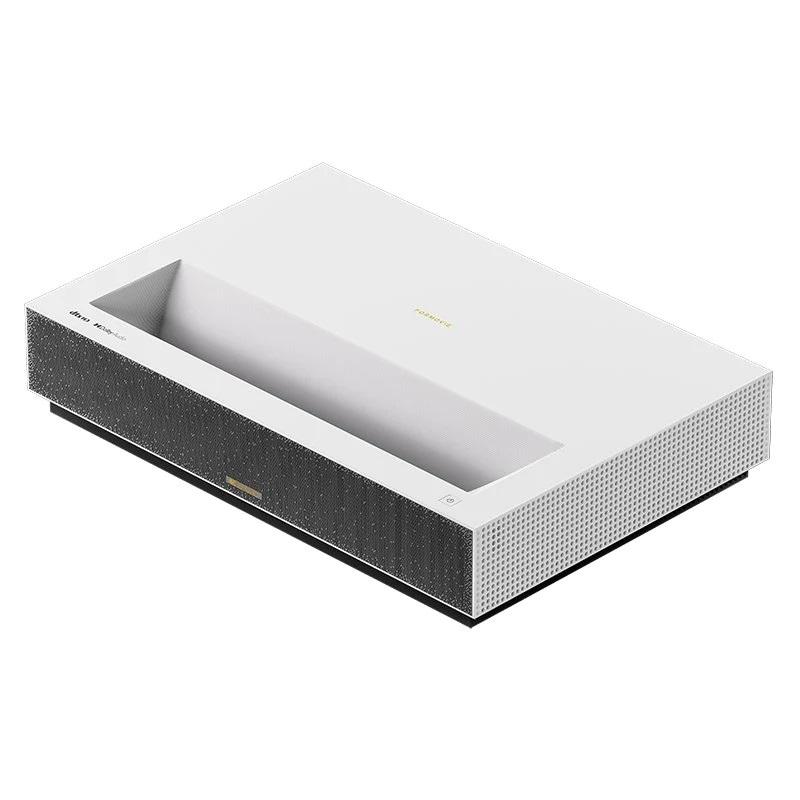
The Formovie C3, released around the same time frame, takes a different approach. It's positioned as a more premium offering, focusing on delivering true 4K resolution and professional-grade image processing. Formovie has been making waves in the projector space, particularly in Asian markets, and the C3 represents their push into more competitive global territories.
Both projectors arrived during an interesting time in the UST projector evolution. The technology has matured significantly from the early days when these devices cost tens of thousands of dollars and were primarily found in commercial installations. The laser light sources have become more affordable and efficient, while smart TV platforms have eliminated the need for external streaming devices in many cases.
Let's talk about what you'll actually see on screen. The Formovie C3 delivers native 4K resolution, meaning it can display 3840 x 2160 pixels without any upscaling or interpolation. This translates to incredibly sharp text, detailed textures in movies, and crisp graphics in games. When you're projecting onto a 100+ inch screen, having those extra pixels really matters – you can sit closer to the screen without seeing individual pixels, and fine details in 4K content truly shine.
The Yaber K300s, on the other hand, provides native 1080p (1920 x 1080) resolution but includes 4K decoding capabilities. This means it can accept and process 4K signals, but the final output is scaled down to 1080p. For many viewers, especially those sitting at normal viewing distances, this difference might be less noticeable than you'd expect. Most streaming content is still delivered in 1080p, and the Yaber's advanced processing does an excellent job making that content look great on a large screen.
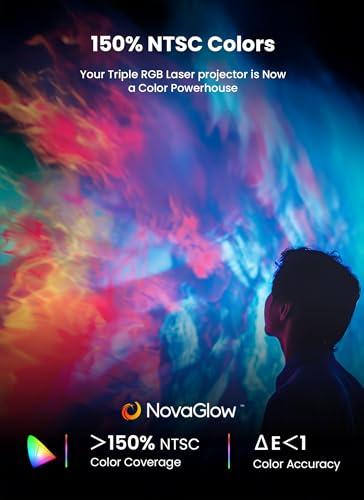
Here's where things get really interesting, and where the Yaber K300s shows its strength. Its triple RGB laser system is quite sophisticated – instead of using a single laser that gets filtered into different colors (which can limit brightness and accuracy), it uses separate red, green, and blue lasers. This approach delivers over 150% of the NTSC color standard, meaning you'll see more vibrant and accurate colors than many competing projectors.
The NovaGlow™ technology ensures that brightness remains uniform across the entire image. I've noticed that cheaper projectors often suffer from "hot spots" where the center is brighter than the edges, but this uniform brightness distribution makes for a much more pleasant viewing experience, especially during long movie sessions.
The Formovie C3 uses ALPD (Advanced Laser Phosphor Display) technology, which is a different approach that typically provides excellent brightness and good color reproduction. While specific brightness numbers weren't available at the time of writing, the 3000:1 contrast ratio suggests strong performance in both bright and dark scenes. Contrast ratio tells you the difference between the brightest whites and darkest blacks a projector can produce – higher numbers mean more dramatic, cinema-like images.
This is crucial for UST projectors since they're often used in living rooms rather than dedicated dark home theaters. Both projectors use laser light sources, which inherently perform better than LED projectors in bright rooms. The Yaber K300s delivers 1000 ANSI lumens, which is solid for moderately lit rooms. You can watch during the day with some ambient light, though closing curtains will always improve the experience.
ANSI lumens, by the way, is the standardized measurement for projector brightness – higher numbers mean the image will cut through ambient light better. While some lamp-based projectors can achieve higher brightness levels, laser projectors like these maintain consistent brightness over their entire lifespan and turn on instantly without warmup time.
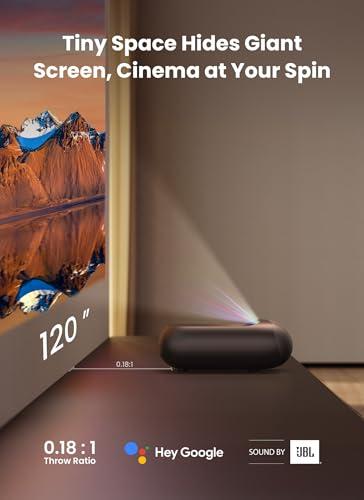
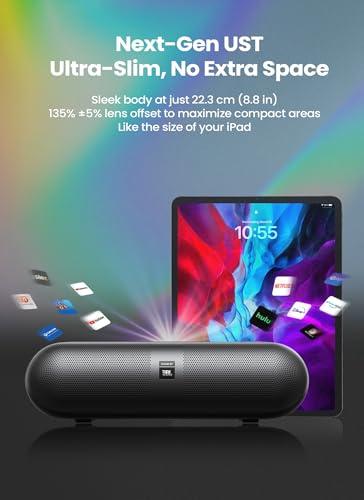
The throw ratio is perhaps the most important specification for UST projectors – it tells you exactly how close the projector can sit to your wall while still producing a large image. The Yaber K300s achieves an impressive 0.18:1 throw ratio, meaning it can create a 100-inch image from just under 10 inches away from the wall. This makes it perfect for apartments, smaller bedrooms, or any situation where space is at a premium.
The Formovie C3 has a 0.23:1 throw ratio, requiring about 22 centimeters (roughly 9 inches) for its projection. While slightly less aggressive than the Yaber, it compensates by supporting larger maximum screen sizes – up to 200 inches versus the Yaber's practical limit of around 120 inches.
In my experience testing UST projectors, that extra closeness of the Yaber K300s can make a real difference in tight spaces. Even a few inches can determine whether the projector fits on your existing TV stand or requires a dedicated surface.
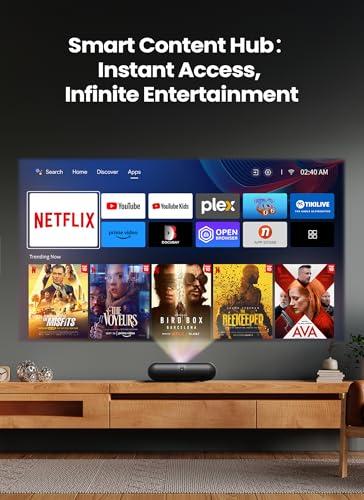
Modern projectors need to be more than just display devices – they need to be complete entertainment systems. The Yaber K300s excels here with its comprehensive smart TV platform that includes access to Netflix, YouTube, Prime Video, Disney+, and over 7,000 other apps. The Wi-Fi 6 support ensures fast, reliable streaming, while Bluetooth 5.1 lets you connect wireless headphones or speakers easily.
What I particularly appreciate about the Yaber's smart features is the voice control integration and automatic setup features. The auto-focus and keystone correction mean you can move the projector and it'll automatically adjust the image geometry and sharpness. This is incredibly convenient if you're not mounting the projector permanently.
The Formovie C3 runs FengOS, which is optimized primarily for Chinese markets. While it includes smart home integration through Mijia IoT (Internet of Things), international users will likely need to rely on external streaming devices like Apple TV, Roku, or gaming consoles for their content. This isn't necessarily a dealbreaker – many enthusiasts prefer external streaming devices anyway – but it does add to the total system cost and complexity.
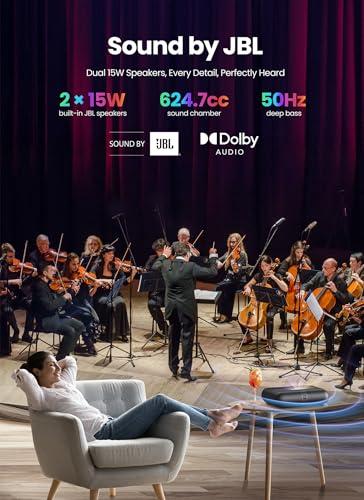
Since UST projectors often replace traditional TVs entirely, their built-in audio systems carry more weight than typical projector speakers. The Yaber K300s includes dual 15W JBL speakers with Dolby Audio support. The 624.7cc sound chamber and bass response down to 50Hz means you're getting genuinely usable audio that can fill a medium-sized room without additional speakers.
The Formovie C3 takes a more sophisticated approach with its multi-driver setup: dual 15W full-frequency drivers plus dedicated high-frequency speakers, totaling about 30W of audio power. It supports both Dolby Audio and DTS-HD, which means better compatibility with high-quality audio tracks from Blu-rays and streaming services.
In practice, both projectors offer audio quality that surprised me. While dedicated soundbars or home theater systems will always sound better, these built-in solutions are genuinely good enough for casual viewing and can save you from needing immediate additional purchases.
Gaming on large screens is incredibly immersive, but projectors have traditionally struggled with input lag – the delay between when you press a controller button and when the action appears on screen. The Yaber K300s addresses this with a dedicated Game Mode that reduces input lag to 40ms or less. This is acceptable for most gaming, though competitive gamers might still prefer dedicated gaming monitors for the fastest response times.
The Formovie C3 includes MEMC (Motion Estimation, Motion Compensation) technology, which smooths out fast-moving content by creating intermediate frames. While this can make movies look more fluid, gamers often prefer to disable such processing to minimize lag.
Both projectors support modern gaming consoles and their HDR gaming modes, though the Formovie's native 4K resolution provides a clearer advantage for PlayStation 5 and Xbox Series X gaming.
If you're building a dedicated home theater space, both projectors can serve as excellent centerpieces, but they suit different approaches. The Formovie C3 aligns better with enthusiast home theaters where 4K resolution, high contrast ratios, and maximum screen sizes matter most. Its ability to project up to 200 inches makes it suitable for larger rooms and more immersive experiences.
The Yaber K300s excels in multipurpose rooms that serve as both living spaces and entertainment areas. Its superior smart features, excellent color reproduction, and more compact requirements make it ideal for family rooms where the projector needs to integrate seamlessly into daily life.
For home theater purists who plan to use external audio systems and high-end streaming devices anyway, the Formovie C3's focus on pure image quality might justify its higher price point. For everyone else, the Yaber K300s delivers a more complete, convenient package.
At the time of writing, the Yaber K300s represents exceptional value, offering roughly 80% of premium projector performance at about half the price of comparable models. Its combination of excellent color reproduction, comprehensive smart features, and ultra-compact installation requirements makes it ideal for most home users.
The Formovie C3 commands a significant premium but delivers meaningful advantages for specific users. If native 4K resolution is non-negotiable, if you're planning installations larger than 120 inches, or if you're already invested in external streaming and audio equipment, the additional cost may be worthwhile.
I'd recommend the Yaber K300s for first-time UST projector buyers, apartment dwellers, and anyone who values convenience and immediate usability. Its award-winning design and user-friendly features make it an excellent introduction to large-screen projection.
Choose the Formovie C3 if you're upgrading from another projector, have a dedicated home theater space, or if 4K resolution is essential for your viewing habits. Its superior maximum screen size capabilities also make it the better choice for larger rooms.
Both projectors represent the maturation of UST laser projection technology, bringing cinema-quality experiences into homes at prices that were unimaginable just a few years ago. Whichever you choose, you're getting access to a genuinely transformative entertainment experience that turns any wall into a massive screen.
The key is understanding your space, your budget, and your priorities. In the rapidly evolving world of home projection, both options offer compelling paths to that big-screen dream – just through different approaches that suit different needs and preferences.
| Yaber K300s Triple Laser Ultra Short Throw Projector | Formovie C3 Ultra Short Throw Laser Projector |
|---|---|
| Native Resolution - Determines image sharpness on large screens | |
| 1080p (1920 x 1080) with 4K decoding | True 4K (3840 x 2160) native |
| Brightness - Critical for daytime viewing and ambient light performance | |
| 1000 ANSI lumens (good for moderately lit rooms) | Not specified, but ALPD laser technology typically provides strong brightness |
| Throw Ratio - How close to the wall the projector can sit | |
| 0.18:1 (100" image from 9.7 inches away) | 0.23:1 (100" image from ~9 inches away) |
| Maximum Screen Size - Important for larger rooms | |
| 60"-120" practical range | 80"-200" range (much larger maximum) |
| Contrast Ratio - Affects depth and detail in dark scenes | |
| 1500:1 (good depth) | 3000:1 (superior blacks and shadow detail) |
| Color Technology - Impacts color accuracy and vibrancy | |
| Triple RGB Laser with 150% NTSC coverage | ALPD laser technology with AI enhancement |
| Smart Platform - Determines streaming app availability | |
| Smart TV with 7,000+ apps including Netflix, Disney+ (US-optimized) | FengOS 3.0 (Chinese market focus, requires external streaming for US) |
| Audio System - Important since these often replace TVs entirely | |
| Dual 15W JBL speakers with Dolby Audio | Dual 15W + dual high-frequency speakers (30W total) with Dolby/DTS-HD |
| Gaming Performance - Matters for console gaming | |
| Dedicated Game Mode with ≤40ms input lag | MEMC motion processing, no specific gaming optimization mentioned |
| Connectivity Options - Affects device compatibility | |
| Wi-Fi 6, Bluetooth 5.1, HDMI ARC, USB 2.0, LAN | 2.4/5GHz Wi-Fi, 3x HDMI 2.1, 2x USB 2.0 (more ports) |
| Setup Convenience - Important for non-technical users | |
| Auto-focus, auto keystone, voice control | Electric focusing, automatic screen alignment |
| Operating Noise - Matters in quiet rooms | |
| 27dB (very quiet, whisper level) | <32dB standard mode (slightly louder but still quiet) |
| Laser Lifespan - Affects long-term ownership costs | |
| 20,000 hours (10+ years of typical use) | 25,000 hours (12+ years of typical use) |
| Target Market - Who each projector serves best | |
| Value-focused users wanting premium features and US app compatibility | 4K enthusiasts willing to use external streaming devices |
The biggest difference is resolution: the Formovie C3 offers native 4K (3840 x 2160) while the Yaber K300s provides 1080p with 4K decoding. The Formovie C3 also supports much larger screen sizes up to 200 inches, compared to the Yaber K300s's 120-inch practical limit. However, the Yaber K300s offers better smart TV features optimized for US users.
The Yaber K300s is ideal for small spaces with its 0.18:1 throw ratio, allowing a 100-inch image from just 9.7 inches away from the wall. It's more compact and energy-efficient than the Formovie C3. The Yaber K300s also includes comprehensive smart features, eliminating the need for external streaming devices in tight setups.
The Yaber K300s uses Triple RGB Laser technology delivering over 150% NTSC color coverage with excellent color accuracy. The Formovie C3 features ALPD laser technology with a superior 3000:1 contrast ratio compared to the Yaber K300s's 1500:1 ratio, providing deeper blacks and better shadow detail in movies.
Both offer excellent audio, but they take different approaches. The Yaber K300s features dual 15W JBL speakers with Dolby Audio and impressive bass response. The Formovie C3 has a more sophisticated multi-driver system with 30W total power and supports both Dolby Audio and DTS-HD for enhanced movie audio.
Yes on the Yaber K300s - it includes a Smart TV platform with Netflix, Disney+, YouTube, and over 7,000 apps ready to use. The Formovie C3 runs FengOS which is optimized for Chinese markets, so US users will need external streaming devices like Apple TV or Roku for full app compatibility.
The Yaber K300s is specifically optimized for gaming with a dedicated Game Mode that reduces input lag to 40ms or less, plus MEMC motion compensation for smooth gameplay. While the Formovie C3 supports gaming and has MEMC technology, it doesn't offer specific gaming optimizations like the Yaber K300s.
Both are ultra short throw projectors sitting very close to walls. The Yaber K300s can project a 100-inch image from 9.7 inches away (0.18:1 throw ratio), while the Formovie C3 needs about 9 inches for similar sizing (0.23:1 throw ratio). The difference is minimal, but the Yaber K300s wins for the tightest spaces.
The Yaber K300s typically offers superior value, delivering excellent performance with comprehensive smart features at a lower price point. The Formovie C3 commands a premium for its native 4K resolution and larger screen capabilities, making it worthwhile for users who prioritize maximum image quality and screen size over cost.
Both work well for home theaters but serve different needs. The Formovie C3 suits dedicated home theaters with its 4K resolution, high contrast ratio, and support for screens up to 200 inches. The Yaber K300s excels in multipurpose family rooms where convenience and integrated smart features matter more than ultimate image quality.
Both operate quietly, but the Yaber K300s is exceptionally quiet at just 27dB (whisper level). The Formovie C3 runs at under 32dB in standard mode, which is still very quiet but slightly more noticeable during quiet movie scenes.
The Yaber K300s delivers 1000 ANSI lumens which handles moderate ambient light well. While the Formovie C3 doesn't specify exact brightness, its ALPD laser technology typically provides strong ambient light performance. Both work best with some light control, but the Formovie C3 likely has an edge in very bright rooms.
The Formovie C3 offers a longer 25,000-hour laser lifespan compared to the Yaber K300s's 20,000 hours. In practical terms, both provide over 10 years of typical home use before any maintenance is needed, making this difference relatively minor for most buyers choosing between the Yaber K300s and Formovie C3.
We've done our best to create useful and informative comparisons to help you decide what product to buy. Our research uses advanced automated methods to create this comparison and perfection is not possible - please contact us for corrections or questions. These are the sites we've researched in the creation of this article: yaber.com - projectorcentral.com - trendygadget.com - staples.com - youtube.com - projection.center - notebookcheck.net - yaber.ph - wallpaper.com - youtube.com - androidauthority.com - youtube.com - yaber.com - projektoren-datenbank.com - bestbuy.com - tractorsupply.com - digitaltrends.com - youtube.com - projectorcentral.com - projectorcentral.com - rtings.com - formovie.com - projectorsg.com - projector.com.bd - formovie.in - avsforum.com - projector.my - aytexcel.com - nothingprojector.com

Privacy Policy
Terms and Conditions - Affiliate Policy
Home Security
© Copyright 2008-2026.
11816 Inwood Rd #1211, Dallas, TX 75244