


When I first encountered streaming amplifiers a few years ago, I was skeptical. Could a single box really replace both my dedicated streamer and separate amplifier without compromising sound quality? After researching and evaluating countless models, I've become convinced that modern streaming amplifiers represent one of the best values in audio today—if you choose the right one.
The streaming amplifier market has exploded since around 2018, driven by our collective shift toward digital music and the desire for simpler, cleaner setups. These devices combine network streaming capabilities with built-in amplification, eliminating the need for multiple components while often delivering surprisingly good performance. Today, we're comparing two of the most compelling options: the Bluesound PowerNode Edge and the Sonos Amp.
Before diving into specifics, let's clarify what streaming amplifiers are designed to accomplish. These units take digital music from the internet, your home network, or connected sources, then convert those digital signals to analog audio and amplify them to drive your passive speakers. Think of them as the digital age equivalent of a traditional stereo receiver, but optimized for modern streaming services rather than FM radio and CDs.
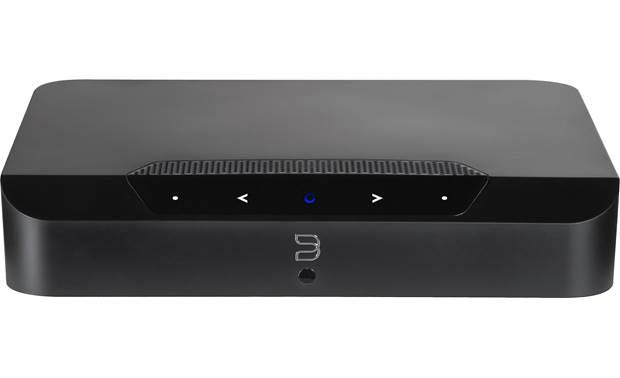
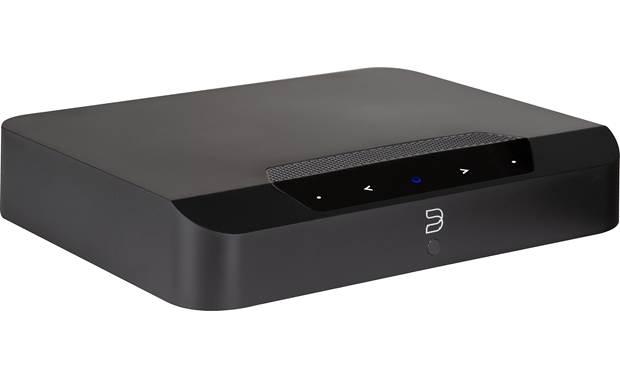
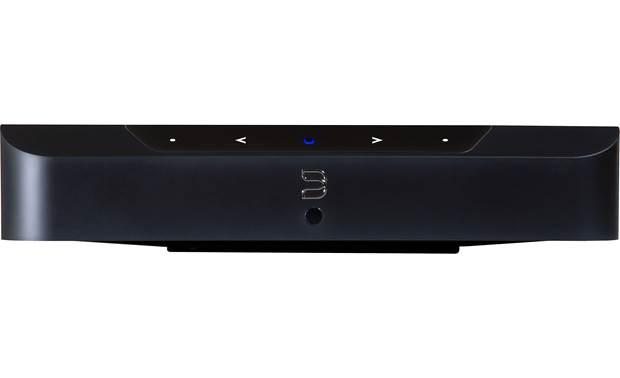
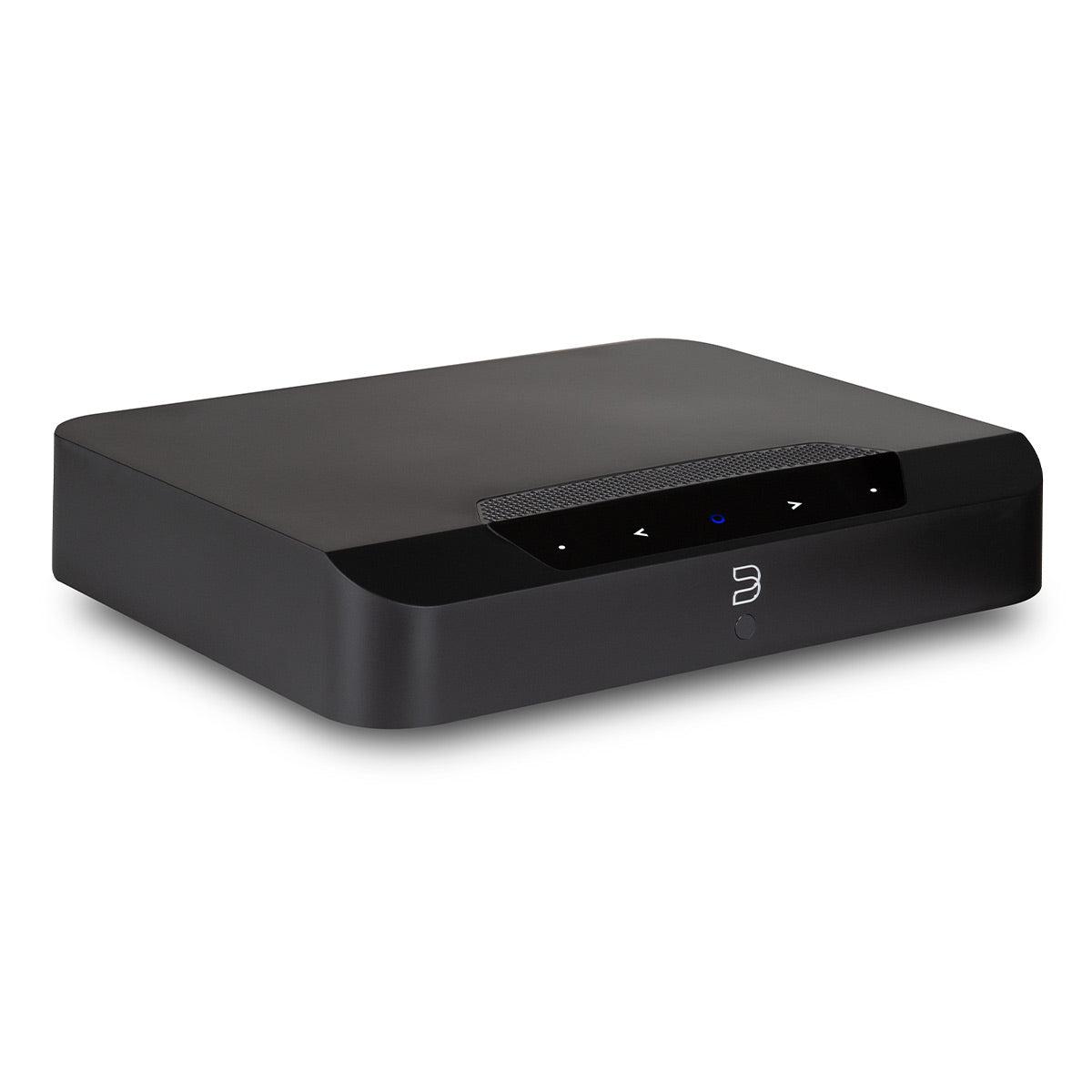
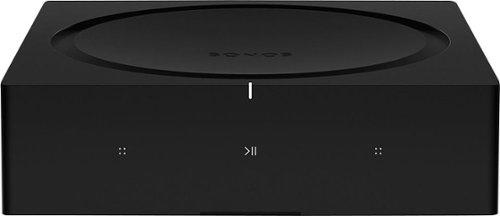
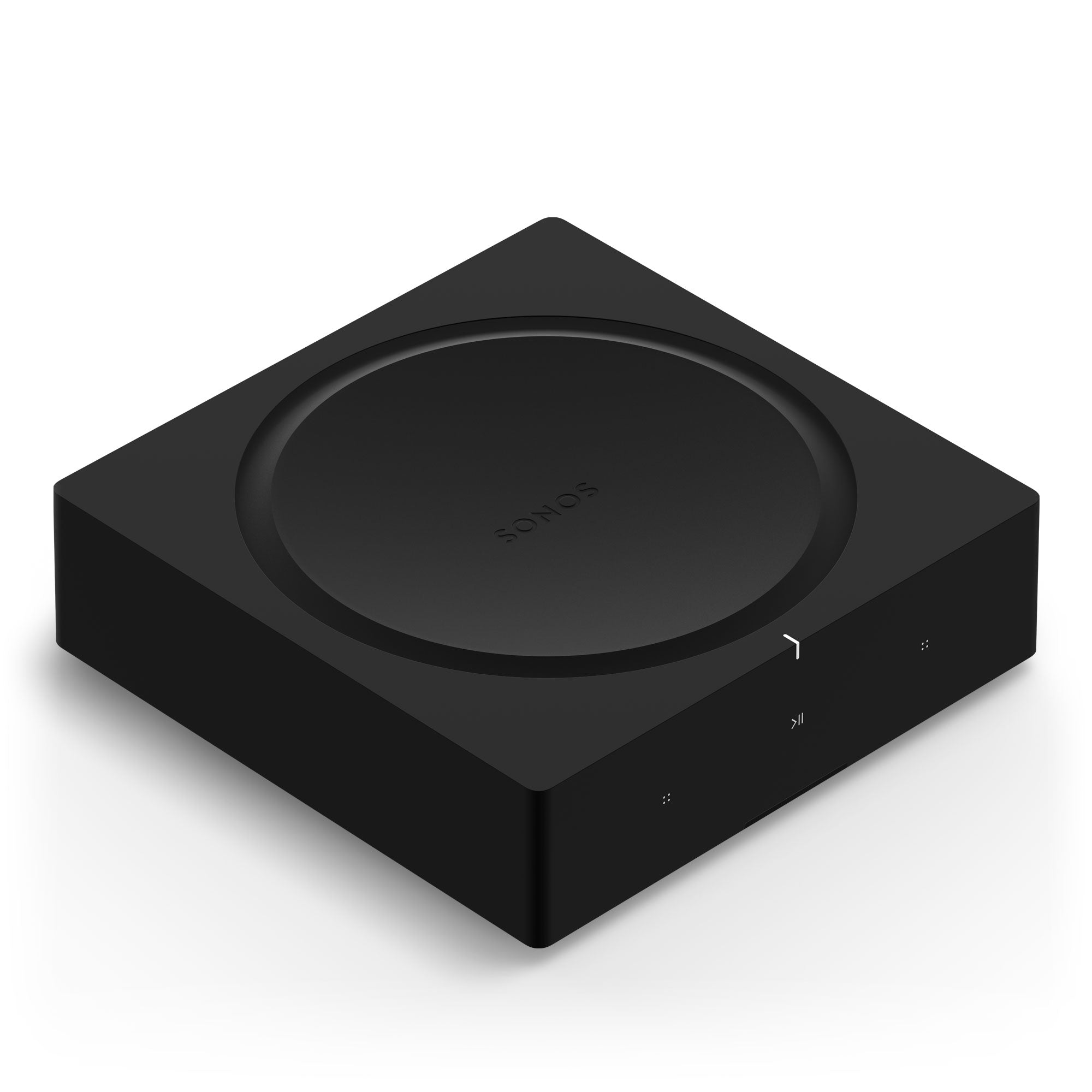
The PowerNode Edge, released in 2022, represents Bluesound's entry into the compact streaming amplifier market. It's built around NAD's DirectDigital technology—the same company that owns Bluesound—and focuses heavily on audio quality while maintaining a surprisingly small footprint. The Sonos Amp, launched in 2018 and refined over the years, takes a different approach, prioritizing raw power output and seamless integration with Sonos's mature multi-room ecosystem.
When comparing amplifiers, most people immediately look at wattage figures, but this tells only part of the story. The Sonos Amp delivers 125 watts per channel into 8-ohm speakers, while the PowerNode Edge outputs 40 watts per channel. On paper, that makes the Sonos seem like the obvious winner, but amplifier power is more nuanced than simple numbers suggest.
Speaker efficiency plays a crucial role here. If you have efficient speakers—those rated around 88 decibels or higher—the PowerNode Edge's 40 watts can produce surprisingly loud, clean sound. I've found that many people overestimate how much power they actually need. In a typical living room with moderately efficient bookshelf speakers, 40 watts often provides more than enough volume for comfortable listening.
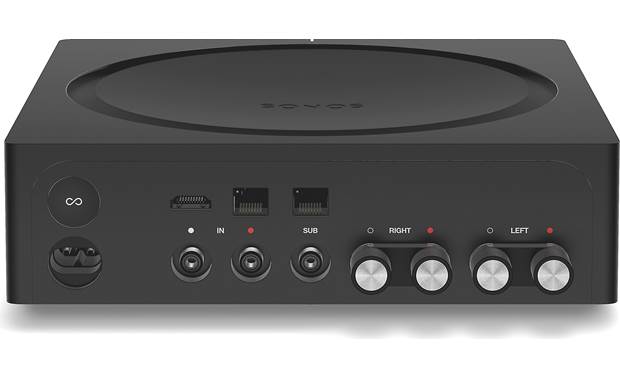
However, the Sonos Amp really shines when you need to drive larger, less efficient speakers or fill big spaces. Floor-standing speakers, some in-wall models, or outdoor speakers often demand more power to reach their potential. The Sonos can even drive two pairs of speakers simultaneously—something the PowerNode Edge cannot do safely.
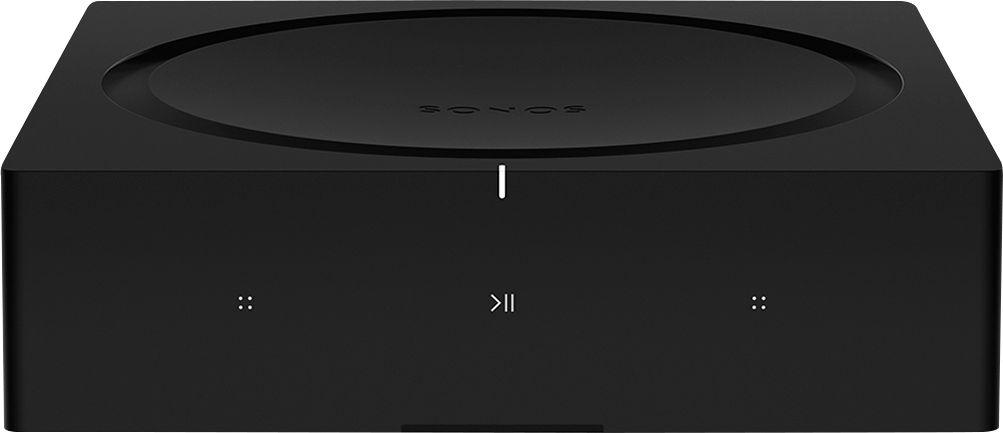
But here's where it gets interesting: the PowerNode Edge uses a fundamentally different amplification technology called DirectDigital. Traditional amplifiers, including the Sonos, convert your digital music to analog signals, then amplify those analog signals. The PowerNode Edge keeps everything digital until the very last moment, sending digital signals directly to the speakers. This approach typically results in lower distortion, better efficiency, and less heat generation.
The technical specifications support this difference. The PowerNode Edge achieves 0.008% total harmonic distortion (THD), while the Sonos Amp specs show 1% THD at full power. In practical terms, this means the Bluesound unit should remain clean and clear even at higher volumes, while the Sonos might introduce some audible distortion when pushed hard.
This is where my research into user and expert reviews reveals the most significant distinctions between these products. The PowerNode Edge supports high-resolution audio formats up to 24-bit/192kHz, along with MQA (Master Quality Authenticated) decoding. MQA is a technology that allows streaming services to deliver studio-master-quality audio in smaller file sizes—think of it as a more efficient way to stream the highest quality music possible.
The Sonos Amp, in contrast, maxes out at 24-bit/48kHz and doesn't support MQA at all. For most people listening to Spotify or Apple Music, this limitation won't matter much since these services don't stream at higher resolutions anyway. But if you subscribe to Tidal, Qobuz, or have a collection of high-resolution music files, the PowerNode Edge can take full advantage of that quality while the Sonos cannot.
In terms of sound character, reviews consistently describe the PowerNode Edge as having a more refined, detailed presentation with excellent imaging—meaning instruments and vocals appear precisely positioned in the stereo field. However, some listeners find it a bit too polite or relaxed for certain music genres, particularly rock or electronic music that benefits from more aggressive dynamics.
The Sonos Amp, conversely, delivers what most describe as a more immediate, punchy sound that fills rooms effectively. It's optimized for consistency across different rooms in a multi-room setup rather than ultimate audiophile refinement in a single location. This difference in approach reflects each company's priorities: Bluesound targeting audio enthusiasts, Sonos focusing on whole-home convenience.
Both units handle the basics of modern streaming—Wi-Fi connectivity, support for major streaming services, and smartphone app control. However, their physical connectivity approaches differ significantly.
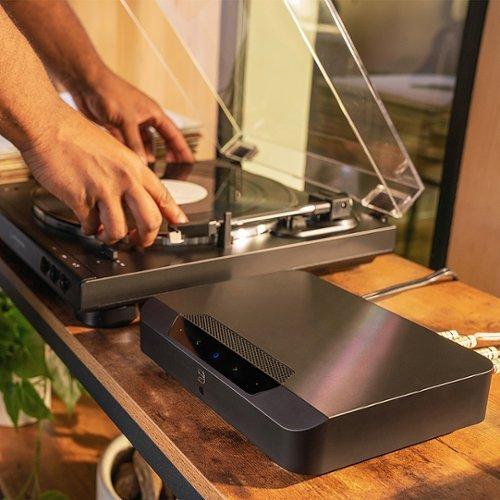
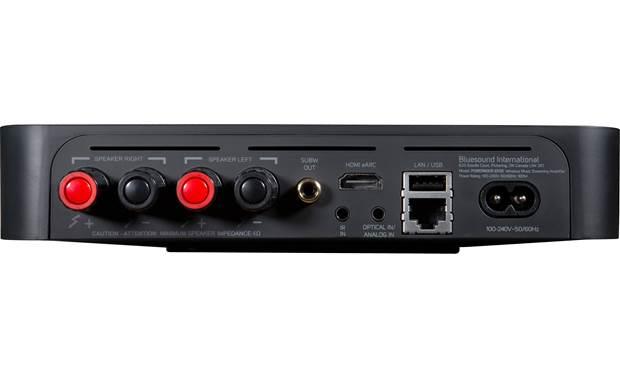
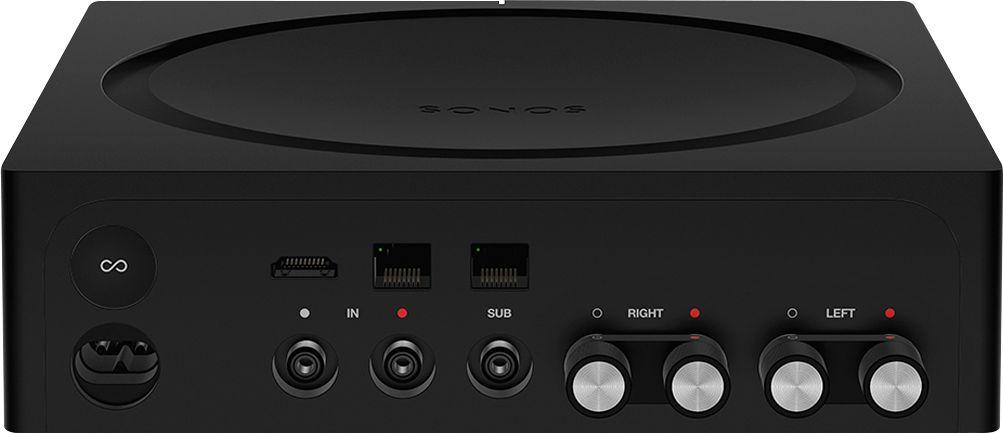
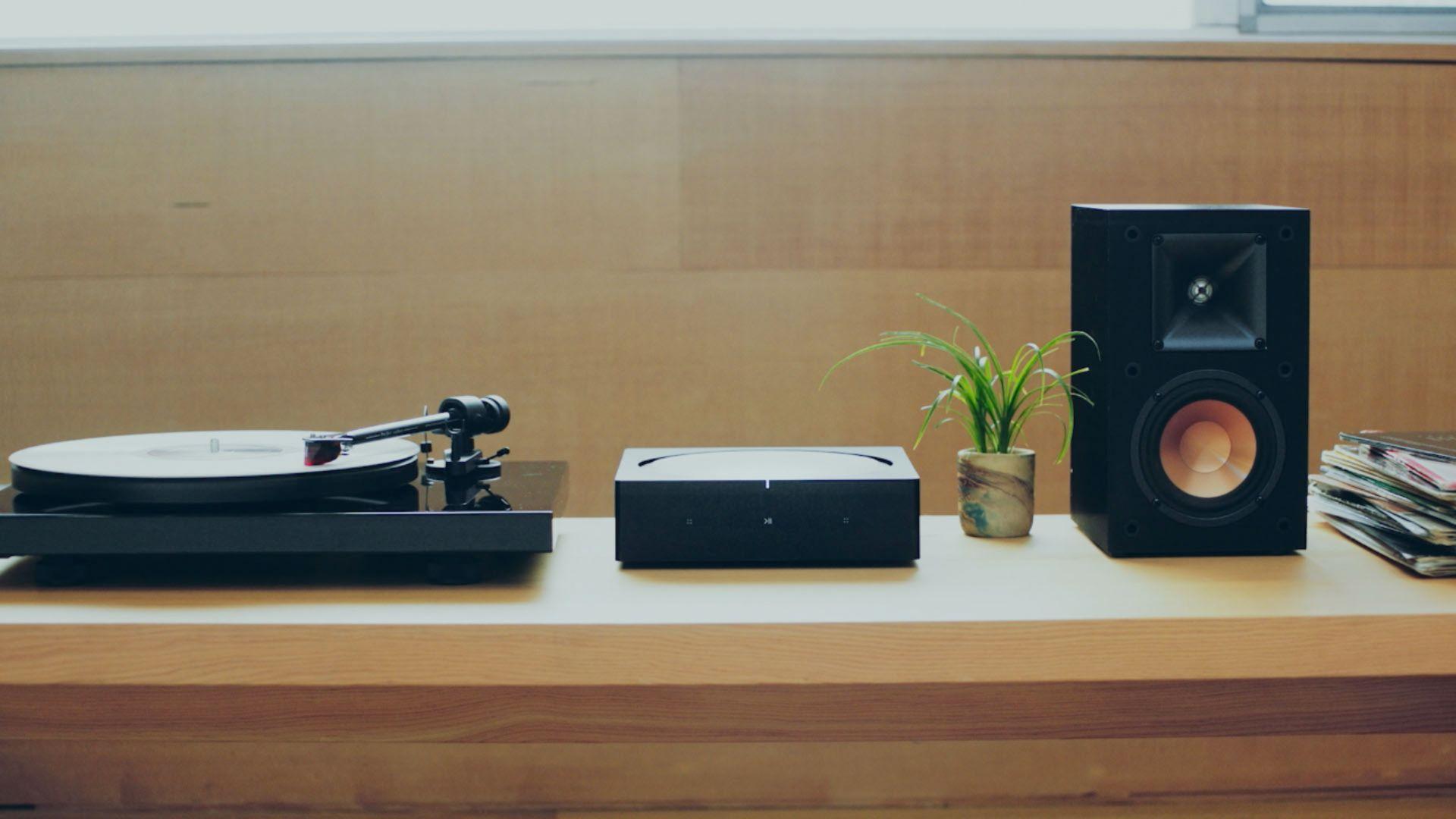
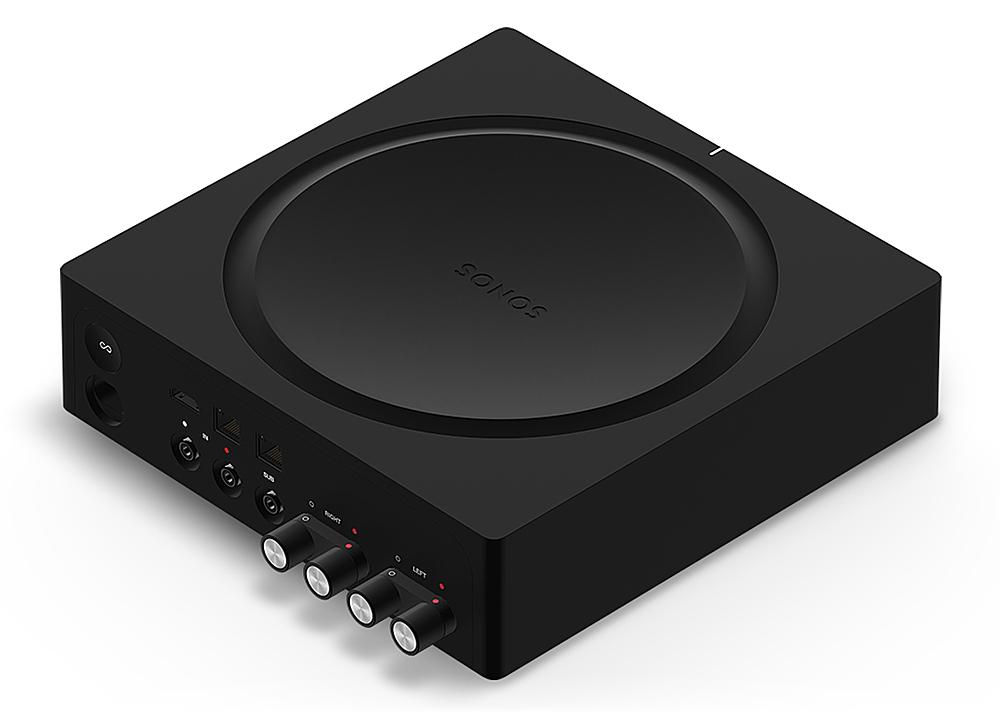
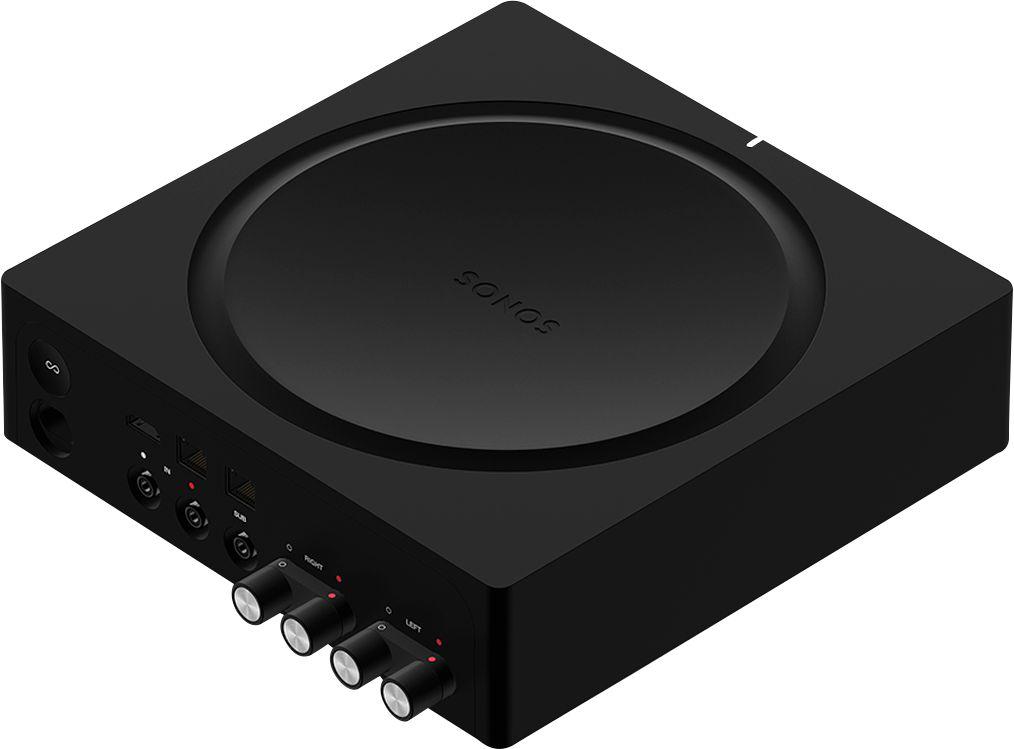
The Sonos Amp provides more traditional, comprehensive connections. It features full-size RCA analog inputs for connecting sources like CD players or turntables (though you'll need a separate phono preamp for most turntables), HDMI ARC for direct TV connection, and dual Ethernet ports for network redundancy or daisy-chaining other devices. The speaker connections use professional-style binding posts that accept banana plugs—a nice touch for serious installations.
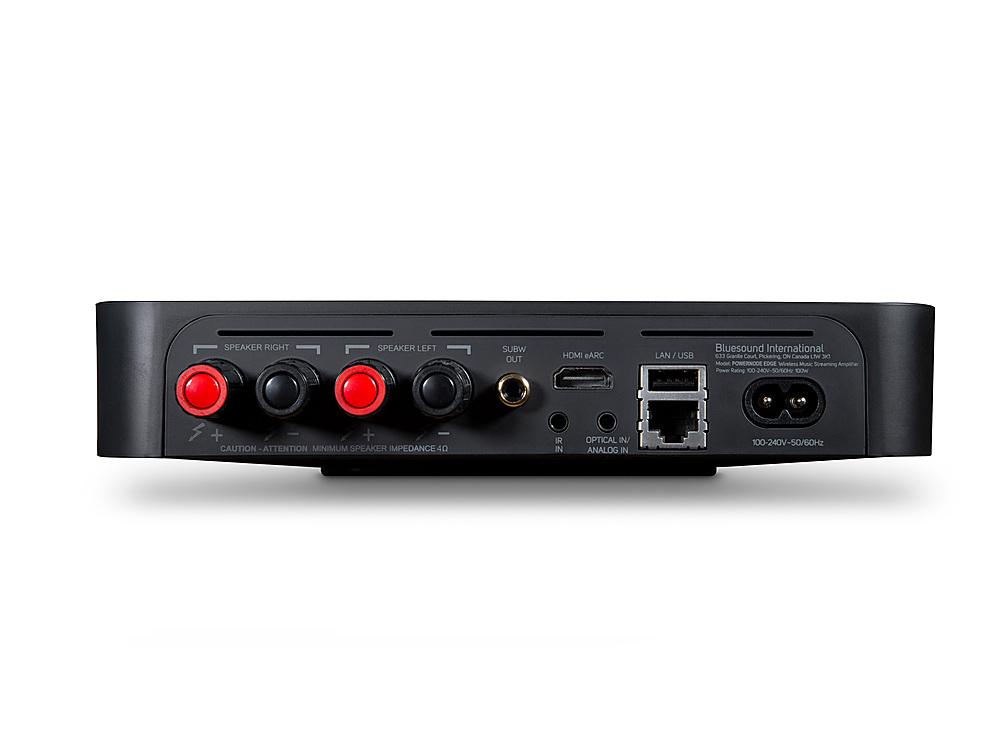
The PowerNode Edge takes a more minimalist approach, using a 3.5mm combo jack that can accept either optical digital or analog signals. While this saves space and keeps costs down, it means you'll need adapters to connect standard RCA cables. The unit also includes HDMI eARC (enhanced Audio Return Channel), which supports higher-quality audio formats from your TV compared to standard ARC.
One area where the PowerNode Edge clearly wins is Bluetooth connectivity. It features two-way Bluetooth 5.0 with aptX HD support, meaning you can both stream music to it from your phone and stream music from it to Bluetooth headphones. The Sonos Amp has no Bluetooth support whatsoever—a surprising omission in 2024.
This is where choosing between these devices becomes less about specifications and more about your broader audio goals. Sonos has spent over two decades perfecting whole-home audio, and it shows. The platform synchronizes multiple rooms flawlessly, offers voice control integration, and provides an intuitive app experience that family members can navigate easily.
If you already own Sonos speakers or plan to build a multi-room system, the Sonos Amp integrates seamlessly. You can group it with other Sonos devices, control everything from one app, and benefit from features like TruePlay room calibration (when used with compatible speakers). The system just works, reliably and consistently.
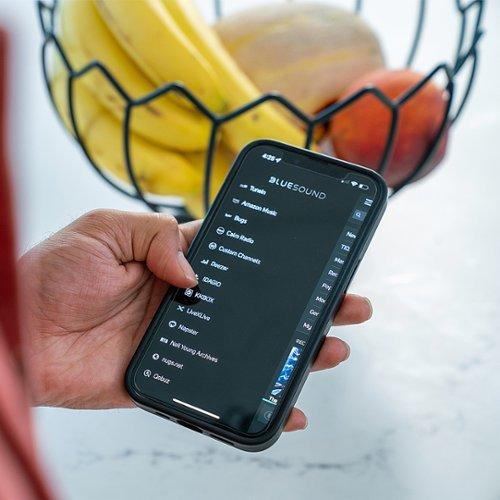
The PowerNode Edge uses Bluesound's BluOS platform, which offers multi-room capabilities but with a smaller ecosystem of compatible devices. However, BluOS provides better integration with high-end audio brands and supports Roon—a premium music management system beloved by serious audio enthusiasts. If you value flexibility over simplicity, the PowerNode Edge offers more options for building a mixed-brand system.
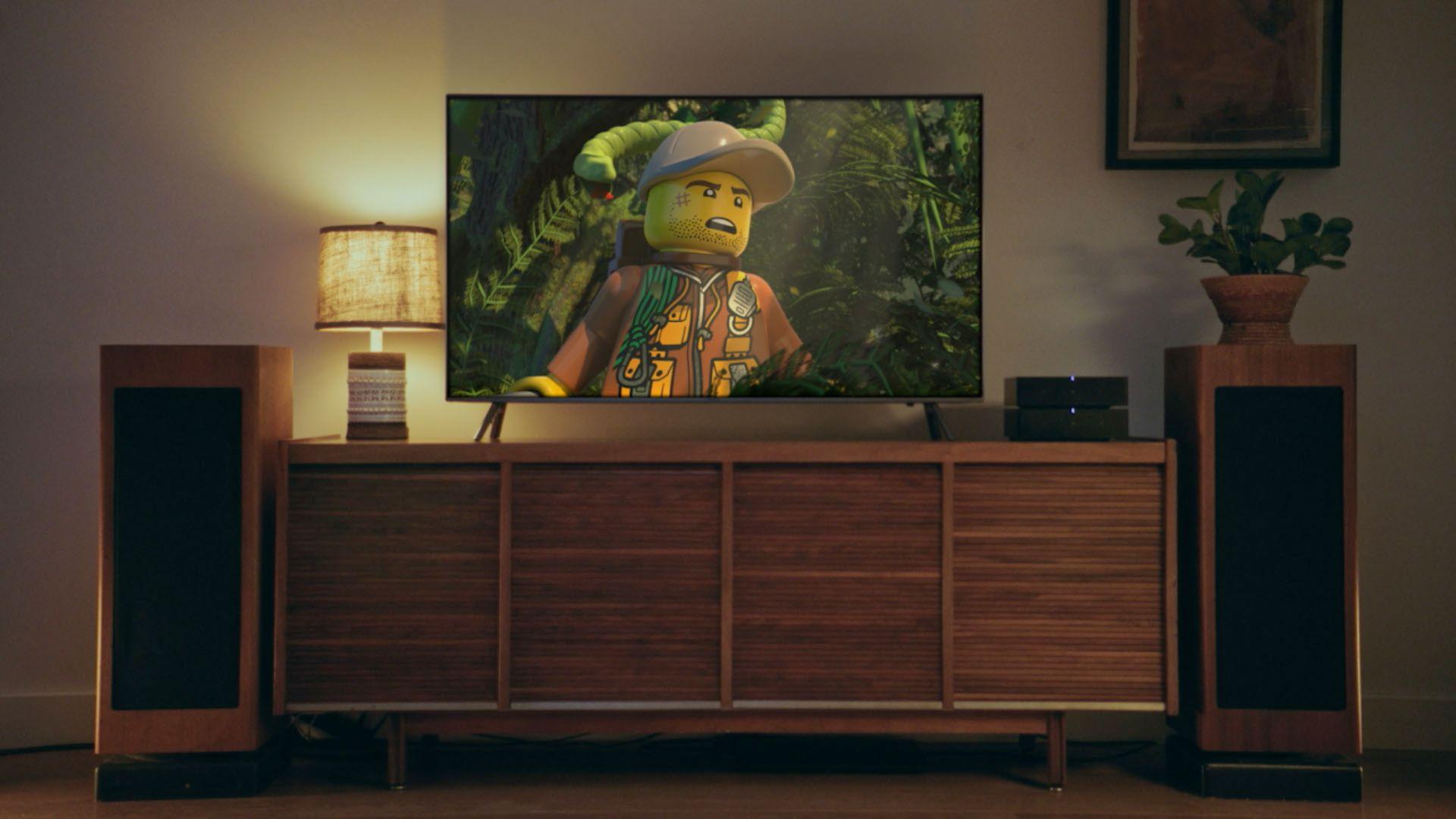
Both devices can integrate with your TV setup, but they take different approaches. The Sonos Amp uses HDMI ARC to connect directly to your TV, allowing it to handle audio from all your TV sources—cable box, streaming devices, gaming consoles. It supports Dolby Digital and DTS formats, and you can wirelessly add Sonos surround speakers for a complete home theater system.
The PowerNode Edge offers HDMI eARC, which theoretically supports higher-quality audio formats than standard ARC. It also handles Dolby Digital decoding and can serve as rear channel speakers in a wireless surround setup with other Bluesound components. However, the Sonos approach feels more mature and better integrated for typical home theater use.
For most people setting up a TV-connected system, the Sonos Amp provides a more straightforward path to good surround sound. The Bluesound option works well but requires more planning and compatible components to achieve similar results.
At the time of writing, these products are priced competitively with each other, both falling in the $600-700 range. This makes the value comparison particularly interesting since you're essentially choosing between two different philosophies at similar price points.
The PowerNode Edge delivers exceptional audio quality per dollar. Its DirectDigital amplification, high-resolution format support, and audiophile-grade DAC (digital-to-analog converter) would typically cost significantly more in separate components. If sound quality is your primary concern and you have appropriately efficient speakers, it represents outstanding value.
The Sonos Amp offers better long-term ecosystem value, especially if you plan to expand your system. Its higher power output means it works with a wider variety of speakers, and the mature Sonos platform provides reliability and regular feature updates. For whole-home audio projects, the total system cost often works out better with Sonos despite the slightly higher individual component prices.
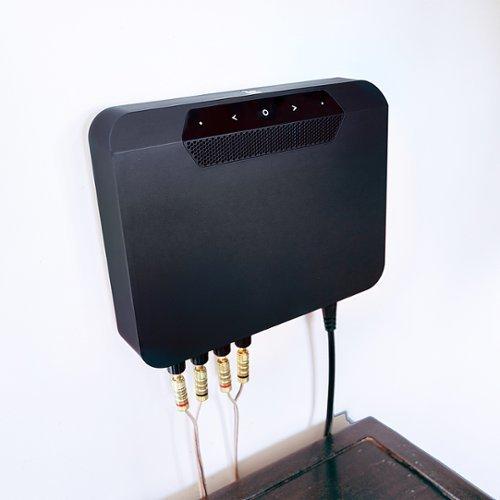
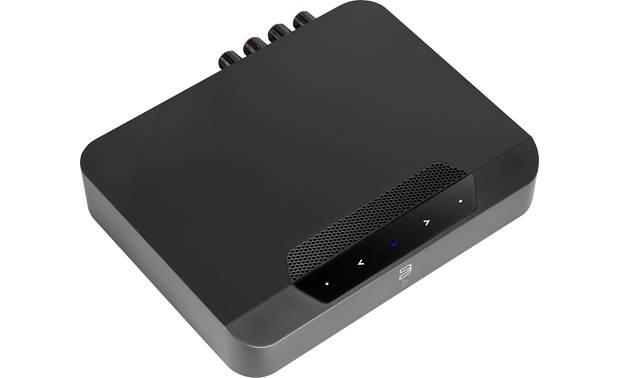
Both devices aim for simple setup, but they achieve this differently. The PowerNode Edge includes a wall-mount bracket and compact form factor that disappears behind TVs or on bookshelves. Its touch controls provide quick access to common functions without needing your phone.
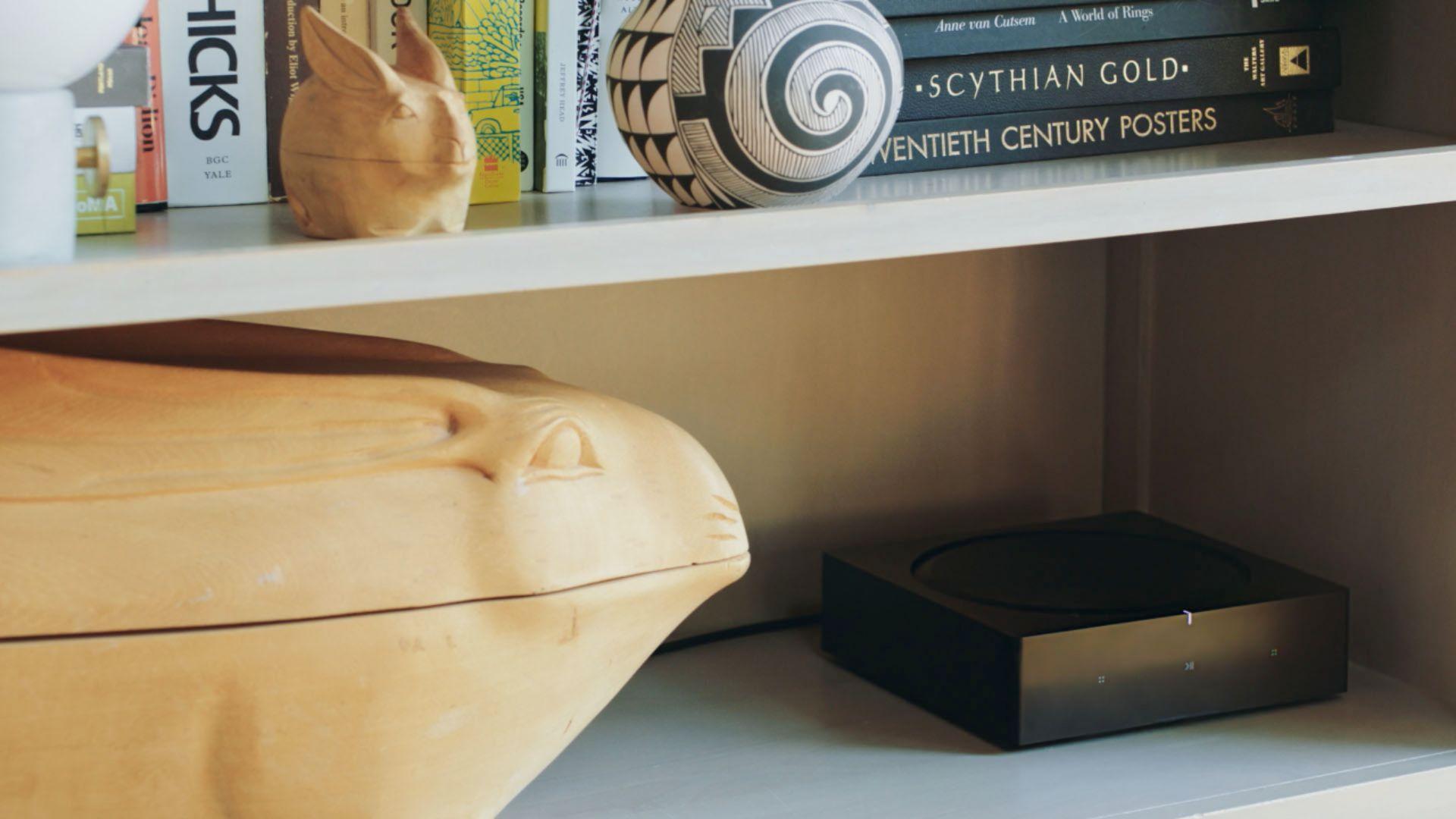
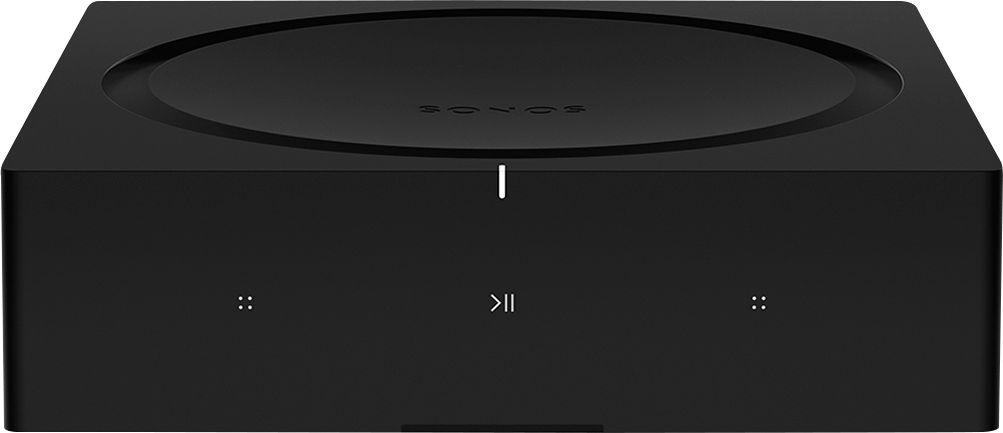
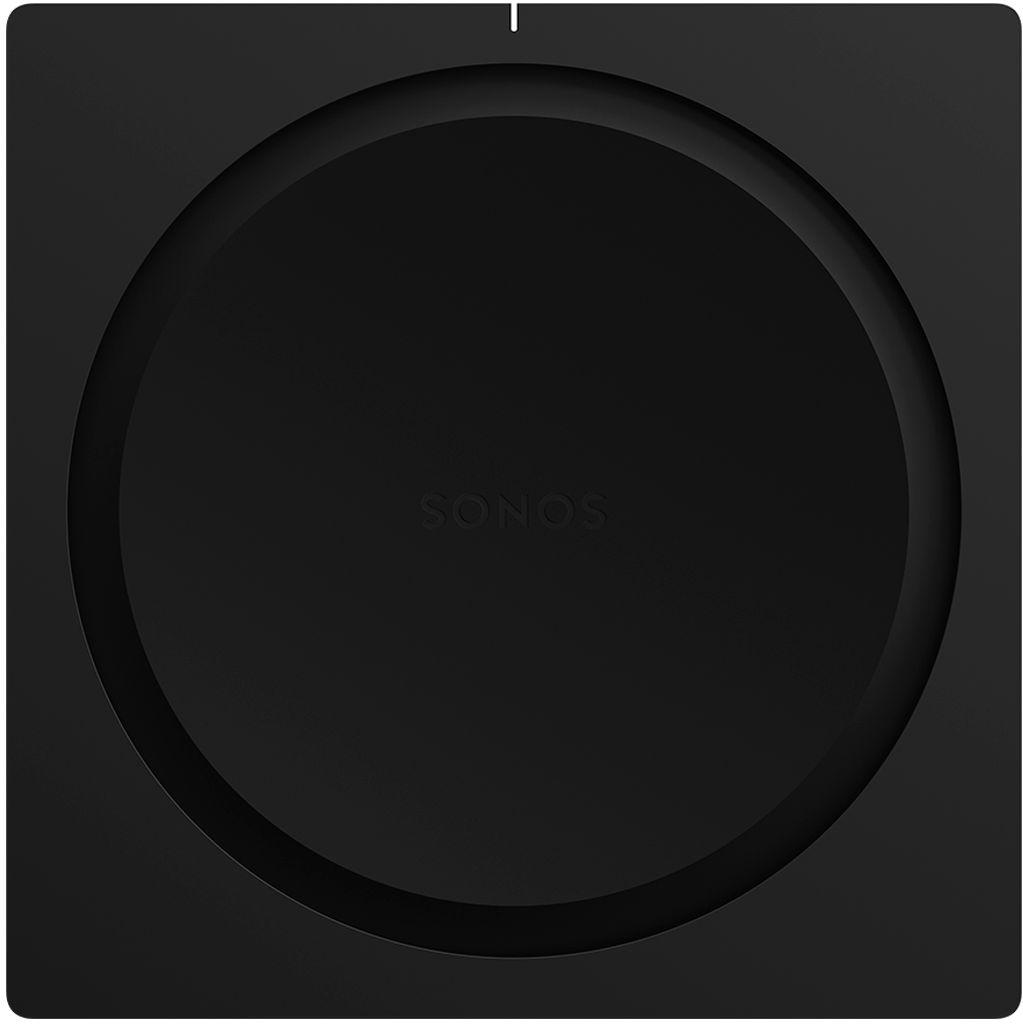
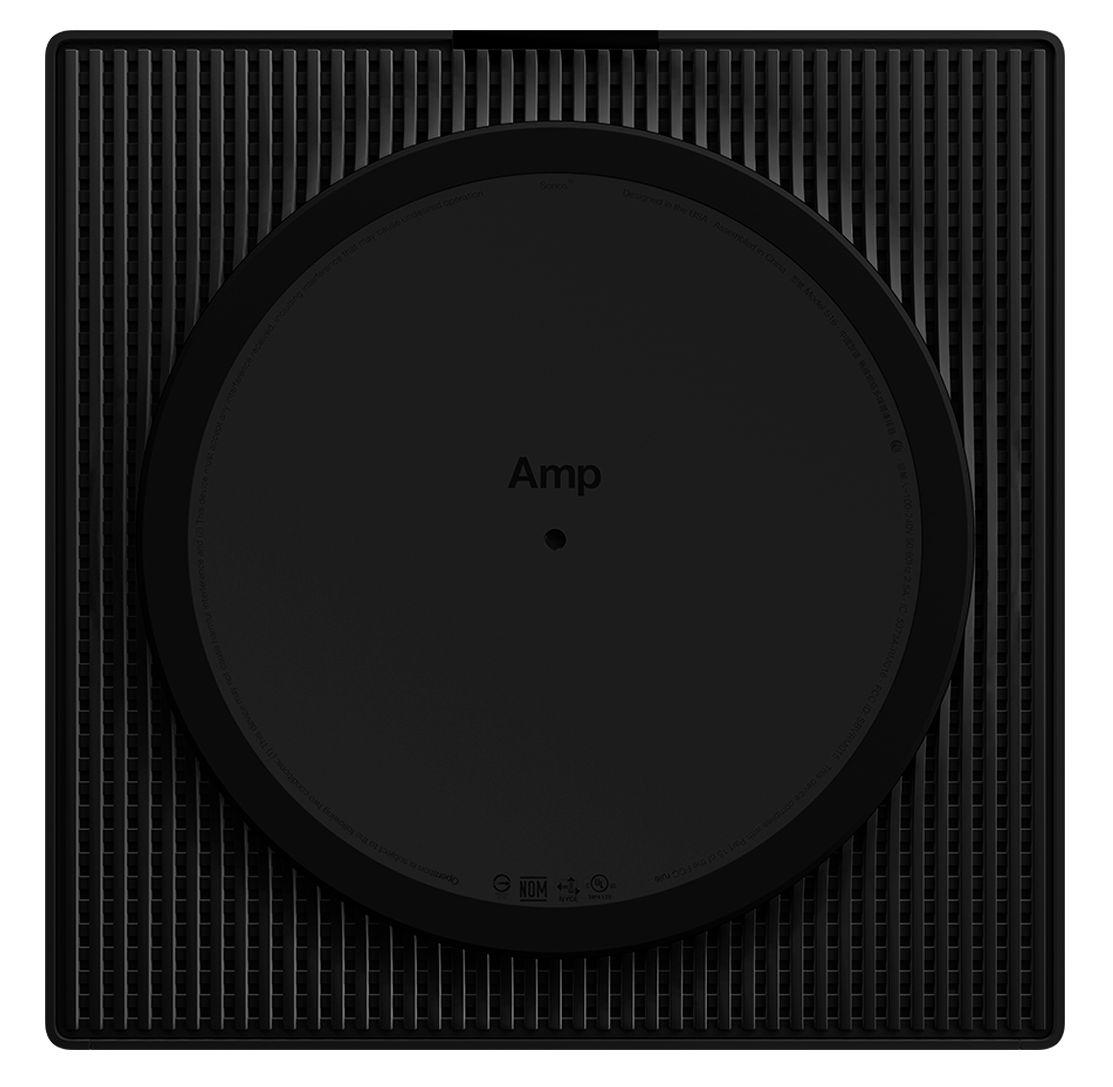
The Sonos Amp takes up more space but offers more cooling capacity for sustained high-volume use. Its rack-mountable design appeals to custom installers, and the Sonos app walks you through setup step-by-step.
Neither device is particularly difficult to set up, but the Sonos ecosystem generally provides a more foolproof experience for less technically inclined users.
After evaluating extensive user feedback and expert reviews, clear use-case scenarios emerge for each product.
Choose the Bluesound PowerNode Edge if you're an audio enthusiast who values sound quality above all else. It's perfect for small to medium-sized rooms with efficient speakers, especially if you subscribe to high-resolution streaming services or have a large digital music collection. The compact size makes it ideal for desktop systems, bedrooms, or any space where a traditional amplifier would be too large. It's also the better choice if you want flexibility to integrate with various audio brands or use Roon for music management.
The Sonos Amp makes more sense if you need serious power output for large speakers or rooms. It's the obvious choice if you already own Sonos products or plan to build a multi-room system. For home theater use, particularly if you want to add wireless surround speakers, the Sonos ecosystem provides a more streamlined experience. It's also preferable for installations where reliability and family-friendly operation outweigh ultimate audio quality.
Both the PowerNode Edge and Sonos Amp represent excellent values in the streaming amplifier category, but they serve different priorities. The Bluesound excels at delivering audiophile-quality sound in a compact, flexible package. The Sonos dominates in power output, ecosystem integration, and multi-room reliability.
Your decision should align with your listening priorities and system goals. If you're building a serious two-channel listening system and care about audio quality above convenience features, the PowerNode Edge offers remarkable performance for the money. If you want a powerful, reliable foundation for whole-home audio with simple operation, the Sonos Amp provides proven excellence in that role.
Neither choice will disappoint, but choosing the right one for your specific needs will make the difference between a good audio system and a great one that you'll enjoy for years to come.
| Bluesound PowerNode Edge | Sonos Amp |
|---|---|
| Power Output - Determines which speakers you can drive effectively | |
| 40W per channel (8Ω) - Best for efficient bookshelf speakers in small-medium rooms | 125W per channel (8Ω) - Can drive large, demanding speakers and fill big spaces |
| Amplifier Technology - Affects sound quality and distortion levels | |
| DirectDigital™ amplification with 0.008% THD - Audiophile-grade performance | Class D amplification with 1% THD - Conventional but reliable approach |
| High-Resolution Audio Support - Important for streaming service quality | |
| 24-bit/192kHz plus MQA decoding - Full support for premium streaming tiers | 24-bit/48kHz maximum - Limited to standard quality streams |
| Physical Connectivity - Determines what sources you can connect | |
| HDMI eARC, 3.5mm combo input (needs adapters for RCA) - Minimalist approach | HDMI ARC, full RCA inputs, dual Ethernet - Comprehensive traditional connections |
| Wireless Features - Modern convenience and flexibility | |
| Two-way Bluetooth 5.0 aptX HD, Wi-Fi, AirPlay 2 - Excellent wireless versatility | Wi-Fi, AirPlay 2 only - No Bluetooth support at all |
| Multi-Room Ecosystem - Long-term expansion potential | |
| BluOS platform with mixed-brand compatibility - Flexible but smaller ecosystem | Sonos platform with seamless integration - Mature, reliable, extensive product line |
| Size and Installation - Space requirements and placement flexibility | |
| Compact with wall-mount bracket included - Disappears in most setups | Larger rack-mountable design - Needs dedicated shelf space but better cooling |
| Home Theater Integration - TV and surround sound capabilities | |
| HDMI eARC with Dolby Digital, wireless rear channel option - Good but requires planning | HDMI ARC with easy wireless surround expansion - More straightforward setup |
| Target User - Who each product serves best | |
| Audio enthusiasts with efficient speakers who value sound quality - Audiophile focus | Users needing high power output or multi-room systems - Mainstream appeal |
The Sonos Amp is significantly more powerful, delivering 125 watts per channel compared to the Bluesound PowerNode Edge's 40 watts per channel. This makes the Sonos Amp better for driving large speakers or filling big rooms, while the PowerNode Edge works well with efficient speakers in smaller spaces.
Yes, the Bluesound PowerNode Edge supports high-resolution audio up to 24-bit/192kHz and includes MQA decoding for premium streaming services. The Sonos Amp is limited to 24-bit/48kHz and doesn't support MQA, making the PowerNode Edge the better choice for audiophiles.
The Sonos Amp generally works better for home theater due to its mature ecosystem and easy wireless surround speaker integration. While the Bluesound PowerNode Edge offers HDMI eARC and Dolby Digital support, the Sonos Amp provides a more straightforward path to complete surround sound systems.
Yes, both can connect to your TV. The PowerNode Edge uses HDMI eARC for higher-quality audio formats, while the Sonos Amp uses standard HDMI ARC. Both support TV audio playback and can serve as your main TV sound system.
The Sonos Amp has superior multi-room capabilities thanks to Sonos's mature platform with seamless synchronization and extensive speaker compatibility. The Bluesound PowerNode Edge offers multi-room through BluOS but has a smaller ecosystem, though it provides more flexibility with third-party components.
Only the Bluesound PowerNode Edge supports Bluetooth, featuring two-way Bluetooth 5.0 with aptX HD for high-quality wireless streaming. The Sonos Amp has no Bluetooth support whatsoever, which may be a dealbreaker for some users.
The Bluesound PowerNode Edge is ideal for small rooms and bookshelf speakers, offering audiophile-quality sound with its DirectDigital amplification technology. Its compact size and wall-mount capability make it perfect for smaller setups where the Sonos Amp's higher power isn't necessary.
Yes, both the PowerNode Edge and Sonos Amp include dedicated subwoofer outputs. The PowerNode Edge features bass management capabilities, while the Sonos Amp offers adjustable crossover settings through the Sonos app.
Both amplifiers support major streaming services like Spotify, Apple Music, and Tidal. The PowerNode Edge works with the BluOS platform and supports Roon integration, while the Sonos Amp uses the Sonos ecosystem with its extensive service partnerships and voice assistant integration.
Yes, the Bluesound PowerNode Edge is much more compact and includes a wall-mount bracket for flexible installation. The Sonos Amp is larger with a rack-mountable design that requires more shelf space but provides better cooling for sustained high-power use.
Value depends on your priorities. The PowerNode Edge offers exceptional audio quality per dollar with high-resolution support and advanced amplification technology. The Sonos Amp provides better long-term ecosystem value if you plan to build a multi-room system or need higher power output.
Both can work with most passive speakers, but matching is important. The PowerNode Edge works best with efficient speakers (88dB+ sensitivity) due to its 40-watt output. The Sonos Amp can drive virtually any passive speakers thanks to its 125-watt power output and can even handle two pairs simultaneously.
We've done our best to create useful and informative comparisons to help you decide what product to buy. Our research uses advanced automated methods to create this comparison and perfection is not possible - please contact us for corrections or questions. These are the sites we've researched in the creation of this article: futureaudiophile.com - alpha-audio.net - theaudiofactory.com - audiophilia.com - youtube.com - qaudio.com - crutchfield.com - youtube.com - bluesound.com - audioadvisor.com - crutchfield.com - bluesound.com - audiosciencereview.com - bluesound.com - soundstagesimplifi.com - mysoundconcepts.com - audioadvice.com - crutchfield.com - adiglobaldistribution.pr - themasterswitch.com - astralsecurite.ca - wassersfurniture.com - whathifi.com - sonos.com - audiosciencereview.com - bestbuy.com - videoandaudiocenter.com - en.community.sonos.com

Privacy Policy
Terms and Conditions - Affiliate Policy
Home Security
© Copyright 2008-2026.
11816 Inwood Rd #1211, Dallas, TX 75244