

If you've been looking to upgrade your passive speakers with modern streaming capabilities, you've probably encountered the challenge of choosing between all-in-one streaming amplifiers. Two standout options that represent different philosophies in this space are the Bluesound PowerNode Edge and the Denon HEOS Amp HS2. Both promise to transform your traditional speakers into smart, connected audio systems, but they take notably different approaches to get there.
Before diving into the specifics, let's clarify what we're dealing with. Compact streaming amplifiers are essentially three devices rolled into one: a network streamer (which connects to your Wi-Fi and pulls music from the internet or your home network), a digital-to-analog converter or DAC (which turns digital music files into analog signals your speakers can use), and an amplifier (which boosts those signals to power your speakers).
Think of them as the modern evolution of the stereo receiver, but designed for today's streaming-first world. Instead of tuning into radio stations, you're accessing Spotify, Tidal, or your personal music collection stored on a phone or computer. The key considerations when choosing between models boil down to how much power they provide, how good they sound, how easy they are to use, and how well they integrate with the rest of your home entertainment setup.
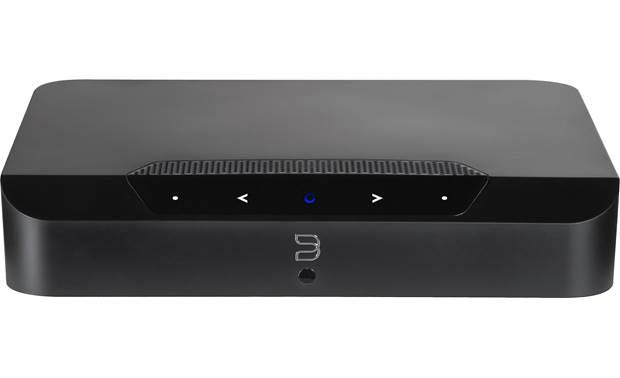
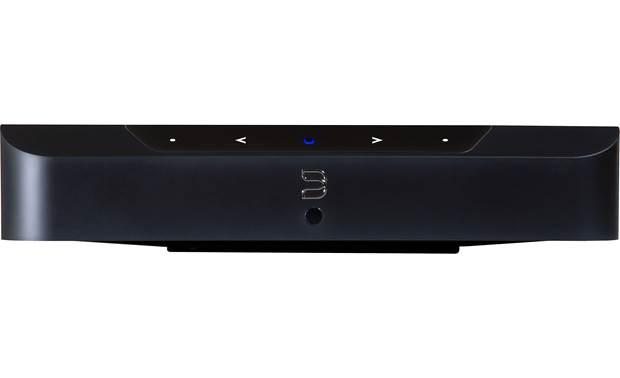
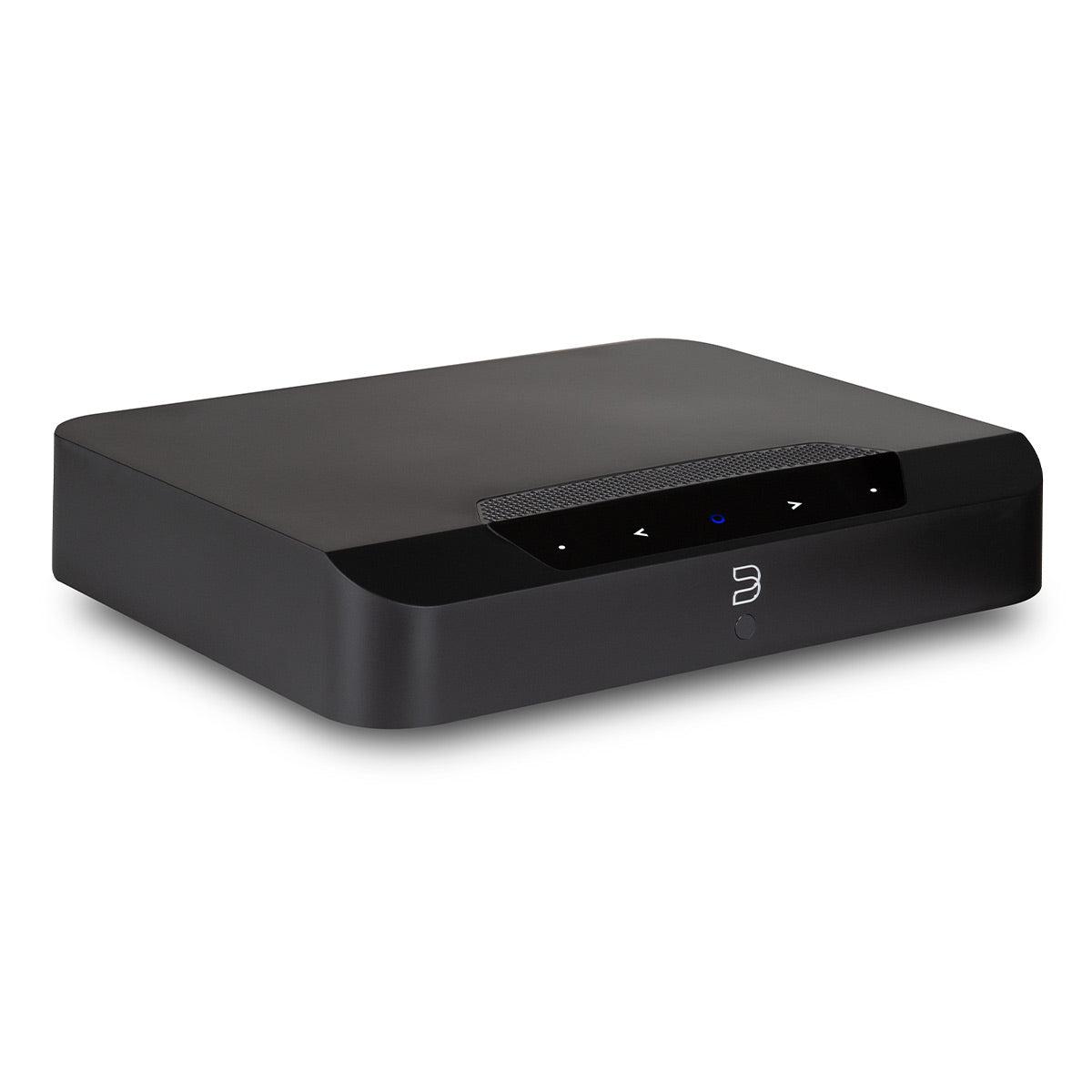
The Bluesound PowerNode Edge, released in 2022, represents the latest thinking in compact amplifier design. It's part of Bluesound's lineup that emerged from NAD Electronics, a company with serious audiophile credentials. At around the mid-$500 range at the time of writing, it positions itself as a premium option that doesn't compromise on sound quality despite its tiny footprint.
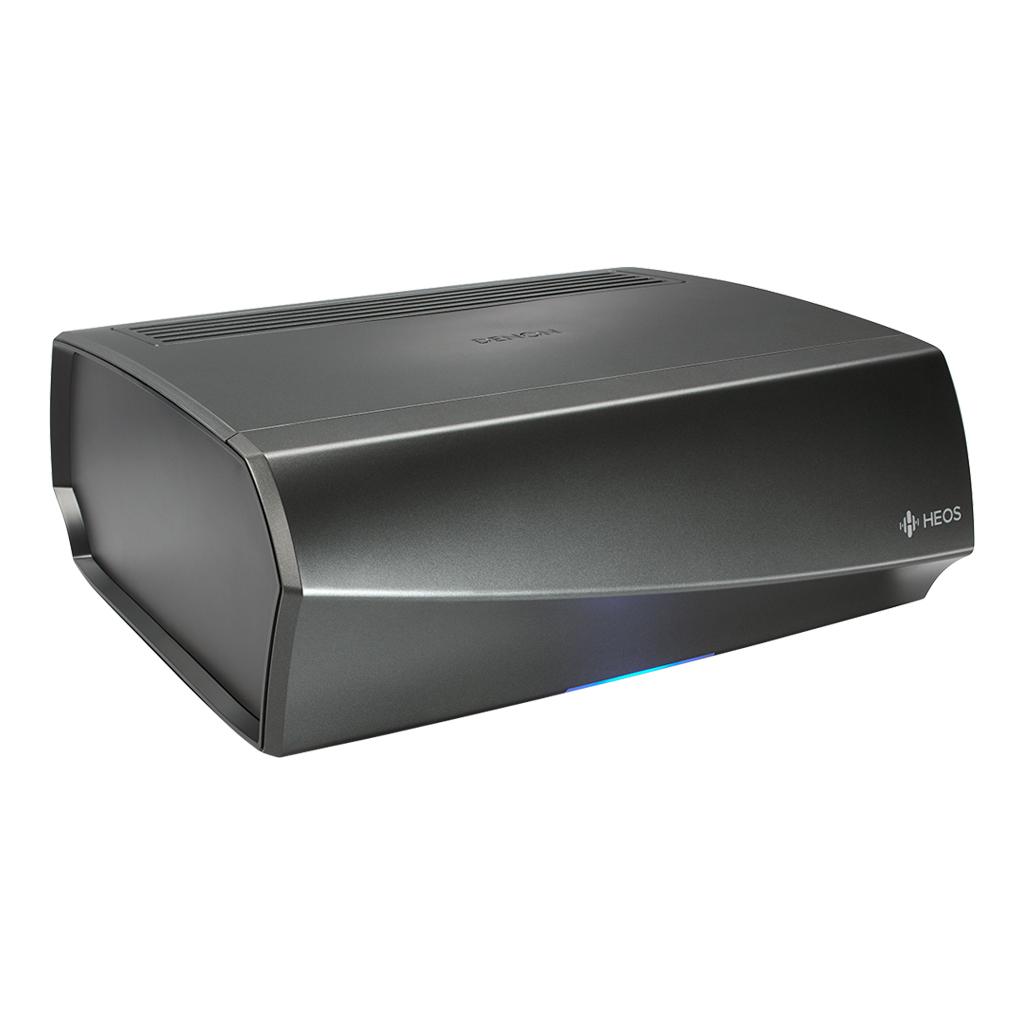
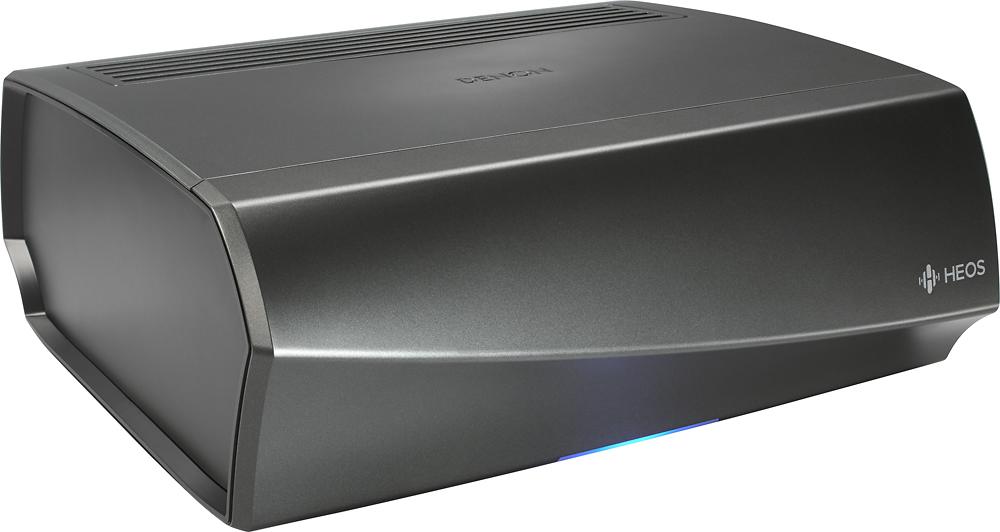
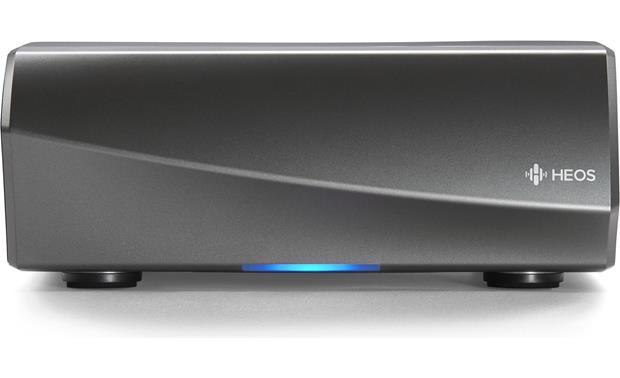
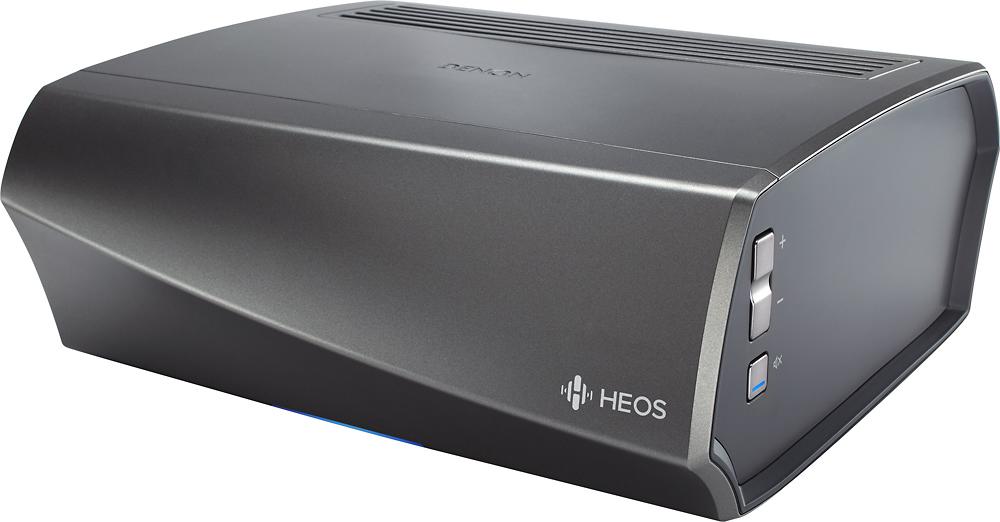
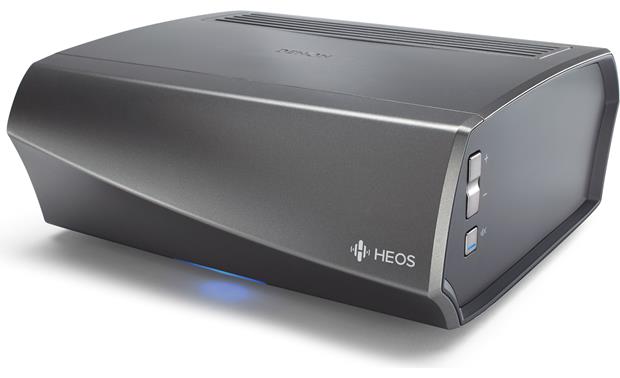
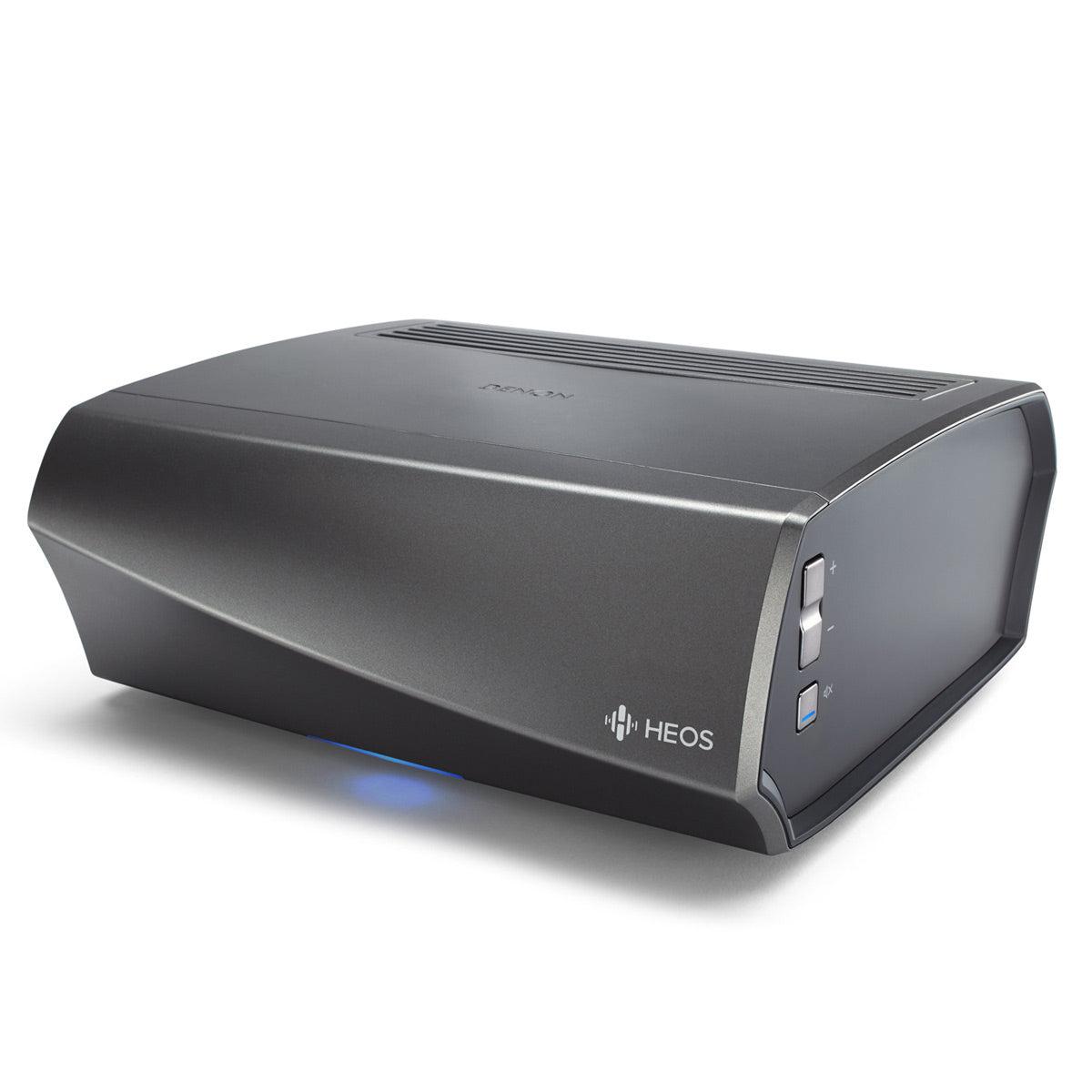
The Denon HEOS Amp HS2 has been around since 2016, making it something of a veteran in this rapidly evolving category. Despite its age, it remains competitive thanks to consistent firmware updates and Denon's solid engineering foundation. Priced similarly to the Bluesound, it takes a more traditional approach to amplifier design while still embracing modern streaming capabilities.
The age difference between these products tells an interesting story about how quickly this category has evolved. When the Denon HEOS Amp HS2 launched, HDMI connectivity on compact amplifiers was virtually unheard of, and voice assistant integration was still in its infancy. The Bluesound PowerNode Edge, arriving six years later, reflects how manufacturers have learned to pack more sophisticated features into even smaller packages.
Here's where things get immediately interesting. The Denon HEOS Amp HS2 delivers 70 watts per channel into 8-ohm speakers, while the Bluesound PowerNode Edge provides 40 watts per channel into the same load. That's a 75% power advantage for the Denon – a significant difference that matters more than you might initially think.
Power output determines how loud your system can play and, more importantly, how much control the amplifier maintains over your speakers at various volume levels. Speakers with lower sensitivity ratings (measured in decibels, or dB) need more power to reach the same volume levels as more efficient designs. If you're driving demanding bookshelf speakers like the popular KEF LS50s, which have a relatively low 85dB sensitivity rating, that extra power from the Denon HEOS Amp HS2 translates to noticeably better dynamics and less strain at higher volumes.
However, raw power numbers don't tell the complete story. The Bluesound PowerNode Edge uses what Bluesound calls DirectDigital amplification technology. This approach keeps the audio signal in digital form right up until the final output stage, minimizing the conversion steps that can introduce distortion. Think of it like a direct flight versus one with connections – fewer transfers mean fewer opportunities for things to go wrong.
Based on our research into professional measurements and user feedback, this technological difference becomes audible in practice. The Bluesound PowerNode Edge consistently demonstrates lower measured distortion figures – around 0.008% total harmonic distortion plus noise (THD+N) compared to the Denon's 0.05-0.1% range. While both figures represent excellent performance, that difference contributes to what many listeners describe as a cleaner, more refined sound from the Bluesound.
The practical upshot? If you're using reasonably efficient speakers (87dB sensitivity or higher) in a small to medium-sized room, the Bluesound PowerNode Edge provides plenty of clean power with superior audio quality. For larger spaces, outdoor installations, or particularly demanding speakers, the Denon HEOS Amp HS2 becomes the more sensible choice.
Professional reviewers and user consensus point to distinctly different sonic signatures between these amplifiers. The Bluesound PowerNode Edge tends toward what audiophiles call a "relaxed" presentation – smooth highs that never become harsh, a substantial midrange that makes vocals sound natural, and surprisingly full bass response for such a compact unit. This sound signature reflects Bluesound's connection to NAD, a company known for prioritizing musicality over technical showmanship.
The Denon HEOS Amp HS2 takes a more traditional approach, delivering what many describe as "punchy" sound with good dynamics and a spacious soundstage. However, multiple professional reviews note that the internal DAC performance isn't quite up to modern standards. Interestingly, when users bypass this limitation by feeding the Denon a digital signal from an external DAC via its optical input, the performance gap narrows considerably.
This difference highlights an important consideration: if you're planning to use these amplifiers primarily for streaming from services like Spotify or Apple Music, the Bluesound PowerNode Edge will likely sound better out of the box. If you're comfortable with a slightly more complex setup and already own or plan to purchase an external DAC, the Denon HEOS Amp HS2 becomes much more competitive while offering that significant power advantage.
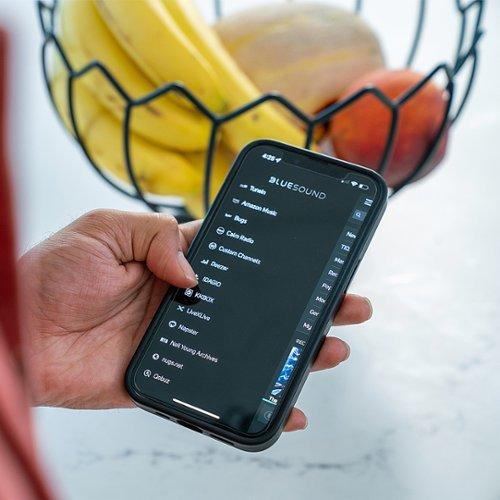
The software experience often determines daily satisfaction with these products more than raw specifications. Here, the differences are immediately apparent. Bluesound's BluOS platform, which powers the PowerNode Edge, consistently earns praise for its intuitive interface and responsive performance. Users routinely describe it as "elegant" and "just working" – high praise in a category where app frustrations are common.
The BluOS app excels at handling high-resolution audio files, seamlessly switching between different streaming services, and managing multi-room setups without the hiccups that plague some competitors. It supports over 20 streaming services directly, and when you add Apple AirPlay 2 compatibility, virtually any audio source becomes accessible.
Denon's HEOS platform, running the HEOS Amp HS2, takes a more utilitarian approach. The app is functional and stable, but lacks the refinement that makes BluOS feel premium. However, HEOS has some advantages, particularly in voice assistant integration. The platform works seamlessly with Amazon Alexa and Google Assistant for hands-free control, something that's more limited on the Bluesound side.
One area where HEOS shows its age is in streaming service integration. While it supports major services like Spotify, Tidal, and Amazon Music, the implementation sometimes feels clunky compared to newer platforms. Users report occasional issues with login states and service connectivity that require app restarts to resolve.
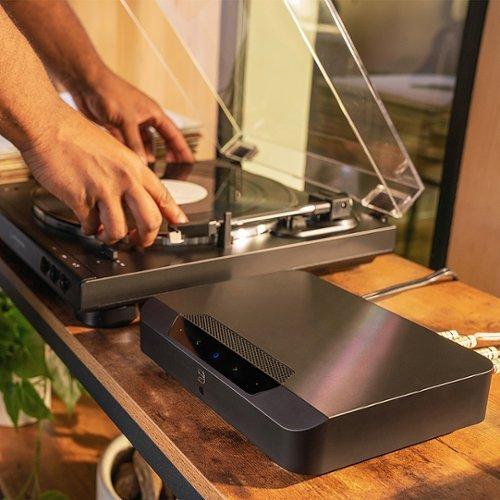
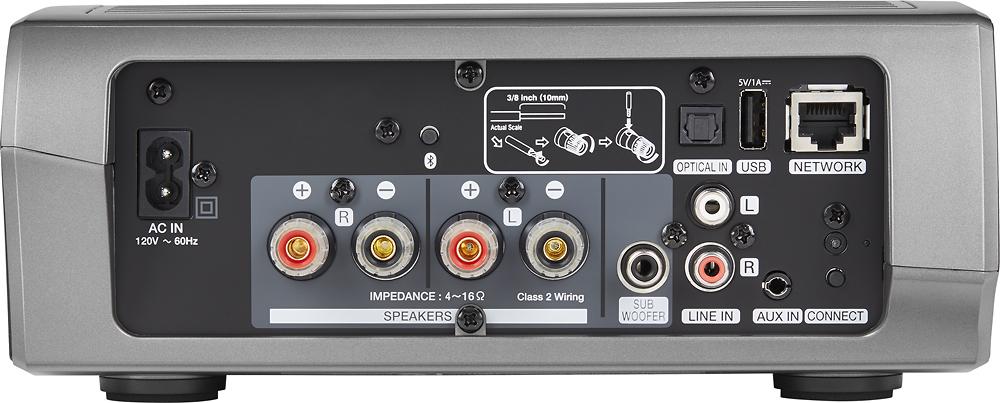
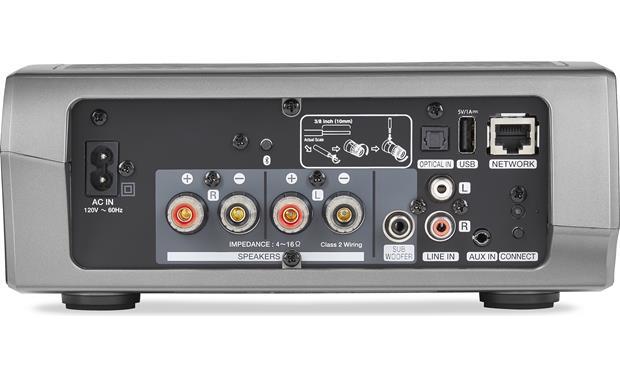
This is where the generational difference between these products becomes most apparent. The Denon HEOS Amp HS2, designed in an earlier era, offers extensive traditional connectivity: analog RCA inputs, optical digital input, USB port for direct file playback, 3.5mm auxiliary input, and both Ethernet and Wi-Fi networking. If you need to connect multiple sources – maybe a CD player, turntable with built-in preamp, and computer – the Denon handles it all elegantly.
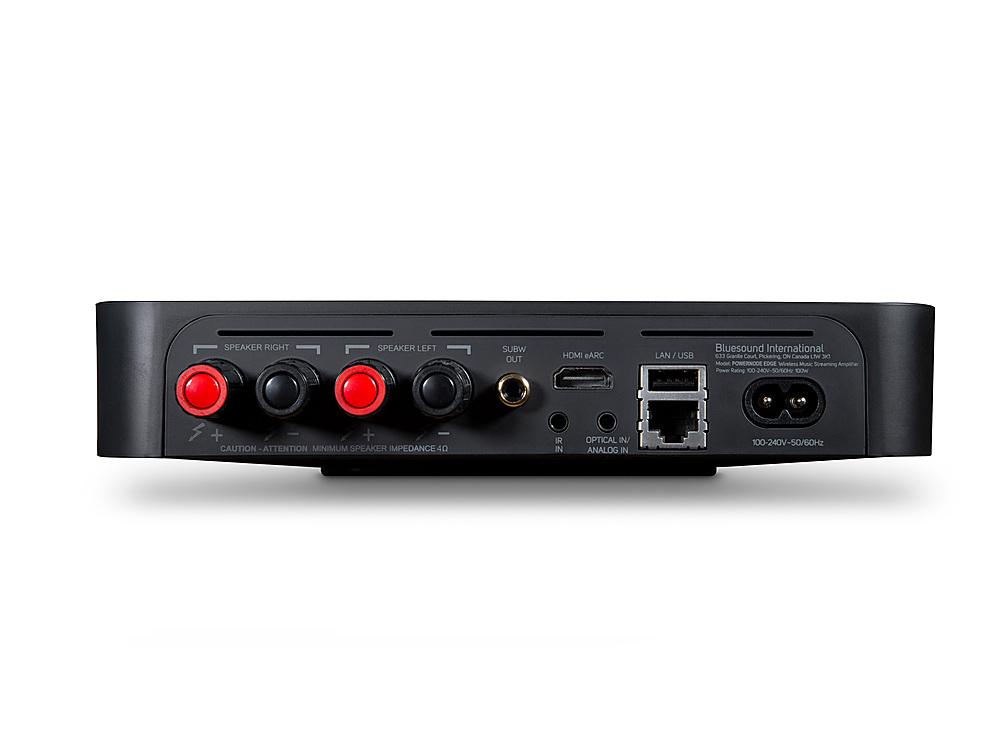
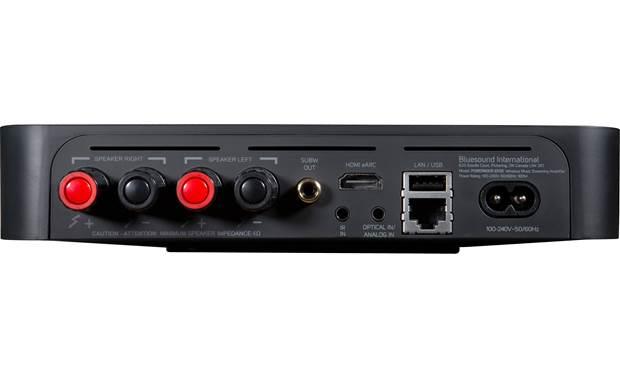
The Bluesound PowerNode Edge takes a more focused approach, reflecting how most people actually listen to music in 2023 and beyond. Its headline feature is HDMI eARC (enhanced Audio Return Channel) connectivity, which allows direct connection to modern TVs. This means you can use the PowerNode Edge to improve your TV's audio while simultaneously serving as a streaming amplifier for music. The HDMI connection supports Dolby Digital decoding, so you get proper surround sound processing even in a stereo setup.
This TV integration capability cannot be overstated in terms of convenience. Many users want their music system to pull double duty for TV watching, and the Bluesound PowerNode Edge's HDMI eARC makes this seamless. You can watch Netflix with improved audio, then switch to streaming music from Spotify without touching any cables or switching inputs.
The PowerNode Edge also includes two-way Bluetooth with aptX HD support, meaning it can both receive high-quality audio from your phone and send audio to Bluetooth headphones – useful for late-night listening. The combo analog/optical input saves space while still accommodating legacy sources.
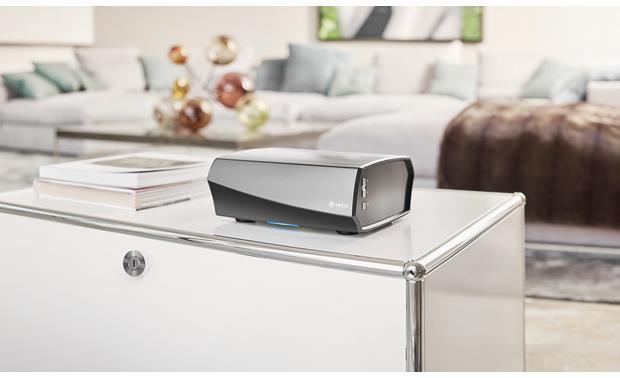
Physical installation reveals another philosophical divide. The Denon HEOS Amp HS2 follows traditional amplifier conventions – a rectangular box designed to sit on a shelf or in an equipment rack. While compact compared to full-size receivers, it still needs dedicated space and proper ventilation.
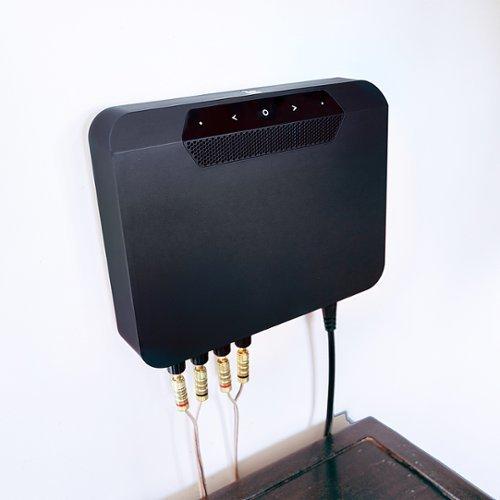
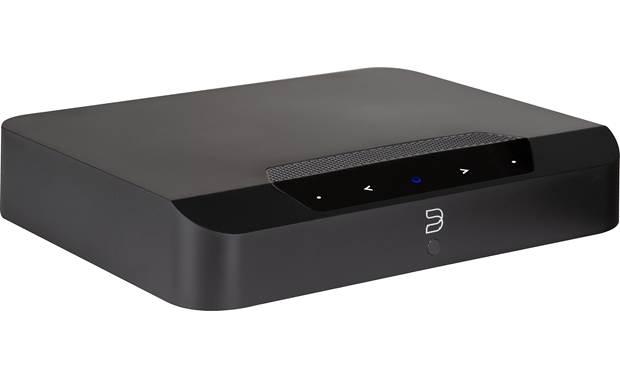
The Bluesound PowerNode Edge breaks these conventions entirely. At just 1.75 inches tall and weighing only 3.1 pounds, it's genuinely tiny. More importantly, it's designed for wall mounting, with an included bracket that allows installation behind TVs, under desks, or in other hidden locations. This flexibility proves invaluable in modern living spaces where equipment visibility is often unwanted.
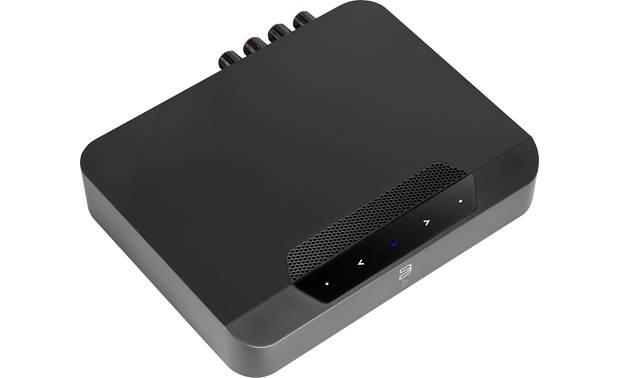
The PowerNode Edge also includes capacitive touch controls on its top surface for basic playback control – play, pause, volume adjustment, and track skipping. While you'll primarily use the smartphone app, having physical controls available proves surprisingly useful.
Both units run cool thanks to their Class D amplification, but the Bluesound's smaller size and lower power consumption make it even less demanding of installation space and ventilation.
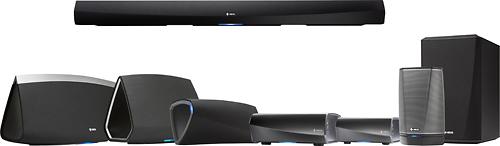
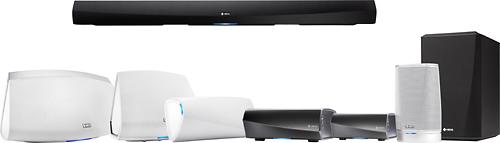
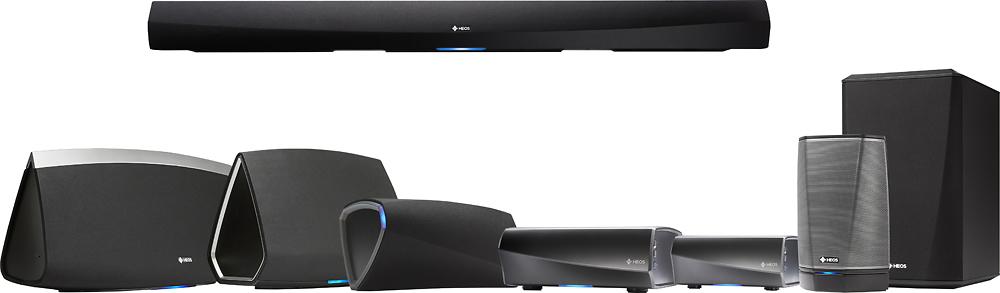
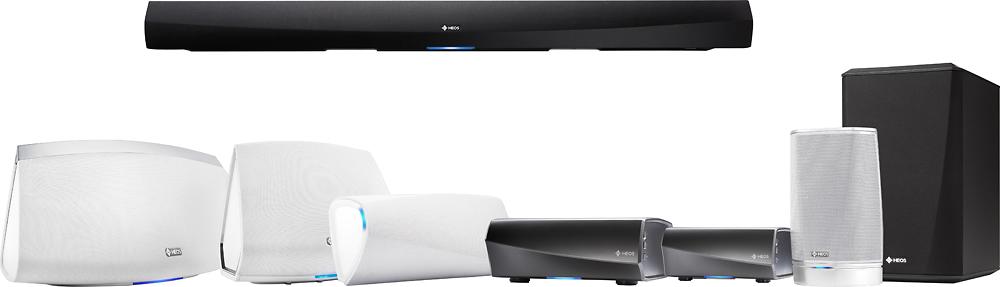
Both amplifiers excel at multi-room audio, but with different strengths. The Denon HEOS Amp HS2 benefits from being part of a larger ecosystem that includes soundbars, wireless speakers, and other Denon/Marantz products. If you're building a comprehensive whole-home audio system with mixed product types, HEOS offers more flexibility.
Bluesound's BluOS ecosystem tends toward higher audio quality in multi-room scenarios. The platform maintains better synchronization between zones and handles high-resolution audio more gracefully when streaming to multiple rooms simultaneously. If audio quality is your priority in a multi-room setup, BluOS generally delivers superior results.
Both systems allow you to play different music in each room or sync everything together, and both handle the grouping and ungrouping of zones reliably through their respective smartphone apps.
For users interested in home theater applications, the Bluesound PowerNode Edge offers capabilities that the Denon HEOS Amp HS2 simply cannot match. The HDMI eARC connection enables several compelling use cases:
TV Audio Enhancement: Connect the PowerNode Edge to your TV's HDMI eARC port, and it automatically switches to TV audio when you turn on the television. This provides dramatically better sound than built-in TV speakers while maintaining the simplicity of a single remote control.
Wireless Surround Systems: The PowerNode Edge can serve as rear channel amplification in a wireless surround sound setup when combined with other Bluesound products. This eliminates the need to run speaker wires across your room.
Streaming During TV Off-Time: When the TV is off, the unit seamlessly serves as a dedicated music streaming system, with no input switching required.
The Denon HEOS Amp HS2 can certainly power speakers for TV watching if you connect it via optical cable, but it lacks the automatic switching and convenience that HDMI eARC provides.
Based on our analysis of user feedback, professional reviews, and technical capabilities, clear recommendations emerge:
Choose the Bluesound PowerNode Edge if:
Choose the Denon HEOS Amp HS2 if:
Neither amplifier is objectively "better" – they're designed for different priorities and use cases. The Denon HEOS Amp HS2 remains an excellent choice for users who need maximum power and traditional connectivity options, especially considering its competitive pricing at the time of writing. Its 75% power advantage over the Bluesound PowerNode Edge is meaningful for demanding applications.
However, the Bluesound PowerNode Edge represents the more modern approach to this product category. Its HDMI eARC integration alone makes it the only viable choice for seamless TV audio integration, while its superior internal DAC and refined streaming platform provide a more premium daily experience.
For most users building a new system around efficient bookshelf speakers in a typical living room, the PowerNode Edge delivers better overall satisfaction despite its power limitations. For users with specific power requirements or complex source needs, the HEOS Amp HS2 remains the more practical choice.
The generational difference between these products ultimately comes down to this: the Denon HEOS Amp HS2 is an excellent traditional amplifier that happens to stream, while the Bluesound PowerNode Edge is a sophisticated streaming device that happens to amplify. Your choice should depend on which philosophy better matches your priorities and listening habits.
| Bluesound PowerNode Edge | Denon HEOS Amp HS2 |
|---|---|
| Power Output - Determines maximum volume and speaker compatibility | |
| 40W per channel (8Ω) / 80W (4Ω) - Good for efficient speakers in small-medium rooms | 70W per channel (8Ω) / 100W (4Ω) - 75% more power, better for demanding speakers |
| Amplifier Technology - Affects sound quality and distortion | |
| DirectDigital™ amplification (0.008% THD+N) - Superior audio refinement | Class D digital (0.05-0.1% THD) - Traditional approach, still very good |
| TV Integration - Essential for modern home entertainment setups | |
| HDMI eARC with Dolby Digital decoding - Seamless TV audio improvement | Optical input only - Manual switching required for TV audio |
| Physical Size - Important for installation flexibility | |
| Ultra-compact: 8.6" × 1.8" × 7.6", wall-mountable with bracket | Traditional amp size: larger footprint, rack-mountable design |
| Audio Inputs - Determines source compatibility | |
| Combo analog/optical input, USB Type-A | Multiple inputs: RCA analog, optical, USB, 3.5mm aux - More versatile |
| Streaming Platform - Affects daily user experience | |
| BluOS - Consistently praised for elegant interface and reliability | HEOS - Functional but less refined, broader voice assistant support |
| Bluetooth Capability - For wireless device connectivity | |
| Two-way aptX HD - Can send and receive high-quality audio | Standard Bluetooth receive only - More limited functionality |
| Multi-room Ecosystem - For whole-home audio expansion | |
| BluOS platform - Higher audio quality, better synchronization | HEOS platform - Larger product ecosystem, more device types |
| High-Resolution Audio Support - For audiophile-quality playback | |
| 24-bit/192kHz, MQA, DSD - Premium DAC with excellent internal processing | 24-bit/192kHz, DSD - Good support but weaker internal DAC performance |
| Release Date - Indicates feature modernity | |
| 2022 - Latest streaming and connectivity features | 2016 - Proven reliability but older feature set |
The Denon HEOS Amp HS2 delivers significantly more power at 70 watts per channel into 8-ohm speakers, compared to the Bluesound PowerNode Edge's 40 watts per channel. This 75% power advantage makes the Denon HEOS Amp HS2 better suited for demanding speakers, larger rooms, or outdoor installations.
Only the Bluesound PowerNode Edge offers direct TV connection through its HDMI eARC port, which automatically switches to TV audio and supports Dolby Digital decoding. The Denon HEOS Amp HS2 requires an optical cable connection and manual input switching for TV audio.
The Bluesound PowerNode Edge generally provides superior sound quality for streaming thanks to its premium 24-bit/192kHz DAC and DirectDigital amplification technology, which maintains lower distortion (0.008% vs 0.05-0.1%). However, the Denon HEOS Amp HS2 can match this performance when paired with an external DAC.
The Bluesound PowerNode Edge excels in home theater applications with its HDMI eARC connectivity, automatic TV audio switching, and ability to serve as wireless rear channels in surround setups. The Denon HEOS Amp HS2 can handle TV audio through optical connection but lacks the convenience and integration features.
The Bluesound PowerNode Edge uses the BluOS app, which consistently receives praise for its elegant interface, reliability, and smooth operation. The Denon HEOS Amp HS2 uses the HEOS app, which is functional but less refined, though it offers better voice assistant integration with Alexa and Google Assistant.
Yes, the Bluesound PowerNode Edge is specifically designed for wall mounting and includes a bracket for installation behind TVs or in hidden locations. The Denon HEOS Amp HS2 follows traditional amplifier design and is better suited for shelf or rack placement.
Both excel at multi-room audio, but with different strengths. The Bluesound PowerNode Edge offers superior audio quality and synchronization in multi-room setups, while the Denon HEOS Amp HS2 provides access to a larger ecosystem of compatible speakers and devices from Denon and Marantz.
The Bluesound PowerNode Edge works well with efficient bookshelf speakers (87dB sensitivity or higher) in small to medium rooms. The Denon HEOS Amp HS2 can drive more demanding speakers, multiple speaker pairs, and is better for larger spaces due to its higher power output.
The Denon HEOS Amp HS2 offers more traditional connectivity with analog RCA inputs, optical digital, USB, and 3.5mm auxiliary inputs. The Bluesound PowerNode Edge focuses on modern connectivity with HDMI eARC, combo analog/optical input, and two-way Bluetooth aptX HD.
Both the Bluesound PowerNode Edge and Denon HEOS Amp HS2 support high-resolution audio up to 24-bit/192kHz and DSD playback. However, the Bluesound PowerNode Edge has a superior internal DAC for better sound quality from streaming services.
The Bluesound PowerNode Edge is generally better for beginners due to its simpler setup, superior streaming app experience, and modern features like HDMI eARC that eliminate complexity. The Denon HEOS Amp HS2 is better if you need maximum power or have multiple audio sources to connect.
Both amplifiers offer competitive value in their price range. The Denon HEOS Amp HS2 provides more raw power and connectivity options, making it better value for users who need those features. The Bluesound PowerNode Edge offers premium features like HDMI eARC and superior audio processing that justify its positioning as a more refined option.
We've done our best to create useful and informative comparisons to help you decide what product to buy. Our research uses advanced automated methods to create this comparison and perfection is not possible - please contact us for corrections or questions. These are the sites we've researched in the creation of this article: futureaudiophile.com - alpha-audio.net - theaudiofactory.com - audiophilia.com - youtube.com - qaudio.com - crutchfield.com - youtube.com - bluesound.com - audioadvisor.com - crutchfield.com - bluesound.com - audiosciencereview.com - bluesound.com - soundstagesimplifi.com - mysoundconcepts.com - bestbuy.com - consumerreports.org - audiosciencereview.com - youtube.com - crutchfield.com - avsforum.com - whathifi.com - audiosciencereview.com - youtube.com - versus.com - easylounge.com - snapav.com - crutchfield.com - accessories4less.com - richersounds.com - wave-electronics.com - bestbuy.com - safeandsoundhq.com - theaudiotailor.com.au - retailspecs.com

Privacy Policy
Terms and Conditions - Affiliate Policy
Home Security
© Copyright 2008-2026.
11816 Inwood Rd #1211, Dallas, TX 75244