

The world of integrated amplifiers has split into two distinct philosophies over the past few years. On one side, you have traditional integrated amplifiers that focus on pure audio performance with some modern digital inputs added for convenience. On the other side, streaming-integrated amplifiers prioritize wireless connectivity, smart home integration, and ease of use while still delivering quality sound.
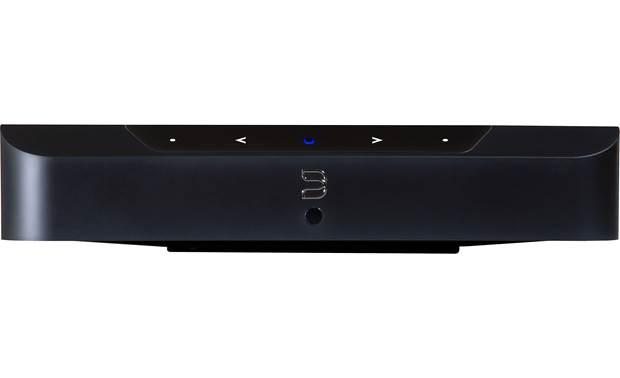
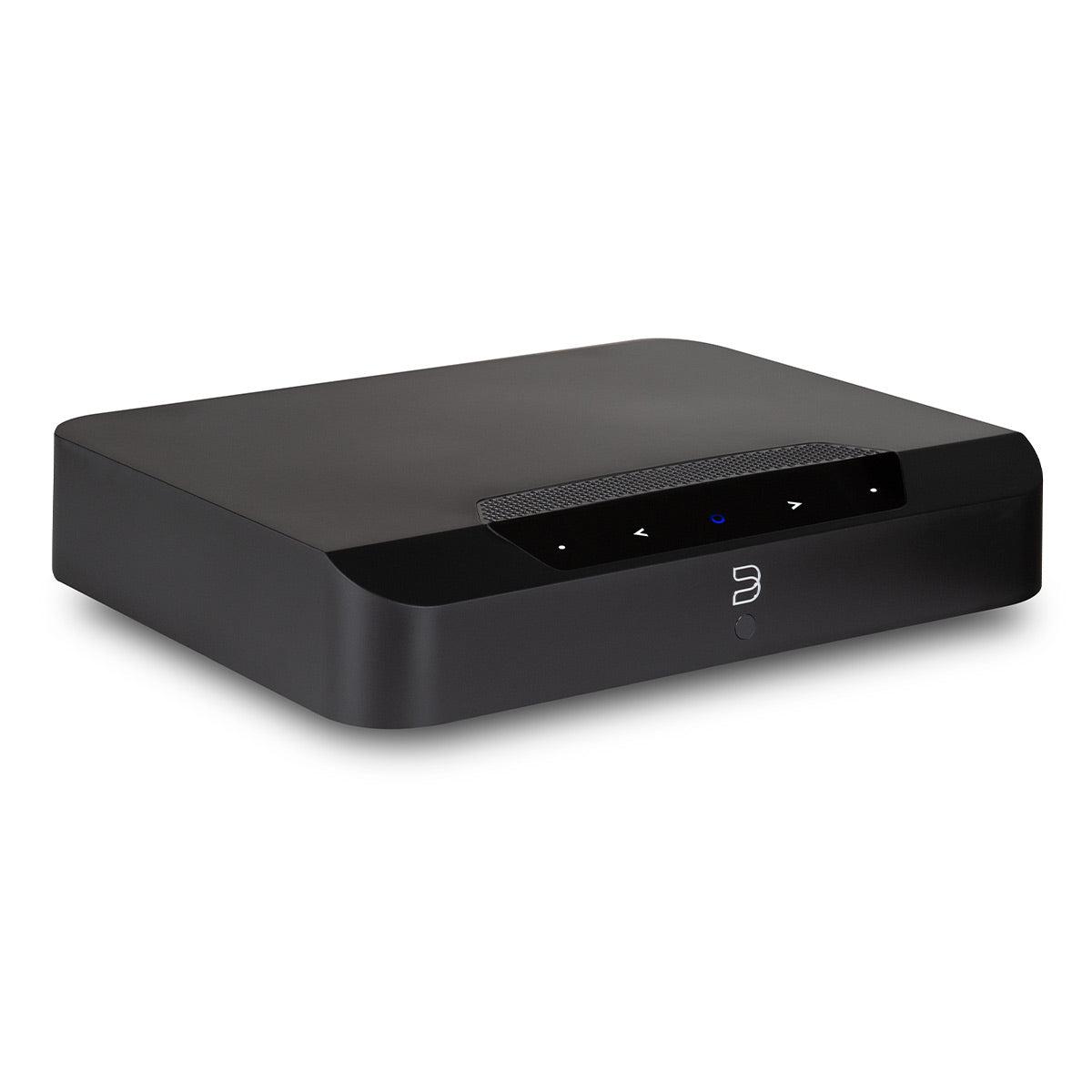
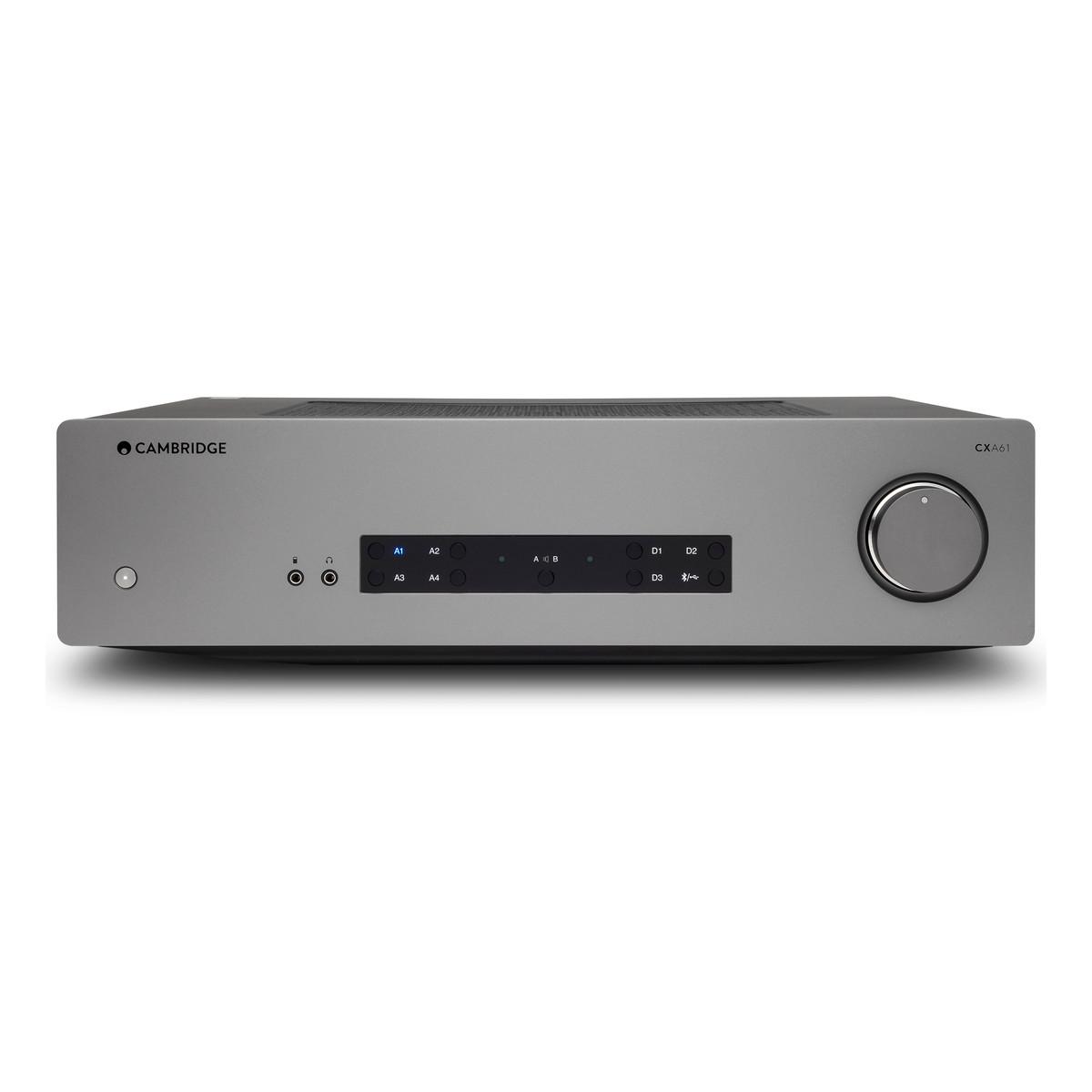
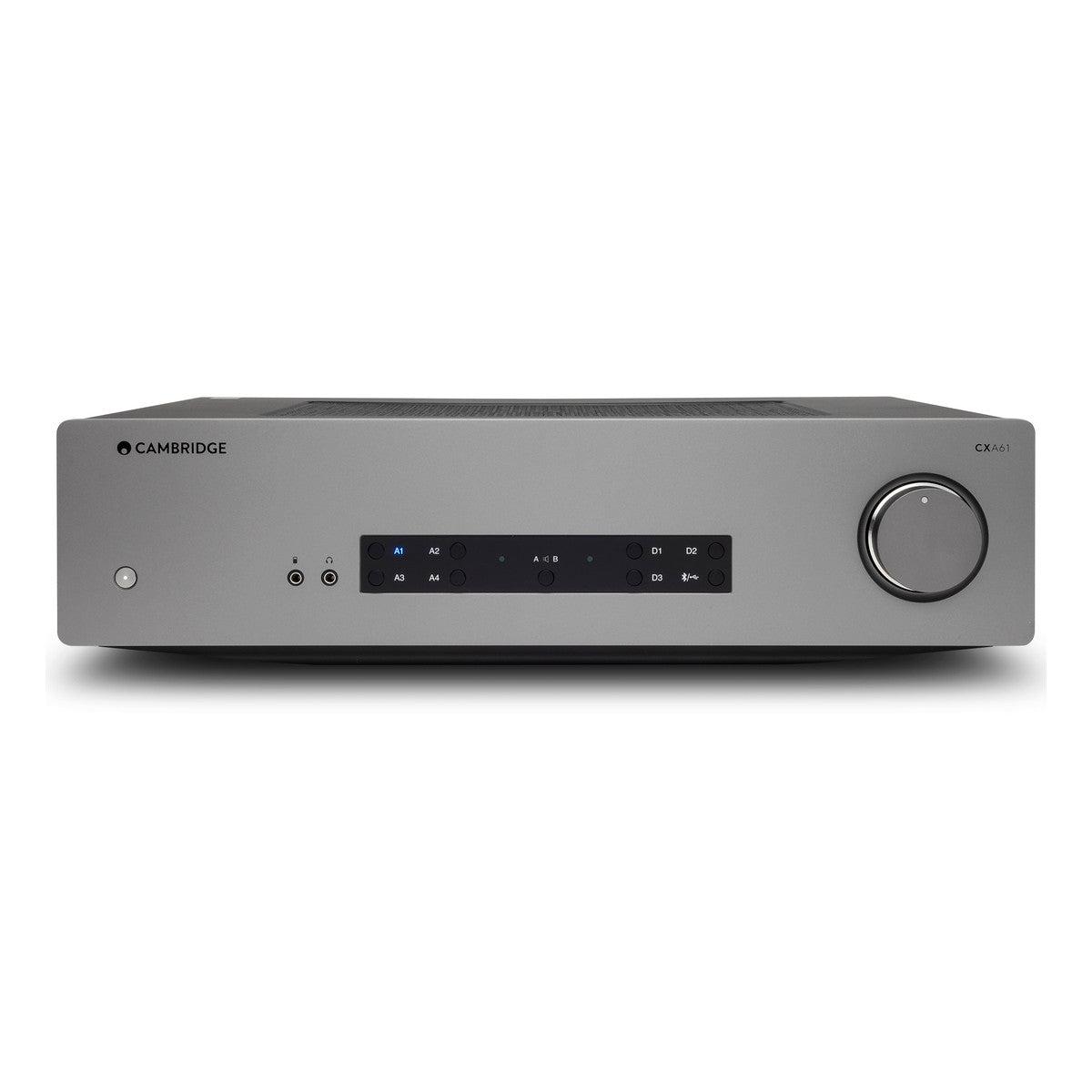
This divide creates an interesting comparison between the Bluesound PowerNode Edge and the Cambridge Audio CXA61. Released in 2022, the PowerNode Edge represents Bluesound's entry-level approach to streaming amplification, while the CXA61, which hit the market in 2018, embodies Cambridge Audio's refined take on the modern integrated amplifier with enhanced digital capabilities.
Before diving into the specifics, it's helpful to understand what each approach brings to the table. An integrated amplifier combines a preamplifier (which controls volume and switches between sources) with a power amplifier (which actually drives your speakers) in one box. This eliminates the need for separate components and typically offers better value than buying preamp and power amp separately.
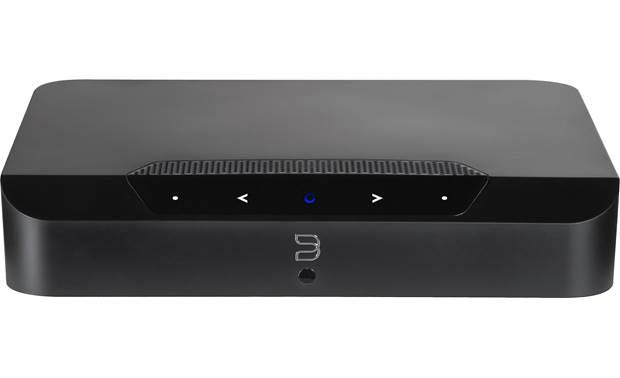
The PowerNode Edge takes this concept further by integrating streaming capabilities, wireless connectivity, and smart home features directly into the amplifier. It's designed for people who want everything in one compact package. The CXA61, meanwhile, focuses on delivering excellent amplification with high-quality digital-to-analog conversion (DAC), while expecting you to add streaming devices separately if needed.
When it comes to power output, the CXA61 has a clear advantage with 60 watts per channel into 8-ohm speakers and 90 watts into 4-ohm speakers. The PowerNode Edge delivers 40 watts per channel into 8 ohms. While this might seem like the CXA61 is automatically better, the reality is more nuanced.
Power output matters most when you're trying to drive speakers that are either inefficient (meaning they need more power to produce the same volume) or when you're listening in a large room where you need to push more sound. Most bookshelf speakers with efficiency ratings above 86 dB will work fine with 40 watts, especially in small to medium-sized rooms. However, if you're using floor-standing speakers or planning to fill a large living space with sound, those extra 20 watts from the CXA61 become valuable.
The type of amplification also differs between these units. The CXA61 uses Class AB amplification, which is a tried-and-true approach that balances efficiency with sound quality. It includes an oversized toroidal transformer – essentially a donut-shaped power supply that provides clean, stable power to the amplifier circuits.
The PowerNode Edge uses what Bluesound calls DirectDigital amplification. This keeps the audio signal in digital form much longer in the signal chain, only converting it to analog at the very last moment before it reaches your speakers. This approach can reduce distortion and noise, though it typically comes with power limitations compared to traditional Class AB designs.
Based on extensive research into professional reviews and user feedback, these amplifiers have distinctly different sonic characters. The CXA61 consistently receives praise for its energetic, precise sound with excellent control across all frequencies. Reviewers describe it as having strong rhythm and timing, with the ability to present complex musical passages clearly without fatigue.
The PowerNode Edge takes a more relaxed approach. Professional reviews consistently note its clean, detailed presentation with a softer, more laid-back character. This isn't necessarily worse – many listeners prefer this approach for long listening sessions. However, some reviewers have noted that the PowerNode Edge can show signs of strain when pushed hard with demanding speakers or at high volumes, exhibiting some compression and roughness.
The CXA61 includes an ESS Sabre ES9010K2M DAC chip, which is a significant upgrade from earlier Cambridge Audio models. This DAC can handle extremely high-resolution digital audio – up to 32-bit/384kHz PCM files and even DSD256 format. While most people won't have music files this detailed, having this capability means the DAC won't be a bottleneck in your system.
This is where the philosophical differences become most apparent. The PowerNode Edge is built around the idea that most people stream music wirelessly these days. It includes built-in Wi-Fi, Bluetooth with aptX HD support (which provides near-CD quality wireless audio), and access to over 20 streaming services through Bluesound's BluOS platform.
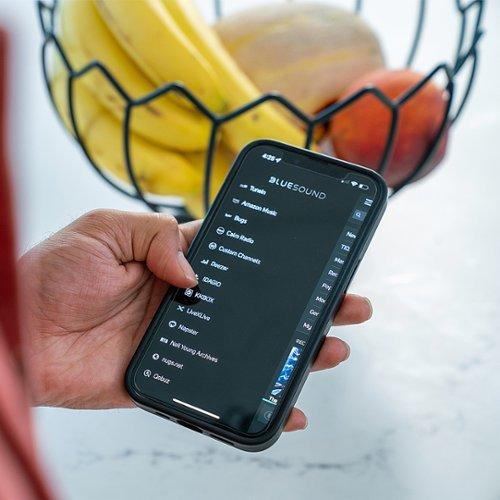
The BluOS app acts as your control center, letting you browse Spotify, Tidal, Qobuz, internet radio, and music stored on your network from your phone or tablet. The PowerNode Edge also supports Apple AirPlay 2, so iPhone users can stream directly without opening another app. For smart home enthusiasts, it works with Alexa, Google Assistant, and Siri for voice control.
The CXA61 takes a different approach. It provides excellent wired connectivity with USB, optical, and coaxial digital inputs, plus traditional analog RCA inputs. It also includes Bluetooth with aptX HD, but it doesn't have built-in Wi-Fi or streaming service integration. If you want to stream wirelessly, you'll need to add a separate device like a Bluesound Node, Cambridge's own CXN streamer, or use Bluetooth from your phone.
This might sound like a disadvantage, but there's a benefit: flexibility. If streaming technology changes or you decide you prefer a different streaming platform, you can upgrade just the streaming component without replacing your entire amplifier. It's the difference between buying a smartphone or buying a really good camera and a separate phone.
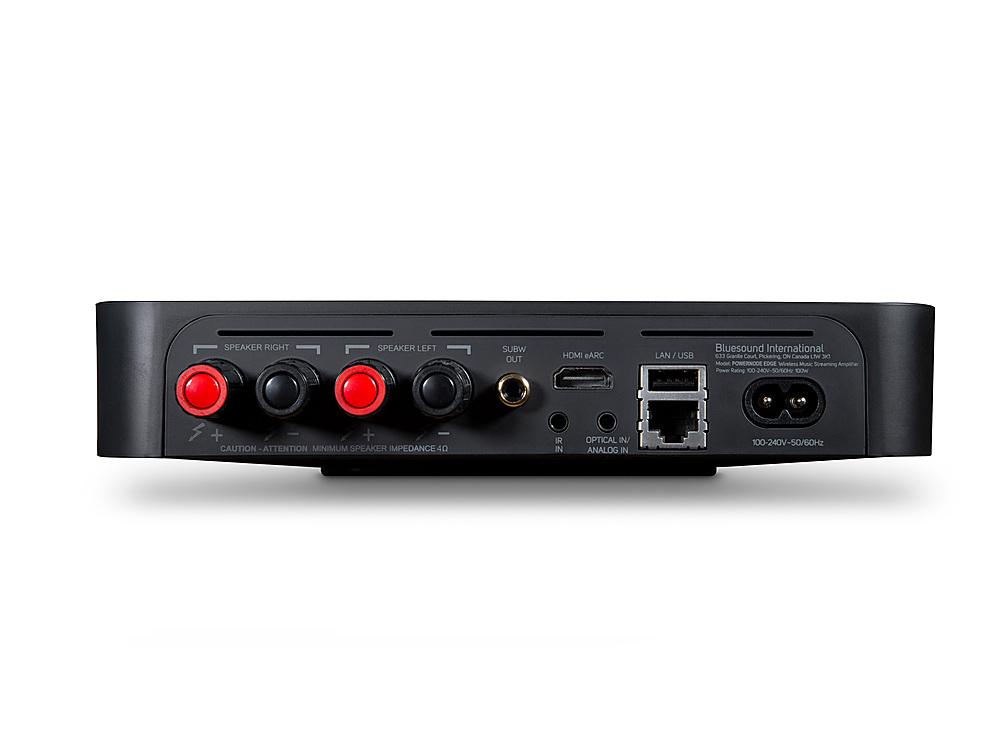
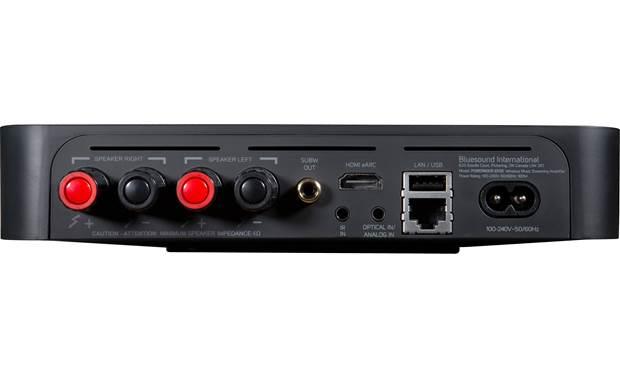
One area where the PowerNode Edge really shines is TV integration. It includes an HDMI eARC (enhanced Audio Return Channel) input, which lets you connect it directly to your TV. This means the TV can send audio back to the amplifier, and the PowerNode Edge can decode Dolby Digital surround sound and play it through your stereo speakers.
This feature makes the PowerNode Edge an excellent choice for someone who wants to upgrade their TV's sound without buying a full surround sound system. You can also use it as part of a larger Bluesound ecosystem, where it might serve as rear speakers in a 4.1 setup with other Bluesound components handling the front channels.
The CXA61 doesn't have HDMI connectivity, so TV integration requires more cables and potentially an additional device to handle the connection. However, it does include preamp outputs, which means you can connect it to a separate power amplifier if you want more power later, or integrate it into a more complex audio system.
If you're interested in having music throughout your home, the PowerNode Edge has a significant advantage. BluOS is one of the most stable and feature-rich multi-room platforms available. You can group different Bluesound devices together for synchronized playback, or play different music in different rooms. The system handles hi-res audio across the network without the dropouts that plague some other wireless systems.
The CXA61 can certainly be part of a multi-room setup, but you'd need to add separate streaming components to each room and coordinate them through whatever platform you choose. This gives you more flexibility but requires more planning and potentially more expense.
Both amplifiers are well-built, but they reflect different priorities. The CXA61 feels more substantial, weighing about 18 pounds compared to the PowerNode Edge's 3.1 pounds. The Cambridge unit has the traditional hi-fi aesthetic with a metal chassis, substantial binding posts for speaker connections, and a layout that prioritizes easy access to all connections.
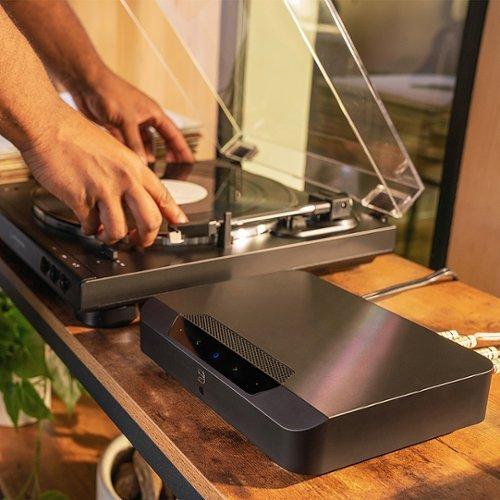
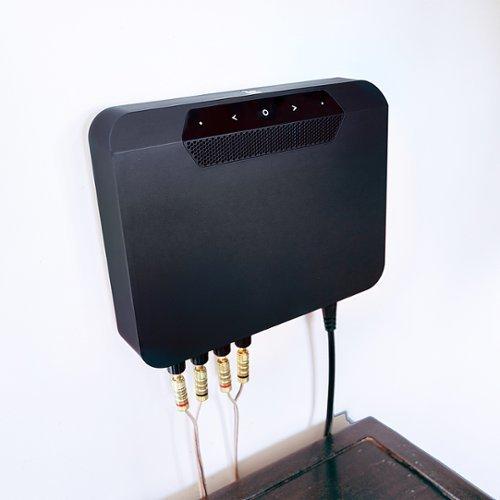
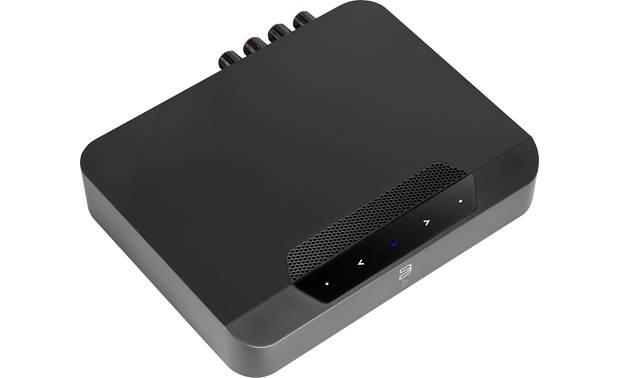
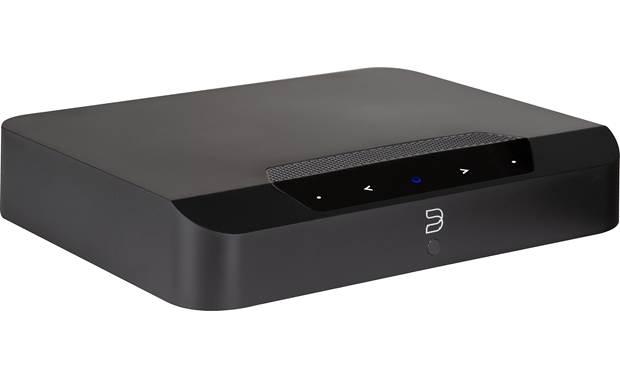
The PowerNode Edge is designed for discretion and flexibility. Its compact size and included wall-mount bracket mean it can hide behind a TV or tuck onto a bookshelf. The top panel includes touch controls for basic functions, which is convenient but might not appeal to those who prefer physical knobs and buttons.
Since the CXA61 was released in 2018, Cambridge Audio has continued to refine their digital processing and has released newer models with updated features. However, the core analog amplification circuit in the CXA61 remains excellent and doesn't really date in the way digital features might.
The PowerNode Edge, being newer (2022), includes more current wireless standards and processing power. Bluesound regularly updates their software, adding new streaming services and features. This means the PowerNode Edge is more likely to stay current with changing streaming landscape over time.
When evaluating amplifiers, several technical specifications matter more than others. Total Harmonic Distortion (THD) measures how much the amplifier changes the original signal – lower is better. The CXA61 achieves 0.002% THD, which is exceptionally low and means the amplifier adds virtually no coloration to the sound. The PowerNode Edge manages 0.008% THD, which is still very good for its price and design approach.
Signal-to-noise ratio tells you how much background hiss you'll hear. Both amplifiers perform well here, with the CXA61 achieving over 105 dB at full power. In practical terms, both will be dead quiet during listening.
More important than the raw numbers is how the amplifiers handle real-world music. Based on reviewer consensus, the CXA61 maintains better composure with complex, demanding music at higher volumes. The PowerNode Edge excels with acoustic music, jazz, and moderate listening levels but can struggle with heavy rock or electronic music pushed to high volumes.
The PowerNode Edge makes the most sense for people who prioritize convenience and modern connectivity. If you stream most of your music, want voice control, need TV integration, or value the ability to mount the amplifier out of sight, it's an excellent choice. It's particularly appealing for apartments, bedrooms, or offices where space is limited and you don't need earth-shaking volume levels.
The CXA61 is better suited for dedicated listening rooms, larger spaces, or anyone who already has strong preferences for streaming devices. If you have demanding speakers, love to play music loudly, or want the flexibility to upgrade components individually, the Cambridge approach makes more sense.
For home theater use, the PowerNode Edge has clear advantages with its HDMI eARC connection and ability to decode surround formats for stereo playback. However, if you're planning a dedicated two-channel system for serious music listening, the CXA61's superior power and audio circuits will likely provide better long-term satisfaction.
At the time of writing, both amplifiers represent solid value in their respective approaches, with the PowerNode Edge commanding a modest premium for its integrated streaming capabilities. The question isn't which is better, but which philosophy better matches your listening habits and living situation. The modern streaming approach offers convenience and integration, while the traditional integrated approach provides superior audio performance and upgrade flexibility.
| Bluesound PowerNode Edge | Cambridge Audio CXA61 |
|---|---|
| Power Output - Critical for driving speakers and room filling capability | |
| 40W per channel (8Ω) - Good for bookshelf speakers in small-medium rooms | 60W per channel (8Ω), 90W (4Ω) - Better for demanding speakers and larger spaces |
| Amplifier Technology - Affects sound quality and efficiency | |
| DirectDigital amplification - Keeps signal digital longer, lower distortion but power limited | Class AB with toroidal transformer - Traditional approach with excellent current delivery |
| Built-in Streaming - Determines if you need separate streaming devices | |
| Full BluOS platform with 20+ services, Wi-Fi, voice control - Complete streaming solution | Bluetooth aptX HD only - Requires separate streamer for wireless services |
| Digital Audio Resolution - Important for hi-res music enthusiasts | |
| Up to 24-bit/192kHz, MQA, DSD support - Excellent for streaming quality | Up to 32-bit/384kHz PCM, DSD256 via USB - Superior for local hi-res files |
| TV Integration - Essential for modern home entertainment setups | |
| HDMI eARC with Dolby Digital decoding - Direct TV connection and surround processing | No HDMI - Requires additional connections or devices for TV audio |
| Multi-room Capability - Key for whole-home audio systems | |
| Native BluOS multi-room with synchronized playback - Seamless expansion | No built-in multi-room - Requires separate streaming solution |
| Physical Design - Affects placement flexibility and aesthetics | |
| Compact (3.1 lbs) with wall-mount bracket - Highly flexible installation | Traditional size (18.3 lbs) desktop unit - Requires dedicated shelf space |
| Connectivity Options - Determines source compatibility | |
| HDMI eARC, optical/analog combo, USB, subwoofer out - Modern focused | 4x analog RCA, 2x optical, coaxial, USB, preamp out - Traditional comprehensive |
| Sound Character - Based on professional reviews and user feedback | |
| Relaxed, detailed, fatigue-free - Better for casual listening | Energetic, precise, controlled - Better for critical listening and demanding music |
| Smart Home Integration - Important for modern connected homes | |
| Alexa, Google Assistant, Siri, AirPlay 2 - Full ecosystem compatibility | Limited smart features - Focused on audio performance |
| Upgrade Path - Affects long-term value and flexibility | |
| Software updates add features - Streaming capabilities evolve over time | Preamp outputs allow power amp addition - Traditional component upgrade path |
The Bluesound PowerNode Edge is a streaming-first amplifier with built-in Wi-Fi, voice control, and access to 20+ streaming services, while the Cambridge Audio CXA61 is a traditional integrated amplifier focused on pure audio performance with high-quality analog circuits and premium DAC.
The Cambridge Audio CXA61 delivers 60 watts per channel (90W into 4 ohms), compared to the PowerNode Edge's 40 watts per channel. The CXA61 is better suited for demanding speakers and larger rooms.
The Bluesound PowerNode Edge includes full wireless streaming with Wi-Fi, BluOS platform access, and Bluetooth aptX HD. The Cambridge Audio CXA61 only has Bluetooth aptX HD and requires a separate streaming device for wireless music services.
The PowerNode Edge is superior for home theater with HDMI eARC connectivity and Dolby Digital decoding, allowing direct TV connection. The CXA61 lacks HDMI inputs and requires additional connections for TV audio integration.
No separate streamer needed with the Bluesound PowerNode Edge - it includes built-in access to Spotify, Tidal, and other services. The Cambridge Audio CXA61 requires an external streaming device if you want wireless music services beyond Bluetooth.
The Cambridge Audio CXA61 generally provides more precise, energetic sound with better control at high volumes, making it ideal for critical listening. The PowerNode Edge offers a more relaxed, fatigue-free sound that's excellent for casual listening sessions.
Only the Bluesound PowerNode Edge supports voice control through Alexa, Google Assistant, and Siri. The Cambridge Audio CXA61 doesn't include smart home integration features.
The PowerNode Edge excels in small spaces with its compact design, wall-mounting capability, and adequate 40W power output. The larger CXA61 requires dedicated shelf space and may be overpowered for small rooms.
Both support hi-res audio, but differently. The PowerNode Edge handles up to 24-bit/192kHz with MQA and DSD support, while the Cambridge Audio CXA61 supports higher resolution files up to 32-bit/384kHz via USB connection.
The Bluesound PowerNode Edge provides native multi-room audio through the BluOS platform with synchronized playback across multiple rooms. The CXA61 has no built-in multi-room functionality.
The PowerNode Edge receives regular software updates that add new features and streaming services. The Cambridge Audio CXA61 offers hardware upgrade flexibility with preamp outputs for adding external power amplifiers.
Value depends on your needs. The PowerNode Edge offers excellent value if you want all-in-one streaming convenience and smart features. The CXA61 provides better value for pure audio performance, higher power output, and component flexibility.
We've done our best to create useful and informative comparisons to help you decide what product to buy. Our research uses advanced automated methods to create this comparison and perfection is not possible - please contact us for corrections or questions. These are the sites we've researched in the creation of this article: futureaudiophile.com - alpha-audio.net - theaudiofactory.com - audiophilia.com - youtube.com - qaudio.com - crutchfield.com - youtube.com - bluesound.com - audioadvisor.com - crutchfield.com - bluesound.com - audiosciencereview.com - bluesound.com - soundstagesimplifi.com - mysoundconcepts.com - themasterswitch.com - theaudiophileman.com - youtube.com - forums.whathifi.com - crutchfield.com - youtube.com - youtube.com - hifihaven.org - crutchfield.com - audioguru.com - listenup.com - forums.whathifi.com - manuals.cambridgeaudio.com - alpha-audio.net - hifichoice.com - cambridgeaudio.com - the-ear.net - speakerdecision.com

Privacy Policy
Terms and Conditions - Affiliate Policy
Home Security
© Copyright 2008-2026.
11816 Inwood Rd #1211, Dallas, TX 75244