

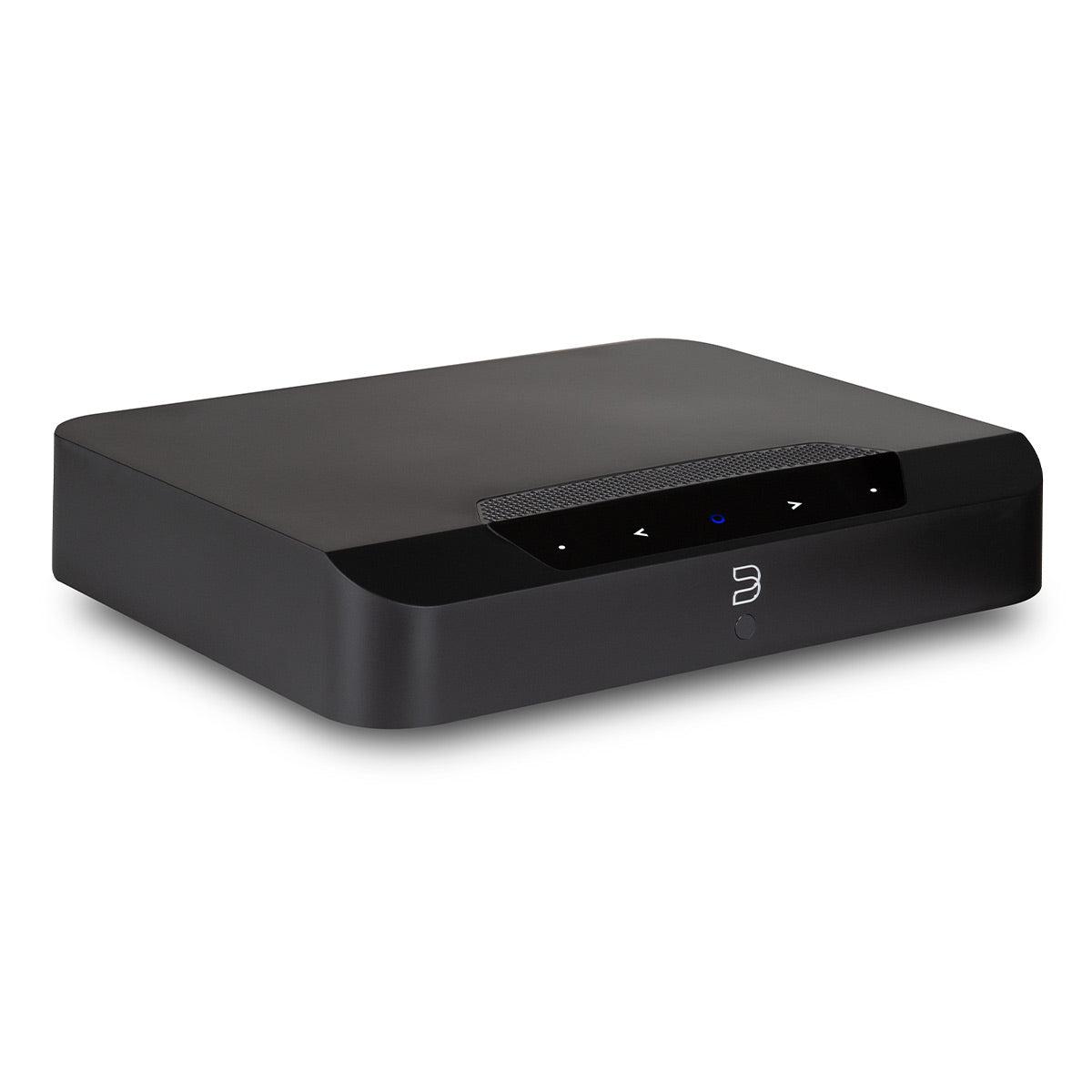
The world of audio has transformed dramatically over the past decade. Gone are the days when building a quality music system required stacks of separate components, tangles of interconnect cables, and a PhD in audio engineering. Today's streaming integrated amplifiers pack everything you need – amplification, digital-to-analog conversion, and wireless connectivity – into sleek, compact units that can transform any pair of passive speakers into a smart, connected audio system.
But here's where things get interesting: not all streaming amplifiers take the same approach. The Bluesound PowerNode Edge and SVS Prime Wireless Pro SoundBase, both released in 2022, represent two fundamentally different philosophies in modern audio design. One prioritizes refined engineering and ecosystem integration, while the other focuses on raw power and comprehensive connectivity. Understanding these differences is crucial for making the right choice for your specific needs.
Before diving into the comparison, it's worth understanding what these devices actually do. A traditional hi-fi system requires multiple components: a streaming source (like a network player), a digital-to-analog converter (DAC) to turn digital music files into analog signals, a preamplifier to control volume and switch between sources, and a power amplifier to drive your speakers. Streaming integrated amplifiers combine all these functions into one box.
The key considerations when choosing between streaming amplifiers include power output (measured in watts per channel), which determines how loud your system can play and what speakers it can drive effectively; streaming ecosystem compatibility, which affects what music services you can access and how well the device integrates with other smart home products; connectivity options for hooking up TVs, turntables, and other sources; and audio quality, which depends on the digital-to-analog converter quality and amplifier design.
Since 2022, we've seen significant improvements in streaming platform stability, app interfaces, and wireless connectivity standards. Both the PowerNode Edge and Prime Wireless Pro benefit from these advances, but they implement them very differently.
The most immediately obvious difference between these two amplifiers lies in their power output specifications. The SVS Prime Wireless Pro delivers a substantial 150 watts per channel into 4-ohm speakers (that's 300 watts total), using efficient Class D amplification technology. Class D amplifiers, sometimes called "digital amplifiers," switch on and off thousands of times per second to recreate audio signals, running cool and efficiently while delivering impressive power from compact chassis.
In contrast, the Bluesound PowerNode Edge takes a radically different approach with its proprietary DirectDigital amplification, producing 40 watts per channel into 8-ohm speakers. Now, if you're thinking "40 watts versus 150 watts – that's no contest," hold on. Amplifier power ratings can be misleading, and the PowerNode Edge's DirectDigital design brings some unique advantages to the table.
What makes DirectDigital amplification special? Traditional amplifiers convert digital music files to analog signals early in the chain, then amplify those analog signals. The PowerNode Edge keeps everything in the digital domain until the very last moment – right at the speaker terminals. This eliminates multiple conversion stages that can introduce noise and distortion, resulting in an exceptionally quiet background and precise sound reproduction.
Our research into user experiences and professional reviews reveals that despite its lower power rating, the PowerNode Edge punches well above its weight class. Reviewers consistently report it driving moderately efficient speakers (those with sensitivity ratings around 88dB or higher) with surprising authority and control. The DirectDigital design seems to provide better grip and control over speaker drivers than you'd expect from the specifications alone.
However, there's no escaping physics entirely. The SVS Prime Wireless Pro simply has more raw power available, and this translates into real-world advantages when driving large, inefficient speakers or filling large rooms with sound. User reports consistently highlight the SVS unit's ability to drive demanding floorstanding speakers to high volumes without the bass becoming thin or the sound becoming compressed – classic signs of an amplifier running out of steam.
When it comes to actual sound quality, both amplifiers earn praise from reviewers and users, but they achieve their results through different means. The SVS Prime Wireless Pro delivers what most would describe as a balanced, slightly warm sound signature. Its 24-bit/192kHz DAC (the component that converts digital files to analog audio) ensures high-resolution music files retain their detail, while the Class D amplification provides clean, dynamic sound even at high listening levels.
Professional reviews consistently describe the SVS sound as having natural vocals, an expansive soundstage (the perceived width and depth of the musical presentation), and strong dynamic range – the difference between quiet and loud passages. This makes it particularly engaging for rock, pop, and electronic music where impact and energy matter.
The Bluesound PowerNode Edge, meanwhile, focuses on precision and refinement. The DirectDigital amplification creates an exceptionally quiet background – think of it as the audio equivalent of looking through perfectly clean glass versus slightly tinted glass. This allows subtle musical details to emerge that might be masked by conventional amplifier designs.
Reviewers frequently comment on the PowerNode Edge's exceptional imaging – the ability to precisely locate instruments and voices in three-dimensional space. Jazz recordings, classical music, and acoustic performances particularly benefit from this precision. The frequency response (how evenly the amplifier reproduces different pitches) remains remarkably flat and coherent across different speaker types, suggesting careful engineering and quality components throughout the signal path.
For most listeners, both amplifiers will sound excellent, but the choice often comes down to priorities. The SVS offers more visceral impact and can fill larger spaces with authoritative sound, while the Bluesound provides more analytical detail retrieval and spatial precision.
Here's where the two products diverge most significantly, and it's arguably more important than power specifications for most users' long-term satisfaction. The SVS Prime Wireless Pro operates within the DTS Play-Fi ecosystem, while the Bluesound PowerNode Edge uses the BluOS platform. These aren't just different apps – they're fundamentally different approaches to networked audio.
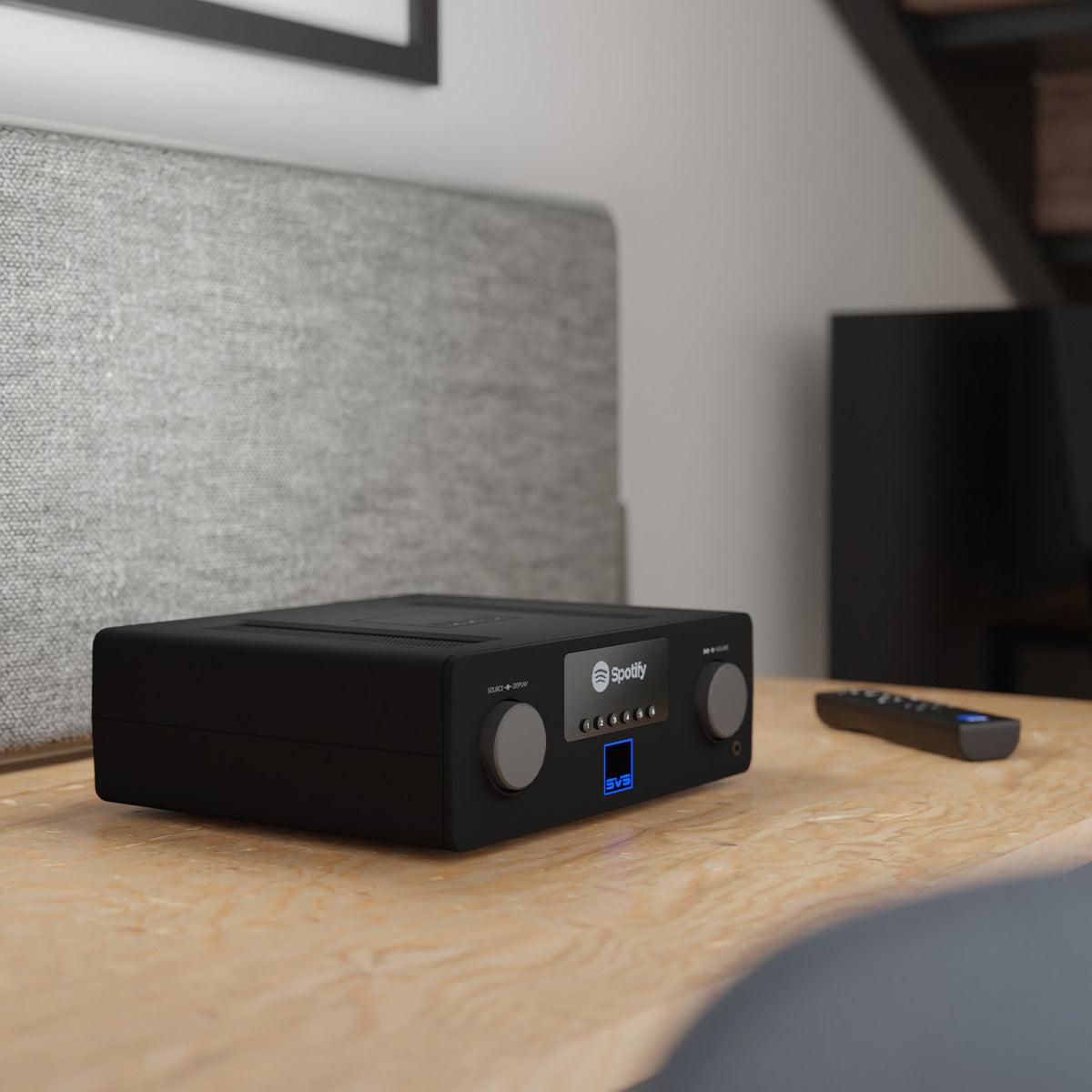
DTS Play-Fi, used by the SVS unit, offers broad compatibility with various wireless protocols. You can stream via Apple AirPlay 2 from iOS devices, Google Cast from Android devices, Spotify Connect directly from the Spotify app, or use Bluetooth with high-quality aptX and AAC codecs. The system supports up to 32 devices across 16 zones, making it theoretically capable of massive whole-home audio installations.
However, user feedback consistently points to app quality issues with Play-Fi. The control app, which is central to the user experience, receives frequent criticism for being less intuitive and more prone to glitches than competitors. While the SVS works well with direct streaming methods like AirPlay and Spotify Connect, the native app experience can frustrate users who prefer centralized control.
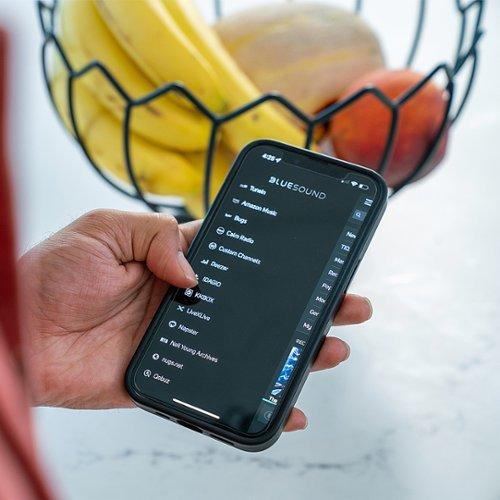
BluOS, powering the Bluesound PowerNode Edge, takes a more integrated approach. Developed by Lenbrook (which also owns NAD and PSB), BluOS has evolved into one of the most mature and stable streaming platforms available. The app consistently receives praise for its intuitive interface, reliable performance, and comprehensive feature set.
More importantly, BluOS supports Roon integration – a premium music management system beloved by serious audiophiles. It also includes BluVoice technology, enabling voice control through Alexa, Google Assistant, and Siri without requiring separate smart speakers. The multi-room audio implementation is particularly robust, with tight synchronization between zones and seamless handoff between devices.
Since 2022, both platforms have continued evolving, but BluOS has maintained its reputation for stability and feature richness. If you plan to expand your system over time or integrate with existing smart home setups, the ecosystem choice becomes crucial.
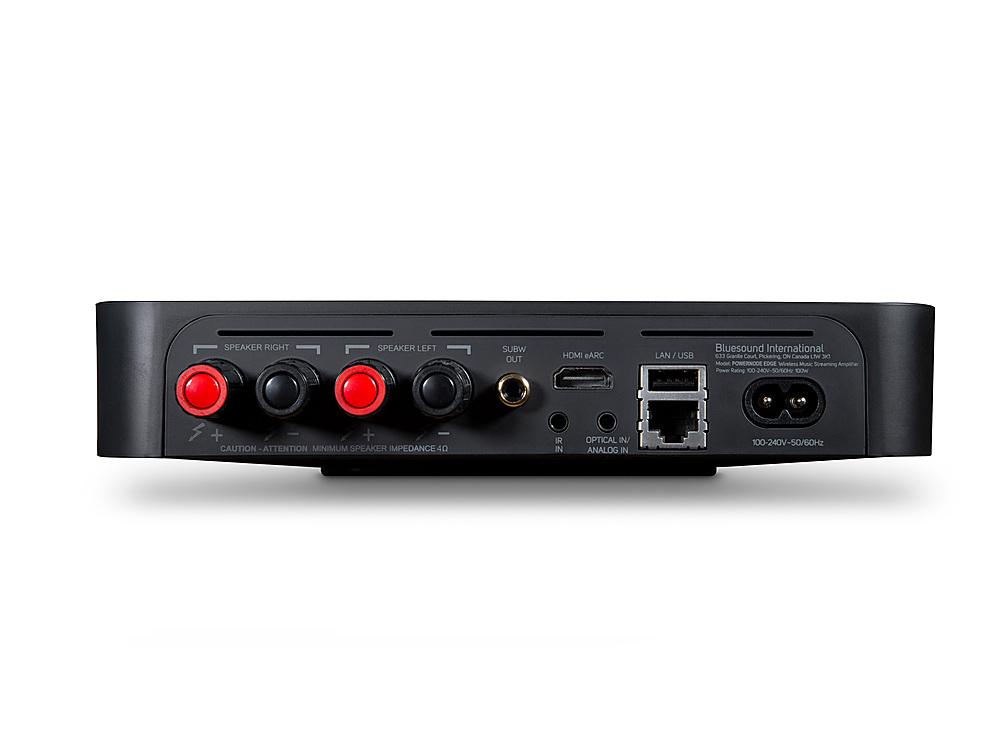
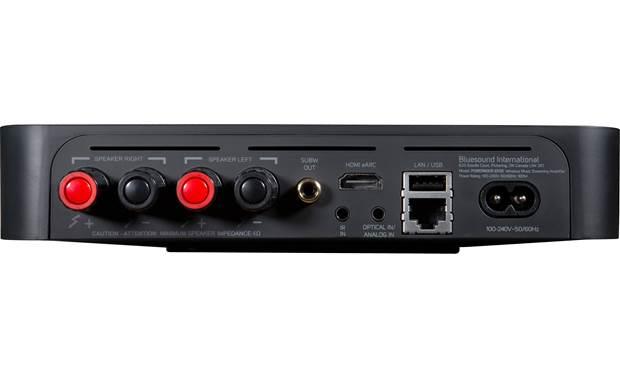
Modern streaming amplifiers need to work with more than just speakers. Both units include HDMI inputs with eARC (enhanced Audio Return Channel) support, allowing direct connection to modern TVs. This is particularly valuable for home theater use, as it enables TV audio to flow back to the amplifier while allowing the TV remote to control basic functions like volume.
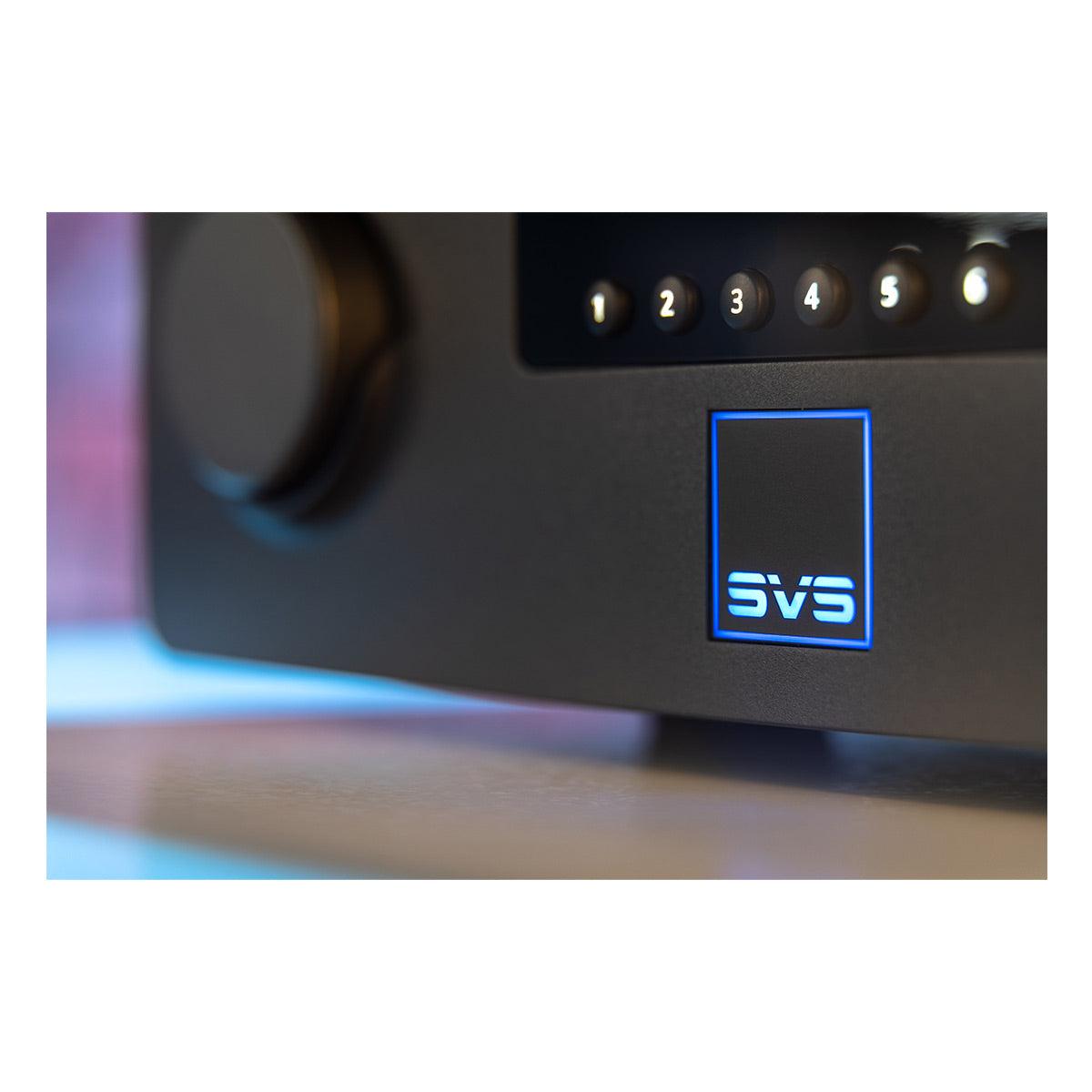
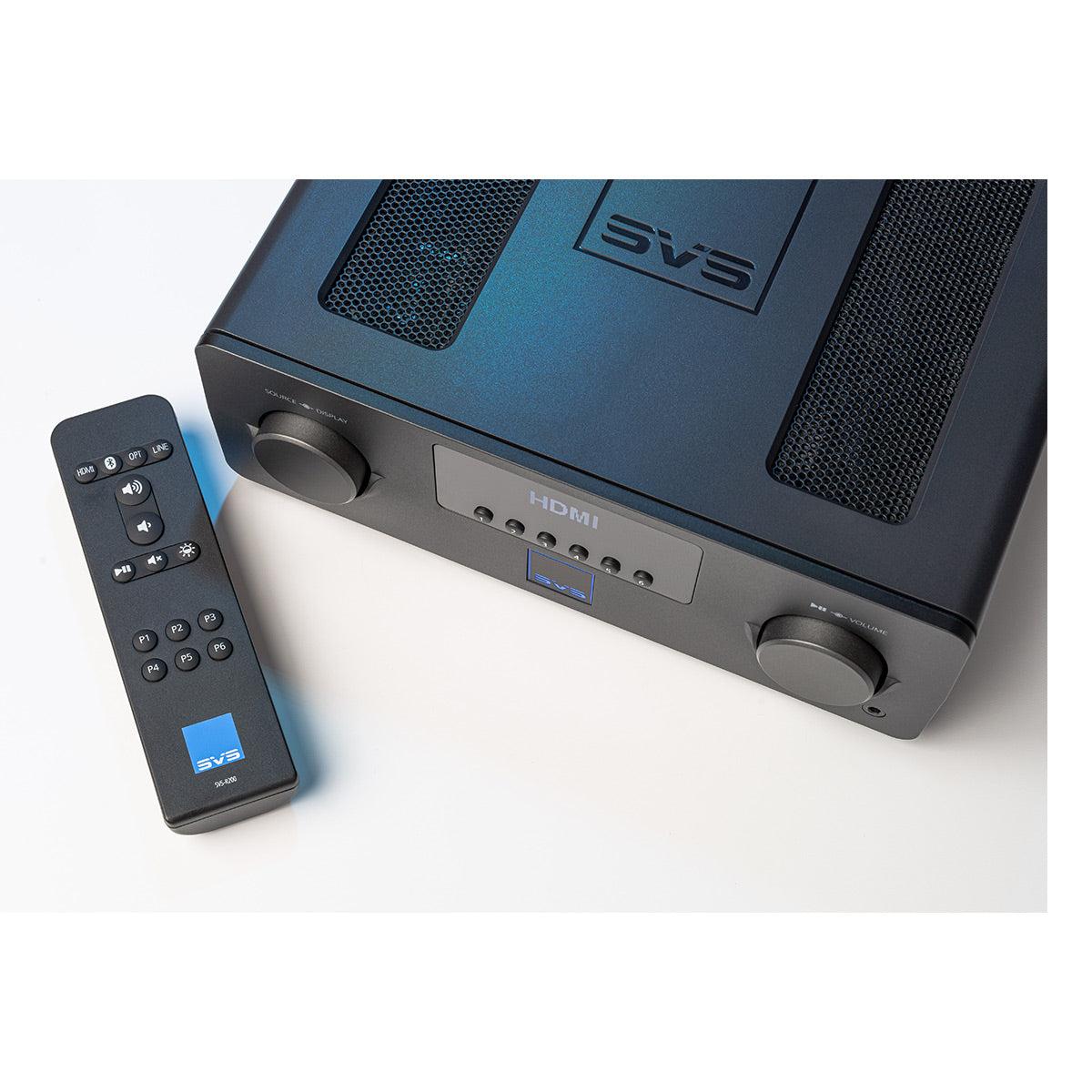
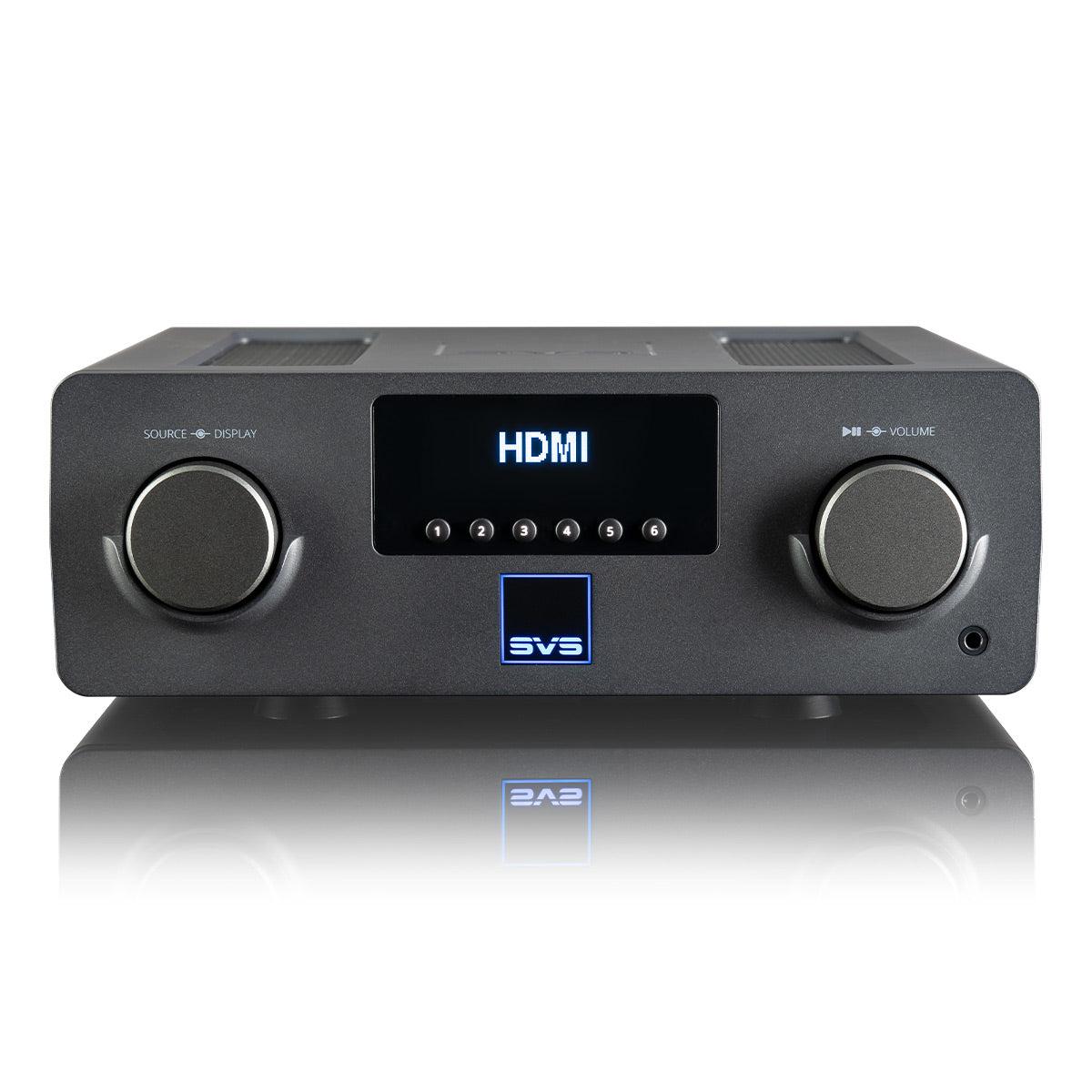
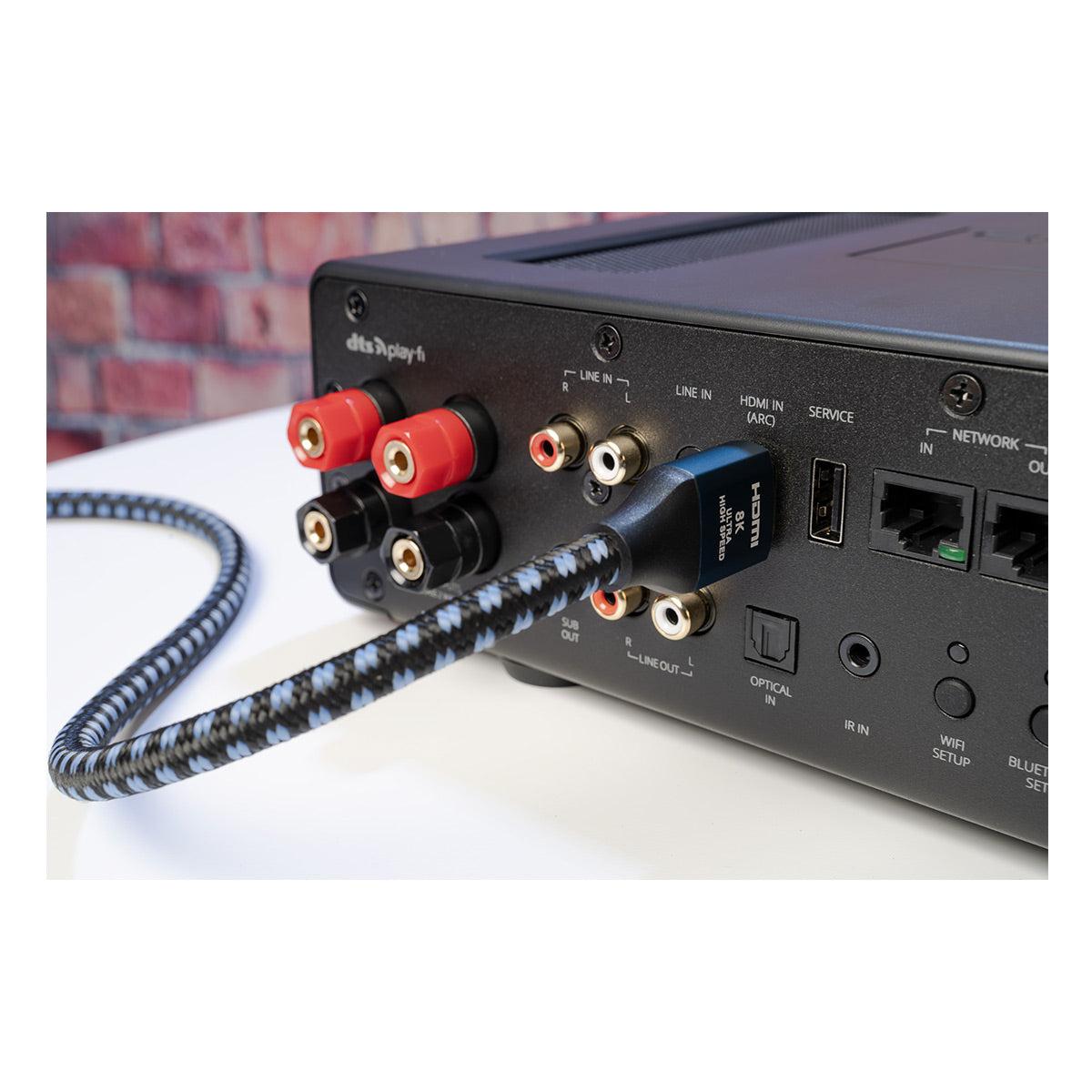
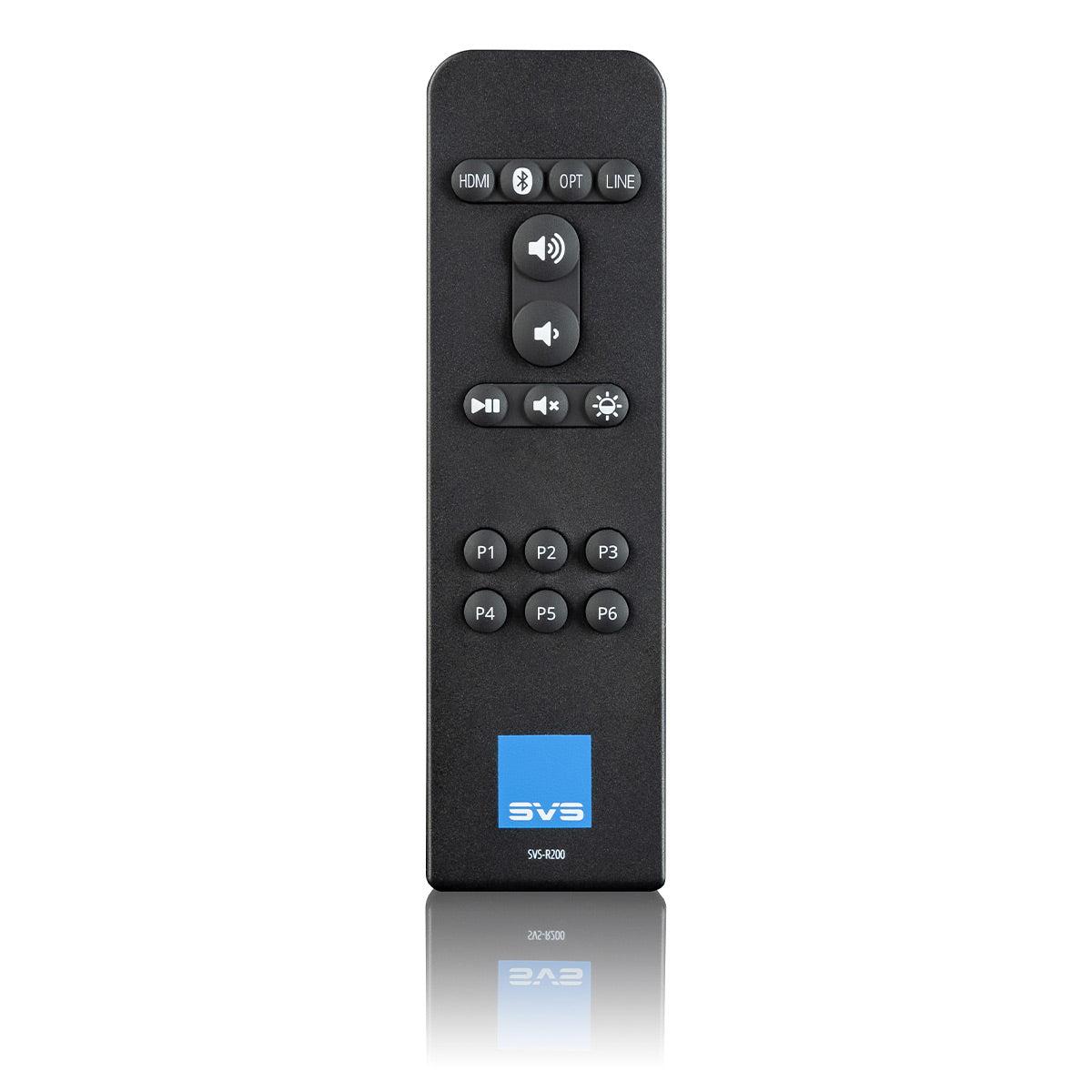
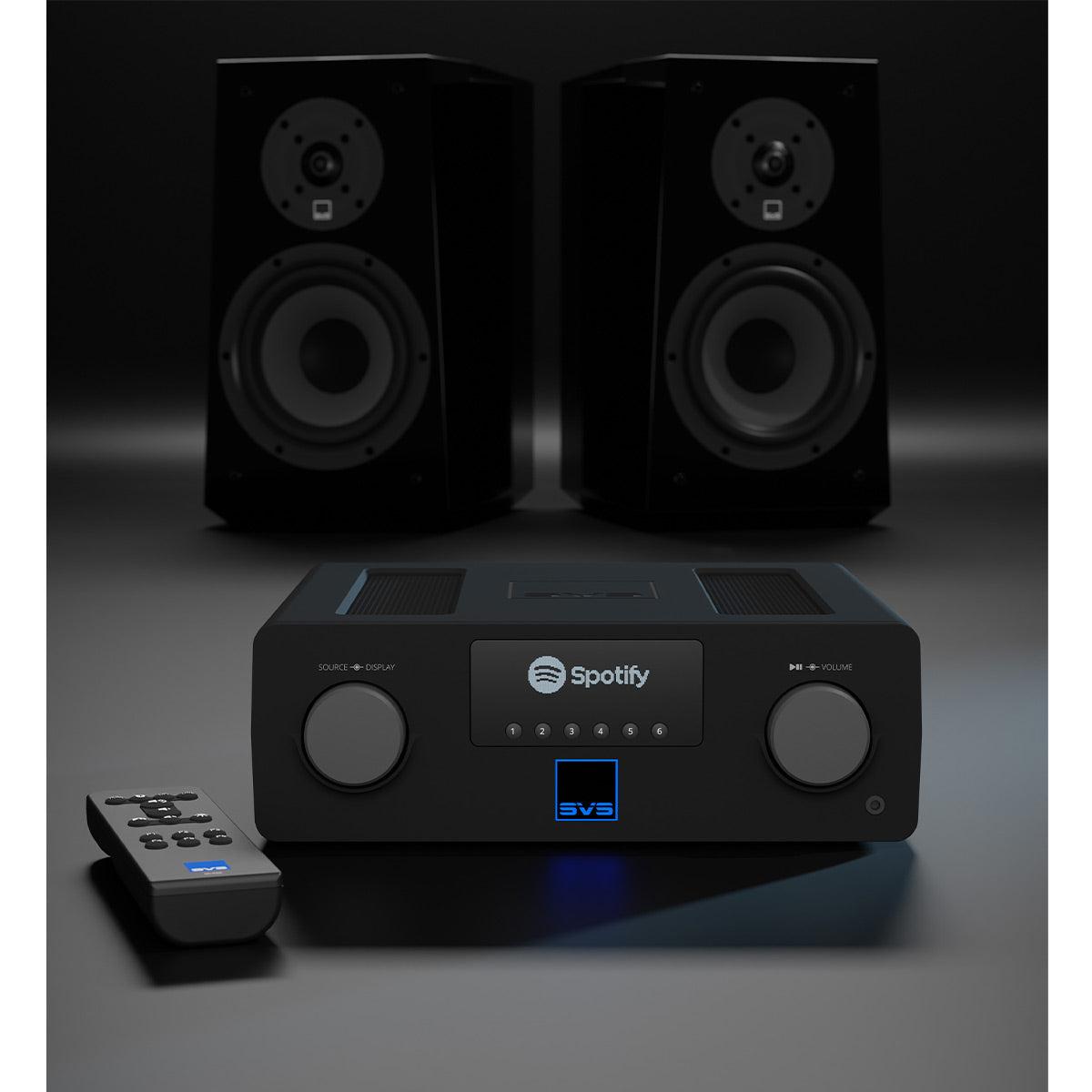
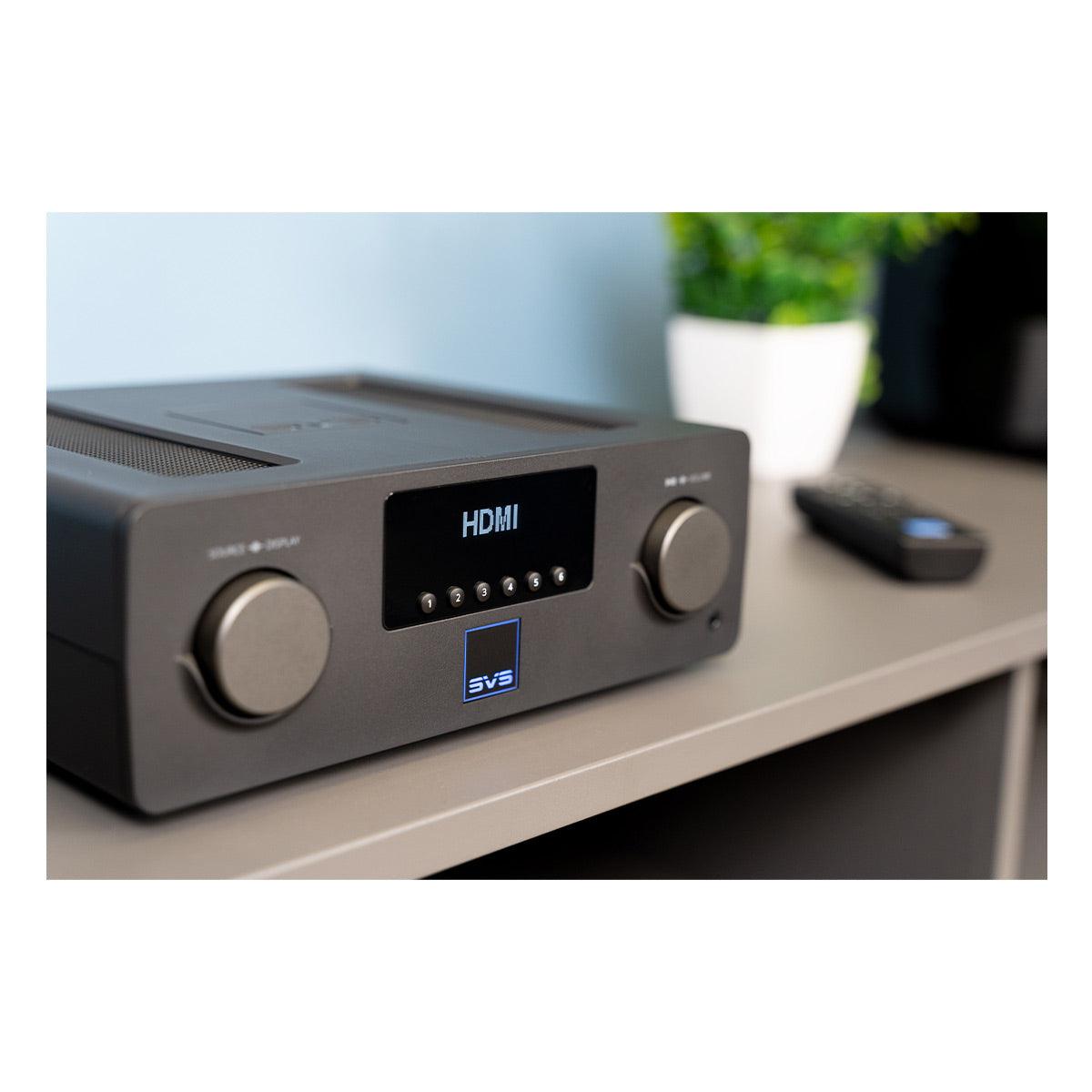
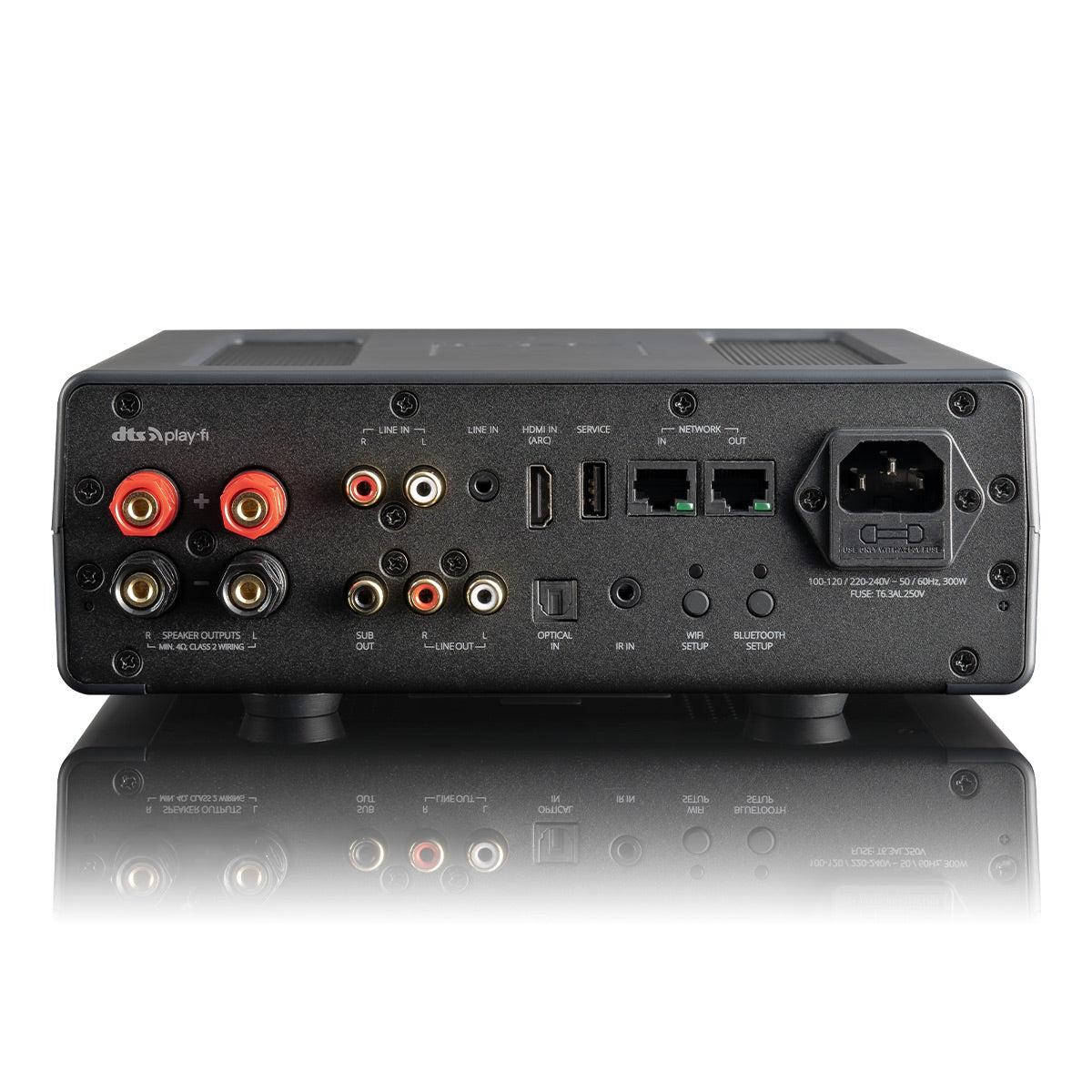
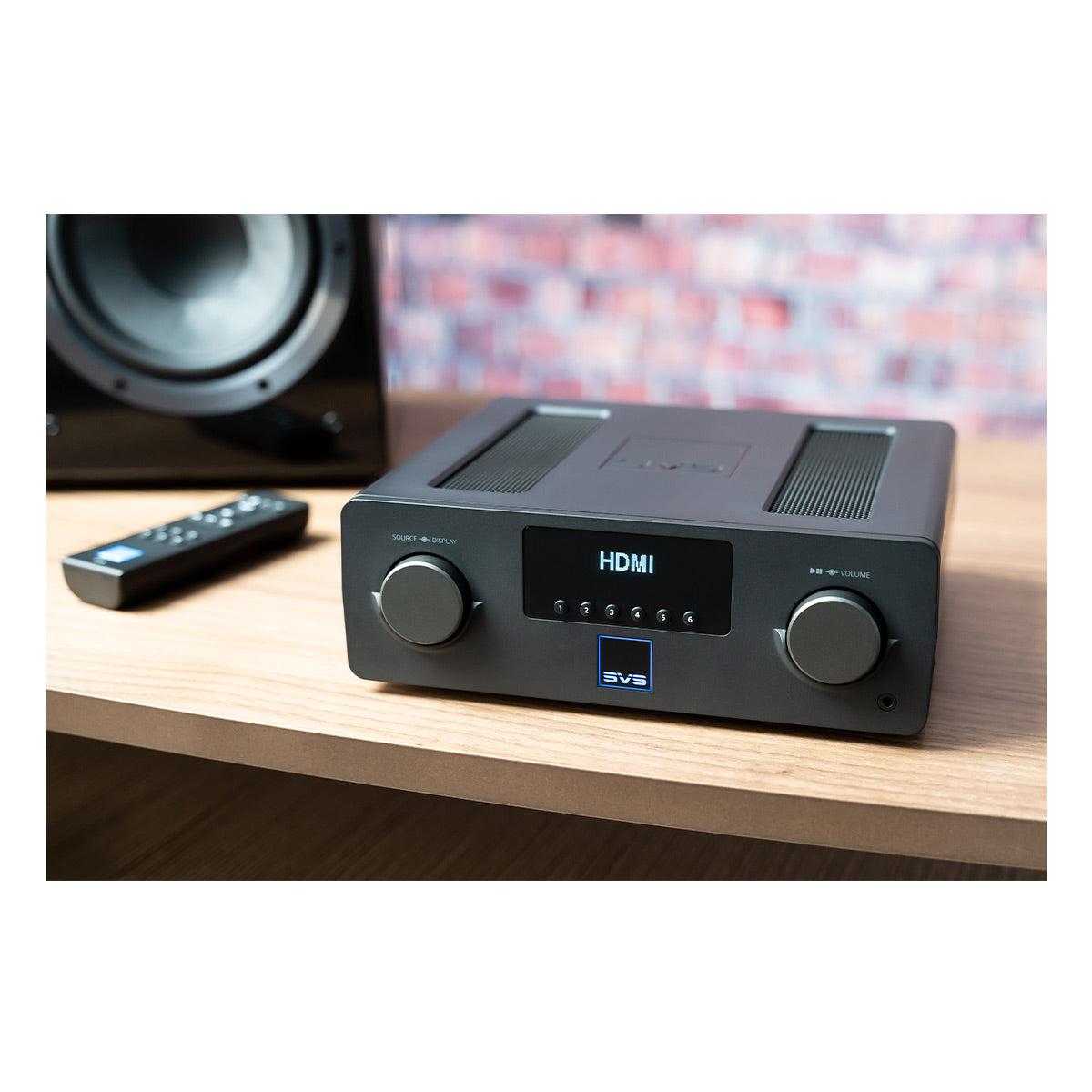
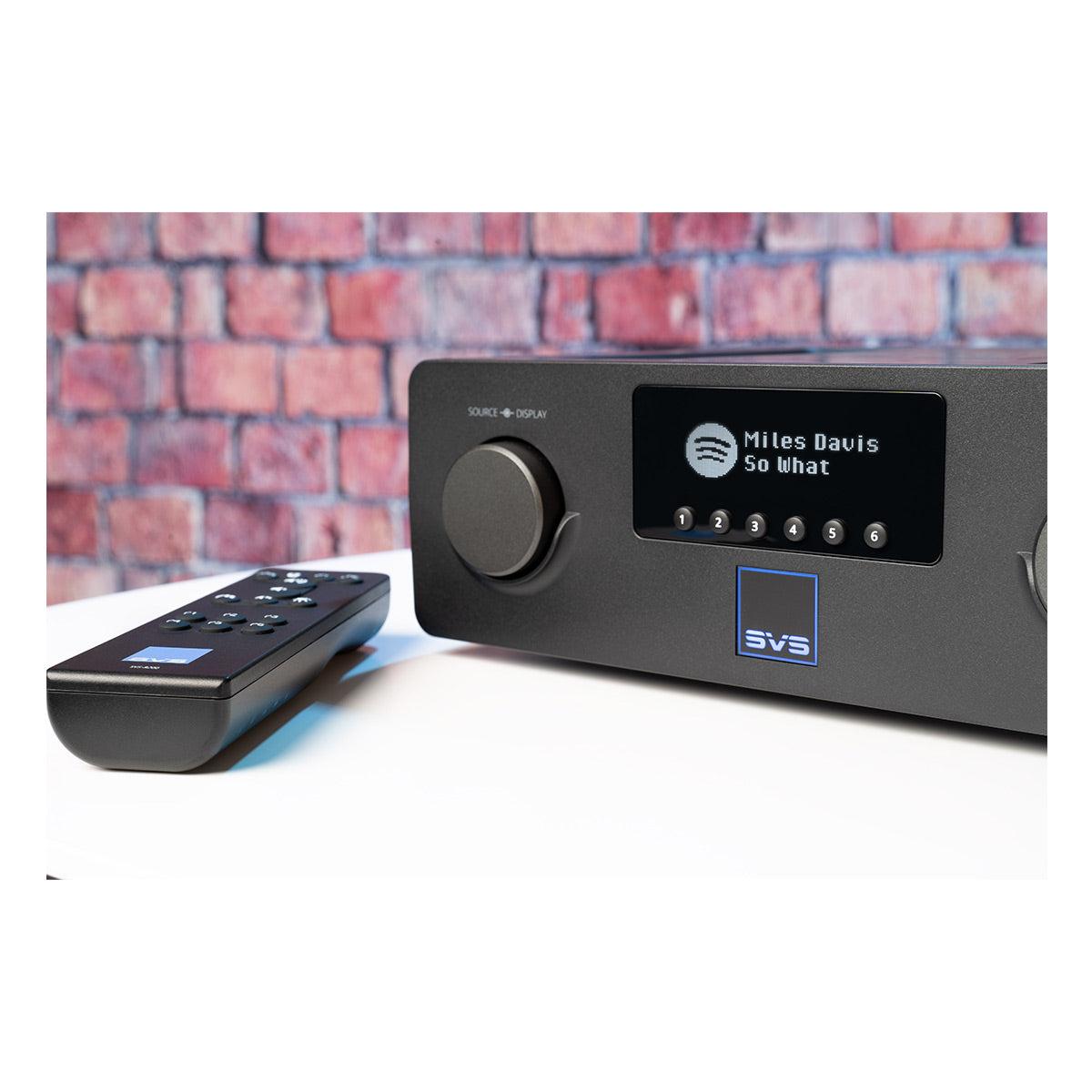
The SVS Prime Wireless Pro provides more comprehensive traditional connectivity. It includes optical digital input for older devices, stereo RCA inputs and outputs for connecting sources like CD players or feeding signals to other components, a 3.5mm auxiliary input for portable devices, and a dedicated headphone output. Six front-panel preset buttons provide instant access to favorite streaming services or radio stations – a surprisingly useful feature for daily operation.
However, the SVS has a significant limitation in its subwoofer integration. While it provides a subwoofer output, it's essentially just a full-range signal combined to mono. This means any connected subwoofer must have its own built-in low-pass filter to determine what frequencies it should reproduce. There's no bass management – the ability to redirect low frequencies from your main speakers to the subwoofer – which limits optimization possibilities.
The Bluesound PowerNode Edge takes a more minimalist approach to physical connectivity but includes proper bass management. When a subwoofer is connected, the unit automatically activates an 80Hz crossover, redirecting low frequencies to the subwoofer while allowing your main speakers to focus on midrange and treble. This typically results in cleaner, more dynamic sound from the complete system.
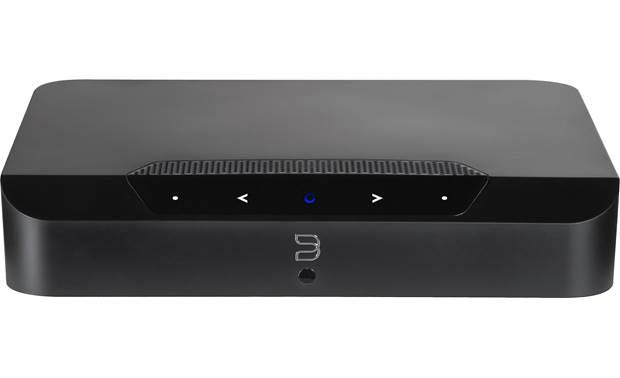
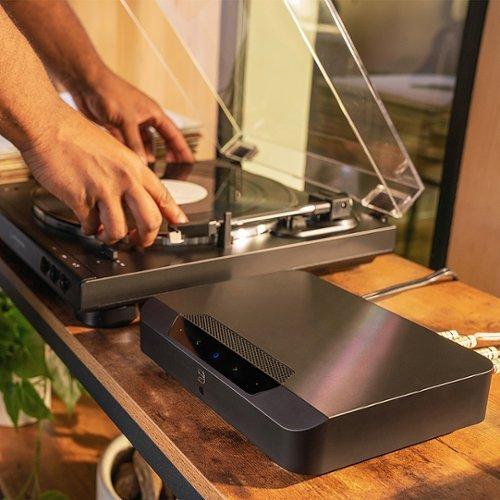
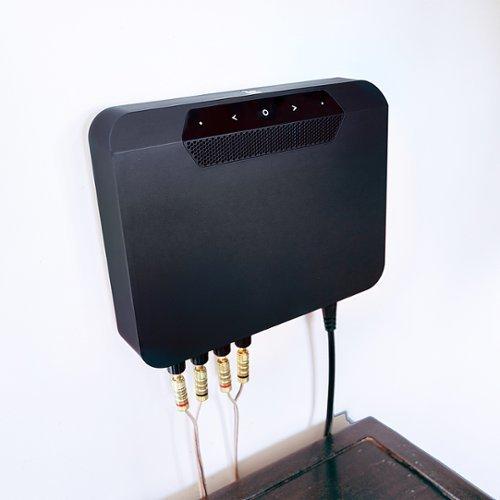
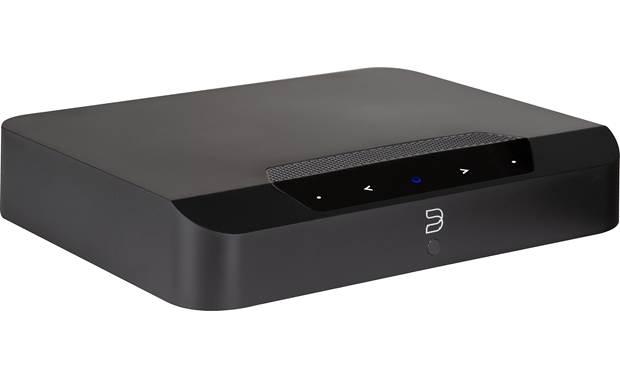
The PowerNode Edge's analog input uses a combination 3.5mm jack that also serves as the optical digital input via an included adapter. While space-efficient, this requires specific cables and adapters that aren't always convenient. However, the unit includes a wall-mount bracket and is designed for discreet installation – you can literally mount it behind your TV or hide it on a bookshelf.
Both amplifiers work well in home theater applications, but they serve different needs. The SVS Prime Wireless Pro, with its higher power output and comprehensive connectivity, functions effectively as a stereo receiver replacement. It can easily drive large tower speakers for the front left and right channels in a surround sound system, while the HDMI eARC connection ensures seamless integration with modern TVs and streaming devices.
The Bluesound PowerNode Edge excels in more specialized home theater roles. Its compact size and wireless capabilities make it ideal for powering rear surround speakers in a distributed system. Multiple PowerNode Edge units can work together to create a wireless 4.1 or 5.1 system when combined with other Bluesound components, eliminating the need to run speaker cables across the room.
For stereo TV listening, both units support Dolby Digital decoding, ensuring compatibility with broadcast and streaming content. The key difference lies in power requirements – if you have large speakers and a big room, the SVS provides more headroom for dynamic movie soundtracks.
At the time of writing, both amplifiers fall into similar price ranges, with the SVS commanding a modest premium over the Bluesound. However, value extends beyond initial cost to include long-term usability, expandability, and satisfaction.
The SVS Prime Wireless Pro represents excellent value for users prioritizing power and connectivity flexibility. If you have large, inefficient speakers, plan to fill substantial spaces with sound, or need comprehensive input options for various sources, the SVS delivers exceptional performance per dollar. It's particularly appealing for users who prefer physical controls and don't mind managing their streaming primarily through service-specific apps rather than a unified platform.
The Bluesound PowerNode Edge offers different but equally compelling value. You're investing in a mature, stable ecosystem that will likely receive ongoing support and feature updates. The superior app experience, voice control integration, and expansion possibilities justify the cost for users who prioritize system integration and long-term reliability over raw specifications.
Choose the SVS Prime Wireless Pro SoundBase if you have large, demanding speakers that need substantial power to reach their potential. It's ideal for medium to large rooms where you want to play music loud without compression or distortion. The comprehensive connectivity makes it excellent for users with multiple analog sources, and the physical preset buttons appeal to those who prefer tactile controls over app-based operation.
The SVS also suits users who don't plan extensive multi-room expansion or don't mind using multiple apps for different streaming services. If you primarily stream via AirPlay, Spotify Connect, or Bluetooth, the Play-Fi app limitations become less relevant.
Choose the Bluesound PowerNode Edge if your speakers are reasonably efficient (88dB sensitivity or higher) and you value refined sound quality over maximum volume capabilities. It's perfect for compact installations where visual discretion matters, and the mature BluOS ecosystem makes it ideal for users planning multi-room audio expansion.
The PowerNode Edge particularly appeals to users who appreciate technical innovation – the DirectDigital amplification really does offer audible benefits in terms of clarity and precision. If you're building a system around streaming as the primary source and want the best possible app experience and voice control integration, Bluesound's platform advantages become crucial.
Ultimately, both amplifiers represent excellent approaches to modern audio, just with different priorities. The SVS focuses on power and flexibility, while the Bluesound emphasizes refinement and integration. Your choice should align with your specific speakers, room requirements, and system expansion plans rather than specifications alone.
| Bluesound PowerNode Edge | SVS Prime Wireless Pro SoundBase |
|---|---|
| Power Output - Critical for driving speakers and filling rooms | |
| 40 watts per channel @ 8Ω (suitable for efficient speakers) | 150 watts per channel @ 4Ω (drives large, demanding speakers) |
| Amplifier Technology - Affects sound quality and efficiency | |
| DirectDigital amplification (keeps signal digital until speakers) | Class D amplification (efficient, high-power traditional design) |
| Streaming Platform - Determines app quality and multi-room capabilities | |
| BluOS ecosystem (mature, stable, excellent app) | DTS Play-Fi (broad compatibility, less refined app experience) |
| Connectivity Options - Important for integrating various sources | |
| HDMI eARC, combo 3.5mm analog/optical, subwoofer out | HDMI eARC, optical, RCA in/out, 3.5mm aux, headphone jack |
| Bass Management - Crucial for proper subwoofer integration | |
| Yes, with 80Hz crossover activation | No, full-range output only (subwoofer needs own filtering) |
| Physical Controls - Convenience for daily operation | |
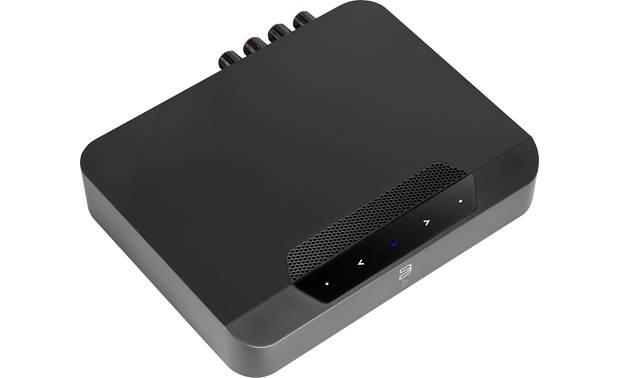
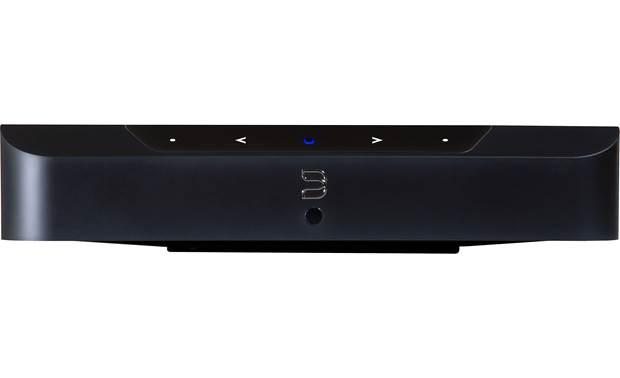
| Capacitive touch panel only | Six assignable preset buttons plus OLED display |
| Form Factor - Installation flexibility and room integration | |
| Compact, wall-mountable design (1.8" H) | Desktop/shelf unit with standard footprint (3.2" H) |
| Voice Control - Smart home integration capabilities | |
| Built-in BluVoice (Alexa, Google, Siri support) | Requires separate smart speaker for voice commands |
| Multi-room Expansion - Future system growth potential | |
| Excellent BluOS integration with other brands | Good Play-Fi support but more limited ecosystem |
| High-Res Audio Support - For audiophile-quality streaming | |
| Up to 24-bit/192kHz, MQA decoding | Up to 24-bit/192kHz via Wi-Fi Critical Listening Mode |
| Wireless Protocols - Device compatibility and streaming options | |
| AirPlay 2, Bluetooth aptX HD, BluOS native | AirPlay 2, Chromecast, Spotify Connect, Bluetooth aptX/AAC |
| Best Use Cases - Scenarios where each excels | |
| Compact systems, efficient speakers, multi-room priority | Large speakers, high-volume listening, comprehensive connectivity |
The SVS Prime Wireless Pro SoundBase delivers significantly more power with 150 watts per channel into 4-ohm speakers, compared to the Bluesound PowerNode Edge which provides 40 watts per channel into 8-ohm speakers. This makes the SVS better suited for large speakers and rooms that need high volume levels.
The Bluesound PowerNode Edge uses DirectDigital amplification that keeps audio signals digital until the speaker outputs, reducing distortion and noise. The SVS Prime Wireless Pro uses traditional Class D amplification, which is highly efficient and powerful but converts to analog earlier in the signal chain.
The Bluesound PowerNode Edge uses the BluOS platform, widely regarded as having the best app interface and most stable performance. The SVS Prime Wireless Pro uses DTS Play-Fi, which offers broader wireless protocol support but receives criticism for a less polished app experience.
Both the Bluesound PowerNode Edge and SVS Prime Wireless Pro SoundBase feature HDMI eARC inputs for direct TV connection and support Dolby Digital decoding. The SVS provides more power for large front speakers in a surround system, while the PowerNode Edge works well for compact stereo TV setups.
The SVS Prime Wireless Pro provides more comprehensive connectivity with optical digital input, stereo RCA inputs/outputs, headphone jack, and six physical preset buttons. The Bluesound PowerNode Edge has fewer physical inputs but includes proper bass management and wall-mounting capabilities.
Both amplifiers support high-resolution audio up to 24-bit/192kHz. The Bluesound PowerNode Edge includes MQA decoding for enhanced streaming quality, while the SVS Prime Wireless Pro offers high-res playback through its Critical Listening Mode via Wi-Fi.
The Bluesound PowerNode Edge includes proper bass management with an 80Hz crossover that automatically activates when a subwoofer is connected. The SVS Prime Wireless Pro SoundBase has a subwoofer output but provides no bass management, requiring subwoofers with built-in filtering.
The Bluesound PowerNode Edge includes built-in BluVoice technology for direct Alexa, Google Assistant, and Siri voice control. The SVS Prime Wireless Pro requires a separate smart speaker or device for voice commands through compatible streaming services.
The Bluesound PowerNode Edge excels at multi-room audio through the mature BluOS ecosystem, offering tight synchronization and easy expansion. The SVS Prime Wireless Pro SoundBase supports multi-room via DTS Play-Fi but with a less refined control experience.
The SVS Prime Wireless Pro can drive large, inefficient floorstanding speakers and fill big rooms with sound. The Bluesound PowerNode Edge works best with moderately efficient bookshelf or smaller floorstanding speakers (88dB sensitivity or higher) in small to medium rooms.
Value depends on your needs: the SVS Prime Wireless Pro SoundBase offers more power per dollar and comprehensive connectivity, while the Bluesound PowerNode Edge provides superior streaming ecosystem quality and long-term platform support for a similar investment.
Choose the Bluesound PowerNode Edge if you have efficient speakers, want the best app experience, and plan to expand your system. Choose the SVS Prime Wireless Pro SoundBase if you have large speakers, need maximum power, or prefer physical controls over app-based operation.
We've done our best to create useful and informative comparisons to help you decide what product to buy. Our research uses advanced automated methods to create this comparison and perfection is not possible - please contact us for corrections or questions. These are the sites we've researched in the creation of this article: futureaudiophile.com - alpha-audio.net - theaudiofactory.com - audiophilia.com - youtube.com - qaudio.com - crutchfield.com - youtube.com - bluesound.com - audioadvisor.com - crutchfield.com - bluesound.com - audiosciencereview.com - bluesound.com - soundstagesimplifi.com - mysoundconcepts.com - soundandvision.com - crutchfield.com - futureaudiophile.com - dreamediaav.com - crutchfield.com - svsound.com - soundstageaccess.com - skybygramophone.com - hometheaterhifi.com - av-connection.com - crutchfield.com - soundstagenetwork.com - svsound.com

Privacy Policy
Terms and Conditions - Affiliate Policy
Home Security
© Copyright 2008-2026.
11816 Inwood Rd #1211, Dallas, TX 75244