

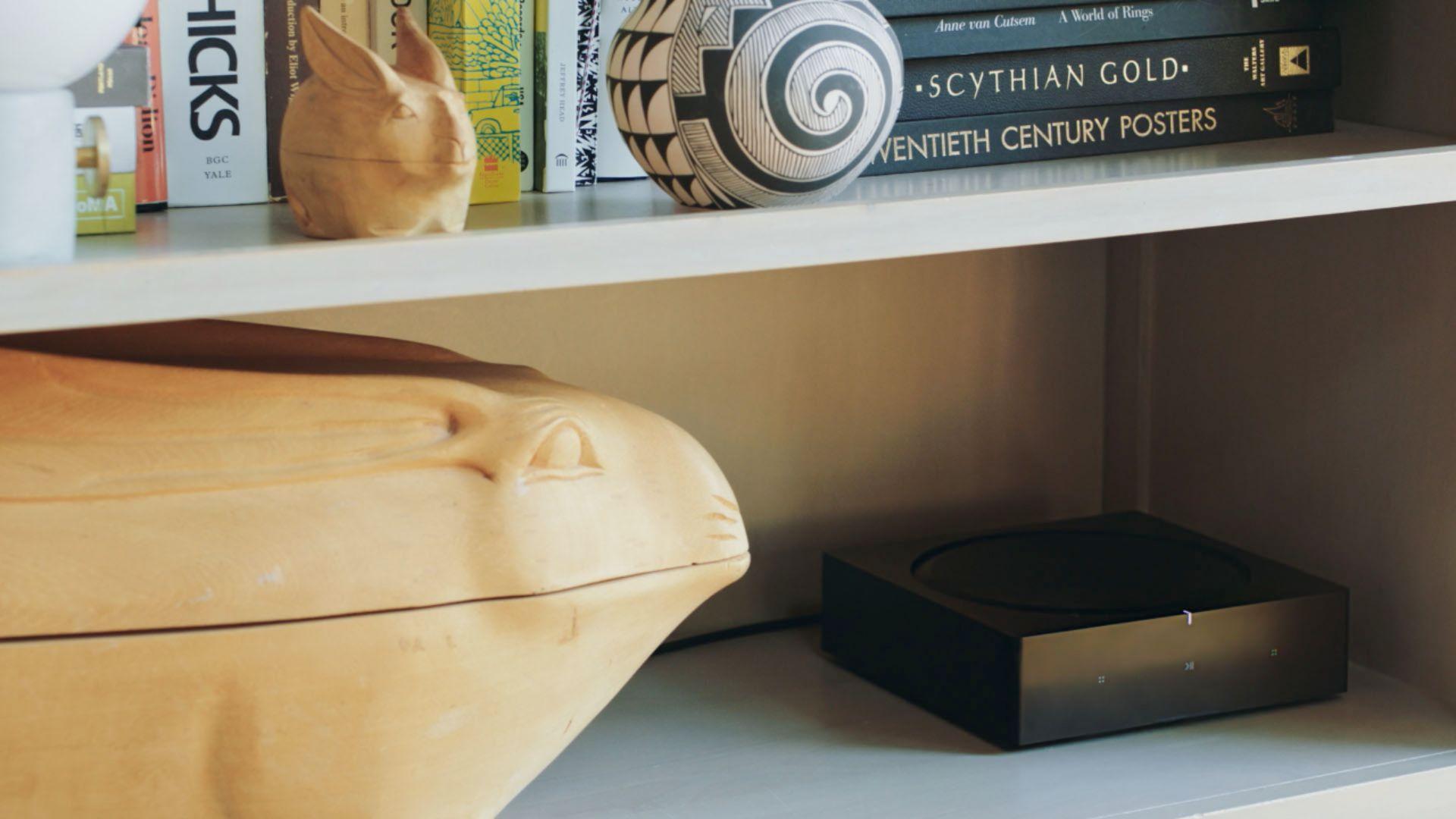
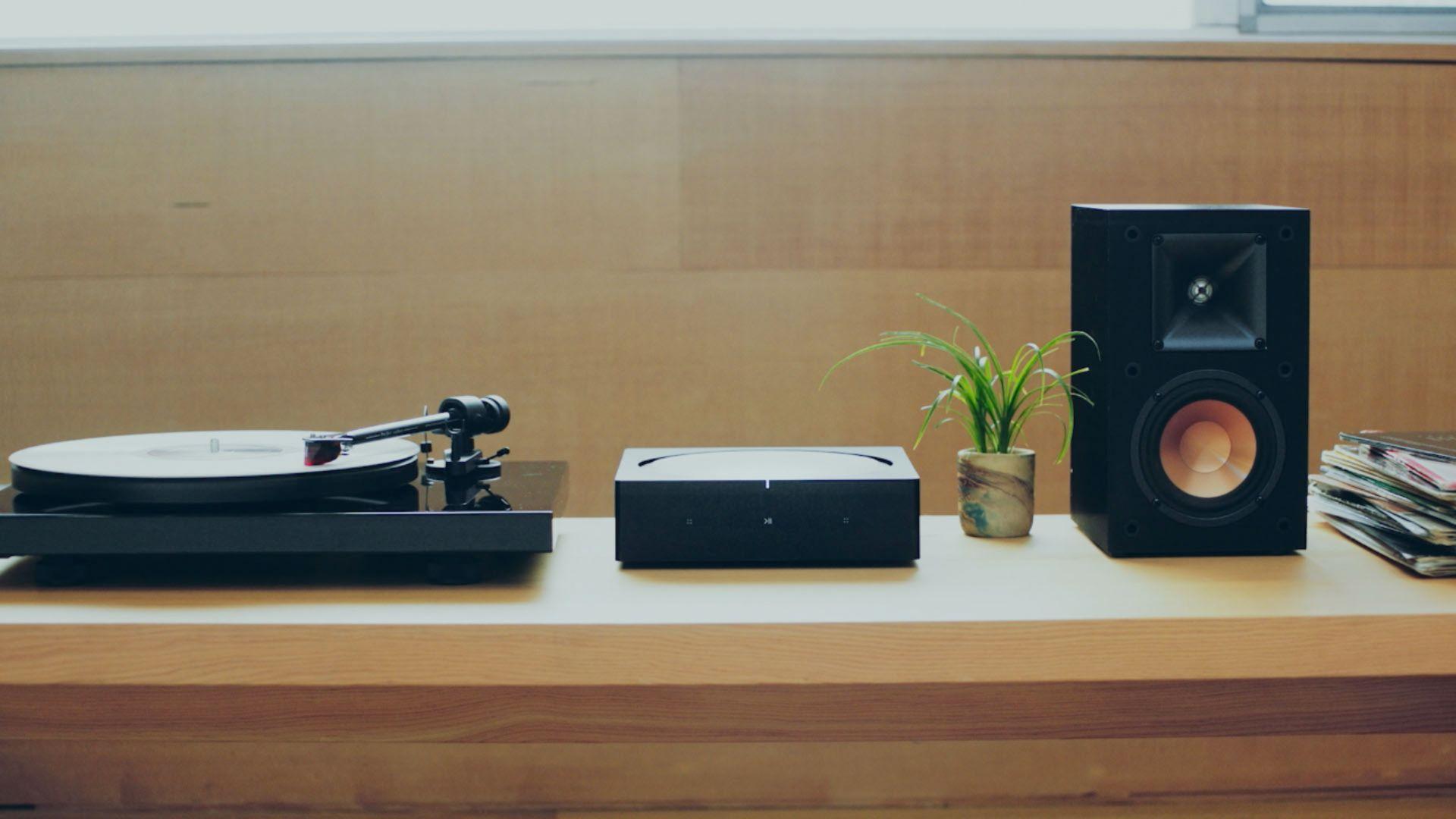
Buying an amplifier used to be straightforward—you'd find something with enough power for your speakers and call it a day. Today's audio landscape is more complex. The rise of streaming services, smart home integration, and multi-room audio systems has split amplifiers into two distinct camps: traditional hi-fi focused on pure audio performance, and smart amplifiers designed for modern connected homes.
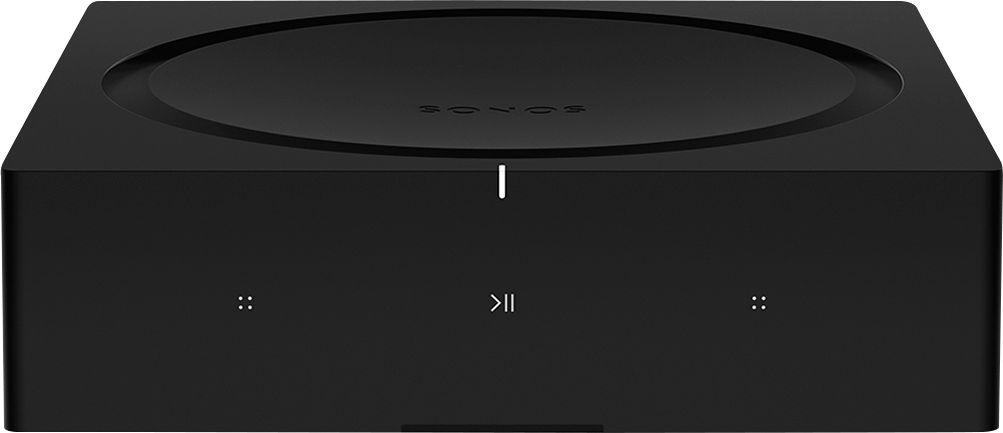
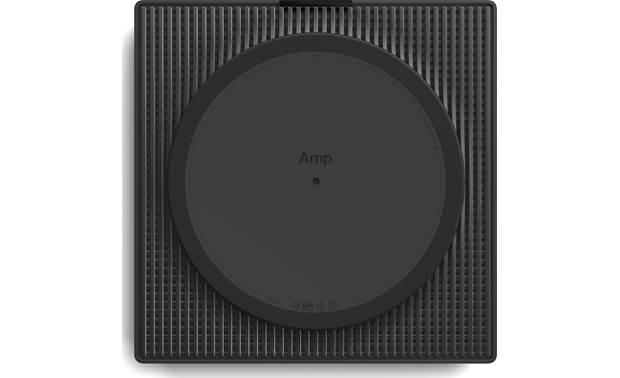
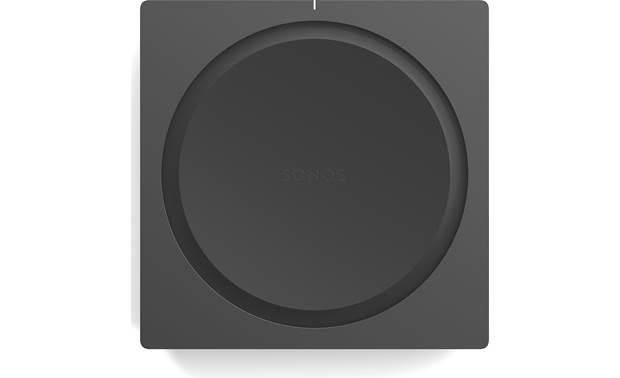
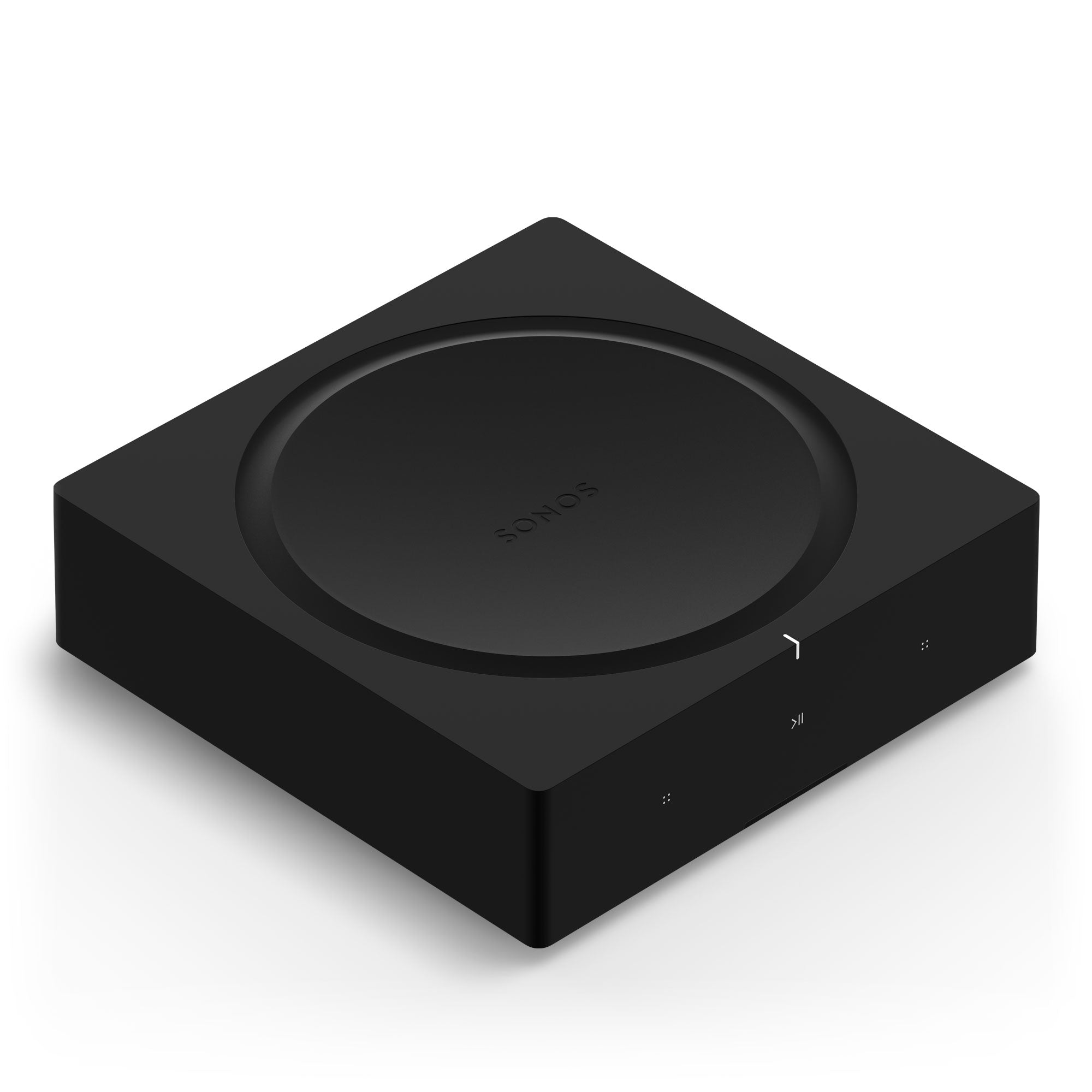
The Sonos Amp and Denon PMA-600NE perfectly represent this divide. Released in 2018, the Sonos entered a market increasingly hungry for wireless streaming and home automation integration. The Denon, also from 2018, maintained the traditional integrated amplifier approach that has served audiophiles for decades. Understanding which philosophy matches your needs is crucial to making the right choice.
When shopping for an amplifier today, you're essentially choosing between two different approaches to audio reproduction. Traditional integrated amplifiers like the Denon PMA-600NE focus on delivering the cleanest, most accurate sound possible from whatever sources you connect to them. They're designed around the principle that great audio starts with exceptional analog circuitry and careful engineering.
Smart amplifiers like the Sonos Amp take a different approach. They're built around the assumption that most people primarily stream music from services like Spotify or Apple Music, want to control everything from their phone, and expect their audio system to work seamlessly with the rest of their smart home setup.
The key considerations when choosing between these approaches include audio performance (how good does it actually sound), connectivity options (what can you plug into it), system flexibility (how easily can you expand or modify your setup), and overall value for your specific use case.
Understanding impedance is crucial when discussing amplifier performance. Measured in ohms (Ω), impedance represents how much electrical resistance your speakers present to the amplifier. Most home speakers are either 4 or 8 ohms, and amplifiers typically produce more power into lower impedance loads—though this also makes them work harder and generate more heat.
The most obvious difference between these amplifiers is their power output, but the story is more nuanced than the specifications suggest. The Sonos Amp delivers 125 watts per channel into 8-ohm speakers, while the Denon PMA-600NE provides 45 watts per channel into the same load. At first glance, the Sonos seems dramatically more powerful.
However, amplifier power doesn't work linearly. To sound twice as loud, you need roughly ten times more power due to how our ears perceive volume changes. The difference between 45 and 125 watts translates to the Sonos being capable of playing about 4-5 decibels louder than the Denon—noticeable, but not revolutionary for most home listening situations.
Where the power difference becomes significant is in speaker compatibility and room size. The Sonos Amp can comfortably drive demanding floor-standing speakers, outdoor speakers that need to project sound across large spaces, or even multiple pairs of speakers simultaneously. The Denon PMA-600NE, while perfectly adequate for bookshelf speakers or efficient floor-standers in typical living rooms, might struggle with particularly difficult speaker loads.
The Denon compensates for its lower power rating through its Advanced High Current (AHC) circuit design. This technology, typically reserved for more expensive Denon amplifiers, allows the amp to deliver more current on demand, helping it control speakers better and produce more dynamic sound than its modest power rating suggests.
What matters more than peak power is how cleanly an amplifier delivers that power. Total Harmonic Distortion (THD) measures how much an amplifier changes the original signal, with lower numbers being better. The Denon PMA-600NE achieves an impressive 0.02% THD, meaning it adds virtually no coloration to the music. The Sonos Amp doesn't publish specific THD figures, but our research into user experiences suggests it prioritizes dynamic, engaging sound over laboratory-perfect measurements.
The sound character difference between these amplifiers reflects their design philosophies. The Denon PMA-600NE uses traditional Class A/B amplification, where the output transistors are always partially conducting. This creates a warm, natural sound that many audiophiles prefer, particularly for acoustic music, jazz, and classical genres.
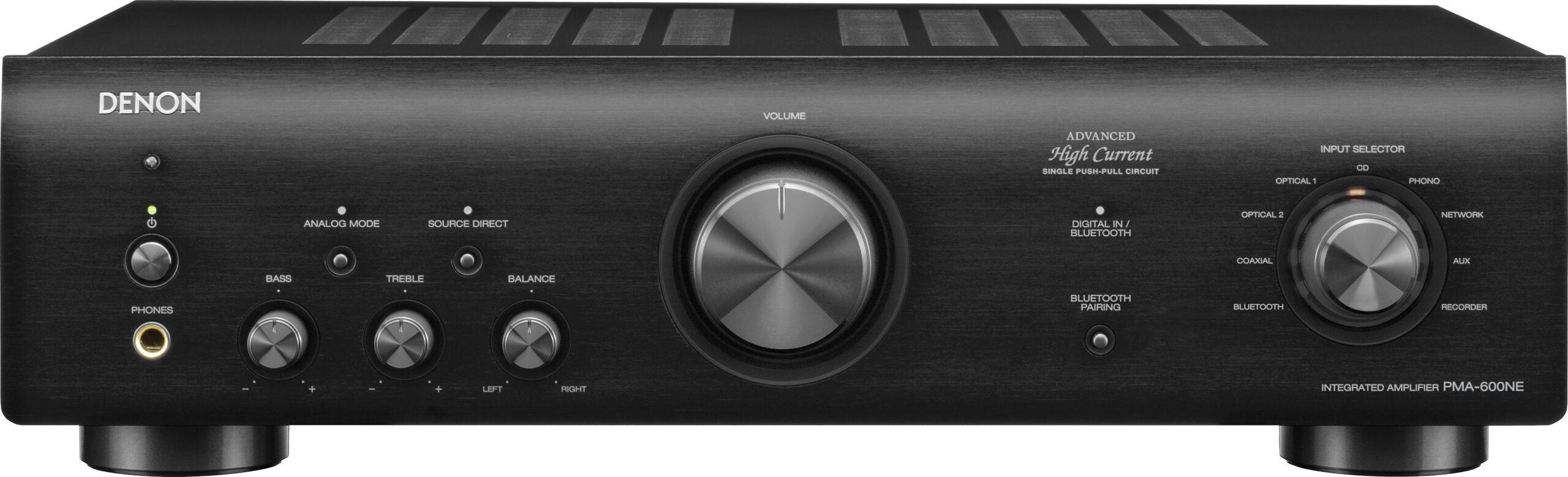
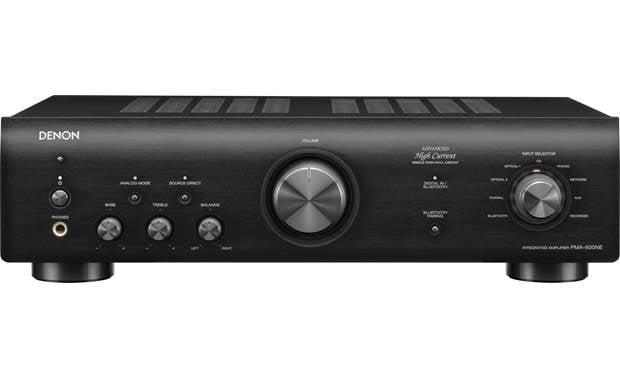
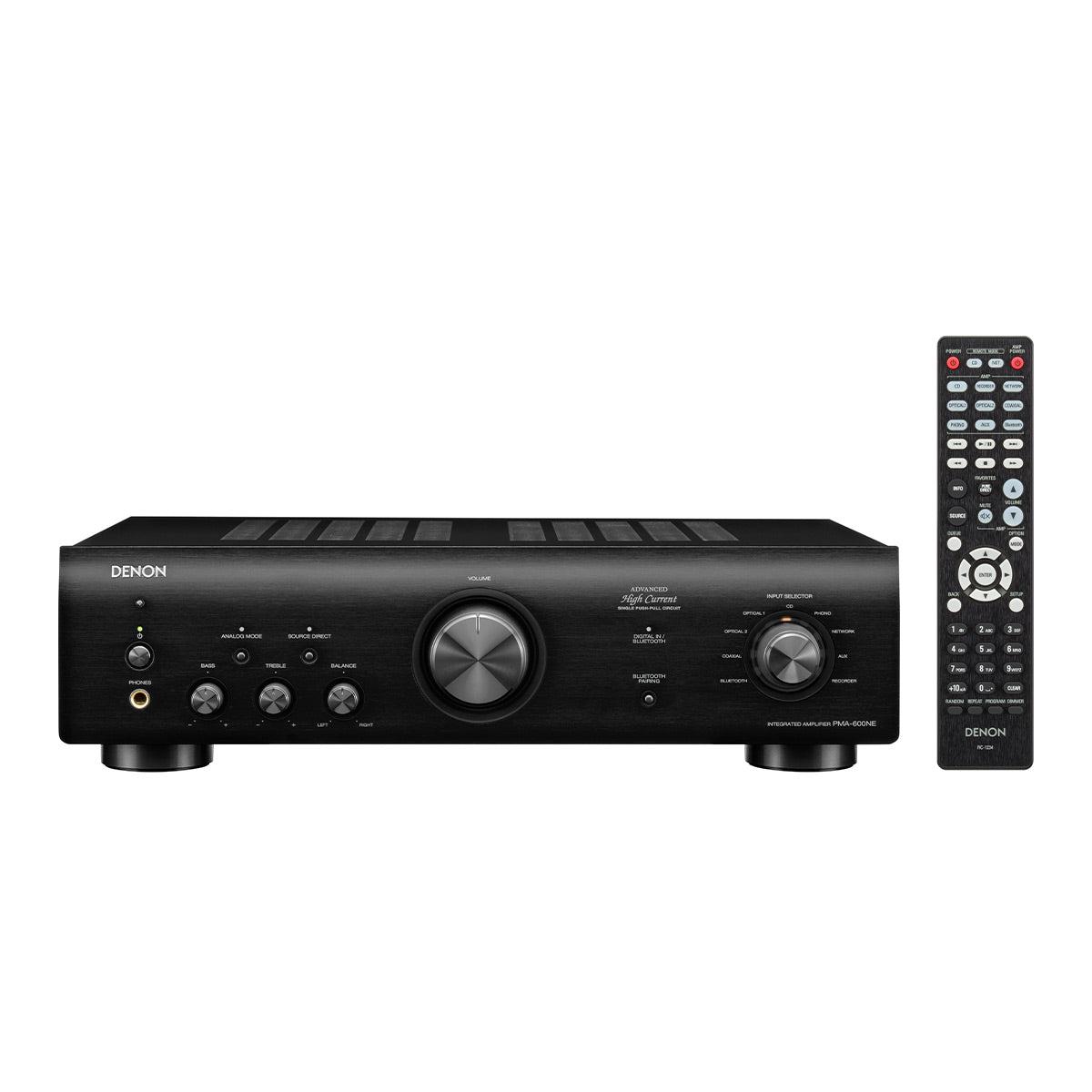
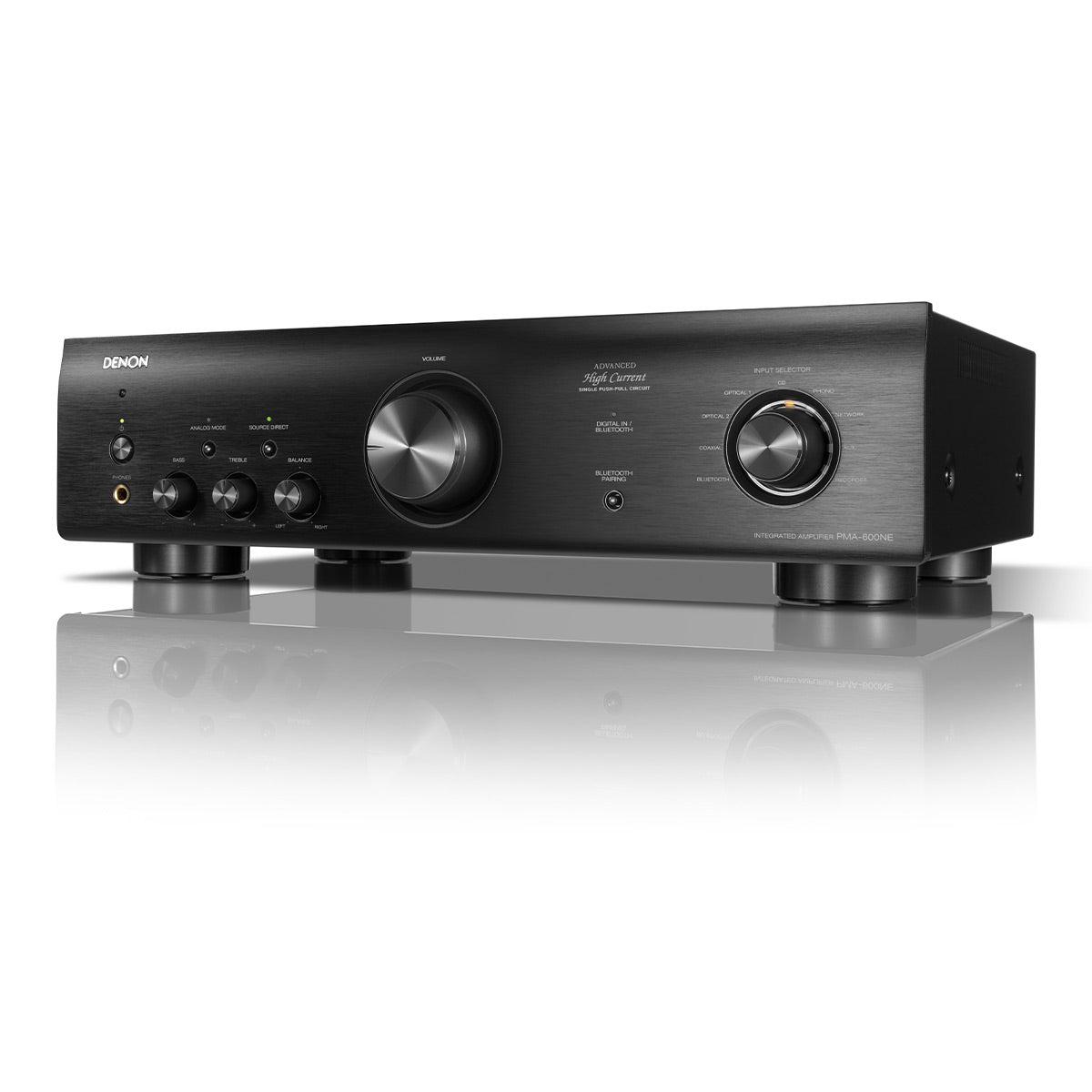
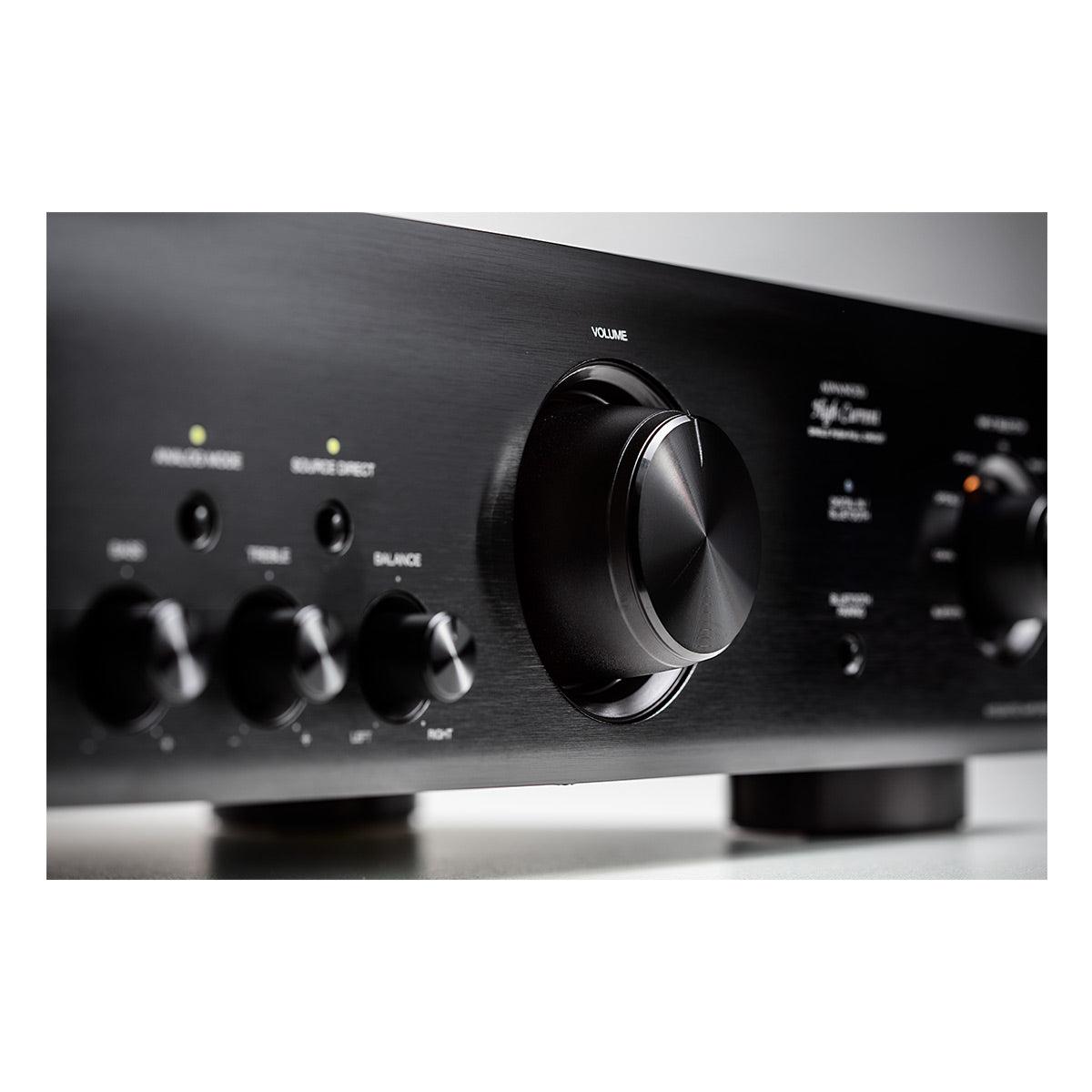
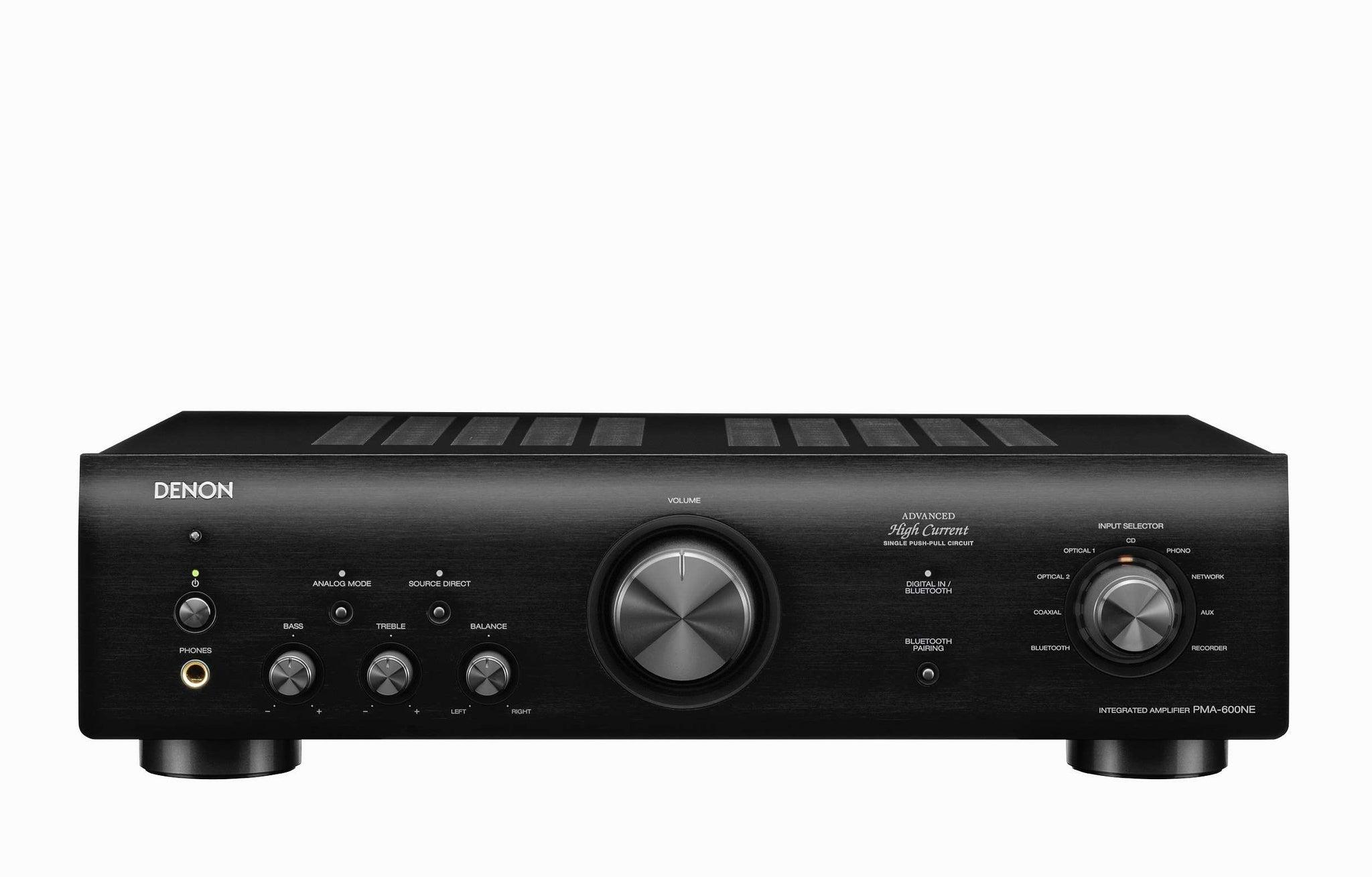
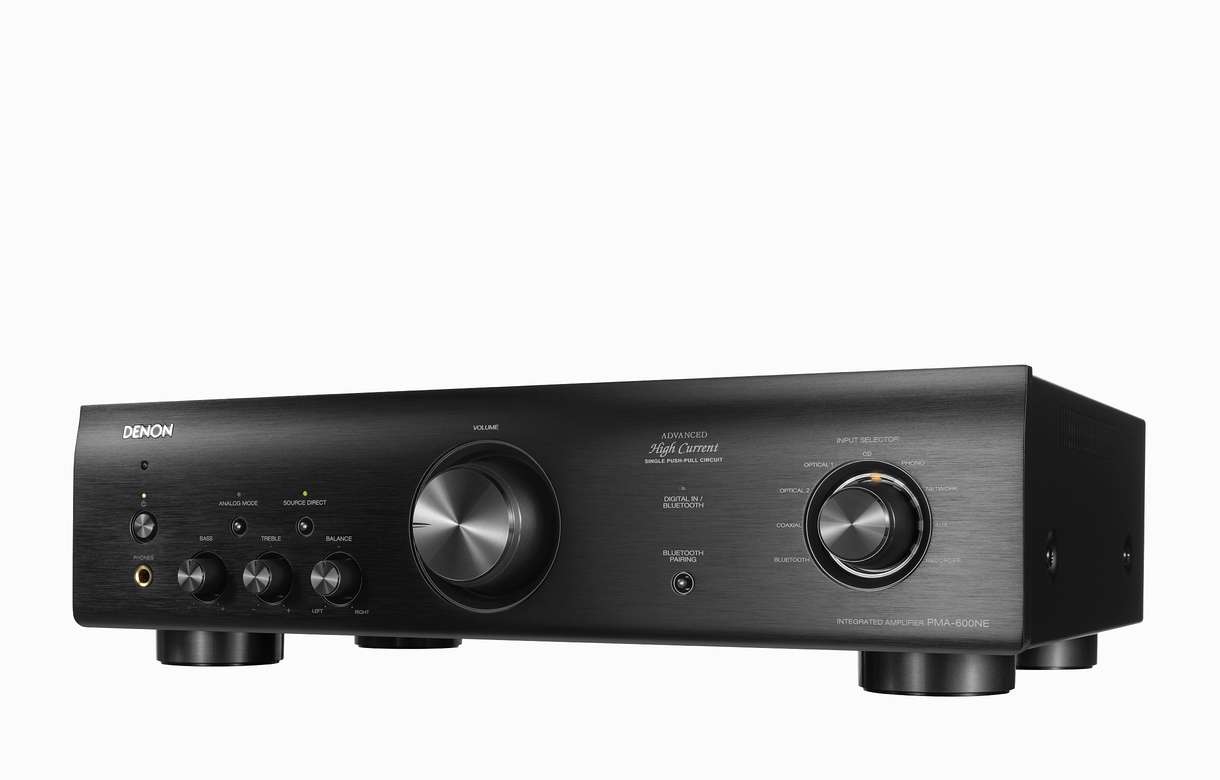
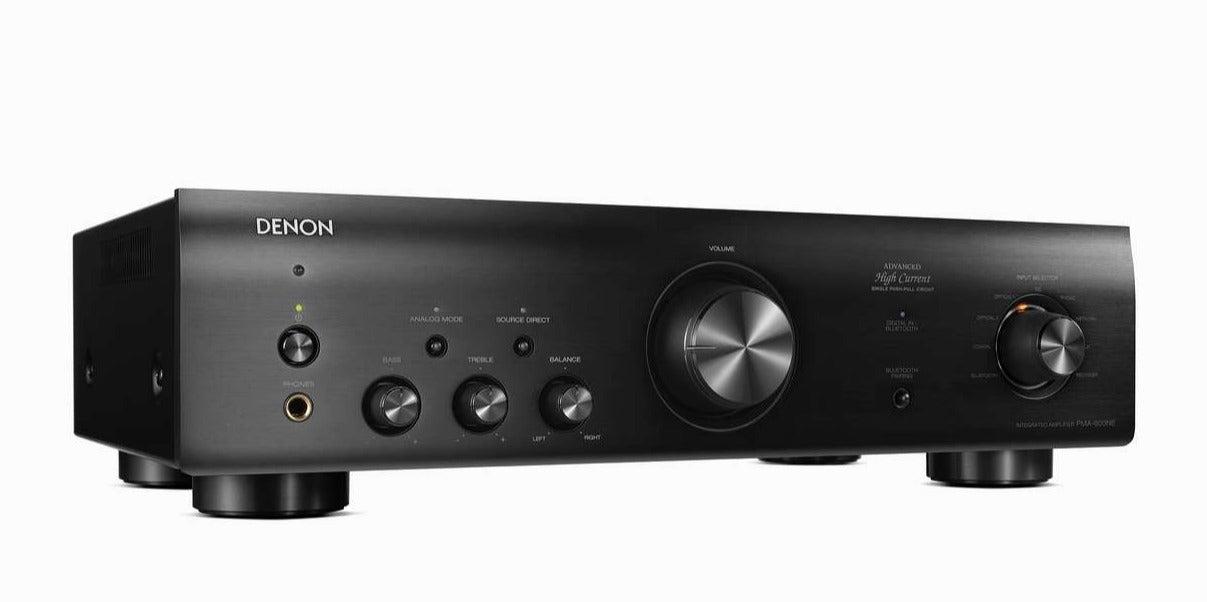
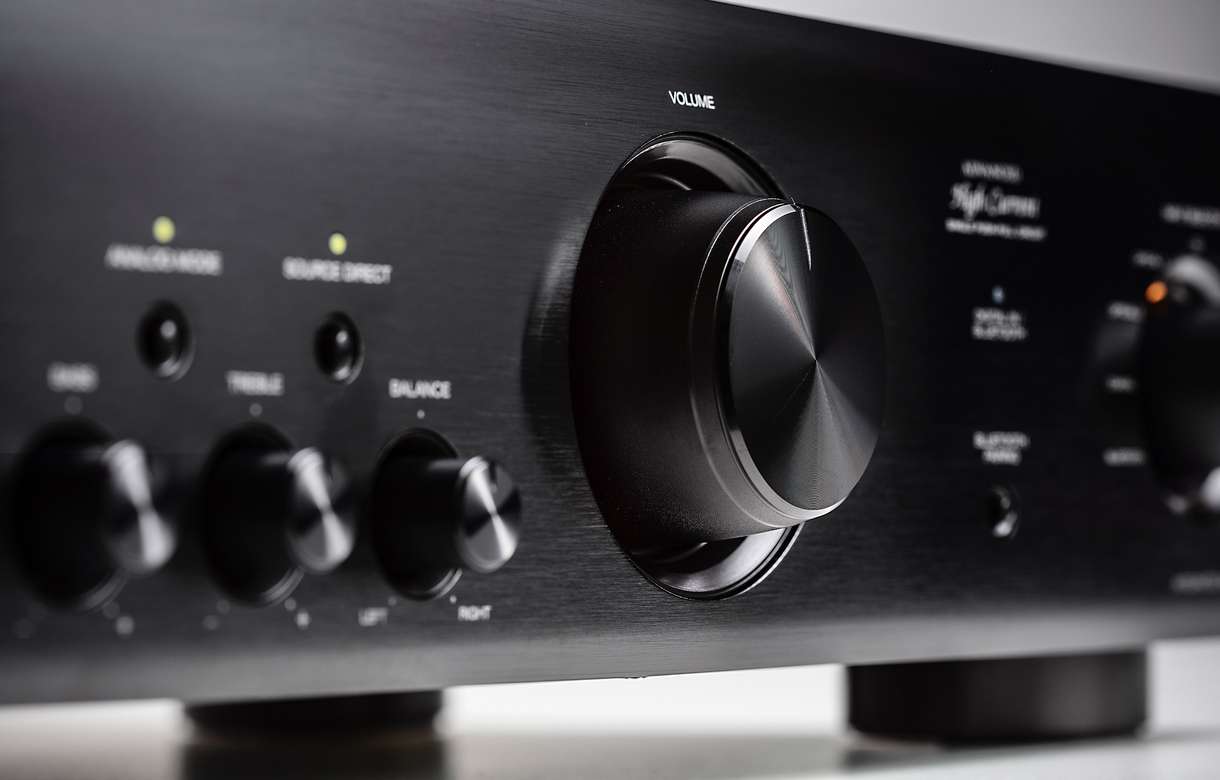
The Denon's signature sound has been described by reviewers as having "90s Japanese hi-fi sweetness"—warm and smooth with excellent midrange presence that makes vocals sound natural and engaging. The amplifier includes tone controls for bass and treble adjustment, but its Source Direct mode bypasses these entirely, providing the shortest possible signal path for purist listening.
The Sonos Amp uses a different approach, likely Class D amplification (though Sonos doesn't specify). Class D amps switch the output transistors fully on or off thousands of times per second, making them highly efficient and capable of producing significant power in compact packages. The trade-off has traditionally been a slightly more analytical sound, though modern Class D designs have largely closed this gap.
Based on our analysis of user reviews and expert opinions, the Sonos Amp delivers a punchy, dynamic sound with excellent bass control and wide soundstaging. It excels at making music sound exciting and room-filling, though some reviewers note it lacks the subtle refinement of dedicated hi-fi amplifiers like competing models from NAD or Cambridge Audio.
The signal-to-noise ratio is another crucial specification. The Denon PMA-600NE achieves an impressive 105 dB on line inputs, meaning the music signal is 105 decibels louder than any background noise the amplifier introduces. This results in a "black" background that allows subtle musical details to emerge clearly.
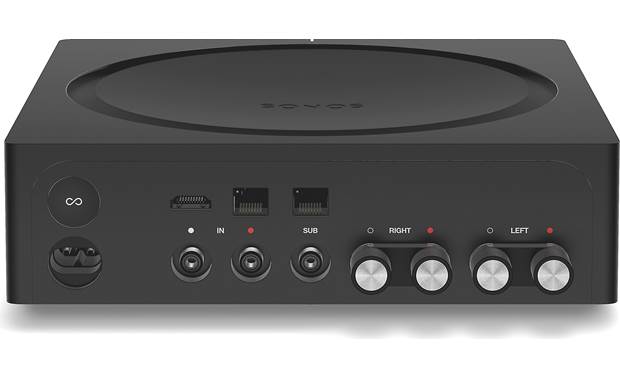
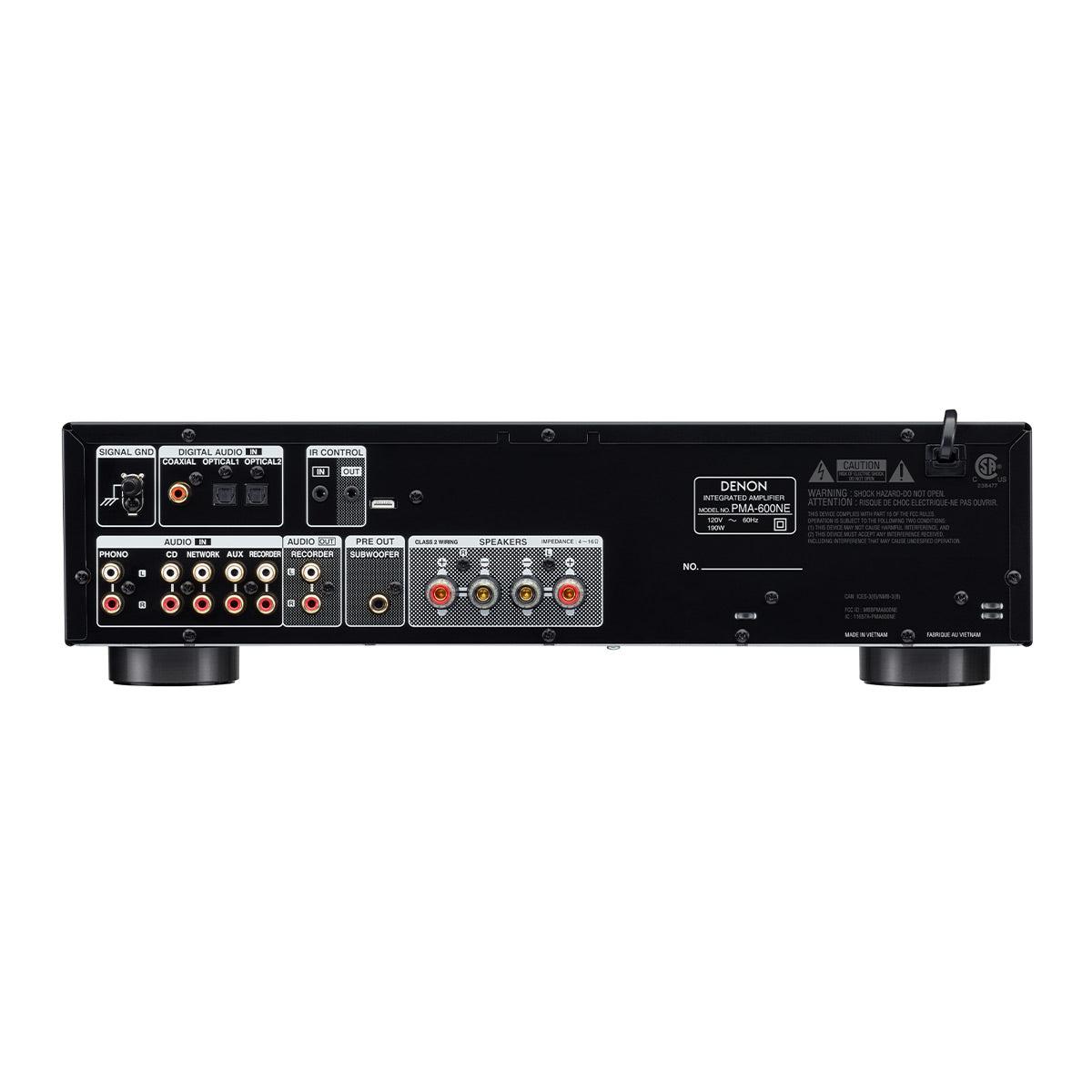
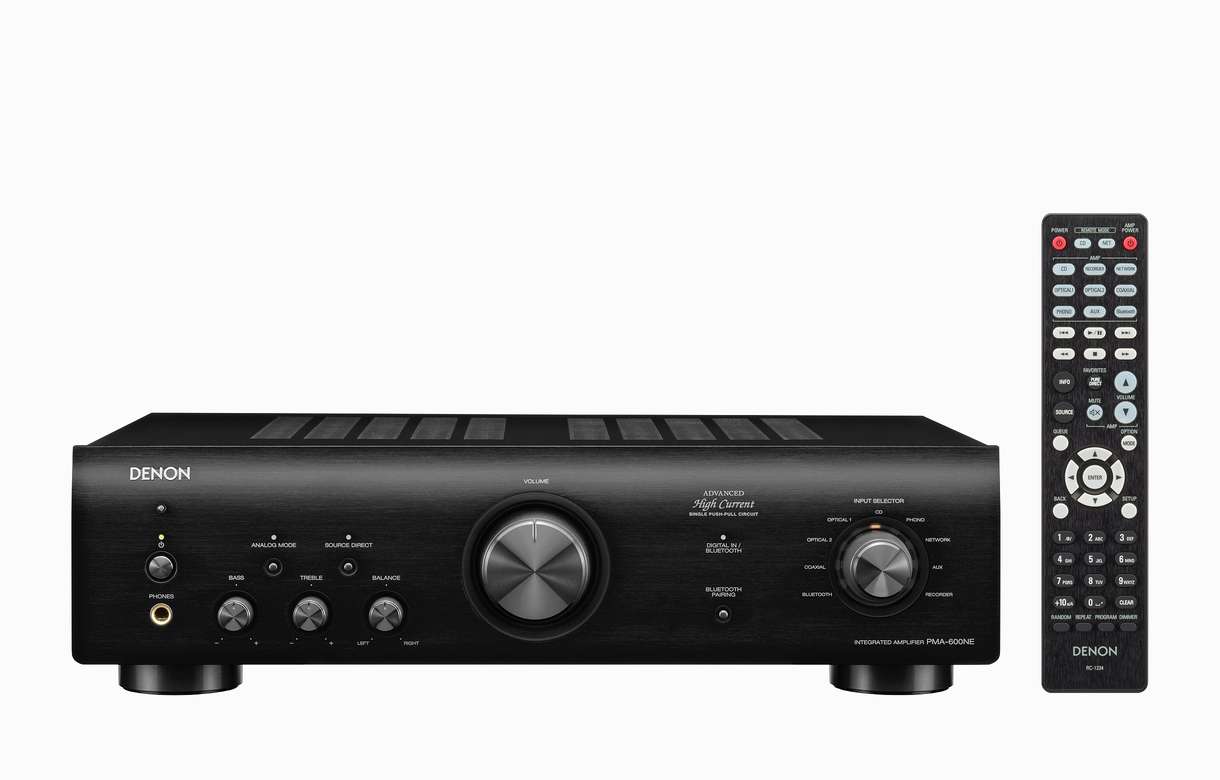
Perhaps nowhere is the philosophical difference between these amplifiers more apparent than in their connectivity options. The Denon PMA-600NE offers what you'd expect from a traditional integrated amplifier: five analog line inputs, a dedicated moving magnet (MM) phono input for turntables, two optical digital inputs, one coaxial digital input, and Bluetooth for basic wireless streaming.
The phono input deserves special attention. Many modern amplifiers skip this feature, assuming users will add an external phono preamp if needed. The Denon PMA-600NE includes a high-quality phono stage with proper RIAA equalization—the standardized frequency response curve used when cutting vinyl records. This makes it an excellent choice for vinyl enthusiasts, as the built-in phono stage often outperforms standalone units costing $100-200.
The Denon also includes an Analog Mode that completely shuts down all digital circuits, including the DAC (Digital-to-Analog Converter) and Bluetooth modules. This prevents any potential digital noise from contaminating analog sources, ensuring the purest possible sound when playing vinyl or other analog sources.
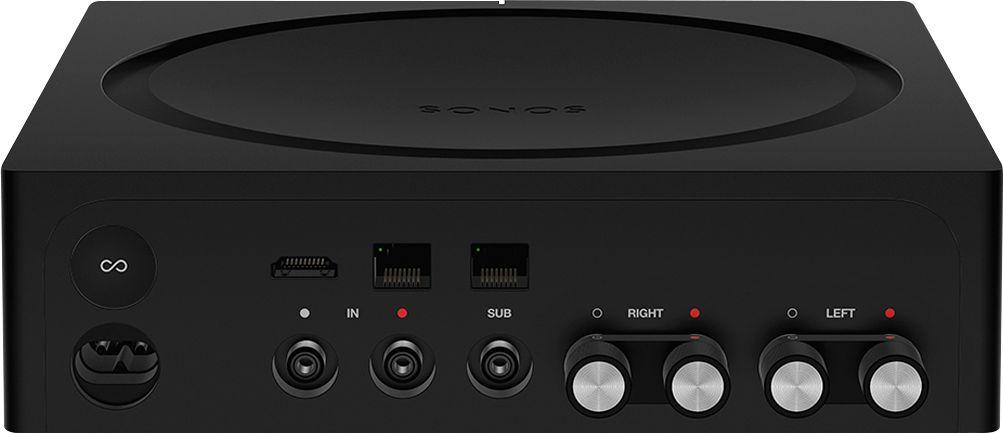
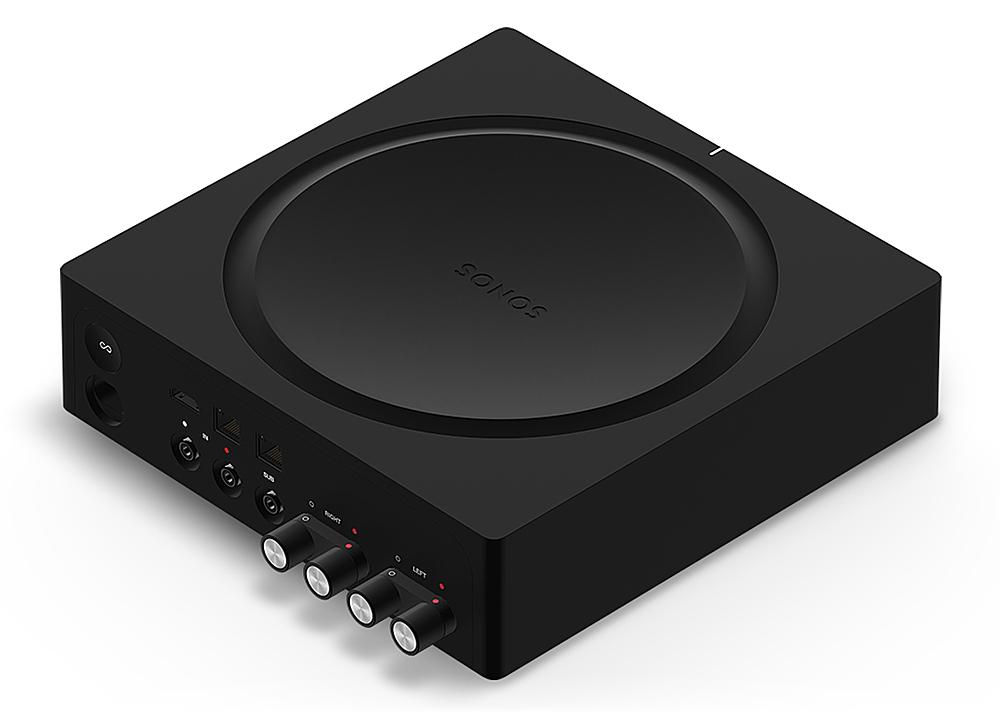
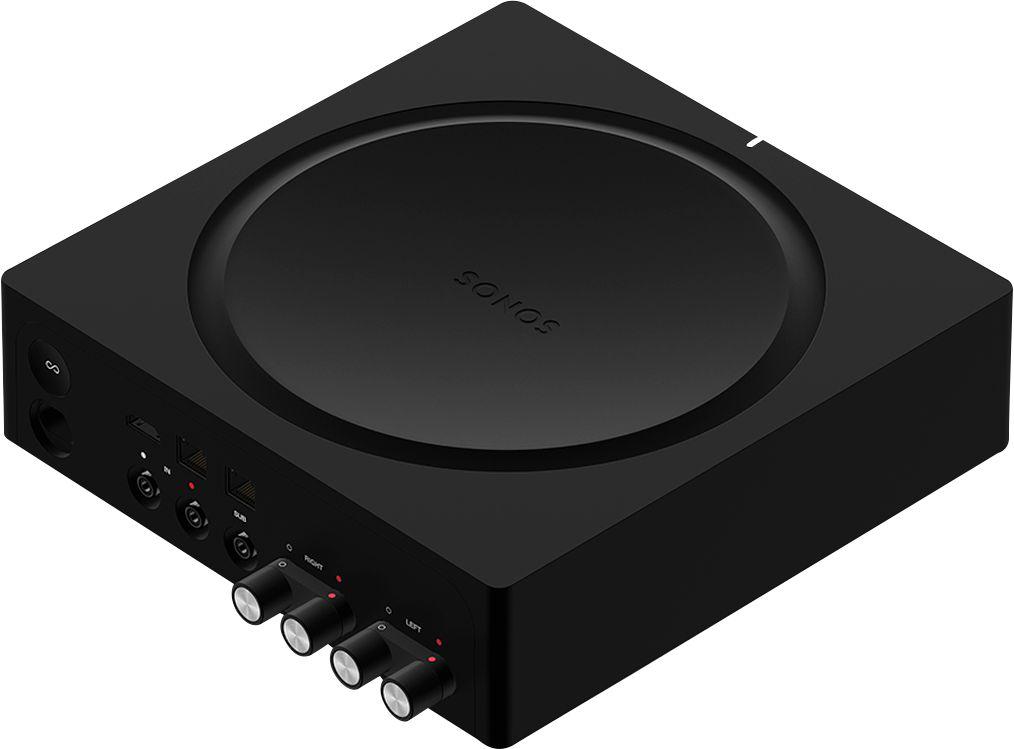
The Sonos Amp takes a radically different approach. It includes Wi-Fi for streaming, Ethernet ports for wired networking, a single analog input, and—most importantly—an HDMI ARC (Audio Return Channel) input. This HDMI connection allows the amplifier to receive audio directly from your TV, supporting stereo PCM, Dolby Digital, and DTS audio formats.
The Sonos ecosystem integration is where this amplifier truly shines. It can stream from dozens of music services, sync with other Sonos speakers throughout your home, and be controlled entirely through the Sonos mobile app. You can group it with other Sonos devices for multi-room audio, or use it as the foundation for a home theater system by adding Sonos surround speakers and a subwoofer.
The Sonos Amp exists within a mature ecosystem that has been refined over more than a decade. The Sonos app provides intuitive control over music selection, volume, EQ settings, and room grouping. You can start music in your living room and seamlessly extend it to your kitchen, bedroom, or outdoor speakers with a few taps.
Voice control integration with Amazon Alexa and Google Assistant means you can control playback, adjust volume, or switch between sources using voice commands—assuming you have compatible smart speakers in the same room.
The Denon PMA-600NE offers traditional control methods: a front panel with physical controls and a remote control. While this might seem limiting compared to app-based control, there's something satisfying about physical volume knobs and input selectors that respond immediately without waiting for wireless signals or app loading times.
Both approaches have merit. The Sonos integration excels when you want background music flowing throughout your home or need to quickly adjust settings from anywhere in the house. Traditional controls work better when you're sitting down for focused listening and want immediate, tactile feedback.
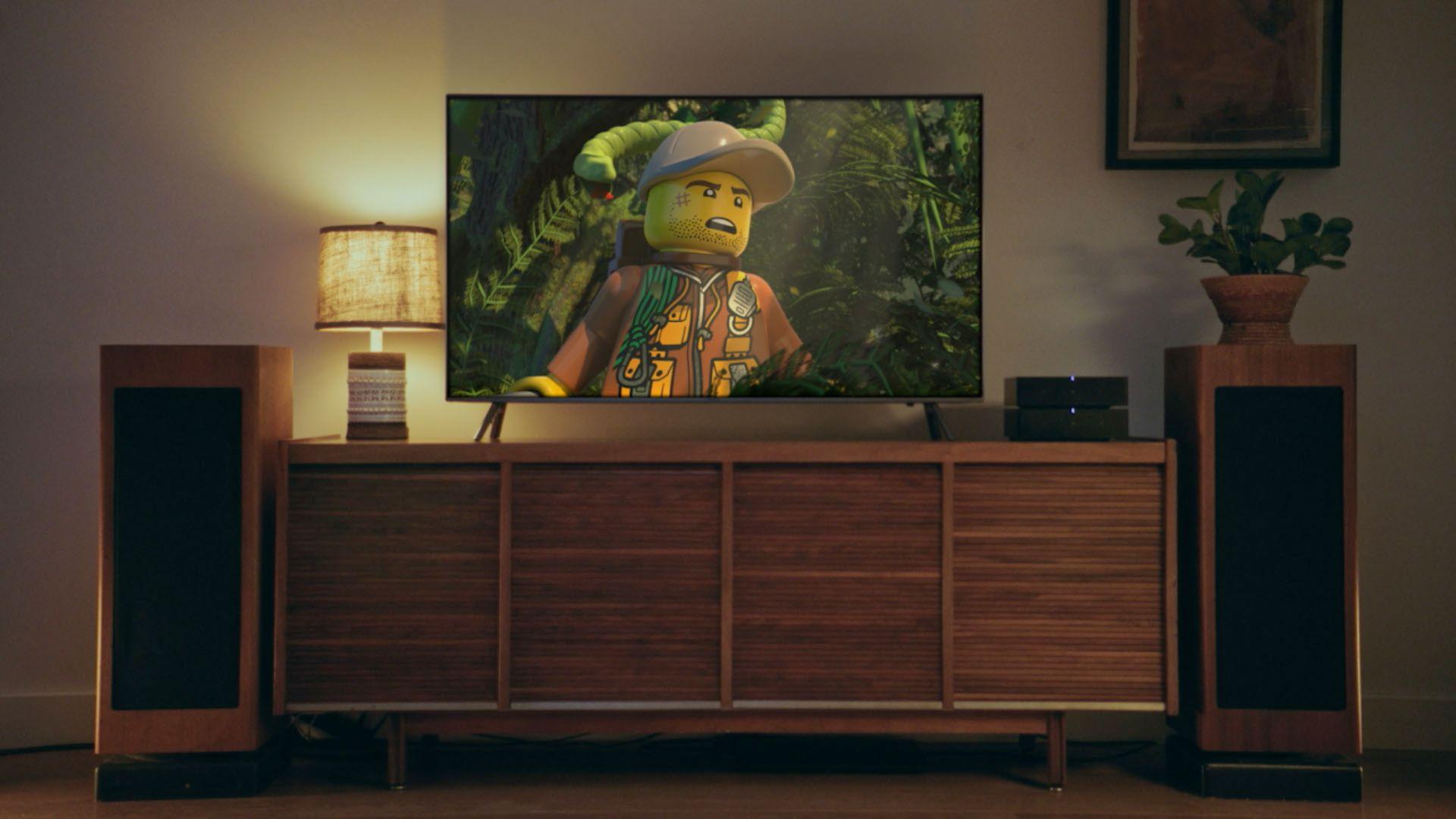
This is where the Sonos Amp demonstrates clear superiority. Its HDMI ARC connection means you can connect it directly to your TV and receive audio signals without needing additional devices or complex wiring. The amplifier supports surround sound formats and can be expanded into a full 5.1 or 7.1 system by adding Sonos surround speakers and a subwoofer.
The seamless integration between TV audio and music streaming is particularly appealing. You can watch a movie, then switch to music streaming without changing inputs or grabbing different remote controls. The Sonos app handles everything.
The Denon PMA-600NE can certainly work in a home theater setup, but you'll need additional components. You might connect your TV's optical output to one of the Denon's digital inputs, but you won't get the seamless integration or surround sound expansion capabilities of the Sonos system.
For dedicated two-channel TV listening, the Denon might actually provide better sound quality, but it can't match the Sonos for convenience or expandability in home theater applications.
At the time of writing, the Denon PMA-600NE carries a significantly lower price than the Sonos Amp—roughly $200-300 less depending on current promotions and availability. This price difference is substantial and reflects the different target markets for these products.
The Denon represents exceptional value for traditional hi-fi applications. You're getting audiophile-grade components, including a high-quality DAC that supports up to 192kHz/24-bit audio files, a dedicated phono stage, and Advanced High Current amplification technology typically found in much more expensive units. For someone building a dedicated stereo system, the performance-per-dollar ratio is excellent.
The Sonos Amp commands a premium for its ecosystem integration and smart features. You're not just buying an amplifier—you're buying into a complete home audio platform with ongoing software updates, new feature additions, and seamless integration with streaming services.
The total cost calculation becomes more complex when you consider additional components. The Denon might need an external streaming device if you want advanced wireless capabilities, while the Sonos includes everything needed for modern streaming out of the box.
Understanding a few key technical specifications helps evaluate these amplifiers objectively. Frequency response indicates how evenly an amplifier reproduces different frequencies. The Denon PMA-600NE extends up to 100kHz, well beyond human hearing, which suggests excellent phase relationships in the audible range.
The damping factor measures how well an amplifier controls speaker cone movement. Higher numbers indicate better control, leading to tighter bass and more precise sound. While neither manufacturer provides specific damping factor specifications, the Denon's traditional linear power supply and high current capability suggest excellent speaker control.
Crosstalk between channels is another important specification, particularly for stereo imaging. Good channel separation ensures that sounds panned to the left speaker don't bleed into the right channel, maintaining the stereo soundstage integrity that makes music sound spacious and well-defined.
The Sonos Amp likely achieves good measurements in most areas, but its strength lies in system integration rather than absolute technical performance. The built-in streaming, room correction capabilities when used with Sonos architectural speakers, and multi-room synchronization represent technical achievements that don't show up in traditional amplifier specifications.
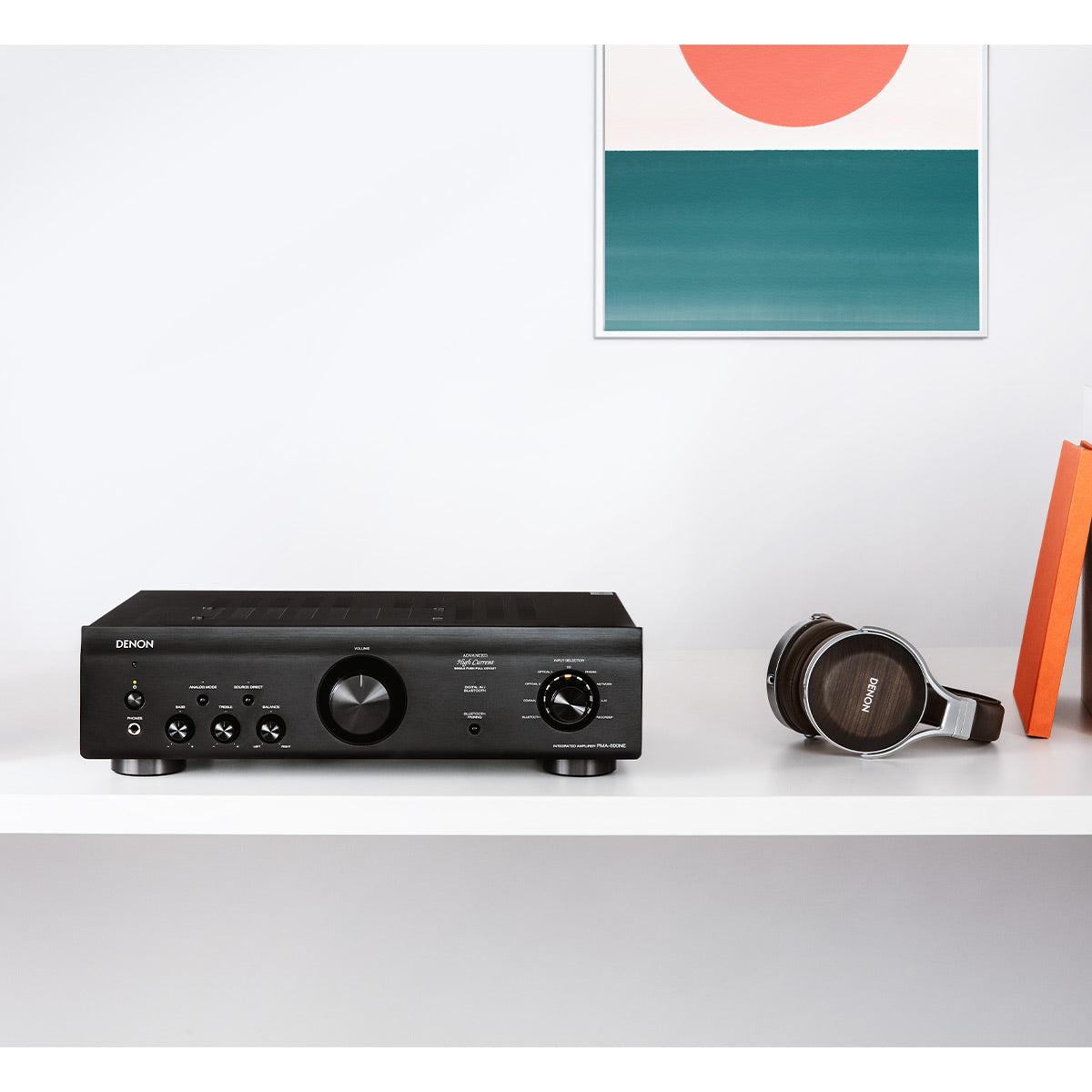
The Denon PMA-600NE makes the most sense for listeners who prioritize audio quality above convenience features. If you have a dedicated listening room, enjoy vinyl records, or want to build a traditional hi-fi system component by component, the Denon offers exceptional value and performance. It's particularly appealing for users who already own high-quality speakers and want an amplifier that will reveal their full potential.
The Denon also suits users who prefer physical controls, don't need multi-room capabilities, and want the flexibility to upgrade individual system components over time. If you're the type of person who enjoys the ritual of selecting an album, adjusting tone controls, and sitting down for focused listening, the traditional approach will feel natural and satisfying.
The Sonos Amp makes more sense for users who want their audio system to integrate seamlessly with modern life. If you primarily stream music, want to control everything from your phone, or need multi-room capabilities, the Sonos approach eliminates complexity while providing features that would be difficult or expensive to replicate with traditional components.
It's also the clear choice for home theater integration. The HDMI ARC connection, surround sound expansion capabilities, and unified control make it far more suitable for dual music and TV audio duty than traditional amplifiers.
Both amplifiers succeed at their intended purposes, but they serve fundamentally different needs. The Denon PMA-600NE delivers superior pure audio performance and better value for dedicated stereo listening, while the Sonos Amp provides unmatched convenience and integration for modern connected homes.
Your choice should align with your listening habits and lifestyle preferences. If you value audio quality above all else and don't mind the traditional hi-fi approach, the Denon provides exceptional performance for the money. If you want your music system to work seamlessly with streaming services, smart home devices, and home theater applications, the Sonos justifies its premium pricing through superior integration and convenience.
Consider the Denon if you're building a dedicated stereo system, use vinyl records, or want the best possible sound quality for critical listening. Choose the Sonos if you need multi-room capabilities, want seamless streaming integration, or plan to use the amplifier in a home theater setup. Both represent excellent engineering focused on different priorities—the key is matching those priorities to your own needs and preferences.
| Sonos Amp | Denon PMA-600NE |
|---|---|
| Power Output - Determines how loud you can play and what speakers you can drive | |
| 125W per channel (8Ω) - Can drive demanding speakers and multiple pairs | 45W per channel (8Ω) / 70W (4Ω) - Adequate for most home setups with efficient speakers |
| Amplification Type - Affects sound character and efficiency | |
| Class D (likely) - Efficient, compact, dynamic sound | Class A/B with Advanced High Current - Warm, natural sound preferred by audiophiles |
| Connectivity Options - What sources you can connect | |
| Wi-Fi, Ethernet, HDMI ARC, 1 analog input, Apple AirPlay 2 | 5 analog inputs, MM phono input, 2 optical, 1 coaxial, Bluetooth 4.2 |
| Smart Features - Modern convenience and control options | |
| Full Sonos ecosystem, multi-room audio, voice control, mobile app | Traditional controls with remote, basic Bluetooth streaming only |
| Home Theater Integration - TV audio and surround sound capabilities | |
| HDMI ARC direct TV connection, expandable to 5.1/7.1 surround | Requires optical connection, stereo TV audio only |
| Vinyl Support - Built-in turntable compatibility | |
| No dedicated phono input (requires external preamp) | High-quality MM phono stage with RIAA equalization built-in |
| Digital Audio Processing - High-resolution music file support | |
| Streaming-optimized, specs not published | Built-in 24-bit/192kHz DAC with PCM5141 chip |
| Multi-Room Capabilities - Whole-home audio distribution | |
| Native multi-room with Sonos Amp ecosystem synchronization | Single-room only, no multi-zone capabilities |
| Physical Design - Installation and aesthetic considerations | |
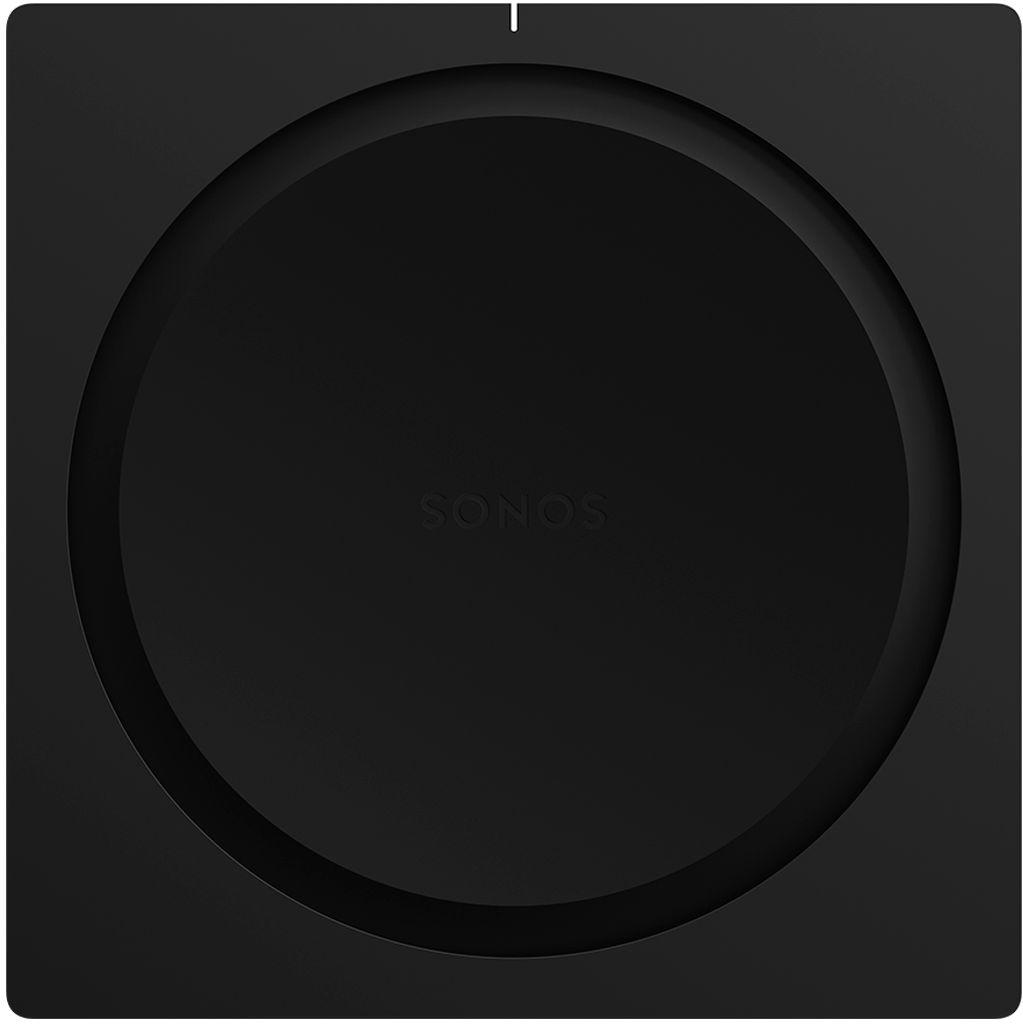
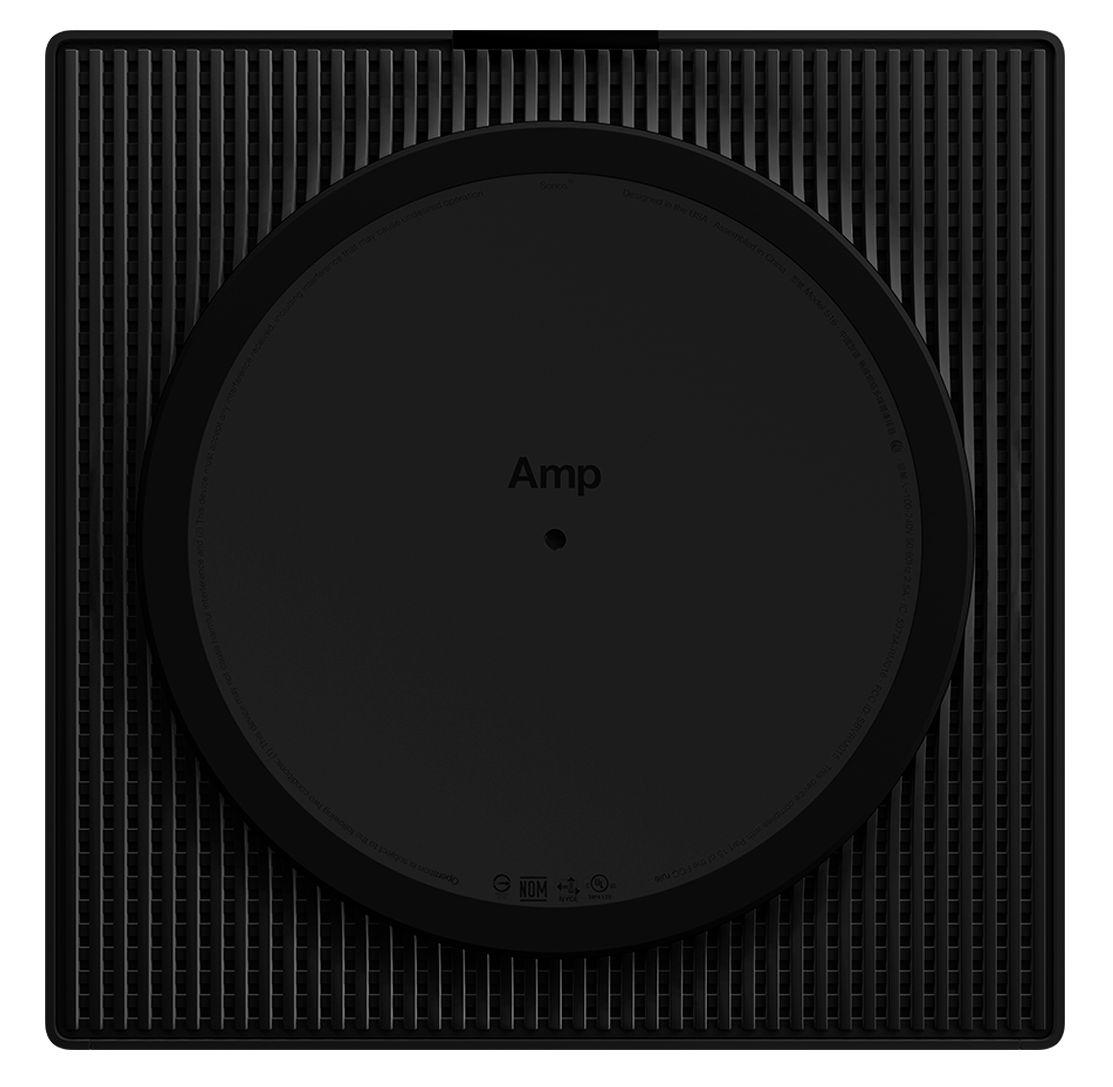
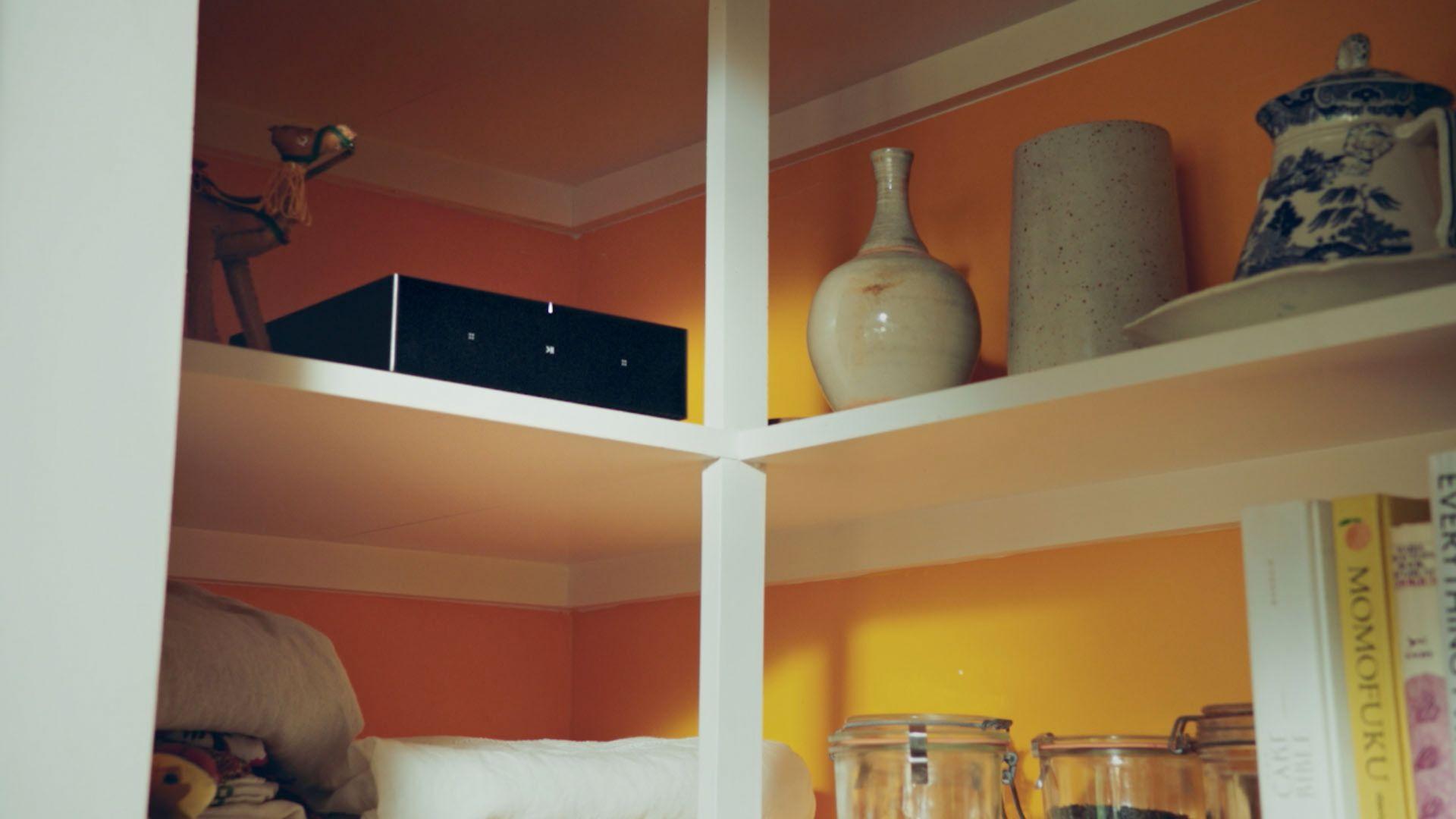
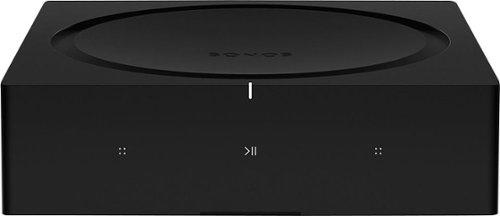
| Compact, rack-mountable, heat-optimized for enclosed spaces | Traditional hi-fi styling, requires ventilation, available in black or silver |
| Value Proposition - Performance per dollar for intended use | |
| Premium pricing for ecosystem integration and smart features | Exceptional audiophile performance and features for the price point |
The Sonos Amp delivers significantly more power at 125 watts per channel into 8-ohm speakers, compared to the Denon PMA-600NE which provides 45 watts per channel. This means the Sonos Amp can drive more demanding speakers and play louder in larger rooms, making it better suited for outdoor speakers or inefficient floor-standing models.
Only the Denon PMA-600NE has a built-in phono stage with a dedicated MM (moving magnet) input for turntables. The Sonos Amp requires an external phono preamp to connect a turntable to its single analog input. For vinyl enthusiasts, the Denon PMA-600NE offers superior convenience and sound quality for record playback.
The Sonos Amp excels at wireless streaming with built-in Wi-Fi, support for dozens of music services, and Apple AirPlay 2 compatibility. The Denon PMA-600NE only offers basic Bluetooth streaming. If you primarily listen to Spotify, Apple Music, or other streaming services, the Sonos Amp provides a much more comprehensive and user-friendly experience.
The Sonos Amp features HDMI ARC connection for direct TV audio, supporting stereo PCM, Dolby Digital, and DTS formats. The Denon PMA-600NE requires connection via optical digital input from your TV. For home theater use, the Sonos Amp offers superior integration and can be expanded with additional Sonos speakers for surround sound.
The Denon PMA-600NE generally provides superior sound quality for critical music listening, with its Class A/B amplification delivering warm, natural sound and excellent midrange clarity. The Sonos Amp offers punchy, dynamic sound that's engaging but may lack some of the refinement that audiophiles prefer. For dedicated stereo listening, the Denon PMA-600NE is the better choice.
Only the Sonos Amp supports true multi-room audio, allowing you to sync music across multiple rooms and control everything through the Sonos app. The Denon PMA-600NE is designed for single-room use only. If you want music throughout your home, the Sonos Amp is the clear winner.
The Denon PMA-600NE typically costs significantly less while delivering exceptional audio performance, a high-quality DAC, and a built-in phono stage. The Sonos Amp commands a premium for its smart features and ecosystem integration. For traditional hi-fi listening, the Denon PMA-600NE offers superior value per dollar.
The Sonos Amp can power up to four speakers (two pairs of 8-ohm speakers) or three pairs of Sonos architectural speakers. The Denon PMA-600NE is designed to power one pair of speakers optimally. For multiple speaker setups or outdoor installations, the Sonos Amp provides more flexibility.
The Sonos Amp offers modern convenience with smartphone app control, voice commands via Alexa or Google Assistant, and automatic integration with streaming services. The Denon PMA-600NE uses traditional physical controls and a remote. Tech-savvy users who want everything controlled from their phone will prefer the Sonos Amp.
The Denon PMA-600NE includes a dedicated 24-bit/192kHz DAC for high-resolution digital audio files through its optical and coaxial inputs. The Sonos Amp focuses on streaming quality but doesn't emphasize hi-res file playback. Audiophiles with large digital music libraries will appreciate the Denon PMA-600NE's superior digital capabilities.
The Sonos Amp is far superior for home theater use with its HDMI ARC connection, support for TV audio formats, and ability to expand into 5.1 or 7.1 surround sound with additional Sonos speakers. The Denon PMA-600NE can handle TV audio via optical input but remains limited to stereo playback without expansion capabilities.
The fundamental difference is philosophy: the Sonos Amp prioritizes modern convenience, smart home integration, and multi-room capabilities, while the Denon PMA-600NE focuses on pure audio performance, traditional hi-fi features, and exceptional value. Choose the Sonos Amp for whole-home audio and smart features, or the Denon PMA-600NE for dedicated stereo listening and audiophile performance.
We've done our best to create useful and informative comparisons to help you decide what product to buy. Our research uses advanced automated methods to create this comparison and perfection is not possible - please contact us for corrections or questions. These are the sites we've researched in the creation of this article: audioadvice.com - crutchfield.com - adiglobaldistribution.pr - themasterswitch.com - astralsecurite.ca - wassersfurniture.com - whathifi.com - sonos.com - audiosciencereview.com - bestbuy.com - videoandaudiocenter.com - en.community.sonos.com - theaudiotailor.com.au - forums.whathifi.com - crutchfield.com - youtube.com - av.com - youtube.com - audiosciencereview.com - emotivalounge.proboards.com - forums.whathifi.com - audiosciencereview.com - crutchfield.com - melbournehifi.com.au - musicdirect.com - avstore.in - polkaudio.com - turntablelab.com

Privacy Policy
Terms and Conditions - Affiliate Policy
Home Security
© Copyright 2008-2026.
11816 Inwood Rd #1211, Dallas, TX 75244