

When shopping for an integrated amplifier today, you're facing a choice that didn't exist even five years ago. Do you want a traditional amplifier that happens to have some modern features, or do you want a streaming-first device that also amplifies your speakers? The Bluesound PowerNode Edge and Arcam A15 represent these two distinct philosophies perfectly.
Both products launched relatively recently - the PowerNode Edge in 2022 and the A15 in 2023 - making them current with today's technology standards. But they approach modern audio needs from completely different angles, and understanding these differences is crucial for making the right choice for your setup.
An integrated amplifier combines two essential functions in one box: preamplification (controlling volume and switching between sources) and power amplification (driving your speakers). This eliminates the need for separate preamp and power amp components, saving space and often money while maintaining excellent performance.
The key considerations when choosing any integrated amplifier are straightforward but critical. Power output determines which speakers you can drive effectively and how loud you can play them without distortion. Source connectivity affects which devices you can connect and how convenient daily use will be. Build quality influences both longevity and sound quality. And increasingly important today is the balance between traditional hi-fi flexibility and modern streaming convenience.
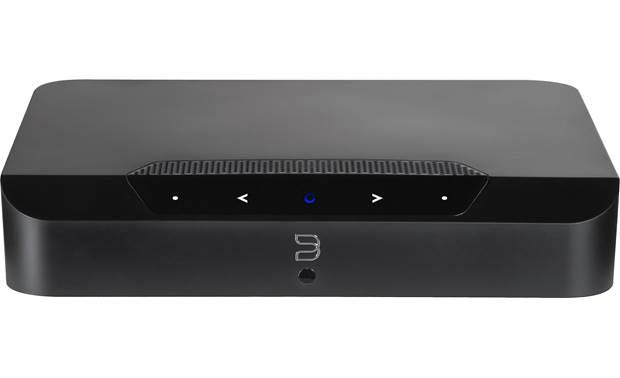
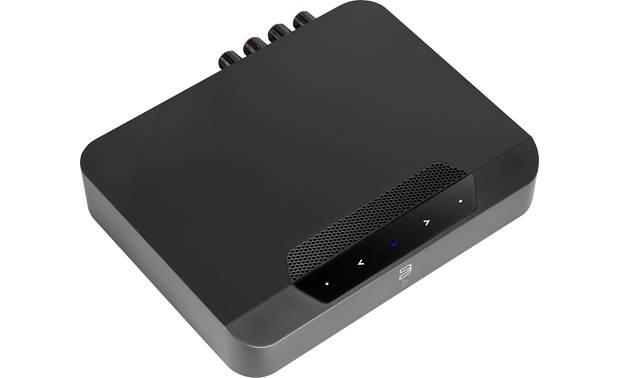
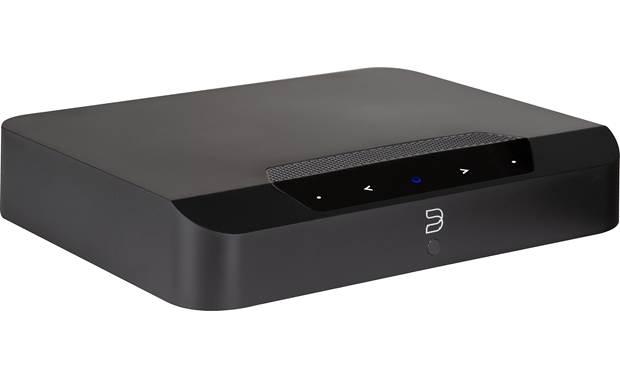
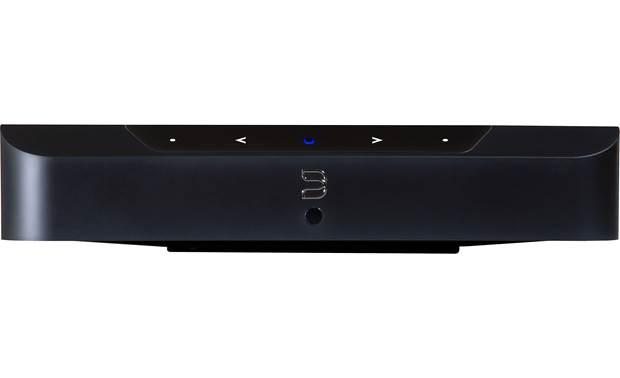
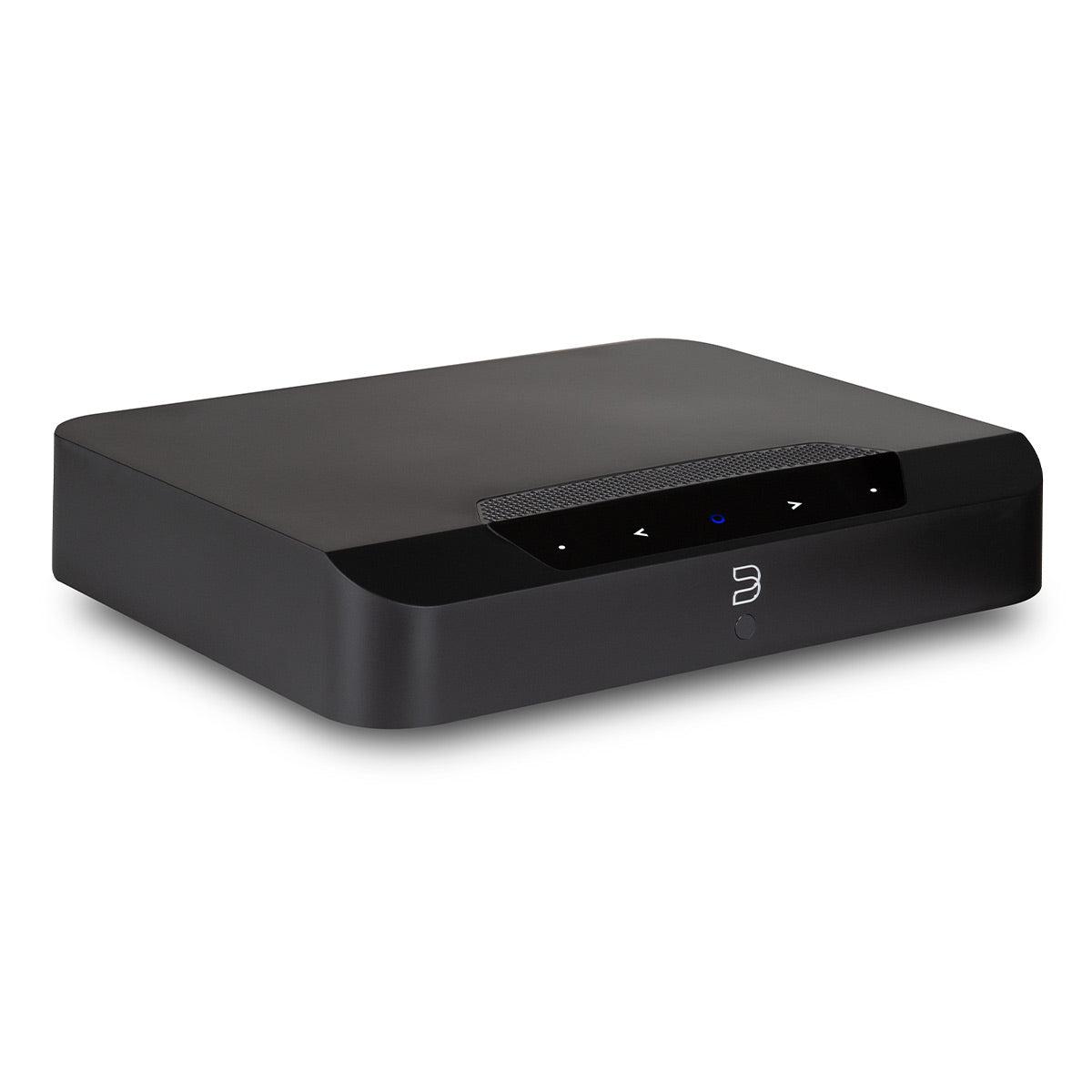
Bluesound designed the PowerNode Edge around one central idea: most people today get their music from streaming services, and the amplifier should make that experience as seamless as possible. At roughly two-thirds the cost of the A15 at the time of writing, it represents exceptional value for its target audience.
The most distinctive feature is its DirectDigital amplification technology. Unlike traditional amplifiers that convert digital signals to analog early in the process, the PowerNode Edge keeps everything digital until the very last moment - right at the speaker terminals. This approach eliminates multiple conversion stages, reducing noise and distortion while improving efficiency. The result is an amplifier that runs cooler, uses less power, and delivers a remarkably quiet background.
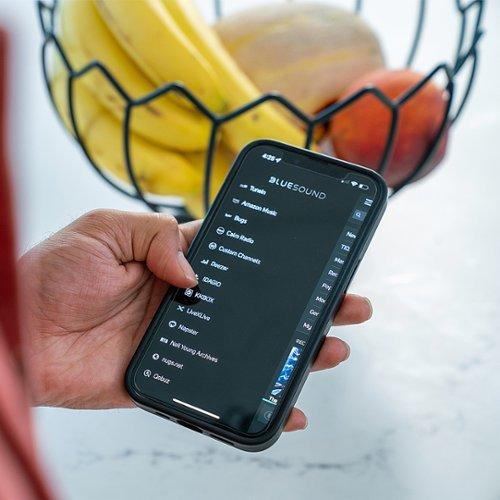
This digital-native approach extends to every aspect of the design. The built-in BluOS streaming platform connects directly to over 20 music services including Spotify, Tidal, and Qobuz. The two-way Bluetooth aptX HD implementation lets you stream from your phone or send audio wirelessly to Bluetooth headphones - a surprisingly useful feature that most amplifiers lack entirely.
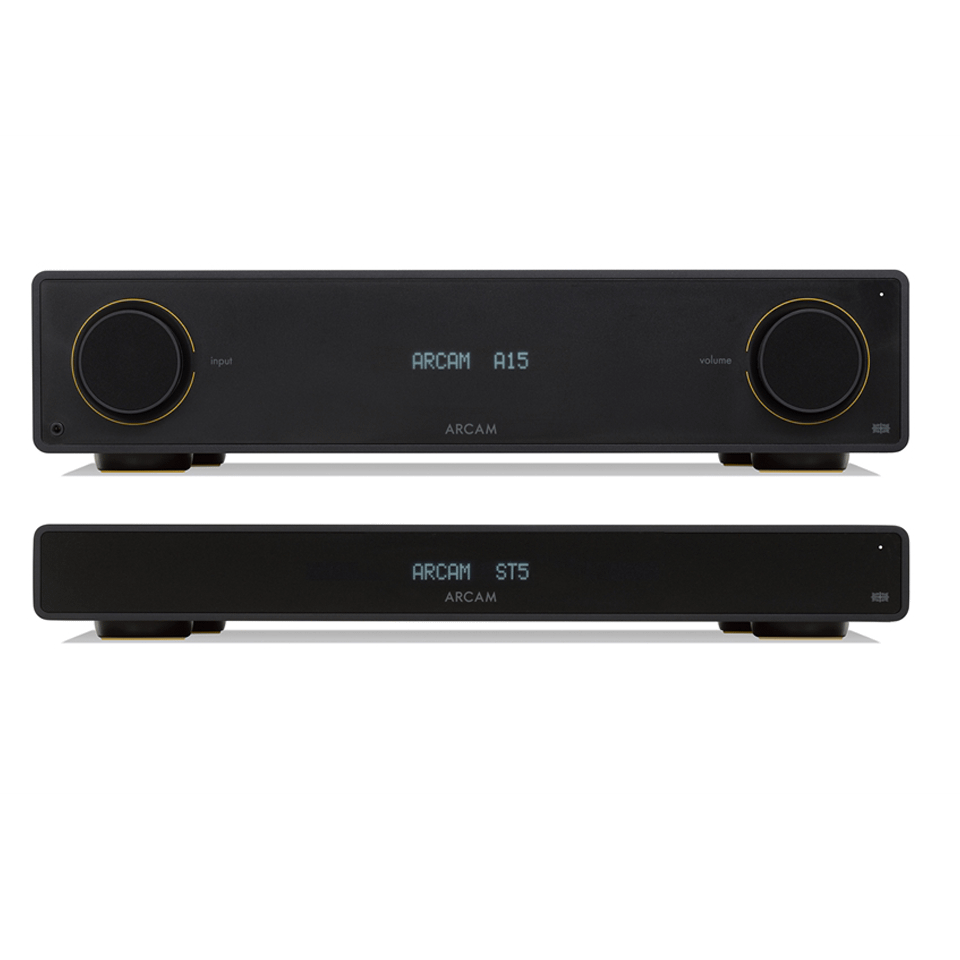
The A15 takes a more conventional route, building on decades of amplifier design wisdom while carefully integrating modern conveniences. Arcam, with its long history in high-end audio, focused on creating what many consider the "proper" way to build an integrated amplifier.
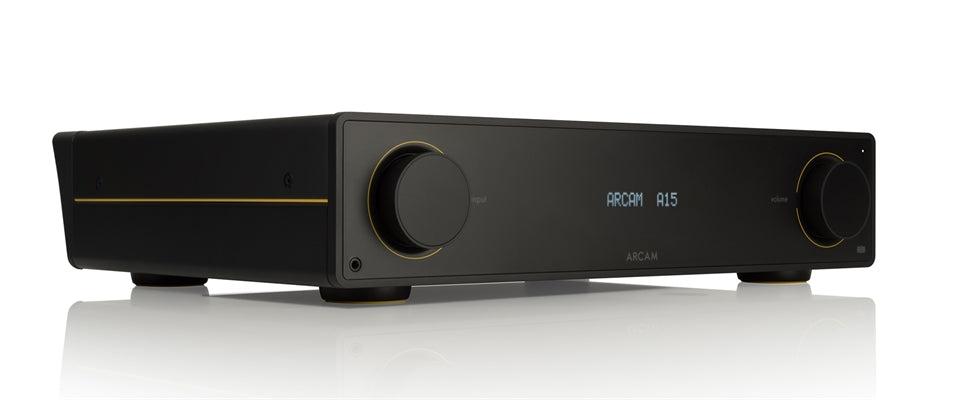
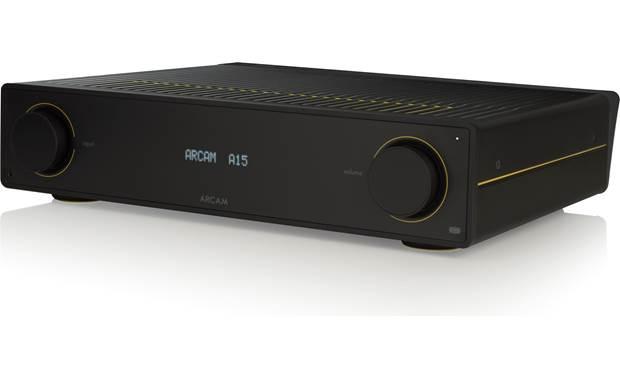
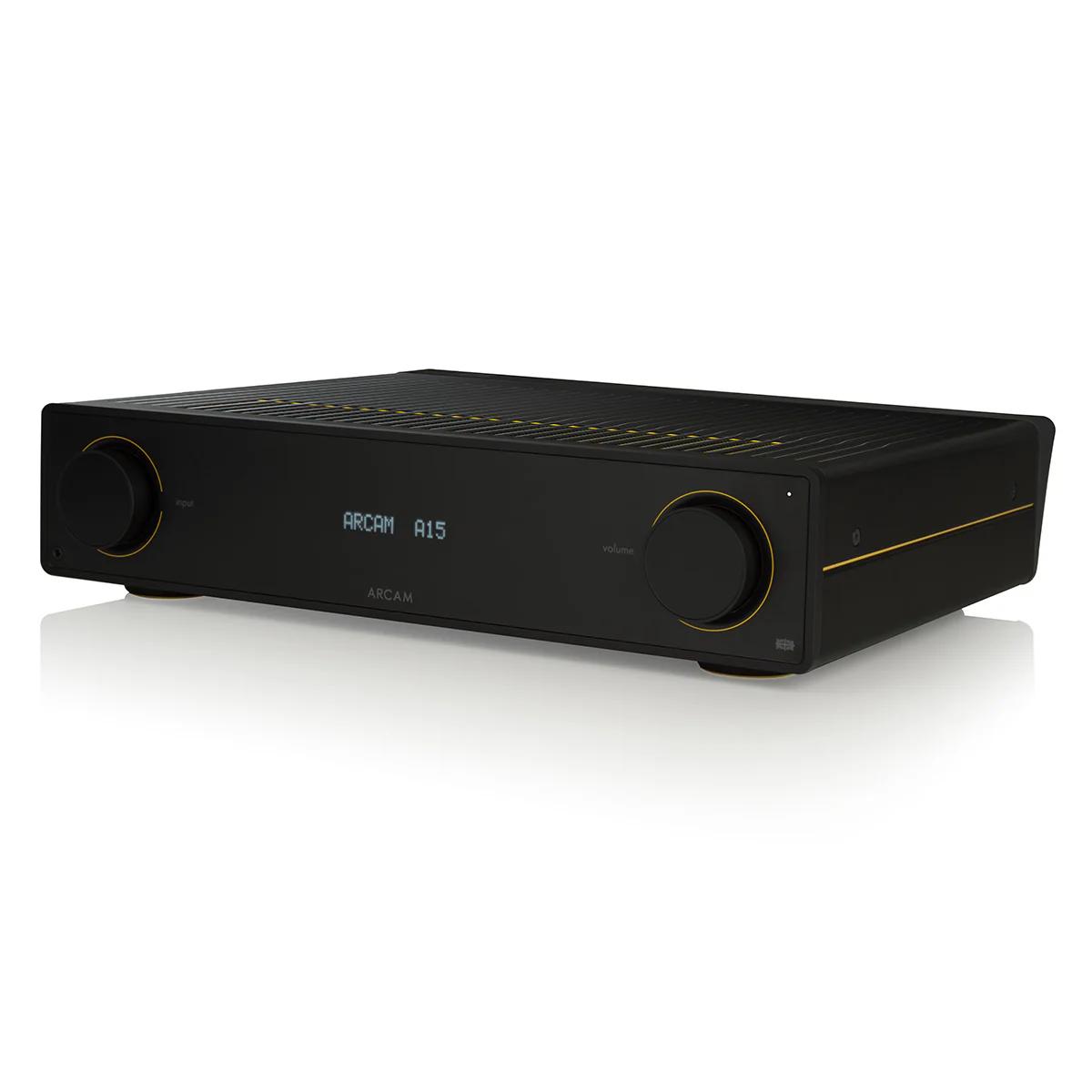
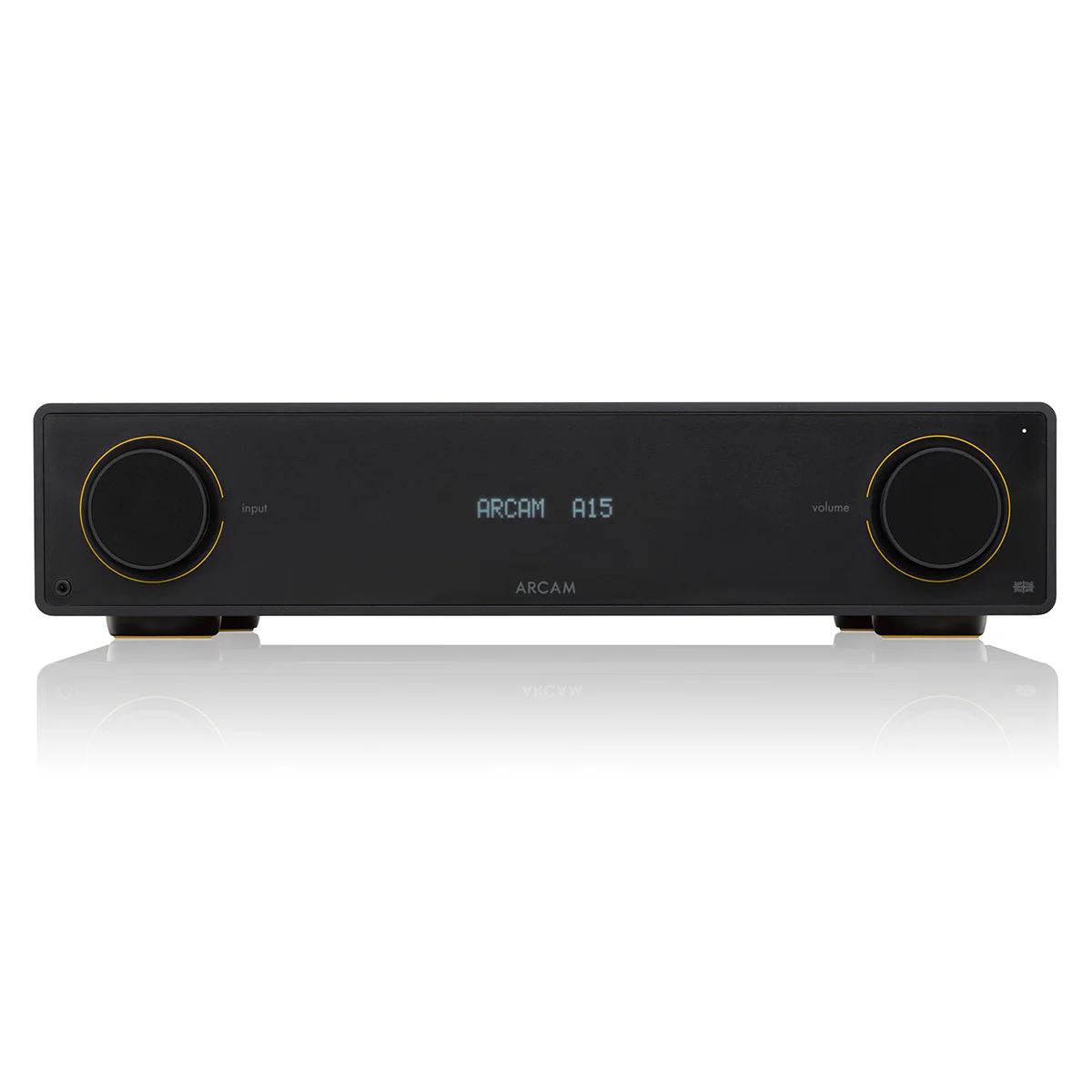
The Class AB amplification delivers twice the power of the PowerNode Edge - 80 watts per channel into 8 ohms, increasing to 120 watts into 4-ohm speakers. This isn't just about playing louder; higher power reserves mean better control over your speakers, especially during complex musical passages with sudden dynamic swings. The substantial aluminum chassis weighs over 22 pounds, providing excellent vibration damping that contributes to cleaner sound.
The ESS Sabre ES9018 DAC (digital-to-analog converter) is a standout component. This chip, found in much more expensive equipment, handles high-resolution audio up to 24-bit/192kHz with exceptional precision. Combined with multiple digital inputs and Bluetooth 5.2 with aptX Adaptive, the A15 bridges traditional hi-fi with modern sources effectively.
The power difference between these amplifiers is significant and practical. The PowerNode Edge's 40 watts per channel works beautifully with efficient speakers (those rated 87 decibels or higher sensitivity) in small to medium rooms. Our research into user experiences shows it can drive surprisingly demanding speakers like the B&W 805 D4, maintaining composure and delivering full, controlled bass that seems almost impossible from such a compact unit.
However, the A15's 80-watt rating (120 watts into 4 ohms) opens up many more speaker options. This extra power isn't just about volume - it's about control. Speakers with lower sensitivity ratings, larger drivers, or complex crossover designs benefit significantly from the additional power reserves. The difference becomes most apparent with orchestral music, heavy rock, or electronic music where sudden dynamic peaks can cause lesser amplifiers to compress or distort.
The amplification technologies also create different sonic characteristics. DirectDigital amplification in the PowerNode Edge provides exceptional precision and a very low noise floor, creating an almost ethereal clarity. Class AB amplification in the A15 offers what many describe as more "musicality" - a slight warmth and body to the sound that makes long listening sessions particularly enjoyable.
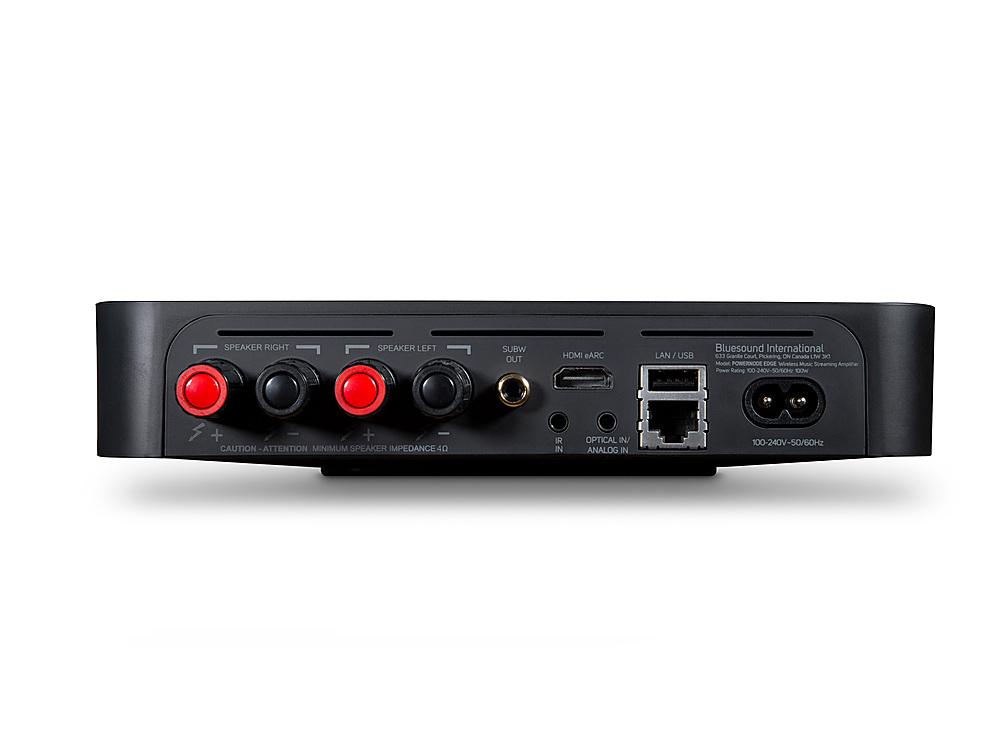
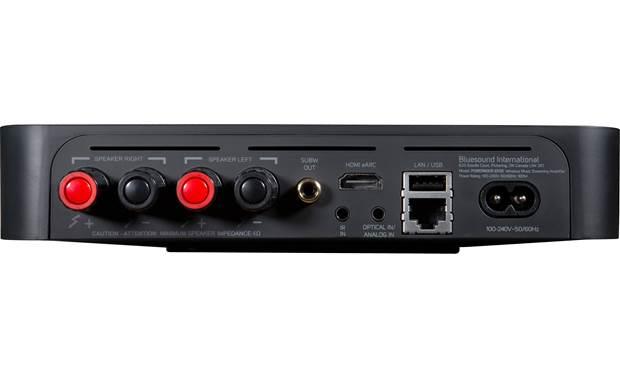
This is where the philosophical differences become most apparent. The PowerNode Edge prioritizes wireless connectivity and modern sources. The HDMI eARC input with Dolby Digital decoding makes TV integration effortless - just one cable connects your TV, and the amplifier automatically switches to TV audio when needed. The subwoofer output includes proper bass management, so you can build a 2.1 system without needing a separate processor.
However, analog input options are limited. The single 3.5mm jack requires adapters for traditional RCA connections, which feels awkward if you have multiple analog sources. This design choice reflects Bluesound's assumption that most users primarily stream music and occasionally connect a TV.
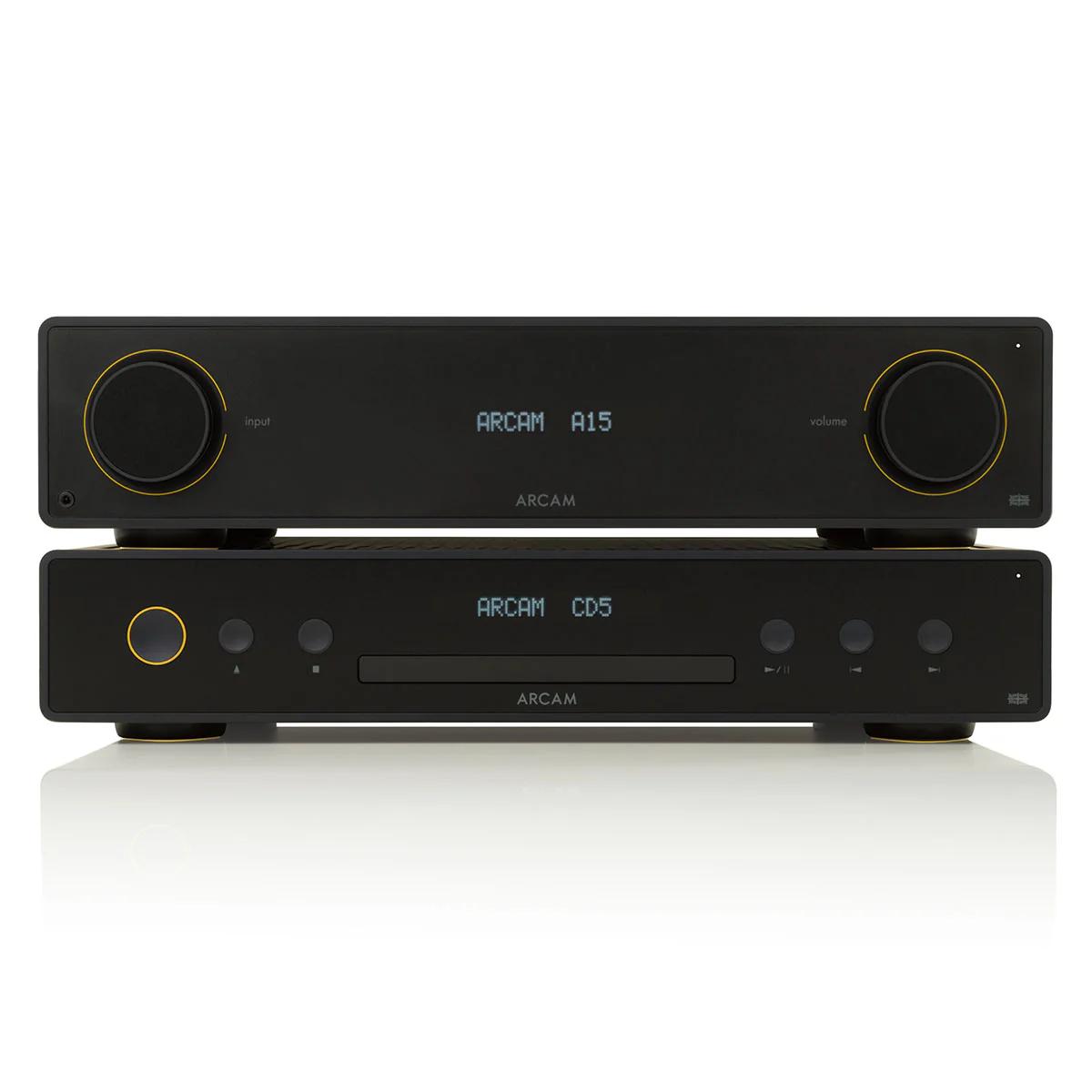
The A15 takes the opposite approach. Three dedicated RCA line inputs accommodate multiple analog sources, while the built-in moving magnet phono stage supports turntables directly - no external phono preamp needed. The phono stage is particularly well-implemented, with careful RIAA equalization that preserves the warmth and detail that draws people to vinyl.
Digital connectivity is comprehensive but requires external sources. Two coaxial and one optical input handle digital sources up to 192kHz, but you'll need a separate streaming device if you want the convenience of Spotify Connect or AirPlay.
Our analysis of professional reviews and user feedback reveals distinct sonic personalities. The PowerNode Edge delivers what many describe as a "disappearing" amplifier - it presents music with remarkable clarity and precision without imposing its own character. The DirectDigital amplification creates an exceptionally quiet background, allowing subtle details to emerge naturally. Bass response is surprisingly full and controlled for such a compact unit, though it can't match the authority of higher-powered amplifiers with demanding speakers.
The A15 offers more traditional audiophile characteristics. The sound is described as neutral yet engaging, with particular strength in midrange clarity and natural detail. The higher power reserves become apparent in complex music where multiple instruments occupy the same frequency ranges - the A15 maintains separation and clarity where lesser amplifiers might sound congested.
Both amplifiers handle high-resolution audio excellently, though they deliver it differently. The PowerNode Edge processes streaming high-res files natively through its BluOS platform, while the A15 relies on its premium DAC to handle high-res files from connected sources.
This might be the most important consideration for many buyers. The PowerNode Edge excels in daily convenience. The BluOS app controls everything from your phone, switching between sources feels natural, and features like automatic TV switching eliminate the friction that can make traditional hi-fi systems feel cumbersome for family members.
The voice control integration through BluVoice works with Alexa, Google Assistant, and Siri, making the amplifier genuinely smart-home friendly. Multi-room capability means you can expand to other BluOS speakers throughout your home, creating a cohesive whole-house audio system.
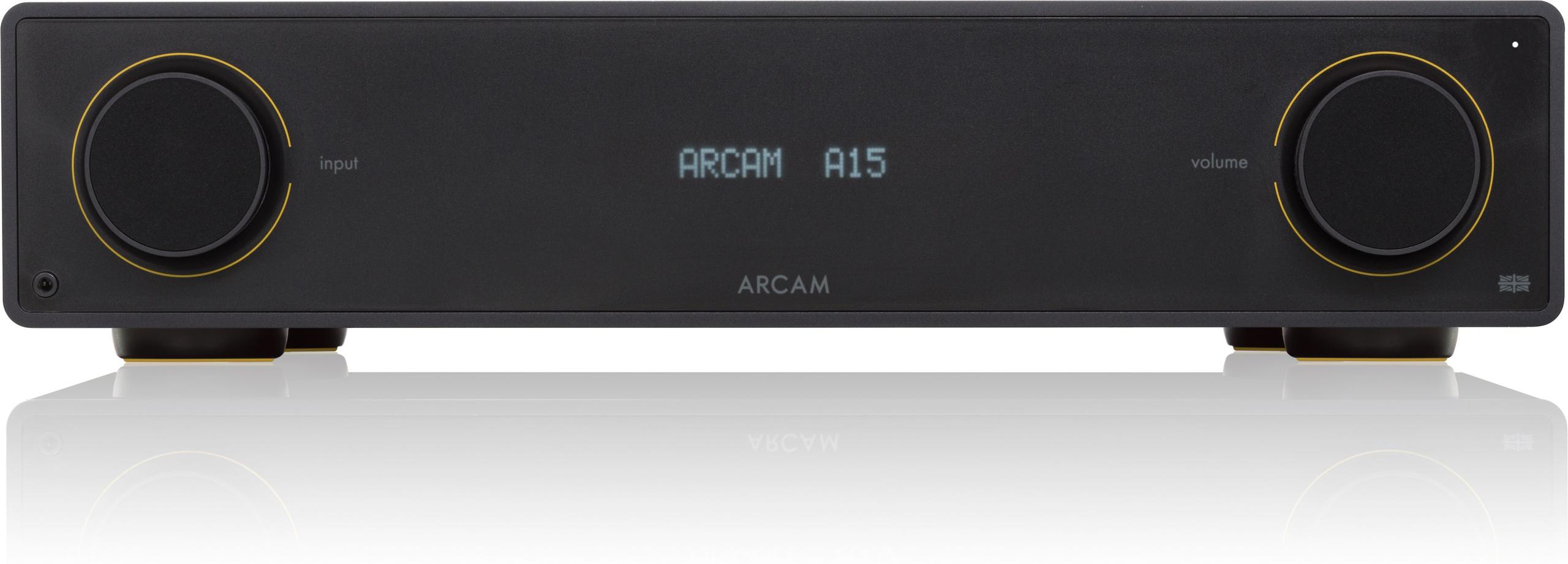
The A15 provides a more traditional experience that many find satisfying. Physical volume and input controls offer tactile feedback, and the included remote handles all functions without requiring a smartphone. The front-panel headphone output with substantial drive capability (up to 5 volts into high-impedance headphones) is excellent for private listening.
For home theater use, the PowerNode Edge has clear advantages. HDMI eARC connectivity means your TV's apps, streaming devices, and even gaming consoles automatically send audio to your speakers. The Dolby Digital decoding handles surround soundtracks properly when used in stereo or 2.1 configurations, and the subwoofer output with bass management creates a proper home theater experience.
The A15 can work in home theater systems but requires more complexity. You'll need to connect your TV's optical or coaxial output, and there's no automatic source switching or bass management for subwoofers.
These products represent different philosophies toward longevity. The PowerNode Edge focuses on keeping current with technology through software updates. The BluOS platform receives regular improvements, adding new streaming services and features over time. However, the compact construction prioritizes efficiency over showcase aesthetics.
The A15 emphasizes physical longevity through premium construction. The aluminum chassis, machined controls, and substantial internal components suggest decades of reliable operation. The traditional approach means it will work with whatever sources you connect to it, regardless of how streaming technology evolves.
Your comfort level with technology significantly influences which amplifier suits you better. If you embrace smartphone control, enjoy discovering new music through streaming algorithms, and want your audio system to integrate seamlessly with smart home devices, the PowerNode Edge aligns perfectly with this lifestyle.
If you prefer physical controls, have invested in quality analog sources like turntables or CD players, and want an amplifier that showcases traditional hi-fi craftsmanship, the A15 delivers exactly that experience.
Choose the Bluesound PowerNode Edge if streaming convenience matters more than raw power. It's ideal for efficient speakers in smaller rooms, provides exceptional value for its feature set, and offers genuine plug-and-play simplicity. The HDMI connectivity alone makes it worthwhile for anyone wanting to improve their TV's audio without complexity.
The compact form factor works beautifully in modern living spaces where discretion matters more than visual presence. If you're building your first serious audio system or want to upgrade from a soundbar without dealing with multiple components, the PowerNode Edge eliminates barriers to better sound.
Choose the Arcam A15 if you have demanding speakers, multiple analog sources, or simply prefer traditional hi-fi approaches. The higher power output, comprehensive connectivity, and premium construction justify the additional cost for serious listening. The built-in phono stage makes it particularly attractive for vinyl enthusiasts who want quality without needing separate components.
The A15 also makes sense if you're building a system you plan to keep for many years. Its traditional design and quality construction suggest it will remain relevant regardless of how digital audio technology evolves.
Both amplifiers succeed at their intended purposes. The PowerNode Edge democratizes high-quality audio by eliminating complexity and focusing on how most people actually listen to music today. The A15 maintains the traditional audiophile experience while carefully incorporating modern conveniences.
Your choice ultimately depends on whether you prioritize convenience and modern integration or power and traditional flexibility. Either way, you're getting a well-designed amplifier that represents good value in its respective category. The key is honestly assessing how you actually listen to music and what features matter most in your daily experience.
| Bluesound PowerNode Edge | Arcam A15 |
|---|---|
| Power Output - Determines which speakers you can drive effectively | |
| 40 watts per channel (8Ω) - Works well with efficient speakers 87dB+ | 80W/120W per channel (8Ω/4Ω) - Handles demanding speakers and larger rooms |
| Amplification Technology - Affects sound character and efficiency | |
| DirectDigital amplification - Ultra-low noise, runs cool, precise sound | Class AB - Traditional audiophile sound with warmth and musicality |
| Built-in Streaming - Convenience for accessing music services | |
| BluOS platform with 20+ services, AirPlay 2, voice control | Bluetooth 5.2 only - requires external streaming devices |
| HDMI Integration - Critical for TV audio and home theater use | |
| HDMI eARC with Dolby Digital decoding and auto-switching | None - requires optical/coax connection from TV |
| Analog Inputs - Important if you have turntables or other analog sources | |
| Single 3.5mm input (requires RCA adapters) | 3x RCA line inputs + dedicated MM phono stage for turntables |
| Digital Audio Support - Handles high-resolution files | |
| Up to 24-bit/192kHz via streaming and single combo input | ESS Sabre ES9018 DAC, 2x coaxial + 1x optical, up to 192kHz |
| Physical Design - Impacts placement options and aesthetics | |
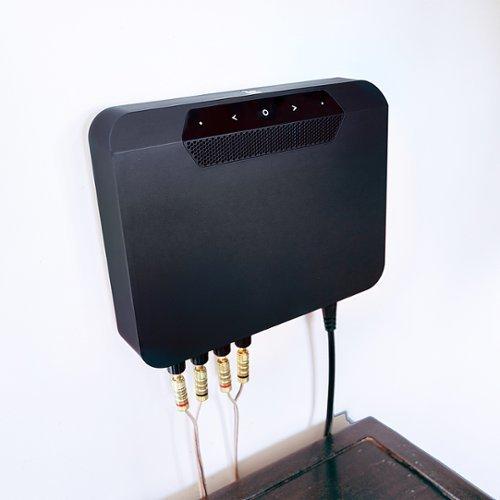
| Compact wall-mountable (3.1 lbs) - designed to be hidden | Premium aluminum construction (22 lbs) - showcase component |
| Subwoofer Integration - Essential for full-range sound in many setups | |
| Dedicated sub output with bass management | Preamp output only (no bass management) |
| Multi-room Capability - Useful for whole-home audio systems | |
| Native BluOS multi-room with other PowerNode Edge units | None - standalone amplifier only |
| Headphone Output - For private listening | |
| Bluetooth transmission to wireless headphones | Front-panel 3.5mm jack with dedicated headphone amplifier |
The Bluesound PowerNode Edge is a streaming-first amplifier with built-in Wi-Fi, BluOS platform, and HDMI connectivity, designed for modern digital lifestyles. The Arcam A15 is a traditional integrated amplifier with premium build quality, more power output, and comprehensive analog inputs including a phono stage for turntables.
The Arcam A15 delivers significantly more power with 80 watts per channel into 8 ohms (120 watts into 4 ohms), compared to the PowerNode Edge's 40 watts per channel. This makes the A15 better suited for demanding speakers and larger rooms.
The Bluesound PowerNode Edge excels at streaming with built-in BluOS supporting Spotify, Tidal, AirPlay 2, and 20+ services directly. The Arcam A15 only offers Bluetooth streaming and requires external streaming devices for services like Spotify Connect.
The PowerNode Edge is superior for TV integration with HDMI eARC connectivity, automatic source switching, and Dolby Digital decoding. The Arcam A15 requires optical or coaxial connections from your TV and lacks automatic switching.
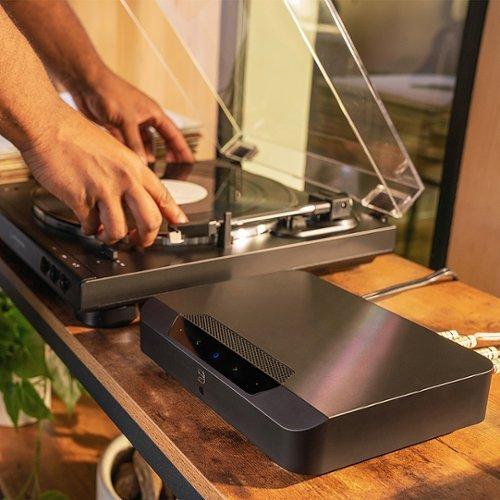
The Arcam A15 includes a built-in moving magnet phono stage, making it plug-and-play with most turntables. The PowerNode Edge lacks a dedicated phono input and would require an external phono preamp for turntable connection.
The Bluesound PowerNode Edge is far better for home theater with HDMI eARC, subwoofer output with bass management, and Dolby Digital processing. The A15 works in stereo systems but lacks modern home theater integration features.
The PowerNode Edge delivers precise, clean sound with DirectDigital amplification and ultra-low noise. The Arcam A15 offers more traditional audiophile sound with greater dynamic authority, warmer midrange, and better control over demanding speakers due to higher power output.
The PowerNode Edge includes a dedicated subwoofer output with proper bass management for easy 2.1 setup. The Arcam A15 has a preamp output that can connect to powered subwoofers, but without bass management features.
The Arcam A15 features premium aluminum construction, machined controls, and weighs 22 pounds, representing traditional audiophile build quality. The PowerNode Edge prioritizes compact, efficient design at 3.1 pounds with wall-mounting capability.
Both support 24-bit/192kHz high-resolution audio. The PowerNode Edge handles hi-res through its streaming platform and digital input, while the A15 uses a premium ESS Sabre DAC with multiple digital inputs for hi-res playback.
The Bluesound PowerNode Edge offers superior convenience with smartphone app control, voice commands, and automatic source switching. The Arcam A15 provides traditional operation with physical controls and remote, appealing to users who prefer tactile interfaces.
The PowerNode Edge provides exceptional value for streaming-focused users with its all-in-one convenience and modern features. The A15 offers better long-term value for serious listeners with its higher power output, comprehensive connectivity, and premium construction quality.
We've done our best to create useful and informative comparisons to help you decide what product to buy. Our research uses advanced automated methods to create this comparison and perfection is not possible - please contact us for corrections or questions. These are the sites we've researched in the creation of this article: futureaudiophile.com - alpha-audio.net - theaudiofactory.com - audiophilia.com - youtube.com - qaudio.com - crutchfield.com - youtube.com - bluesound.com - audioadvisor.com - crutchfield.com - bluesound.com - audiosciencereview.com - bluesound.com - soundstagesimplifi.com - mysoundconcepts.com - theaudiotailor.com.au - skybygramophone.com - crutchfield.com - arcam.co.uk - youtube.com - listenup.com - upscaleaudio.com - arcam.co.uk - whathifi.com - sweetwater.com - musicdirect.com - device.report - hifidaydreaming.com - listenup.com

Privacy Policy
Terms and Conditions - Affiliate Policy
Home Security
© Copyright 2008-2026.
11816 Inwood Rd #1211, Dallas, TX 75244