

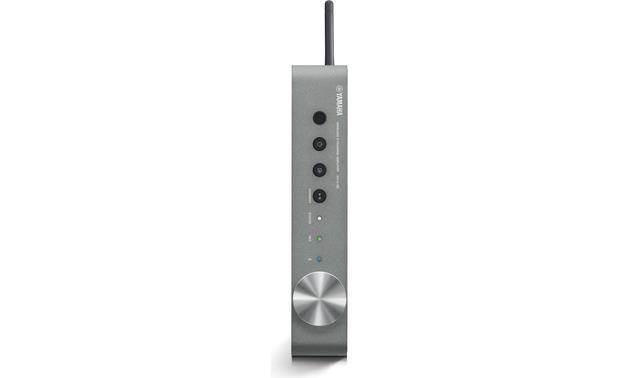
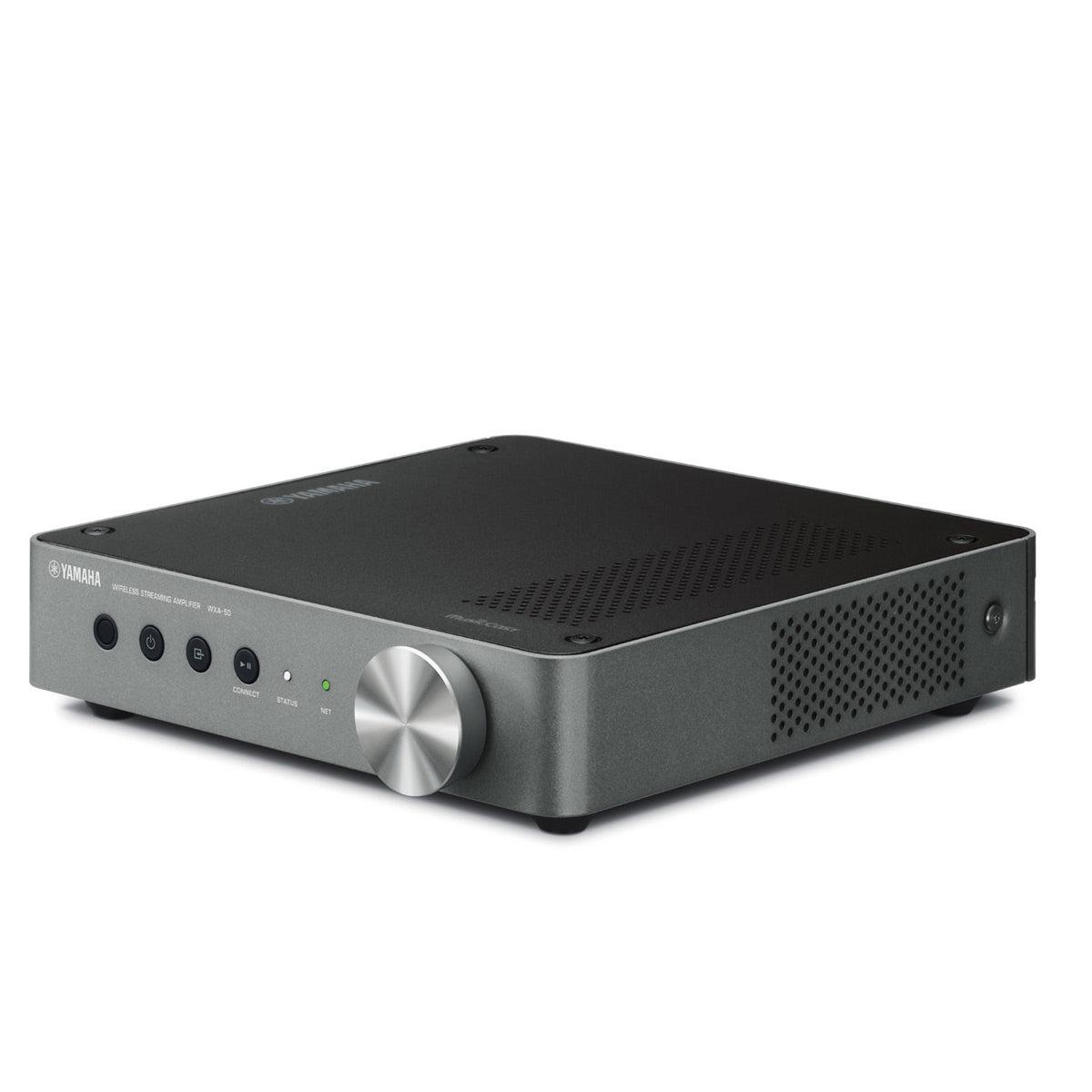
In today's world of streaming music and smart homes, the humble stereo amplifier has evolved far beyond its traditional role. Streaming amplifiers now combine the convenience of wireless music streaming with quality amplification, eliminating the need for multiple components while delivering impressive sound quality. Two standout options that perfectly illustrate different approaches to this category are the Bluesound PowerNode Edge and the Yamaha MusicCast WXA-50.
At the time of writing, both products occupy similar price ranges in the premium compact streaming amplifier market, but they take notably different approaches to achieving their goals. The Yamaha WXA-50 emphasizes raw power and comprehensive connectivity, while the Bluesound PowerNode Edge focuses on innovative digital amplification and modern home integration features.
Before diving into specifics, it's worth understanding what makes streaming amplifiers special. Unlike traditional amplifiers that simply boost audio signals from physical sources, streaming amplifiers connect directly to your home network and streaming services. They combine three key functions: network streaming (accessing Spotify, Tidal, and other services), digital-to-analog conversion (turning digital music files into analog signals your speakers can use), and amplification (providing the power to drive your speakers).
The most critical considerations when choosing between streaming amplifiers include power output compatibility with your speakers, sound quality and processing capabilities, streaming platform quality and app experience, connectivity options for various sources, and physical design constraints for your space.
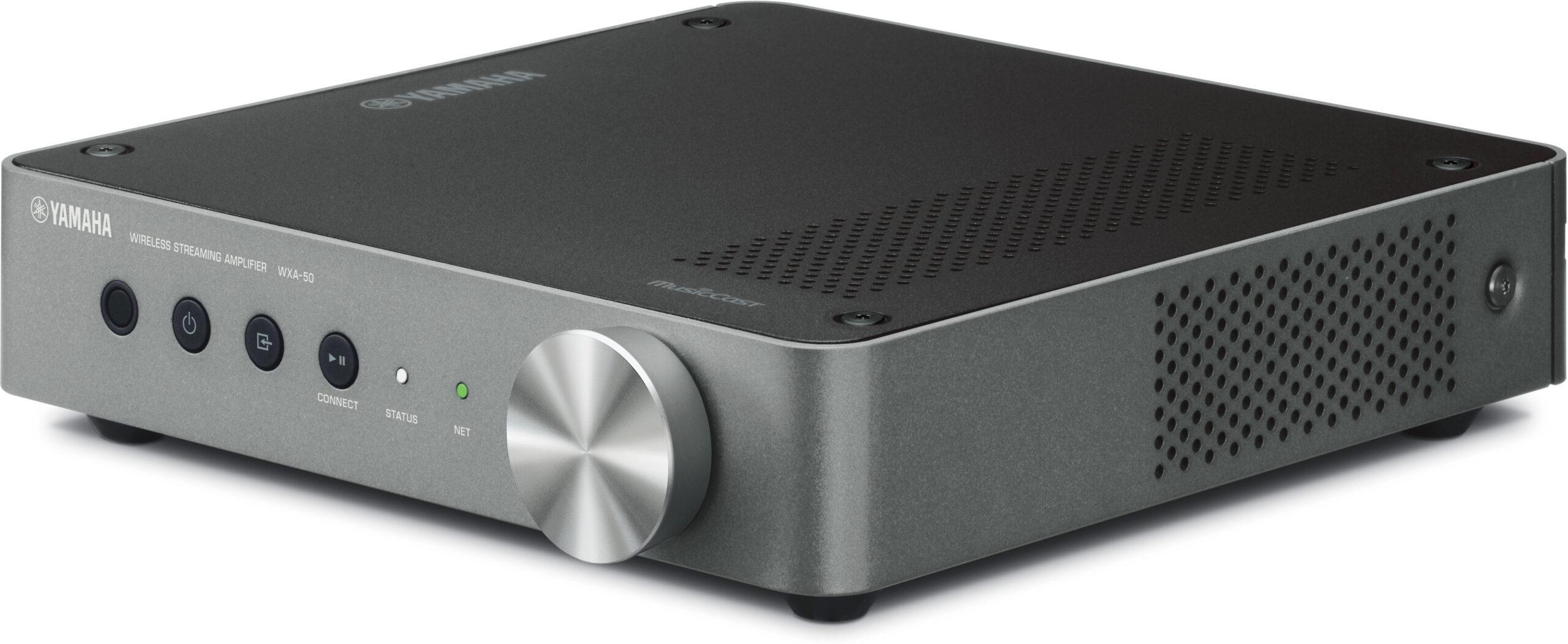
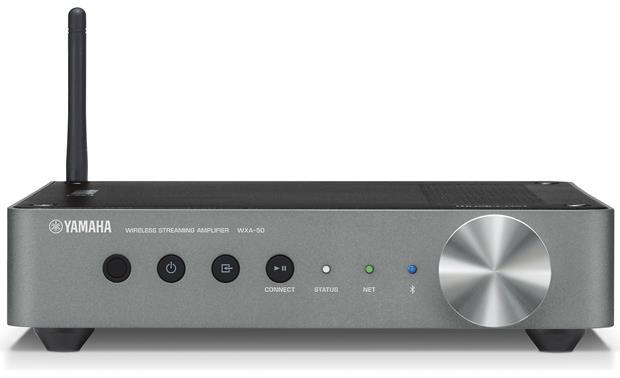
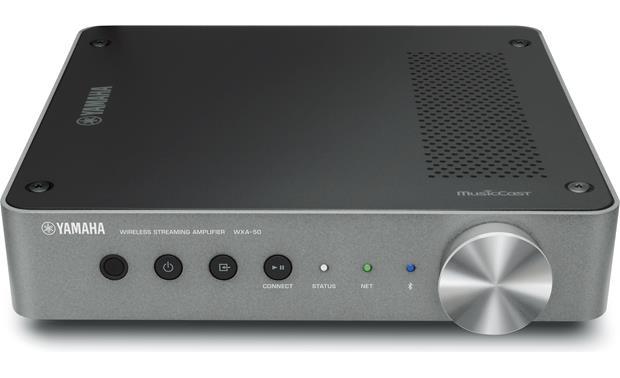
The Yamaha MusicCast WXA-50, released in 2018, represents Yamaha's approach to combining their decades of amplifier expertise with modern streaming capabilities. It's built around the concept of providing serious amplifier power in a compact streaming package, delivering up to 105 watts per channel into 4-ohm speakers—substantial power for its size class.
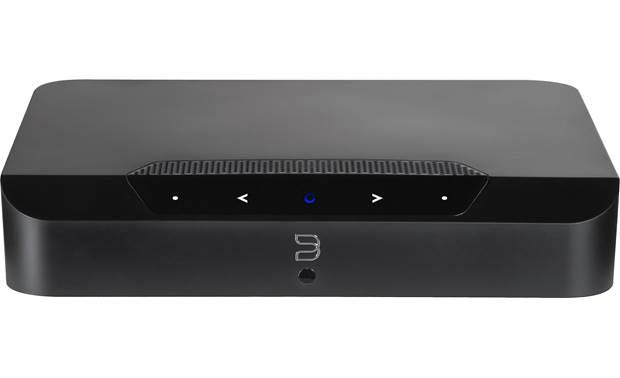
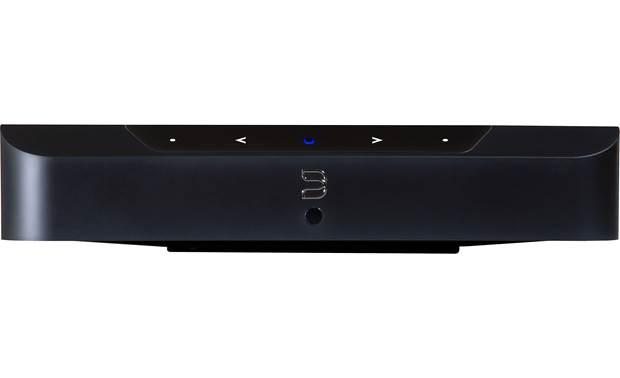
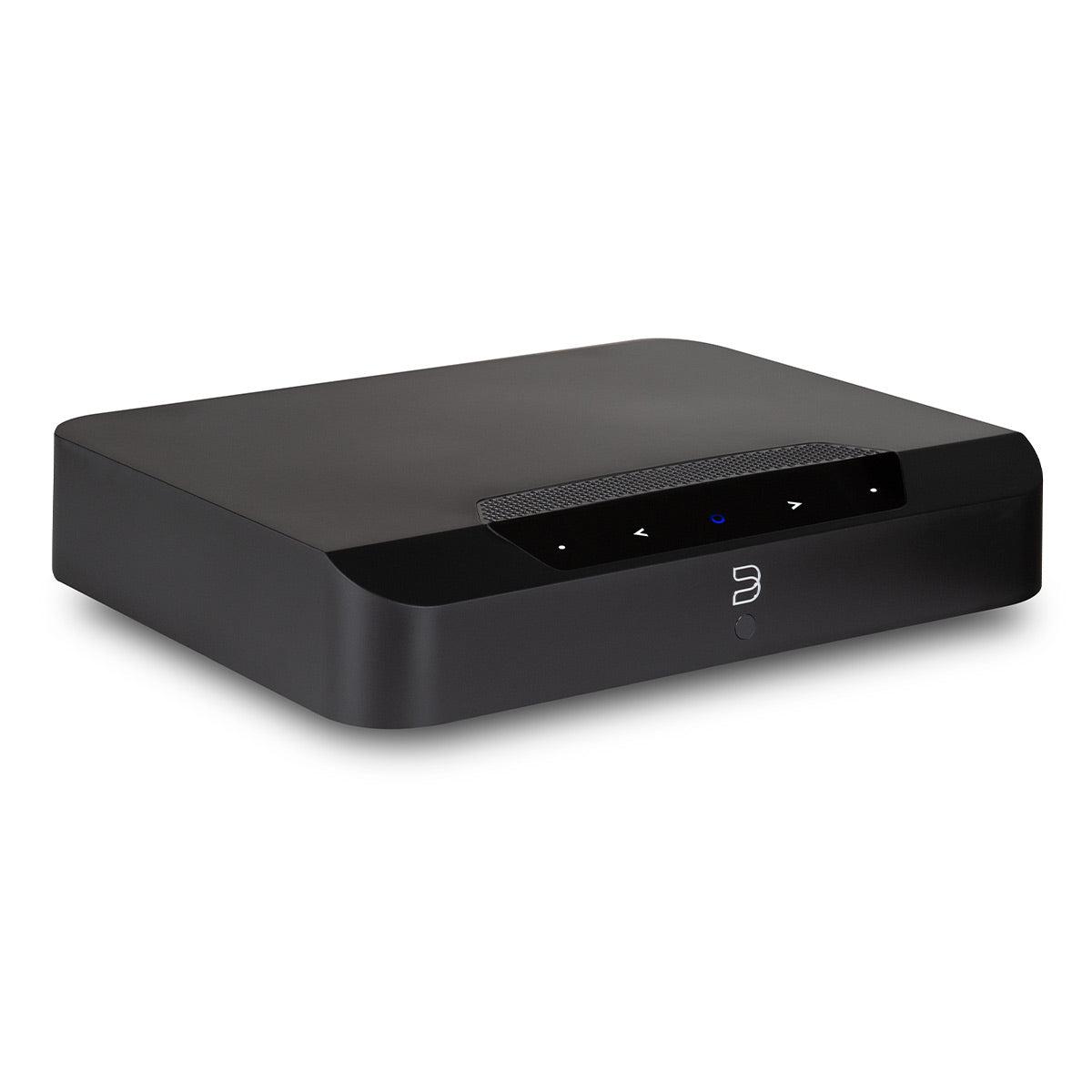
The Bluesound PowerNode Edge, launched in 2022, takes a more revolutionary approach with its DirectDigital amplification technology. Rather than following traditional amplifier design, it maintains the audio signal in digital form right up to the speaker terminals, theoretically reducing distortion and improving accuracy.
The most significant difference between these amplifiers lies in their power output capabilities. The Yamaha WXA-50 delivers 55 watts per channel into 8-ohm speakers, 70 watts into 6-ohm speakers, and an impressive 105 watts into 4-ohm speakers. This substantial power output makes it capable of driving even inefficient speakers—those that require more power to reach adequate volume levels.
In contrast, the Bluesound PowerNode Edge provides 40 watts per channel into 8 ohms, with proportionally less power into higher impedance loads. While this might seem limiting on paper, the reality is more nuanced. The DirectDigital amplification approach means this power is delivered with exceptional efficiency and low distortion.
Understanding Speaker Efficiency and Power Needs
Speaker efficiency, measured in decibels of sound pressure level per watt at one meter (dB SPL/W/m), determines how much amplifier power you actually need. Efficient speakers (90dB+) can produce room-filling volume with just a few watts, while inefficient speakers (below 85dB) may require 50+ watts for the same volume. If you're using bookshelf speakers from manufacturers like KEF, B&W, or ELAC, the Yamaha's extra power provides more headroom and better control, especially in larger rooms.
However, our research into user experiences reveals that the PowerNode Edge's 40 watts often surprises listeners with its volume capability. The DirectDigital amplification maintains better signal integrity at all power levels, potentially making those 40 watts more effective than traditional amplification designs.
The sonic philosophies of these amplifiers reflect their different design approaches, and both have merit depending on your priorities.
Yamaha's Traditional Excellence
The WXA-50 employs an ESS Sabre digital-to-analog converter (DAC), which converts digital music files into analog signals that speakers can reproduce. ESS Sabre DACs are renowned for their detail retrieval and dynamic range. The amplifier supports high-resolution audio up to 192kHz/24-bit sampling rates—much higher than CD quality's 44.1kHz/16-bit—preserving more detail in your music files.
Yamaha includes several proprietary processing features that can enhance your listening experience. The Compressed Music Enhancer attempts to restore some of the musical information lost when files are compressed into formats like MP3. Volume-Adaptive EQ automatically adjusts bass and treble response as you change volume levels, maintaining consistent tonal balance. Advanced Bass Extension helps smaller speakers produce more convincing low-frequency response.
Bluesound's Digital Innovation
The PowerNode Edge takes a fundamentally different approach with its DirectDigital amplification. Traditional amplifiers convert digital signals to analog early in the process, then amplify the analog signal. This creates multiple conversion stages where distortion and noise can accumulate. Bluesound's approach maintains the digital signal integrity right to the speaker outputs, theoretically providing a cleaner signal path.
This technology results in impressively low total harmonic distortion (THD) of just 0.008%—significantly lower than the Yamaha's 0.06% THD. While both figures are excellent, lower distortion theoretically means more accurate sound reproduction. The PowerNode Edge also supports MQA (Master Quality Authenticated) playback, which allows streaming of high-resolution audio from services like Tidal without massive file sizes.
Real-World Sound Quality Differences
Based on our evaluation of professional reviews and user feedback, both amplifiers deliver excellent sound quality, but with different characteristics. The Yamaha WXA-50 tends to provide a fuller, more traditionally powerful sound with excellent control over speakers. Its higher power output gives it better grip on speaker drivers, resulting in tighter bass and better dynamics in challenging passages.
The Bluesound PowerNode Edge, despite its lower power rating, consistently receives praise for its clean, detailed presentation. Users often note its ability to reveal subtle details in recordings while maintaining a relaxed, fatigue-free listening character. The DirectDigital amplification seems to excel at preserving the spatial qualities of recordings—the sense of where instruments are positioned in the soundstage.
The quality of the streaming experience—how easily you can access your music and control playback—significantly impacts daily satisfaction with these products.
Yamaha's MusicCast Platform
Yamaha's MusicCast ecosystem, which has evolved considerably since the WXA-50's 2018 launch, now supports integration with a wide range of streaming services including Spotify, Pandora, Tidal, Deezer, and many others. The MusicCast app allows you to control multiple Yamaha devices throughout your home, creating synchronized multi-room audio or independent zones.
One of MusicCast's strengths lies in its integration with Yamaha's broader product ecosystem. If you have or plan to add Yamaha AV receivers, soundbars, or wireless speakers, they can all work together seamlessly. The platform also offers strong voice control integration with Amazon Alexa and Google Assistant, allowing hands-free operation once properly configured.
However, our research suggests that while functional, the MusicCast app isn't always as intuitive as some competitors. Some users report occasional connectivity issues and find the interface less polished than dedicated audio companies' offerings.
Bluesound's BluOS Excellence
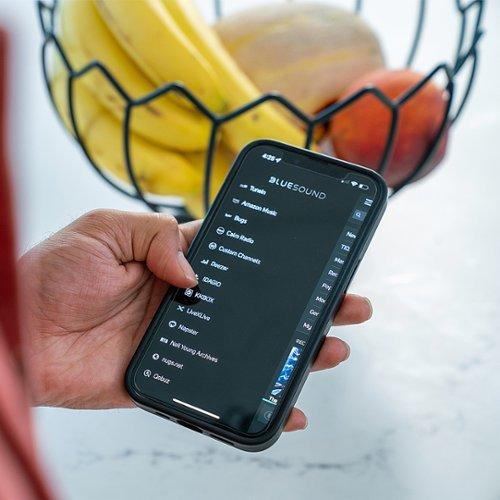
The PowerNode Edge runs on BluOS, Bluesound's proprietary operating system that has earned widespread praise for its reliability and user interface design. BluOS supports over 20 streaming services and provides what many consider one of the best multi-room audio experiences available.
A significant advantage of BluOS is its handling of high-resolution audio. While many platforms compress or downgrade audio quality during wireless transmission, BluOS maintains full resolution throughout the streaming chain. This makes the PowerNode Edge particularly appealing to listeners who prioritize audio quality from streaming services.
The BluOS app consistently receives positive feedback for its intuitive operation and stable performance. Users appreciate its straightforward navigation and reliable multi-room synchronization. Since Bluesound's 2022 updates, the platform has also improved its integration with voice assistants and smart home systems.
The connection options available on each amplifier reveal their intended use cases and installation flexibility.
Yamaha's Comprehensive Connectivity
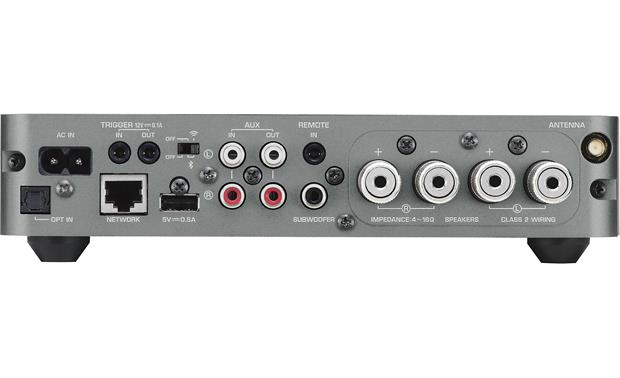
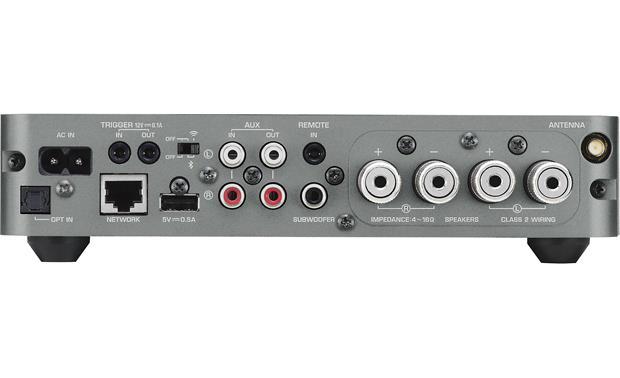
The WXA-50 offers extensive connectivity options that make it suitable for both simple setups and complex installations. It includes analog RCA inputs for connecting traditional sources like CD players or turntables (with appropriate preamps), optical digital inputs for devices like TVs or game consoles, USB inputs for direct connection of storage devices, and both wired Ethernet and Wi-Fi for network connectivity.
For custom installation environments, the Yamaha provides 12V trigger inputs and outputs, which allow it to automatically turn other components on and off, and IR remote inputs for integration with whole-house control systems. These professional features make it a favorite among custom installers who need to integrate streaming amplifiers into larger home automation systems.
Bluesound's Modern Integration Focus
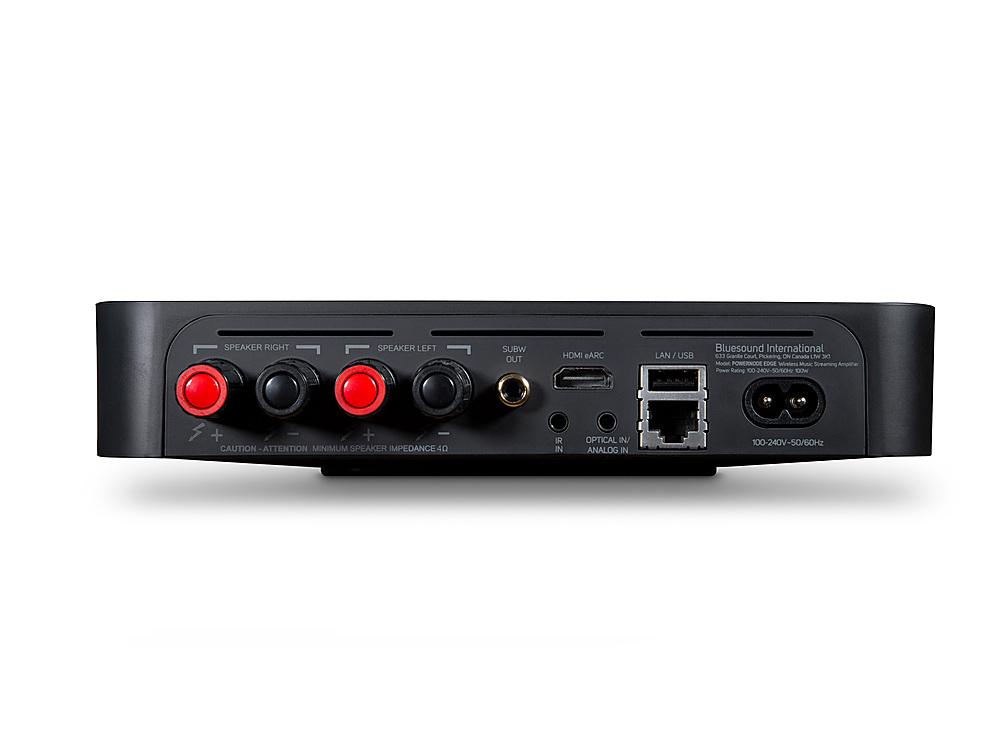
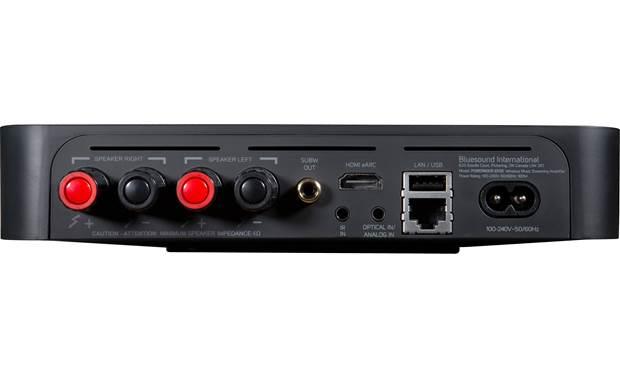
The PowerNode Edge takes a more focused approach to connectivity, emphasizing modern digital sources and home theater integration. Its standout feature is HDMI eARC (enhanced Audio Return Channel) connectivity, which allows direct connection to modern TVs. This means your TV can send audio directly to the amplifier, eliminating the need for separate audio connections and enabling features like automatic volume control via your TV remote.
The PowerNode Edge also includes a combination analog/optical input via a 3.5mm jack—a space-saving solution that requires an included adapter for optical connections. While this provides fewer total inputs than the Yamaha, it covers the most common connection needs for modern users.
A unique feature of the Bluesound is its two-way Bluetooth aptX HD capability. Not only can it receive Bluetooth audio from your phone or tablet, but it can also transmit audio to Bluetooth headphones—useful for late-night listening without disturbing others.
The physical characteristics of these amplifiers significantly impact where and how you can use them in your home.
Yamaha's Flexible Form Factor
The WXA-50 measures 8-3/8" wide by 2" high by 9-5/8" deep and weighs about 4.3 pounds. Its conventional rectangular shape allows both horizontal and vertical placement, and its standard dimensions make it compatible with audio equipment racks. The solid metal construction provides good vibration damping, which can improve sound quality by reducing mechanical interference.
The Yamaha includes high-quality binding post speaker connections—threaded posts that accept bare wire, spade lugs, or banana plugs. These provide secure, low-resistance connections that can improve sound quality compared to simpler spring-clip terminals.
Bluesound's Compact Innovation
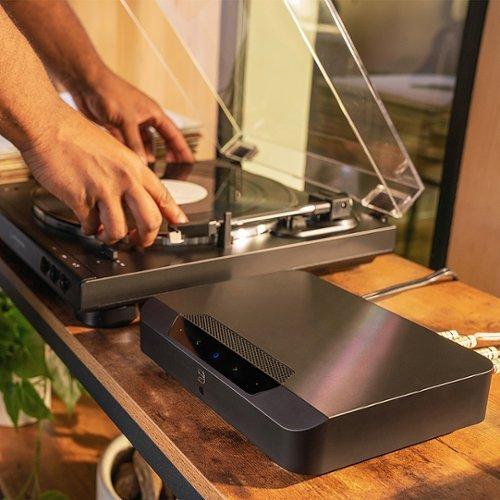
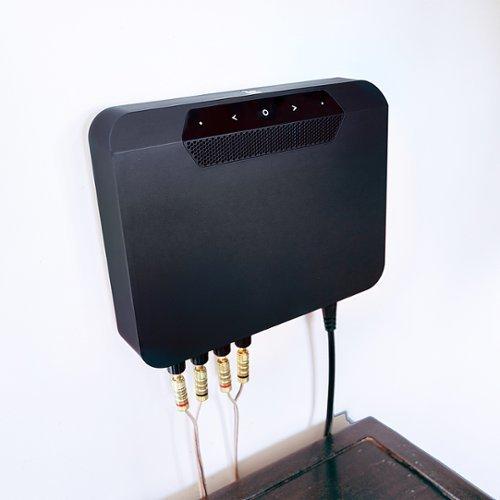
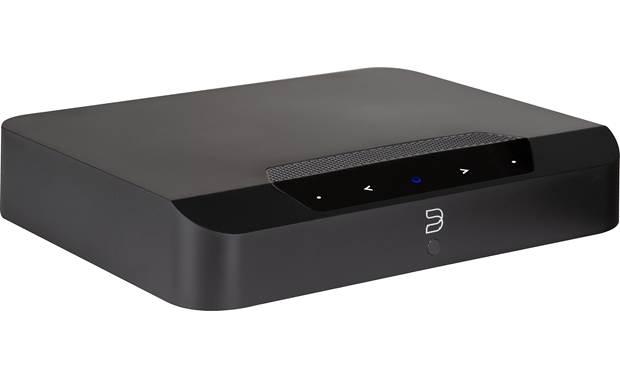
The PowerNode Edge prioritizes space efficiency with its remarkably compact 8.5" x 1.75" x 7.6" footprint and 3.1-pound weight. This ultra-slim profile allows installation in locations impossible for larger amplifiers, such as behind wall-mounted TVs or in shallow entertainment centers.
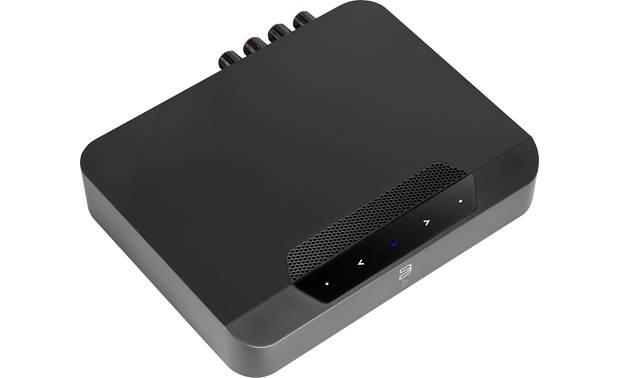
Bluesound includes a multi-orientation wall-mount bracket, enabling the PowerNode Edge to be mounted directly on walls or behind TVs for completely invisible installations. The unit's top surface features an elegant capacitive touch panel for basic control without requiring the app or remote.
This compact design does require some compromises—the PowerNode Edge uses smaller speaker terminals that may not accommodate larger gauge speaker wires as easily as the Yamaha's binding posts.
For users interested in incorporating these amplifiers into home theater systems, the approaches differ significantly.
Yamaha's Professional Theater Integration
The WXA-50 excels in traditional home theater installations through its trigger control capabilities and multiple input options. It can serve as part of a distributed audio system, powering speakers in secondary zones while integrating with a main home theater receiver. The trigger inputs and outputs allow it to turn on automatically when the main system activates, providing seamless operation.
The optical digital input makes it easy to connect to TVs, gaming consoles, or AV receivers, though it doesn't support the latest audio formats or automatic switching that modern HDMI connections provide.
Bluesound's Modern TV Integration
The PowerNode Edge's HDMI eARC connection represents a more modern approach to TV integration. eARC supports higher quality audio formats than optical connections and enables features like automatic volume control via your TV remote. When you adjust volume on your TV, the PowerNode Edge volume changes correspondingly—a convenience feature that traditional amplifiers can't match.
Additionally, the PowerNode Edge can serve as rear channel amplification in a wireless Bluesound home theater system. When paired with other Bluesound components, it can create a 4.1 or higher surround sound system without running speaker wires to the rear of the room.
At the time of writing, both amplifiers occupy similar price points in the premium compact streaming amplifier market, but they deliver value in different ways.
The Yamaha WXA-50 provides exceptional value for users who need serious amplification power. Its ability to deliver over 100 watts per channel into 4-ohm loads puts it in competition with significantly more expensive dedicated amplifiers. For users with power-hungry speakers or large rooms, this represents outstanding value. The comprehensive connectivity and professional installation features add further value for complex setups.
The Bluesound PowerNode Edge commands its price through innovative technology and modern convenience features. The DirectDigital amplification technology is genuinely unique in this category, and the ultra-compact form factor enables installations impossible with larger amplifiers. The superior app experience and high-resolution audio handling provide ongoing value for discerning listeners.
Your choice between these excellent amplifiers should primarily depend on your specific needs and priorities.
Choose the Yamaha WXA-50 if:
You have inefficient speakers that require substantial power to sound their best. Many tower speakers and some premium bookshelf speakers fall into this category. If your speakers have sensitivity ratings below 88dB, the Yamaha's extra power will likely provide better dynamics and control.
Your room is large or has challenging acoustics. Rooms over 300 square feet, or rooms with high ceilings, hard surfaces, or open floor plans typically benefit from higher power amplification.
You need extensive connectivity options. If you regularly connect multiple sources or need professional installation features like trigger control, the Yamaha provides more flexibility.
You're building around existing Yamaha equipment. The MusicCast ecosystem works best when multiple Yamaha components work together.
Choose the Bluesound PowerNode Edge if:
Space constraints are a primary concern. If you need to mount the amplifier behind a TV, in a shallow cabinet, or any location where size matters, the PowerNode Edge's compact design is invaluable.
TV integration is important to your setup. The HDMI eARC connection and TV remote control capabilities make the Bluesound significantly more convenient for TV-centric systems.
You prioritize sound quality over raw power. If your speakers are reasonably efficient (88dB or higher sensitivity) and your room isn't enormous, the PowerNode Edge's clean digital amplification may provide better sound quality than higher-powered alternatives.
You value app experience and high-resolution audio. BluOS consistently receives better reviews than MusicCast for user experience, and the platform's handling of high-resolution audio is superior.
Both the Yamaha WXA-50 and Bluesound PowerNode Edge represent excellent approaches to streaming amplification, but they serve different priorities. The Yamaha provides traditional amplifier virtues—serious power, comprehensive connectivity, and professional installation flexibility—in a modern streaming package. The Bluesound pushes the envelope with innovative digital amplification, ultra-compact design, and superior modern integration features.
For most users with moderately efficient speakers and modern source requirements, the PowerNode Edge's combination of sound quality, convenience features, and space efficiency makes it the more compelling choice. However, users with power-hungry speakers, complex connectivity needs, or large rooms will find the Yamaha WXA-50 provides better value through its superior power output and comprehensive feature set.
The decision ultimately comes down to whether you prioritize innovation and convenience (Bluesound) or power and traditional flexibility (Yamaha). Both approaches have merit, and both amplifiers deliver impressive performance that will satisfy demanding listeners for years to come.
| Bluesound PowerNode Edge | Yamaha MusicCast WXA-50 |
|---|---|
| Power Output - Critical for driving speakers effectively | |
| 40W/ch (8Ω) with DirectDigital™ amplification | 55W/ch (8Ω), 70W/ch (6Ω), 105W/ch (4Ω) - better for power-hungry speakers |
| Total Harmonic Distortion - Lower numbers mean cleaner sound | |
| 0.008% THD (exceptionally low due to digital amp design) | 0.06% THD (still excellent, typical for quality analog amps) |
| High-Resolution Audio Support - Important for audiophile streaming | |
| Up to 24-bit/192kHz, DSD, MQA decoding | Up to 24-bit/192kHz, DSD up to 5.6MHz (no MQA) |
| Physical Dimensions - Space constraints matter in modern setups | |
| Ultra-compact: 8.6" x 1.8" x 7.6", wall-mountable | Standard size: 8.4" x 2" x 9.6", horizontal/vertical placement |
| TV Integration - Modern convenience for home theater use | |
| HDMI eARC with Dolby Digital, TV remote control | Optical digital input only, no HDMI or TV remote features |
| Wireless Connectivity - Flexibility for different devices | |
| Wi-Fi, 2-way Bluetooth aptX HD, AirPlay 2 | Wi-Fi, Bluetooth (SBC/AAC), AirPlay, DLNA 1.5 |
| Multi-Room Platform - App quality affects daily experience | |
| BluOS (highly rated app, 20+ streaming services) | MusicCast (functional but less polished, good Yamaha integration) |
| Input Options - Connectivity for various sources | |
| 1 combo analog/optical, USB, subwoofer out | 1 analog RCA, 1 optical, 1 USB, subwoofer out |
| Professional Installation Features - Important for custom installs | |
| Basic trigger support, wall-mount bracket included | 12V trigger in/out, remote in, rack-mountable design |
| Amplifier Technology - Different approaches to power delivery | |
| DirectDigital™ maintains signal digitally to speakers | Traditional analog amplification with ESS Sabre DAC |
| Release Year - Affects feature set and technology | |
| 2022 (newer tech, modern connectivity focus) | 2018 (mature platform, proven reliability) |
| Best For - Primary use case recommendation | |
| TV integration, compact installs, audiophile sound quality | Power-hungry speakers, professional installs, larger rooms |
The Yamaha MusicCast WXA-50 delivers significantly more power with 105 watts per channel into 4-ohm speakers and 55 watts into 8-ohm speakers. The Bluesound PowerNode Edge provides 40 watts per channel into 8 ohms. If you have power-hungry speakers or a large room, the Yamaha offers better driving capability.
The Bluesound PowerNode Edge uses innovative DirectDigital™ amplification technology that maintains digital signals right to the speakers, while the Yamaha MusicCast WXA-50 uses traditional analog amplification with higher power output. The Bluesound focuses on compact design and TV integration, whereas the Yamaha emphasizes raw power and professional connectivity.
The Bluesound PowerNode Edge excels for TV connection with its HDMI eARC input that supports Dolby Digital and allows TV remote control. The Yamaha MusicCast WXA-50 only offers optical digital input for TV connection, which doesn't provide the same convenience features as the PowerNode Edge's HDMI integration.
Both amplifiers work with passive speakers, but compatibility depends on your speakers' efficiency. The Yamaha WXA-50 better suits inefficient speakers (below 88dB sensitivity) due to its higher power output. The Bluesound PowerNode Edge works well with moderately efficient speakers and smaller rooms where its 40 watts provide adequate volume.
The Bluesound PowerNode Edge runs BluOS, which consistently receives higher ratings for user interface and reliability. The Yamaha MusicCast WXA-50 uses Yamaha's MusicCast platform, which is functional but generally considered less polished than BluOS. Both support major streaming services, but BluOS handles high-resolution audio streaming better.
The Bluesound PowerNode Edge integrates better with modern home theaters through its HDMI eARC connection and ability to serve as wireless rear channels in Bluesound surround systems. The Yamaha WXA-50 works well in traditional home theater installations with its trigger controls and multiple inputs, but lacks the modern TV integration features of the PowerNode Edge.
The Bluesound PowerNode Edge is significantly more compact at just 1.8 inches tall and includes a wall-mount bracket for behind-TV installation. The Yamaha MusicCast WXA-50 has a more traditional size at 2 inches tall and is designed for shelf or rack placement. If space is limited, the PowerNode Edge offers superior installation flexibility.
Yes, both amplifiers support high-resolution audio up to 24-bit/192kHz. The Bluesound PowerNode Edge additionally supports MQA decoding for Tidal Masters streaming. The Yamaha WXA-50 supports DSD files up to 5.6MHz. For pure high-resolution streaming quality, the Bluesound has a slight edge with its MQA support and superior streaming platform.
Sound quality depends on your priorities. The Bluesound PowerNode Edge delivers exceptionally low distortion (0.008% THD) through its DirectDigital™ technology, providing clean, detailed sound. The Yamaha WXA-50 offers more traditional amplification with higher power for better speaker control. Most listeners prefer the PowerNode Edge's clarity, while those needing more power favor the Yamaha.
Both amplifiers support voice control, but with different capabilities. The Yamaha MusicCast WXA-50 has more comprehensive Alexa and Google Assistant integration for system control. The Bluesound PowerNode Edge supports voice control through BluVoice with Alexa, Google Assistant, and Siri, but the implementation varies by feature.
The Bluesound PowerNode Edge generally provides a superior multi-room experience through the BluOS platform, which is specifically designed for high-quality multi-room audio with better synchronization and higher resolution streaming. The Yamaha WXA-50 works well in multi-room setups, especially with other Yamaha components, but the BluOS ecosystem is considered more refined for audio-focused applications.
Value depends on your needs. The Yamaha MusicCast WXA-50 offers more watts per dollar and extensive connectivity, making it better value for users needing higher power output. The Bluesound PowerNode Edge provides better value for those prioritizing modern features, compact design, and superior sound quality. Consider the Yamaha for power-hungry speakers and the PowerNode Edge for TV integration and audiophile features.
We've done our best to create useful and informative comparisons to help you decide what product to buy. Our research uses advanced automated methods to create this comparison and perfection is not possible - please contact us for corrections or questions. These are the sites we've researched in the creation of this article: futureaudiophile.com - alpha-audio.net - theaudiofactory.com - audiophilia.com - youtube.com - qaudio.com - crutchfield.com - youtube.com - bluesound.com - audioadvisor.com - crutchfield.com - bluesound.com - audiosciencereview.com - bluesound.com - soundstagesimplifi.com - mysoundconcepts.com - crutchfield.ca - usa.yamaha.com - avluxurygroup.com - crutchfield.com - crutchfield.com - teamiu.com - audiosciencereview.com - snapav.com - avsforum.com - youtube.com - hifiheaven.net - usa.yamaha.com - usa.yamaha.com - audiokarma.org - usa.yamaha.com - bestbuy.com - usa.yamaha.com - ooberpad.com - dugoutnorthbrook.com - parts-express.com

Privacy Policy
Terms and Conditions - Affiliate Policy
Home Security
© Copyright 2008-2026.
11816 Inwood Rd #1211, Dallas, TX 75244