




The streaming amplifier has become the Swiss Army knife of modern audio systems. These clever devices combine a traditional amplifier—the component that powers your speakers—with built-in streaming capabilities that can pull music from your phone, Spotify, or even your old CD collection stored on a computer. It's an elegant solution that eliminates cable clutter and simplifies your setup while potentially saving money compared to buying separate components.
But here's where things get interesting: not all streaming amplifiers take the same approach. The WiiM Amp Ultra and Bluesound PowerNode Edge represent two distinctly different philosophies in achieving the same goal. One prioritizes raw power and feature density, while the other focuses on sophisticated audio engineering and seamless integration. Understanding these differences will help you choose the right amplifier for your specific needs and listening preferences.
Before diving into specifics, let's establish what makes a great streaming amplifier. The most critical factor is power output, measured in watts per channel. This determines how loud your system can play and how well it controls your speakers. A 40-watt amplifier might sound perfectly fine with efficient bookshelf speakers in a small room, but struggle to fill a large living space or drive demanding floor-standing speakers.
Audio quality comes next, determined largely by the digital-to-analog converter (DAC)—the component that transforms digital music files into the analog signals your speakers need. Better DACs preserve more musical detail and introduce less distortion. The amplifier's distortion specifications, particularly THD+N (Total Harmonic Distortion plus Noise), tell you how cleanly it reproduces audio. Lower numbers mean cleaner sound.
Streaming features and connectivity determine how you'll actually use the device daily. This includes which music services it supports, how reliable the wireless connection is, and whether it integrates well with your existing smart home setup. Finally, the user interface—whether through an app, physical controls, or display—affects how enjoyable the device is to live with long-term.
The WiiM Amp Ultra, released in 2024, represents the "kitchen sink" approach to streaming amplification. WiiM packed this unit with virtually every feature an audio enthusiast might want, starting with substantial power output and ending with a full-color touchscreen display. At the time of writing, it offers exceptional value in the mid-range streaming amplifier market, delivering features typically found in much more expensive units.
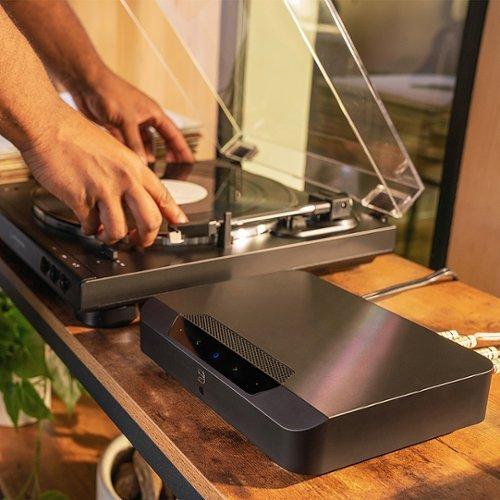
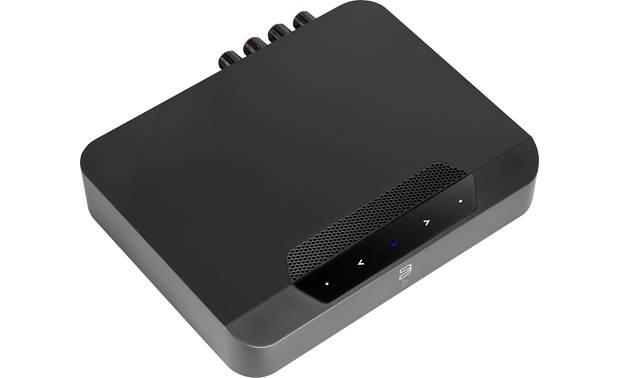
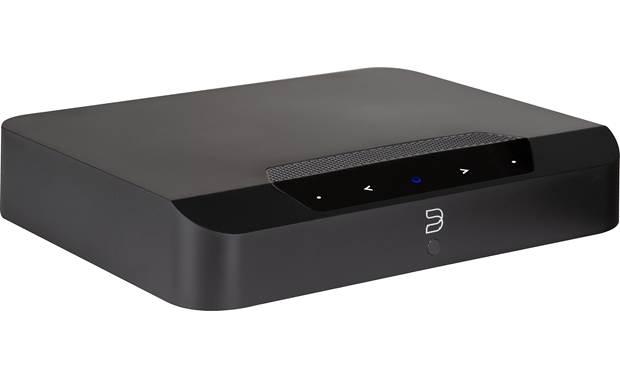
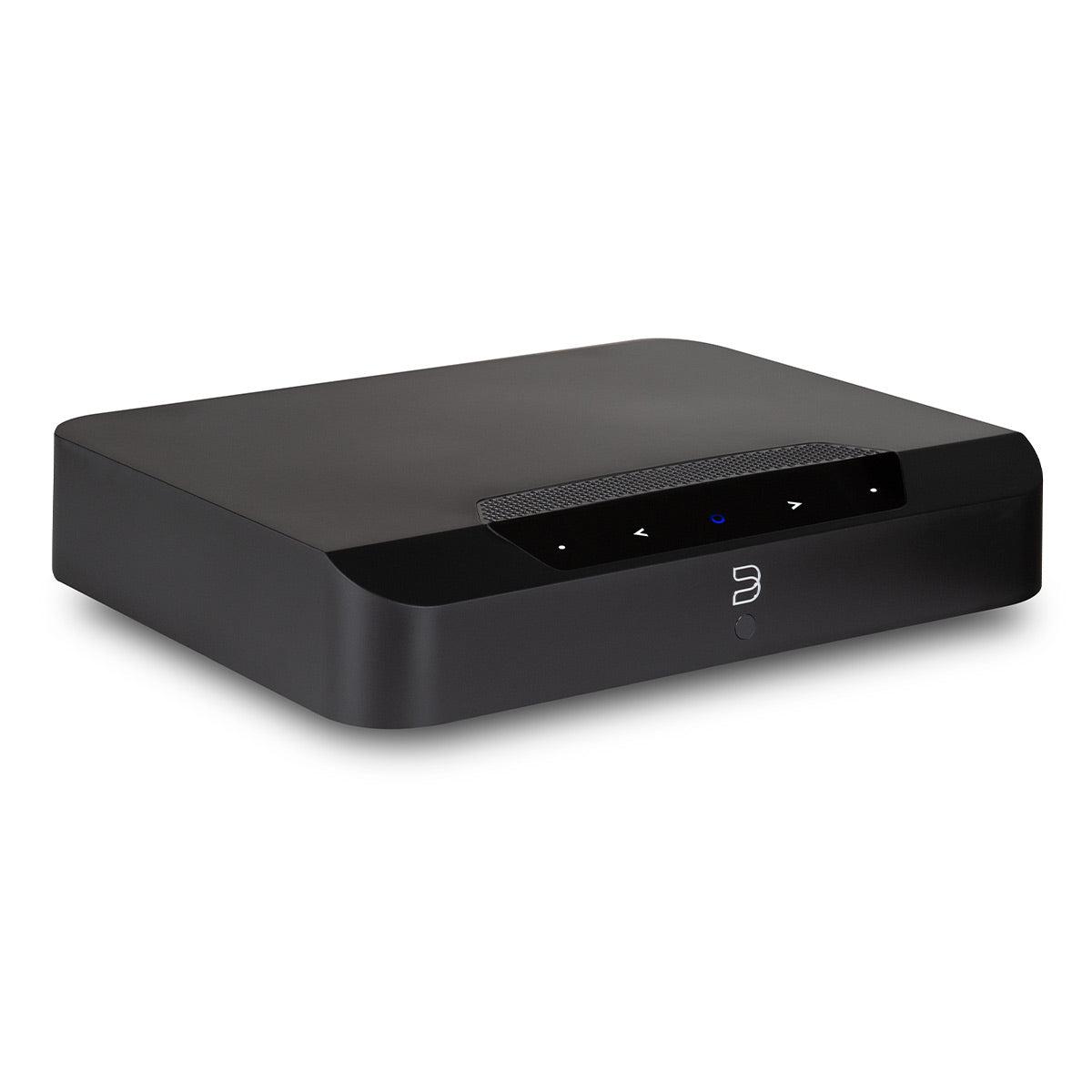
The Bluesound PowerNode Edge, introduced in 2022, takes the minimalist route. Bluesound, with its connection to NAD Electronics' decades of amplifier expertise, focused on sophisticated audio engineering over flashy features. The result is an ultra-compact unit that prioritizes sound quality and system integration over raw specifications.
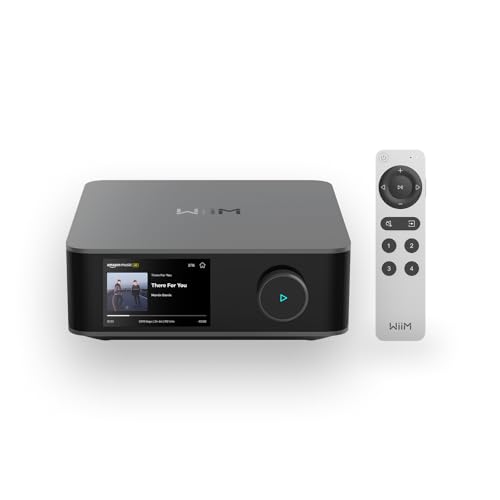
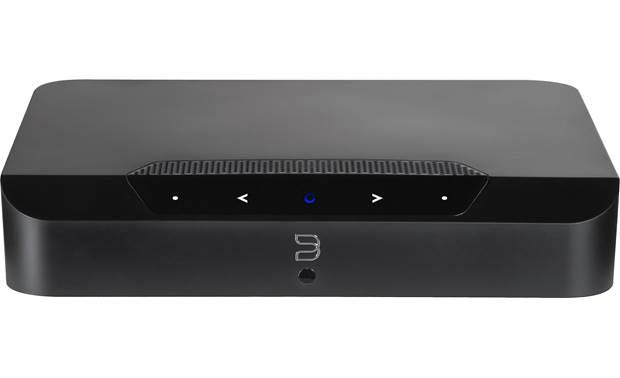
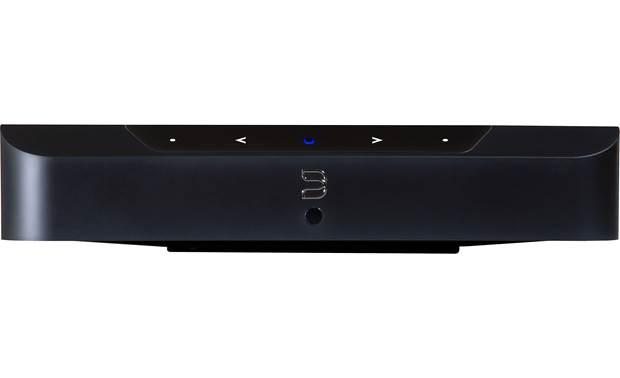
These different philosophies become apparent the moment you see them. The WiiM Amp Ultra proudly displays its 3.5-inch color screen, inviting interaction. The PowerNode Edge presents a clean, minimal facade designed to disappear into your setup. Both approaches have merit, but they appeal to different types of users.
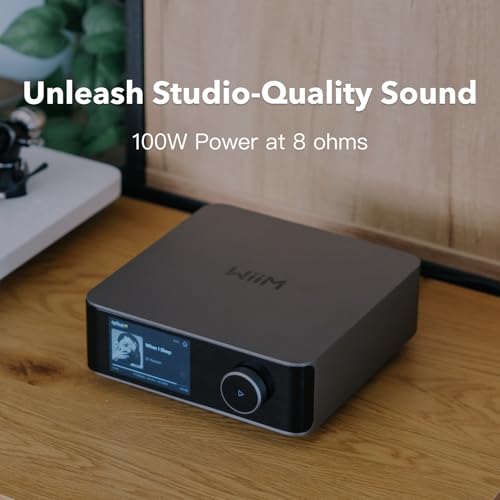
The most significant difference between these amplifiers lies in their power delivery. The WiiM Amp Ultra delivers 100 watts per channel into 8-ohm speakers (200 watts into 4-ohm speakers), while the PowerNode Edge provides 40 watts per channel into 8-ohm loads. This isn't just about getting louder—it's about control and headroom.
The WiiM Amp Ultra uses dual Texas Instruments TPA3255 Class D amplifier chips, a proven design known for efficiency and clean power delivery. More importantly, it incorporates Post-Filter Feedback (PFFB) technology, which might sound complicated but does something quite useful: it monitors the actual signal reaching your speakers and adjusts in real-time to compensate for speaker impedance variations. This means more consistent sound regardless of which speakers you connect or how they behave at different frequencies.
The PowerNode Edge takes a radically different approach with NAD's DirectDigital technology. Instead of converting digital audio to analog and then amplifying it (the traditional method), this system keeps the audio signal digital right up to the speaker outputs. Think of it like keeping a document in its original digital format rather than printing it out and then scanning it back in—you avoid potential quality loss at each conversion step.
Based on our research of user experiences and professional reviews, the power difference translates to real-world performance gaps. The WiiM Amp Ultra consistently demonstrates better control over demanding speakers, particularly those with low sensitivity (speakers that need more power to play at the same volume) or complex impedance characteristics. Users report that it maintains composure at higher volumes where the PowerNode Edge might start to compress or lose its grip on the music.
However, the PowerNode Edge's DirectDigital approach yields its own benefits. Reviewers consistently note exceptionally clean backgrounds—the silence between notes is deeper, and fine details emerge more clearly. This technological advantage becomes most apparent with high-quality recordings and efficient speakers that don't require significant power.
The WiiM Amp Ultra employs an ESS ES9039Q2M SABRE DAC, a component typically found in dedicated audiophile equipment costing significantly more. This 32-bit/384kHz converter handles high-resolution audio files with exceptional precision, achieving THD+N levels of 0.005% and signal-to-noise ratios exceeding 120dB. To put this in perspective, these specifications rival standalone DACs costing as much as the entire WiiM Amp Ultra.
The implementation includes six TI OPA1612 op-amps in the analog section. These operational amplifiers handle the delicate task of preparing the analog signal for the power amplifiers, and using six of them allows for sophisticated signal processing while maintaining ultra-low noise levels. This attention to the analog path shows WiiM's commitment to audio quality beyond just impressive specifications on paper.
The PowerNode Edge integrates its DAC function into the DirectDigital amplifier system. While Bluesound doesn't publish detailed specifications about the specific DAC chip, the integrated approach eliminates several potential sources of interference and distortion present in traditional designs. Users and reviewers consistently report that the PowerNode Edge produces a notably coherent, fluid sound across the frequency range.
One important consideration: the PowerNode Edge's DirectDigital approach requires analog-to-digital conversion for analog sources. If you're planning to connect a turntable or other analog source, the signal gets converted to digital, processed, and then converted back to analog at the speaker outputs. While this conversion is high-quality, purist vinyl enthusiasts might prefer the WiiM Amp Ultra's direct analog path for such sources.
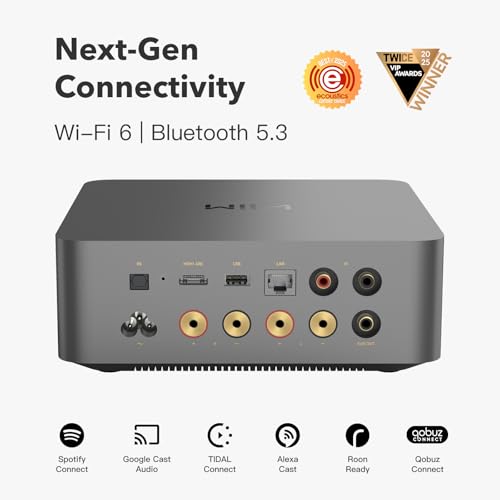
Both amplifiers offer comprehensive streaming capabilities, but with different strengths. The WiiM Amp Ultra supports Wi-Fi 6E, the latest wireless standard offering improved reliability and reduced congestion in busy wireless environments. Its Bluetooth 5.3 implementation includes LE Audio, a new standard promising better battery life and audio quality for wireless earbuds and headphones.
The WiiM Amp Ultra works with virtually every major streaming service through various connection methods: Google Cast, Spotify Connect, TIDAL Connect, and direct app integration. However, it notably lacks AirPlay 2 support, which could be frustrating for Apple ecosystem users who want seamless integration with their iPhones and iPads.
The PowerNode Edge takes a different approach through Bluesound's BluOS platform. This mature ecosystem provides rock-solid stability and excellent integration with other Bluesound components for multi-room audio. Importantly for Apple users, it includes full AirPlay 2 support, allowing easy streaming from iOS devices and integration with other AirPlay speakers throughout your home.
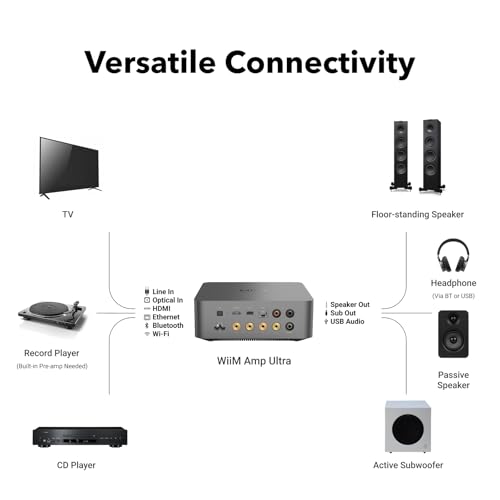
Both units include HDMI ARC (Audio Return Channel) connections, making them suitable for TV audio. This connection allows your TV to send audio back to the amplifier, so you can improve your TV's sound quality while using the same device for music streaming. The WiiM Amp Ultra adds Dolby Digital decoding, making it more capable as a home theater component.
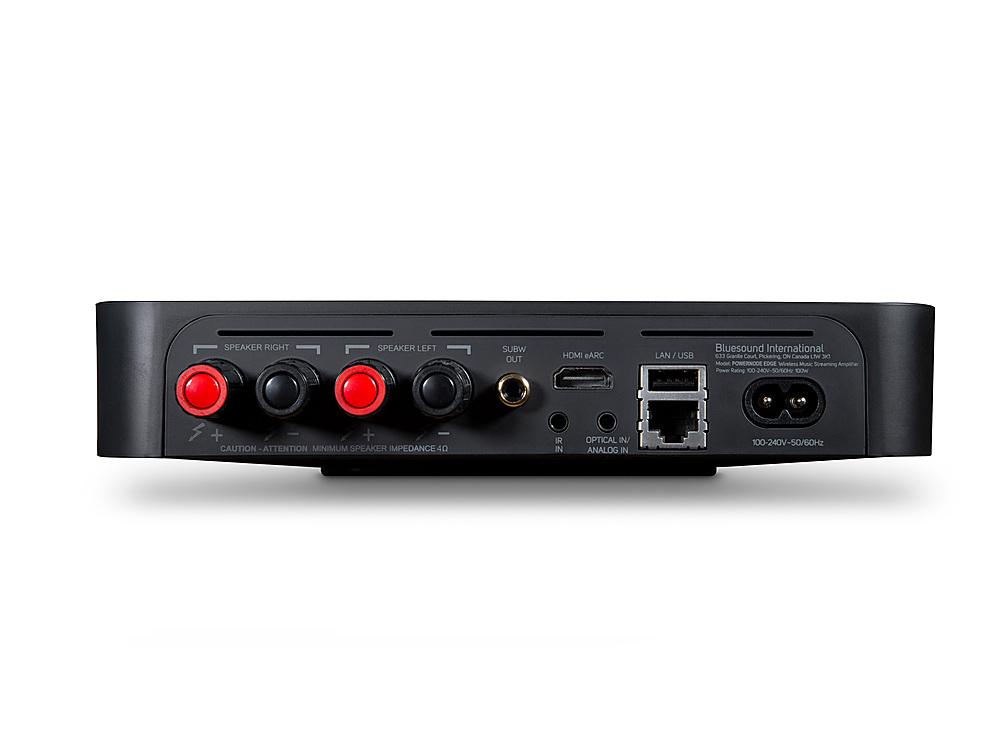
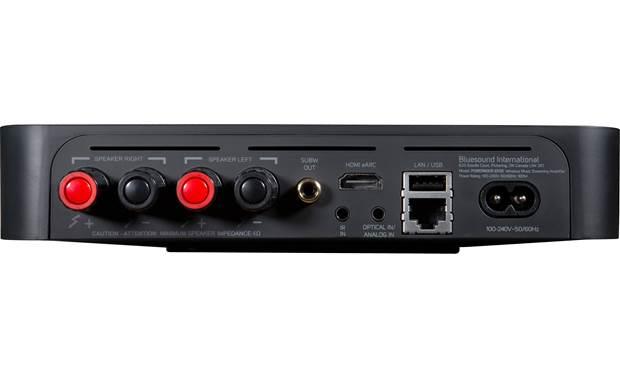
For physical connections, the WiiM Amp Ultra provides more options: RCA analog inputs, optical digital input, and USB-A for connecting storage devices or external DACs. The PowerNode Edge offers a combination analog/digital input through a 3.5mm jack, which works but isn't as convenient as dedicated RCA jacks for analog sources.
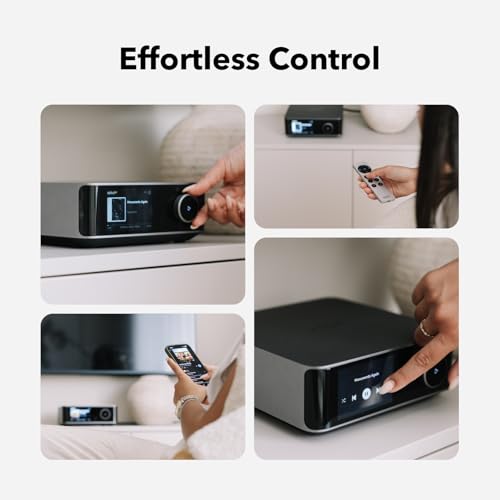
Here's where the philosophical differences become most apparent. The WiiM Amp Ultra features a 3.5-inch full-color touchscreen that displays album artwork, provides direct access to EQ settings, shows input selection, and even includes VU meters for that retro audio equipment aesthetic. You can adjust settings, browse recently played music, and access smart presets without touching your phone.
This direct control capability proves surprisingly useful in daily use. Based on user feedback, many people appreciate being able to quickly adjust the volume or skip tracks without finding their phone or opening an app. The screen also provides visual feedback about what's playing and how the system is configured, reducing guesswork.
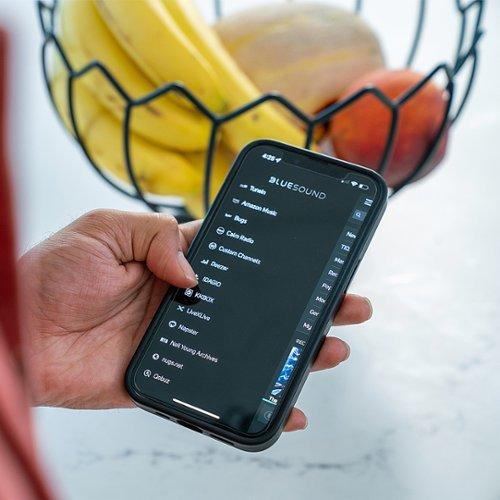
The PowerNode Edge deliberately avoids such visual distractions. Its top surface includes capacitive touch controls for basic playback functions, but the primary interface remains the BluOS Controller app. This approach aligns with the minimalist aesthetic but means you'll always need a phone or tablet nearby for full control.
Both apps—WiiM Home and BluOS Controller—receive regular updates and generally positive user reviews. However, BluOS has a longer track record and arguably better integration with multi-room audio systems. The WiiM app offers more granular control over audio processing features like room correction and detailed equalization.
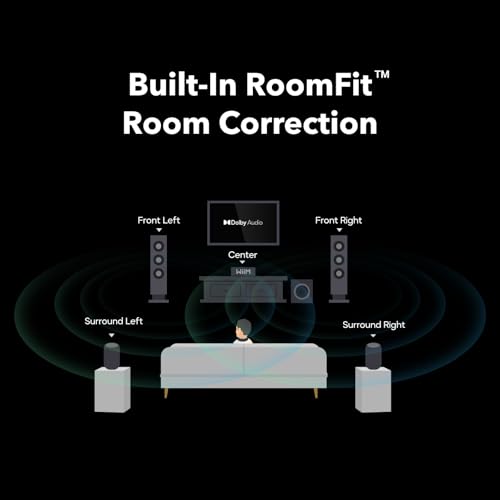
The WiiM Amp Ultra includes sophisticated digital signal processing (DSP) features rarely found at its price point. The room correction system uses your smartphone's microphone to analyze your room's acoustics and automatically adjust the frequency response to compensate for acoustic problems. This can significantly improve sound quality in challenging listening environments.
The 10-band parametric equalizer allows precise frequency adjustments, with independent settings for each input. This means you could optimize the sound for your TV audio differently than your music streaming, accounting for the different characteristics of these sources.
Subwoofer integration receives special attention in the WiiM Amp Ultra, with dedicated bass management, crossover controls, and delay compensation to ensure proper integration between your main speakers and subwoofer. These features transform it into a capable 2.1 system controller.
The PowerNode Edge focuses on fundamental audio quality rather than extensive DSP features. It includes basic bass management for subwoofer integration but lacks room correction or detailed equalization options. For many users, this simplified approach proves preferable—fewer settings to configure means less opportunity for making things sound worse rather than better.
Based on extensive research of professional reviews and user experiences, both amplifiers deliver excellent sound quality but with different characteristics. The WiiM Amp Ultra consistently demonstrates superior dynamic range and control, particularly with challenging musical material or demanding speakers. Users report that complex electronic music with heavy bass maintains its clarity and separation, even at higher volume levels.
The PowerNode Edge earns praise for its refined, natural sound character. Reviewers frequently describe the sound as "coherent" and "fluid," with particular strength in midrange clarity and overall musical flow. The DirectDigital approach seems to excel with acoustic music and well-recorded material, where its clean background allows subtle details to emerge.
For home theater use, the WiiM Amp Ultra's higher power output and Dolby Digital decoding make it more suitable for TV audio. Its room correction can help compensate for the acoustic compromises often present in living rooms optimized for viewing rather than listening.
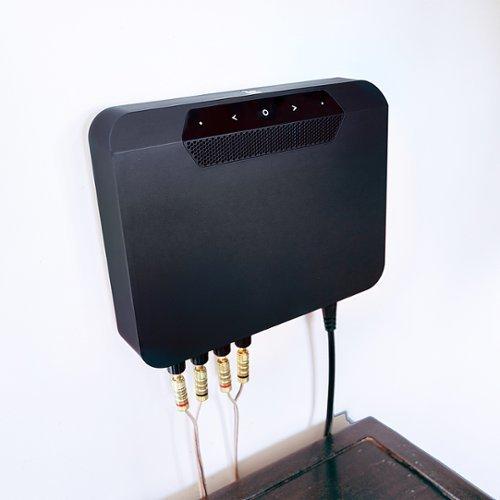
The PowerNode Edge works better as part of a larger multi-room system. Its compact size and wall-mounting capability make it ideal for secondary zones like bedrooms or kitchens, while its AirPlay 2 support simplifies integration with other wireless speakers throughout the home.
At the time of writing, both amplifiers occupy similar price ranges in the mid-tier streaming amplifier market, but they offer different value propositions. The WiiM Amp Ultra delivers remarkable feature density, essentially combining a high-quality amplifier, DAC, streamer, and room correction processor into one package. For users wanting maximum functionality per dollar, it represents exceptional value.
The PowerNode Edge costs slightly more but justifies this through sophisticated amplification technology and mature ecosystem integration. Users investing in BluOS multi-room systems or prioritizing compact installation flexibility will find the premium worthwhile.
Both manufacturers have established reputations for regular firmware updates, addressing bugs and occasionally adding new features. This ongoing support extends the useful life of your investment and provides confidence in long-term satisfaction.
Choose the WiiM Amp Ultra if you need more than 40 watts per channel for your speakers or room size. Its comprehensive feature set, including the touchscreen interface, room correction, and extensive connectivity options, makes it ideal for users who want everything in one box. It's particularly well-suited as a primary system component where you'll interact with it frequently.
The PowerNode Edge makes more sense if 40 watts meets your power needs and you value aesthetic discretion or multi-room integration. Its compact size and wall-mounting capability suit installations where the amplifier should remain invisible. Apple ecosystem users will appreciate the AirPlay 2 support that the WiiM Amp Ultra lacks.
For home theater integration, the WiiM Amp Ultra's higher power output and room correction capabilities provide better TV audio enhancement. However, if you're building a whole-home audio system with multiple zones, the PowerNode Edge's BluOS ecosystem offers more mature multi-room capabilities.
Consider your long-term audio plans. If this amplifier will serve as your primary system hub, handling everything from casual streaming to serious listening sessions, the WiiM Amp Ultra's power and features justify the investment. If you're creating a secondary zone or prefer minimal interaction with your audio equipment, the PowerNode Edge's refined approach and ecosystem integration provide better long-term satisfaction.
Both represent excellent examples of how streaming amplifiers have evolved to meet modern listening needs. Your choice ultimately depends on whether you prioritize maximum functionality and power or refined technology and seamless integration.
| WiiM Amp Ultra | Bluesound PowerNode Edge |
|---|---|
| Power Output - Critical for driving speakers and room size | |
| 100W @ 8Ω, 200W @ 4Ω (drives demanding speakers) | 40W @ 8Ω (suitable for efficient speakers, smaller rooms) |
| Amplifier Technology - Affects sound quality and control | |
| Class D with Post-Filter Feedback (PFFB) for load compensation | DirectDigital™ maintains signal integrity to speakers |
| Digital-to-Analog Converter - Determines audio fidelity | |
| ESS ES9039Q2M SABRE 32-bit/384kHz with 6x TI op-amps | Integrated DAC within DirectDigital system |
| Audio Specifications - Lower distortion means cleaner sound | |
| THD+N ≤0.005%, SNR ≥120dB (audiophile-grade performance) | THD+N 0.008%, SNR -91dBA (very good performance) |
| User Interface - How you control the amplifier daily | |
| 3.5" color touchscreen with album art, EQ, VU meters | Capacitive touch controls, app-dependent operation |
| Wireless Connectivity - Affects streaming reliability and quality | |
| Wi-Fi 6E, Bluetooth 5.3 with LE Audio (latest standards) | Dual-band Wi-Fi, Bluetooth 5.0 aptX HD |
| Apple Integration - Important for iPhone/iPad users | |
| No AirPlay 2 support (uses Google Cast instead) | Full AirPlay 2 support for seamless Apple integration |
| Room Correction - Compensates for acoustic problems | |
| Built-in room EQ with smartphone measurement | No room correction features |
| Equalization Options - Fine-tune sound to preference | |
| 10-band parametric EQ, independent per input | Basic bass management only |
| Physical Inputs - Flexibility for various sources | |
| RCA analog, optical, HDMI ARC, USB-A | Combo 3.5mm analog/optical, HDMI eARC |
| Multi-Room Audio - Whole-home system capability | |
| WiiM ecosystem with basic multi-room | BluOS platform with mature multi-room features |
| Form Factor - Installation flexibility | |
| Standard desktop unit (7.9" x 2.9" x 7.9") | Ultra-compact wall-mountable (8.6" x 1.75" x 7.6") |
| Home Theater Features - TV audio enhancement | |
| HDMI ARC with Dolby Digital decoding | HDMI eARC, basic TV audio support |
| Voice Control - Hands-free operation | |
| Alexa, Google Assistant, WiiM Voice Remote 2 | Alexa, Google Assistant, Siri via BluVoice |
The WiiM Amp Ultra delivers significantly more power at 100 watts per channel into 8-ohm speakers (200 watts into 4-ohm speakers), while the Bluesound PowerNode Edge provides 40 watts per channel into 8-ohm speakers. This makes the WiiM Amp Ultra better suited for larger rooms, demanding speakers, or higher volume levels.
The Bluesound PowerNode Edge offers full AirPlay 2 support for seamless streaming from iPhones and iPads. The WiiM Amp Ultra does not support AirPlay but works with Apple devices through Google Cast and third-party streaming apps like Spotify Connect and TIDAL Connect.
The WiiM Amp Ultra is superior for home theater use due to its higher power output, HDMI ARC with Dolby Digital decoding, room correction features, and dedicated subwoofer management. The PowerNode Edge offers basic TV connectivity through HDMI eARC but lacks advanced home theater features.
Only the WiiM Amp Ultra includes built-in room correction that uses your smartphone's microphone to analyze acoustics and automatically adjust the sound. The Bluesound PowerNode Edge does not offer room correction features, focusing instead on pure audio reproduction.
Both offer excellent streaming capabilities, but with different strengths. The WiiM Amp Ultra supports Wi-Fi 6E and works with most major streaming services through various protocols. The PowerNode Edge uses the mature BluOS platform, which excels at multi-room audio and offers superior Apple ecosystem integration through AirPlay 2.
The WiiM Amp Ultra features a 3.5-inch color touchscreen that allows direct control of playback, input selection, EQ settings, and volume without needing your phone. The Bluesound PowerNode Edge has basic capacitive touch controls but relies primarily on the BluOS Controller app for full functionality.
The Bluesound PowerNode Edge is more compact and wall-mountable, measuring just 1.75 inches high, making it ideal for discrete installations behind TVs or in tight spaces. The WiiM Amp Ultra is a standard desktop unit that's larger but includes the touchscreen display.
Yes, both include dedicated subwoofer outputs. The WiiM Amp Ultra offers advanced subwoofer integration with bass management, crossover controls, and delay compensation for optimal 2.1 system performance. The PowerNode Edge provides basic subwoofer connectivity with simple bass management.
Sound quality depends on your preferences and speakers. The WiiM Amp Ultra offers higher power and better control over demanding speakers, while the Bluesound PowerNode Edge uses DirectDigital technology for exceptionally clean, coherent sound. Both receive excellent reviews for audio quality within their respective power capabilities.
Both support multi-room audio but through different ecosystems. The Bluesound PowerNode Edge uses the mature BluOS platform with extensive multi-room capabilities and device compatibility. The WiiM Amp Ultra works with other WiiM devices for basic multi-room functionality.
The WiiM Amp Ultra provides exceptional value with its high power output, touchscreen interface, room correction, and comprehensive connectivity features. The PowerNode Edge offers value through sophisticated DirectDigital amplification technology and premium multi-room ecosystem integration, justifying its positioning as a more specialized product.
The key difference is philosophy: the WiiM Amp Ultra prioritizes maximum features and power in one device, while the Bluesound PowerNode Edge focuses on refined audio technology and seamless system integration. Choose the WiiM Amp Ultra for comprehensive functionality, or the PowerNode Edge for sophisticated engineering and multi-room excellence.
We've done our best to create useful and informative comparisons to help you decide what product to buy. Our research uses advanced automated methods to create this comparison and perfection is not possible - please contact us for corrections or questions. These are the sites we've researched in the creation of this article: ecoustics.com - audacityaustralia.com.au - forum.wiimhome.com - erinsaudiocorner.com - forum.wiimhome.com - stevehuffphoto.com - darko.audio - bryanruby.com - youtube.com - audiosciencereview.com - ecoustics.com - smarthomesounds.co.uk - socpub.com - audio-2g.com - hifihut.ie - futureaudiophile.com - alpha-audio.net - theaudiofactory.com - audiophilia.com - youtube.com - qaudio.com - crutchfield.com - youtube.com - bluesound.com - audioadvisor.com - crutchfield.com - bluesound.com - audiosciencereview.com - bluesound.com - soundstagesimplifi.com - mysoundconcepts.com

Privacy Policy
Terms and Conditions - Affiliate Policy
Home Security
© Copyright 2008-2026.
11816 Inwood Rd #1211, Dallas, TX 75244