

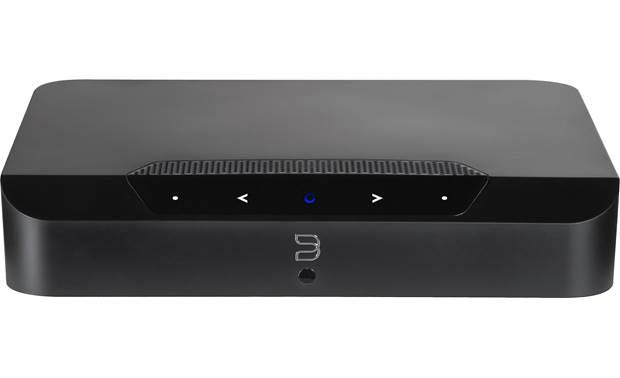
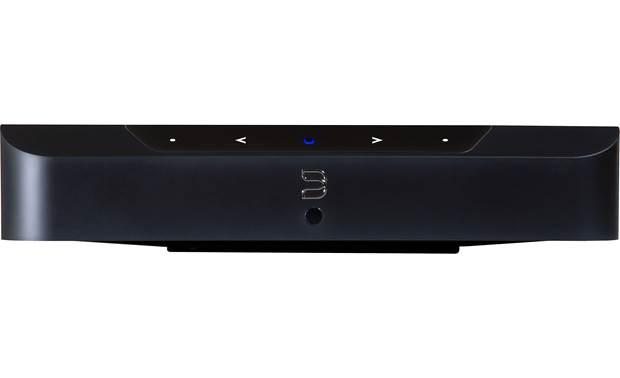
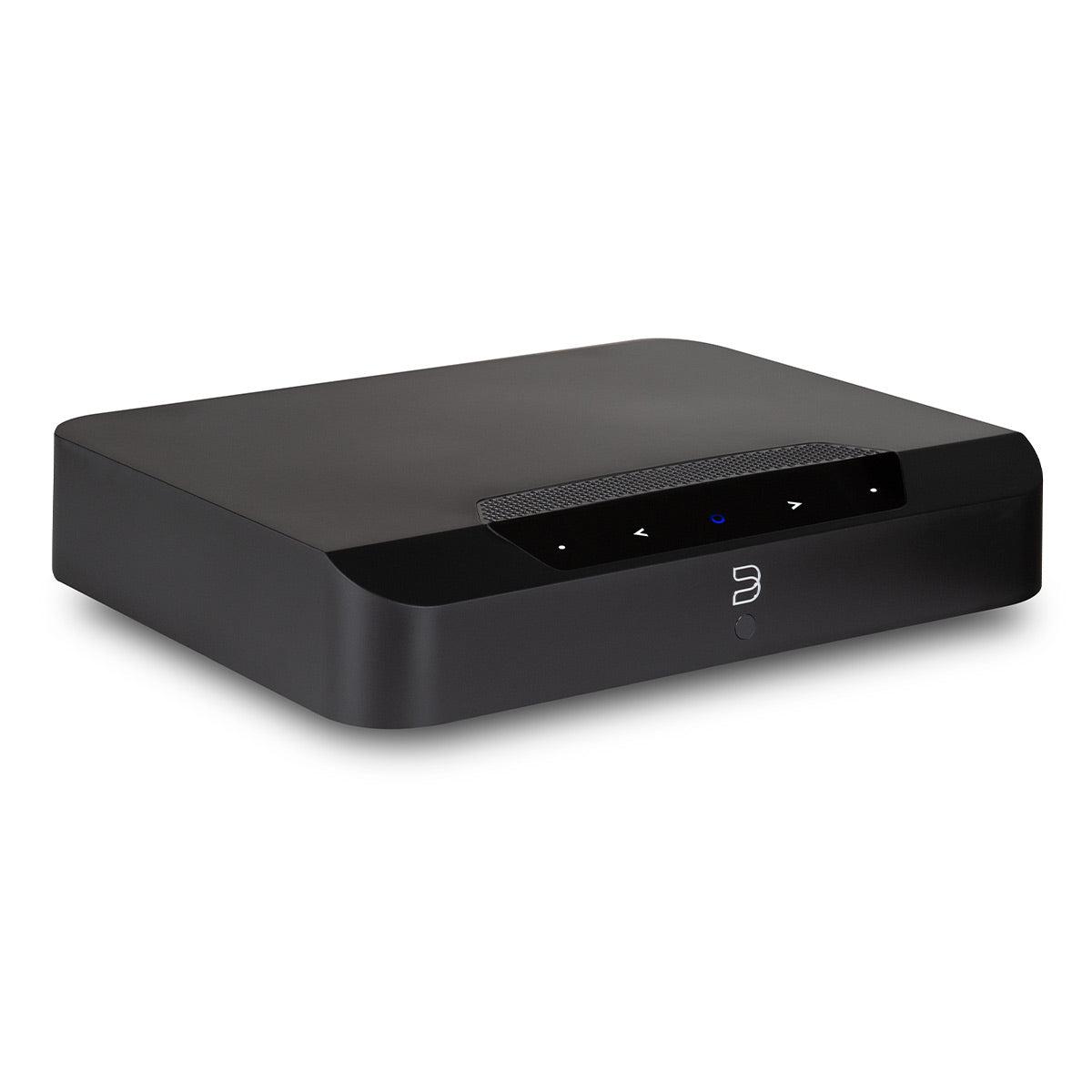
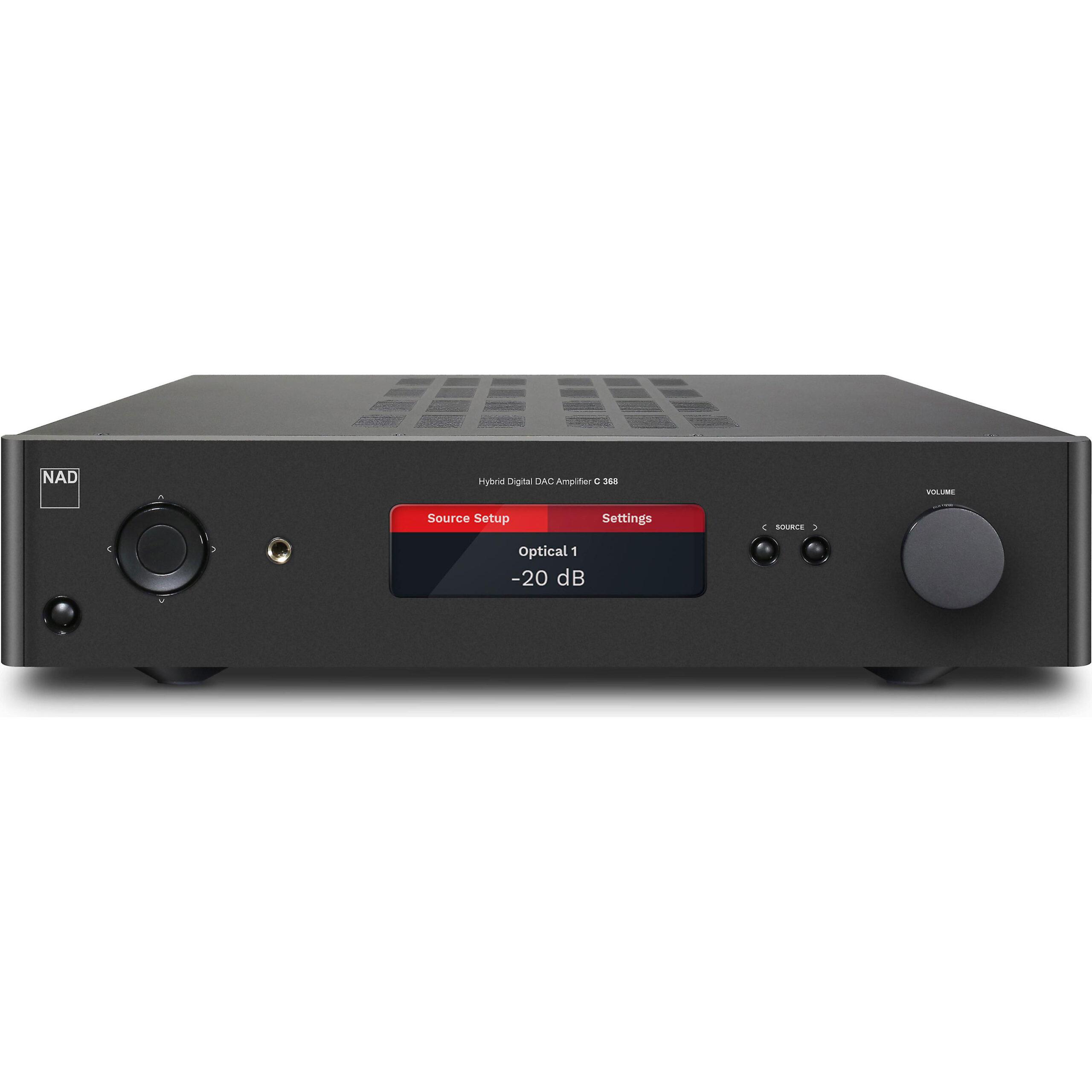
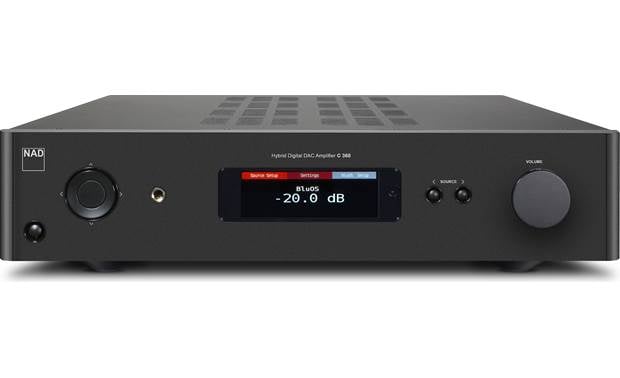
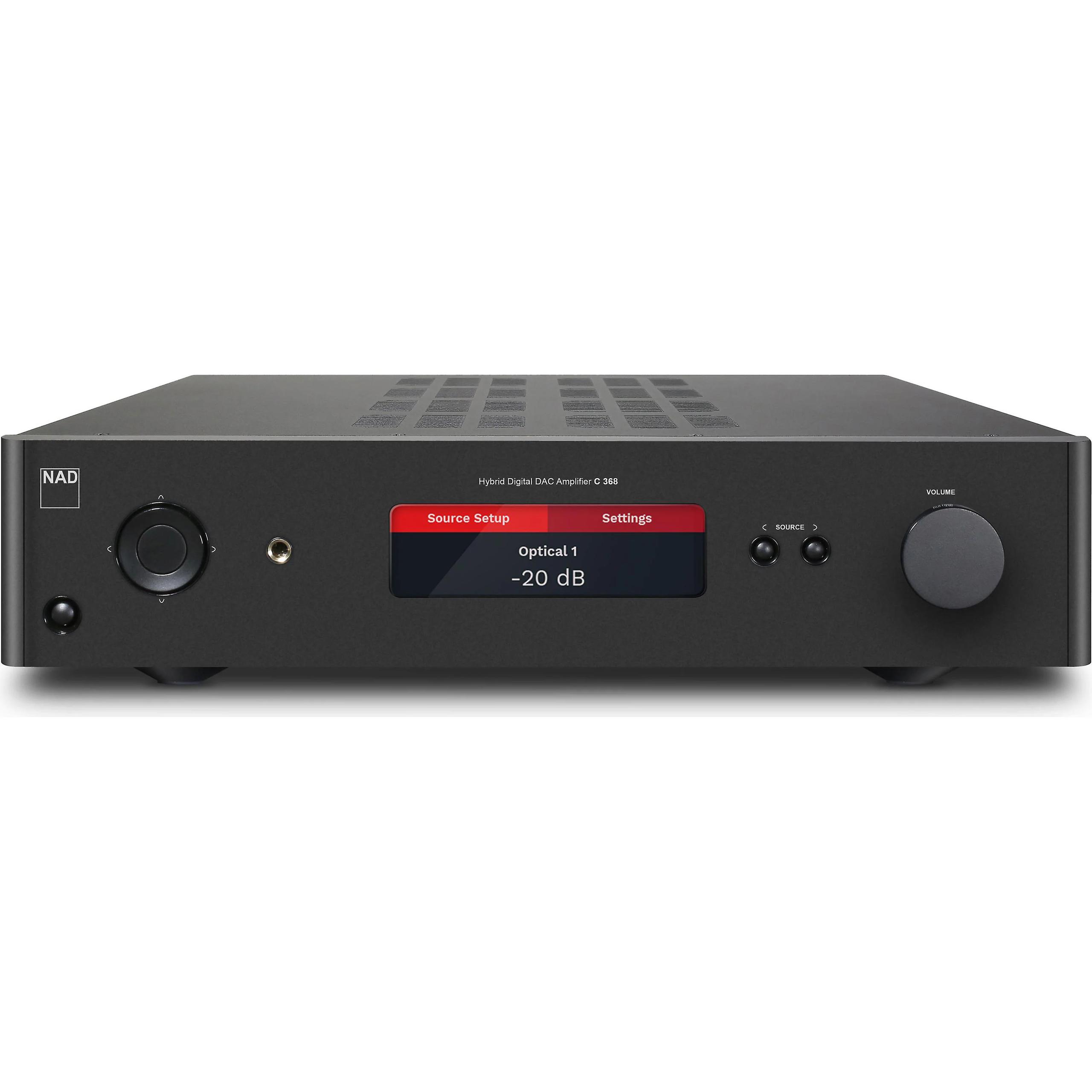
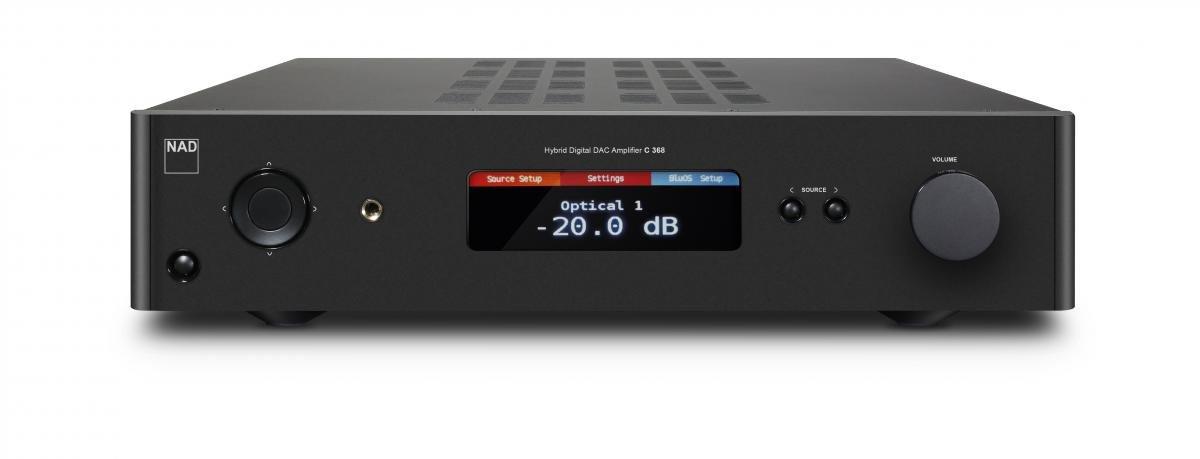
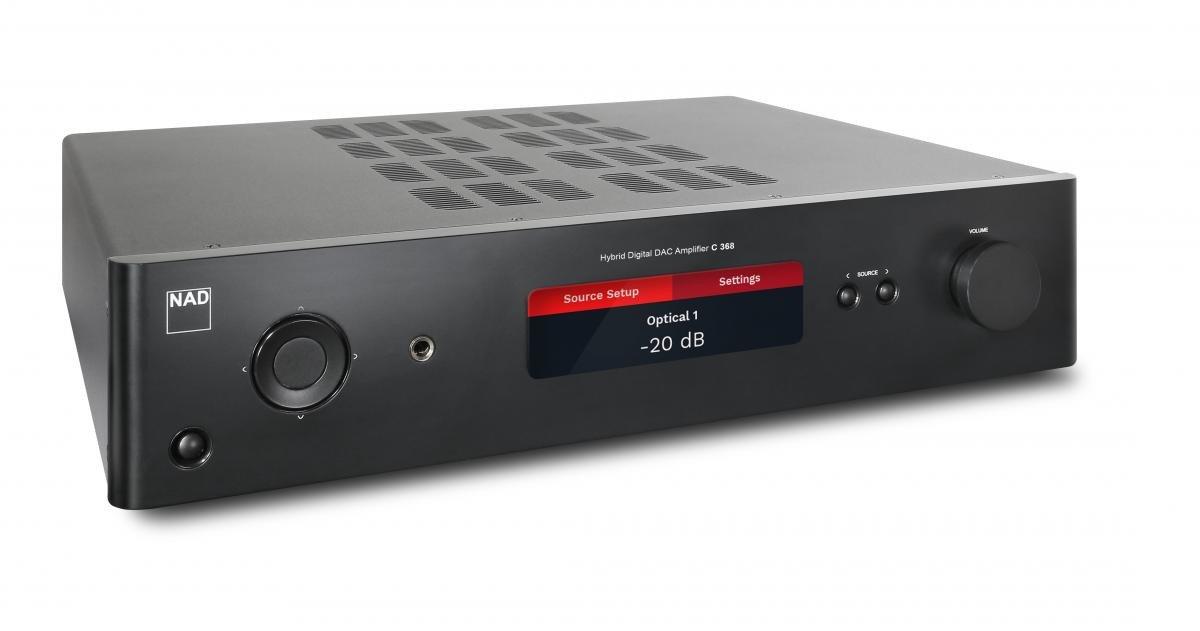
When shopping for an integrated amplifier in 2024, you're essentially choosing between two different philosophies of how modern audio should work. The Bluesound PowerNode Edge, released in 2022, represents the streaming-first approach that prioritizes wireless connectivity and compact design. The NAD C 368, which has been evolving since its original 2016 release, takes the traditional hi-fi route with serious power and modular expandability.
Both are integrated amplifiers—devices that combine a preamplifier (which controls volume and switches sources) with a power amplifier (which actually drives your speakers) in one box. But that's where the similarities end.
The fundamental difference between these products reflects how we consume music today versus how audiophiles have traditionally built systems. The PowerNode Edge assumes you're streaming Spotify, Apple Music, or Tidal from your phone and want everything to "just work" wirelessly. The NAD C 368 assumes you might have a turntable, CD player, and various digital sources, and you want the flexibility to build a serious hi-fi system piece by piece.
At the time of writing, the PowerNode Edge costs significantly less than the NAD C 368, but that price gap narrows considerably once you add the streaming modules the NAD needs to match the Bluesound's wireless capabilities. The real question isn't just about upfront cost—it's about which approach better fits your listening habits and room.
Since 2022, streaming amplifiers like the PowerNode Edge have become much more sophisticated, with better DACs (digital-to-analog converters—the chips that turn digital music files into analog signals your speakers can play) and more processing power. Meanwhile, traditional integrated amps like the C 368 have had to adapt by adding optional streaming modules and better digital inputs to stay relevant.
Here's where these amplifiers diverge most dramatically. The PowerNode Edge delivers 40 watts per channel into 8 ohms using what Bluesound calls DirectDigital amplification. This keeps your music in the digital domain right up until it hits your speakers, which theoretically reduces distortion and maintains signal purity. In practice, 40 watts is enough for most bookshelf speakers in small to medium rooms, especially if your speakers are reasonably efficient (meaning they don't need tons of power to get loud).
The NAD C 368 pumps out 80 watts per channel continuously, with dynamic power ratings reaching 200 watts into 4-ohm speakers. More importantly, it uses a customized Hypex UcD Class D output stage that's been specifically tuned by NAD's engineers. This isn't just about having more watts—it's about having clean, controlled power that can handle demanding speakers and complex musical passages without strain.
Based on our research into user experiences, the power difference is immediately audible with challenging speakers. One C 368 owner mentioned driving Magnepan 1.7 planar magnetic speakers—notoriously power-hungry speakers that many smaller amplifiers struggle with—and described the sound as effortless even at high volumes. Meanwhile, PowerNode Edge users report excellent results with efficient bookshelf speakers but note that the amp can sound compressed when pushed hard with demanding loads.
The practical impact? If you're using typical bookshelf speakers in a living room or bedroom, the PowerNode Edge will likely sound great. But if you have floor-standing speakers, low-sensitivity speakers, or a large room, the extra muscle of the C 368 becomes essential.
Sound quality is where these different approaches really reveal themselves. The PowerNode Edge prioritizes a clean, neutral presentation that works well with streaming sources. Our analysis of user feedback suggests it delivers a relaxed sound signature with controlled bass and clear highs, though some listeners note it can sound slightly soft compared to more powerful amplifiers.
The C 368 consistently earns praise for its exceptional clarity and dynamic range. Users frequently mention how it seems to reveal details in familiar recordings they hadn't noticed before. This likely comes down to the combination of its higher-quality DAC implementation, more robust power supply, and NAD's decades of amplifier engineering experience.
The difference in Total Harmonic Distortion (THD)—essentially how much the amplifier changes your music signal—is telling. The PowerNode Edge achieves an impressive 0.008% THD, while the C 368 manages 0.03%. Lower is generally better, but these measurements don't tell the whole story. The NAD's slightly higher distortion figure might actually contribute to what many users describe as a more "musical" sound, though this gets into subjective territory.
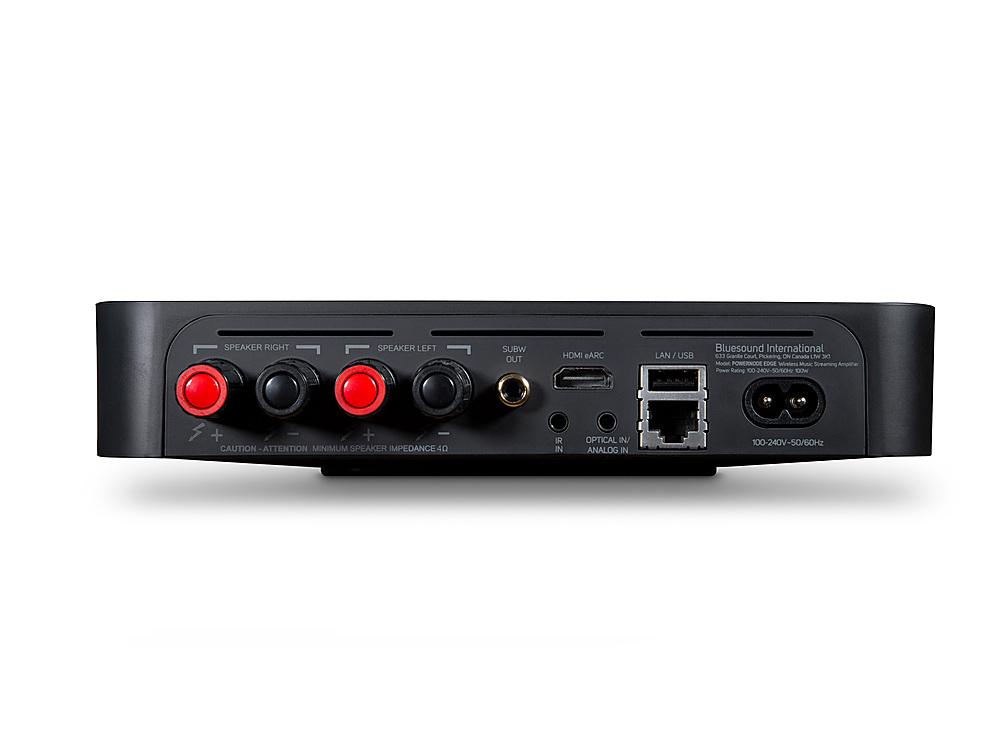
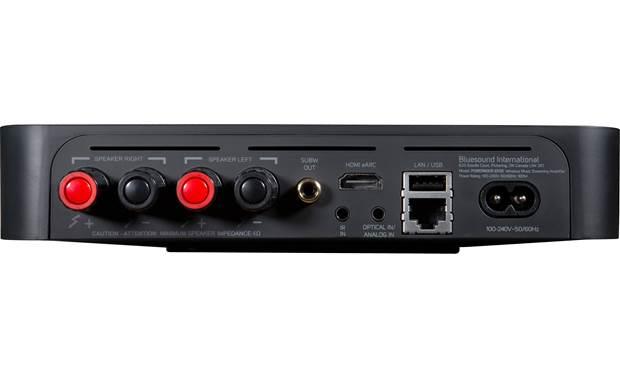
For home theater use, the PowerNode Edge has a significant advantage with its HDMI eARC (enhanced Audio Return Channel) input. This lets you connect it directly to your TV and automatically handle audio from streaming apps, gaming consoles, or cable boxes. It even decodes Dolby Digital surround sound into stereo, which is genuinely useful for late-night viewing when you don't want full surround sound but need better audio than your TV speakers provide.
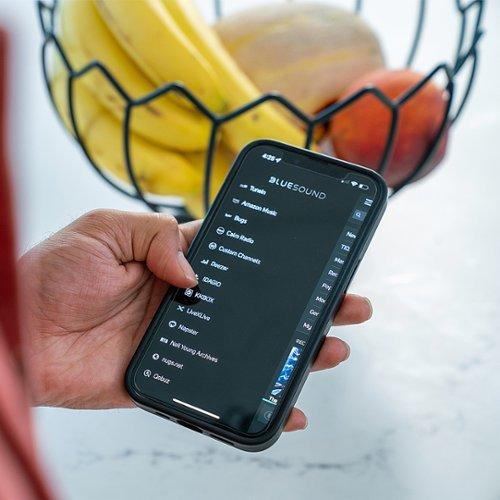
This is where the philosophical differences become stark. The PowerNode Edge includes everything you need for modern streaming right out of the box. Its quad-core ARM processor handles the complex task of receiving wireless audio streams, processing them, and converting them to analog signals for your speakers. It natively supports Apple AirPlay 2, Spotify Connect, Tidal Connect, and integrates with over 20 streaming services through the BluOS platform.
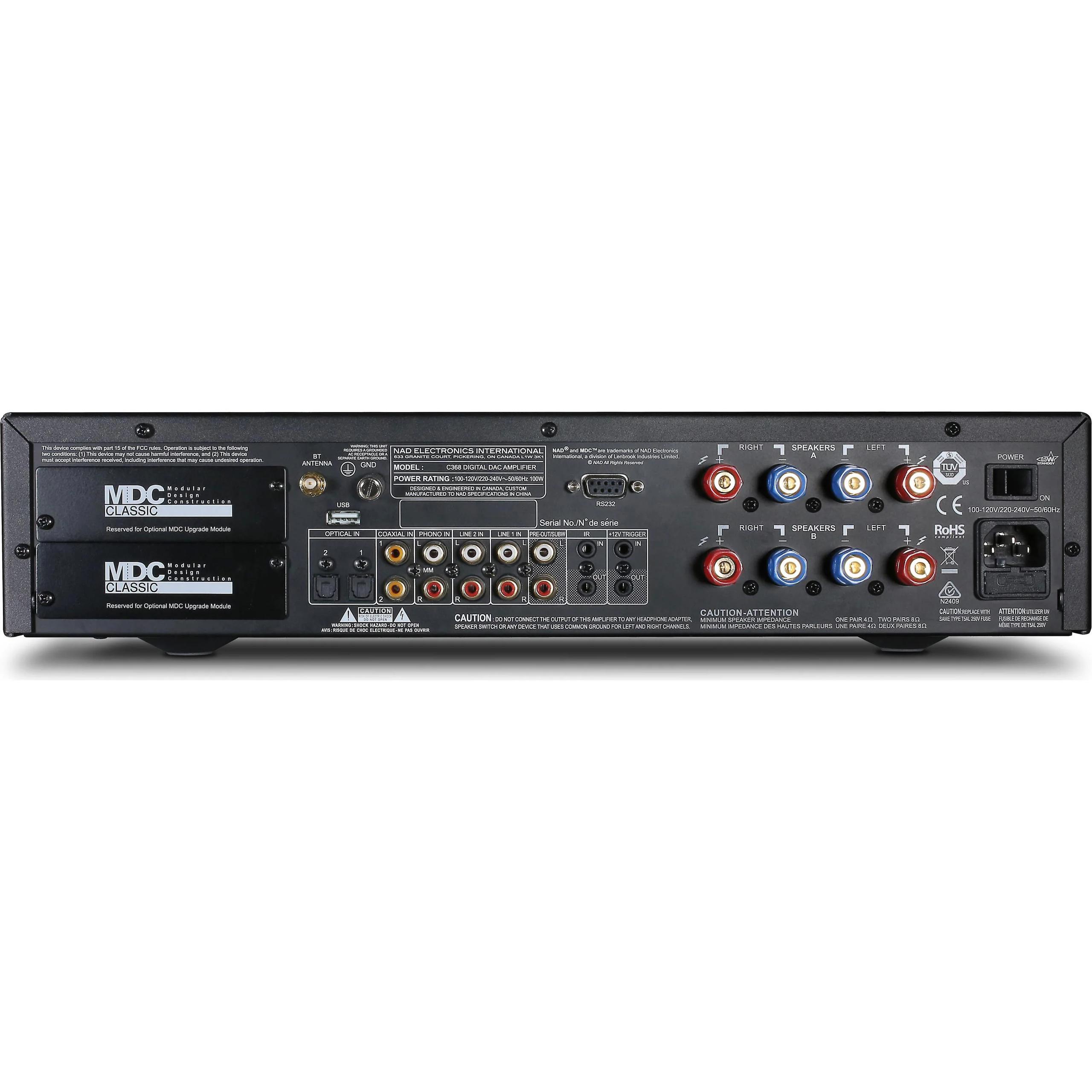
The C 368 takes a more traditional approach with its built-in DAC using a high-end Texas Instruments PCM1795 chip paired with a BurrBrown buffer—components that many dedicated DAC manufacturers use in products costing hundreds of dollars alone. But for streaming, you'll need to add the optional BluOS module, which significantly increases the total system cost.
However, that modular approach has advantages. The C 368's MDC (Modular Design Construction) system means you can add capabilities as your needs change. Want streaming later? Add the BluOS module. Need HDMI inputs? There's a module for that too. This flexibility appeals to serious audio enthusiasts who prefer building systems gradually rather than replacing entire components.
The streaming quality difference is subtle but real. While both products handle high-resolution audio up to 24-bit/192kHz, the C 368's more sophisticated DAC implementation and sample rate converter provide slightly better digital performance. For most listeners streaming compressed music from Spotify or Apple Music, this won't matter much. But if you're streaming hi-res files from Qobuz or Tidal Masters, the difference becomes more apparent.
The PowerNode Edge focuses on modern connections: HDMI eARC for TV integration, a combination analog/digital input, subwoofer output with built-in crossover settings, and wireless connectivity for everything else. This works perfectly if your music comes from streaming services and your TV, but it's limiting if you have multiple physical sources.
The C 368 offers the connectivity you'd expect from a serious integrated amplifier: multiple analog inputs including a proper moving magnet phono stage for turntables, several digital inputs, preamp outputs for adding external power amplifiers, and even RS-232 and IR connections for custom home theater installations. This flexibility makes it suitable for complex systems that might grow over time.
The phono stage in the C 368 deserves special mention. It's not just a basic phono input—it's a properly implemented RIAA-equalized circuit that can handle moving magnet cartridges without the noise and frequency response issues common in budget phono stages. If you're into vinyl, this alone might justify the price difference.
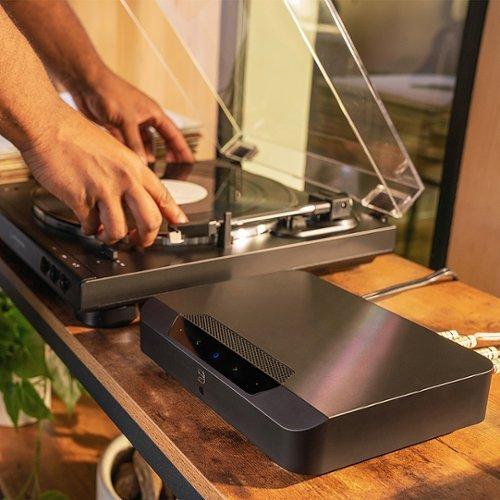
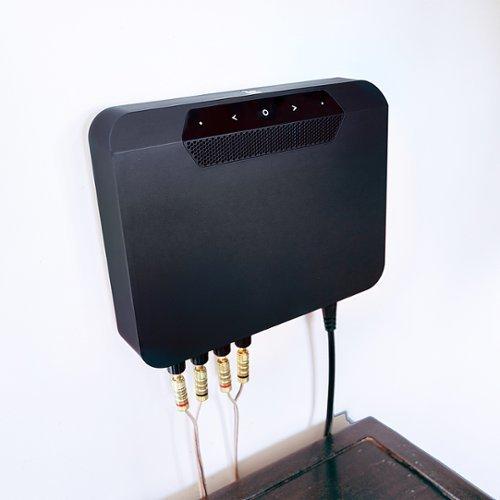
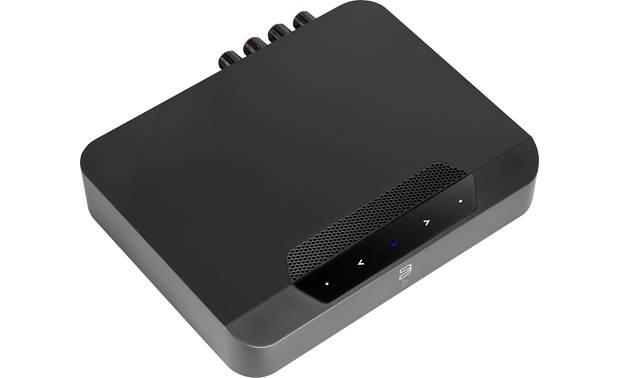
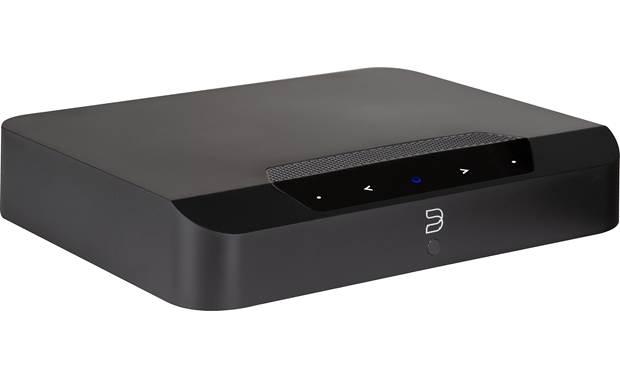
The PowerNode Edge is genuinely tiny at roughly 8.6 by 1.8 by 7.6 inches. It includes a wall-mounting bracket and can disappear behind your TV or bookshelf. The capacitive touch controls on top provide basic playback functions, and the overall design feels very much like a modern tech product rather than traditional audio equipment.
The C 368 looks and feels like what it is: a serious piece of audio equipment. At 17 inches wide and nearly 19 pounds, it needs proper shelf space and looks at home in a traditional component stack. The build quality is noticeably more substantial, with thick metal chassis construction and gold-plated connections throughout.
For apartments, dorm rooms, or situations where space is tight, the PowerNode Edge makes obvious sense. But if you have the room and want something that feels like a significant investment, the C 368 has the physical presence that matches its performance capabilities.
The PowerNode Edge excels in several specific scenarios. If you're primarily a streaming listener who wants to occasionally connect a TV or other simple source, it provides everything you need in a remarkably compact package. The HDMI eARC connection makes it particularly appealing for bedroom or secondary room setups where you want better sound from your TV without the complexity of a full home theater system.
It's also excellent for renters or people who move frequently. The wall-mounting capability and simple setup mean you can have great sound without permanent installation or a rack full of components. The built-in subwoofer output with automatic crossover settings makes it easy to add a powered subwoofer for a simple 2.1 system that will satisfy most listeners.
The C 368 makes more sense when audio quality is your primary concern or when you're building a system that might grow over time. If you already own a turntable, CD player, or other sources, the multiple inputs and high-quality phono stage provide immediate value. The modular design means you can start with just the amplifier and add streaming or other capabilities later.
For home theater applications, the choice depends on your setup complexity. The PowerNode Edge with its HDMI eARC works brilliantly for simple TV audio improvement, while the C 368 is better suited for integration into more complex systems with multiple sources and zones.
At the time of writing, the PowerNode Edge represents exceptional value for streaming-focused listeners. You get amplification, high-quality DAC, streaming services, and modern connectivity in one compact, affordable package. It's the kind of product that would have cost significantly more just a few years ago, and the technology improvements since 2022 have made it remarkably capable.
The C 368 costs more upfront and requires additional investment for full streaming parity, but it provides noticeably better sound quality and much more flexibility. If you're serious about music reproduction and might want to expand your system over time, the modular approach and superior audio performance justify the higher cost.
The deciding factor often comes down to your speakers and room. If you have efficient bookshelf speakers in a small to medium room, the PowerNode Edge will likely provide all the performance you need while adding modern convenience features. But if you have demanding floor-standing speakers or a large space, the C 368's extra power and superior implementation become necessary rather than just nice to have.
Consider the PowerNode Edge if convenience, space efficiency, and streaming integration are your priorities, and you're confident that 40 watts will drive your speakers adequately. Choose the C 368 if sound quality is paramount, you need more power, or you want the flexibility to build a more complex system over time. Both products excel in their intended roles—the key is matching the right tool to your specific needs and listening habits.
| Bluesound PowerNode Edge | NAD C 368 |
|---|---|
| Power Output - Critical for driving speakers and room-filling volume | |
| 40 watts per channel (suitable for bookshelf speakers and small-medium rooms) | 80 watts continuous, up to 200W dynamic (handles demanding speakers and large rooms) |
| Form Factor - Impacts placement flexibility and system aesthetics | |
| Ultra-compact 8.6" × 1.8" × 7.6", wall-mountable with included bracket | Traditional component size 17" × 4" × 16.6", requires shelf or rack space |
| Streaming Integration - Determines ease of accessing modern music sources | |
| Built-in BluOS platform with 20+ services, AirPlay 2, aptX HD Bluetooth | Basic Bluetooth included, requires optional BluOS MDC module for full streaming |
| Digital-to-Analog Converter - Affects sound quality from digital sources | |
| 24-bit/192kHz premium DAC with MQA support, integrated processing | High-end TI PCM1795 32-bit DAC with BurrBrown buffer, widely praised by reviewers |
| Analog Inputs - Important for turntables and legacy sources | |
| Limited analog connectivity, combo 3.5mm input only | Multiple RCA inputs plus dedicated moving magnet phono stage for turntables |
| TV Integration - Simplifies home theater setup | |
| HDMI eARC with Dolby Digital decoding (seamless TV audio improvement) | No HDMI connectivity without optional modules |
| Expandability - Future-proofing and system growth potential | |
| Fixed feature set, limited expansion options | Two MDC module slots for adding streaming, HDMI, or other capabilities |
| Subwoofer Integration - Enhances bass performance in 2.1 systems | |
| Dedicated sub output with built-in bass management and crossover | Configurable preamp/sub output, more flexible but requires manual setup |
| Build Quality and Durability - Long-term reliability and premium feel | |
| Solid plastic construction, modern tech product aesthetic | Substantial metal chassis construction, traditional hi-fi build quality |
| Total System Cost - Real-world investment including necessary accessories | |
| All features included, no additional modules required | Base price plus potential module costs for streaming parity with PowerNode Edge |
The Bluesound PowerNode Edge is ideal for small spaces due to its ultra-compact design and wall-mounting capability. At just 1.8 inches tall, it can disappear behind your TV or mount on a wall without taking up valuable shelf space. Its 40 watts per channel is perfectly adequate for bookshelf speakers in smaller rooms.
The Bluesound PowerNode Edge excels for TV integration with its built-in HDMI eARC connection and Dolby Digital decoding, making it perfect for upgrading TV audio. The NAD C 368 lacks HDMI connectivity in its base configuration and would require additional modules or external devices for TV connection.
The NAD C 368 delivers significantly more power with 80 watts continuous and up to 200 watts dynamic power into 4-ohm speakers. This makes it better suited for driving demanding floor-standing speakers or filling larger rooms with sound, while the PowerNode Edge is better matched to efficient bookshelf speakers.
The Bluesound PowerNode Edge includes everything needed for streaming with built-in Wi-Fi, Bluetooth aptX HD, and native support for major streaming services like Spotify and Apple Music. The NAD C 368 requires an optional BluOS streaming module to match the PowerNode Edge's wireless capabilities.
The NAD C 368 is superior for vinyl enthusiasts with its built-in moving magnet phono stage that provides proper RIAA equalization for turntables. The Bluesound PowerNode Edge lacks a dedicated phono input and would require an external phono preamp for turntable connection.
The NAD C 368 offers excellent expandability through its modular MDC system, allowing you to add streaming, HDMI, or other capabilities as modules become available. The PowerNode Edge has a fixed feature set with limited expansion options beyond basic external connections.
The NAD C 368 consistently receives praise for superior sound quality with exceptional clarity, dynamic range, and detail retrieval thanks to its higher-quality DAC implementation and more powerful amplification. The PowerNode Edge delivers clean, enjoyable sound but prioritizes convenience over ultimate audio performance.
The Bluesound PowerNode Edge works excellently as a simple TV audio upgrade with its HDMI eARC connection and compact form factor. The NAD C 368 is better suited for more complex home theater integration with multiple sources, though it requires additional modules or equipment for HDMI connectivity.
The Bluesound PowerNode Edge provides exceptional all-in-one value with streaming, amplification, and TV connectivity included. The NAD C 368 costs more initially and requires additional investment for streaming modules, but offers superior long-term value for serious audio enthusiasts prioritizing sound quality.
Both amplifiers include headphone outputs, though the NAD C 368 features a more robust headphone amplifier capable of driving demanding headphones. The PowerNode Edge also offers unique Bluetooth headphone transmission, allowing wireless headphone listening from any connected source.
The Bluesound PowerNode Edge is significantly easier to set up with its intuitive BluOS app, touch panel controls, and wireless connectivity eliminating cable runs. The NAD C 368 requires more traditional setup with multiple cable connections, though users report it's straightforward once configured.
Choose the Bluesound PowerNode Edge if you primarily stream music, want simple TV integration, and prefer a compact, easy-to-use solution. Select the NAD C 368 if you prioritize sound quality, own vinyl records or multiple sources, and want room for system expansion over time.
We've done our best to create useful and informative comparisons to help you decide what product to buy. Our research uses advanced automated methods to create this comparison and perfection is not possible - please contact us for corrections or questions. These are the sites we've researched in the creation of this article: futureaudiophile.com - alpha-audio.net - theaudiofactory.com - audiophilia.com - youtube.com - qaudio.com - crutchfield.com - youtube.com - bluesound.com - audioadvisor.com - crutchfield.com - bluesound.com - audiosciencereview.com - bluesound.com - soundstagesimplifi.com - mysoundconcepts.com - avnirvana.com - crutchfield.com - hometheaterhifi.com - hifiheaven.net - crutchfield.com - projectorscreen.com - theabsolutesound.com - dedicatedaudio.com - soundstagesimplifi.com - nadelectronics.com - musicdirect.com - crutchfield.com - safeandsoundhq.com

Privacy Policy
Terms and Conditions - Affiliate Policy
Home Security
© Copyright 2008-2026.
11816 Inwood Rd #1211, Dallas, TX 75244