

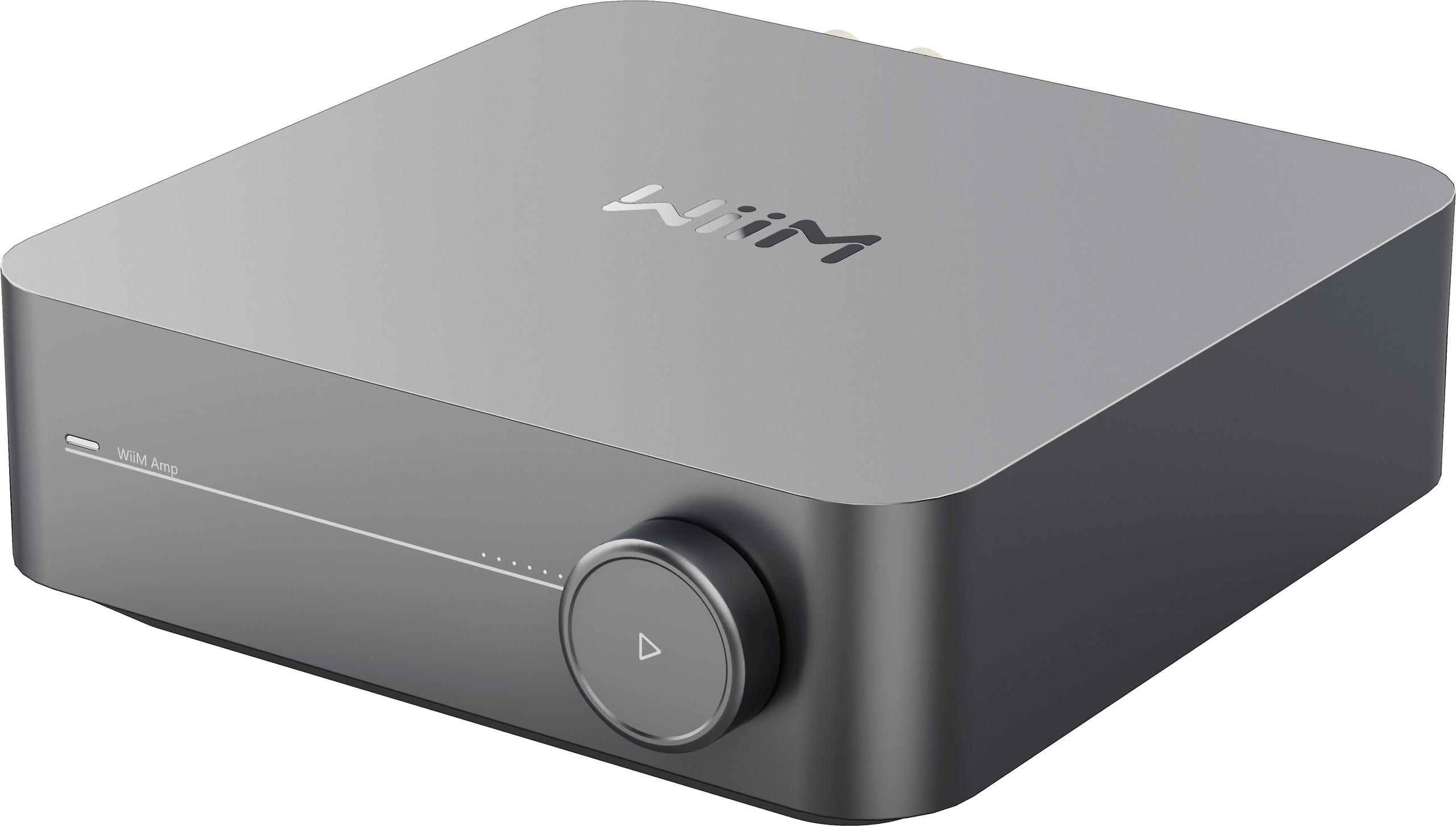
Streaming amplifiers have revolutionized home audio by combining network streaming capabilities with integrated amplification in a single box. Instead of buying separate components—a streamer to access your music services and an amplifier to power your speakers—these devices handle both jobs. This approach makes high-quality audio more accessible and eliminates the cable clutter that comes with multi-component systems.
The streaming amplifier category has exploded in popularity since around 2020, driven by the rise of high-resolution streaming services and the desire for simpler, space-efficient audio setups. Today's models offer impressive sound quality that would have required expensive separate components just a few years ago.
When shopping for a streaming amplifier, you'll want to consider several key factors: power output (how loud and clear it can drive your speakers), audio quality (how good it sounds), streaming capabilities (which services and devices it works with), connectivity options (what you can plug into it), and smart features like voice control and room correction.
Two standout products in this category take notably different approaches: the WiiM Amp focuses on delivering maximum features and power for the money, while the Bluesound PowerNode Edge emphasizes audiophile-grade engineering and premium ecosystem integration. Understanding these philosophical differences will help you choose the right one for your needs.
Power output is often the first specification people look at, but understanding what those numbers actually mean is crucial for making the right choice.
The WiiM Amp delivers 60 watts per channel into 8-ohm speakers and 120 watts per channel into 4-ohm speakers. These are impressive numbers, especially considering the price point. The Bluesound PowerNode Edge, meanwhile, provides 40 watts per channel into 8-ohm speakers. On paper, the WiiM appears significantly more powerful, but the real-world story is more nuanced.
Speaker impedance (measured in ohms) is essentially electrical resistance. Most bookshelf and floor-standing speakers are rated at either 4 or 8 ohms. Lower impedance speakers draw more current from the amplifier, which is why the WiiM Amp can deliver double the power into 4-ohm loads—it's designed to handle that increased demand.
However, raw power numbers don't tell the complete story. The PowerNode Edge uses what Bluesound calls DirectDigital™ amplification, which maintains the audio signal in digital form right up until it reaches your speakers. This approach can be more efficient and produce less distortion than traditional Class-D amplifiers, potentially making those 40 watts more effective than the specifications suggest.
Our research into professional reviews reveals that despite its lower power rating, the PowerNode Edge successfully drove demanding speakers like the B&W 805 D4 and Focal Kanta No. 2—speakers that typically require substantial power to perform their best. This suggests that Bluesound's amplifier design is particularly efficient and well-implemented.
For most listeners in small to medium-sized rooms, both amplifiers provide adequate power. The WiiM Amp's higher output becomes advantageous in larger spaces, with less efficient speakers, or if you enjoy listening at high volumes. The PowerNode Edge is better suited for quality-focused listening in smaller environments where efficiency and refinement matter more than raw power.
The digital-to-analog converter (DAC) is the heart of any streaming amplifier—it's what converts the digital music files from your streaming service into the analog signals that drive your speakers. Both products take different approaches to this critical component.
The WiiM Amp uses an ESS Sabre ES9018 K2M DAC, a well-regarded chip known for excellent measurements. The standard version achieves a 98 dB signal-to-noise ratio (SNR) and 0.0025% total harmonic distortion plus noise (THD+N). These are impressive specifications that indicate very low background noise and minimal distortion. The Pro version steps up to an even better ES9038 Q2M DAC with a 120 dB SNR and incredibly low 0.0005% THD+N.
The Bluesound PowerNode Edge takes a different approach with its DirectDigital™ technology. Rather than using a separate DAC chip and then amplifying the analog signal, it essentially combines the DAC and amplifier functions. This eliminates multiple conversion stages and the potential for noise and distortion they can introduce. While Bluesound doesn't publish detailed specifications, the design philosophy prioritizes signal purity over impressive measurement numbers.
In terms of sound character, professional reviewers consistently describe the WiiM Amp as clean and detailed with excellent channel separation—meaning instruments and voices are precisely positioned in the stereo image. The sound is described as neutral and revealing, allowing you to hear exactly what's in your recordings without adding its own coloration.
The PowerNode Edge, drawing on parent company NAD's audio heritage, tends toward a more relaxed and musical presentation. Reviewers note its rhythmic strength and good transient response (how well it handles sudden changes in volume). The sound is described as presenting music as a cohesive stage rather than individual elements, which some listeners find more engaging for long listening sessions.
Both approaches have merit. The WiiM Amp's analytical presentation is excellent for critical listening and works well with a wide variety of music genres. The PowerNode Edge's more musical approach can be less fatiguing and particularly appealing for background listening or when you want the system to simply get out of the way of the music.
Modern streaming amplifiers need to work seamlessly with today's diverse digital music ecosystem, from subscription services like Spotify and Tidal to local music libraries and voice assistants.
The WiiM Amp supports an impressive array of streaming protocols: Apple AirPlay 2 (on the standard version), Google Chromecast, Spotify Connect, TIDAL Connect, and Roon Ready functionality. This broad compatibility means it works well regardless of whether you're an iPhone user streaming from Apple Music, an Android user casting from YouTube Music, or an audiophile with a Roon music server.
The multi-room capabilities are particularly flexible. The WiiM Amp can group not only with other WiiM devices but also with Amazon Echo speakers, Google Nest devices, and Apple HomePods. This cross-platform compatibility is unusual and valuable if you already have smart speakers from different manufacturers throughout your home.
The Bluesound PowerNode Edge operates within the BluOS ecosystem, which offers its own advantages. BluOS is designed specifically for high-quality audio and provides rock-solid multi-room synchronization with other Bluesound devices. The system supports over 20 streaming services natively and integrates well with professional smart home systems.
However, BluOS is a closed ecosystem—you can only group the PowerNode Edge with other BluOS-enabled devices. This limitation is offset by the system's reliability and audio quality focus. BluOS devices are popular with custom installers and audio professionals because they work consistently and sound excellent when grouped together.
For home theater applications, both devices offer HDMI ARC connections, but the PowerNode Edge has an advantage with its Dolby Digital decoding capability. This means it can handle surround sound audio from your TV and intelligently downmix it to stereo, or even work as rear channels in a wireless surround sound setup with other Bluesound components.
The integration of smart features separates modern streaming amplifiers from traditional audio components, making them more convenient and accessible to non-audiophile users.
The WiiM Amp includes built-in Amazon Alexa voice control, allowing you to control playback, adjust volume, and even ask questions without reaching for your phone. It also works with Google Assistant and Siri through their respective platforms. The standout feature is the built-in room correction system, which uses your smartphone's microphone to analyze your room's acoustics and adjust the sound accordingly. Room correction can significantly improve sound quality by compensating for acoustic problems in your listening space.
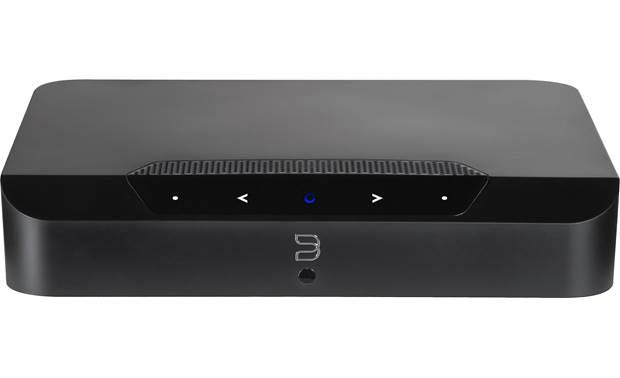
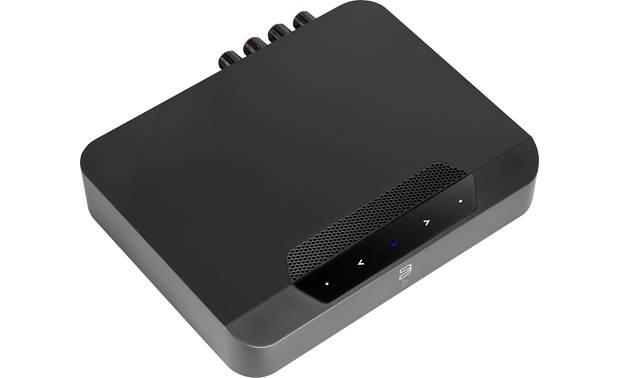
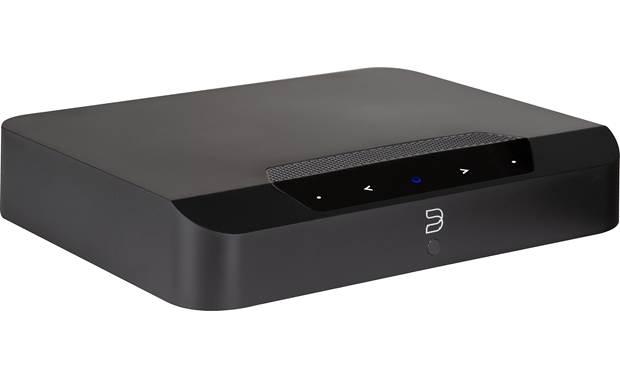
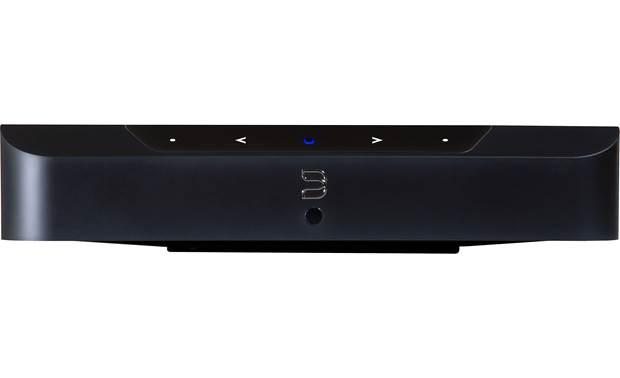
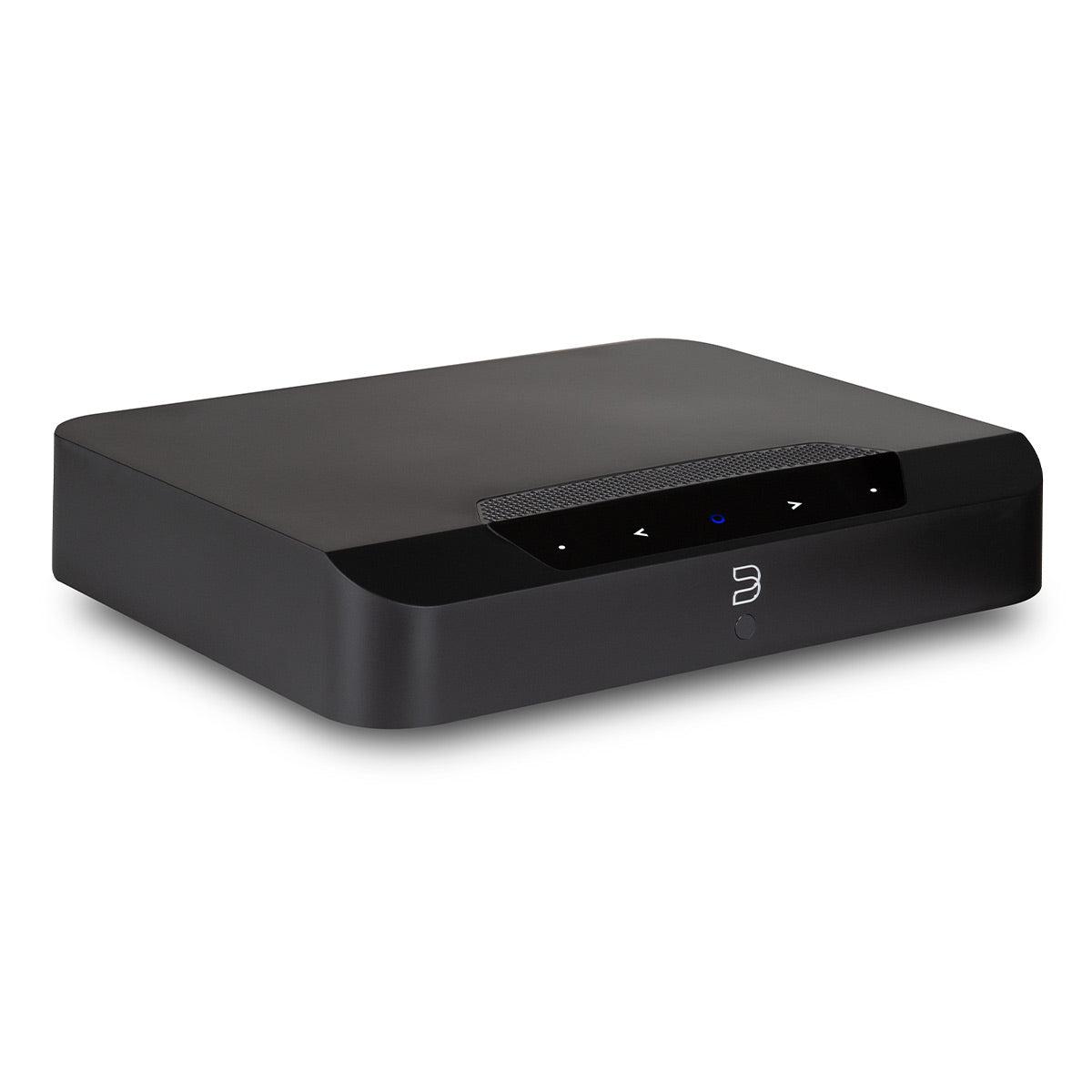
The PowerNode Edge takes a more traditional approach to smart features. While it supports voice assistants through the BluVoice system, there's no built-in microphone—you'll need to use voice commands through existing smart speakers or the mobile app. The device features elegant capacitive touch controls on its top surface for basic functions like play, pause, and volume.
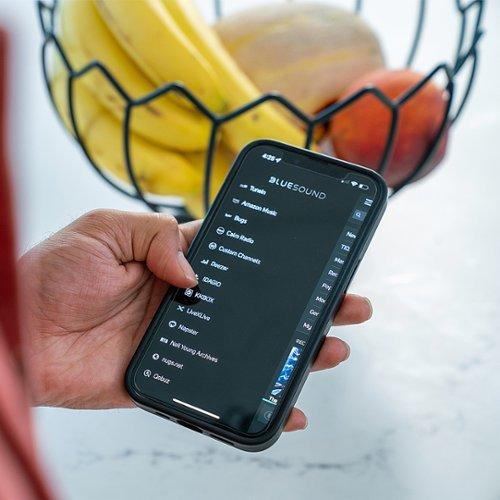
Both products offer comprehensive mobile apps for control. The WiiM Home app provides access to streaming services, EQ adjustments, and system settings with an interface that's generally praised for its simplicity. The BluOS Controller app is more focused on audio quality and multi-room functionality, with a interface that audio enthusiasts tend to appreciate for its straightforward, no-nonsense approach.
The physical connections available on your streaming amplifier determine what sources you can use and how flexibly you can integrate it into your existing system.
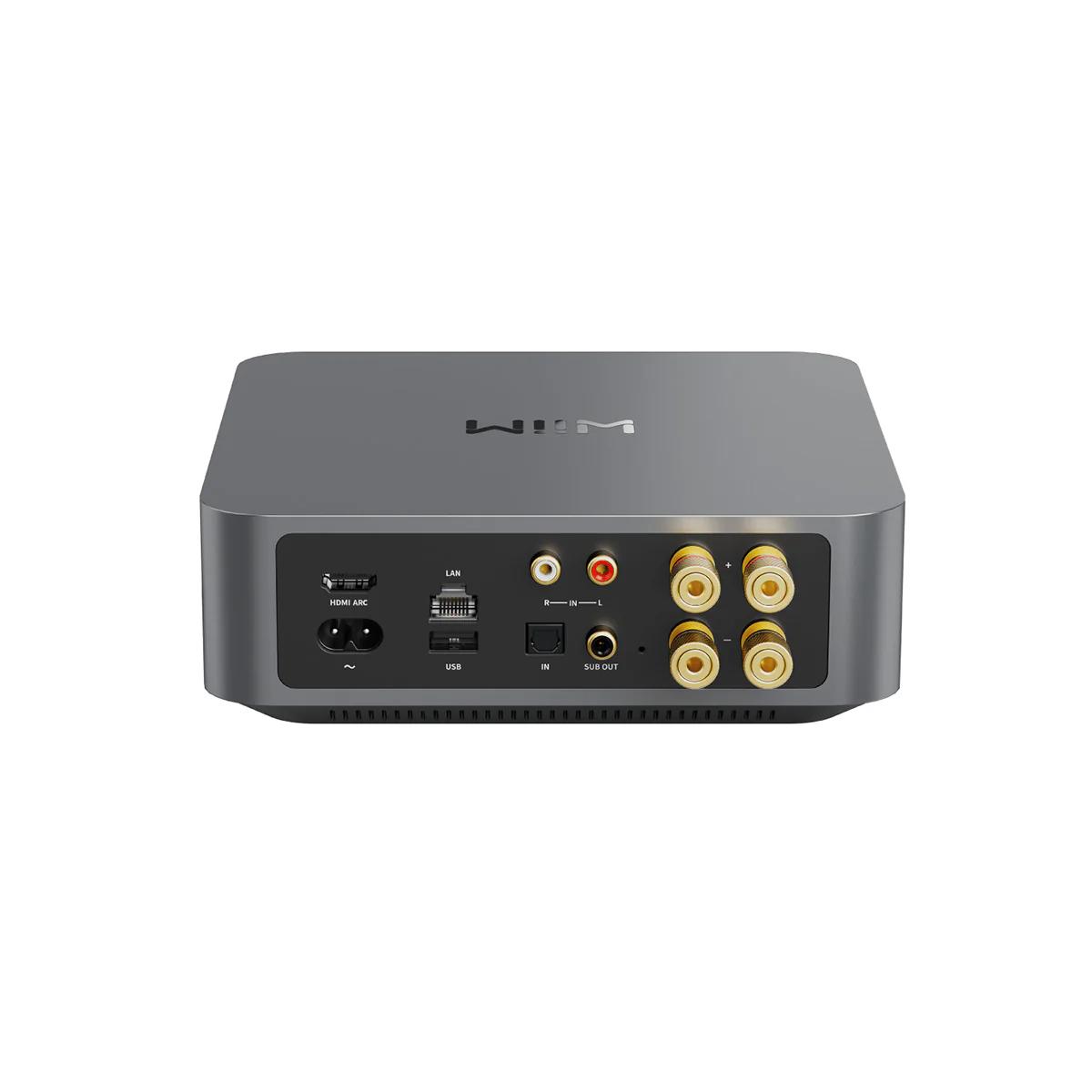
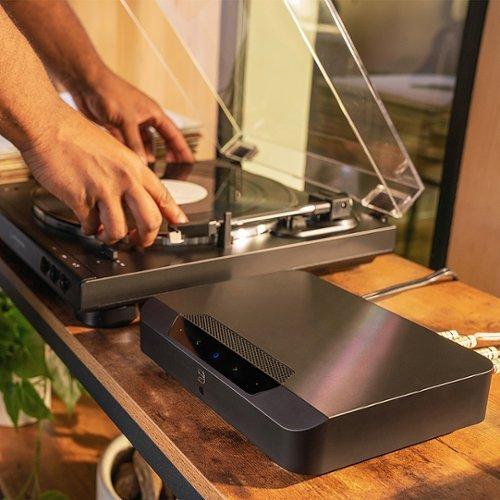
The WiiM Amp offers more comprehensive connectivity with HDMI ARC, optical digital input, analog RCA inputs, and USB connections. The analog RCA inputs are particularly valuable if you want to connect a turntable (with a separate phono preamp) or CD player. The USB connection supports both audio output to an external DAC and input from storage devices, providing flexibility for different setups.
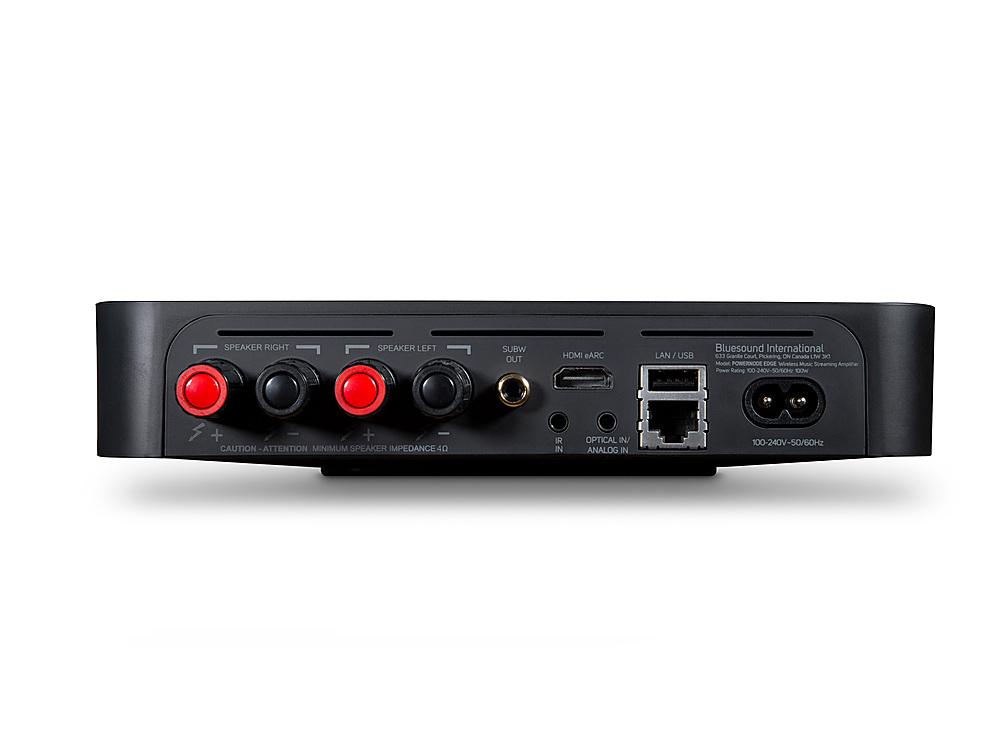
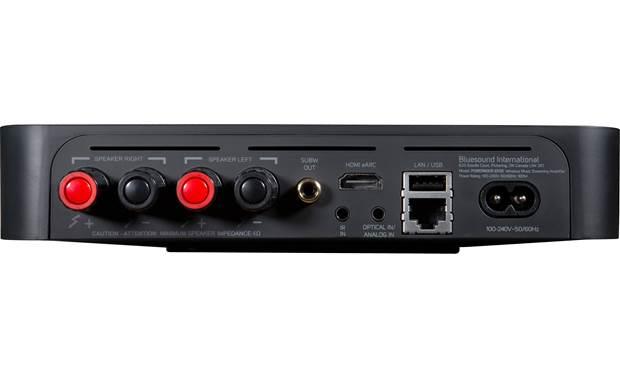
The Bluesound PowerNode Edge focuses on essential connections with HDMI eARC, a combo 3.5mm optical/analog input, and a dedicated subwoofer output. The 3.5mm input, while space-saving, may require adapters for some sources and is less convenient than standard RCA jacks. However, the inclusion of eARC (enhanced Audio Return Channel) provides better TV integration than standard ARC.
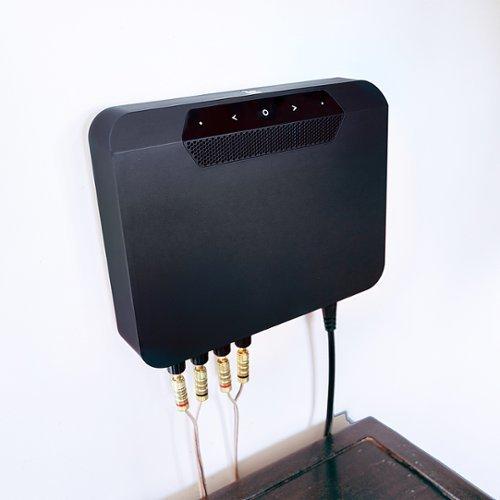
Installation flexibility is where the PowerNode Edge particularly shines. Its compact, wall-mountable design allows for discreet placement behind TVs or furniture. The included mounting bracket supports multiple orientations, making it suitable for custom installations where aesthetics matter. At roughly half the footprint of the WiiM Amp, it's ideal for situations where space is limited.
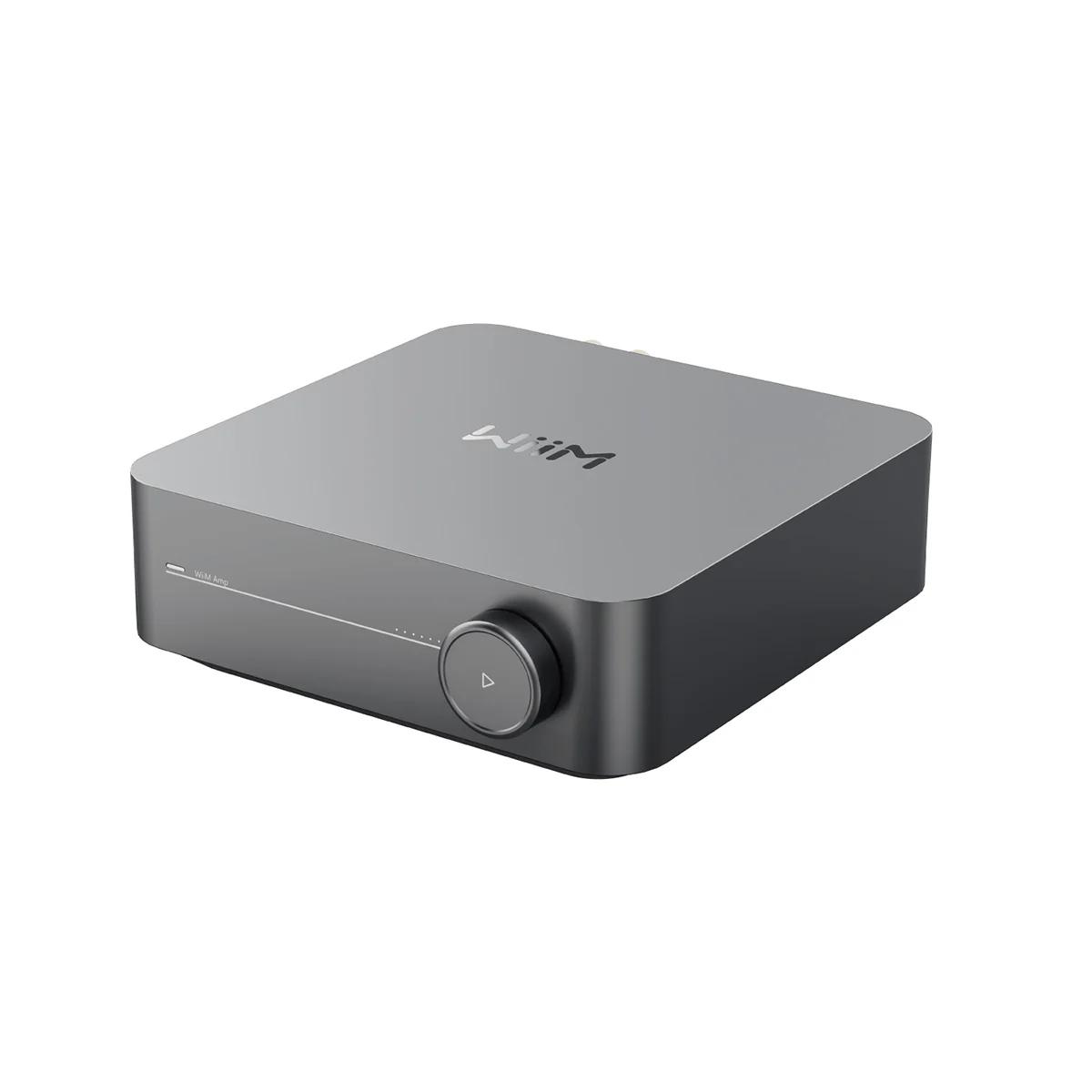
The WiiM Amp uses a more traditional aluminum chassis design that looks at home on a shelf or in an equipment rack. While larger, it offers better heat dissipation and a more premium feel that some users prefer.
At the time of writing, these products occupy different value propositions in the streaming amplifier market, with a significant price difference that reflects their different design philosophies.
The WiiM Amp represents exceptional value in the budget-conscious segment, offering features and power output that would have cost significantly more just a few years ago. The inclusion of room correction, comprehensive streaming support, and high power output at its price point is remarkable. It's positioned as a democratizing product that brings advanced audio features to a broader audience.
The Bluesound PowerNode Edge, while considerably more expensive, justifies its premium pricing through refined engineering, compact design, and professional ecosystem integration. It's targeted at users who prioritize audio quality and system integration over raw specifications and features.
Since their respective launches around 2022-2023, both products have benefited from firmware updates that have expanded their capabilities. The WiiM Amp has gained additional streaming service support and improved its room correction algorithms. The PowerNode Edge has refined its BluOS integration and added compatibility with additional smart home systems.
Both streaming amplifiers work well in home theater applications, but they serve different roles depending on your setup and priorities.
The WiiM Amp excels as a stereo zone amplifier in larger home theater systems. Its high power output makes it suitable for driving front or rear speakers, and its comprehensive connectivity allows integration with various audio sources. The room correction feature is particularly valuable in challenging acoustic environments common in home theaters.
The PowerNode Edge is better suited for minimalist home theater setups or as a compact solution for bedroom or secondary TV areas. Its Dolby Digital decoding means it can handle surround sound tracks from your TV intelligently, and its wall-mountable design allows for clean installations. In Bluesound's ecosystem, it can serve as rear channels in a wireless surround setup with their soundbar products.
For TV audio specifically, both devices handle the job well, but the PowerNode Edge's eARC connection and Dolby Digital processing give it a slight advantage for users who primarily watch movies and TV shows.
After extensive research into professional reviews and user feedback, clear usage patterns emerge for each product.
Choose the WiiM Amp if you want maximum flexibility and features for your investment. It's ideal for users who prioritize value, need higher power output for larger rooms or demanding speakers, or want comprehensive connectivity options. The room correction feature makes it particularly appealing for users in challenging acoustic environments. Its cross-platform streaming compatibility is perfect for households with mixed device ecosystems.
The WiiM Amp is also the better choice for users who might want to upgrade components later—its digital output allows you to use it as just a streamer with a separate DAC or integrated amplifier down the road.
Choose the Bluesound PowerNode Edge if you prioritize refined audio quality and elegant integration over raw specifications. It's perfect for users who value compact, discreet installation and are willing to pay a premium for superior engineering and build quality. The BluOS ecosystem is particularly appealing if you're planning a whole-home audio system or working with a custom installer.
The PowerNode Edge is also the better choice for users who primarily stream music and want a "set it and forget it" experience with minimal tweaking and maximum reliability.
Both streaming amplifiers represent the current state of the art in their respective market segments, but they serve different user needs and priorities. The WiiM Amp democratizes advanced audio features and delivers impressive performance per dollar, while the Bluesound PowerNode Edge focuses on refined execution and premium integration.
Your choice should ultimately depend on your room size, speaker requirements, existing ecosystem, and whether you value maximum features or refined performance. Both products will likely serve you well for years to come, but understanding their fundamental differences ensures you'll choose the one that best matches your listening habits and installation requirements.
The streaming amplifier category continues to evolve rapidly, with both manufacturers regularly adding features through firmware updates. Regardless of which product you choose, you're getting a sophisticated piece of audio equipment that would have been unimaginable at these price points just a decade ago.
| WiiM Amp Streaming Amplifier | Bluesound PowerNode Edge Streaming Amplifier |
|---|---|
| Power Output - Determines how loud and clear your speakers will sound | |
| 60W per channel (8Ω), 120W per channel (4Ω) - suitable for larger rooms and demanding speakers | 40W per channel (8Ω) - sufficient for small to medium rooms with efficient speakers |
| Amplifier Technology - Affects sound quality and efficiency | |
| Texas Instruments TPA3255 Class-D with separate ESS Sabre DAC - proven, high-performance combination | DirectDigital™ amplification - maintains digital signal to speakers for potentially lower distortion |
| DAC Performance - Critical for streaming audio quality | |
| ESS Sabre ES9018 K2M (ES9038 Q2M in Pro), 98 dB SNR, 0.0025% THD+N - excellent measured performance | 24-bit/192kHz premium DAC with MQA support - specifications not published but optimized for musical presentation |
| Streaming Ecosystem - Determines which devices and services work seamlessly | |
| Cross-platform: AirPlay 2, Chromecast, Spotify Connect, works with Echo/Nest/HomePod speakers | BluOS ecosystem: groups only with Bluesound devices but offers audiophile-focused multi-room experience |
| Voice Control - Convenience for hands-free operation | |
| Built-in Amazon Alexa, works with Google Assistant and Siri - most comprehensive voice integration | BluVoice support for Alexa/Google/Siri through app only - requires existing smart speakers |
| Room Correction - Automatically optimizes sound for your space | |
| Built-in room correction using smartphone microphone - significant sound quality improvement | No room correction - relies on manual EQ adjustments |
| Connectivity Options - Flexibility for different audio sources | |
| HDMI ARC, optical, RCA analog, USB in/out - comprehensive input selection | HDMI eARC with Dolby Digital, combo 3.5mm optical/analog - fewer options but includes TV audio processing |
| Physical Design - Installation flexibility and aesthetics | |
| Traditional aluminum chassis (7.5" x 7.5" x 2.5") - desktop/shelf placement | Ultra-compact wall-mountable (8.6" x 1.8" x 7.6") with included bracket - ideal for hidden installations |
| EQ and Audio Customization - Ability to tune sound to your preferences | |
| 10-band graphic EQ, 10-band parametric EQ, 26 presets plus room correction | Standard EQ options through BluOS app - less comprehensive but simpler |
| Multi-Room Expansion - Future system growth potential | |
| Works with mixed ecosystems (WiiM, Amazon, Google, Apple devices) | Limited to BluOS devices but offers superior audio quality and reliability in multi-room setups |
The WiiM Amp Streaming Amplifier delivers significantly more power with 60 watts per channel into 8-ohm speakers and 120 watts per channel into 4-ohm speakers. The Bluesound PowerNode Edge Streaming Amplifier provides 40 watts per channel into 8-ohm speakers. For larger rooms or power-hungry speakers, the WiiM Amp offers a clear advantage.
Both amplifiers offer excellent sound quality but with different approaches. The WiiM Amp Streaming Amplifier provides clean, detailed sound with excellent measurements and neutral presentation. The Bluesound PowerNode Edge Streaming Amplifier uses DirectDigital™ technology for a more musical, refined sound that many audiophiles prefer. Your preference depends on whether you want analytical detail or musical warmth.
Yes, both the WiiM Amp and Bluesound PowerNode Edge feature HDMI connections for TV integration. The PowerNode Edge has a slight advantage with HDMI eARC and Dolby Digital decoding, making it better suited for home theater applications where you want to improve your TV's audio quality.
The WiiM Amp Streaming Amplifier offers exceptional value with more power, comprehensive connectivity, room correction, and built-in voice control at a lower price point. The Bluesound PowerNode Edge Streaming Amplifier costs significantly more but justifies its premium with audiophile-grade engineering, compact design, and professional ecosystem integration.
The WiiM Amp Streaming Amplifier supports Apple AirPlay 2, Spotify Connect, and many other streaming services directly. The Bluesound PowerNode Edge Streaming Amplifier supports Spotify Connect and over 20 streaming services through the BluOS platform, but does not support AirPlay 2. iPhone users may prefer the WiiM Amp for seamless iOS integration.
The Bluesound PowerNode Edge Streaming Amplifier is ideal for small spaces with its compact, wall-mountable design that can be hidden behind TVs or furniture. The WiiM Amp Streaming Amplifier has a more traditional chassis that requires shelf or cabinet space. For discreet installations, the PowerNode Edge is the clear winner.
The WiiM Amp Streaming Amplifier has built-in Amazon Alexa and works with Google Assistant and Siri for comprehensive voice control. The Bluesound PowerNode Edge Streaming Amplifier supports voice assistants through the BluVoice system but requires existing smart speakers or the mobile app. The WiiM Amp offers more convenient hands-free operation.
The WiiM Amp Streaming Amplifier includes built-in room correction that uses your smartphone's microphone to analyze and optimize sound for your specific room. The Bluesound PowerNode Edge Streaming Amplifier does not offer room correction, relying instead on manual EQ adjustments. For automatically optimized sound, choose the WiiM Amp.
The WiiM Amp Streaming Amplifier provides more comprehensive connectivity with HDMI ARC, optical, RCA analog inputs, and USB connections. The Bluesound PowerNode Edge Streaming Amplifier offers HDMI eARC, a combo 3.5mm optical/analog input, and subwoofer output. The WiiM Amp offers greater flexibility for connecting various audio sources.
Both support multi-room audio but through different ecosystems. The WiiM Amp Streaming Amplifier works with WiiM devices and can group with Amazon Echo, Google Nest, and Apple HomePod speakers across platforms. The Bluesound PowerNode Edge Streaming Amplifier only groups with other BluOS devices but offers superior audio quality and reliability in Bluesound multi-room setups.
For home theater applications, the Bluesound PowerNode Edge Streaming Amplifier has advantages with HDMI eARC and Dolby Digital decoding, making it excellent for TV audio and integration with surround sound systems. The WiiM Amp Streaming Amplifier works well as a stereo zone amplifier in larger home theater systems due to its higher power output.
Both the WiiM Amp Streaming Amplifier and Bluesound PowerNode Edge Streaming Amplifier are designed for easy setup through their respective mobile apps. The WiiM Amp offers more initial configuration options including room correction setup, while the PowerNode Edge focuses on streamlined BluOS integration. Both typically connect to your network and streaming services within minutes of unboxing.
We've done our best to create useful and informative comparisons to help you decide what product to buy. Our research uses advanced automated methods to create this comparison and perfection is not possible - please contact us for corrections or questions. These are the sites we've researched in the creation of this article: audiosciencereview.com - faq.wiimhome.com - av-export.com - sound-advice.online - av.com - whathifi.com - youtube.com - forum.wiimhome.com - erinsaudiocorner.com - audacityaustralia.com.au - stereophile.com - audiosciencereview.com - audioadvice.com - smarthomesounds.co.uk - futureaudiophile.com - alpha-audio.net - theaudiofactory.com - audiophilia.com - youtube.com - qaudio.com - crutchfield.com - youtube.com - bluesound.com - audioadvisor.com - crutchfield.com - bluesound.com - audiosciencereview.com - bluesound.com - soundstagesimplifi.com - mysoundconcepts.com

Privacy Policy
Terms and Conditions - Affiliate Policy
Home Security
© Copyright 2008-2026.
11816 Inwood Rd #1211, Dallas, TX 75244