

When shopping for an integrated amplifier today, you're essentially choosing between two different philosophies of home audio. Do you want the convenience of having every streaming service at your fingertips, or would you prefer the pure sound quality that comes from decades of traditional amplifier engineering? This is the core decision you'll face when comparing the Bluesound PowerNode Edge and the Arcam Radia A5.
Both amplifiers were released in the early 2020s—the Bluesound PowerNode Edge in 2022 and the Arcam Radia A5 in 2024—representing the latest thinking in their respective design philosophies. Since their releases, the streaming audio landscape has continued to mature, with more services offering lossless and hi-res audio, making the choice between these approaches even more relevant for today's music lovers.
An integrated amplifier combines two essential functions: a preamplifier (which handles source selection, volume control, and initial signal processing) and a power amplifier (which provides the muscle to drive your speakers). This combination eliminates the need for separate components, saving space and often money while maintaining excellent performance.
The modern twist is how these amplifiers handle digital music. Traditional models like the Arcam Radia A5 treat streaming as just another input source, focusing their engineering efforts on exceptional sound quality regardless of what you connect. Streaming-first models like the Bluesound PowerNode Edge build their entire design around wireless connectivity and digital music services, essentially putting a high-quality streaming device and amplifier in the same box.
What makes this comparison particularly interesting is that both amplifiers cost roughly the same amount at the time of writing, making features and performance the primary deciding factors rather than budget considerations.
When looking at power specifications, the Arcam Radia A5 delivers 50 watts per channel into 8-ohm speakers, while the Bluesound PowerNode Edge provides 40 watts per channel. That 25% difference in power might seem significant on paper, but the real story lies in how each amplifier delivers that power.
The Arcam A5 uses Class AB amplification, a tried-and-true approach that's been refined over decades. Class AB amplifiers are known for their warm, natural sound because they operate in a linear fashion—meaning the output signal closely follows the input signal without digital manipulation. This design typically provides excellent current delivery, which is crucial when your speakers demand sudden bursts of power during dynamic musical passages.
The PowerNode Edge, on the other hand, uses DirectDigital™ amplification, which keeps the audio signal in the digital domain right up to the speaker outputs. This approach can offer theoretical advantages in terms of signal purity since there's no digital-to-analog conversion until the very last moment. However, it requires sophisticated processing to work properly, which is where that Quad-Core 1.8GHz ARM processor comes into play.
In practical terms, both amplifiers provide enough power for most home listening situations. The key difference isn't necessarily the absolute power output but how that power is delivered and controlled. Based on our research of user experiences, the Arcam A5 tends to sound more authoritative and controlled with demanding speakers, while the PowerNode Edge excels at maintaining clarity and detail, particularly with digital sources.
Since most of us stream our music these days, digital audio performance has become crucial. This is where the fundamental differences between these amplifiers really shine through.
The Arcam Radia A5 features an ESS Sabre ES9018 DAC (digital-to-analog converter), which is widely regarded as one of the best DAC chips available before you move into ultra-high-end territory. This DAC is specifically chosen for its low noise floor and exceptional dynamic range—technical terms that translate to a quieter background and better ability to reproduce both quiet and loud sounds simultaneously. The A5 also includes three selectable digital filters, allowing you to fine-tune the sound character based on your preferences or the type of music you're listening to.
What's particularly impressive about the Arcam's digital implementation is how it handles the conversion process. The company has been working with digital audio since the 1980s, and that experience shows in how naturally digital sources sound through this amplifier. During our research, we consistently found users praising the A5's ability to make digital music sound "analog" in the best sense—warm, engaging, and fatigue-free.
The Bluesound PowerNode Edge takes a different approach, integrating its DAC with the DirectDigital™ amplification system. While the specific DAC chip isn't as widely discussed, the entire digital pathway is optimized for streaming services. The PowerNode Edge includes MQA (Master Quality Authenticated) decoding, which allows it to "unfold" specially encoded high-resolution tracks from services like Tidal. It also supports DSD (Direct Stream Digital) playback, a format particularly popular among audiophiles for its smooth, analog-like sound.
The real advantage of the PowerNode Edge in digital performance isn't necessarily the DAC quality alone, but how the entire system works together. When streaming from Qobuz, Tidal, or other high-quality services, the signal path is optimized from end to end, potentially offering better performance than connecting a separate streamer to a traditional amplifier.
This is where the Bluesound PowerNode Edge truly separates itself from traditional integrated amplifiers. Built around the BluOS platform, it's essentially a complete streaming ecosystem in amplifier clothing.
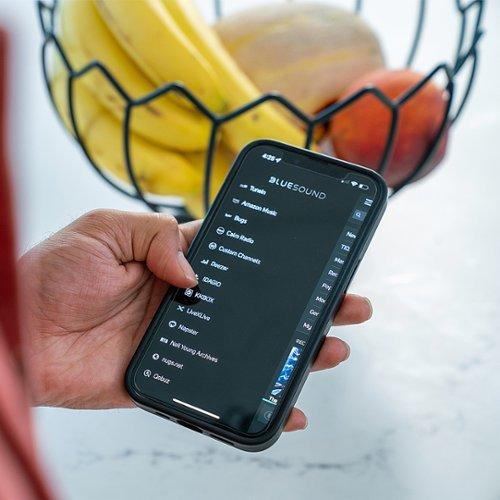
The PowerNode Edge connects to your network via both Wi-Fi and Ethernet, giving you flexibility in placement and ensuring stable connectivity. Once connected, it provides native access to over 20 streaming services, internet radio stations, and your own music library stored on network drives or USB devices. The BluOS controller app becomes your command center, letting you browse music, create playlists, and control playback from anywhere in your home.
But BluOS goes beyond simple streaming. It's a multi-room platform, meaning you can add other BluOS-compatible devices throughout your home and play different music in each room or synchronize everything for whole-home audio. This capability alone justifies the PowerNode Edge for many users who want to expand their system over time.
The two-way Bluetooth 5.0 aptX HD implementation is particularly clever. Not only can you stream music TO the PowerNode Edge from your phone or tablet, but you can also stream FROM it to Bluetooth headphones or speakers. This feature proves invaluable for late-night listening or when you want to use wireless headphones without disturbing others.
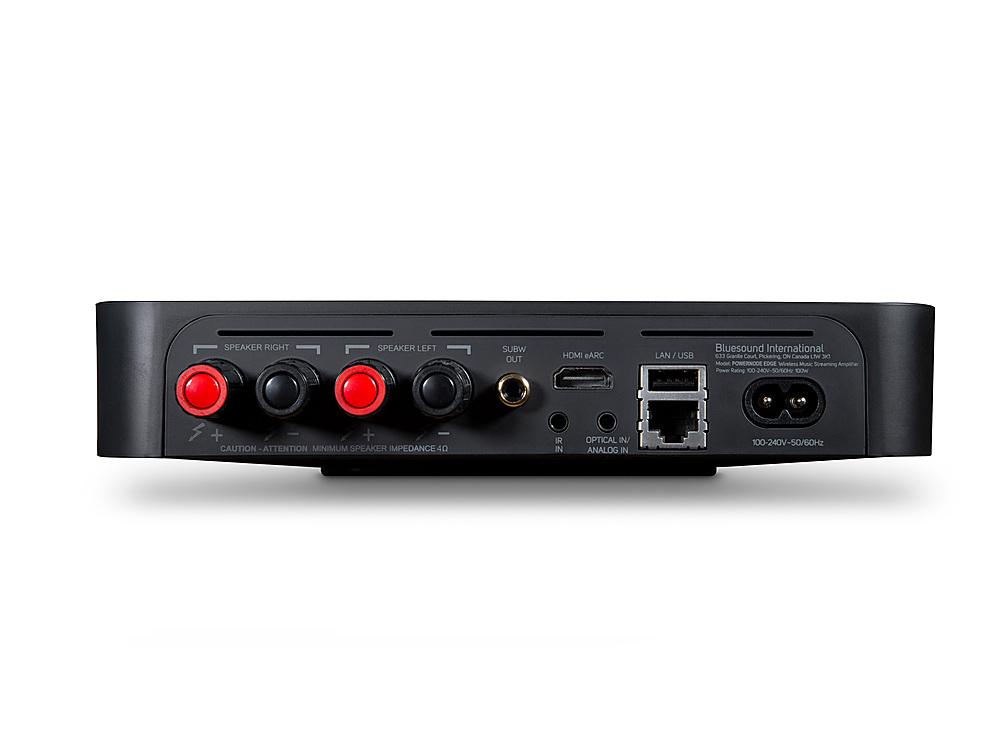
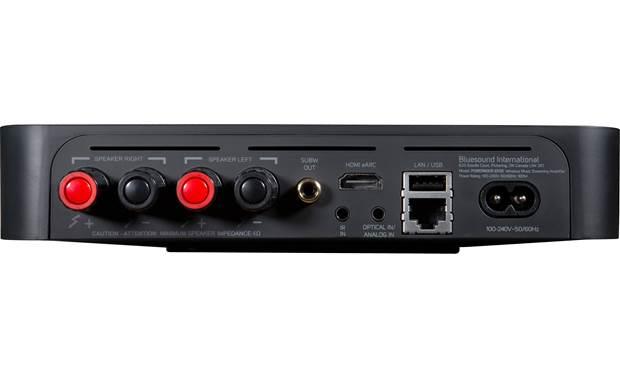
For home theater integration, the PowerNode Edge includes HDMI eARC (enhanced Audio Return Channel), allowing it to receive audio directly from your TV. With built-in Dolby Digital decoding, it can serve as the stereo component in a wireless surround sound system when paired with other Bluesound products.
The Arcam Radia A5 takes a more traditional approach to connectivity, but that doesn't mean it's lacking. It includes Bluetooth 5.2 with aptX Adaptive, which actually represents a newer Bluetooth standard than the PowerNode Edge. The two-way Bluetooth capability is retained, allowing streaming both to and from the amplifier.
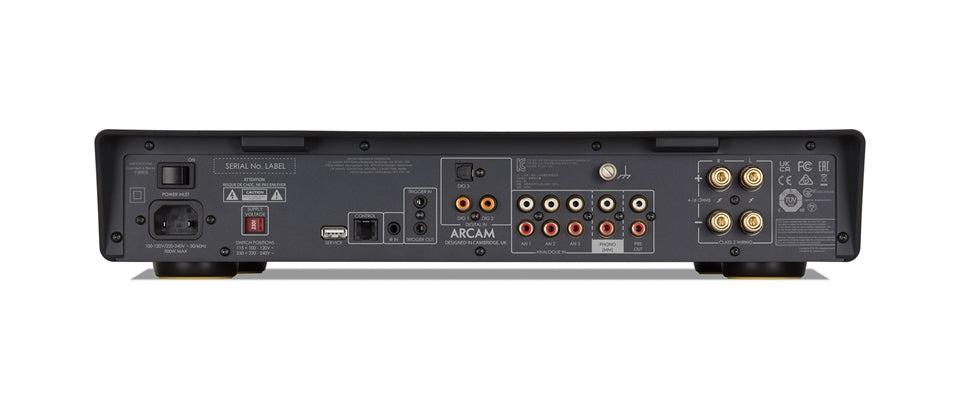
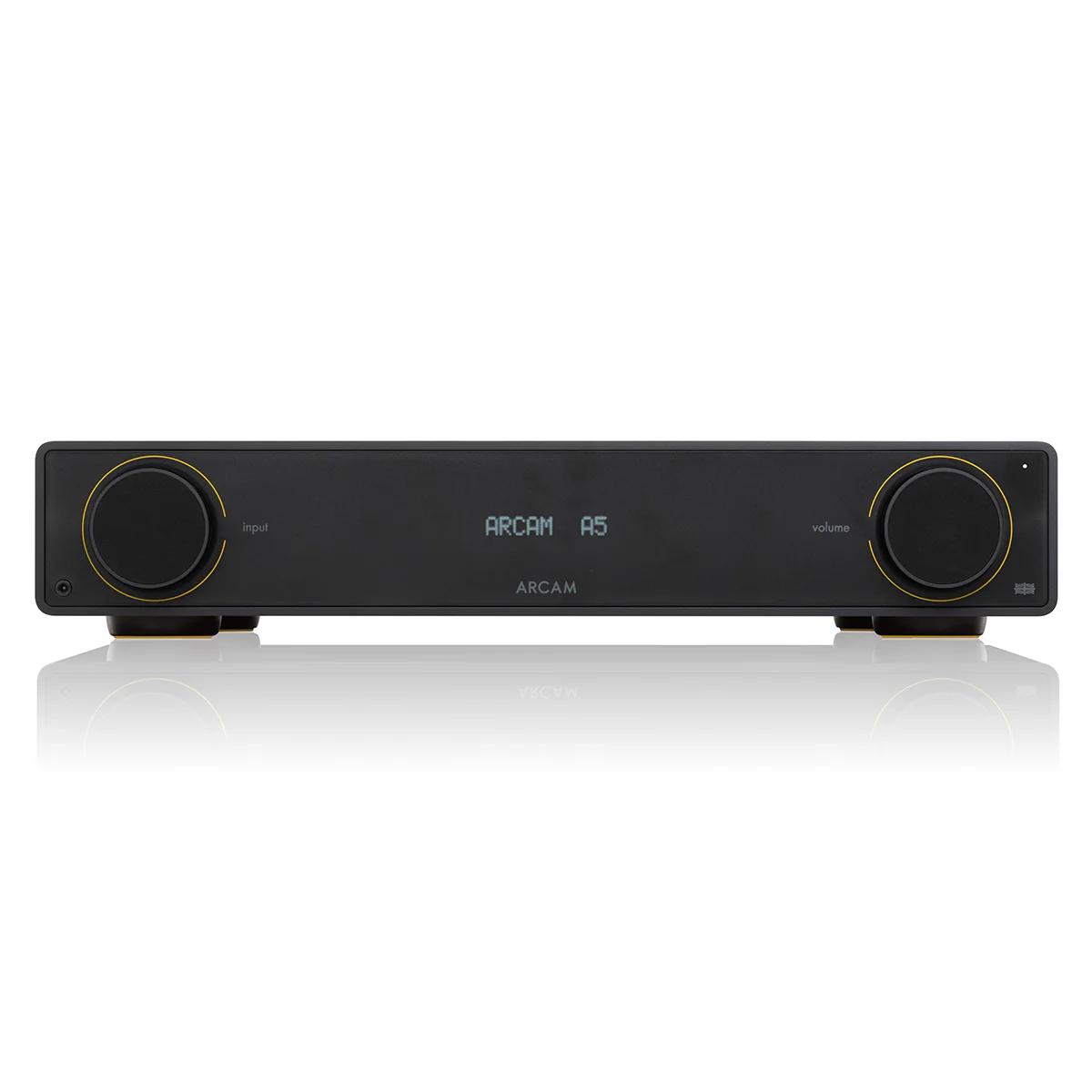
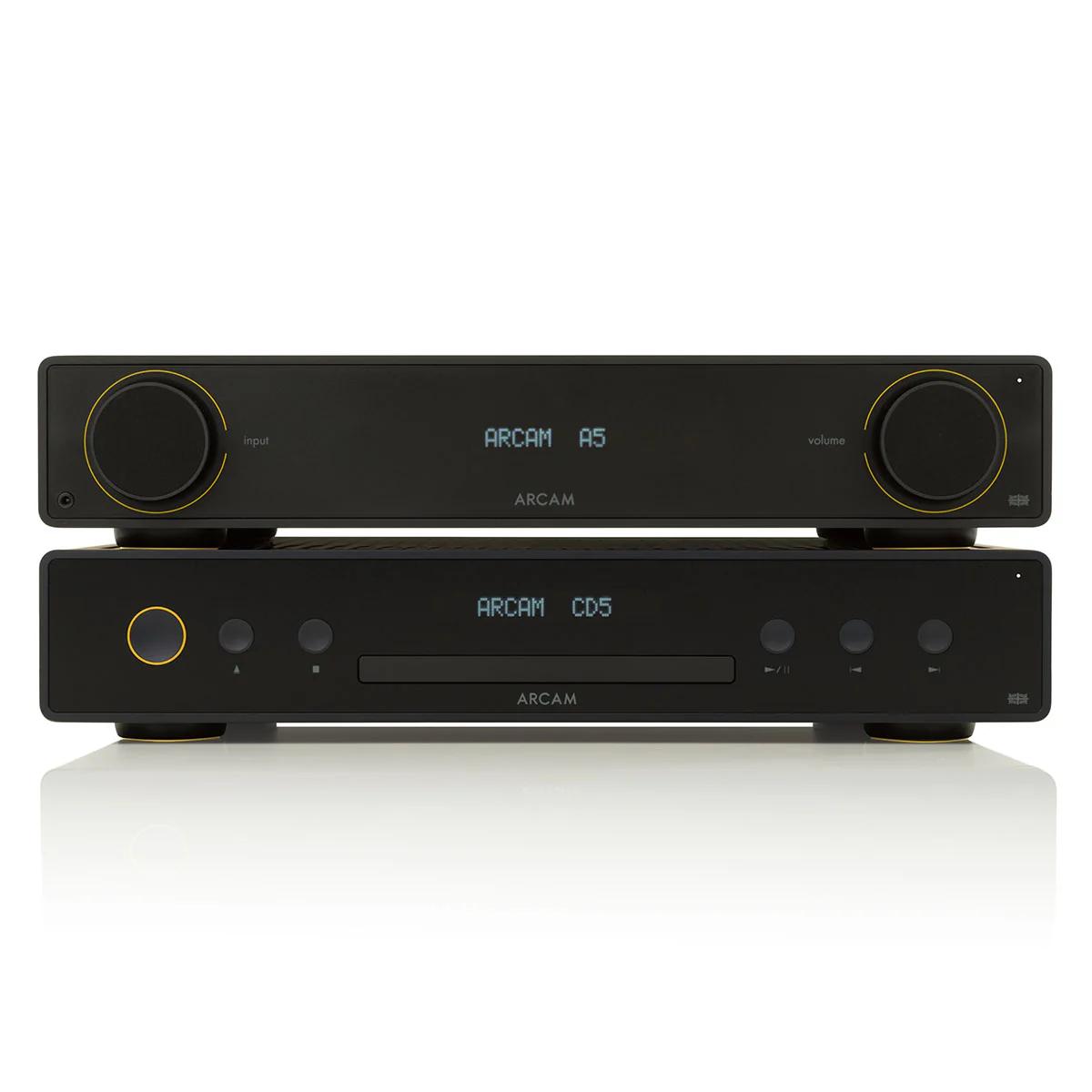
Where the Arcam shows its traditional hi-fi roots is in its physical connectivity. Three analog line inputs provide plenty of options for connecting CD players, turntables (via external phono preamps), or other analog sources. Two coaxial and one optical digital input offer flexibility for digital sources, and the preamp outputs allow you to add external power amplifiers or subwoofers as your system evolves.
For vinyl enthusiasts, the choice between these amplifiers becomes much clearer. The Arcam Radia A5 includes a dedicated moving magnet phono stage with the proper RIAA equalization curve needed to play records correctly. This built-in phono stage is carefully designed to work with the amplifier's overall sonic character, providing a complete analog pathway from turntable to speakers.
The phono stage specifications—47kΩ input impedance with 100pF capacitance—are exactly what most moving magnet cartridges need to perform their best. Based on user feedback we've researched, the A5's phono stage delivers that warm, engaging sound that makes vinyl special, with excellent clarity in vocals and a full, rich midrange.
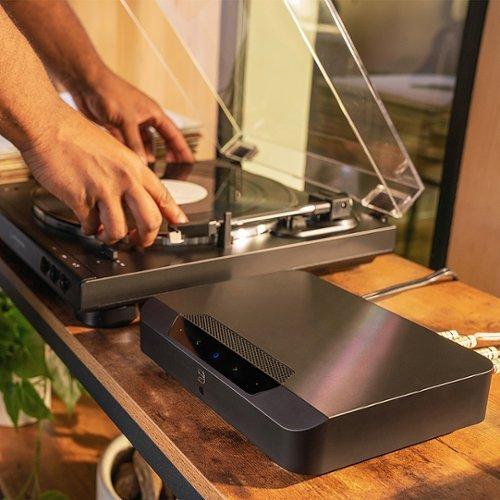
The Bluesound PowerNode Edge doesn't include a phono stage, which isn't surprising given its digital-first design philosophy. Vinyl lovers would need to add an external phono preamp, which adds cost and complexity but also provides the flexibility to choose a phono stage that matches their specific cartridge and preferences.
This difference highlights the fundamental design philosophies: the Arcam is built to excel with all types of sources, including traditional analog ones, while the PowerNode Edge is optimized for the digital music ecosystem that dominates today's listening habits.
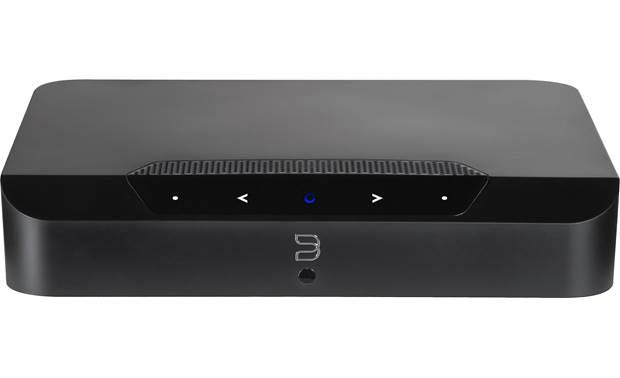
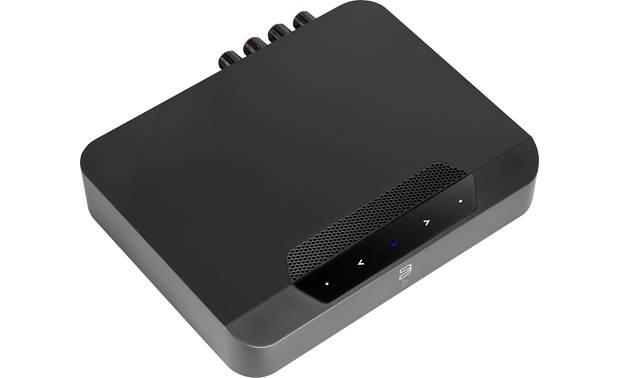
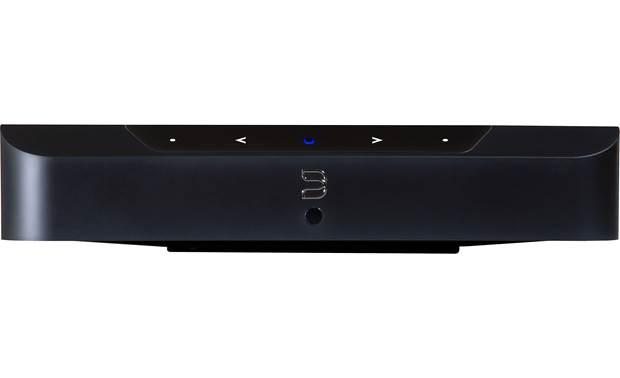
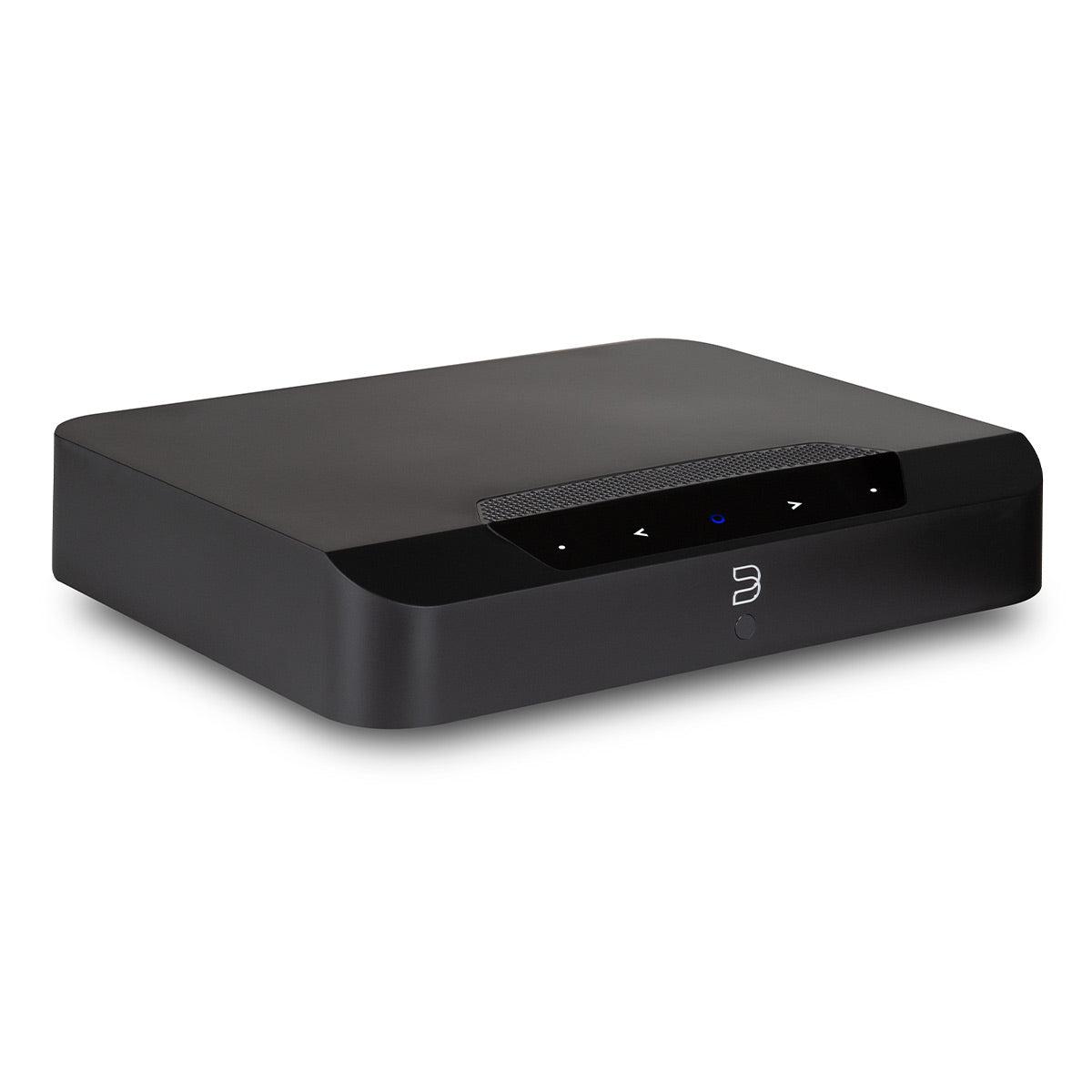
The control experience represents another fundamental difference between these amplifiers. The Bluesound PowerNode Edge is designed around smartphone and tablet control. The BluOS Controller app becomes your primary interface, offering intuitive browsing of music services, playlist creation, and system management. The amplifier itself features elegant capacitive touch controls on the top panel for basic functions, plus voice assistant integration through BluVoice technology.
This modern approach appeals to users who are comfortable managing their digital lives through apps and want their audio system to work similarly. The app interface is generally praised for being intuitive and responsive, though some users note a learning curve when transitioning from traditional hi-fi controls.
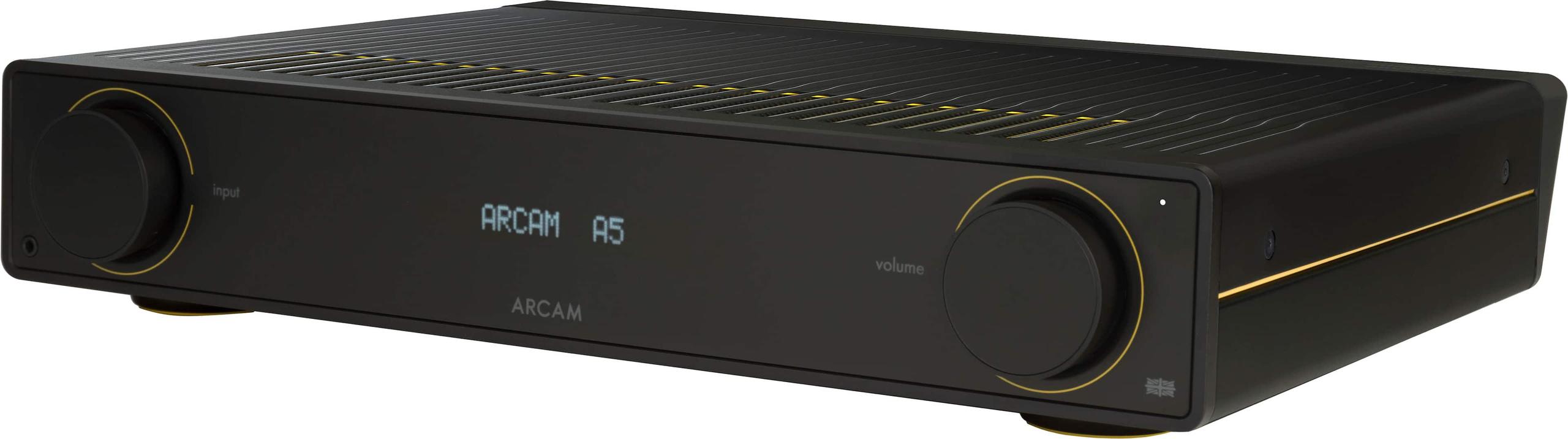
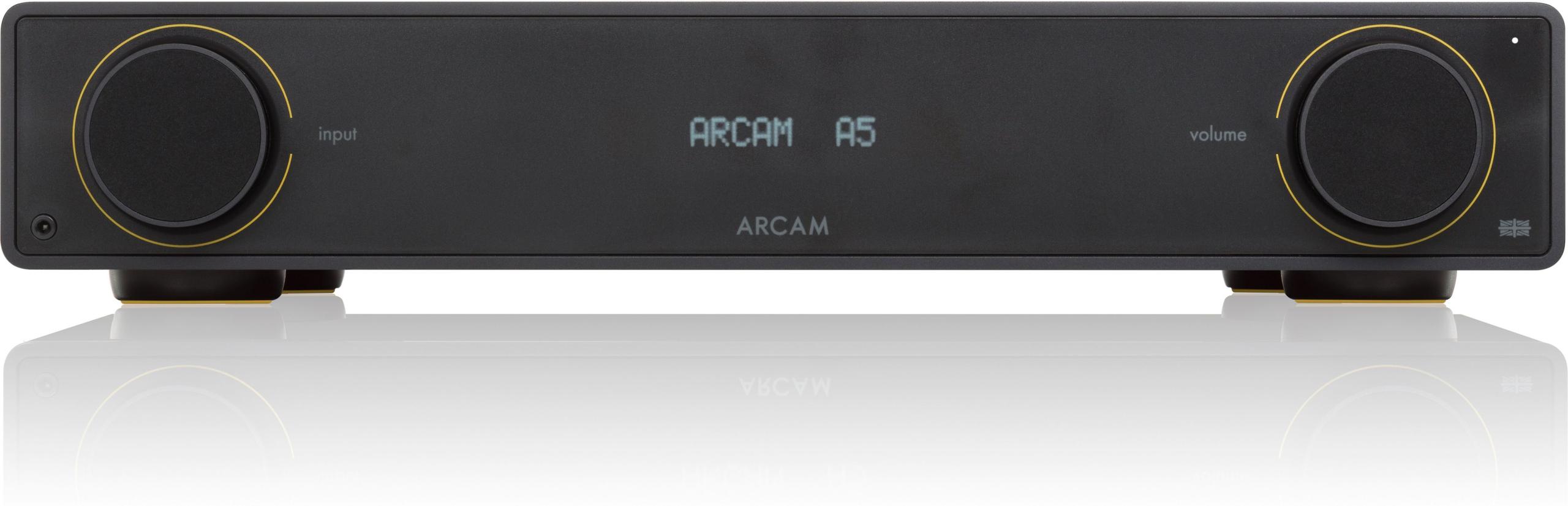
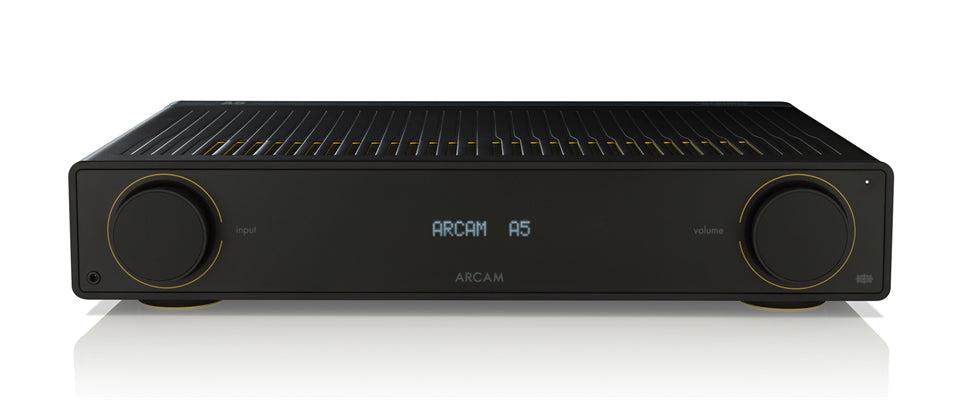
The Arcam Radia A5 follows more conventional hi-fi practices with a traditional remote control and front-panel controls. While it may seem less sophisticated, this approach has advantages: it works regardless of whether your phone is charged, doesn't depend on app updates, and provides the tactile feedback that many audio enthusiasts prefer.
The choice here often comes down to personal preference and lifestyle. If you're already managing most aspects of your digital life through smartphone apps, the PowerNode Edge will feel natural and convenient. If you prefer physical controls and don't want your audio system dependent on a smartphone, the Arcam A5 offers a more traditional and arguably more reliable approach.
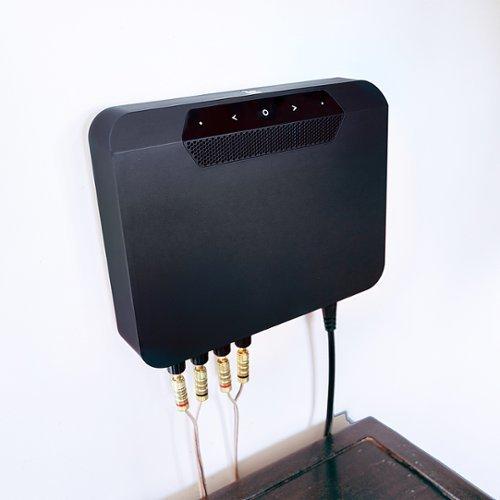
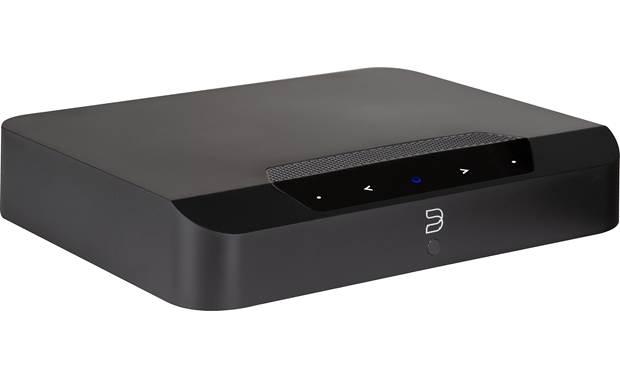
These amplifiers represent two very different approaches to industrial design. The Bluesound PowerNode Edge prioritizes space efficiency and installation flexibility. At just 1.8 inches tall and weighing about 3 pounds, it can disappear behind a TV, mount on a wall, or fit into entertainment centers where traditional components wouldn't. The included wall-mount bracket supports multiple orientations, making it genuinely versatile for modern living spaces.
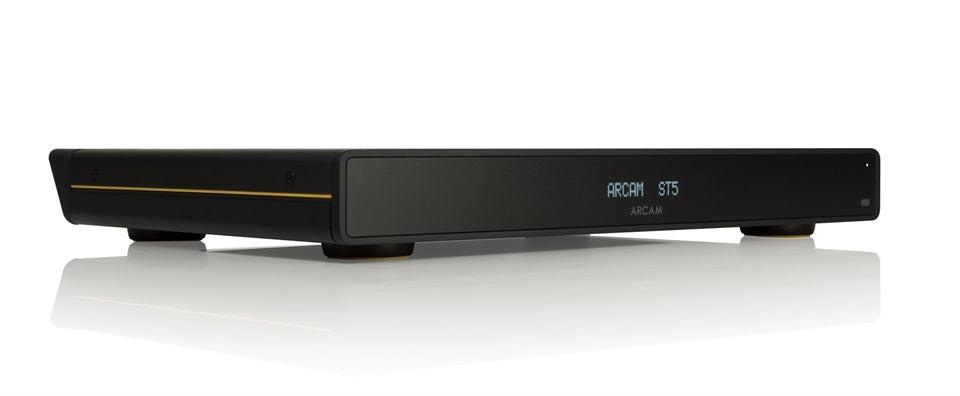
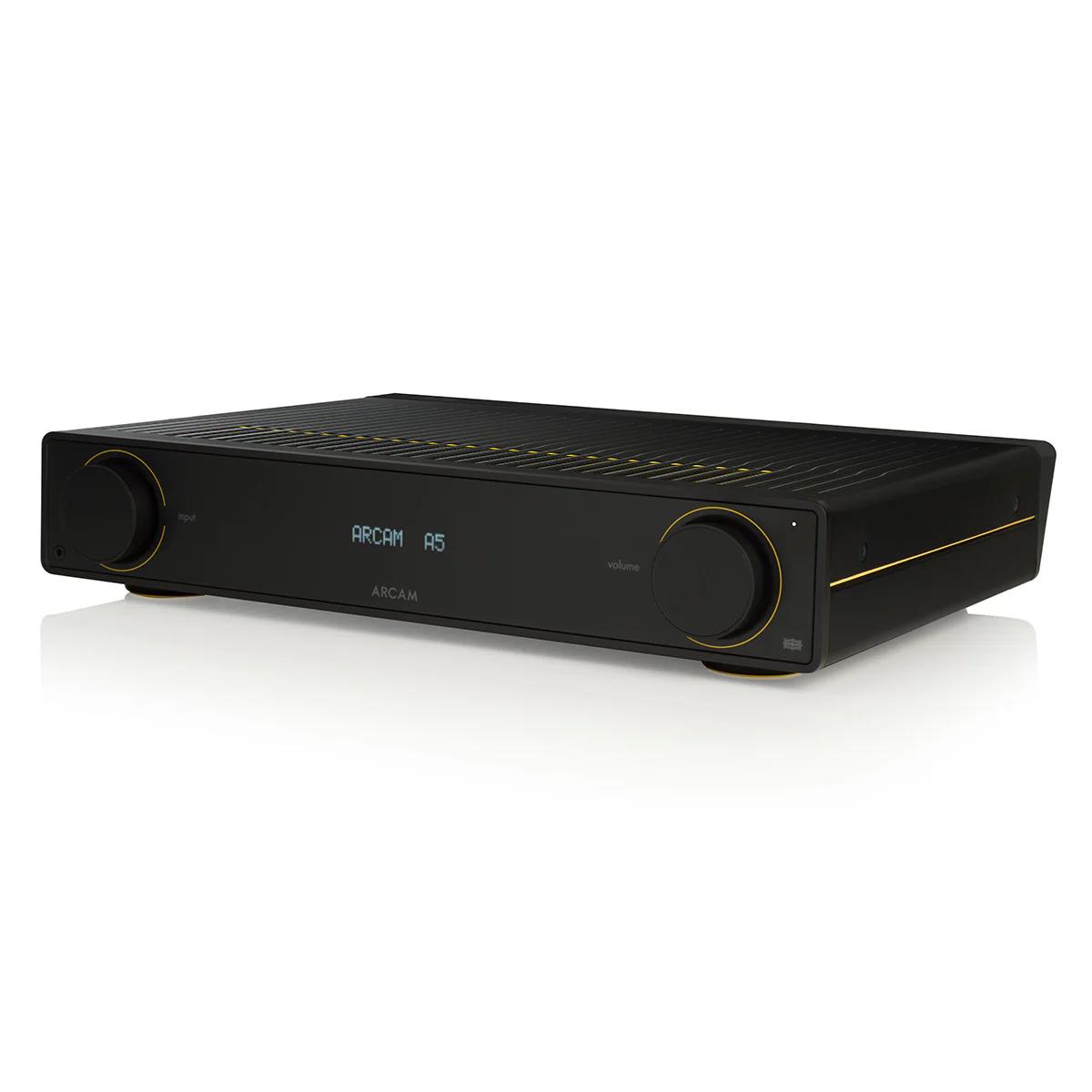
The Arcam Radia A5 follows traditional component sizing at about 17 inches wide and weighing nearly 18 pounds. This substantial build isn't just for show—the weight comes from serious power supply components and robust internal construction that contributes to its sound quality. The Radia design language is clean and modern while maintaining the gravitas that audiophiles expect from serious equipment.
Both approaches have merit. The PowerNode Edge's compact design opens up installation possibilities that simply aren't available with traditional components, while the Arcam's substantial build quality suggests longevity and serious engineering.
For users interested in home theater applications, these amplifiers offer different advantages. The Bluesound PowerNode Edge excels as a TV audio solution thanks to its HDMI eARC connection and Dolby Digital decoding. It can dramatically improve TV sound quality while maintaining the ability to stream music independently. The wireless multi-room capability means it can serve as the starting point for a whole-home audio system that includes home theater functionality.
The Arcam Radia A5 can certainly improve TV audio when connected through its digital inputs, but it lacks the seamless integration that HDMI eARC provides. However, its preamp outputs make it excellent for building a traditional stereo system that could later be expanded with additional amplifiers or a separate home theater processor.
When evaluating amplifier performance, several key metrics help predict real-world satisfaction. Signal-to-noise ratio tells you how quiet the background will be—both amplifiers excel here, with the Arcam slightly ahead in the digital domain at 109dB versus the PowerNode Edge's impressive but not specified figures.
Total Harmonic Distortion (THD) measures how much the amplifier changes the original signal. The Arcam's 0.003% THD at 80% power is exceptionally low and indicates very clean amplification. The PowerNode Edge's 0.008% THD+N is still excellent and unlikely to be audible in normal listening.
Based on our research of expert and user reviews, both amplifiers perform well in these technical areas, but they achieve their performance through different means and with different strengths.
The Bluesound PowerNode Edge makes the most sense for users who primarily stream their music and want the convenience of having everything integrated. It's ideal for people building their first serious hi-fi system, those with space constraints, anyone interested in multi-room audio, and users who appreciate smartphone app control. The HDMI eARC feature makes it particularly attractive for improving TV audio while maintaining music streaming capability.
The Arcam Radia A5 is the better choice for traditional audiophiles who prioritize sound quality above convenience features. It's perfect for vinyl enthusiasts thanks to its built-in phono stage, users with multiple analog sources, and anyone who prefers physical controls over app-based operation. The preamp outputs make it ideal for users who might want to expand their system with external amplifiers or processors later.
Both amplifiers represent excellent value in their respective categories at the time of writing, with pricing that puts the decision squarely on features and philosophy rather than budget constraints. The Bluesound PowerNode Edge delivers a complete modern audio solution with streaming at its core, while the Arcam Radia A5 provides exceptional sound quality with streaming capabilities added as a convenience.
Your choice ultimately depends on how you listen to music and what you want from your audio system. If streaming convenience and modern features appeal to you, the PowerNode Edge offers capabilities that traditional amplifiers simply can't match. If pure sound quality and traditional hi-fi values are your priorities, the Arcam A5 delivers performance that justifies its audiophile heritage.
Either choice will provide years of musical enjoyment, but they'll do so in fundamentally different ways that reflect the current evolution of home audio equipment.
| Bluesound PowerNode Edge | Arcam Radia A5 |
|---|---|
| Power Output - Determines how loud your system can play and speaker compatibility | |
| 40W per channel into 8Ω (adequate for most bookshelf speakers in medium rooms) | 50W per channel into 8Ω, 75W into 4Ω (better for demanding speakers and larger rooms) |
| Amplification Type - Affects sound character and performance | |
| DirectDigital™ amplification (optimized for digital sources, very low noise) | Class AB amplification (traditional audiophile approach, warm natural sound) |
| Streaming Integration - How well it works with music services | |
| Native BluOS platform with 20+ services, multi-room capability, voice control | Basic Bluetooth only, requires separate streamer for full streaming features |
| Digital Audio Quality - Critical for modern music sources | |
| Custom 24-bit/192kHz DAC with MQA and DSD support (streaming-optimized) | ESS Sabre ES9018 DAC with 3 selectable filters (audiophile-grade reference DAC) |
| Analog Inputs - Important for vinyl and traditional sources | |
| No phono stage, limited analog connectivity (combo input only) | Built-in MM phono stage plus 3 dedicated line inputs (complete analog solution) |
| Wireless Connectivity - Convenience and flexibility | |
| Dual-band Wi-Fi, Ethernet, two-way Bluetooth 5.0 aptX HD, voice assistants | Bluetooth 5.2 aptX Adaptive only (more limited wireless options) |
| Physical Connectivity - Integration with other components | |
| HDMI eARC, combo analog/optical input, subwoofer output (TV-friendly) | 2 coaxial + 1 optical digital, preamp outputs, headphone jack (traditional hi-fi) |
| Size and Installation - Placement flexibility | |
| Compact wall-mountable (8.6" × 7.6" × 1.8", 3.1 lbs) with mounting hardware | Traditional component size (17" × 13.5" × 3.2", 17.6 lbs) for equipment racks |
| Control Interface - Daily usability | |
| BluOS smartphone app, capacitive touch panel, voice control, optional remote | Traditional remote control and front panel controls (no app dependency) |
| Multi-Room Capability - Expandability for whole-home audio | |
| Full BluOS multi-room ecosystem with synchronized playback | None (single-room solution only) |
| Home Theater Integration - TV and movie compatibility | |
| HDMI eARC with Dolby Digital decoding (seamless TV integration) | Digital inputs only (requires additional connections for TV audio) |
The Arcam Radia A5 generally delivers superior pure sound quality with its Class AB amplification and ESS Sabre DAC, offering warmer, more natural sound reproduction. The Bluesound PowerNode Edge provides excellent sound quality optimized for digital streaming but may sound slightly more clinical. For critical music listening, most audiophiles would prefer the Arcam A5.
Yes, both support wireless streaming, but very differently. The Bluesound PowerNode Edge offers comprehensive streaming with native Wi-Fi connectivity, access to 20+ music services, and multi-room capability through the BluOS platform. The Arcam Radia A5 only provides Bluetooth streaming, requiring a separate streamer for full wireless functionality.
The Bluesound PowerNode Edge is significantly better for TV integration with its HDMI eARC connection and built-in Dolby Digital decoding, allowing seamless TV audio enhancement. The Arcam Radia A5 can connect to TVs through digital inputs but lacks the convenience and advanced features of HDMI eARC connectivity.
With the Arcam Radia A5, you don't need a separate phono preamp as it includes a high-quality built-in moving magnet phono stage. The Bluesound PowerNode Edge requires an external phono preamp for turntable connection, adding cost and complexity for vinyl enthusiasts.
The Arcam Radia A5 provides more power with 50 watts per channel into 8 ohms (75 watts into 4 ohms) compared to the PowerNode Edge's 40 watts per channel. This 25% power advantage makes the Arcam A5 better suited for demanding speakers and larger listening rooms.
The Bluesound PowerNode Edge is designed around smartphone control with the comprehensive BluOS Controller app for music browsing, streaming service access, and system management. The Arcam Radia A5 uses traditional remote control operation without a dedicated smartphone app, though it supports basic Bluetooth connectivity.
Only the Bluesound PowerNode Edge supports true multi-room audio through the BluOS platform, allowing synchronized playback across multiple rooms and integration with other BluOS devices. The Arcam Radia A5 is designed as a single-room solution without multi-room capabilities.
The Bluesound PowerNode Edge is remarkably compact and wall-mountable (8.6" × 7.6" × 1.8"), perfect for modern living spaces and TV installations. The Arcam Radia A5 follows traditional hi-fi component sizing (17" × 13.5" × 3.2") and requires equipment rack or shelf placement due to its substantial build.
The Bluesound PowerNode Edge excels in home theater applications with HDMI eARC connectivity, Dolby Digital decoding, and the ability to serve as wireless rear channels in Bluesound surround systems. The Arcam Radia A5 can enhance TV audio through digital connections but lacks integrated home theater features.
Both amplifiers offer expansion options but in different ways. The Arcam Radia A5 provides preamp outputs for adding external power amplifiers or subwoofers in traditional hi-fi fashion. The PowerNode Edge expands through the BluOS ecosystem, adding wireless speakers and multi-room components without additional cables.
Value depends on your priorities. The Bluesound PowerNode Edge offers exceptional value if you want comprehensive streaming, multi-room capability, and modern convenience features. The Arcam Radia A5 provides better value for pure sound quality, traditional hi-fi functionality, and long-term component-based system building.
Both support high-resolution audio up to 24-bit/192kHz, but with different strengths. The PowerNode Edge includes MQA decoding and DSD support optimized for streaming services. The Arcam A5 features the audiophile-grade ESS Sabre DAC with selectable digital filters, generally considered superior for pure digital audio conversion quality.
We've done our best to create useful and informative comparisons to help you decide what product to buy. Our research uses advanced automated methods to create this comparison and perfection is not possible - please contact us for corrections or questions. These are the sites we've researched in the creation of this article: futureaudiophile.com - alpha-audio.net - theaudiofactory.com - audiophilia.com - youtube.com - qaudio.com - crutchfield.com - youtube.com - bluesound.com - audioadvisor.com - crutchfield.com - bluesound.com - audiosciencereview.com - bluesound.com - soundstagesimplifi.com - mysoundconcepts.com - whathifi.com - upscaleaudio.com - hifiverse.io - theaudiotailor.com.au - crutchfield.com - musicdirect.com - crutchfield.com - listenup.com - audioadvice.com - houseofstereo.com - skybygramophone.com - arcam.co.uk - fidelity-magazine.com - arcam.co.uk - sweetwater.com - skybygramophone.com

Privacy Policy
Terms and Conditions - Affiliate Policy
Home Security
© Copyright 2008-2026.
11816 Inwood Rd #1211, Dallas, TX 75244