


If you've been thinking about upgrading your home audio setup, you've probably noticed that traditional stereo systems are getting a serious makeover. Gone are the days when you needed a separate CD player, amplifier, and maybe a radio tuner all stacked up in your entertainment center. Today's streaming amplifiers combine all these functions into one sleek box that can access virtually any music ever recorded with just an internet connection.
But here's where it gets interesting - not all streaming amplifiers are created equal. Some focus on delivering the absolute best sound quality possible, while others prioritize making your entire home filled with synchronized music. The Eversolo Play and Sonos Amp represent these two different philosophies perfectly, and choosing between them depends entirely on how you want to experience music in your home.
Think of a streaming amplifier as the Swiss Army knife of modern audio. It's a device that takes digital music from the internet (or your phone, or a USB drive) and converts it into the analog signals that power your speakers. Inside that compact box, you'll find three crucial components working together: a network streamer that connects to music services like Spotify or Tidal, a DAC (digital-to-analog converter) that transforms those digital music files into audio signals, and an amplifier that boosts those signals to actually move your speakers.
The beauty of this integration is simplicity - you can go from having no music system to streaming high-quality audio from any source imaginable, all with just one device and a pair of speakers. But the devil is in the details, and that's where the Eversolo Play and Sonos Amp take dramatically different approaches.
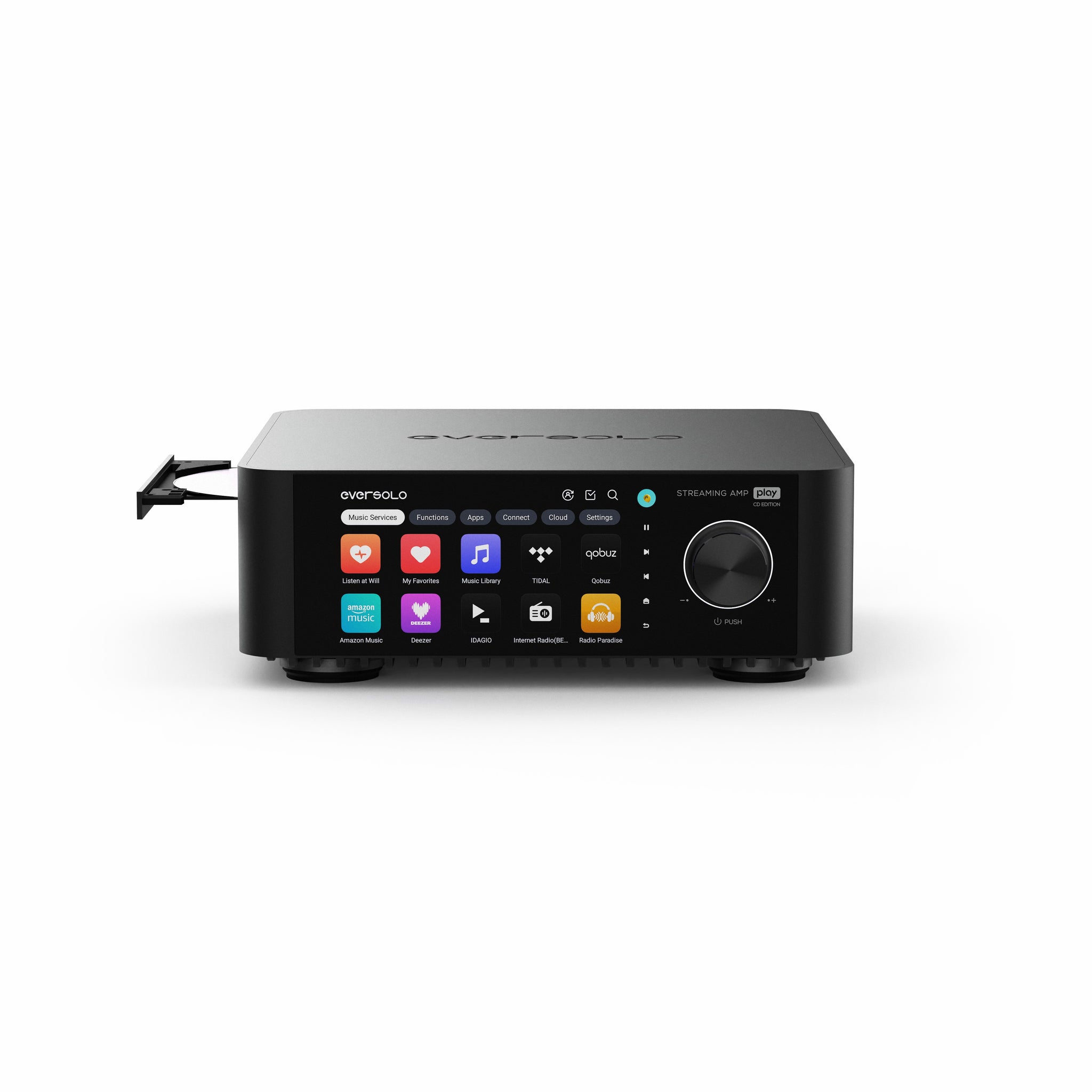
The Eversolo Play, which launched in 2025, represents what happens when traditional hi-fi meets modern streaming. Eversolo built their reputation making high-end music streamers for serious audio enthusiasts, and the Play brings that audio-first mentality to a more affordable, all-in-one package. It's packed with audiophile-grade components and offers extensive customization options that let you fine-tune every aspect of your sound.
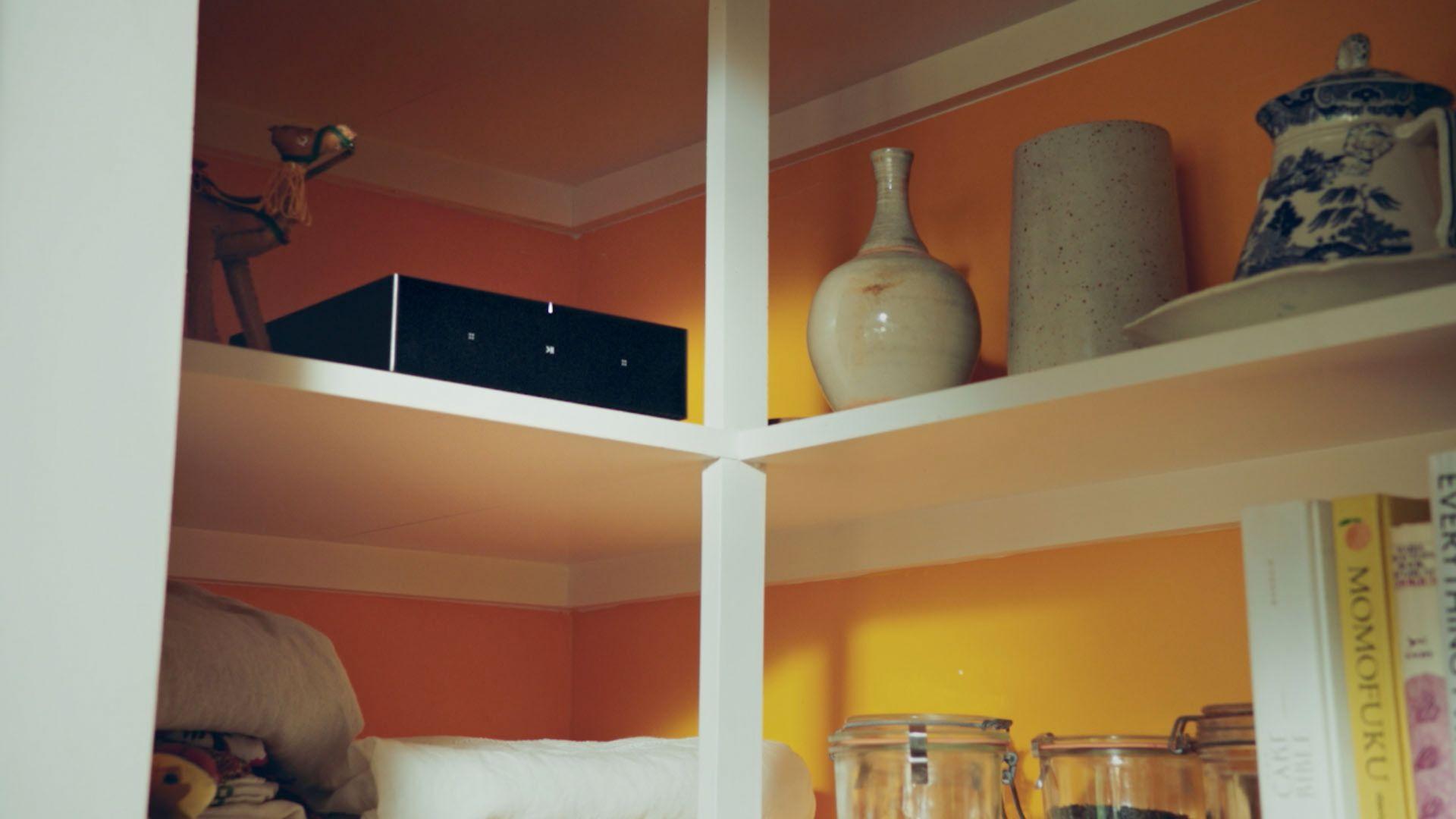
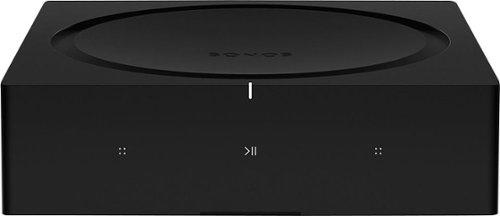
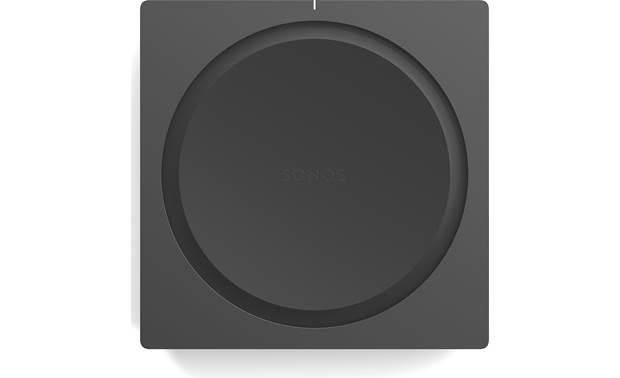
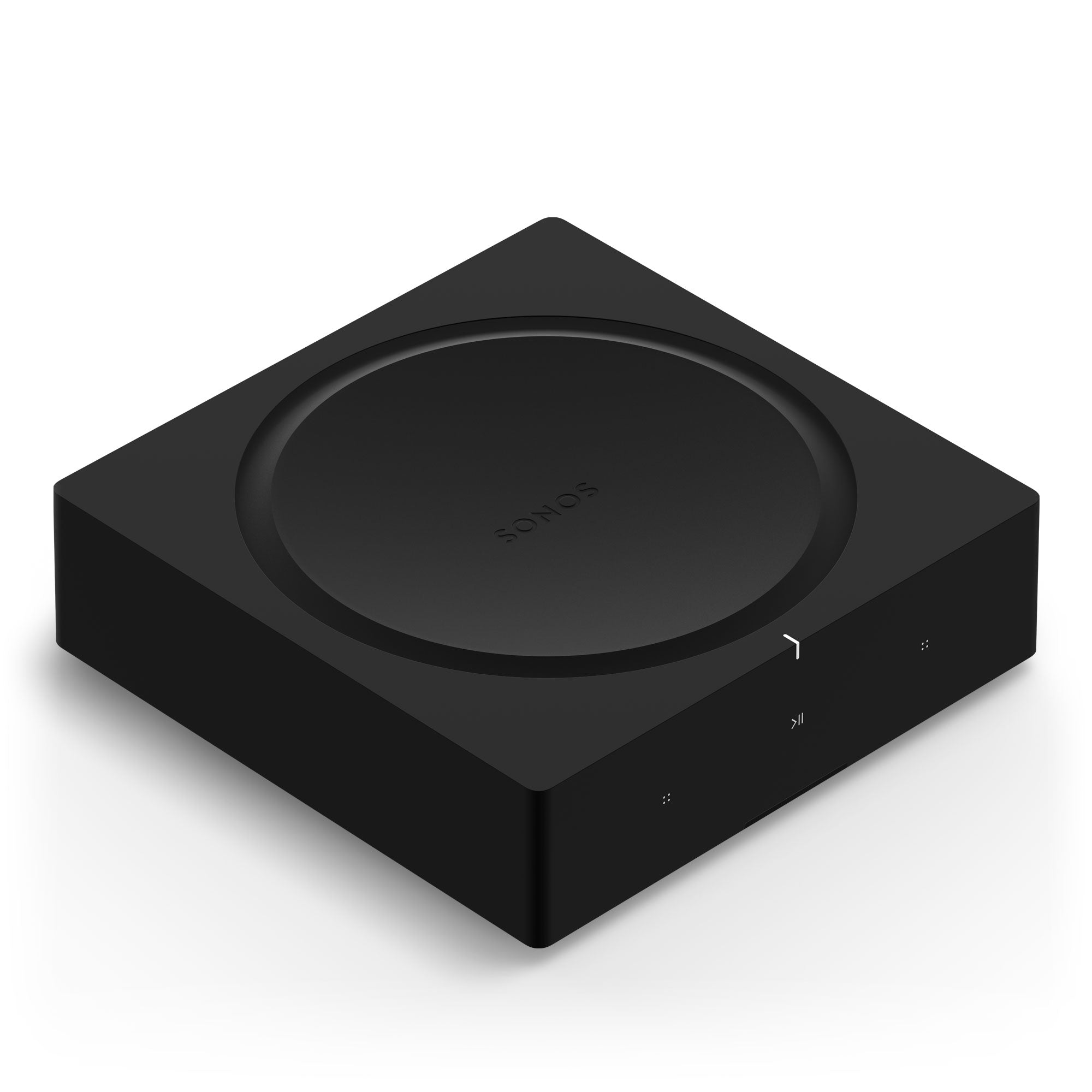
The Sonos Amp, on the other hand, arrived in 2018 as part of Sonos's mission to make whole-home audio effortless. While Sonos has continuously updated its software and capabilities since then, the core philosophy remains the same: create a device that sounds great but prioritizes ease of use and seamless integration with other Sonos speakers throughout your home.
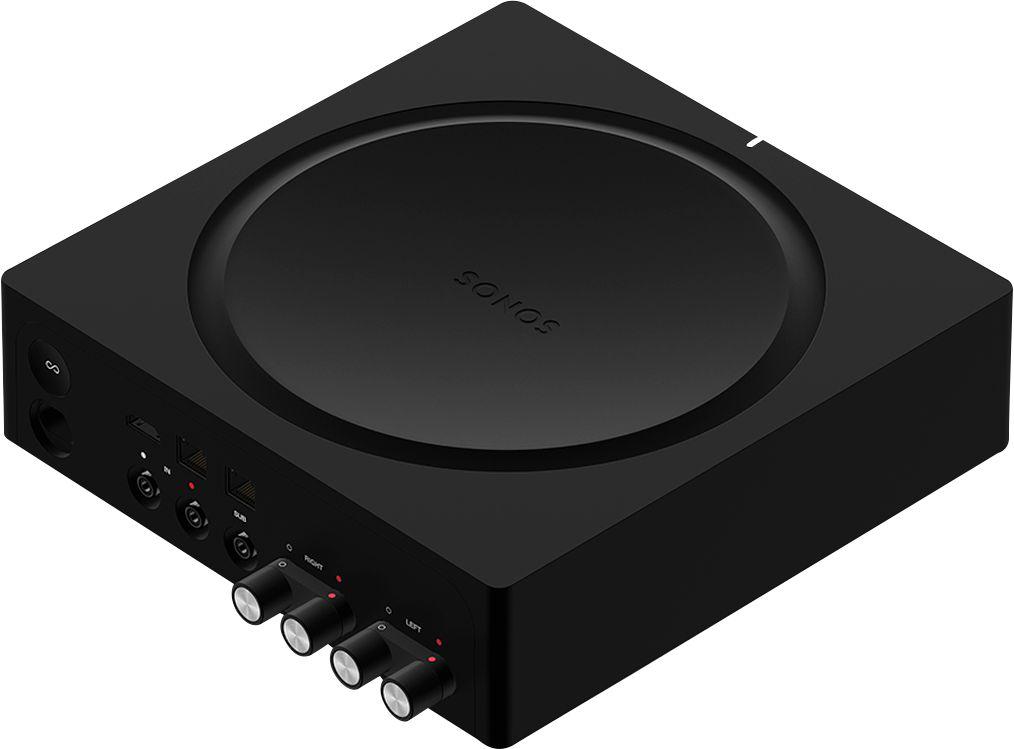
When it comes to pure amplifier performance, these two devices showcase interesting trade-offs. The Sonos Amp brings significantly more muscle to the table, delivering 125 watts per channel into 8-ohm speakers (and up to 250 watts into 4-ohm speakers). That's enough power to drive just about any speaker you'd reasonably pair with a streaming amplifier, including larger floor-standing speakers or even multiple pairs of speakers in a single room.
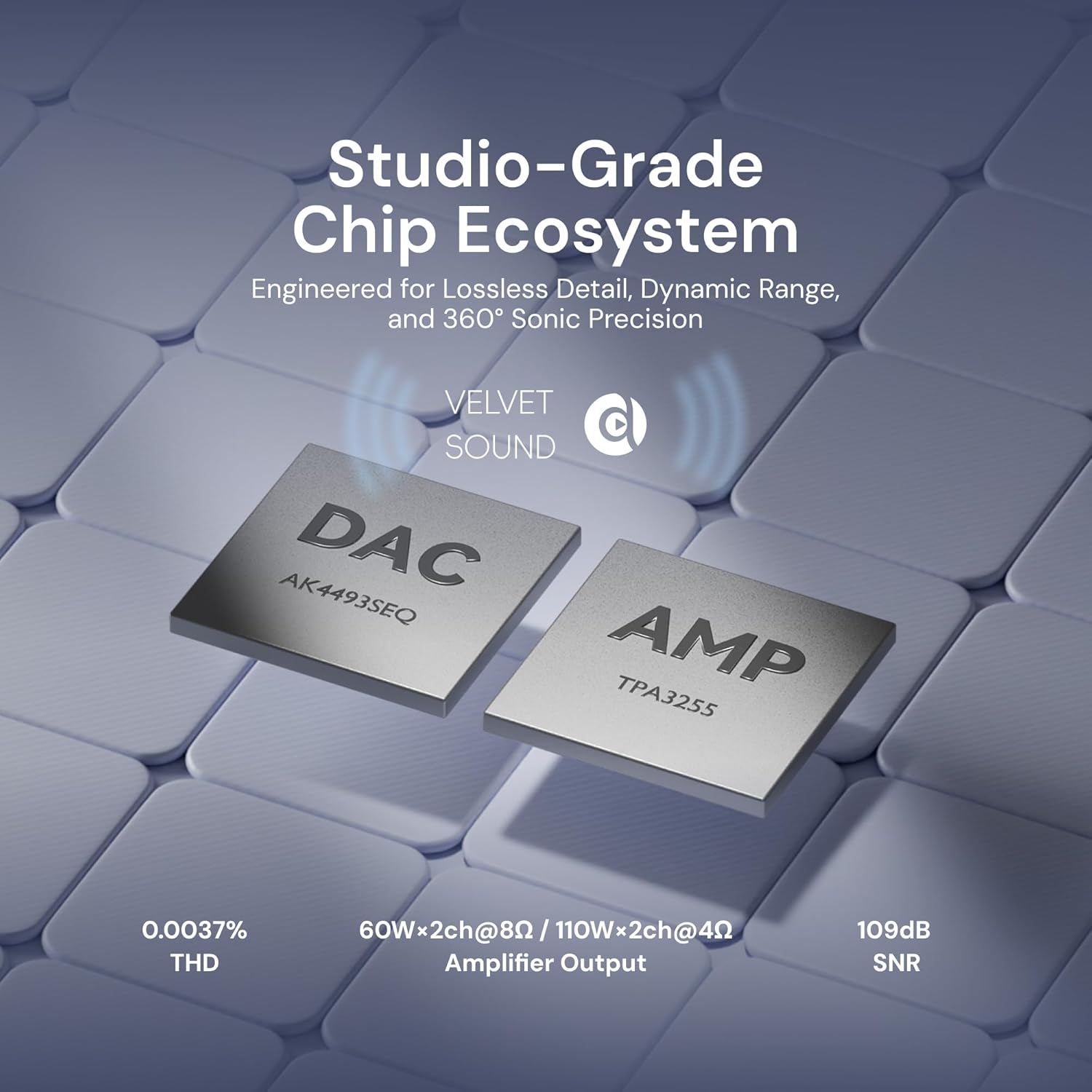
The Eversolo Play, by comparison, outputs 60 watts into 8-ohm speakers and 110 watts into 4-ohm speakers. While that might sound like a significant disadvantage, the reality is more nuanced. Most quality bookshelf speakers - which are the natural pairing for a compact streaming amplifier - don't need massive amounts of power to sound their best. The Play's Class D amplifier uses advanced PurePath Ultra HD technology, which focuses on delivering clean, distortion-free power rather than just raw wattage.
The power difference becomes meaningful if you're planning to use demanding speakers, want to fill a large room with sound, or are considering an outdoor installation where you might need multiple speaker pairs. In those scenarios, the extra headroom of the Sonos Amp provides real benefits.
This is where the Eversolo Play truly shines and demonstrates its audiophile DNA. At its heart sits an AKM AK4493SEQ DAC with VELVETSOUND technology - a high-end component that you'd typically find in dedicated DACs costing hundreds of dollars on their own. This chip can handle incredibly high-resolution audio files, supporting formats up to DSD512 and PCM audio at 32-bit/768kHz resolution.
To put that in perspective, a CD plays at 16-bit/44.1kHz, while most streaming services max out at 24-bit/96kHz for their highest quality tiers. The Play can handle audio files with resolution far beyond what most people will ever encounter, making it genuinely future-proof for high-resolution audio.
The technical specs back up this capability: the Play achieves a signal-to-noise ratio of over 109dB (higher numbers mean less background noise) and total harmonic distortion below 0.0037% (lower numbers mean cleaner sound). These are measurements you'd expect from dedicated high-end DACs, not an all-in-one streaming amplifier.
The Sonos Amp takes a different approach. Rather than chasing maximum technical specifications, Sonos focuses on optimizing their DAC implementation for the audio sources most people actually use - streaming services and TV audio. The Amp supports audio up to 24-bit/48kHz, which covers all major streaming services and digital TV audio formats perfectly well.
Our research into user experiences and expert reviews consistently shows that the Eversolo Play delivers noticeably superior audio quality when playing high-resolution files or when connected to premium streaming services that offer lossless audio. The difference is most apparent in complex musical passages where you can hear better separation between instruments and more natural-sounding vocals.
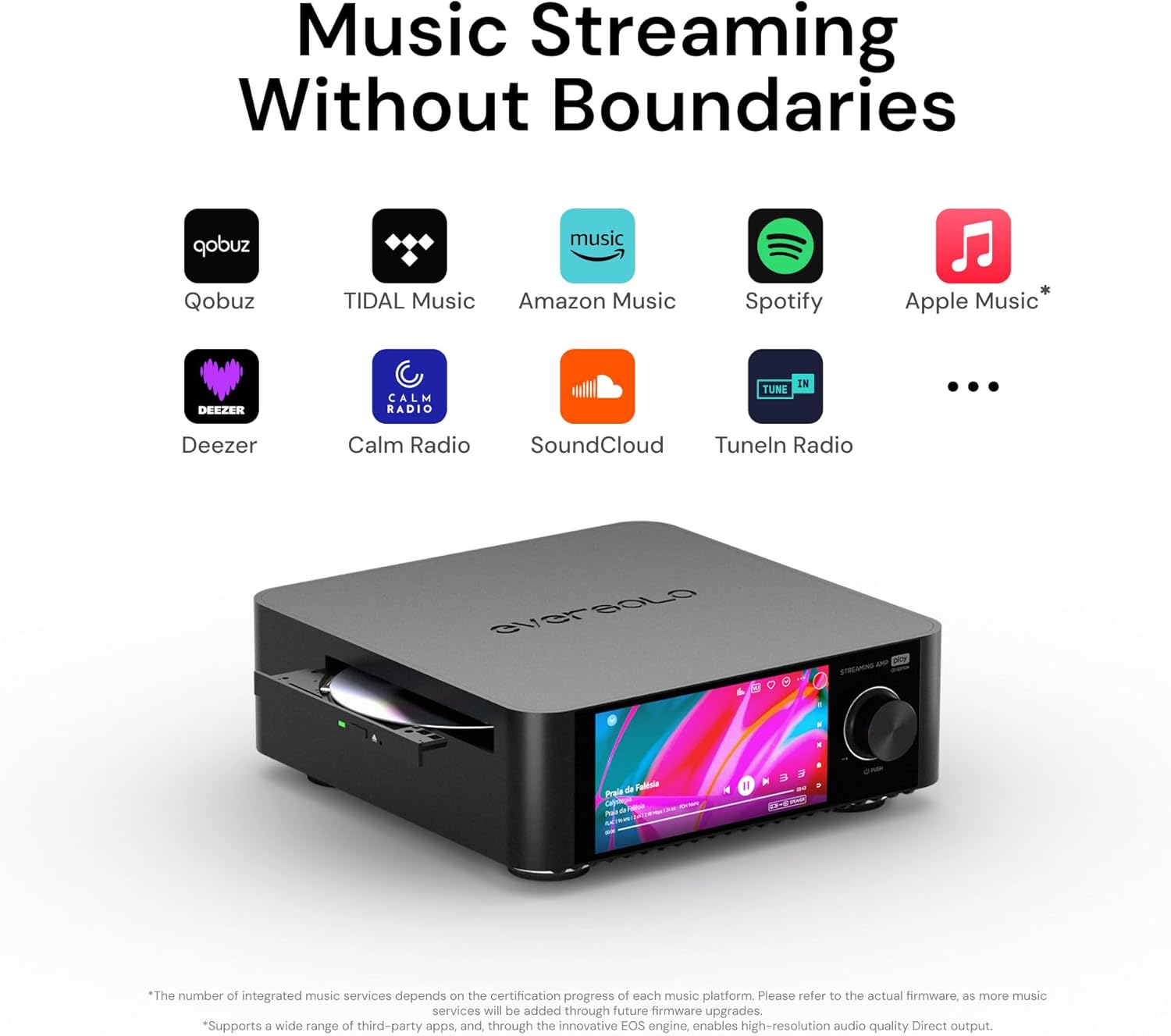
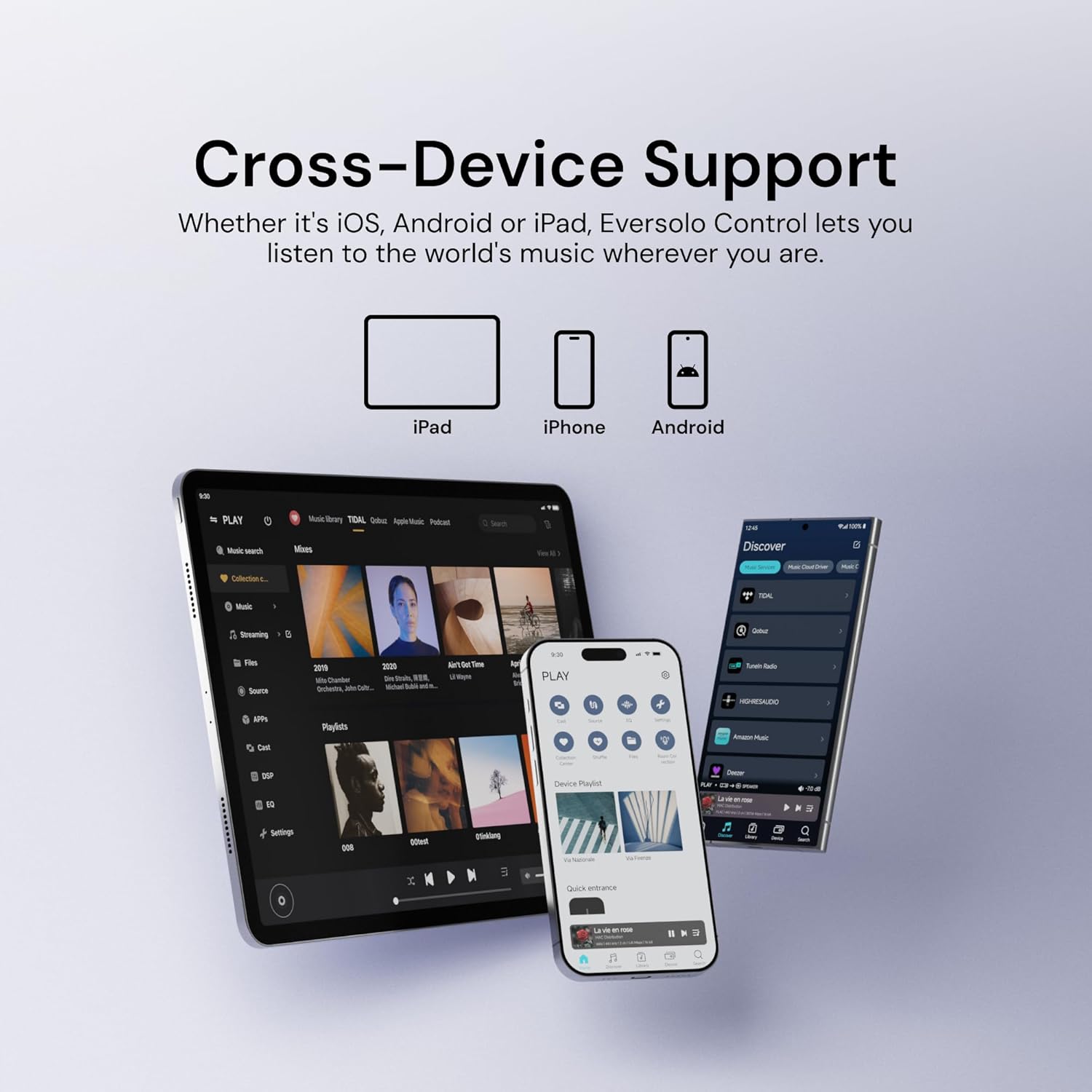
Both devices excel at streaming music, but they approach it from different angles. The Eversolo Play supports an impressive array of streaming services including Tidal, Qobuz, Amazon Music, Spotify Connect, and Apple Music, plus it's Roon Ready for users of that premium music management platform. It also excels at playing music from local sources like network-attached storage devices or USB drives, with support for virtually every audio format you might encounter.
The Play's network capabilities are cutting-edge, featuring Wi-Fi 6E and Bluetooth 5.3 connectivity. It can stream high-resolution audio files from your home network without any compression or quality loss, making it ideal for audiophiles who maintain large collections of high-quality music files.
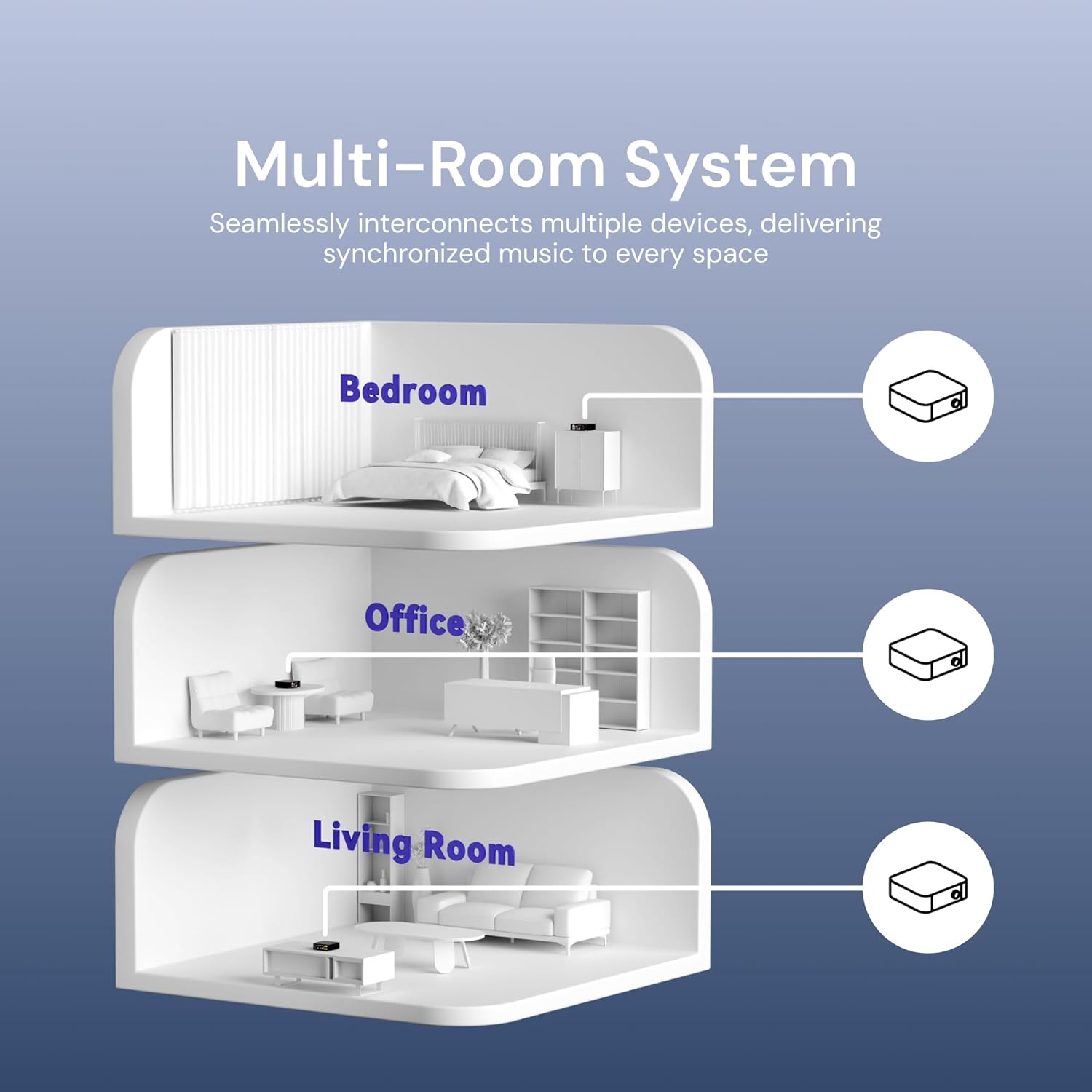
The Sonos Amp integrates deeply with the Sonos ecosystem, which has been refined over more than a decade of development. While it supports most major streaming services, its real strength lies in how seamlessly it works with other Sonos speakers. You can easily create groups of speakers throughout your home, sync playback across multiple rooms, or use the Amp to power your main stereo speakers while adding Sonos wireless speakers for surround sound.
The Sonos approach really shines when you think beyond a single listening room. Want the same playlist playing in your kitchen, living room, and back patio? The Sonos Amp makes this effortless. Need to quickly switch from streaming music to watching TV? The Amp's HDMI ARC connection automatically handles the transition.
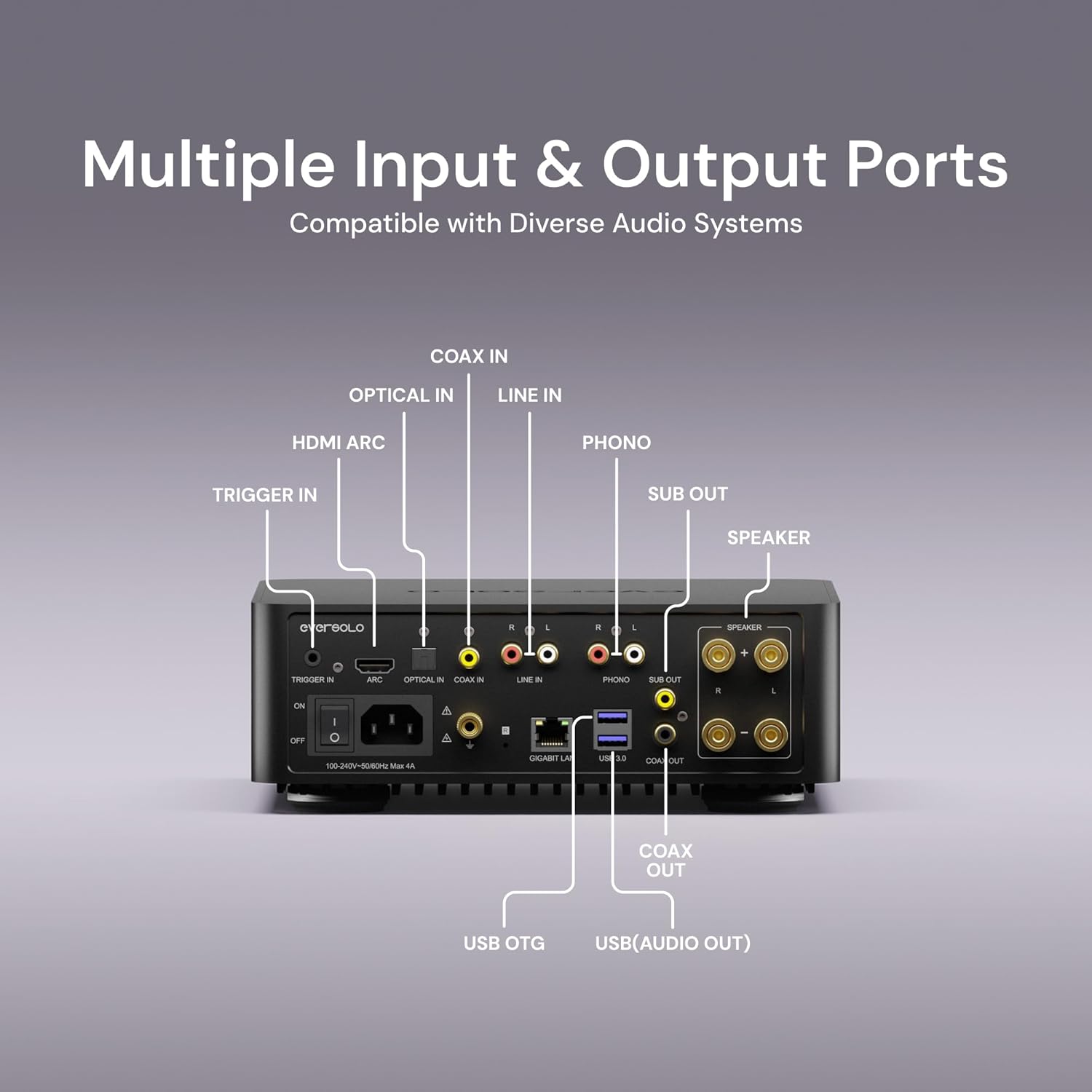
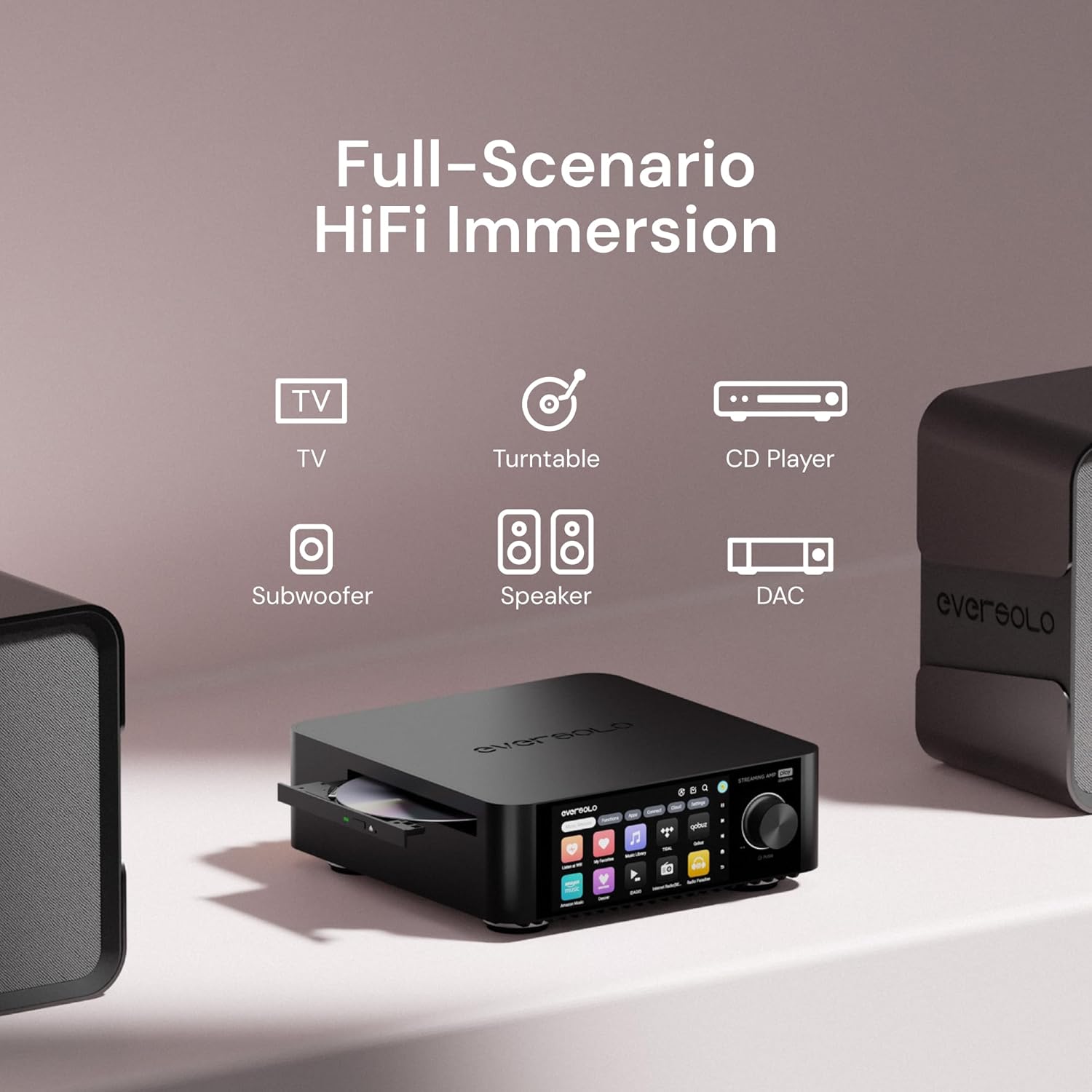
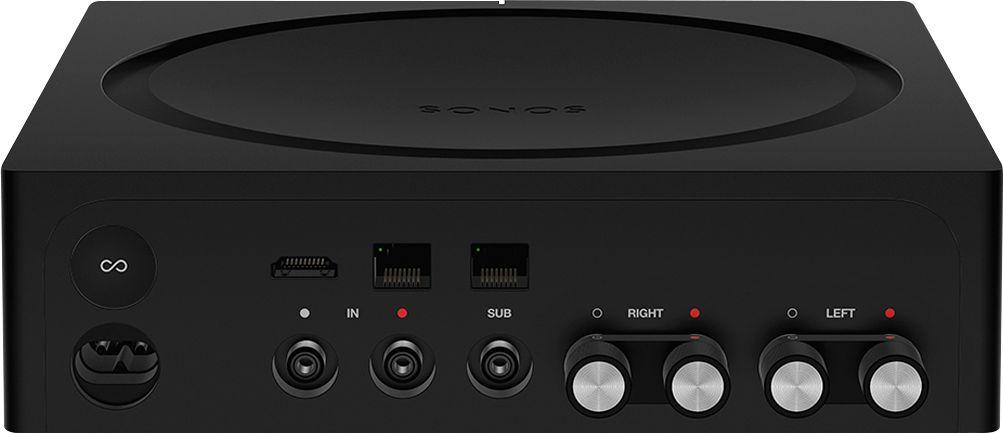
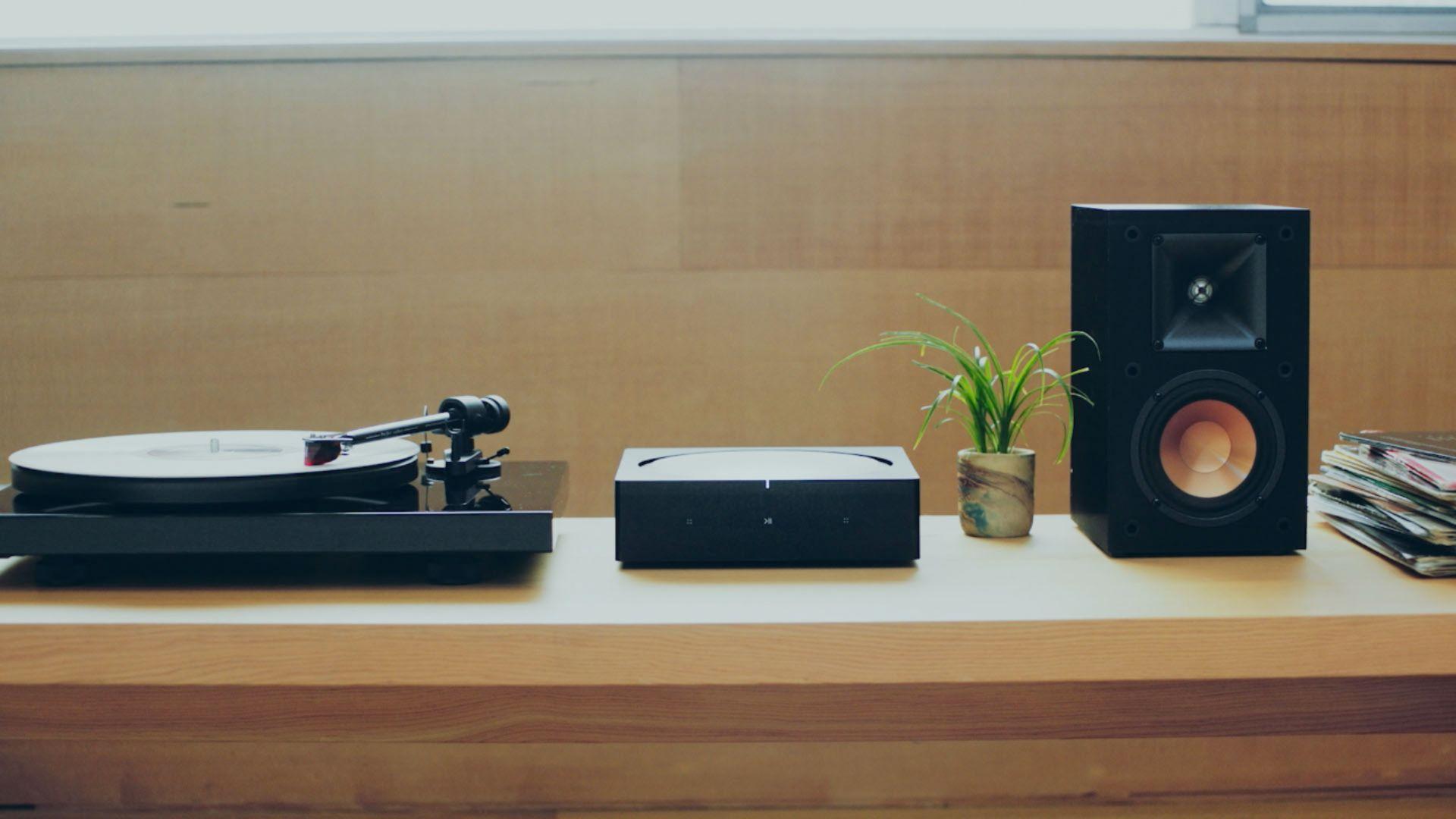
The connectivity options reveal each device's design priorities. The Eversolo Play offers an impressive array of inputs: HDMI ARC for TV audio, optical and coaxial digital inputs for CD players or other digital sources, multiple USB ports, and both line-level and dedicated phono inputs for turntables. The phono input deserves special mention - it includes a high-quality preamp that can handle both moving magnet (MM) and moving coil (MC) cartridges, making it a serious option for vinyl enthusiasts.
Perhaps most interesting is the Play's USB audio output, which supports the same high-resolution formats as its internal DAC. This means you could use the Play as a high-end network streamer feeding an external DAC, essentially getting two high-end audio components in one box.
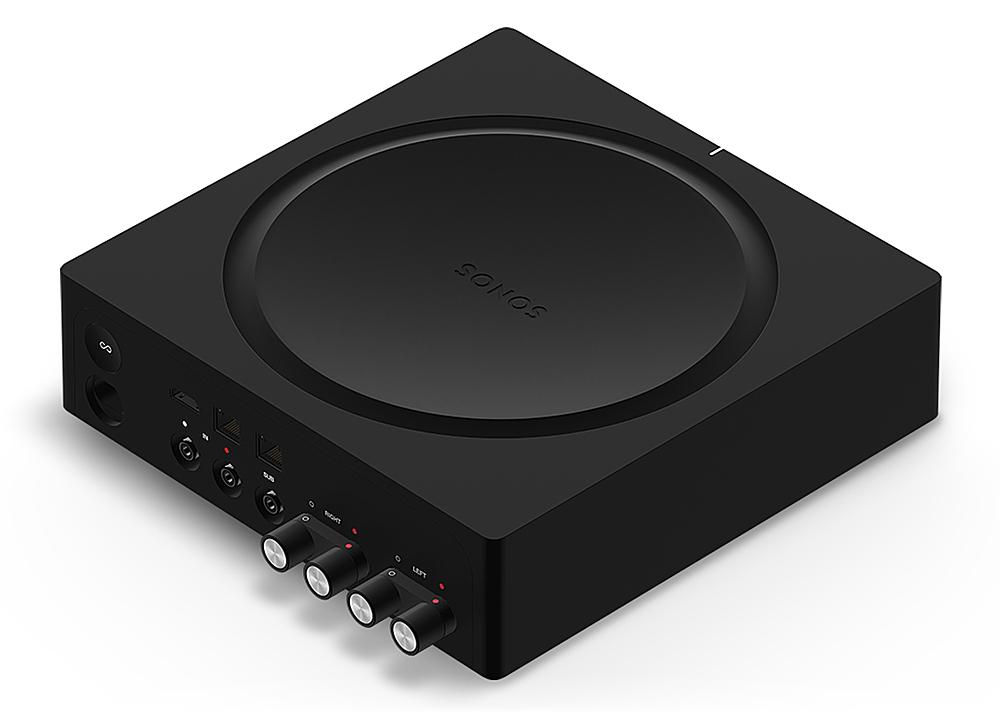
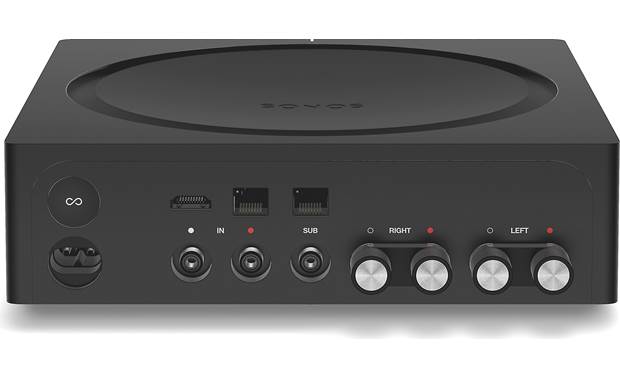
The Sonos Amp takes a more focused approach with HDMI ARC for TV connections, analog RCA inputs that can accommodate a turntable (with external phono preamp), and dual Ethernet ports for network connections. It includes a dedicated subwoofer output with adjustable crossover settings, making it easy to add bass extension to your system.
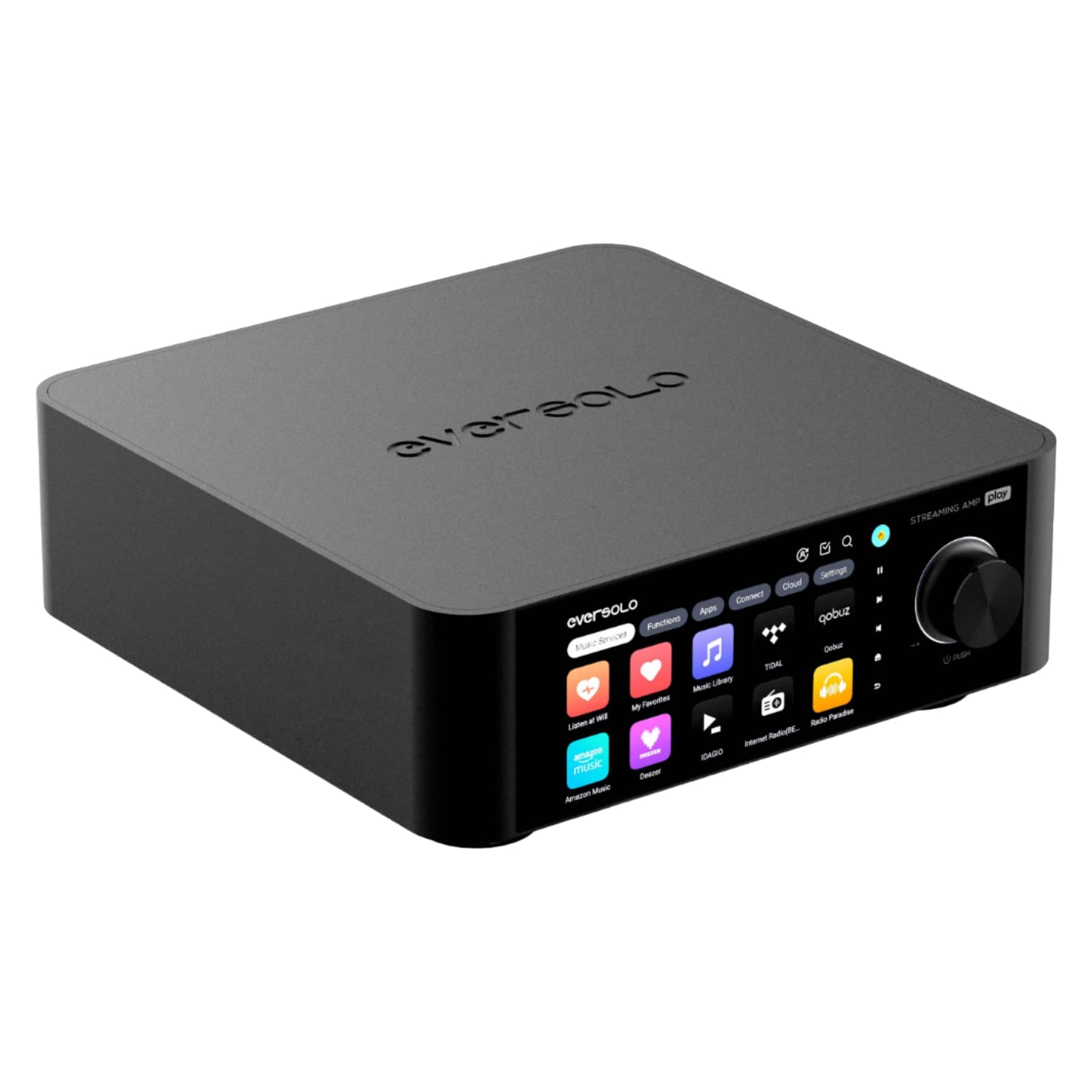
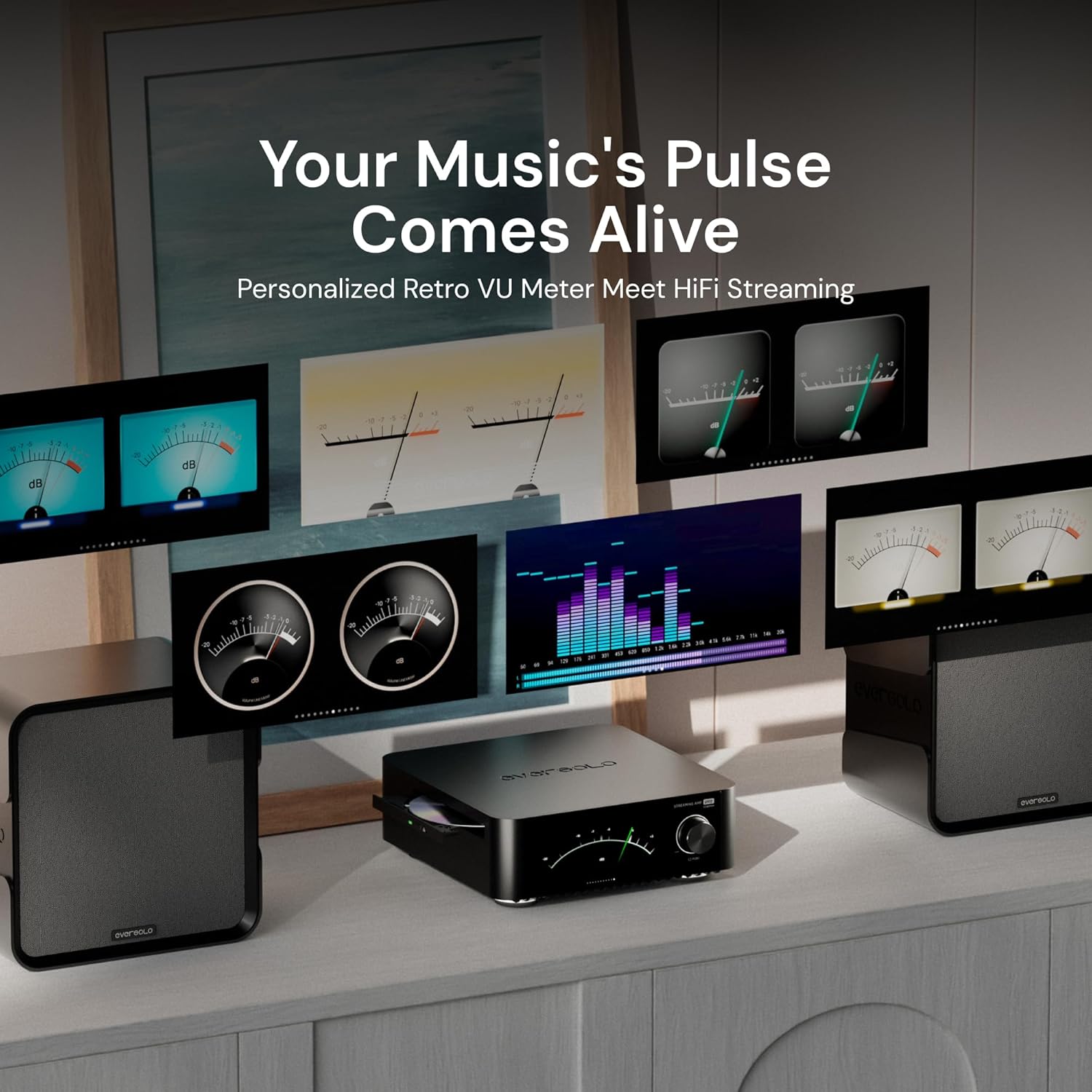
The Eversolo Play features a 5.5-inch color touchscreen that essentially puts a tablet interface right on your audio component. This display shows album artwork, provides access to streaming services, and offers extensive customization options including a 15-band graphic equalizer and 10-band parametric equalizer. You can adjust the sound signature for different types of music, apply room correction using your smartphone's microphone, and even enjoy retro-style VU meters and spectrum displays.
This level of customization appeals to audio enthusiasts who enjoy tweaking their system's performance, but it can be overwhelming for users who just want to play music. The learning curve is moderate - you'll need to spend some time exploring the options to get the most out of the device.
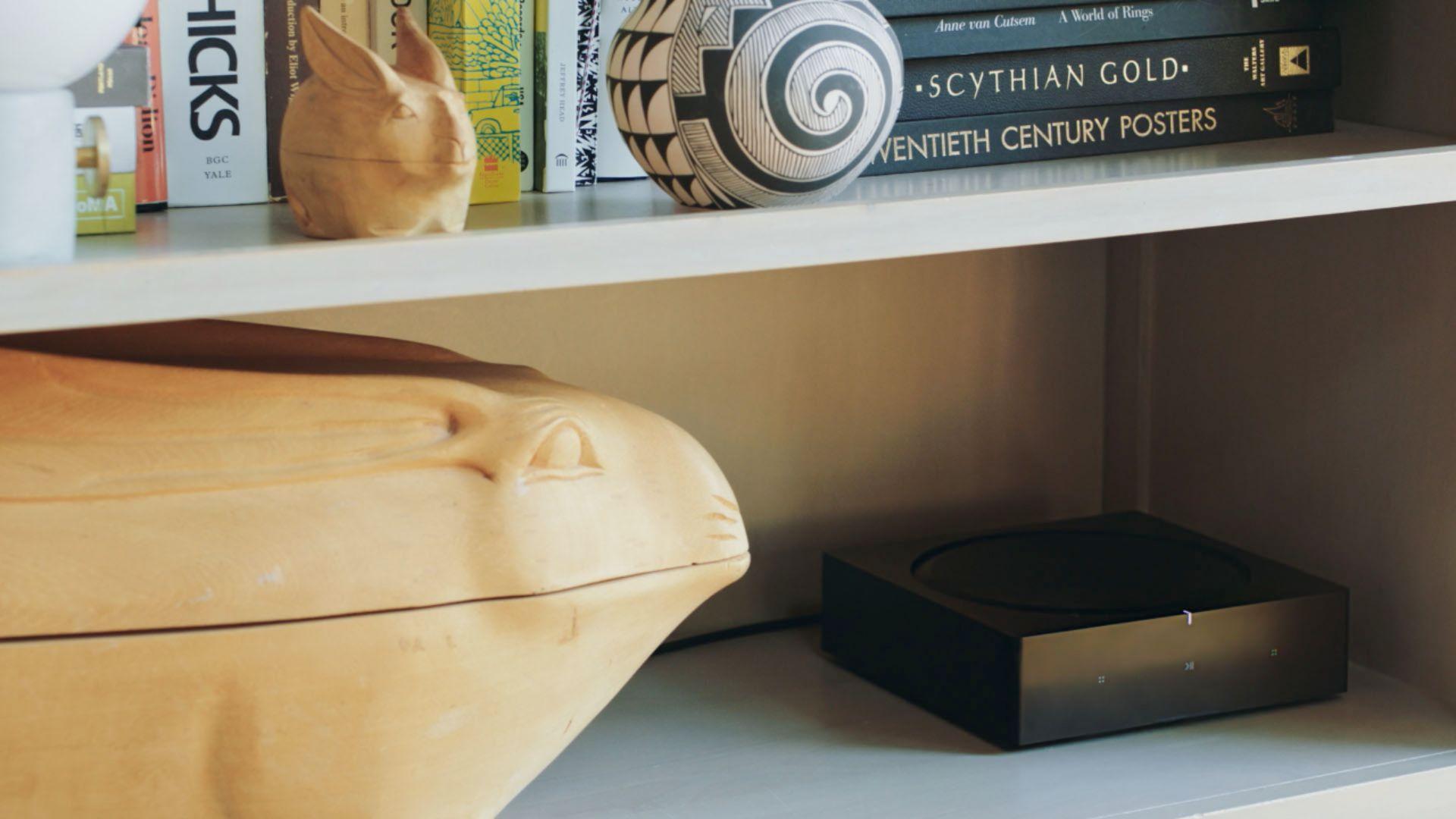
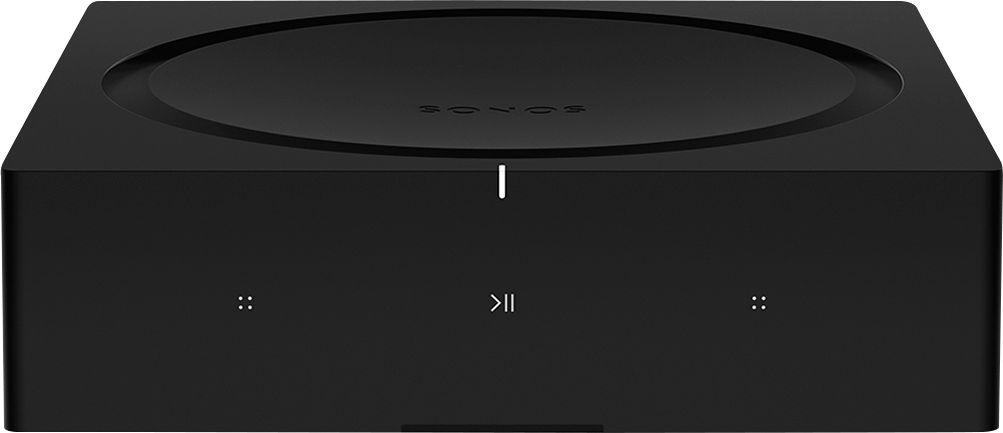
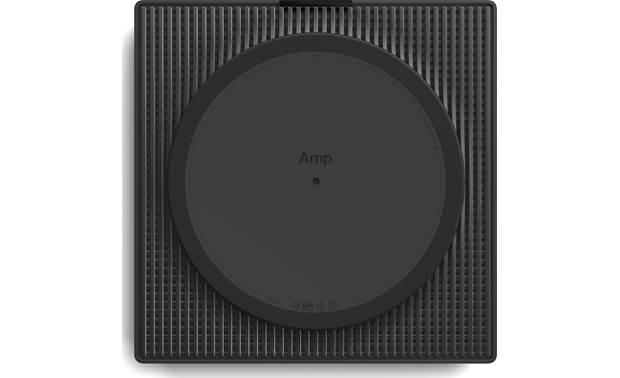
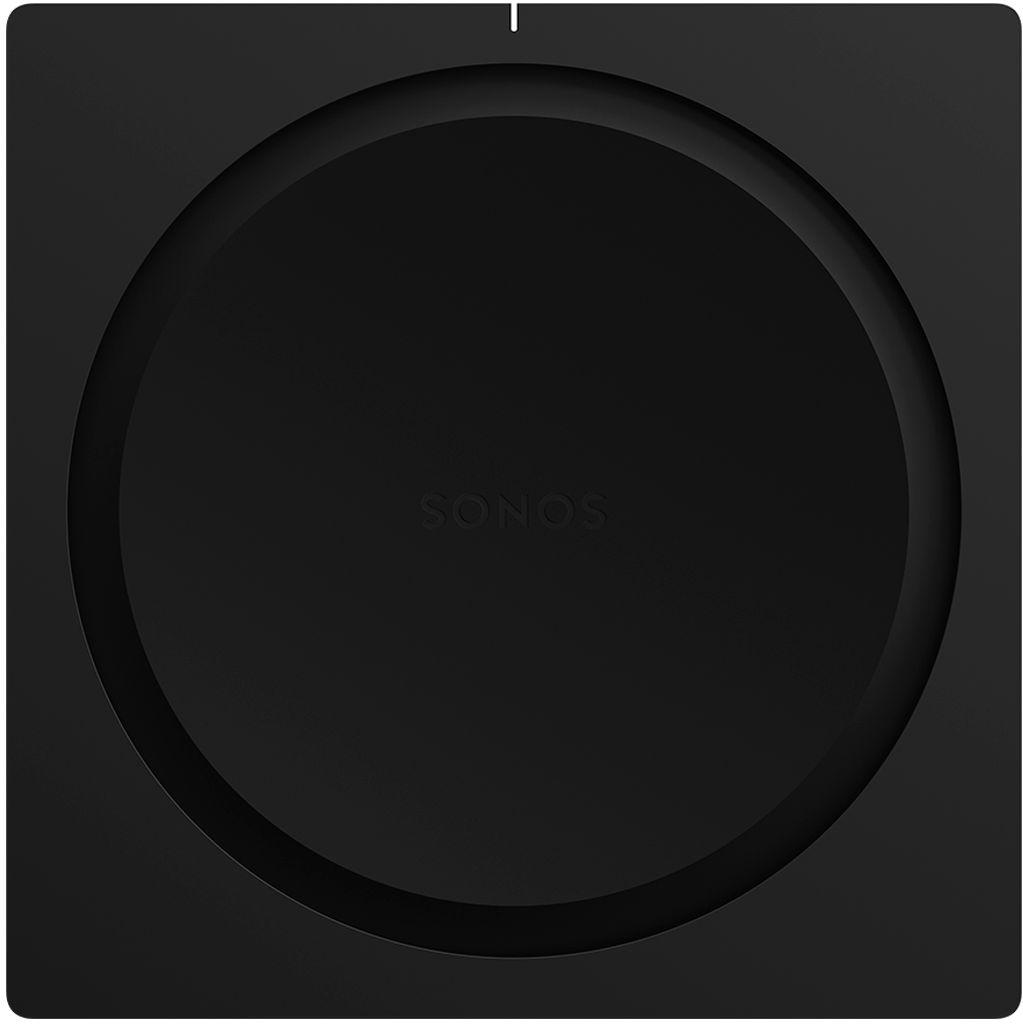
The Sonos Amp deliberately avoids visual complexity. There's no display, just simple touch controls for basic functions like play/pause and volume. All control happens through the Sonos mobile app, which has been refined through years of user feedback and is widely praised for its intuitive design. Setup is genuinely simple - the app guides you through connecting to your network and identifying your speakers, and you're playing music within minutes.
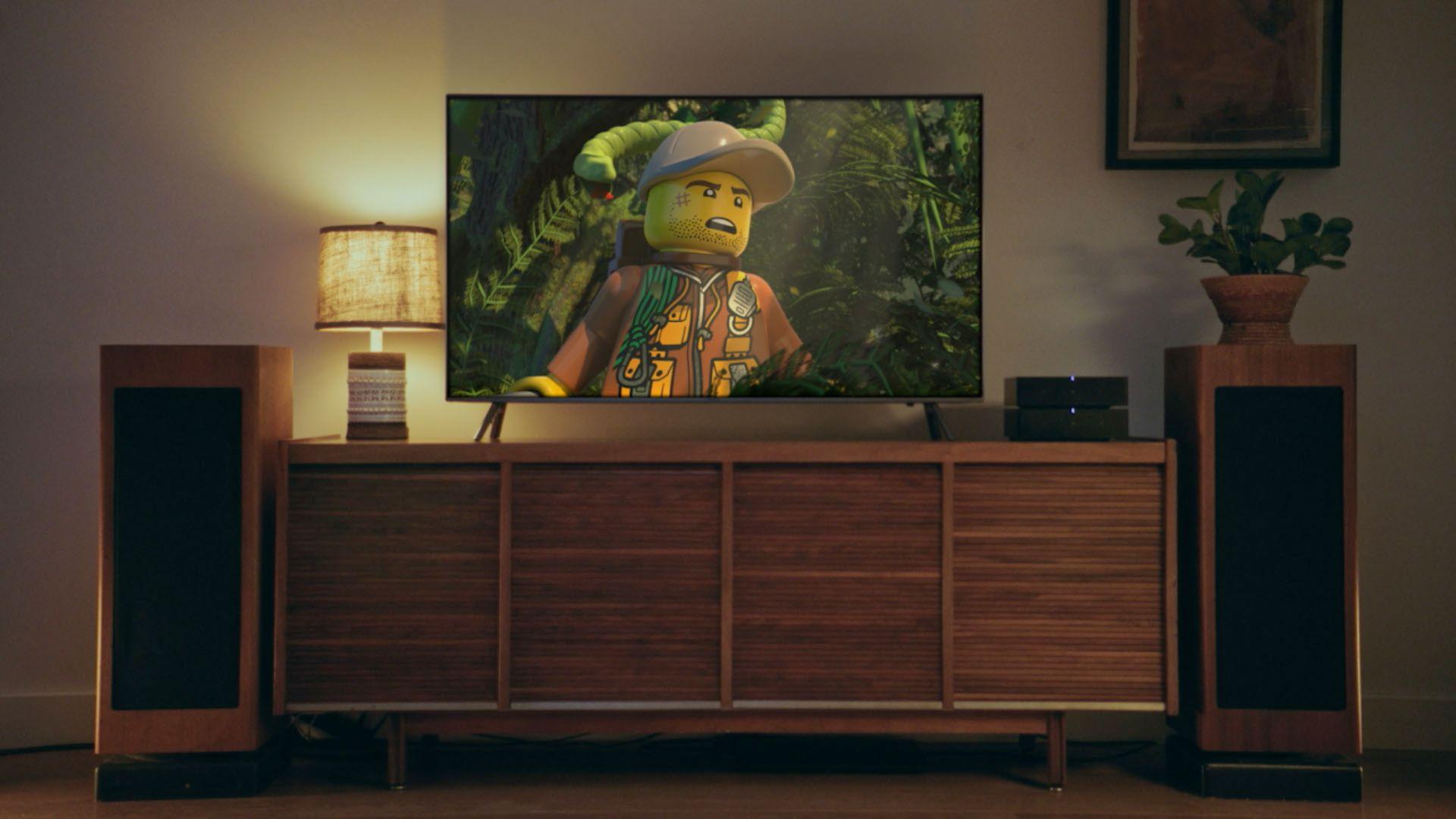
Both devices can serve as the foundation for a home theater system, but they approach it differently. The Sonos Amp excels here thanks to its mature HDMI ARC implementation and the ability to wirelessly add Sonos surround speakers. You can start with the Amp powering your front left and right speakers, then later add a Sonos Sub for bass and Sonos Era or older speakers for surround channels. The system automatically handles audio processing and creates a surprisingly convincing surround sound experience.
The Eversolo Play can handle TV audio through its HDMI ARC connection and offers superior audio quality for stereo content, but expanding to surround sound requires traditional wired speakers and additional amplifiers. However, its superior DAC means it will likely sound better when playing high-quality movie soundtracks in stereo.
For most users setting up a TV audio system, the Sonos Amp's expandability and wireless surround options provide more practical value than the Eversolo Play's audio quality advantages.
Our analysis of user reviews and expert opinions reveals distinct patterns in how these devices perform in actual homes. The Eversolo Play consistently receives praise for its engaging, detailed sound signature. Users describe it as having tight, controlled bass, clear midrange vocals, and airy, extended high frequencies. The soundstage - the perceived width and depth of the musical performance - is frequently noted as being impressively spacious for such a compact device.
However, some expert reviews note that while the Play offers excellent technical performance, it occasionally lacks the musical subtlety and refinement of traditional hi-fi separates from established audio brands. This isn't necessarily a criticism - it reflects the challenges of combining multiple functions in one affordable box.
The Sonos Amp receives consistent praise for its punchy, dynamic sound that excels at filling rooms with engaging music. User feedback emphasizes its reliability and the seamless experience of the Sonos ecosystem. However, some audiophile-oriented reviews note that while it's the best-sounding Sonos product, it doesn't quite match the refinement of dedicated hi-fi amplifiers in the same price range when used purely for critical stereo listening.
The choice between these two excellent streaming amplifiers ultimately comes down to how you want to experience music in your home. The Eversolo Play is the clear choice for anyone who prioritizes audio quality above other considerations. If you have a collection of high-resolution music files, subscribe to lossless streaming services, or simply want the best possible sound quality from your streaming amplifier, the Play delivers audiophile-grade performance at a surprisingly accessible price point.
The Play also makes sense if you value flexibility and customization. Its extensive input options, advanced EQ capabilities, and room correction features let you optimize the sound for your specific room and preferences. The inclusion of a high-quality phono input makes it an excellent choice for vinyl enthusiasts who want to combine analog and digital sources in one system.
However, the Sonos Amp becomes the obvious choice if your vision extends beyond a single listening room. Its higher power output, architectural installation capabilities, and seamless multiroom functionality make it ideal for anyone building a whole-home audio system. The mature Sonos ecosystem means you can start with the Amp in your main room and easily expand throughout your house over time.
The Sonos Amp also wins for home theater applications, thanks to its robust HDMI ARC implementation and the ability to wirelessly add surround speakers. If you're looking for one device that can serve as both your music system and TV audio upgrade, the Amp provides more practical value.
At the time of writing, both devices are priced competitively within their respective market segments, making the decision more about features and philosophy than pure value. The Eversolo Play offers exceptional audio quality per dollar for dedicated listening, while the Sonos Amp provides superior versatility and expandability per dollar for comprehensive home audio systems.
Your choice should align with your priorities: choose the Eversolo Play for maximum audio quality and customization, or the Sonos Amp for maximum convenience and system expandability. Both represent excellent approaches to modern streaming audio - they just serve different types of music lovers equally well.
| Eversolo Play Streaming Amplifier | Sonos Amp Amplifier |
|---|---|
| Power Output - Critical for driving your speakers effectively | |
| 60W @ 8Ω / 110W @ 4Ω (adequate for most bookshelf speakers) | 125W @ 8Ω / 250W @ 4Ω (drives demanding speakers and multiple pairs) |
| DAC Quality - Determines maximum audio fidelity from digital sources | |
| AKM AK4493SEQ with VELVETSOUND (audiophile-grade, supports up to DSD512/PCM 768kHz) | Proprietary implementation (optimized for streaming services, supports up to 24-bit/48kHz) |
| Audio Performance Specs - Lower distortion and higher SNR mean cleaner sound | |
| THD 109dB (exceptional measurements for this price range) | Not specified (optimized for practical performance rather than maximum specs) |
| Streaming Service Support - Access to your favorite music platforms | |
| TIDAL, Qobuz, Amazon Music, Spotify Connect, Apple Music, Roon Ready | Major services via Sonos ecosystem (excellent reliability and integration) |
| High-Resolution Audio Support - Important for audiophiles with premium subscriptions | |
| Up to DSD512 and PCM 32-bit/768kHz (future-proof for any audio format) | Up to 24-bit/48kHz (covers all streaming services adequately) |
| User Interface - How you control and customize your music experience | |
| 5.5" HD touchscreen with extensive EQ and room correction options | Sonos mobile app control only (simpler but very mature and reliable) |
| Physical Inputs - Connectivity options for various audio sources | |
| HDMI ARC, optical, coaxial, USB (multiple), MM/MC phono, line-in | HDMI ARC, analog RCA with phono capability, dual Ethernet |
| Multiroom Capability - Synchronized music throughout your home | |
| Limited to third-party solutions or manual grouping | Seamless integration with entire Sonos ecosystem |
| Home Theater Expandability - Adding surround sound capabilities | |
| Stereo only (requires additional wired components for surround) | Wireless surround expansion with Sonos speakers |
| Customization Options - Fine-tuning sound to your preferences | |
| 15-band graphic EQ, 10-band parametric EQ, room correction via smartphone | Basic EQ, Trueplay room correction (limited to specific speaker combinations) |
| Physical Design - How it fits in your space | |
| Compact desktop unit with RGB lighting and visual displays | Rack-mountable, architectural-friendly, minimalist design |
The Eversolo Play delivers superior audio quality with its audiophile-grade AKM AK4493SEQ DAC, supporting high-resolution audio up to DSD512 and achieving exceptional specs like 109dB SNR. The Sonos Amp focuses on practical performance optimized for streaming services, with good sound quality but not the same technical excellence as the Eversolo Play.
The Sonos Amp provides significantly more power with 125W per channel at 8Ω (250W at 4Ω) compared to the Eversolo Play's 60W at 8Ω (110W at 4Ω). This makes the Sonos Amp better for demanding speakers, large rooms, or driving multiple speaker pairs.
Yes, both support major streaming services. The Eversolo Play offers direct integration with TIDAL, Qobuz, Amazon Music, Spotify Connect, Apple Music, and is Roon Ready. The Sonos Amp supports these services through the mature Sonos ecosystem, which provides excellent reliability and seamless operation.
The Sonos Amp is superior for home theater use due to its robust HDMI ARC implementation and ability to wirelessly expand with Sonos surround speakers. While the Eversolo Play has HDMI ARC for TV audio, it only provides stereo output and requires traditional wired speakers for surround sound expansion.
Both can connect turntables, but the Eversolo Play offers a dedicated MM/MC phono input with a high-quality built-in preamp. The Sonos Amp has analog RCA inputs that can accommodate turntables but requires an external phono preamp for proper vinyl playback.
The Sonos Amp is much easier to set up and use, with simple app-based control and minimal configuration required. The Eversolo Play offers extensive customization options through its touchscreen interface, including advanced EQ settings, which provides more control but requires more time to optimize.
The Sonos Amp excels at whole-home audio, seamlessly integrating with other Sonos speakers for synchronized multiroom playback. The Eversolo Play is primarily designed for single-room use, though it can work with third-party multiroom solutions with more complexity.
The Eversolo Play supports significantly higher resolution audio formats, handling files up to DSD512 and PCM 32-bit/768kHz. The Sonos Amp supports up to 24-bit/48kHz, which covers all streaming services but doesn't match the Eversolo Play's capability for audiophile-grade local files.
The Eversolo Play features a 5.5-inch HD color touchscreen for direct control, music browsing, and visual feedback like VU meters. The Sonos Amp has no display and relies entirely on smartphone app control for all functions and settings.
The Sonos Amp is better suited for outdoor and architectural installations due to its higher power output, rack-mountable design, and optimization for Sonos Architectural speakers. The Eversolo Play is more appropriate for traditional indoor hi-fi setups with quality bookshelf speakers.
Both amplifiers include dedicated subwoofer outputs. The Eversolo Play offers adjustable crossover settings from 40Hz to 500Hz, while the Sonos Amp provides auto-detecting subwoofer output with user-adjustable 50-110Hz crossover through the app.
Value depends on your priorities. The Eversolo Play offers exceptional audio quality per dollar for dedicated music listening with audiophile-grade components. The Sonos Amp provides better value for whole-home audio systems, home theater integration, and users who prioritize convenience and expandability over maximum sound quality.
We've done our best to create useful and informative comparisons to help you decide what product to buy. Our research uses advanced automated methods to create this comparison and perfection is not possible - please contact us for corrections or questions. These are the sites we've researched in the creation of this article: blog.son-video.com - audio46.com - upscaleaudio.com - audioadvice.com - musicdirect.com - audio46.com - whathifi.com - whathifi.com - bloomaudio.com - youtube.com - the-ear.net - whathifi.com - soundstagesimplifi.com - youtube.com - stevehuffphoto.com - darko.audio - youtube.com - eversolo.com - audioadvice.com - crutchfield.com - adiglobaldistribution.pr - themasterswitch.com - astralsecurite.ca - wassersfurniture.com - whathifi.com - sonos.com - audiosciencereview.com - bestbuy.com - videoandaudiocenter.com - en.community.sonos.com

Privacy Policy
Terms and Conditions - Affiliate Policy
Home Security
© Copyright 2008-2026.
11816 Inwood Rd #1211, Dallas, TX 75244