


The world of home audio has been completely transformed over the past decade. Gone are the days when you needed a tower of separate components—a CD player, a preamp, a power amplifier, and maybe a separate streaming device—just to play music from your phone. Today's streaming amplifiers pack all of that functionality into a single, elegant box that connects directly to your speakers and the internet.
But with this convenience comes new decisions. Do you prioritize raw performance and features, or do you value simplicity and seamless integration? This choice becomes crystal clear when comparing two standout products that represent different philosophies in streaming amplifier design: the feature-packed Eversolo Play and the elegantly simple Bluesound PowerNode Edge.
Before diving into specifics, it's worth understanding exactly what these devices bring to your audio setup. A streaming amplifier combines three essential components: a digital music streamer (which connects to services like Spotify and Tidal), a DAC or digital-to-analog converter (which turns digital music files into analog signals your speakers can use), and a power amplifier (which boosts those signals enough to drive your speakers).
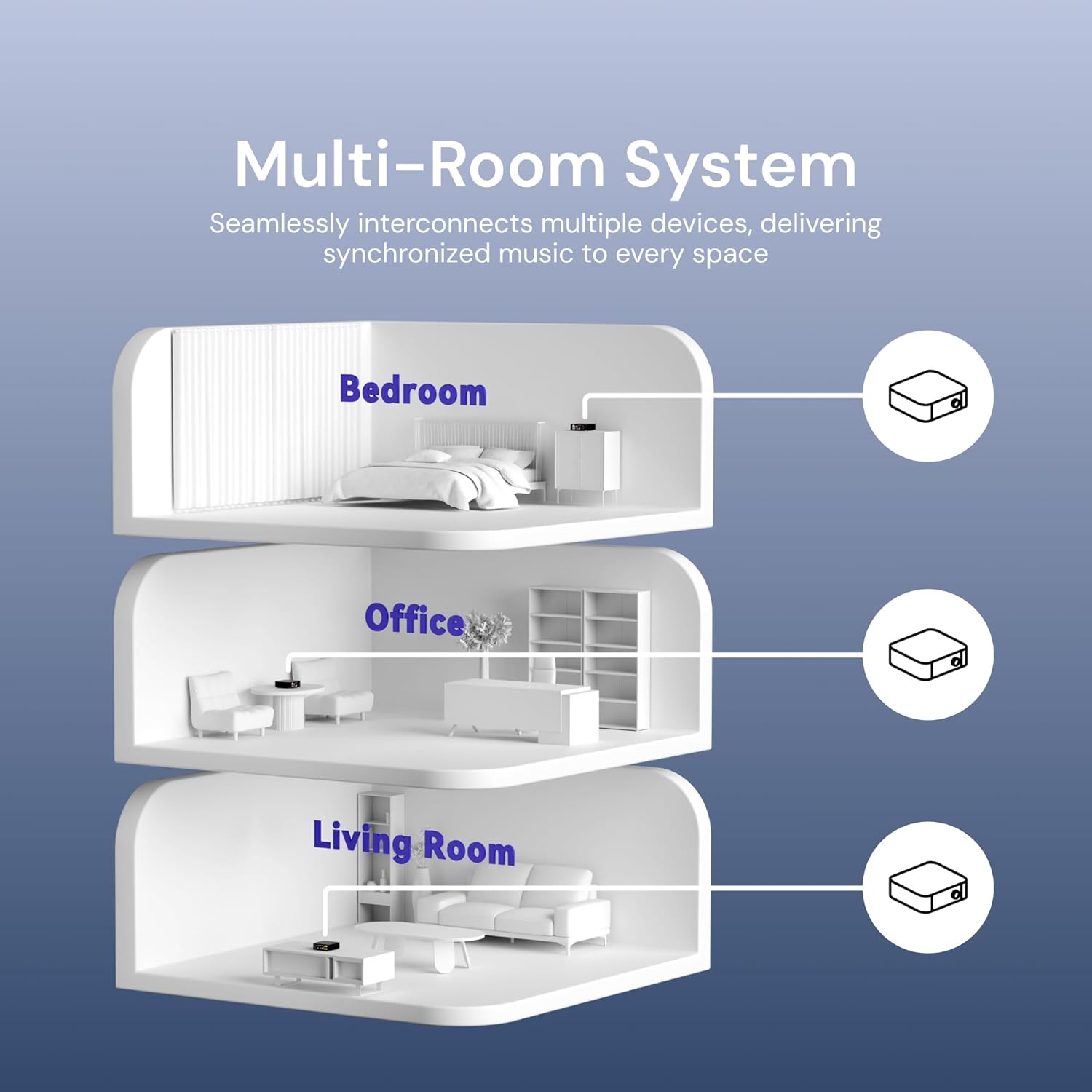
This integration eliminates the complexity and cost of buying separate components, while often improving sound quality by reducing the number of connections and potential interference points in your signal chain. The best streaming amplifiers also add smart features like room correction, which automatically adjusts the sound to compensate for your room's acoustics, and multi-room capabilities that let you play synchronized music throughout your home.
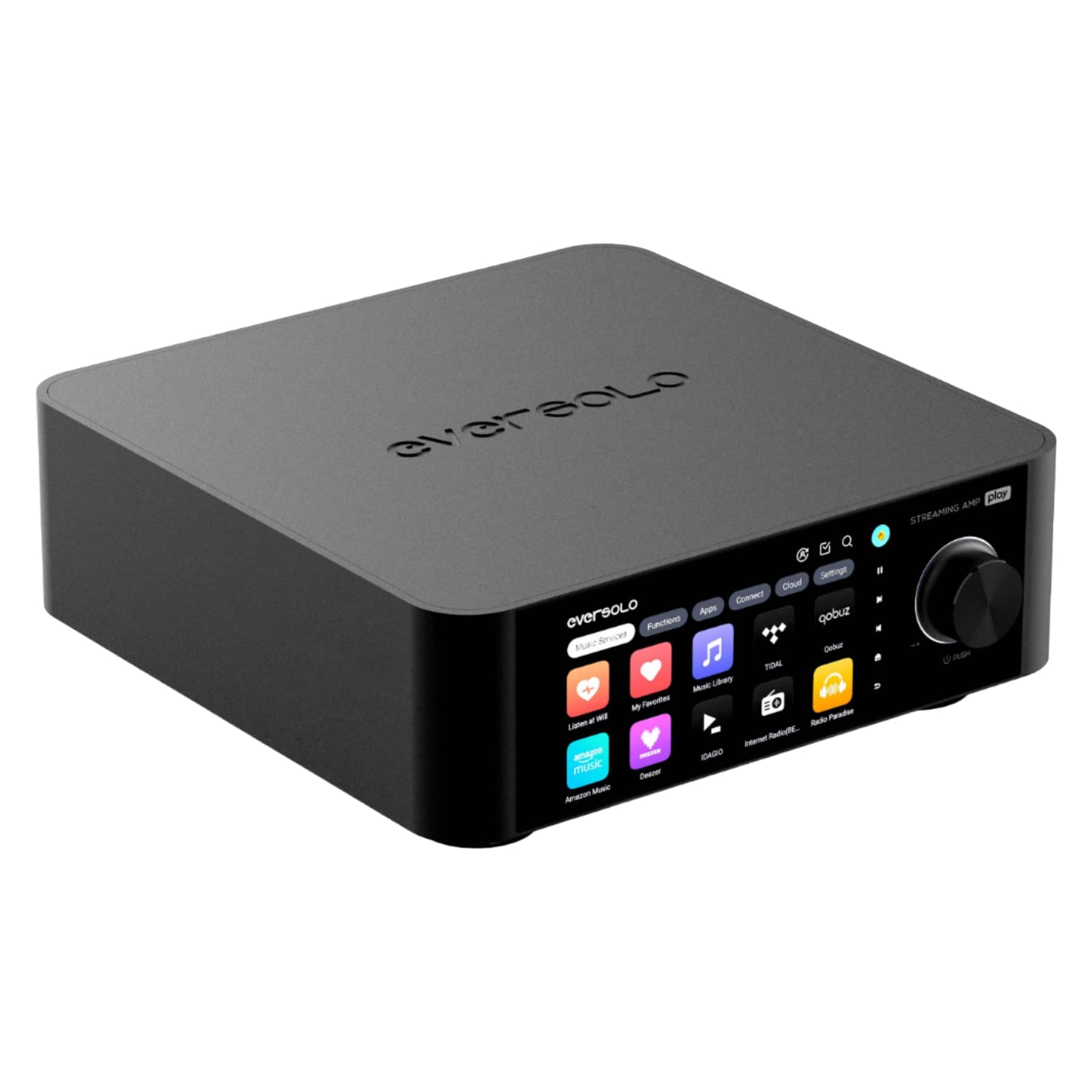
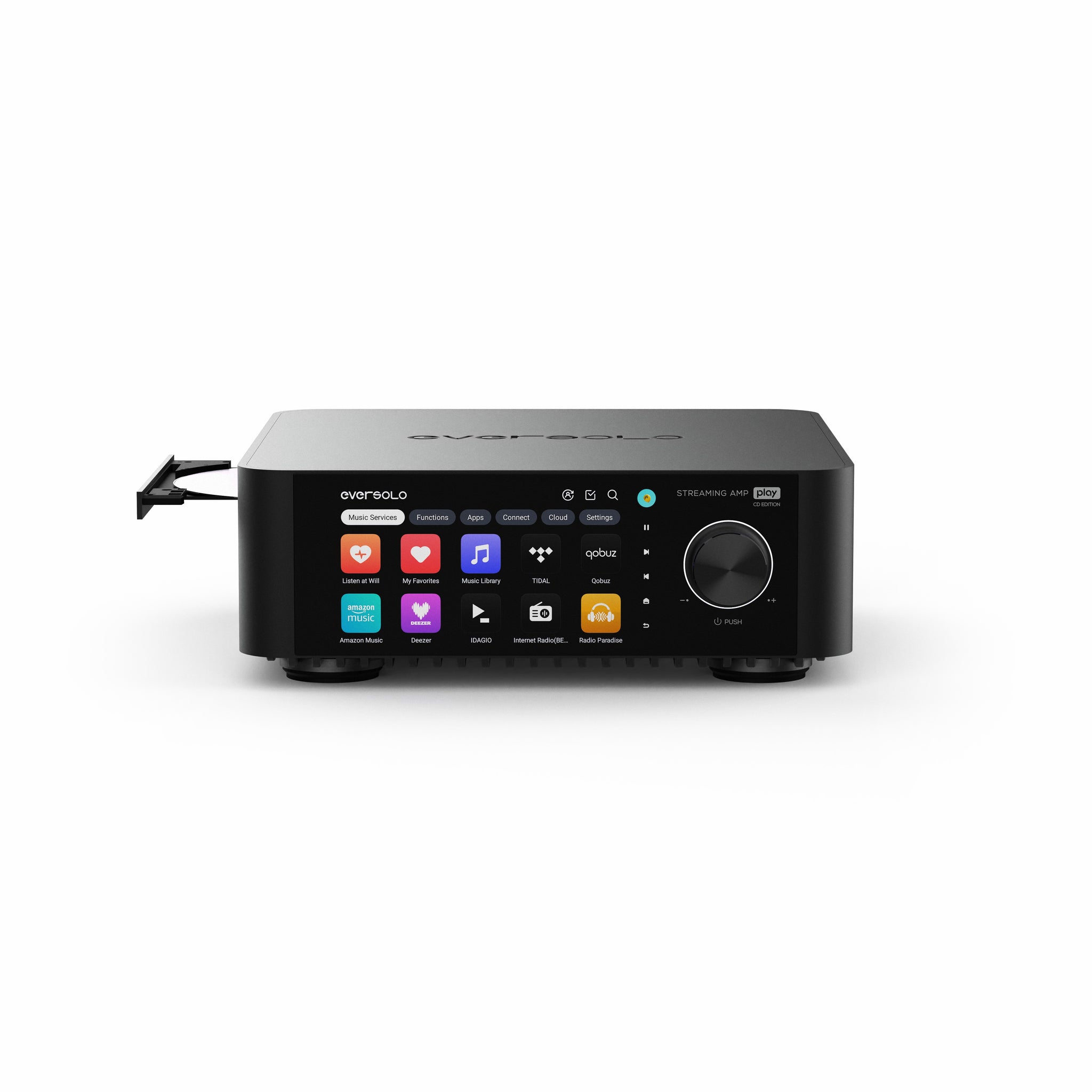
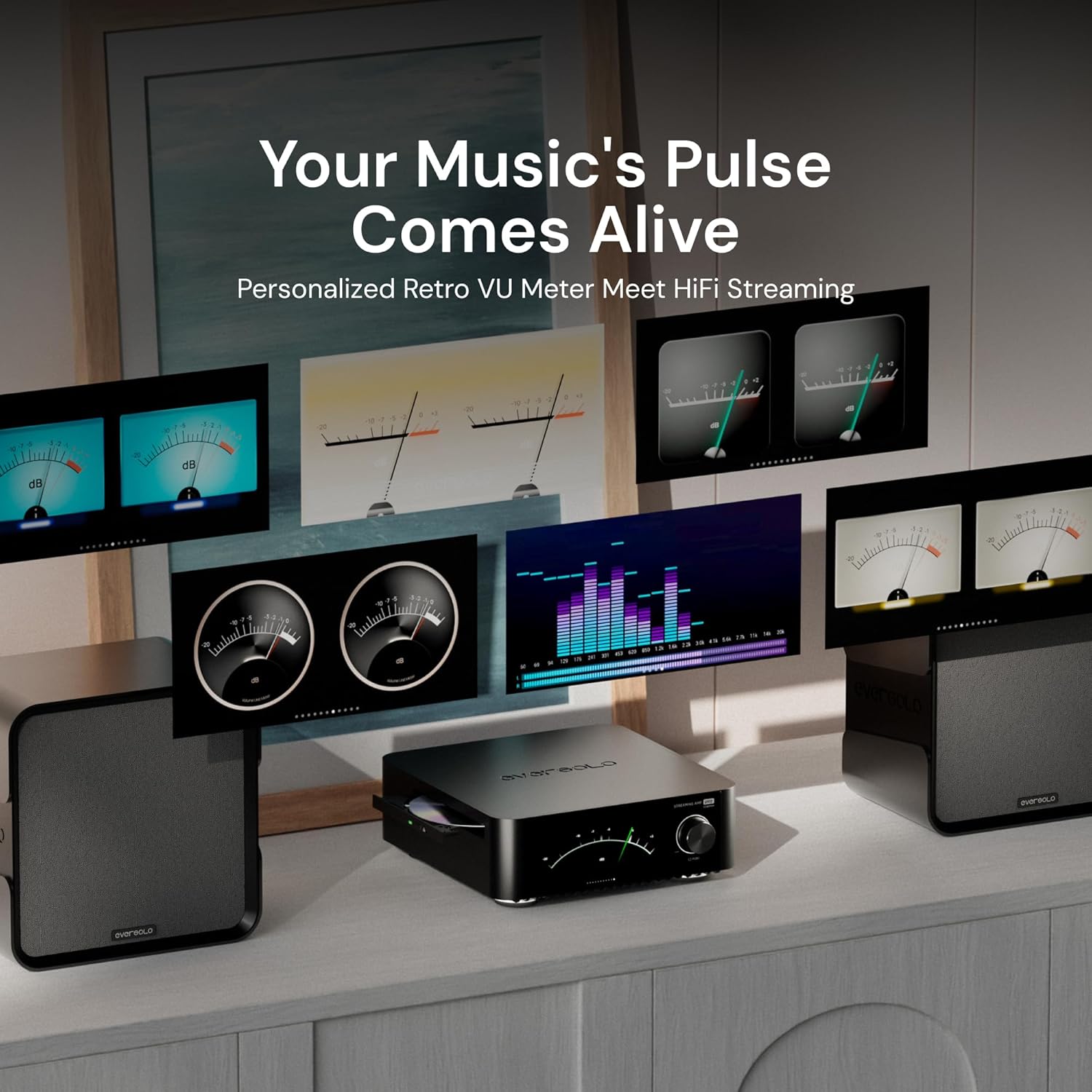
The Eversolo Play, which debuted in 2025, represents the "everything but the kitchen sink" approach to streaming amplifiers. With its large touchscreen, comprehensive connectivity, and premium internal components, it's designed for audio enthusiasts who want maximum flexibility and performance in a single box.
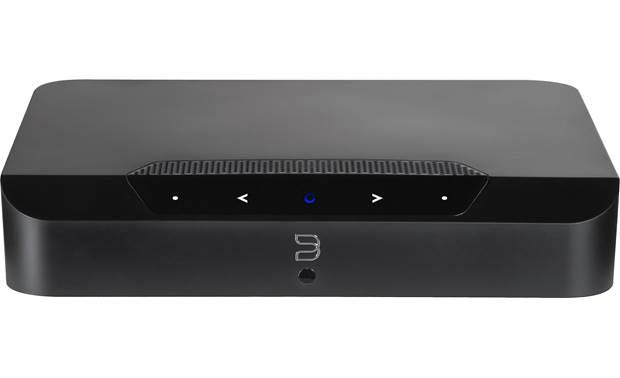
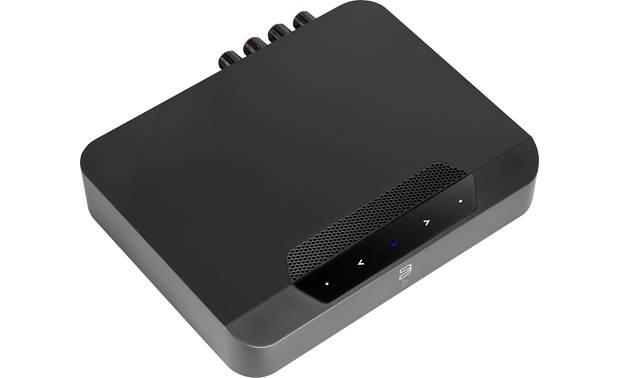
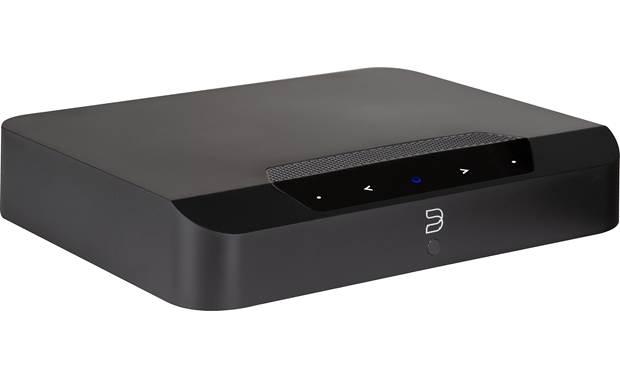
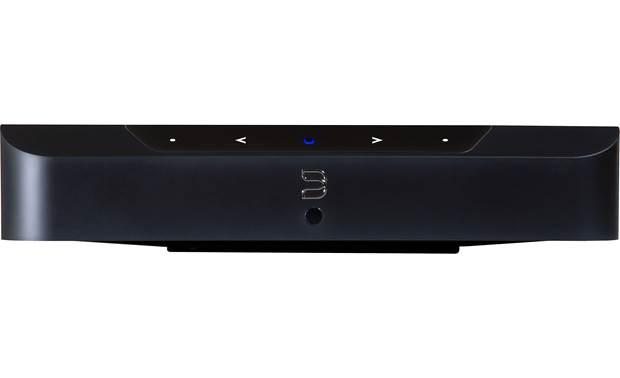
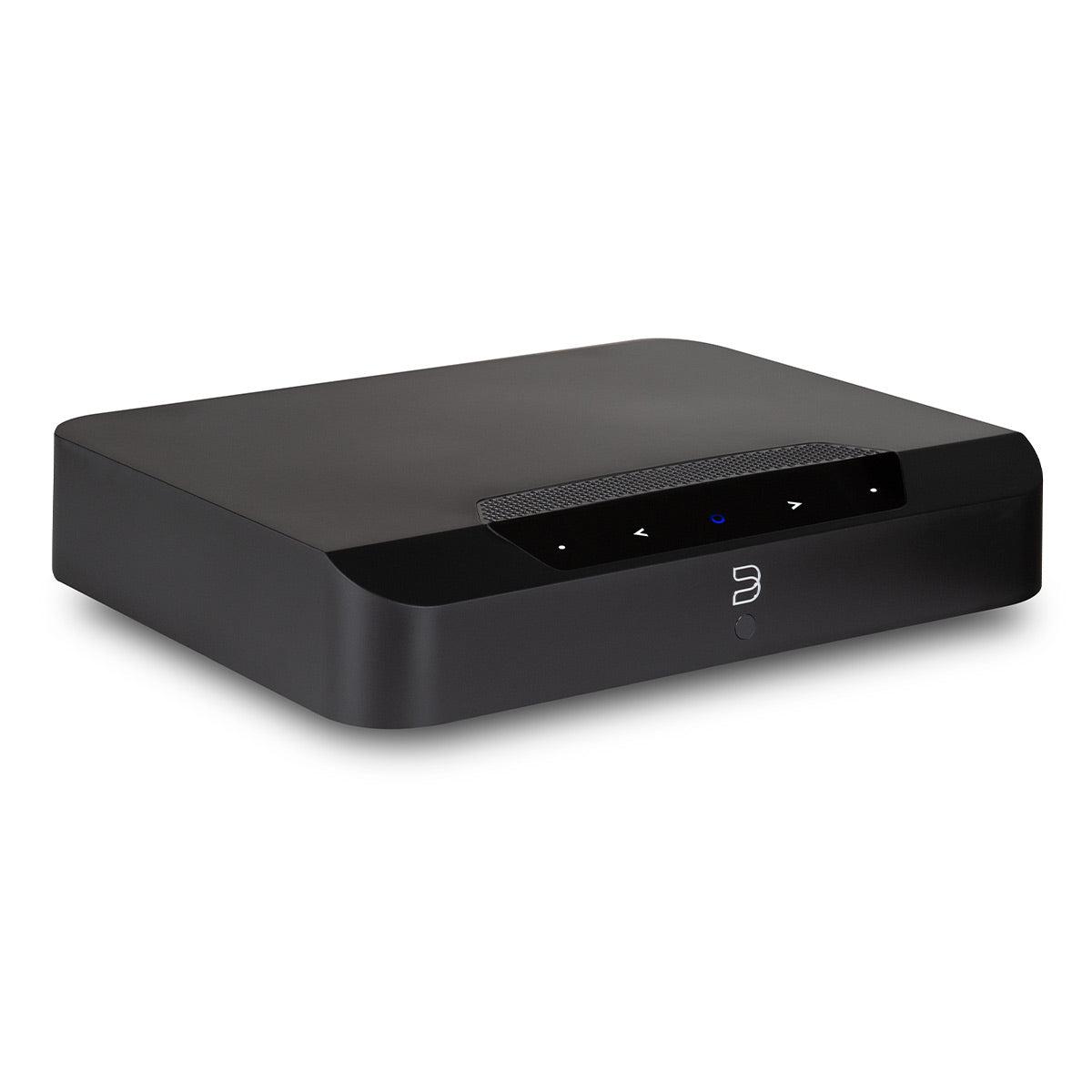
The Bluesound PowerNode Edge, released in 2022, takes the opposite approach. This compact, wall-mountable device prioritizes simplicity, reliability, and seamless integration into existing audio systems or smart homes. It's part of Bluesound's mature BluOS ecosystem, which has been refined over nearly a decade.
Both products have evolved significantly since their initial releases. The streaming amplifier category has seen major improvements in DAC technology, with manufacturers adopting higher-performance chips that were previously reserved for much more expensive separate components. Processing power has also increased dramatically—modern streaming amplifiers now pack smartphone-level computing power to handle multiple high-resolution audio streams and complex digital signal processing.
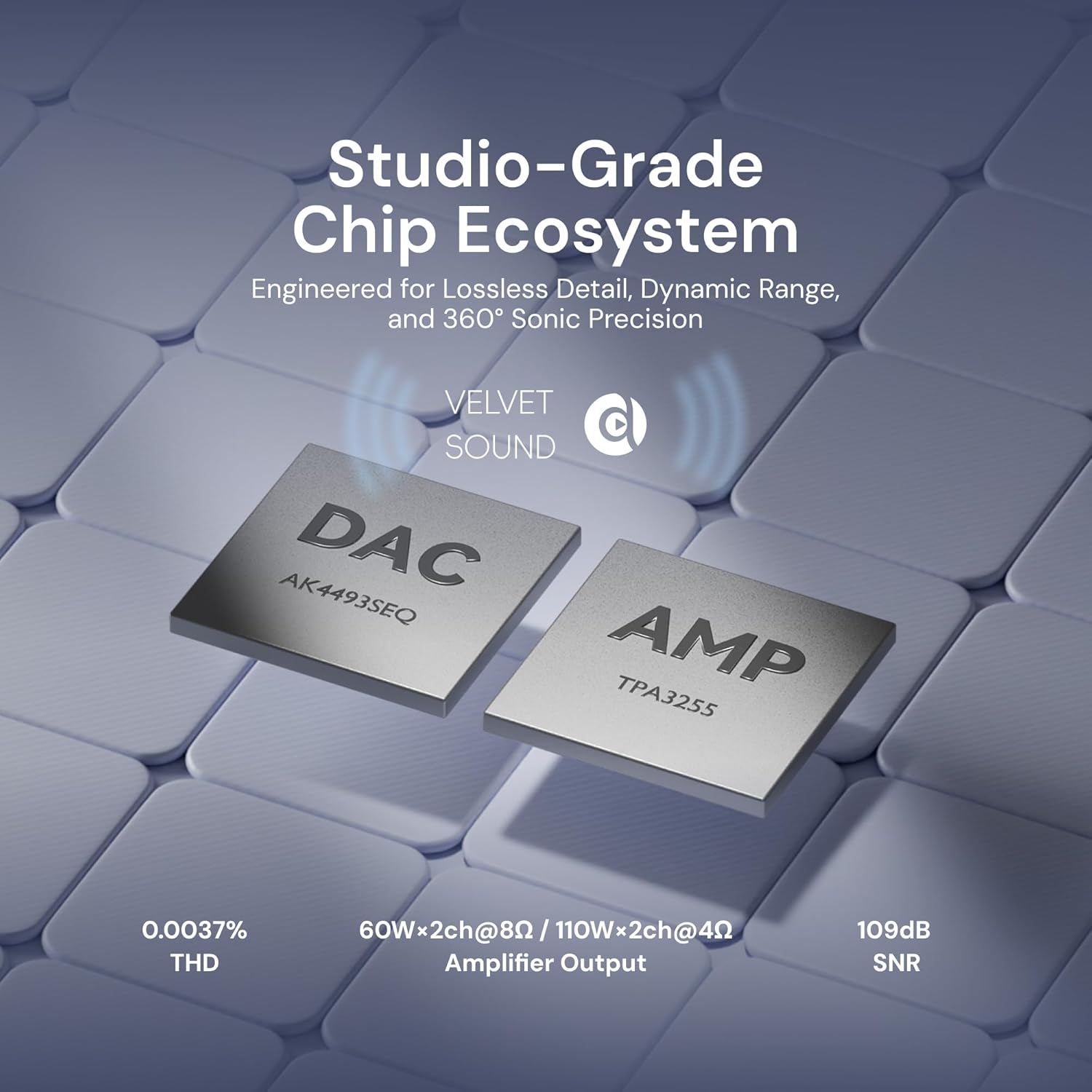
When it comes to amplification, the differences between these two products tell an important story about their intended uses. The Eversolo Play delivers 60 watts per channel into 8-ohm speakers, scaling up to 110 watts into 4-ohm loads. The PowerNode Edge provides 40 watts into 8 ohms and 80 watts into 4 ohms.
These power differences matter more than the numbers might suggest. Many bookshelf speakers with sensitivities around 85-87 decibels (a measure of how efficiently they convert watts into sound) will play adequately loud with either amplifier. But larger tower speakers or less efficient designs often need that extra headroom the Eversolo Play provides, especially if you're listening in a larger room or enjoy dynamic music at realistic volumes.
What's particularly interesting is how each product achieves its power output. The PowerNode Edge uses Bluesound's DirectDigital technology, which keeps the audio signal in digital form until the very last stage before the speakers. This approach minimizes distortion and can provide excellent clarity, but it also means the amplifier's character is largely determined by its digital processing algorithms.
The Eversolo Play takes a more traditional approach with its Class D amplification, but implements it with sophisticated feedback systems and high-quality components that achieve remarkably low distortion—just 0.0037% total harmonic distortion, which is exceptional for any amplifier, let alone one at this price point.
The digital-to-analog converter is arguably the most critical component in any streaming amplifier, and this is where the philosophical differences between these products become most apparent. The Eversolo Play uses the AKM AK4493SEQ DAC chip with what the company calls Velvetsound technology. This is a premium component that supports incredibly high resolution audio—up to DSD512 (which provides 11.2 million samples per second) and PCM audio at 768kHz sampling rates with 32-bit depth.
To put this in perspective, CD audio uses 16-bit/44.1kHz sampling, while most high-resolution streaming services top out at 24-bit/192kHz. The Eversolo Play can handle audio files with resolution far beyond what most people will ever encounter, which provides significant headroom for future music formats and ensures current high-res files are handled without any compromise.
The PowerNode Edge uses a more modest but still capable 24-bit/192kHz DAC. For the vast majority of listeners and music sources, this is perfectly adequate. Most streaming services, including Tidal's highest quality tier, don't exceed these specifications. Where the difference becomes audible is in the quality of the implementation rather than the raw specifications.
Our research into professional reviews and user feedback consistently shows that the Eversolo Play delivers a more detailed, dynamic sound with better separation between instruments. The superior signal-to-noise ratio of 109dB (compared to the PowerNode Edge's 91dB) translates into a blacker background and more subtle details in quiet passages.
However, the PowerNode Edge benefits from Bluesound's relationship with NAD, a respected audio company with decades of amplifier design experience. This heritage shows in the device's musical, engaging sound signature that many listeners find more immediately appealing than technically superior but potentially more clinical alternatives.
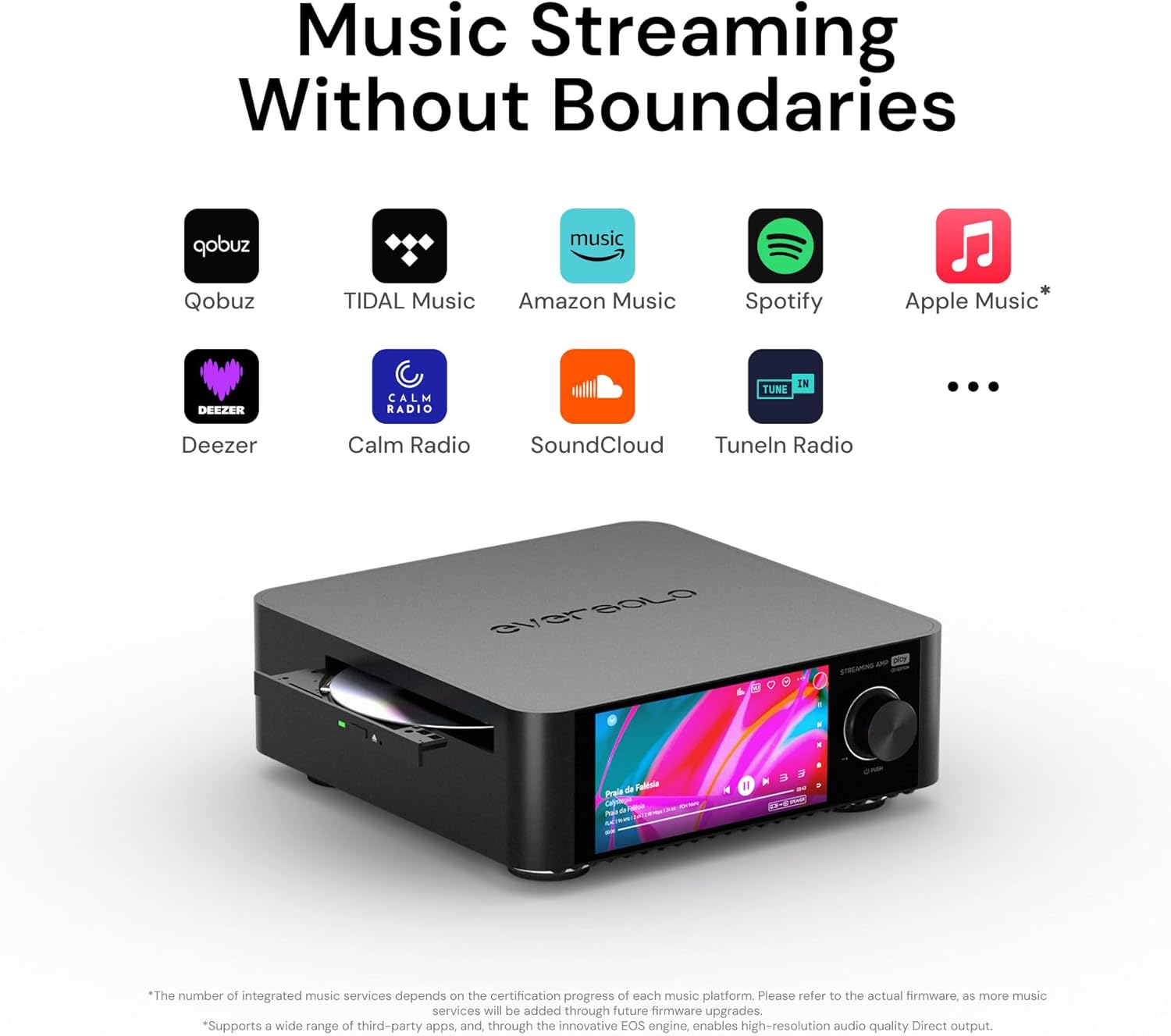
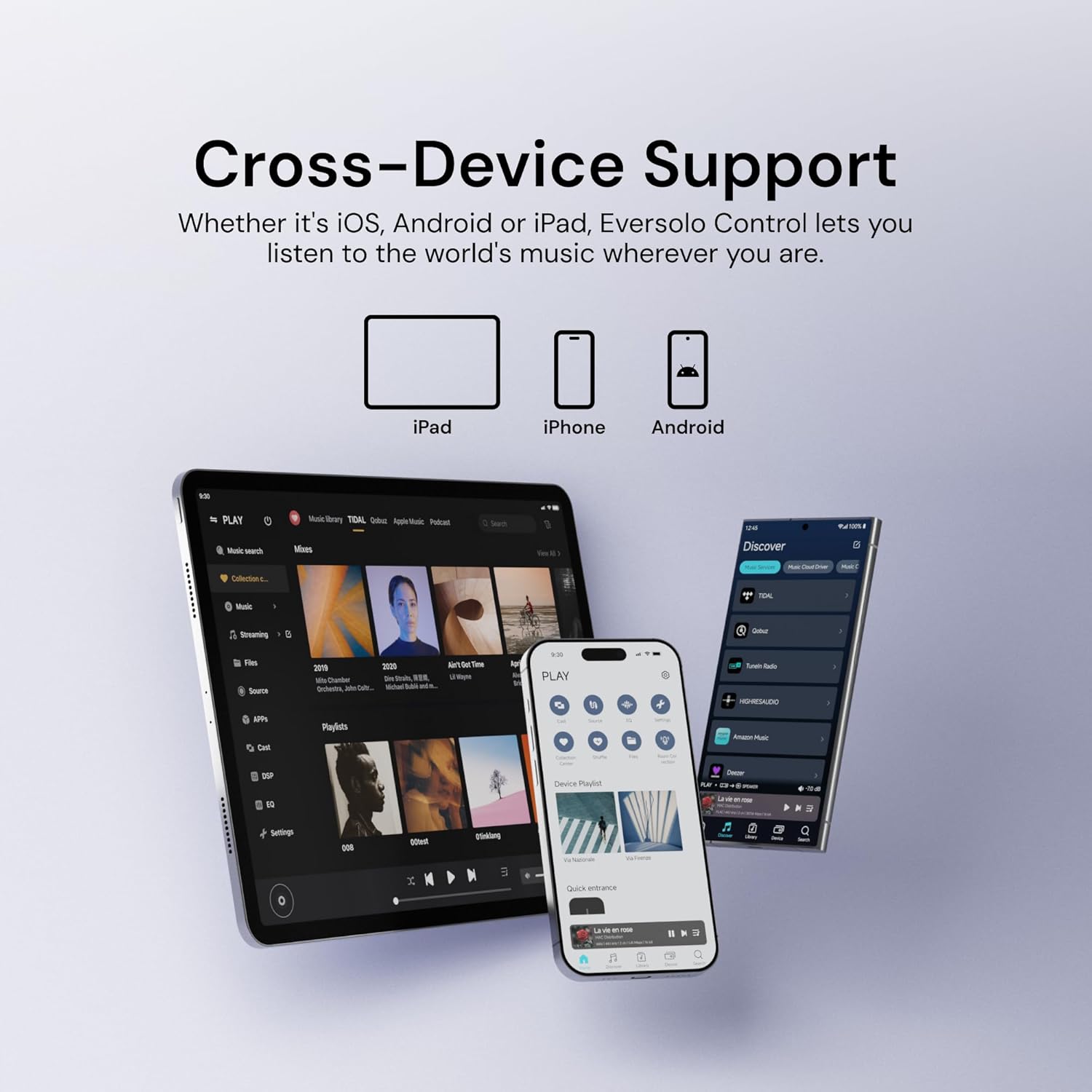
Modern streaming amplifiers live or die by their software, and this is where the products diverge most dramatically. The Eversolo Play runs a customized Android-based operating system that provides native integration with major streaming services. This means you can browse Tidal, Qobuz, Amazon Music, and Spotify directly on the device's 5.5-inch touchscreen, just like using dedicated apps on your phone.
This approach offers several advantages. The interface is responsive and intuitive, with the ability to search across multiple services simultaneously—a feature that becomes incredibly useful once you experience it. The large screen also enables advanced features like real-time spectrum analysis and VU meters, which add both functionality and visual appeal.
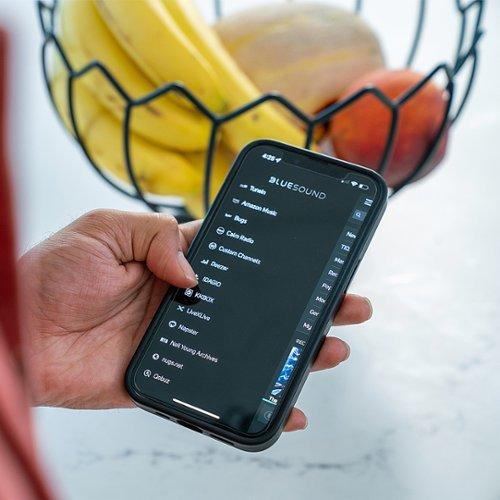
The PowerNode Edge takes a more traditional approach through Bluesound's BluOS platform. Rather than running apps directly on the device, it connects to streaming services through the BluOS Controller app on your phone or tablet. This might seem less direct, but it offers significant advantages in terms of stability, security, and update frequency. BluOS has been refined over years of real-world use and receives regular updates that add new features and streaming service support.
Where BluOS really shines is in multi-room functionality. If you have multiple Bluesound devices throughout your home, they can all be controlled from a single app, with perfect synchronization for whole-house audio. The PowerNode Edge can even serve as rear channel speakers in a wireless surround sound setup when paired with other BluOS components.
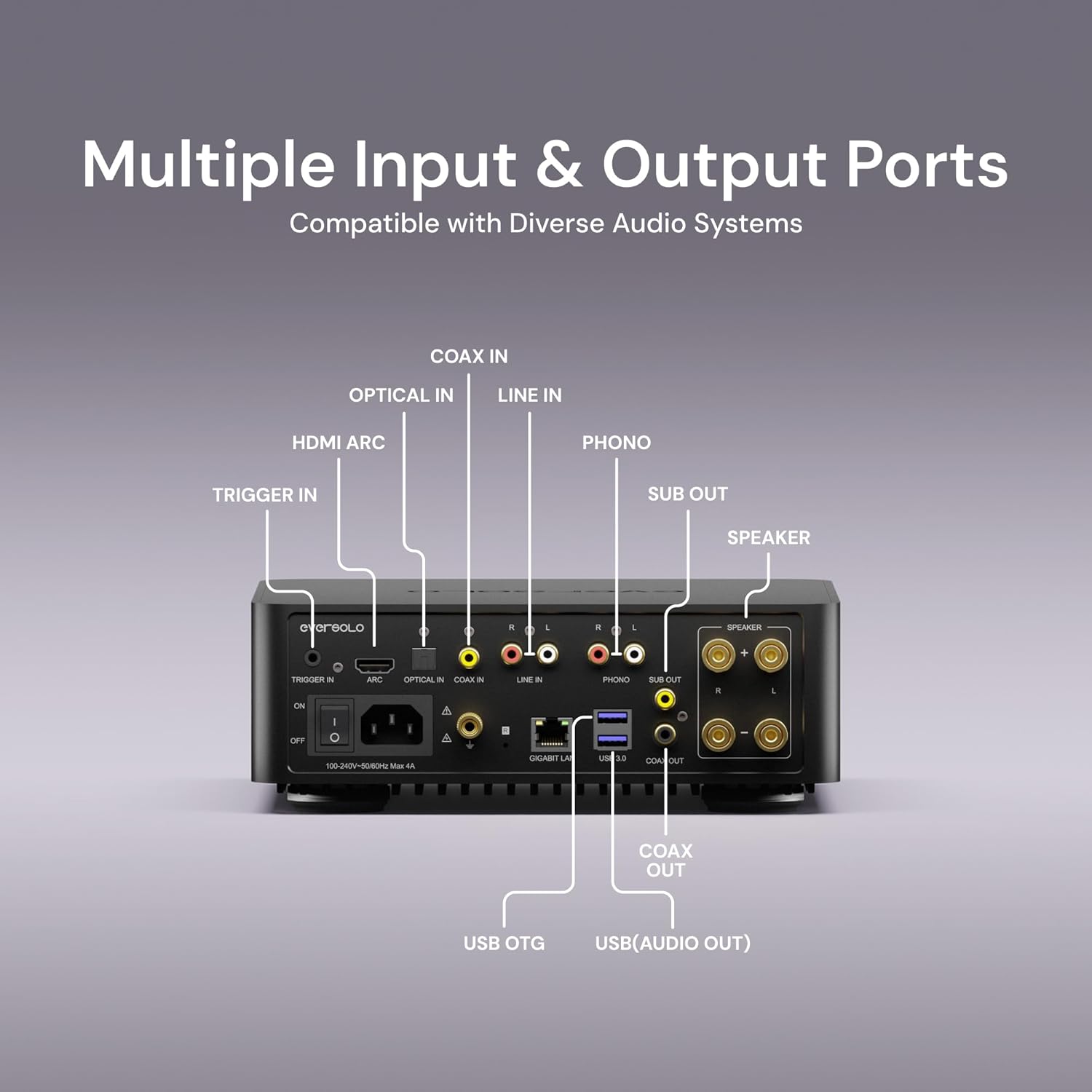
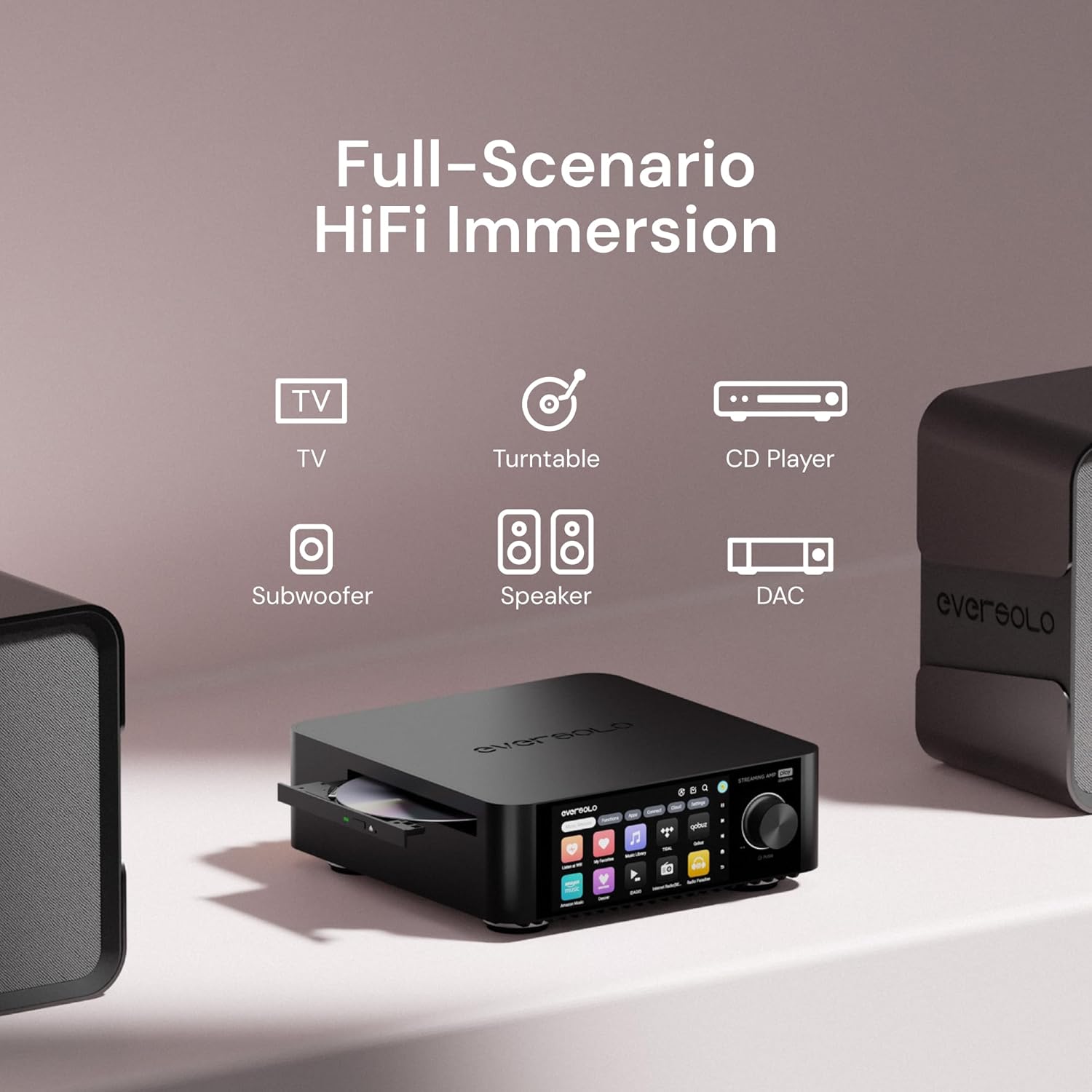
The connectivity options reveal each product's priorities clearly. The Eversolo Play offers what can only be described as comprehensive connectivity. Beyond the expected digital inputs (optical and coaxial), it includes a proper MM/MC phono input for turntables, complete with adjustable gain and impedance settings that rival dedicated phono preamps costing hundreds of dollars.
The HDMI ARC input allows direct connection to modern TVs, automatically switching to TV audio when you turn on your television. The USB input supports both storage devices and can output high-resolution digital audio to external DACs if you want to upgrade later. There's even a trigger input for custom installation systems.
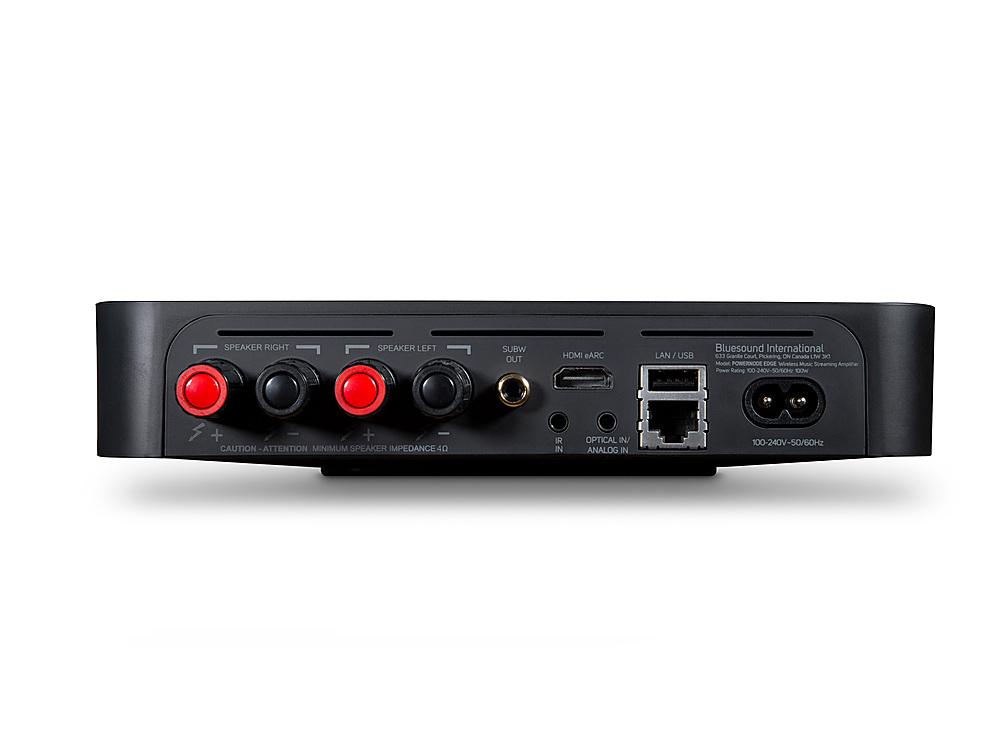
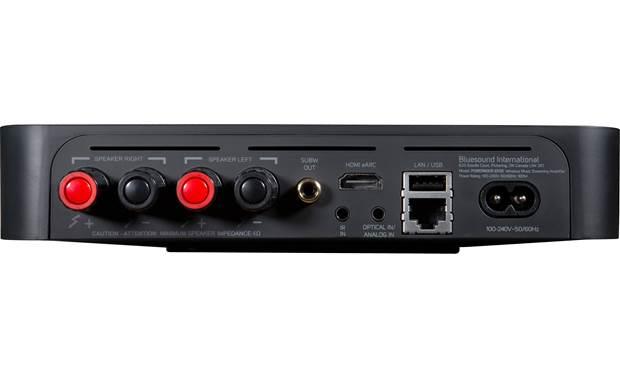
The PowerNode Edge takes a more focused approach with fewer but well-chosen connections. The combo analog/optical input (using a 3.5mm jack) is clever engineering that saves space while maintaining flexibility. The HDMI eARC input actually represents a more advanced standard than the Eversolo Play's regular ARC, supporting higher bandwidth and better audio formats.
What the PowerNode Edge lacks in input variety, it makes up for in wireless capabilities. The two-way Bluetooth implementation means you can both stream to the amplifier from your phone and stream from the amplifier to Bluetooth headphones—a surprisingly useful feature for late-night listening.
The user interface philosophy differs dramatically between these products. The Eversolo Play's large touchscreen provides immediate, visual feedback and control. You can see album art, adjust the comprehensive EQ settings, and manage multiple music sources without picking up your phone. The interface includes advanced features like room correction, which uses your phone's microphone to measure your room's acoustics and automatically adjust the sound.
The room correction feature deserves special mention because it can make a dramatic difference in sound quality, especially in challenging room environments. Most people underestimate how much their room affects what they hear—reflections, standing waves, and absorption can significantly color the sound. The Eversolo Play's automatic correction can compensate for many of these issues, effectively making any room sound better.
The PowerNode Edge relies entirely on smartphone app control, but BluOS Controller is genuinely excellent software that's been refined over years of development. The app is fast, stable, and logically organized. More importantly, it integrates seamlessly with voice assistants like Alexa and Google Assistant, allowing hands-free control that the Eversolo Play currently lacks.
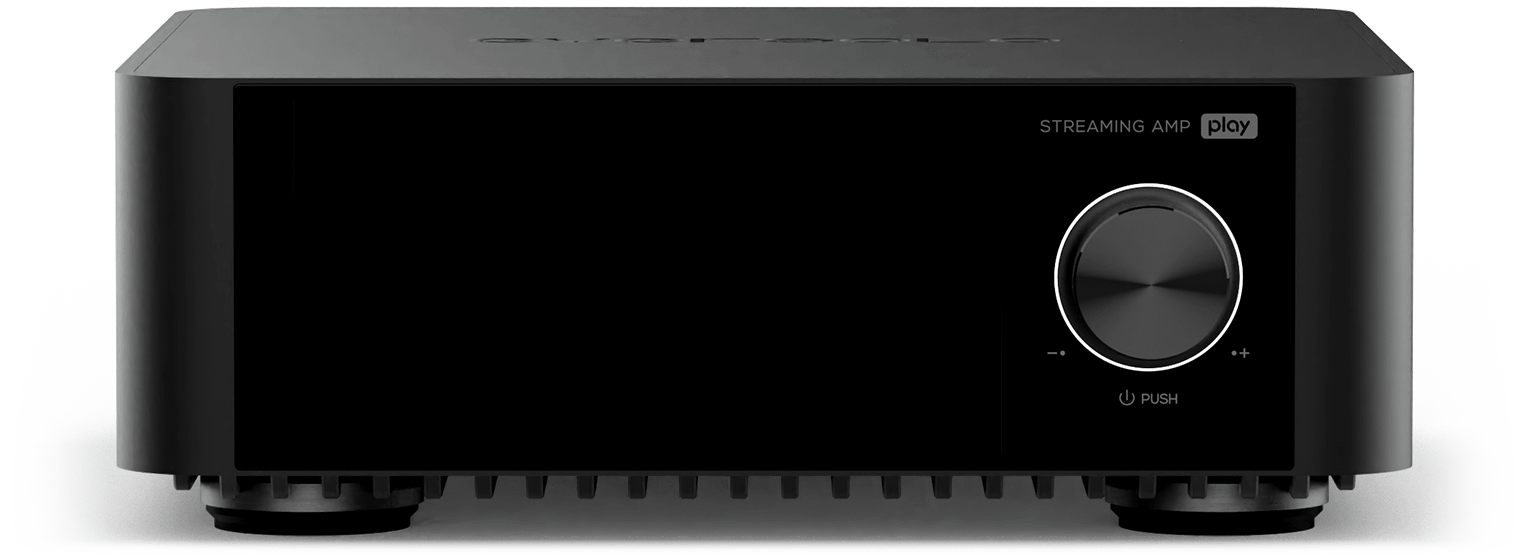
The physical design differences reflect each product's intended use case. The Eversolo Play is designed to sit prominently on a shelf or entertainment center, with its large screen serving as both interface and visual element. It's substantial enough (measuring roughly 3.25" x 9" x 9.5") that it commands attention and needs dedicated space.
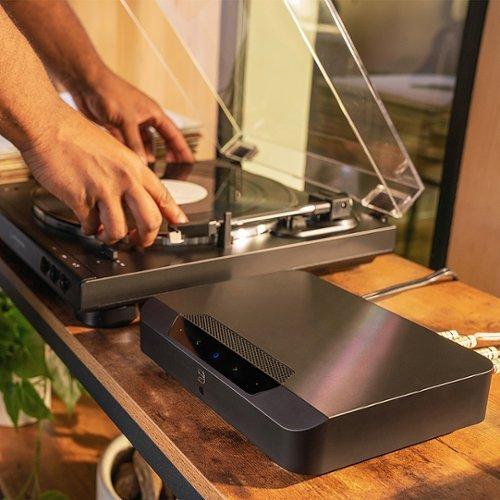
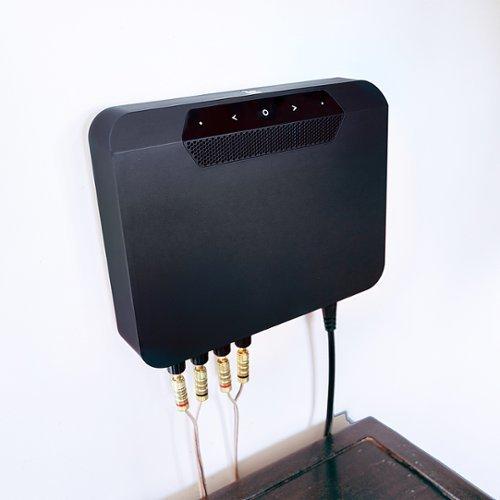
The PowerNode Edge was designed to disappear. At just 1.75 inches tall, it can hide behind a TV, mount on a wall, or tuck into tight spaces. The included mounting hardware makes installation straightforward, and the compact footprint means it works even in small apartments or offices where space is premium.
This size difference has practical implications beyond aesthetics. The PowerNode Edge's compact design makes it ideal for secondary zones in a multi-room system, bedroom systems, or situations where the amplifier needs to be heard but not seen. The Eversolo Play's larger size reflects its role as a primary system centerpiece.
Both products offer home theater integration, but with different strengths. The Eversolo Play's HDMI ARC connection provides solid TV audio integration, automatically switching inputs when you turn on your TV and supporting common surround sound formats in stereo downmix.
The PowerNode Edge's eARC implementation is technically superior, supporting higher bandwidth and more advanced audio formats. More significantly, it can integrate into larger BluOS-based home theater systems, serving as rear channel amplifiers in wireless 4.1 or 5.1 setups. This flexibility makes it particularly attractive for people who want to start with stereo and expand to surround sound later.
However, neither product is designed as a primary home theater amplifier. If surround sound is your main priority, dedicated AV receivers offer more HDMI inputs, format support, and channel options.
Based on professional reviews and extensive user feedback, both products deliver quality that exceeds their price points, but with different presentations. The Eversolo Play consistently receives praise for its detailed, dynamic sound with excellent instrument separation and staging. The superior DAC implementation is audible, particularly with high-resolution source material.
The sound signature tends toward accuracy rather than coloration, which some listeners love and others find slightly clinical. The comprehensive EQ options help here—you can warm up the sound or adjust the tonal balance to match your preferences and room acoustics.
The PowerNode Edge delivers what many describe as a more immediately musical presentation. The NAD heritage shows in a slightly warmer, more forgiving sound that works well with a wide variety of music genres and recording qualities. It may not extract quite as much detail as the Eversolo Play, but many listeners prefer its more relaxed, engaging character.
The power difference becomes most apparent with demanding speakers or at higher volumes. The Eversolo Play maintains composure and dynamics better when pushed hard, while the PowerNode Edge can become somewhat compressed with very loud, complex music.
At the time of writing, these products occupy different value propositions. The PowerNode Edge offers exceptional value for users prioritizing simplicity, multi-room capability, and proven reliability. Its mature software platform, compact design, and integration capabilities justify the price for many users.
The Eversolo Play costs significantly more but includes premium components and features typically found in much more expensive separates. The high-quality DAC, comprehensive connectivity, and advanced DSP features represent genuine value for audio enthusiasts willing to pay for maximum performance and flexibility.
Choose the Eversolo Play if you want maximum audio quality and don't mind complexity. It's ideal for main listening systems where you'll appreciate the superior DAC, higher power output, and comprehensive connectivity. The touchscreen interface and advanced features like room correction make it particularly appealing to audio enthusiasts who enjoy tweaking and optimizing their systems.
The vinyl enthusiasts should pay particular attention to the Eversolo Play's excellent phono stage, which eliminates the need for a separate phono preamp and supports both moving magnet and moving coil cartridges with proper gain and loading options.
Choose the PowerNode Edge if you value simplicity, multi-room capabilities, or need a space-efficient solution. It's perfect for secondary systems, bedrooms, offices, or as part of a larger multi-room audio installation. The mature BluOS platform, voice control integration, and wall-mounting capability make it particularly attractive for users who want great sound without complexity.
The PowerNode Edge is also the better choice for users who prioritize smart home integration or want to start with stereo and potentially expand to multi-room or home theater later.
Both products succeed in their intended roles, but they target different users with different priorities. The Eversolo Play delivers superior technical performance and flexibility for dedicated listening, while the PowerNode Edge excels at disappearing into your life while delivering consistently good sound.
Your choice should ultimately depend on how you plan to use the amplifier. If it's the centerpiece of a dedicated listening system and you appreciate having control over every aspect of the sound, the Eversolo Play justifies its higher cost. If you want excellent sound with minimal fuss, or plan to build a multi-room system, the PowerNode Edge offers exceptional value and proven reliability.
Either choice represents a significant upgrade over older separate component systems or basic powered speakers, bringing modern streaming convenience without sacrificing audio quality. The streaming amplifier category has matured to the point where both products deliver performance that would have required thousands of dollars in separate components just a few years ago.
| Eversolo Play Streaming Amplifier | Bluesound PowerNode Edge Streaming Amplifier |
|---|---|
| Power Output - Determines what speakers you can drive effectively | |
| 60W @ 8Ω / 110W @ 4Ω (handles larger, less efficient speakers) | 40W @ 8Ω / 80W @ 4Ω (perfect for bookshelf speakers and smaller rooms) |
| DAC Quality - The heart of digital sound reproduction | |
| AKM AK4493SEQ with 109dB SNR, supports DSD512/PCM 768kHz | Premium 24-bit/192kHz DAC with 91dB SNR, handles all common formats |
| User Interface - How you'll interact with the device daily | |
| 5.5" touchscreen with direct app control and visual feedback | Smartphone app control via BluOS platform with voice assistant support |
| Streaming Platform Integration - Access to your music services | |
| Native apps for major services, Roon Ready, cross-platform search | BluOS ecosystem with 20+ services, excellent multi-room capabilities |
| Physical Design - Installation flexibility and space requirements | |
| Desktop unit (3.25" H × 9" W × 9.5" D) requires shelf space | Ultra-compact (1.75" H) with wall-mount bracket, fits anywhere |
| Analog Connectivity - Connecting turntables and other sources | |
| MM/MC phono input, multiple line inputs, HDMI ARC | Single combo analog/optical input, HDMI eARC (more advanced) |
| Advanced Features - Sound optimization and customization | |
| Room correction, 15-band EQ, parametric EQ, spectrum analyzer | Bass management, Dolby Digital decoding, multi-room synchronization |
| Multi-Room Capabilities - Whole-house audio expansion | |
| Basic multi-room via app, focuses on single-room performance | Full BluOS ecosystem, seamless multi-room with other Bluesound devices |
| Wireless Features - Modern connectivity options | |
| Wi-Fi 6E, Bluetooth 5.3, AirPlay support | Dual-band Wi-Fi, Bluetooth 5.0 aptX HD (bidirectional), AirPlay 2 |
| Best For - Target user and use cases | |
| Audio enthusiasts wanting maximum performance and vinyl support | Multi-room systems, space-constrained installations, smart home integration |
The Eversolo Play delivers 60 watts per channel into 8-ohm speakers and 110 watts into 4-ohm speakers, while the Bluesound PowerNode Edge provides 40 watts into 8 ohms and 80 watts into 4 ohms. The Eversolo Play offers 50% more power, making it better suited for larger speakers or rooms that need higher volume levels.
The Eversolo Play uses a premium AKM AK4493SEQ DAC with superior specifications (109dB signal-to-noise ratio vs 91dB) and supports higher resolution audio formats up to DSD512. The Bluesound PowerNode Edge offers excellent sound quality with a more musical, warm presentation that many find immediately appealing. Both deliver audiophile-grade performance, but the Eversolo Play provides more technical precision.
The Bluesound PowerNode Edge is generally easier to set up thanks to its mature BluOS platform and straightforward app-based control. The Eversolo Play has more features and customization options through its touchscreen interface, which can be overwhelming for beginners but offers more control for enthusiasts who want to fine-tune their sound.
The Eversolo Play includes a built-in MM/MC phono preamp that works with virtually any turntable, eliminating the need for a separate phono stage. The Bluesound PowerNode Edge does not have a dedicated phono input, so you'd need an external phono preamp or a turntable with a built-in preamp to connect vinyl sources.
The Bluesound PowerNode Edge is specifically designed for compact installations at just 1.75 inches tall and includes a wall-mount bracket. It can hide behind TVs or mount discreetly on walls. The Eversolo Play is larger and designed to sit prominently on shelves or entertainment centers, making it less suitable for space-constrained setups.
Both amplifiers offer TV connectivity, but with different capabilities. The Eversolo Play has HDMI ARC for basic TV audio integration. The Bluesound PowerNode Edge features the more advanced HDMI eARC standard, which supports higher bandwidth and better audio formats. However, neither is designed as a primary home theater receiver for full surround sound systems.
Both the Eversolo Play and Bluesound PowerNode Edge support all major streaming services including Spotify, Tidal, Qobuz, and Amazon Music. The Eversolo Play offers direct app integration on its touchscreen, while the PowerNode Edge accesses services through the BluOS Controller app. The PowerNode Edge supports over 20 streaming services in total.
The Bluesound PowerNode Edge excels at multi-room audio through the BluOS ecosystem, allowing seamless synchronization with other Bluesound devices throughout your home. The Eversolo Play offers basic multi-room capabilities but is primarily designed as a standalone unit. For whole-house audio, the PowerNode Edge is the clear winner.
The Bluesound PowerNode Edge typically offers better value for users prioritizing simplicity, multi-room capability, and space efficiency. The Eversolo Play costs more but includes premium components like the high-end DAC and phono preamp that would cost hundreds extra as separate components, making it excellent value for audio enthusiasts wanting maximum performance.
Neither the Eversolo Play nor the Bluesound PowerNode Edge includes a traditional headphone jack. However, the PowerNode Edge can stream audio to Bluetooth headphones wirelessly, while the Eversolo Play lacks this capability and requires separate headphone amplification for private listening.
The Eversolo Play is superior for high-resolution audio, supporting formats up to DSD512 and PCM 768kHz/32-bit through its premium DAC implementation. The Bluesound PowerNode Edge handles high-res audio up to 24-bit/192kHz, which covers most streaming services and downloaded music files. For serious high-res audio collections, the Eversolo Play is the better choice.
The Eversolo Play offers more upgrade flexibility with its USB audio output that can connect to external DACs and comprehensive input options for adding sources. The Bluesound PowerNode Edge focuses on ecosystem expansion rather than individual upgrades, allowing you to add more BluOS devices for multi-room audio or wireless surround sound setups with other Bluesound components.
We've done our best to create useful and informative comparisons to help you decide what product to buy. Our research uses advanced automated methods to create this comparison and perfection is not possible - please contact us for corrections or questions. These are the sites we've researched in the creation of this article: blog.son-video.com - audio46.com - upscaleaudio.com - audioadvice.com - musicdirect.com - audio46.com - whathifi.com - whathifi.com - bloomaudio.com - youtube.com - the-ear.net - whathifi.com - soundstagesimplifi.com - youtube.com - stevehuffphoto.com - darko.audio - youtube.com - eversolo.com - futureaudiophile.com - alpha-audio.net - theaudiofactory.com - audiophilia.com - youtube.com - qaudio.com - crutchfield.com - youtube.com - bluesound.com - audioadvisor.com - crutchfield.com - bluesound.com - audiosciencereview.com - bluesound.com - soundstagesimplifi.com - mysoundconcepts.com

Privacy Policy
Terms and Conditions - Affiliate Policy
Home Security
© Copyright 2008-2026.
11816 Inwood Rd #1211, Dallas, TX 75244