

Streaming amplifiers have become the Swiss Army knives of modern audio systems. These clever devices combine network streaming capabilities with built-in amplification, eliminating the traditional need for separate components while delivering surprisingly sophisticated performance. Think of them as the smart speakers' grown-up siblings – they connect to your Wi-Fi, stream music from dozens of services, but power real speakers instead of relying on tiny built-in drivers.
Bluesound has carved out a respected niche in this space with two compelling options: the compact PowerNode Edge and the full-featured PowerNode. Both emerged from the company's partnership with NAD Electronics, inheriting decades of amplifier design expertise while embracing modern streaming demands. The fundamental question isn't whether these are good products – they both are – but which one fits your specific needs and space.
Before diving into specifics, it's worth understanding what makes streaming amplifiers appealing. Traditional hi-fi setups require multiple boxes: a streamer to handle digital sources, a preamp for volume control and switching, and a power amplifier to drive speakers. Each connection point introduces potential signal degradation and complexity. Streaming amplifiers consolidate these functions into a single unit, reducing clutter while often improving performance through shorter signal paths.
The trade-off typically involves flexibility. Separate components allow mixing and matching brands, upgrading pieces individually, and customizing power levels precisely. Streaming amplifiers sacrifice some of that modularity for convenience, space savings, and often better value. The best ones, like both Bluesound models, minimize these compromises through thoughtful design and robust feature sets.
Bluesound released the original PowerNode in 2021 as a premium streaming amplifier, positioning it as a sophisticated centerpiece for serious listening systems. The PowerNode Edge followed in 2022, targeting a different audience entirely – those wanting Bluesound's streaming prowess in a more compact, affordable package.
The naming suggests hierarchy, but that's somewhat misleading. These aren't simply "good" and "better" versions of the same product. They represent different philosophies: the PowerNode prioritizes maximum capability and future-proofing, while the PowerNode Edge emphasizes smart compromises and targeted functionality.
The most obvious difference between these models lies in their amplification capabilities. The PowerNode Edge delivers 40 watts per channel into 8-ohm speakers, while the PowerNode provides 100 watts per channel in stereo mode (or 80 watts when configured for three-channel home theater use).
But raw wattage numbers don't tell the complete story. Both use Bluesound's DirectDigital amplification technology, which maintains audio signals in the digital domain until the very last moment before reaching your speakers. This approach eliminates multiple analog conversion stages that traditional amplifiers require, resulting in remarkably low noise floors and excellent efficiency. Think of it like having a direct digital connection from your streaming service to your speakers, with minimal interference along the way.
The practical implications of this power difference extend beyond simple volume levels. Speaker sensitivity plays a crucial role here. Speakers with sensitivity ratings above 87dB (meaning they produce 87 decibels of sound pressure level with one watt of input at one meter distance) work beautifully with the PowerNode Edge's 40 watts. Many excellent bookshelf speakers fall into this category, including popular models from KEF, Bowers & Wilkins, and Monitor Audio.
However, if you're eyeing larger floor-standing speakers or models with sensitivity below 85dB, the PowerNode's extra headroom becomes valuable. Those additional 60 watts aren't just about playing louder – they provide cleaner performance during dynamic musical passages where sudden peaks demand instant power delivery. Orchestra crescendos, drum impacts, and synthesizer sweeps all benefit from this reserve capacity.
Both models incorporate high-quality digital-to-analog converters (DACs) – the circuits responsible for converting digital music files into analog signals your speakers can reproduce. The PowerNode features enhanced DAC implementation with differential output design, a technique that cancels out electrical noise by using matched positive and negative signal paths. This results in a lower noise floor and better detail retrieval, particularly noticeable during quiet musical passages.
The newer PowerNode also incorporates gallium nitride (GaN) transistor technology in its output stage. GaN transistors switch faster and more efficiently than traditional silicon variants, translating to improved dynamics and reduced distortion during complex musical material. While these improvements might seem subtle on paper, they accumulate into a noticeably more refined listening experience.
Signal-to-noise ratios provide objective measurements of audio quality. The PowerNode Edge achieves -91dBA, while the PowerNode reaches 100dBA or higher. In practical terms, this means the full-sized model maintains better separation between the music you want to hear and any unwanted background noise, creating what audiophiles describe as a "blacker" background against which musical details emerge more clearly.
Here's where both models truly shine and demonstrate their shared DNA. Both PowerNode Edge and PowerNode run Bluesound's BluOS platform, which supports over 20 streaming services including Spotify, Tidal, Qobuz, Amazon Music, and Apple Music. More importantly, both handle high-resolution audio files up to 24-bit/192kHz sampling rates, MQA (Master Quality Authenticated) tracks, and even DSD256 files for the most demanding audiophiles.
Multi-room functionality represents a major strength of the BluOS ecosystem. You can synchronize up to 64 zones throughout your home, creating seamless whole-house audio experiences. Both models integrate perfectly with other Bluesound speakers and streamers, allowing you to start with one unit and expand organically over time.
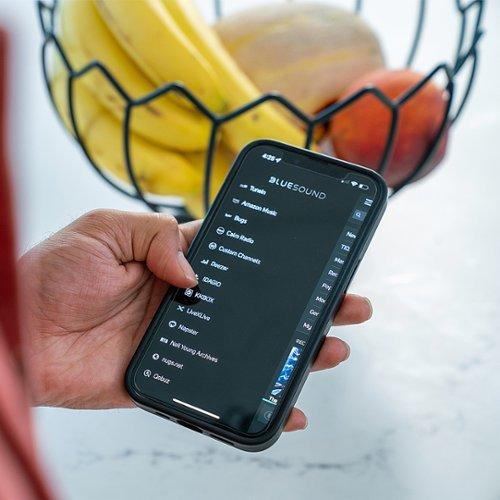
The BluOS Controller app deserves special mention for its intuitive interface and stability. Unlike some streaming platforms that feel like afterthoughts, BluOS was designed from the ground up for serious listening. It maintains persistent connections to streaming services, handles large local music libraries efficiently, and provides granular control over multi-room grouping and volume management.
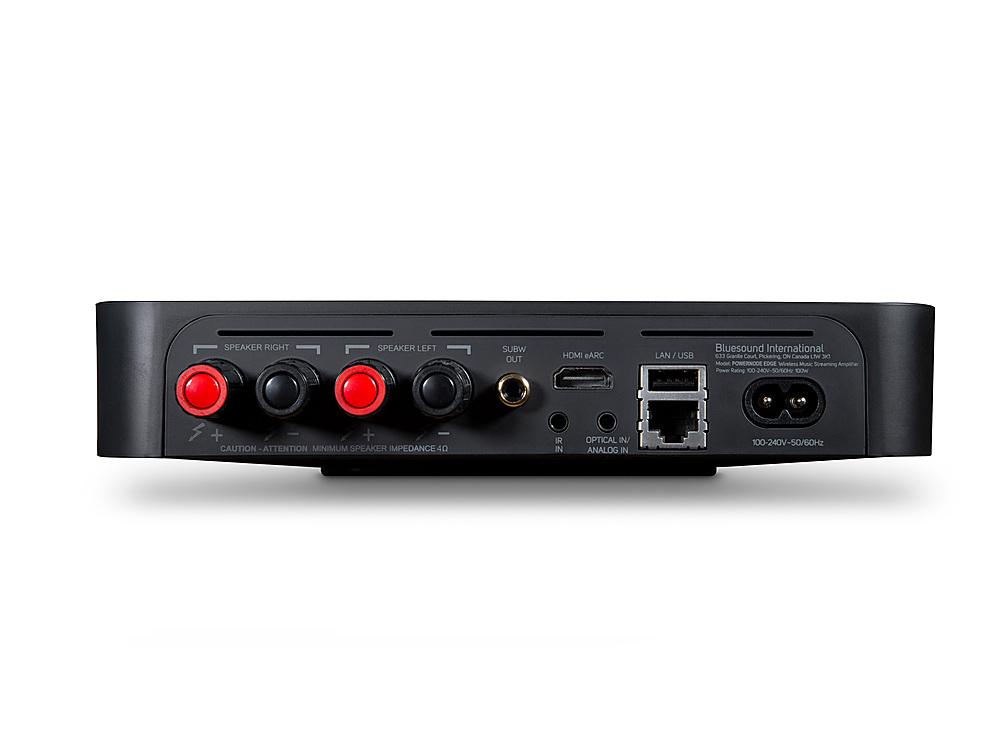
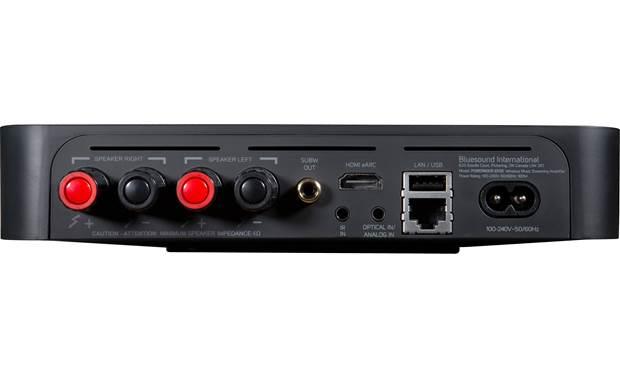
Physical connections reveal another area of differentiation. The PowerNode Edge keeps things streamlined with HDMI eARC for TV integration, a 3.5mm combo jack accepting either analog or optical digital signals, USB-A for local storage devices, and wireless connectivity through dual-band Wi-Fi and Bluetooth. This minimalist approach works perfectly for most users but requires adapters for certain connection types.
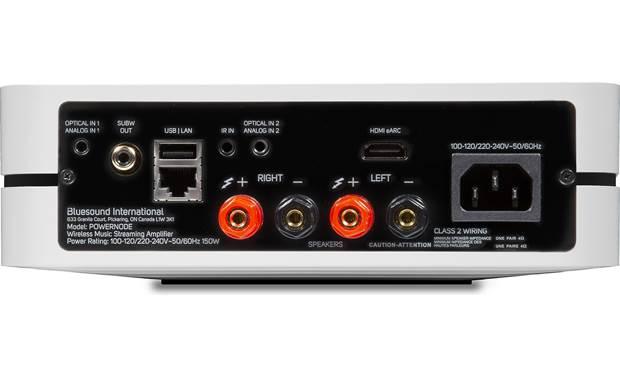
The PowerNode expands connectivity significantly. Beyond matching the Edge's offerings, it adds multiple dedicated analog and digital inputs, USB-C connectivity, and a premium 6.3mm headphone output powered by THX AAA (Achromatic Audio Amplifier) technology. THX AAA represents some of the most sophisticated headphone amplification available, providing ultra-low distortion and excellent dynamics for personal listening sessions.
Both models include subwoofer outputs with adjustable crossover settings, allowing integration with powered subwoofers for full-range systems. The PowerNode adds the ability to wirelessly pair with Bluesound's Pulse Sub+ subwoofer, eliminating cable runs while maintaining perfect synchronization.
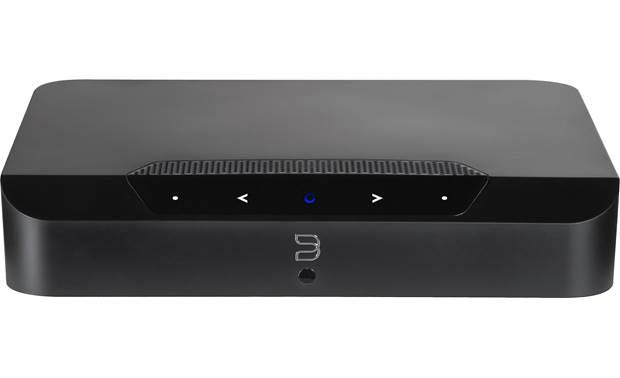
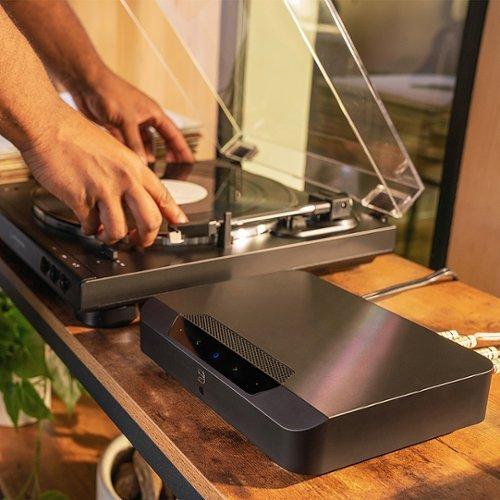
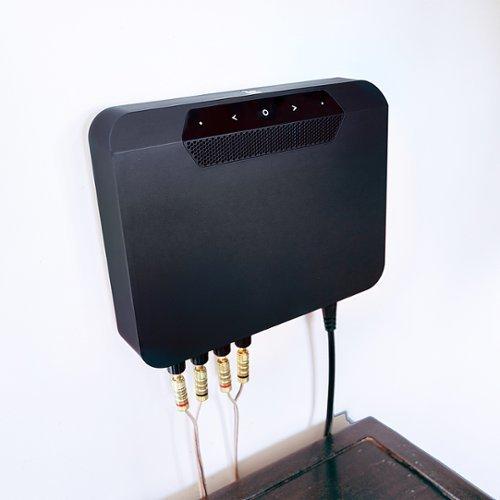
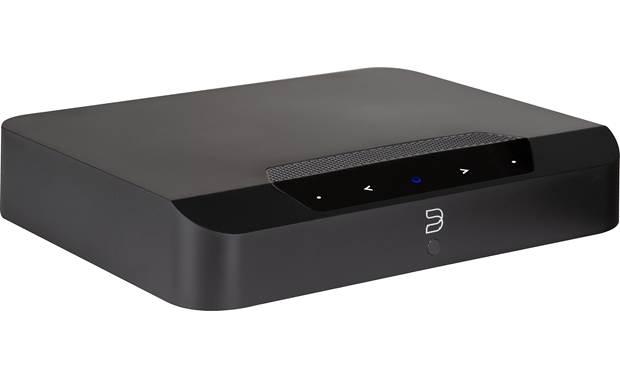
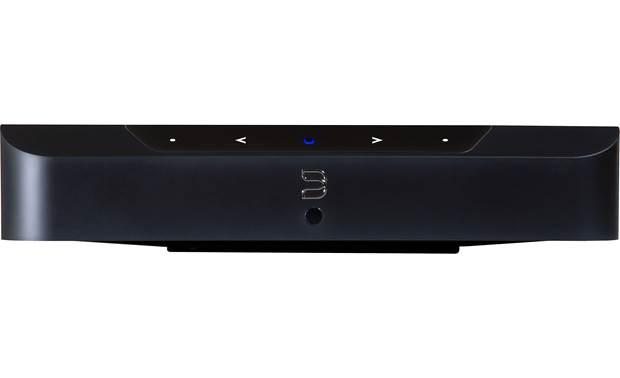
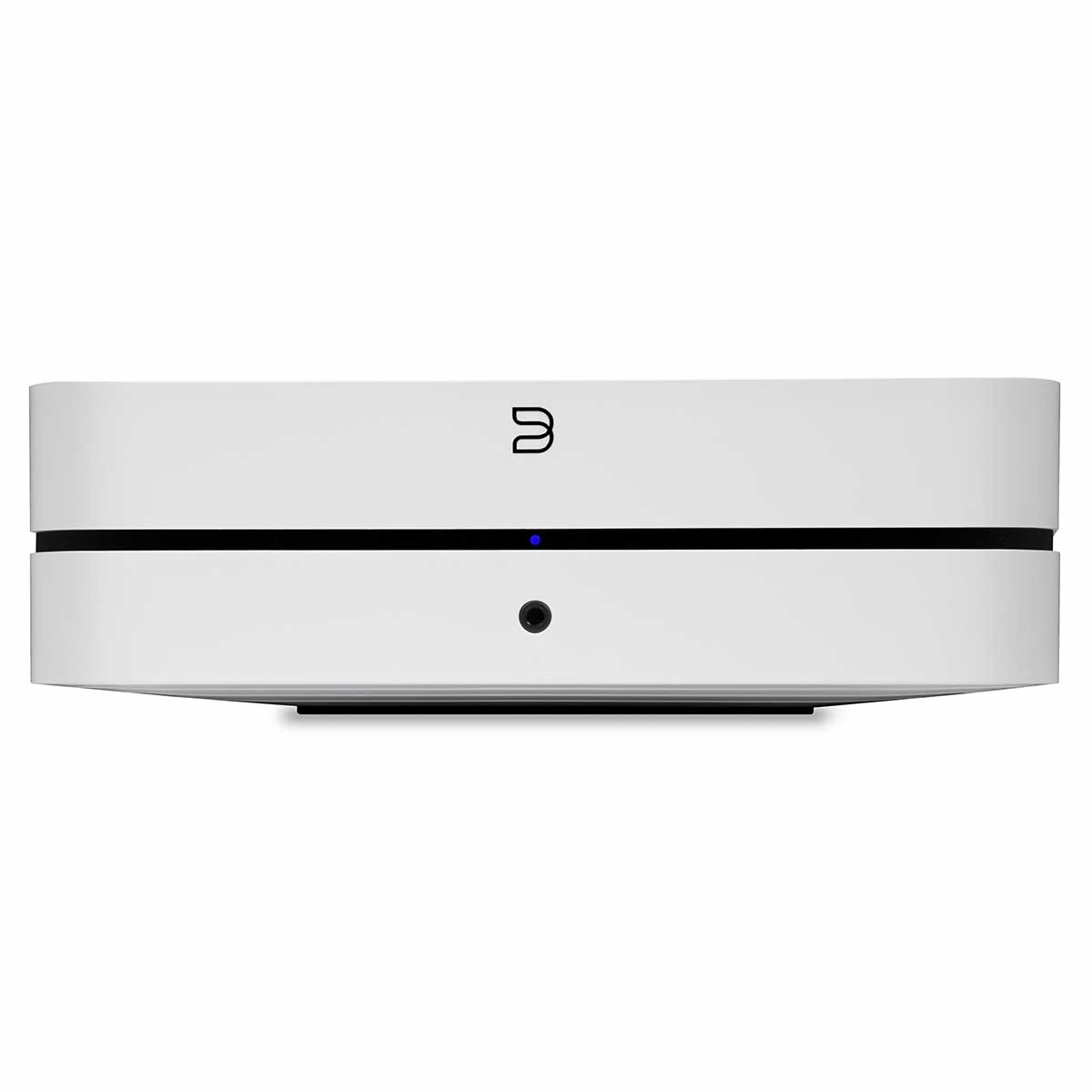
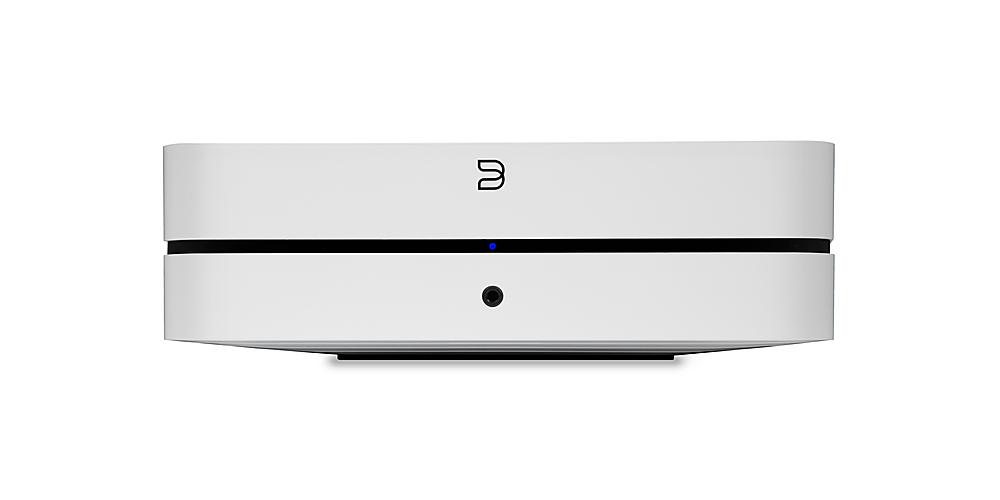
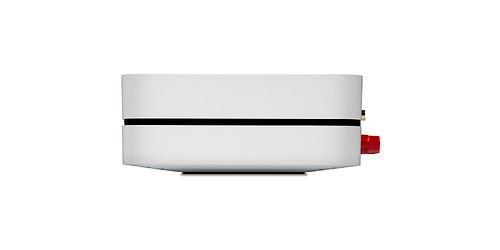
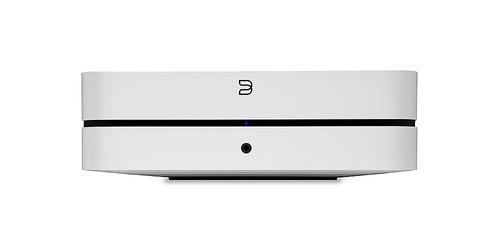
The physical differences between these models reflect their intended roles. The PowerNode Edge measures roughly 8.5 × 1.75 × 7.5 inches and weighs just over 3 pounds, making it genuinely portable and wall-mountable. Its compact footprint allows installation behind wall-mounted TVs, tucked into entertainment centers, or discretely placed on shelves without dominating the space.
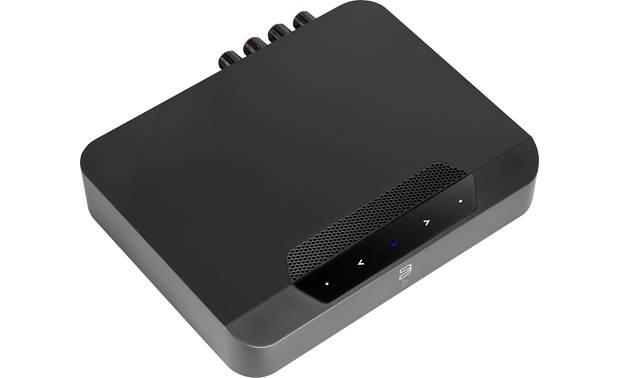
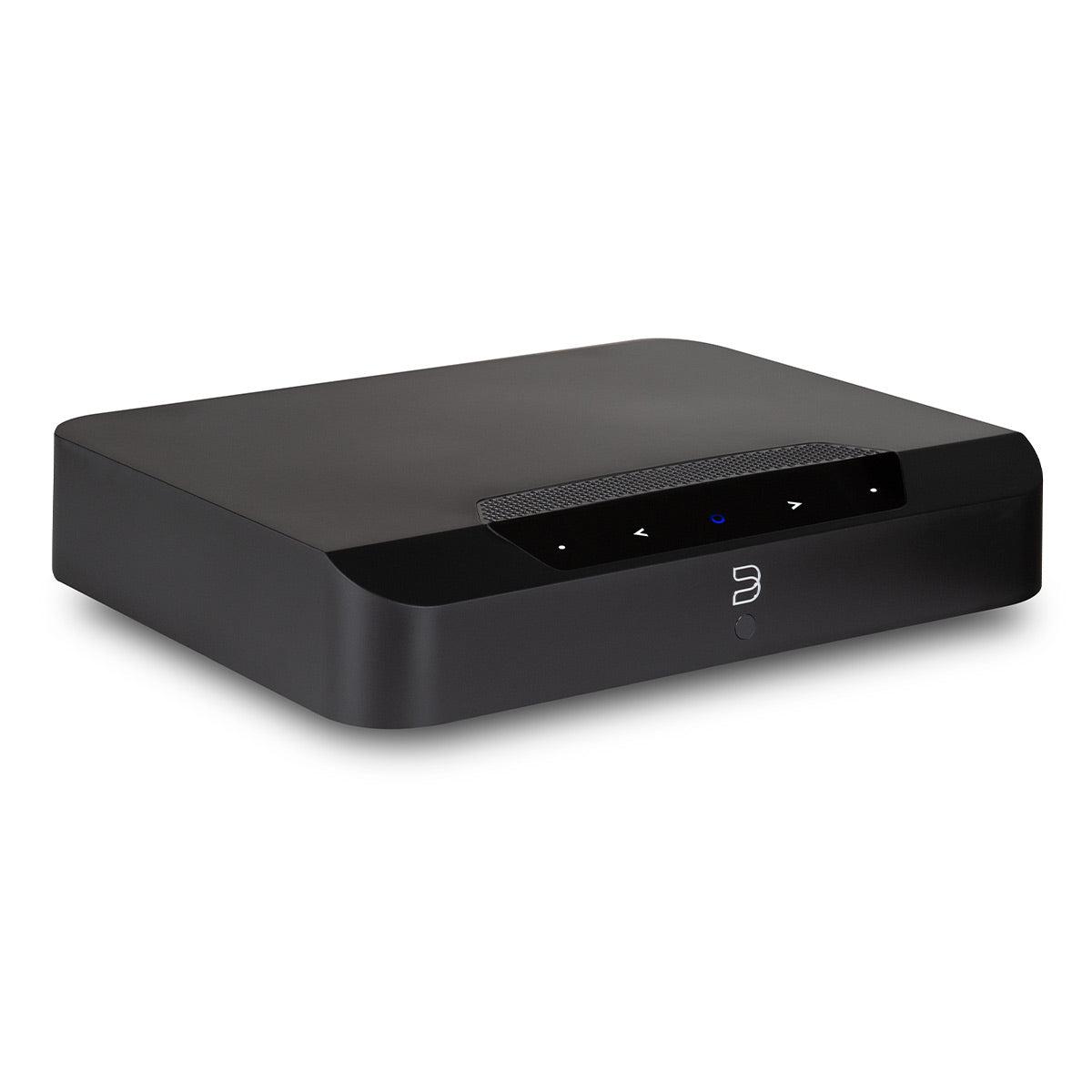
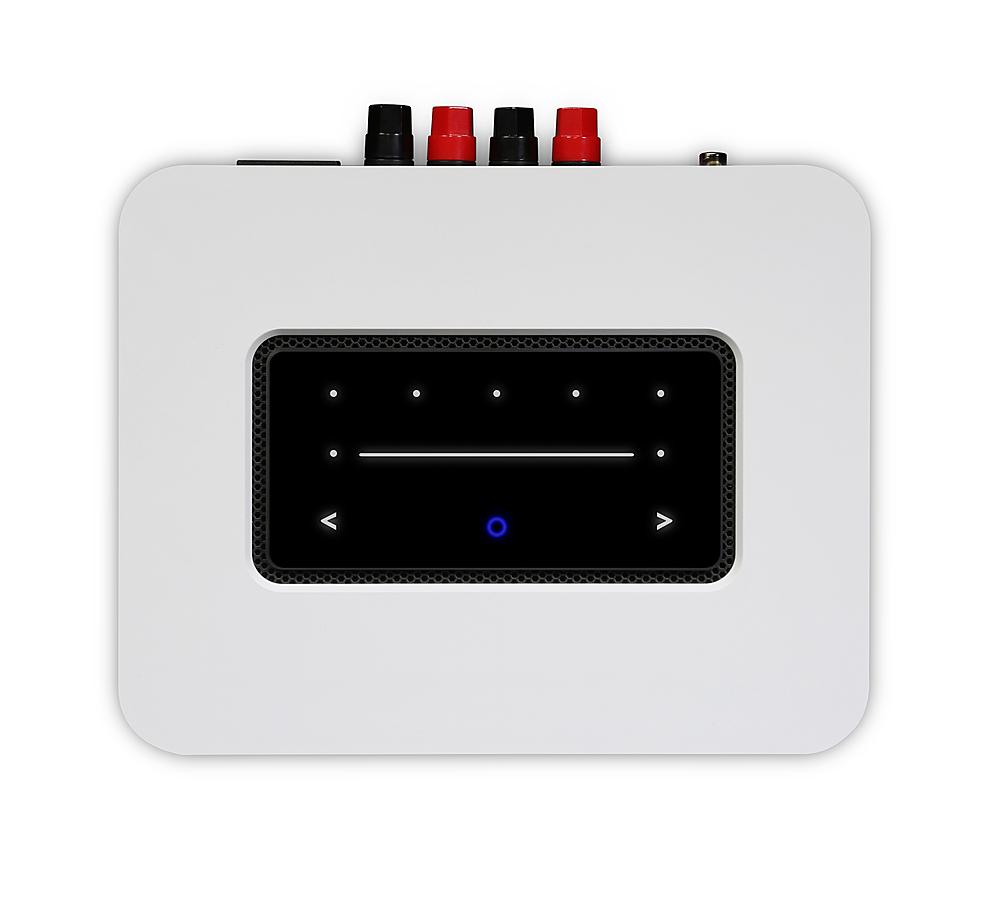
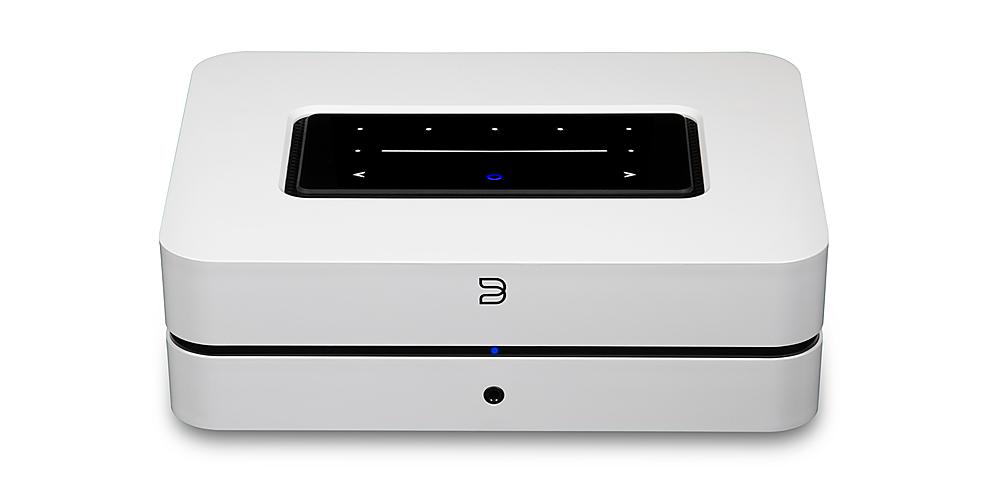
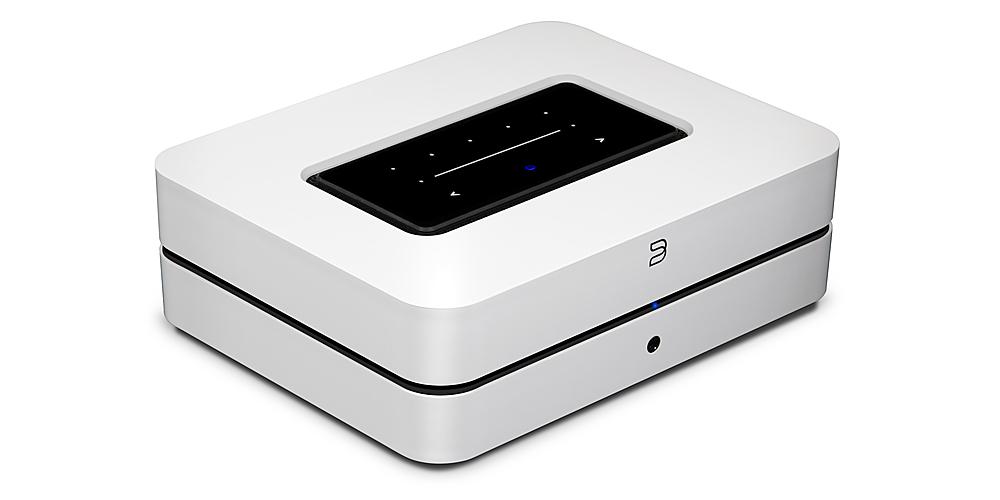
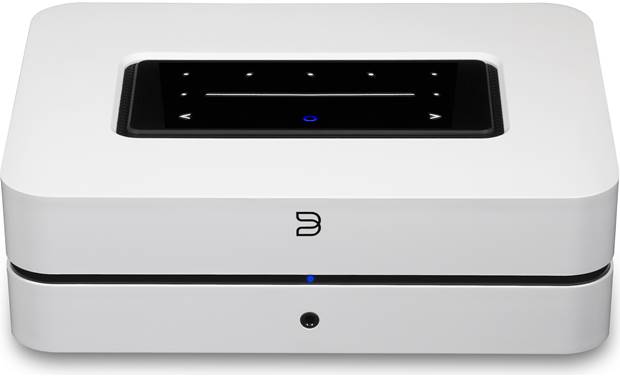
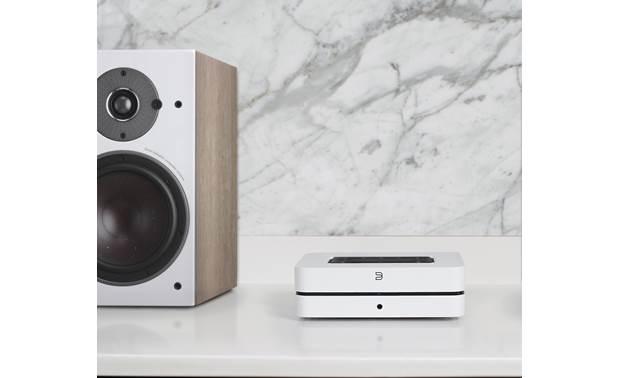
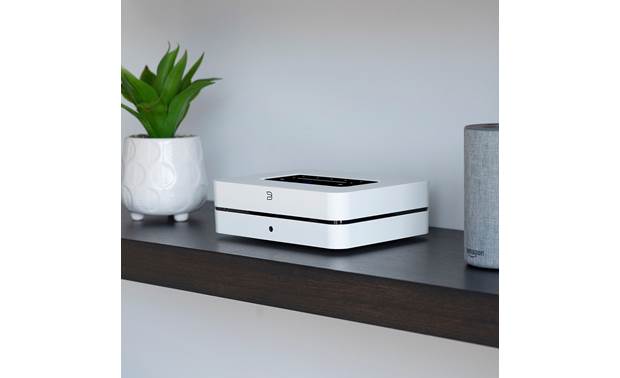
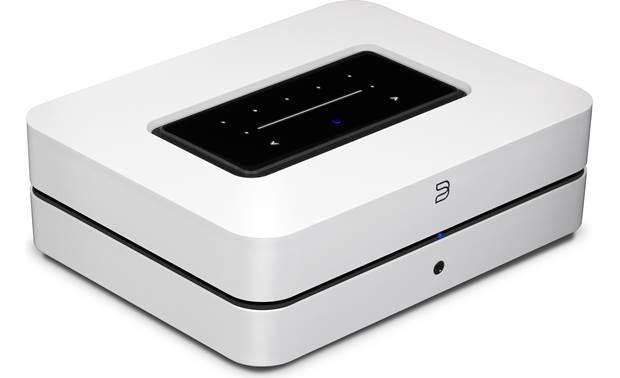
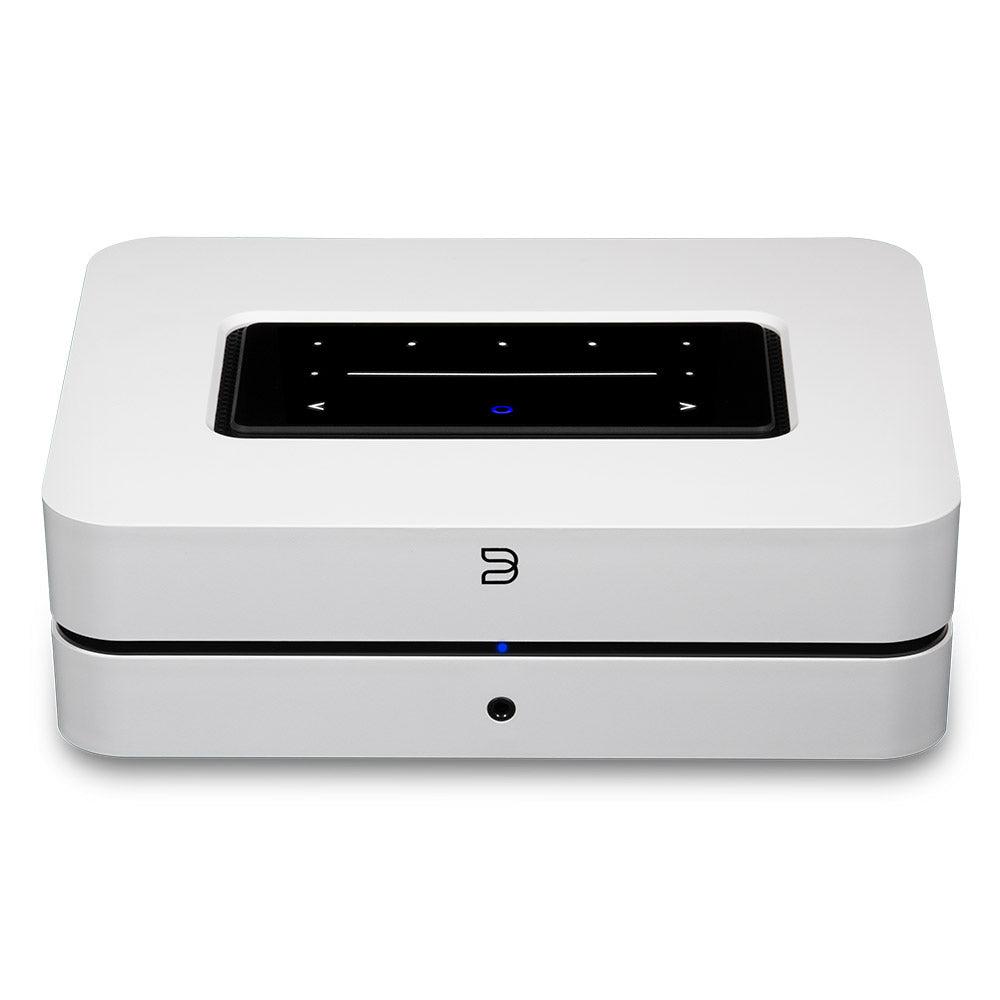
The standard PowerNode adopts more traditional hi-fi proportions at roughly 9.75 × 7 × 8.5 inches and 4.2 pounds. Its matte finish and glass touch panel create an elegant presence whether displayed prominently or integrated into existing component stacks. The proximity-sensing controls illuminate when you approach, adding a premium touch that reinforces the quality difference.
Both models feature touch-sensitive controls on their top surfaces, but the PowerNode implements more sophisticated capacitive sensing with customizable preset buttons. These presets can launch specific playlists, radio stations, or multi-room configurations with single touches – a surprisingly useful feature once configured.
HDMI eARC (enhanced Audio Return Channel) inclusion on both models opens interesting home theater possibilities. This connection allows your TV to send high-quality audio signals back to the amplifier, potentially replacing bulky AV receivers for stereo and 2.1-channel setups. Both units can decode Dolby Digital soundtracks, providing substantial improvements over TV speakers without the complexity of traditional surround sound systems.
The PowerNode's three-channel capability becomes particularly relevant here. It can simultaneously power left and right main speakers plus a center channel for dialogue clarity – a significant upgrade for movie watching. When combined with wireless Bluesound subwoofers and rear speakers, it can anchor complete 5.1 surround systems without running speaker wires throughout your room.
For the PowerNode Edge, home theater applications lean more toward simplified stereo enhancement or serving as wireless rear channel amplification in larger Bluesound systems. Its compact size makes it ideal for mounting behind seating areas to power surround speakers without visible cable runs.
Based on extensive research into user reviews and professional evaluations, both models deliver remarkably clean, detailed sound that punches well above their respective price points. The PowerNode Edge consistently surprises listeners with its ability to drive demanding speakers like B&W 805 D4s and Focal Kanta models, despite its modest 40-watt rating. This speaks to the efficiency of the DirectDigital amplification and quality of the power supply design.
The PowerNode earns praise for its effortless dynamics and refined presentation. Multiple reviewers note its ability to maintain composure during complex musical passages while revealing subtle details in familiar recordings. The enhanced DAC implementation becomes particularly apparent when streaming high-resolution files from services like Qobuz or playing local FLAC files.
Both models exhibit excellent rhythm and timing characteristics – that intangible quality that makes music feel engaging rather than clinical. This likely stems from their NAD heritage, as that company has long prioritized musical involvement over pure measurement specifications.
At the time of writing, the PowerNode Edge typically costs about 30% less than the full PowerNode, making it one of the better values in streaming amplification. For users with appropriate speakers and room sizes, it delivers roughly 85% of the flagship's capabilities at significantly reduced cost. This calculation shifts depending on your specific requirements and future expansion plans.
The PowerNode justifies its premium through enhanced audio circuitry, greater power reserves, expanded connectivity, and premium features like THX AAA headphone amplification. If you value having headroom for growth or plan to integrate demanding speakers, the additional investment pays dividends in long-term satisfaction.
Consider total system cost when making this decision. If you're pairing either unit with $500-800 bookshelf speakers, the PowerNode Edge makes perfect sense. However, if you're investing in $1500+ floor-standing speakers, the PowerNode's enhanced capabilities become more relevant to realizing their full potential.
The PowerNode Edge excels for several specific user profiles. Apartment dwellers benefit from its compact footprint and moderate power output that won't overwhelm smaller spaces or thin walls. Secondary system builders find its discrete installation options and full BluOS compatibility perfect for bedrooms, offices, or kitchens. Budget-conscious audiophiles can access Bluesound's streaming excellence without the premium features they might not use.
The standard PowerNode targets users building primary listening systems around quality speakers in dedicated spaces. Home theater enthusiasts appreciate its three-channel capability and robust connectivity options. Headphone users benefit from the THX AAA amplification, while audiophiles value the enhanced DAC implementation and future Dirac Live room correction compatibility.
Both models represent excellent values within their respective contexts, but choosing between them requires honest assessment of your needs and constraints. The PowerNode Edge delivers sophisticated streaming and adequate amplification for most real-world applications, while the PowerNode provides premium performance and greater flexibility for demanding users.
Consider starting with the PowerNode Edge if you're new to high-quality streaming audio or working within space constraints. Its capabilities will likely exceed expectations while leaving room in your budget for speaker upgrades. Choose the PowerNode if you're building a system around quality speakers, want maximum future flexibility, or value having premium features like high-quality headphone amplification.
Either way, you're getting access to one of the most mature and capable streaming platforms available, backed by decades of amplifier expertise. The real winner here might be the broader shift toward integrated streaming amplifiers – devices that prove you don't need separate components to achieve serious audio performance in modern homes.
| Bluesound PowerNode Edge | Bluesound PowerNode |
|---|---|
| Power Output - Determines which speakers you can drive and room size | |
| 40W per channel (perfect for bookshelf speakers and smaller rooms) | 100W per channel stereo / 80W in 3-channel mode (drives demanding speakers and larger spaces) |
| Amplification Technology - Affects sound quality and efficiency | |
| DirectDigital™ amplification with digital signal path | DirectDigital™ with GaN transistors and enhanced DAC implementation |
| Physical Size - Important for placement flexibility | |
| Compact 8.5" × 1.75" × 7.5", wall-mountable (3.1 lbs) | Traditional component size 9.75" × 7" × 8.5" (4.2 lbs) |
| Connectivity Options - Determines what sources you can connect | |
| HDMI eARC, 3.5mm combo analog/optical, USB-A, wireless | All Edge connections plus multiple dedicated inputs, USB-C, digital outputs |
| Headphone Output - Quality of personal listening experience | |
| 3.5mm jack, can transmit to Bluetooth headphones | Premium 6.3mm output with THX AAA technology plus Bluetooth transmission |
| Streaming Platform - Both identical, supporting 20+ services | |
| BluOS with high-res audio up to 24-bit/192kHz, MQA, DSD256 | BluOS with high-res audio up to 24-bit/192kHz, MQA, DSD256 |
| Multi-Room Capability - For whole-home audio systems | |
| Full BluOS integration, up to 64 zones, perfect as secondary zone | Full BluOS integration, ideal as primary system hub with 3-channel TV support |
| Home Theater Integration - TV and movie watching enhancement | |
| HDMI eARC, Dolby Digital decoding, great for 2.1 systems | HDMI eARC, Dolby Digital, 3-channel capability for left/center/right speakers |
| Advanced Audio Features - Future-proofing and audiophile capabilities | |
| Standard DirectDigital processing | Future Dirac Live room correction, enhanced signal processing |
| Installation Flexibility - Where and how you can set it up | |
| Wall-mountable with included bracket, behind-TV installation | Traditional placement, glass touch panel with proximity sensing |
| Target Use Cases - Who should consider each model | |
| Small rooms, secondary zones, discrete installations, budget-conscious setups | Primary listening systems, demanding speakers, home theater, headphone users |
| Value Proposition - Performance per dollar spent | |
| Exceptional value for compact systems and efficient speakers | Premium features justify cost for serious listening and future flexibility |
The primary difference is power output and size. The PowerNode Edge delivers 40 watts per channel in a compact, wall-mountable design, while the PowerNode provides 100 watts per channel in a traditional component-sized chassis. The PowerNode also offers more connectivity options and premium features like THX AAA headphone amplification.
The PowerNode Edge is ideal for small rooms thanks to its 40-watt output and compact design. It provides plenty of power for bookshelf speakers in spaces up to 150-200 square feet while offering flexible wall-mounting options for discrete installation.
The PowerNode is better suited for demanding speakers with its 100-watt output and enhanced amplification circuitry. While the PowerNode Edge can drive many quality bookshelf speakers effectively, the full-sized model provides more headroom for floor-standing speakers and low-sensitivity designs.
Yes, both the PowerNode Edge and PowerNode run the identical BluOS platform, supporting over 20 streaming services including Spotify, Tidal, Qobuz, and Amazon Music. Both also handle high-resolution audio up to 24-bit/192kHz and MQA files.
The PowerNode offers superior home theater integration with its 3-channel capability, allowing it to power left, center, and right speakers simultaneously. Both models include HDMI eARC and Dolby Digital decoding, but the PowerNode Edge works best for simple 2.1 TV enhancement or as wireless rear channel amplification.
Only the PowerNode Edge is designed for wall mounting, coming with a dedicated bracket and compact form factor perfect for behind-TV installation. The standard PowerNode is designed for traditional shelf or rack placement with its larger component-sized chassis.
The PowerNode Edge provides exceptional value for users with appropriate speakers and room sizes, delivering about 85% of the flagship's streaming capabilities at a significantly lower cost. The PowerNode justifies its premium through enhanced audio quality, more power, and additional features for serious listening applications.
Yes, both the PowerNode Edge and PowerNode offer full BluOS multi-room integration, supporting up to 64 synchronized zones. The PowerNode Edge excels as a secondary zone amplifier, while the PowerNode works well as a primary system hub.
The PowerNode features a premium 6.3mm headphone output powered by THX AAA technology for audiophile-quality personal listening. The PowerNode Edge offers a standard 3.5mm headphone jack and can transmit wirelessly to Bluetooth headphones, but the full-sized model provides superior wired headphone performance.
Yes, the PowerNode offers significantly more connectivity with multiple dedicated analog and digital inputs, USB-C, and additional outputs. The PowerNode Edge keeps connections streamlined with HDMI eARC, a 3.5mm combo jack, and USB-A, requiring adapters for some connection types.
The PowerNode Edge is often better for newcomers to high-quality audio, offering sophisticated streaming capabilities and adequate amplification at a more approachable entry point. Its simpler connectivity and compact design reduce complexity while providing room in the budget for quality speakers.
Both the PowerNode Edge and PowerNode significantly upgrade TV audio through their HDMI eARC connections and Dolby Digital decoding. The PowerNode provides superior movie dialogue clarity through its center channel capability, while the PowerNode Edge offers excellent stereo TV enhancement in a space-saving package.
We've done our best to create useful and informative comparisons to help you decide what product to buy. Our research uses advanced automated methods to create this comparison and perfection is not possible - please contact us for corrections or questions. These are the sites we've researched in the creation of this article: futureaudiophile.com - alpha-audio.net - theaudiofactory.com - audiophilia.com - youtube.com - qaudio.com - crutchfield.com - youtube.com - bluesound.com - audioadvisor.com - crutchfield.com - bluesound.com - audiosciencereview.com - bluesound.com - soundstagesimplifi.com - mysoundconcepts.com - crutchfield.com - upscaleaudio.com - stereophile.com - theaudiofactory.com - audioadvisor.com - musicdirect.com - twitteringmachines.com - bluesound.com - moon-audio.com - audioadvisor.com - ecoustics.com

Privacy Policy
Terms and Conditions - Affiliate Policy
Home Security
© Copyright 2008-2026.
11816 Inwood Rd #1211, Dallas, TX 75244