

Streaming amplifiers have revolutionized how we approach home audio systems. Instead of needing separate components for streaming, amplification, and control, these all-in-one devices combine everything into a single box. But not all streaming amplifiers are created equal, and the Bluesound PowerNode Edge and Denon PMA-900HNE represent two very different philosophies about how these products should work.
Released in 2022, both amplifiers arrived at a time when streaming had fully matured as an audio source, and manufacturers were grappling with how to blend traditional hi-fi values with modern convenience. The timing was perfect – COVID had pushed more people toward home audio investments, and streaming services were offering better sound quality than ever before.
Before diving into these specific products, it's worth understanding what you're actually buying when you choose a streaming amplifier. These devices need to handle three main jobs: receiving audio signals (whether through the internet, Bluetooth, or physical connections), processing and amplifying those signals, and then sending clean, powerful audio to your speakers.
The amplification technology is where things get interesting. Traditional amplifiers convert digital music files to analog signals early in the process, then amplify that analog signal. But some newer designs, like the PowerNode Edge, keep everything digital right up until the final moment before it hits your speakers. This digital approach can eliminate certain types of distortion and noise that creep in during multiple conversion steps.
Streaming platforms matter just as much as the amplifier circuits. These are the apps and software that let you access Spotify, Apple Music, and other services. Some platforms work seamlessly, while others can be frustrating to set up and use daily. This isn't just about convenience – a poorly designed streaming platform can actually affect sound quality if it's constantly buffering or dropping connections.
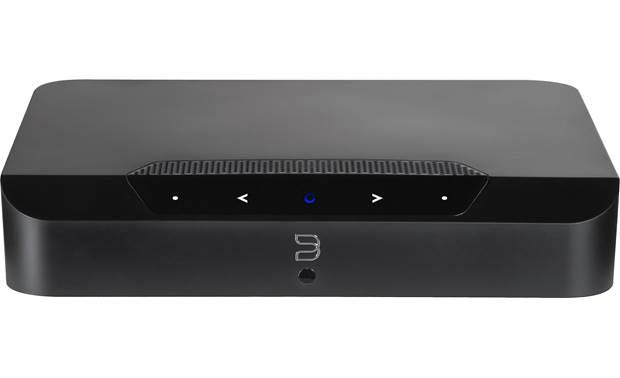
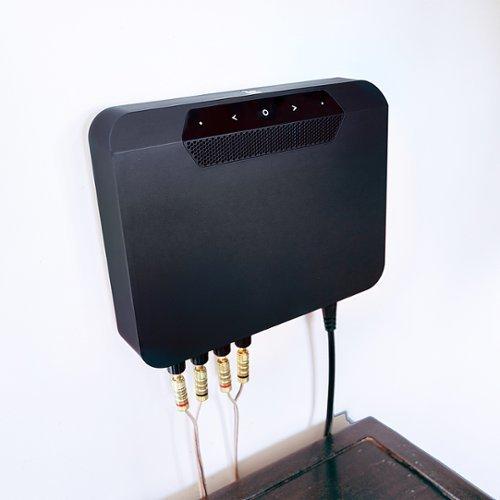
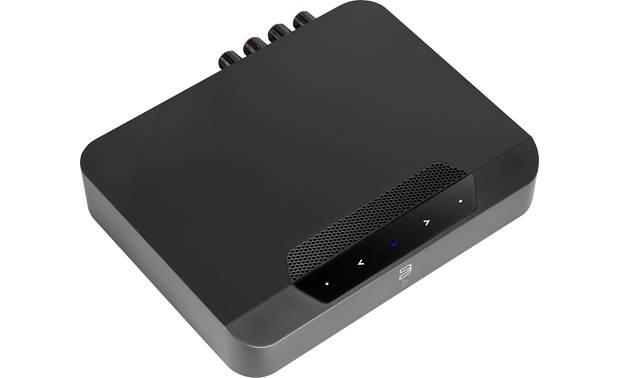
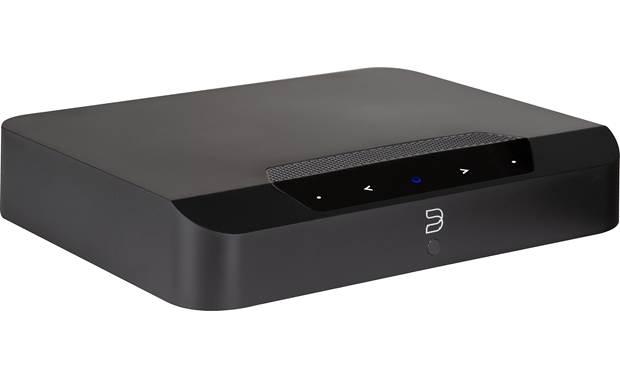
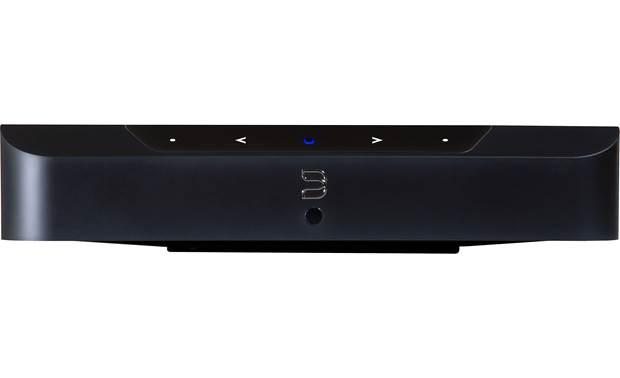
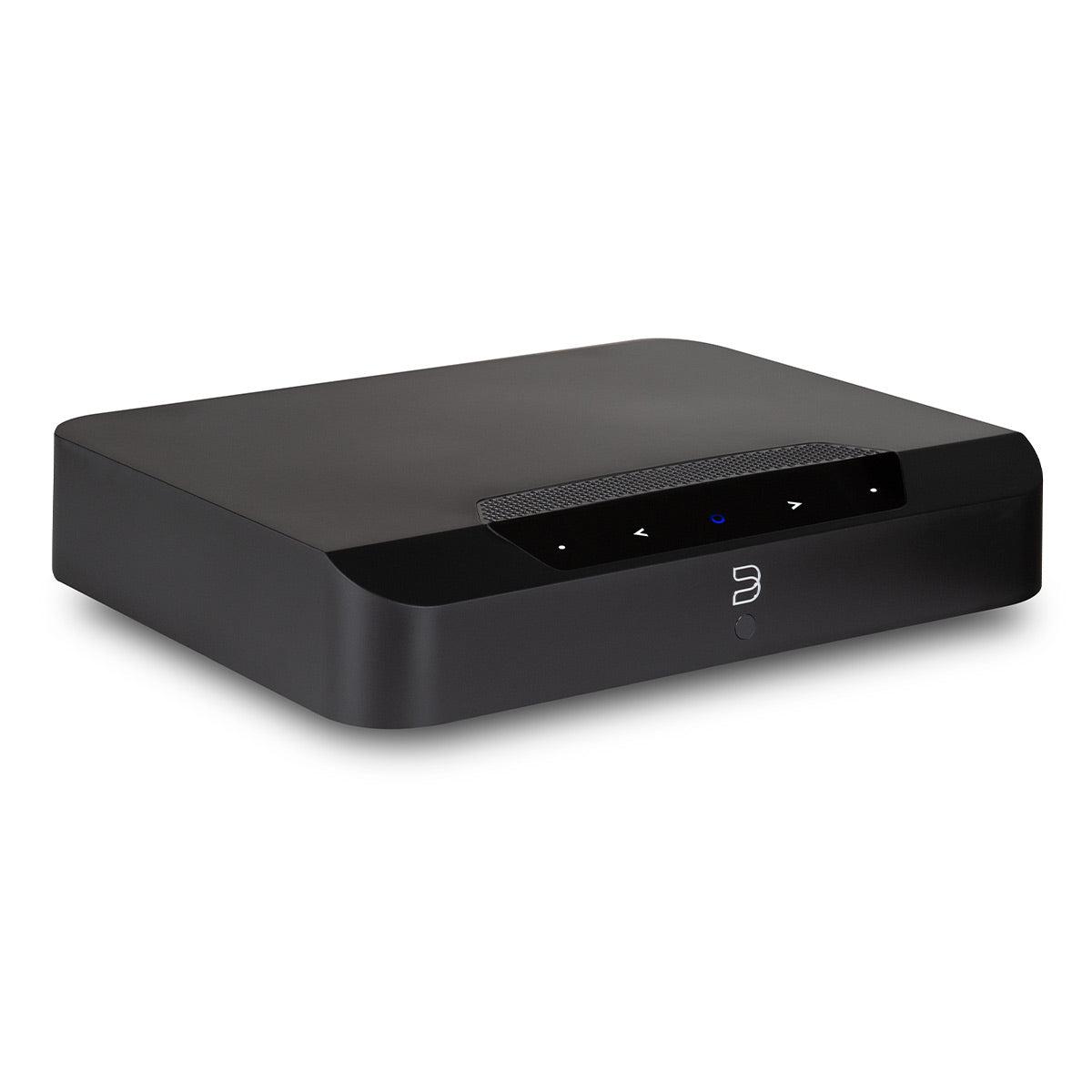
The PowerNode Edge takes a "streaming-first" approach that prioritizes modern convenience. At roughly half the size of traditional amplifiers, it's designed to disappear into your living space. You can mount it on a wall, tuck it behind your TV, or stack it with other components without dominating your entertainment center.
What makes the PowerNode Edge unique is its DirectDigital amplification technology. Instead of converting your music to analog signals and then amplifying them, this system keeps everything in the digital domain until the very last step. Think of it like keeping your music in its original digital "language" for as long as possible before translating it to the analog signals your speakers understand. This approach eliminates several potential sources of distortion and noise.
The power output sits at 40 watts per channel into 8-ohm speakers, which doubles to 80 watts when driving 4-ohm speakers. Now, 40 watts might not sound like much if you're used to seeing big numbers on amplifier specifications, but the efficiency of digital amplification means this power goes further than you'd expect. In practice, the PowerNode Edge can drive surprisingly demanding speakers without breaking a sweat.
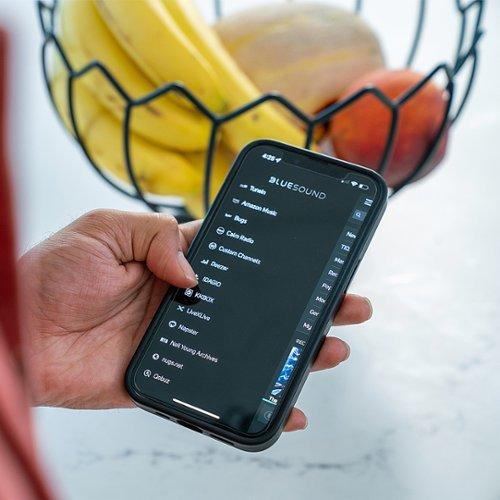
Where the PowerNode Edge really shines is in its streaming capabilities. The BluOS platform that powers it has earned praise from both users and reviewers for being reliable and intuitive. It supports over 20 streaming services and handles multi-room audio beautifully – you can sync music throughout your house if you have other BluOS-compatible devices.
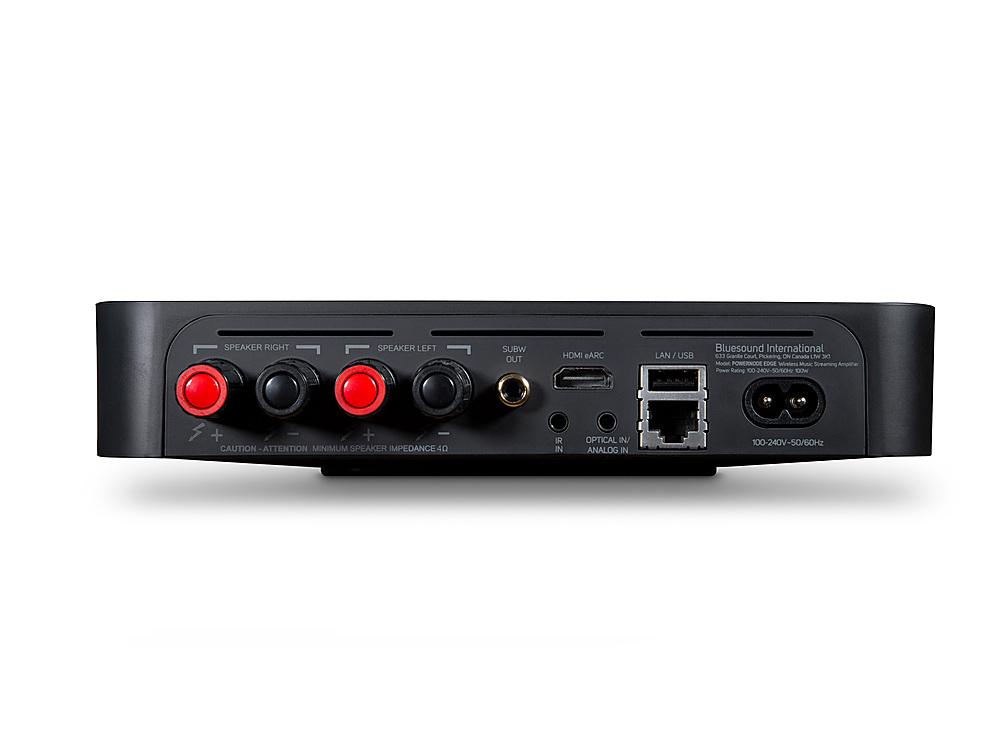
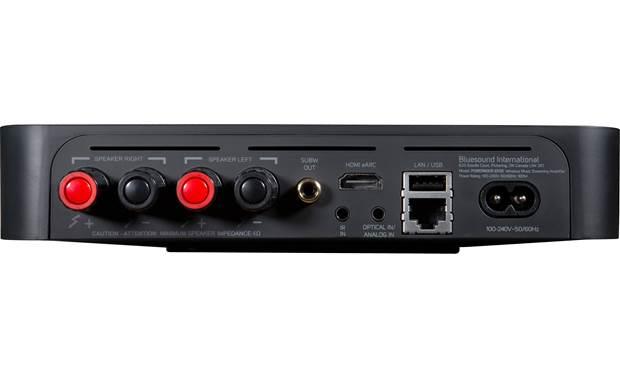
The HDMI eARC connection deserves special mention. This single cable connection to your TV not only handles audio from all your TV's apps and inputs but also supports Dolby Digital surround sound. For many people, this eliminates the need for a separate soundbar or AV receiver for TV audio. The PowerNode Edge can even serve as wireless rear speakers in a larger Bluesound surround sound setup.
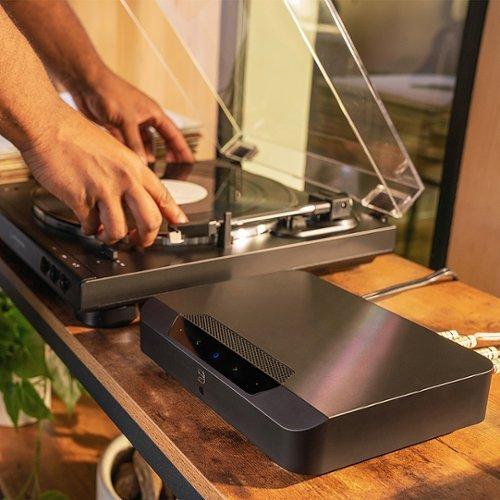
However, there are trade-offs for this compact, streaming-focused design. Analog inputs are limited to a single 3.5mm jack that requires adapter cables for standard RCA connections. If you have a turntable, CD player, or other analog sources, you'll need to work around this limitation. The PowerNode Edge will convert analog signals to digital anyway, which purist vinyl enthusiasts might find objectionable.
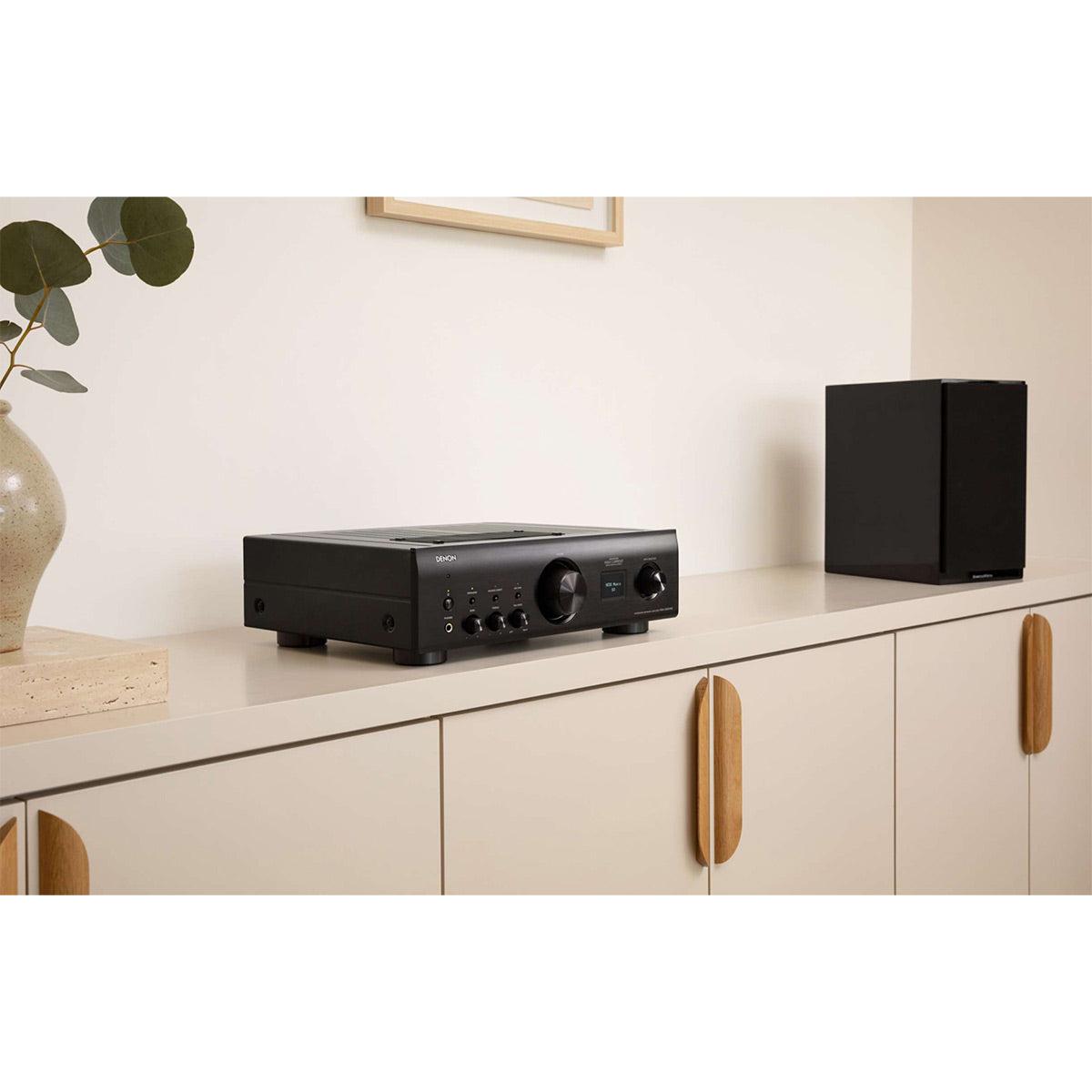
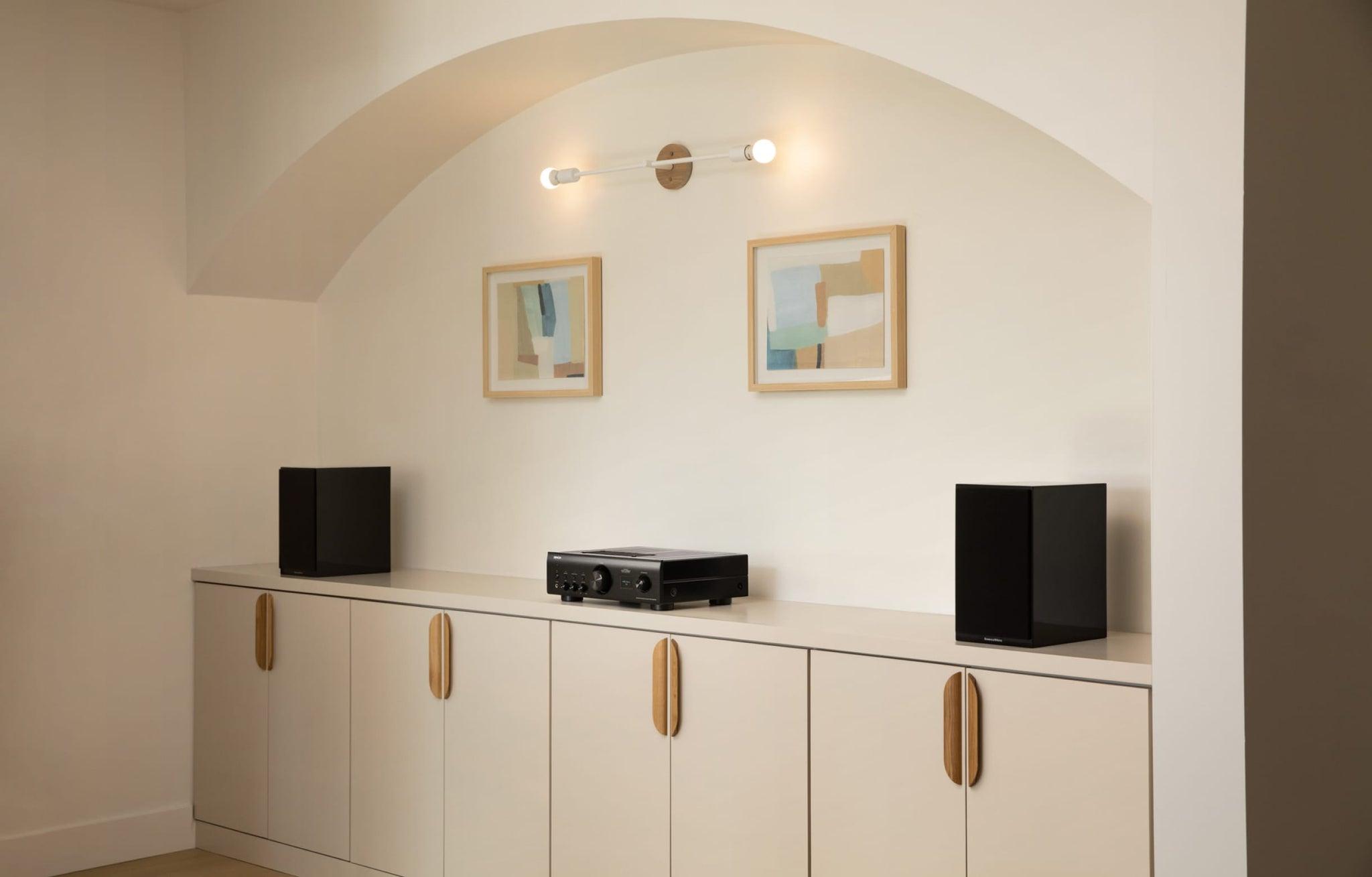
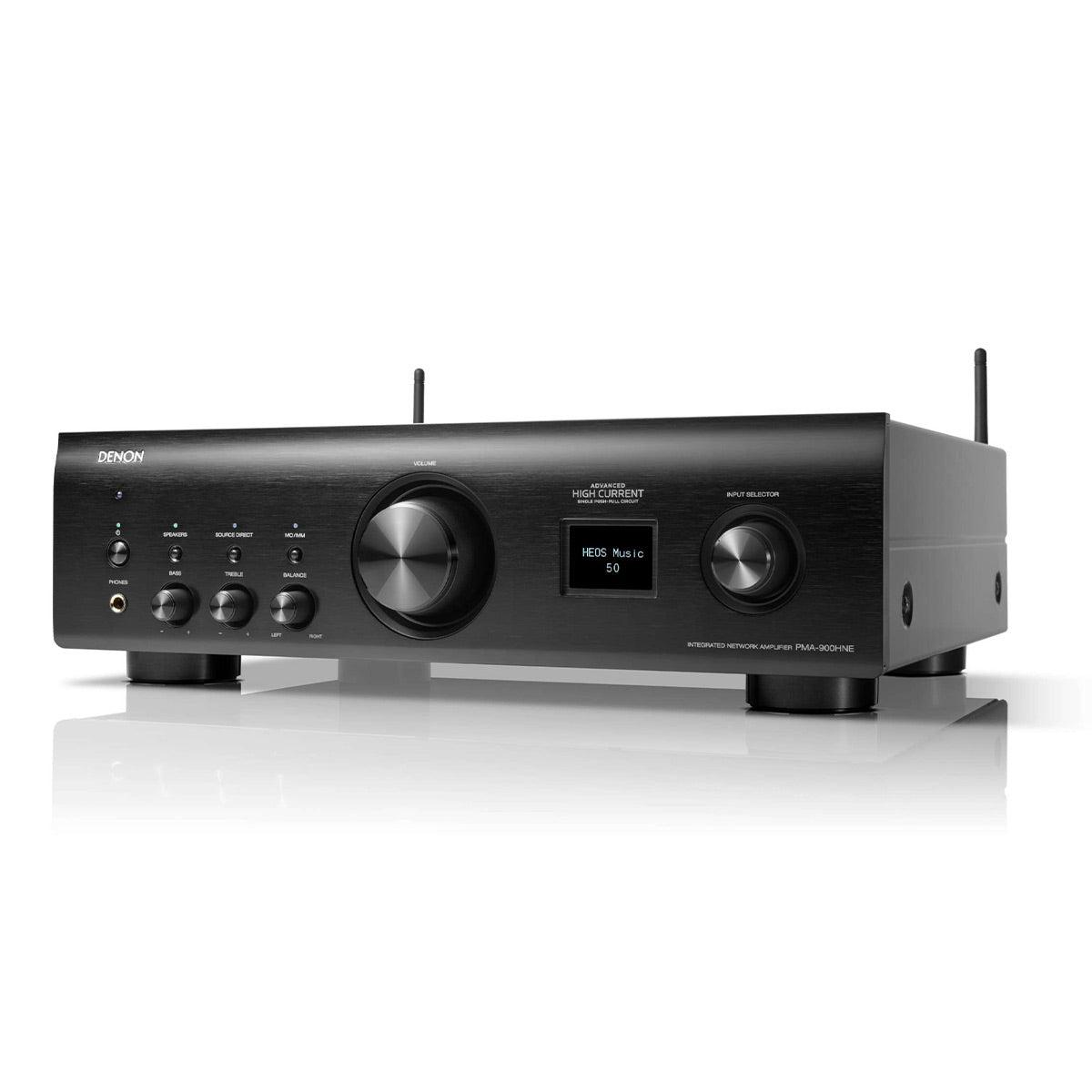
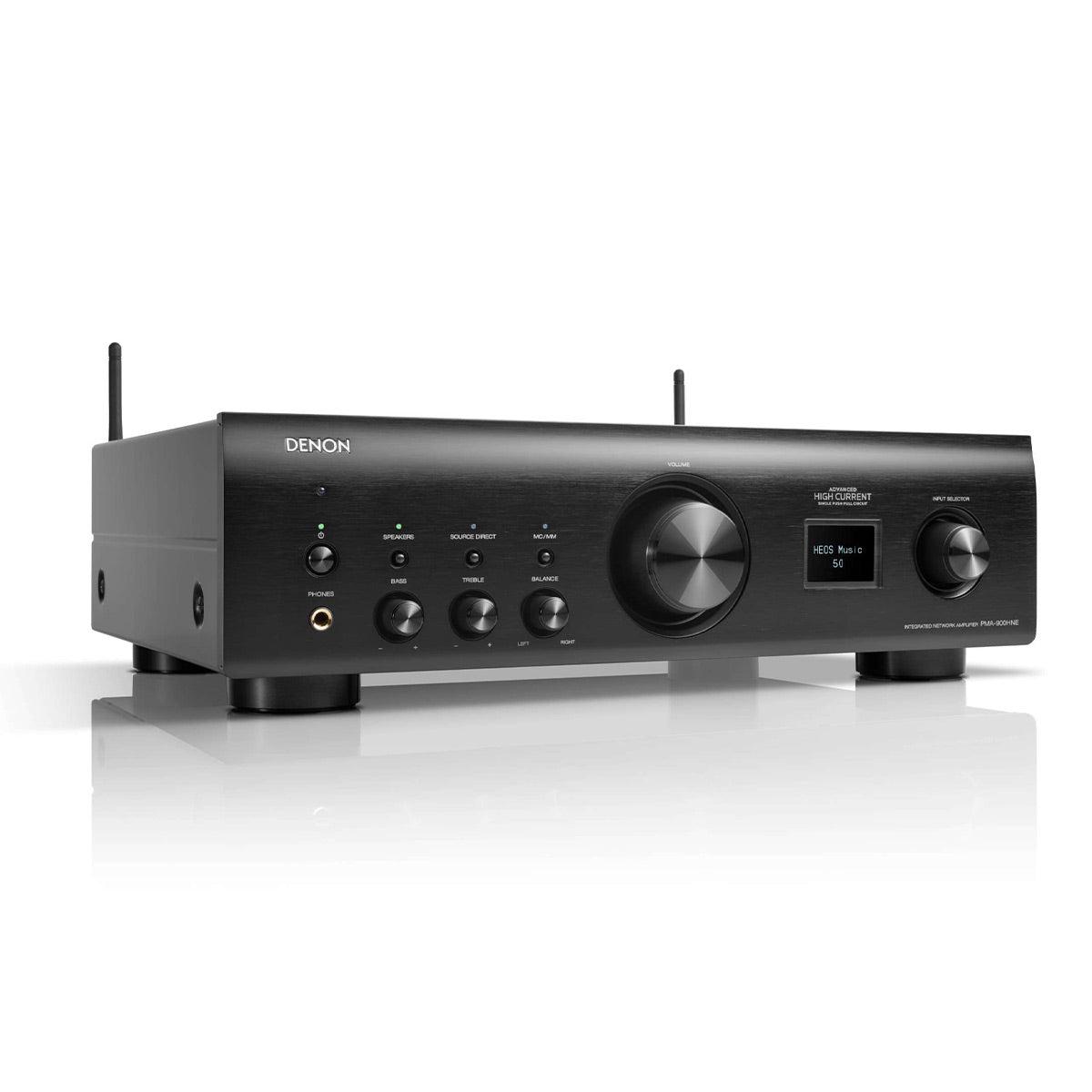
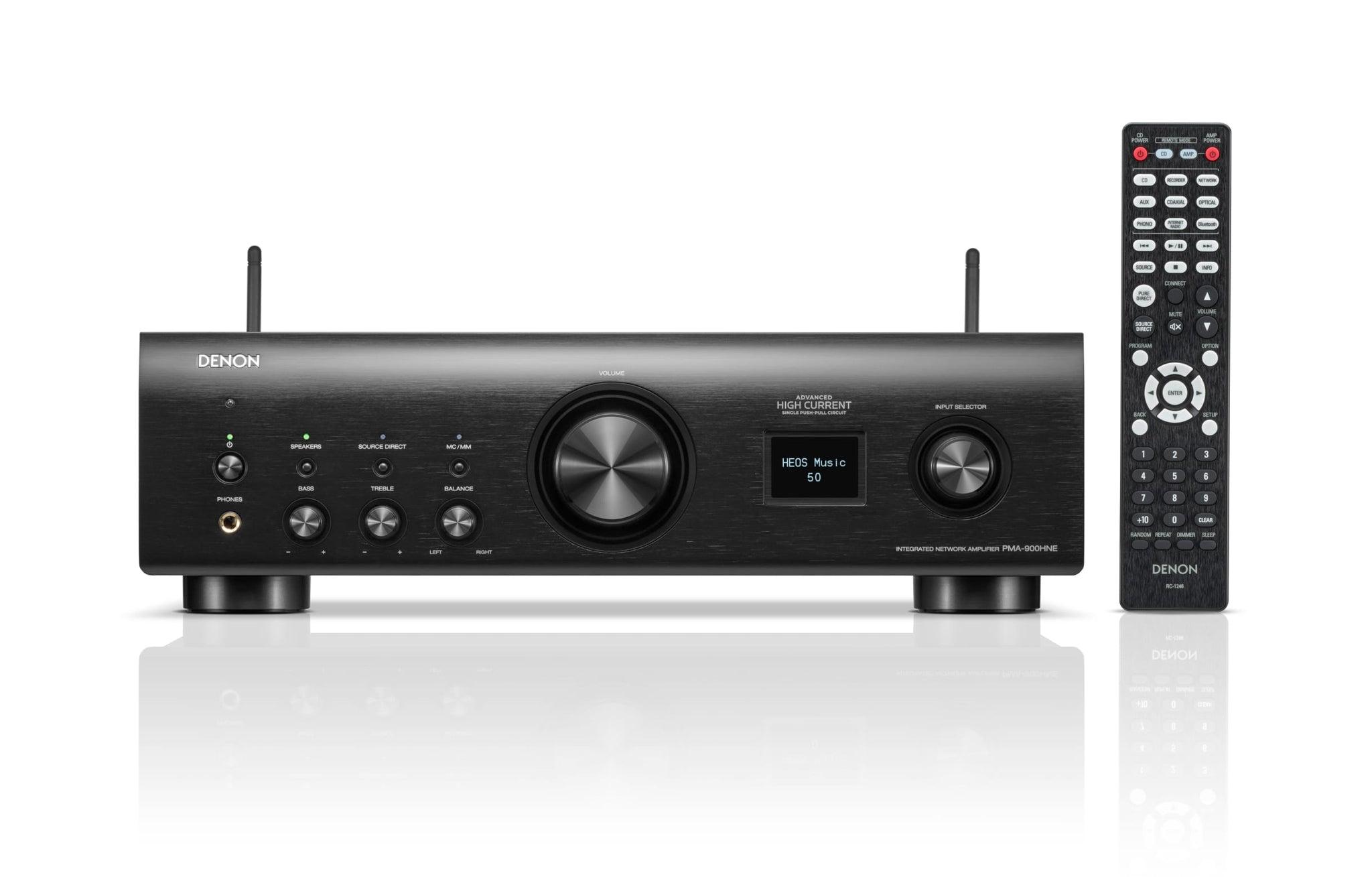
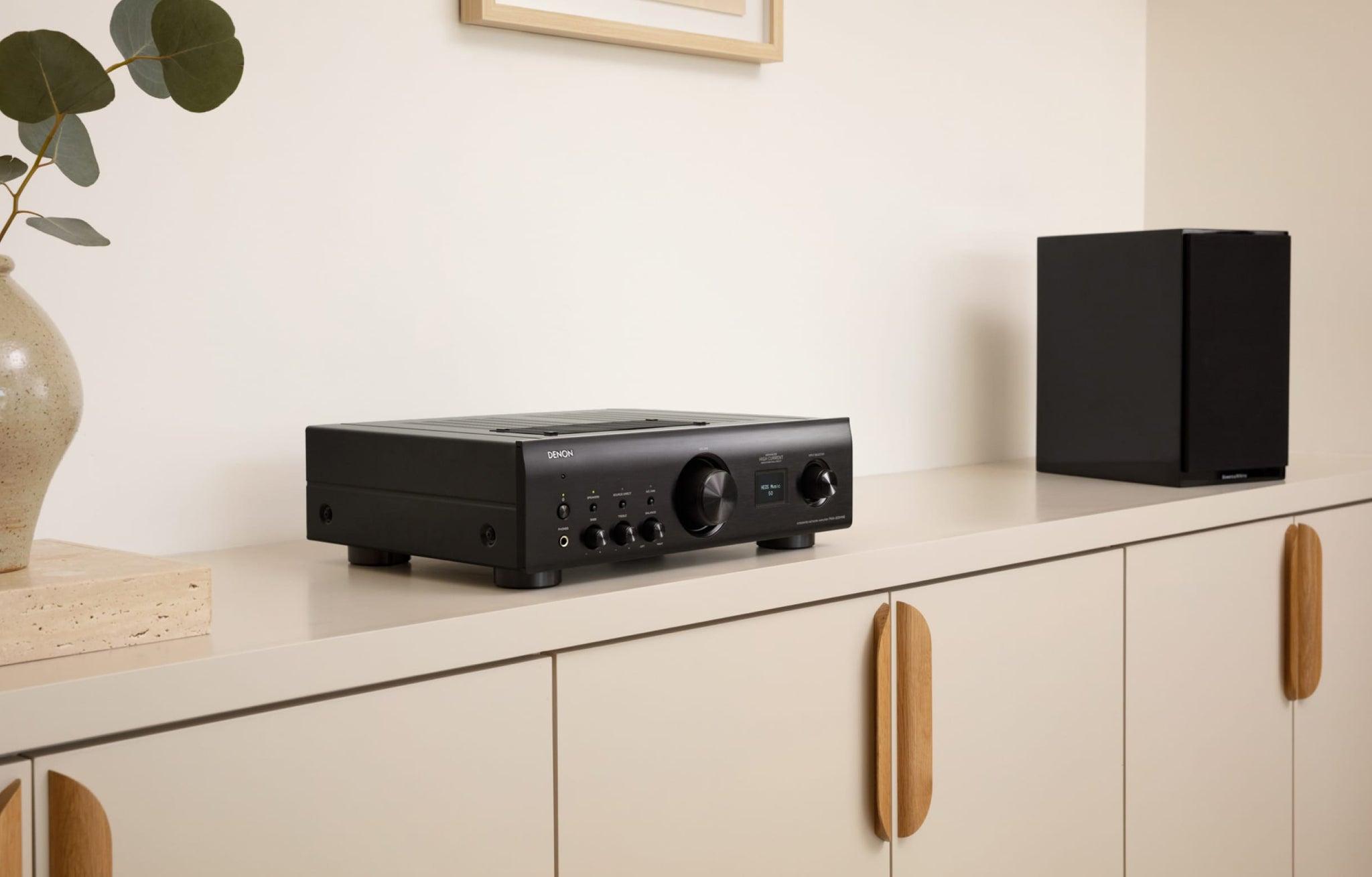
The Denon PMA-900HNE represents what happens when a traditional hi-fi company decides to add streaming to their proven amplifier formula. Released in 2022 as Denon's first "pure hi-fi amplifier" with integrated streaming, it looks and operates like amplifiers have for decades, but with modern wireless capabilities added.
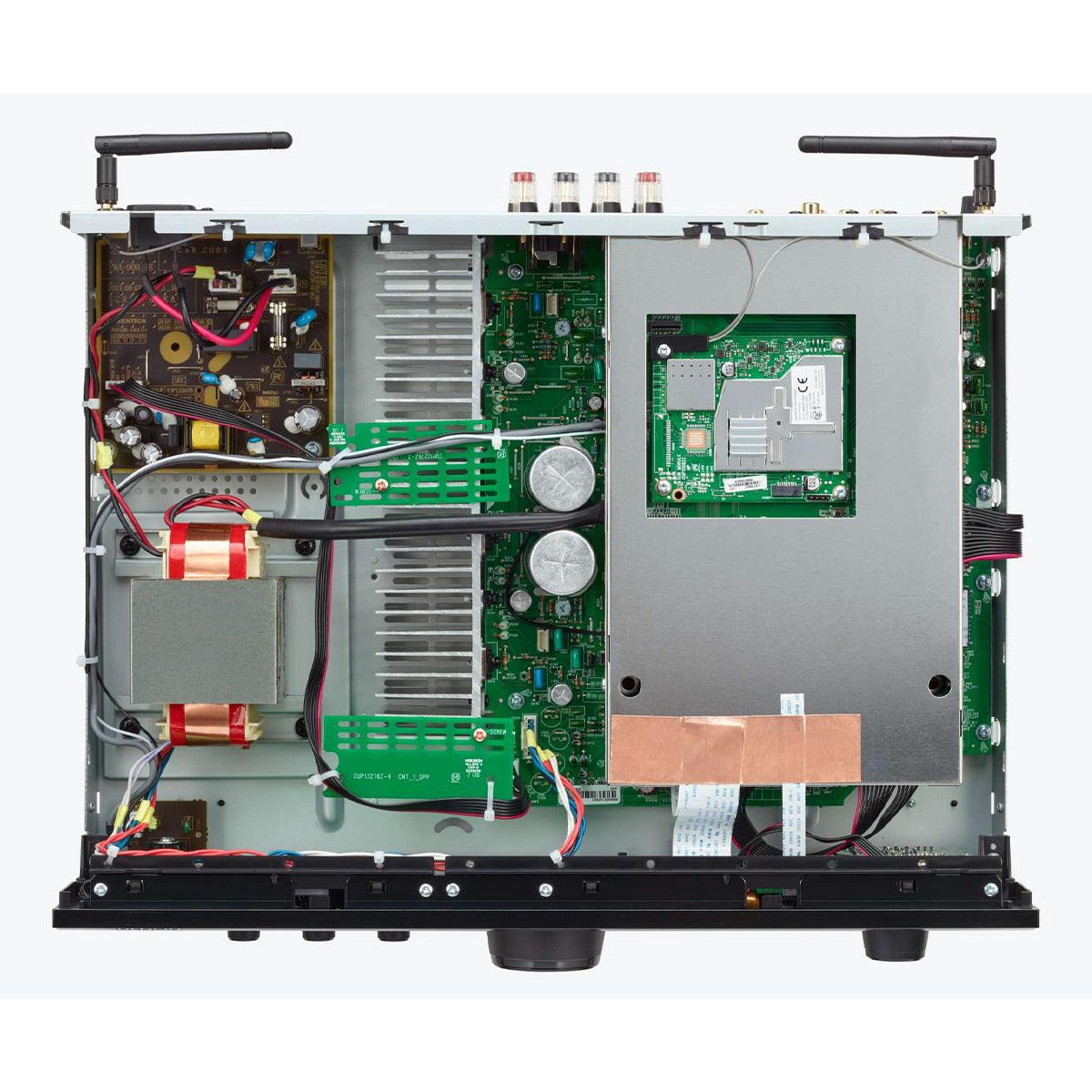
At its heart is Denon's Advanced High Current (AHC) amplification technology, a traditional analog design that delivers 50 watts per channel into 8-ohm loads and 85 watts into 4-ohm speakers. This approach has been refined over decades and prioritizes the kind of dynamic headroom and speaker control that audiophiles associate with quality amplification. The extra 10 watts over the PowerNode Edge might not seem significant, but combined with the traditional analog approach, it provides noticeably more grip and authority with demanding speakers.
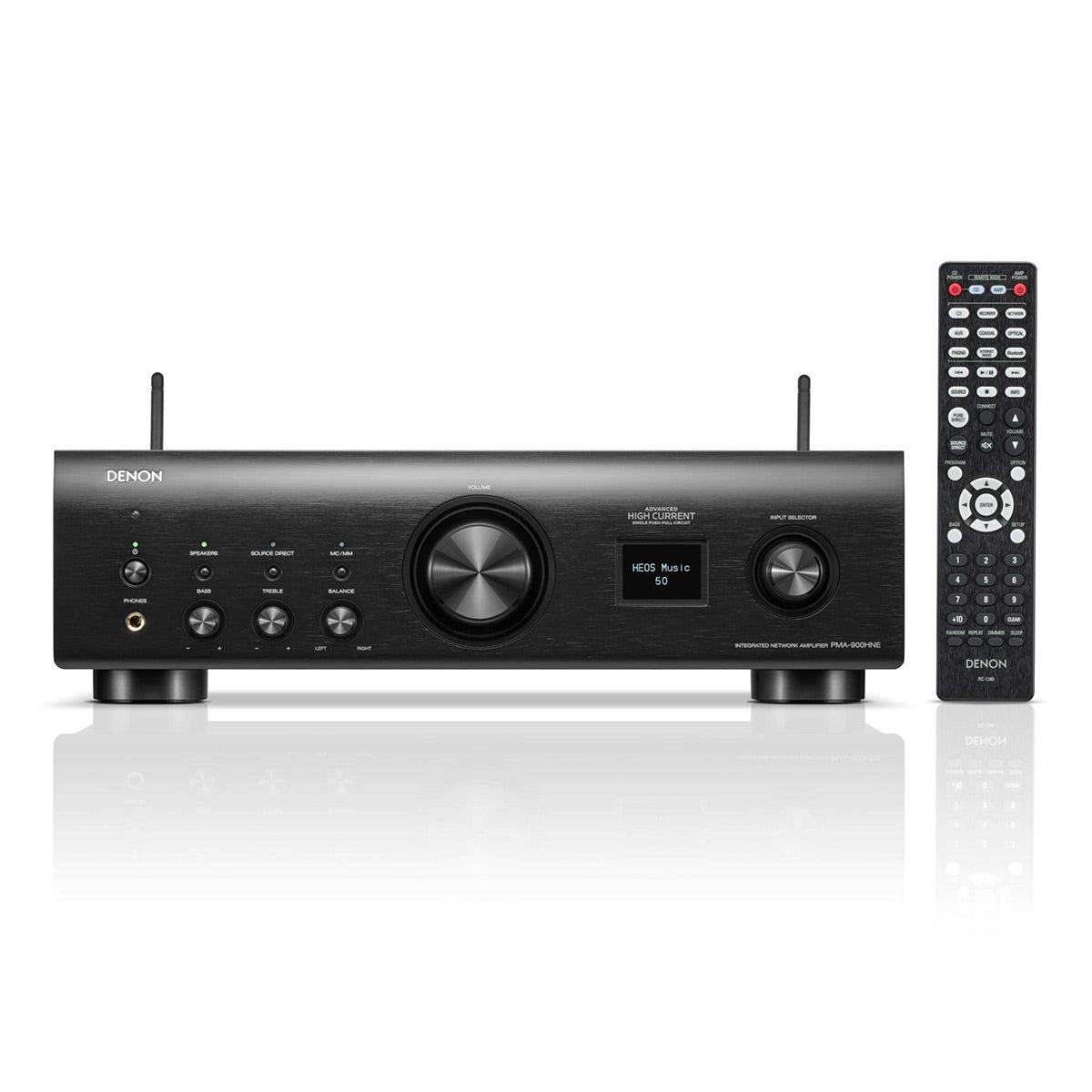
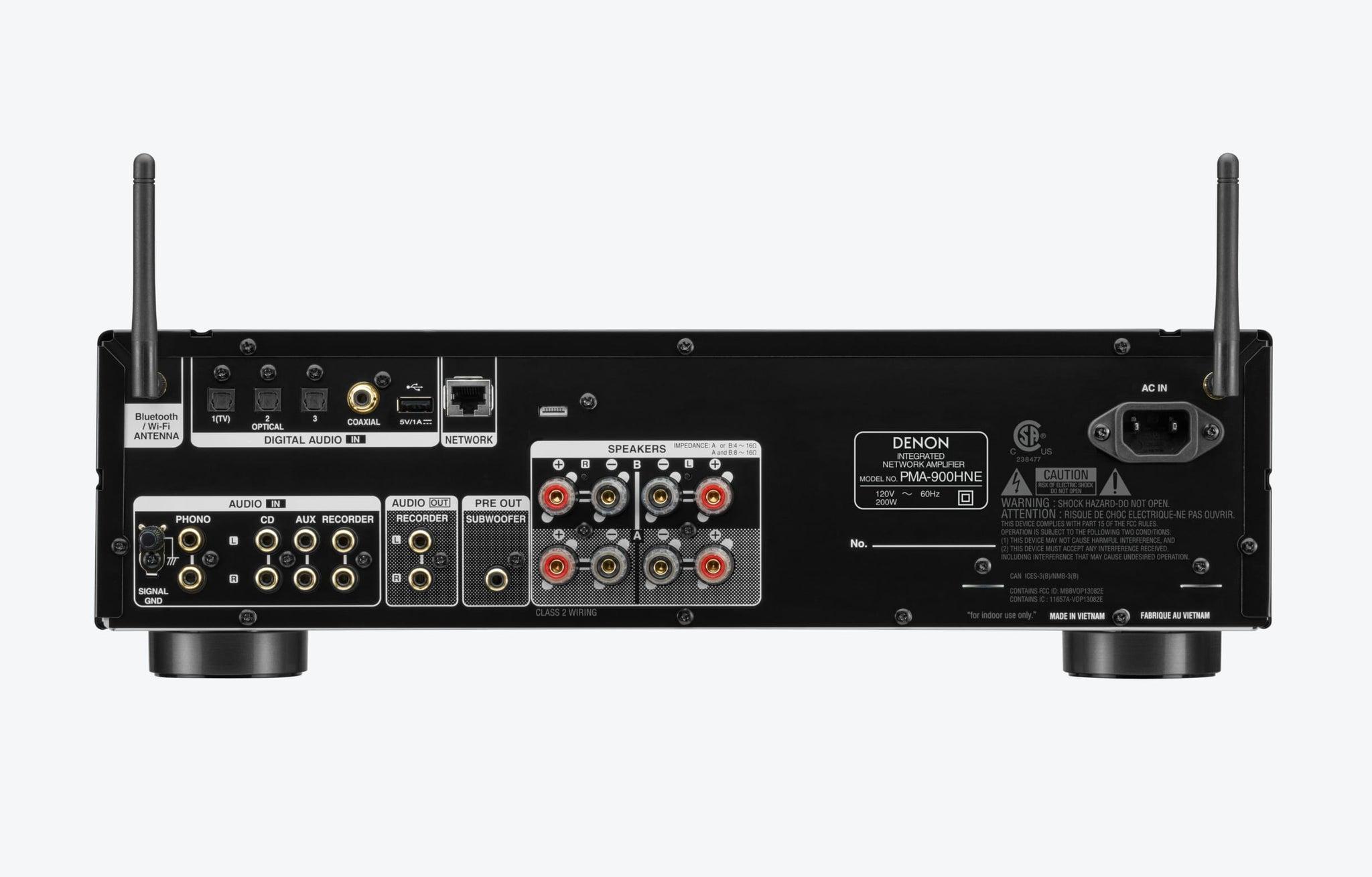
The analog input selection is where the Denon PMA-900HNE shows its traditional roots. You get three sets of RCA inputs, plus a dedicated phono stage that works with both moving magnet and moving coil cartridges. This phono stage alone would cost $200-300 as a separate component, making it valuable for vinyl enthusiasts who want to avoid any digital conversion of their analog records.
Denon's HEOS streaming platform handles the wireless duties, supporting major streaming services and multi-room audio. However, our research into user experiences reveals that HEOS setup can be more complex than BluOS, with some users reporting initial configuration difficulties. Once running, it performs well, but the setup experience isn't as polished as what Bluesound offers.
The Denon PMA-900HNE also includes features like AirPlay 2 support, Roon Ready compatibility (for advanced digital music library management), and voice assistant integration. The build quality feels substantial, with a metal chassis and traditional rotary controls that provide satisfying tactile feedback.
The sonic differences between these amplifiers reflect their different design philosophies. The PowerNode Edge delivers what many describe as a clean, detailed sound with excellent clarity across the frequency spectrum. Its digital amplification creates an exceptionally quiet background – when music isn't playing, you hear nothing from the speakers, even with your ear close to them.
Bass response from the PowerNode Edge is controlled and surprisingly full for such a compact unit. The midrange comes across as articulate without being analytical, and high frequencies are crisp without harshness. The overall presentation tends toward what reviewers describe as a "stage-like" soundfield – music appears to come from a defined area between your speakers rather than creating an intimate bubble around your listening position.
The Denon PMA-900HNE offers a warmer, more traditionally "musical" presentation that reflects Denon's decades of amplifier experience. It provides excellent dynamic range – the difference between quiet and loud passages feels more pronounced, which brings music to life in a way that engages listeners emotionally. The frequency response extends from 10Hz to 100kHz, providing excellent extension at both extremes.
Stereo imaging from the Denon is precise, with good depth and instrument separation. The sound signature leans toward what many describe as smooth and rich, with a slight warmth that makes long listening sessions comfortable without fatigue.
Which sounds better? That depends entirely on your preferences and music. If you prioritize absolute clarity and precision, the PowerNode Edge will likely appeal more. If you prefer a warmer, more traditionally "hi-fi" presentation, the Denon might be more to your taste.
Here's where the philosophical differences become most apparent. The PowerNode Edge assumes you live in a primarily digital world. Its HDMI eARC connection makes TV integration effortless, and its wireless capabilities mean you might never need to plug anything else into it. For streaming music, watching TV, and occasional Bluetooth use, this approach is incredibly convenient.
But what if you have a collection of CDs, a turntable, or other analog sources? The PowerNode Edge's single 3.5mm analog input means you'll need adapter cables and possibly an input switcher if you have multiple analog sources. This isn't necessarily a dealbreaker, but it does add complexity and potentially compromise sound quality through additional connections.
The Denon PMA-900HNE takes the opposite approach. With three RCA inputs plus a dedicated phono input, it easily accommodates multiple sources without adapters or switchers. The built-in phono stage supports both moving magnet and moving coil cartridges, making it ideal for serious vinyl enthusiasts.
However, the Denon lacks HDMI connectivity entirely. If TV integration matters to you, you'll need to run optical or analog audio cables from your TV, and you won't get the automatic switching and volume control that HDMI eARC provides.
For modern, streamlined setups, the PowerNode Edge excels. Its compact size makes it ideal for apartments, bedrooms, or offices where space is limited. The wall-mounting capability is genuinely useful – you can mount it behind your TV and have a complete audio system with just one HDMI cable. The BluOS platform's reliability means you're unlikely to experience the connectivity issues that plague some streaming devices.
The Denon PMA-900HNE makes more sense if you're building around existing analog sources or want maximum flexibility for future expansion. If you have a turntable, the dedicated phono stage eliminates the need for a separate phono preamp. Multiple analog inputs mean you can connect a CD player, tape deck, or other sources without juggling cables.
The PowerNode Edge integrates beautifully with TVs and home theater systems. The HDMI eARC connection handles audio from all your TV's inputs and streaming apps, and it can decode Dolby Digital for proper surround sound processing when used with a subwoofer. It can even function as wireless rear speakers in a larger Bluesound surround setup, which is genuinely innovative.
The Denon PMA-900HNE requires more work for TV integration. You'll need to use optical or analog audio outputs from your TV, which may not support all audio formats or provide the same seamless experience. However, for users who prioritize stereo music listening over home theater integration, this limitation may not matter.
At the time of writing, the PowerNode Edge costs significantly less than the Denon PMA-900HNE – roughly $300 less. For that price difference, you get a more compact design, better TV integration, and what many consider a superior streaming platform. The DirectDigital amplification technology is genuinely innovative and delivers performance that belies the modest power specifications.
The Denon PMA-900HNE costs more but includes features that would add significant expense if purchased separately. The built-in phono stage alone represents $200-300 worth of functionality. The additional analog inputs eliminate the need for input switchers, and the higher power output provides more headroom for demanding speakers.
Choose the Bluesound PowerNode Edge if you prioritize modern convenience and streaming integration. It's ideal for users whose music comes primarily from streaming services, who want effortless TV integration, or who need a compact solution that can disappear into their living space. The DirectDigital amplification delivers impressive performance from a small package, and the BluOS platform is among the best in the business.
The PowerNode Edge also makes sense if you're starting fresh with a new system or if you're willing to adapt your existing sources to its streamlined approach. For apartments, bedrooms, or minimalist setups, it's hard to beat.
Go with the Denon PMA-900HNE if you have significant investments in analog sources, particularly vinyl records. The dedicated phono stage and multiple analog inputs provide flexibility that the PowerNode Edge simply can't match. The traditional amplification approach delivers the kind of dynamic control and musical engagement that many audiophiles prefer.
The Denon also makes sense if you prefer the aesthetics and operation of traditional hi-fi components, or if you want maximum flexibility for future equipment changes. While it requires more setup complexity, it rewards users who want to fine-tune their systems over time.
Both amplifiers succeed at their intended missions. The Bluesound PowerNode Edge proves that modern streaming amplifiers can deliver serious performance while prioritizing convenience and space efficiency. The Denon PMA-900HNE shows how traditional hi-fi values can be successfully enhanced with streaming capabilities.
Your choice should reflect your priorities: streaming convenience and modern integration with the PowerNode Edge, or traditional flexibility and analog source accommodation with the Denon. Either way, you're getting a quality amplifier that can anchor a satisfying audio system for years to come.
The streaming amplifier category continues to evolve rapidly, but these two products represent mature, well-executed approaches to the fundamental question of how much traditional hi-fi functionality you're willing to trade for modern convenience. Choose based on your sources, your space, and your listening priorities – both will deliver years of musical enjoyment.
| Bluesound PowerNode Edge | Denon PMA-900HNE |
|---|---|
| Power Output - Determines how loud and dynamic your music sounds | |
| 40W per channel (8Ω), 80W (4Ω) - Efficient digital design punches above specs | 50W per channel (8Ω), 85W (4Ω) - Traditional headroom for demanding speakers |
| Amplifier Technology - Affects sound character and efficiency | |
| DirectDigital™ amplification - Keeps signal digital until speakers for ultra-low noise | Advanced High Current analog design - Classic audiophile approach with dynamic control |
| Physical Size - Important for placement flexibility | |
| Compact 8.6" x 1.8" x 7.6" with wall-mount option - Fits anywhere | Traditional component 17.1" x 5.1" x 15.4" - Substantial presence |
| Streaming Platform - Daily usability and reliability matter most | |
| BluOS - Widely praised for stability and intuitive interface | HEOS - Comprehensive but some users report setup complexity |
| Analog Input Flexibility - Critical if you have turntables or legacy gear | |
| Single 3.5mm input requiring adapters - Minimal analog accommodation | 3x RCA inputs plus dedicated MM/MC phono stage - Excellent analog support |
| TV Integration - Simplifies home theater setup | |
| HDMI eARC with Dolby Digital decoding - Seamless single-cable TV connection | No HDMI - Requires separate audio cables from TV |
| Multi-room Capability - Expands whole-home audio options | |
| BluOS wireless sync with other Bluesound devices | HEOS wireless sync with other Denon HEOS products |
| Bluetooth Quality - Affects wireless audio performance | |
| aptX HD (Bluetooth 5.0) - High-quality wireless streaming | SBC codec only - Basic Bluetooth audio quality |
| High-Resolution Audio Support - Future-proofs your investment | |
| 24-bit/192kHz, MQA decoding - Full hi-res streaming support | 24-bit/192kHz PCM via network - Comprehensive digital format support |
| Special Features - Unique capabilities that add value | |
| Subwoofer output, wall-mounting, capacitive touch controls | Dedicated phono stage, recording output, traditional hi-fi controls |
The Bluesound PowerNode Edge is generally better for beginners due to its simpler setup and more intuitive BluOS app. The compact design and single HDMI connection for TV integration make it easier to get started, while the Denon PMA-900HNE requires more knowledge of traditional hi-fi connections and has a more complex HEOS setup process.
The Bluesound PowerNode Edge uses modern DirectDigital amplification and focuses on streaming convenience, while the Denon PMA-900HNE uses traditional analog amplification with comprehensive input options. The PowerNode Edge prioritizes compact design and TV integration, whereas the Denon offers more flexibility for vinyl and other analog sources.
Both deliver excellent sound quality but with different characteristics. The Bluesound PowerNode Edge provides clean, detailed sound with exceptional clarity, while the Denon PMA-900HNE offers a warmer, more traditionally musical presentation with better dynamic range. The choice depends on your listening preferences rather than one being objectively better.
Yes, but with important differences. The Denon PMA-900HNE includes a dedicated phono stage supporting both moving magnet and moving coil cartridges for optimal vinyl playback. The Bluesound PowerNode Edge requires an external phono preamp and converts the analog signal to digital, which some vinyl purists prefer to avoid.
The Bluesound PowerNode Edge excels in small spaces due to its compact size and wall-mounting capability. You can mount it behind your TV or on a wall, making it nearly invisible. The Denon PMA-900HNE requires traditional component placement and takes up significantly more space.
The PowerNode Edge connects via a single HDMI eARC cable, providing seamless integration with automatic switching and Dolby Digital support. The Denon PMA-900HNE lacks HDMI connectivity and requires optical or analog audio cables from your TV, which may not support all audio formats or provide automatic switching.
BluOS on the Bluesound PowerNode Edge is widely regarded as more reliable and user-friendly, with consistent praise for its stability and intuitive interface. HEOS on the Denon PMA-900HNE offers comprehensive features but some users report setup difficulties and occasional connectivity issues.
The Denon PMA-900HNE produces slightly more power at 50 watts per channel compared to the PowerNode Edge's 40 watts per channel. However, the digital amplification efficiency of the Bluesound means this power difference is less significant in real-world use than the numbers suggest.
The Bluesound PowerNode Edge integrates excellently with home theater setups via HDMI eARC and can decode Dolby Digital surround sound. It can even serve as wireless rear speakers in a Bluesound surround system. The Denon PMA-900HNE is primarily designed for stereo listening and requires additional equipment for proper home theater integration.
The PowerNode Edge offers excellent value for users prioritizing streaming and modern convenience, while the Denon PMA-900HNE provides better value for those needing multiple analog inputs and traditional hi-fi flexibility. The Denon's built-in phono stage alone adds significant value for vinyl enthusiasts.
The Denon PMA-900HNE offers more physical connections with three RCA inputs, a phono input, and multiple digital inputs. The Bluesound PowerNode Edge has minimal physical inputs but excels at wireless connectivity through streaming services, Bluetooth, and network sources.
Both support multi-room audio, but the Bluesound PowerNode Edge with BluOS generally provides a more seamless multi-room experience with better synchronization and easier setup. The Denon PMA-900HNE supports HEOS multi-room functionality, but the platform is considered less refined than BluOS for whole-home audio applications.
We've done our best to create useful and informative comparisons to help you decide what product to buy. Our research uses advanced automated methods to create this comparison and perfection is not possible - please contact us for corrections or questions. These are the sites we've researched in the creation of this article: futureaudiophile.com - alpha-audio.net - theaudiofactory.com - audiophilia.com - youtube.com - qaudio.com - crutchfield.com - youtube.com - bluesound.com - audioadvisor.com - crutchfield.com - bluesound.com - audiosciencereview.com - bluesound.com - soundstagesimplifi.com - mysoundconcepts.com - crutchfield.com - e-catalog.com - theaudiotailor.com.au - extremehifi.com - whathifi.com - speakerdecision.com - youtube.com - audiosciencereview.com - sound-advice.online - crutchfield.com - crutchfield.com - sweetwater.com - watthifi.com - youtube.com - accessories4less.com - soundstageaccess.com - icav.us - safeandsoundhq.com - listenup.com - accessories4less.com - audiosciencereview.com

Privacy Policy
Terms and Conditions - Affiliate Policy
Home Security
© Copyright 2008-2026.
11816 Inwood Rd #1211, Dallas, TX 75244