




The world of home audio has transformed dramatically over the past decade. Gone are the days when you needed a rack full of separate components to enjoy high-quality streaming music. Today's streaming integrated amplifiers pack everything you need—amplifier, digital-to-analog converter (DAC), and wireless connectivity—into a single, compact box that can breathe new life into your passive speakers.
Two standout products in this category are the SVS Prime Wireless Pro SoundBase and the Sonos Amp. Both aim to solve the same fundamental problem: how do you get great-sounding, modern streaming audio without the complexity and cost of traditional separates? However, they take remarkably different approaches to achieve this goal.
Before diving into specifics, it's worth understanding what makes these devices special. A streaming integrated amplifier combines three essential components: an amplifier that powers your speakers, a DAC that converts digital music files into analog signals your ears can appreciate, and streaming capabilities that connect to your home network and music services.
The key considerations when shopping in this category include power delivery (how well the amplifier can drive different types of speakers), streaming ecosystem compatibility (which services and devices work seamlessly), connectivity options (how many different sources you can plug in), user interface quality (how easy the device is to control), and overall value relative to performance.
Think of these devices as the Swiss Army knives of modern audio—they consolidate multiple functions while maintaining quality, though sometimes with trade-offs compared to dedicated separates.
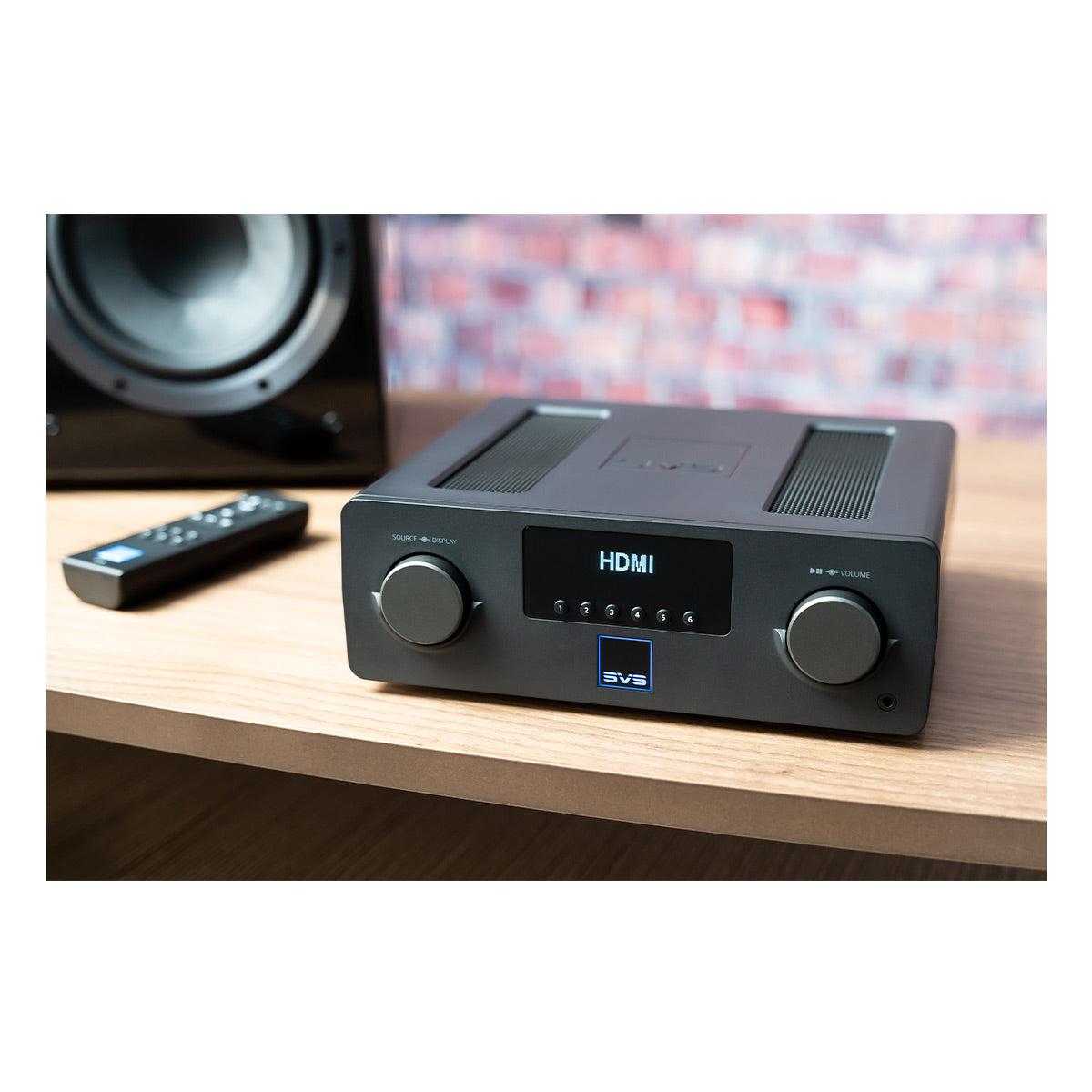
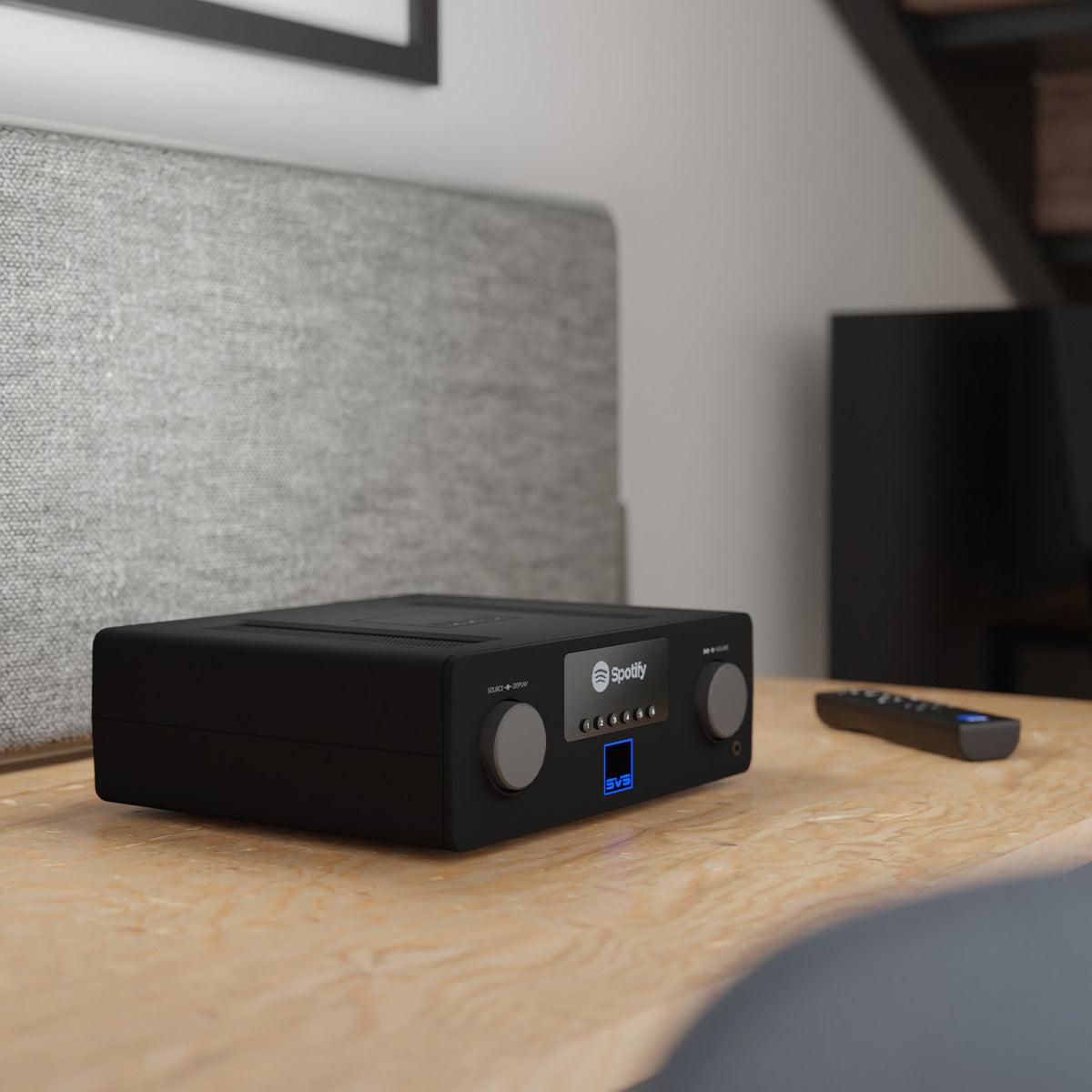
The SVS Prime Wireless Pro SoundBase, released in 2022, represents SVS's second-generation approach to wireless streaming. SVS built their reputation on subwoofers and speakers that punch above their weight class in terms of performance per dollar, and this philosophy clearly influences their amplifier design. At the time of writing, it sits in the premium budget category, offering audiophile-aspiring performance at an accessible price point.
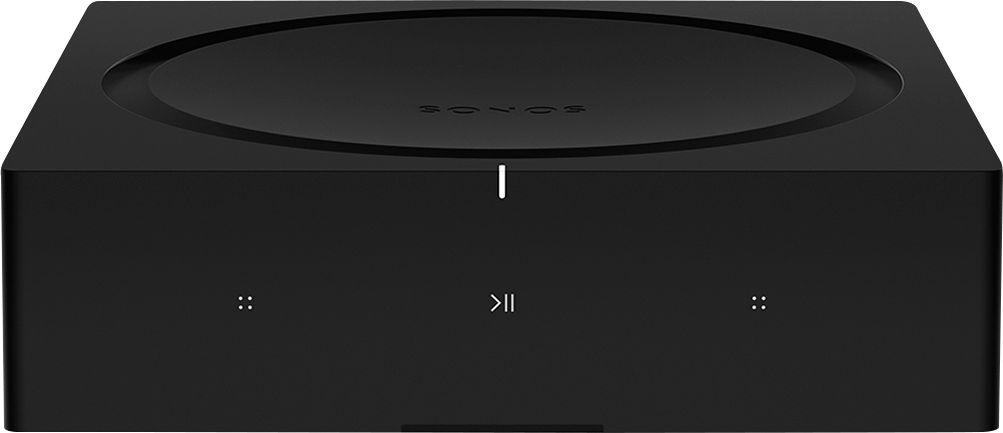
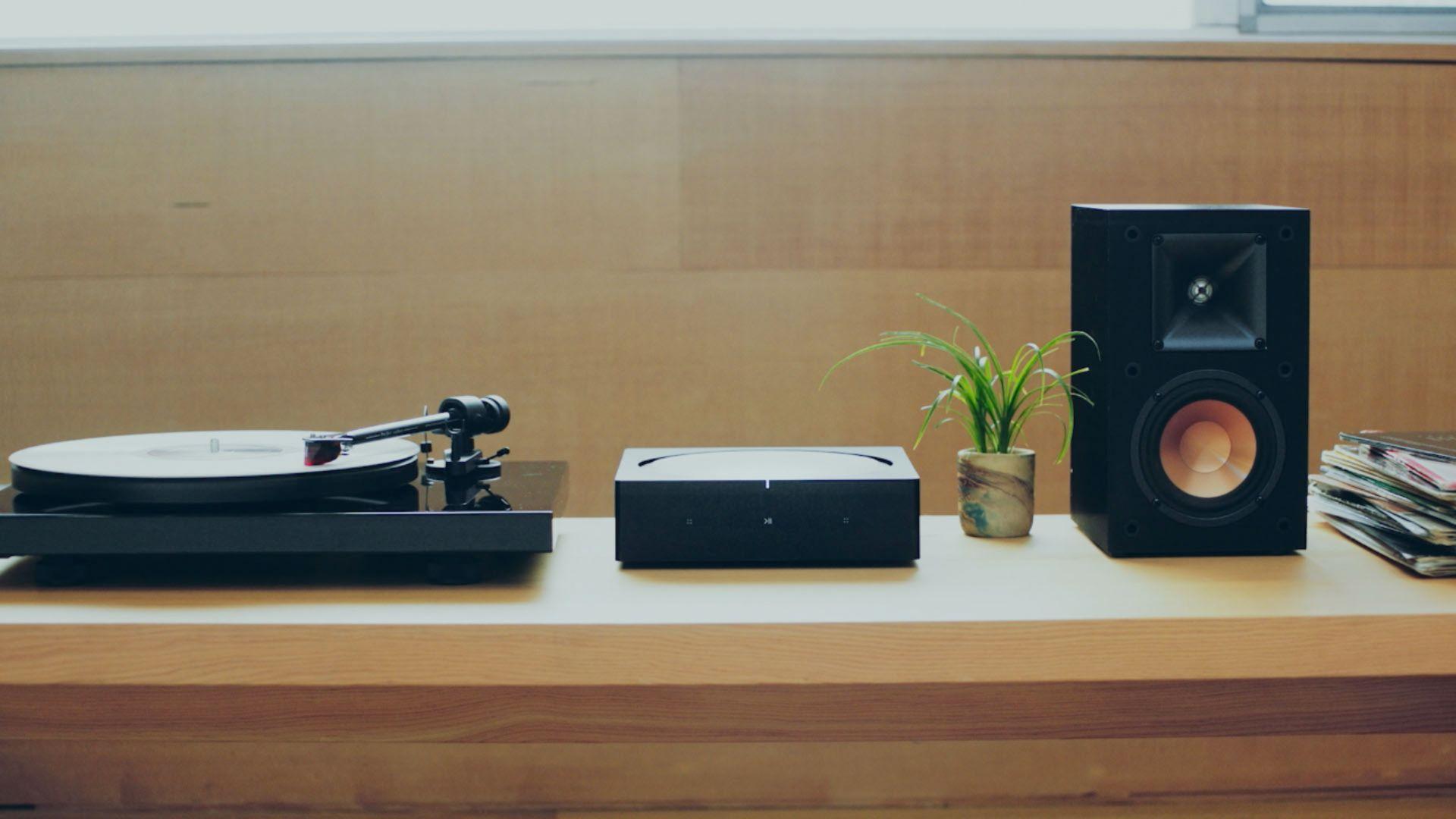
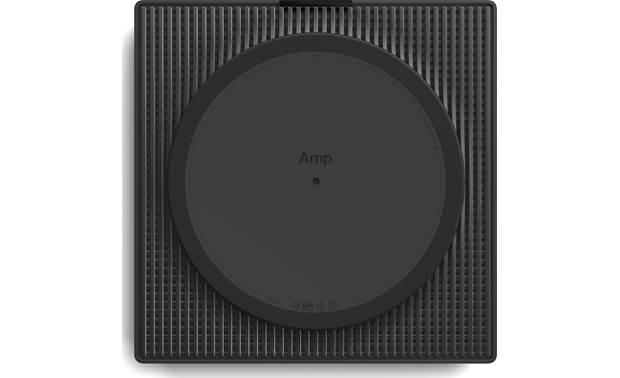
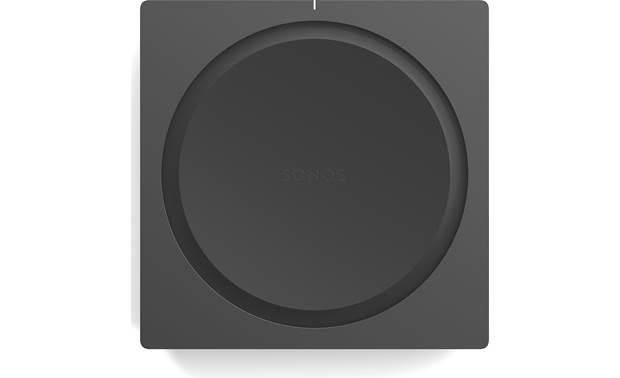
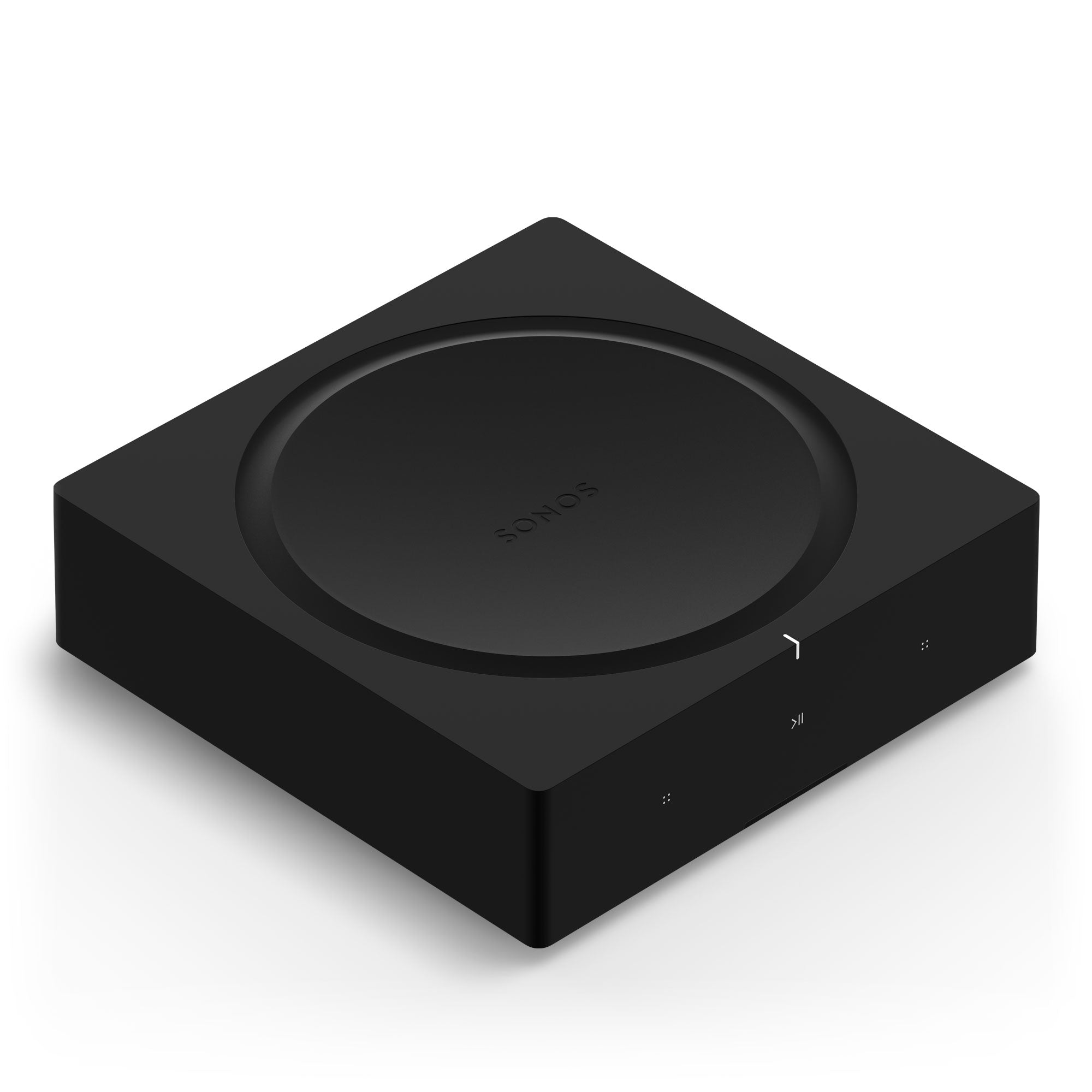
The Sonos Amp, launched in 2018, takes a different approach entirely. Sonos has spent over a decade perfecting multiroom audio and smart home integration. Their amplifier isn't just about driving speakers—it's about creating a seamless, expandable ecosystem that can grow with your needs. It typically commands a premium price that reflects this ecosystem integration.
Since their respective launches, both products have benefited from software updates and ecosystem improvements. The SVS SoundBase has seen refinements to its DTS Play-Fi platform, while the Sonos Amp has gained deeper smart home integrations and expanded streaming service support.
When it comes to amplification—the core function of driving your speakers—these devices reveal their different priorities immediately. The SVS Prime Wireless Pro SoundBase delivers 300 watts total power (150 watts per channel into 4-ohm speakers), while the Sonos Amp provides 250 watts total (125 watts per channel into 8-ohm speakers, scaling up to 250 watts per channel into 4-ohm loads).
But raw wattage numbers only tell part of the story. What matters more is how cleanly and dynamically these amplifiers deliver power. Both use Class-D amplification, a modern technology that's extremely efficient and runs cool, but historically suffered from a somewhat sterile, digital sound character. The latest generation of Class-D designs, like those in both these products, have largely solved those early problems.
Based on extensive user feedback and professional reviews, the SVS SoundBase punches significantly above its specifications. Users consistently report that it drives demanding speakers with authority and finesse that you'd typically expect from much more expensive amplifiers. The amplifier seems conservatively rated—a good thing in audio—meaning it likely delivers more clean power than advertised.
The Sonos Amp, meanwhile, focuses on efficiency and thermal management. It can power up to four speakers simultaneously (two pairs of 8-ohm speakers wired in parallel), making it particularly attractive for whole-home installations. However, reviews suggest that while it sounds good—punchy and engaging—it lacks some of the subtlety and refinement that serious audiophiles crave.
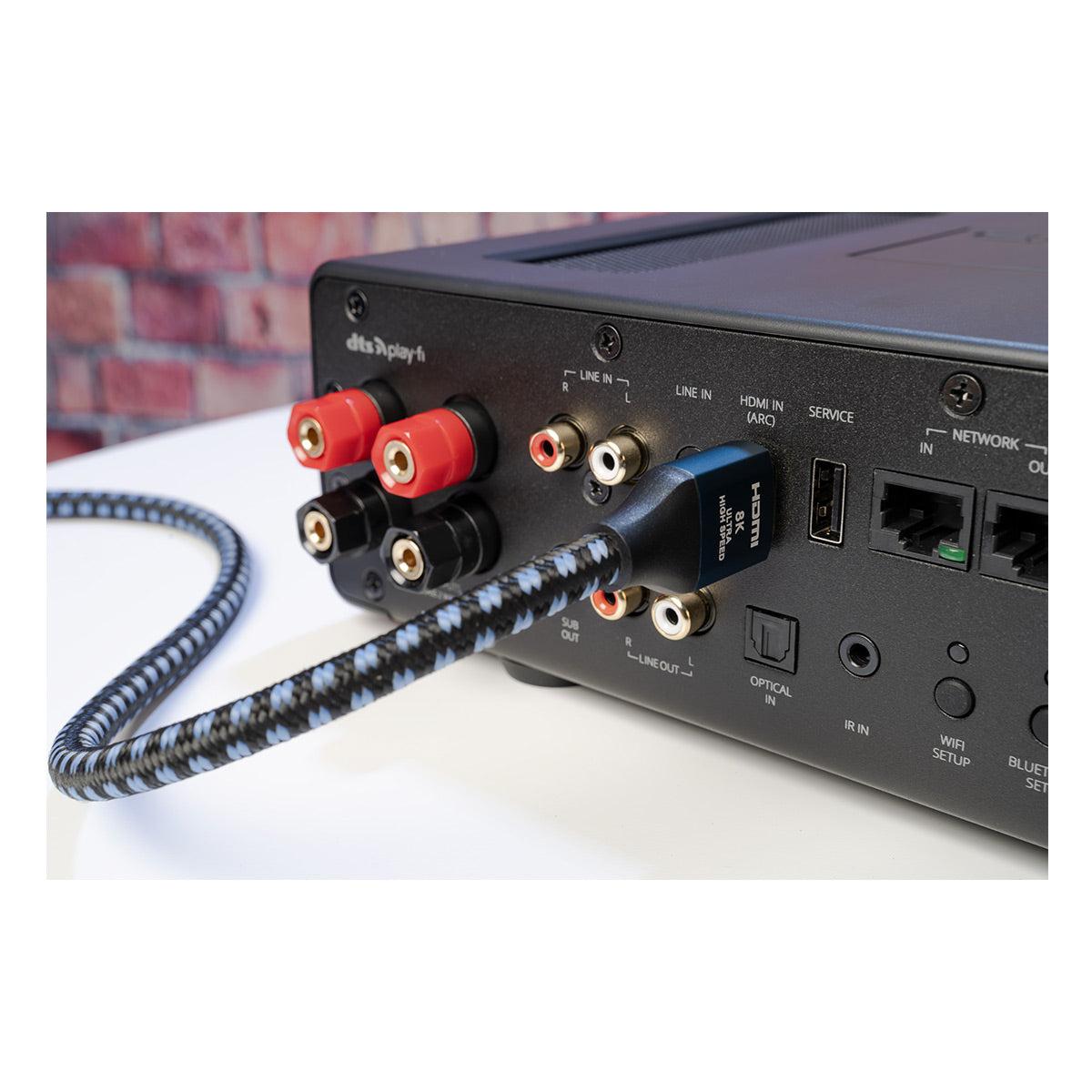
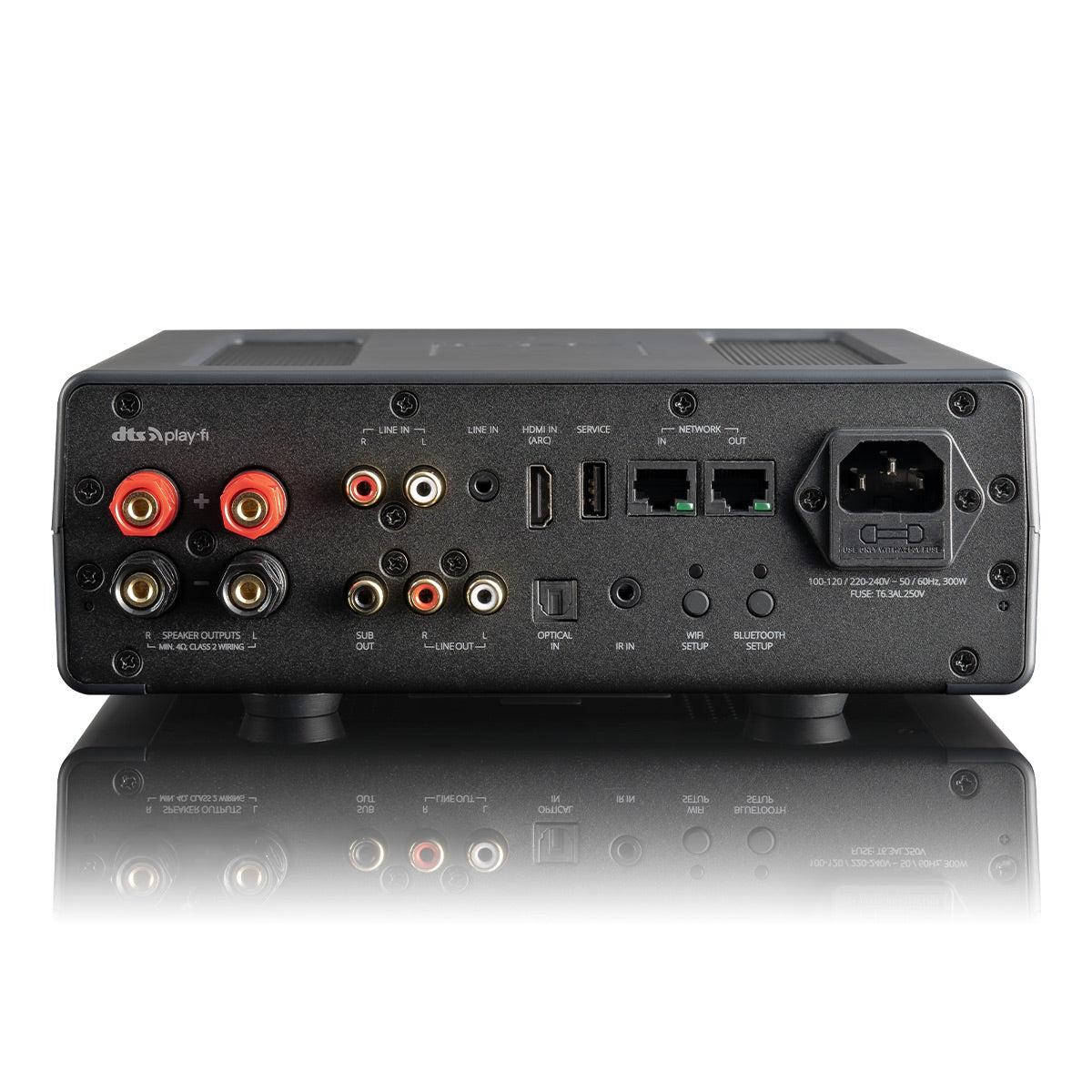
For home theater use, both amplifiers support HDMI ARC (Audio Return Channel), which means you can connect them directly to your TV with a single cable. This eliminates the need for additional connections and often provides better sound quality than optical or analog connections. However, they handle this integration differently, which we'll explore later.
The digital-to-analog conversion capabilities separate good streaming amplifiers from great ones. When you stream a song from Spotify or play a high-resolution file from your music library, the DAC converts those digital bits into the analog waveforms that actually move your speaker drivers.
The SVS SoundBase supports high-resolution audio up to 24-bit/192kHz through its WiFi connection when using DTS Play-Fi's Critical Listening Mode. To put this in perspective, CD quality is 16-bit/44.1kHz, so this represents roughly four times the data density. More importantly, this high-resolution support works with lossless streaming—meaning no compression artifacts that can muddy the sound.
The Sonos Amp caps out at 24-bit/48kHz, which is still higher than CD quality but not quite as expansive as what the SVS offers. This limitation reflects Sonos's prioritization of reliable multiroom synchronization over ultimate fidelity. When you're streaming to multiple rooms simultaneously, the network demands are intense, so Sonos opts for consistency over resolution.
In real-world listening, both DACs perform admirably. The SVS tends to reveal more detail and spatial information in recordings, particularly with well-mastered high-resolution files. The Sonos delivers a more forgiving, accessible sound that's less likely to highlight poor recordings but might miss some of the subtle details that make great recordings special.
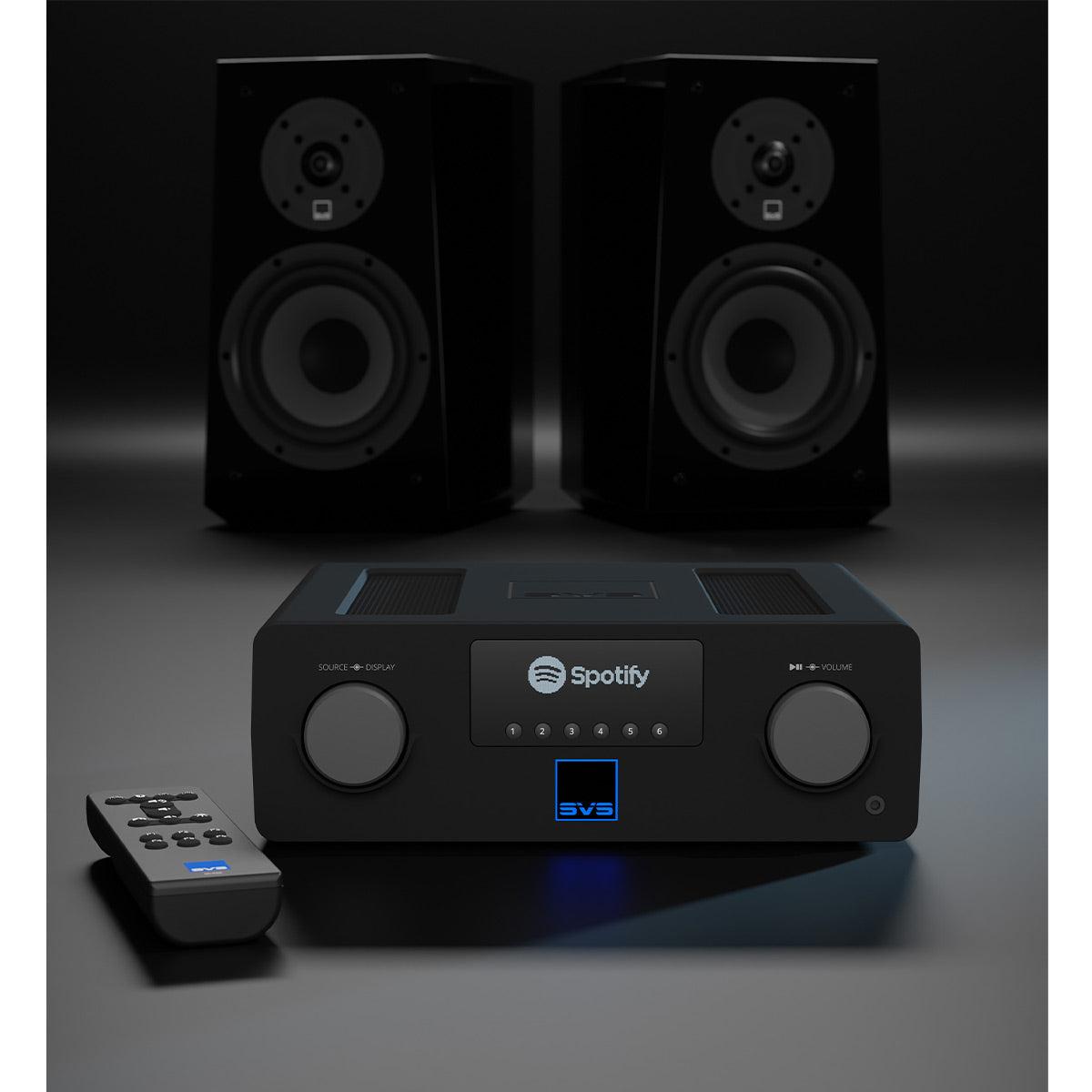
This is where the philosophical differences between these products become most apparent. The SVS SoundBase uses DTS Play-Fi as its primary streaming platform, supplemented by support for Apple AirPlay 2, Google Chromecast, Bluetooth 5.0, and Spotify Connect. This shotgun approach means you have multiple ways to get music to the amplifier, but it also means multiple apps and interfaces to learn.
Unfortunately, user consensus strongly suggests that the DTS Play-Fi app is the weakest link in the SVS experience. Reviews consistently describe it as clunky and buggy compared to more polished alternatives. However, the multiple streaming options mean you can often bypass Play-Fi entirely—using AirPlay from iOS devices, Chromecast from Android devices, or Spotify Connect directly from the Spotify app.
The Sonos Amp lives entirely within the Sonos ecosystem, and this focus shows. The Sonos app (despite some recent controversial changes) remains one of the most polished and intuitive interfaces in home audio. It excels at managing multiple rooms, creating custom playlists, and seamlessly switching between different music services. However, this ecosystem approach means less flexibility—you're largely locked into the Sonos way of doing things.
For voice control enthusiasts, both products support Amazon Alexa and Google Assistant, though the Sonos Amp integrates more deeply with smart home systems and offers more sophisticated automation options.
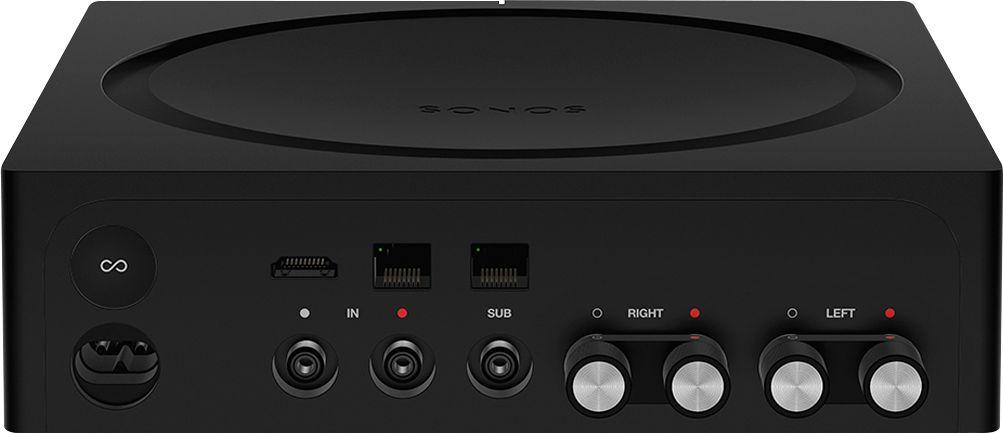
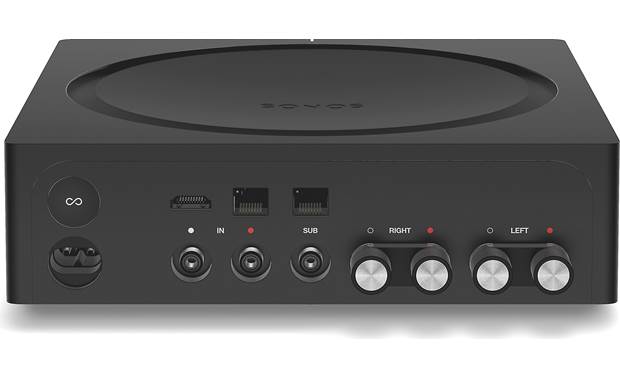
Physical connectivity reveals another key difference in approach. The SVS SoundBase offers a comprehensive array of inputs: HDMI ARC for TV connection, optical digital input, RCA analog inputs, and even a 3.5mm auxiliary input for portable devices. There's also a subwoofer output, though it's full-range (meaning it doesn't filter out bass frequencies), so you'll need a powered subwoofer with its own crossover controls.
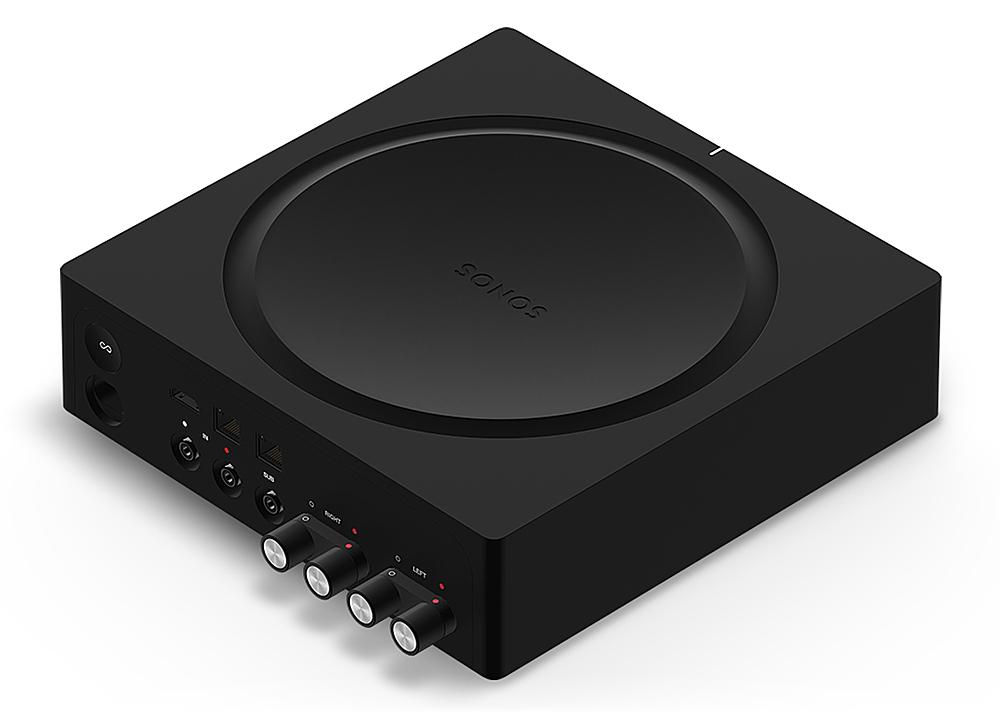
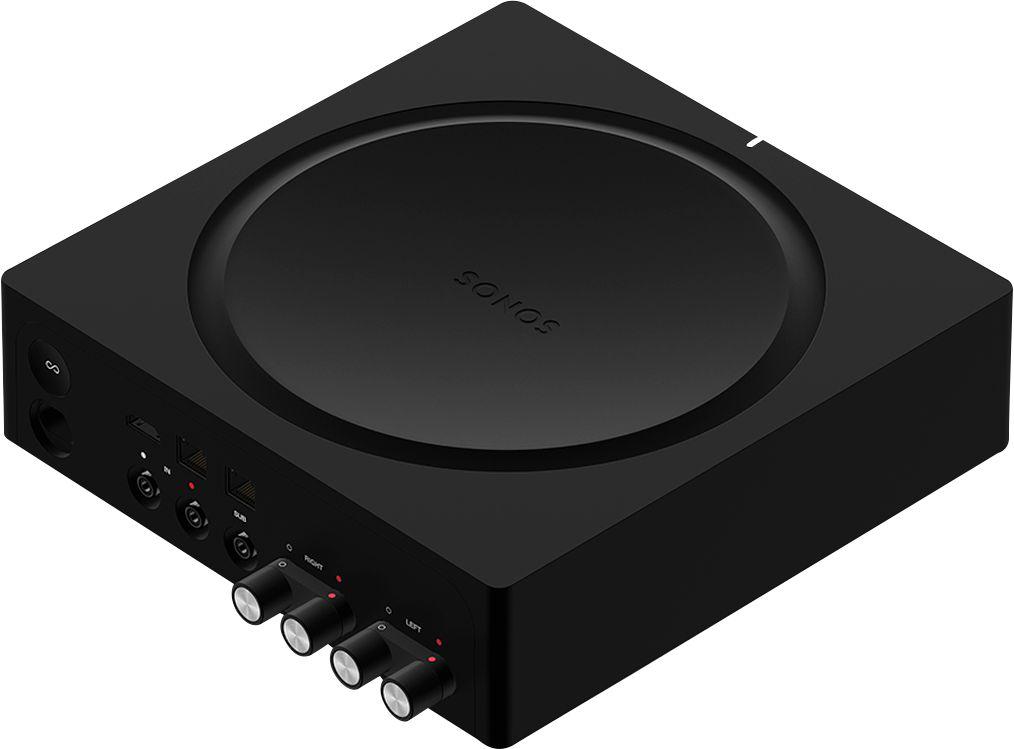
The Sonos Amp takes a more focused approach with HDMI ARC, RCA line inputs, and dual Ethernet ports for network connections. Importantly, it includes a sophisticated subwoofer output with adjustable crossover settings from 50-110Hz, giving you more precise bass management. The dual Ethernet ports are particularly useful for installations where you want to hardwire the connection for reliability.
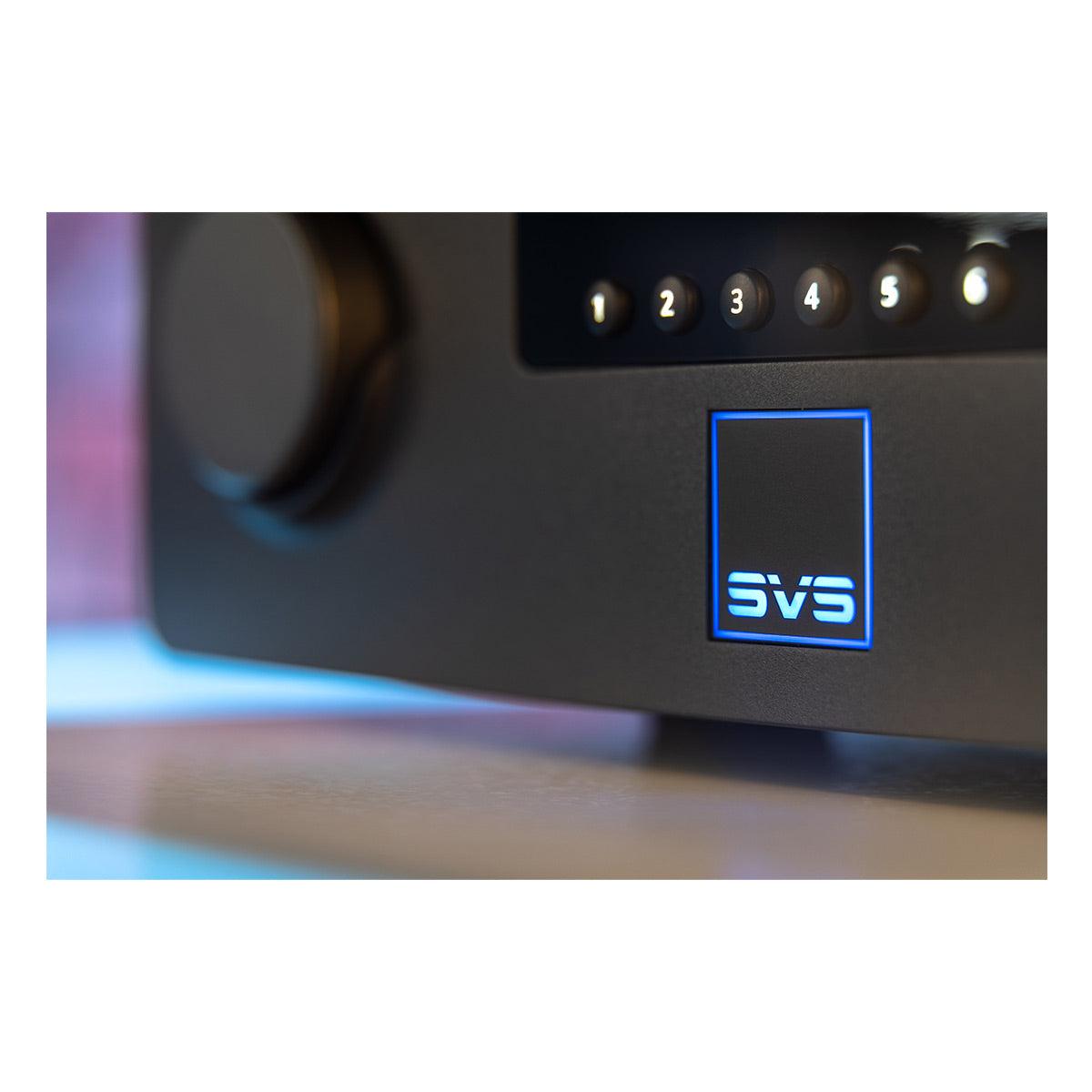
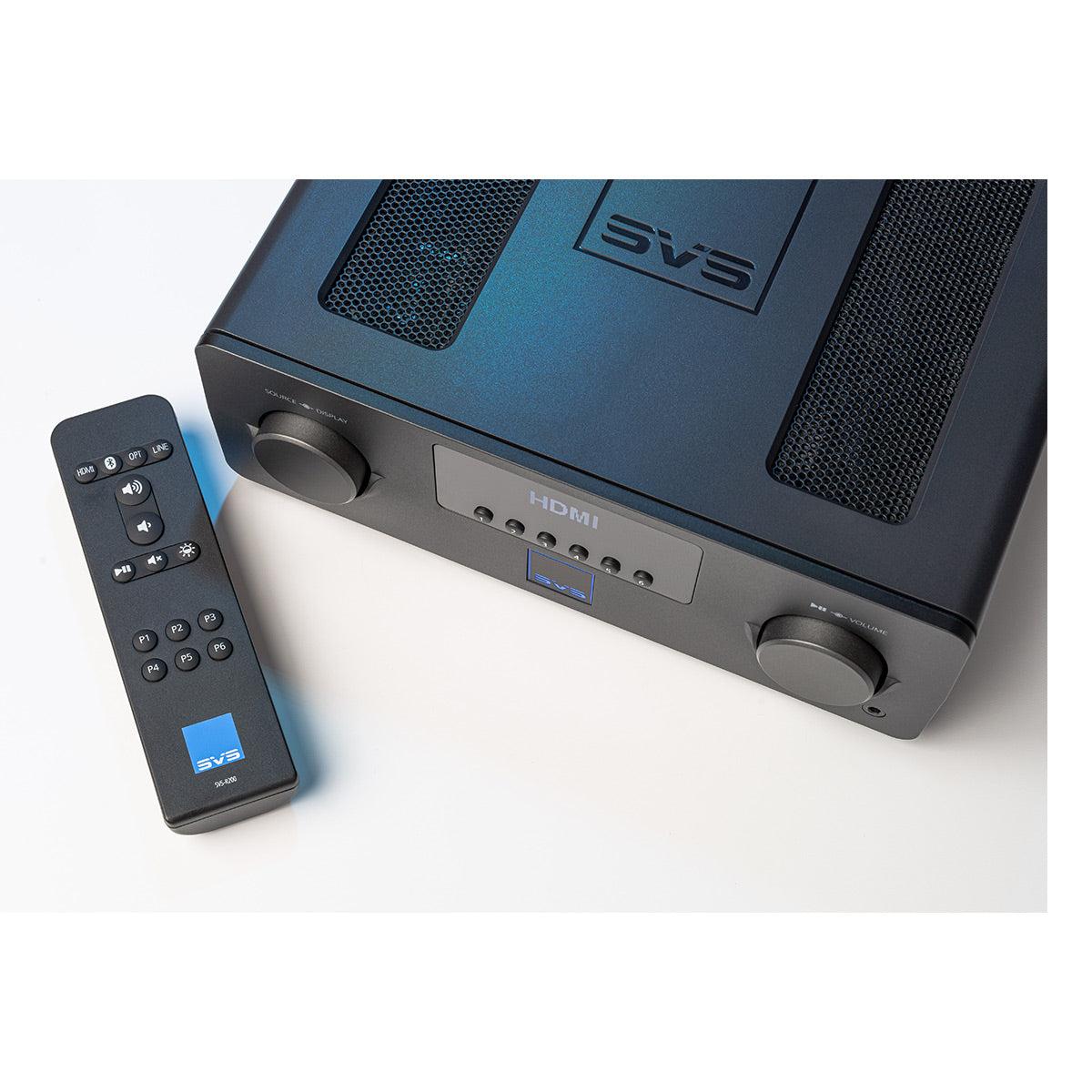
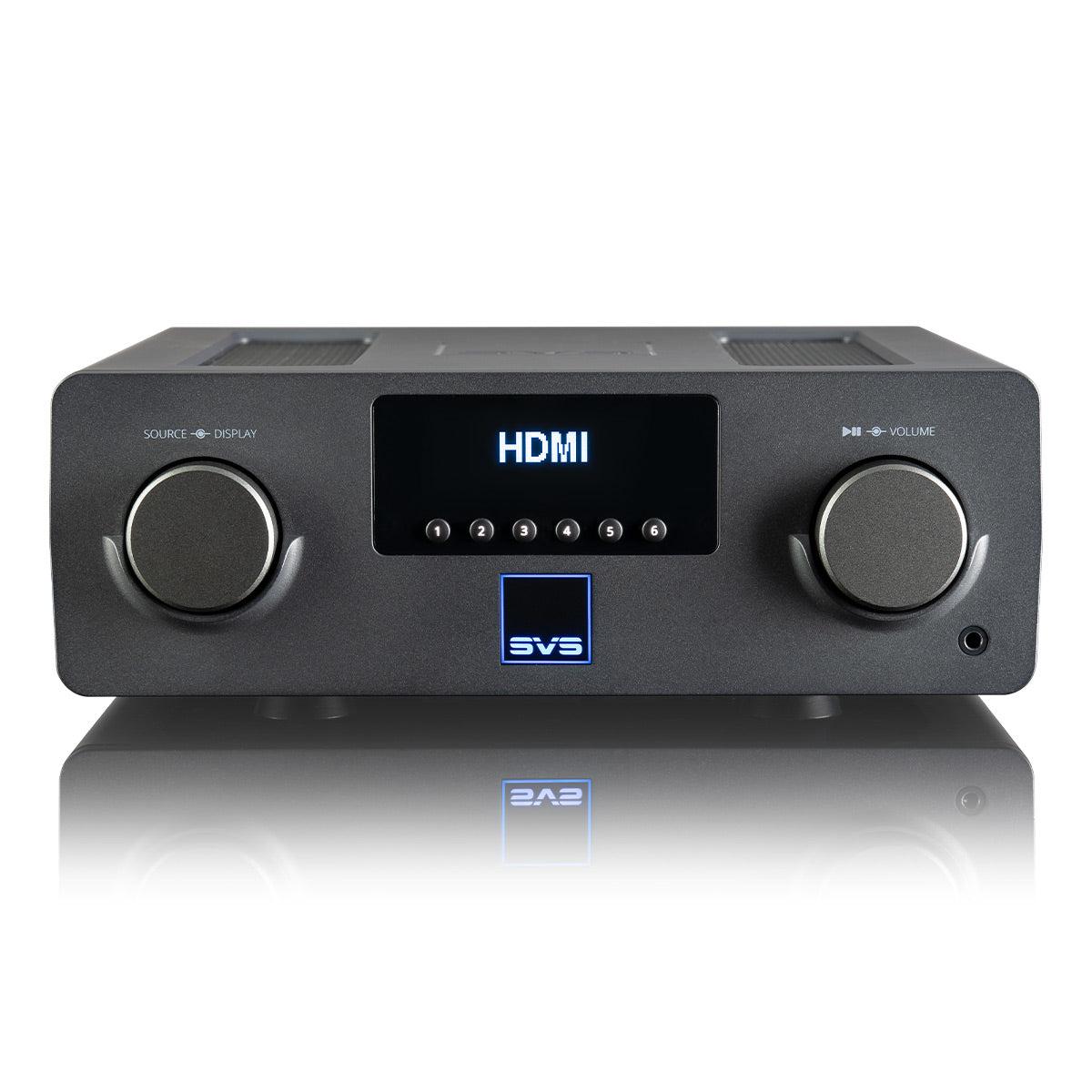
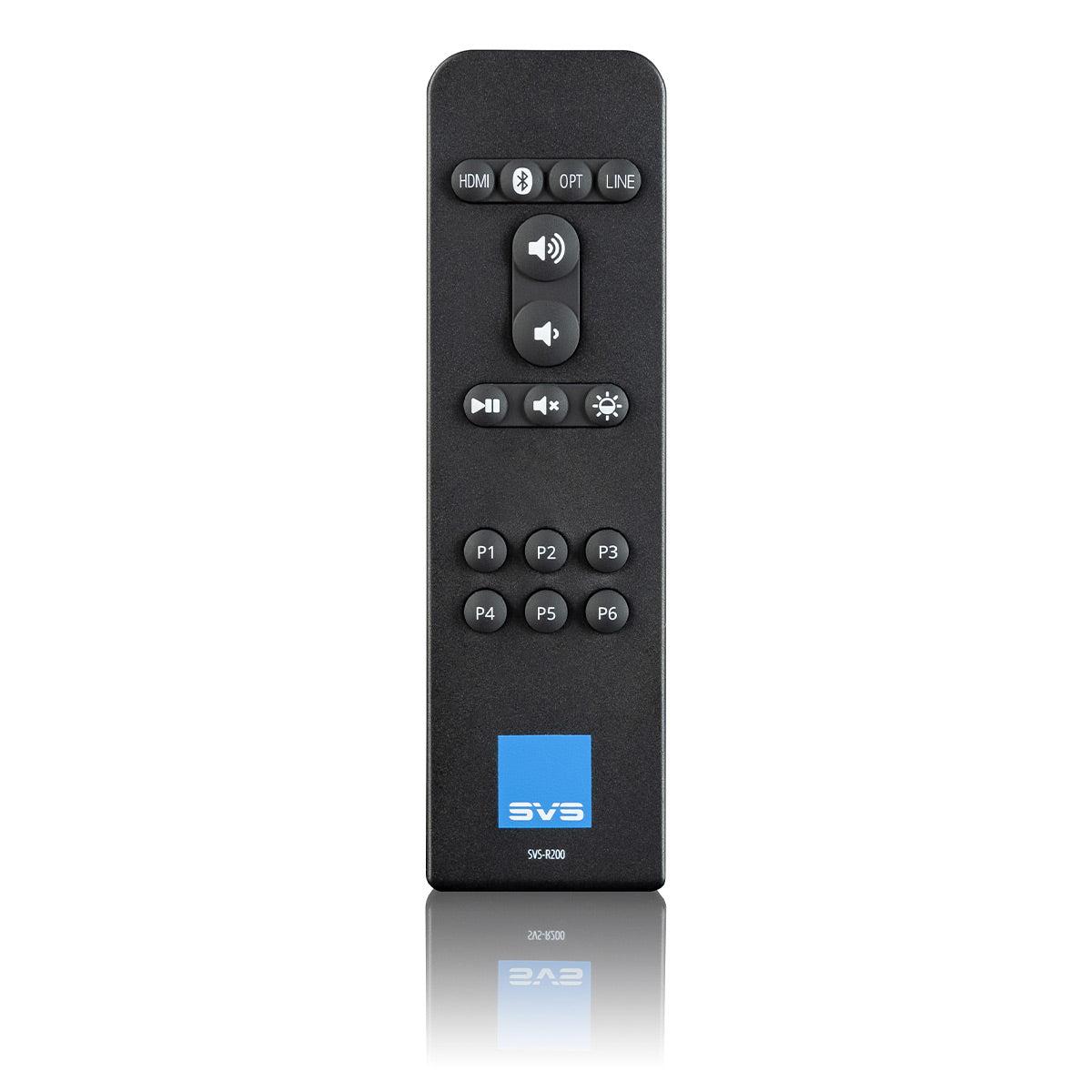
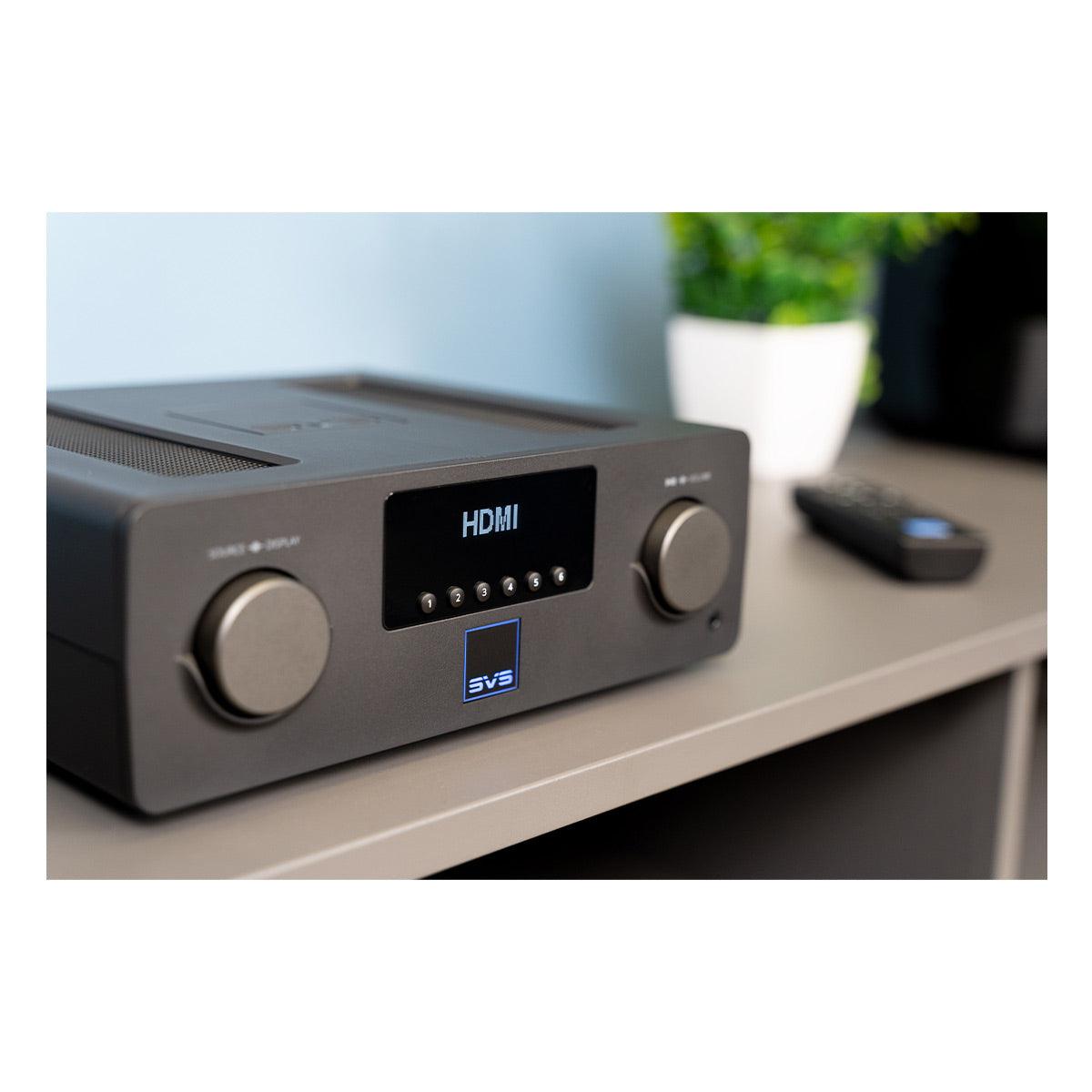
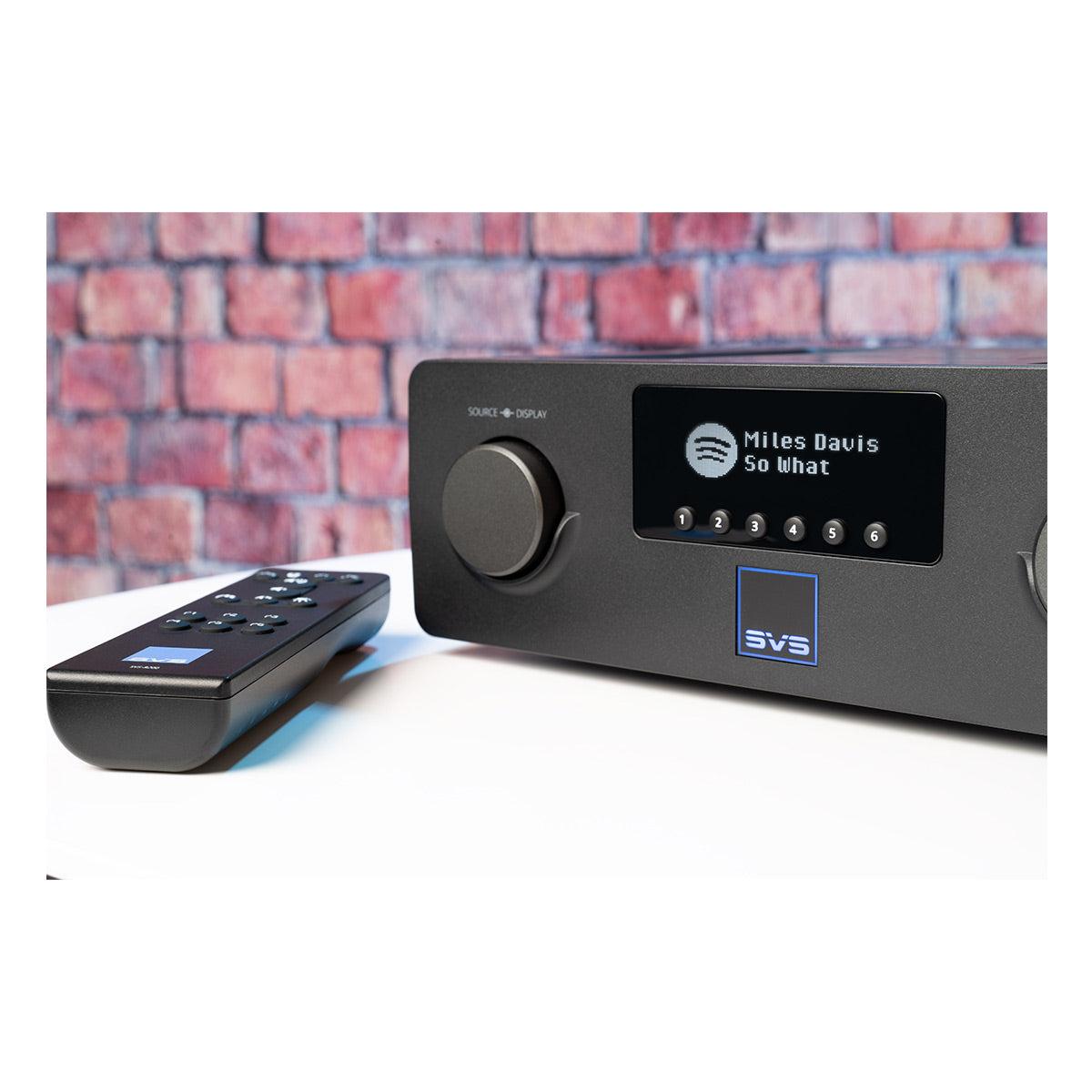
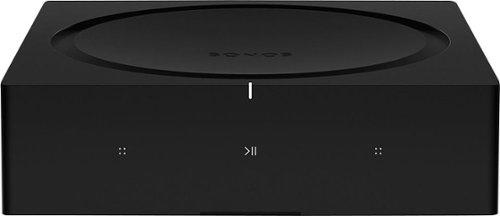
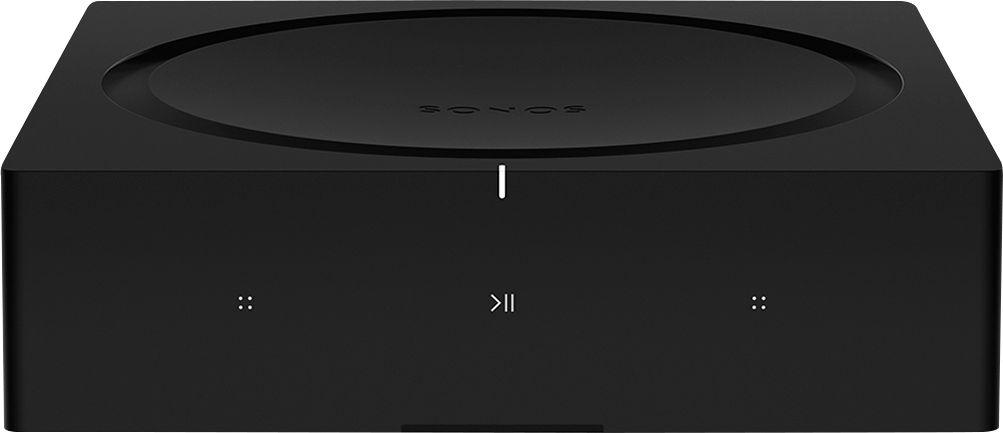
Both amplifiers include preset buttons on their front panels, but they serve different purposes. The SVS offers six programmable presets that can instantly access your favorite streaming services, playlists, or internet radio stations—a surprisingly useful feature for daily operation. The Sonos Amp has touch-sensitive controls for basic playback functions, relying more heavily on app control for detailed operations.
For home theater integration, both products handle TV audio well, but with different strengths. The SVS excels at stereo music reproduction and delivers impressive soundstage width and depth for movies. However, it's primarily a two-channel solution with basic subwoofer integration.
The Sonos Amp offers a more comprehensive home theater path. You can wirelessly add Sonos surround speakers to create a true surround sound system, and the bass management is more sophisticated. If you're building a system that needs to excel at both music and movies, the Sonos approach offers more flexibility for future expansion.
The day-to-day experience with these products reveals their true characters. The SVS SoundBase features a bright OLED display that clearly shows track information from across the room, and those six preset buttons prove incredibly convenient for quick access to your most-played content. However, when you need to do anything complex—browsing new music, adjusting settings, or managing playlists—you're often stuck with the frustrating Play-Fi app experience.
The Sonos Amp takes the opposite approach. The physical interface is minimal and elegant, but the app experience is generally smooth and intuitive. Managing multiple rooms, adjusting individual zone volumes, and discovering new music feels natural and responsive. The trade-off is that you're more dependent on having your phone or tablet nearby for control.
Both products include IR remote controls, which might seem old-fashioned but proves useful when you don't want to hunt for your phone just to adjust the volume or skip a track.
After analyzing countless user reviews and professional assessments, several performance characteristics emerge as most crucial for these products.
Dynamic Range and Power Delivery: The SVS SoundBase consistently receives praise for its ability to handle demanding musical passages without compression or distortion. Users report successful pairings with speakers ranging from efficient bookshelf models to power-hungry tower speakers. The Sonos Amp performs well but seems to reach its limits sooner with very demanding speakers.
Soundstage and Imaging: Both amplifiers create convincing spatial presentations, but the SVS tends to cast a wider, more enveloping soundstage that makes recordings feel more immersive. The Sonos delivers good imaging but with a more focused, center-weighted presentation.
Tonal Balance: The SVS aims for accuracy and neutrality, revealing the character of both your speakers and your recordings. The Sonos applies subtle processing that makes most music sound pleasant and engaging, even if it's not perfectly neutral.
System Reliability: Both products prove reliable in long-term use, though network connectivity issues occasionally plague both DTS Play-Fi and Sonos ecosystems. The Sonos generally handles network hiccups more gracefully thanks to its mature software platform.
Choose the SVS Prime Wireless Pro SoundBase if you prioritize pure audio performance and have quality passive speakers that deserve proper amplification. This amplifier excels when you want to transform your streaming experience into serious listening sessions. It's particularly appealing if you already have a preferred music app (Spotify, Apple Music, etc.) and don't need extensive multiroom capabilities. The high-resolution audio support also makes it attractive for listeners with substantial high-quality music libraries.
The SVS also makes sense if you're budget-conscious but refuse to compromise on sound quality. At the time of writing, it delivers audiophile-grade performance at a price point that makes serious streaming audio accessible to a broader audience.
Choose the Sonos Amp if you're building or expanding a multiroom audio system, need sophisticated home theater integration, or prioritize user experience over ultimate audio fidelity. It's particularly compelling for architectural installations with in-wall or in-ceiling speakers, where the ability to power multiple speakers and integrate with home automation systems becomes crucial.
The Sonos also makes sense if you value ecosystem consistency and plan to add other Sonos products over time. The seamless integration between components and the mature software platform justify the premium pricing for many users.
For home theater applications specifically, the Sonos Amp offers a clearer upgrade path with wireless surround capabilities and better bass management. However, the SVS SoundBase can deliver more impactful stereo performance for both music and movies if you don't need true surround sound.
Both amplifiers succeed at their intended purposes, but they target different priorities and user types. The SVS Prime Wireless Pro SoundBase represents excellent value for listeners who prioritize audio quality and want to get the most performance possible from their budget. The Sonos Amp commands its premium pricing through superior ecosystem integration, user experience, and expansion capabilities.
Your choice ultimately depends on whether you value pure audio performance (SVS) or comprehensive system integration (Sonos). Both represent significant upgrades over basic streaming solutions, but they'll satisfy different aspects of the modern audiophile's needs.
Consider your long-term goals: if you see yourself expanding to multiple rooms or integrating deeply with smart home systems, the Sonos investment makes sense. If you want to maximize the performance of a stereo music system and occasionally enjoy movies, the SVS offers exceptional value and performance that's hard to match at its price point.
| SVS Prime Wireless Pro SoundBase | Sonos Amp |
|---|---|
| Power Output - Determines how loud and clear your speakers will sound | |
| 150W × 2 @ 4Ω (300W total) - More power for demanding speakers | 125W × 2 @ 8Ω (250W × 2 @ 4Ω) - Adequate for most speakers |
| High-Resolution Audio Support - Better sound quality from streaming services | |
| Up to 24-bit/192kHz via WiFi - Supports audiophile-quality streaming | Up to 24-bit/48kHz - Limited but sufficient for most listeners |
| Streaming Ecosystems - Which apps and services work seamlessly | |
| DTS Play-Fi, AirPlay 2, Chromecast, Spotify Connect - Multiple options but clunky app | Sonos ecosystem only - Best-in-class app but less flexible |
| Multiroom Audio - Playing synchronized music throughout your home | |
| Basic multiroom via DTS Play-Fi - Limited compared to dedicated systems | Industry-leading multiroom - Seamless whole-home audio |
| Speaker Configuration - How many speakers you can connect | |
| Powers 2 passive speakers + subwoofer - Traditional stereo setup | Powers up to 4 speakers or specialized architectural models - More flexible |
| Home Theater Integration - How well it works with your TV | |
| HDMI ARC, stereo sound only - Great for music, basic for movies | HDMI ARC + wireless surround expansion - Complete home theater potential |
| Physical Inputs - Connecting turntables, CD players, and other sources | |
| HDMI ARC, optical, RCA, 3.5mm aux - Comprehensive connectivity | HDMI ARC, RCA line-in, dual Ethernet - Focused but sufficient |
| Bass Management - Controlling subwoofer integration | |
| Full-range subwoofer output - Requires powered sub with crossover | Adjustable 50-110Hz crossover - Proper bass management built-in |
| User Interface - How you control the system daily | |
| 6 preset buttons, OLED display, IR remote - Great physical controls | Touch controls, app-dependent - Minimal but elegant |
| Smart Home Integration - Voice control and automation features | |
| Optional Alexa/Google support - Basic voice control | Deep smart home integration - Comprehensive automation |
The SVS Prime Wireless Pro SoundBase delivers 150 watts per channel into 4-ohm speakers (300 watts total), while the Sonos Amp provides 125 watts per channel into 8-ohm speakers. The SVS SoundBase generally offers more power for demanding speakers and larger rooms.
The SVS Prime Wireless Pro SoundBase focuses on audiophile-grade sound with high-resolution audio support up to 24-bit/192kHz, delivering detailed and dynamic sound. The Sonos Amp provides good sound quality that's punchy and engaging but prioritizes convenience over ultimate fidelity, with audio support up to 24-bit/48kHz.
For home theater, the Sonos Amp offers better expansion options with wireless surround speaker support and proper bass management with adjustable crossover. The SVS SoundBase excels at stereo TV audio but is limited to two-channel sound without surround expansion capabilities.
The Sonos Amp features one of the best apps in home audio with intuitive multiroom control, while the SVS Prime Wireless Pro SoundBase relies on the DTS Play-Fi app, which users commonly criticize as clunky. However, the SVS offers multiple streaming options including AirPlay 2 and Chromecast to bypass the main app.
The Sonos Amp excels at multiroom audio with industry-leading synchronization and the ability to play different content in each room. The SVS SoundBase offers basic multiroom capabilities through DTS Play-Fi but can't match the seamless experience of the Sonos ecosystem.
The SVS Prime Wireless Pro SoundBase provides more input options including HDMI ARC, optical, RCA, and 3.5mm aux inputs. The Sonos Amp offers HDMI ARC, RCA line-in, and dual Ethernet ports, plus it can power up to four speakers simultaneously.
The SVS SoundBase supports higher resolution audio up to 24-bit/192kHz through WiFi streaming, making it better for audiophiles with high-quality music libraries. The Sonos Amp is limited to 24-bit/48kHz but still delivers quality that satisfies most listeners.
The Sonos Amp includes proper bass management with an adjustable crossover from 50-110Hz, making subwoofer integration simpler. The SVS Prime Wireless Pro SoundBase has a full-range subwoofer output, requiring a powered subwoofer with its own crossover controls.
The SVS SoundBase typically offers better value for pure audio performance, delivering audiophile-quality sound at an accessible price point. The Sonos Amp commands a premium for its ecosystem integration and convenience features, making it better value for those prioritizing smart home integration.
Both amplifiers support voice control, but the Sonos Amp offers deeper integration with Amazon Alexa and Google Assistant, plus more sophisticated smart home automation. The SVS Prime Wireless Pro SoundBase provides basic voice control support as an optional feature.
The Sonos Amp generally offers easier setup and daily use thanks to its polished app and ecosystem integration. The SVS SoundBase provides excellent physical controls with six preset buttons and an OLED display, but software control can be more frustrating due to app limitations.
The SVS Prime Wireless Pro SoundBase works well with a wide range of passive speakers and excels with demanding models that benefit from its higher power output. The Sonos Amp is optimized for architectural speakers like Sonos by Sonance models and can power multiple speaker pairs, making it ideal for whole-home installations.
We've done our best to create useful and informative comparisons to help you decide what product to buy. Our research uses advanced automated methods to create this comparison and perfection is not possible - please contact us for corrections or questions. These are the sites we've researched in the creation of this article: soundandvision.com - crutchfield.com - futureaudiophile.com - dreamediaav.com - crutchfield.com - svsound.com - soundstageaccess.com - skybygramophone.com - hometheaterhifi.com - av-connection.com - crutchfield.com - soundstagenetwork.com - svsound.com - audioadvice.com - crutchfield.com - adiglobaldistribution.pr - themasterswitch.com - astralsecurite.ca - wassersfurniture.com - whathifi.com - sonos.com - audiosciencereview.com - bestbuy.com - videoandaudiocenter.com - en.community.sonos.com

Privacy Policy
Terms and Conditions - Affiliate Policy
Home Security
© Copyright 2008-2026.
11816 Inwood Rd #1211, Dallas, TX 75244