

The world of compact integrated amplifiers has evolved dramatically in recent years, driven by our changing relationship with music. Where we once needed separate components for every function – a CD player, amplifier, and maybe a radio tuner – today's compact integrated amps pack multiple functions into sleek, space-saving designs that fit modern living spaces and listening habits.
But here's where it gets interesting: not all compact amps take the same approach. Some embrace streaming and wireless connectivity as their primary mission, while others maintain traditional audiophile values with selective digital enhancements. The Bluesound PowerNode Edge and NAD D 3045 represent these two philosophies perfectly, and understanding their differences will help you choose the right foundation for your audio system.
Before diving into specifics, let's establish what we're dealing with. Both products are integrated amplifiers, meaning they combine a preamplifier (which handles source switching and volume control) with a power amplifier (which drives your speakers) in one box. This eliminates the need for separate components and reduces both cost and complexity.
The key considerations in this category haven't changed much: you need sufficient power to drive your speakers, clean sound reproduction, and the right inputs for your sources. What has changed is how these amplifiers handle digital sources and whether they embrace streaming as a core feature or treat it as an afterthought.
The NAD D 3045 launched in 2014 as part of NAD's "D" series, representing the company's commitment to digital amplification while maintaining their traditional audiophile focus. Since then, the streaming landscape has exploded, making the D 3045's limited wireless capabilities feel increasingly dated by today's standards.
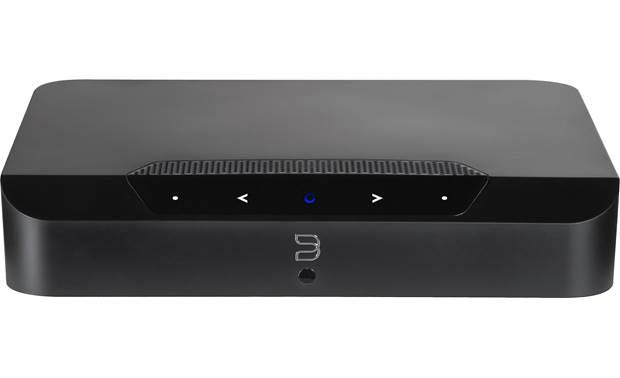
The Bluesound PowerNode Edge, arriving in 2022, was designed from the ground up for the streaming era. It represents Bluesound's vision of what amplification should look like when wireless connectivity and app-based control take priority over traditional connections. This eight-year gap in design philosophy is crucial to understanding why these products feel so different in daily use.
Here's where things get technically interesting. The PowerNode Edge uses what Bluesound calls DirectDigital amplification, delivering 40 watts per channel. This isn't traditional Class A/B amplification – instead, it's essentially a high-powered DAC (digital-to-analog converter) that maintains the audio signal in digital form until the very last moment before your speakers. Think of it like keeping a document in digital format until the instant you print it, rather than converting it to analog and then back to digital multiple times.
The NAD D 3045 takes a different route with 60 watts per channel using Class D amplification. Class D amps work by rapidly switching the audio signal on and off thousands of times per second, creating the audio waveform through pulse-width modulation. It's incredibly efficient and runs cool, but the quality depends heavily on the switching frequency and filtering – areas where NAD has considerable expertise.
The wattage numbers tell only part of the story. Our research into professional reviews reveals that the PowerNode Edge, despite its modest 40-watt rating, successfully drove demanding speakers like B&W 805 D4s and Focal Kanta No. 2 towers without strain. Reviewers consistently noted its ability to maintain composure with difficult loads, suggesting the DirectDigital approach provides good current delivery.
The NAD D 3045 generally handles most bookshelf and tower speakers well, with user reports confirming smooth performance with 8-ohm loads. However, some users noted struggles with extremely demanding speakers like Magnepan planar magnetic models, which can drop to 4 ohms or lower and demand significant current.
For most listeners using modern bookshelf speakers or moderate-sensitivity towers, either amplifier provides adequate power. The more critical factor is impedance matching – make sure your speakers are rated at 4 ohms or higher for best results with either unit.
This is where these amplifiers diverge most dramatically, and your choice here will largely determine which product suits your lifestyle.
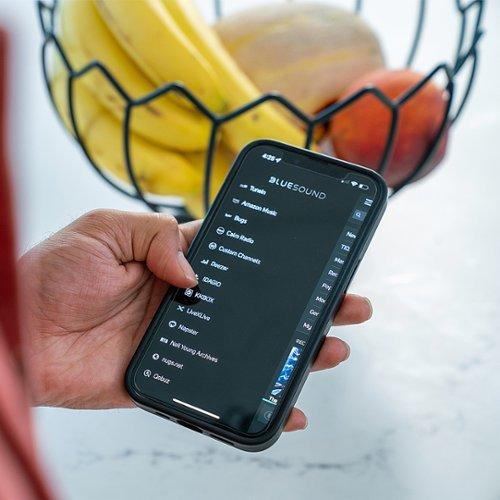
The PowerNode Edge is fundamentally a streaming device that happens to include amplification. Its BluOS platform supports virtually every major streaming service: Spotify, Tidal, Qobuz, Amazon Music, Apple Music, and many others. More importantly, it supports advanced features like Spotify Connect and Tidal Connect, which let you start playback from your phone and then disconnect while music continues playing directly from the internet.
The multi-room capability deserves special mention. If you have other BluOS-compatible devices, you can synchronize playback across your entire home, creating a whole-house audio system. This isn't just about playing the same song everywhere – you can group and ungroup rooms dynamically, adjust individual room volumes, and even play different sources in different zones.
The NAD D 3045 takes a fundamentally different approach. It includes Bluetooth connectivity, but user reports suggest inconsistent performance. There's no Wi-Fi, no streaming service integration, and no multi-room capability. If you want to stream music, you'll need to use Bluetooth from your phone or connect a separate streaming device to one of its digital inputs.
Both amplifiers support high-resolution audio, but in different ways. The PowerNode Edge handles up to 24-bit/192kHz files and includes MQA (Master Quality Authenticated) decoding, which can "unfold" specially encoded high-resolution files from services like Tidal. The signal path remains digital throughout until the final amplification stage.
The NAD D 3045 actually goes further in pure technical specs, with its USB input supporting up to 24-bit/384kHz files plus DSD (Direct Stream Digital) format. It also supports MQA through its USB input. However, accessing these capabilities requires connecting a computer or dedicated digital transport – there's no built-in way to stream high-resolution files over your network.
If you spin records, this decision becomes much clearer. The NAD D 3045 includes a moving magnet (MM) phono stage that professional reviewers describe as "astonishingly fine," performing at the level of dedicated phono preamps in this price range. This means you can connect a turntable directly without needing an additional phono preamp.
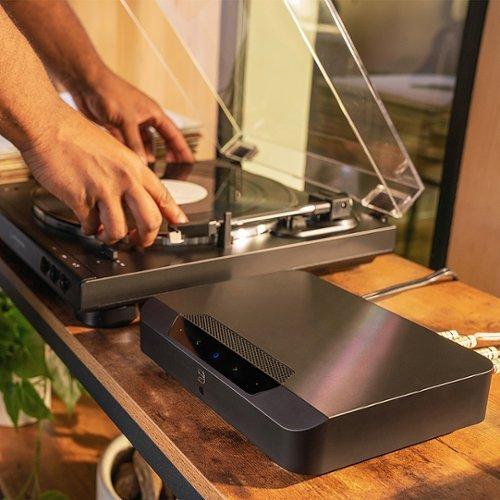
The PowerNode Edge has no phono input at all. You'll need a separate phono preamp, and even then, the analog signal gets converted to digital before amplification. While this might sound concerning to vinyl purists, the reality is that modern analog-to-digital converters are extremely good, and many listeners won't hear a meaningful difference.
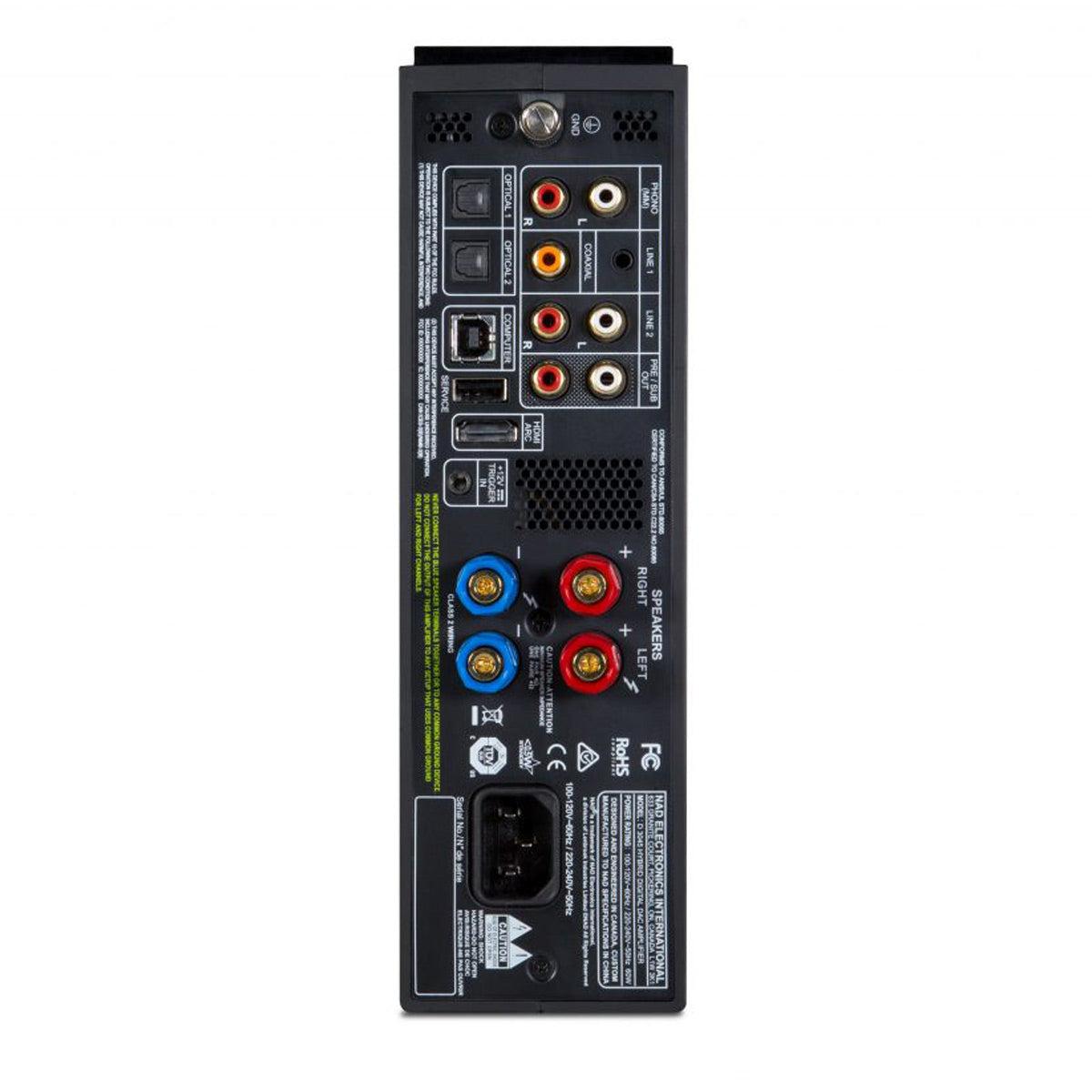
The NAD D 3045 clearly wins on analog connectivity with its dedicated phono input, line input, and even a 3.5mm auxiliary input. Every analog source can stay in the analog domain throughout the signal path if desired.
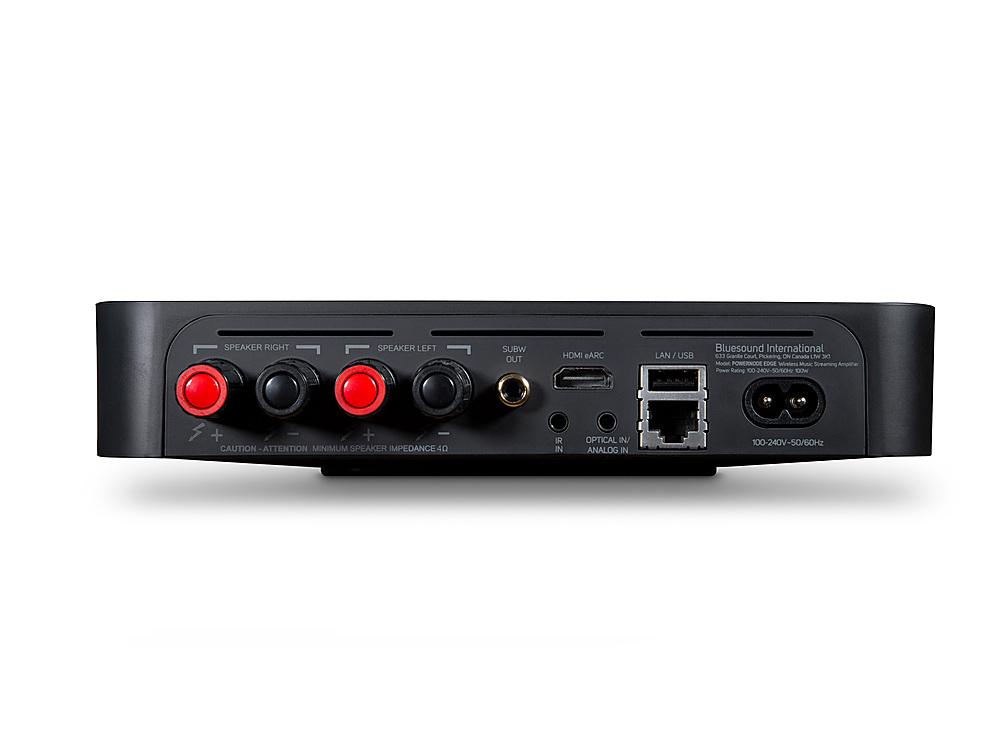
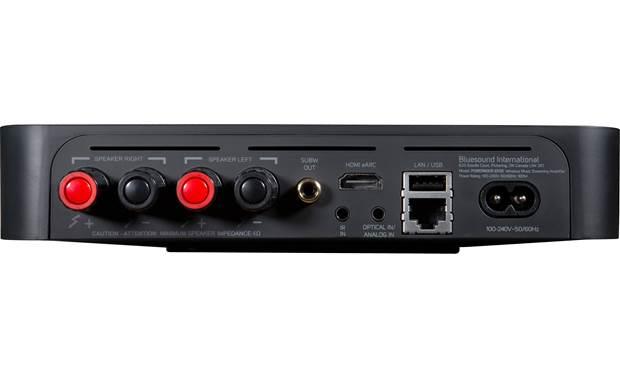
The PowerNode Edge offers just one analog input – a combination 3.5mm jack that can accept either analog or optical digital signals. You'll need an adapter cable to connect standard RCA sources, and as mentioned, everything gets converted to digital anyway.
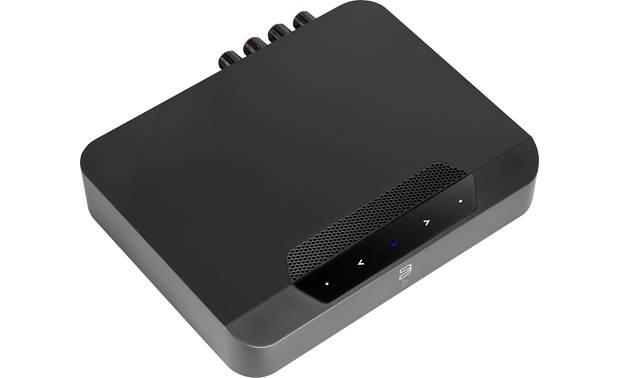
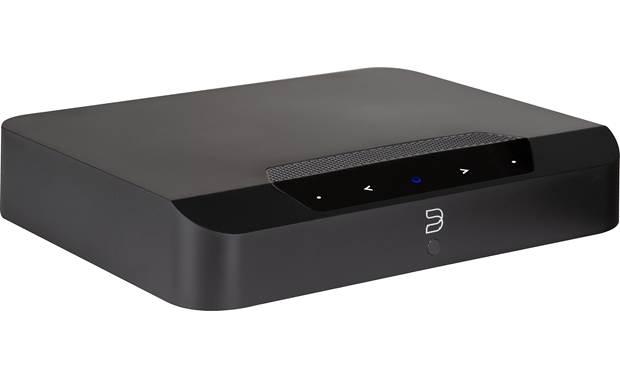
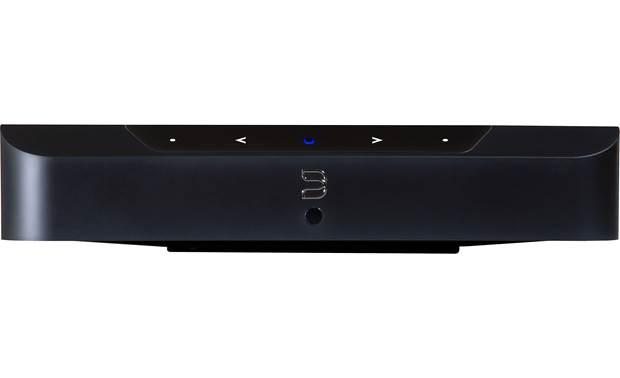
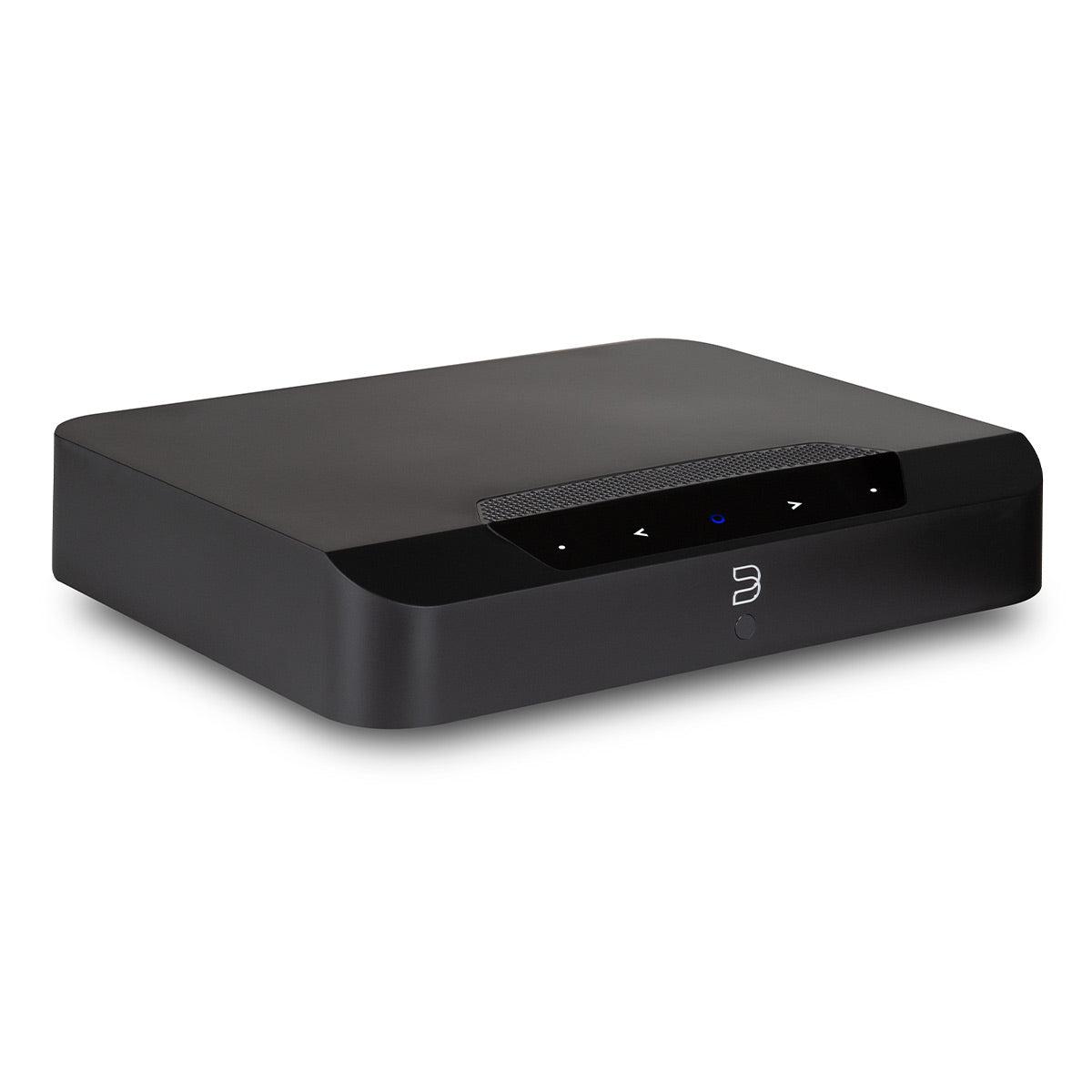
The PowerNode Edge represents the smartphone-first generation of audio equipment. The primary interface is the BluOS app, which is genuinely excellent – intuitive, responsive, and feature-rich. The amplifier itself has minimal physical controls: just a capacitive touch panel for basic functions like play/pause and volume. This approach works beautifully if you're comfortable living in the app ecosystem.
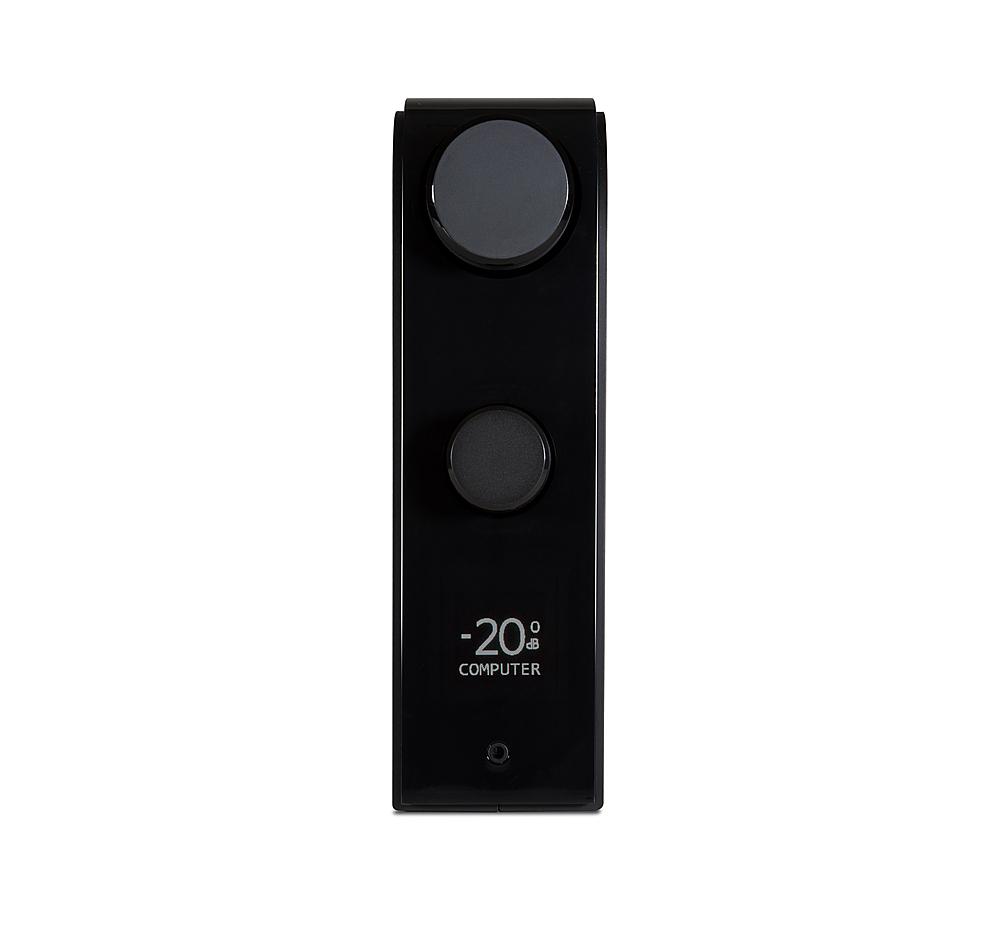
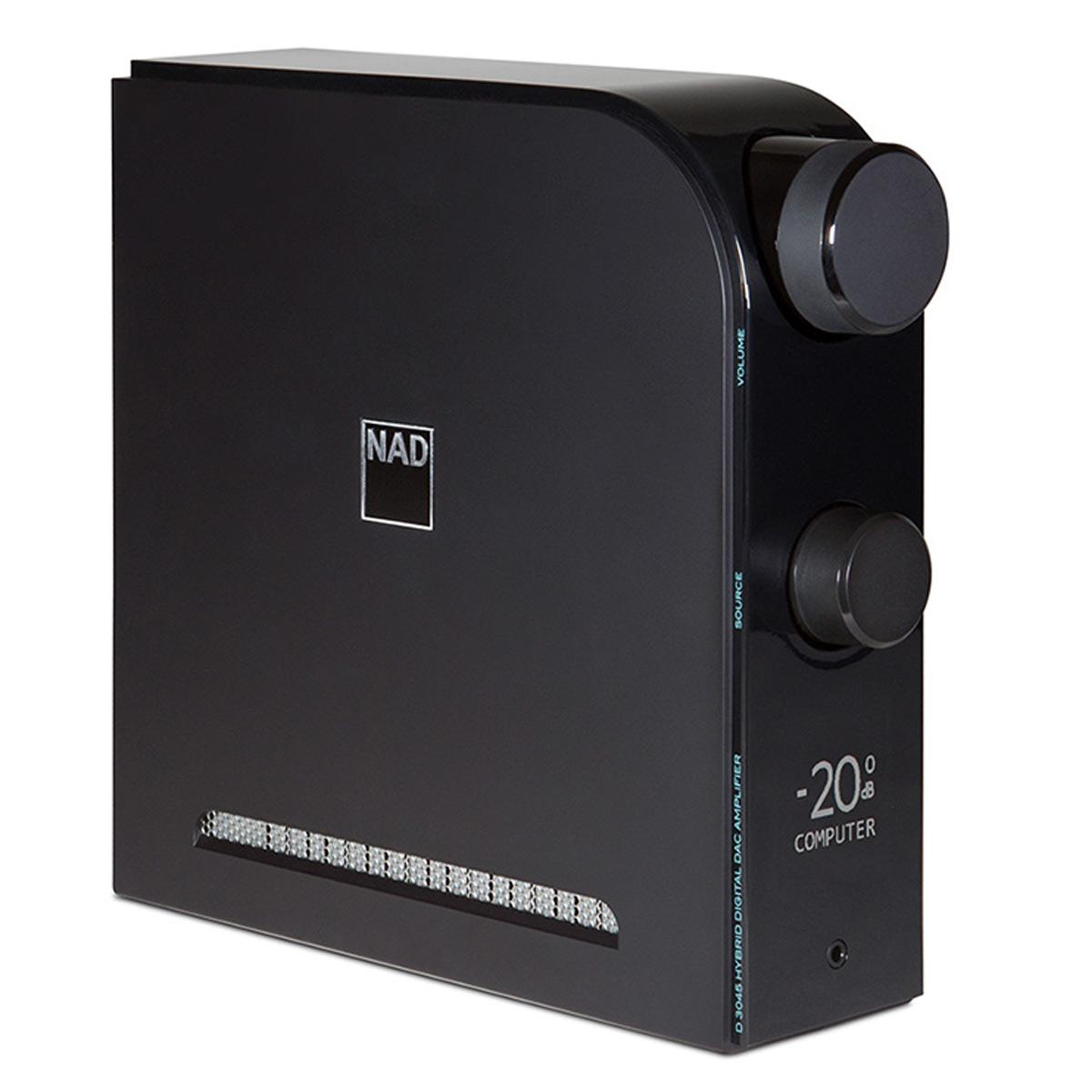
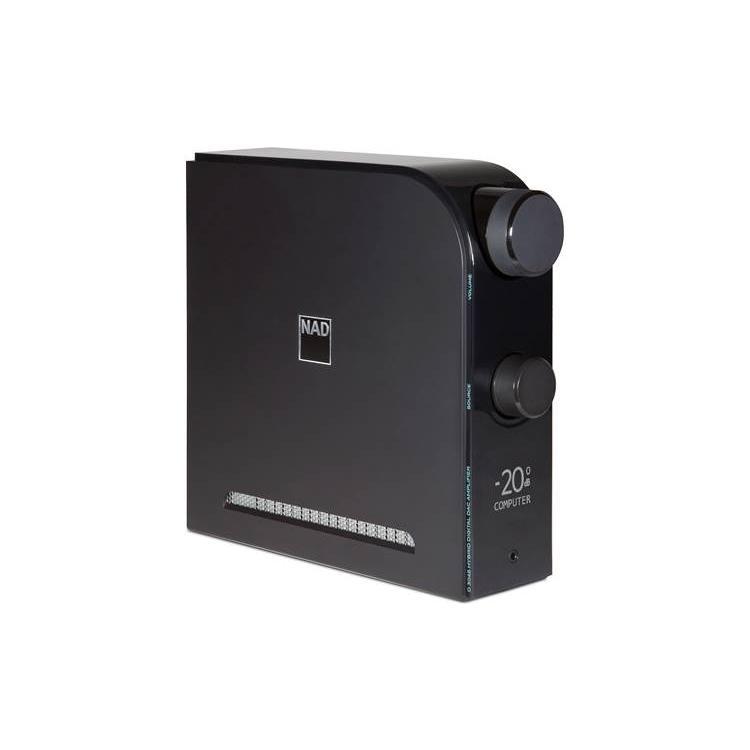
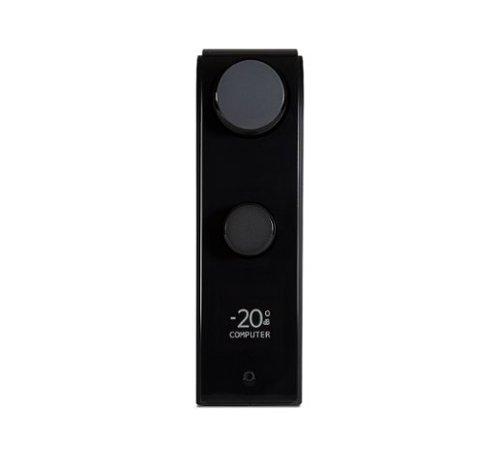
The NAD D 3045 takes the traditional approach with a volume knob, input selector, and display. However, user reviews consistently criticize the included remote control as cheap and unreliable. The irony is that while it looks more traditional, the daily experience might actually be more frustrating than the app-based PowerNode Edge.
If you're building a smart home, the PowerNode Edge integrates seamlessly with voice assistants through BluVoice technology, supporting Alexa, Google Assistant, and Siri. You can start playback, adjust volume, and control multi-room grouping entirely by voice.
The NAD D 3045 has no smart home integration beyond basic HDMI CEC (Consumer Electronics Control) through its HDMI ARC input, which allows some TV remotes to control volume.
Both amplifiers can connect to your TV, but they handle it differently. The PowerNode Edge includes HDMI eARC (enhanced Audio Return Channel) with Dolby Digital decoding. This means it can receive audio from your TV, decode surround sound formats for stereo playback, and even allow your TV remote to control volume. For many users, this single cable connection to their TV provides all the convenience they need.
The NAD D 3045 offers basic HDMI ARC connectivity but without the advanced features. It's really designed for stereo music listening rather than TV integration.
Where the PowerNode Edge gets really interesting is its ability to serve as rear channels in a wireless surround system when combined with other Bluesound speakers. You could start with a Bluesound soundbar for your TV, then add the PowerNode Edge with bookshelf speakers as wireless rear channels – no speaker wire required.
Professional reviewers and user feedback reveal interesting patterns in how these amplifiers sound. The PowerNode Edge consistently receives praise for its imaging, detail retrieval, and controlled bass response. The DirectDigital approach seems to provide an exceptionally quiet background, allowing subtle details to emerge clearly.
The NAD D 3045 gets more mixed reviews. While many users appreciate its neutral, uncolored presentation, some find it a bit clinical or lacking in dynamic engagement. The bass EQ feature helps with smaller speakers, but it's rather crude compared to modern DSP implementations.
Both amplifiers measure well technically, with low distortion and flat frequency response. The differences are more about character than capability – the PowerNode Edge tends toward precision and control, while the NAD D 3045 aims for transparency and accuracy.
At the time of writing, the PowerNode Edge typically costs around $100-150 less than the NAD D 3045, making the value equation even more interesting. For less money, you get significantly more functionality, better app support, superior streaming capabilities, and arguably better home theater integration.
The NAD D 3045 justifies its higher price primarily through its phono stage and more comprehensive analog connectivity. If those features matter to you, the premium makes sense. If not, the PowerNode Edge delivers more functionality for less money.
You stream most of your music and want the convenience of having everything integrated into one device. The comprehensive streaming support, excellent app, and smart home integration make it ideal for modern listening habits. It's also the better choice if you plan to integrate with your TV or build a multi-room system over time.
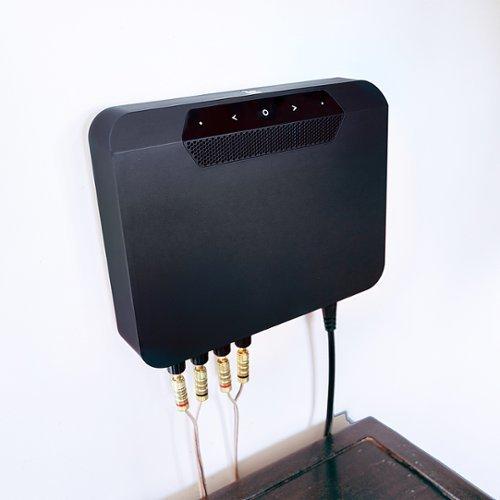
The PowerNode Edge particularly makes sense for apartment dwellers, minimalists, or anyone who values convenience over ultimate flexibility. Its ability to mount on a wall or hide behind furniture makes it perfect for discreet installations.
You have a substantial vinyl collection and want the best possible analog performance. The integrated phono stage alone might justify the price difference for serious record collectors. It's also the better choice if you prefer physical controls, have multiple analog sources, or want the flexibility to add different streaming devices over time.
The NAD D 3045 appeals to traditional audiophiles who want to maintain control over their signal path and don't mind the complexity of multiple components.
These amplifiers represent two valid but different approaches to modern audio. The PowerNode Edge embraces the streaming future wholeheartedly, delivering remarkable functionality and convenience in an affordable package. The NAD D 3045 maintains traditional audiophile values while making selective concessions to digital sources.
For most listeners in 2024, the PowerNode Edge offers better value and more relevant features. Its streaming capabilities, smart home integration, and TV connectivity align with how most people actually listen to music. However, if you're deeply invested in analog sources or prefer the traditional component approach, the NAD D 3045 provides superior flexibility for building a conventional stereo system.
The choice ultimately comes down to whether you want an amplifier that's designed for the way we listen today, or one that maintains the flexibility to accommodate both old and new approaches to audio reproduction.
| Bluesound PowerNode Edge | NAD D 3045 |
|---|---|
| Power Output - Determines how loud you can play and which speakers you can drive | |
| 40W per channel (surprisingly capable with efficient speakers) | 60W per channel (better for demanding or inefficient speakers) |
| Amplification Technology - Affects sound quality and efficiency | |
| DirectDigital™ (maintains digital signal until speakers, very quiet background) | Class D with Hypex modules (traditional approach, proven performance) |
| Streaming Capabilities - Essential for modern music listening | |
| Full BluOS platform with 20+ services, multi-room, voice control | Basic Bluetooth only (inconsistent performance reported) |
| High-Resolution Audio Support - Important for audiophile-quality playback | |
| 24-bit/192kHz, MQA decoding via streaming and USB | 24-bit/384kHz via USB, DSD support, MQA compatible |
| Analog Inputs - Critical if you have turntables or other analog sources | |
| Single 3.5mm combo input (requires adapter, converts to digital) | Dedicated MM phono stage plus line input (stays analog) |
| Digital Inputs - Flexibility for connecting various digital sources | |
| HDMI eARC, optical/analog combo, USB-A | 2x optical, coaxial, USB-B, HDMI ARC (more comprehensive) |
| TV Integration - Simplifies home theater setup | |
| HDMI eARC with Dolby Digital decoding, TV remote control | Basic HDMI ARC (limited features) |
| Control Interface - Daily usability factor | |
| Excellent BluOS app plus touch controls on device | Physical knobs and buttons (but poor remote control) |
| Multi-Room Audio - Ability to sync music throughout your home | |
| Native BluOS multi-room with other compatible devices | None (single-room only) |
| Smart Home Integration - Convenience with voice assistants | |
| Full support for Alexa, Google Assistant, Siri via BluVoice | None |
| Headphone Output - Quality matters for private listening | |
| Bluetooth wireless to headphones | Dedicated 3.5mm jack with powerful amplifier |
| Subwoofer Integration - Important for full-range sound | |
| Dedicated sub out with bass management | Basic preamp/sub output |
| Physical Design - Affects placement options in your room | |
| Compact, wall-mountable, matte finish | Horizontal/vertical orientation, glossy front (glare issues) |
The NAD D 3045 delivers 60 watts per channel compared to the Bluesound PowerNode Edge's 40 watts per channel. However, both amplifiers can drive most bookshelf and tower speakers effectively. The power difference becomes more important with inefficient speakers or very large rooms.
The Bluesound PowerNode Edge offers full streaming integration with over 20 services including Spotify Connect, Tidal, Apple Music, and Amazon Music through its BluOS platform. The NAD D 3045 only provides basic Bluetooth connectivity, requiring you to stream from your phone or use a separate streaming device.
The NAD D 3045 includes a high-quality moving magnet phono stage that can connect turntables directly. The Bluesound PowerNode Edge has no phono input and requires a separate phono preamp, plus it converts all analog signals to digital.
Both offer TV connectivity, but the Bluesound PowerNode Edge provides superior integration with HDMI eARC and Dolby Digital decoding, allowing TV remote control. The NAD D 3045 has basic HDMI ARC but limited features for home theater use.
The Bluesound PowerNode Edge is designed around smartphone control with the excellent BluOS app for all functions. The NAD D 3045 relies on physical controls and includes a remote that users frequently criticize as poor quality.
Only the Bluesound PowerNode Edge offers true multi-room capability through the BluOS platform, letting you sync music across multiple compatible devices. The NAD D 3045 is designed for single-room use only.
The Bluesound PowerNode Edge supports Alexa, Google Assistant, and Siri through BluVoice technology for hands-free control. The NAD D 3045 has no voice assistant integration.
The NAD D 3045 offers more comprehensive input options including dedicated phono, multiple digital inputs (optical, coaxial, USB), and separate analog inputs. The Bluesound PowerNode Edge focuses on wireless connectivity with minimal physical inputs.
The NAD D 3045 includes a dedicated headphone amplifier with a 3.5mm jack that's unusually powerful for an integrated amp. The Bluesound PowerNode Edge supports Bluetooth wireless headphones but lacks a wired headphone output.
The Bluesound PowerNode Edge offers simpler setup with wireless connectivity and intuitive app control, making it ideal for users who prioritize convenience. The NAD D 3045 requires more traditional component setup but offers greater flexibility for audiophiles.
Both support high-resolution audio, but differently. The Bluesound PowerNode Edge handles 24-bit/192kHz with MQA decoding through streaming. The NAD D 3045 supports higher technical specs up to 24-bit/384kHz via USB, plus DSD format.
The Bluesound PowerNode Edge typically costs less while offering comprehensive streaming, smart home integration, and modern convenience features that most users want. The NAD D 3045 costs more but justifies it primarily through superior analog connectivity and the built-in phono stage for vinyl enthusiasts.
We've done our best to create useful and informative comparisons to help you decide what product to buy. Our research uses advanced automated methods to create this comparison and perfection is not possible - please contact us for corrections or questions. These are the sites we've researched in the creation of this article: futureaudiophile.com - alpha-audio.net - theaudiofactory.com - audiophilia.com - youtube.com - qaudio.com - crutchfield.com - youtube.com - bluesound.com - audioadvisor.com - crutchfield.com - bluesound.com - audiosciencereview.com - bluesound.com - soundstagesimplifi.com - mysoundconcepts.com - crutchfield.com - crutchfield.com - audio-head.com - safeandsoundhq.com - hifiplus.com - nadelectronics.com - whathifi.com - hometheaterhifi.com - audiosciencereview.com - soundstageaccess.com - soundandvision.com - youtube.com - turntablelab.com - audiosciencereview.com

Privacy Policy
Terms and Conditions - Affiliate Policy
Home Security
© Copyright 2008-2026.
11816 Inwood Rd #1211, Dallas, TX 75244