

The world of home audio has evolved dramatically over the past decade. Gone are the days when you needed separate components for streaming, amplification, and source switching. Today's integrated network amplifiers combine traditional hi-fi amplification with modern streaming capabilities, creating single-box solutions that can handle everything from vinyl records to Spotify playlists.
Two excellent examples of this evolution are the Denon PMA-900HNE, released in 2022, and the Sonos Amp, which hit the market in 2018. While both serve similar functions, they take fundamentally different approaches to modern audio. Understanding these differences is crucial for anyone looking to upgrade their home audio system or build a new one from scratch.
An integrated amplifier combines a preamplifier (which controls volume and switches between sources) with a power amplifier (which drives your speakers) in one box. The "network" part means it can connect to your home's internet connection, either through Wi-Fi or Ethernet, to stream music directly from online services or your local network.
This category has become increasingly important because it eliminates the complexity of separate components while adding modern conveniences. Instead of needing a separate streamer, preamp, and power amp, you get everything in one device that can play music from virtually any source.
The key considerations when choosing between products in this category include sound quality philosophy, power output capabilities, connectivity options, ecosystem integration, and user interface preferences. Some manufacturers prioritize traditional audiophile values, while others focus on convenience and modern features.
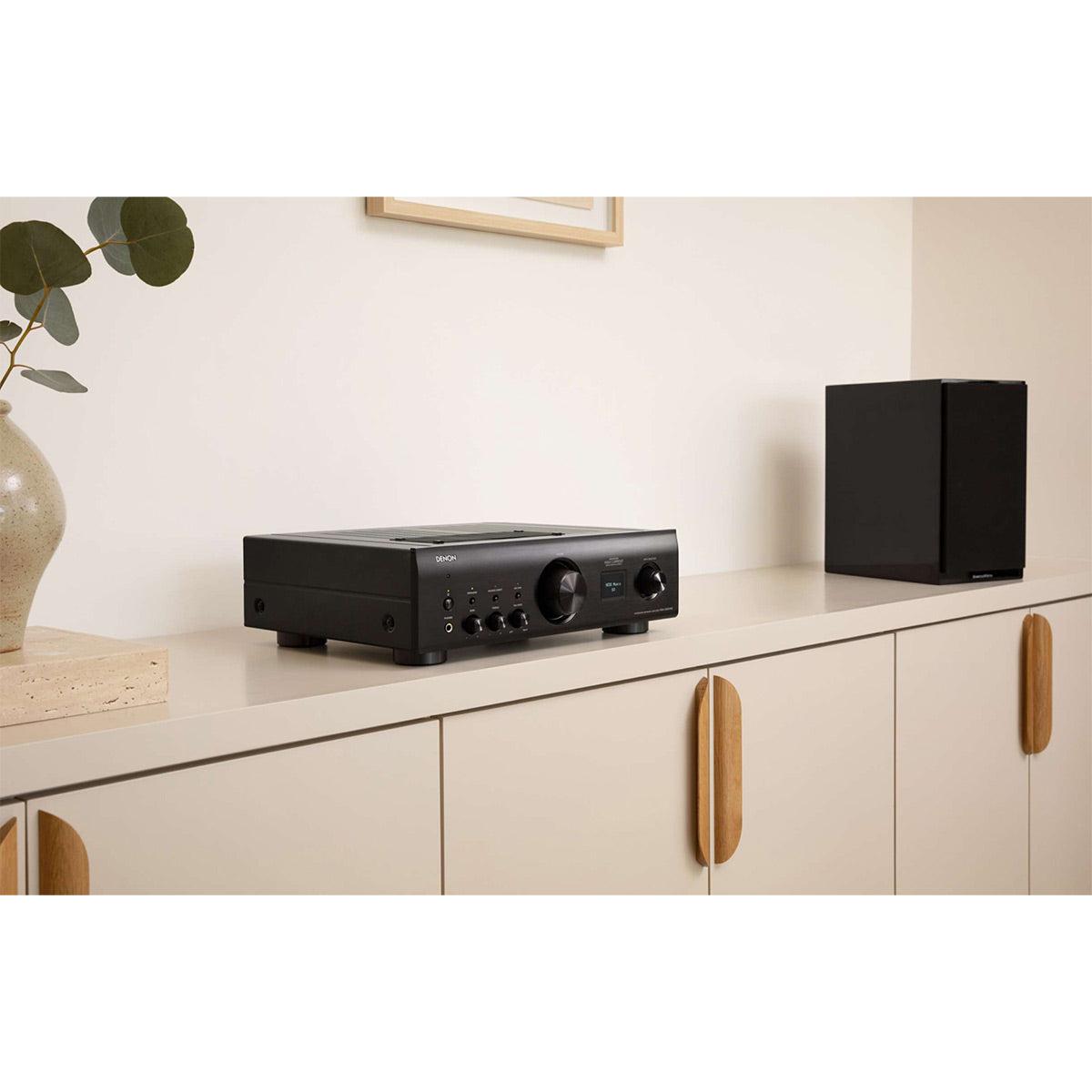
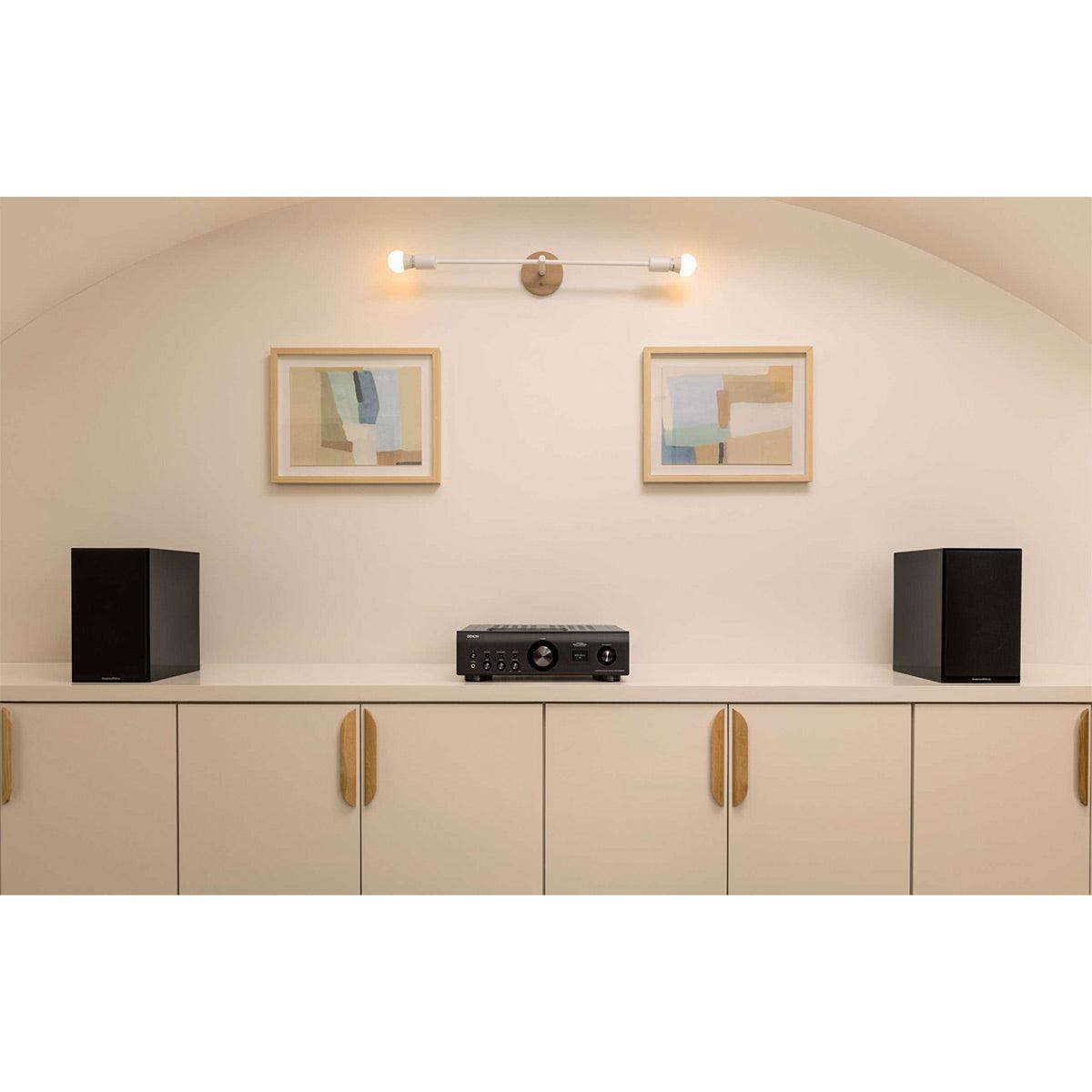
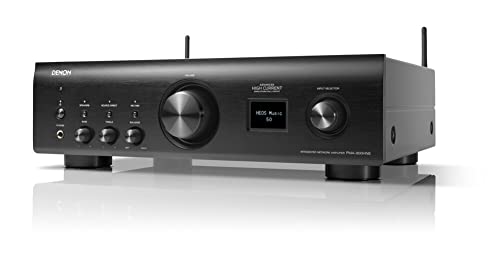
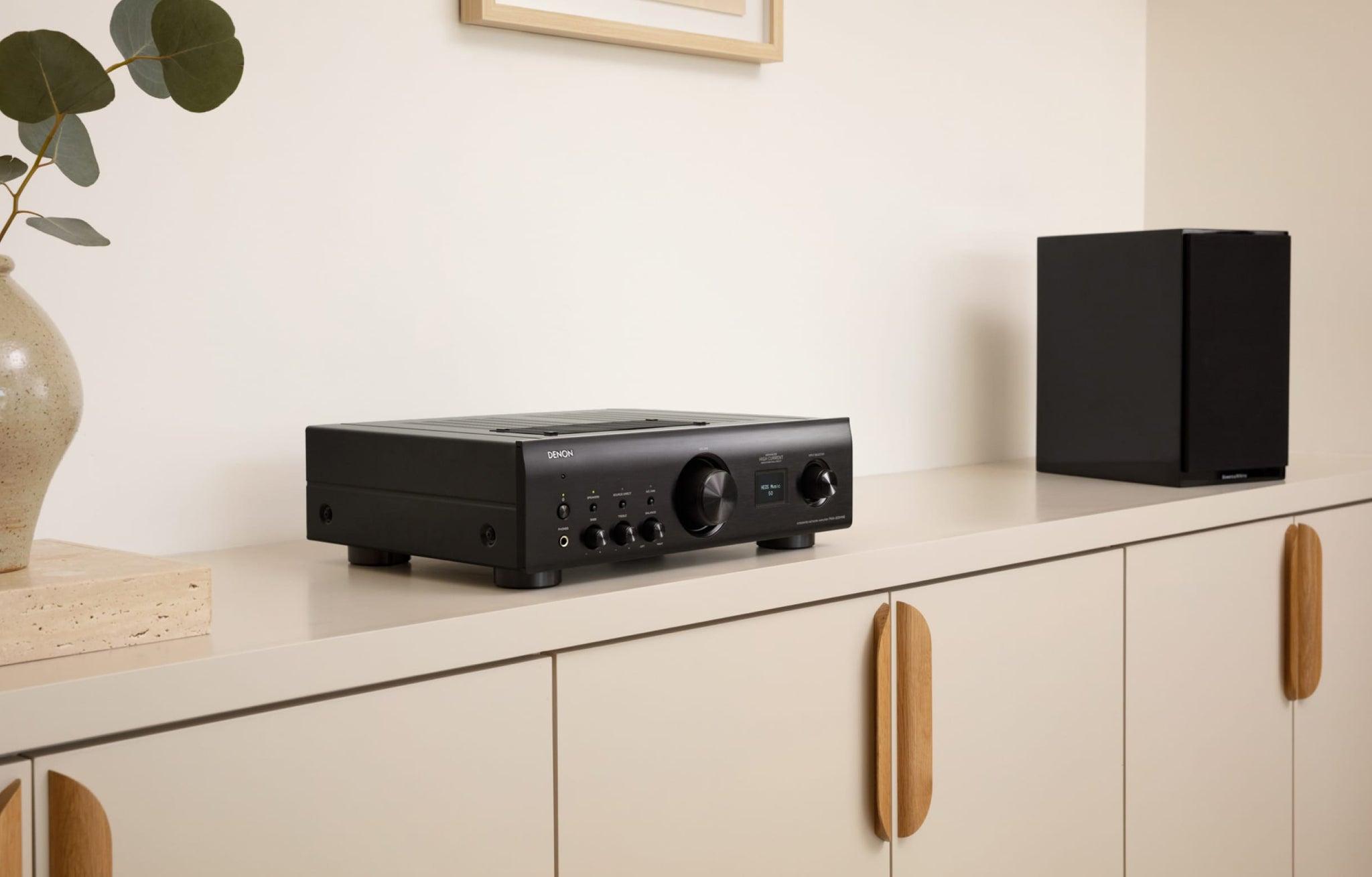
The Denon PMA-900HNE represents what Denon calls their "pure hi-fi" approach. Released in 2022 as their first integrated amplifier to include the HEOS streaming platform, it maintains traditional audiophile priorities while adding comprehensive streaming capabilities. At the time of writing, it sits in the upper-mid range of network amplifiers, targeting users who want excellent sound quality with modern convenience.
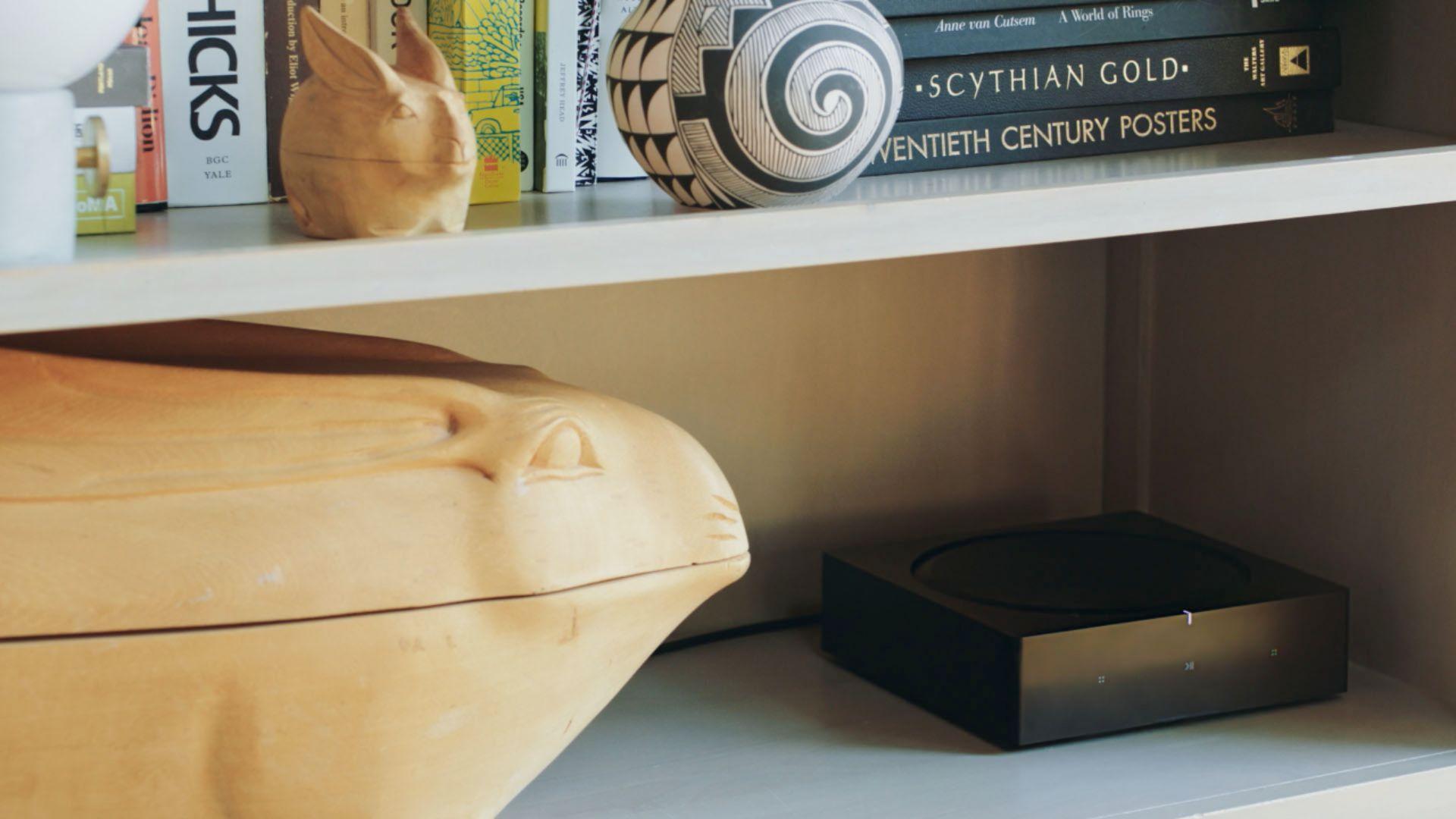
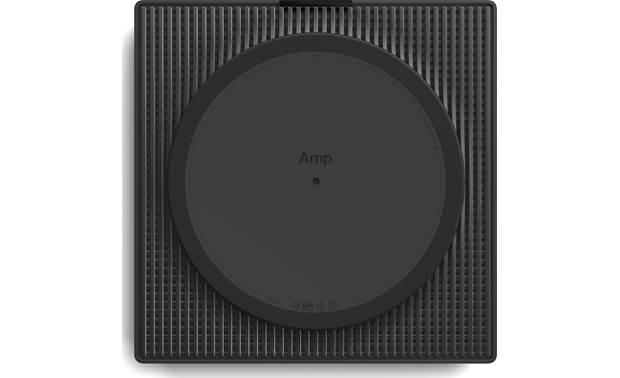
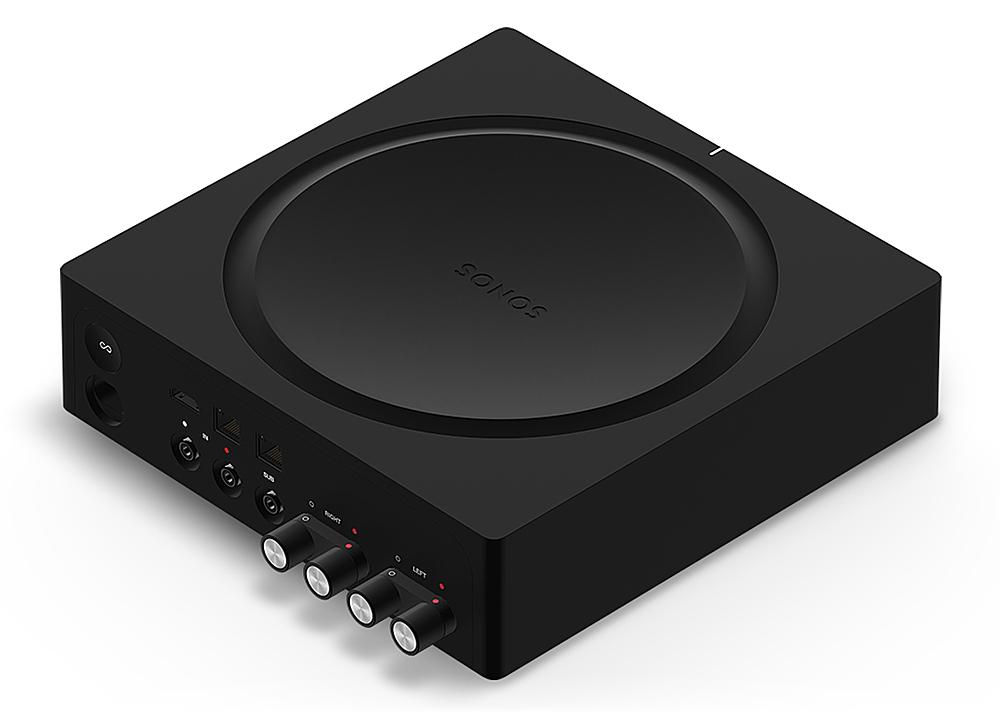
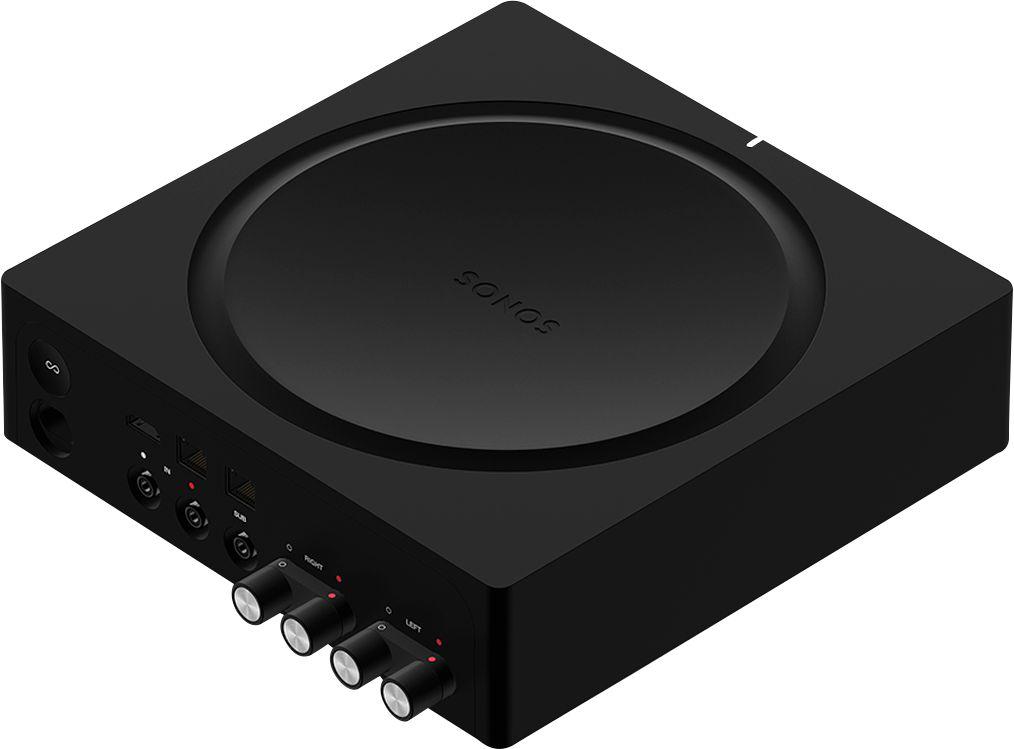
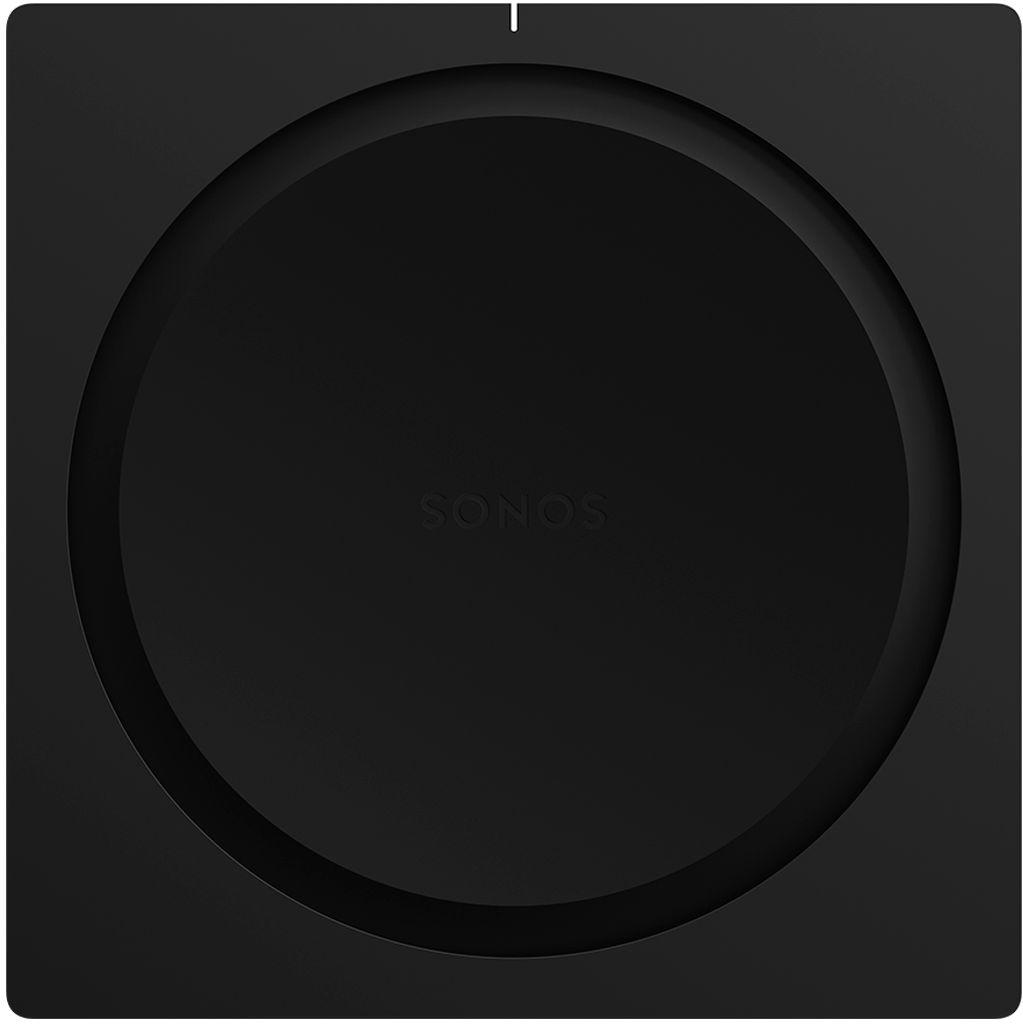
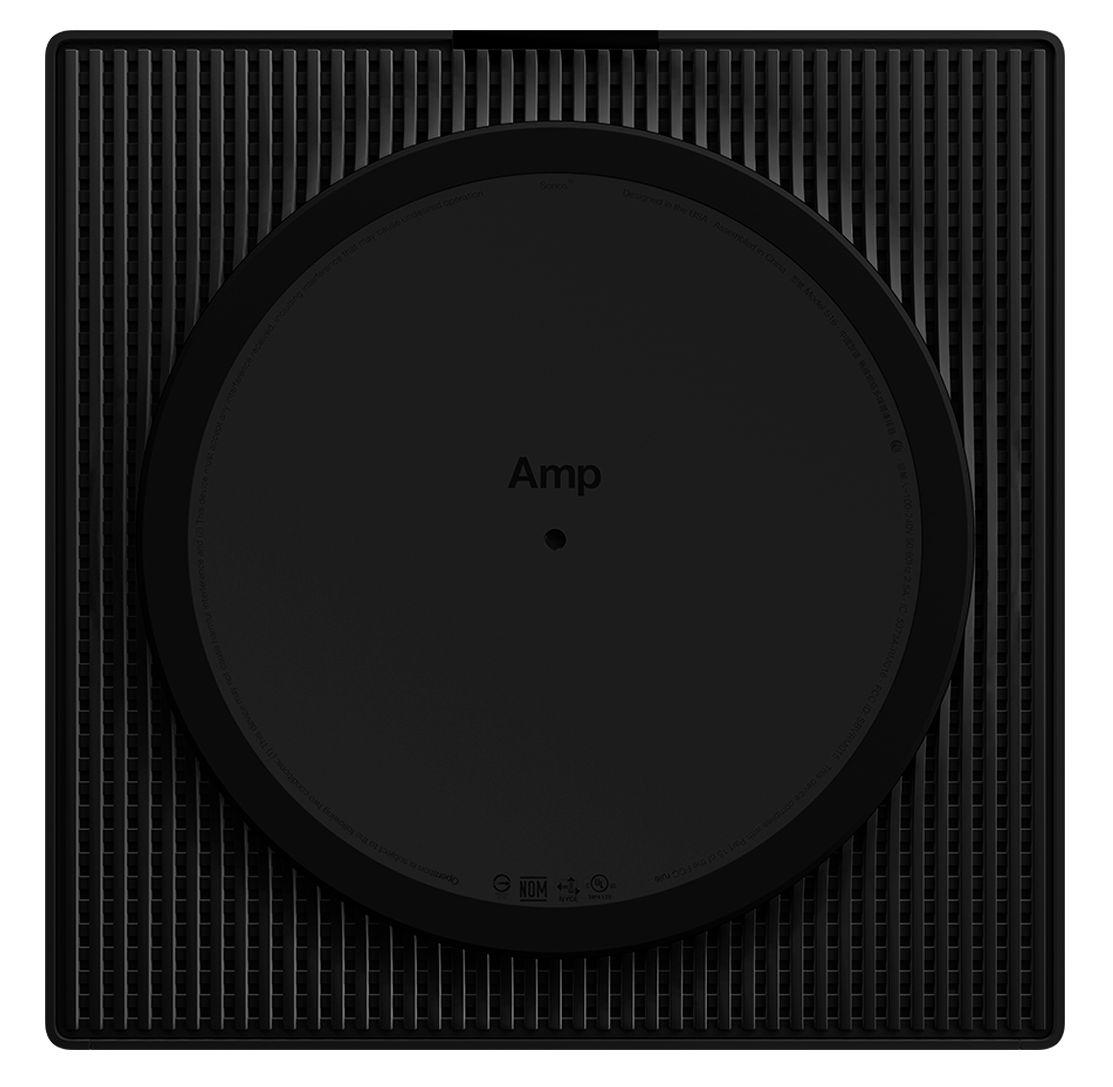
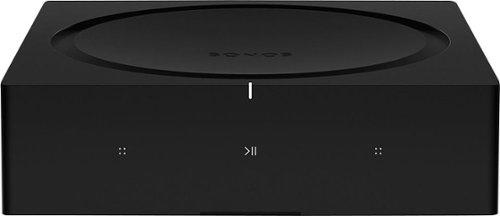
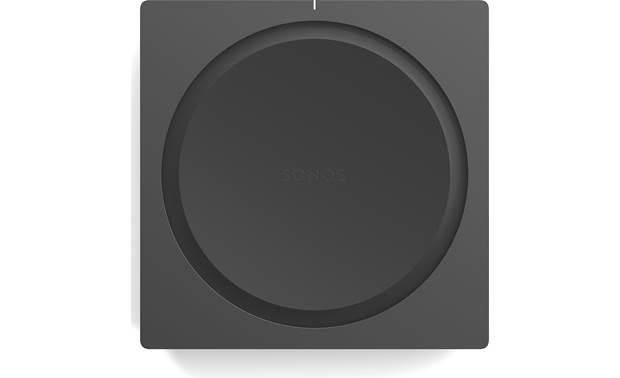
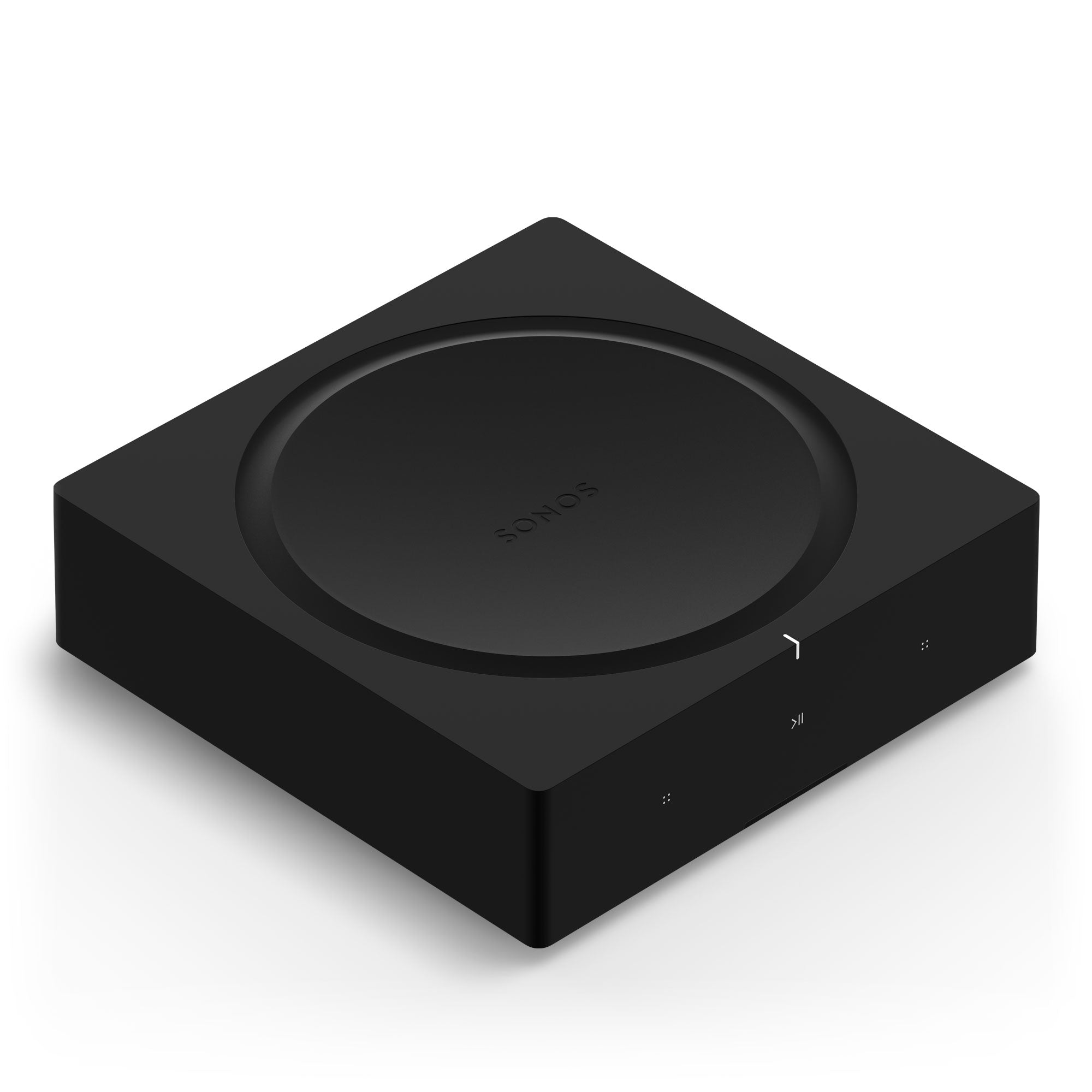
The Sonos Amp, launched in 2018, takes the opposite approach. It's essentially a streaming-first device that happens to be a powerful amplifier. Sonos designed it primarily for users already invested in their multi-room ecosystem, though it works perfectly well as a standalone amplifier. Since its release, it has remained largely unchanged, which speaks to the maturity of its design.
Power output is often the first specification people look at, but it's also one of the most misunderstood. The Sonos Amp delivers 125 watts per channel into 8-ohm speakers, while the Denon PMA-900HNE provides 50 watts per channel into the same load. On paper, the Sonos appears significantly more powerful, but the real-world difference is more nuanced.
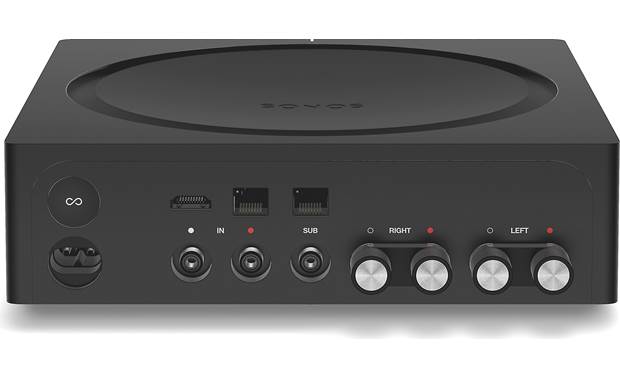
The Sonos uses Class D amplification, which is highly efficient and generates minimal heat. This allows it to pack serious power into a compact chassis and even drive up to four speakers simultaneously (two pairs of 8-ohm speakers wired in parallel). This makes it particularly attractive for larger rooms, demanding speakers, or installations where you need to power multiple zones from one amplifier.
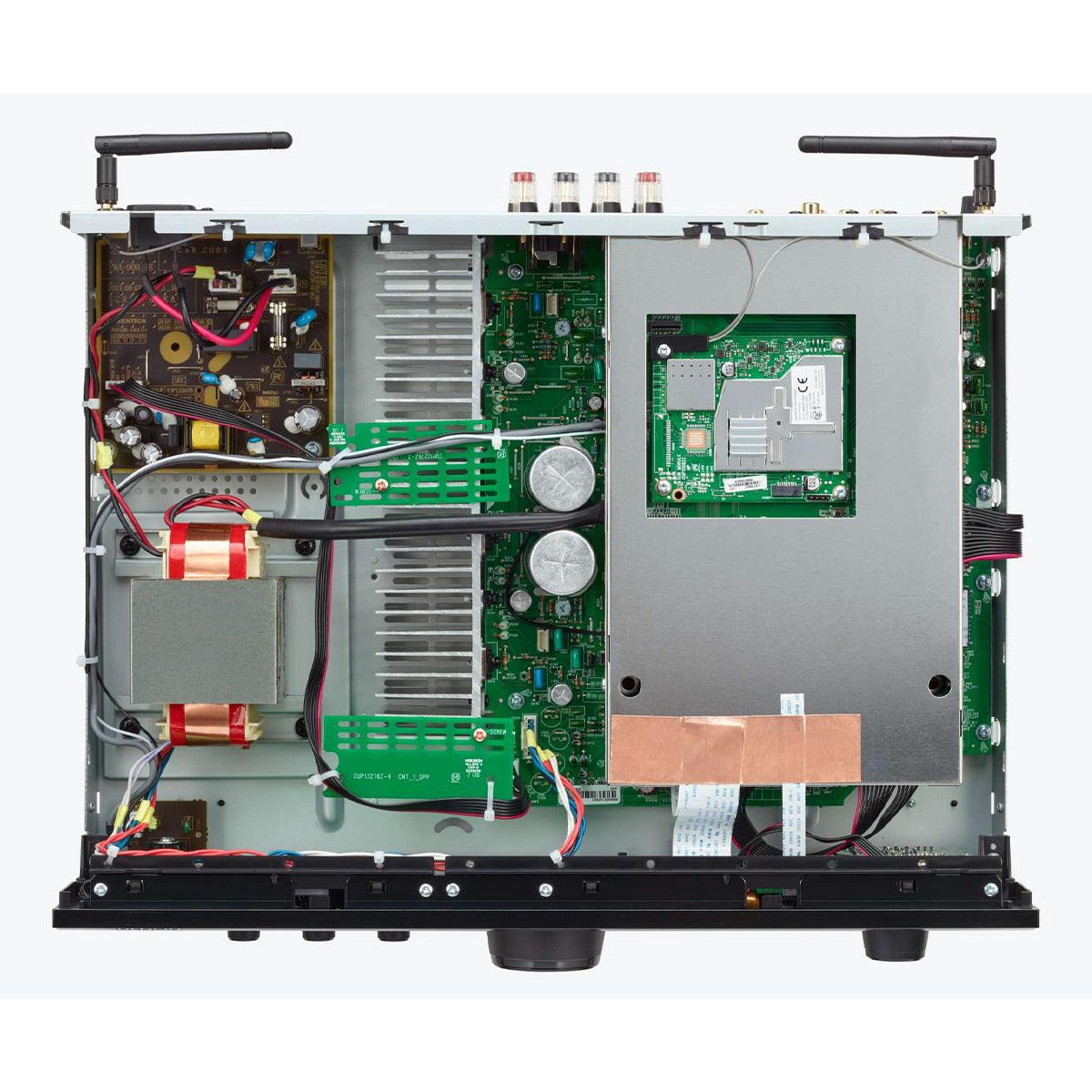
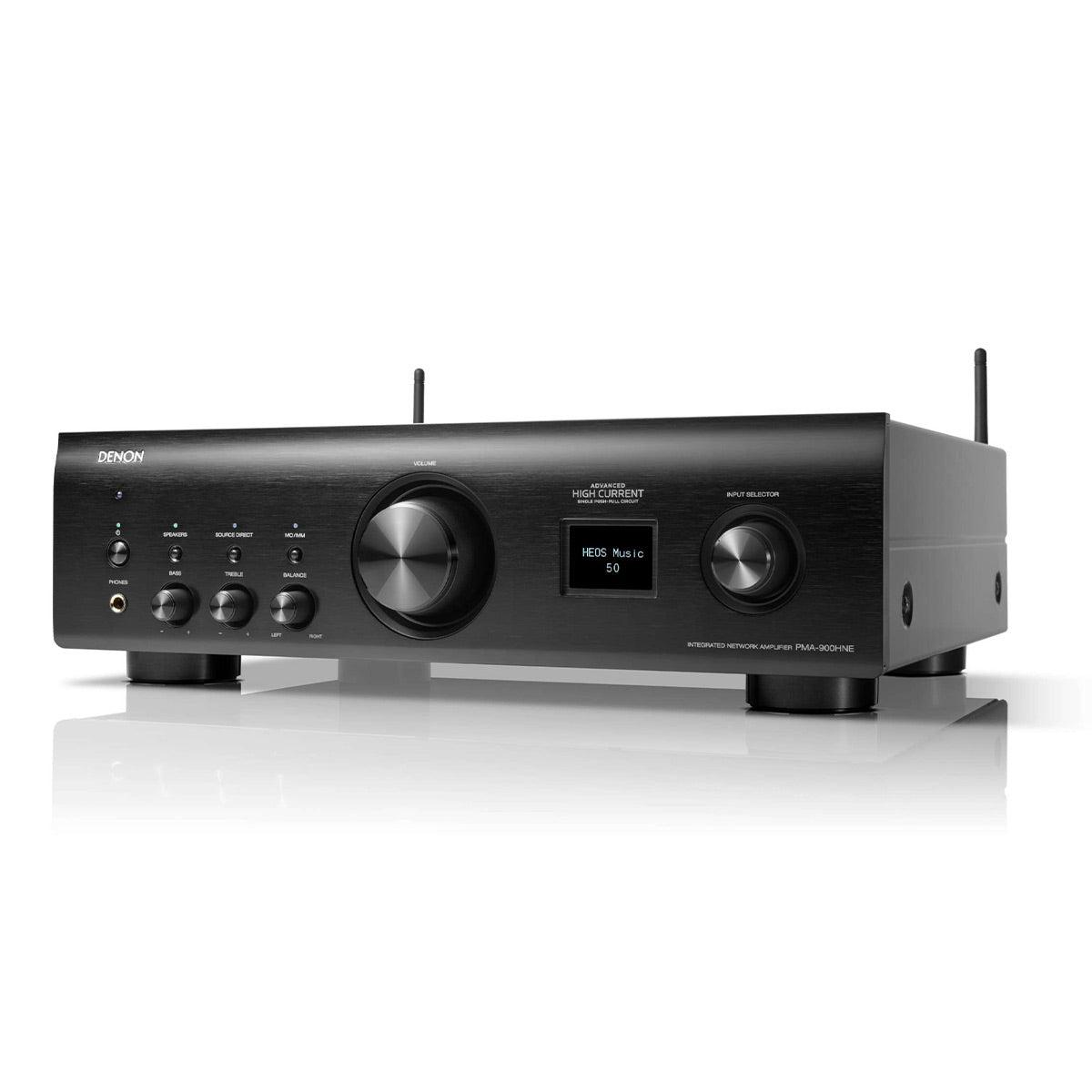
The Denon, however, uses what they call Advanced High Current (AHC) technology in a single push-pull design. This means the amplifier can deliver high current to speakers when needed, even if the total wattage is lower. In practical terms, this translates to better control over speaker drivers and more dynamic sound reproduction. The difference between 50 and 125 watts is only about 4 decibels in maximum volume capability, which is noticeable but not dramatic in most listening situations.
For most bookshelf speakers and smaller floorstanding models, the Denon's 50 watts is perfectly adequate. However, if you're planning to use large, inefficient speakers or need to fill a very large space, the Sonos Amp's extra power becomes genuinely valuable.
Sound quality is subjective, but certain characteristics are consistently reported across reviews and user experiences. The Denon PMA-900HNE has earned praise for what many describe as a "musical" sound signature. This means it prioritizes smoothness and coherence over raw detail retrieval or aggressive dynamics.
The Denon uses an ESS 9018K2M digital-to-analog converter (DAC), which handles the conversion from digital music files to analog signals your speakers can reproduce. Denon pairs this with their AL32 processing, which essentially smooths out the digital signal to reduce harshness. The result is a sound that many find more natural and less fatiguing during long listening sessions.
Perhaps more importantly, the Denon demonstrates exceptional soundstaging capabilities. Soundstaging refers to how well an audio system creates the illusion of instruments and voices positioned in three-dimensional space. Reviews consistently praise the PMA-900HNE for creating wide, deep soundstages that make music feel more immersive and realistic.
The Sonos Amp, by contrast, prioritizes dynamic impact and room-filling sound over subtle audiophile refinements. Its Class D amplification is designed for efficiency and power rather than the last word in sonic refinement. Users describe its sound as punchy and engaging, with clear vocals and robust bass response. It excels at making music sound exciting and immediate, though it may lack some of the subtlety that appeals to critical listeners.
This difference matters depending on how you listen to music. If you often sit down for dedicated listening sessions, the Denon's more refined approach may be preferable. If you primarily use music as background or want something that sounds great at parties, the Sonos Amp's dynamic presentation might be more appealing.
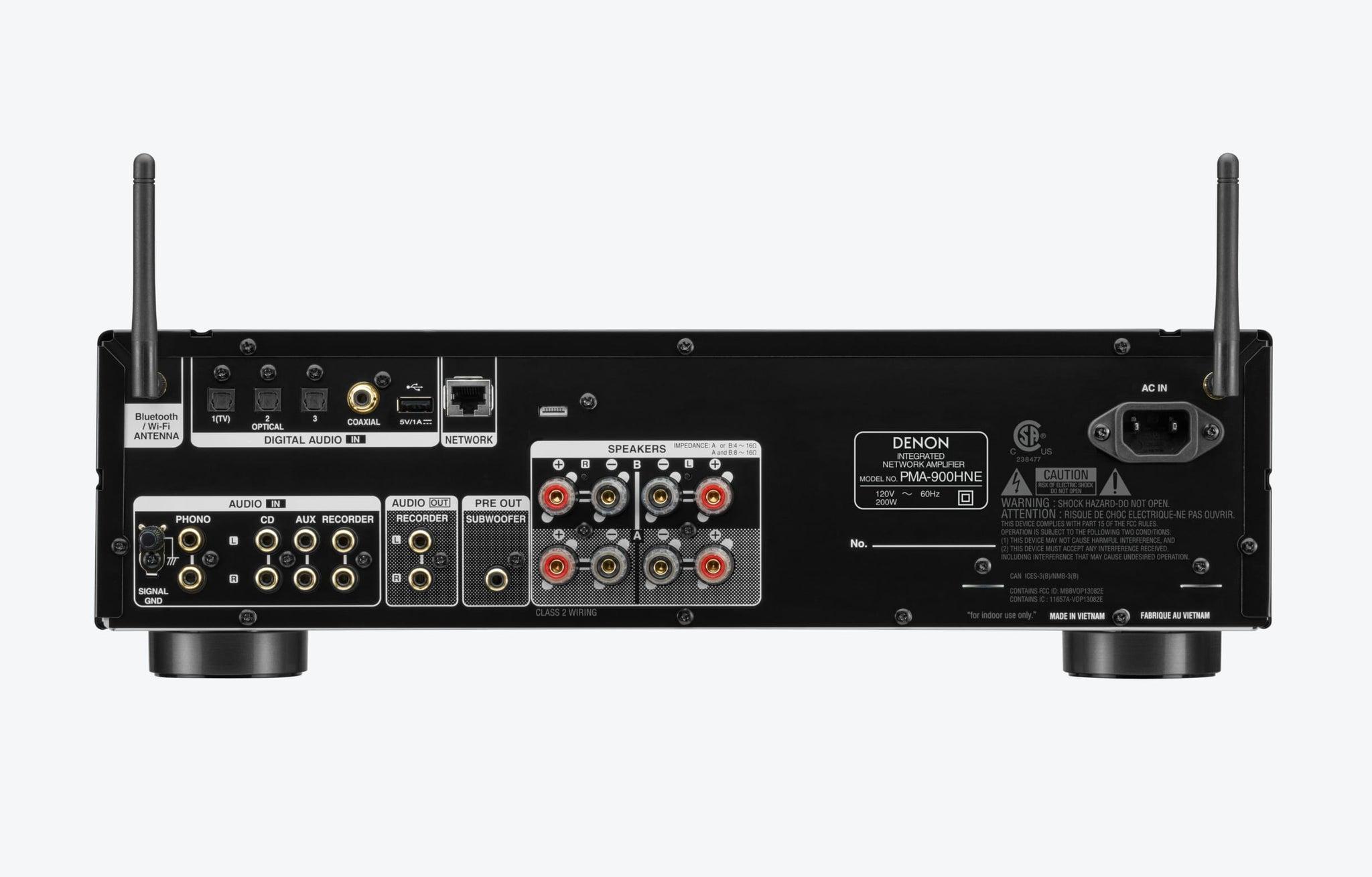
The connectivity differences between these amplifiers reveal their design priorities clearly. The Denon PMA-900HNE offers comprehensive input options that cater to traditional hi-fi users while adding modern streaming capabilities.
Most notably, the Denon includes a dedicated phono stage that can handle both moving magnet (MM) and moving coil (MC) cartridges. A phono stage is essentially a specialized preamplifier that boosts the very weak signal from a turntable cartridge to line level while applying the inverse of the RIAA equalization curve used when cutting records. Having a quality phono stage built-in saves money and rack space compared to buying a separate unit.
The Denon also provides three additional analog RCA inputs for sources like CD players, tape decks, or other analog devices, plus three optical digital inputs and one coaxial digital input for devices like CD transports or TV audio. There's even a USB-A port for direct playback from thumb drives.
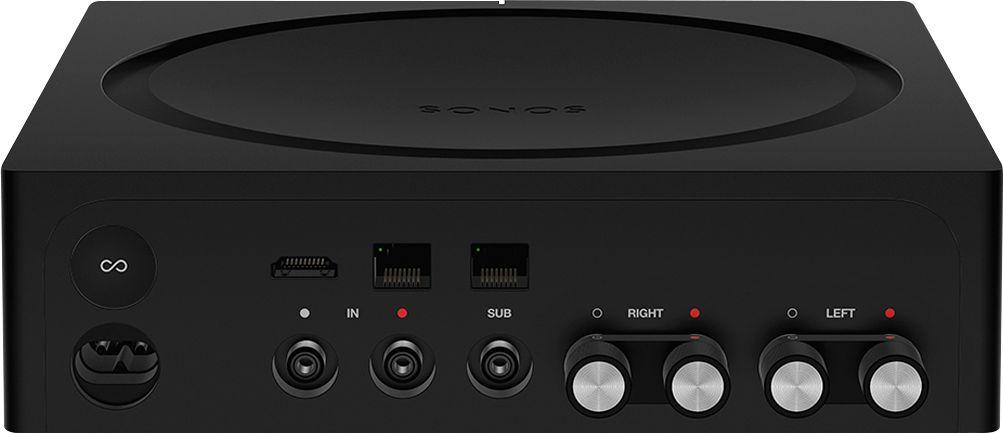
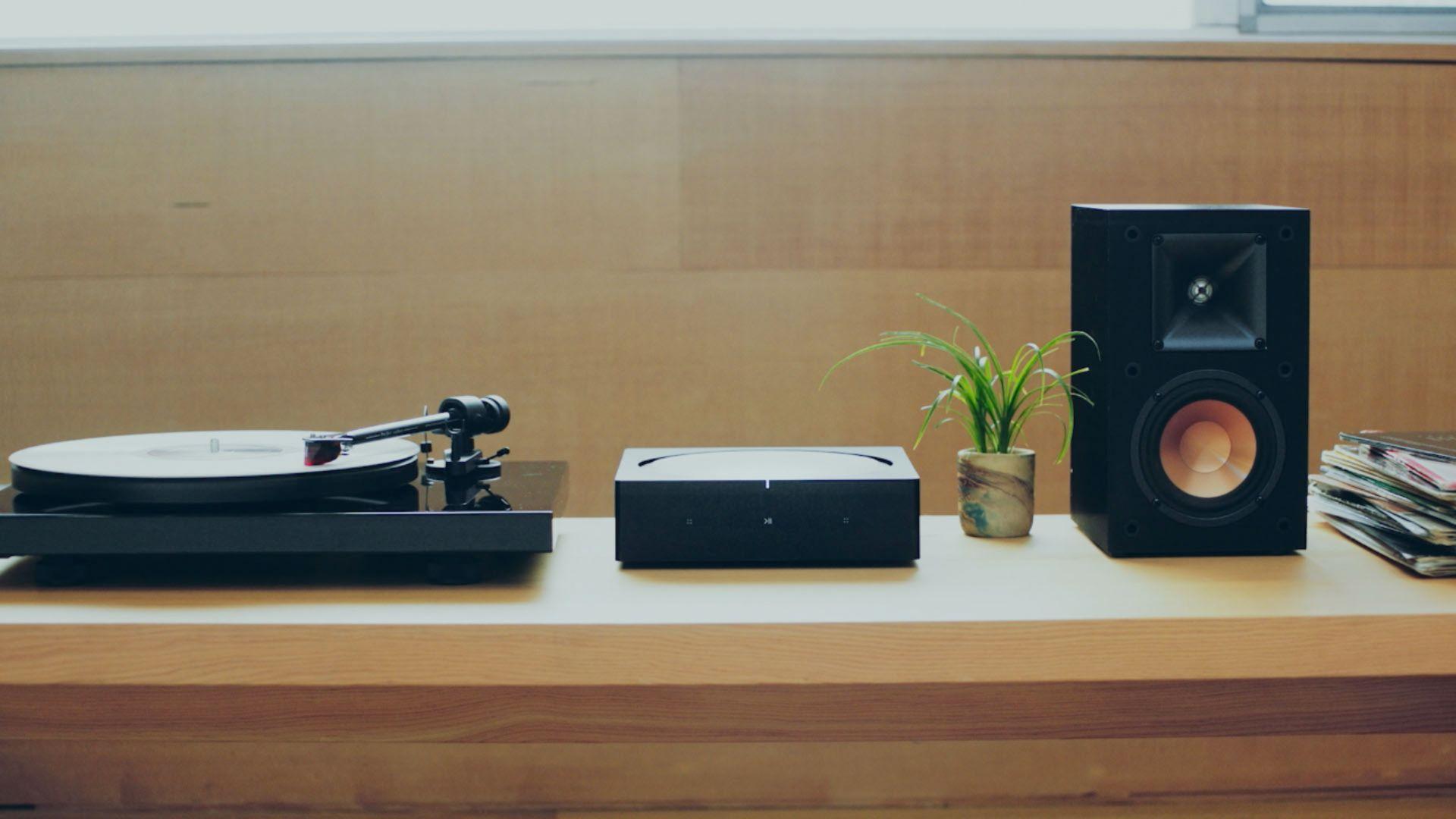
The Sonos Amp takes a much more focused approach to connectivity. It provides just one analog RCA input, which can work with a turntable if you have a separate phono preamp. However, its unique advantage is an HDMI ARC (Audio Return Channel) input that connects directly to your TV, allowing the amplifier to receive audio signals from your television without additional cables or converters.
This HDMI ARC connection is particularly valuable for home theater applications. Unlike optical or coaxial digital connections, HDMI ARC can carry higher-quality audio formats and allows the TV to automatically turn the amplifier on and control its volume. For users who primarily listen to music but also want good TV sound, this feature is invaluable.
Both amplifiers offer comprehensive streaming capabilities, but they implement them through different platforms. The Denon PMA-900HNE uses Denon's HEOS platform, which supports major streaming services like Spotify Connect, Apple Music, TIDAL, and Qobuz. It also works with Amazon Alexa and Google Assistant for voice control and supports Apple AirPlay 2 for streaming from Apple devices.
Perhaps more importantly for serious music listeners, the Denon is Roon Ready, meaning it can integrate seamlessly with Roon music management software. Roon is a premium music platform that provides extensive metadata, sophisticated digital signal processing, and high-quality streaming to compatible devices throughout your home.
The Sonos Amp operates within the Sonos ecosystem, which is arguably the most mature and stable multi-room audio platform available. Since the company's founding in 2002, Sonos has refined their platform through countless updates, resulting in rock-solid reliability and intuitive operation. The Sonos app provides access to virtually every major streaming service and makes it trivial to group speakers, adjust volume across zones, and manage different music in different rooms.
The key difference is independence versus integration. The Denon can operate perfectly well as a standalone amplifier without requiring any particular ecosystem. The Sonos Amp certainly works alone, but it really shines when integrated with other Sonos speakers throughout your home.
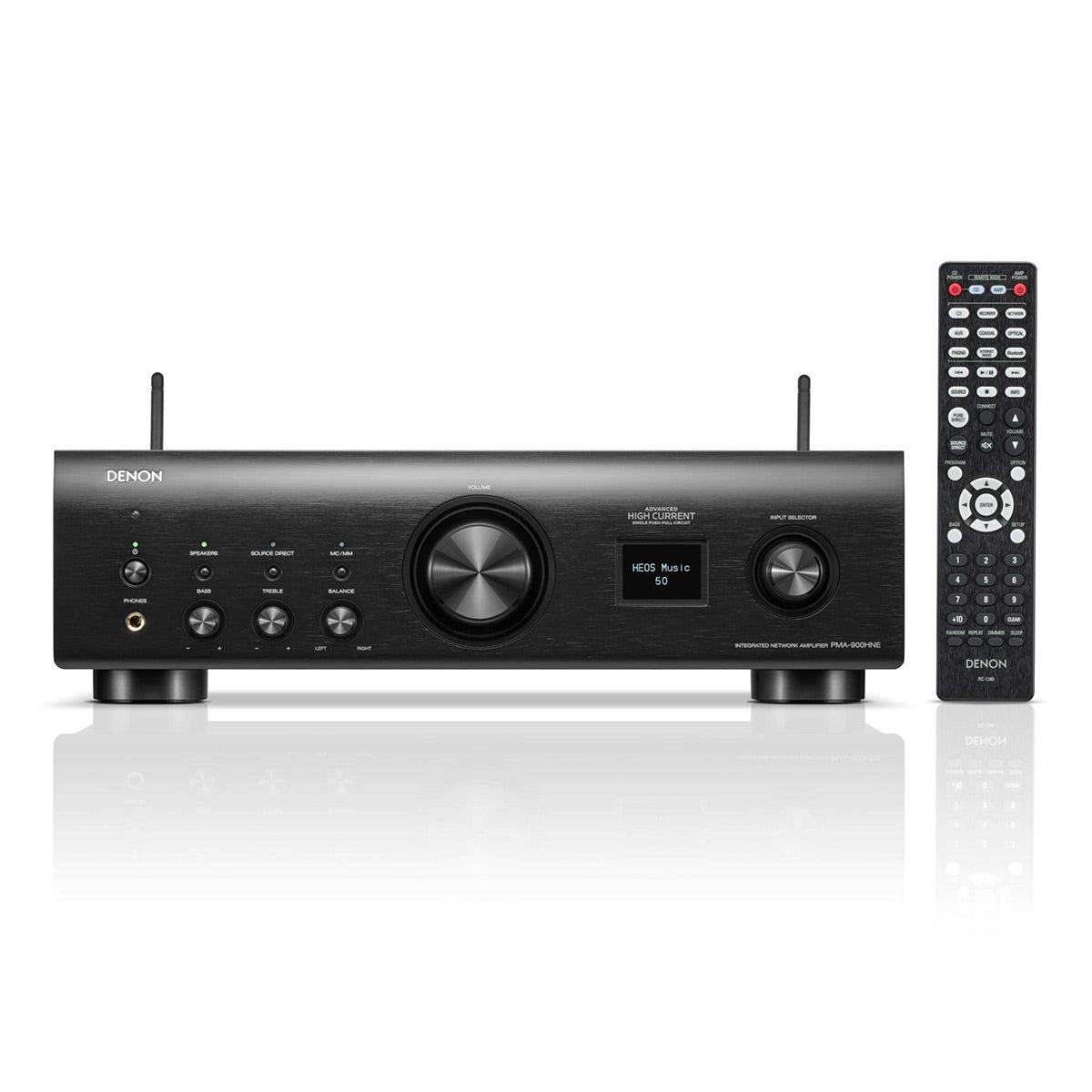
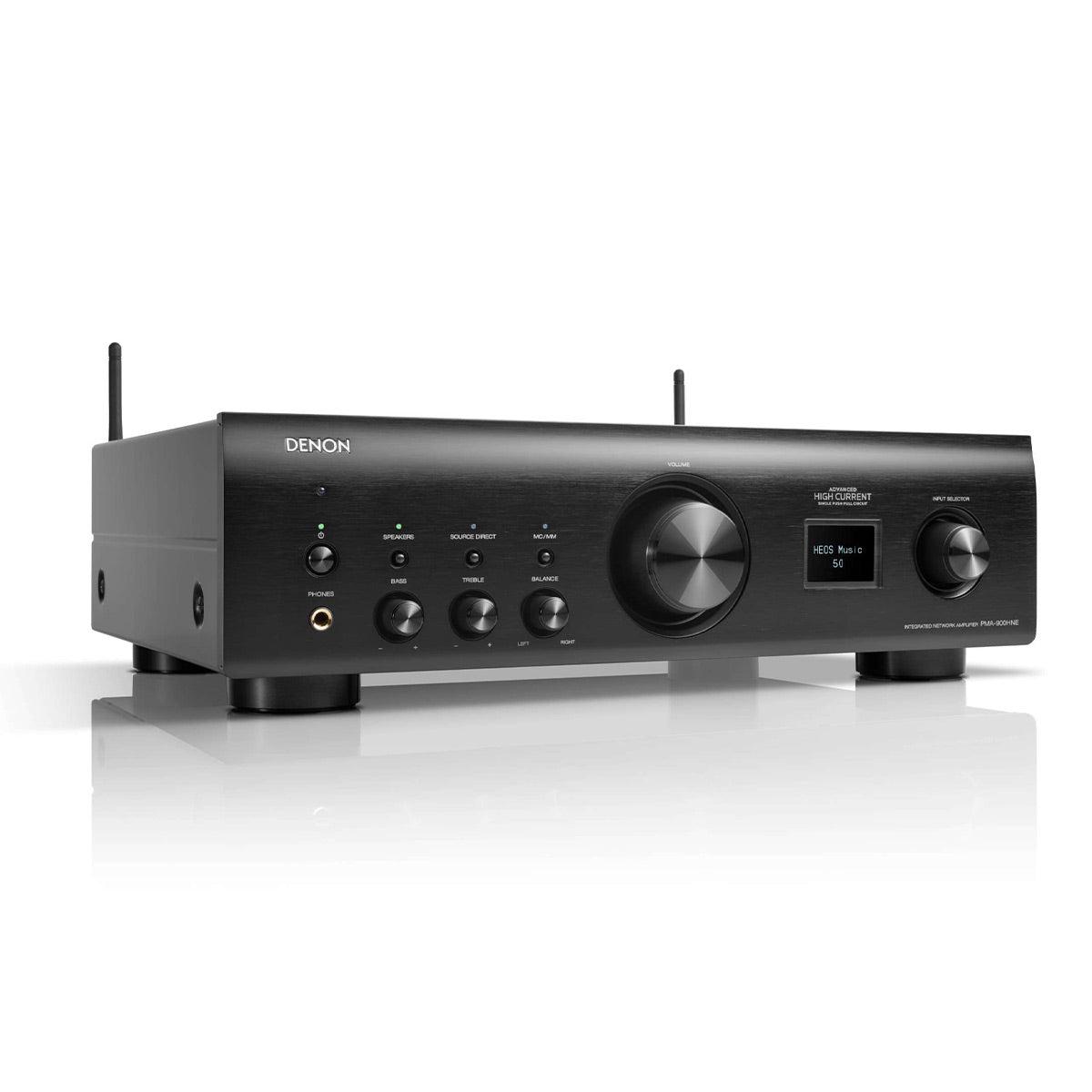
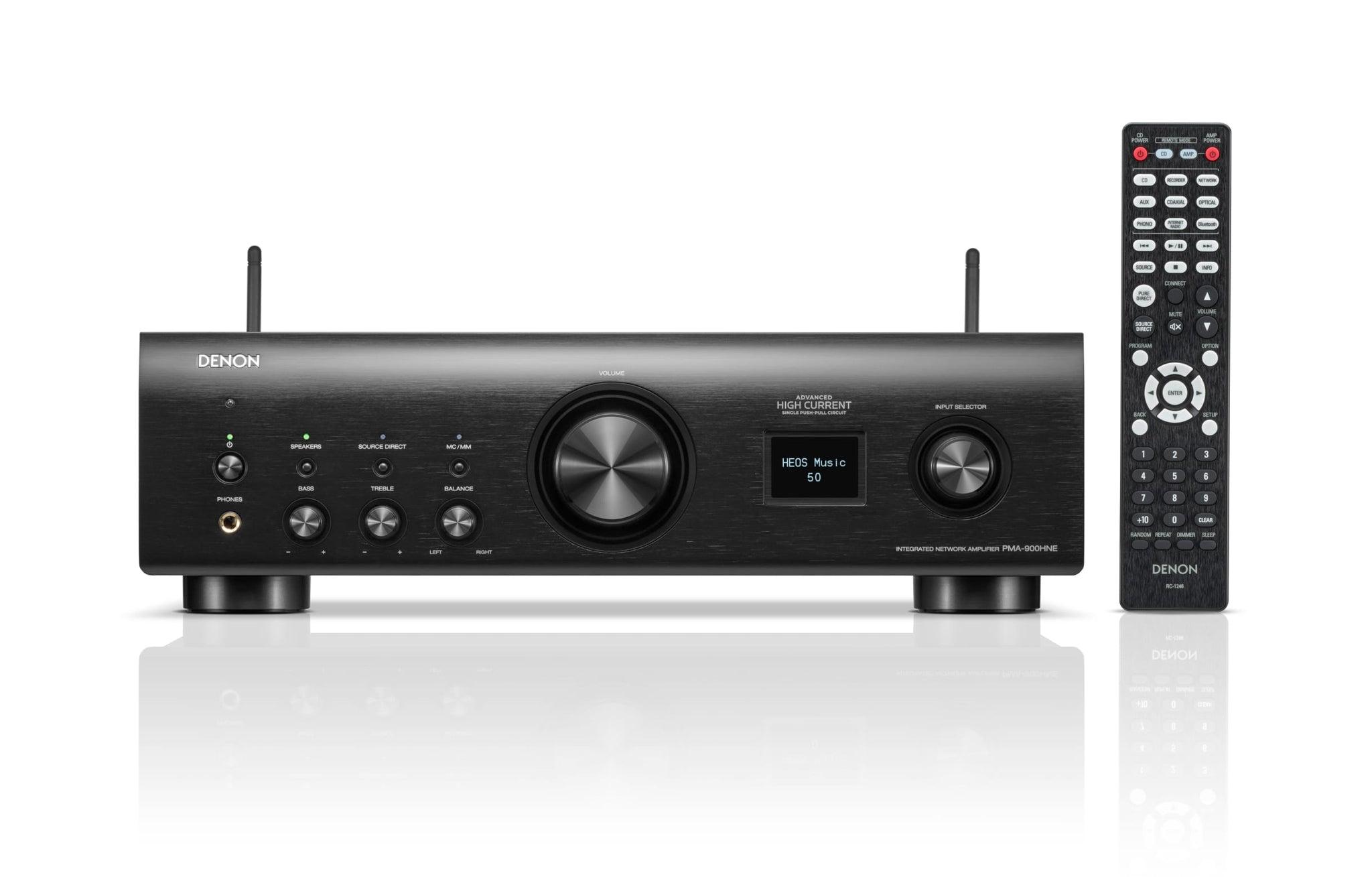
The interface philosophy differences between these amplifiers reflect their target audiences. The Denon PMA-900HNE maintains traditional amplifier controls with a metal volume knob, input selector, and small OLED display on the front panel. You can operate it entirely without a smartphone if desired, using the included remote control for all functions.
This approach appeals to users who prefer physical controls and don't want to depend on apps for basic operation. The Denon even includes traditional tone controls (bass and treble adjustments) and a source direct mode that bypasses these controls entirely for purist listening.
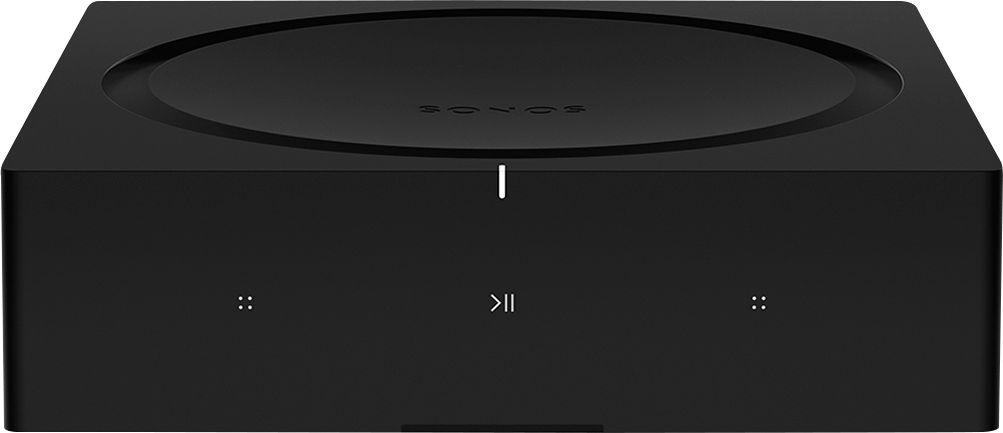
The Sonos Amp embraces app-based control almost entirely. While it has capacitive touch controls on top for basic playback functions, most operation requires the Sonos app. This includes volume control, input selection, EQ adjustments, and all streaming functions.
For users comfortable with smartphone control, the Sonos app offers advantages in sophistication and convenience. However, it also means the amplifier becomes less functional if you don't have your phone nearby or if there are app connectivity issues.
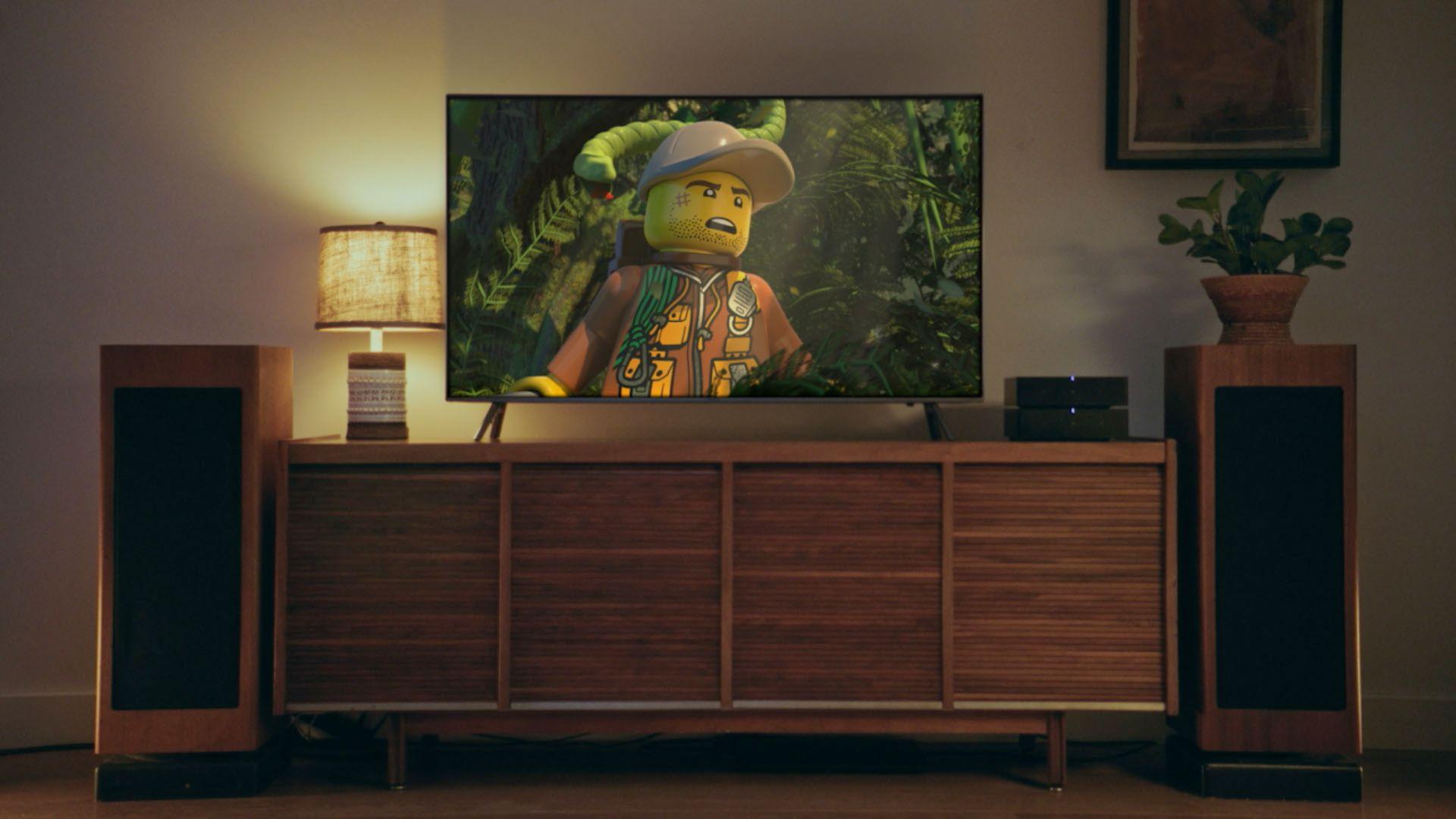
Both amplifiers can work in home theater applications, but they approach it differently. The Sonos Amp is clearly designed with TV integration in mind. Its HDMI ARC connection provides the simplest possible setup for TV audio, and you can wirelessly add Sonos surround speakers to create a full home theater system.
The Sonos supports common TV audio formats including Dolby Digital and DTS, though it's not a licensed decoder for these formats. For most TV content, this limitation isn't noticeable, and the convenience of wireless surround speakers often outweighs any format limitations.
The Denon PMA-900HNE can certainly work with TV audio through its digital inputs, but it requires additional cables and doesn't offer the same level of integration. However, for users who primarily want stereo music playback with occasional TV use, the Denon's superior stereo sound quality might be more important than surround sound capabilities.
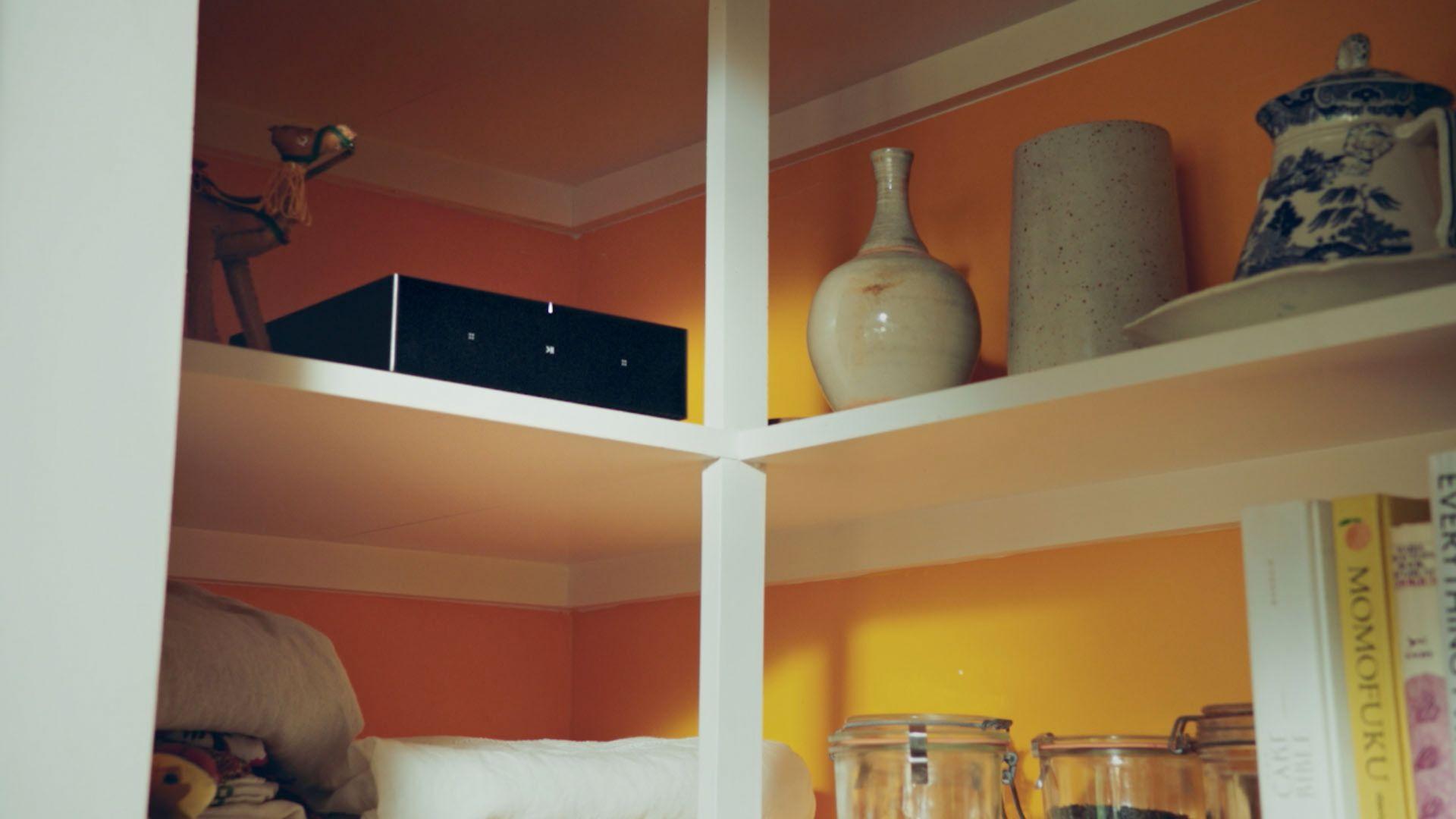
The Sonos Amp excels in several specialized applications. Its high power output and dual Ethernet ports make it ideal for commercial installations or large homes where you need to power multiple speaker pairs. It's also optimized for architectural speakers (in-wall and in-ceiling models) and outdoor speakers, with weather-resistant construction and the ability to drive low-impedance loads.
For whole-home audio installations, the Sonos can power speakers in one zone while wirelessly connecting to Sonos speakers in other zones, all controlled from a single app. This makes it particularly attractive for custom installers and smart home integrations.
The Denon PMA-900HNE is more focused on traditional stereo listening but offers unique capabilities for analog source enthusiasts. Its MM/MC phono stage eliminates the need for a separate phono preamp, and its multiple analog inputs can accommodate vintage equipment that modern amplifiers often overlook.
The decision between these amplifiers ultimately depends on your priorities and use case. Choose the Denon PMA-900HNE if you prioritize sound quality for dedicated music listening, have multiple analog sources (especially a turntable), or prefer physical controls over app-based operation. It's the better choice for users who want traditional hi-fi values with modern streaming convenience.
The Sonos Amp makes more sense if you need significant power for large or demanding speakers, want seamless TV integration, plan to build a multi-room system, or prefer the convenience of app-based control. It's particularly compelling if you already own other Sonos products or are planning a whole-home audio installation.
At the time of writing, both amplifiers occupy similar price ranges in the upper-mid market, making the choice primarily about features and philosophy rather than value. The Denon offers more inputs and arguably better stereo sound quality, while the Sonos provides more power and superior system integration capabilities.
For most users, the choice comes down to whether you're building a dedicated stereo system or want an amplifier that integrates seamlessly with modern home entertainment. Both approaches have merit, and both products execute their respective visions exceptionally well.
| Denon PMA-900HNE | Sonos Amp |
|---|---|
| Power Output - Critical for driving your speakers effectively | |
| 50W per channel (8Ω), 85W (4Ω) - adequate for most bookshelf and smaller floorstanding speakers | 125W per channel (8Ω), 250W (4Ω) - can drive demanding speakers and up to 4 speakers simultaneously |
| Amplifier Design - Affects sound quality and efficiency | |
| Advanced High Current single push-pull (Class AB) - prioritizes current delivery and musical sound | Class D with advanced thermal management - highly efficient, compact, minimal heat |
| Sound Character - Your listening experience | |
| Smooth, musical with exceptional soundstaging - ideal for critical listening sessions | Punchy, dynamic presentation - great for parties and background music |
| Analog Inputs - Connect turntables, CD players, and other sources | |
| 3x RCA line inputs plus dedicated MM/MC phono stage - excellent for vinyl enthusiasts | 1x RCA line input only - requires separate phono preamp for turntables |
| Digital Inputs - Connect modern sources and TVs | |
| 3x optical, 1x coaxial, USB-A port - comprehensive digital connectivity | HDMI ARC only - simplest TV integration but limited other digital sources |
| Streaming Platform - Your music services and multi-room capabilities | |
| HEOS with Spotify Connect, Roon Ready, AirPlay 2 - flexible but newer ecosystem | Sonos platform - most mature multi-room system with rock-solid reliability |
| User Interface - How you control the amplifier | |
| Physical knobs, OLED display, remote control - traditional operation without requiring apps | App-dependent with touch controls - modern but requires smartphone for most functions |
| Multi-Room Audio - Expanding to other rooms | |
| HEOS compatible devices - growing ecosystem but fewer options than Sonos | Full Sonos ecosystem - hundreds of compatible speakers and components |
| Home Theater Integration - TV and movie sound | |
| Digital inputs for TV audio - requires additional cables and setup | HDMI ARC with wireless surround capability - seamless TV integration |
| DAC Quality - Digital music sound quality | |
| ESS 9018K2M with AL32 processing - audiophile-grade digital conversion | Class D integrated DAC - good quality but prioritizes convenience over ultimate fidelity |
| Physical Controls - Operation without apps | |
| Full front panel controls, tone controls, source direct mode - complete independence from apps | Basic touch controls only - most functions require Sonos app |
| Installation Flexibility - Architectural and outdoor use | |
| Traditional stereo setup focused - best for dedicated listening rooms | Optimized for in-wall, in-ceiling, and outdoor speakers - ideal for whole-home installations |
The Sonos Amp delivers significantly more power at 125 watts per channel compared to the Denon PMA-900HNE's 50 watts per channel. This means the Sonos Amp can drive larger, more demanding speakers and fill bigger rooms with sound.
The Denon PMA-900HNE has a built-in phono stage that works with both moving magnet and moving coil cartridges, making turntable connection simple. The Sonos Amp requires a separate phono preamp to connect a turntable, adding cost and complexity for vinyl enthusiasts.
Both amplifiers offer excellent streaming capabilities, but they use different platforms. The Sonos Amp uses the mature Sonos ecosystem with rock-solid multi-room audio, while the Denon PMA-900HNE uses HEOS and supports more audiophile features like Roon Ready integration.
The Sonos Amp offers the simplest TV connection with its HDMI ARC input, providing seamless integration and automatic volume control. The Denon PMA-900HNE connects to TVs through optical or coaxial digital inputs, requiring additional cable setup but offering more input flexibility.
The Denon PMA-900HNE is generally preferred for dedicated music listening, offering smoother, more refined sound with exceptional soundstaging capabilities. The Sonos Amp provides more dynamic, punchy sound that's great for background music and parties but may lack some audiophile refinement.
Yes, both support multi-room audio but through different systems. The Sonos Amp integrates seamlessly with the extensive Sonos ecosystem of wireless speakers. The Denon PMA-900HNE uses HEOS technology for multi-room capabilities, though the ecosystem has fewer compatible devices than Sonos.
The Sonos Amp is generally easier to set up, especially for TV integration and streaming, thanks to its streamlined app-based interface. The Denon PMA-900HNE offers more traditional controls with physical knobs and display, which some users find more intuitive for basic operations.
The Denon PMA-900HNE can be fully operated using its front panel controls and included remote without requiring a smartphone. The Sonos Amp relies heavily on the Sonos app for most functions, though it has basic touch controls for volume and playback.
The Sonos Amp excels for home theater applications with its HDMI ARC connection and ability to wirelessly add Sonos surround speakers for a complete system. The Denon PMA-900HNE can work for stereo TV audio but lacks dedicated home theater features and surround sound expansion.
The Sonos Amp is specifically designed for outdoor speaker installations with weather-resistant construction and high power output. The Denon PMA-900HNE can power outdoor speakers but isn't optimized for this use case and may lack sufficient power for large outdoor areas.
Value depends on your needs: the Denon PMA-900HNE offers better value for audiophiles wanting high-quality stereo sound with comprehensive analog inputs. The Sonos Amp provides better value for users prioritizing streaming convenience, multi-room audio, and home theater integration with its higher power output.
The Denon PMA-900HNE features A/B speaker switching, allowing connection of two pairs of speakers that can be selected independently. The Sonos Amp can power up to four 8-ohm speakers simultaneously or two pairs of lower impedance speakers, making it more flexible for multi-speaker installations.
We've done our best to create useful and informative comparisons to help you decide what product to buy. Our research uses advanced automated methods to create this comparison and perfection is not possible - please contact us for corrections or questions. These are the sites we've researched in the creation of this article: crutchfield.com - e-catalog.com - theaudiotailor.com.au - extremehifi.com - whathifi.com - speakerdecision.com - youtube.com - audiosciencereview.com - sound-advice.online - crutchfield.com - crutchfield.com - sweetwater.com - watthifi.com - youtube.com - accessories4less.com - soundstageaccess.com - icav.us - safeandsoundhq.com - listenup.com - accessories4less.com - audiosciencereview.com - audioadvice.com - crutchfield.com - adiglobaldistribution.pr - themasterswitch.com - astralsecurite.ca - wassersfurniture.com - whathifi.com - sonos.com - audiosciencereview.com - bestbuy.com - videoandaudiocenter.com - en.community.sonos.com

Privacy Policy
Terms and Conditions - Affiliate Policy
Home Security
© Copyright 2008-2026.
11816 Inwood Rd #1211, Dallas, TX 75244