

When shopping for an integrated amplifier—a device that combines both a preamplifier and power amplifier in one box—you're essentially choosing the heart of your music system. Two compelling options represent vastly different philosophies: the Dayton Audio HTA200, a traditional Hi-Fi amplifier with tube-powered warmth, and the Bluesound PowerNode Edge, a streaming-first amplifier designed for the wireless age.
Released in 2021, the HTA200 embraces classic amplifier design with modern conveniences, while the PowerNode Edge, launched in 2022, prioritizes streaming technology and multi-room capabilities. Both serve the same basic function—amplifying audio signals to drive speakers—but their approaches couldn't be more different.
The integrated amplifier market has split into two distinct camps over the past decade. Traditional Hi-Fi amplifiers focus on pure audio reproduction, often incorporating tube technology for its distinctive sound character. These amplifiers typically offer extensive analog input options and emphasize the direct connection between source and speakers.
Streaming amplifiers, on the other hand, treat the amplifier as part of a connected ecosystem. They prioritize wireless connectivity, digital processing, and integration with modern lifestyles. The trade-off often involves fewer analog inputs and lower power output in exchange for convenience features.
When evaluating any integrated amplifier, consider these fundamental factors: power output (measured in watts per channel), sound character (neutral versus colored), input flexibility, digital capabilities, and overall value proposition. The most important performance metrics include signal-to-noise ratio (how quiet the background is), total harmonic distortion (THD—how clean the signal remains under load), and frequency response (how evenly the amplifier reproduces different frequencies).
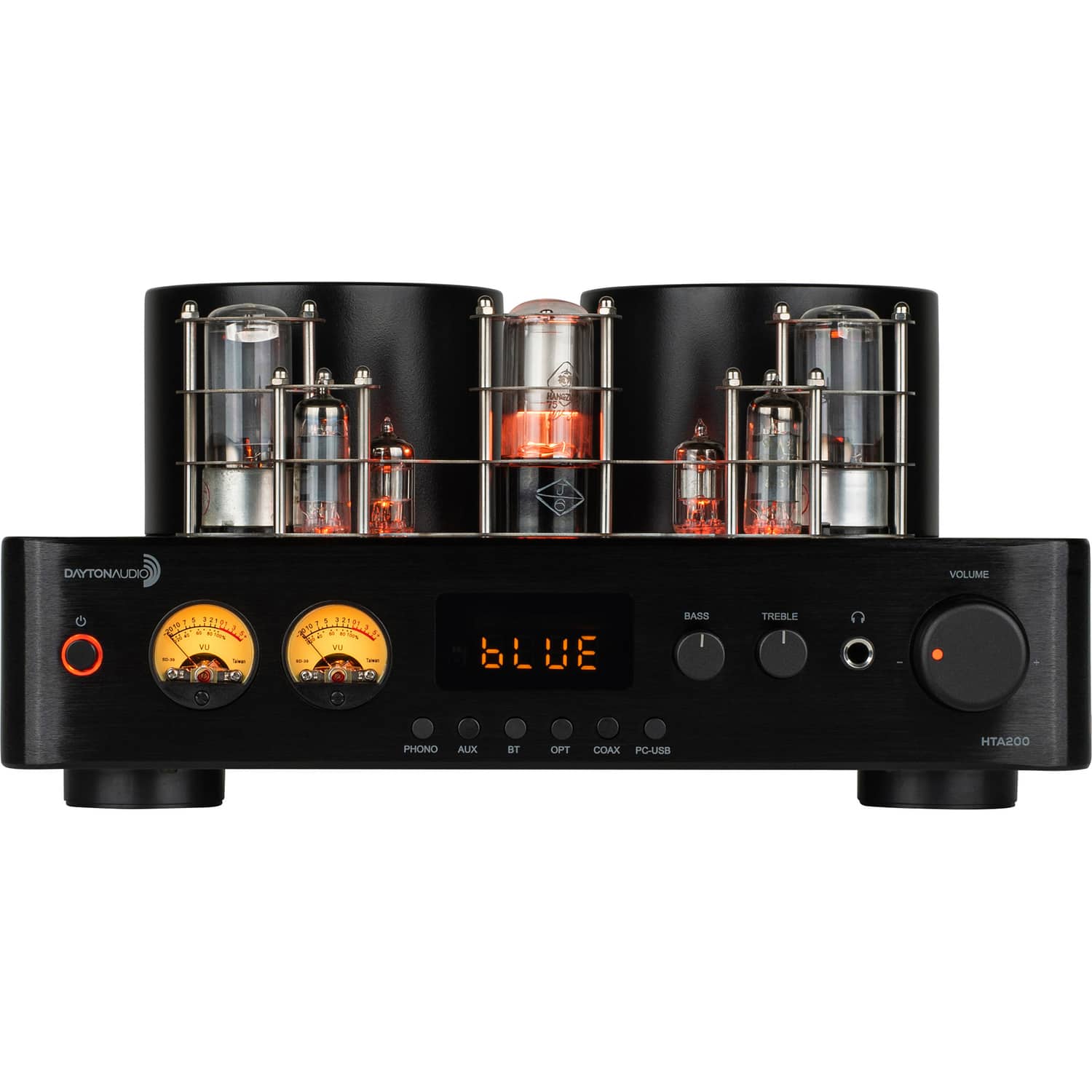
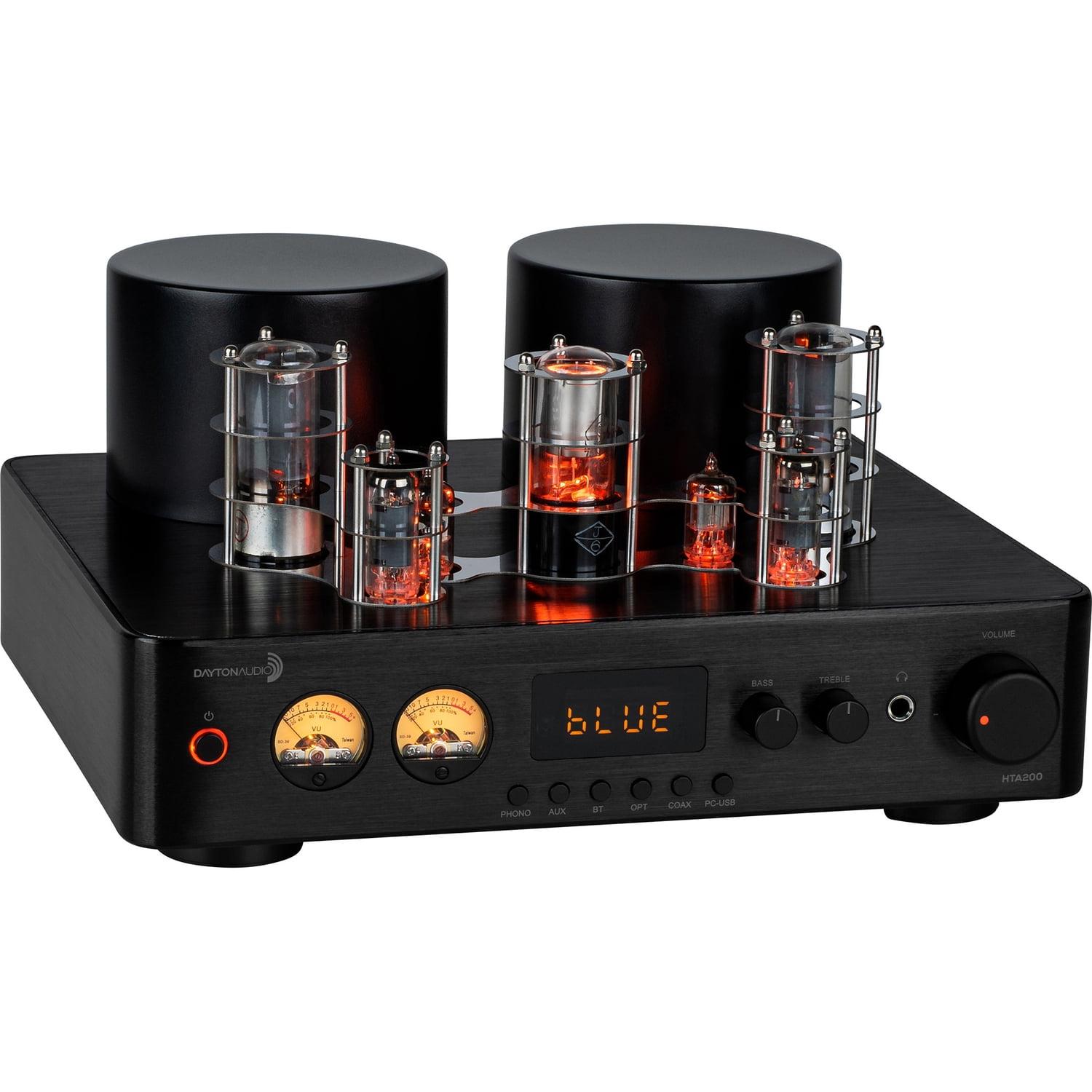
The HTA200 delivers a substantial 100 watts per channel into 4-ohm speakers and 50 watts into 8-ohm speakers—specifications that place it in serious audiophile territory. This hybrid design uses vacuum tubes in the preamplifier section (which handles volume control and input switching) while employing solid-state Class A/B amplification for the power-hungry output stage.
In contrast, the PowerNode Edge produces 40 watts per channel into 8-ohm speakers using DirectDigital Class D amplification. This technology keeps the audio signal in digital form until the final moment before it reaches your speakers, theoretically reducing distortion and improving efficiency.
Here's where the rubber meets the road: speaker sensitivity determines how much power you actually need. If you're driving efficient bookshelf speakers (rated above 88dB sensitivity), the PowerNode Edge provides plenty of power for most rooms. However, if you own larger floor-standing speakers or models with lower sensitivity ratings, the HTA200's extra power becomes crucial for achieving satisfying volume levels without strain.
Our research into user experiences suggests the HTA200 maintains composure even when pushed hard, while some users report the PowerNode Edge can sound compressed when driving demanding speakers at higher volumes. This isn't necessarily a dealbreaker—it simply means careful speaker matching matters more with the Bluesound unit.
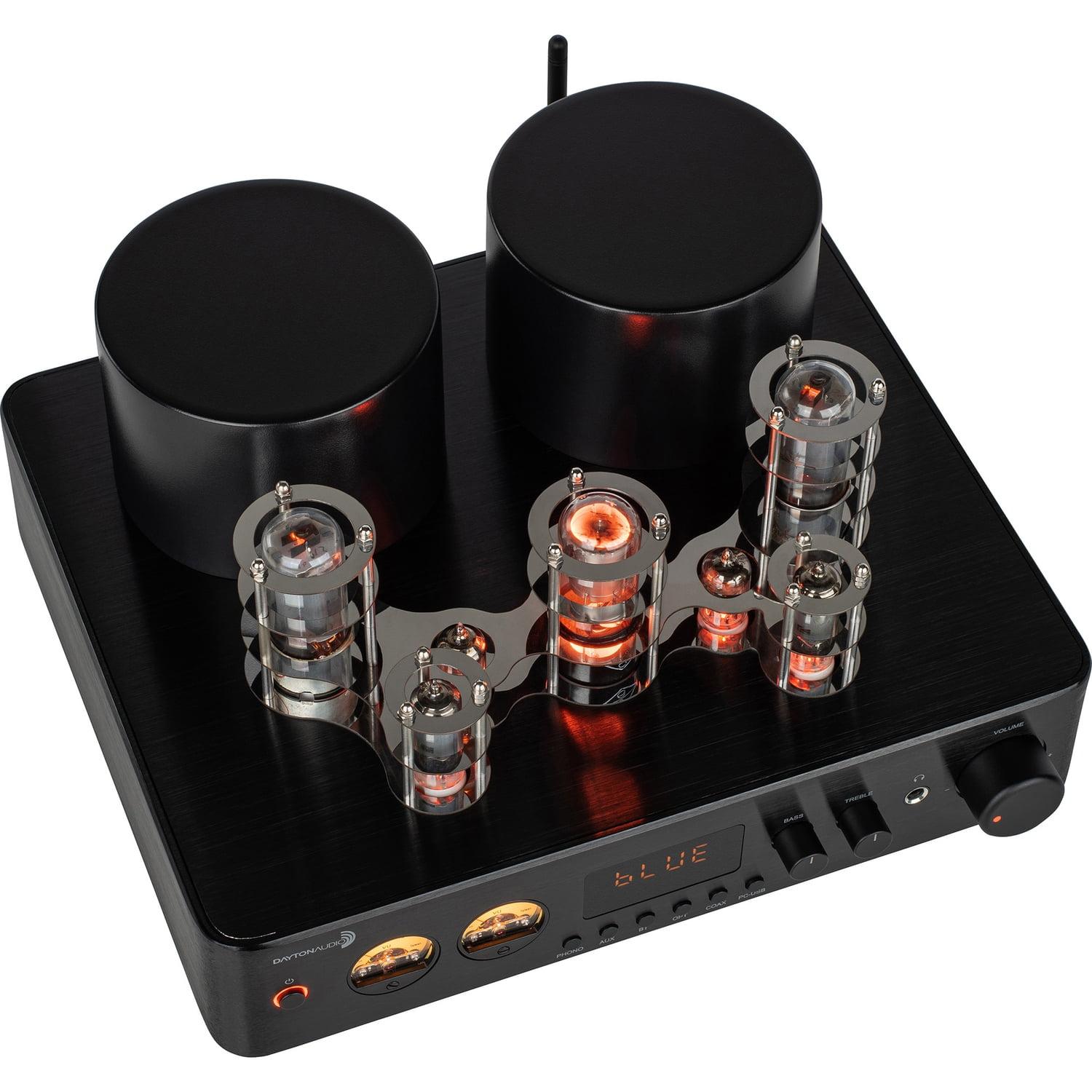
The HTA200's hybrid tube design represents a compromise between tube warmth and solid-state reliability. The vacuum tubes handle the low-level signals in the preamp section, adding the subtle harmonic distortion that tube enthusiasts describe as "musical" or "warm." This isn't distortion in the negative sense—it's a gentle coloration that many listeners find more engaging than clinical accuracy.
The solid-state output section provides the muscle, delivering clean power without the heat, maintenance, and replacement costs associated with output tubes. This hybrid approach gives you tube character without typical tube compromises like limited power output or high operating temperatures.
Meanwhile, the PowerNode Edge pursues accuracy above character. Its DirectDigital amplification aims for transparency—reproducing your music exactly as recorded without adding coloration. Based on expert reviews, it succeeds admirably, delivering clean, detailed sound with excellent stereo imaging. The bass response is surprisingly controlled for such a compact unit, though it lacks the slightly rich midrange warmth that tube lovers prize.
Your preference here depends on your musical taste and source material. Jazz, vocals, and acoustic music often benefit from the HTA200's tube coloration, while electronic music, pop productions, and classical recordings might shine through the PowerNode Edge's neutral presentation.
The digital divide between these amplifiers runs deep. The HTA200 includes basic digital inputs—USB, optical, and coaxial—plus Bluetooth 5.0 for wireless streaming. The built-in DAC (digital-to-analog converter) handles resolutions up to 16-bit/48kHz, which covers CD quality and most streaming services adequately.
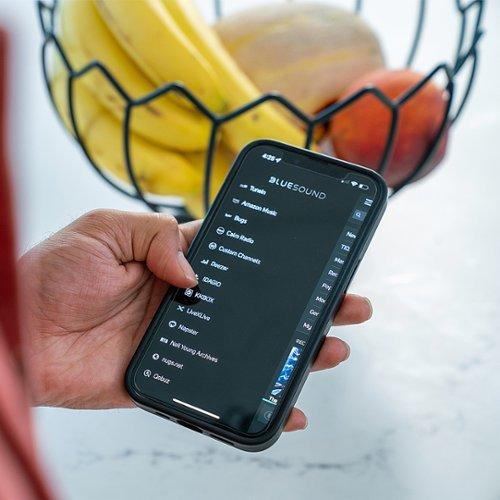
The PowerNode Edge takes digital seriously, supporting high-resolution audio up to 24-bit/192kHz and including MQA decoding for Tidal's "Master" quality tracks. More importantly, it's built around Bluesound's BluOS platform, which connects to over 20 streaming services natively. This means you can access Spotify, Tidal, Qobuz, and Amazon Music directly through the app without needing your phone or computer as an intermediary.
The difference in user experience is substantial. With the HTA200, you'll primarily use Bluetooth from your phone or connect digital sources directly. With the PowerNode Edge, you control everything through the BluOS app, which remembers your preferences, creates playlists across services, and enables multi-room synchronization with other BluOS devices.
If you're building a multi-room system, the PowerNode Edge shines. You can synchronize music across multiple zones, adjust volume independently in each room, and even send different music to different zones simultaneously. The HTA200 can't match this functionality.
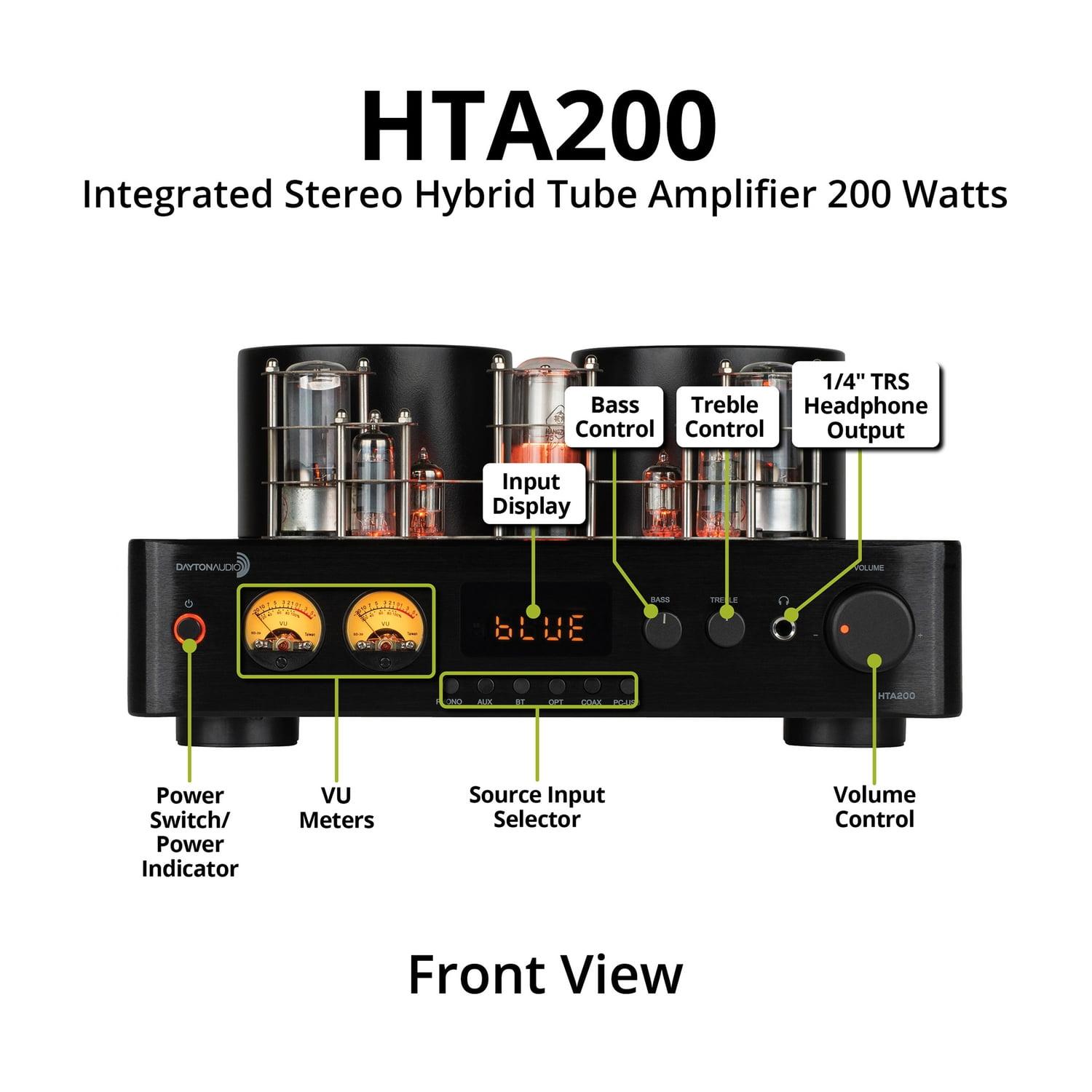
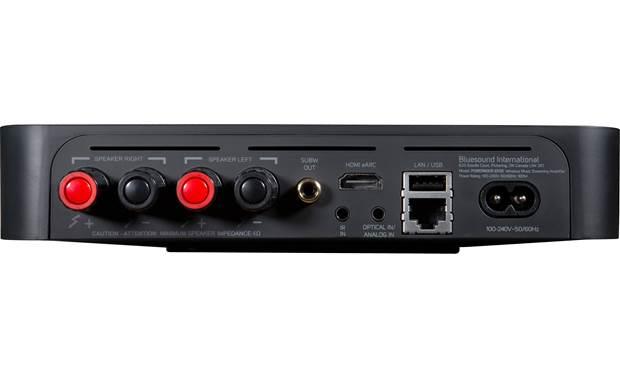
Here's where the HTA200 demonstrates its traditional Hi-Fi roots. It includes a dedicated phono input with built-in preamp for turntables, multiple line inputs, and comprehensive digital connections. The motorized volume control, bass/treble knobs, and backlit VU meters create a hands-on experience that many audiophiles prefer.
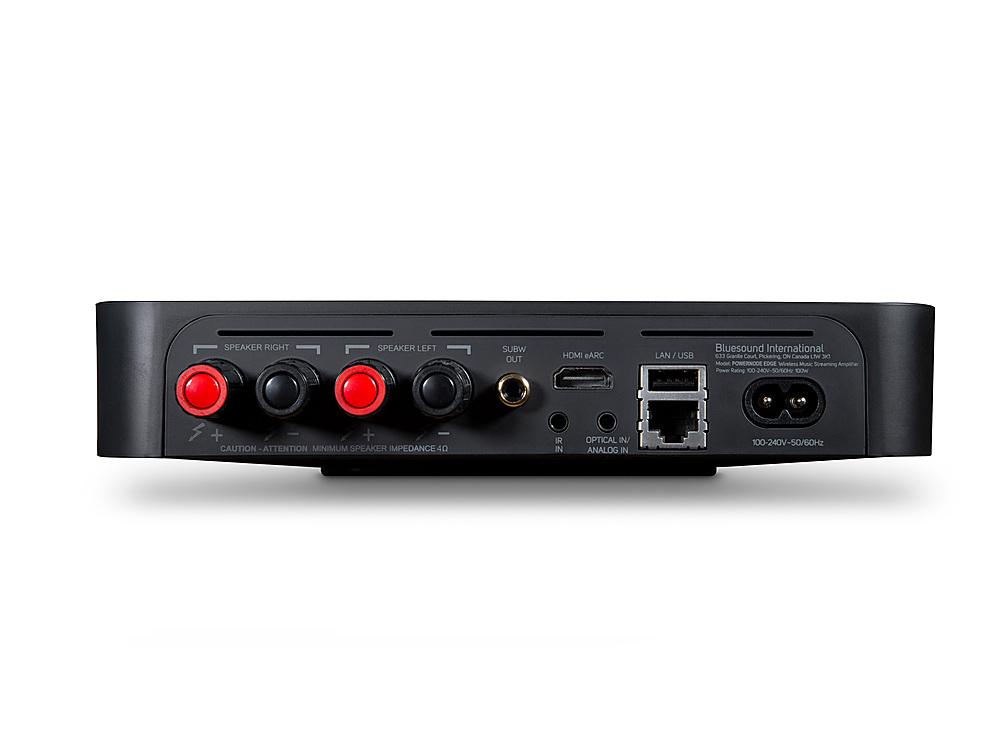
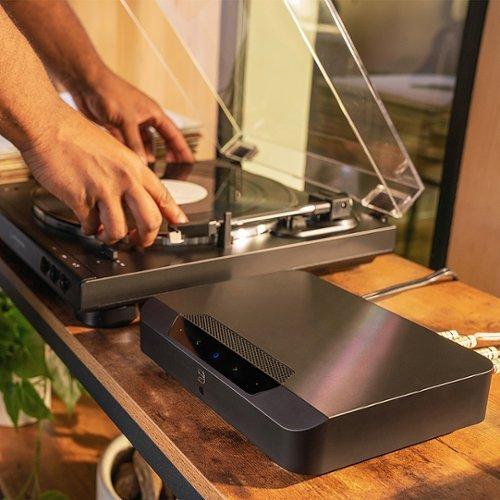
The PowerNode Edge takes a minimalist approach to inputs. It includes HDMI eARC for TV connection (supporting Dolby Digital decoding), a combo 3.5mm jack that serves double duty as optical digital or analog input, and focuses primarily on wireless connectivity. If you own a turntable, you'll need a separate phono preamp—an extra expense and complexity.
This input philosophy reflects each amplifier's target user. The HTA200 serves traditional hi-fi setups with multiple sources, while the PowerNode Edge assumes most music comes from streaming services or digital sources.
Both amplifiers can integrate into home theater systems, but through different methods. The PowerNode Edge offers direct TV connection via HDMI eARC, automatically switching to TV audio when you turn on your television. It can decode Dolby Digital soundtracks and even serve as rear channel amplifiers in a wireless surround system when paired with other Bluesound components.
The HTA200 requires a separate connection from your TV or AV receiver's analog outputs. While this works perfectly well, it doesn't offer the seamless integration or digital surround decoding of the Bluesound unit. However, its higher power output makes it better suited for main left/right channels in a serious home theater setup.
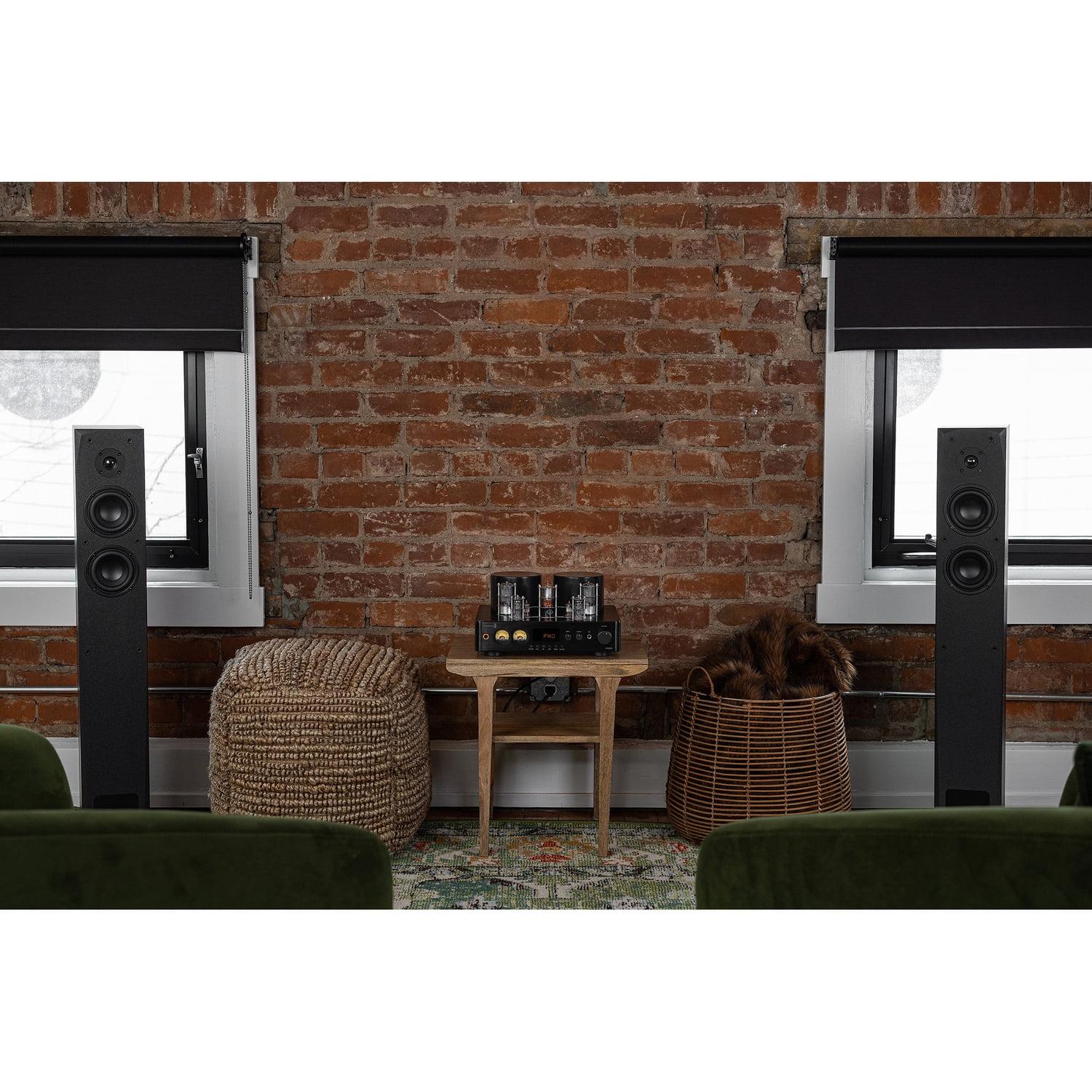
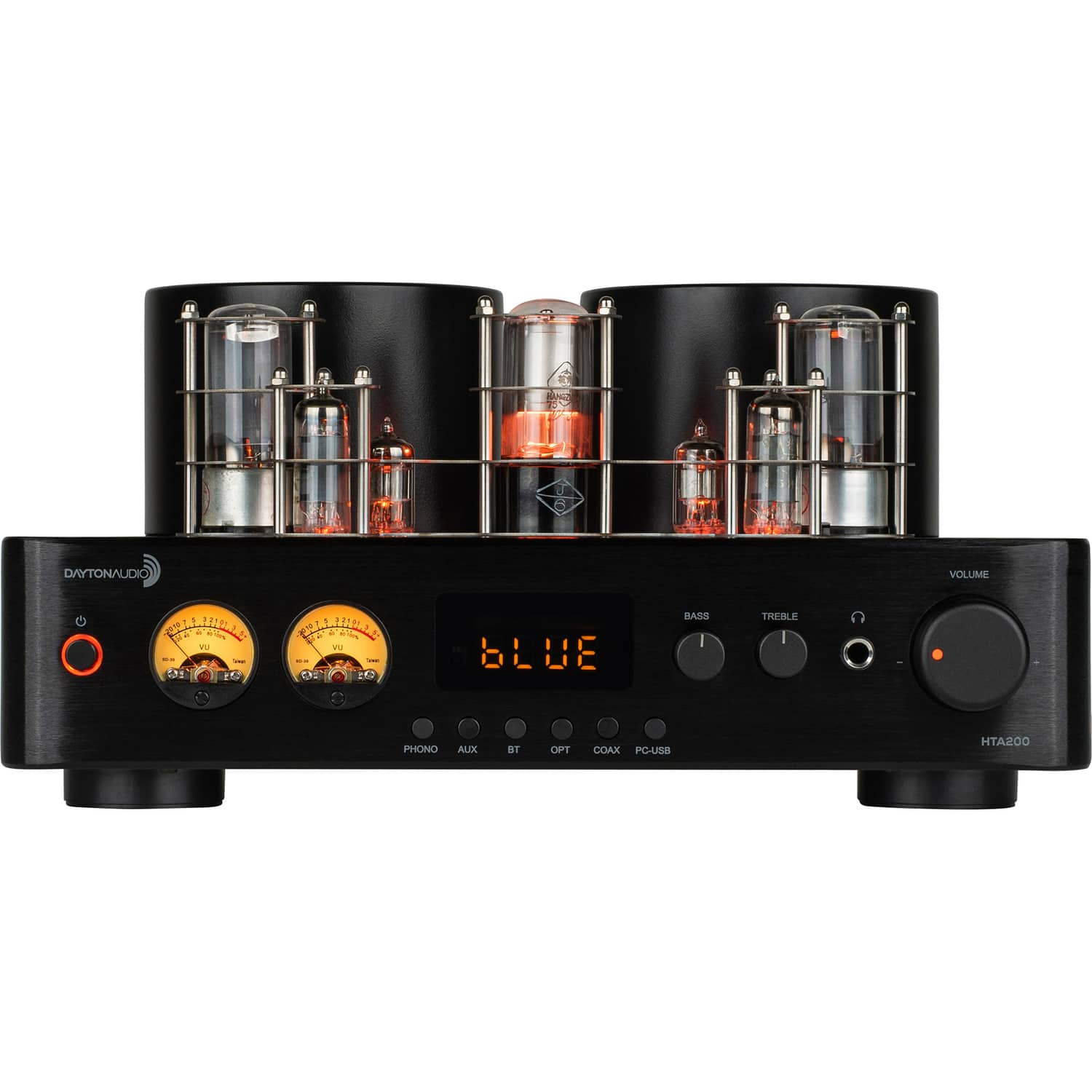
The HTA200 embraces traditional audiophile aesthetics with exposed vacuum tubes, illuminated VU meters, and a substantial aluminum chassis. At roughly 25 pounds, it feels substantial and commands attention on an equipment rack. The amber-glowing tubes provide visual appeal that many users find irresistible.
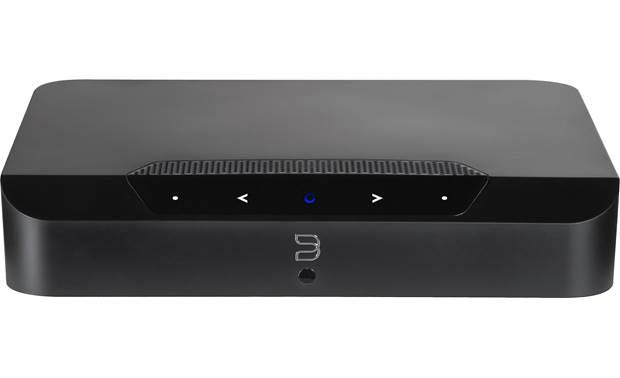
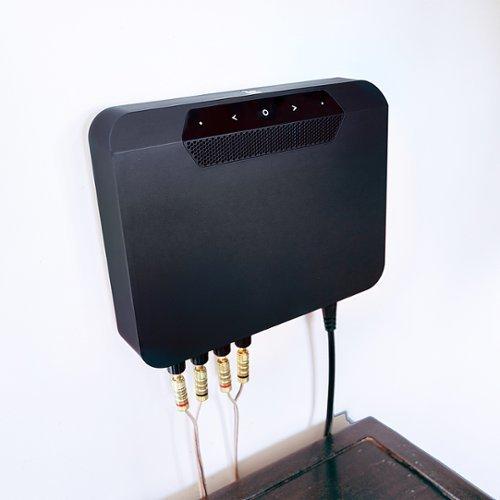
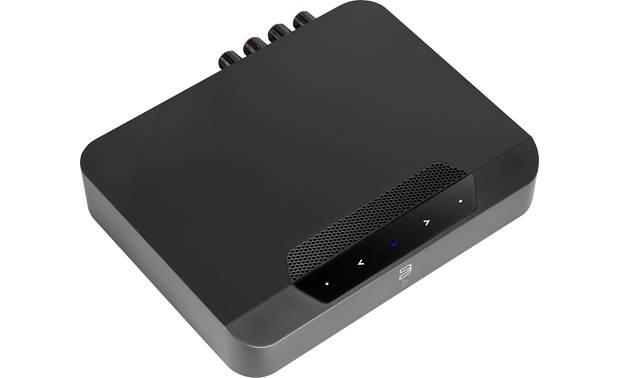
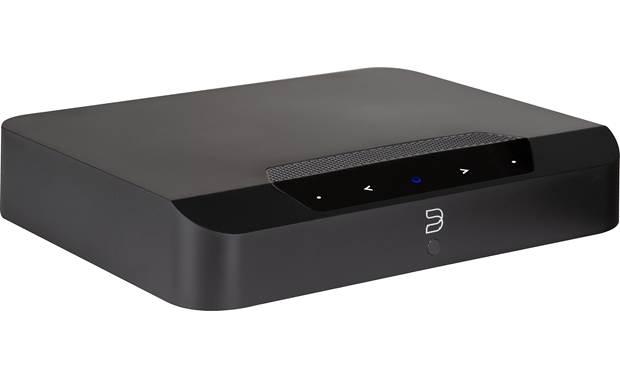
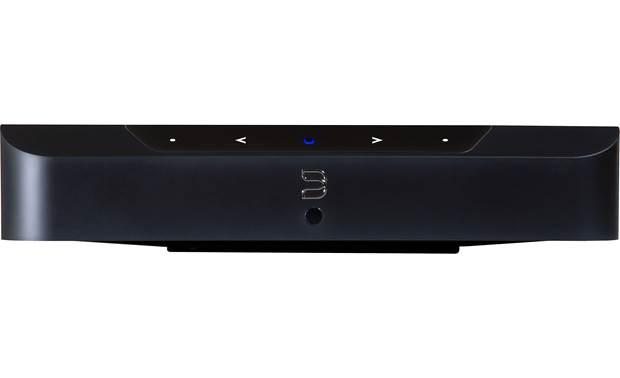
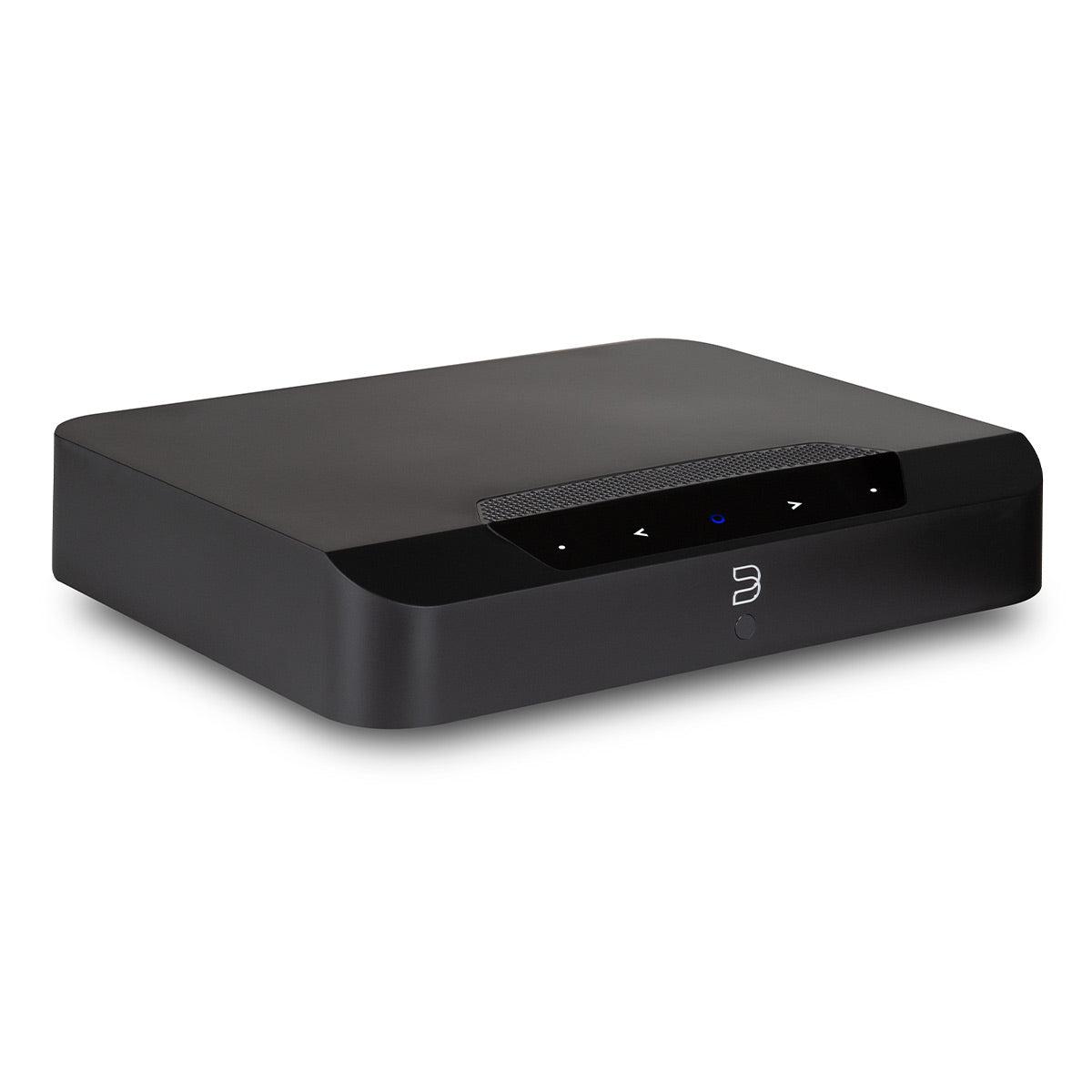
The PowerNode Edge pursues discretion over display. Its compact aluminum chassis can mount behind a TV or hide on a bookshelf. The minimalist design philosophy extends to the touch-sensitive top panel, which provides essential controls without physical buttons or knobs.
Both approaches have merit. The HTA200 celebrates the ritual of hi-fi listening, while the PowerNode Edge disappears into your lifestyle. Your preference likely depends on whether you want your audio equipment to be seen or simply heard.
Expert reviews and user feedback reveal some interesting performance characteristics. The HTA200 maintains its tube character even at low volumes—important since many listening sessions happen at moderate levels. Its Class A/B output stage provides excellent dynamic range, handling sudden musical peaks without compression.
The PowerNode Edge excels at detail retrieval and stereo imaging, creating a precise soundstage that many listeners find impressive. However, some users report that it can sound clinical compared to tube-based alternatives, particularly with bright or harsh recordings.
Bass performance differs notably between the units. The HTA200 provides fuller, richer bass response, while the PowerNode Edge offers tighter, more controlled bass. Neither approach is inherently superior—it depends on your speakers and musical preferences.
At the time of writing, the HTA200 costs significantly less than the PowerNode Edge, making the value equation interesting. You're essentially choosing between raw performance (higher power, tube character, comprehensive inputs) versus modern convenience (streaming platform, multi-room capability, compact design).
The HTA200 represents exceptional value for traditional hi-fi applications. Its power output alone would cost considerably more in a separate amplifier, and the included features like phono preamp and tube preamp add substantial value.
The PowerNode Edge commands a premium for its streaming capabilities and multi-room functionality. If you value convenience and plan to use streaming services extensively, the extra cost delivers tangible benefits. However, if you primarily play physical media or use basic digital sources, you're paying for features you might not use.
Since the HTA200's 2021 debut, tube hybrid designs have gained popularity among manufacturers seeking to combine vintage appeal with modern reliability. The specific tube complement (13P1P, 6H2, 6A2, and WY3P stabilivolt tubes) represents mature technology that's unlikely to become obsolete.
The PowerNode Edge benefits from ongoing software updates through the BluOS platform. Since its 2022 release, Bluesound has added new streaming service integrations and improved voice control functionality. This software-based upgrade path means your amplifier can gain new features over time—something impossible with traditional analog designs.
Choose the HTA200 if you're building a traditional stereo system around physical media, want maximum power output for demanding speakers, or simply love the sound and aesthetics of vacuum tubes. It's particularly compelling for vinyl enthusiasts who need that built-in phono preamp, and for anyone who prefers hands-on control over app-based operation.
The PowerNode Edge makes sense for streaming-focused listeners who want seamless integration with modern life. If you're planning a multi-room system, need TV integration, or value the convenience of voice control and wireless operation, it justifies its higher price through functionality the HTA200 simply cannot match.
For home theater applications, the PowerNode Edge offers easier integration, while the HTA200 provides more power for main channels. Neither is wrong—they serve different approaches to system building.
The fundamental question isn't which amplifier is better, but which philosophy matches your priorities: the HTA200's focus on traditional hi-fi performance and analog flexibility, or the PowerNode Edge's emphasis on streaming convenience and modern lifestyle integration. Both execute their respective visions exceptionally well.
| Dayton Audio HTA200 | Bluesound PowerNode Edge |
|---|---|
| Power Output - Critical for driving speakers to satisfying volumes | |
| 100W/ch @ 4Ω, 50W/ch @ 8Ω (drives demanding speakers easily) | 40W/ch @ 8Ω (sufficient for efficient bookshelf speakers) |
| Amplifier Technology - Affects sound character and efficiency | |
| Hybrid tube preamp + Class A/B solid-state power (warm, musical sound) | DirectDigital Class D (clean, neutral, efficient) |
| Digital Audio Support - Important for streaming and high-res files | |
| Up to 16-bit/48kHz via USB DAC (covers most streaming services) | Up to 24-bit/192kHz with MQA decoding (audiophile-grade resolution) |
| Streaming Platform - Determines ease of music access | |
| Basic Bluetooth 5.0 only (phone-dependent streaming) | BluOS with 20+ services, AirPlay 2, multi-room capability |
| Analog Inputs - Essential for turntables and traditional sources | |
| Dedicated phono input with preamp, multiple line inputs | Single 3.5mm combo input (requires adapters and external phono preamp) |
| TV Integration - Simplifies home theater setup | |
| None (requires separate audio connection from TV) | HDMI eARC with Dolby Digital decoding (seamless TV audio) |
| Voice Control - Modern convenience feature | |
| None | Alexa, Siri, Google Assistant via BluVoice |
| Physical Controls - Hands-on operation preference | |
| Motorized volume, bass/treble knobs, input selector, VU meters | Capacitive touch panel only (app-based control primary) |
| Multi-Room Audio - Whole-home system capability | |
| Not supported | Full BluOS ecosystem integration with zone synchronization |
| Form Factor - Installation flexibility | |
| Traditional component size (13.1" W × 6.6" H × 12.5" D) | Compact wall-mountable (8.6" W × 1.8" H × 7.6" D) |
| Warranty Coverage - Long-term reliability assurance | |
| 5 years (exceptional coverage for price point) | 1 year standard (typical for streaming devices) |
The Bluesound PowerNode Edge is generally better for beginners due to its simple setup and app-based control. You just connect speakers, download the BluOS app, and start streaming music wirelessly. The Dayton Audio HTA200 requires more knowledge about connecting multiple sources and understanding tube maintenance, making it better suited for those with some audio experience.
If you have efficient bookshelf speakers (88dB sensitivity or higher) in a small to medium room, the PowerNode Edge's 40 watts per channel is sufficient. However, if you own larger floor-standing speakers, low-sensitivity speakers, or want to fill a large room, the HTA200's 100 watts per channel at 4 ohms provides much better headroom and control.
The Dayton Audio HTA200 is significantly better for turntables because it includes a built-in phono preamp and dedicated phono inputs with proper grounding. The Bluesound PowerNode Edge requires you to buy a separate phono preamp and use adapters, adding cost and complexity to your vinyl setup.
The Bluesound PowerNode Edge excels at TV integration with its HDMI eARC input and Dolby Digital decoding, automatically switching to TV audio when you turn on your television. The HTA200 can connect to TVs but requires separate audio cables from your TV's outputs and doesn't decode surround sound formats.
This depends on your preference: the PowerNode Edge offers cleaner, more detailed sound with excellent streaming capabilities up to 24-bit/192kHz. The HTA200 provides warmer, more musical sound due to its tube preamp section. For pure streaming convenience and high-resolution audio, choose the PowerNode Edge. For tube warmth with basic streaming, choose the HTA200.
Only the Bluesound PowerNode Edge supports true multi-room audio through the BluOS platform, allowing you to synchronize music across multiple rooms and control everything from one app. The Dayton Audio HTA200 is a traditional stereo amplifier without multi-room capabilities.
The HTA200 offers better value for traditional hi-fi use, providing more power, tube sound character, and comprehensive inputs at a lower price point. The PowerNode Edge justifies its higher cost if you need streaming features, multi-room capability, and modern conveniences like voice control and TV integration.
Only the Bluesound PowerNode Edge supports voice control through Alexa, Siri, and Google Assistant via its BluVoice technology. The Dayton Audio HTA200 includes a traditional infrared remote control but no voice control capabilities.
The PowerNode Edge is much easier for daily use once set up, with everything controlled through the BluOS app and automatic TV switching. The HTA200 requires more hands-on operation with physical controls and manual input switching, though some users prefer this traditional approach to amplifier operation.
The Dayton Audio HTA200 uses tubes in the preamp section that will eventually need replacement (typically after several years), though this is much less frequent than output tube replacement in traditional tube amps. The Bluesound PowerNode Edge requires no special maintenance beyond occasional software updates through the app.
The Bluesound PowerNode Edge is designed for small spaces with its compact, wall-mountable design and lower power output suitable for near-field listening. The HTA200 is a traditional component size and generates more heat due to its tube operation, making it better suited for dedicated equipment racks with proper ventilation.
The PowerNode Edge grows through software updates and BluOS ecosystem expansion, allowing you to add more streaming zones and services over time. The HTA200 grows through adding more source components to its multiple inputs and can serve as the foundation for a traditional hi-fi system with separate components.
We've done our best to create useful and informative comparisons to help you decide what product to buy. Our research uses advanced automated methods to create this comparison and perfection is not possible - please contact us for corrections or questions. These are the sites we've researched in the creation of this article: daytonaudio.com - audiosciencereview.com - daytonaudio.com - audioholics.com - soundstageaccess.com - youtube.com - avsforum.com - solen.ca - daytonaudio.com - soundstagenetwork.com - parts-express.com - homedepot.com - device.report - soundstagenetwork.com - petra.com - manualslib.com - audiophonics.fr - manualshelf.com - futureaudiophile.com - alpha-audio.net - theaudiofactory.com - audiophilia.com - youtube.com - qaudio.com - crutchfield.com - youtube.com - bluesound.com - audioadvisor.com - crutchfield.com - bluesound.com - audiosciencereview.com - bluesound.com - soundstagesimplifi.com - mysoundconcepts.com

Privacy Policy
Terms and Conditions - Affiliate Policy
Home Security
© Copyright 2008-2026.
11816 Inwood Rd #1211, Dallas, TX 75244