

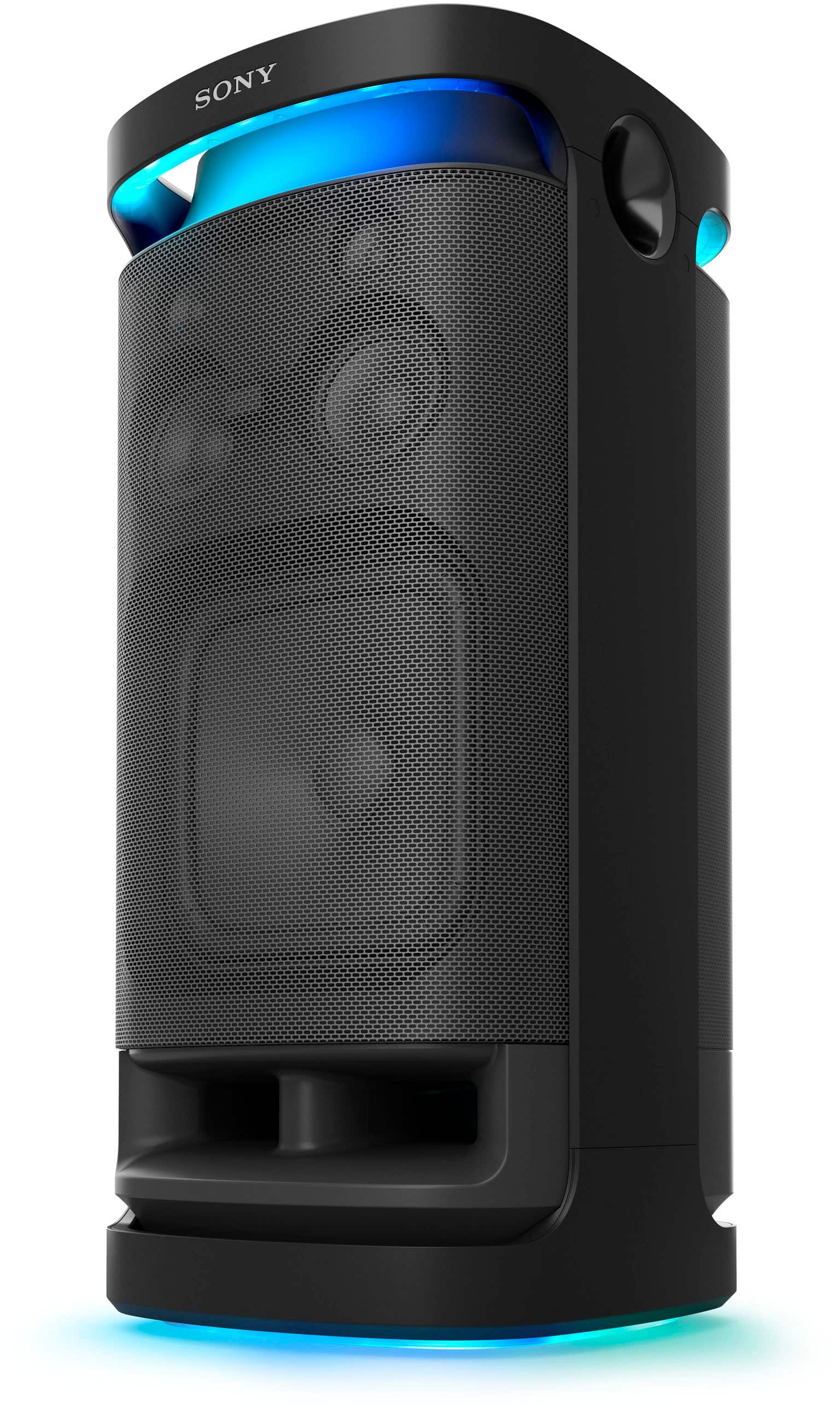
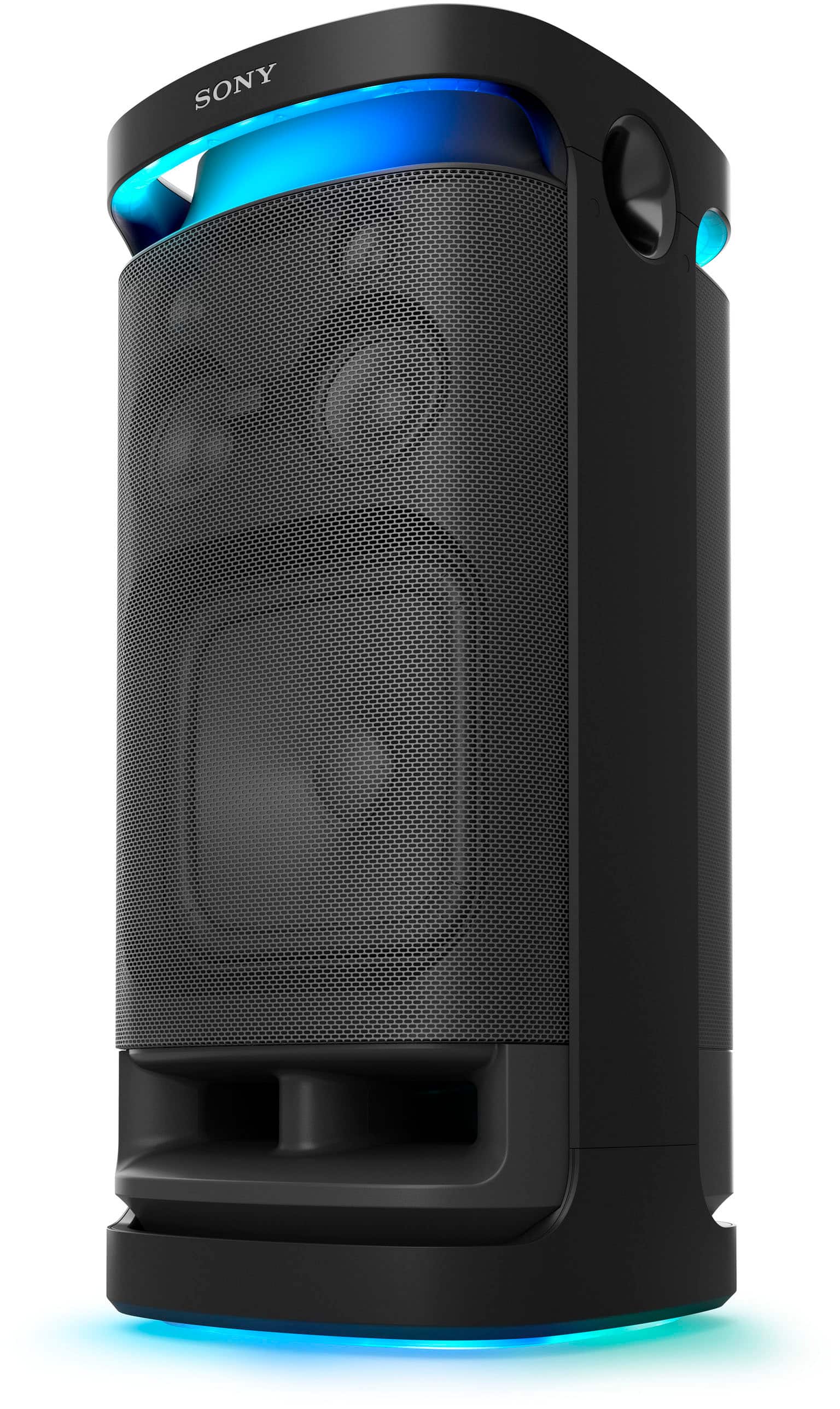
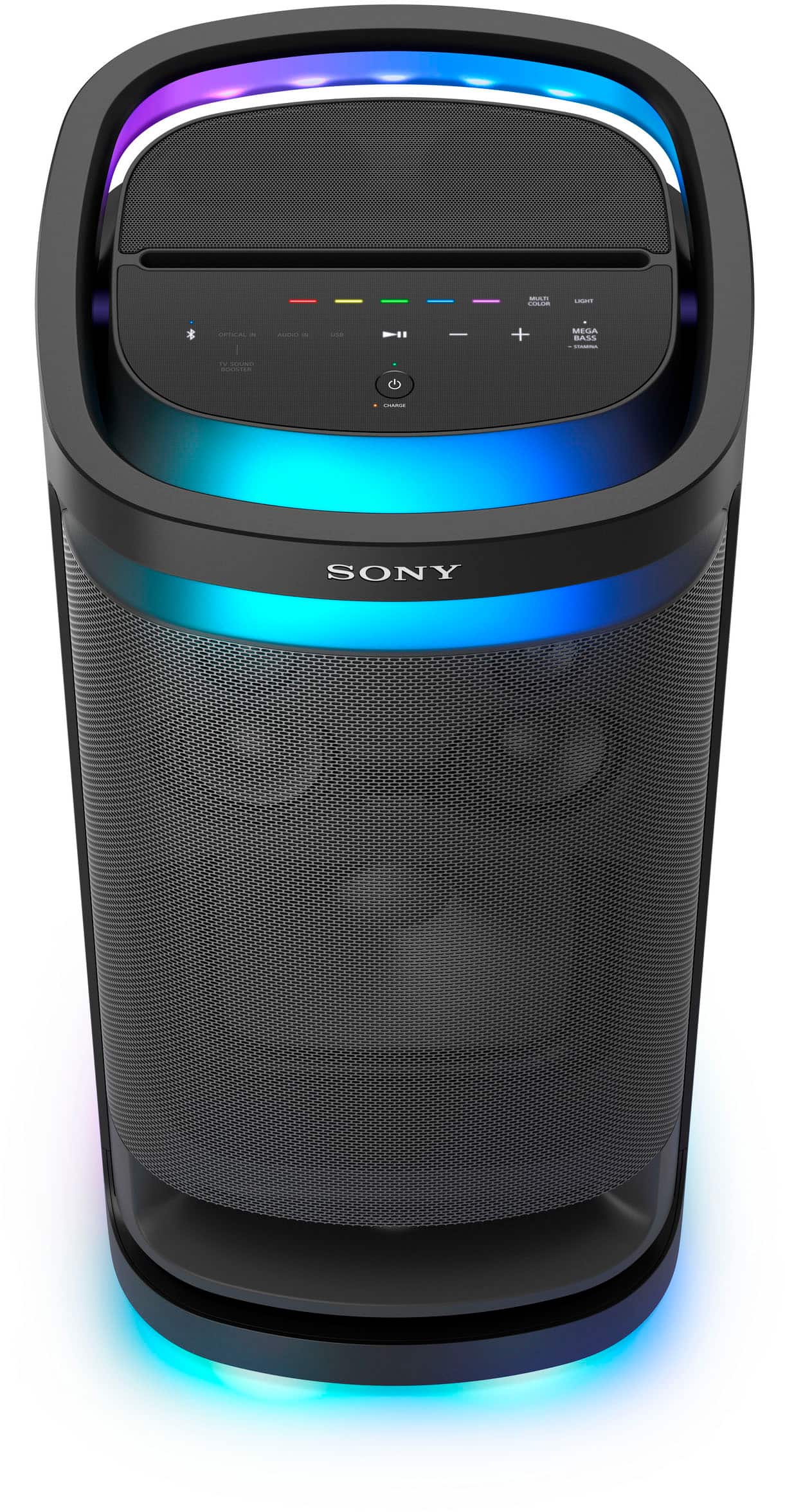
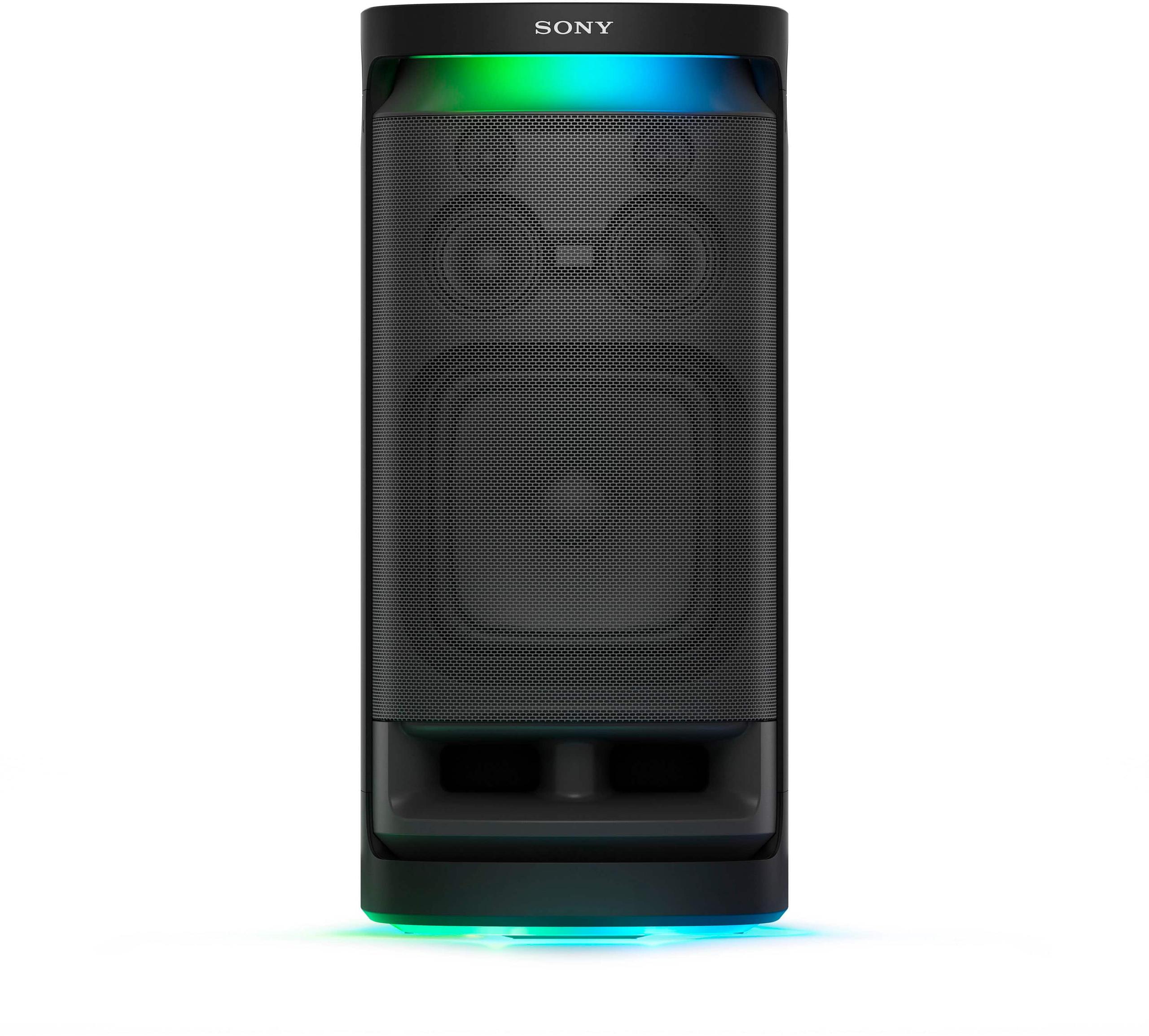
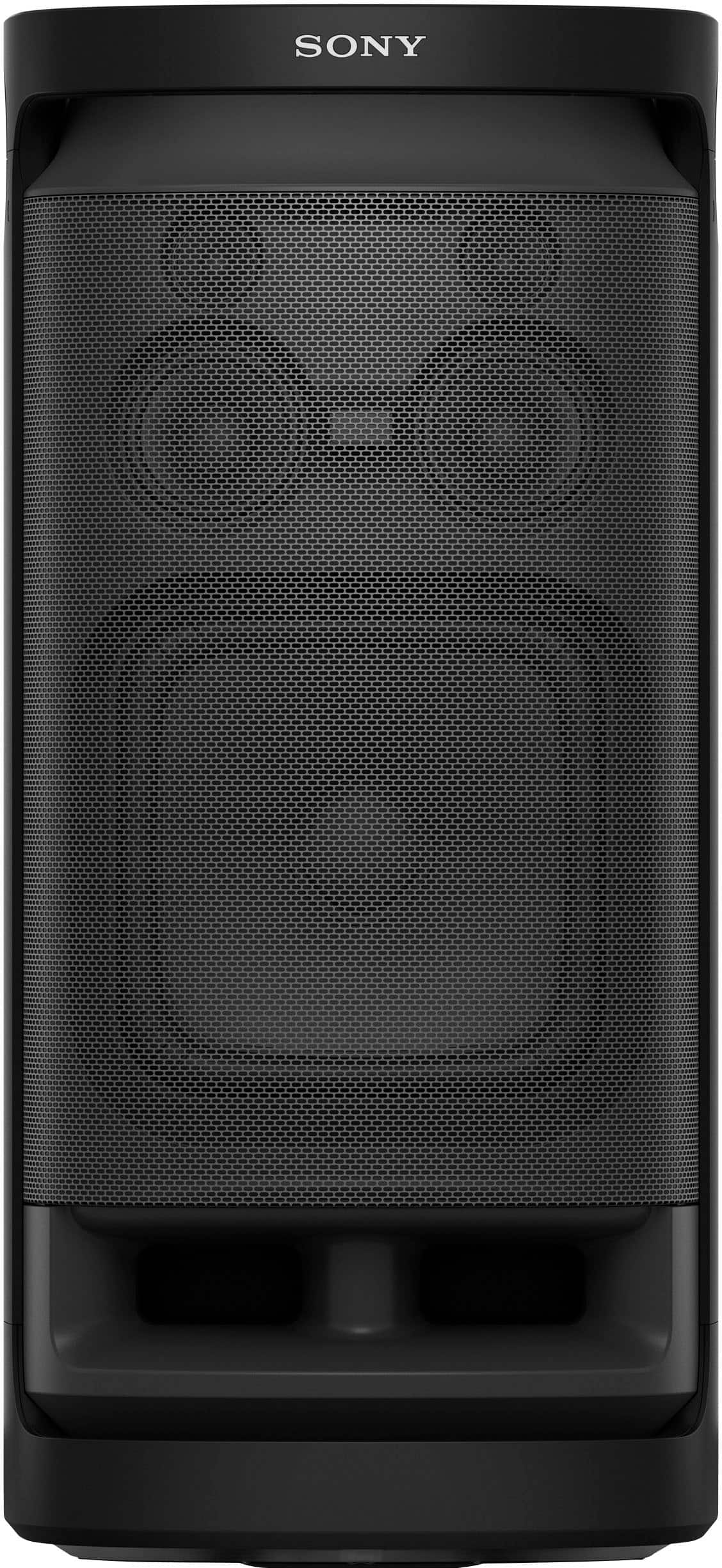
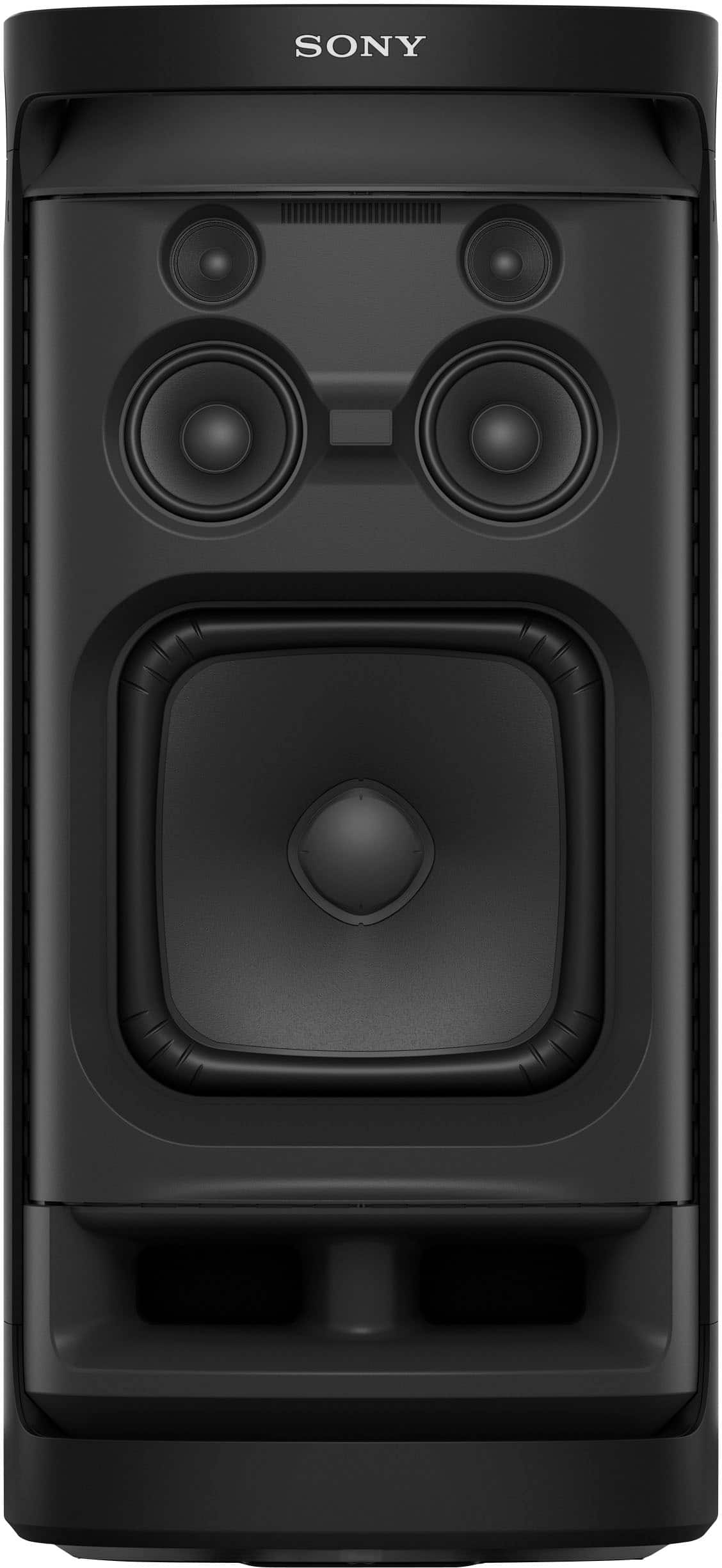
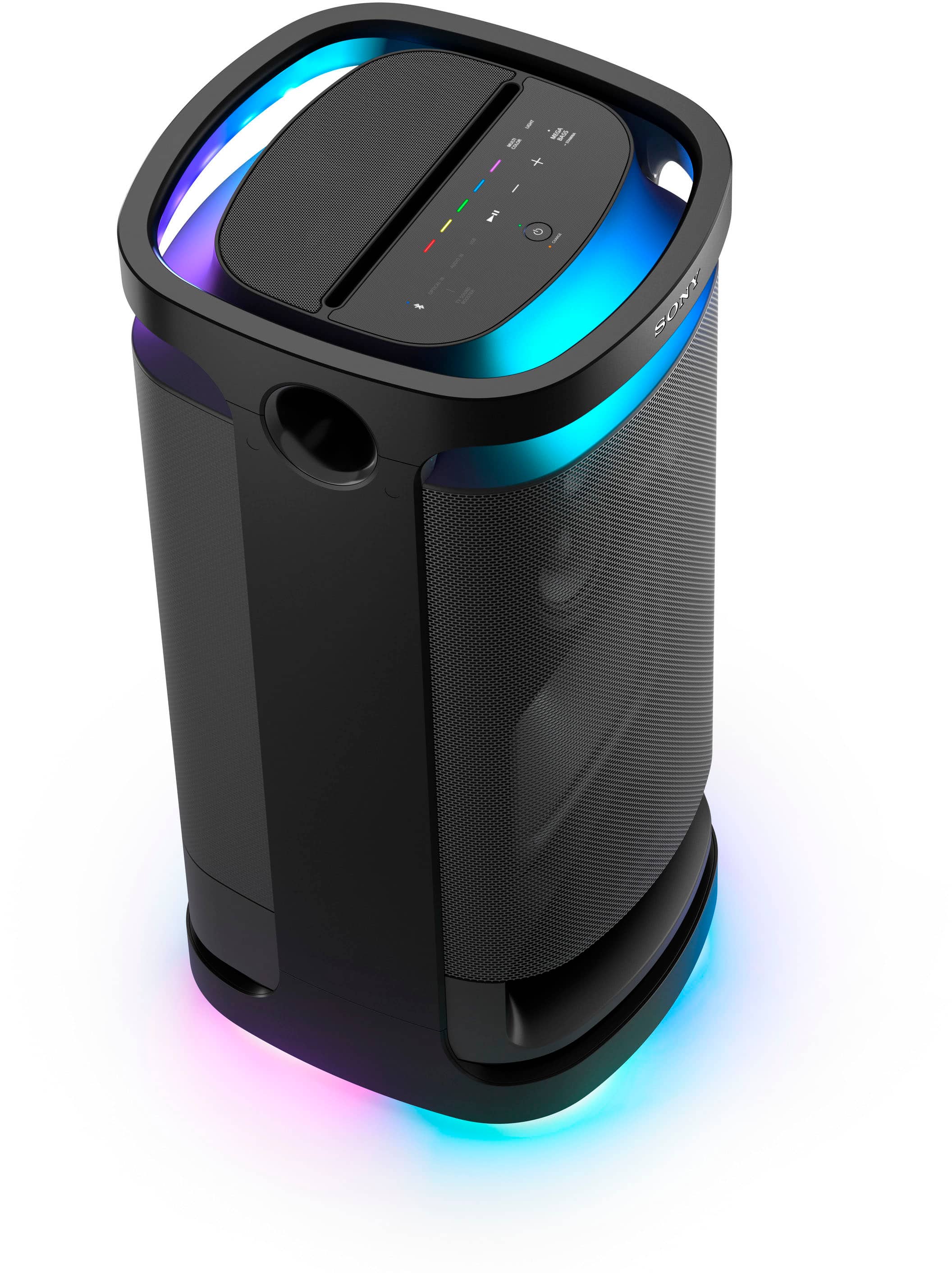
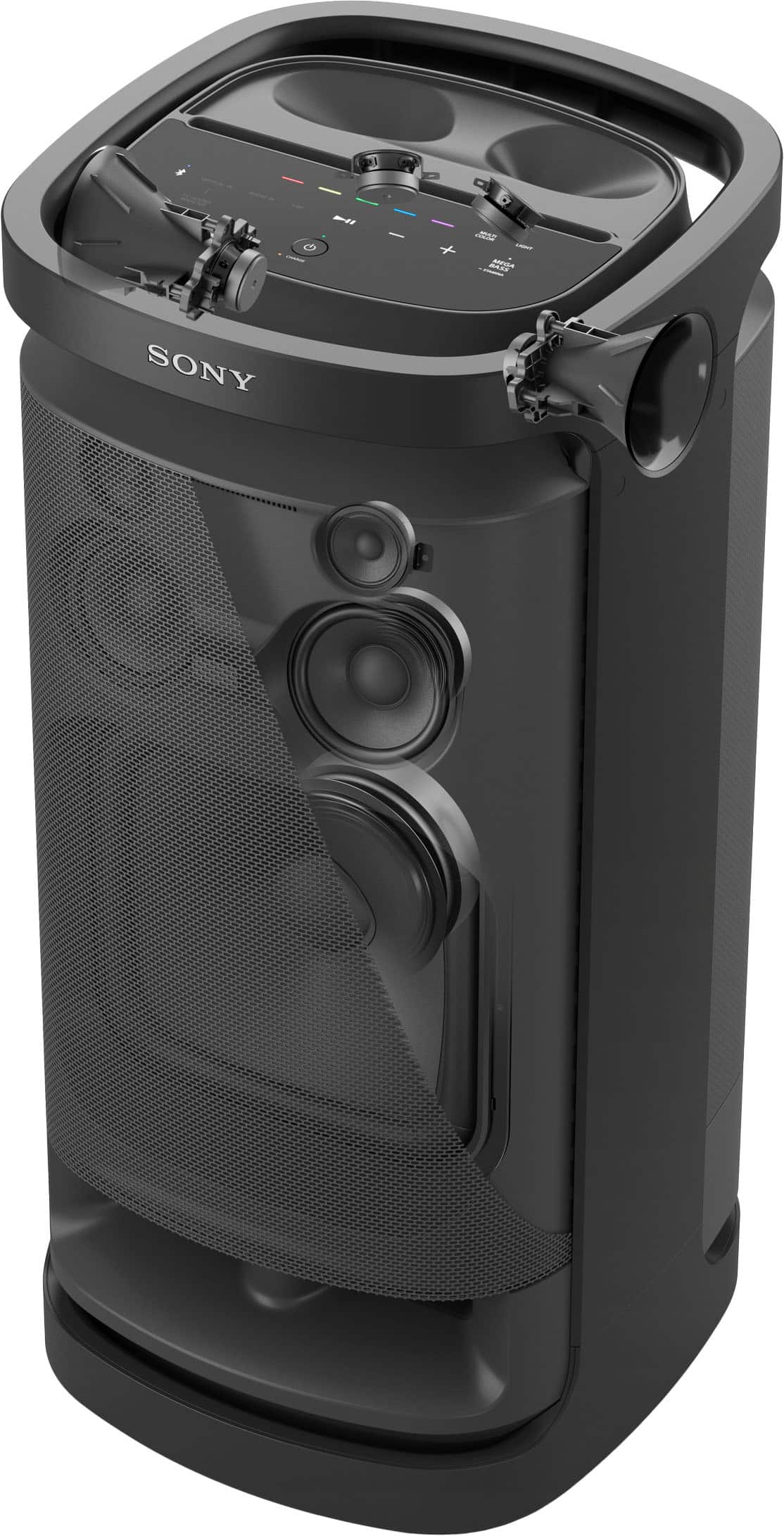
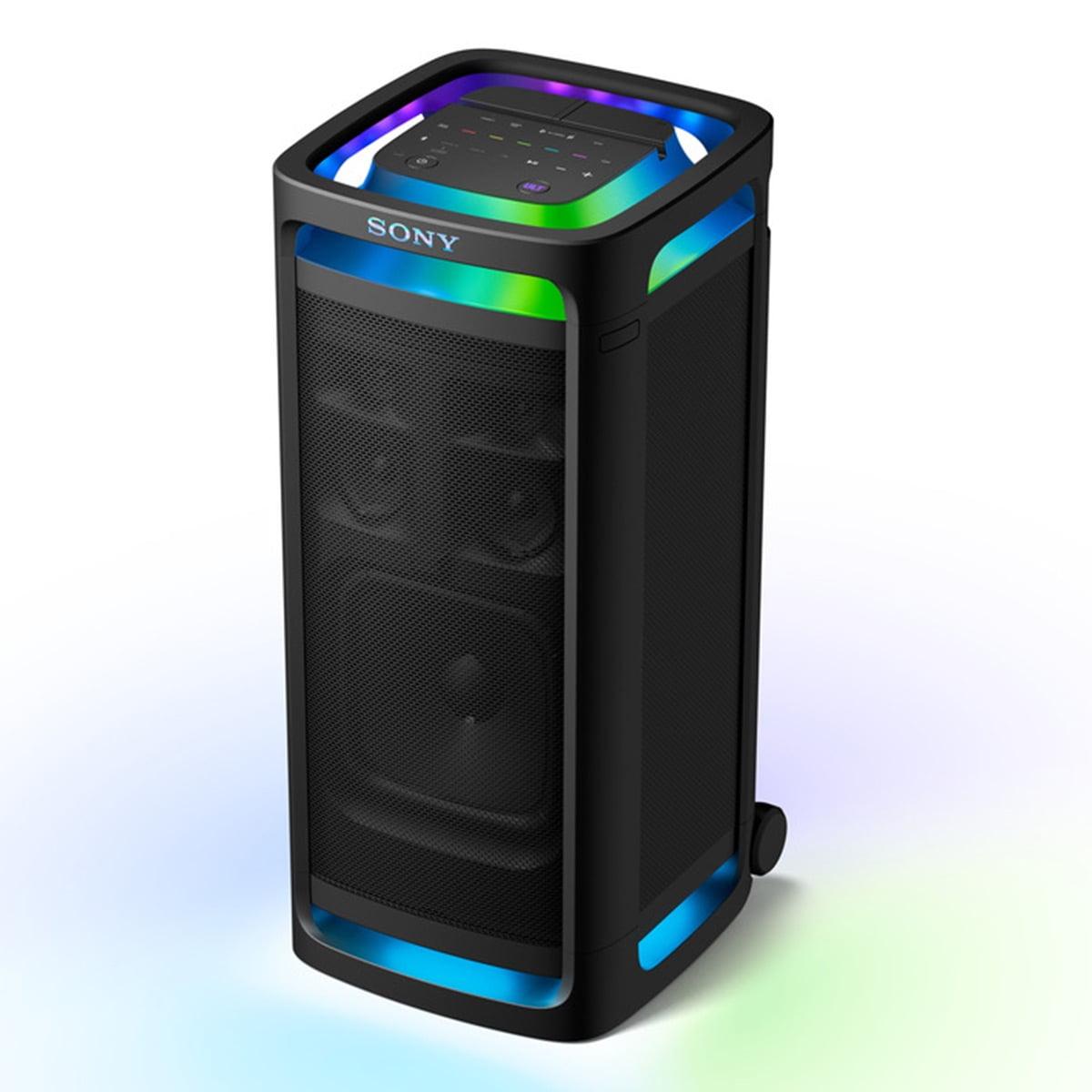
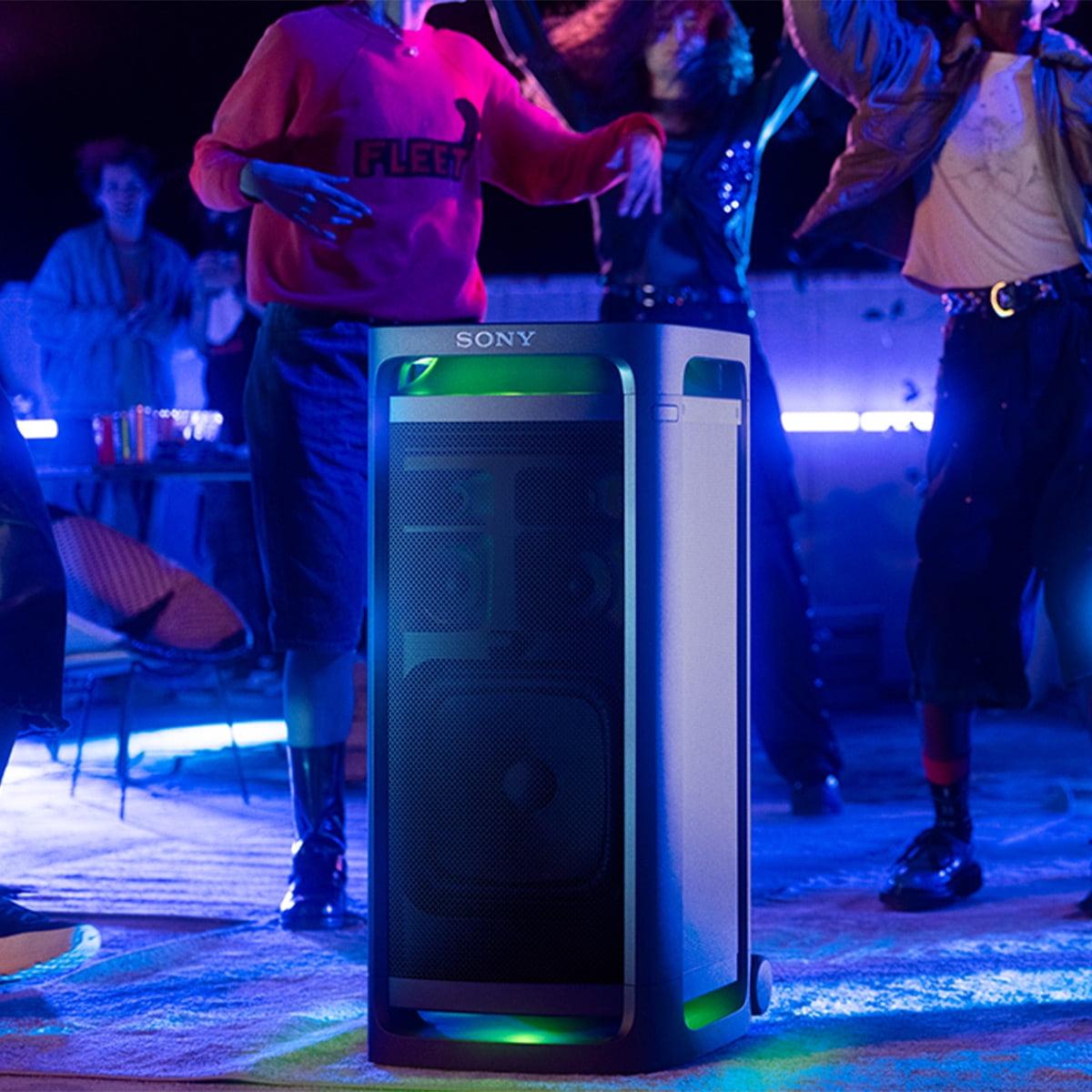
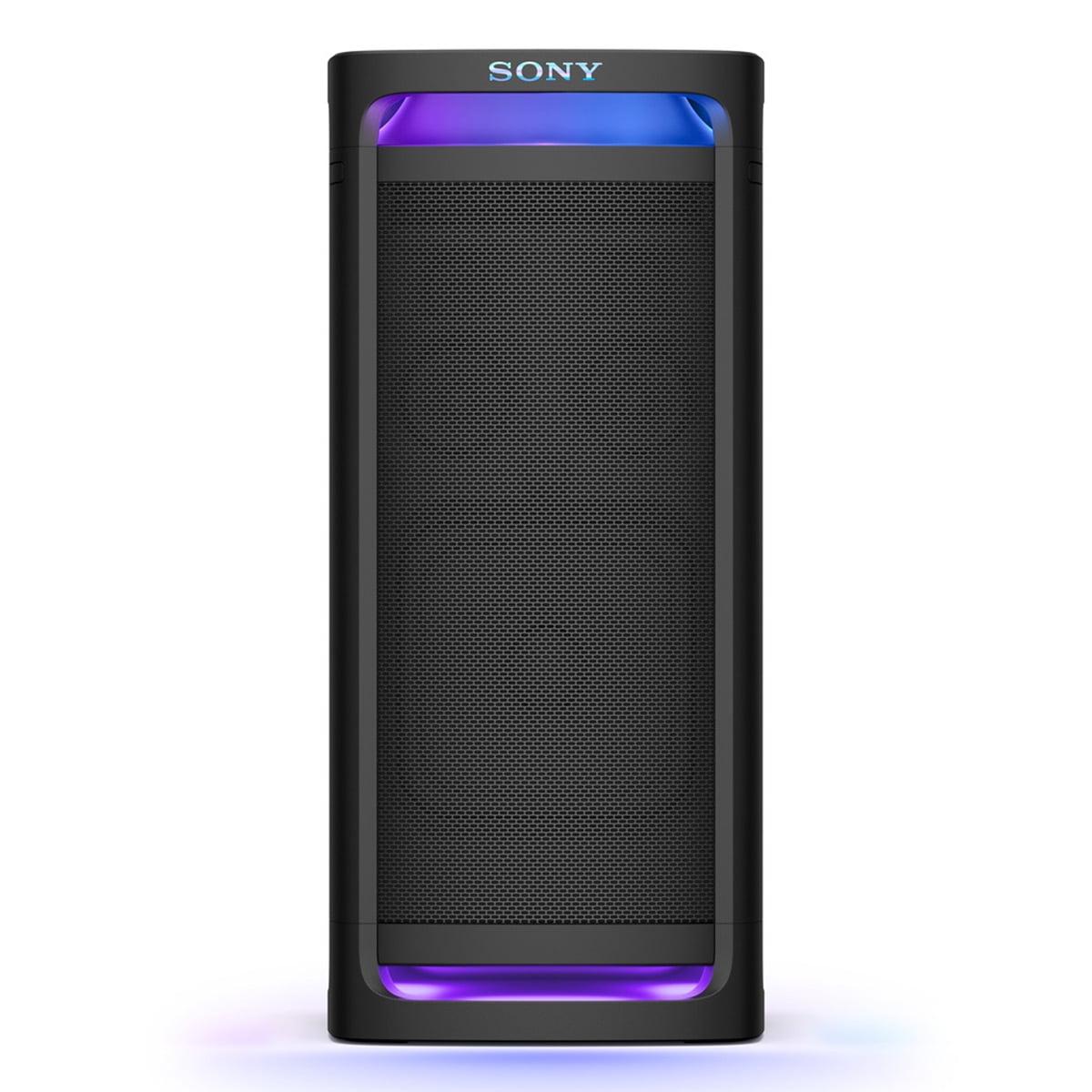
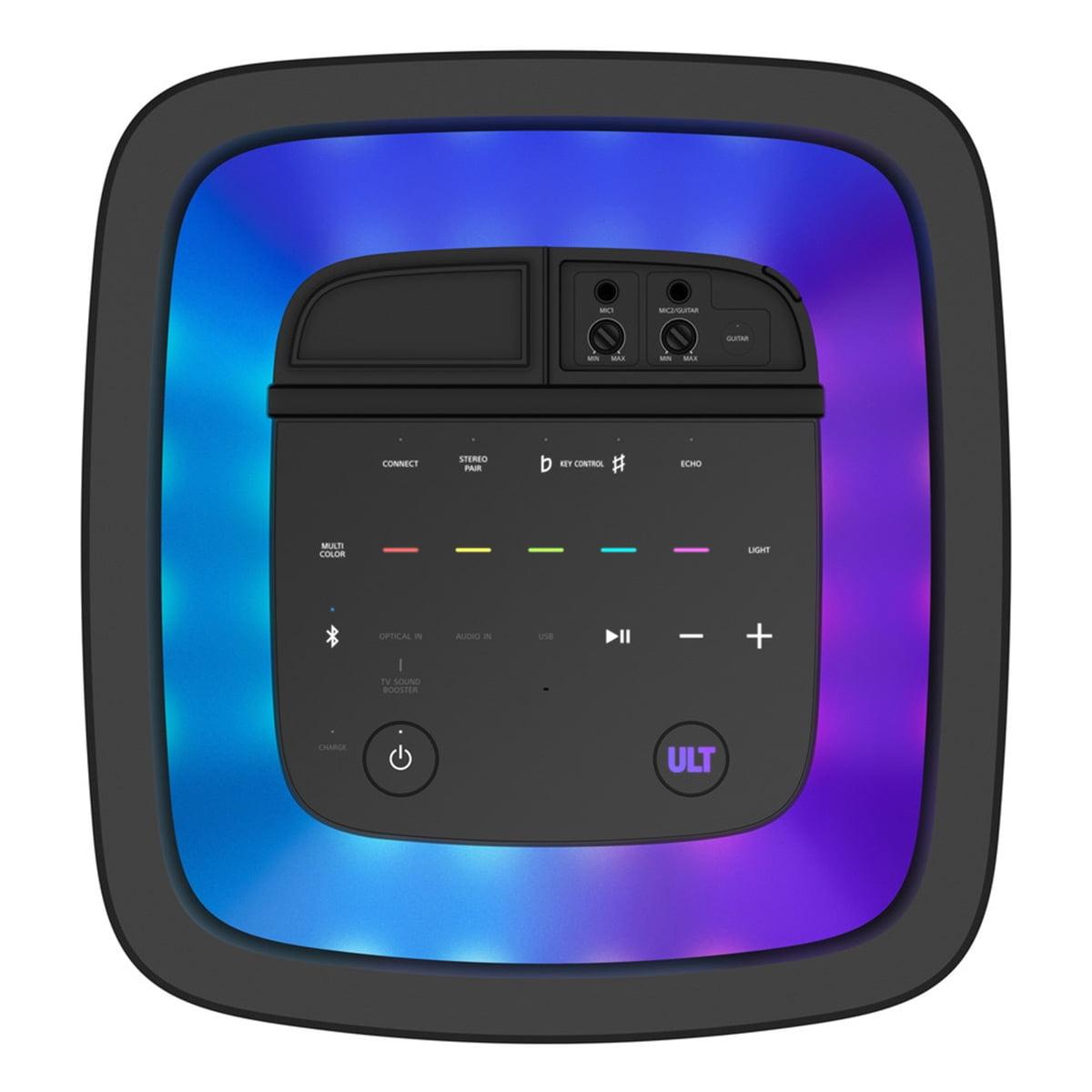
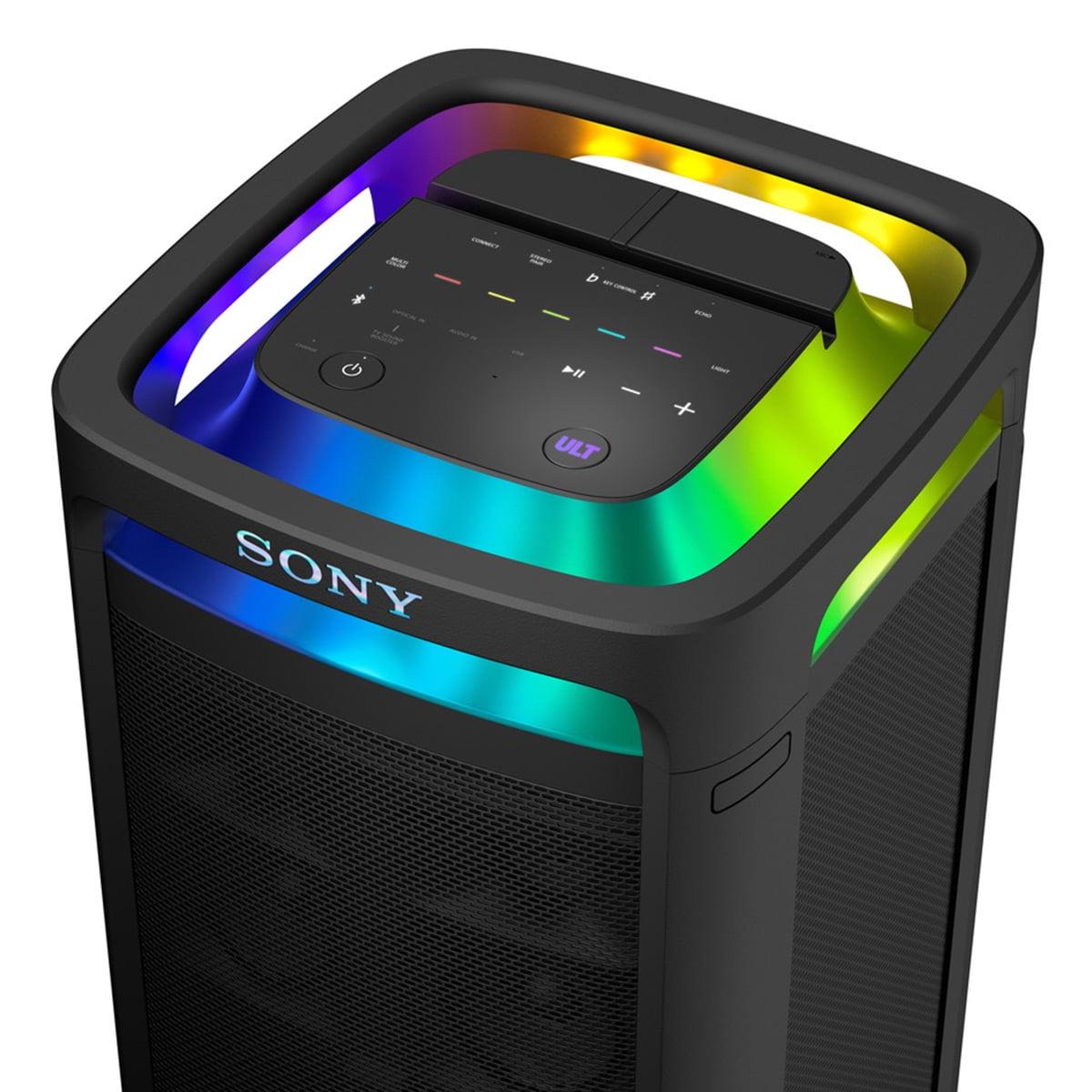
When Sony released the SRS-XV900 in 2022, it represented the pinnacle of portable party audio—a massive speaker that could pump out room-filling sound for 25 hours straight without needing a wall outlet. Fast-forward to 2025, and Sony has taken a different approach with the ULT Tower 9AC, prioritizing the latest audio technology over battery operation. This creates an interesting dilemma: do you want true portability or the newest sound innovations?
Before diving into the comparison, it's worth understanding what separates party speakers from regular Bluetooth speakers. These aren't your typical bookshelf companions—they're designed to fill large spaces with sound that can compete with ambient noise from conversations, laughter, and general party chaos.
The most critical performance metric is sound pressure level, measured in decibels (dB). To put this in perspective, normal conversation sits around 60 dB, while a rock concert hits about 115 dB. Party speakers typically aim for 100+ dB to ensure music remains clear and impactful even with dozens of people talking nearby.
Bass response matters enormously in this category. The frequency response specification tells you how low the speaker can go—the lower the number, the deeper the bass. Most people can hear down to about 20 Hz, which produces that chest-thumping sensation you feel at concerts. Many party speakers struggle to reproduce these deep frequencies convincingly, often resulting in muddy or boomy sound rather than clean, powerful bass.
Driver configuration also plays a huge role. These speakers use multiple drivers (individual speaker units) to handle different frequency ranges. Tweeters handle high frequencies like cymbals and vocals, midrange drivers cover guitars and most vocals, while woofers tackle the bass. The size and arrangement of these drivers directly impacts how the speaker sounds and how well it fills a space.
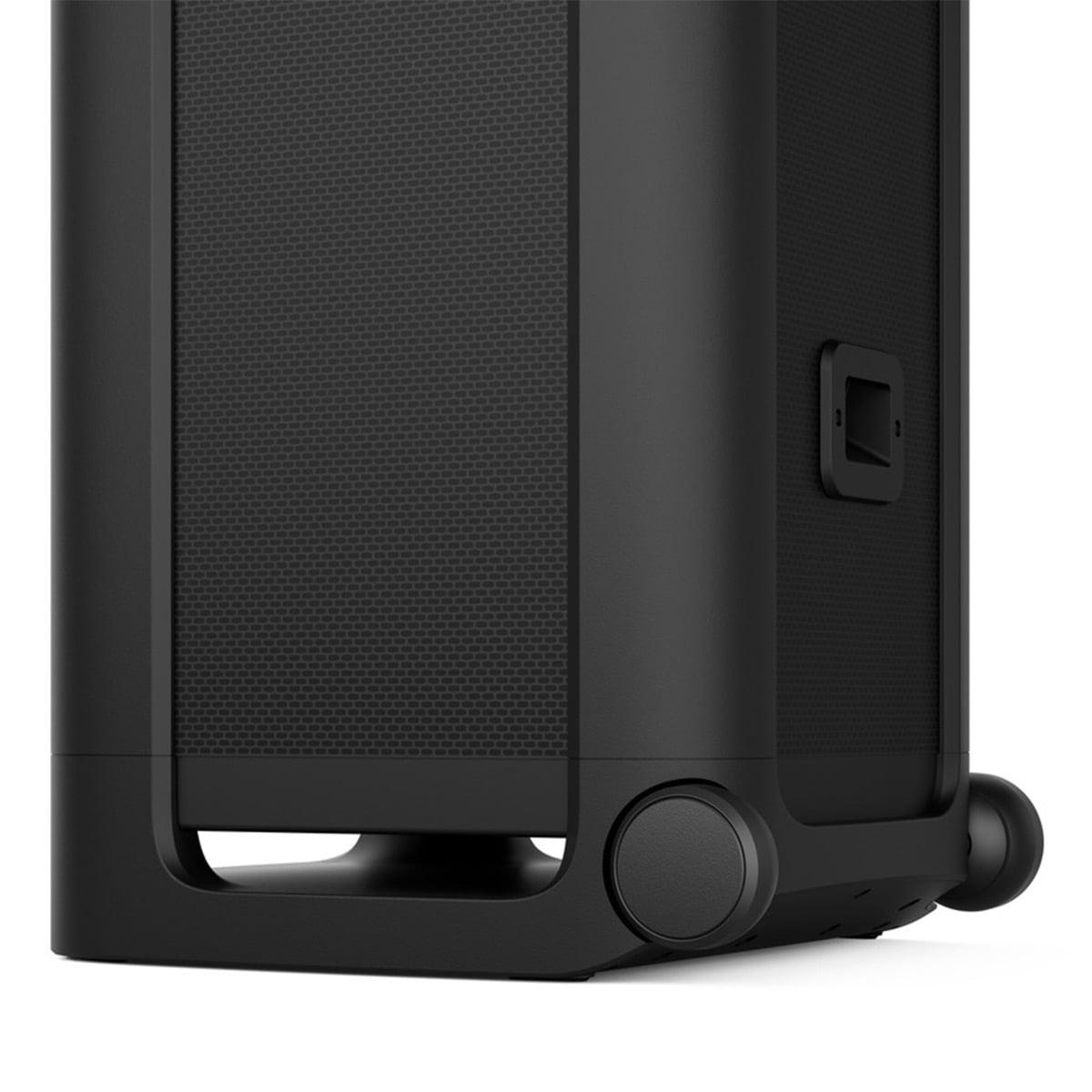
The SRS-XV900 emerged in 2022 as Sony's answer to the growing demand for truly portable party audio. At the time, most high-powered speakers were either too heavy to move easily or lacked sufficient battery life for all-day events. Sony packed a massive 25-hour battery into a speaker that, while hefty at nearly 59 pounds, could still be rolled around thanks to built-in wheels.
By 2025, when Sony launched the ULT Tower 9AC, the market had evolved. Home entertainment systems were becoming more sophisticated, and many users wanted speakers that could double as high-end home audio components. Sony's response was to ditch the battery entirely, focusing instead on delivering cutting-edge audio technology at a more accessible price point.
This philosophical shift reflects broader changes in how people use party speakers. The pandemic years saw many gatherings move indoors, and streaming services became the primary music source. Sony recognized that many users valued technological advancement over absolute portability.
The most immediately noticeable difference between these speakers is sheer volume capability. The ULT Tower 9AC delivers 107.5 dB compared to the XV900's 103.3 dB. That 4.2 dB difference might seem small, but decibels work on a logarithmic scale—this represents roughly 2.6 times more acoustic power. In practical terms, the ULT Tower can play noticeably louder before distortion creeps in.
However, maximum volume only tells part of the story. Dynamic range—the difference between the softest and loudest sounds a speaker can reproduce—matters just as much. Both speakers excel here, maintaining clarity even when pushed to their limits. Based on expert reviews and user feedback, neither speaker exhibits the harsh distortion that plagues many party speakers when cranked up.
This is where things get interesting. The SRS-XV900 actually measures higher in raw bass output during testing, hitting 99.5 dB compared to the ULT Tower 9AC's 92.6 dB. But raw numbers don't tell the complete story.
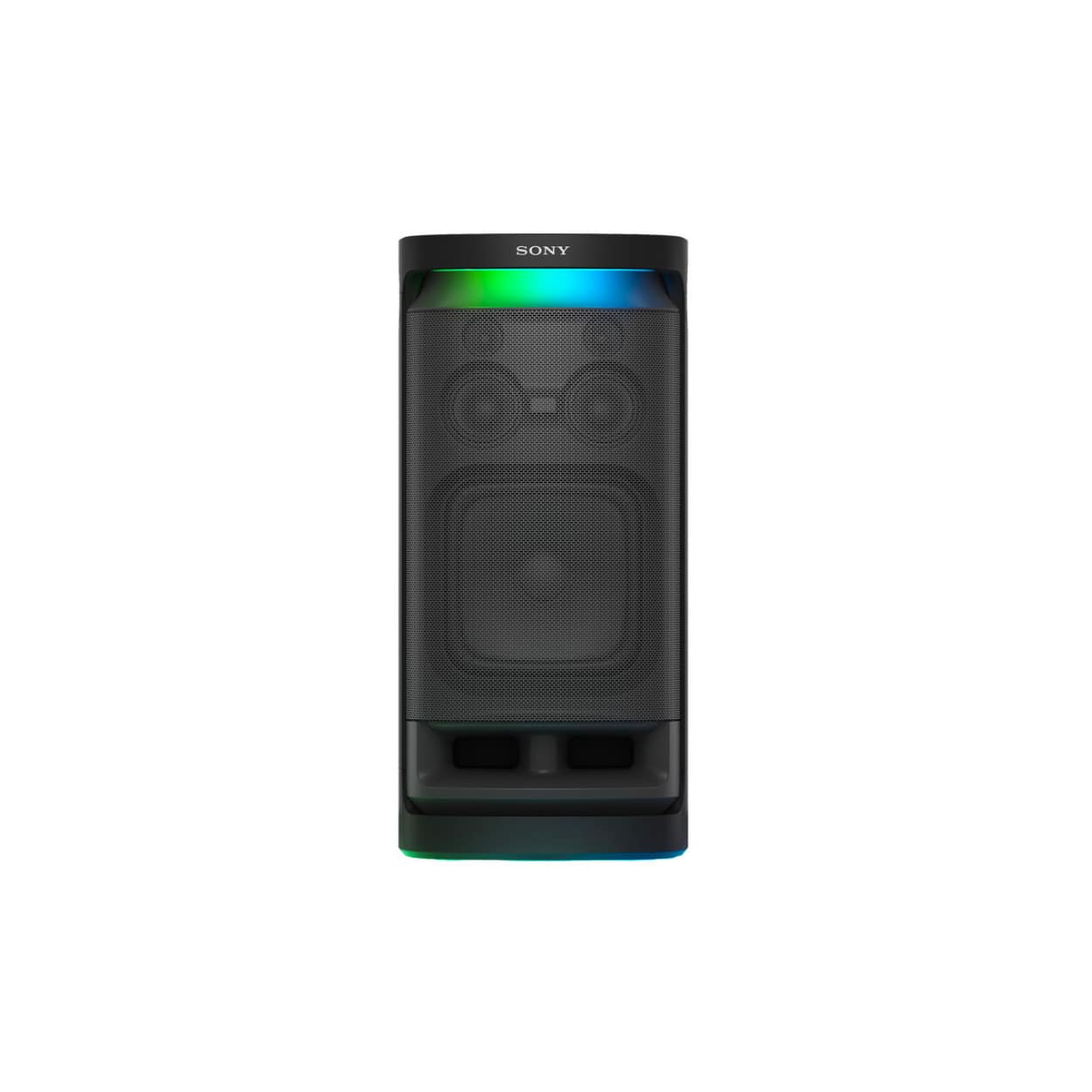
The XV900 uses a traditional 12.5-inch round woofer with Sony's MegaBass technology. This delivers consistently powerful bass that many users describe as "chest-thumping" and "room-filling." The bass has a somewhat traditional tuning that works well across most music genres without sounding overly boomy.
The ULT Tower 9AC takes a different approach with its square 12.6-inch X-Balanced woofer. This unusual square diaphragm increases surface area compared to a round driver of similar size, theoretically allowing for more air movement and better bass response. More importantly, Sony included three distinct ULT modes that fundamentally change the bass character.
ULT1 emphasizes deeper, sub-bass frequencies—the kind you feel more than hear. ULT2 focuses on mid-bass punch that makes drums and bass guitars jump out of the mix. Having these options means you can tailor the sound to different music styles. Electronic dance music benefits from ULT1's deep rumble, while rock and hip-hop often shine with ULT2's punchier approach.
Based on user reviews, many prefer the ULT Tower 9AC's bass customization over the XV900's fixed tuning, even though the XV900 might measure higher in basic tests. The ability to adjust bass response to match your music and mood proves more valuable than raw output numbers.
Here's where the three-year technology gap becomes most apparent. The SRS-XV900 offers a respectable 3-band equalizer through Sony's Music Center app, allowing basic adjustments to bass, midrange, and treble. While functional, this provides limited control over the overall sound signature.
The ULT Tower 9AC includes a sophisticated 10-band equalizer accessible through Sony's newer Sound Connect app. This level of control approaches what you'd find in professional audio equipment, allowing precise adjustments across the entire frequency spectrum. You can boost vocal presence without affecting bass, tame harsh highs without dulling the overall sound, or create completely custom sound profiles for different music genres.
The ULT Tower also includes Sound Field Optimization, which automatically adjusts the audio based on ambient noise levels. At a quiet gathering, it maintains dynamic range and detail. As the party gets louder, it automatically boosts certain frequencies to ensure music remains clear above the conversation. This smart processing eliminates the need to constantly adjust volume as noise levels change throughout an event.
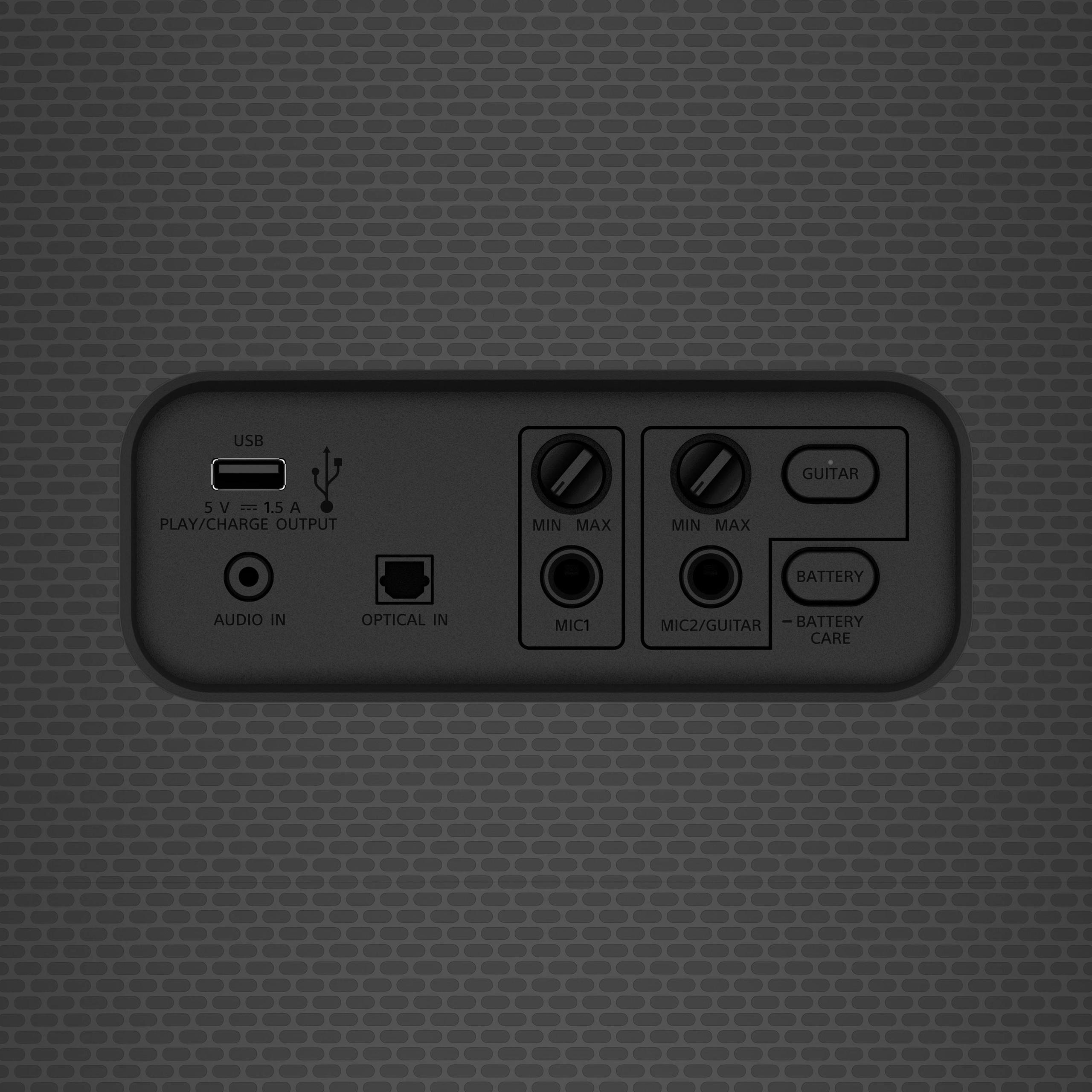
Both speakers offer comprehensive connectivity, but the ULT Tower 9AC includes features that significantly expand its versatility. Most notably, it's one of the few party speakers with an optical digital input. This might seem like a minor technical detail, but it transforms the speaker's utility as a home entertainment component.
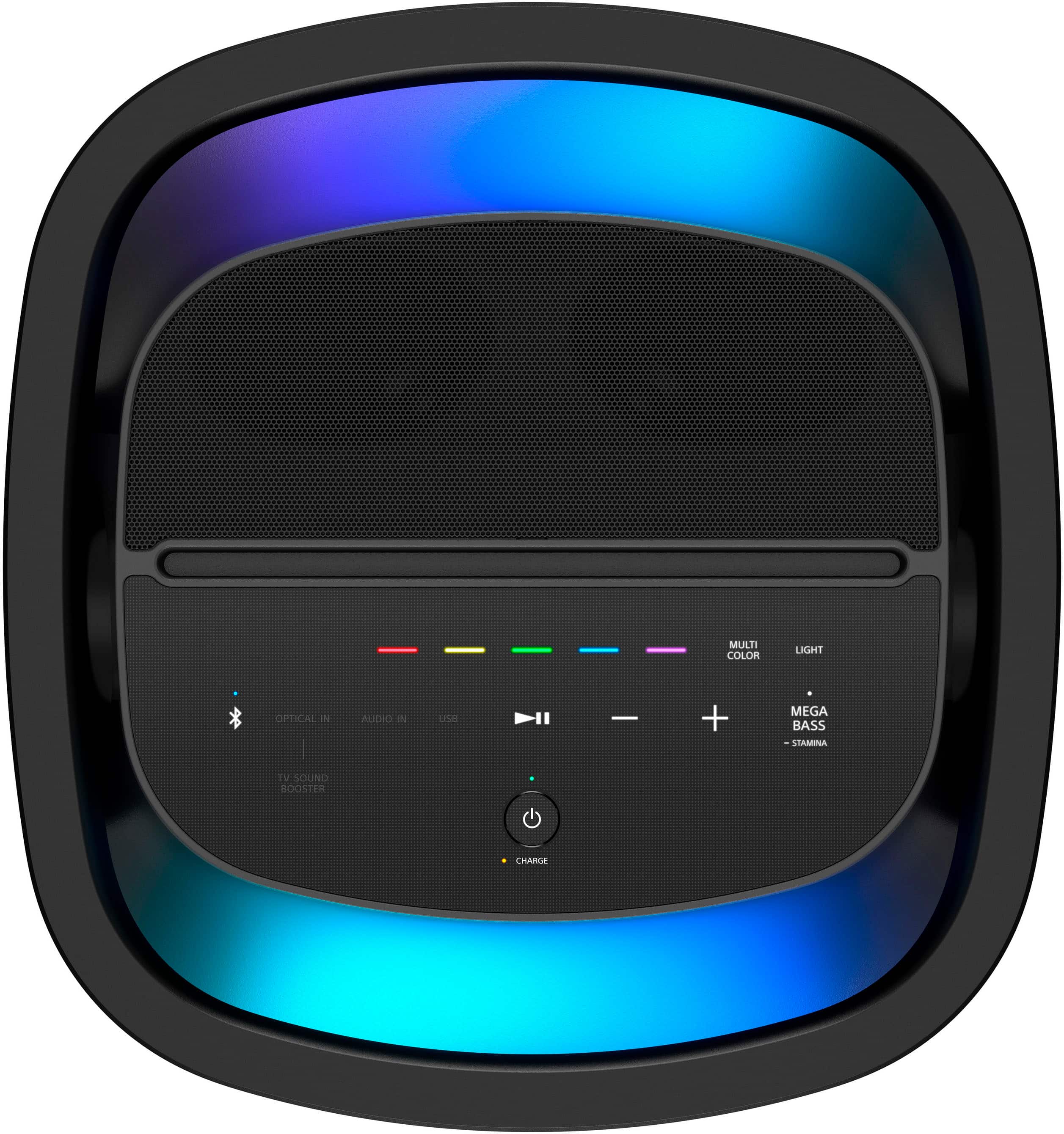
Optical connections carry digital audio signals without the quality loss inherent in analog connections. When connected to a TV, gaming console, or streaming device via optical cable, the ULT Tower 9AC can serve as a high-end soundbar alternative. The dedicated TV Sound Booster mode optimizes the audio specifically for dialog clarity and movie soundtracks.
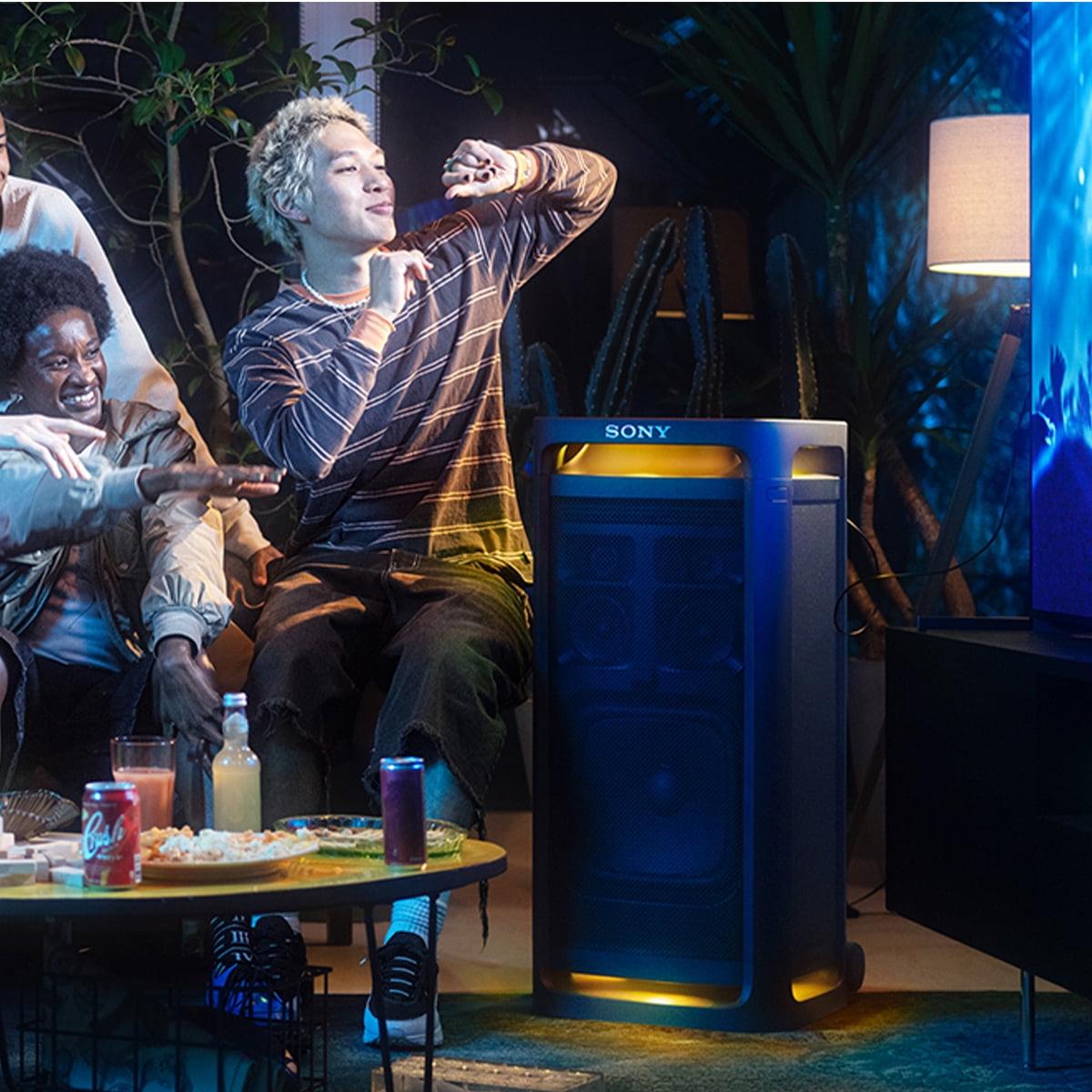
This optical input becomes particularly valuable for home theater use. Many TVs have mediocre built-in speakers, and the ULT Tower 9AC can dramatically improve the viewing experience. The speaker's 360-degree sound dispersion means everyone in the room gets quality audio, not just those sitting directly in front of the TV.
Both speakers support Sony's Party Connect feature, which allows linking up to 100 compatible speakers for massive sound coverage. However, the ULT Tower 9AC includes a dedicated Party Connect button that simplifies the pairing process. This seemingly small improvement makes a significant difference when setting up multiple speakers for large events.
The fundamental decision between these speakers often comes down to power requirements. The SRS-XV900 offers complete freedom from wall outlets, operating for up to 25 hours on a single charge. This isn't just convenience—it's liberating. You can set up anywhere: beaches, parks, camping sites, tailgate parties, or anywhere else that lacks reliable power access.
That 25-hour battery life deserves special mention. Most portable speakers offer 8-12 hours of operation, forcing you to constantly monitor battery levels and find charging opportunities. The XV900's marathon endurance means you can host day-long events without power anxiety. Even heavy use across an entire weekend typically won't exhaust the battery.
The ULT Tower 9AC trades this freedom for consistent performance and advanced features. AC power means no battery degradation over time, no charging interruptions, and no performance reduction as the battery drains. Some battery-powered speakers gradually lose volume and bass impact as their charge depletes, but AC power eliminates this concern entirely.
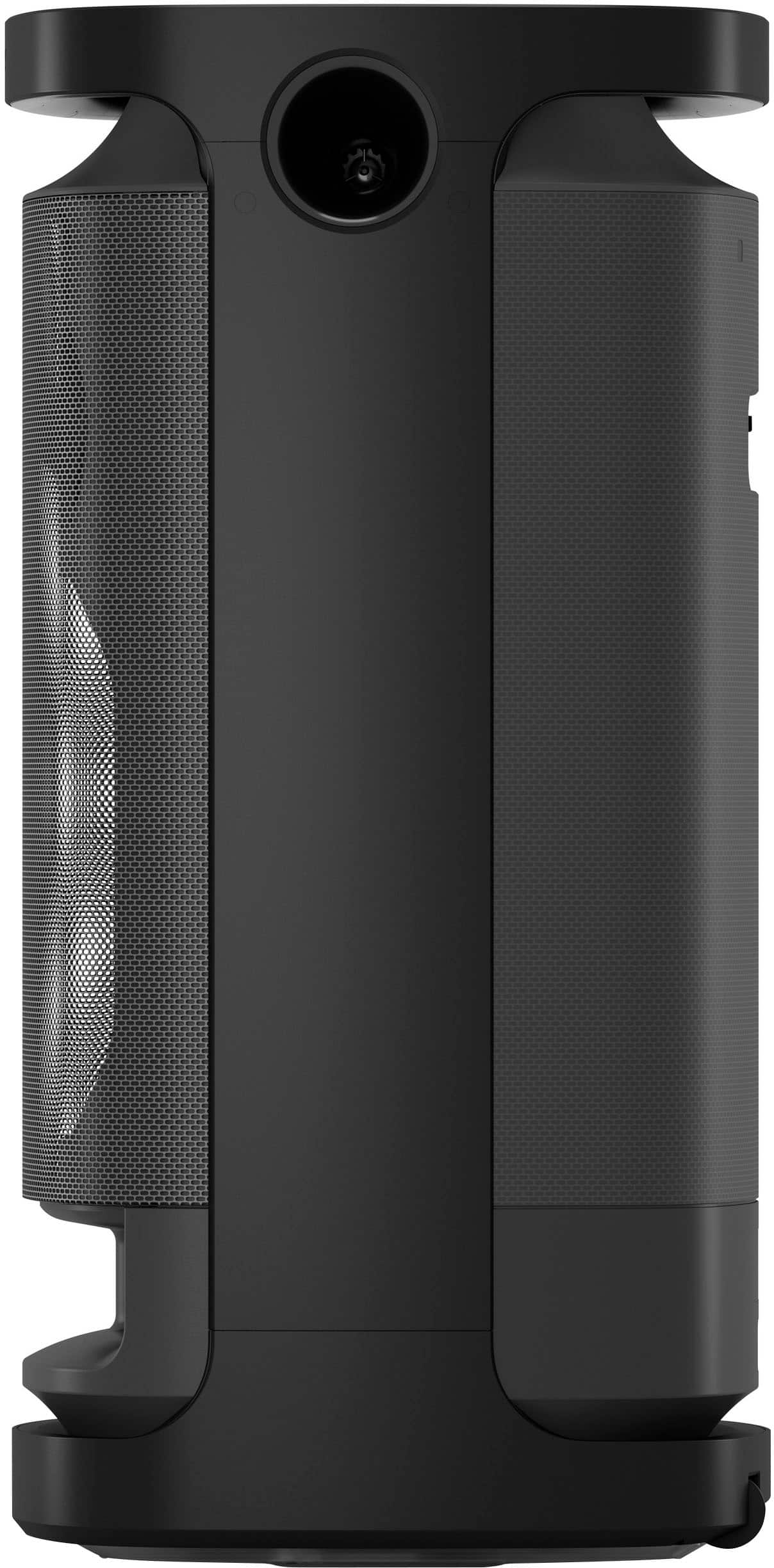
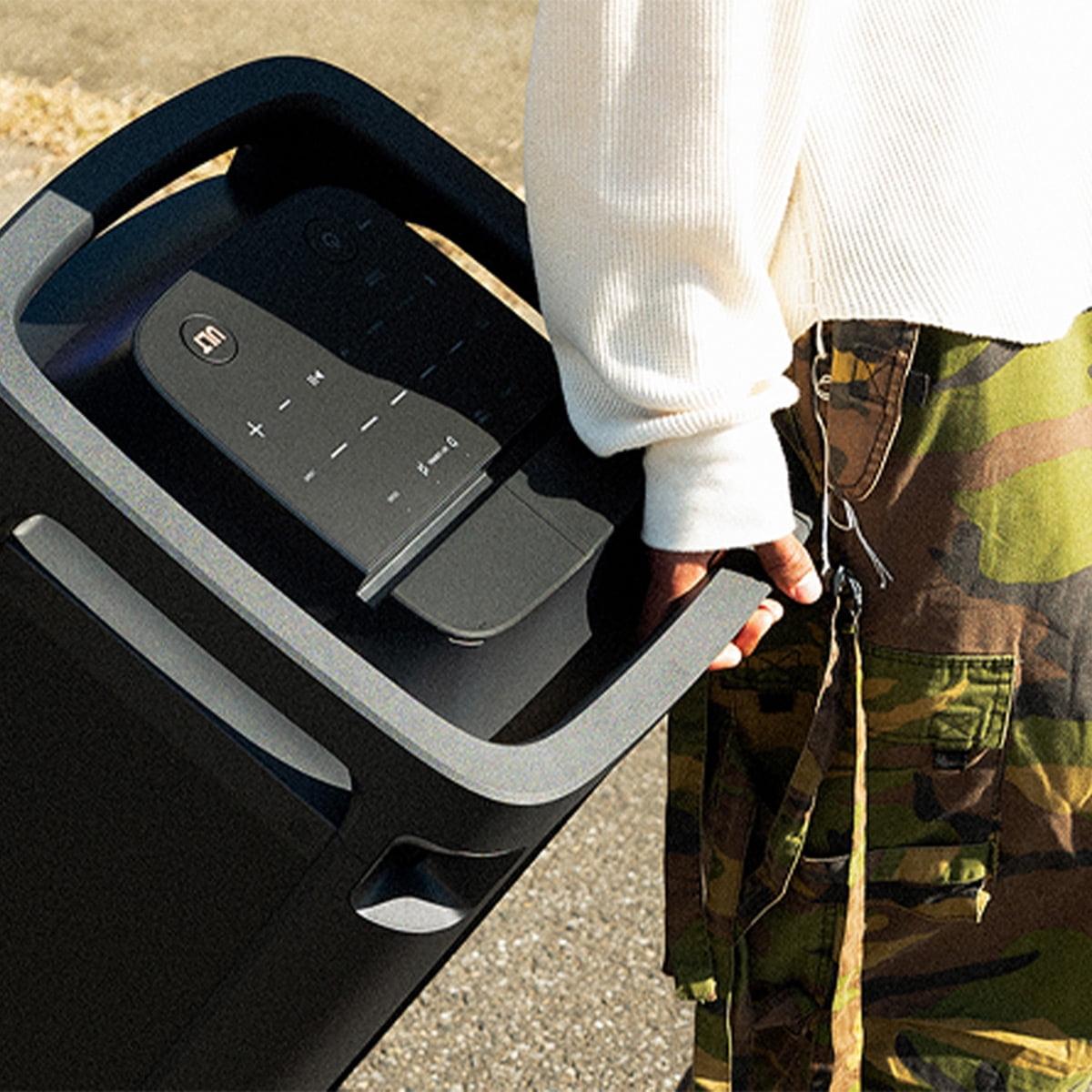
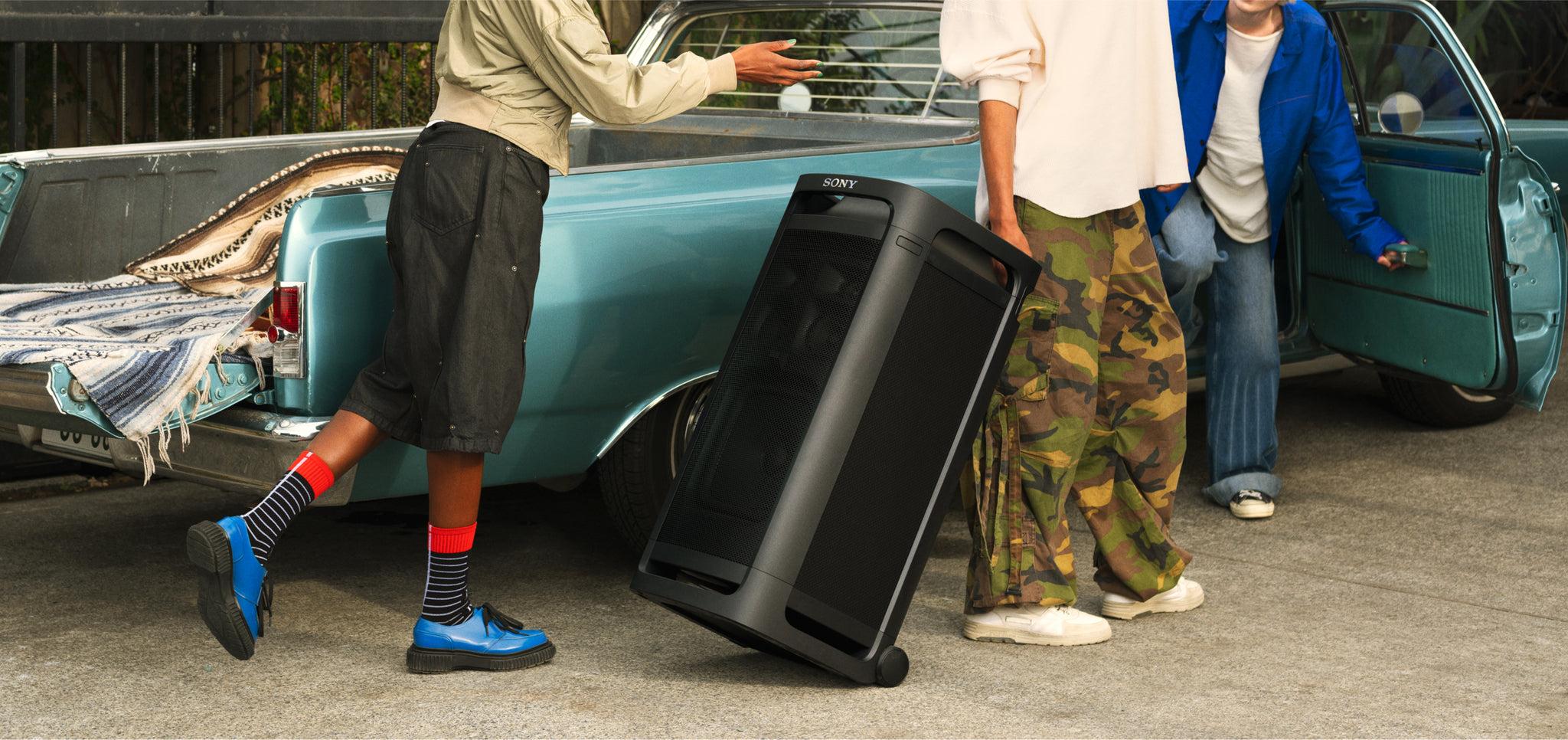
Both speakers include wheels and carry handles, making transport manageable despite their substantial weight. However, the power cord requirement of the ULT Tower 9AC fundamentally limits where you can use it. This isn't necessarily a dealbreaker—many users primarily host indoor parties or have access to outdoor power outlets—but it's a crucial consideration for your specific needs.
At the time of writing, the ULT Tower 9AC costs significantly less than the SRS-XV900, despite offering newer technology and superior customization. This price difference primarily reflects the cost savings from eliminating the large battery pack and associated charging circuitry.
From a pure performance perspective, the ULT Tower 9AC offers better value. You get higher maximum volume, more sophisticated audio processing, better connectivity options, and advanced lighting effects for less money. The 10-band equalizer alone provides functionality that would cost hundreds of dollars in separate audio equipment.
However, value calculations must include your specific usage patterns. If you regularly need portable operation, the SRS-XV900's battery capability has inherent value that can't be measured purely in dollars. The ability to host outdoor events without power infrastructure might justify the price premium for many users.
Long-term ownership considerations also favor different models depending on your priorities. The XV900's battery will inevitably degrade over 3-5 years, potentially requiring expensive replacement or accepting reduced runtime. The ULT Tower 9AC avoids this issue entirely, potentially offering better long-term value for users with reliable power access.
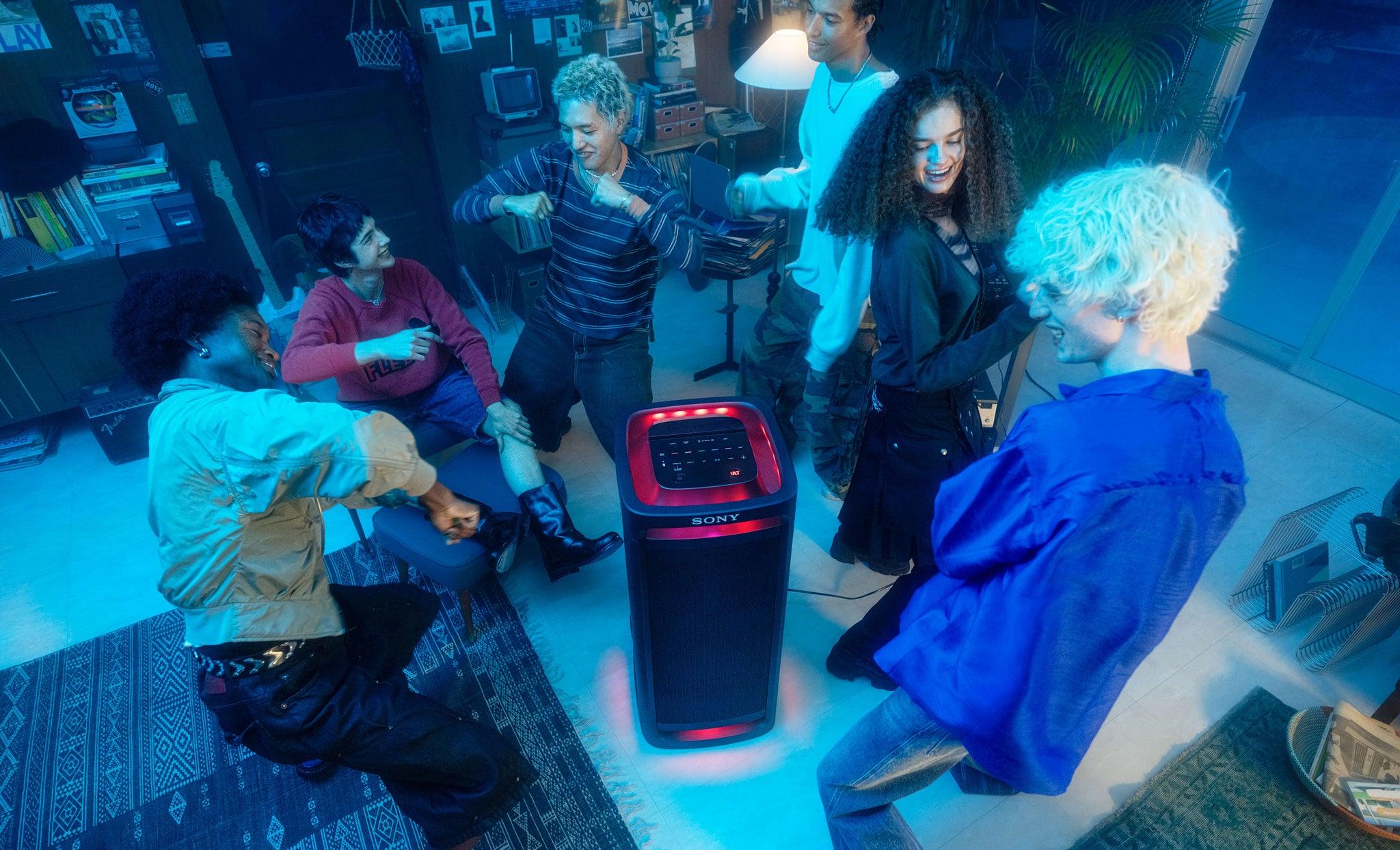
Both speakers excel at creating party atmospheres, but through different approaches. The ULT Tower 9AC includes 23 LED modules compared to the XV900's 15, creating more dynamic and immersive lighting effects. The lights synchronize with music beats and can be customized through the app, adding visual excitement that enhances the audio experience.
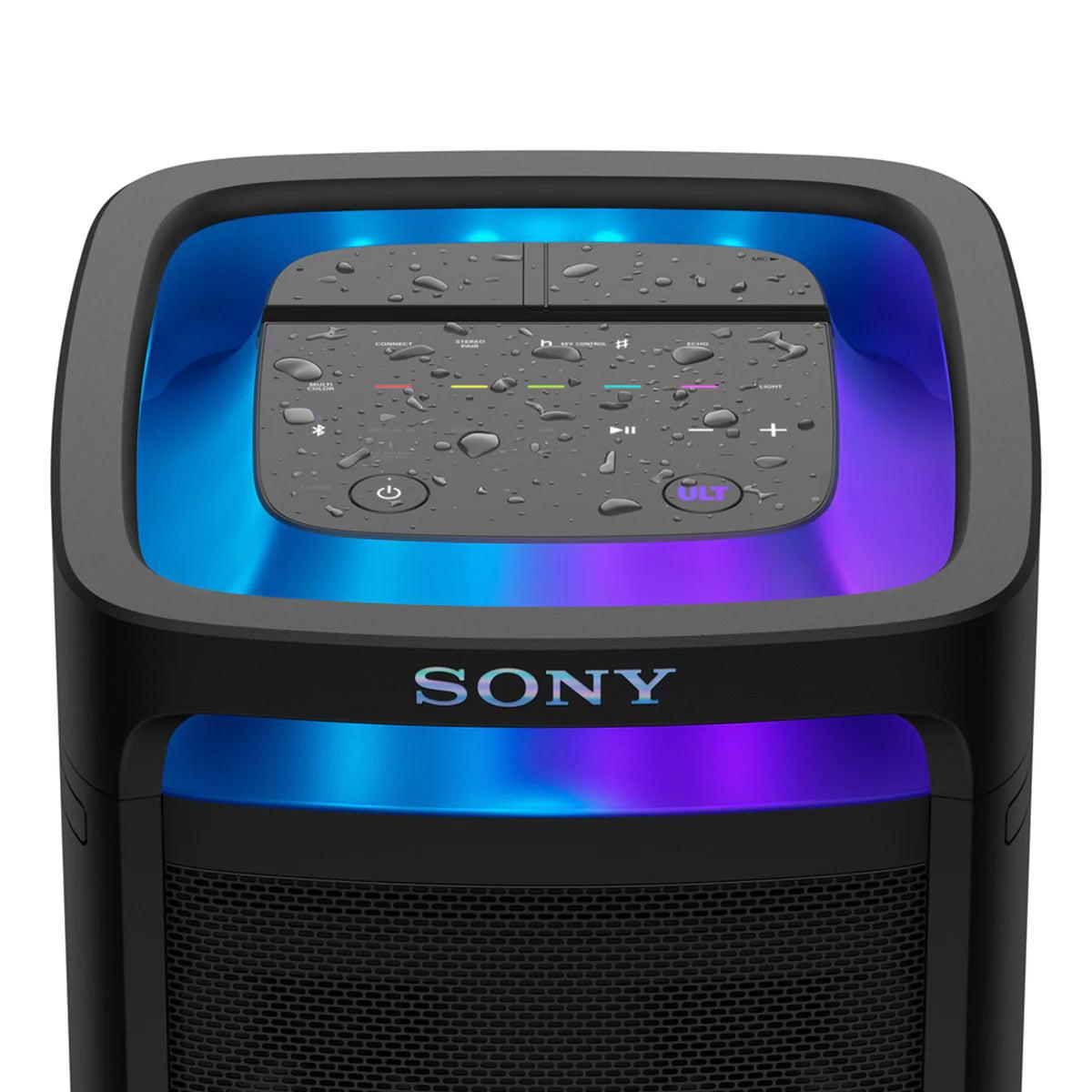
Karaoke capabilities favor the ULT Tower 9AC as well. Both speakers include dual microphone inputs and guitar connectivity, but the newer model adds Key Control for pitch adjustment, dedicated echo controls, and fold-out microphone holders. These features transform it into a more professional karaoke system rather than just a speaker with microphone inputs.
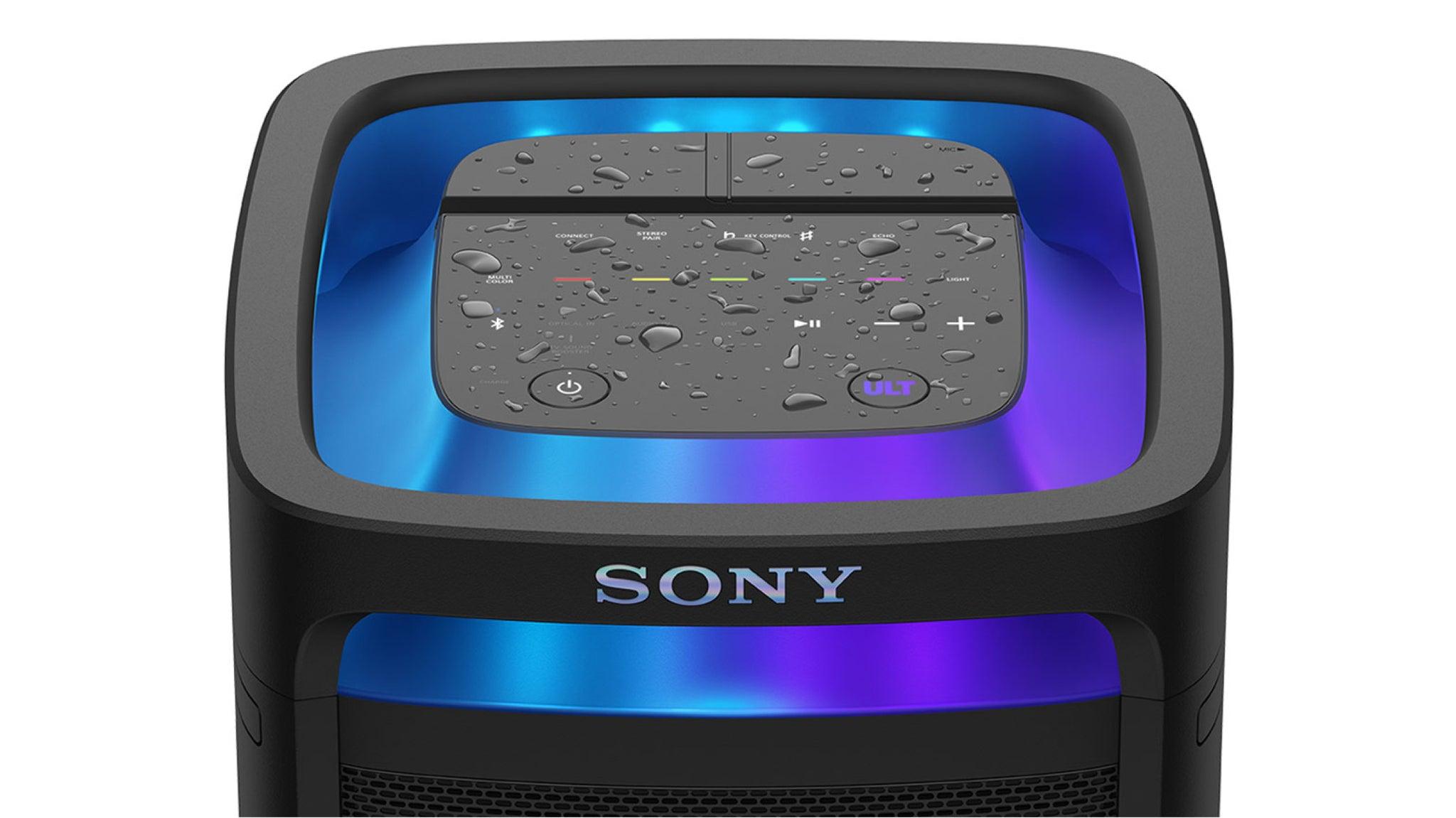
The ULT Tower 9AC also includes proximity sensors on the control panel that illuminate buttons when you approach in dark environments. This might seem like a minor detail, but it significantly improves usability during evening parties when traditional button labels become difficult to read.
While both speakers are designed primarily for parties, the ULT Tower 9AC excels as a home theater component in ways that weren't initially obvious. The optical input provides clean digital connection to TVs and streaming devices, while the TV Sound Booster mode optimizes audio specifically for dialog and movie soundtracks.
The speaker's 360-degree sound dispersion means everyone in the room experiences quality audio, unlike traditional soundbars that create a "sweet spot" directly in front of the TV. For users with open floor plans or unconventional seating arrangements, this omnidirectional approach often works better than traditional home theater setups.
The multi-band equalizer allows fine-tuning for different content types. You might boost mid-range frequencies for dialog-heavy shows, emphasize bass for action movies, or create a balanced profile for music streaming. This level of customization approaches what you'd find in dedicated home theater receivers.
The decision ultimately depends on your primary use cases and priorities. Choose the SRS-XV900 if outdoor portability is essential to your lifestyle. Beach parties, camping trips, tailgate gatherings, and any events without reliable power access strongly favor the battery-powered option. The 25-hour runtime provides genuine all-day operation without power anxiety.
The XV900 also makes sense for users who prioritize proven reliability over cutting-edge features. As a 2022 design, it has established a track record for dependable operation, while the newer ULT Tower 9AC hasn't yet proven its long-term reliability.
Choose the ULT Tower 9AC if you primarily host indoor parties or have reliable outdoor power access. The superior volume output, advanced audio customization, and sophisticated lighting effects provide better performance for the money. The optical input and TV Sound Booster mode make it excellent for home theater use, effectively serving dual roles as party speaker and entertainment system upgrade.
The ULT Tower 9AC also suits users who value audio customization and the latest technology. The 10-band equalizer and multiple ULT modes provide control that approaches professional audio equipment, allowing you to fine-tune the sound for different music genres and environments.
Neither speaker represents a clearly superior choice—they're optimized for different priorities. The SRS-XV900 excels at portable entertainment with proven reliability, while the ULT Tower 9AC offers cutting-edge technology and superior value for users with consistent power access.
Based on user reviews and expert evaluations, both speakers deliver exceptional sound quality that justifies their party speaker classification. The choice comes down to whether you value portable freedom or technological advancement more highly. Consider your typical usage scenarios, available power access, and long-term needs to make the decision that best serves your entertainment goals.
For most users hosting primarily indoor gatherings, the ULT Tower 9AC's combination of advanced features, superior performance, and lower price makes it the better choice. However, if outdoor portability matters to your lifestyle, the SRS-XV900's battery operation remains unmatched in this performance category.
| Sony SRS-XV900 | Sony ULT Tower 9AC |
|---|---|
| Power Source - Determines where you can use the speaker | |
| Built-in battery, 25-hour runtime (true portability) | AC-powered only (requires wall outlet) |
| Maximum Volume Output - Critical for large gatherings | |
| 103.3 dB (very loud, handles most parties) | 107.5 dB (significantly louder, better for large spaces) |
| Bass Customization - Affects music enjoyment across genres | |
| Fixed MegaBass tuning (consistent but limited) | Three ULT modes (Off/ULT1/ULT2 for different bass styles) |
| Sound Customization - Control over audio signature | |
| 3-band EQ via Music Center app (basic control) | 10-band EQ via Sound Connect app (professional-level control) |
| Connectivity Options - Affects versatility and sound quality | |
| Bluetooth 5.2, USB, 3.5mm, mic/guitar inputs | Bluetooth 5.3, USB, 3.5mm, optical digital, mic/guitar inputs |
| TV Integration - Important for home entertainment use | |
| Basic analog connection only | Optical input with TV Sound Booster mode (superior TV audio) |
| Lighting Effects - Enhances party atmosphere | |
| 15 LED modules with standard lighting | 23 LED modules with advanced 360° Party Light |
| Weight and Transport - Affects mobility | |
| 58.6 lbs with wheels and handle | 62.9 lbs with wheels and handle |
| Karaoke Features - For entertainment versatility | |
| Basic mic inputs with standard effects | Key Control, echo effects, fold-out mic holders |
| Release Generation - Indicates technology level | |
| 2022 model with proven reliability | 2025 model with latest audio technology |
| Multi-Speaker Connectivity - For scaling up sound | |
| Party Connect up to 100 speakers, stereo pairing | Party Connect up to 100 speakers, stereo pairing, dedicated button |
| Long-term Reliability - Maintenance considerations | |
| Battery will degrade over 3-5 years | No battery degradation, consistent performance |
The Sony SRS-XV900 is significantly better for outdoor events because it has a built-in battery that provides 25 hours of continuous playback. You can take it to beaches, parks, camping trips, or any location without power outlets. The Sony ULT Tower 9AC requires a wall outlet at all times, making it unsuitable for most outdoor gatherings unless you have access to electrical power.
Both speakers deliver excellent sound quality, but with different strengths. The Sony ULT Tower 9AC gets louder (107.5 dB vs 103.3 dB) and offers three customizable ULT bass modes plus a 10-band equalizer for precise sound tuning. The Sony SRS-XV900 provides consistently powerful bass with MegaBass technology and a 3-band equalizer, though with less customization options.
Yes, but the Sony ULT Tower 9AC is much better for home theater use. It includes an optical digital input and TV Sound Booster mode specifically designed to enhance TV audio and dialog clarity. The Sony SRS-XV900 can connect to TVs through analog connections, but lacks the specialized features that make the ULT Tower 9AC excel as a TV audio upgrade.
While both speakers have wheels and handles, the Sony SRS-XV900 is more truly portable because it doesn't need to stay plugged in. The Sony ULT Tower 9AC weighs slightly more (62.9 lbs vs 58.6 lbs) and requires planning around power outlet locations, limiting where you can place it during parties.
Both speakers support karaoke, but the Sony ULT Tower 9AC offers more advanced features. It includes Key Control for pitch adjustment, dedicated echo effects, and fold-out microphone holders. The Sony SRS-XV900 provides basic microphone inputs with standard karaoke functionality through the app.
The Sony ULT Tower 9AC typically offers better value because it costs less while providing newer technology, higher volume output, and more advanced features like the 10-band equalizer and optical connectivity. However, if you need battery operation for portable use, the Sony SRS-XV900 provides unique value that the AC-powered model cannot match.
Yes, both the Sony SRS-XV900 and Sony ULT Tower 9AC support Party Connect, allowing you to link up to 100 compatible Sony speakers together. You can also pair two identical speakers for true stereo sound. The ULT Tower 9AC includes a dedicated Party Connect button that makes the setup process easier.
The Sony ULT Tower 9AC is generally better for home use because it offers optical digital connectivity for TVs, doesn't require battery charging, and provides more sophisticated sound customization. It works excellently as both a party speaker and home entertainment upgrade. The Sony SRS-XV900 works well at home too, but shines more when you need the flexibility to move it outdoors.
Only the Sony SRS-XV900 has a battery, providing up to 25 hours of continuous playback on a single charge. The Sony ULT Tower 9AC is AC-powered only and must remain plugged into a wall outlet during use, which eliminates battery life concerns but limits placement flexibility.
The Sony ULT Tower 9AC gets significantly louder, reaching 107.5 dB compared to the Sony SRS-XV900 at 103.3 dB. This 4+ dB difference represents noticeably more volume and better performance for very large gatherings or outdoor spaces where you need to project sound over longer distances.
Both speakers handle various music genres well, but the Sony ULT Tower 9AC offers more versatility with its three ULT bass modes and 10-band equalizer. You can optimize it for electronic music (ULT1), rock and hip-hop (ULT2), or fine-tune specific frequencies. The Sony SRS-XV900 provides excellent sound across genres but with less customization flexibility.
The Sony ULT Tower 9AC may have better long-term reliability since it doesn't have a battery that will eventually degrade. The Sony SRS-XV900 battery will lose capacity over 3-5 years of use, though both speakers are built with quality components. The AC-powered model eliminates the most common long-term maintenance concern with portable speakers.
We've done our best to create useful and informative comparisons to help you decide what product to buy. Our research uses advanced automated methods to create this comparison and perfection is not possible - please contact us for corrections or questions. These are the sites we've researched in the creation of this article: bestbuy.com - youtube.com - crutchfield.com - versus.com - youtube.com - versus.com - youtube.com - comparisontabl.es - tech.hindustantimes.com - youtube.com - electronics.sony.com - youtube.com - crutchfield.com - centresdirect.co.uk - sony-asia.com - nikktech.com - sony.com - youtube.com - reliancedigital.in - sonyworld.ae - sony.com - shopjetson.com - bestbuy.com - versus.com - stereoguide.com - videoandaudiocenter.com - bestbuy.com - electronics.sony.com - rtings.com - youtube.com - hindustantimes.com - helpguide.sony.net - soundguys.com - sony.com - youtube.com - bestbuy.com - youtube.com - youtube.com - youtube.com - shopjetson.com - youtube.com - sony.com - sonyworld.co.za - sony.com

Privacy Policy
Terms and Conditions - Affiliate Policy
Home Security
© Copyright 2008-2026.
11816 Inwood Rd #1211, Dallas, TX 75244