


When you're shopping for a Bluetooth party speaker, you're essentially looking for a portable sound system that can transform any space into an entertainment venue. These aren't your everyday desktop speakers—they're designed to pump out serious volume while offering the flexibility to move from your backyard to the beach to your friend's living room.
The party speaker market has exploded over the past few years, with manufacturers cramming increasingly powerful amplifiers, longer-lasting batteries, and flashy light shows into portable packages. Today, we're comparing two speakers that represent very different approaches to this challenge: the budget-friendly Philips TAX5206 and the premium Sony SRS-XV900.
Before diving into specifics, let's talk about what actually matters in a party speaker. The most important factor is sound output power—measured in watts RMS (Root Mean Square), which tells you the continuous power the speaker can handle without distortion. Peak wattage numbers are often inflated marketing figures, so RMS gives you the real story about sustained volume.
Frequency response is equally crucial. This measures the range of sound frequencies a speaker can reproduce, from deep bass (around 20-60 Hz) to sparkling highs (up to 20,000 Hz). A wider frequency range generally means more detailed, full-sounding audio. The total harmonic distortion (THD) percentage tells you how much the speaker changes the original audio signal—lower numbers mean cleaner sound.
Battery life becomes critical when you're away from power outlets, while portability features like wheels and handles determine whether you'll actually want to move the thing around. Entertainment features—karaoke capabilities, light effects, and app integration—can make or break the party atmosphere.
Released in recent years as part of their respective party speaker lineups, the Philips TAX5206 and Sony SRS-XV900 take fundamentally different approaches to the same problem.
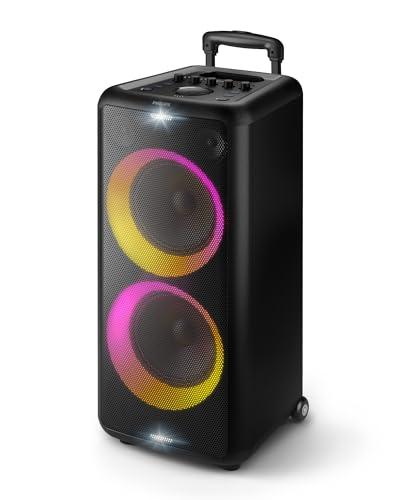
The Philips TAX5206 represents the "karaoke-first" philosophy—it's designed primarily for people who want to sing, with comprehensive vocal effects and straightforward operation. At the time of writing, it sits in the budget-to-mid-range category, making party speakers accessible to casual users.
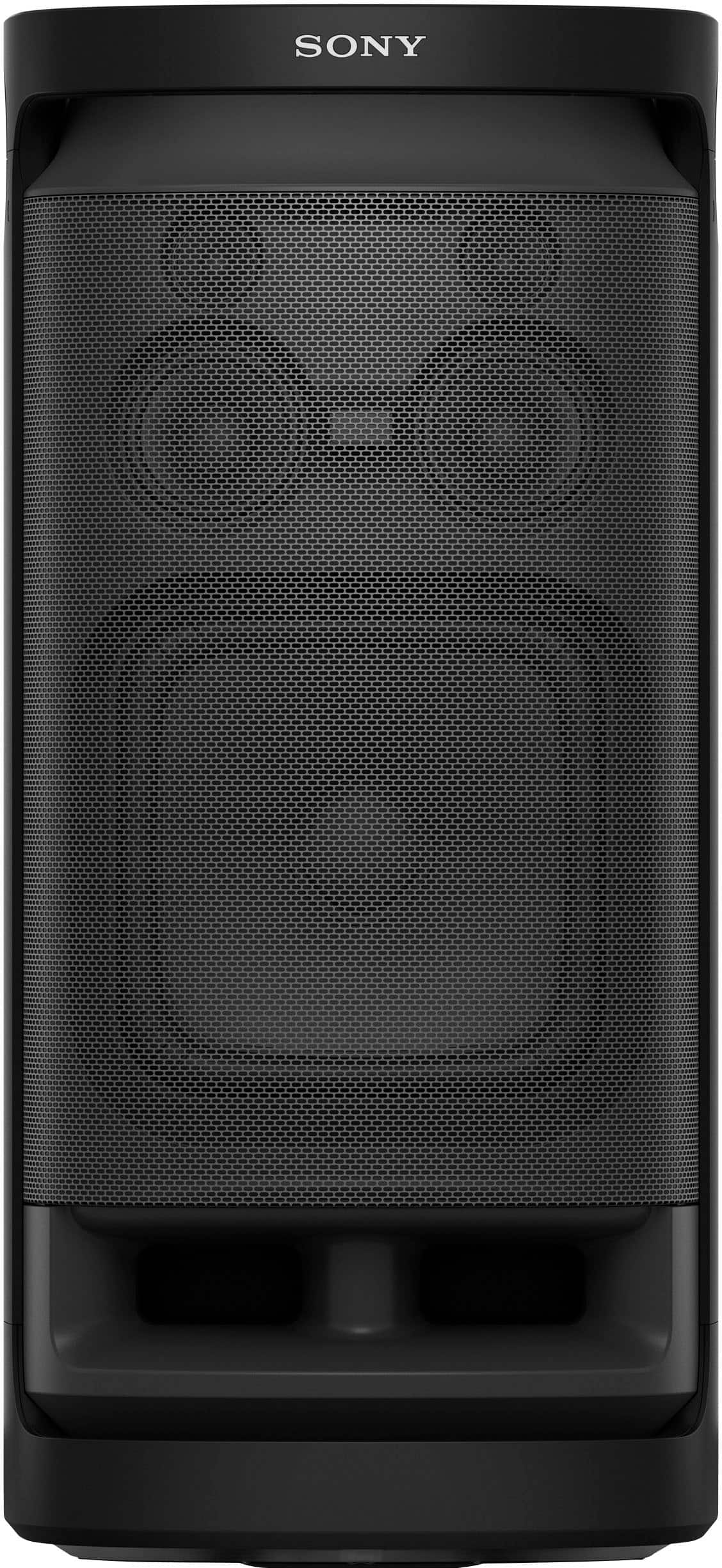
The Sony SRS-XV900, released as Sony's premium offering, embodies the "audiophile party speaker" concept. It prioritizes sound quality above all else while packing in advanced features that justify its position in the high-end segment. Sony has been refining their X-Balanced speaker technology over recent years, and the XV900 represents their most sophisticated implementation in a portable format.
The most dramatic difference between these speakers lies in their audio performance, and frankly, it's not even close. The Sony SRS-XV900 delivers what many reviewers describe as the best sound quality they've heard from any Bluetooth speaker, regardless of price.
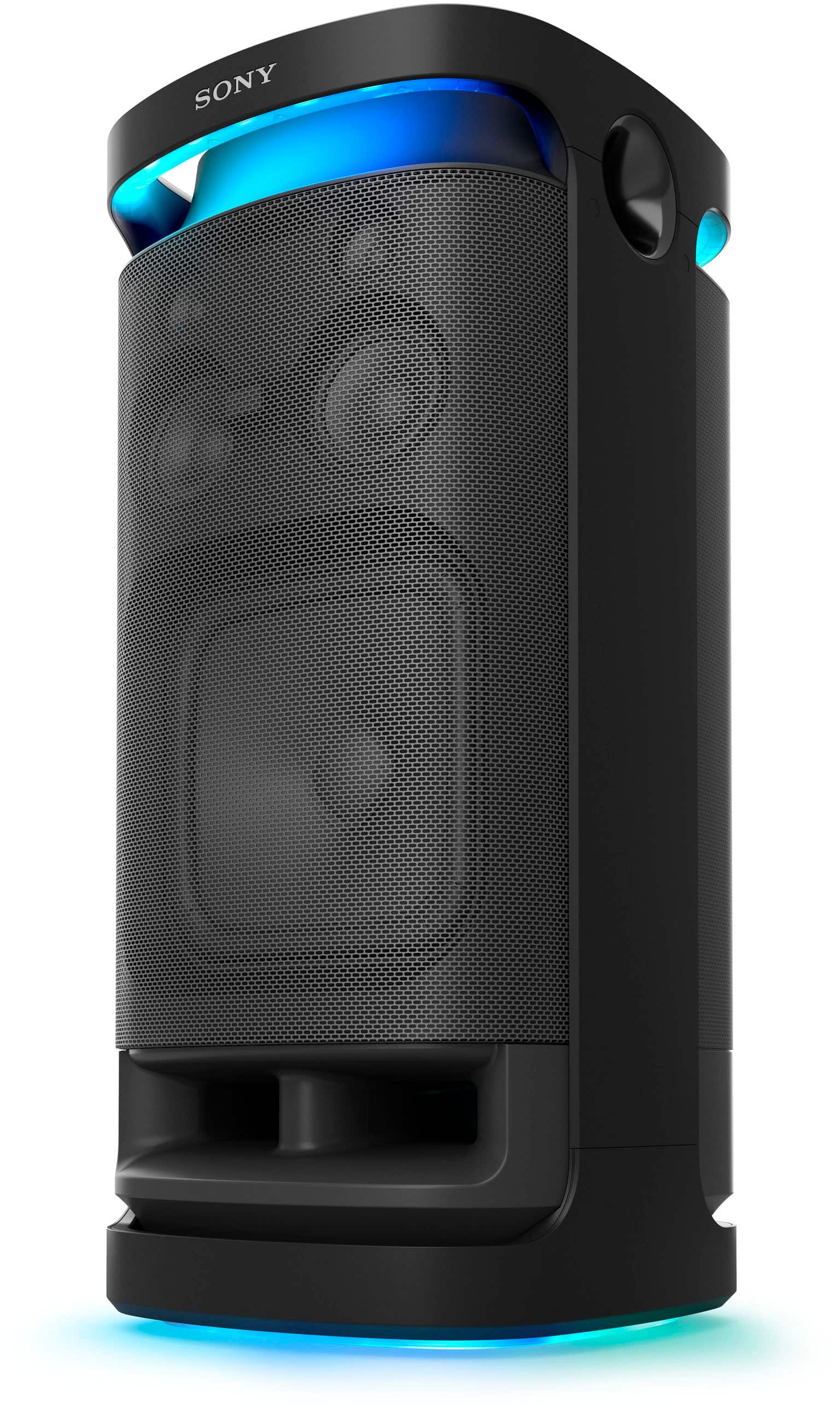
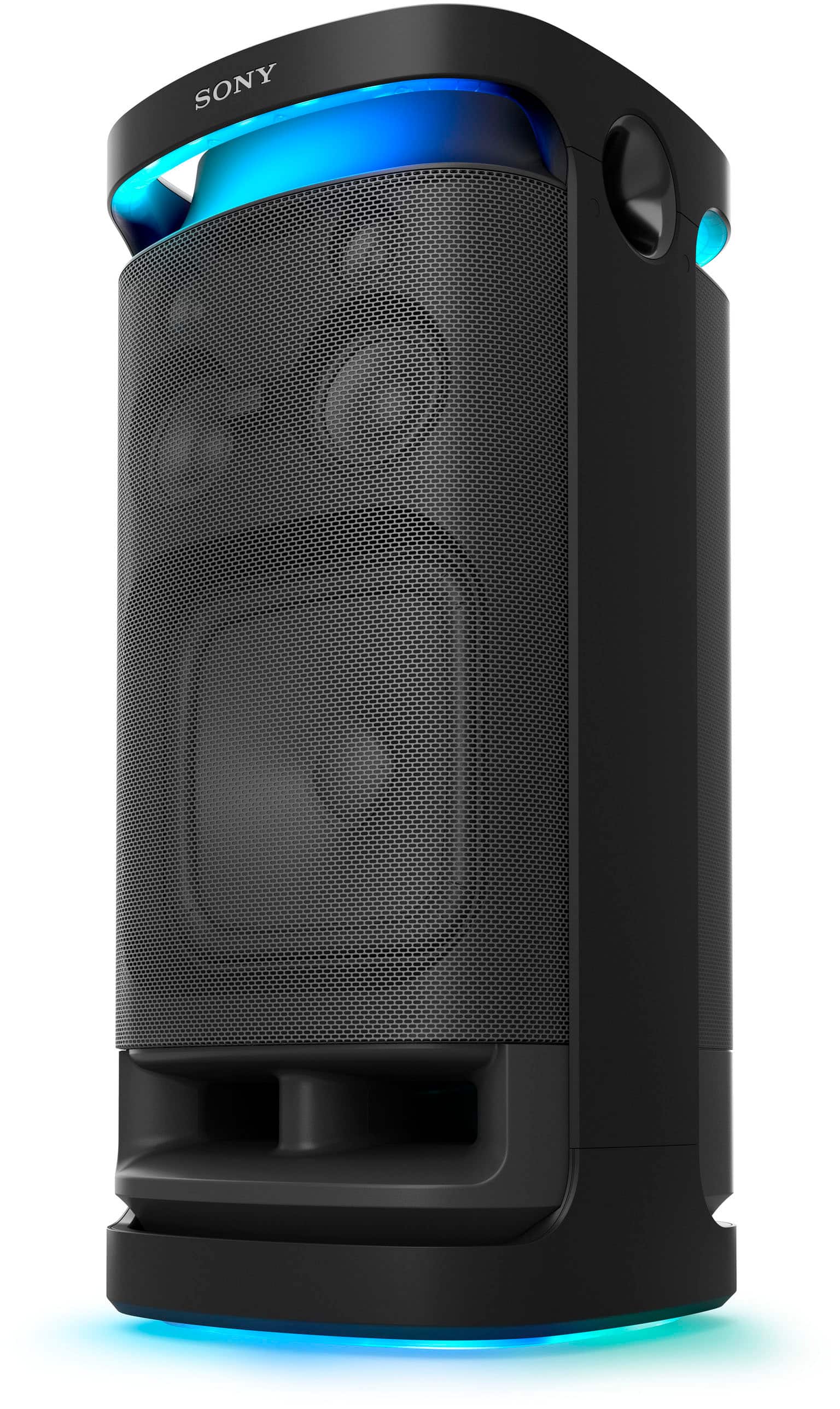
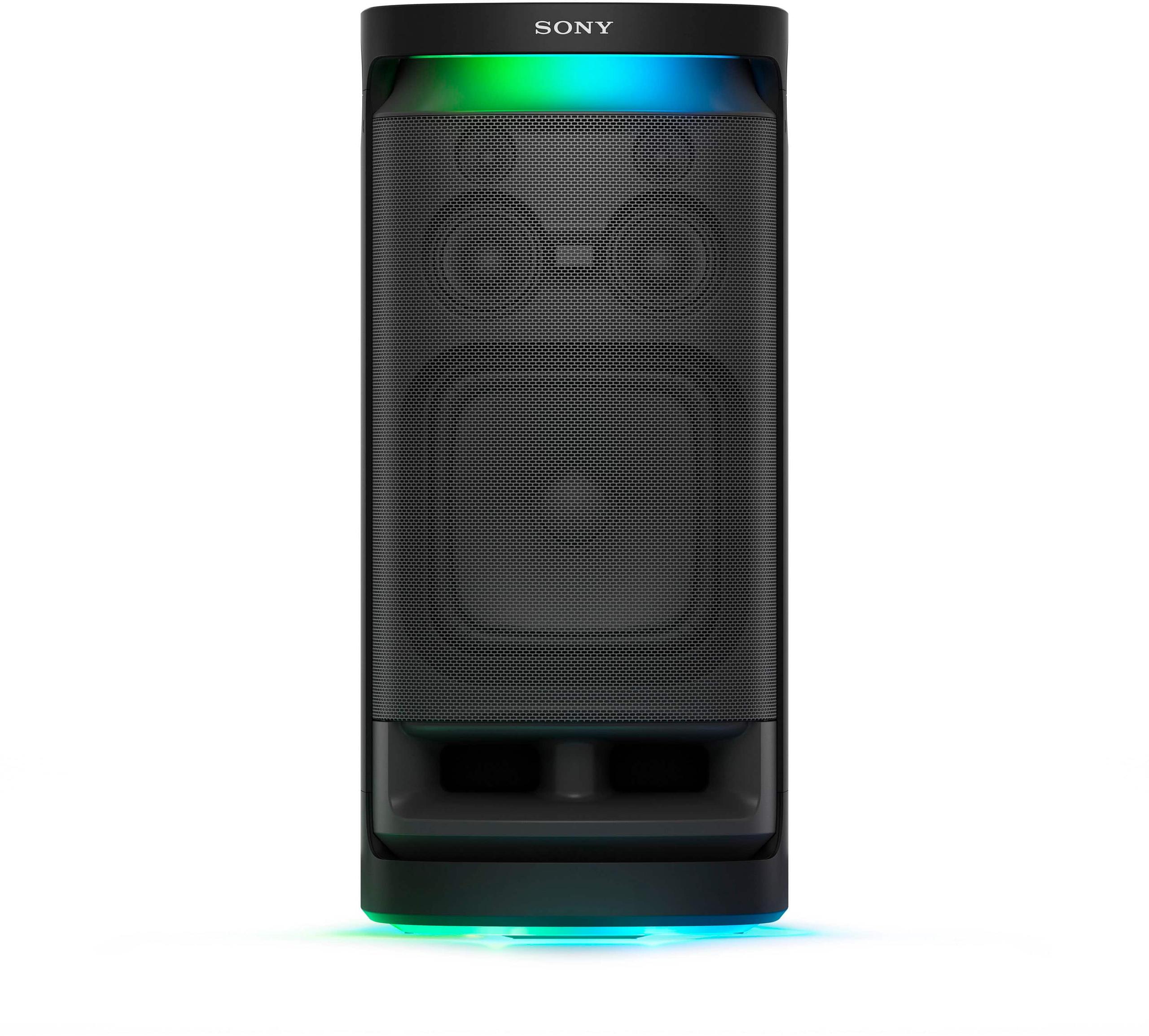
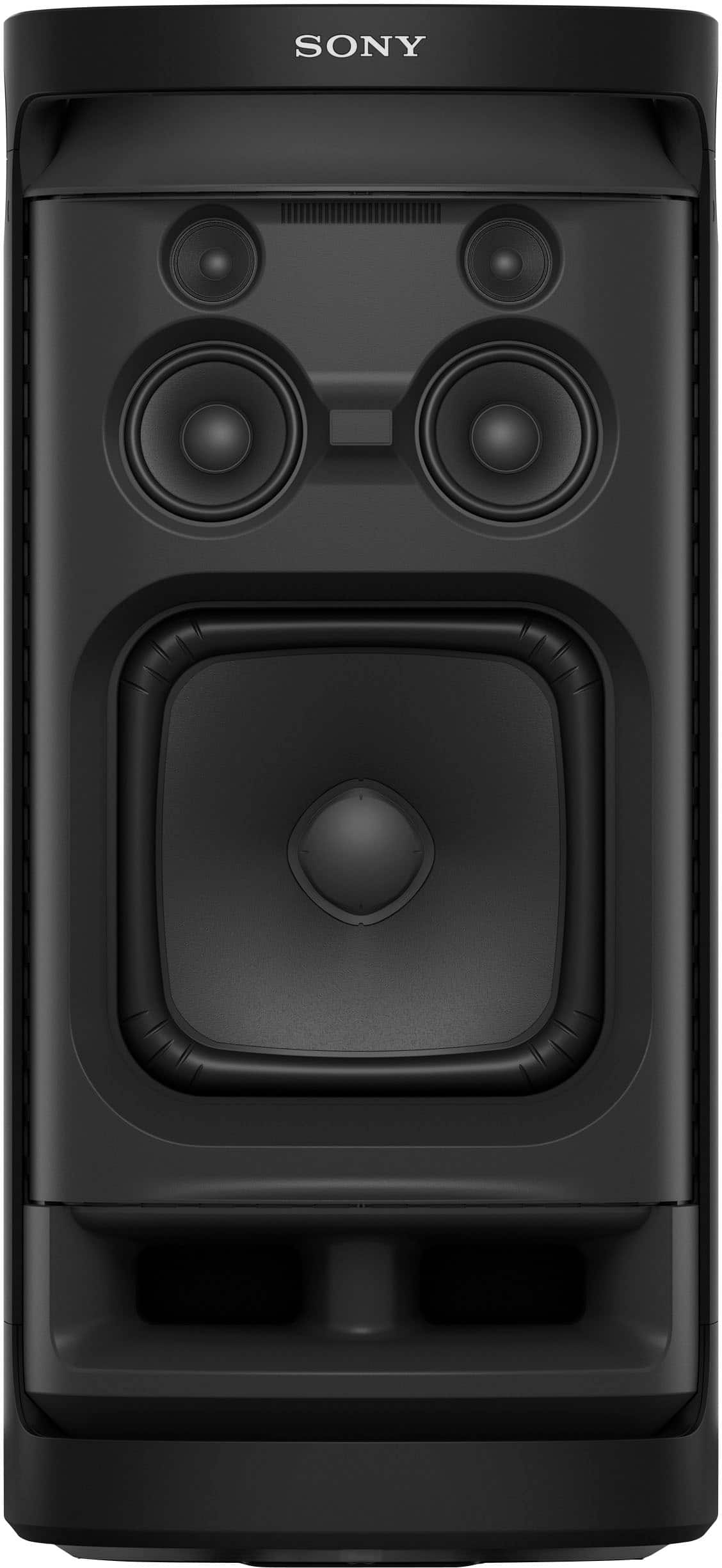
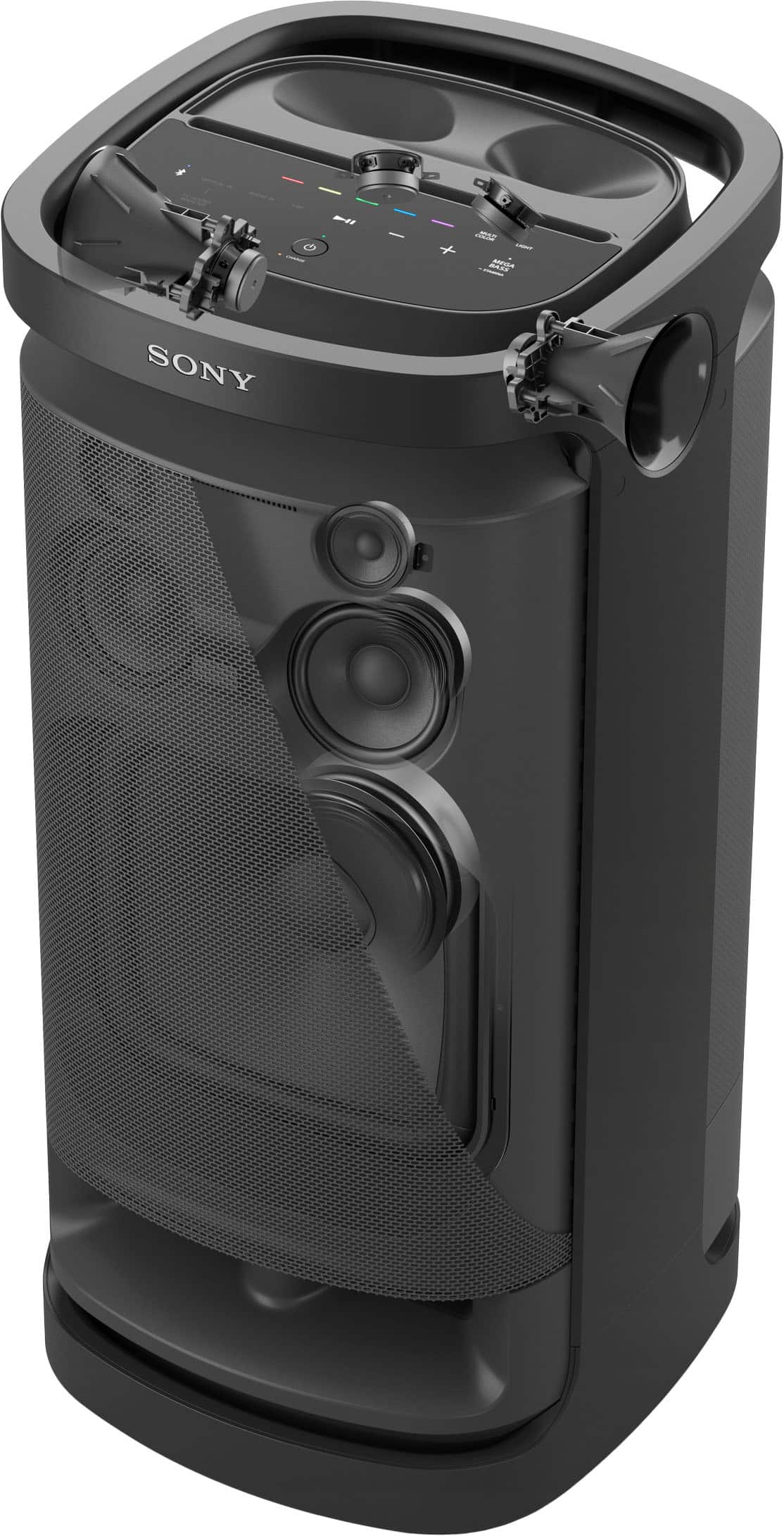
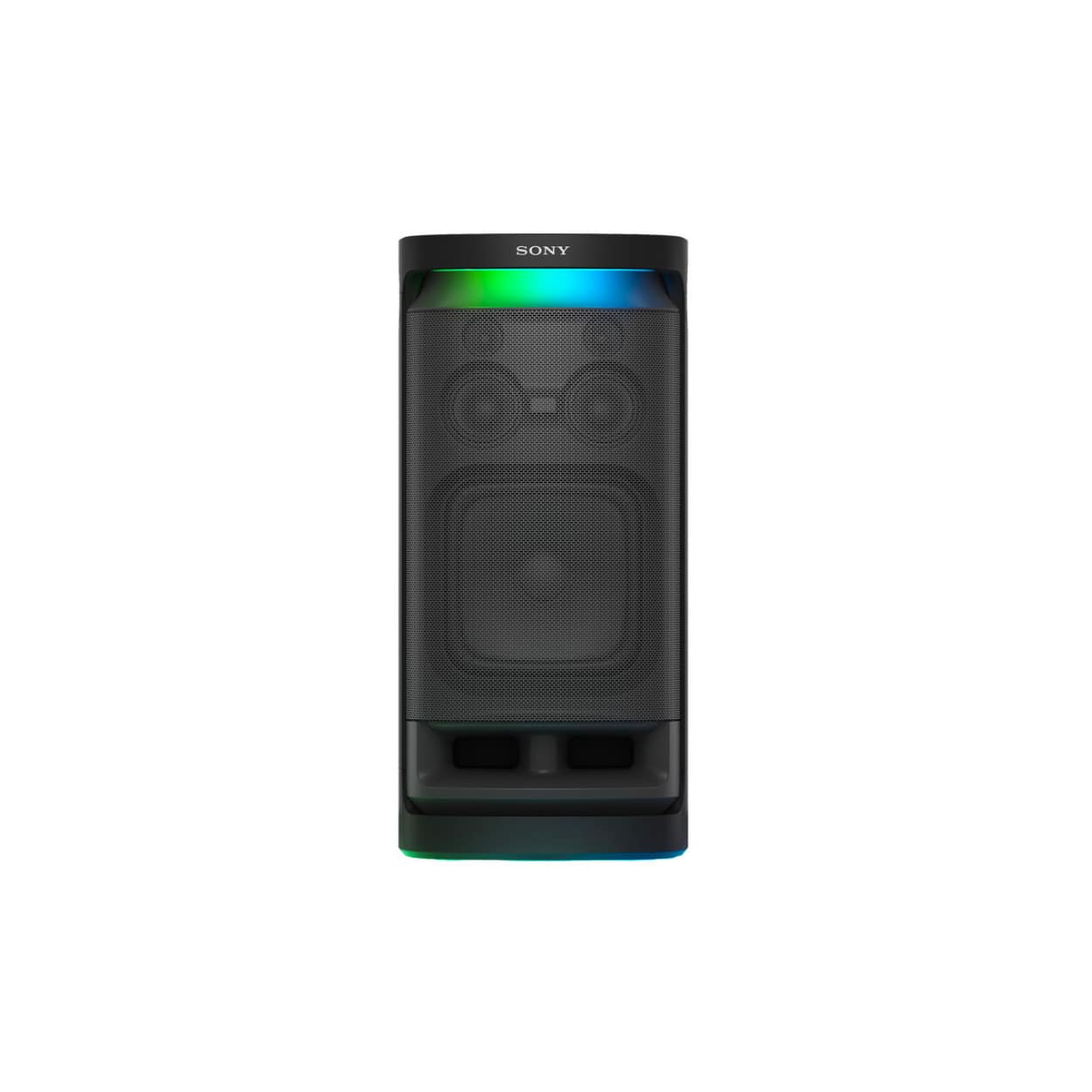
Sony's engineering advantage starts with their 4-way speaker configuration. This means they've divided the audio spectrum into four distinct ranges, with specialized drivers handling each: six tweeters for crystal-clear highs, two midrange drivers for vocal clarity, and their signature X-Balanced woofer for deep bass. This X-Balanced design uses a rectangular diaphragm instead of the traditional round cone, which increases the surface area while reducing distortion—essentially giving you more bass without the muddiness.
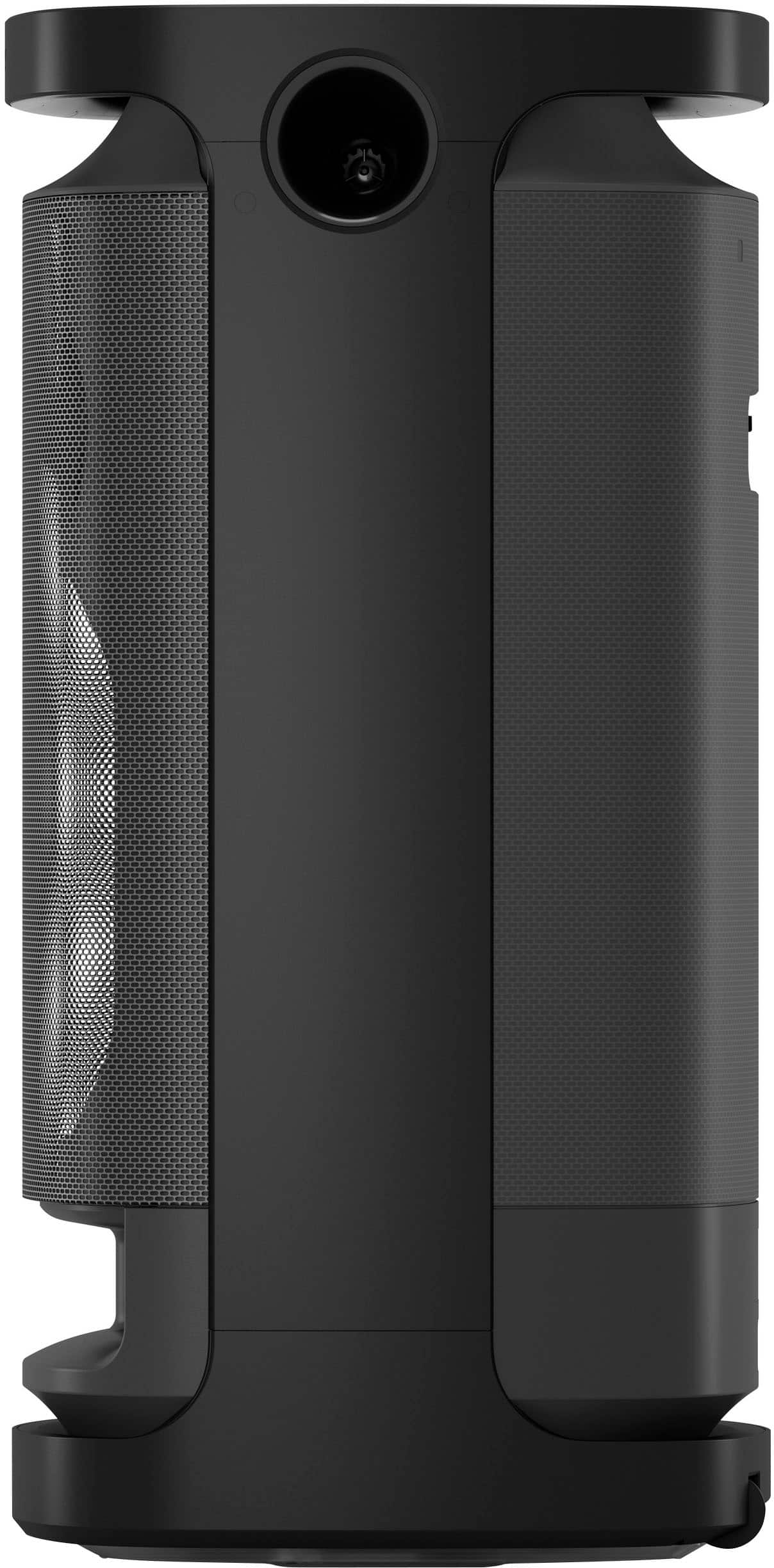
The six tweeters aren't randomly placed either. Sony positions them strategically around the front, sides, and rear of the speaker to create omnidirectional sound—meaning the music fills the entire space rather than just blasting in one direction. This is particularly noticeable in larger rooms where traditional speakers can leave dead zones.
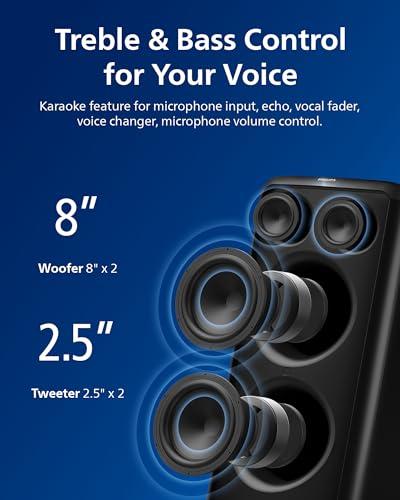
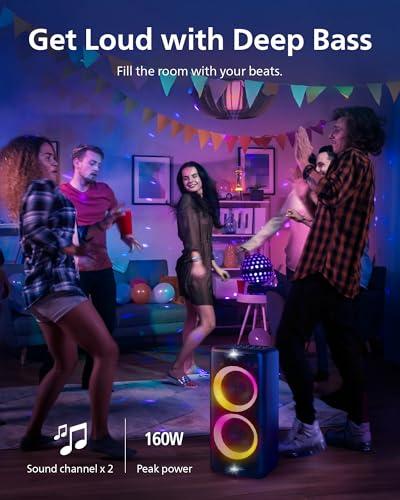
The Philips TAX5206, by contrast, uses a more conventional 2-way design with dual 8-inch woofers and 2.5-inch tweeters. While this delivers respectable sound for its price range, reviewer consensus suggests the bass is "mediocre at best" and clarity is merely acceptable. The 80W RMS output (160W peak) provides plenty of volume—reviewers consistently rate its loudness as excellent—but the sound lacks the sophistication and detail of the Sony.
Most telling is the frequency response difference. The Sony SRS-XV900 reaches down to 20 Hz, which is the theoretical limit of human hearing for bass frequencies. The Philips TAX5206 manages 40 Hz, which is respectable but means you're missing that chest-thumping deep bass that really gets people moving.
In real-world testing, reviewers note that the Philips TAX5206 sounds significantly better when plugged into AC power compared to battery operation, suggesting the amplifier struggles to maintain clean power output on battery alone. The Sony SRS-XV900 maintains consistent performance regardless of power source.
Battery technology has improved dramatically in recent years, and the Sony SRS-XV900 showcases this evolution beautifully. Its 25-hour battery life isn't just impressive—it's practically liberating. You can take this speaker to a weekend camping trip and never worry about power. The 3-hour charging time means even if you do drain it completely, you're back to full power quickly.
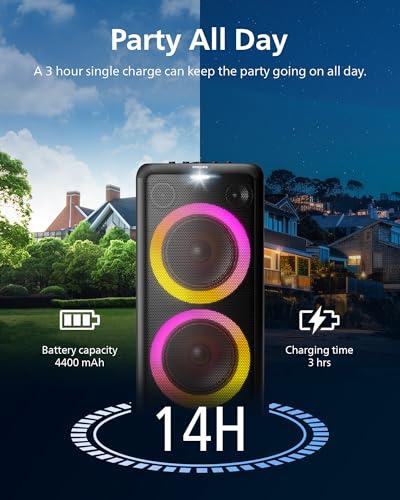
The Philips TAX5206 offers a more modest 14 hours, which is still respectable for its size and price range. However, given the performance degradation we mentioned earlier, you might find yourself seeking AC power more often than you'd like.
Both speakers can function as power banks to charge your phone, which is genuinely useful at outdoor events. The Sony provides 7.5W output compared to the Philips's 5W—not a huge difference, but every bit helps when your phone is dying and you need to queue up the next playlist.
Here's where things get interesting. Despite being the superior performer, the Sony SRS-XV900 weighs in at nearly 60 pounds—that's approaching mini-fridge territory. While it includes wheels and handles, multiple reviewers have criticized the wheel design, noting difficulty rolling it across certain surfaces. You're definitely not carrying this thing up stairs.
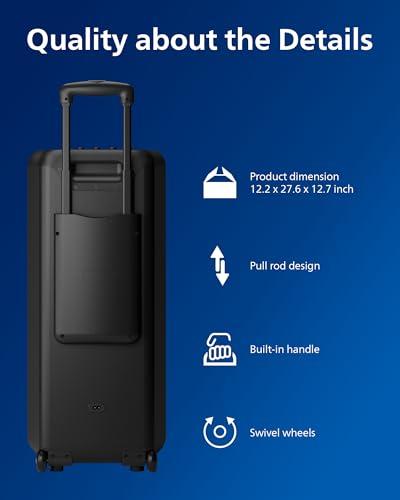
The Philips TAX5206, at about 23 pounds, feels genuinely portable. You can reasonably carry it for short distances, and the trolley design works better for actual transportation. If you're frequently moving between locations, this weight difference matters more than you might think.
However, weight often correlates with sound quality in speakers. Those heavy components in the Sony—the large woofer, robust amplifier, and substantial battery—are precisely what enable its superior performance. It's a classic engineering trade-off.
Both speakers recognize that modern party-goers want more than just music playback, but they approach entertainment differently.
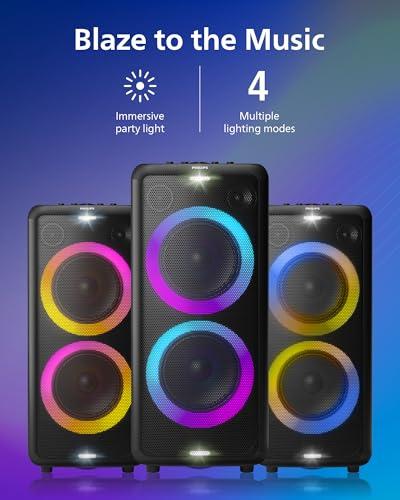
The Philips TAX5206 is unabashedly karaoke-focused. Its voice changer effects, vocal fader, and echo control are designed specifically for aspiring singers. The four LED lighting modes and strobe effects add visual excitement, though they're relatively basic compared to premium options. The rotary controls are refreshingly simple—no app required to adjust bass, treble, or microphone levels.
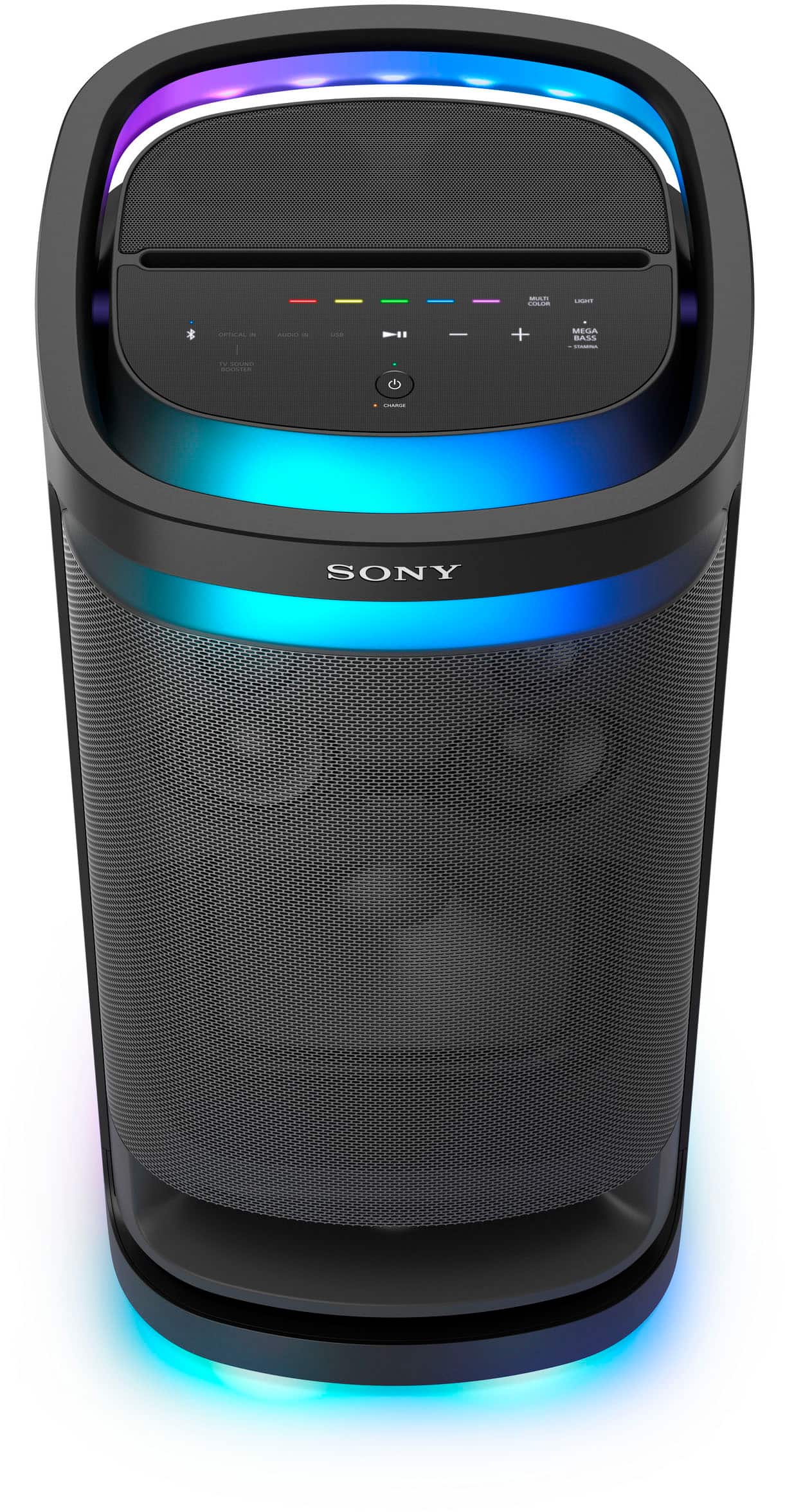
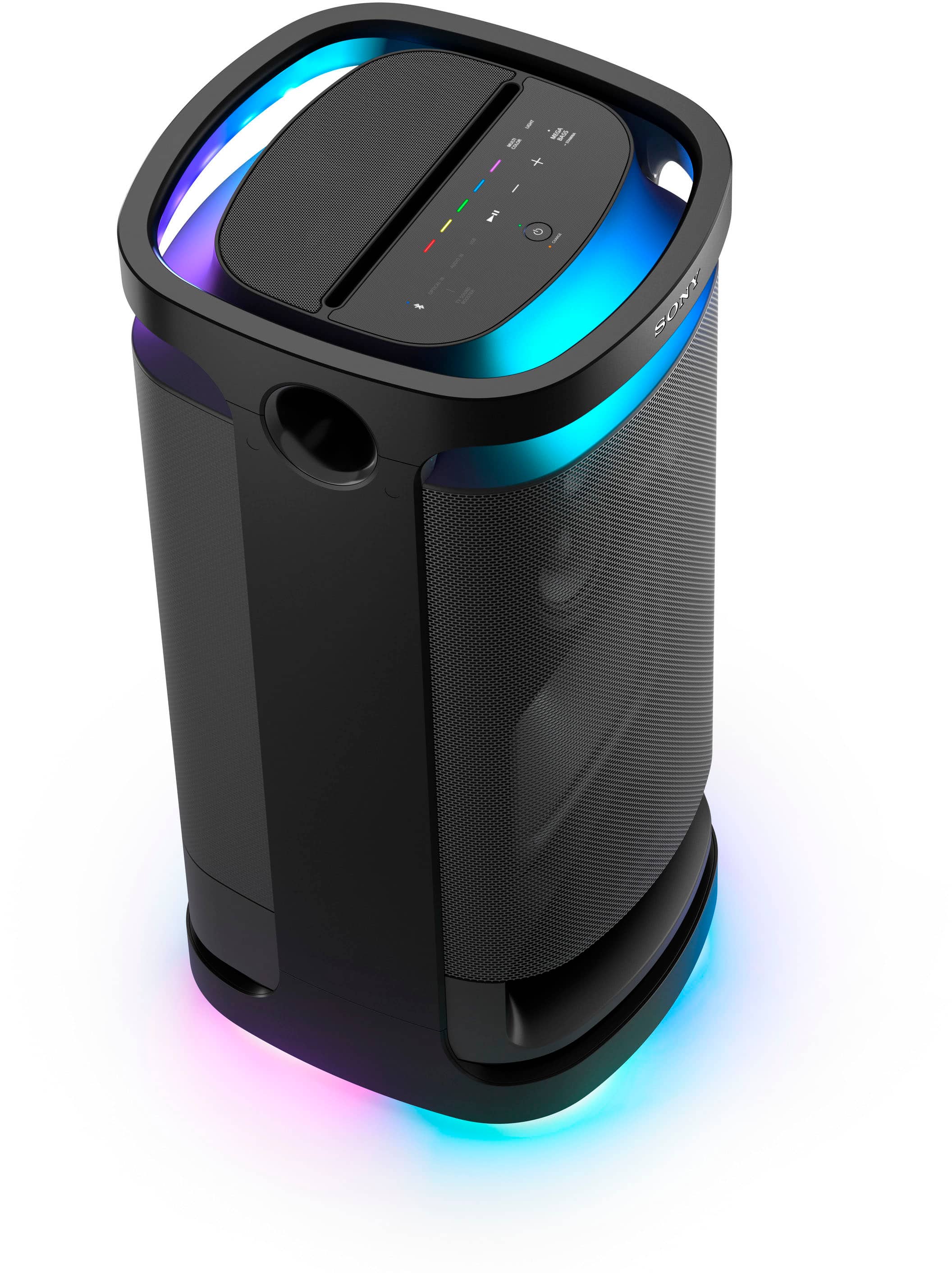
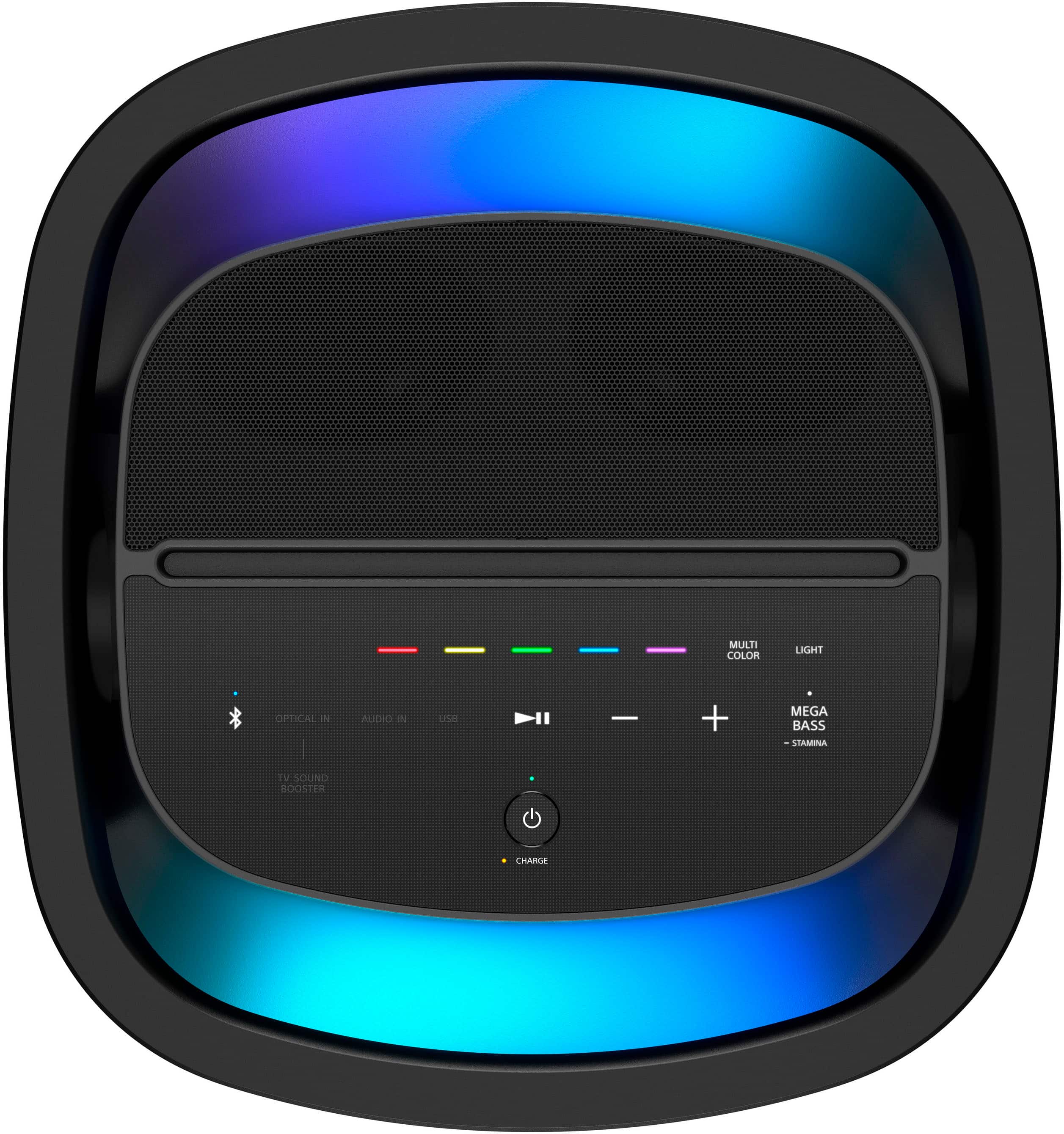
The Sony SRS-XV900 takes a more sophisticated approach through its Sony Music Center and Fiestable apps. The Fiestable app adds DJ-style effects, motion controls (move your phone to create sound effects), and karaoke scoring features. The dual LED ring lighting system creates more elaborate visual displays, with underglow effects that make the speaker itself part of the party atmosphere.
Sony's Party Connect feature deserves special mention—you can wirelessly link up to 100 compatible Sony speakers for massive sound coverage. Even connecting just two units in stereo creates a dramatically more immersive experience than any single speaker can achieve.
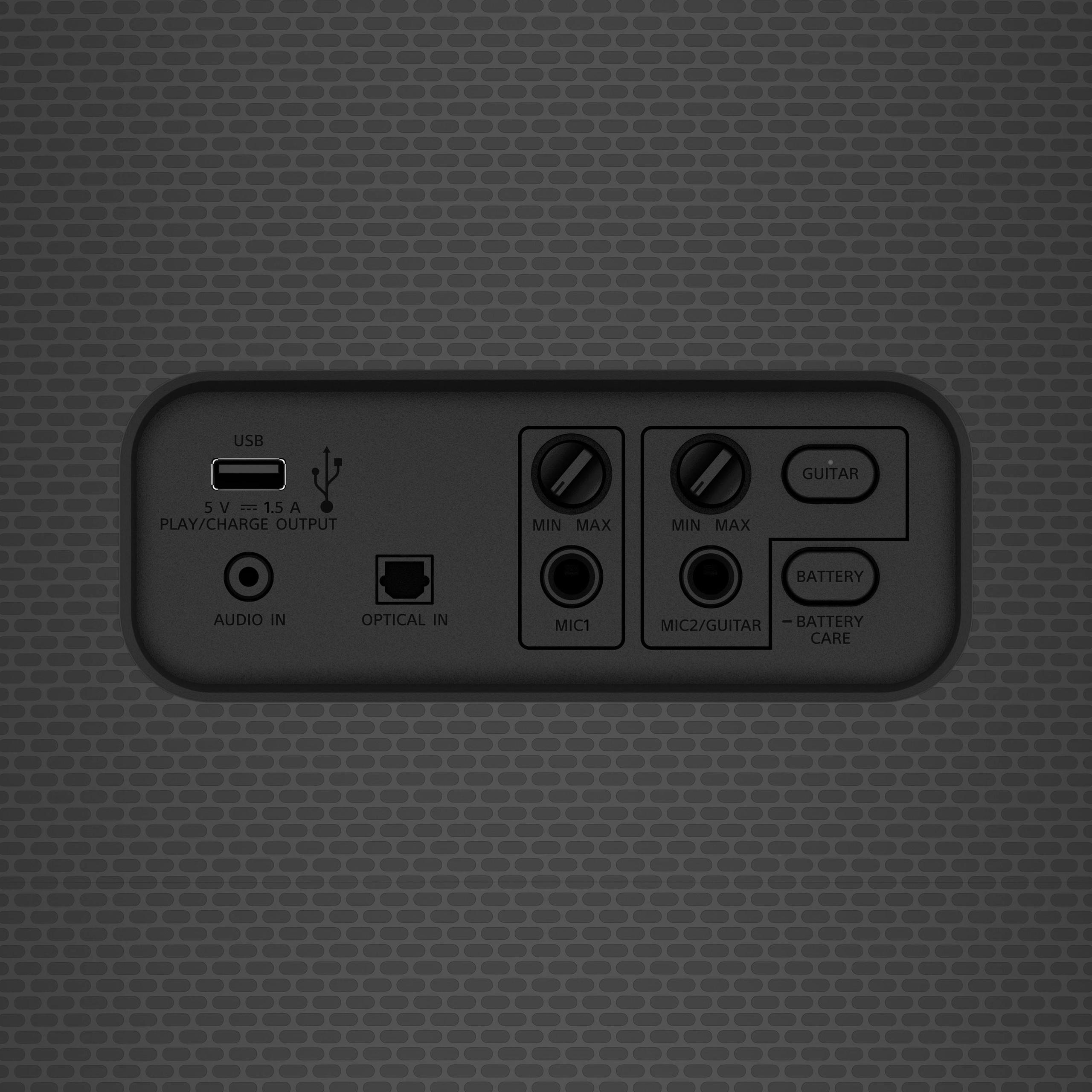
The connectivity story reveals each manufacturer's priorities. The Sony SRS-XV900 uses Bluetooth 5.2 with support for LDAC, Sony's high-quality audio codec that transmits three times more data than standard Bluetooth. This means noticeably better sound quality when streaming from compatible devices (mostly Sony phones and some Android devices). The 98-foot range is exceptional for Bluetooth connectivity.
More impressively, Sony includes an optical digital input, which transforms the speaker into a legitimate TV soundbar alternative. The TV Sound Booster mode optimizes the audio specifically for dialogue and movie soundtracks. This dual-purpose capability adds significant value if you're looking to upgrade your home theater setup.
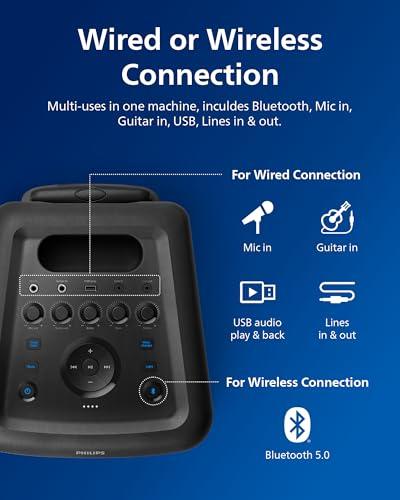
The Philips TAX5206 sticks with Bluetooth 5.0 and standard SBC codec—perfectly adequate for most users but lacking the audiophile touches. Its USB port supports multiple audio formats (MP3, WAV, WMA, FLAC), which is convenient for playing music directly from flash drives without draining your phone battery.
At the time of writing, these speakers occupy very different price tiers—the Philips TAX5206 costs roughly a quarter of what you'd pay for the Sony SRS-XV900. This creates an interesting value discussion.
The Philips TAX5206 delivers genuine party functionality at an accessible price point. If you're hosting small to medium gatherings, enjoy karaoke, and want something you can actually move around easily, it represents solid value. The sound quality won't blow you away, but it's adequate for its intended use and price range.
The Sony SRS-XV900 commands premium pricing but justifies it through exceptional audio performance, extended battery life, and versatility. If you're serious about sound quality, regularly host larger gatherings, or want a speaker that doubles as home theater enhancement, the premium feels justified.
The Sony SRS-XV900's optical input and TV Sound Booster mode make it a legitimate home theater component. In my research, users report dramatically improved dialogue clarity and movie sound effects compared to built-in TV speakers. The 25-hour battery means you can position it anywhere in the room without worrying about power cables.
The Philips TAX5206 lacks these home theater features entirely—it's purely a party speaker. While you could use it for movie nights via Bluetooth, you'll miss out on the low-latency connection and optimized audio processing that make the Sony special for this application.
After extensive research into user experiences and expert reviews, here's my take on who should choose each speaker:
Choose the Philips TAX5206 if:
Choose the Sony SRS-XV900 if:
It's worth noting that both speakers benefit from recent advances in battery technology, amplifier efficiency, and digital signal processing. The Bluetooth codecs available today—particularly Sony's LDAC—deliver audio quality that would have required wired connections just a few years ago.
Sony's X-Balanced driver technology represents genuine innovation in speaker design, not just marketing fluff. Similarly, the app integration and wireless speaker pairing capabilities we see in both products were exotic features reserved for high-end systems not long ago.
The Sony SRS-XV900 is simply the better speaker in almost every measurable way—it sounds dramatically better, lasts longer, and offers more versatility. However, the Philips TAX5206 serves its intended market well, providing party functionality at a price point that makes sense for casual users.
If you can afford the Sony and will use it regularly, it's worth the investment. The sound quality difference is substantial enough that you'll appreciate it every time you use the speaker. But if budget constraints are real or you're an occasional party host who just needs something functional, the Philips delivers adequate performance without breaking the bank.
The key is being honest about your needs and usage patterns. A mediocre speaker you'll actually use is better than a premium speaker that stays in the closet because it's too heavy or expensive to risk at outdoor gatherings.
| Philips TAX5206 | Sony SRS-XV900 |
|---|---|
| Sound Output - Critical for filling party spaces with clear, undistorted audio | |
| 80W RMS / 160W Peak (adequate for small-medium gatherings) | 100W consumption, professional-grade amplification (fills large spaces effortlessly) |
| Driver Configuration - Determines sound quality and coverage | |
| 2-way: 2x 8" woofers, 2x 2.5" tweeters (directional sound) | 4-way: 6 tweeters, 2 midrange, 1x 12.6" X-Balanced woofer (360° omnidirectional) |
| Frequency Response - How deep the bass goes and how crisp the highs are | |
| 40Hz - 20KHz (good but missing deepest bass) | 20Hz - 20KHz (reaches theoretical human hearing limits) |
| Battery Life - Hours of continuous party time without power outlets | |
| 14 hours (decent for day events) | 25 hours (weekend-long events without charging) |
| Weight & Portability - Affects how easily you can move it between locations | |
| 23.2 lbs / 10.5 kg (genuinely portable, easy to carry) | 58.6 lbs / 26.6 kg (requires wheels, approaching furniture weight) |
| Bluetooth & Connectivity - Audio quality and connection reliability | |
| Bluetooth 5.0, SBC codec, 33ft range | Bluetooth 5.2, LDAC/AAC/SBC codecs, 98ft range |
| Karaoke Features - Important for vocal performance and entertainment | |
| Echo control, vocal fader, voice changer, rotary controls | App-controlled effects, karaoke scoring, professional mic inputs |
| Special Features - What sets each speaker apart | |
| Dedicated karaoke focus, strobe lights, power bank function | TV Sound Booster mode, optical input, Party Connect (link 100 speakers) |
| Light Effects - Visual entertainment for party atmosphere | |
| 4 LED modes plus strobe lighting (basic but functional) | Dual LED rings with underglow, synchronized wave effects (premium visual impact) |
| Home Theater Use - Versatility beyond just parties | |
| Bluetooth-only connection (basic TV audio improvement) | Optical input + TV Sound Booster mode (legitimate soundbar alternative) |
| Value Proposition - Performance per dollar spent | |
| Excellent budget option with karaoke focus | Premium pricing justified by superior audio and versatility |
The Sony SRS-XV900 delivers significantly superior sound quality with its 4-way speaker system, six strategically placed tweeters, and X-Balanced woofer technology. It reaches down to 20Hz for deeper bass and maintains clarity even at maximum volume. The Philips TAX5206 offers adequate sound for its price range but reviewers consistently rate its audio performance as mediocre compared to the Sony's audiophile-quality reproduction.
The Sony SRS-XV900 provides an impressive 25 hours of continuous playback, making it ideal for weekend events or multi-day gatherings. The Philips TAX5206 offers 14 hours of battery life, which is respectable for day-long events but significantly shorter than the Sony's extended runtime.
The Philips TAX5206 is much more portable at 23.2 pounds, making it genuinely easy to carry and transport between locations. The Sony SRS-XV900 weighs nearly 60 pounds and requires its built-in wheels for movement, though some users report the wheels can be difficult to roll on certain surfaces.
Both speakers offer karaoke capabilities, but with different approaches. The Philips TAX5206 focuses heavily on karaoke with dedicated voice changer effects, vocal fader, echo control, and simple rotary controls. The Sony SRS-XV900 provides more sophisticated karaoke features through its apps, including scoring, professional-grade mic inputs, and motion-controlled DJ effects.
The Sony SRS-XV900 excels as a home theater component with its optical digital input and dedicated TV Sound Booster mode, providing significant improvement over built-in TV speakers for movies and shows. The Philips TAX5206 can connect to TVs via Bluetooth but lacks the specialized features and low-latency connection that make the Sony ideal for home theater use.
This depends on your budget and needs. The Philips TAX5206 offers excellent value in the budget segment, providing essential party features and karaoke functionality at an accessible price point. The Sony SRS-XV900 justifies its premium pricing through superior sound quality, extended battery life, and versatile home theater integration.
The Philips TAX5206 features four LED lighting modes plus strobe effects that are functional but basic. The Sony SRS-XV900 provides more sophisticated dual LED ring lighting with underglow effects and wave patterns that create a more premium visual experience synchronized with the music.
Both speakers offer Bluetooth connectivity, but the Sony SRS-XV900 uses newer Bluetooth 5.2 with LDAC codec support for higher audio quality and extends to 98 feet range. The Philips TAX5206 uses Bluetooth 5.0 with standard SBC codec and 33-foot range. The Sony also includes optical input, while the Philips offers USB playback for multiple audio formats.
The Sony SRS-XV900 is superior for large gatherings due to its omnidirectional sound design, powerful amplification, and 25-hour battery life. Its six tweeters distribute sound in all directions, filling large spaces more effectively than the Philips TAX5206, which is better suited for small to medium-sized gatherings.
The Sony SRS-XV900 offers comprehensive app control through Sony Music Center and Fiestable apps, enabling sound customization, lighting control, DJ effects, and Party Connect for linking multiple speakers. The Philips TAX5206 relies on simple physical controls with rotary knobs and doesn't require or support smartphone app integration.
The Sony SRS-XV900 supports Party Connect technology, allowing you to wirelessly link up to 100 compatible Sony speakers for massive sound coverage, plus stereo pairing with a second unit. The Philips TAX5206 has a line-out jack for connecting to additional speakers or amplifiers but doesn't offer wireless multi-speaker connectivity.
Choose the Philips TAX5206 if you prioritize affordability, portability, dedicated karaoke features, and simple operation for small to medium gatherings. Select the Sony SRS-XV900 if you want premium sound quality, extended battery life, home theater versatility, and are willing to invest in superior performance for larger events and audiophile-quality audio reproduction.
We've done our best to create useful and informative comparisons to help you decide what product to buy. Our research uses advanced automated methods to create this comparison and perfection is not possible - please contact us for corrections or questions. These are the sites we've researched in the creation of this article: youtube.com - documents.philips.com - cutetechgadgets.com - odpbusiness.com - usa.philips.com - hitechers.com - youtube.com - documents.philips.com - youtube.com - walmart.com - walmart.com - device.report - flipkart.com - brightstarcomp.com - youtube.com - philips.co.in - documents.philips.com - fullspecs.net - documents.philips.com - bestbuy.com - youtube.com - crutchfield.com - versus.com - youtube.com - versus.com - youtube.com - comparisontabl.es - tech.hindustantimes.com - youtube.com - electronics.sony.com - youtube.com - crutchfield.com - centresdirect.co.uk - sony-asia.com - nikktech.com - sony.com - youtube.com - reliancedigital.in - sonyworld.ae - sony.com - shopjetson.com - bestbuy.com - versus.com

Privacy Policy
Terms and Conditions - Affiliate Policy
Home Security
© Copyright 2008-2026.
11816 Inwood Rd #1211, Dallas, TX 75244