

When it comes to portable party speakers, two names consistently rise to the top of recommendation lists: the Sony SRS-XV900 and the Samsung MX-ST50F. Both launched in 2022, these speakers represent fundamentally different philosophies about what makes a great party speaker. The Sony prioritizes audiophile-grade sound quality with premium features, while Samsung focuses on delivering solid performance with impressive visual entertainment at a more accessible price point.
Understanding these differences is crucial because, despite both being called "party speakers," they excel in completely different scenarios. The choice between them often comes down to your priorities: exceptional audio quality versus practical features and value.
Before diving into specifics, it's worth understanding what separates party speakers from regular Bluetooth speakers. These aren't devices you'll slip into a backpack. They're substantial, powerful audio systems designed to energize large gatherings while remaining transportable enough to move between locations.
The key performance metrics that matter most are maximum volume without distortion, bass depth and impact, battery endurance, and sound distribution. A great party speaker should fill a backyard or large room with clear, powerful audio that doesn't break up when you crank the volume. Bass response is particularly critical—party music relies heavily on low-frequency impact that you can feel as well as hear.
Beyond pure audio performance, modern party speakers compete on convenience features like multiple connection options, lighting effects, karaoke capabilities, and weather resistance. The best speakers balance all these elements while remaining practical to transport and use.
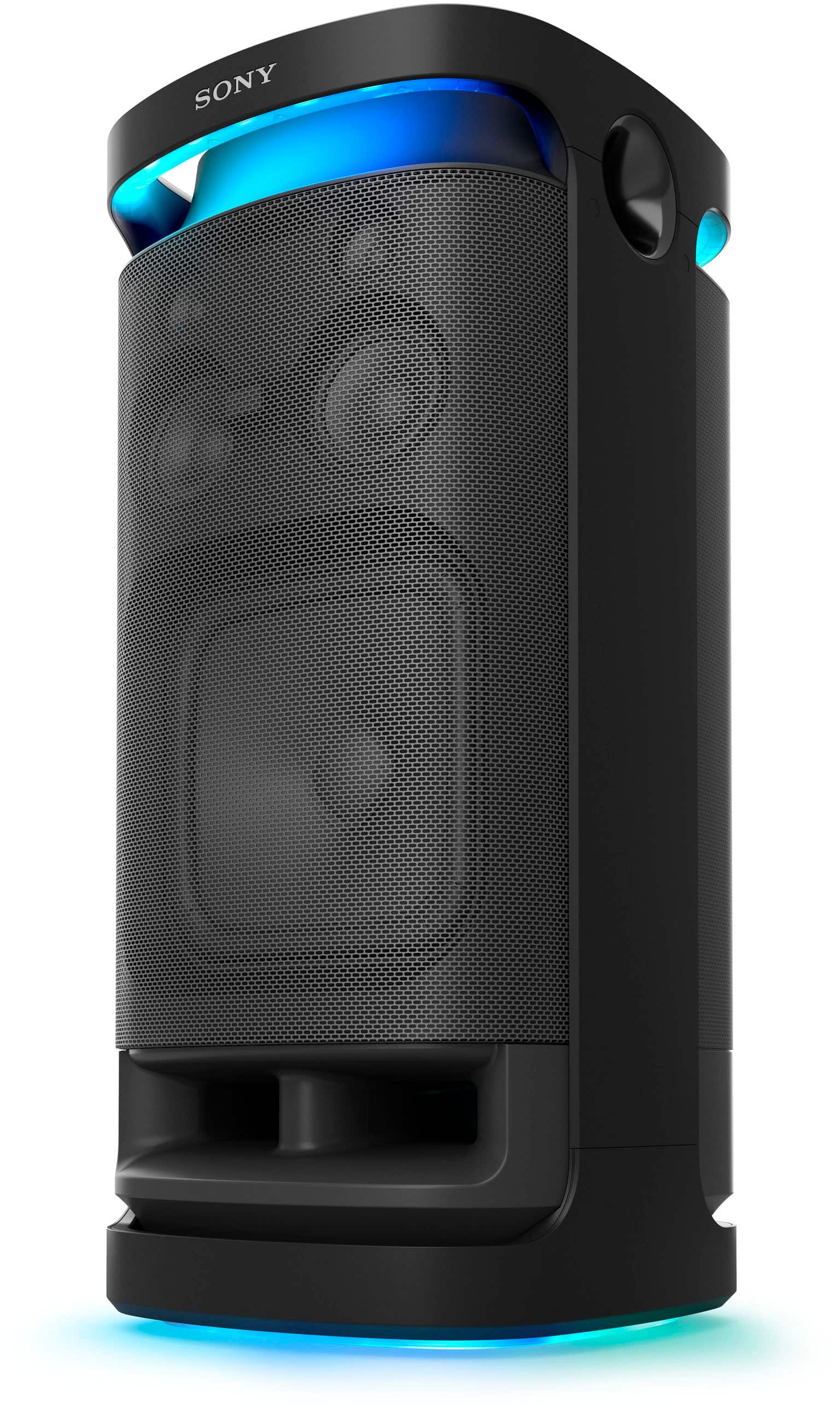
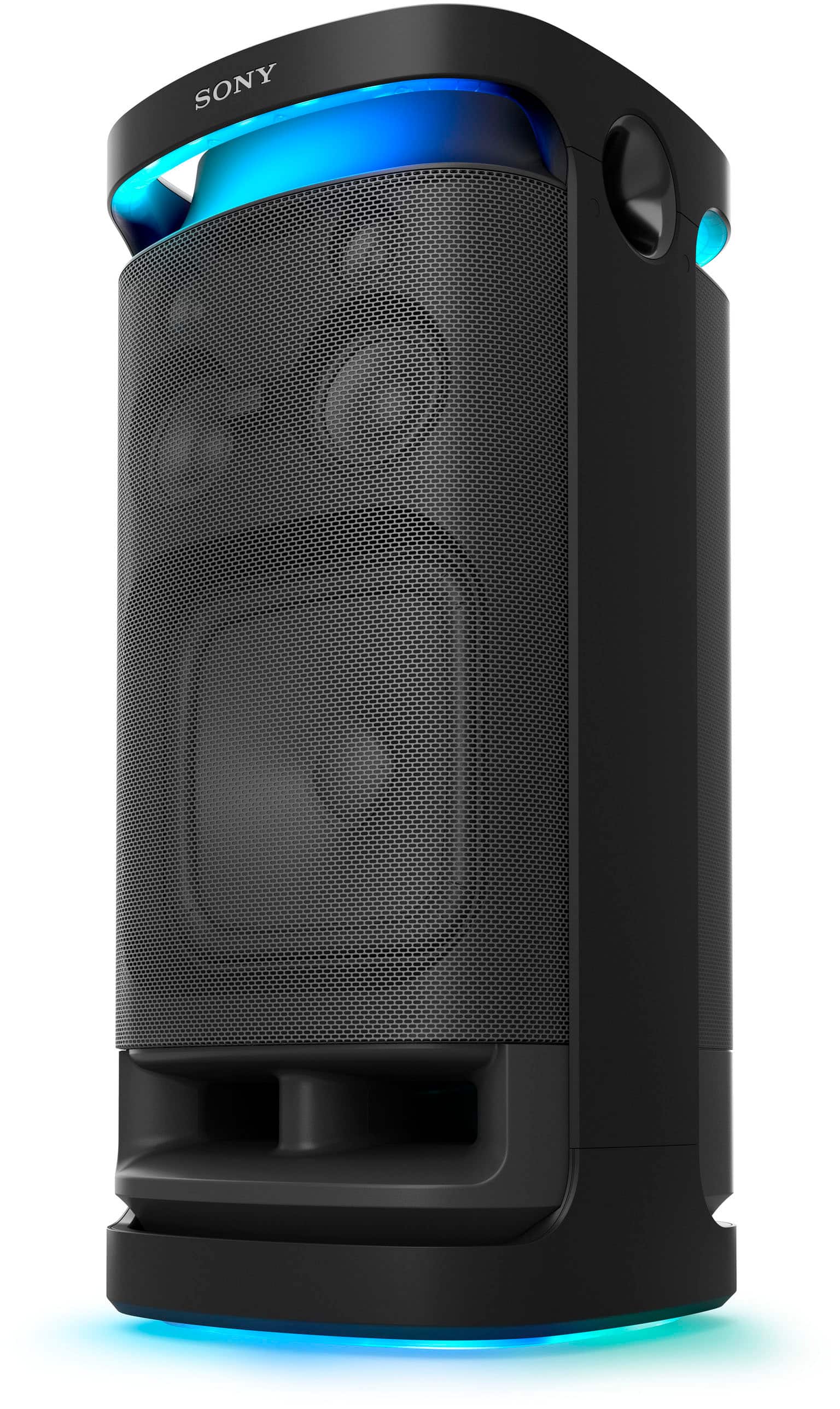
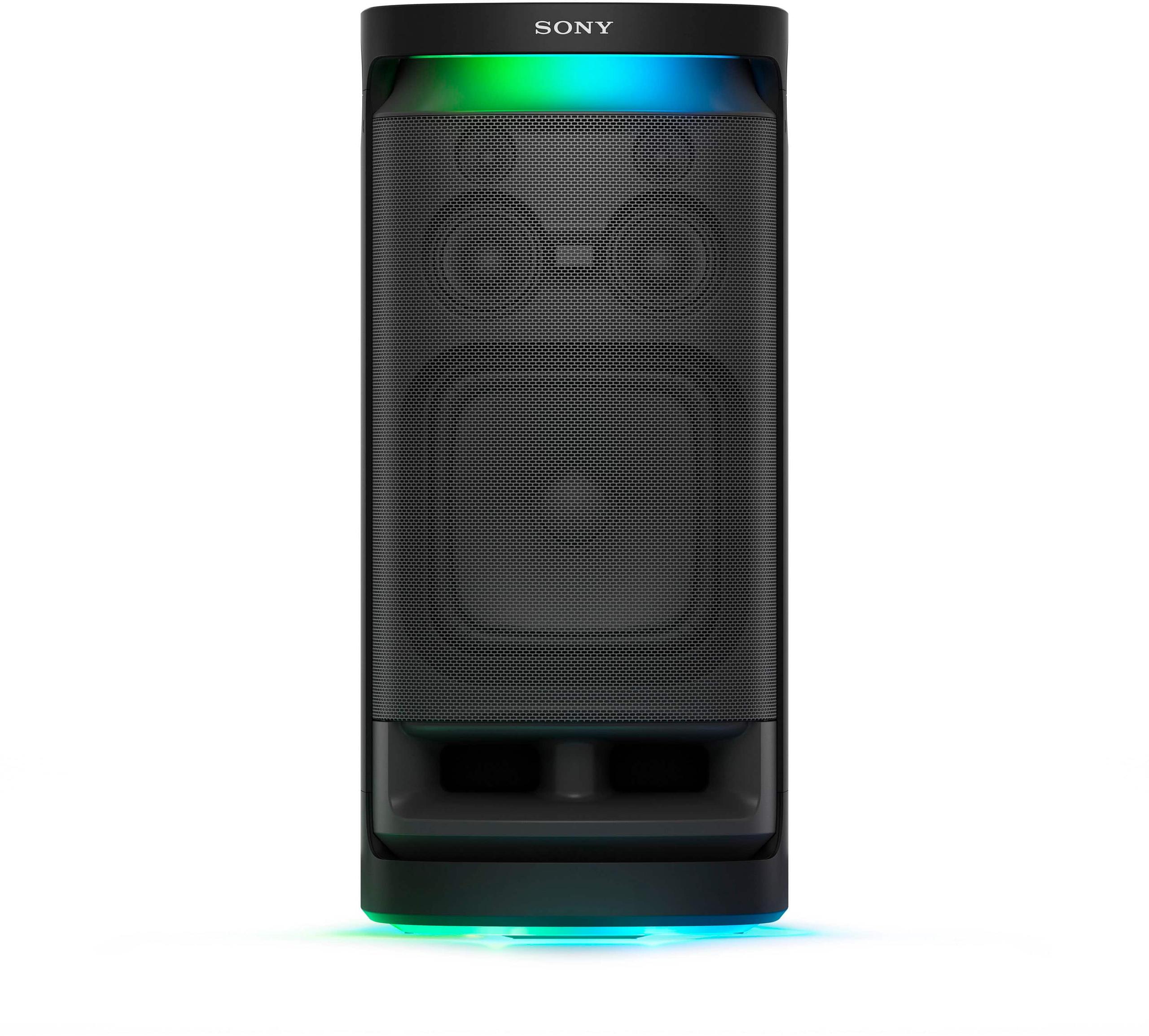
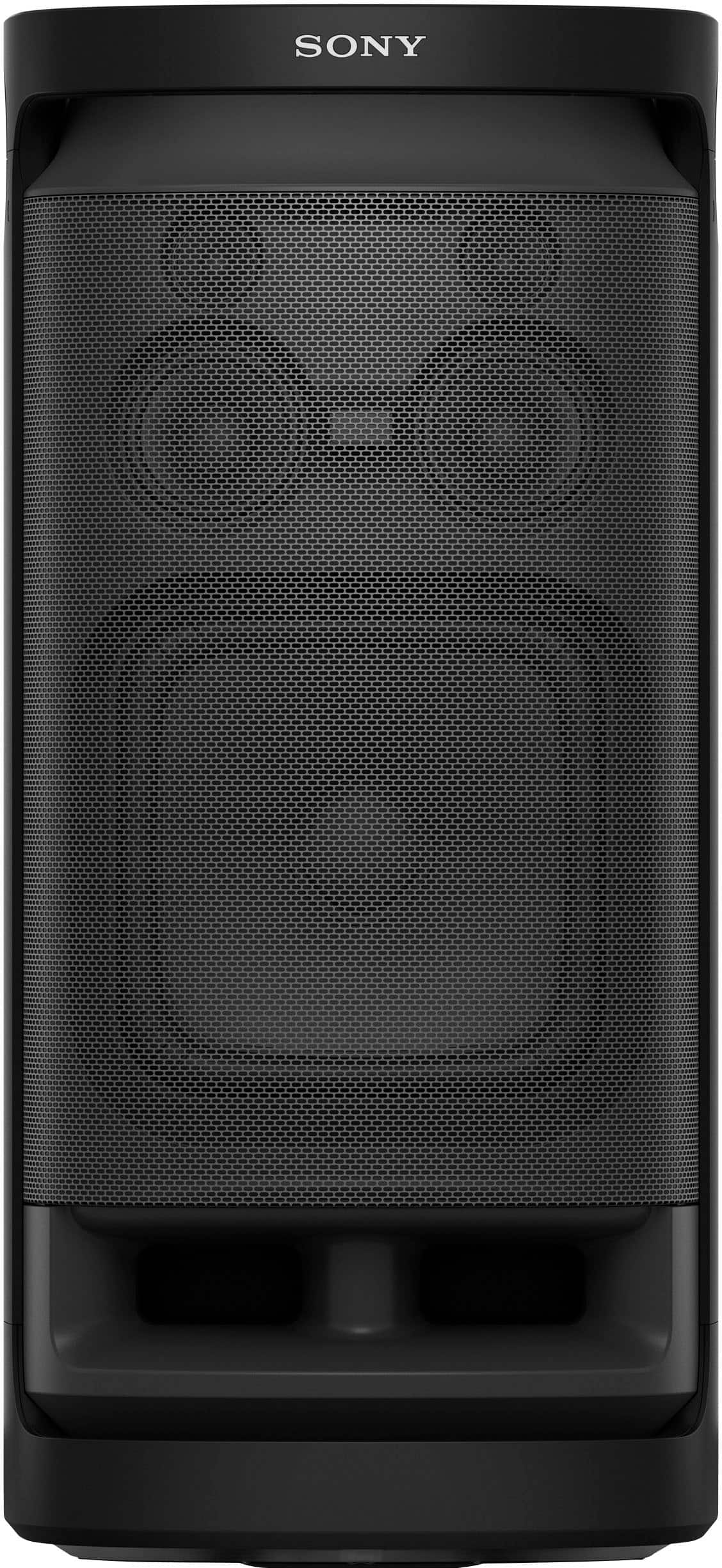
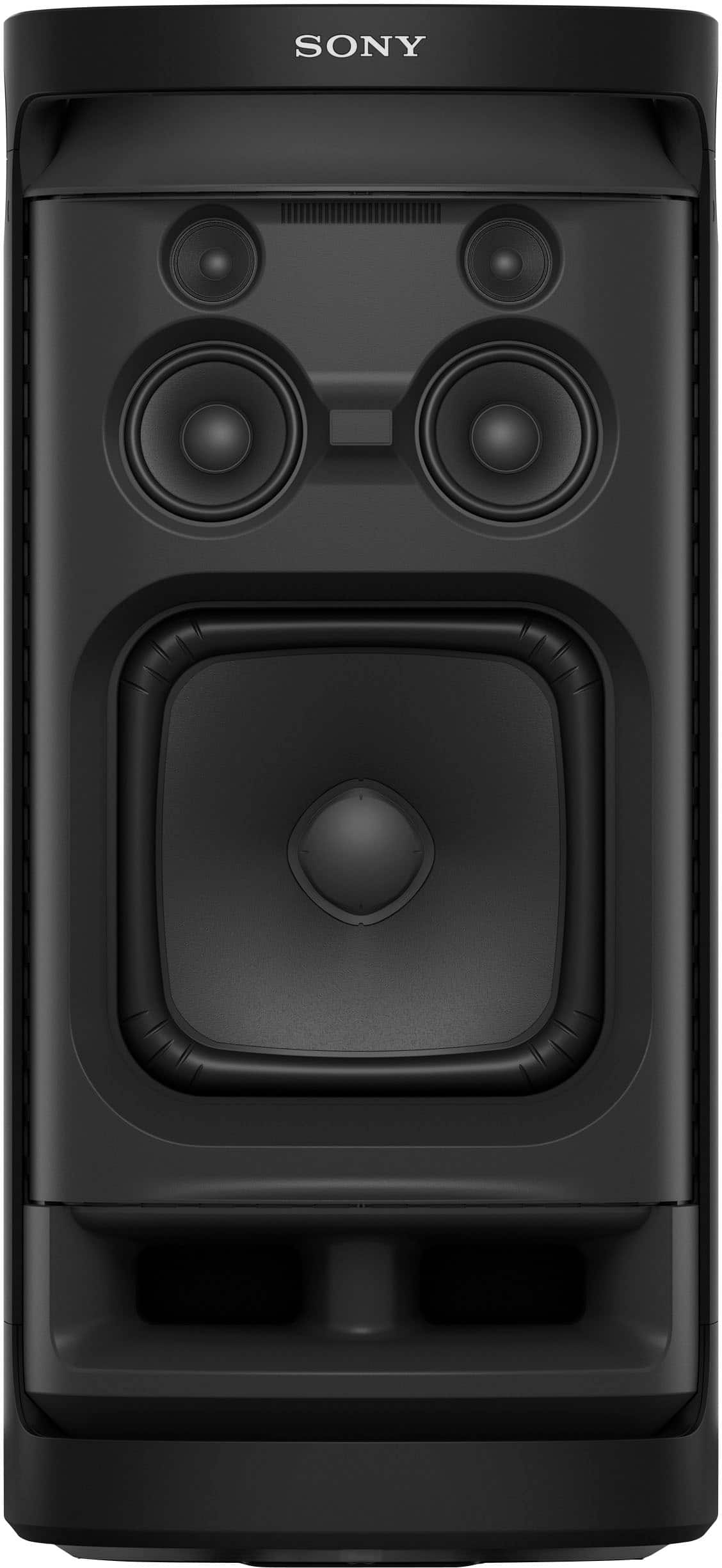
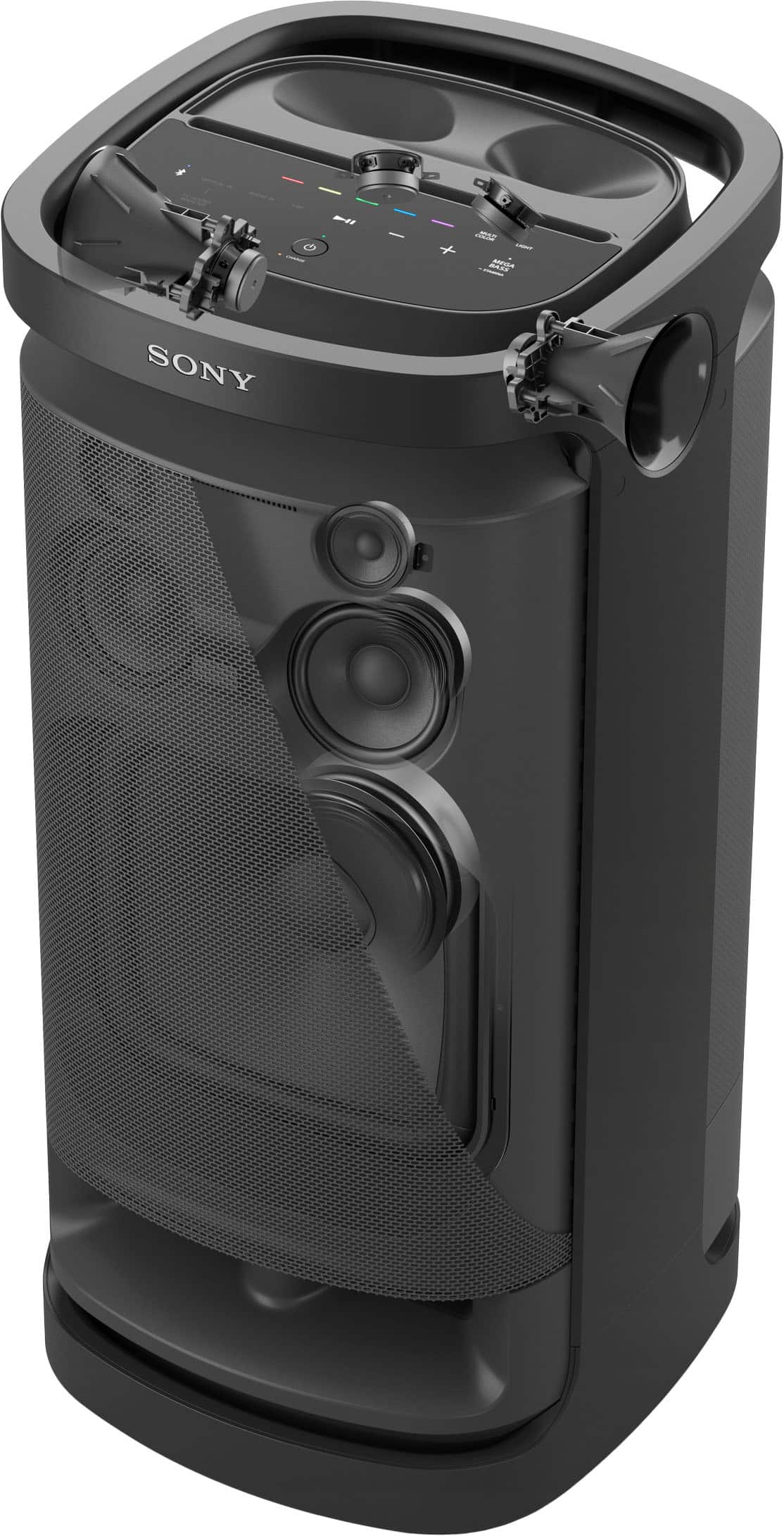
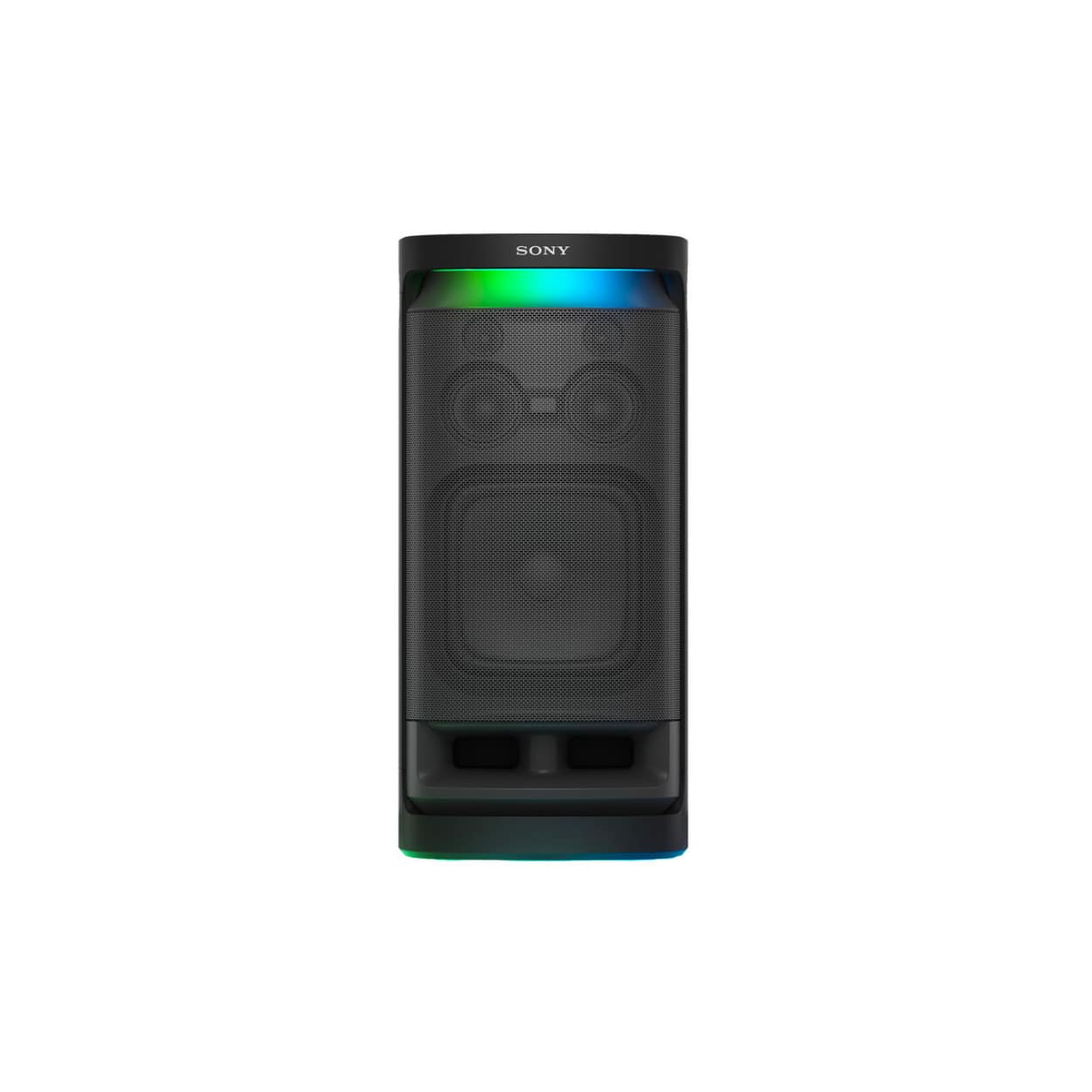
The Sony SRS-XV900 takes a no-compromise approach to audio engineering. Its centerpiece is a massive 12.6-inch X-Balanced woofer—Sony's rectangular driver design that increases surface area while reducing distortion. This driver works alongside two 4.72-inch midrange drivers and an impressive six tweeters positioned around the entire speaker cabinet for true 360-degree sound dispersion.
This omnidirectional tweeter arrangement is more than a marketing feature. Having tweeters (the small drivers that handle high frequencies) pointed in multiple directions means everyone at your gathering hears crisp vocals and detailed highs, regardless of where they're standing relative to the speaker. Most speakers beam their high frequencies primarily forward, creating sweet spots and dead zones.
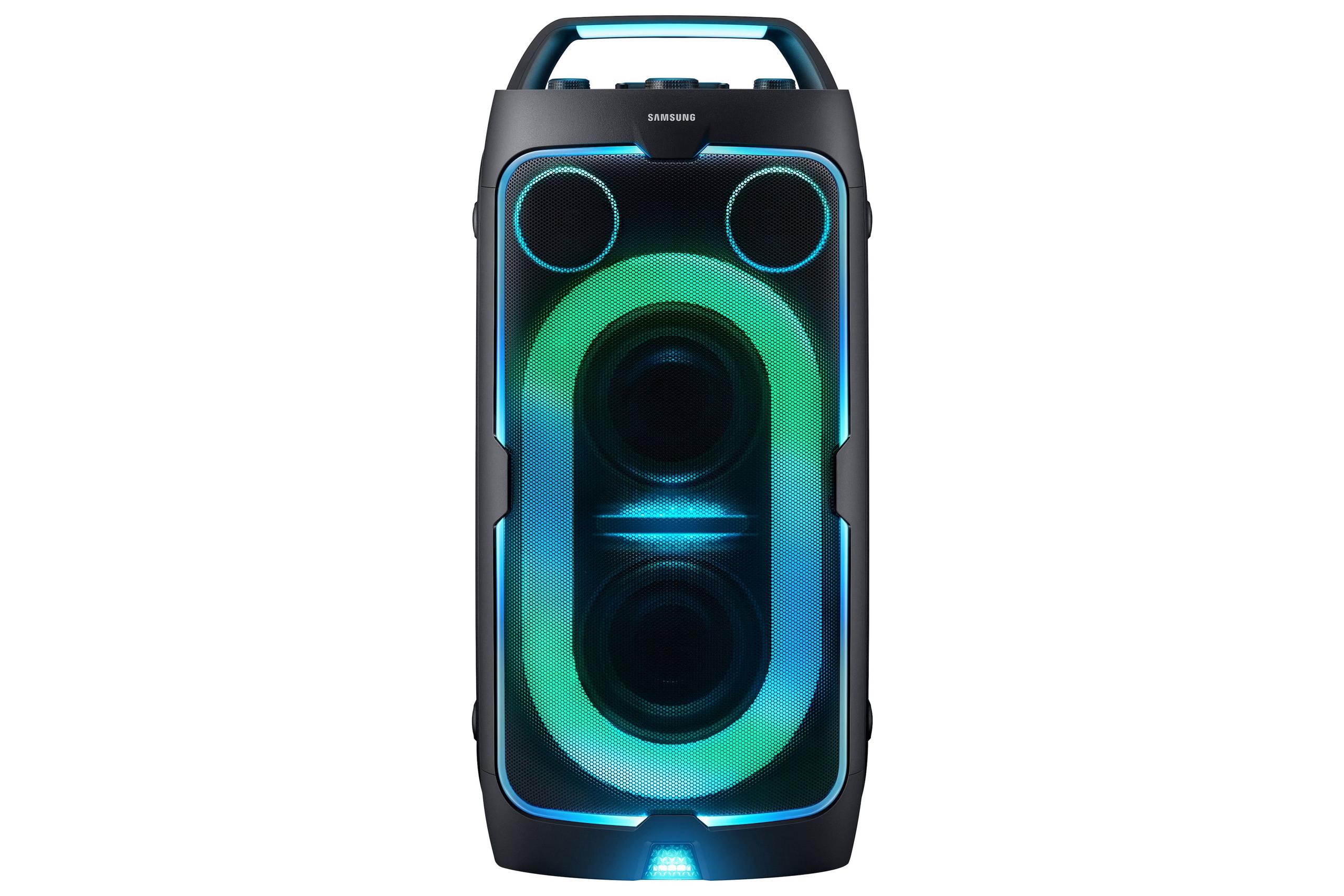
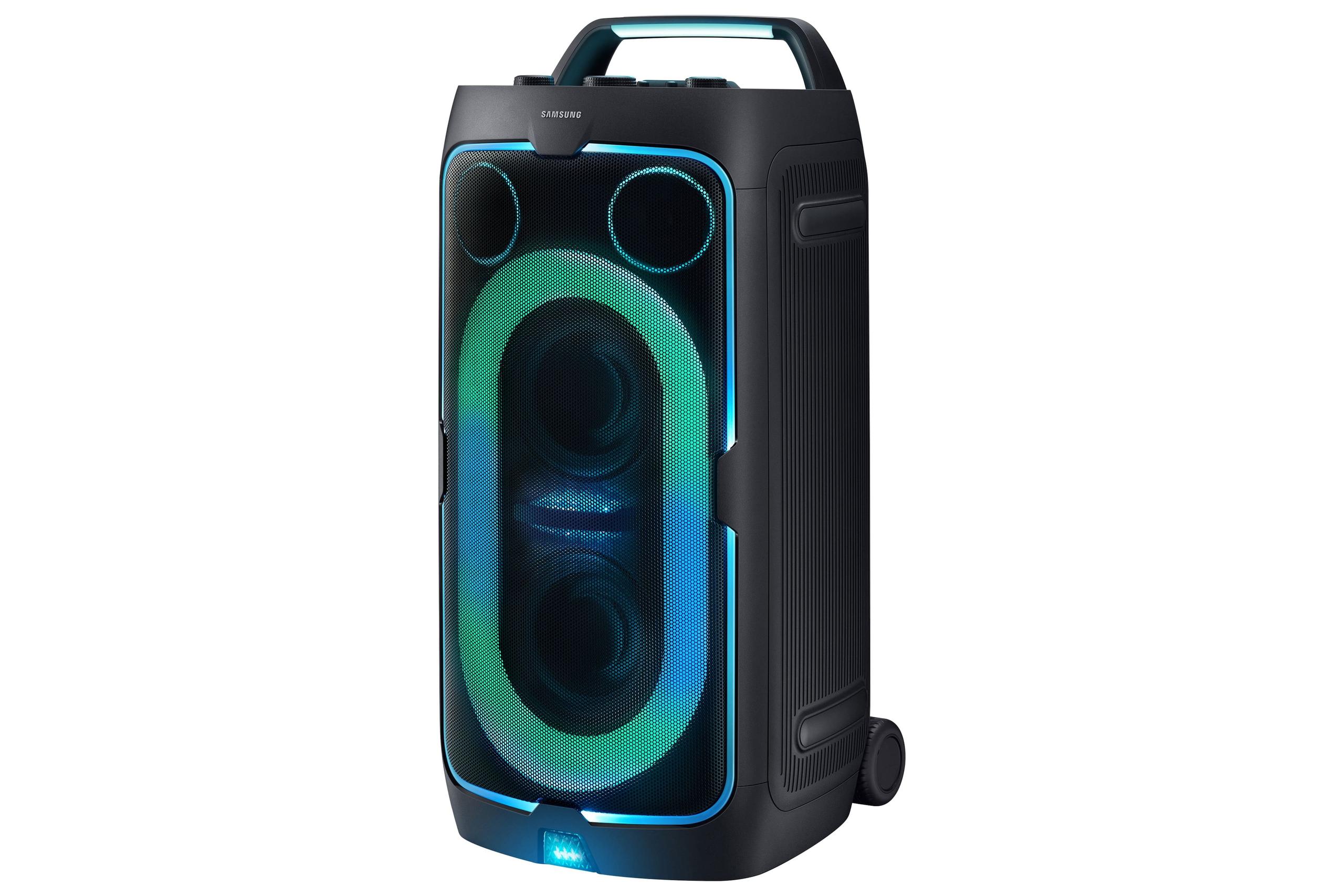
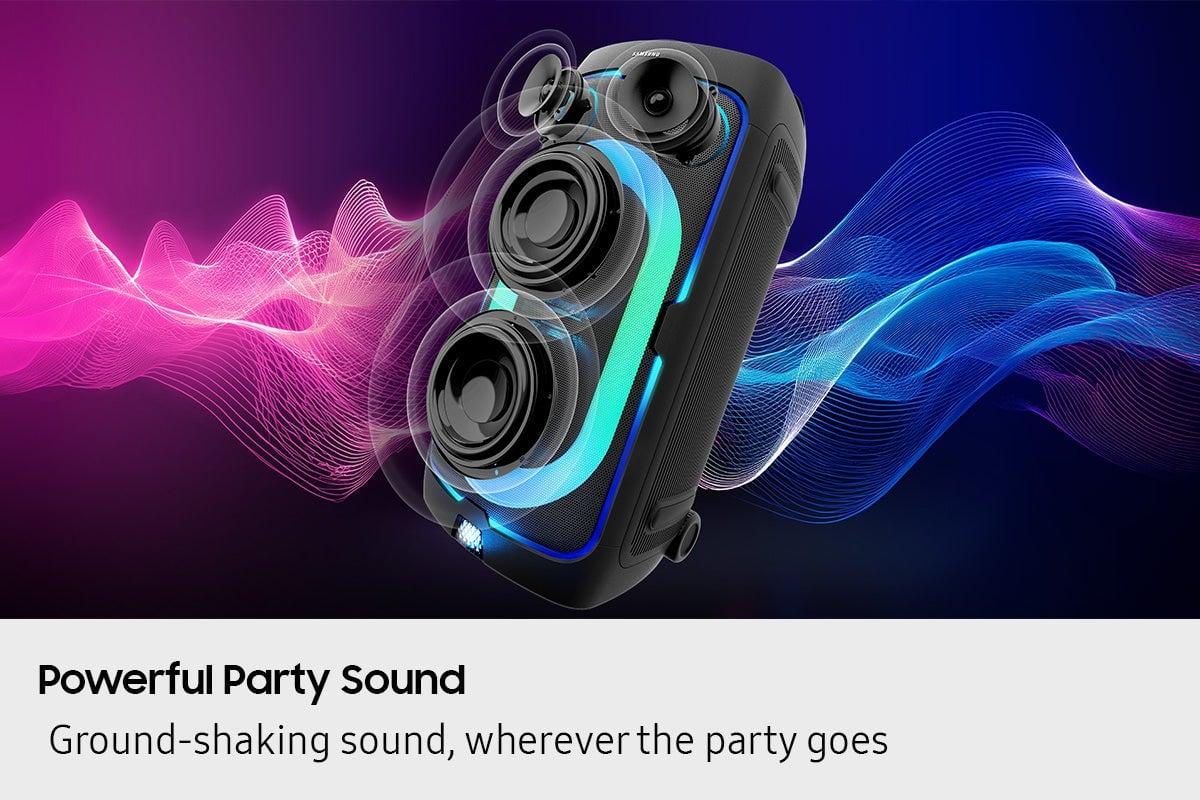
The Samsung MX-ST50F, while using fewer drivers, employs thoughtful engineering with its dual 6.5-inch woofers and pair of 1-inch dome tweeters. Samsung's Waveguide technology shapes how sound waves disperse from the tweeters, optimizing coverage patterns. While not as comprehensive as Sony's six-tweeter approach, this design still provides good sound distribution at a significantly lower manufacturing cost.
Here's where the technical specifications translate into real-world performance differences. The Sony SRS-XV900 achieves an impressive 20Hz-20kHz frequency response. That 20Hz lower limit is significant—it means the speaker can reproduce the deepest bass frequencies in modern music without rolling off. For context, many competing speakers, including premium models from JBL, only reach down to 30Hz or higher.
This deep bass extension, combined with Sony's DSEE (Digital Sound Enhancement Engine) processing and support for high-quality LDAC Bluetooth codec, creates noticeably superior audio fidelity. LDAC transmits three times more data than standard Bluetooth, preserving more musical detail during wireless transmission.
The Samsung MX-ST50F doesn't publish detailed frequency response specifications, but user reports and professional reviews suggest more typical performance for its price range. While it delivers satisfying bass and clear highs, it doesn't match the Sony's depth of low-frequency reproduction or overall audio resolution.
Both speakers handle power differently, and this affects real-world performance significantly. The Sony SRS-XV900 maintains consistent 100W power consumption whether running on AC power or its internal battery. This is unusual and impressive—most large portable speakers reduce power output dramatically when operating on battery to preserve runtime.
The Samsung MX-ST50F showcases this common compromise clearly: 240W on AC power but only 90W on battery. That's more than a 60% power reduction when unplugged. While 90W is still substantial, the difference in maximum volume and bass impact between plugged and unplugged operation is noticeable.
This power consistency gives the Sony a significant advantage for events where AC power isn't available. You get the same room-filling performance whether the speaker is plugged in or running on battery.
Battery performance separates good portable speakers from great ones. The Sony SRS-XV900 delivers an exceptional 25 hours of continuous playback—among the longest in its category. This extended runtime comes without sacrificing audio performance, as the speaker maintains full power output throughout the battery's discharge cycle.
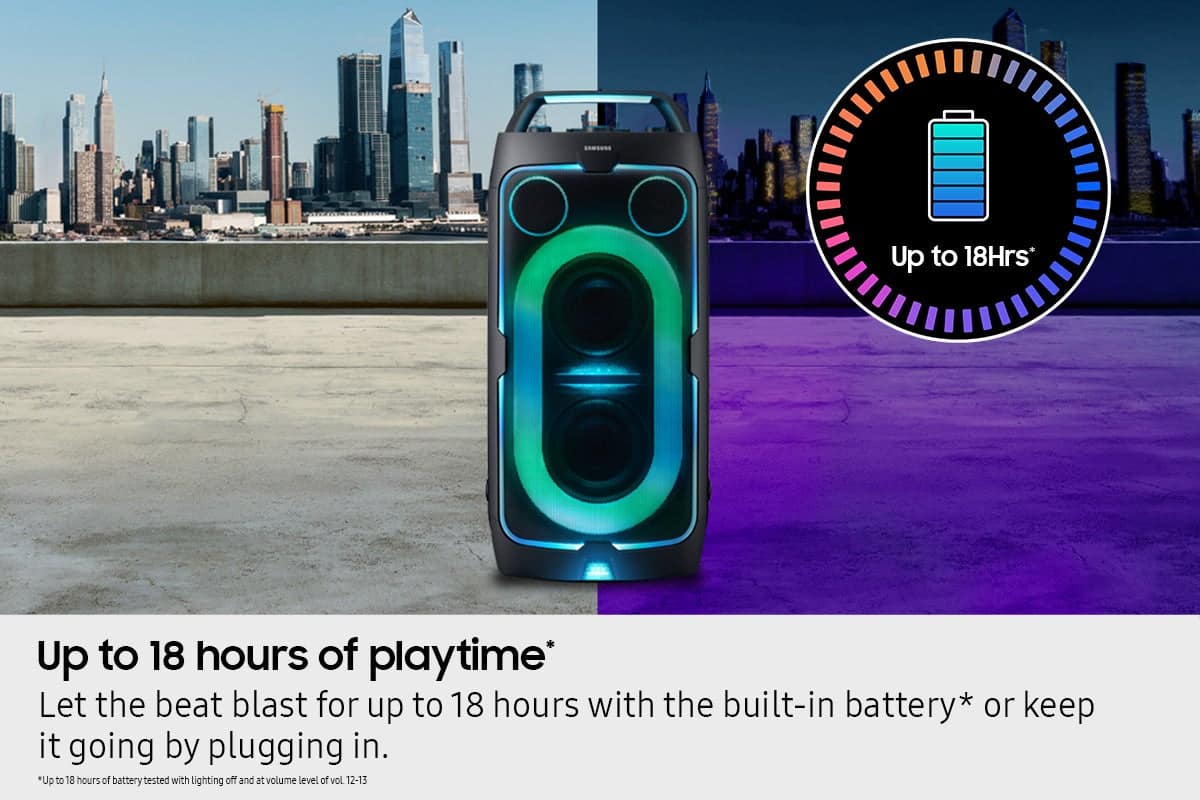
The Samsung MX-ST50F offers 18 hours of rated battery life, which is respectable but shorter than Sony's offering. However, Samsung includes a practical advantage: the battery is user-replaceable. For extended events or commercial use, being able to swap in a fresh battery instead of waiting for charging can be valuable.
Both speakers function as power banks, allowing you to charge phones and other devices. The Sony provides slightly more charging power at 7.5W output.
The charging time difference is minimal—around 3 hours for both speakers to reach full capacity. More importantly, both support pass-through charging, meaning you can use them while plugged in without affecting battery health.
Both speakers support modern Bluetooth standards, but with different emphases. The Sony SRS-XV900 uses Bluetooth 5.2 with support for premium audio codecs including LDAC, AAC, and SBC. This codec variety ensures optimal audio quality regardless of your source device—Android phones particularly benefit from LDAC support.
The Samsung MX-ST50F focuses on convenience with multi-device Bluetooth connection, allowing simultaneous pairing with two smartphones. This feature enables seamless music handoffs between party guests without the usual disconnection and reconnection process.
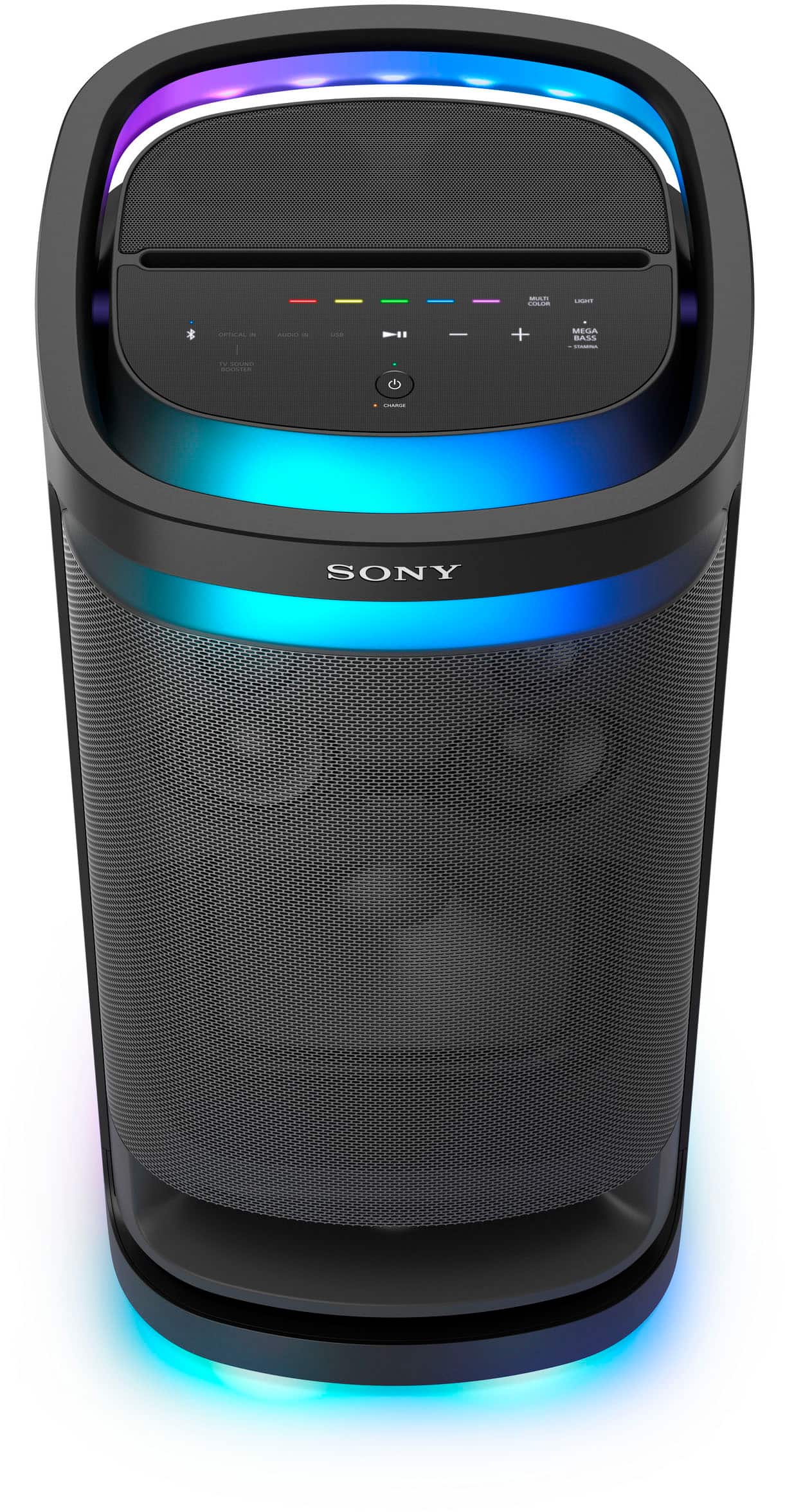
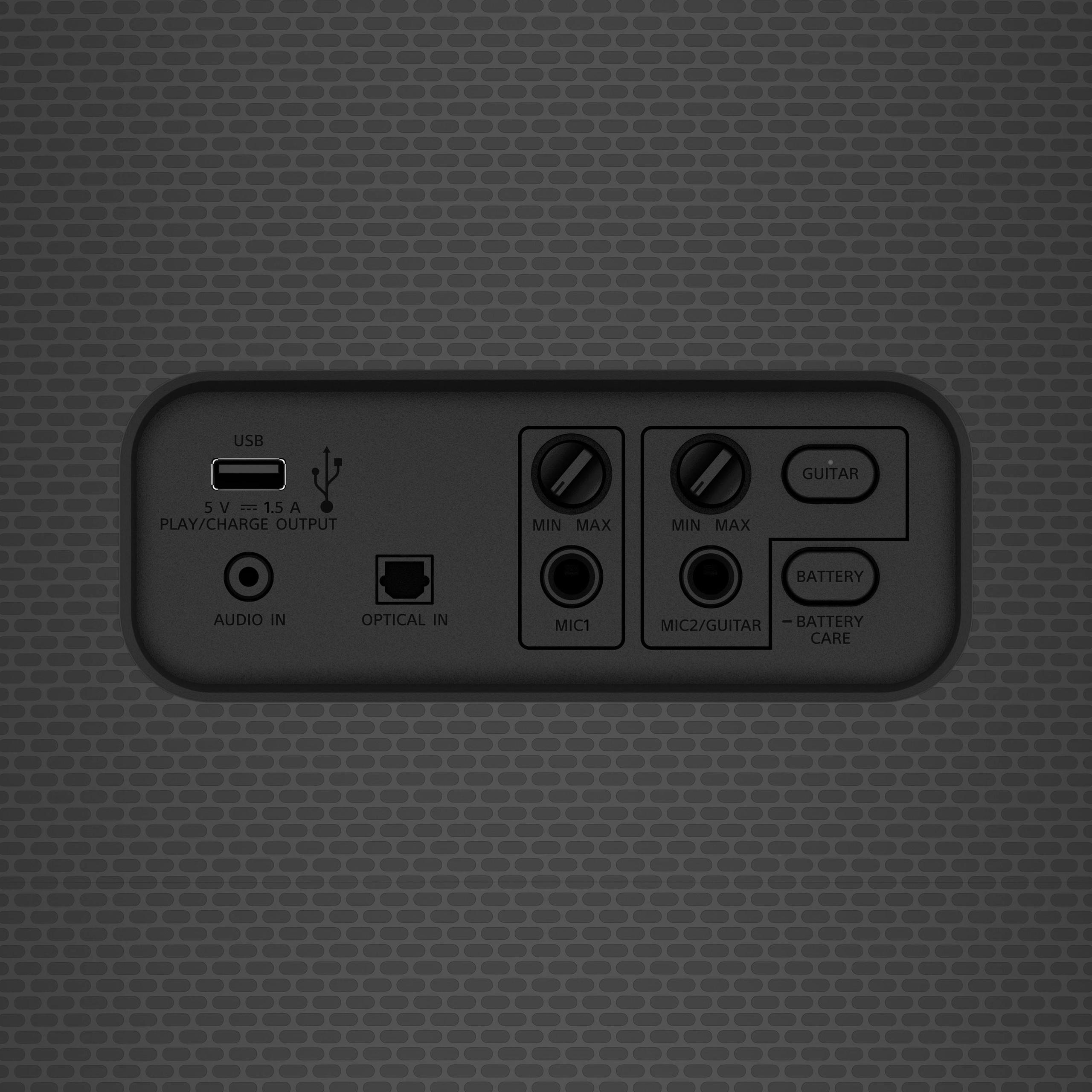
Here's where the speakers diverge significantly in target applications. The Sony SRS-XV900 includes comprehensive connectivity that extends beyond typical party speaker use. Its optical digital input transforms it into a legitimate TV sound system upgrade—something virtually no other portable speaker offers. The inclusion of both microphone and guitar inputs with individual volume controls makes it suitable for live performance applications.
USB-A connectivity on both speakers supports direct music playback from flash drives, but the Sony also functions as a USB host for charging and data transfer.
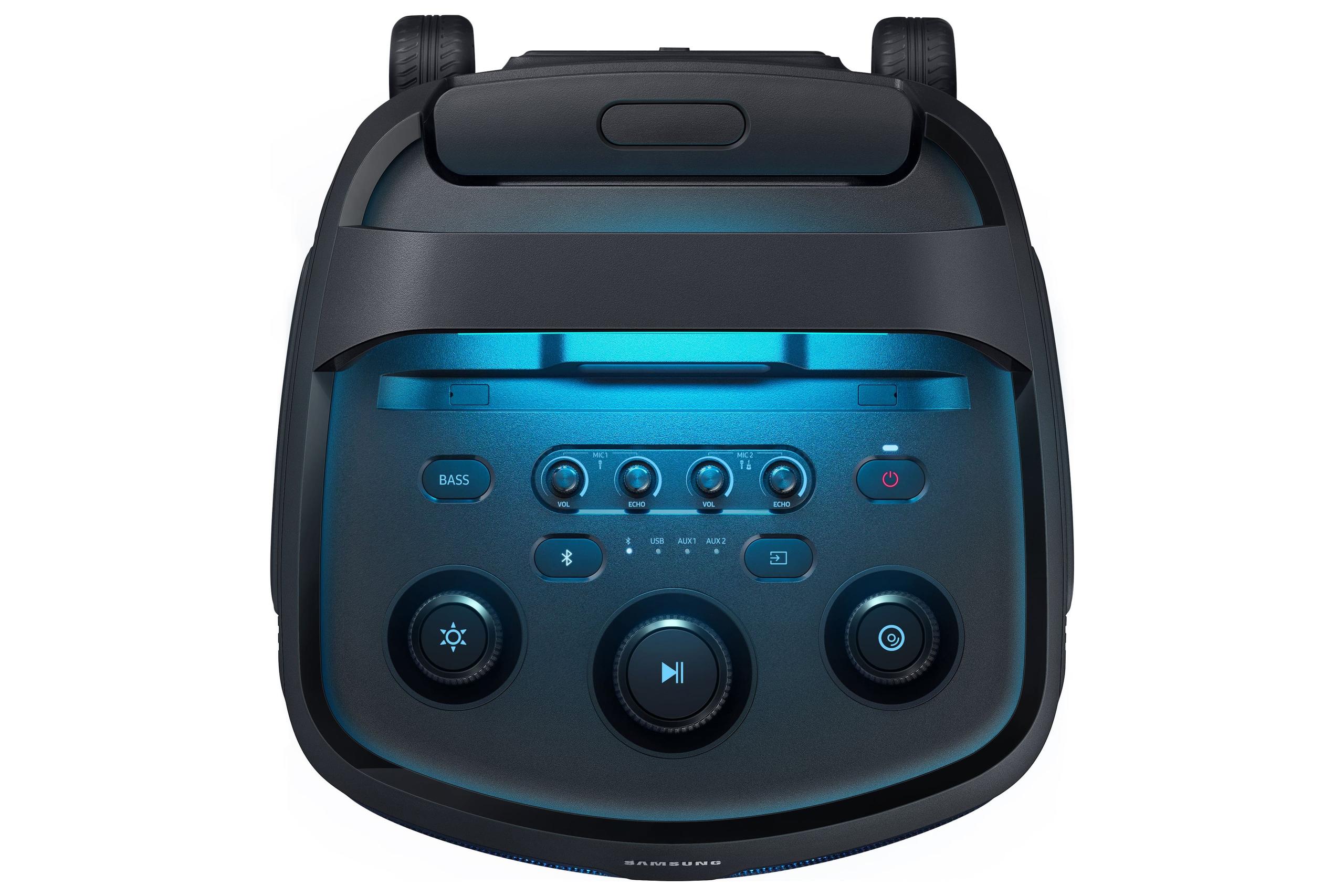
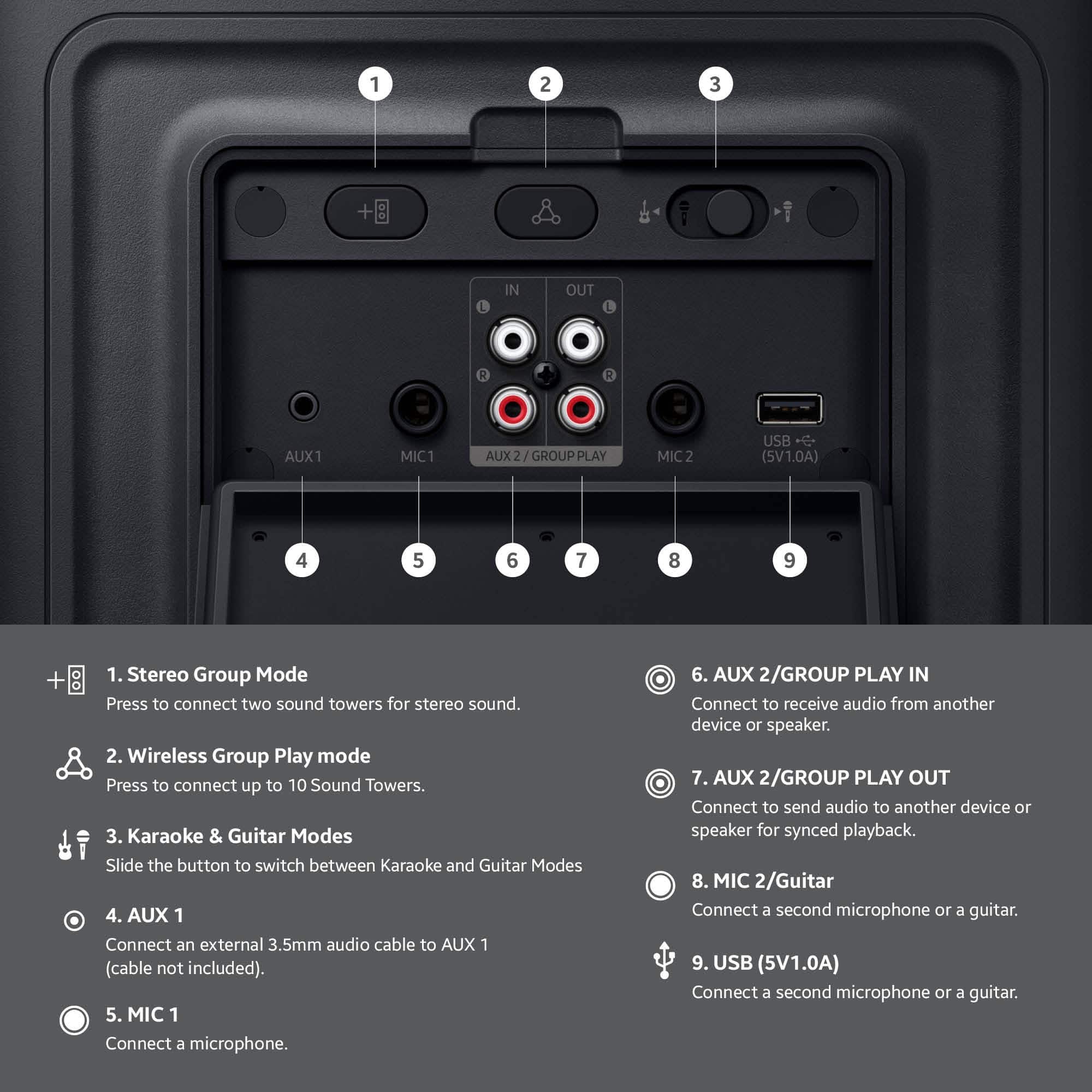
The Samsung MX-ST50F includes standard connectivity options—3.5mm analog input, USB for music playback, and microphone inputs for karaoke. While comprehensive enough for most party applications, it lacks the professional-grade options that make the Sony suitable for home theater or live performance use.
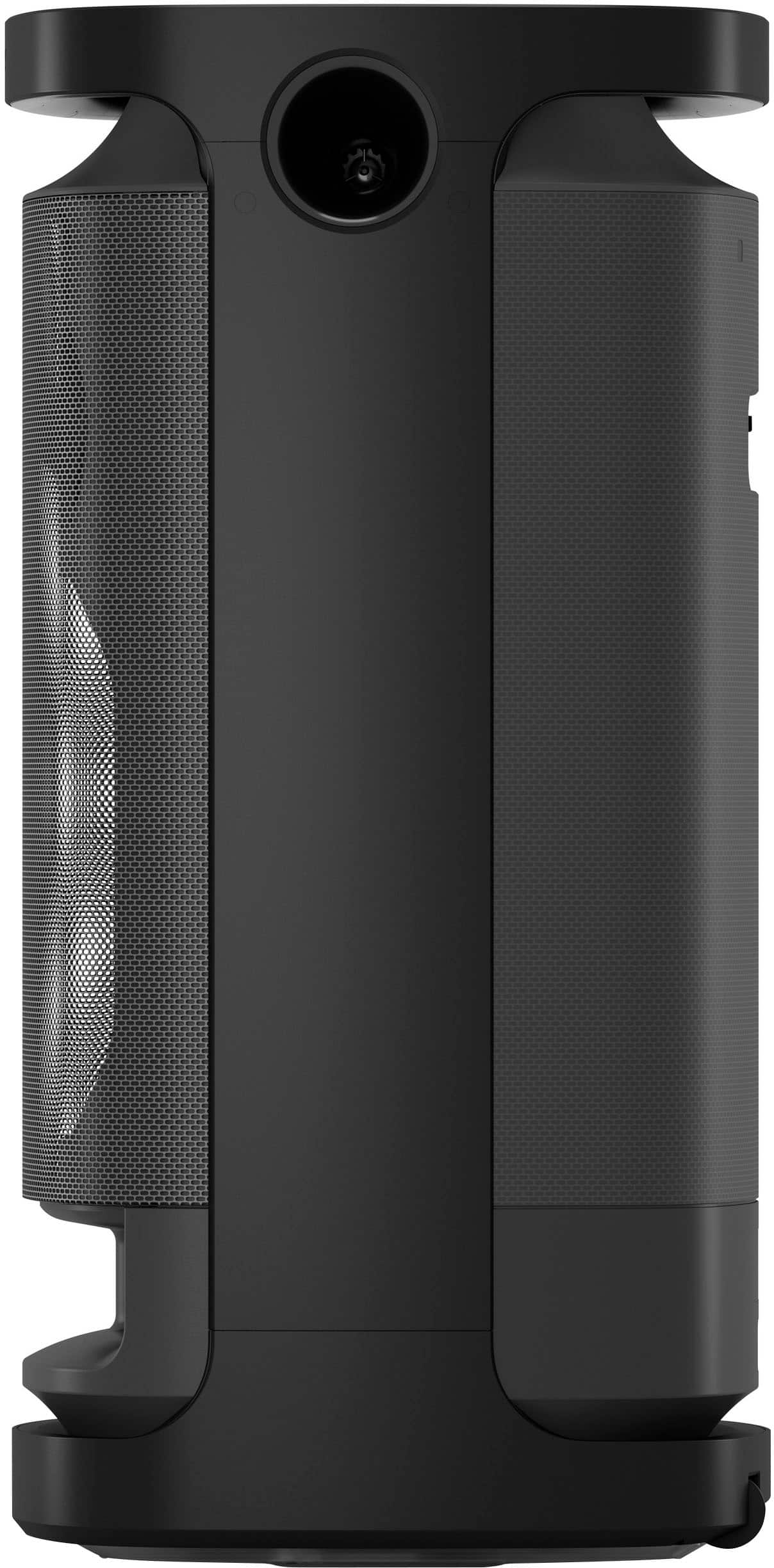
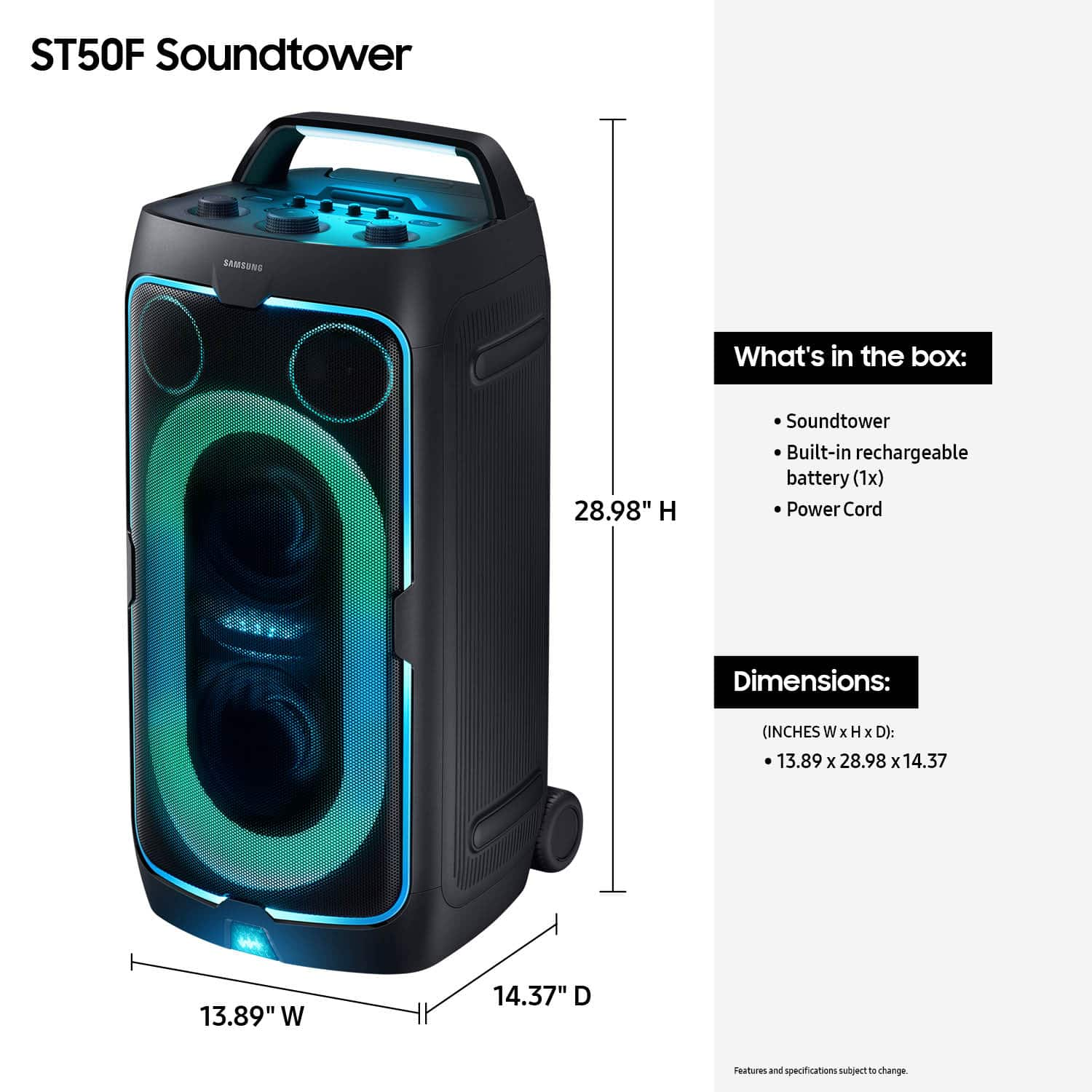
Despite both being "portable," these speakers interpret mobility differently. The Sony SRS-XV900 weighs approximately 59 pounds and measures over 34 inches tall. It includes wheels and integrated handles with LED lighting underneath, but moving it requires commitment. The build quality feels premium throughout, with substantial materials and precise construction.
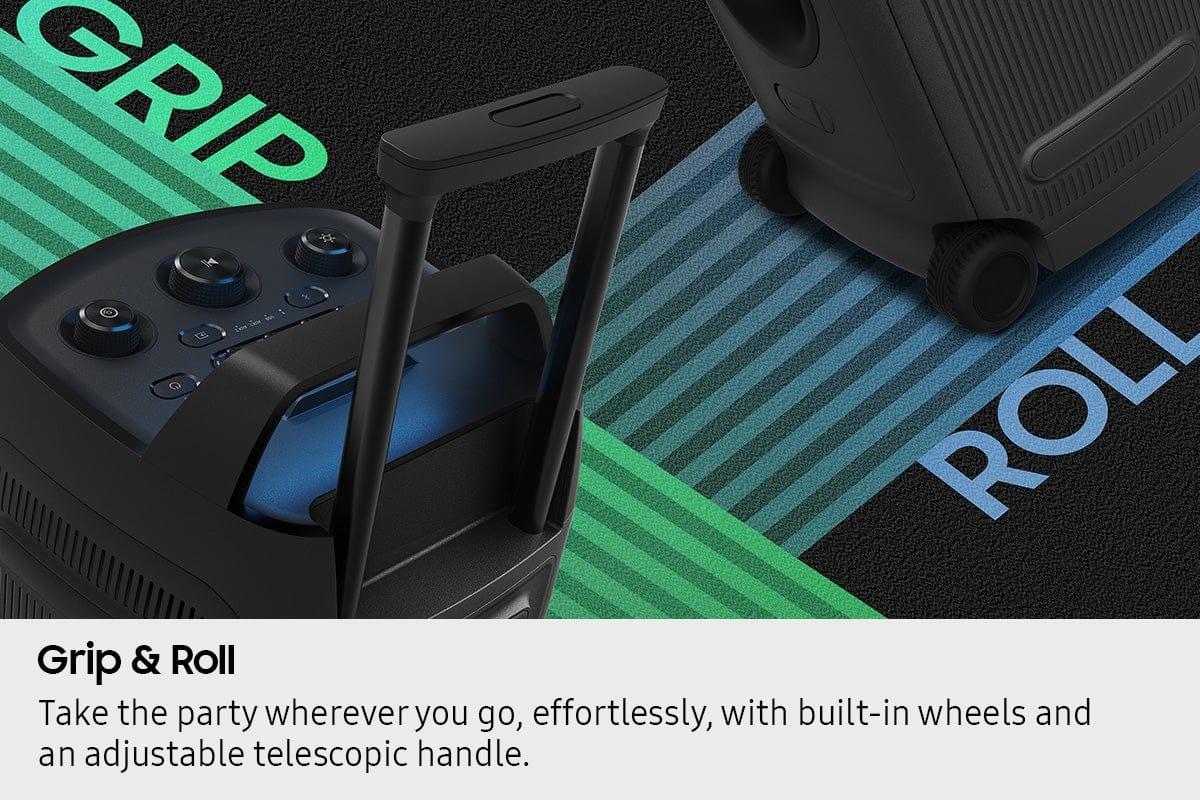
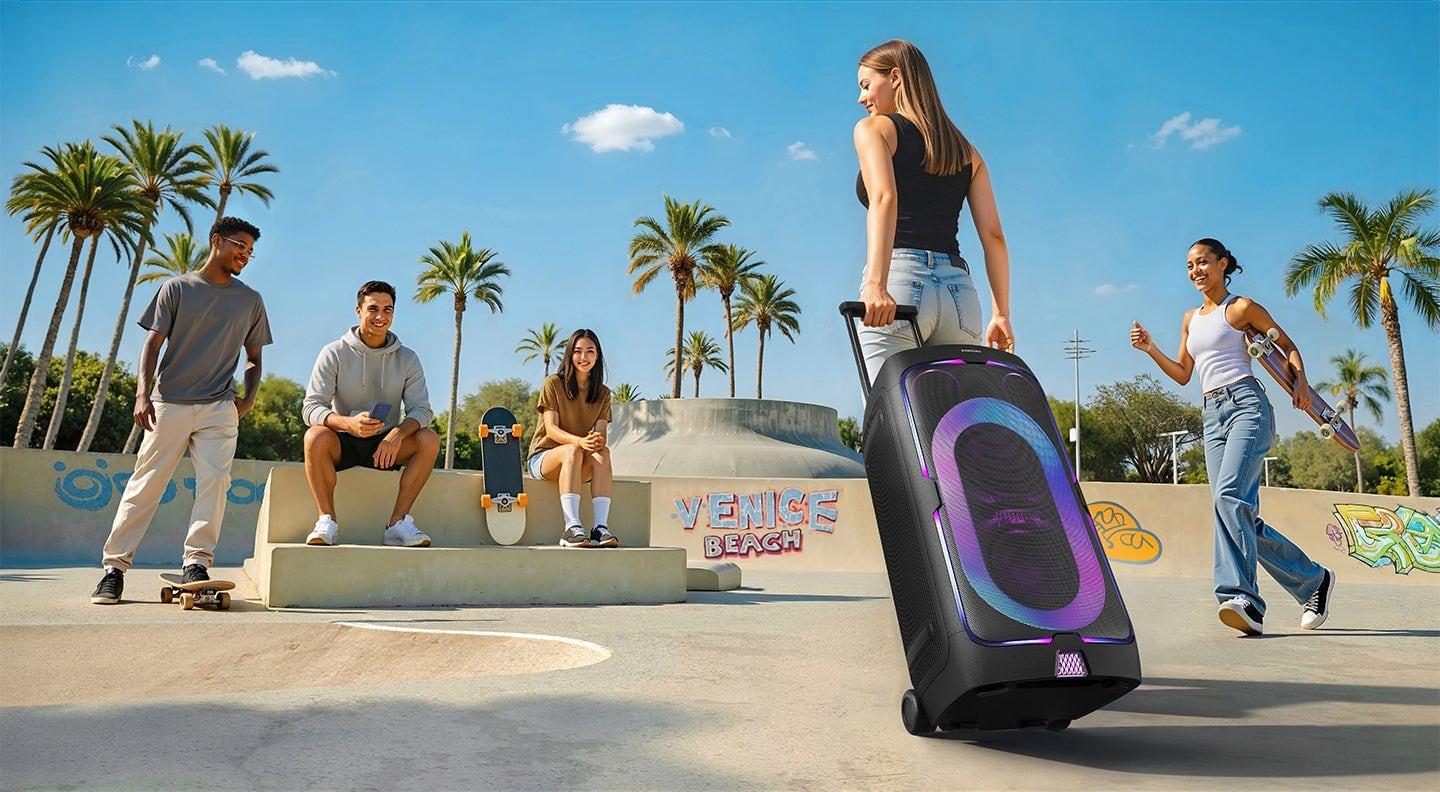
The Samsung MX-ST50F takes a more practical approach at around 41 pounds with a telescopic handle and wheels. The geometric design looks modern and the build quality is solid, though not quite matching the Sony's premium feel. The significantly lower weight makes a real difference when actually transporting the speaker.
This represents one of the Samsung's clearest advantages: IPX4 splash resistance. This rating means protection against water splashes from any direction—enough for poolside use or light rain but not submersion. For outdoor parties, this protection provides peace of mind that the Sony simply cannot match, as it lacks any weather resistance rating.
The absence of weather protection on the Sony SRS-XV900 seems like a significant oversight for a speaker marketed for parties, which often happen outdoors. This limitation essentially restricts the Sony to indoor or covered outdoor use.
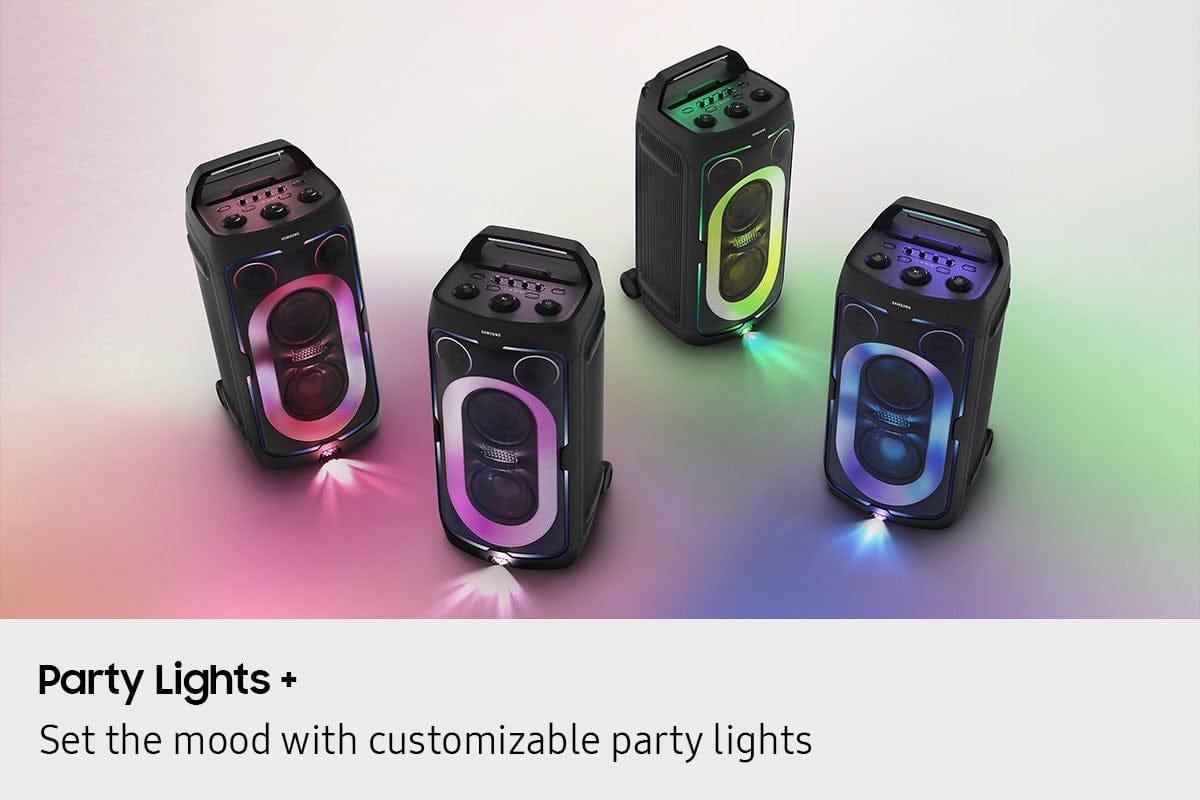
Both speakers include customizable lighting, but with different approaches. The Samsung MX-ST50F makes lighting a central feature with its Party Lights+ system. Six patterns and five mood presets create dynamic visual effects across five lighting zones, including reactive lighting that pulses and changes with the music in real-time.
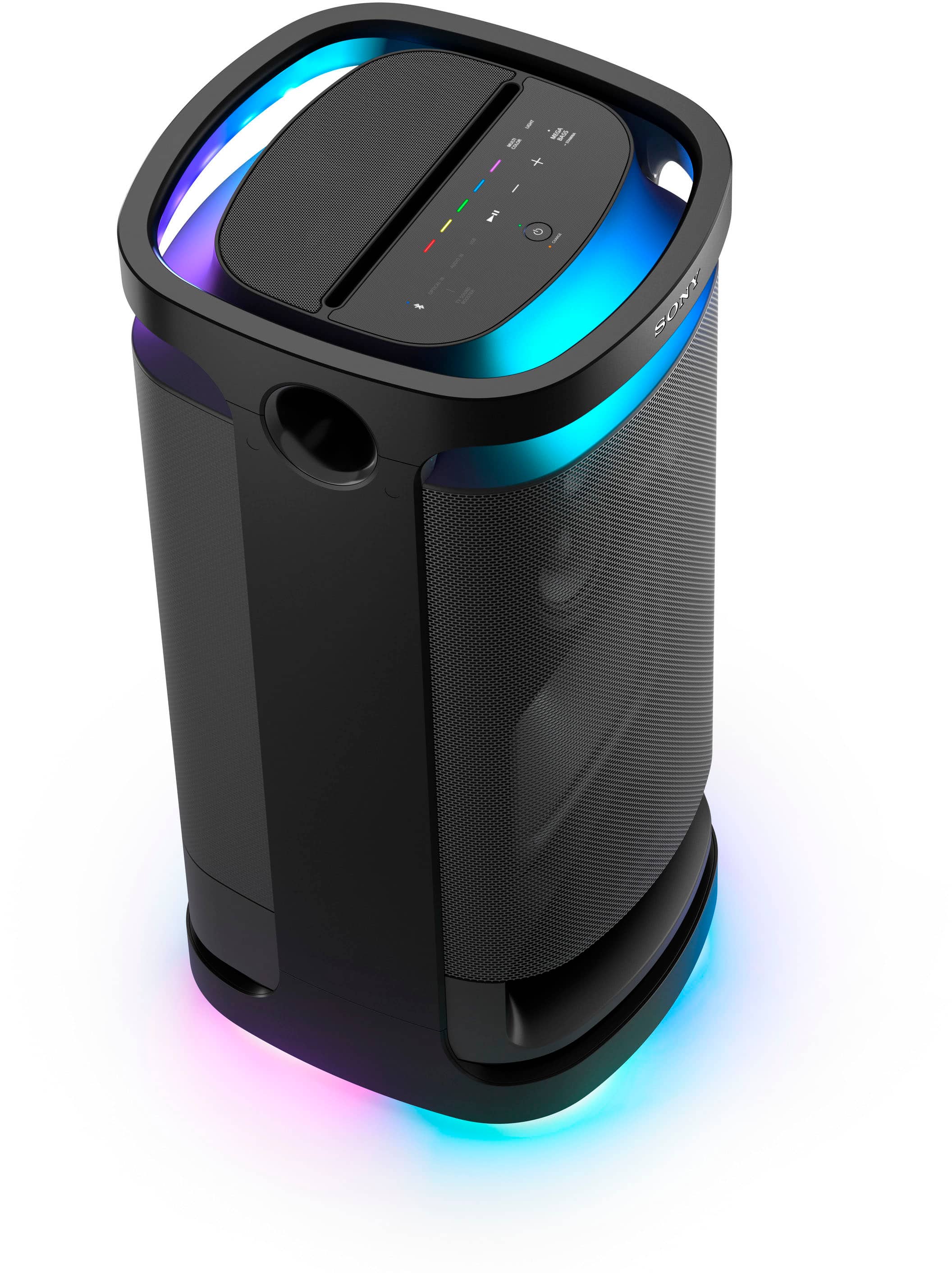
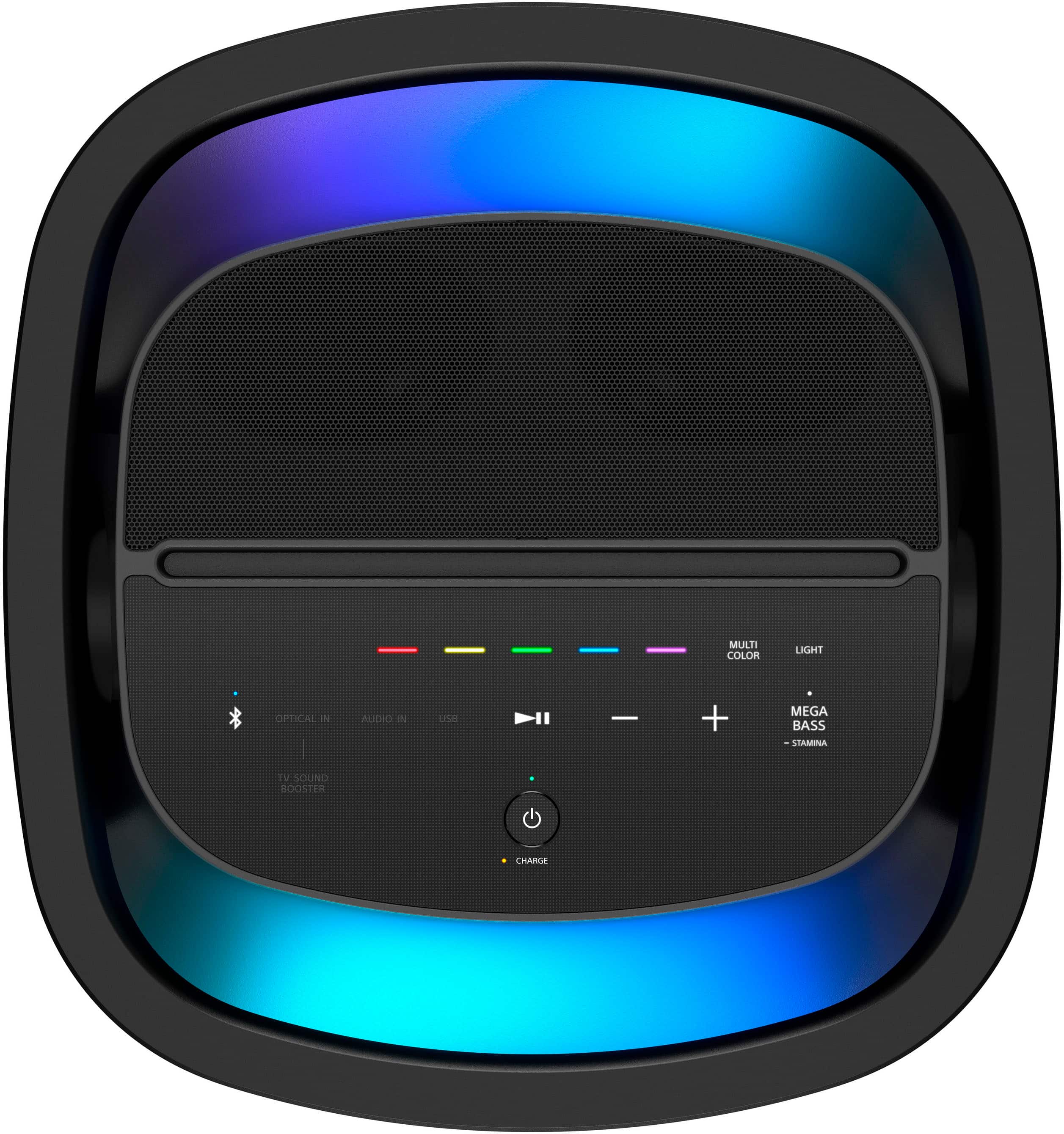
The Sony SRS-XV900 includes ambient lighting with two LED rings but focuses less on visual spectacle and more on subtle enhancement. The lighting under the handles adds a premium touch but doesn't compete with Samsung's more comprehensive light show capabilities.
The Sony uses two apps: Sony Music Center for basic control and Fiestable for party-specific features including DJ effects and lighting control. The dual-app approach can be confusing but provides comprehensive functionality once mastered.
Samsung's single Sound Tower app offers streamlined control over lighting, sound modes, DJ effects, and speaker pairing. The interface feels more intuitive and party-focused from the start.
Both speakers include karaoke capabilities, but the Sony SRS-XV900 goes further with voice effects, scoring systems, and echo control. The microphone and guitar inputs feature individual volume controls and the audio processing maintains quality even with multiple simultaneous inputs.
The Samsung MX-ST50F includes solid karaoke features with voice recording and voice removal capabilities, plus 12 sampling sounds and various DJ effects. While not as comprehensive as Sony's offering, these features satisfy most casual karaoke and DJ applications.
Both speakers support connecting multiple units, but through different technologies. The Sony SRS-XV900 uses Party Connect protocol, supporting up to 100 compatible Sony speakers in a synchronized network. Two units can also pair for true wireless stereo, creating distinct left and right channels.
The Samsung MX-ST50F employs Auracast technology for connecting up to 10 speakers, and also supports stereo pairing. While the maximum speaker count is lower, 10 units would create overwhelmingly loud output for any reasonable application.
The Sony SRS-XV900 uniquely bridges party speaker and home theater applications. Its optical digital input connects directly to TVs, providing significantly better audio than built-in TV speakers. The TV Sound Booster mode specifically optimizes audio for television content, enhancing dialogue clarity and soundtrack impact.
For someone wanting a single speaker that serves both party and daily TV use, the Sony offers genuine dual-purpose functionality. The Samsung MX-ST50F, while connectable to TVs through analog inputs, doesn't provide the same optimization or convenience for home theater use.
At the time of writing, the pricing difference between these speakers is substantial—the Samsung MX-ST50F typically costs several hundred dollars less than the Sony SRS-XV900. This price gap reflects genuine performance and feature differences rather than just brand premium.
The Samsung delivers impressive value for casual party use. Its combination of solid audio performance, comprehensive lighting, weather resistance, and lighter weight makes it ideal for users who want effective party audio without premium pricing. The speaker handles typical party music well and provides the visual entertainment many users prioritize.
The Sony SRS-XV900 justifies its premium pricing through superior audio engineering, longer battery life, professional connectivity options, and consistent performance across all operating modes. For users who prioritize sound quality above other considerations, or who want a speaker that doubles as a home theater upgrade, the Sony provides value through versatility and performance.
Choose the Sony SRS-XV900 if you're serious about audio quality and want a speaker that excels in multiple scenarios. Its exceptional bass depth, consistent power output, and TV integration capabilities make it ideal for audiophiles, home theater enthusiasts, or anyone who frequently hosts indoor gatherings where sound quality matters most. The premium price pays for genuine performance advantages and build quality.
The Samsung MX-ST50F suits users who want solid performance, impressive features, and practical outdoor capability without premium pricing. Its weather resistance, lighter weight, advanced lighting, and intuitive app make it perfect for pool parties, tailgating, or any scenario where visual entertainment and practical durability matter more than audiophile-grade sound quality.
Both speakers succeeded in their respective approaches to party audio. The Sony pushes technical boundaries while Samsung optimizes for real-world party use and value. Understanding which philosophy matches your priorities and budget will lead you to the right choice for your specific needs.
| Sony SRS-XV900 | Samsung MX-ST50F |
|---|---|
| Audio Power Output - Critical for room-filling volume | |
| 100W consistent (AC and battery) | 240W AC / 90W battery (major drop unplugged) |
| Bass Driver Configuration - Determines low-end impact | |
| Single 12.6" X-Balanced woofer (20Hz response) | Dual 6.5" woofers (higher frequency limit) |
| Sound Distribution - Affects coverage in large spaces | |
| 6 tweeters for 360° omnidirectional sound | 2 tweeters with Waveguide technology |
| Battery Life - Essential for untethered use | |
| 25 hours continuous playback | 18 hours (replaceable battery design) |
| Weight and Portability - Balance of power vs mobility | |
| 58.6 lbs with wheels and handles | 40.6 lbs with telescopic handle and wheels |
| Weather Resistance - Important for outdoor parties | |
| No weather protection | IPX4 splash-resistant rating |
| Connectivity Options - Versatility for different sources | |
| Optical, USB-A, analog, mic, guitar inputs | USB, analog, mic inputs (no optical) |
| Bluetooth Audio Quality - Wireless sound fidelity | |
| LDAC, AAC, SBC codecs supported | Standard SBC, AAC codecs |
| Party Lighting Features - Visual entertainment value | |
| Two LED rings with ambient effects | Party Lights+ with 6 patterns, 5 zones |
| Multi-Speaker Connectivity - Expanding your setup | |
| Party Connect (up to 100 speakers) | Auracast (up to 10 speakers) |
| TV Integration - Home theater versatility | |
| TV Sound Booster mode via optical input | Basic analog connection only |
| App Control and DJ Features - User experience | |
| Dual apps (Music Center + Fiestable) | Single Sound Tower app with DJ effects |
The Sony SRS-XV900 delivers superior sound quality with its 12.6-inch X-Balanced woofer and six-tweeter omnidirectional design. It achieves 20Hz bass response and supports high-quality LDAC Bluetooth codec for audiophile-grade wireless audio. The Samsung MX-ST50F offers good sound quality with dual 6.5-inch woofers but doesn't match the Sony's depth or audio fidelity.
The Samsung MX-ST50F is better for outdoor use thanks to its IPX4 splash-resistant rating that protects against rain and splashes. It's also lighter at 40.6 pounds versus the Sony SRS-XV900 at 58.6 pounds. The Sony lacks any weather protection, making it unsuitable for poolside or rainy conditions.
The Sony SRS-XV900 provides up to 25 hours of battery life while maintaining full performance throughout. The Samsung MX-ST50F offers 18 hours of battery life, but its power output drops significantly from 240W to 90W when running on battery versus AC power.
Yes, the Sony SRS-XV900 excels for home theater with its optical digital input and dedicated TV Sound Booster mode that enhances dialogue and soundtrack clarity. The Samsung MX-ST50F can connect to TVs through analog inputs but lacks optimization for television audio and doesn't offer the same convenience or sound quality for home theater use.
The Samsung MX-ST50F is more portable at 40.6 pounds with a telescopic handle and wheels. The Sony SRS-XV900 weighs 58.6 pounds and, while it has wheels and handles, requires more effort to move. Both include transport features, but the Samsung's lighter weight makes a noticeable difference during actual transport.
The Samsung MX-ST50F offers more comprehensive lighting with its Party Lights+ system featuring six patterns, five mood presets, and real-time music-reactive effects across five lighting zones. The Sony SRS-XV900 includes ambient LED rings that provide subtle lighting enhancement but focuses less on visual spectacle.
The Samsung MX-ST50F provides better value for casual party use, offering solid performance, weather resistance, and comprehensive features at a significantly lower price point. The Sony SRS-XV900 justifies its premium pricing through superior audio quality, longer battery life, and professional connectivity options for users who prioritize sound performance.
Both speakers support multi-speaker connectivity. The Sony SRS-XV900 uses Party Connect technology to link up to 100 compatible Sony speakers, while the Samsung MX-ST50F employs Auracast to connect up to 10 speakers. Both also support stereo pairing with a second identical unit for true left/right channel separation.
The Sony SRS-XV900 offers more advanced karaoke features with voice effects, scoring systems, echo control, and both microphone and guitar inputs with individual volume controls. The Samsung MX-ST50F includes solid karaoke capabilities with voice recording, voice removal, and DJ effects, but the Sony provides more professional-grade performance features.
The Sony SRS-XV900 supports high-quality LDAC codec along with AAC and SBC for superior wireless audio fidelity, particularly with Android devices. The Samsung MX-ST50F focuses on convenience with multi-device Bluetooth connection, allowing simultaneous pairing with two smartphones for seamless music handoffs between users.
The Sony SRS-XV900 maintains consistent 100W power output whether plugged in or running on battery, ensuring the same audio performance in both modes. The Samsung MX-ST50F experiences a significant power reduction from 240W to 90W when operating on battery, resulting in noticeably lower maximum volume and reduced bass impact when unplugged.
The Sony SRS-XV900 offers comprehensive connectivity including optical digital input, USB-A, analog inputs, and dedicated microphone/guitar ports, making it suitable for TV, gaming, and live performance applications. The Samsung MX-ST50F provides standard connectivity with USB, analog, and microphone inputs that cover most party speaker needs but lacks the professional-grade options of the Sony.
We've done our best to create useful and informative comparisons to help you decide what product to buy. Our research uses advanced automated methods to create this comparison and perfection is not possible - please contact us for corrections or questions. These are the sites we've researched in the creation of this article: bestbuy.com - youtube.com - crutchfield.com - versus.com - youtube.com - versus.com - youtube.com - comparisontabl.es - tech.hindustantimes.com - youtube.com - electronics.sony.com - youtube.com - crutchfield.com - centresdirect.co.uk - sony-asia.com - nikktech.com - sony.com - youtube.com - reliancedigital.in - sonyworld.ae - sony.com - shopjetson.com - bestbuy.com - versus.com - bestbuy.com - news.samsung.com - youtube.com - youtube.com - videoandaudiocenter.com - youtube.com - youtube.com - samsung.com - crutchfield.com - youtube.com - arrowassociatedstores.com - brandsmartusa.com - bestbuy.com - crutchfield.com - samsung.com - icecat.in - thefrogpadappliances.com - news.samsung.com

Privacy Policy
Terms and Conditions - Affiliate Policy
Home Security
© Copyright 2008-2026.
11816 Inwood Rd #1211, Dallas, TX 75244