

Large portable Bluetooth speakers have evolved dramatically over the past few years. What started as simple wireless speakers have transformed into genuine entertainment systems that can power everything from backyard BBQs to semi-professional events. Two speakers that perfectly illustrate this evolution are the Sony SRS-XV900 and the Marshall Bromley 750 – each taking a distinctly different approach to delivering massive sound in a portable package.
The Sony SRS-XV900, released in 2022, represents Sony's commitment to bringing their audio expertise to the party speaker market. Meanwhile, the Marshall Bromley 750, arriving more recently, marks Marshall's first serious entry into portable party speakers, bringing decades of amplifier heritage to a completely new category.
At the time of writing, these speakers sit in different price tiers – the Sony SRS-XV900 typically costs several hundred dollars less than the Marshall Bromley 750, making the value comparison particularly interesting. But price alone doesn't tell the whole story when you're looking at speakers designed to be the centerpiece of your entertainment setup.
Before diving into specifics, it's worth understanding what separates party speakers from regular Bluetooth speakers. These aren't just scaled-up versions of portable speakers – they're engineered for completely different scenarios. Where a regular Bluetooth speaker might be designed for personal listening or small gatherings, party speakers need to fill large spaces with sound, often outdoors where there are no walls to help with acoustics.
The most important performance metrics for party speakers include maximum volume output (measured in decibels or dB), bass extension (how low the frequencies go, measured in Hertz or Hz), battery life for extended events, and build quality to handle transportation and weather. Bass extension is particularly crucial – the difference between a speaker that goes down to 50Hz versus 20Hz is the difference between hearing the beat and feeling it in your chest.
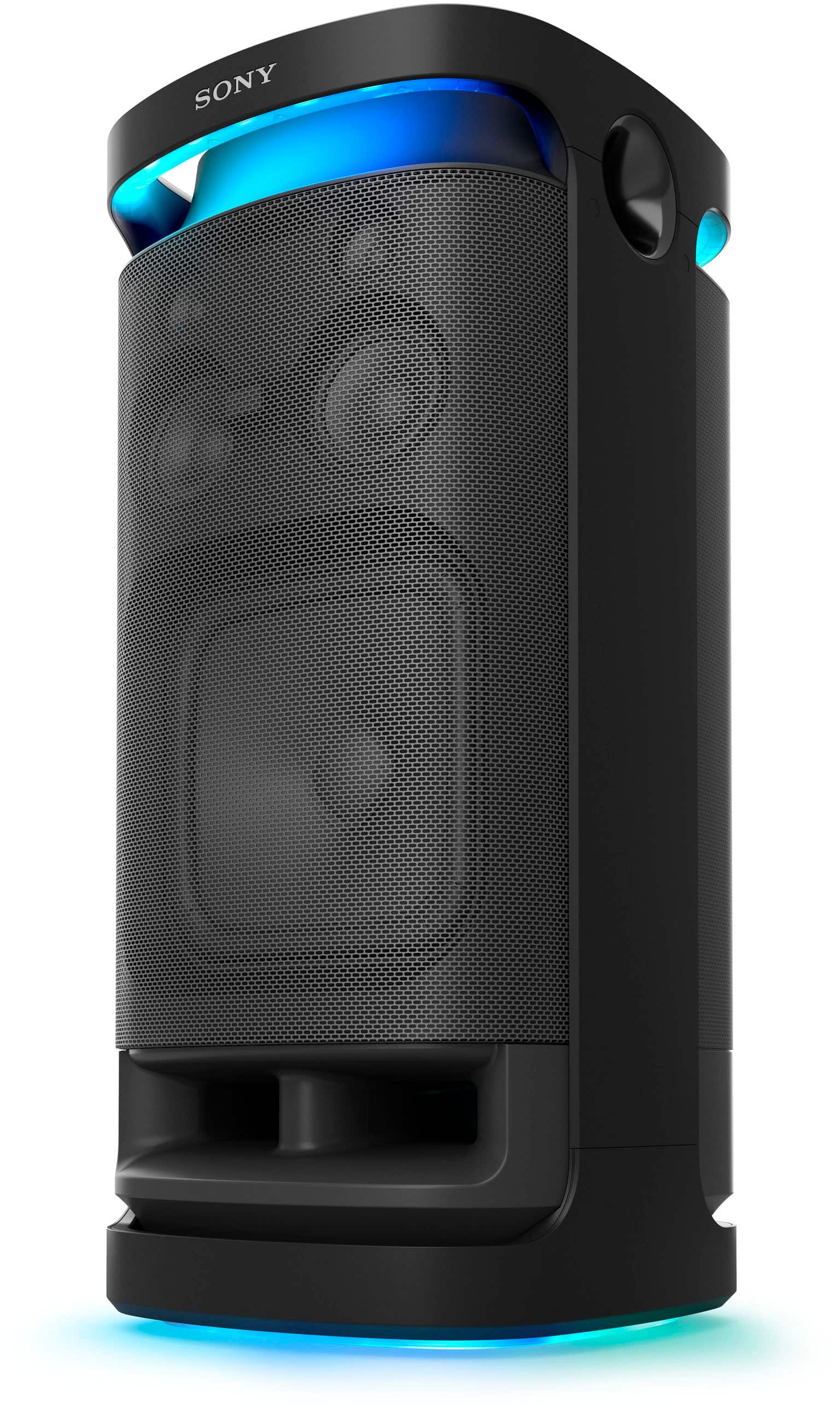
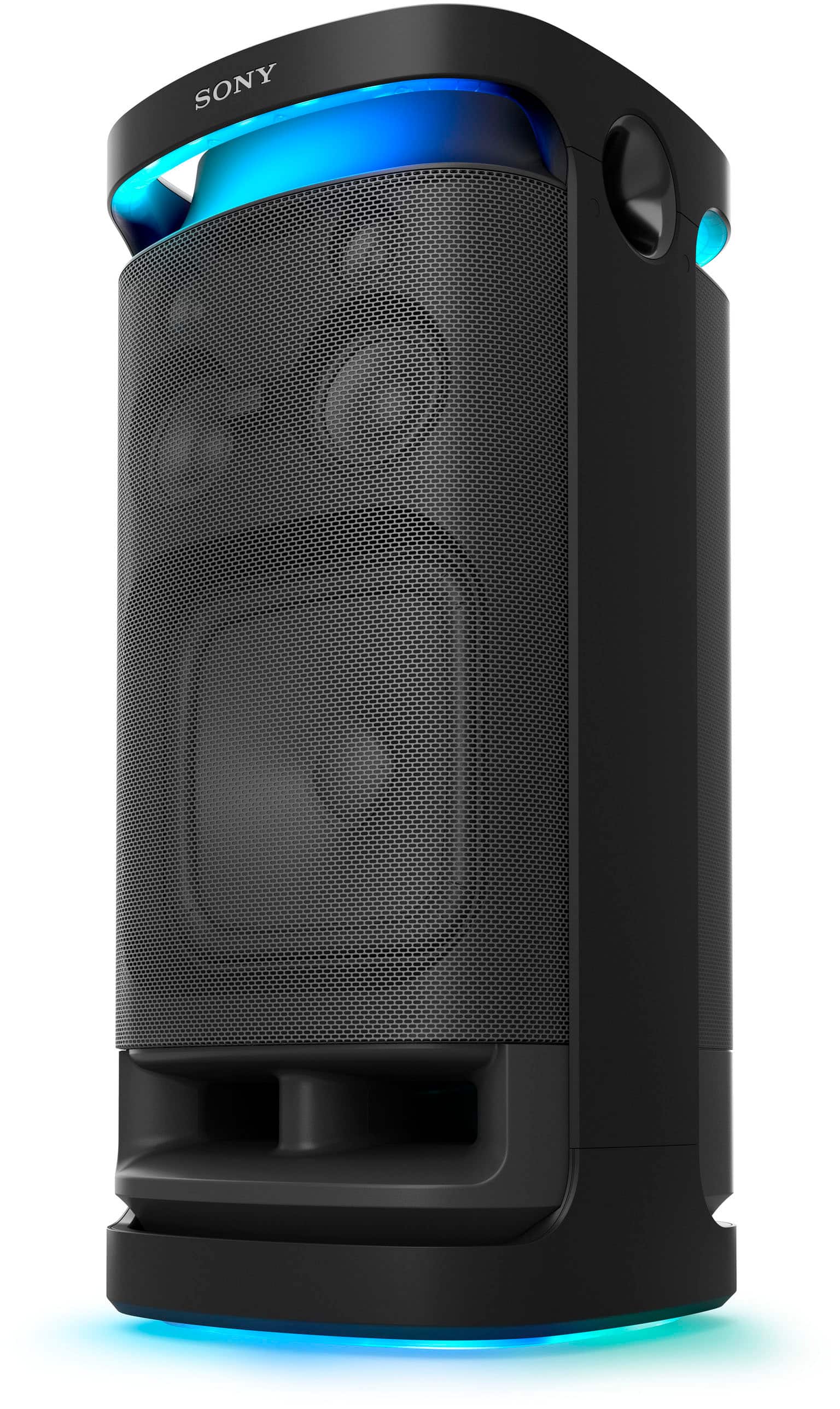
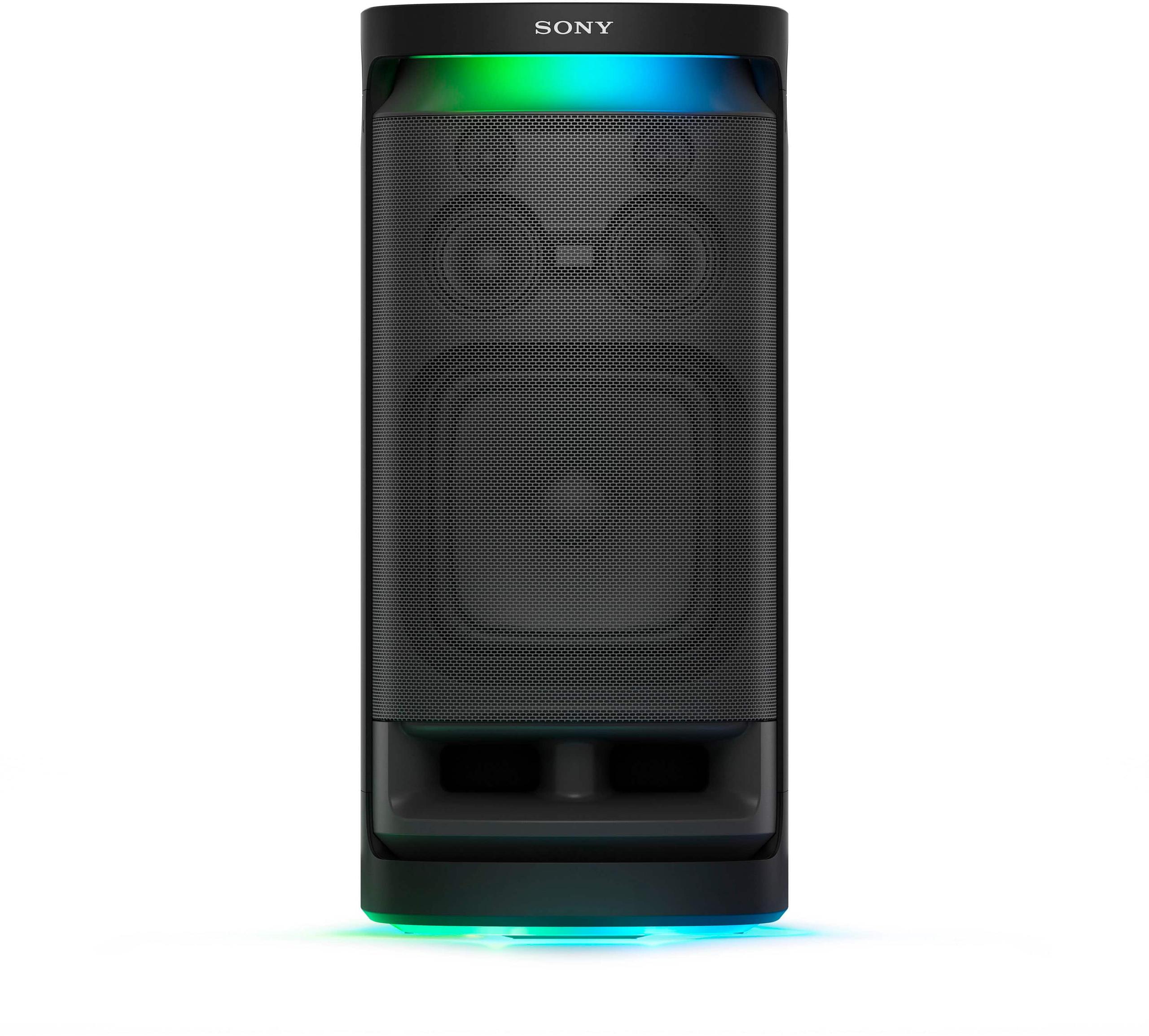
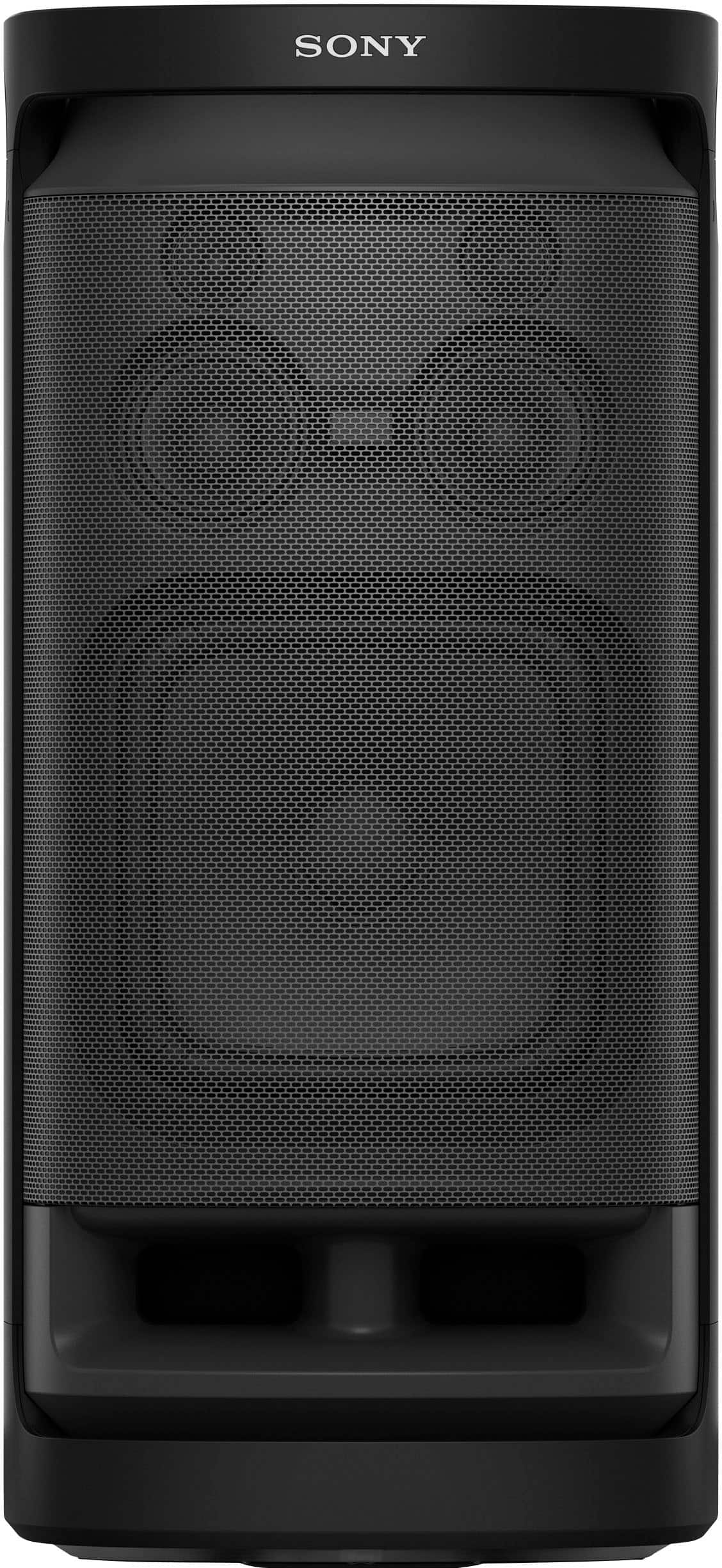
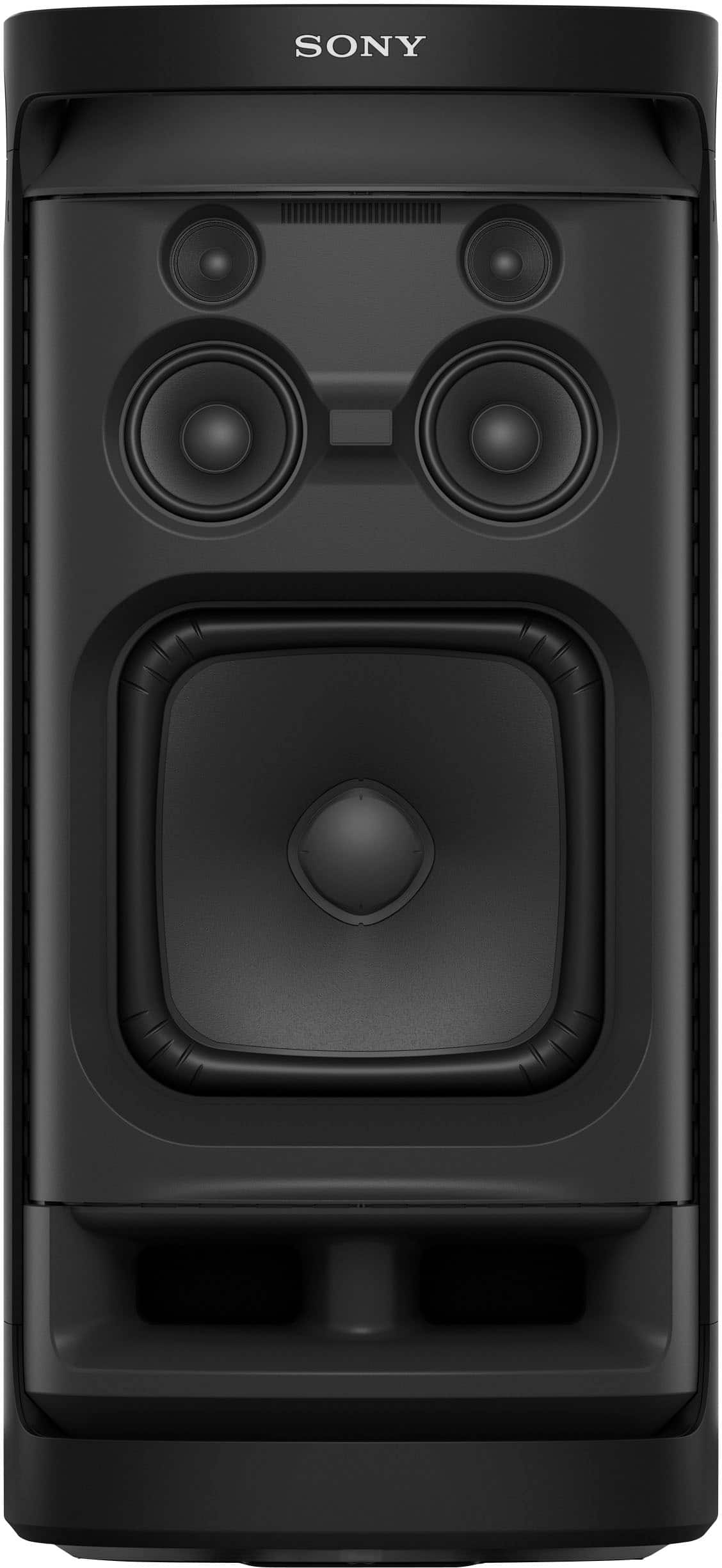
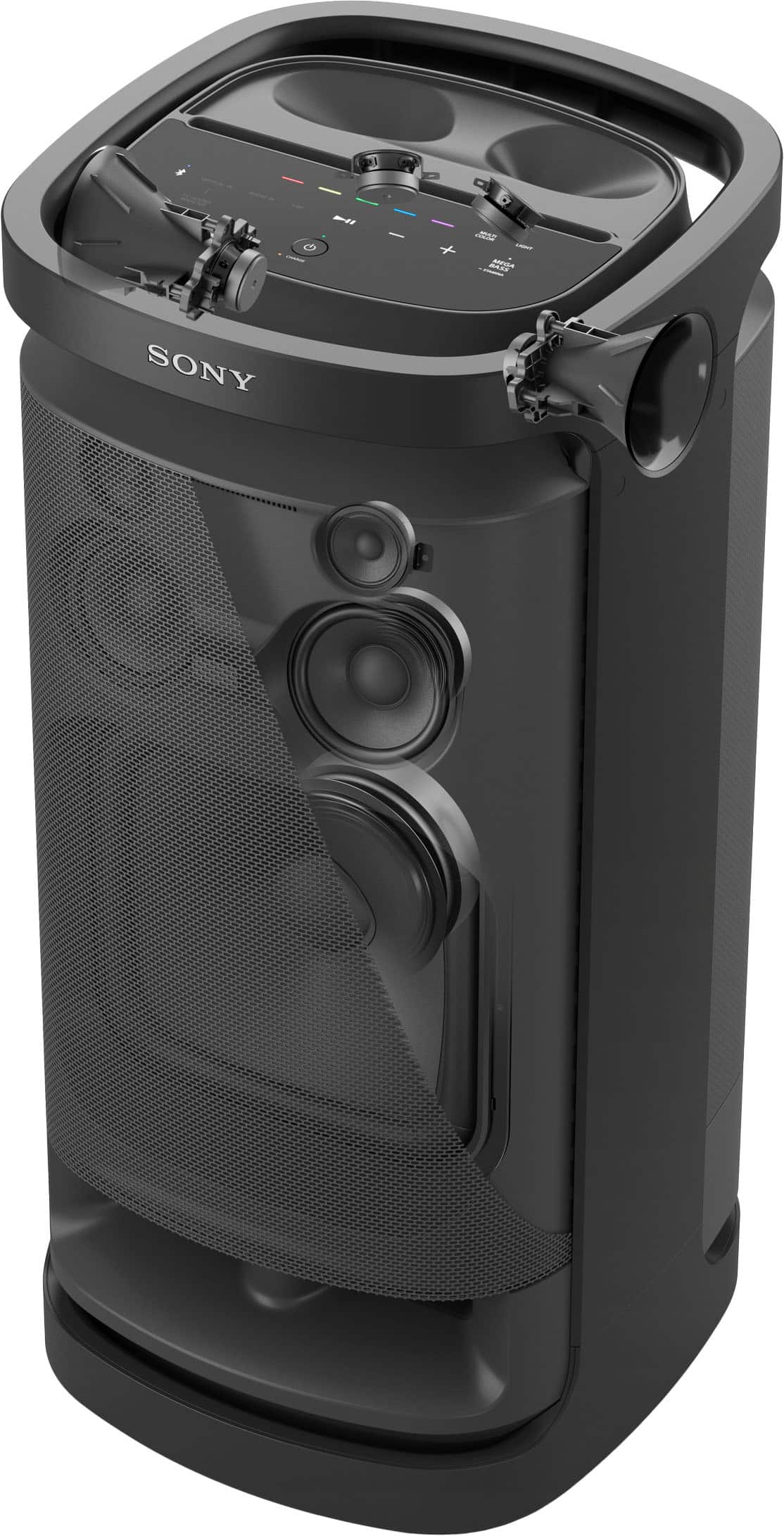
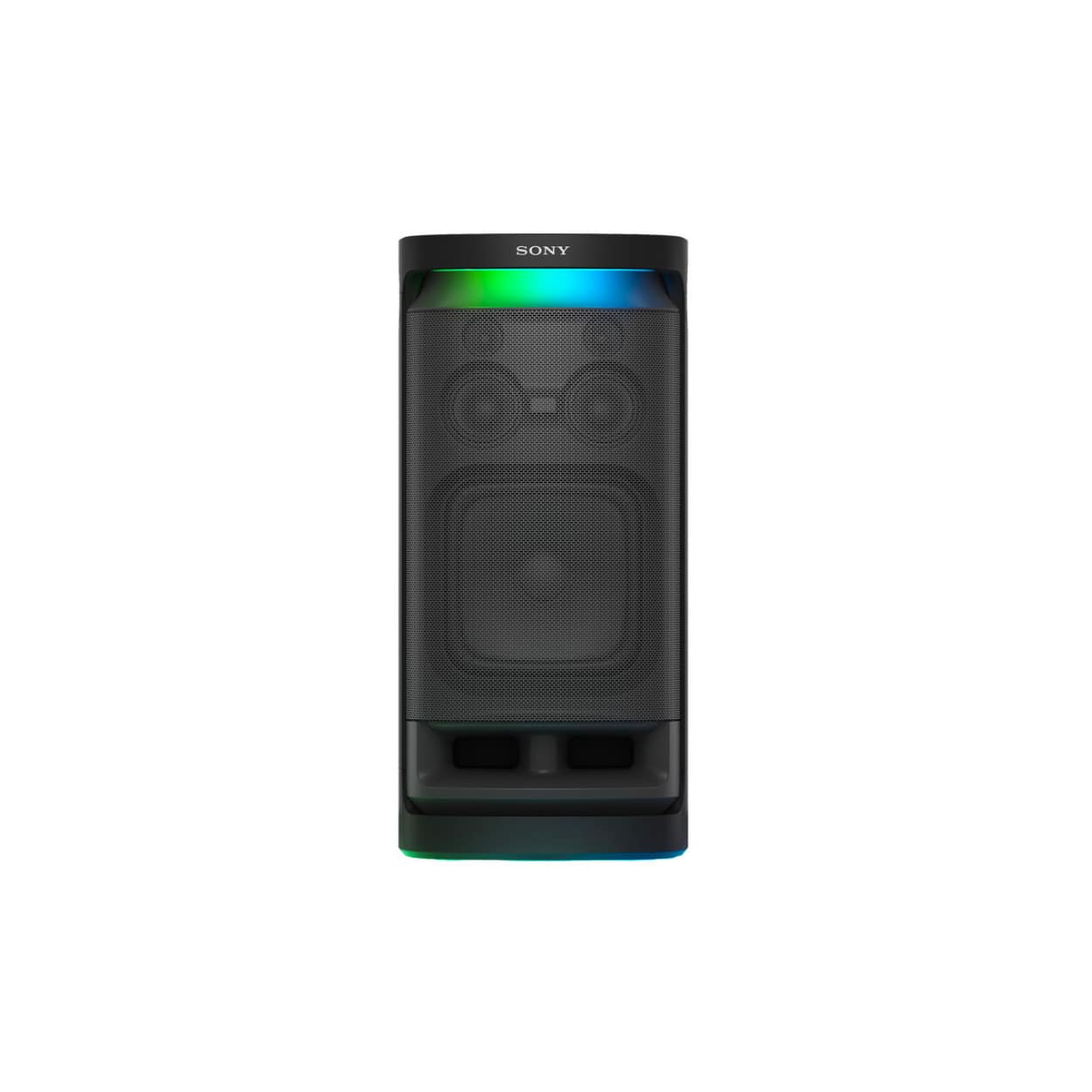
The Sony SRS-XV900 takes what you might call the "maximum impact" approach to party audio. At its heart sits a massive X-Balanced woofer measuring 12.6 inches by 12.6 inches. This isn't your typical round woofer – Sony's X-Balanced design uses a rectangular diaphragm (the part that moves back and forth to create sound) that can move more air than a traditional circular design of the same size.
This engineering choice pays dividends in bass performance. The Sony SRS-XV900 can reproduce frequencies down to 20Hz, which is essentially the lowest note a human ear can detect. To put this in perspective, most party speakers struggle to get below 40-50Hz. That extra low-end extension means you don't just hear the bass drum in your favorite songs – you feel it.
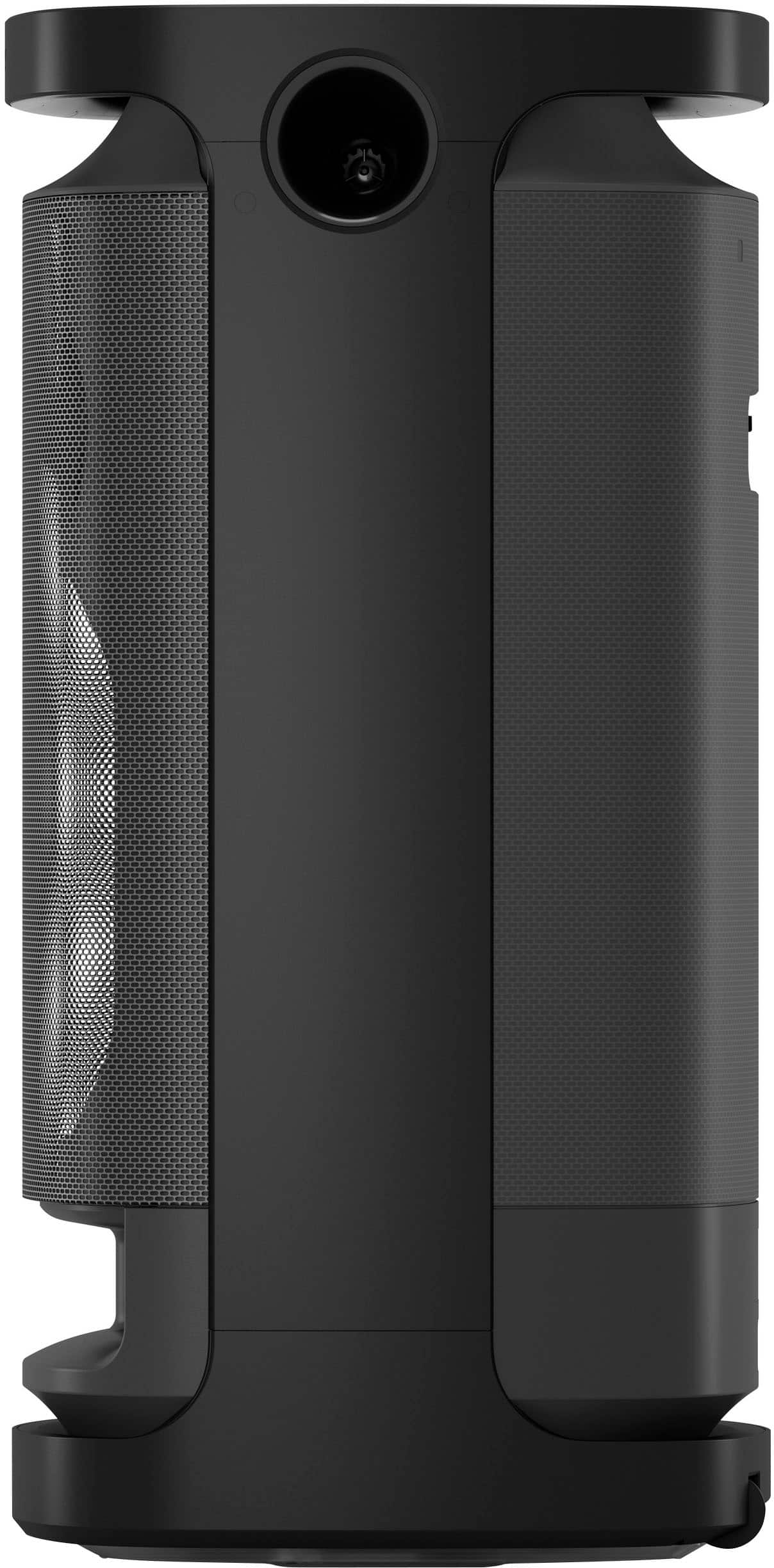
Supporting this massive woofer are six tweeters (high-frequency drivers) positioned around the speaker cabinet. Two larger tweeters face forward, while four smaller ones are mounted on the sides and rear. This omnidirectional design means the Sony SRS-XV900 doesn't have a "sweet spot" – it sounds good whether you're standing directly in front of it or off to the side.
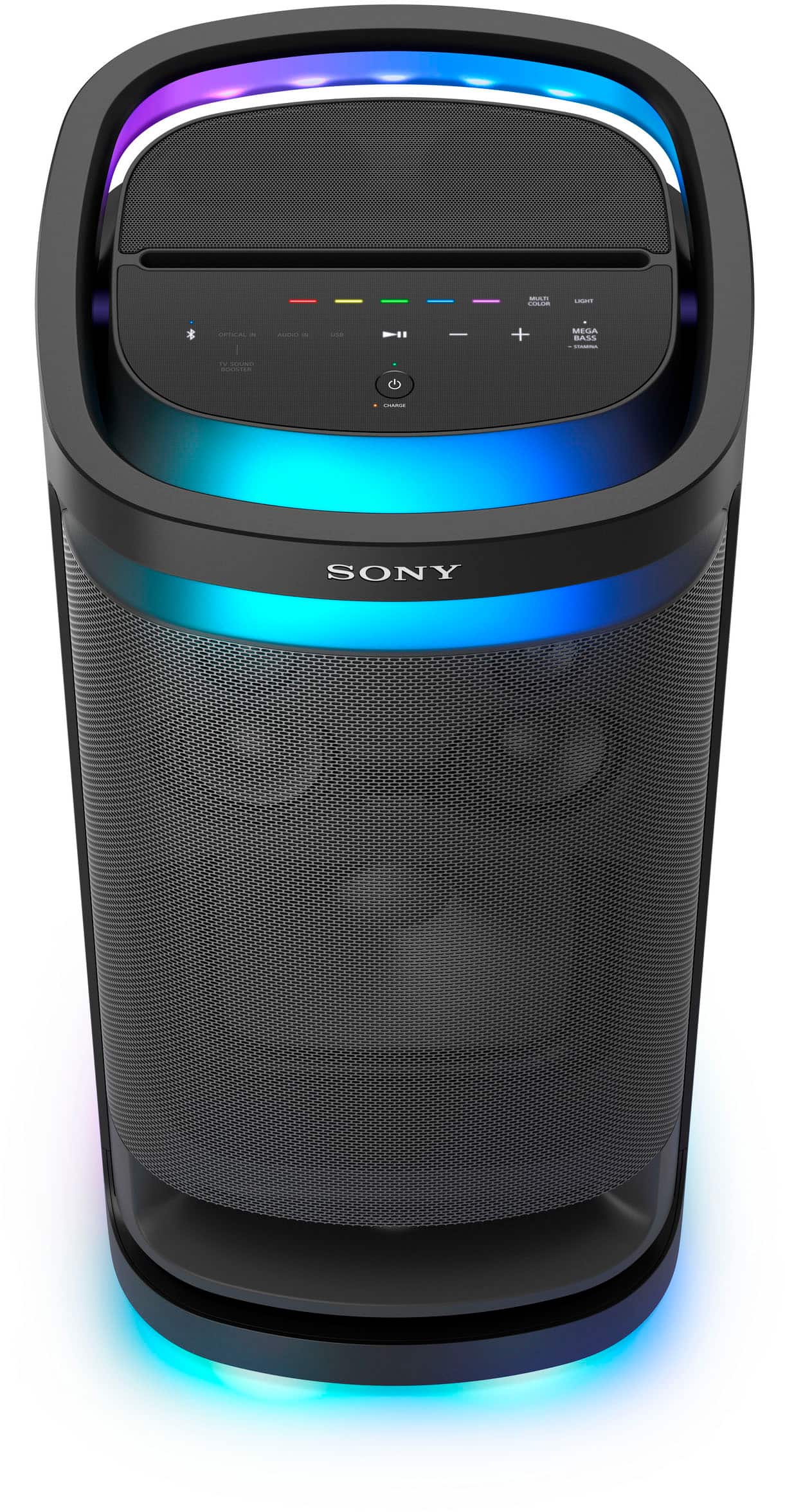
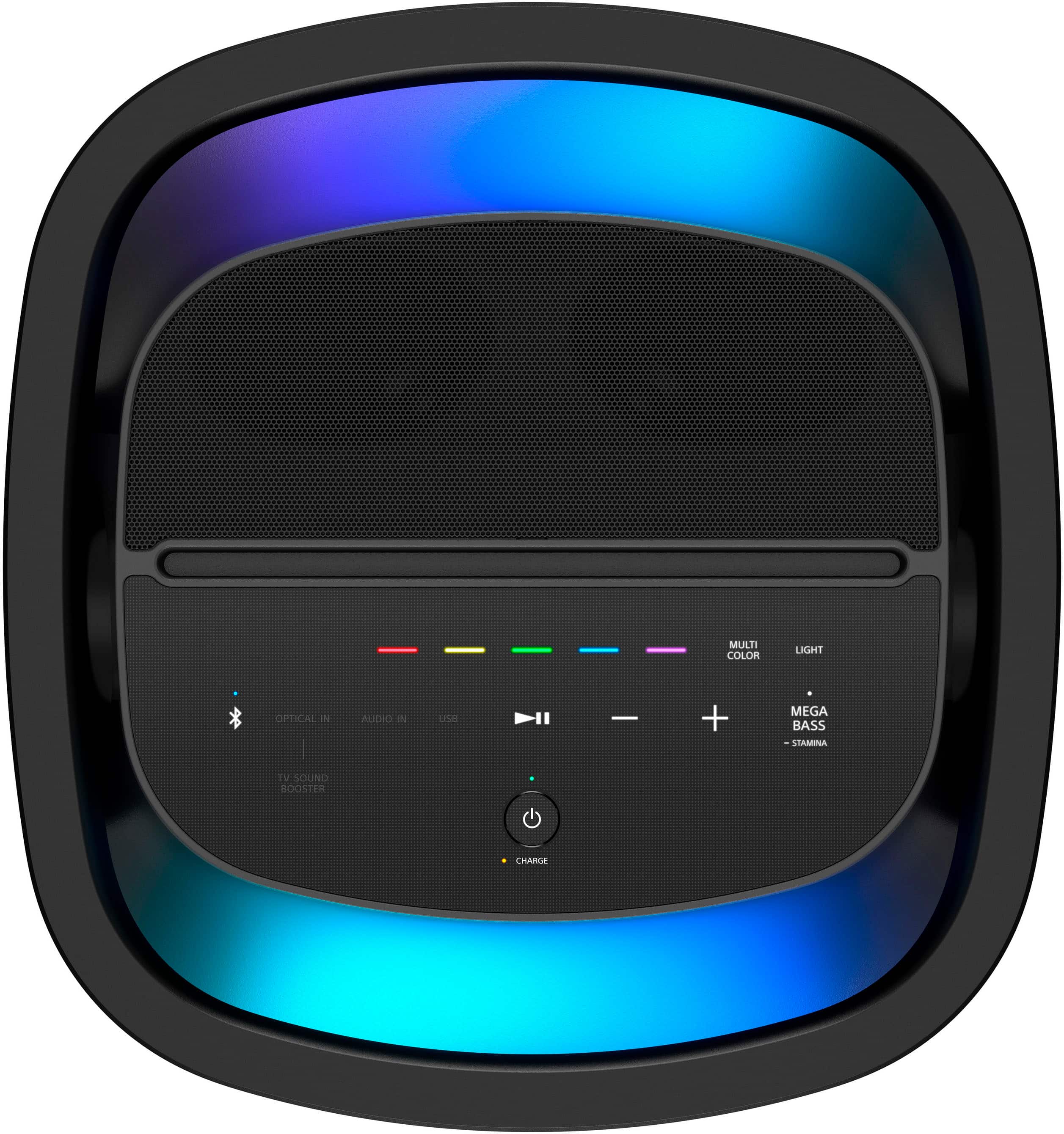
Sony has also included multiple sound modes that adjust the speaker's performance for different situations. MEGA BASS mode enhances low frequencies even further, while Clear Audio+ uses digital signal processing to enhance clarity. The LIVE SOUND mode attempts to recreate the experience of being at a concert, adding spatial effects that make the audio feel larger than life.
The Marshall Bromley 750 takes a completely different approach, one that reflects Marshall's decades of experience building amplifiers for professional musicians. Instead of one massive woofer, it uses two 10-inch drivers working together. This dual-woofer design provides more balanced stereo imaging – you can actually hear the difference between left and right channels, something that's impossible with a single woofer.
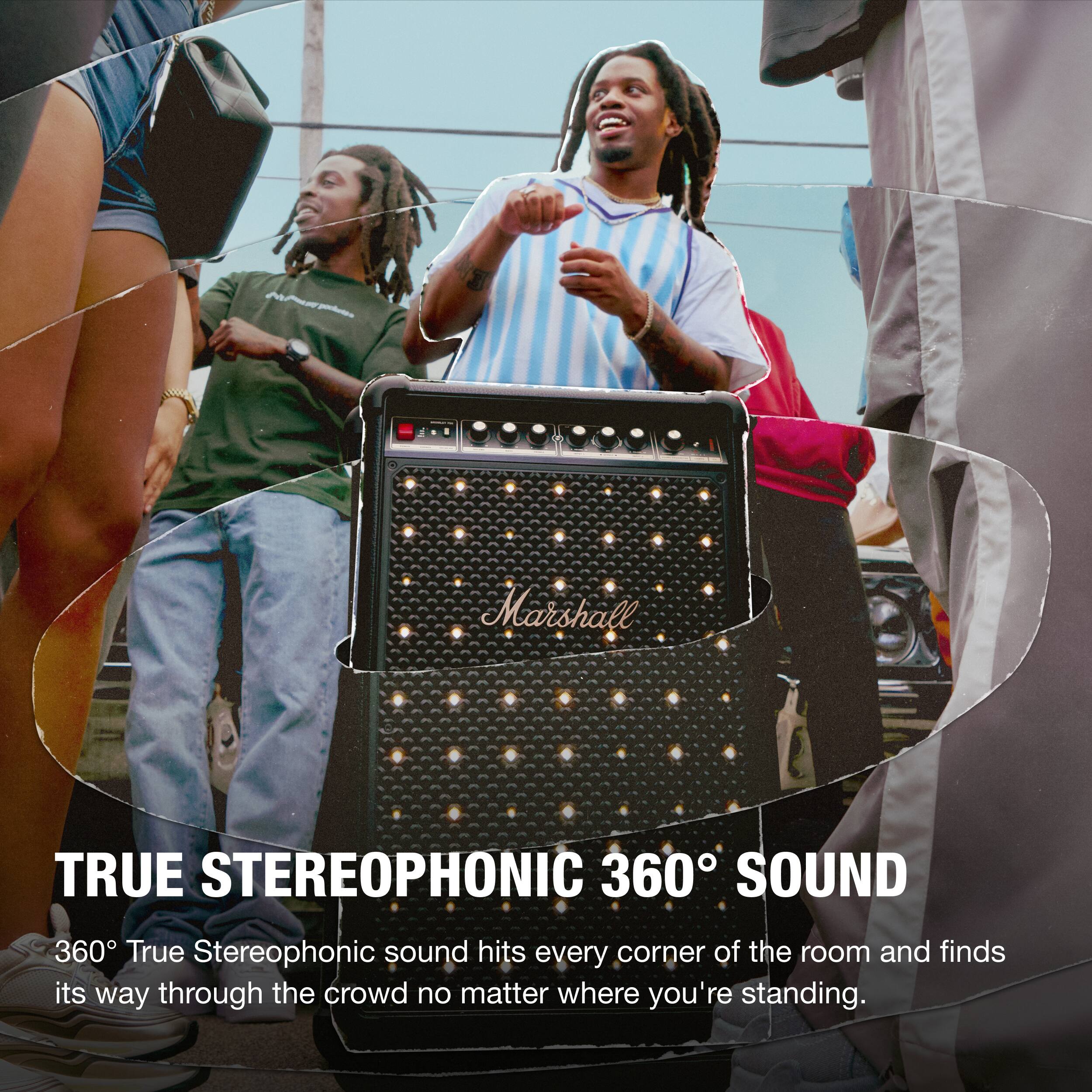
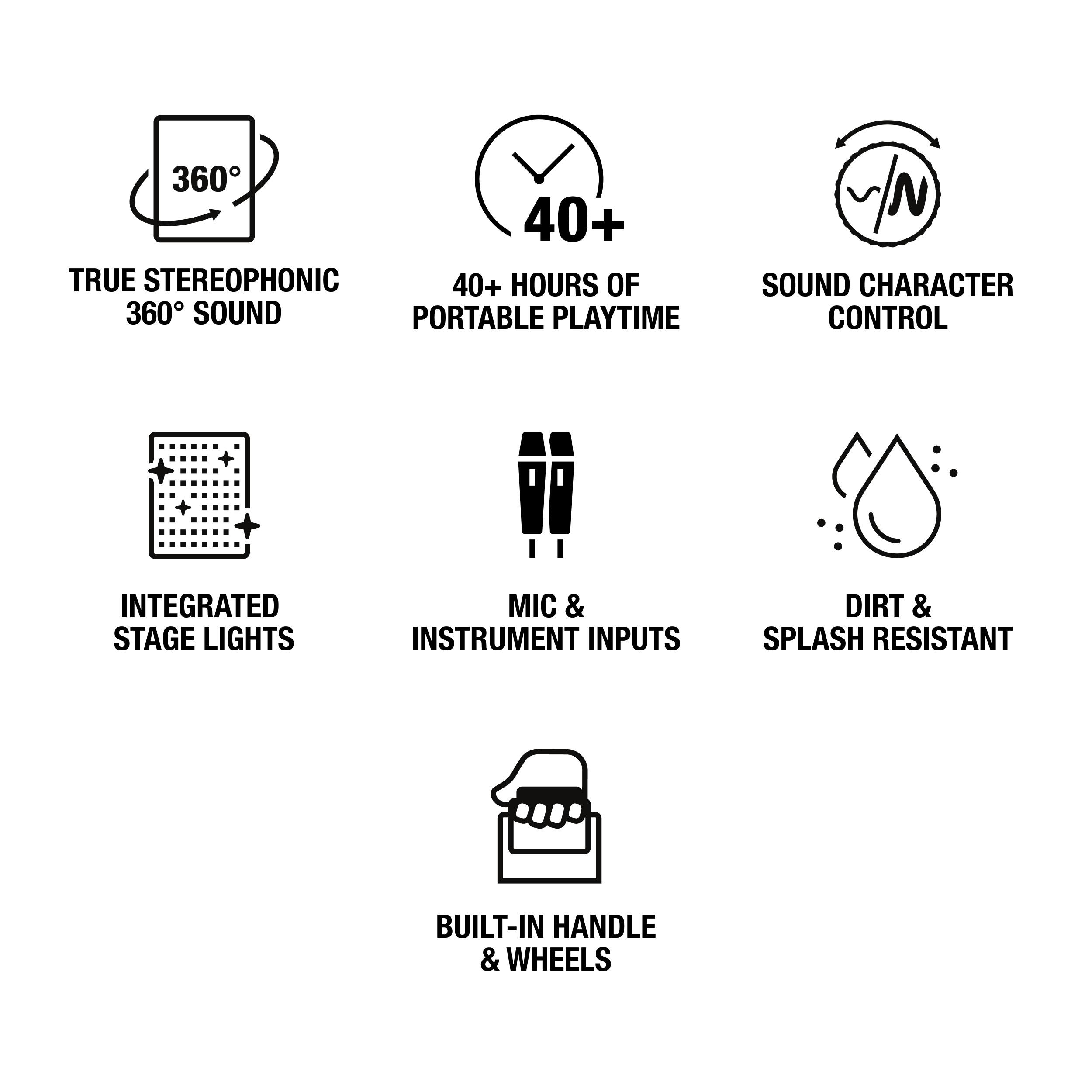
Marshall calls their technology "True Stereophonic," and it's more sophisticated than it might sound. The eight drivers inside the Marshall Bromley 750 are positioned to eliminate what audio engineers call "dead zones" – areas where the sound is noticeably quieter or different. Each driver is powered by its own dedicated amplifier, allowing for precise control over how each frequency range is reproduced.
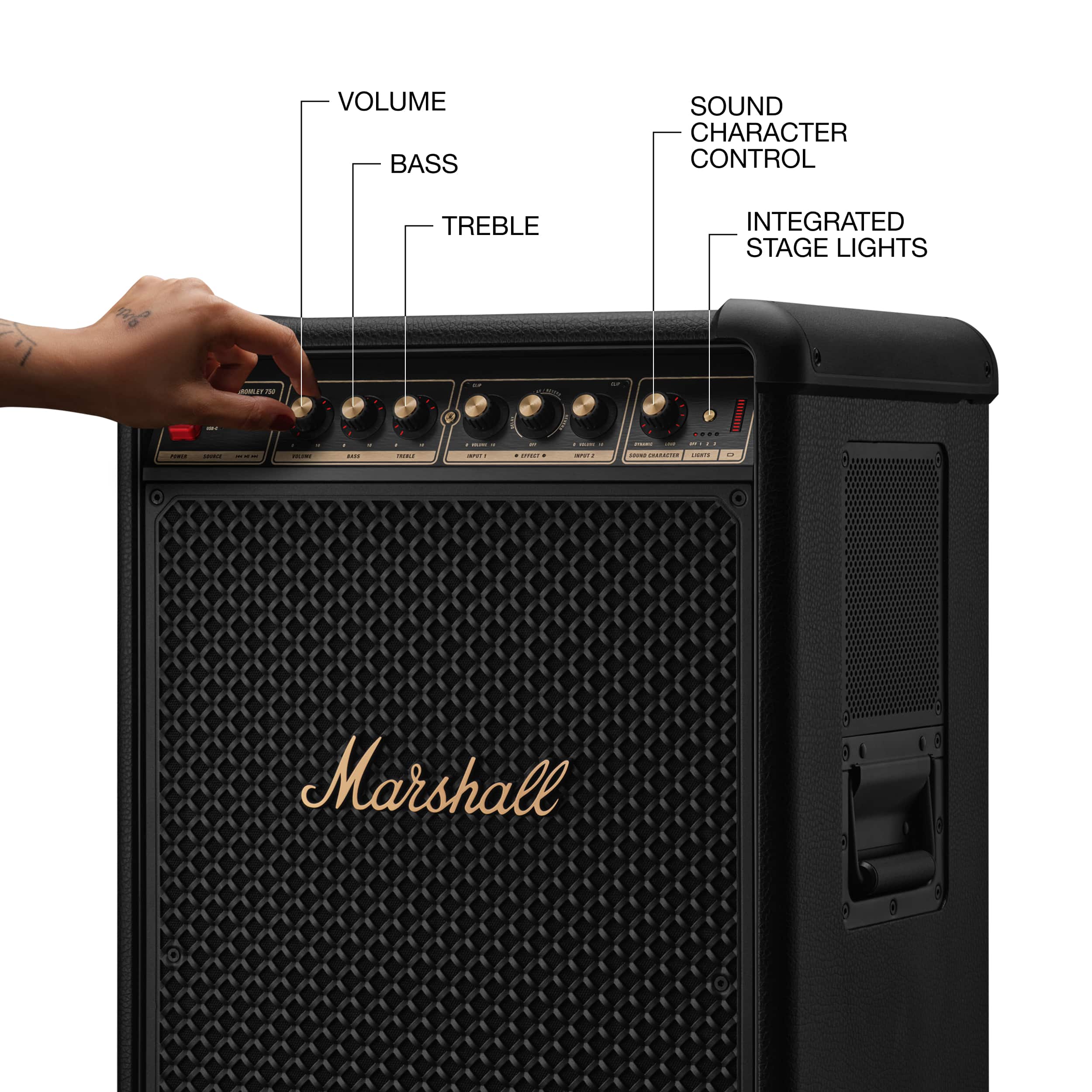
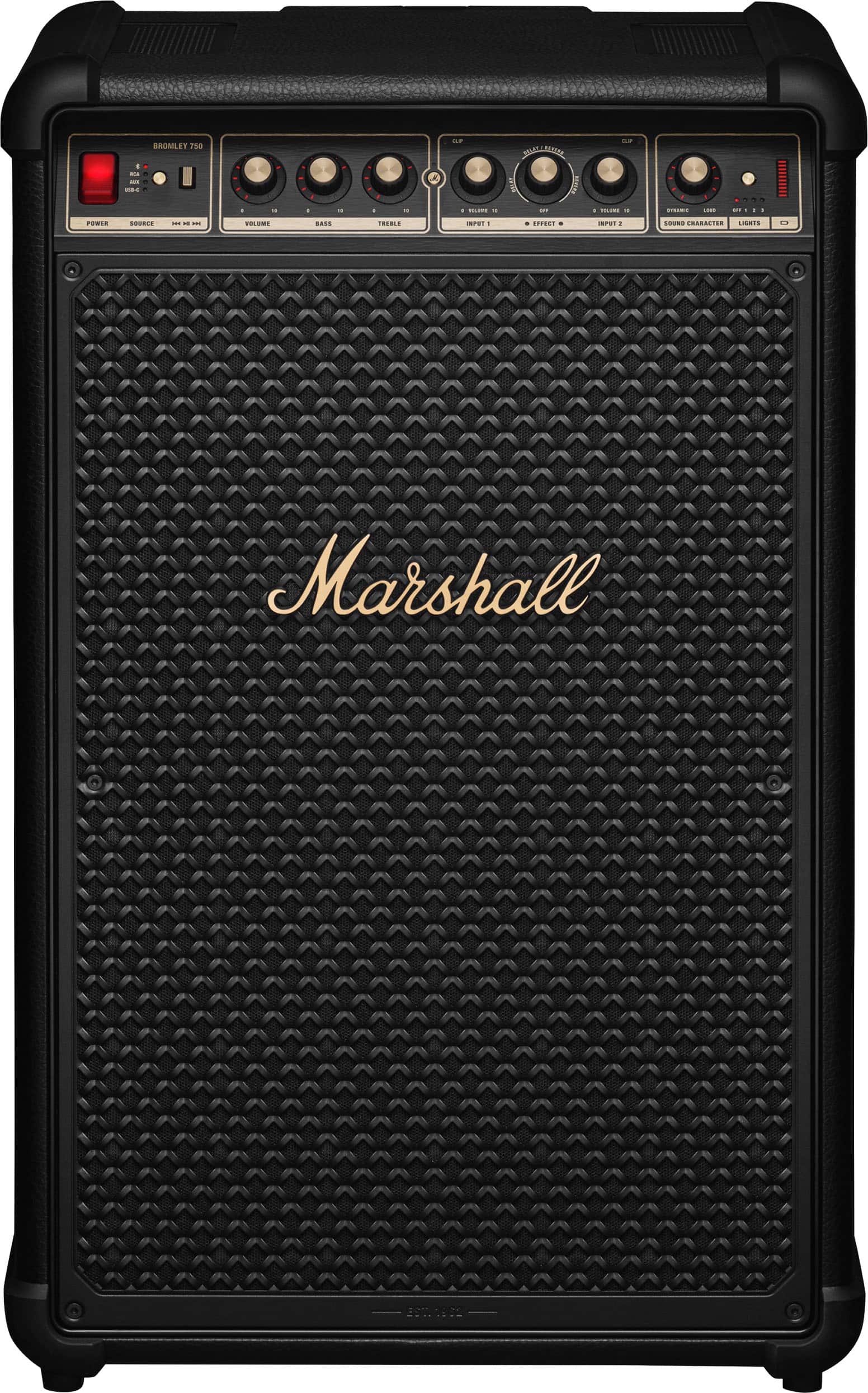
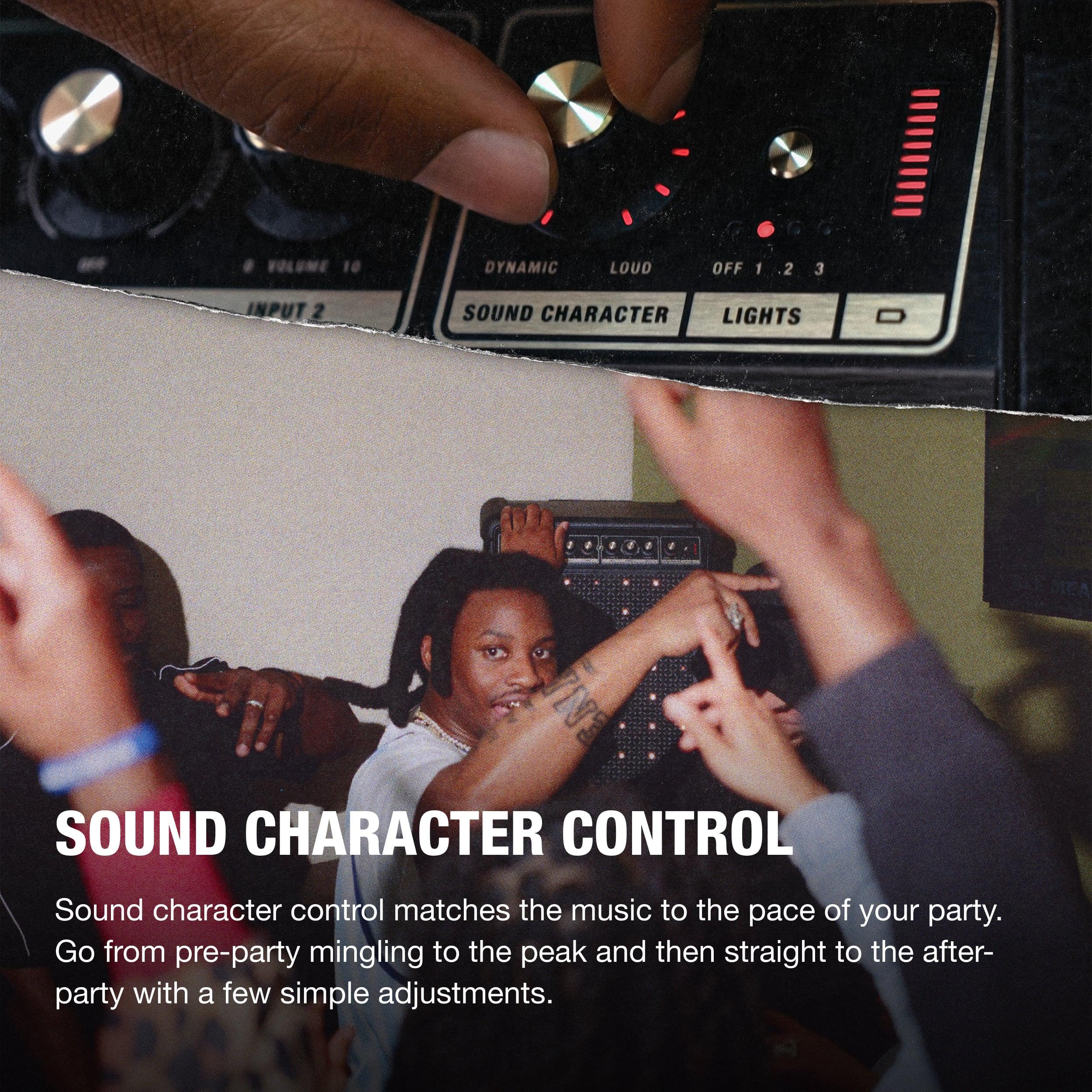
Perhaps most interesting is Marshall's Sound Character control, which isn't just a simple bass or treble adjustment. This 13-position dial actually changes how the speaker processes audio for different environments. Positions 1-3 provide flat, natural sound for smaller rooms. Positions 4-8 add dynamic loudness compensation for medium spaces. Positions 9-13 apply aggressive compression and enhancement for large outdoor venues where you need maximum punch.
This approach reflects Marshall's understanding that the same audio tuning doesn't work in all environments. What sounds perfect in your living room will sound thin and weak at an outdoor party where sound dissipates quickly.
Raw volume capability often determines whether a party speaker succeeds or fails in real-world use. The Marshall Bromley 750 specifications list a maximum output of 127dB SPL (Sound Pressure Level), which is genuinely loud – approaching the threshold where prolonged exposure can damage hearing. For context, normal conversation happens around 60dB, while a rock concert typically hits 110-115dB.
The Sony SRS-XV900 doesn't publish specific SPL figures, but real-world testing suggests it can achieve similar volume levels. What's more interesting is how each speaker handles high volumes. Based on extensive user feedback, the Sony SRS-XV900 maintains clarity even when pushed to maximum volume, though the sound becomes more aggressive and less nuanced. The Marshall Bromley 750, with its professional heritage, seems to maintain better composure at extreme volumes, likely due to its multi-amplifier design and professional-grade signal processing.
Battery performance often determines whether your party ends early or goes until dawn. Here, the differences between these speakers become particularly stark.
The Sony SRS-XV900 delivers a respectable 25 hours of continuous playback, which should cover most events with time to spare. However, once the battery dies, you're looking at about three hours of charging time before you're back to full capacity. The battery is built-in and non-removable, which means you can't simply swap in a fresh one.
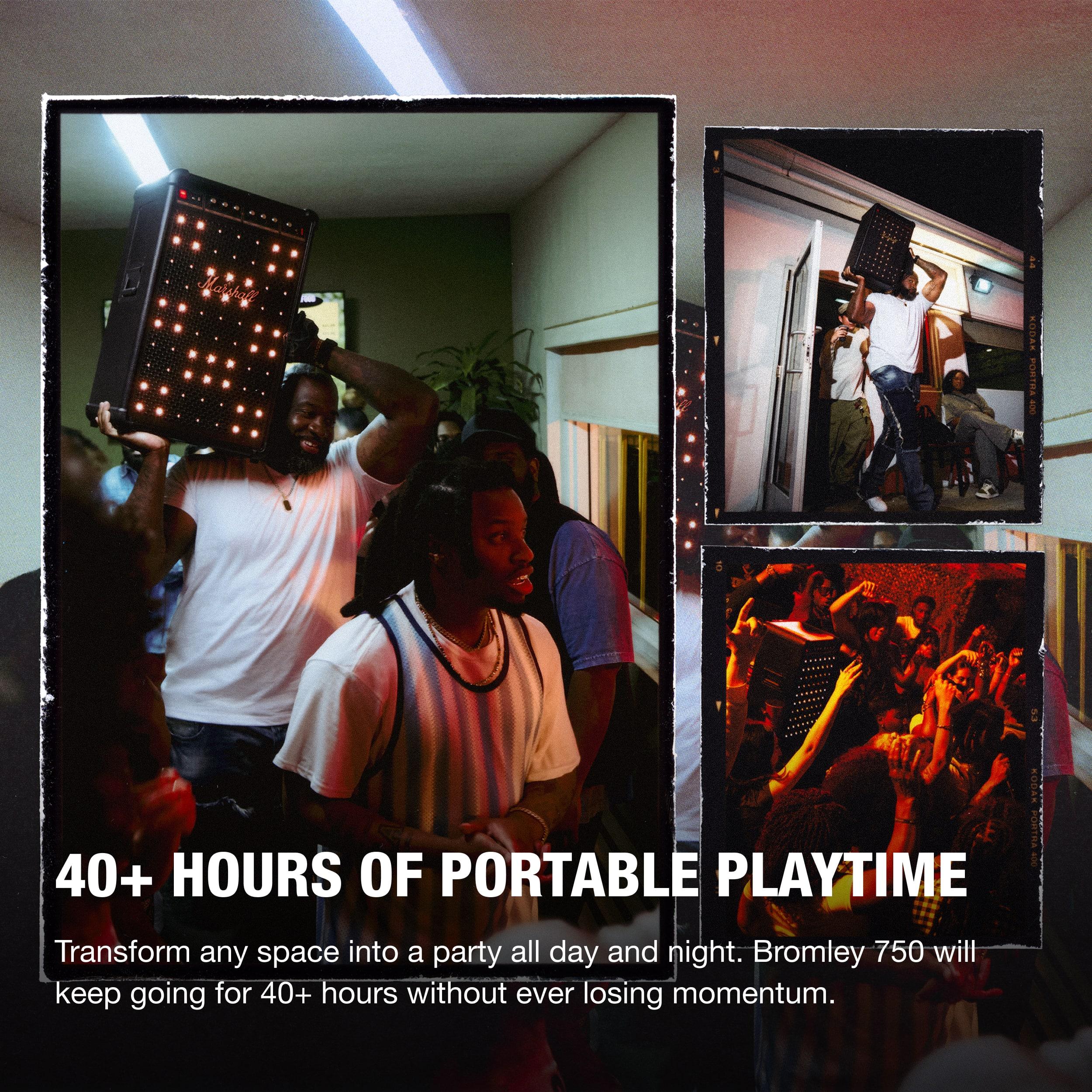
The Marshall Bromley 750 changes the game entirely with over 40 hours of battery life – nearly double the Sony's endurance. More importantly, Marshall has made the battery user-replaceable. This means you can theoretically run the speaker indefinitely by swapping in fresh batteries, a feature that's invaluable for multi-day events or professional use.
Marshall has also implemented quick charging that provides five hours of playback from just 20 minutes of charging. While we don't have exact charging specifications for full capacity, this quick-charge feature could save the day when you've forgotten to charge before an event.
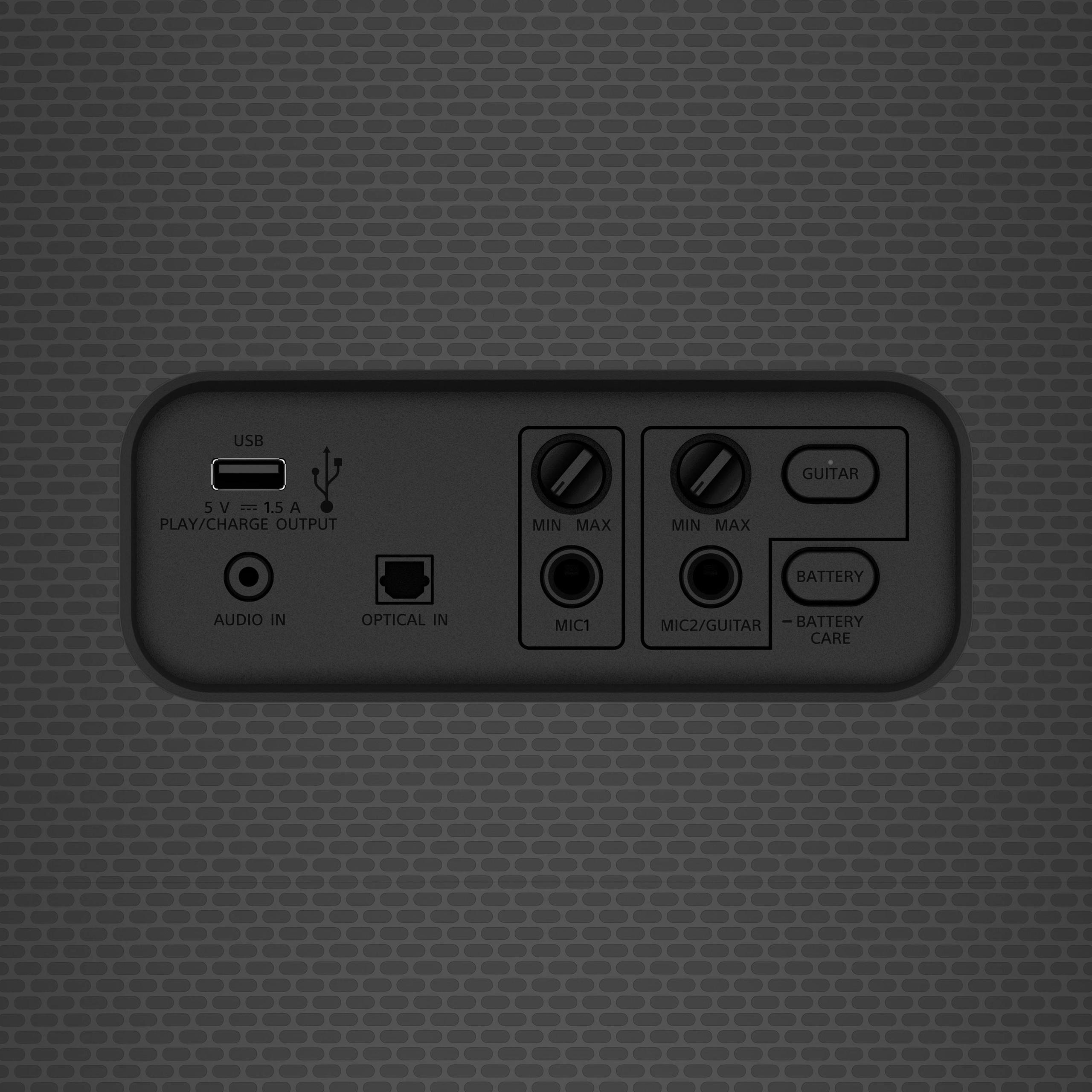
Both speakers can function as power banks to charge your phone, though the Marshall Bromley 750 uses USB-C (the modern standard) while the Sony SRS-XV900 uses USB-A (the older rectangular connector).
The connectivity options available on each speaker reveal their intended audiences quite clearly.
The Sony SRS-XV900 offers what most consumers need and then some. It supports Bluetooth 5.2 with Sony's LDAC codec, which can transmit nearly three times more data than standard Bluetooth. This translates to noticeably better sound quality when streaming from compatible devices. You can pair up to eight devices simultaneously and keep two connected at once, making it easy to pass DJ duties around at a party.
More unusually for a party speaker, the Sony SRS-XV900 includes an optical digital input. This feature transforms it into a serious home theater component – you can connect it directly to your TV for dramatically improved audio over built-in TV speakers. The optical connection ensures perfect synchronization between video and audio, something that can be problematic with Bluetooth.
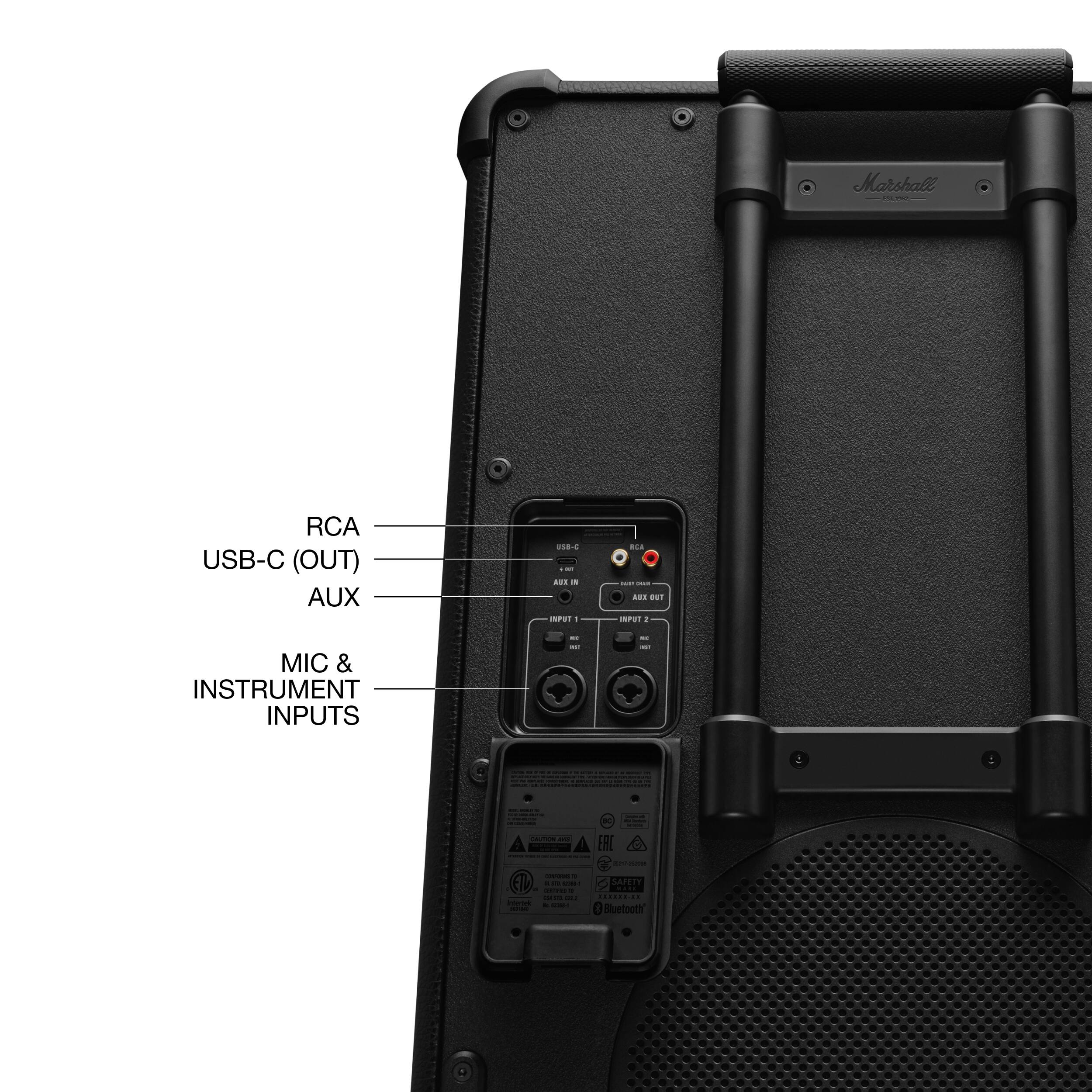
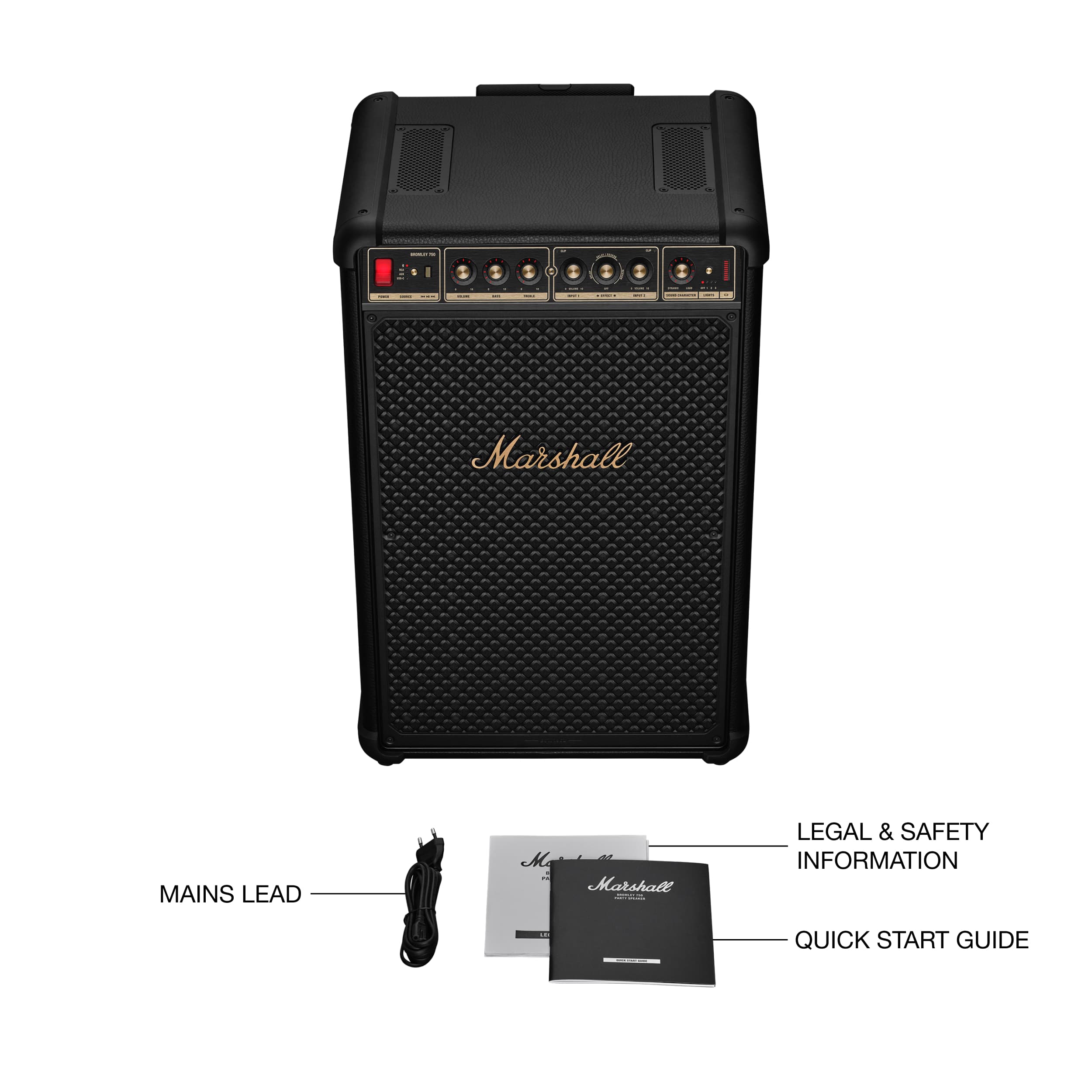
The Marshall Bromley 750 takes connectivity in a more professional direction. It features two XLR/6.35mm combo jacks, which are the same connections you'd find on professional mixing boards and studio equipment. These inputs support both microphones and instruments, and the speaker includes built-in effects processing with reverb and delay – features typically found only on dedicated mixing equipment.
This professional focus extends to RCA inputs for DJ equipment and auxiliary input/output jacks that allow you to daisy-chain multiple speakers together. While the Sony SRS-XV900 can connect to other Sony speakers wirelessly, the Marshall Bromley 750 supports both wired and wireless multi-speaker setups.
Physical construction reveals another key difference in philosophy between these speakers.
The Sony SRS-XV900 is undeniably impressive in size – standing nearly three feet tall and weighing about 59 pounds. Its plastic construction keeps weight reasonable while the integrated wheels and handles make transportation manageable. However, it lacks any weather resistance rating, limiting its suitability for outdoor events where weather might be a concern.
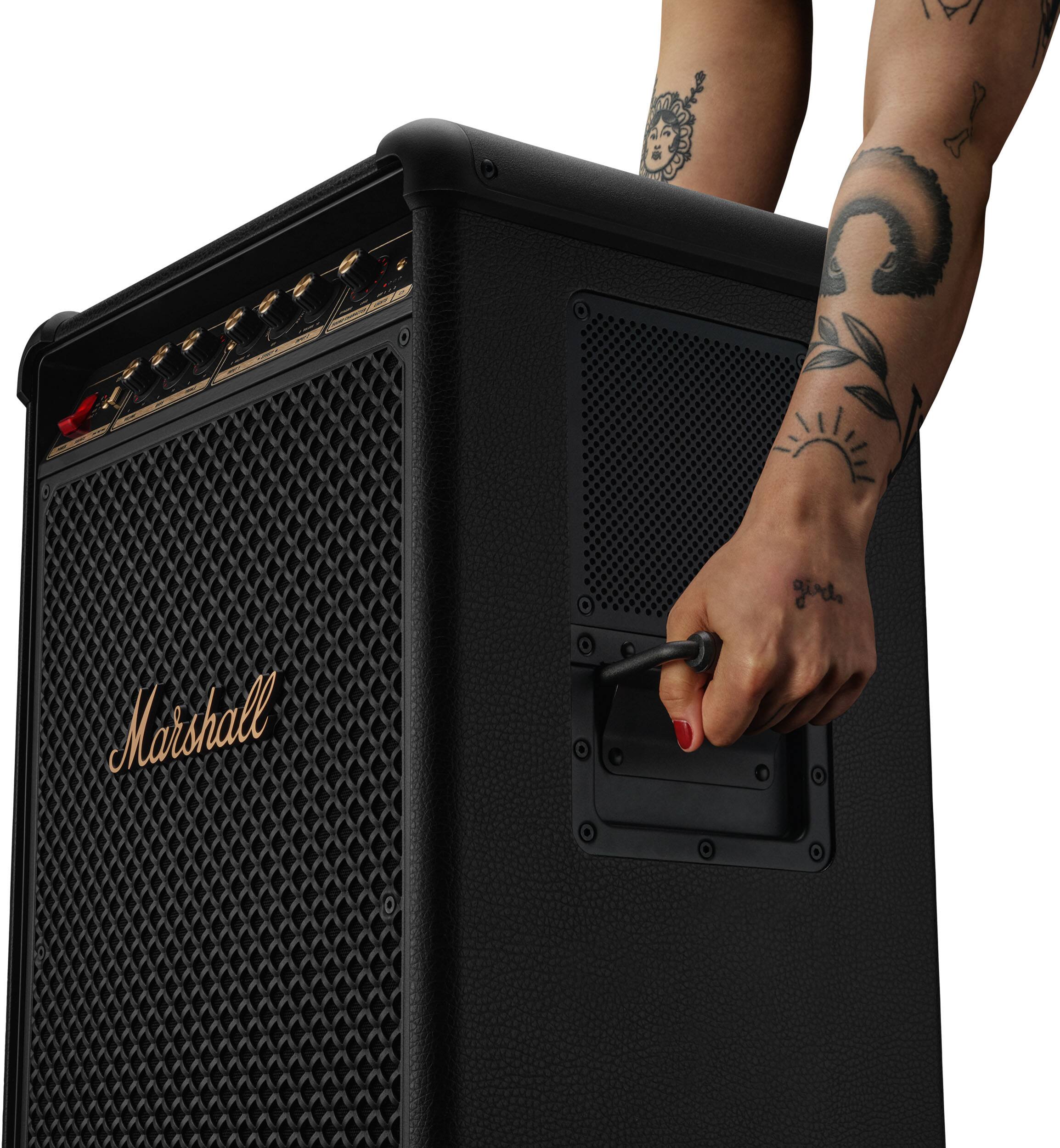
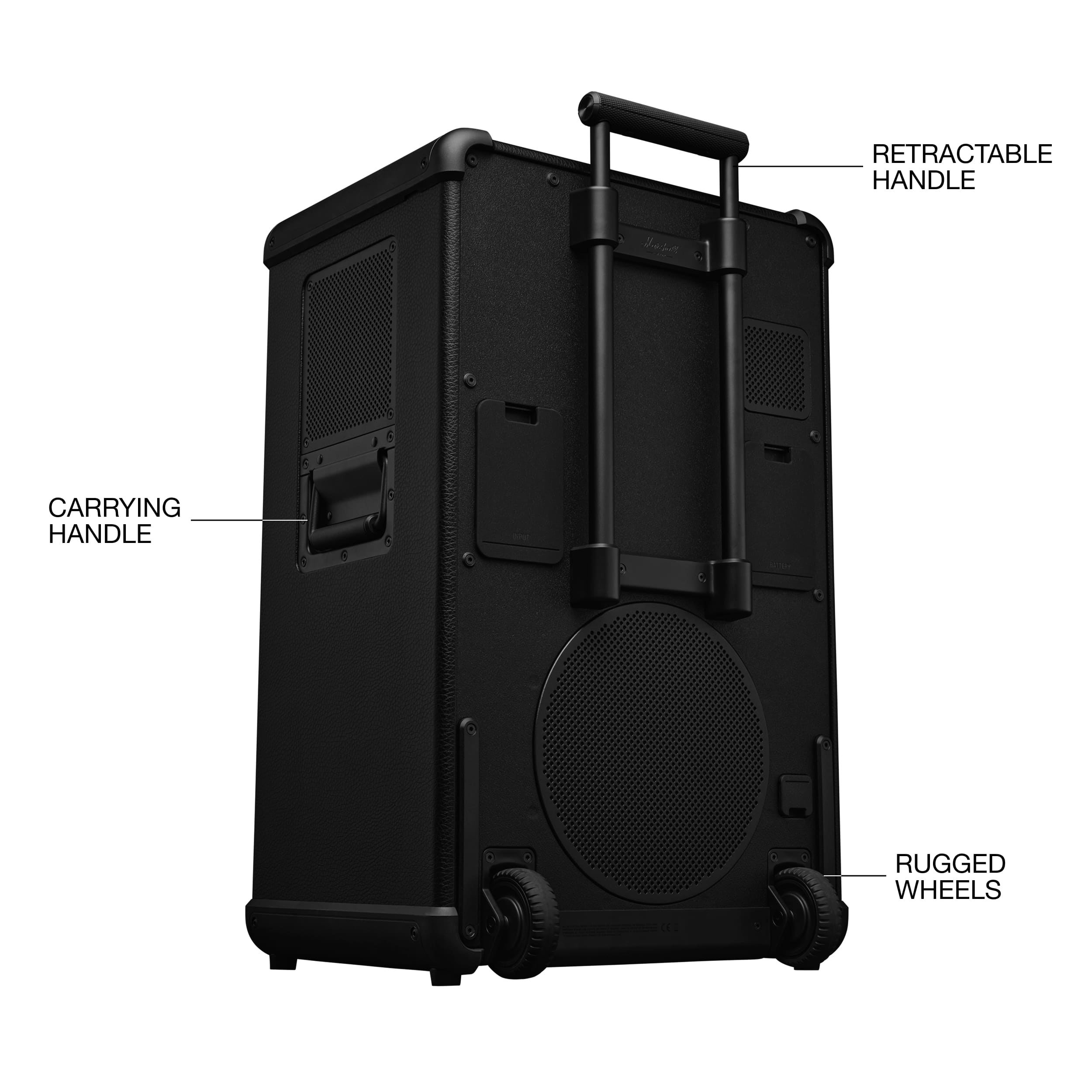
The Marshall Bromley 750 weighs slightly less at 53 pounds despite its robust construction featuring Marshall's signature materials: water-based PU leather wrapping, a brushed metal control panel, and a stamped metal grille. More importantly, it carries an IP54 rating for dust and splash protection. This means it can handle rain, pool splashes, and dusty outdoor environments that would be problematic for the Sony SRS-XV900.
Marshall has also implemented a clever drainage system that channels water away from critical components, showing thoughtful engineering for real-world use scenarios.
Both speakers recognize that modern party speakers need visual appeal beyond just audio performance, but they take very different approaches to lighting and entertainment features.
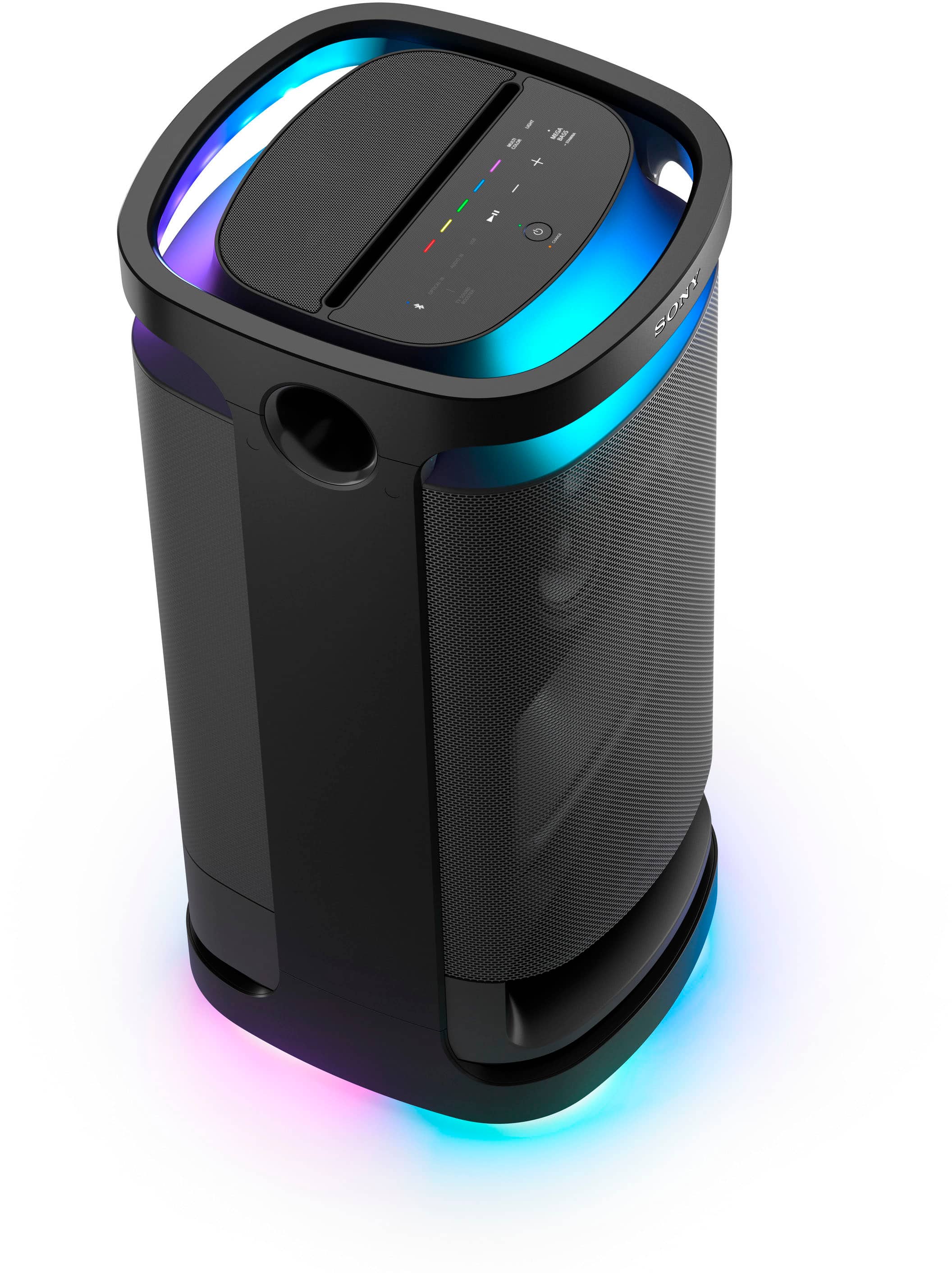
The Sony SRS-XV900 features two LED rings – one at the top and one at the bottom – that provide colorful ambient lighting synchronized to your music. These create an impressive visual spectacle, particularly in darker environments. The Sony Music Center app allows detailed control over lighting patterns and colors, and the karaoke features include voice changing effects and scoring systems for added party fun.
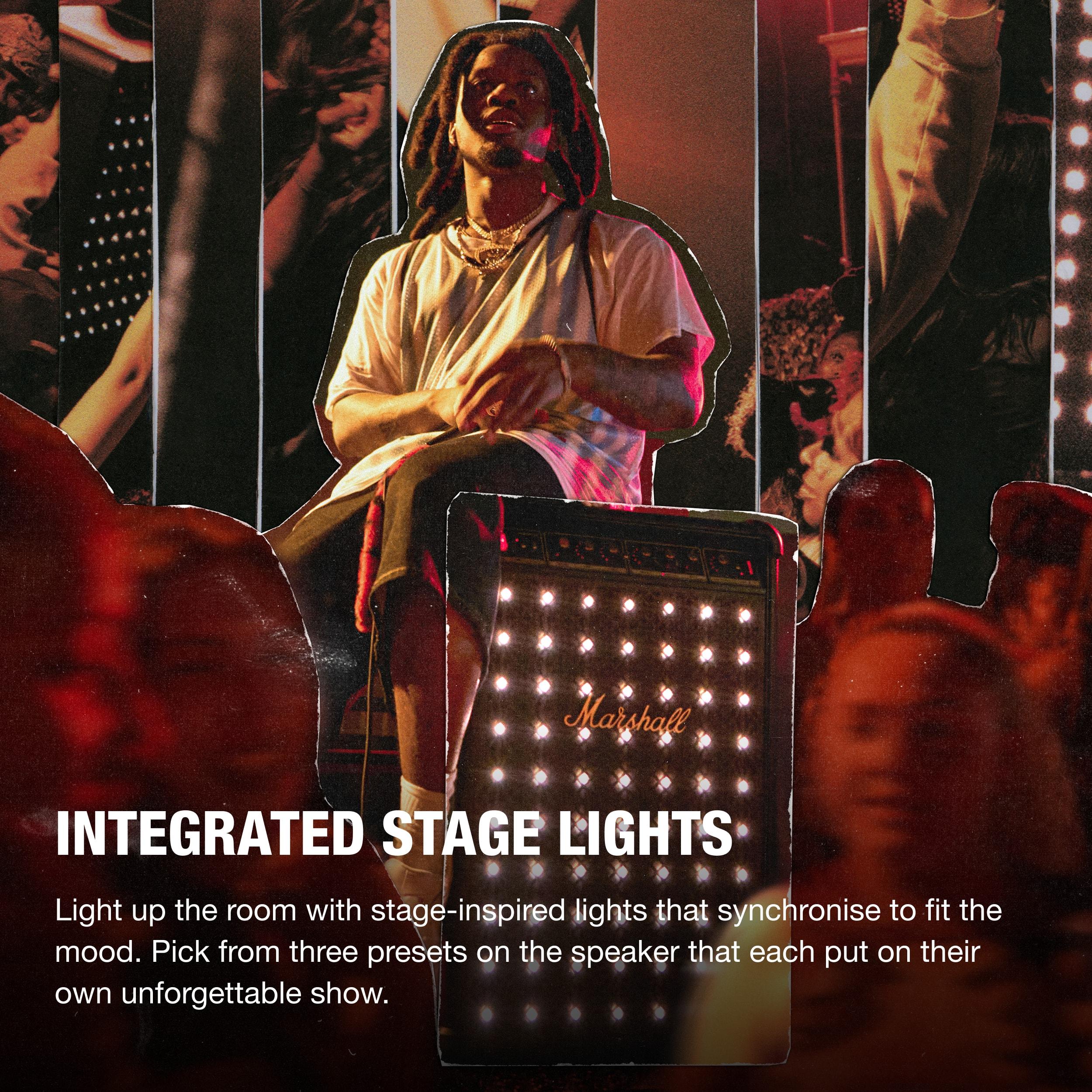
The Marshall Bromley 750 takes a more sophisticated approach with 70 individual LEDs hidden behind its metal grille. Rather than disco-style multicolored effects, these provide warm, white lighting that's inspired by vintage stage lighting and marquee signs. The effect is more atmospheric than flashy, which may appeal more to adult audiences than younger party-goers.
For karaoke and live performance, the Marshall Bromley 750 is significantly more capable thanks to its professional-grade microphone inputs and onboard effects processing. You can add reverb and delay to vocals or instruments in real-time, features that would normally require separate equipment.
An interesting secondary use case emerges when considering these speakers for home entertainment beyond parties.
The Sony SRS-XV900 has a unique advantage here with its optical digital input, which allows direct connection to TVs, gaming consoles, and streaming devices. This eliminates the audio delay (latency) that can occur with Bluetooth connections, ensuring perfect lip-sync when watching movies or playing games. The speaker's multiple sound modes include a specific TV Sound Booster setting optimized for dialog clarity and movie soundtracks.
The massive bass capability of the Sony SRS-XV900 can transform your home theater experience, providing the kind of low-frequency impact typically reserved for dedicated subwoofer systems. However, its size and party-focused aesthetic might not suit all living room decor.
The Marshall Bromley 750, while lacking optical input, offers superior adaptability through its Sound Character control. You can tune it for intimate movie watching in flat mode, then switch to dynamic mode for action films, all without needing separate equipment or complex setup procedures.
After extensive research into professional reviews and user experiences, clear patterns emerge about who each speaker serves best.
Choose the Sony SRS-XV900 if you prioritize maximum bass impact and value. The 20Hz frequency extension is genuinely rare at this price point and creates a visceral listening experience that's hard to match. The 25-hour battery life handles most events, the comprehensive connectivity (especially optical input) makes it versatile beyond just parties, and the lower price point delivers exceptional performance per dollar spent.
The Sony SRS-XV900 particularly excels for home use where weather resistance isn't crucial, for users who want the deepest possible bass response, and for anyone planning to integrate it with existing Sony audio equipment through the Party Connect ecosystem.
The Marshall Bromley 750 justifies its higher price through features that matter for serious use: the 40+ hour battery life with swappable batteries eliminates power anxiety completely, the IP54 weather resistance enables true outdoor confidence, and the professional-grade inputs transform it into a legitimate PA system for live music or events.
More subtly, the Marshall Bromley 750 offers superior sound adaptation through its 13-position Sound Character control. This isn't just marketing – it's a genuinely useful feature that optimizes performance for your specific environment in ways that preset modes simply can't match.
Choose the Marshall Bromley 750 if you're serious about audio quality across different venues, need professional connectivity for live performance, plan to use it outdoors where weather might be a factor, or simply want the premium build quality and heritage that comes with Marshall's legendary reputation.
Both speakers represent excellent choices within their respective strengths, and neither is objectively "better" than the other. The decision comes down to matching features to your specific needs and budget.
For most home users who want powerful party sound without professional features, the Sony SRS-XV900 delivers exceptional value. Its massive bass response and comprehensive connectivity, including the unique optical input for home theater use, provide versatility that extends well beyond party applications.
For users who need professional-grade reliability, weather resistance, or extended battery life, the Marshall Bromley 750 justifies its premium pricing through features that simply aren't available elsewhere in this category. The replaceable battery system alone makes it invaluable for multi-day events or professional use where failure isn't an option.
Consider your primary use cases carefully: occasional home parties favor the Sony SRS-XV900, while regular outdoor events, professional applications, or scenarios requiring maximum reliability point toward the Marshall Bromley 750. Both will deliver impressive performance – the question is which set of compromises and strengths align best with your specific needs and budget.
| Sony SRS-XV900 | Marshall Bromley 750 |
|---|---|
| Bass Extension - How deep the low frequencies go, critical for party impact | |
| 20Hz (exceptional depth, you feel the bass) | 30-50Hz typical range (good but not exceptional) |
| Battery Life - Runtime for extended events without power | |
| 25 hours (covers most parties) | 40+ hours (nearly double, user-replaceable) |
| Maximum Volume Output - How loud it can get for large spaces | |
| Very loud (exact SPL not specified) | 127dB SPL (semi-professional level) |
| Weather Resistance - Protection for outdoor events | |
| None (indoor use only) | IP54 rated (dust and splash proof) |
| Speaker Configuration - How sound is distributed | |
| 1x massive 12.6" woofer + 6 tweeters | 2x 10" woofers + 4 tweeters (better stereo) |
| Professional Inputs - For live music and events | |
| 2x 1/4" TRS (basic mic/guitar) | 2x XLR combo jacks + onboard effects |
| Weight - Portability factor | |
| 59 lbs (heavier but manageable with wheels) | 53 lbs (lighter with better build materials) |
| Home Theater Integration - TV connection capability | |
| Optical digital input (perfect for TVs) | No optical input (Bluetooth only) |
| Sound Customization - Adapting to different environments | |
| Multiple preset modes (MEGA BASS, etc.) | 13-position Sound Character dial (more precise) |
| Multi-Speaker Connectivity - Linking multiple units | |
| Up to 100 Sony speakers via Party Connect | Standard pairing + wired daisy-chaining |
| Bluetooth Quality - Wireless audio performance | |
| 5.2 with LDAC (high-quality codec) | 5.3 with Auracast (newer standard) |
| Value Proposition - Performance per dollar spent | |
| Exceptional bass + connectivity at lower price | Premium features justify higher cost |
The Sony SRS-XV900 delivers superior bass performance with its massive 12.6" X-Balanced woofer that reaches down to 20Hz - the lowest frequency humans can hear. This creates chest-thumping bass that you feel physically. The Marshall Bromley 750 uses dual 10" woofers in a sealed design for tighter, more controlled bass, but doesn't extend as deep into the low frequencies.
The Marshall Bromley 750 offers exceptional 40+ hour battery life with user-replaceable batteries, meaning unlimited runtime with spare batteries. The Sony SRS-XV900 provides 25 hours of playback on a single charge, which covers most events but the battery cannot be replaced by users.
The Marshall Bromley 750 is significantly better for outdoor use with its IP54 weather resistance rating that protects against dust and water splashes. It also features a built-in drainage system. The Sony SRS-XV900 has no weather protection and is designed primarily for indoor use.
The Sony SRS-XV900 excels for TV use with its optical digital input that provides lag-free audio and perfect lip-sync. It also includes a specific TV Sound Booster mode. The Marshall Bromley 750 can only connect to TVs via Bluetooth, which may have slight audio delay issues.
The Marshall Bromley 750 can reach 127dB SPL (Sound Pressure Level), which is semi-professional volume levels suitable for very large gatherings. While the Sony SRS-XV900 also gets extremely loud, it doesn't specify exact SPL ratings but user reports suggest similar maximum volume capabilities.
The Marshall Bromley 750 offers professional-grade features with XLR combo inputs and built-in reverb/delay effects processing, making it suitable for live performances. The Sony SRS-XV900 has basic karaoke support with 1/4" inputs and voice effects through the app, but lacks professional audio processing.
Both speakers include wheels and handles, but the Marshall Bromley 750 is lighter at 53 pounds versus the Sony SRS-XV900 at 59 pounds. The Marshall also has a retractable telescoping handle like luggage for easier transport.
The Sony SRS-XV900 supports connecting up to 100 Sony speakers wirelessly through Party Connect for massive sound systems. The Marshall Bromley 750 supports standard Bluetooth pairing and can be daisy-chained using auxiliary cables for multi-speaker setups.
The Sony SRS-XV900 typically costs several hundred dollars less while delivering exceptional bass extension and comprehensive connectivity including optical input. The Marshall Bromley 750 commands a premium price but justifies it with professional features, weather resistance, and superior battery life.
The Sony SRS-XV900 features colorful LED rings at the top and bottom with multiple lighting patterns controlled through the app. The Marshall Bromley 750 uses 70 white LEDs behind the grille for sophisticated stage-inspired lighting effects rather than disco-style colors.
The Marshall Bromley 750 has a unique 13-position Sound Character control that adapts the audio for different environments - flat mode for small rooms, dynamic mode for medium spaces, and party mode for large outdoor areas. The Sony SRS-XV900 offers preset sound modes like MEGA BASS but less environmental customization.
The Sony SRS-XV900 focuses on maximum bass impact and value with exceptional low-frequency extension and home theater integration at a lower price point. The Marshall Bromley 750 emphasizes professional-grade reliability with weather resistance, replaceable batteries, studio-quality inputs, and sophisticated sound adaptation, justifying its premium pricing for serious users.
We've done our best to create useful and informative comparisons to help you decide what product to buy. Our research uses advanced automated methods to create this comparison and perfection is not possible - please contact us for corrections or questions. These are the sites we've researched in the creation of this article: bestbuy.com - youtube.com - crutchfield.com - versus.com - youtube.com - versus.com - youtube.com - comparisontabl.es - tech.hindustantimes.com - youtube.com - electronics.sony.com - youtube.com - crutchfield.com - centresdirect.co.uk - sony-asia.com - nikktech.com - sony.com - youtube.com - reliancedigital.in - sonyworld.ae - sony.com - shopjetson.com - bestbuy.com - versus.com - theluxereview.com - techradar.com - whathifi.com - routenote.com - techradar.com - marshall.com - newatlas.com - marshall.com - youtube.com - wallpaper.com - sweetwater.com - soundguys.com - t3.com - bestbuy.com - hiconsumption.com - architeg-prints.com

Privacy Policy
Terms and Conditions - Affiliate Policy
Home Security
© Copyright 2008-2026.
11816 Inwood Rd #1211, Dallas, TX 75244