

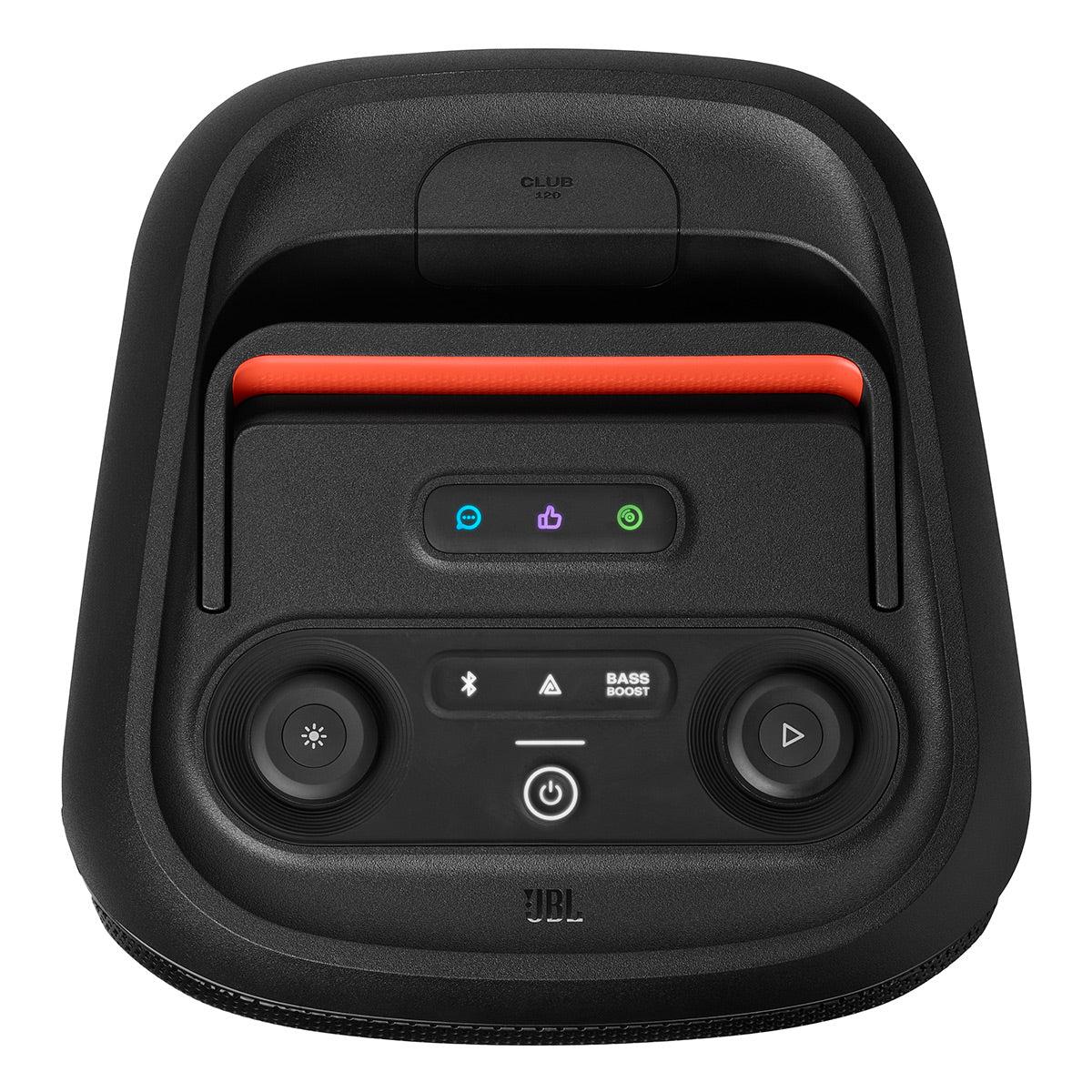
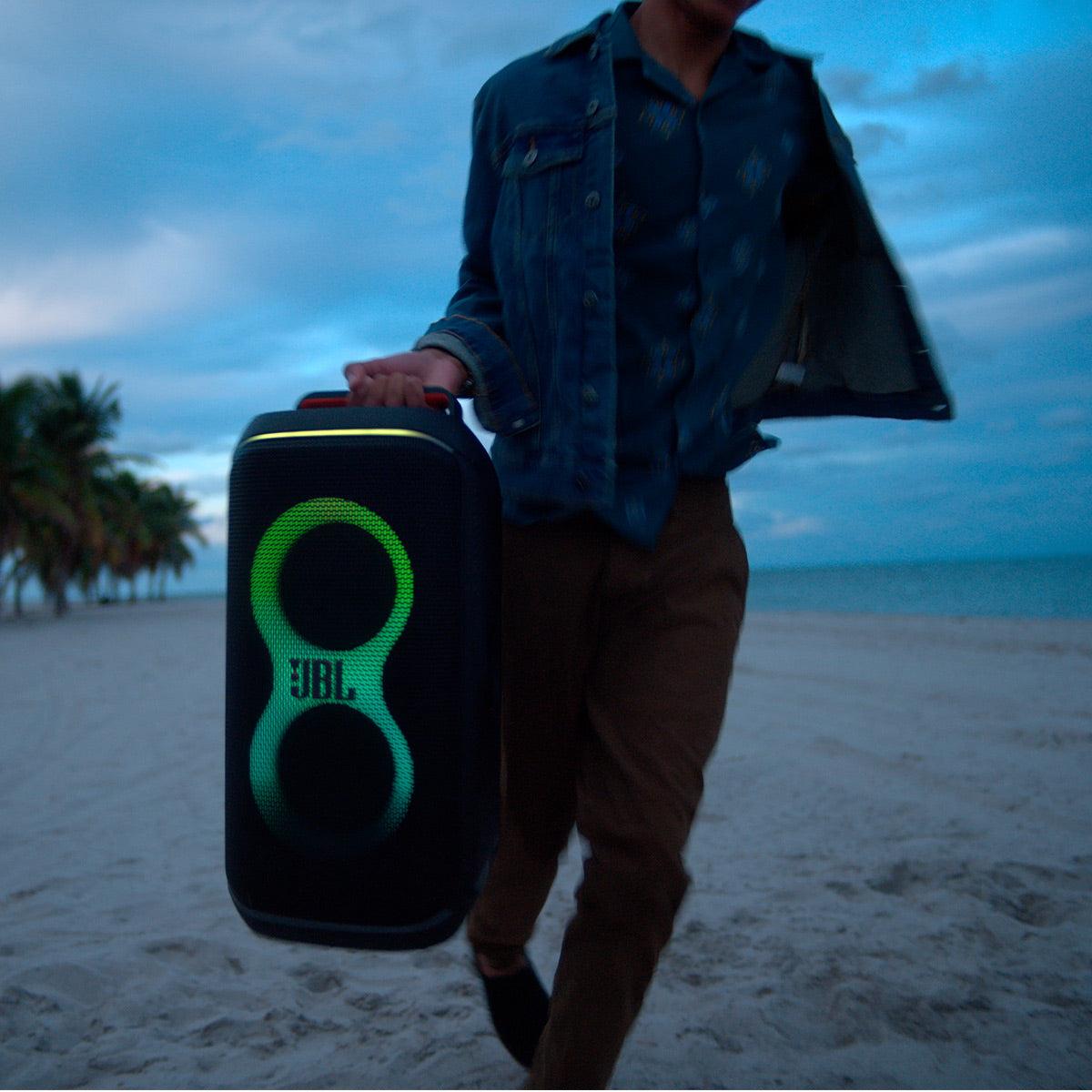
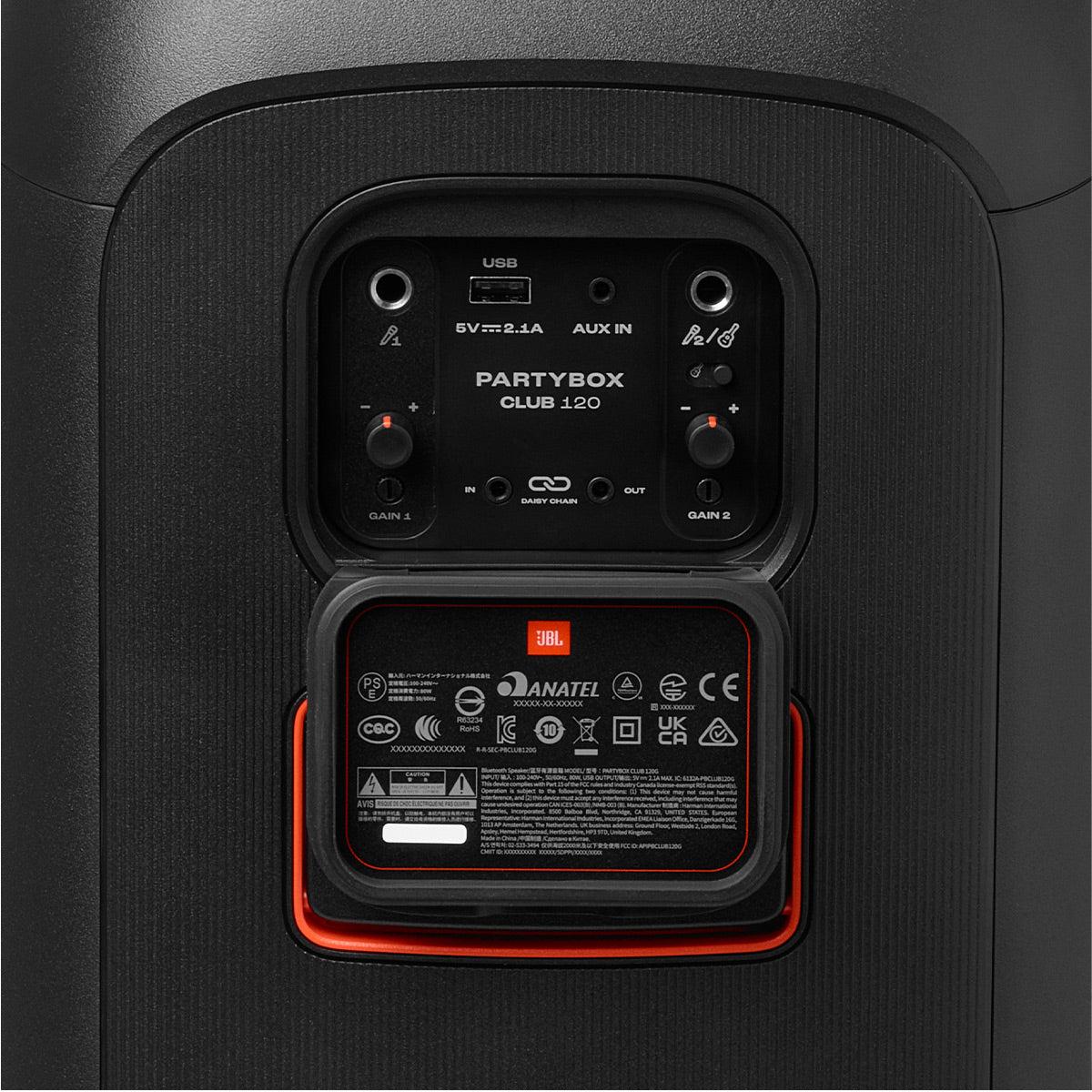
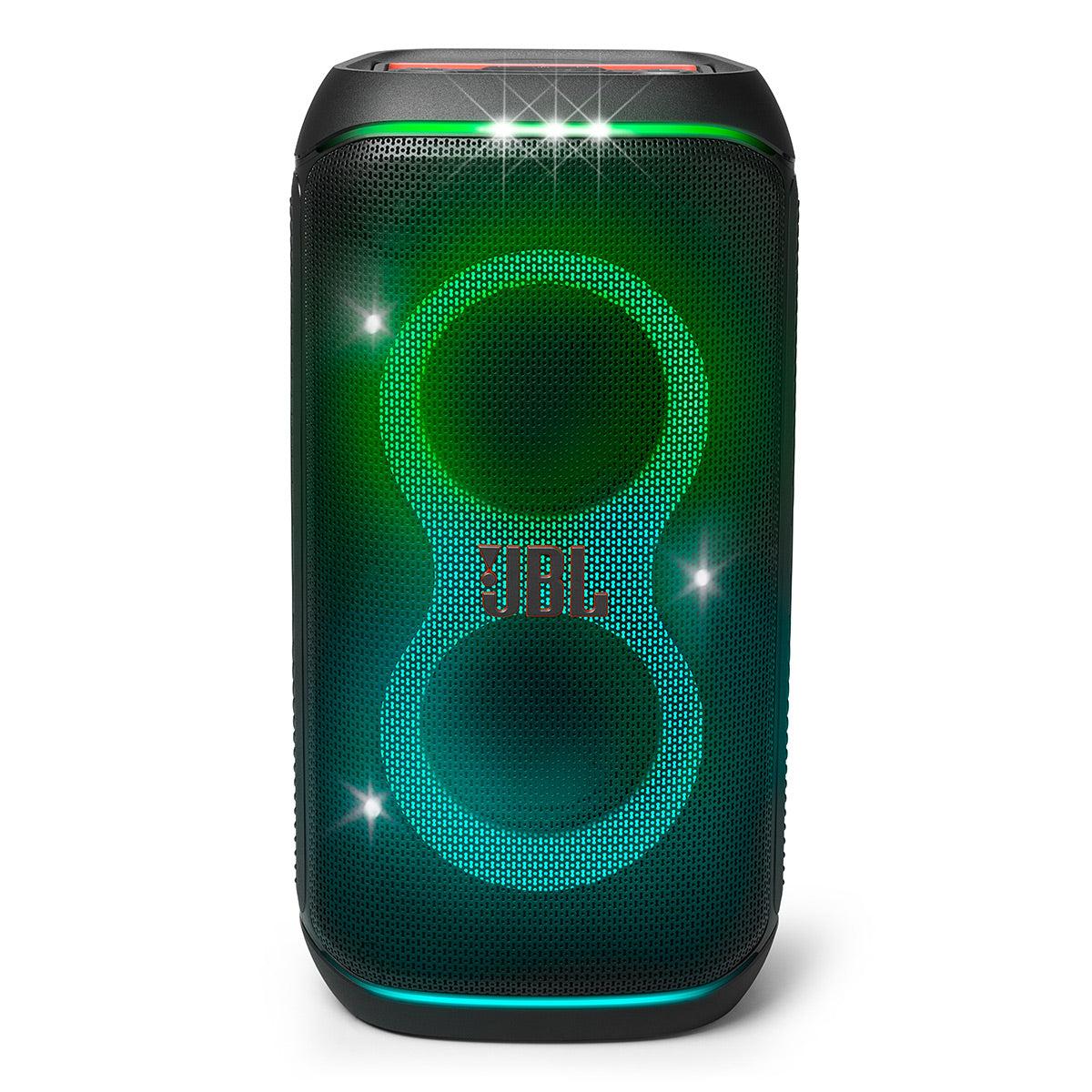
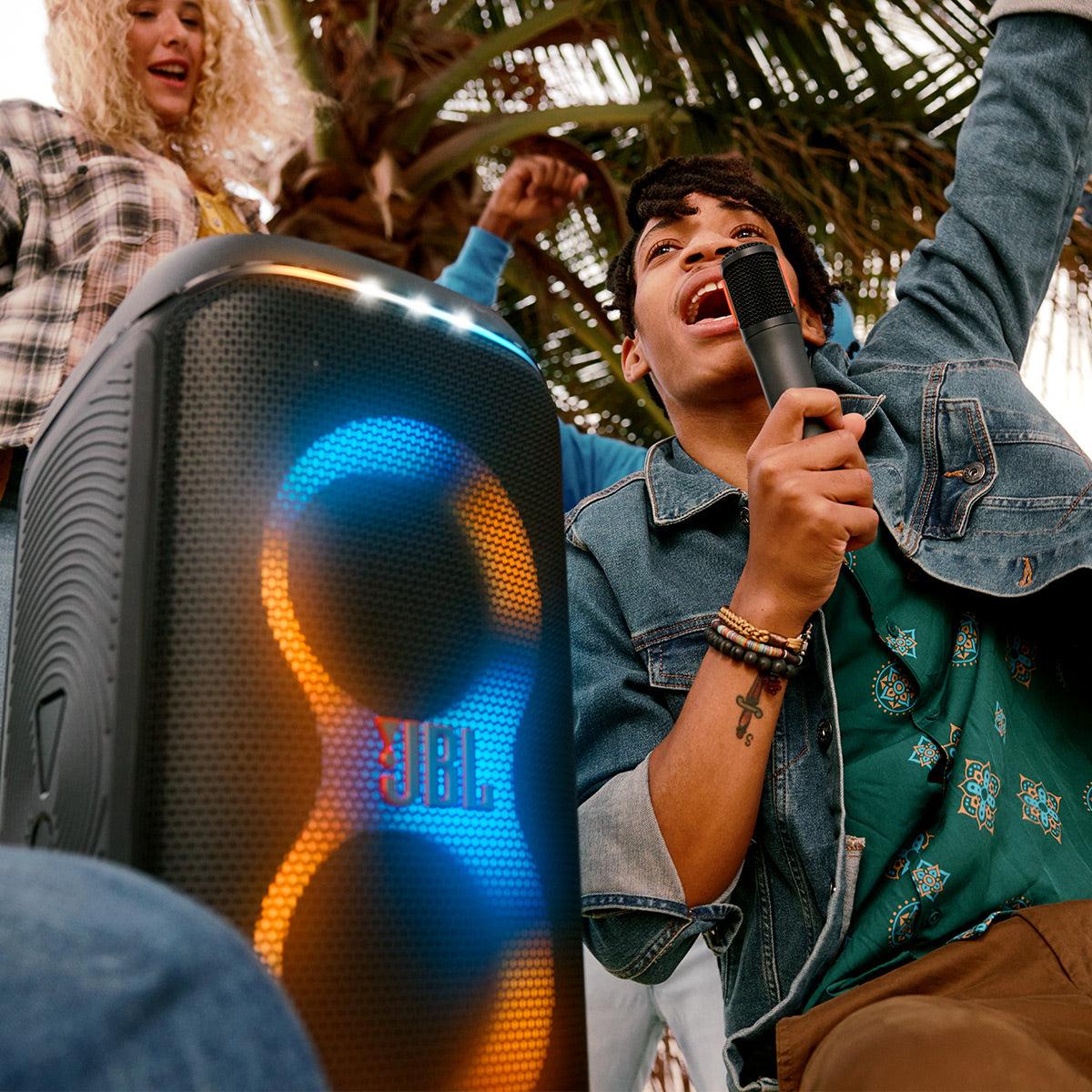
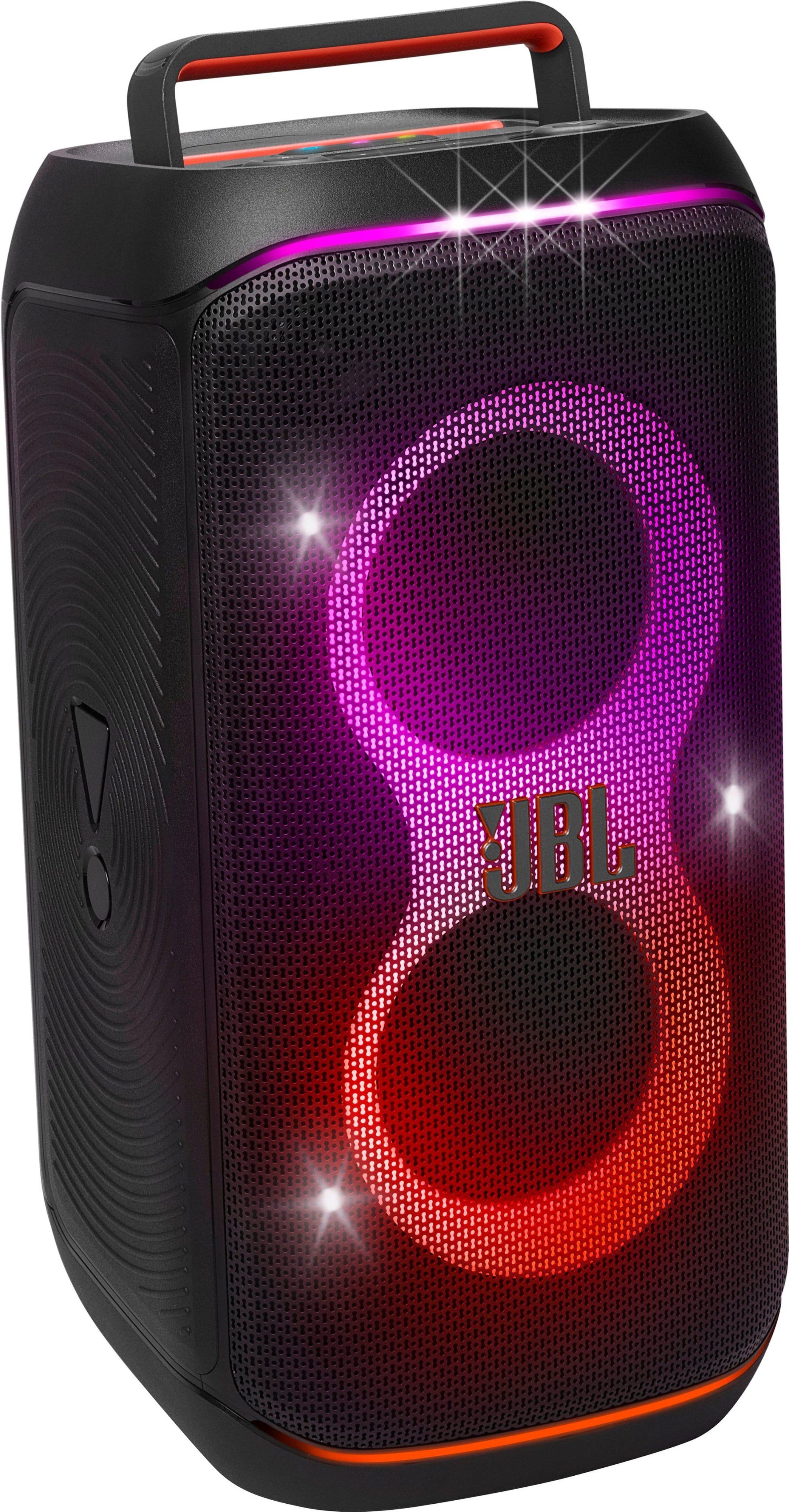
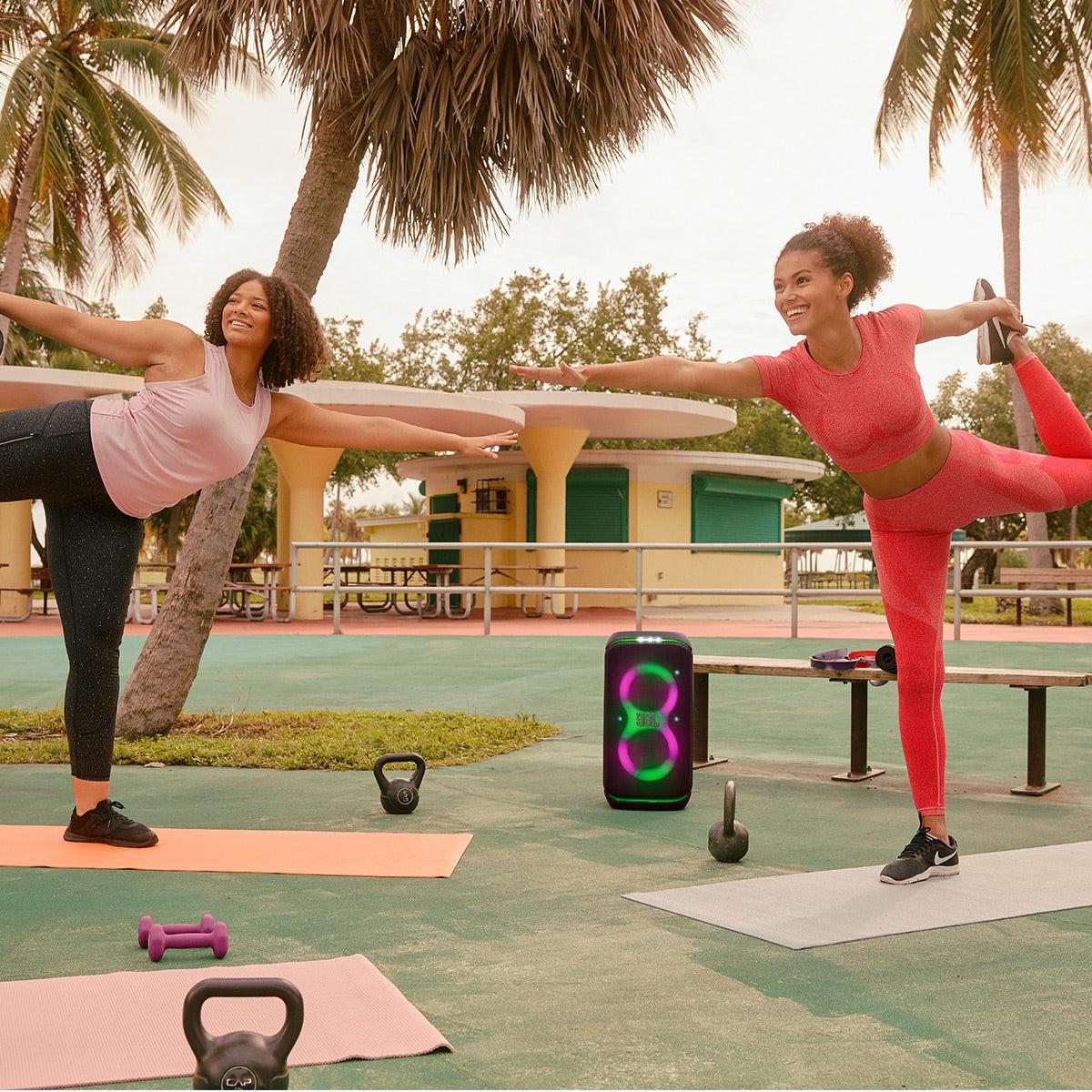
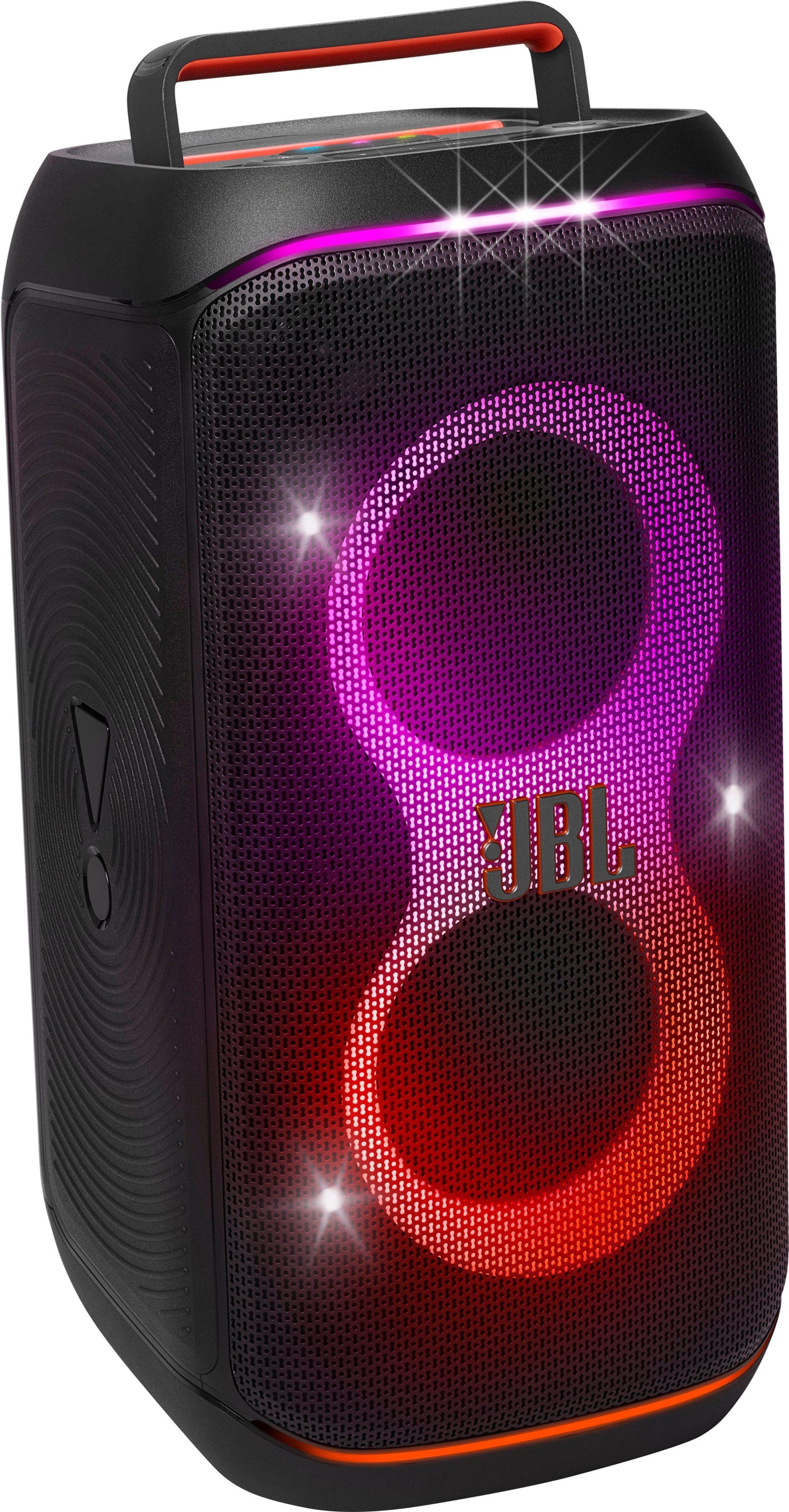
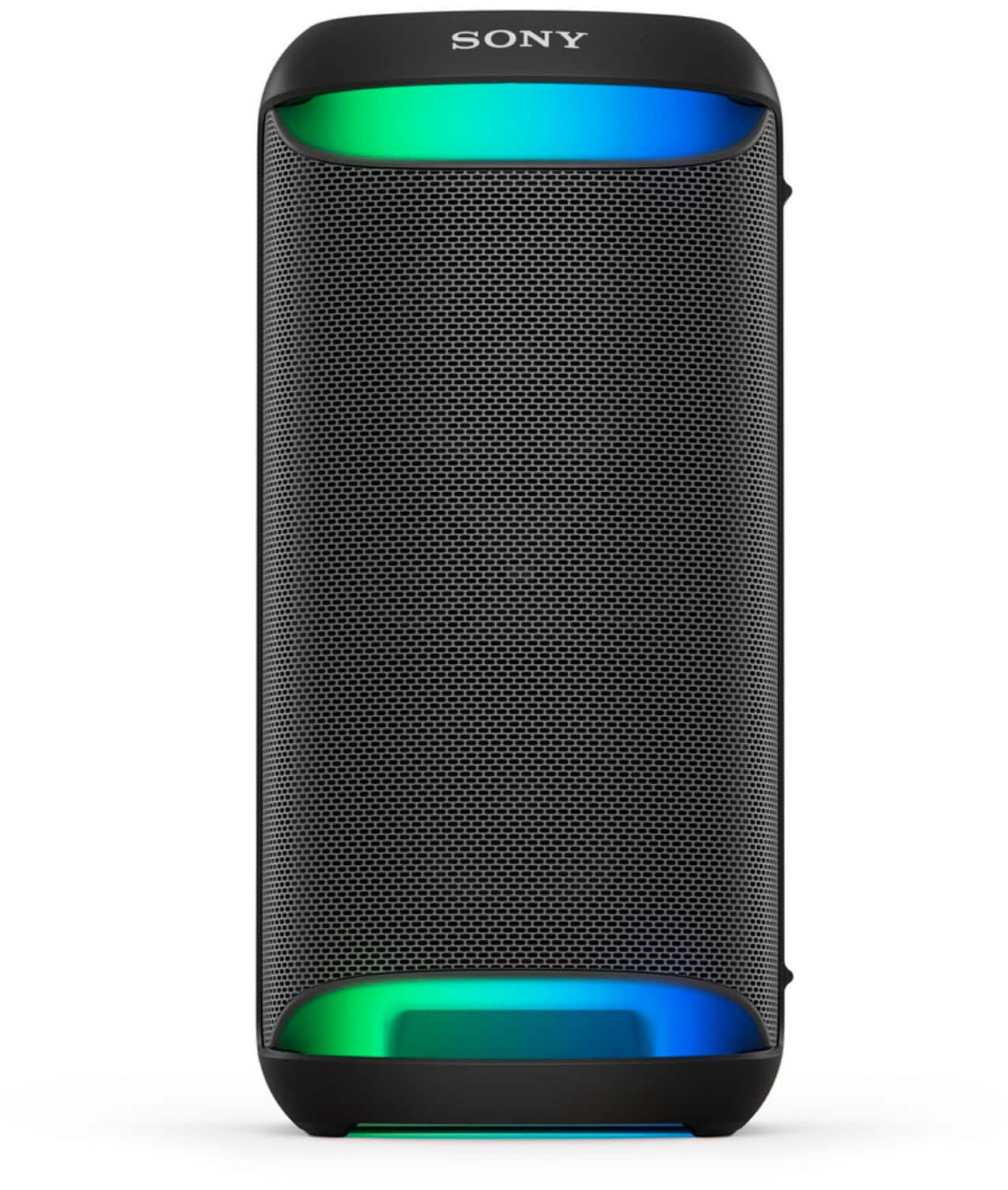
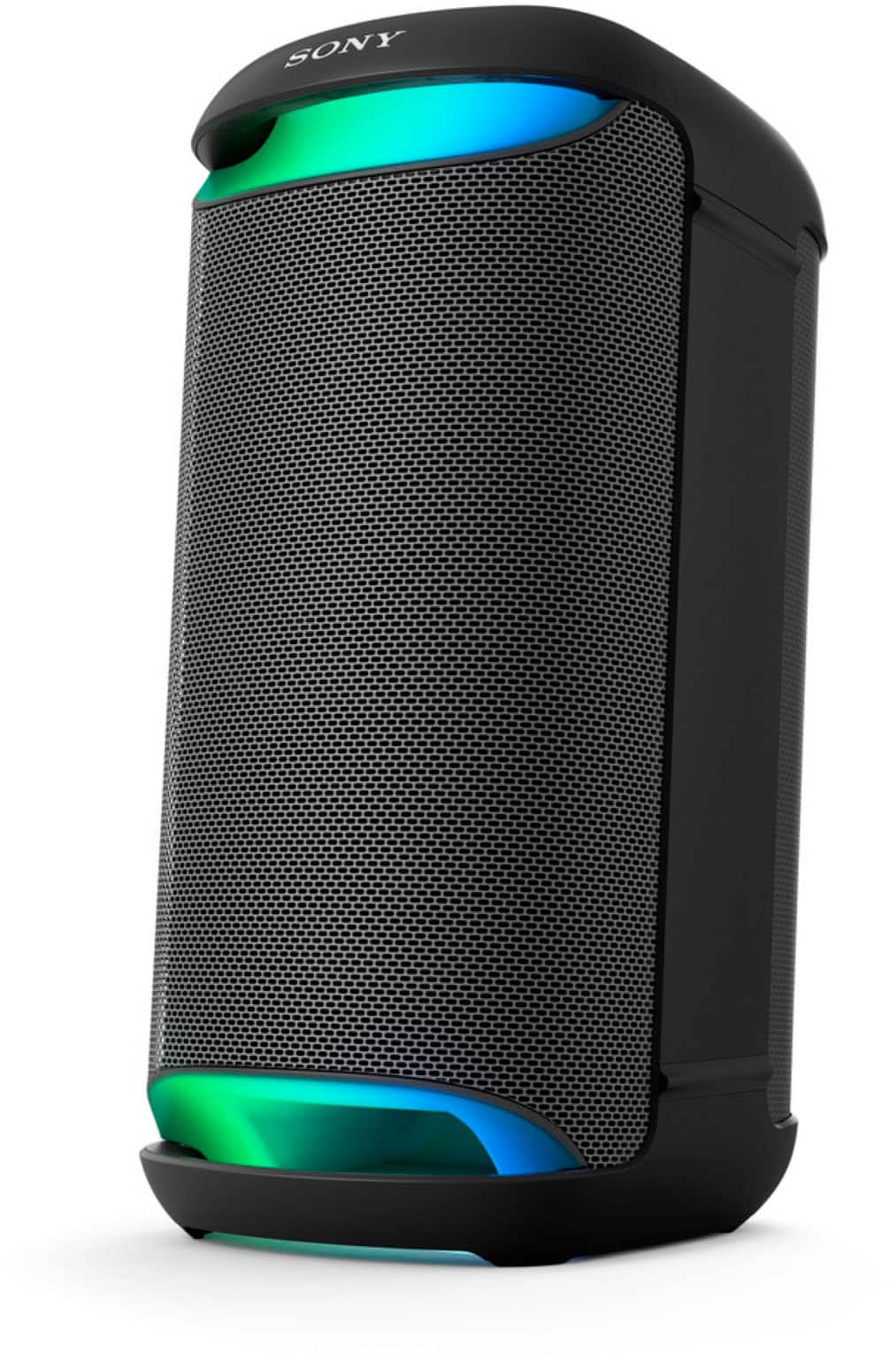

When it comes to portable party speakers, 2024 brought us two compelling options that sit at nearly identical price points but take dramatically different approaches to getting the party started. The JBL PartyBox Club 120 and Sony SRS-XV500 both launched this year, representing the latest thinking in wireless party audio technology.
Having spent considerable time researching user feedback and professional reviews, I've found these speakers divide people into clear camps. The JBL PartyBox Club 120 is the audio equivalent of a sports car—built for maximum impact and excitement. The Sony SRS-XV500, meanwhile, is more like a luxury sedan—refined, efficient, and versatile enough for daily driving.
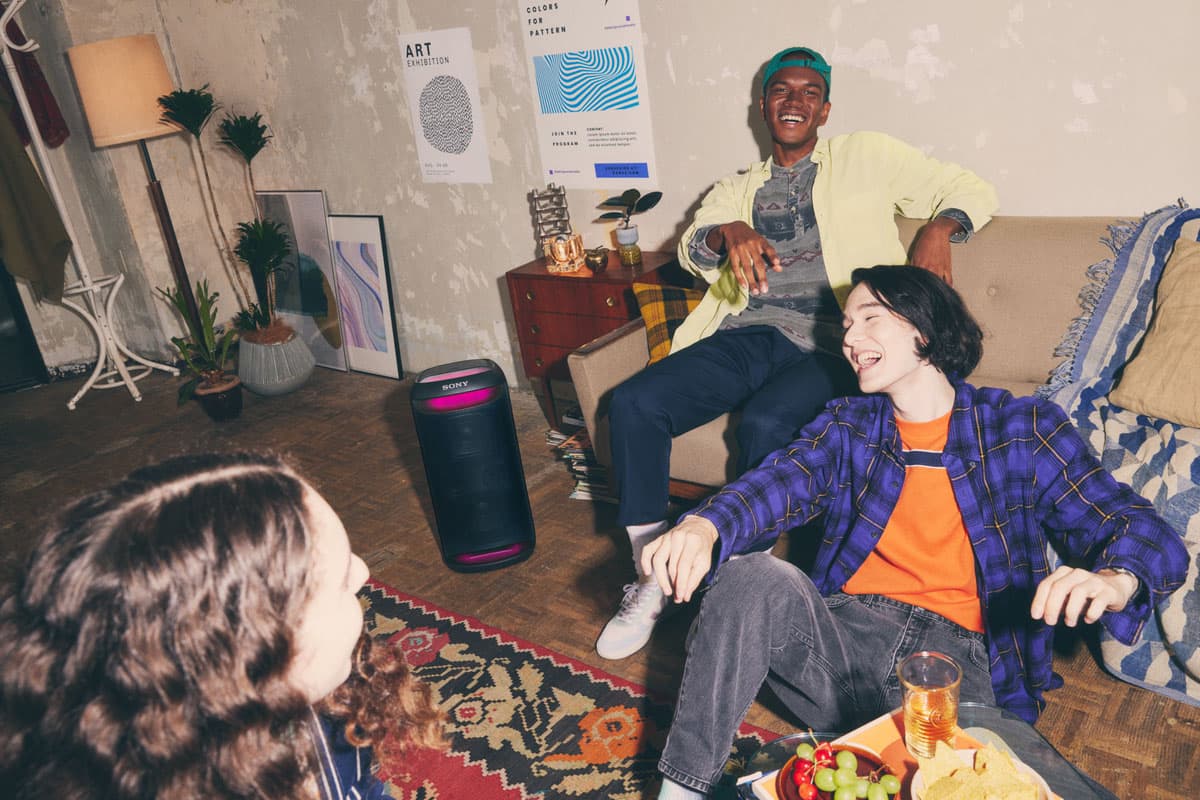
Party speakers occupy a unique niche in portable audio. Unlike the compact Bluetooth speakers you might use for background music while cooking, these are designed to be the centerpiece of social gatherings. They need to project sound across large spaces, compete with conversation and ambient noise, and maintain their performance for hours without flagging.
The key technical requirements set party speakers apart from regular portable speakers. Sound pressure level (SPL)—essentially how loud a speaker can get while maintaining clarity—becomes crucial when you're trying to energize a backyard full of people. Frequency response matters too, particularly in the low end where bass frequencies create the physical sensation that gets people moving. Total harmonic distortion (THD)—how much the speaker changes the original audio signal—needs to stay low even at high volumes to prevent that harsh, unpleasant sound you get from cheap speakers pushed too hard.
Both the JBL PartyBox Club 120 and Sony SRS-XV500 launched in early 2024, incorporating several technological advances that weren't available in previous generations. The JBL features AI Sound Boost technology that uses real-time analysis to predict speaker movement and optimize performance, while the Sony includes advanced codec support like LDAC that wasn't common in party speakers just a few years ago.
Here's where things get interesting, and where our research reveals the most significant difference between these speakers. The JBL PartyBox Club 120 consistently delivers 3-8 decibels more volume than the Sony SRS-XV500 across most frequency ranges. That might not sound like much, but decibels work on a logarithmic scale—3 dB represents roughly double the perceived loudness.
This difference becomes crucial at outdoor gatherings where sound has room to dissipate. The JBL pushes out 160 watts RMS (root mean square—a more honest power rating than peak watts) through its dual 5.25-inch woofers. While Sony doesn't publish RMS figures for the SRS-XV500, user testing consistently shows it requires higher volume settings to match the JBL at lower settings.
There's a catch with the Sony, though. Like many modern speakers, it implements dynamic power management—essentially limiting performance when running on battery to extend runtime. The Sony reaches its full potential only when plugged into AC power, while the JBL maintains consistent performance whether on battery or wall power. This makes the JBL more reliable for outdoor events where AC power isn't available.
Bass response separates good party speakers from great ones. The JBL PartyBox Club 120 extends down to 40 Hz, which covers the fundamental frequencies of most bass-heavy music. Its dual 5.25-inch woofers deliver what reviewers consistently describe as "punchy" bass with physical impact you can feel.
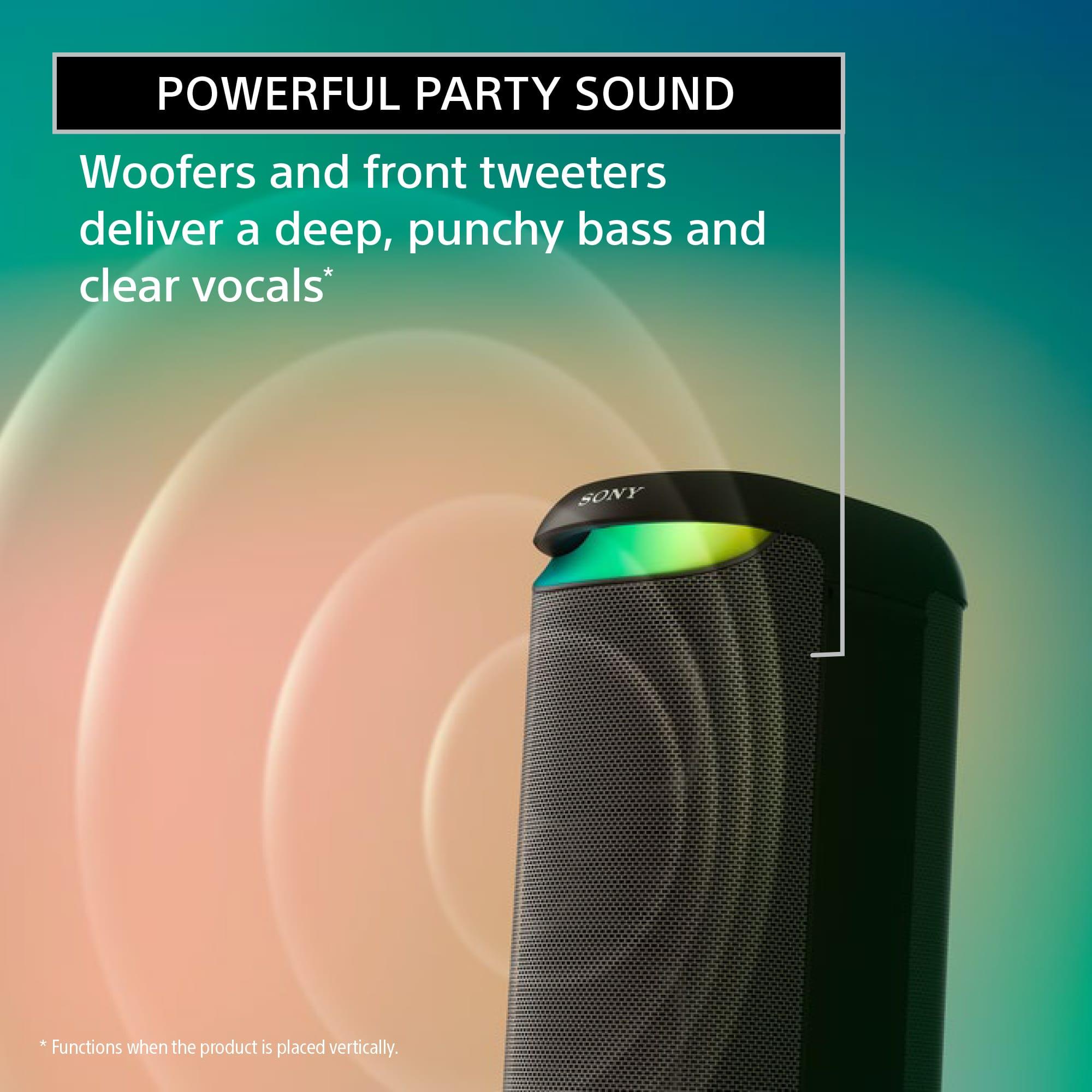
The Sony SRS-XV500 takes a more balanced approach. While it doesn't match the JBL for sheer bass quantity, it offers better frequency balance—the relative levels between bass, midrange, and treble frequencies. This makes it more suitable for diverse music genres beyond electronic dance music.
Both speakers benefit from bass reflex design, which uses precisely tuned ports to extend low-frequency response. The JBL optimizes this for maximum impact, while the Sony prioritizes accuracy over excitement.
This is where the Sony SRS-XV500 fights back. It supports LDAC, Sony's proprietary codec that can transmit roughly three times more data than standard Bluetooth codecs. For Android users with LDAC-compatible devices, this means noticeably better sound quality, especially with high-resolution audio files.
The JBL PartyBox Club 120 sticks with more universal SBC and AAC codecs. While these work with virtually any device, they don't offer the same audio quality potential as LDAC. However, the JBL compensates with its AI Sound Boost technology, which analyzes audio in real-time to optimize performance and reduce distortion at high volumes.
For casual listening and mixed music genres, the Sony provides better overall fidelity. For party scenarios where maximum impact matters more than audiophile precision, the JBL delivers more excitement.
Battery life represents the starkest difference between these speakers, but the real story is more complex than the specifications suggest.
Sony advertises 25 hours of playback for the SRS-XV500, while JBL claims 12 hours for the PartyBox Club 120. In practice, these numbers assume optimal conditions—moderate volume, lighting effects disabled, and minimal use of bass boost features.
Real-world testing tells a different story. With typical party settings—around 65-80% volume with lighting and bass boost enabled—the Sony delivers approximately 8-10 hours of playback, while the JBL manages 6-8 hours. Still a significant difference, but not the massive gap the specifications suggest.
Where the JBL PartyBox Club 120 gets clever is with its swappable battery system. The battery slides out easily, allowing you to purchase a spare and effectively unlimited runtime. This is rare in the party speaker category and provides real practical value for DJ work or multi-day events.
The Sony compensates with faster charging—10 minutes provides about 2.5 hours of playback, compared to the JBL's 10 minutes for 80 minutes of runtime. Both speakers can function as power banks to charge your devices, though this reduces their own battery life.
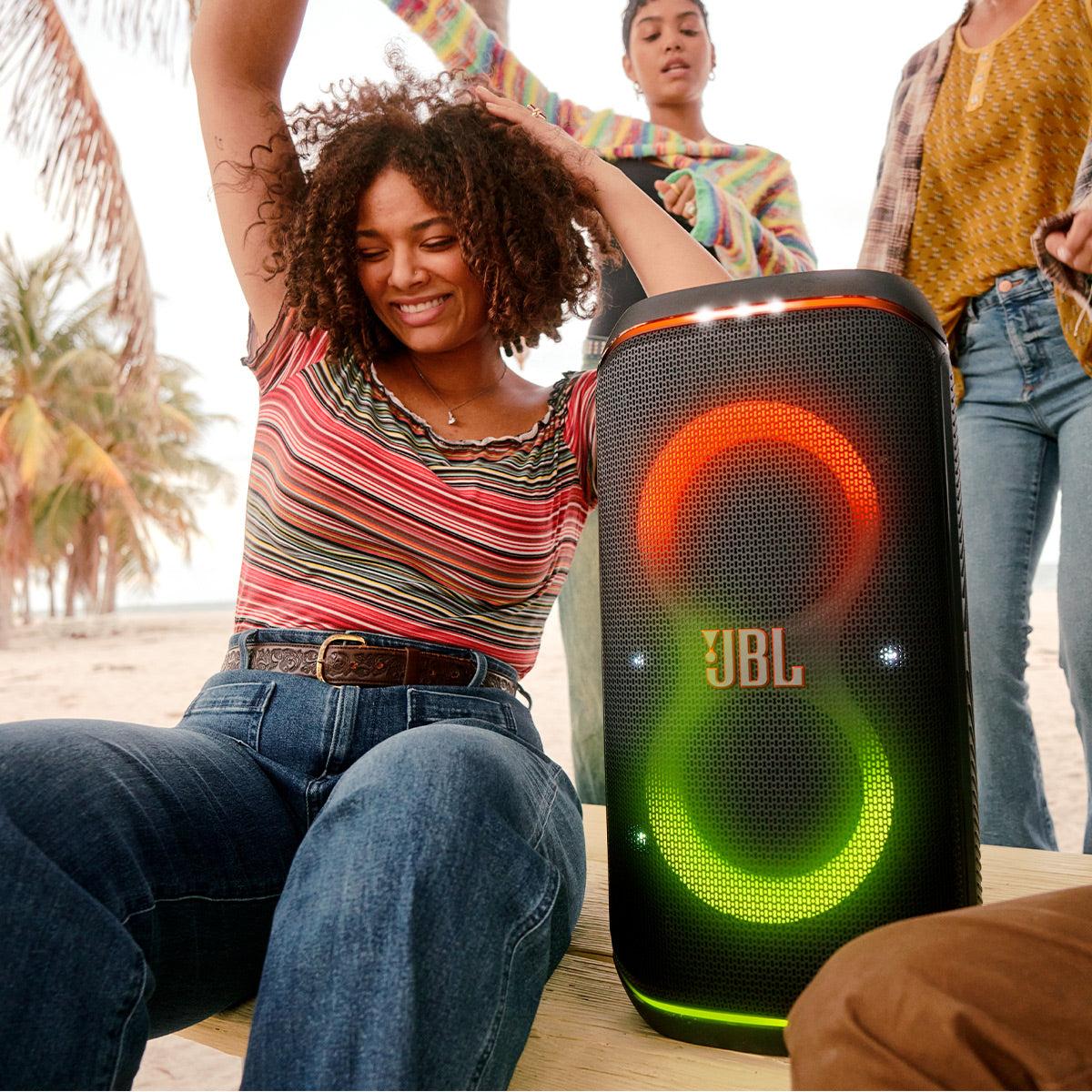
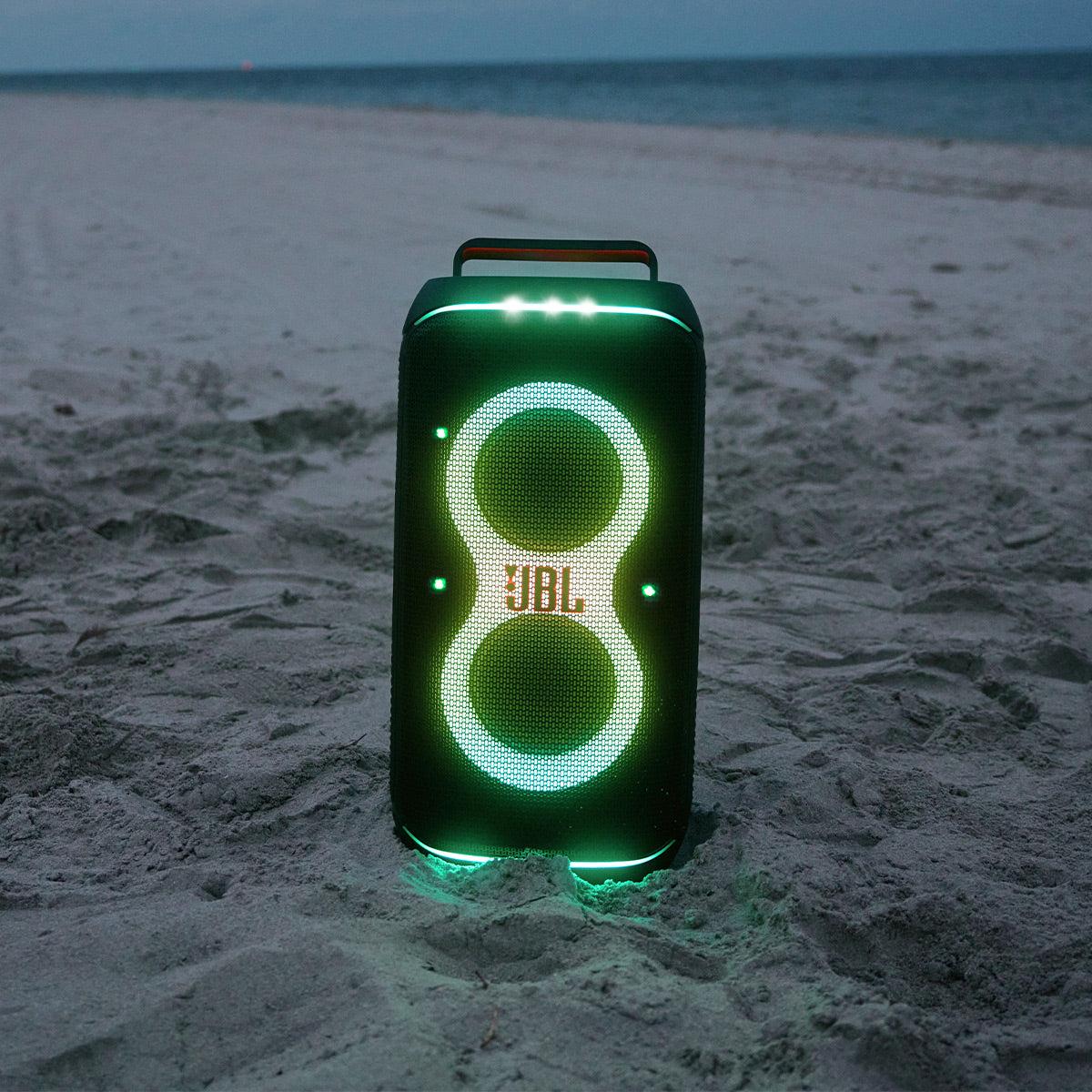
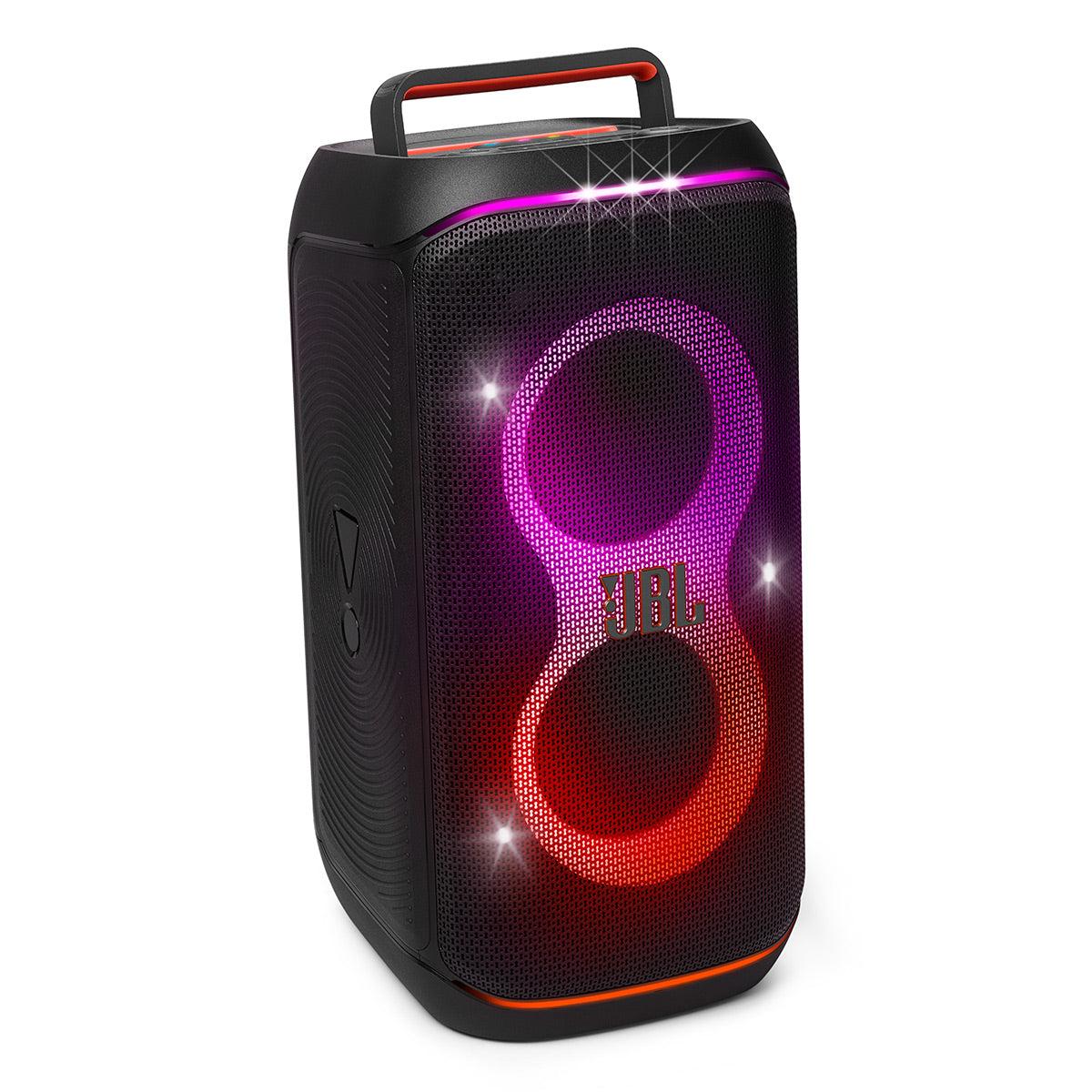
Party speakers aren't just about audio anymore—synchronized lighting has become a major selling point. The JBL PartyBox Club 120 takes this seriously with what amounts to a mini light show: two LED rings, two LED strips, and nine white strobe LEDs create dynamic effects that sync with your music's rhythm.
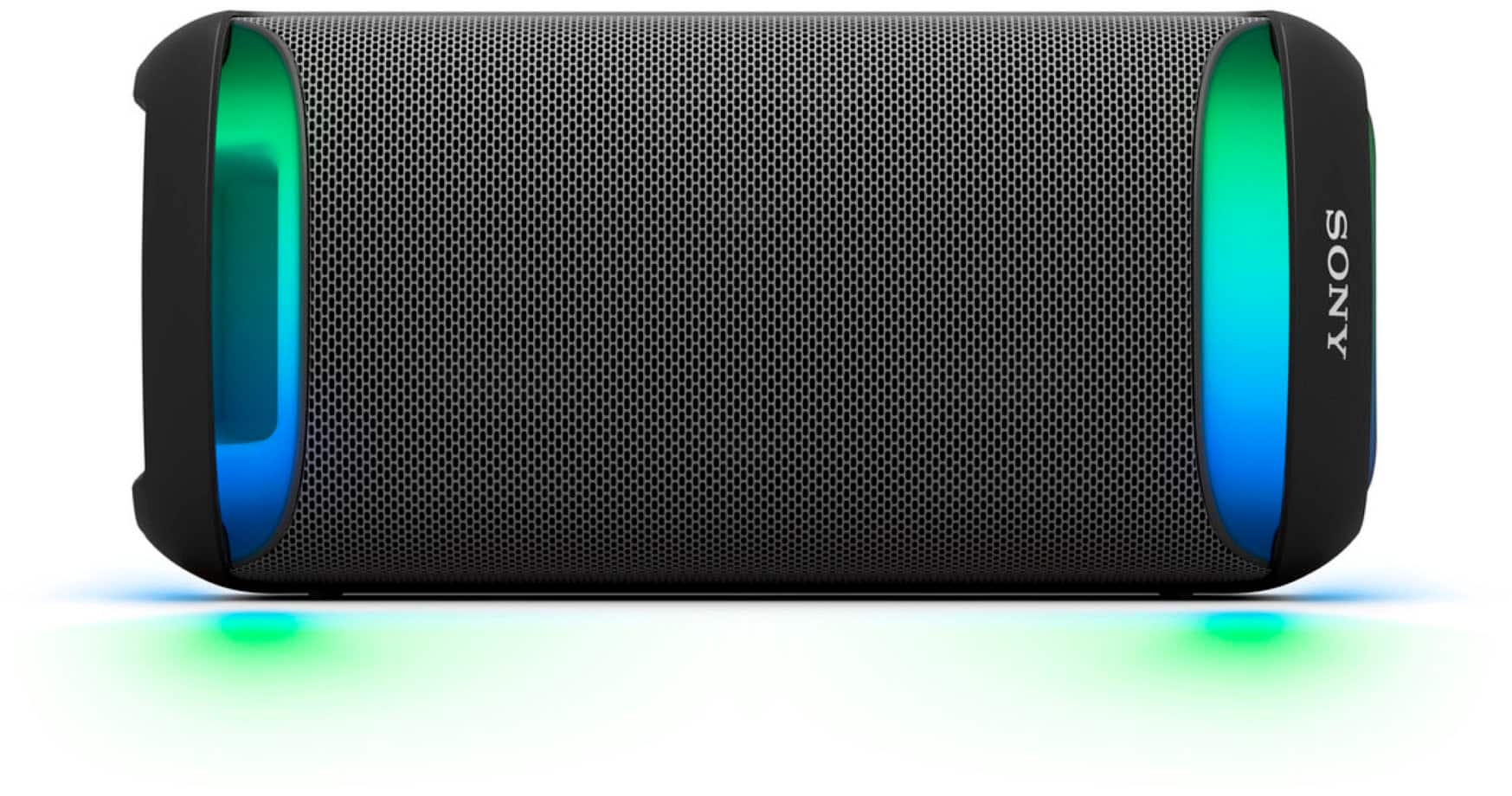
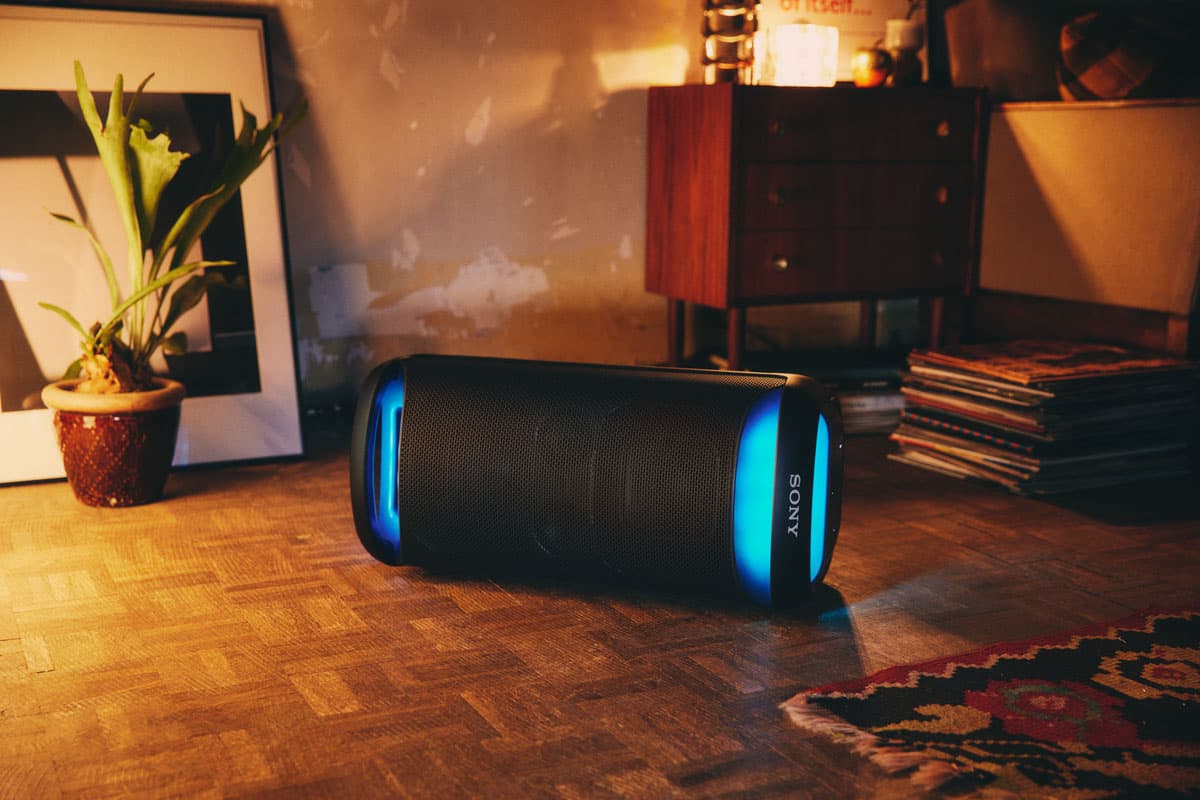
The Sony SRS-XV500 offers more modest lighting with two LED zones that can change colors and pulse with the beat. While less spectacular, Sony's approach consumes less battery power and some users find it less distracting during intimate gatherings.
Both speakers offer app control for lighting customization. The JBL's PartyBox app provides more extensive options, while Sony splits functionality between two apps—Music Center for basic controls and Fiestable for party features.
Modern party speakers need to accommodate various audio sources and performance scenarios. Both speakers deliver here, though with different strengths.
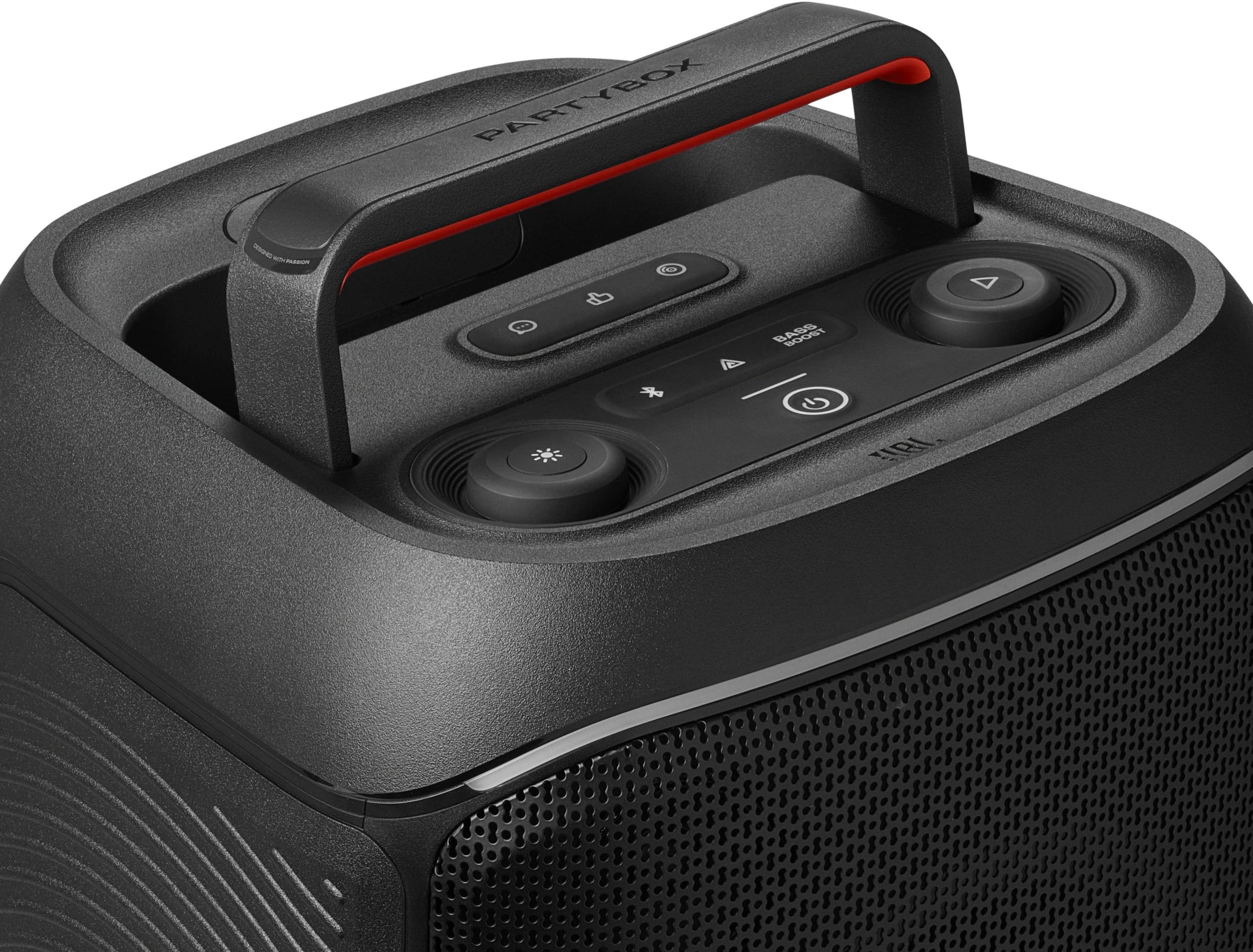
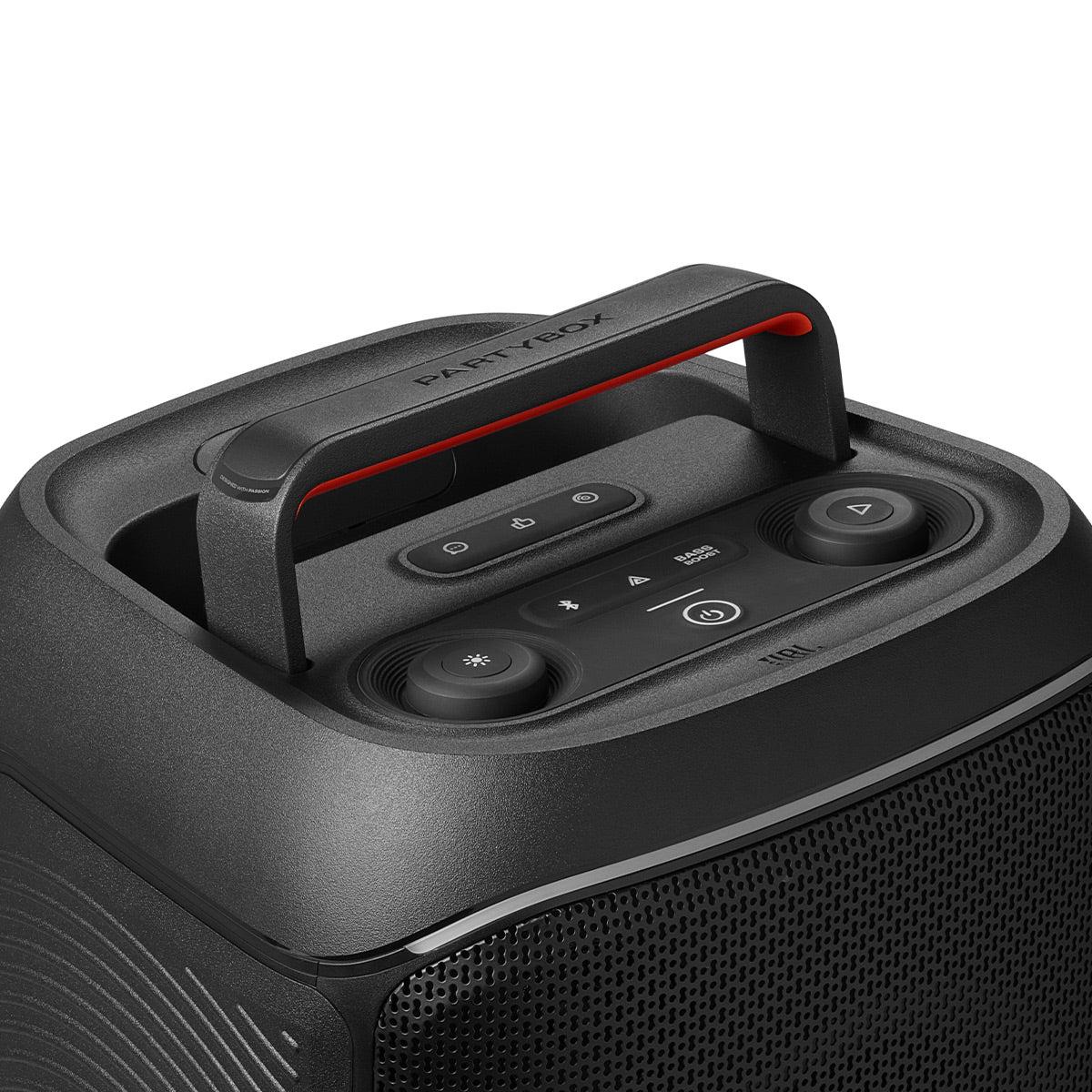
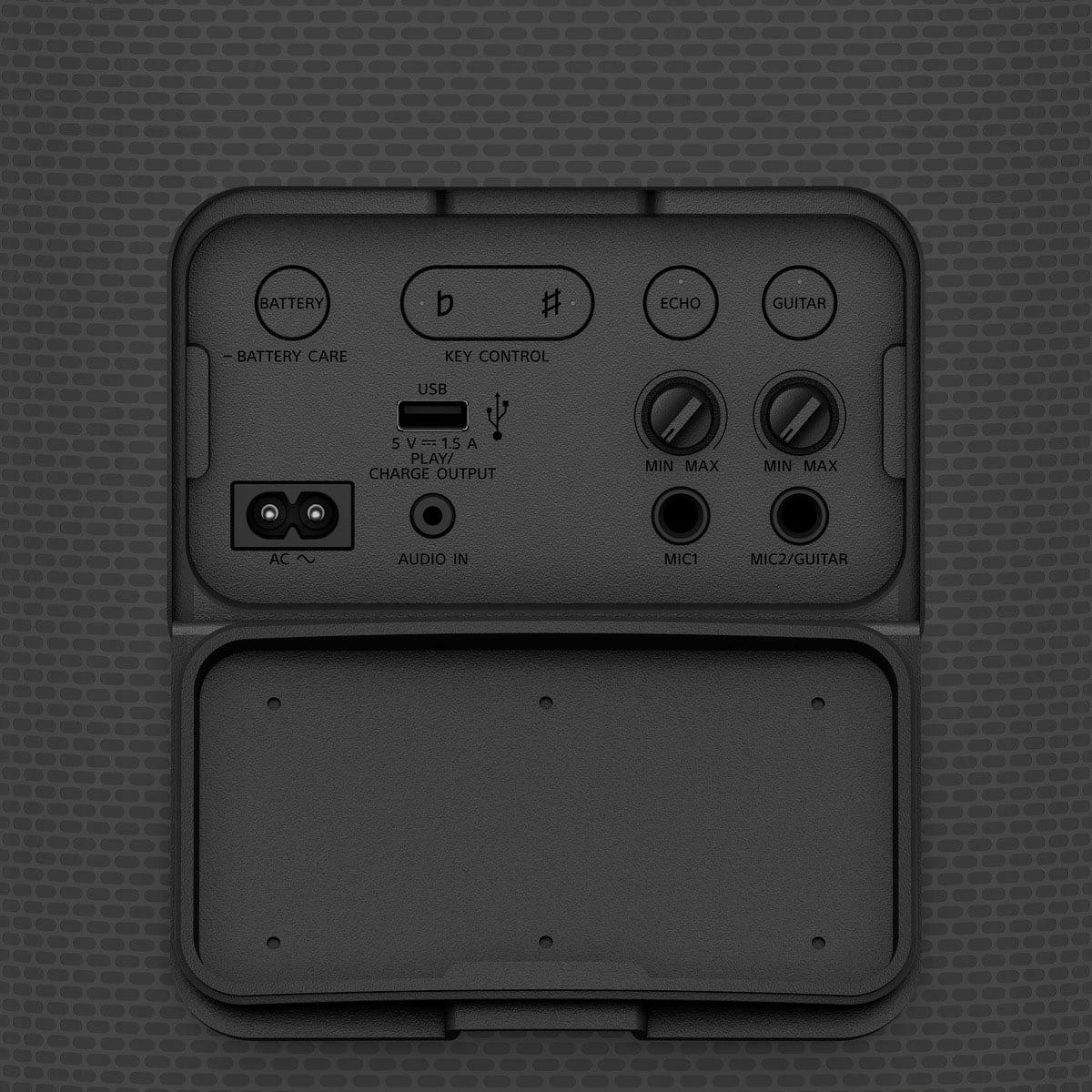
Each speaker provides dual microphone/guitar inputs with individual volume controls. The Sony SRS-XV500 adds dedicated echo and key controls for karaoke, allowing real-time pitch adjustment—useful when singers can't hit the original key. The JBL PartyBox Club 120 relies on app-based effects but provides more tactile control with physical dials and DJ effect buttons.
Both include 3.5mm AUX inputs for older devices and USB-A ports for playing music files directly from storage drives. The JBL adds a tripod mounting thread, making it suitable for fixed installations like small venue sound systems.
Multipoint Bluetooth connection allows both speakers to maintain connections with two devices simultaneously, enabling seamless DJ handoffs without pairing delays.
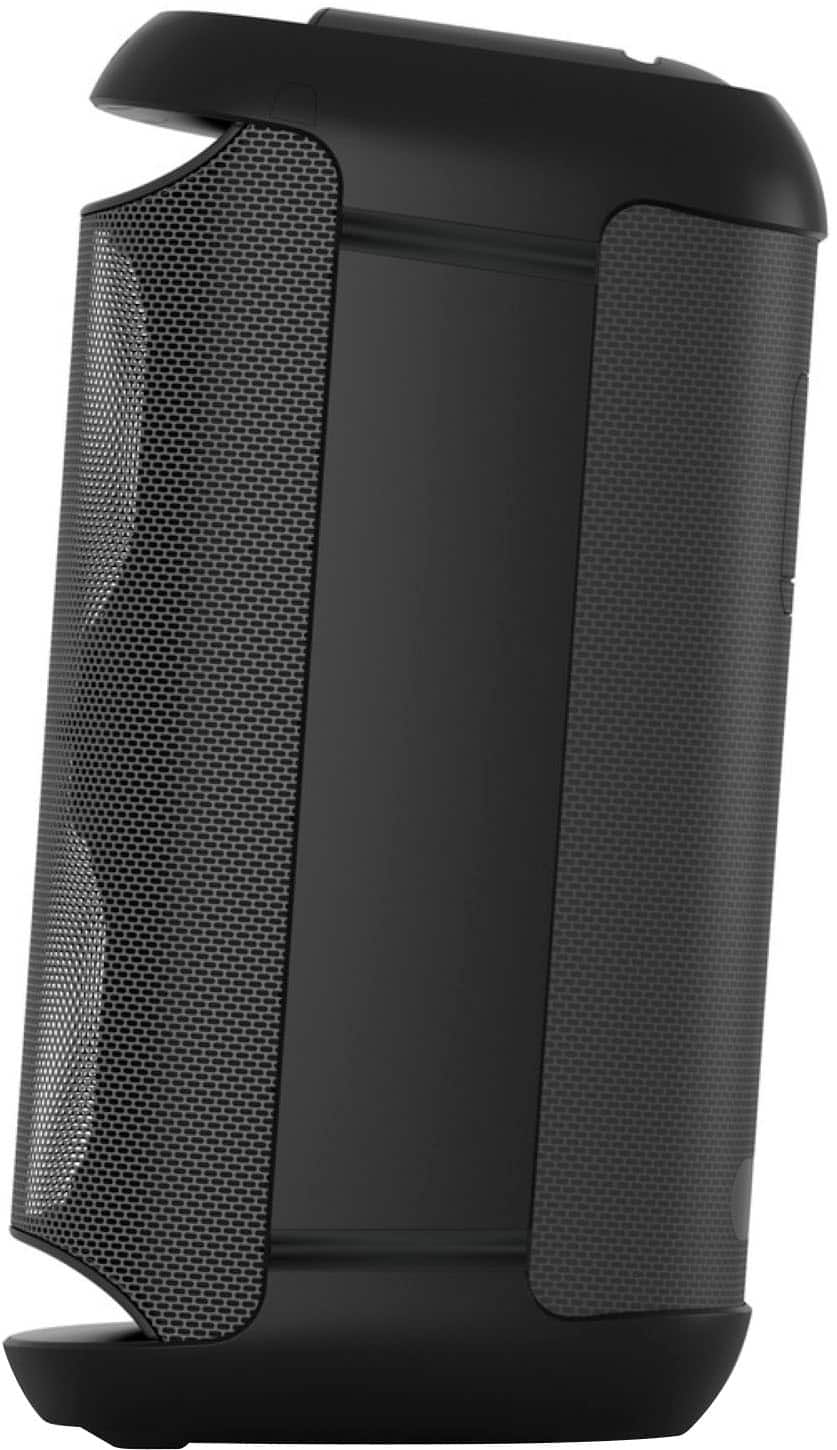
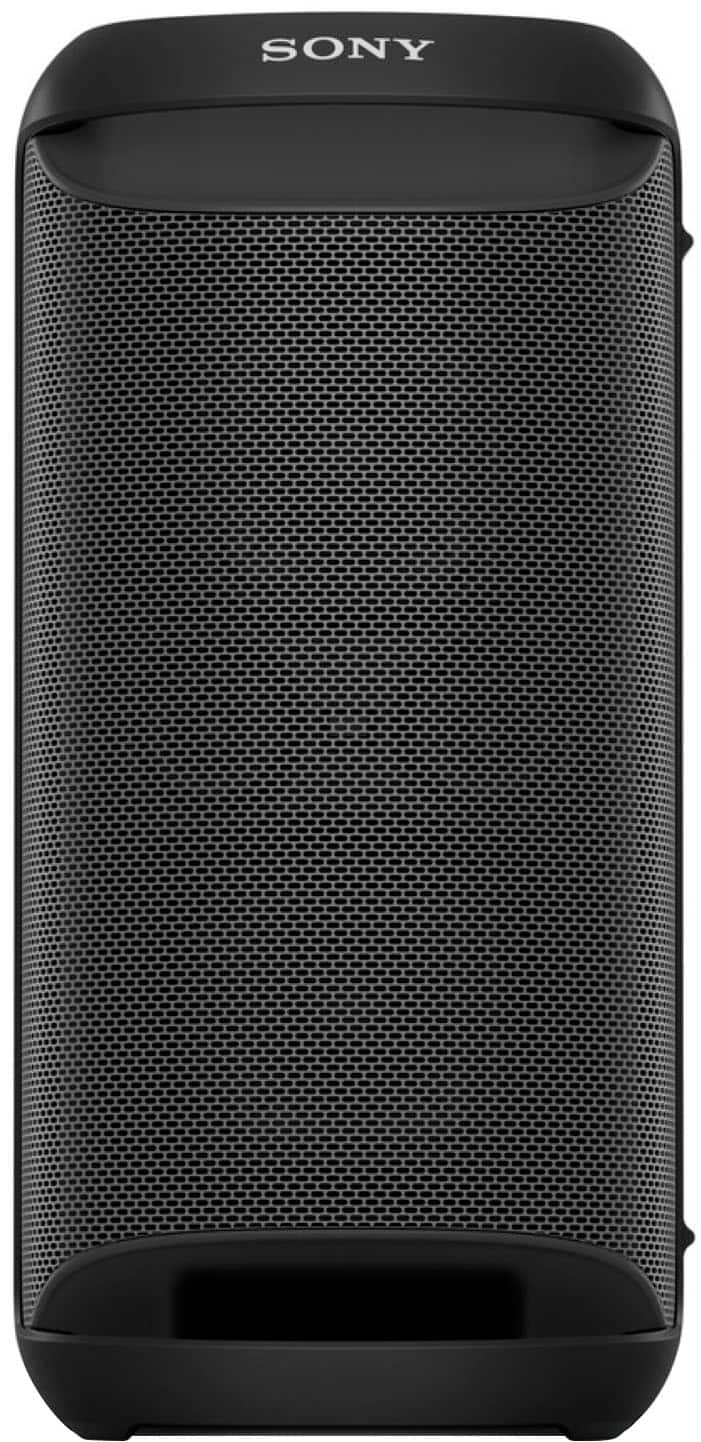
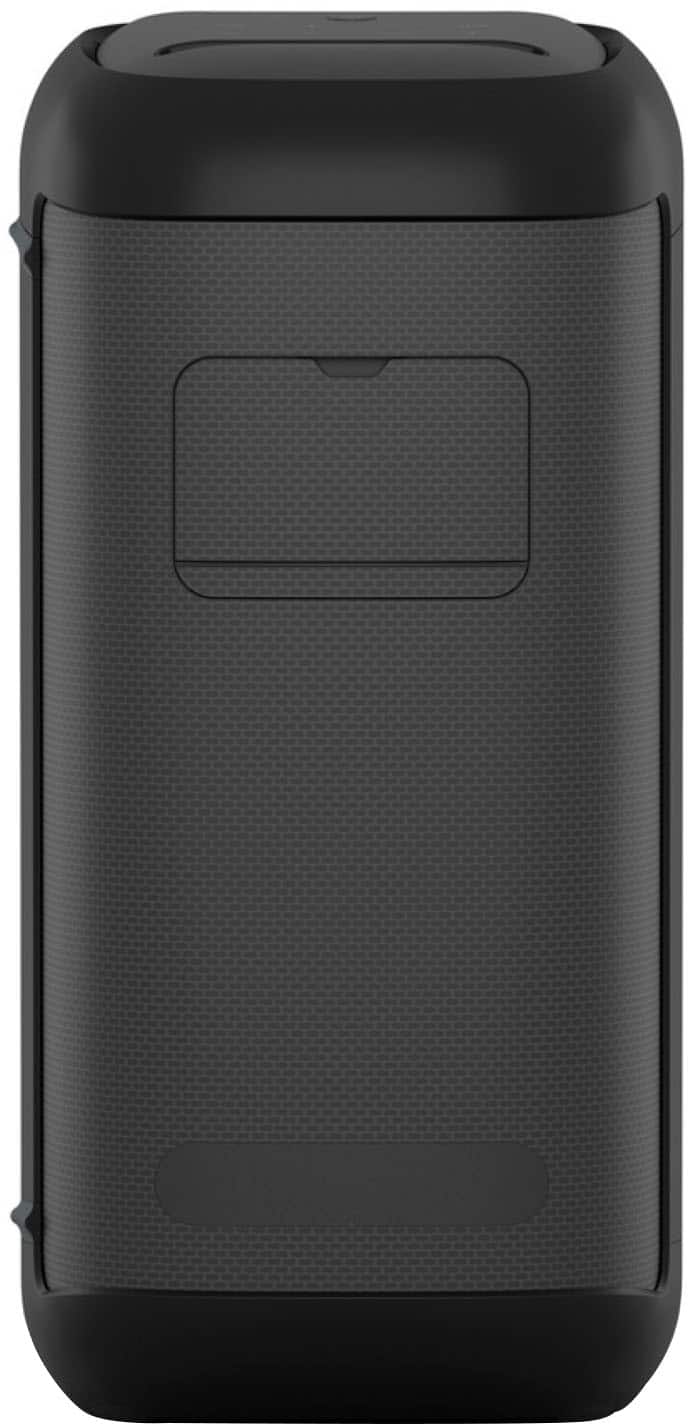
At roughly 24-25 pounds, neither speaker is lightweight, but both manage their bulk differently. The JBL PartyBox Club 120 uses a single foldable handle that tucks away neatly and provides comfortable single-person carrying. The Sony SRS-XV500 offers dual handles for two-person carrying but lacks the ergonomic refinement of the JBL's design.
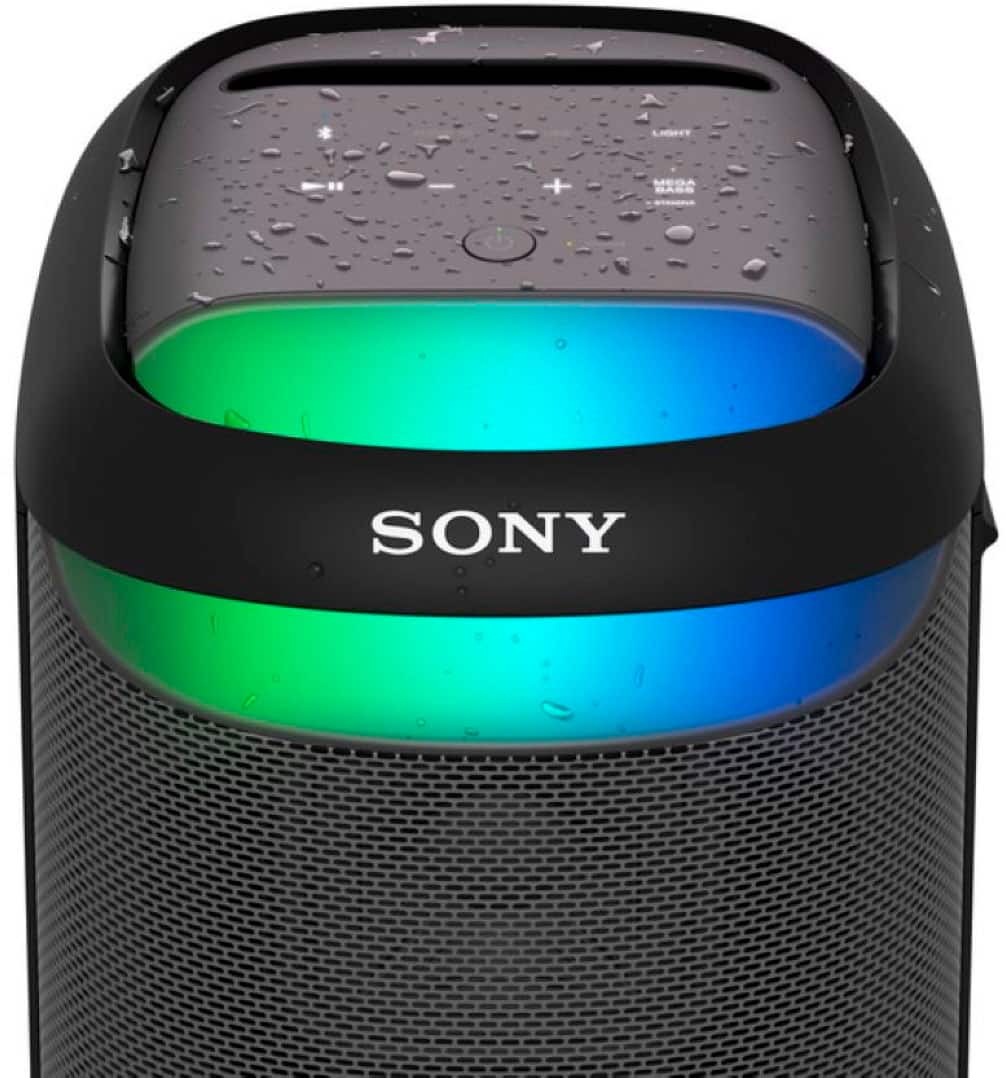
Both earn IPX4 ratings, meaning they'll survive splashes and light rain but aren't submersible. This makes them suitable for poolside parties but not beach use where sand and salt spray pose additional threats.
The JBL includes thoughtful touches like LED-illuminated connection panels for easy cable management in dark environments. The Sony emphasizes sustainability with recycled plastic construction.
While neither speaker is designed primarily for home theater use, their latency characteristics—the delay between video and audio—matter for streaming services and movie watching. The Sony SRS-XV500 shows significantly lower latency with both iOS and Android devices, making it more suitable for multimedia content.
The JBL PartyBox Club 120 works fine for music streaming but may show noticeable lip-sync issues during video playback. Both speakers lack the precise stereo imaging and neutral frequency response that dedicated home theater speakers provide, but they can serve as interim solutions for casual viewing.
At the time of writing, both speakers compete in the $400 price range, making this decision about feature priorities rather than budget constraints. The similar pricing makes the performance differences even more significant.
The JBL PartyBox Club 120 delivers more audio performance per dollar, especially for users who prioritize maximum volume and bass impact. The swappable battery system adds long-term value, effectively providing unlimited runtime for the cost of a spare battery.
The Sony SRS-XV500 offers better versatility, excelling at both party scenarios and casual listening. Its exceptional battery life reduces charging frequency and the need for spare batteries, while LDAC support provides upgrade potential for Android users.
Both speakers incorporate technologies that weren't available in previous generations. The JBL's AI Sound Boost represents a significant advance in real-time audio processing, using machine learning to optimize performance dynamically. This technology will likely become standard across high-end portable speakers.
The Sony's LDAC support positions it well for the growing high-resolution audio market, though this mainly benefits Android users. Sony's Auracast multi-speaker connection technology offers more future potential than JBL's proprietary system.
After extensive research and evaluation of user experiences, clear patterns emerge for each speaker's ideal users.
Choose the JBL PartyBox Club 120 if you're primarily focused on party performance. It's the better choice for outdoor gatherings, dance-focused events, and situations where maximum audio impact matters most. The swappable battery system makes it ideal for DJs, event planners, or anyone hosting frequent parties. Its superior volume output and bass response create more energizing experiences for larger groups.
The Sony SRS-XV500 suits users who want one speaker that excels at parties while remaining excellent for daily use. Its exceptional battery life and balanced sound signature make it perfect for all-day outdoor events, camping trips, or users who frequently stream multimedia content. The LDAC support provides added value for Android users with high-quality music libraries.
Both speakers succeed at their intended missions, but they serve different priorities. The JBL PartyBox Club 120 is the definitive choice for pure party performance, offering superior volume, bass impact, and visual effects that create the most energizing atmosphere. It's the speaker that will make your gatherings legendary.
The Sony SRS-XV500 provides better overall versatility with exceptional endurance and refined audio quality. It's the wiser choice for users who want excellent party performance plus daily usability.
In my evaluation, the JBL wins for dedicated party use, while the Sony wins for versatile, everyday use. At their similar price points, this decision ultimately comes down to how you'll actually use your speaker. Both represent excellent value in their respective approaches to portable party audio.
| JBL PartyBox Club 120 | Sony SRS-XV500 |
|---|---|
| Sound Output - Critical for outdoor parties and large spaces | |
| 160W RMS, consistently 3-8 dB louder | Lower power output, requires AC for full performance |
| Battery Life - Determines how long your party can last | |
| 12 hours advertised (6-8 hours real-world with features) | 25 hours advertised (8-10 hours real-world with features) |
| Battery System - Affects long-term usability and event planning | |
| Swappable battery (buy spare for unlimited runtime) | Fixed battery with fast charging (10 min = 2.5 hours) |
| Bass Response - Essential for dance music and party atmosphere | |
| 40 Hz extension, punchy and physical bass impact | More balanced, neutral bass with less physical impact |
| Audio Codecs - Affects streaming quality, especially on Android | |
| SBC, AAC (universal compatibility) | SBC, AAC, LDAC (higher quality on Android devices) |
| Lighting Effects - Visual entertainment value | |
| 2 LED rings, 2 strips, 9 strobe LEDs (dynamic light show) | 2 LED zones (basic color changing and pulsing) |
| Weight and Portability - Important for transport to events | |
| 11.05 kg (24.35 lbs) with foldable ergonomic handle | 11.2 kg (24.69 lbs) with dual carrying handles |
| Controls - Affects ease of use during parties | |
| Physical dials and DJ buttons (tactile, intuitive) | Touch controls with dedicated karaoke features |
| Video Latency - Matters if you stream movies or shows | |
| Standard latency (may have lip-sync issues) | Significantly lower latency (better for video content) |
| Multi-Speaker Connection - For bigger sound setups | |
| Auracast wireless connection and stereo pairing | Party Connect (up to 100 speakers) and stereo pairing |
| Water Resistance - Protection for outdoor use | |
| IPX4 splashproof | IPX4 splashproof |
| Microphone/Guitar Inputs - For karaoke and live performance | |
| 2x inputs with app-based effects and DJ controls | 2x inputs with hardware echo and key controls |
The JBL PartyBox Club 120 is significantly louder, delivering 3-8 dB more volume than the Sony SRS-XV500. This makes the JBL better for outdoor gatherings and large spaces where you need maximum sound projection.
The Sony SRS-XV500 offers up to 25 hours of advertised battery life compared to the JBL PartyBox Club 120's 12 hours. However, in real-world use with features enabled, the Sony delivers about 8-10 hours while the JBL provides 6-8 hours.
The JBL PartyBox Club 120 delivers deeper, more physical bass with 40 Hz frequency extension and punchy low-end response. The Sony SRS-XV500 offers more balanced bass that works better for diverse music genres but lacks the physical impact of the JBL.
Only the JBL PartyBox Club 120 has a swappable battery system, allowing you to replace the battery or use spare batteries for extended events. The Sony SRS-XV500 has a fixed internal battery that cannot be user-replaced.
The Sony SRS-XV500 is much better for video content due to significantly lower audio latency, preventing lip-sync issues. The JBL PartyBox Club 120 may have noticeable delays when watching videos on phones or tablets.
The JBL PartyBox Club 120 features a comprehensive light show with 2 LED rings, 2 strips, and 9 strobe LEDs creating dynamic effects. The Sony SRS-XV500 has simpler lighting with just 2 LED zones for basic color changing and pulsing.
The Sony SRS-XV500 supports LDAC codec for higher-quality wireless audio on Android devices, while the JBL PartyBox Club 120 uses standard SBC and AAC codecs. For iPhone users, both speakers offer similar streaming quality.
Both the JBL PartyBox Club 120 and Sony SRS-XV500 have IPX4 splash-resistant ratings. They can handle light rain and splashes but aren't fully waterproof, so avoid submersion or heavy exposure to water.
The JBL PartyBox Club 120 is slightly easier to transport with its foldable ergonomic handle design, despite similar weight to the Sony SRS-XV500. The Sony has dual handles but is less comfortable for single-person carrying.
Yes, both the JBL PartyBox Club 120 and Sony SRS-XV500 have dual microphone inputs with individual volume controls. The Sony offers dedicated hardware controls for echo and key changes, while the JBL provides app-based effects.
At similar price points, the JBL PartyBox Club 120 offers better value for dedicated party use with superior volume and bass. The Sony SRS-XV500 provides better value for versatile use, combining party performance with excellent daily listening and longer battery life.
Both speakers support multi-speaker connections. The JBL PartyBox Club 120 uses Auracast wireless pairing and stereo connection, while the Sony SRS-XV500 supports Party Connect for linking up to 100 compatible Sony speakers plus stereo pairing options.
We've done our best to create useful and informative comparisons to help you decide what product to buy. Our research uses advanced automated methods to create this comparison and perfection is not possible - please contact us for corrections or questions. These are the sites we've researched in the creation of this article: stereoguide.com - armorsound.com - rtings.com - rtings.com - bestbuy.com - youtube.com - soundguys.com - youtube.com - lbtechreviews.com - youtube.com - youtube.com - versus.com - jbl.com - rtings.com - versus.com - ro.harmanaudio.com - dell.com - jbl.com - jbl.com - projectorscreenstore.com - bestbuy.com - rtings.com - bestbuy.com - youtube.com - rtings.com - versus.com - youtube.com - versus.com - youtube.com - youtube.com - guidingtech.com - crutchfield.com - sony.com - sony.com - bestbuy.com - helpguide.sony.net - smappliance.com - youtube.com - helpguide.sony.net - videoandaudiocenter.com - electronics.sony.com - linqcdn.avbportal.com

Privacy Policy
Terms and Conditions - Affiliate Policy
Home Security
© Copyright 2008-2026.
11816 Inwood Rd #1211, Dallas, TX 75244