

When it comes to throwing an unforgettable party, your speaker choice can make or break the entire vibe. Whether you're hosting a backyard barbecue, celebrating a birthday, or just want to pump up your workout playlist, party speakers have evolved into sophisticated entertainment systems that do way more than just play music loud.
Both the JBL PartyBox Club 120 and Samsung MX-ST50F Sound Tower entered the market in 2024, representing the latest evolution in portable party audio technology. These aren't your basic Bluetooth speakers – they're purpose-built entertainment systems designed to transform any space into a dance floor.
Party speakers occupy a unique space in the audio world. Unlike high-end audiophile speakers that focus on perfect sound reproduction, these are engineered for fun, energy, and getting people moving. The best party speakers balance several key elements: they need to play loud without distortion, deliver deep bass that you can feel in your chest, last long enough for extended celebrations, and increasingly, provide visual entertainment through synchronized light shows.
The most critical performance metrics for party speakers differ significantly from regular speakers. Raw power output (measured in watts) tells you how loud the speaker can get, while frequency response – particularly in the low-end bass frequencies around 40-80 Hz – determines whether your music will have that chest-thumping impact that gets people dancing. Battery life becomes crucial since these speakers often travel to outdoor locations without power outlets.
Modern party speakers also compete on entertainment features. Built-in light shows, karaoke capabilities, DJ effects, and smartphone app integration have become standard expectations rather than bonus features. The speaker that can create the most engaging overall experience, not just the best sound, typically wins the party.
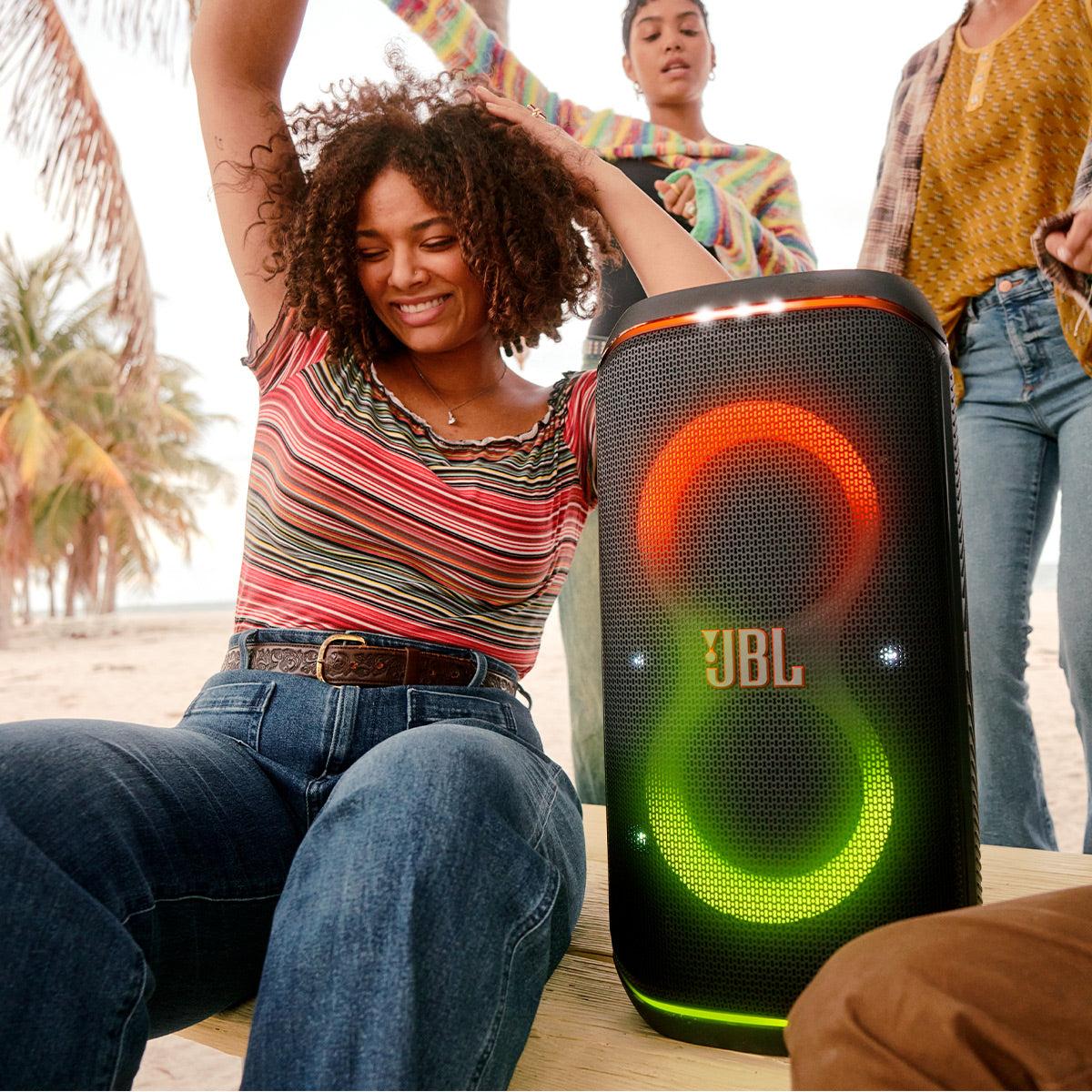
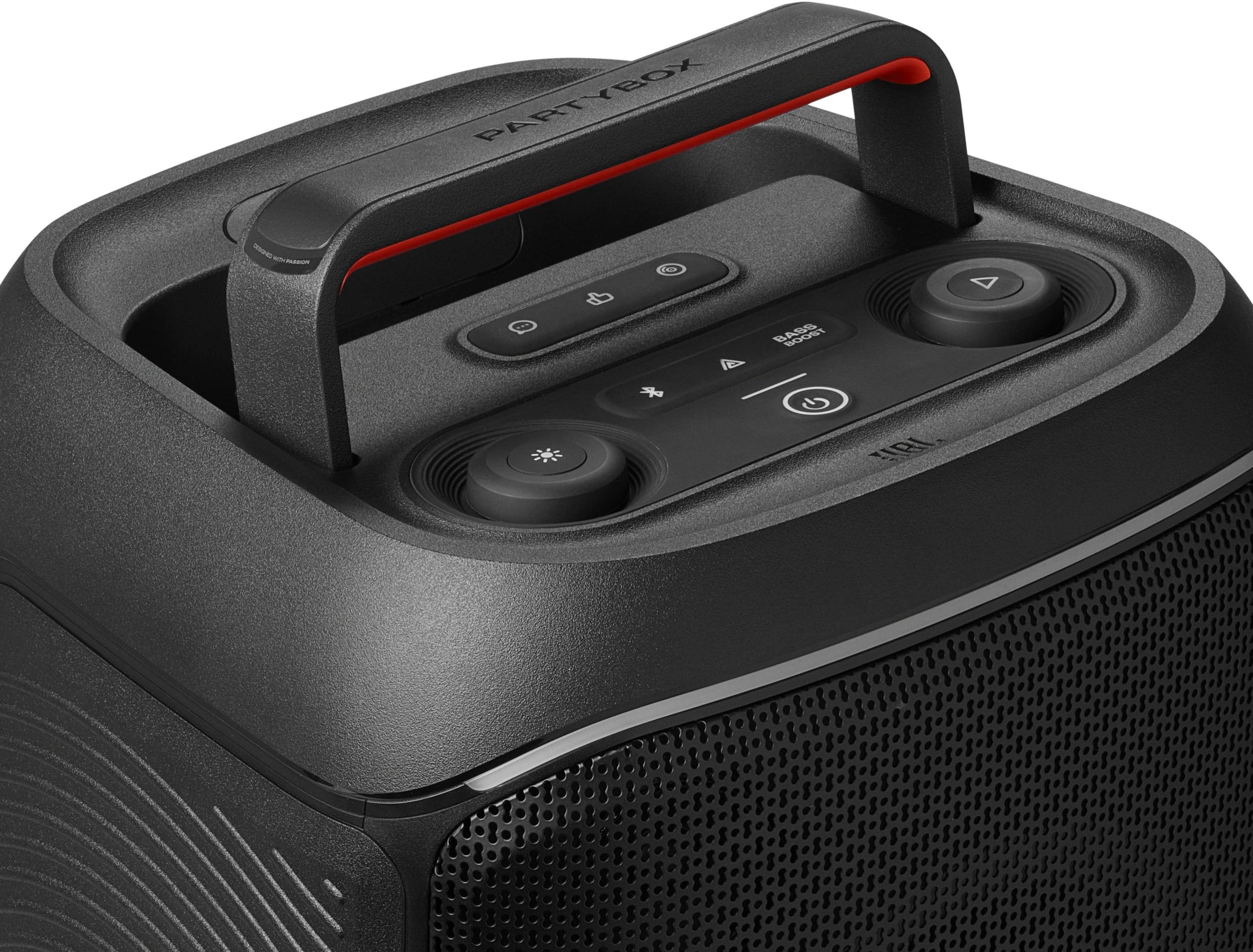
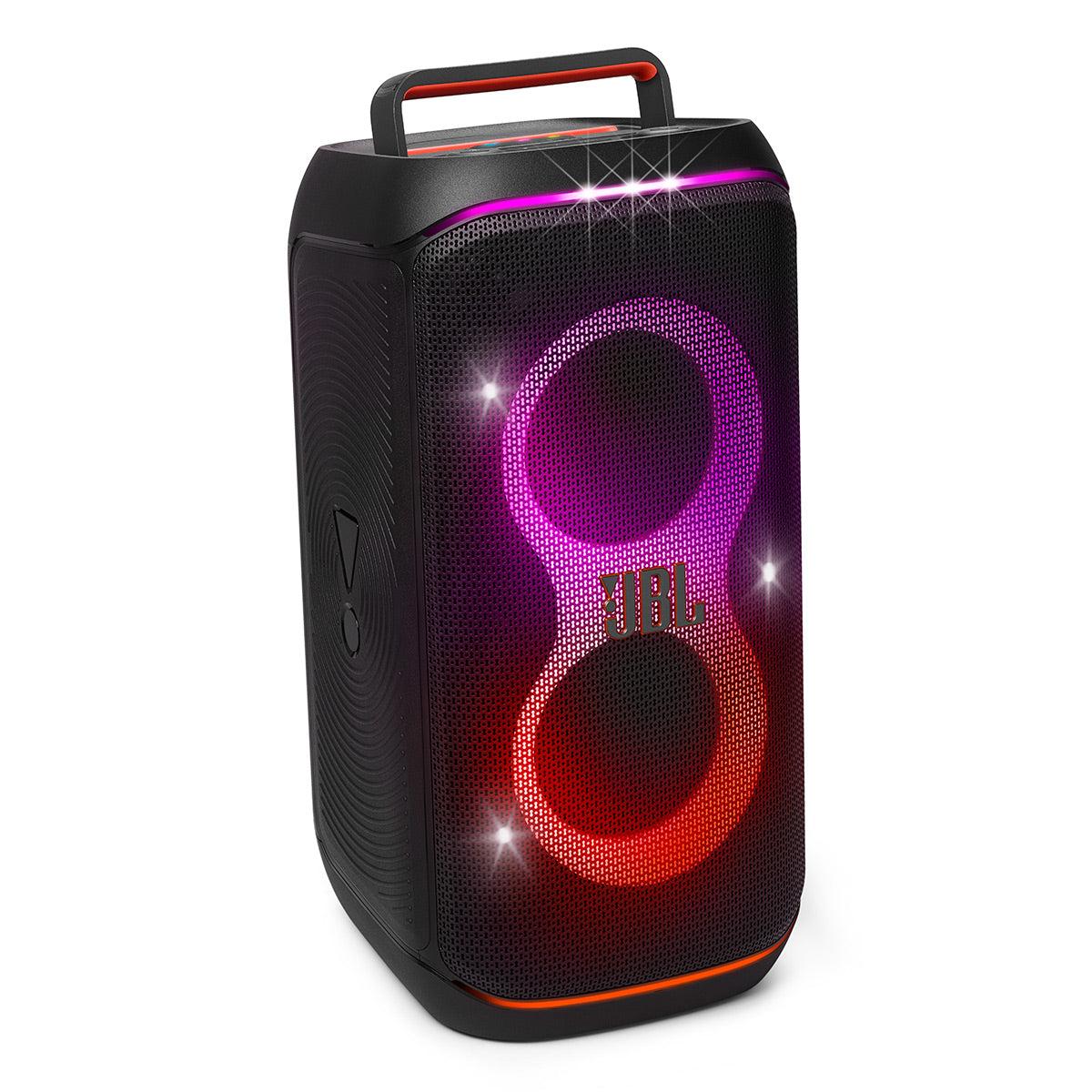
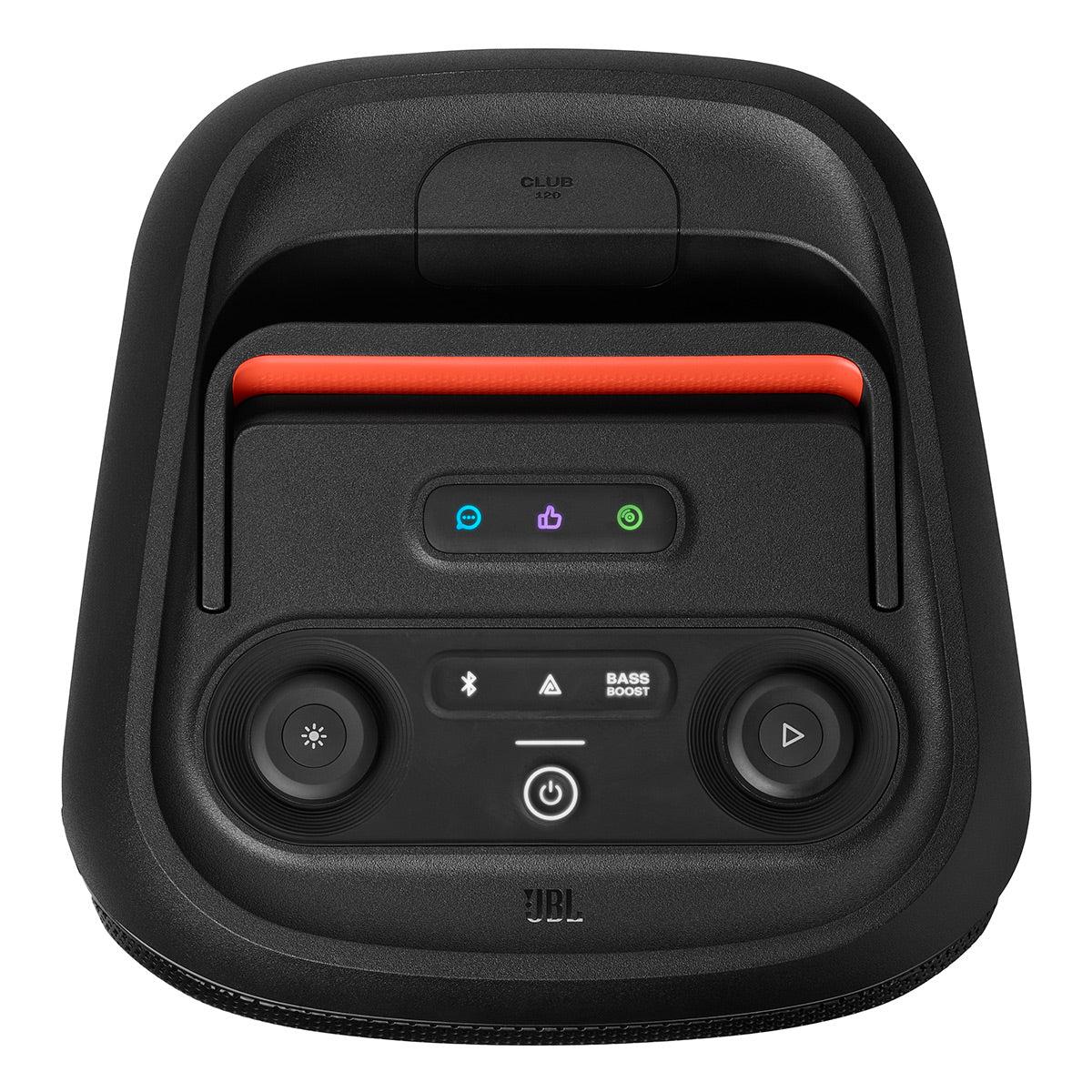
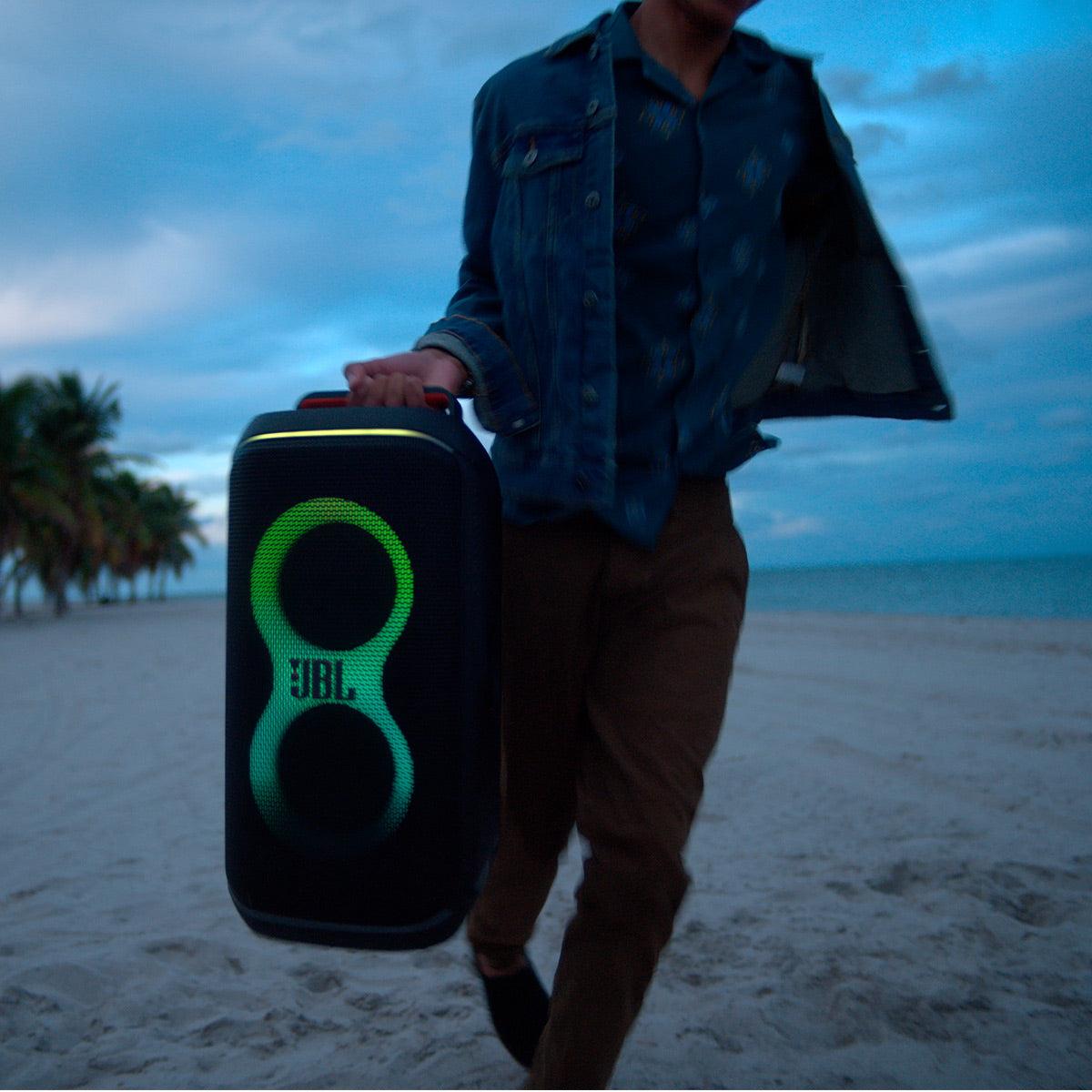
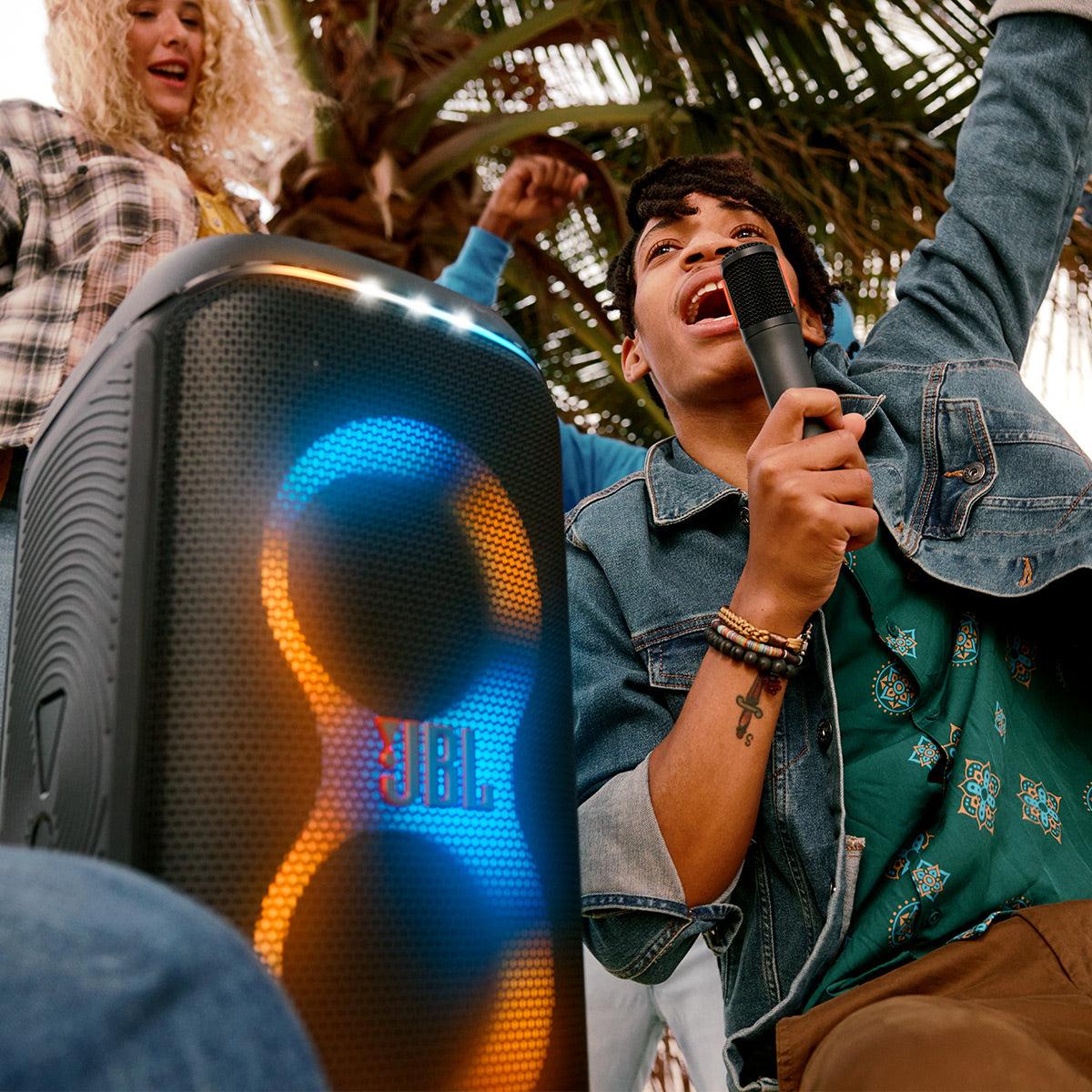
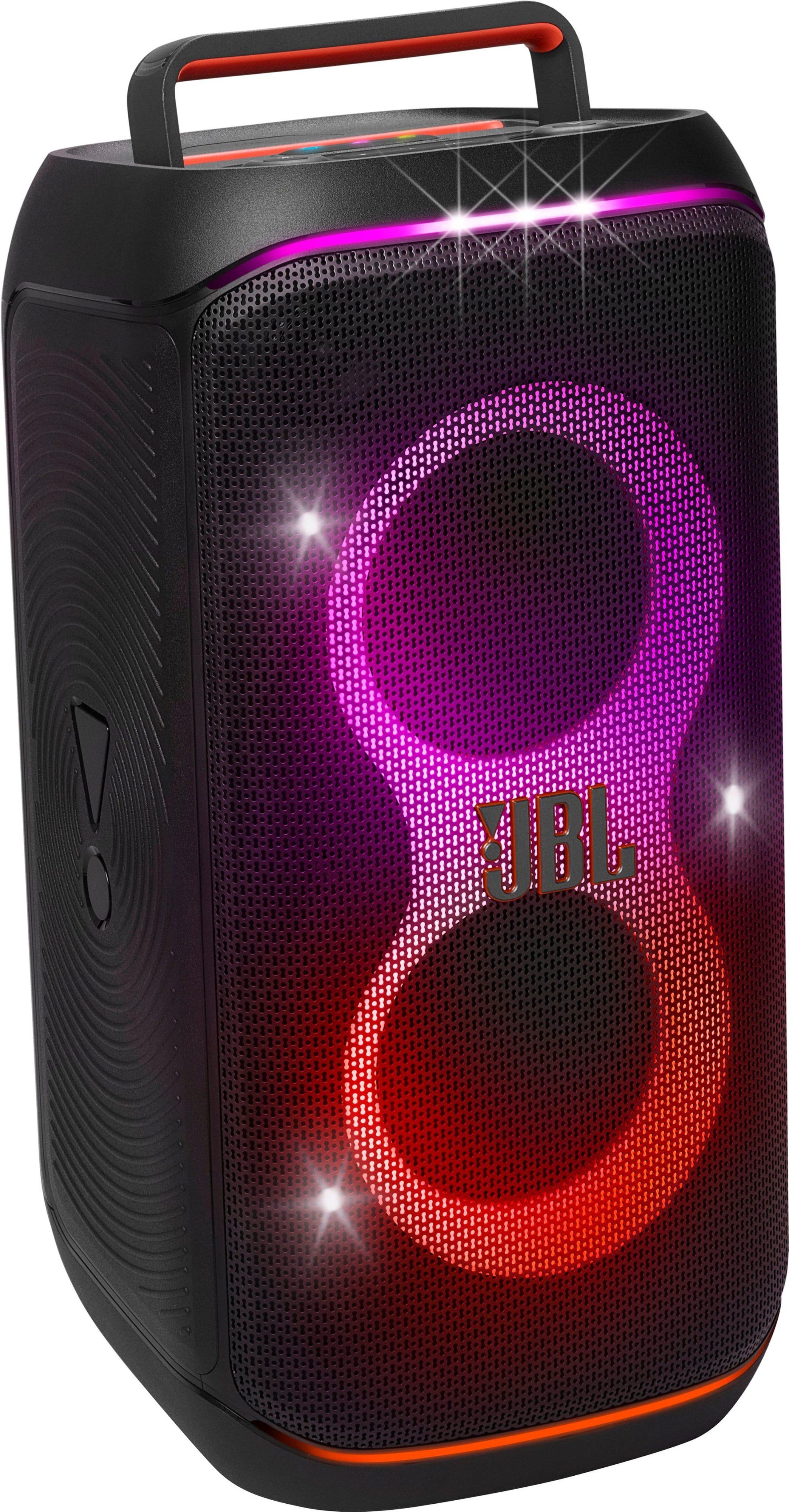
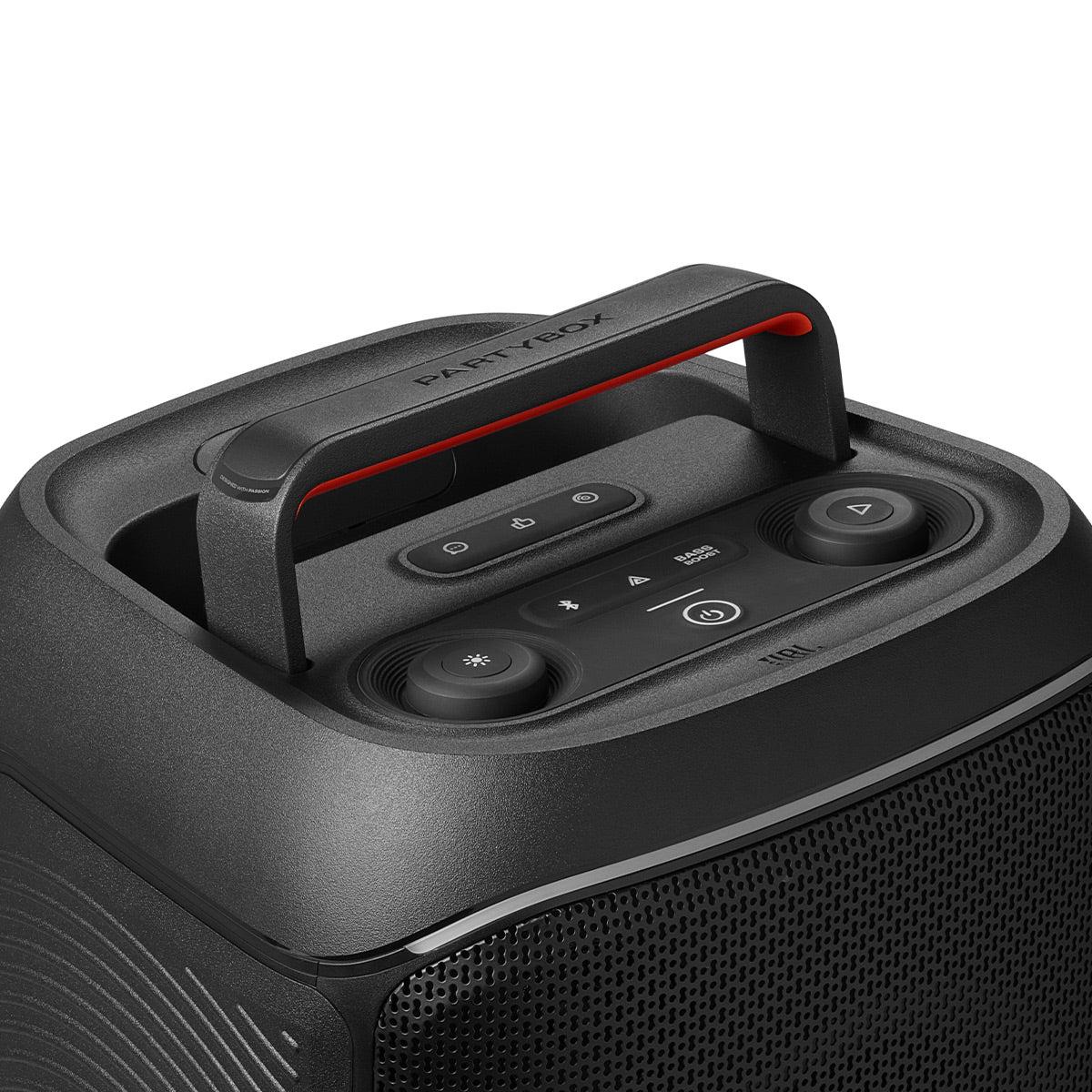
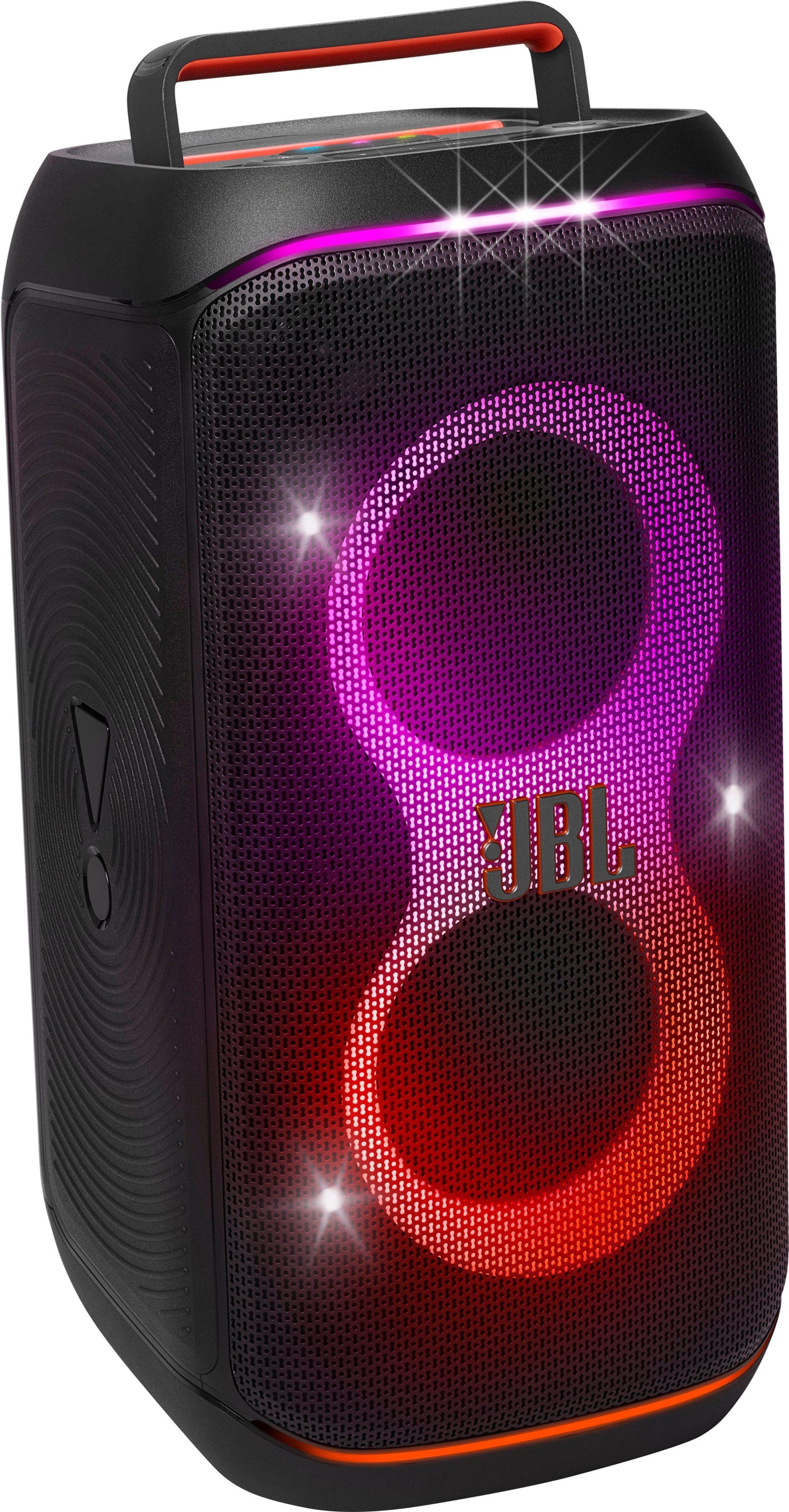
The JBL PartyBox Club 120 represents JBL's philosophy of balancing true portability with comprehensive entertainment features. At roughly 24 pounds, it's designed to be carried by hand thanks to its foldable ergonomic handle, while packing in an extensive light show, dual microphone inputs for karaoke, and JBL's signature bass-forward sound tuning.
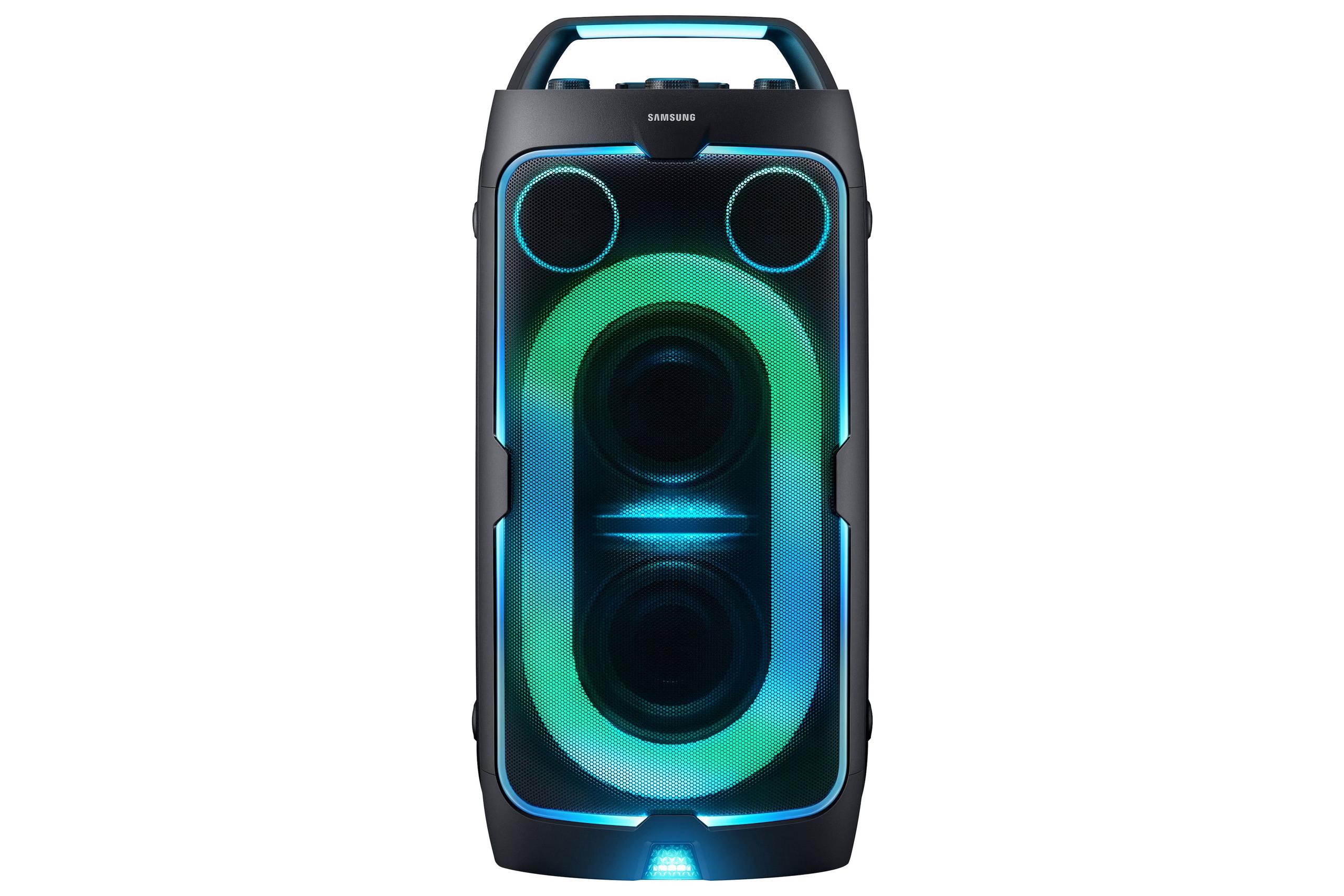
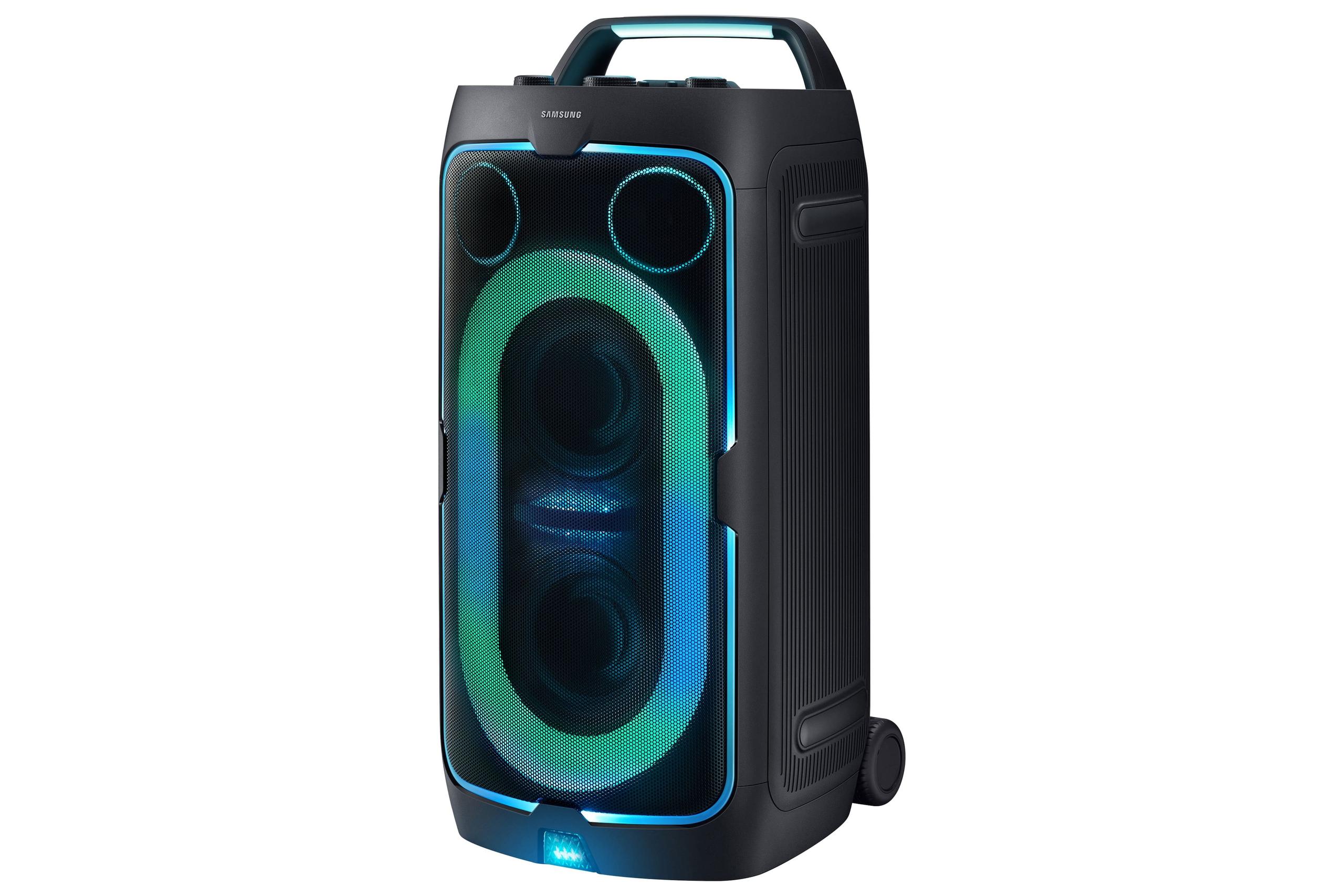
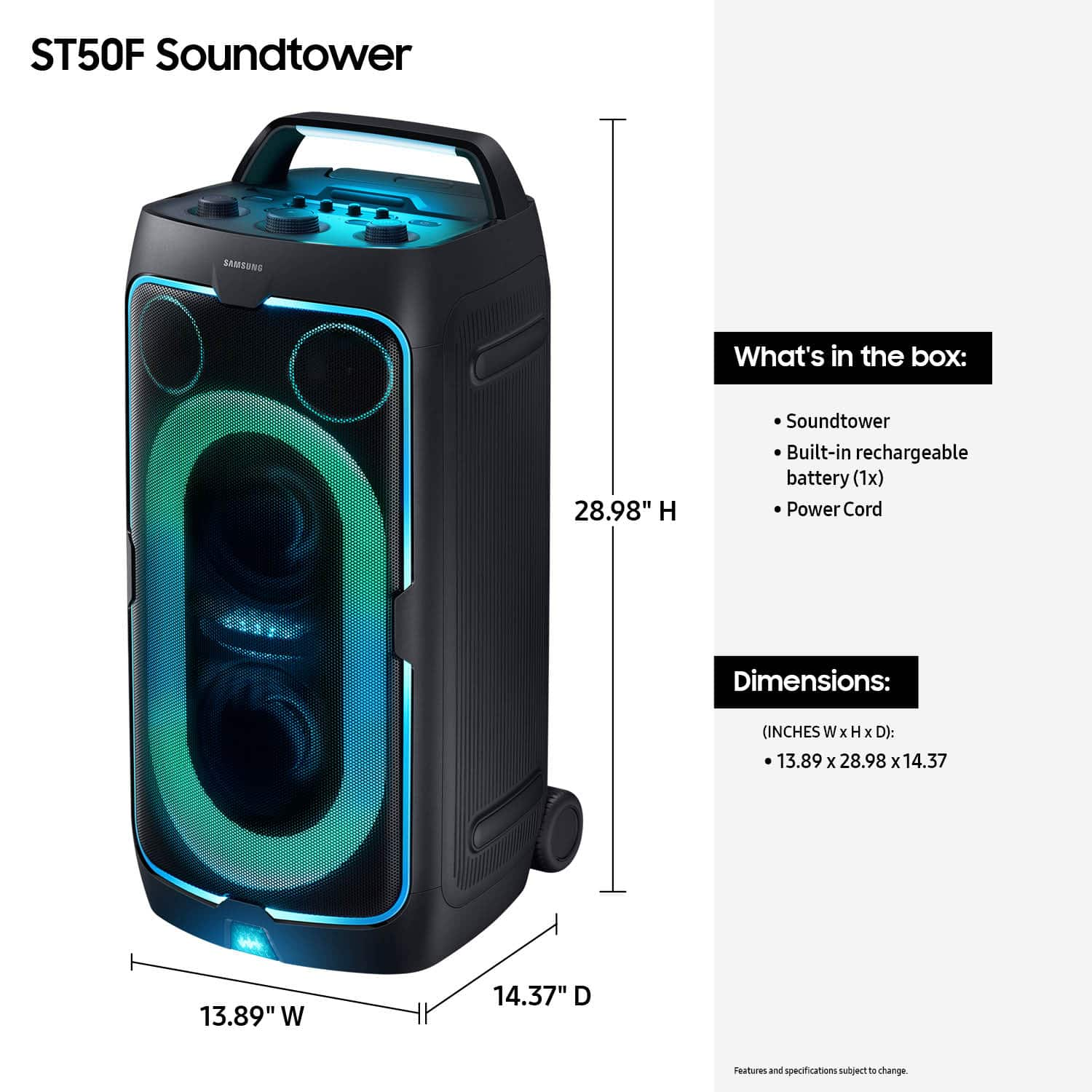
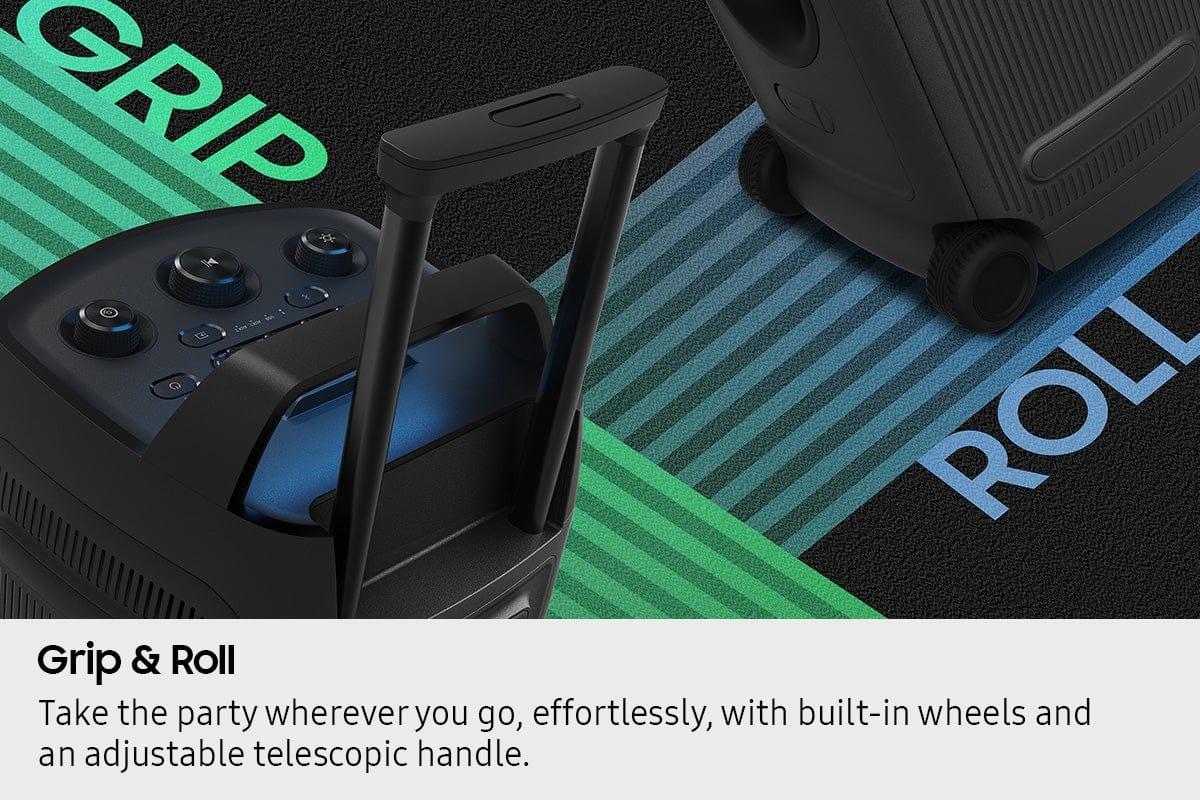
The Samsung MX-ST50F Sound Tower, on the other hand, takes a different approach. At over 40 pounds, it's clearly designed more like rolling luggage with built-in wheels and a telescopic handle. Samsung prioritized raw power and extended battery life, creating what's essentially a portable PA system that can deliver substantially more volume when you need to fill large spaces.
These different design philosophies create distinct advantages for different users and situations, which we'll explore throughout this comparison.
The most obvious difference between these speakers lies in their power output. The Samsung MX-ST50F delivers 240 watts of total system power compared to the JBL PartyBox Club 120's 160 watts RMS (Root Mean Square – a measurement that indicates consistent power output rather than peak bursts). That 80-watt difference translates to noticeably more volume capability, especially important for large outdoor gatherings or when competing with ambient noise.
However, raw wattage doesn't tell the complete story. The Samsung MX-ST50F has a significant limitation: it only delivers that full 240 watts when plugged into AC power. On battery operation, it drops to just 90 watts – actually less than the JBL PartyBox Club 120 maintains throughout its entire battery life. This power scaling creates an inconsistent experience depending on whether you have access to electrical outlets.
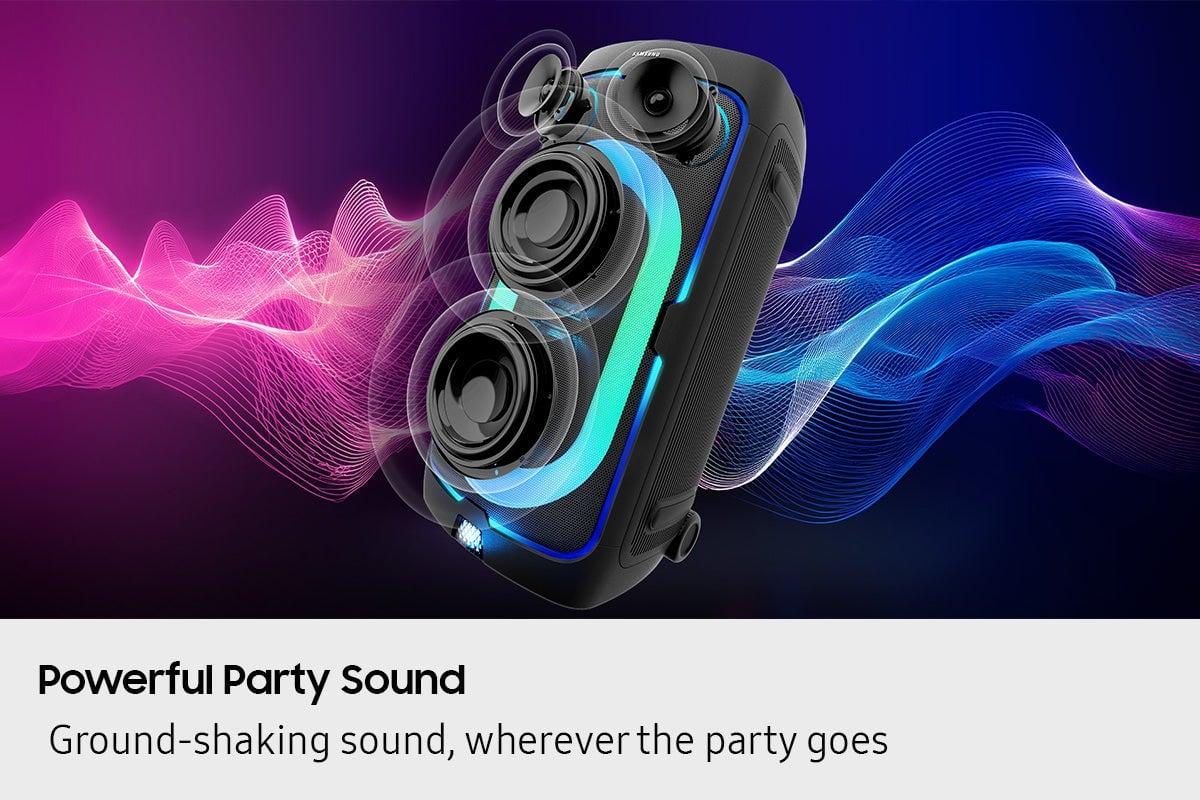
Both speakers use different approaches to generate their low-frequency response. The Samsung MX-ST50F employs dual 6.5-inch woofers (the drivers responsible for bass and midrange frequencies), which are physically larger than the JBL PartyBox Club 120's dual 5.25-inch woofers. Larger woofers can generally move more air and create deeper bass extension, potentially giving Samsung an advantage in the deepest bass frequencies.
However, size isn't everything in speaker design. The JBL PartyBox Club 120 incorporates JBL's AI Sound Boost technology, which uses real-time signal processing to analyze the audio and predict how the drivers will respond. This allows the speaker to push its smaller drivers harder without distortion, maximizing their dynamic range and bass output. In practical terms, this means the JBL can deliver surprisingly powerful bass that rivals speakers with larger drivers.
The JBL PartyBox Club 120 also benefits from JBL's decades of experience tuning speakers for party environments. Their signature sound profile emphasizes the frequency ranges that make music feel energetic and engaging – boosting the upper bass around 80-120 Hz that gives drums their punch, while maintaining clarity in the midrange where vocals sit.
Based on our research of professional reviews and user feedback, the JBL PartyBox Club 120 generally receives higher praise for overall sound quality and musical engagement. Reviewers consistently note its balanced approach that delivers powerful bass without sacrificing midrange clarity. This means vocals remain intelligible even at party volumes, and the speaker doesn't sound muddy or overwhelmed when playing complex musical arrangements.
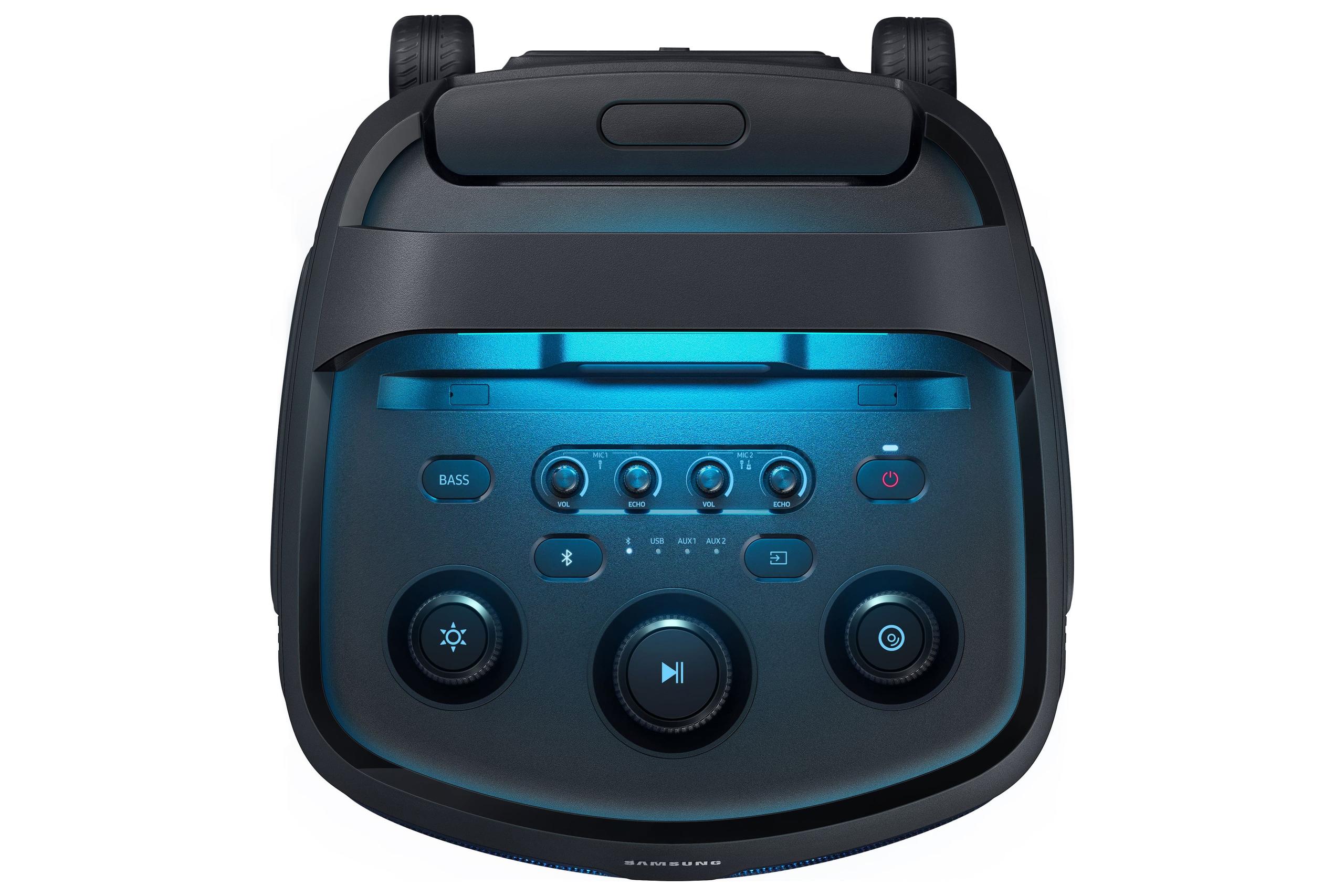
The Samsung MX-ST50F takes a more neutral approach with what reviewers describe as a "warmer" sound signature. While this can be more pleasant for extended listening and less fatiguing than bass-heavy tuning, it may lack the immediate excitement that gets people moving at parties. Samsung does offer multiple sound modes (Standard, Wide, Stadium, Outdoor) and three bass settings (Deep, Punchy, Gentle) to customize the experience, providing more flexibility than the JBL's app-based EQ adjustments.
For most party scenarios, the JBL PartyBox Club 120 likely provides more engaging sound that will energize your guests, while the Samsung MX-ST50F might be preferable for more relaxed gatherings or when used as background music during conversations.
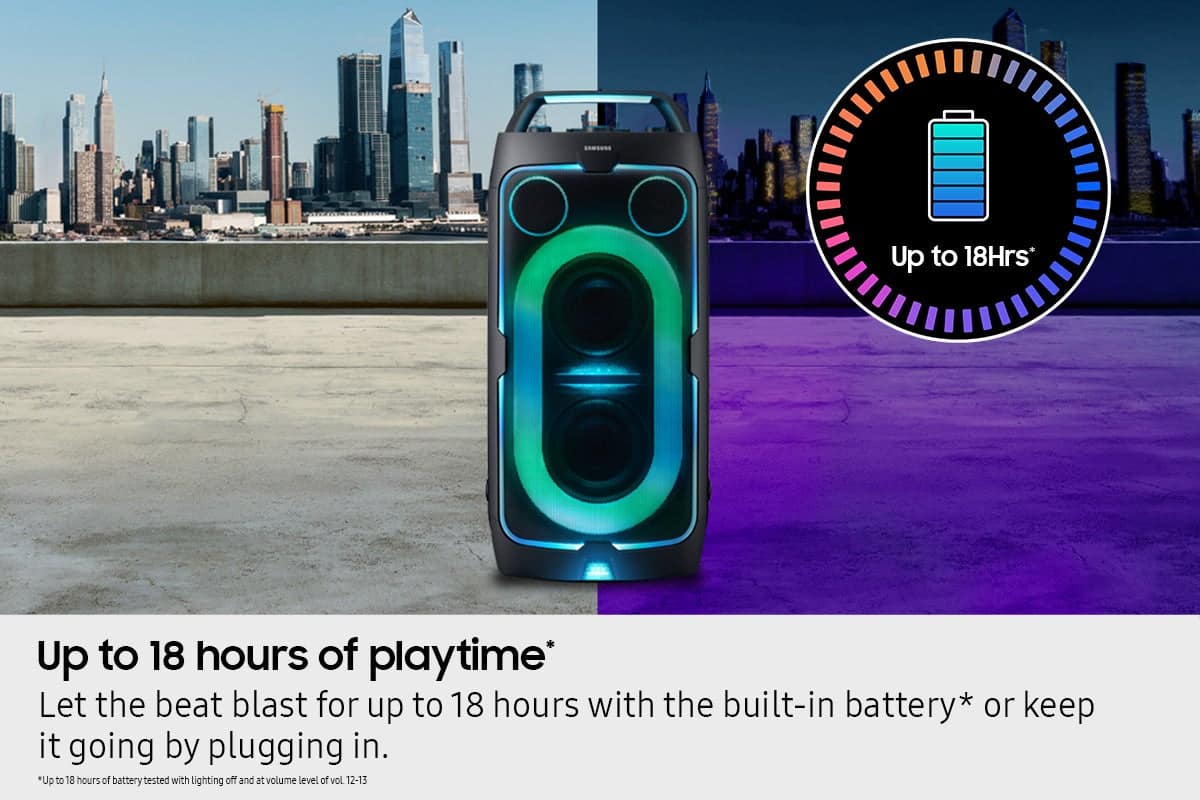
Nothing kills a party faster than a dead speaker, making battery performance crucial for portable party speakers. Here, the Samsung MX-ST50F claims a significant advantage with up to 18 hours of playback compared to the JBL PartyBox Club 120's 12 hours.
However, these manufacturer specifications require some interpretation. Both ratings assume moderate volume levels and, in Samsung's case, with lighting effects turned off. Real-world battery life will be shorter when cranking the volume for actual party use, especially with light shows activated.
The 18-hour rating for the Samsung MX-ST50F becomes even more complicated when you consider its power scaling. While you'll get extended playback time, you're operating at significantly reduced power (90W vs 240W) for most of that duration. The JBL PartyBox Club 120 maintains its full 160W output throughout its entire battery life, providing consistent performance regardless of power source.
Both speakers feature replaceable batteries, a relatively rare feature that extends their useful life and allows for extended operation by swapping fresh batteries. The JBL PartyBox Club 120 also includes fast charging, providing about 80 minutes of playback from just 10 minutes of charging – perfect for those moments when you realize the speaker is dead right before guests arrive.
For extended outdoor events where access to power is limited, the Samsung MX-ST50F's longer battery life provides real value. For most home use and shorter events, the JBL PartyBox Club 120's consistent performance and fast charging prove more practical.
True portability separates party speakers from traditional home audio systems. Despite both speakers being marketed as "portable," they take dramatically different approaches to mobility.
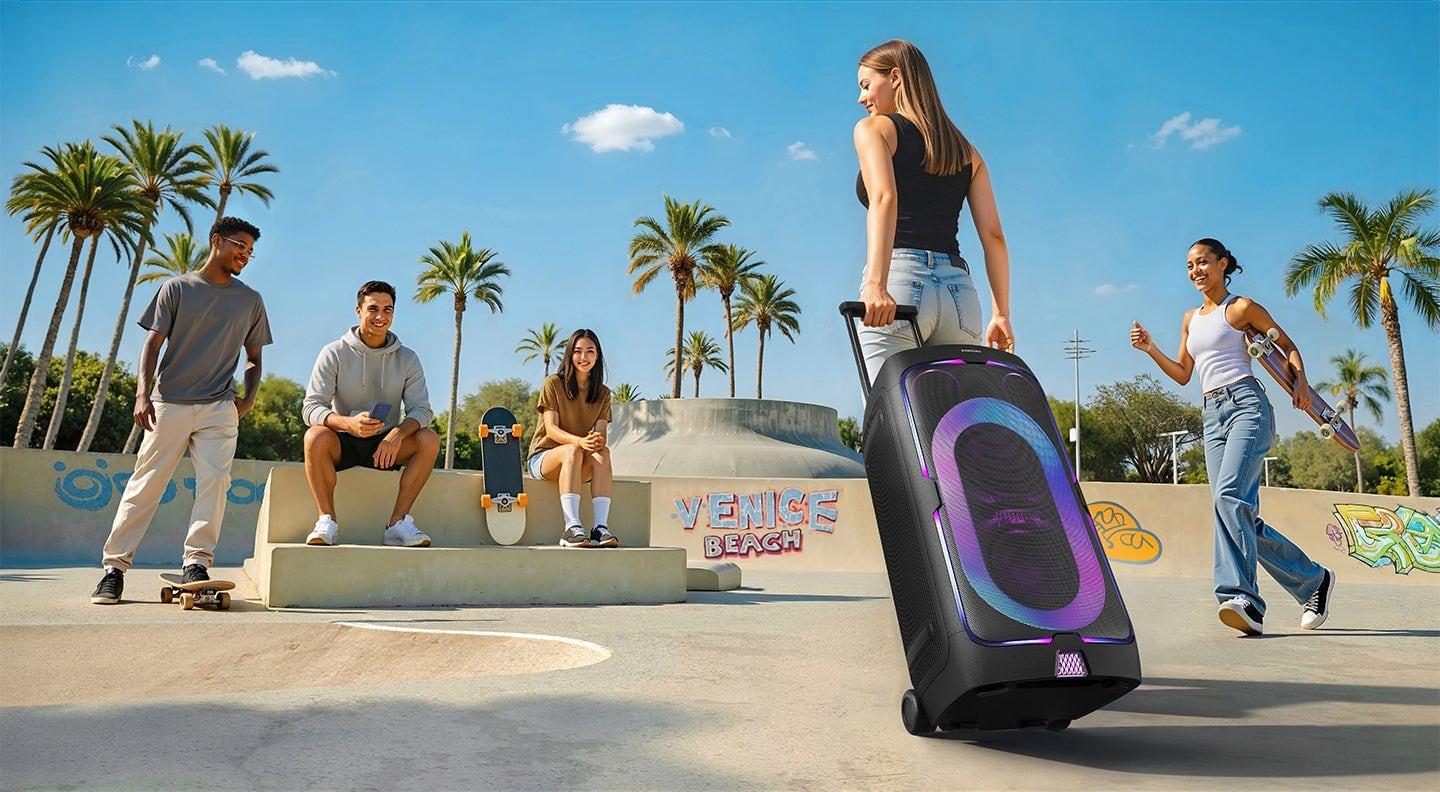
The JBL PartyBox Club 120 weighs in at about 24 pounds with a carefully designed foldable handle that distributes weight effectively. I've found that well-designed handles make all the difference for speakers in this weight class – they transform a awkward, two-handed carry into a manageable one-handed transport. The compact dimensions (roughly 11 x 22 x 12 inches) also make it easier to fit in car trunks and navigate through doorways.
The Samsung MX-ST50F acknowledges its 40+ pound weight by incorporating a rolling luggage design with built-in wheels and a telescopic handle that adjusts to five different heights. This approach makes sense for the weight, but fundamentally changes how you use the speaker. It becomes less suitable for stairs, uneven outdoor terrain, or situations where you need to quickly grab the speaker and move it.
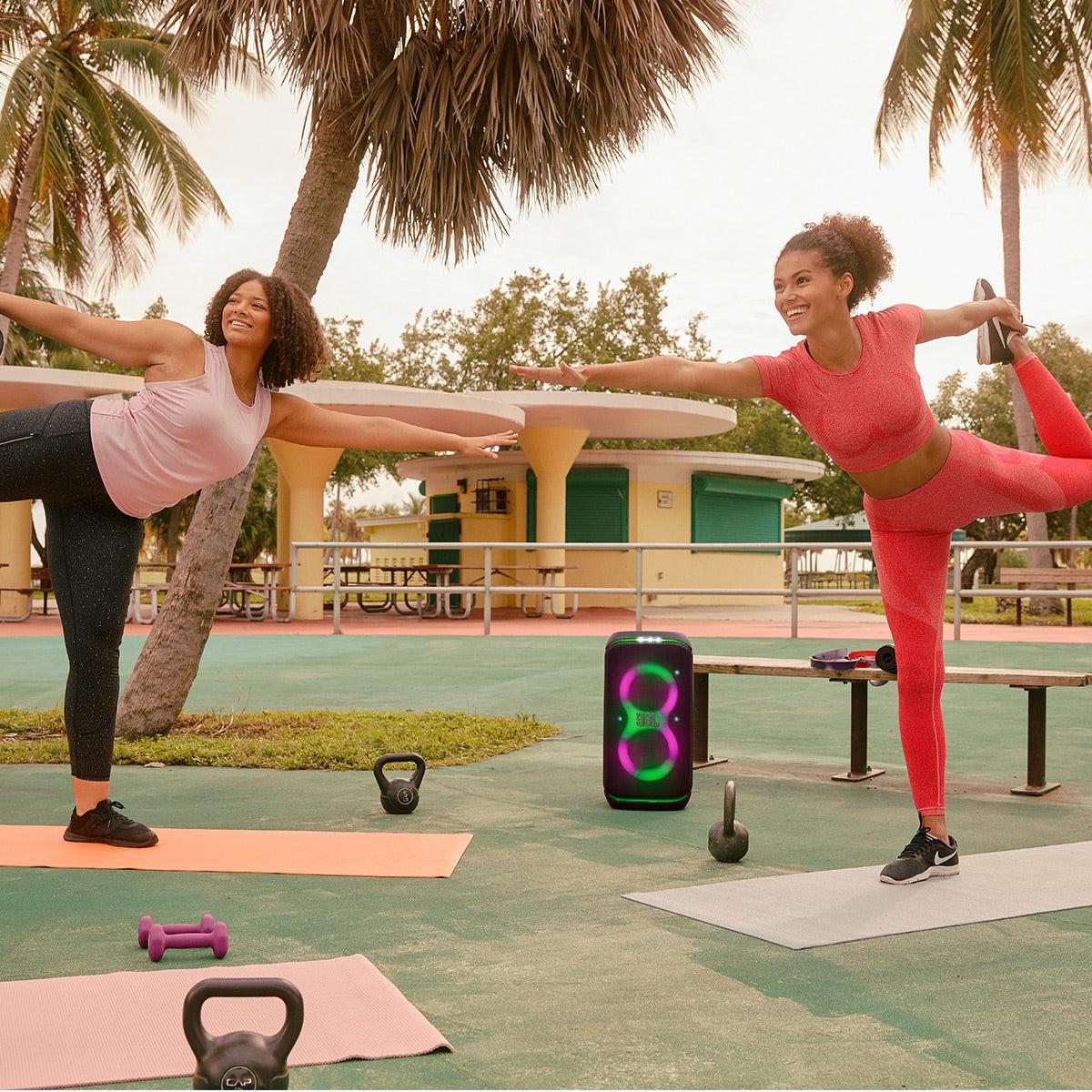
The portability difference significantly impacts real-world usage scenarios. The JBL PartyBox Club 120 excels for pool parties, beach trips, camping, or anywhere you might need to carry the speaker some distance. The Samsung MX-ST50F works better for events with smooth surfaces and minimal carrying – backyard parties, garage gatherings, or semi-permanent installations where it might stay in one location for extended periods.
Modern party speakers have evolved into comprehensive entertainment systems, and this is where the JBL PartyBox Club 120 significantly outshines the Samsung MX-ST50F.
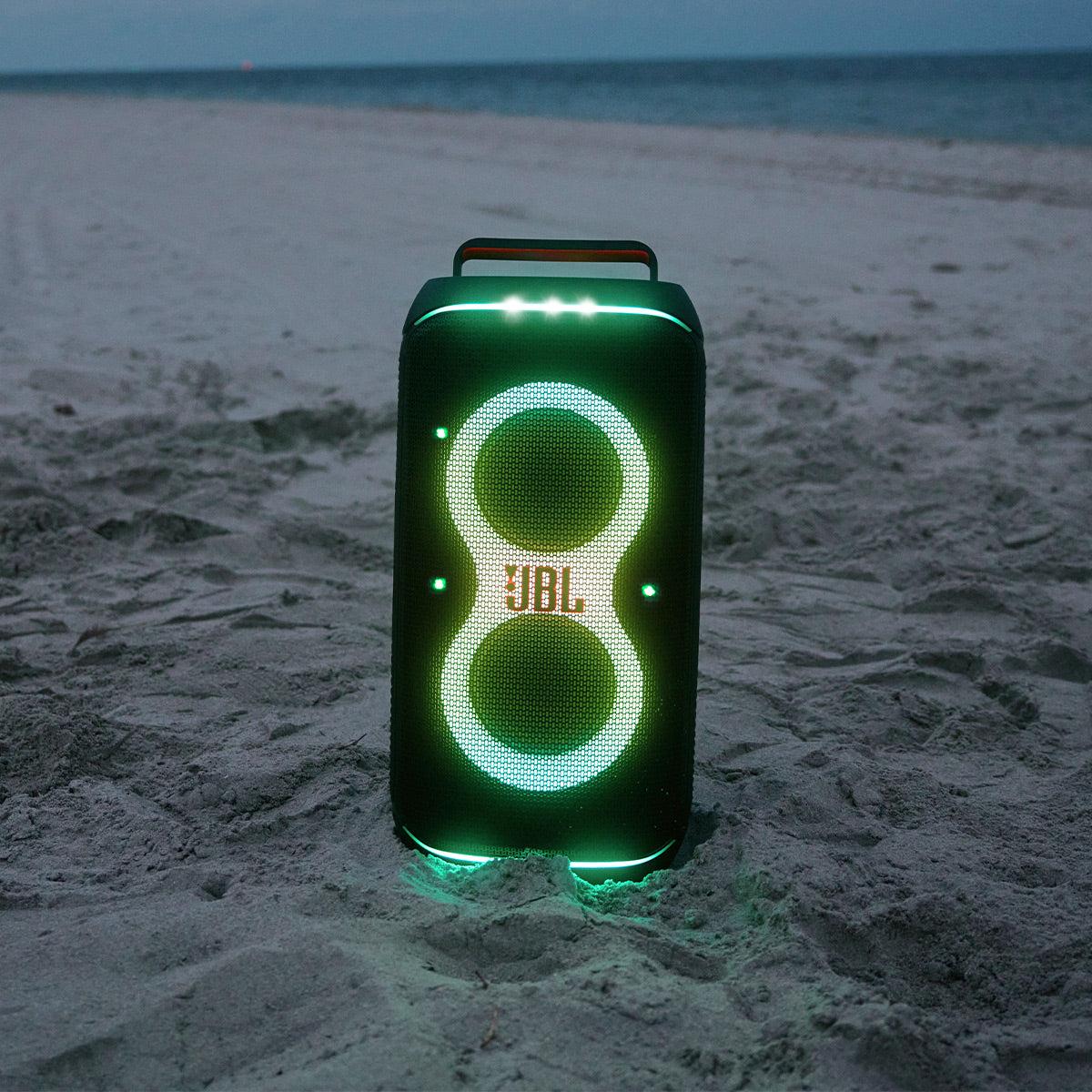
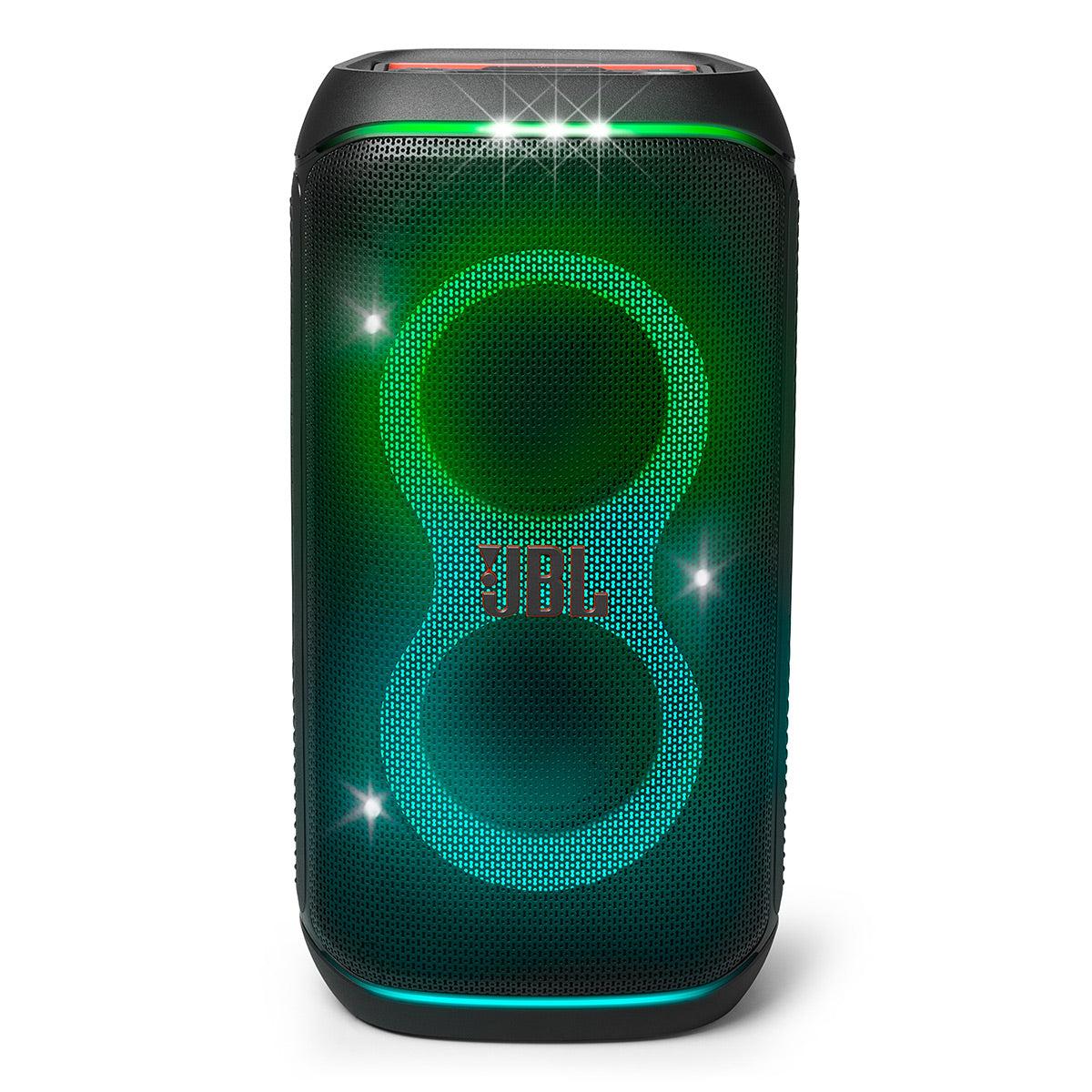
The JBL PartyBox Club 120 features an elaborate synchronized light show with starry lights, light trails, and strobe effects that react to your music in real-time. The system analyzes the audio signal and creates lighting patterns that match the rhythm, energy, and mood of whatever you're playing. Through the JBL PartyBox app, you can customize these effects, adjust intensity, and even program different lighting schemes for different music genres.
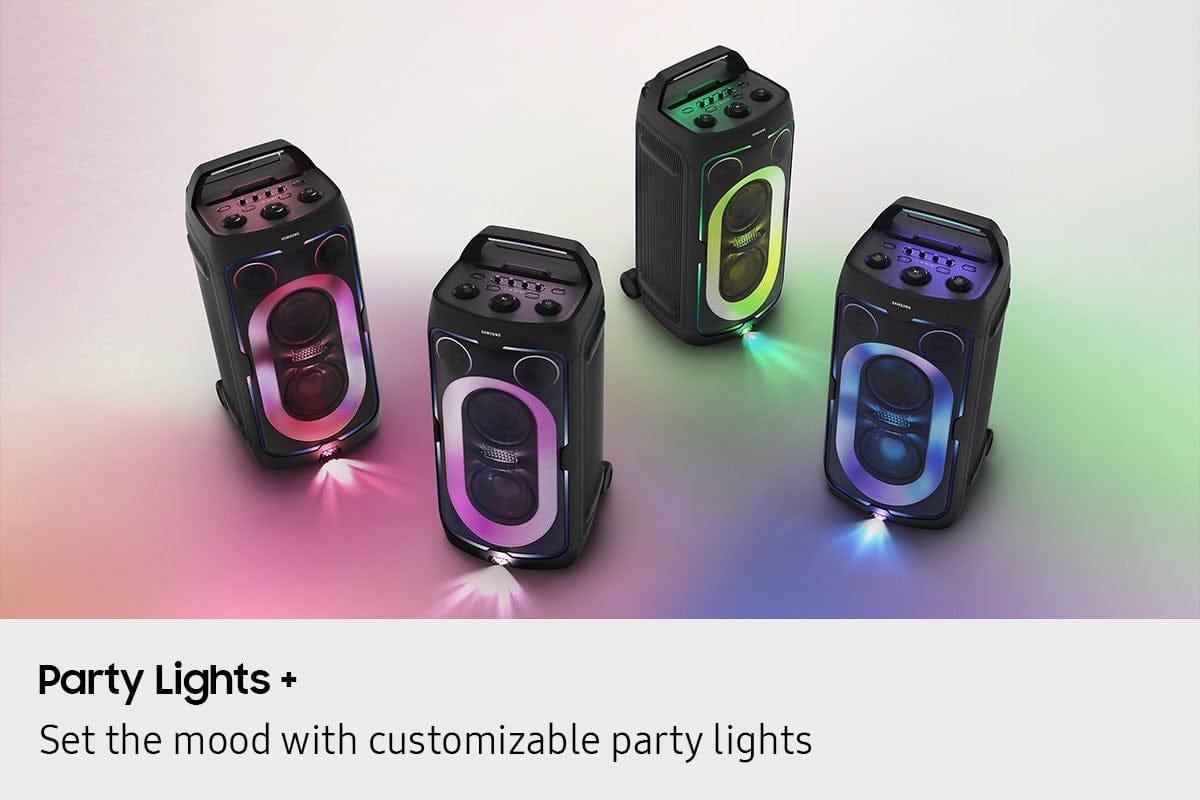
The Samsung MX-ST50F includes what Samsung calls "Party Lights+" with six customizable patterns across five lighting zones around the speaker. While visually impressive with 360-degree coverage, the system offers less sophisticated programming and fewer customization options than JBL's implementation.
For parties where atmosphere matters as much as sound, the JBL PartyBox Club 120's superior lighting integration creates a more immersive experience that transforms any room into a mini nightclub.
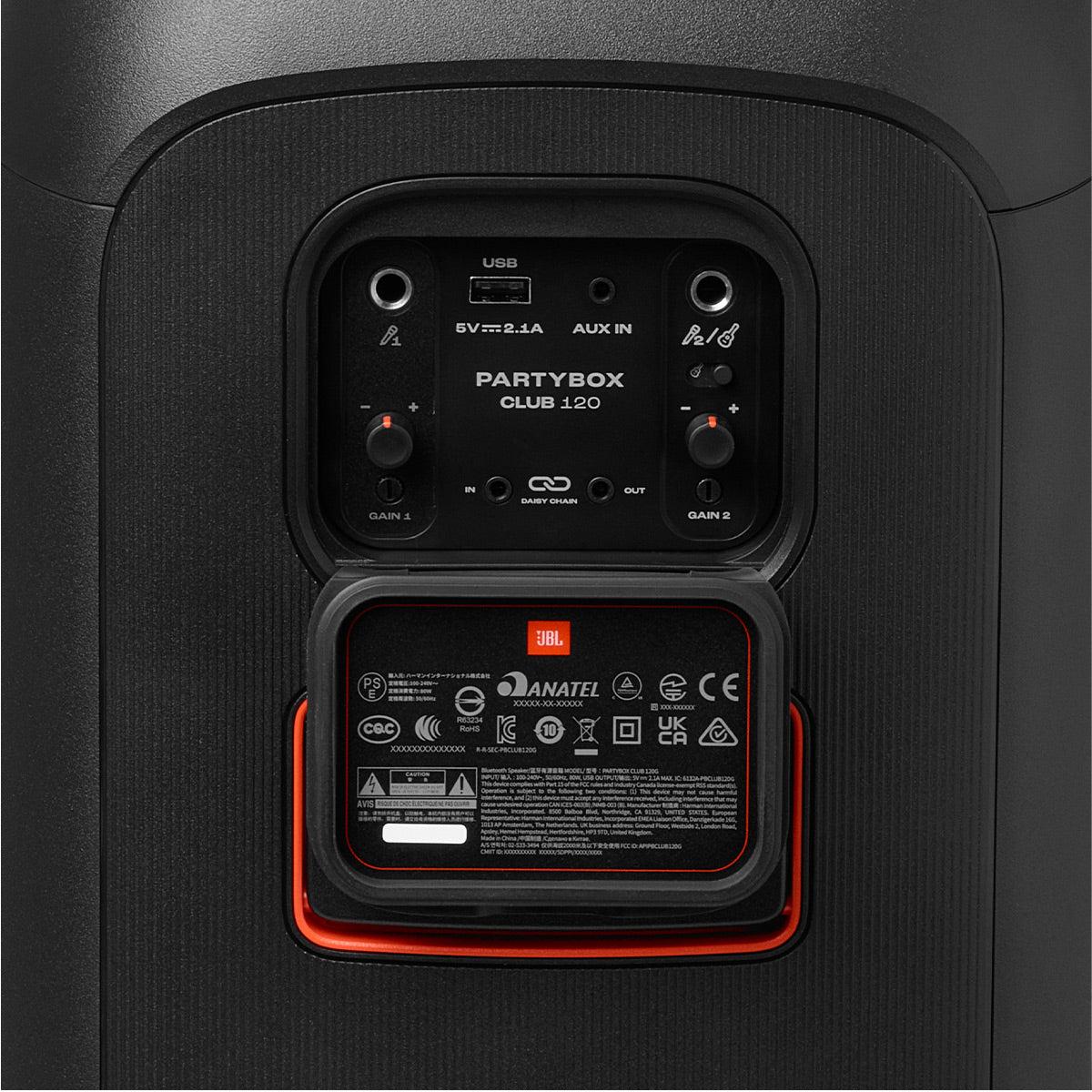
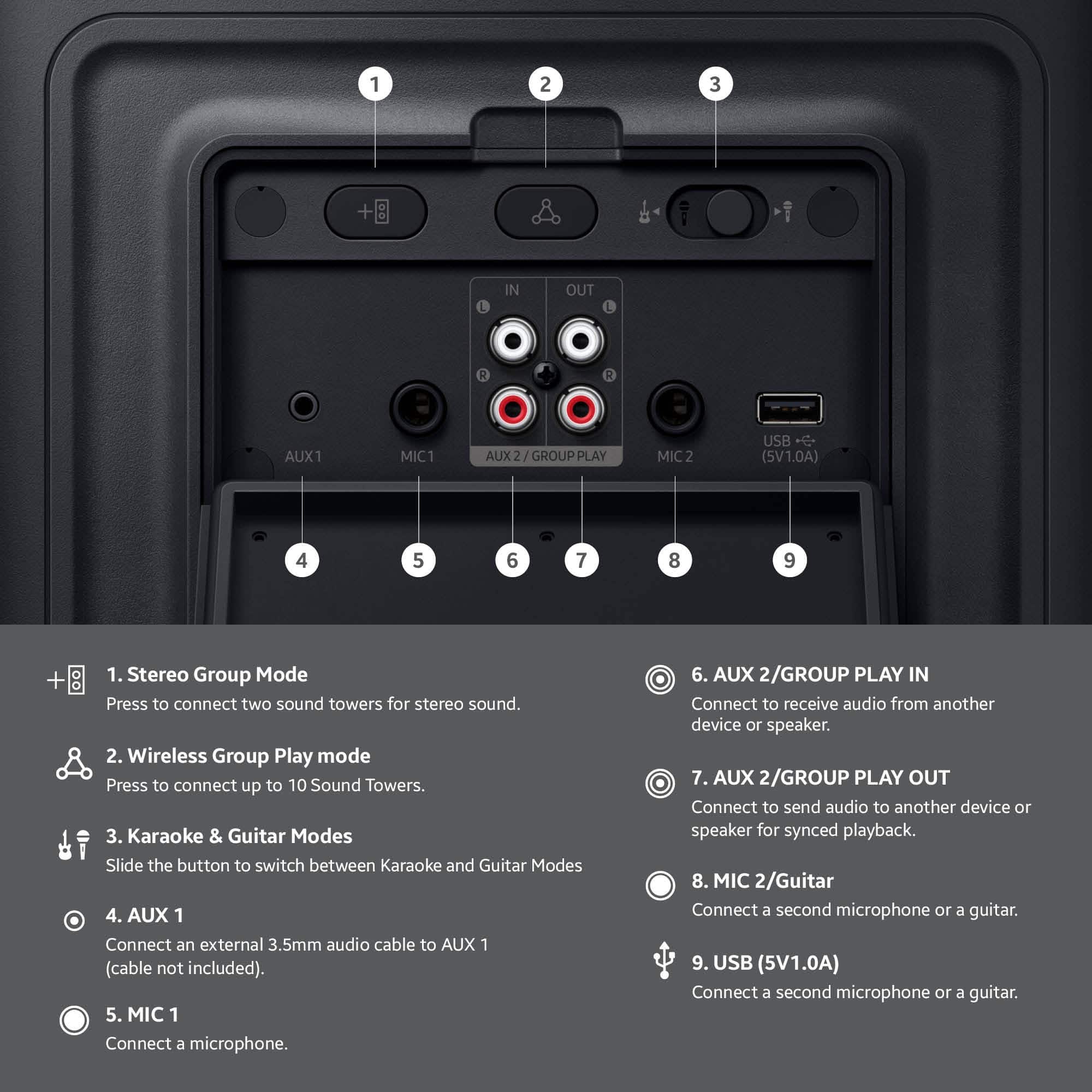
Both speakers include karaoke capabilities, but again with different approaches. The JBL PartyBox Club 120 provides two dedicated microphone inputs plus two additional guitar/instrument inputs, each with individual volume and gain controls. This allows for more complex live performance scenarios – imagine a acoustic guitar accompaniment with dual vocalists, or a small band setup.
The Samsung MX-ST50F offers one microphone input and one combination microphone/guitar input, sufficient for basic karaoke but more limited for live music performance. Samsung does include voice recording and voice removal features, which could be useful for creating custom karaoke tracks.
The app experience also differs significantly. The JBL PartyBox app provides comprehensive control over EQ settings, sound effects, lighting synchronization, and input management. Samsung's Sound Tower app offers basic controls but lacks the depth of customization available through JBL's platform.
Both speakers embrace modern connectivity standards with Bluetooth 5.4 (JBL) and multi-point pairing that allows connection to two devices simultaneously – perfect for seamless DJ handoffs between friends' phones. They also support Auracast, a newer Bluetooth standard that enables wireless connection of multiple speakers for expanded sound coverage.
The JBL PartyBox Club 120 includes USB charging capability, allowing you to charge your phone or tablet directly from the speaker when it's not playing music. This feature proves surprisingly useful during outdoor events where power outlets are scarce.
Both speakers carry IPX4 ratings, meaning they're splash-resistant but not fully waterproof. They'll handle light rain or accidental spills but shouldn't be submerged or used in heavy weather conditions.
While neither speaker is designed primarily for home theater use, their powerful output and connectivity options make them viable for casual movie watching or gaming. The JBL PartyBox Club 120's more balanced sound signature and better midrange clarity make dialogue more intelligible, while its compact size fits better in living room environments.
However, both speakers have limitations for serious home theater use. They lack dedicated center channels for dialogue clarity, and their omnidirectional sound design doesn't create the directional effects that enhance movie soundtracks. Latency (audio delay) can also be an issue with Bluetooth connections when watching video content.
For occasional movie nights or gaming sessions, either speaker will provide more dynamic sound than most TV speakers, but dedicated home theater solutions will deliver superior cinematic experiences.
At the time of writing, the JBL PartyBox Club 120 typically retails for significantly less than the Samsung MX-ST50F – often $200-300 difference depending on sales and promotions. This price gap makes the value equation quite clear for most users.
The JBL PartyBox Club 120 delivers exceptional value by packing extensive entertainment features, solid sound quality, and true portability at a price point that competes with much simpler Bluetooth speakers. You're essentially getting a complete party entertainment system for the cost of a high-end portable speaker.
The Samsung MX-ST50F asks you to pay a premium primarily for increased power output and extended battery life. While these benefits have value in specific scenarios, they don't justify the price difference for most users unless you specifically need those capabilities.
Prioritize versatility and entertainment value. The comprehensive feature set, superior portability, and extensive app control make this speaker adapt to various party scenarios. Whether you're hosting intimate dinner parties with background music or energetic dance sessions, it handles both well.
Need true portability. If your parties happen in different locations – friends' houses, parks, beaches, camping trips – the ergonomic handle and manageable weight make transport practical. The consistent battery performance means you won't experience power drops when unplugged.
Want maximum bang for your buck. At its typical price point, the JBL PartyBox Club 120 offers more features per dollar than most competitors. You get professional-level lighting effects, comprehensive karaoke capabilities, and solid sound quality without paying premium pricing.
Host small to medium gatherings. For parties under 50 people or indoor/small outdoor spaces, 160W provides plenty of volume while maintaining sound quality. The balanced sound signature works well across different music genres and listening preferences.
Need maximum power for large events. If you regularly host large outdoor gatherings, block parties, or events where you need to fill substantial spaces with sound, that extra 80W of power (when plugged in) provides noticeable benefits. The larger woofers also help with deep bass extension.
Have access to AC power. To justify the premium price, you should be using the speaker primarily in situations where you can plug it in and access its full 240W output. Battery-only operation doesn't provide significant advantages over the less expensive JBL.
Prefer extended battery life over features. If your events typically last all day and you can't easily recharge, that 18-hour battery life provides real value. However, remember you're operating at reduced power for most of that duration.
Want a more permanent installation feel. The tower design and rolling transport work well for speakers that might stay in one location for extended periods – like basement recreation rooms, garages, or semi-permanent outdoor setups.
After researching professional reviews, user feedback, and analyzing the technical specifications, the JBL PartyBox Club 120 emerges as the better choice for most party speaker buyers. It strikes an ideal balance between sound quality, entertainment features, portability, and value that's hard to beat in this category.
The Samsung MX-ST50F isn't a bad speaker – it excels in specific scenarios where its higher power output and extended battery life provide clear benefits. However, its significantly higher price and reduced versatility make it a more specialized tool rather than a general-purpose party speaker.
For most people reading this comparison, the JBL PartyBox Club 120 will deliver more fun, more features, and better value while being easier to live with day-to-day. Save the extra money for your next party playlist or invest in some additional party decorations – your guests will notice the difference more than the extra watts the Samsung provides.
The party speaker market continues evolving rapidly, with manufacturers adding new features and improving performance each year. Both of these 2024 models represent significant advances over their predecessors, particularly in app integration, lighting sophistication, and battery technology. Whatever you choose, you'll be getting technology that would have seemed impossible in a portable speaker just a few years ago.
| JBL PartyBox Club 120 | Samsung MX-ST50F Sound Tower |
|---|---|
| Power Output - Determines maximum volume and bass impact | |
| 160W RMS (consistent on AC and battery) | 240W AC / 90W battery (significant power drop unplugged) |
| Battery Life - Critical for outdoor events and portability | |
| Up to 12 hours (maintains full power throughout) | Up to 18 hours (at reduced 90W power level) |
| Weight & Portability - Affects where and how you can use the speaker | |
| 24.3 lbs with ergonomic foldable handle | 40.5 lbs with telescopic handle and wheels |
| Driver Configuration - Impacts bass depth and sound quality | |
| Dual 5.25" woofers + dual 2.25" tweeters | Dual 6.5" woofers + dual 1" dome tweeters |
| Light Show Features - Essential for party atmosphere | |
| Starry lights, trails, strobes with full app customization | 6 patterns across 5 zones with basic app control |
| Live Performance Inputs - For karaoke and live music | |
| 2x mic inputs + 2x guitar inputs (independent controls) | 1x mic + 1x mic/guitar combo input |
| Sound Customization - Ability to tune audio for different environments | |
| 5-band EQ via app + Bass Boost + AI Sound Boost | 4 sound modes + 3 bass modes via hardware controls |
| Multi-Speaker Connectivity - For larger venue coverage | |
| Auracast wireless pairing (unlimited units) | Auracast Group Play (up to 10 units) |
| App Integration - Controls lighting, EQ, and effects | |
| Comprehensive JBL PartyBox app with extensive customization | Basic Samsung Sound Tower app with limited features |
| Fast Charging - Important for spontaneous parties | |
| 10 minutes = 80 minutes playtime | Standard charging only |
| Water Resistance - Protection for outdoor use | |
| IPX4 splash-resistant | IPX4 splash-resistant |
| USB Charging - Ability to charge devices from speaker | |
| 5V/2.1A output when speaker is off | Not available |
The Samsung MX-ST50F Sound Tower is better for large outdoor parties due to its higher 240W power output when plugged in, compared to the JBL PartyBox Club 120's 160W. However, on battery power alone, the Samsung drops to just 90W, making the JBL PartyBox Club 120 actually more powerful for truly portable outdoor use.
The Samsung MX-ST50F Sound Tower offers up to 18 hours of battery life, while the JBL PartyBox Club 120 provides up to 12 hours. However, the Samsung achieves this longer runtime by reducing power to 90W on battery, whereas the JBL PartyBox Club 120 maintains its full 160W output throughout the entire battery life.
The JBL PartyBox Club 120 is much easier to carry at 24 pounds with an ergonomic foldable handle. The Samsung MX-ST50F Sound Tower weighs over 40 pounds and requires rolling transport with its built-in wheels and telescopic handle, making the JBL PartyBox Club 120 better for true portability.
Both speakers support karaoke, but the JBL PartyBox Club 120 offers superior live performance capabilities with two dedicated microphone inputs plus two guitar inputs, each with independent controls. The Samsung MX-ST50F Sound Tower has one microphone input and one combo mic/guitar input, making the JBL PartyBox Club 120 better for serious karaoke and live music.
The JBL PartyBox Club 120 features more advanced lighting with starry lights, light trails, and strobe effects that sync to music with full app customization. The Samsung MX-ST50F Sound Tower offers 6 lighting patterns across 5 zones but with more basic controls, making the JBL PartyBox Club 120 superior for party atmosphere.
Neither speaker is designed primarily for home theater, but the JBL PartyBox Club 120 works better for casual movie watching due to its more balanced sound signature and better midrange clarity for dialogue. Both speakers lack the directional audio and center channel clarity that dedicated home theater systems provide.
The JBL PartyBox Club 120 generally receives higher praise for sound quality with its balanced, bass-forward tuning that maintains midrange clarity. The Samsung MX-ST50F Sound Tower offers a more neutral, warmer sound with multiple EQ modes, but the JBL PartyBox Club 120 typically sounds more engaging for party music.
The JBL PartyBox Club 120 features a comprehensive PartyBox app with extensive lighting customization, 5-band EQ, DJ effects, and speaker pairing controls. The Samsung MX-ST50F Sound Tower includes a basic Sound Tower app with limited customization options, making the JBL PartyBox Club 120 app significantly more feature-rich.
Yes, both speakers support Auracast technology for wireless multi-speaker connection. The JBL PartyBox Club 120 can connect unlimited units, while the Samsung MX-ST50F Sound Tower supports up to 10 units. Both also support stereo pairing with identical models for wider soundstage coverage.
Both the JBL PartyBox Club 120 and Samsung MX-ST50F Sound Tower feature IPX4 splash-resistant ratings, meaning they can handle light rain and splashes but should not be submerged. Neither offers significant advantage for water resistance, making both equally suitable for poolside use with reasonable care.
The JBL PartyBox Club 120 includes fast charging that provides 80 minutes of playtime from just 10 minutes of charging, plus full charge in 3.5 hours. The Samsung MX-ST50F Sound Tower uses standard charging without quick-charge capability, making the JBL PartyBox Club 120 more convenient for last-minute party preparation.
The JBL PartyBox Club 120 typically offers better value with more entertainment features, superior portability, comprehensive app control, and advanced lighting effects at a lower price point. The Samsung MX-ST50F Sound Tower commands a premium mainly for higher power output and longer battery life, making the JBL PartyBox Club 120 the better value for most users.
We've done our best to create useful and informative comparisons to help you decide what product to buy. Our research uses advanced automated methods to create this comparison and perfection is not possible - please contact us for corrections or questions. These are the sites we've researched in the creation of this article: stereoguide.com - armorsound.com - rtings.com - rtings.com - bestbuy.com - youtube.com - soundguys.com - youtube.com - lbtechreviews.com - youtube.com - youtube.com - versus.com - jbl.com - rtings.com - versus.com - ro.harmanaudio.com - dell.com - jbl.com - jbl.com - projectorscreenstore.com - bestbuy.com - news.samsung.com - youtube.com - youtube.com - videoandaudiocenter.com - youtube.com - youtube.com - samsung.com - crutchfield.com - youtube.com - arrowassociatedstores.com - brandsmartusa.com - bestbuy.com - crutchfield.com - samsung.com - icecat.in - thefrogpadappliances.com - news.samsung.com

Privacy Policy
Terms and Conditions - Affiliate Policy
Home Security
© Copyright 2008-2026.
11816 Inwood Rd #1211, Dallas, TX 75244