

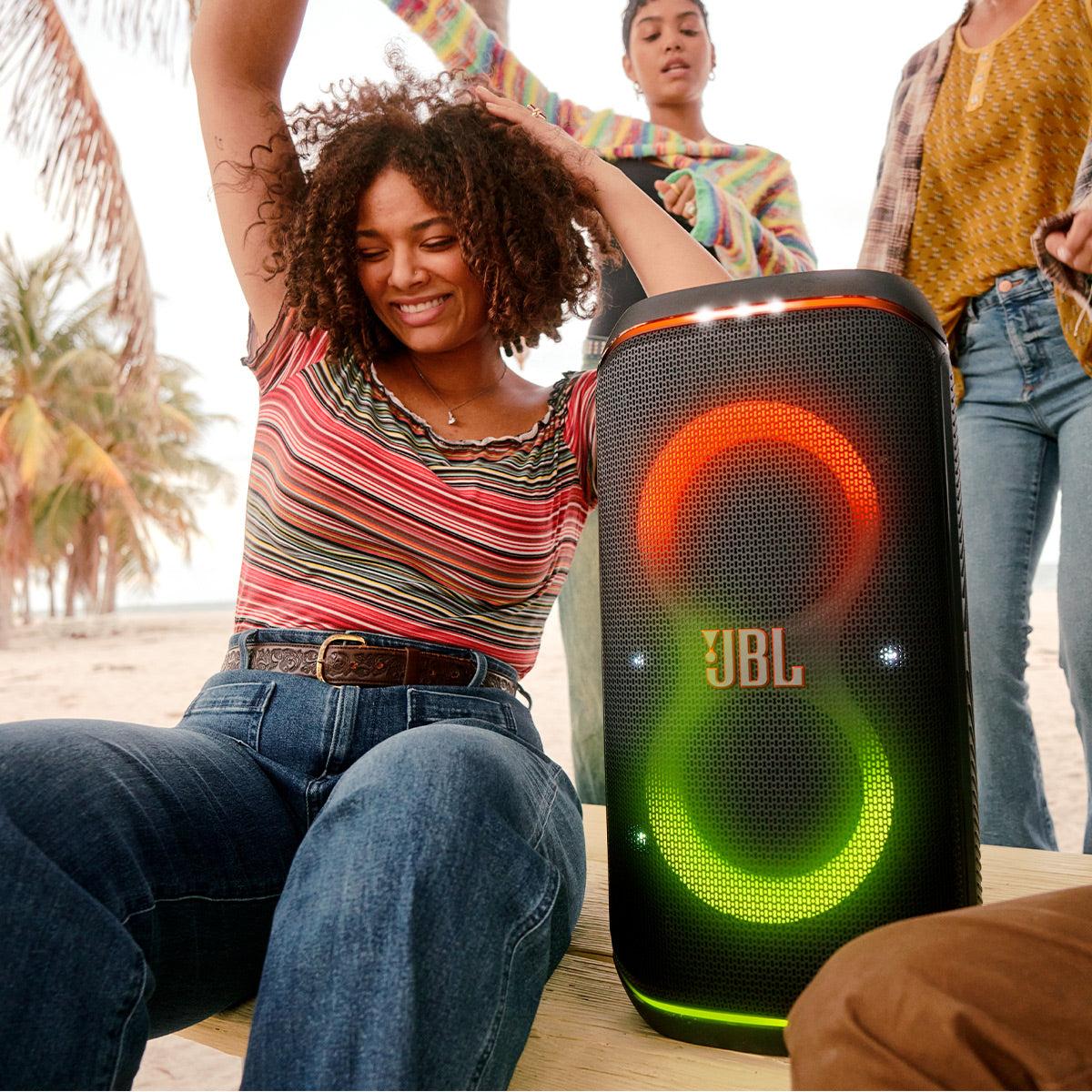
When it comes to throwing an epic party, your speaker choice can make or break the entire event. Two standout options have caught our attention: the JBL PartyBox Club 120 and the Sony ULT Tower 9AC. These speakers represent fundamentally different philosophies in party audio, and understanding their differences is crucial for making the right choice.
Party speakers aren't just regular speakers turned up loud—they're purpose-built entertainment systems designed to energize crowds and create memorable experiences. The best party speakers combine several key elements: massive volume output without distortion, bass that you can feel in your chest, vibrant lighting that syncs with the music, and practical features like microphone inputs for karaoke or announcements.
The most important performance characteristics include sound pressure level (how loud they can get), frequency response (how well they reproduce different musical notes), dynamic range (the difference between the quietest and loudest sounds), and total harmonic distortion (how clean the sound stays at high volumes). These technical specs directly translate to real-world performance—whether your guests can feel the bass drop, hear vocals clearly over the music, and enjoy distortion-free sound even when you crank the volume to party levels.
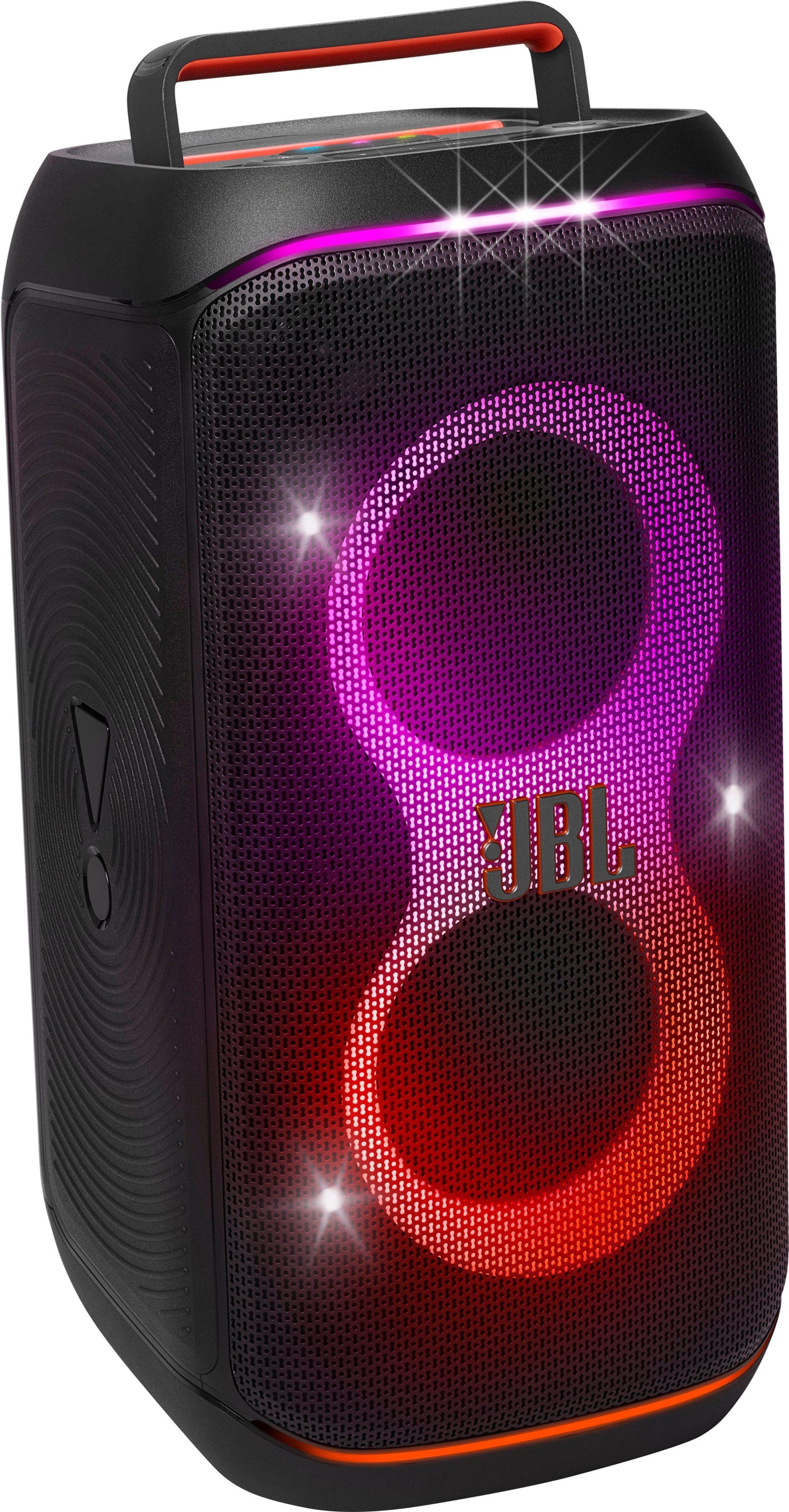
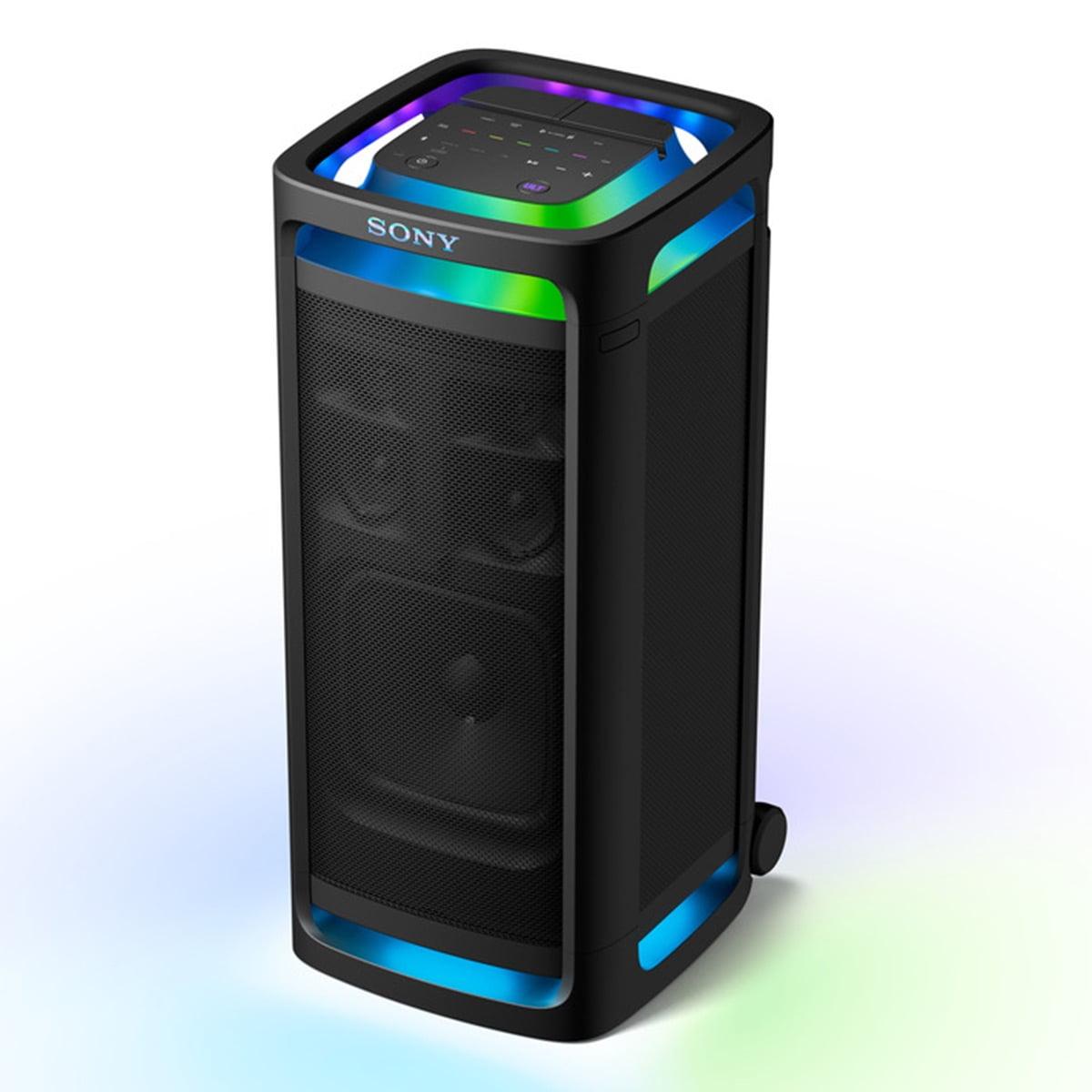
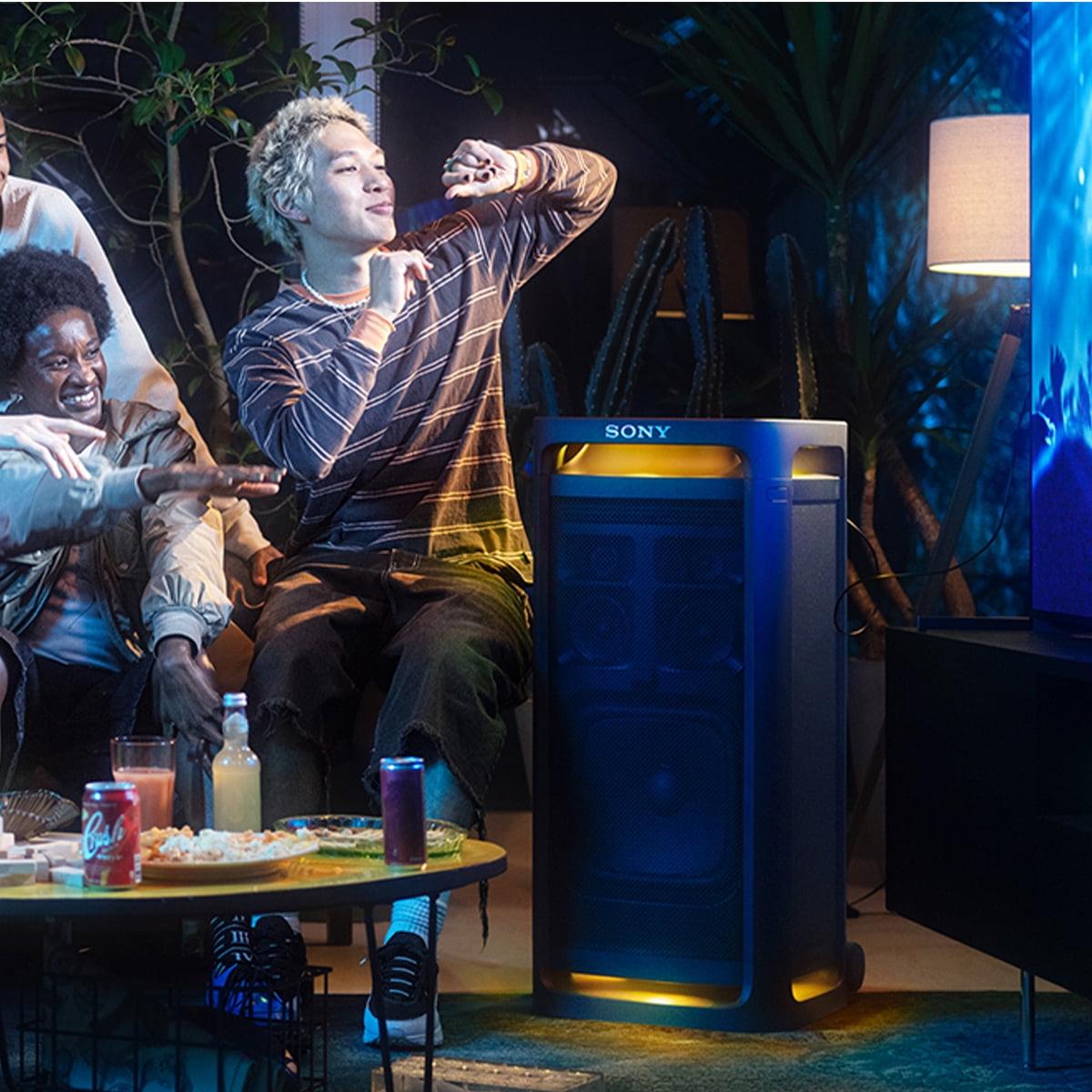
The JBL PartyBox Club 120, released in 2024, represents the modern portable party speaker philosophy. At roughly half the price of its Sony competitor (at the time of writing), it prioritizes mobility and versatility. Meanwhile, the Sony ULT Tower 9AC, launched in 2025 as part of Sony's new ULT POWER SOUND series, takes the stationary powerhouse approach, focusing on maximum output and comprehensive features.
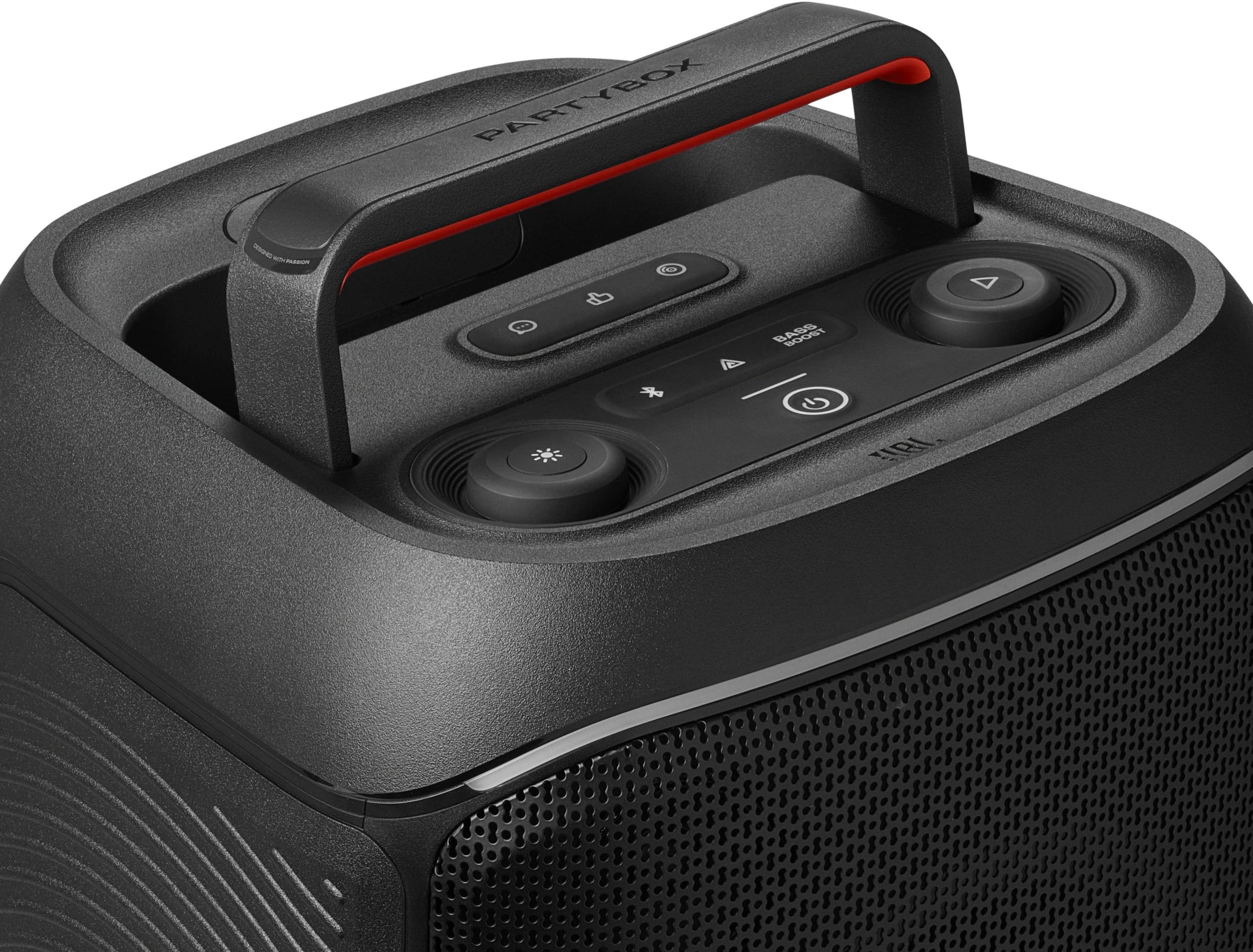
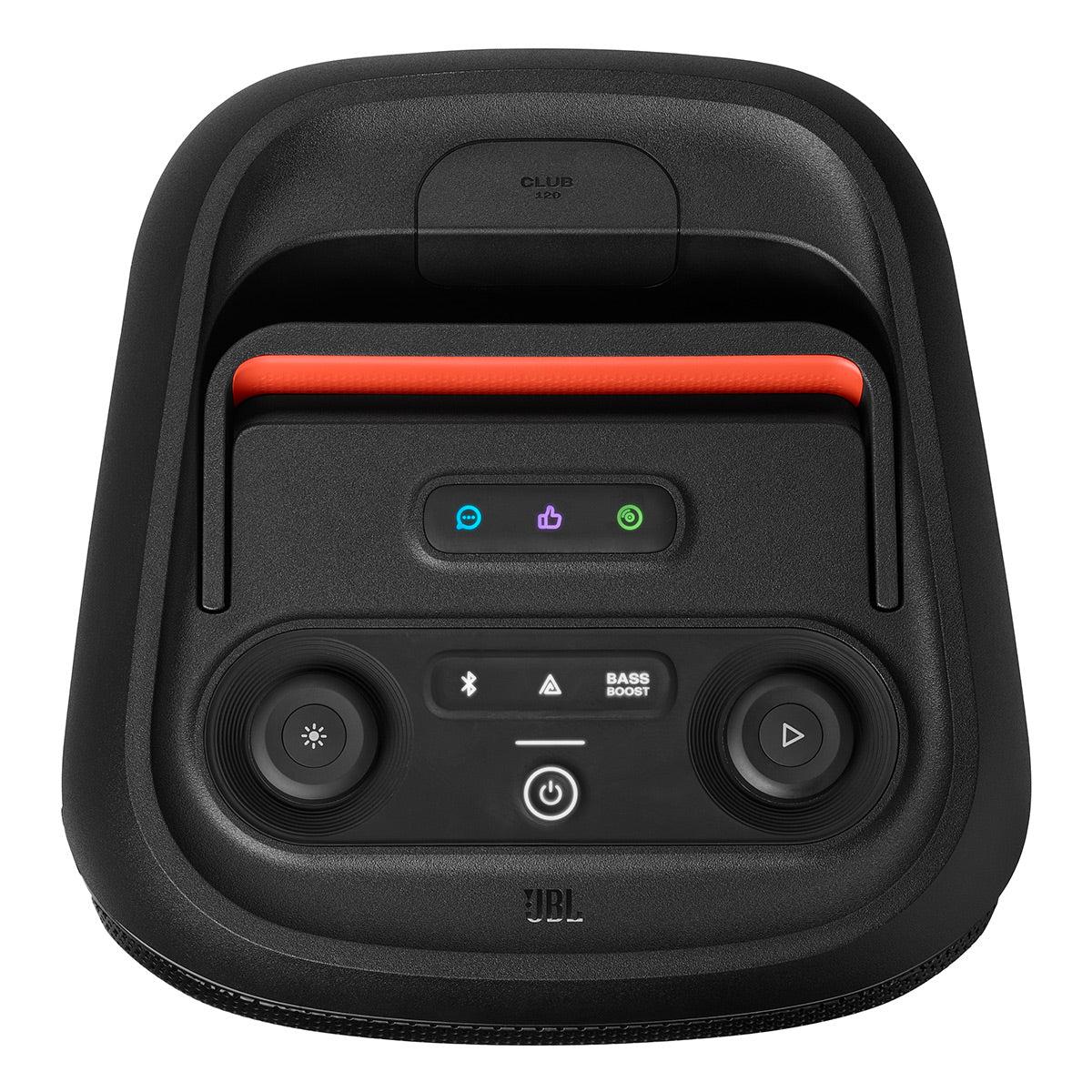
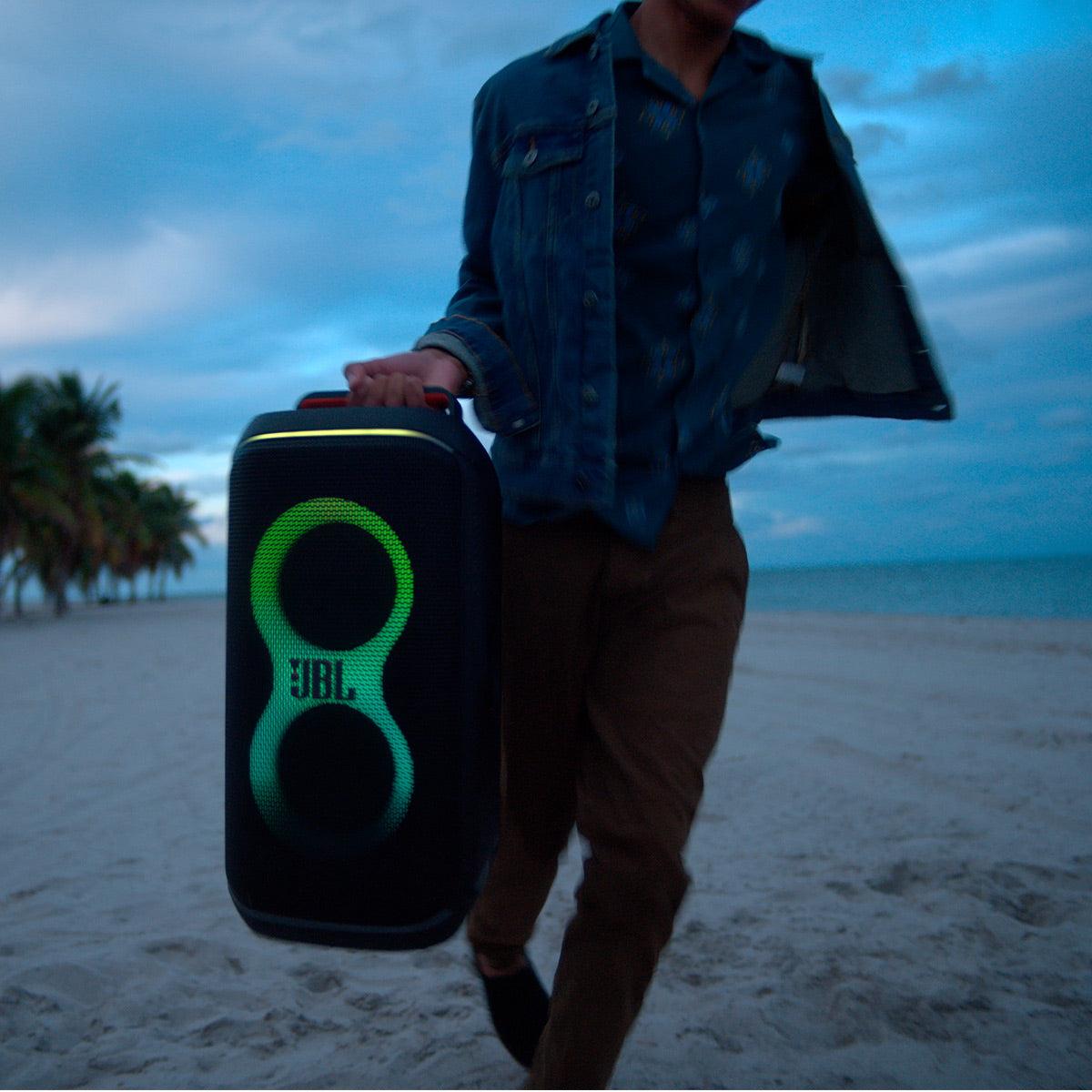
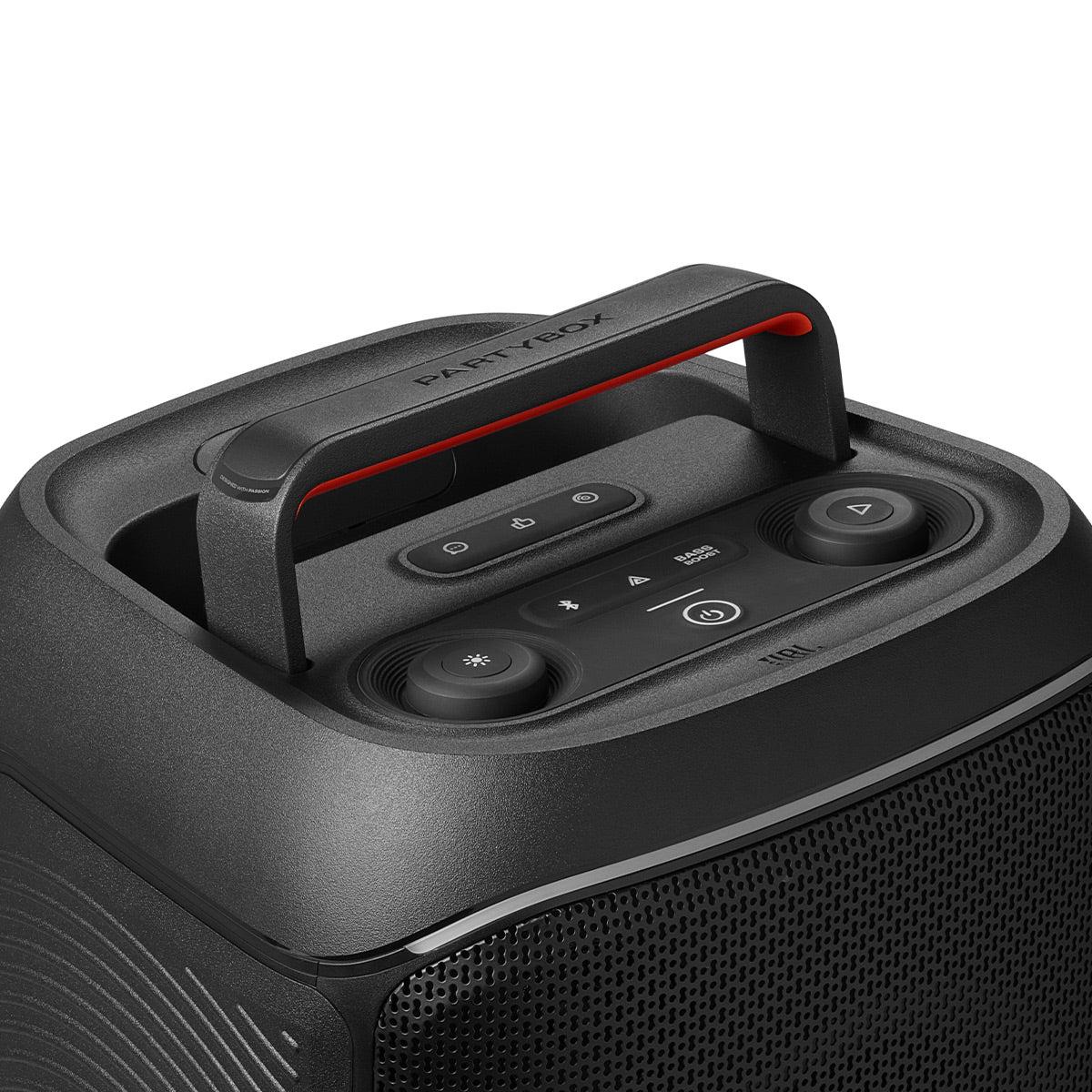
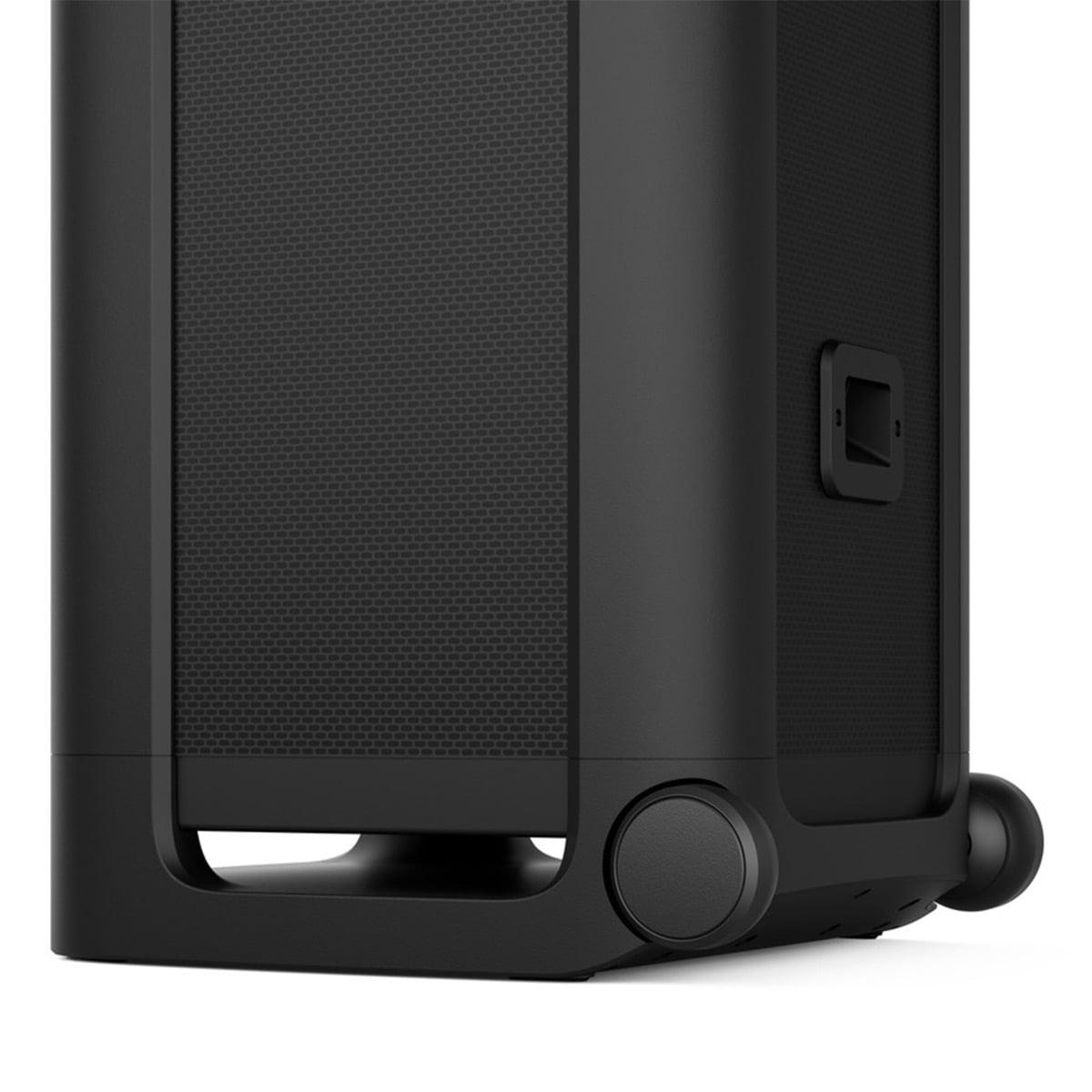
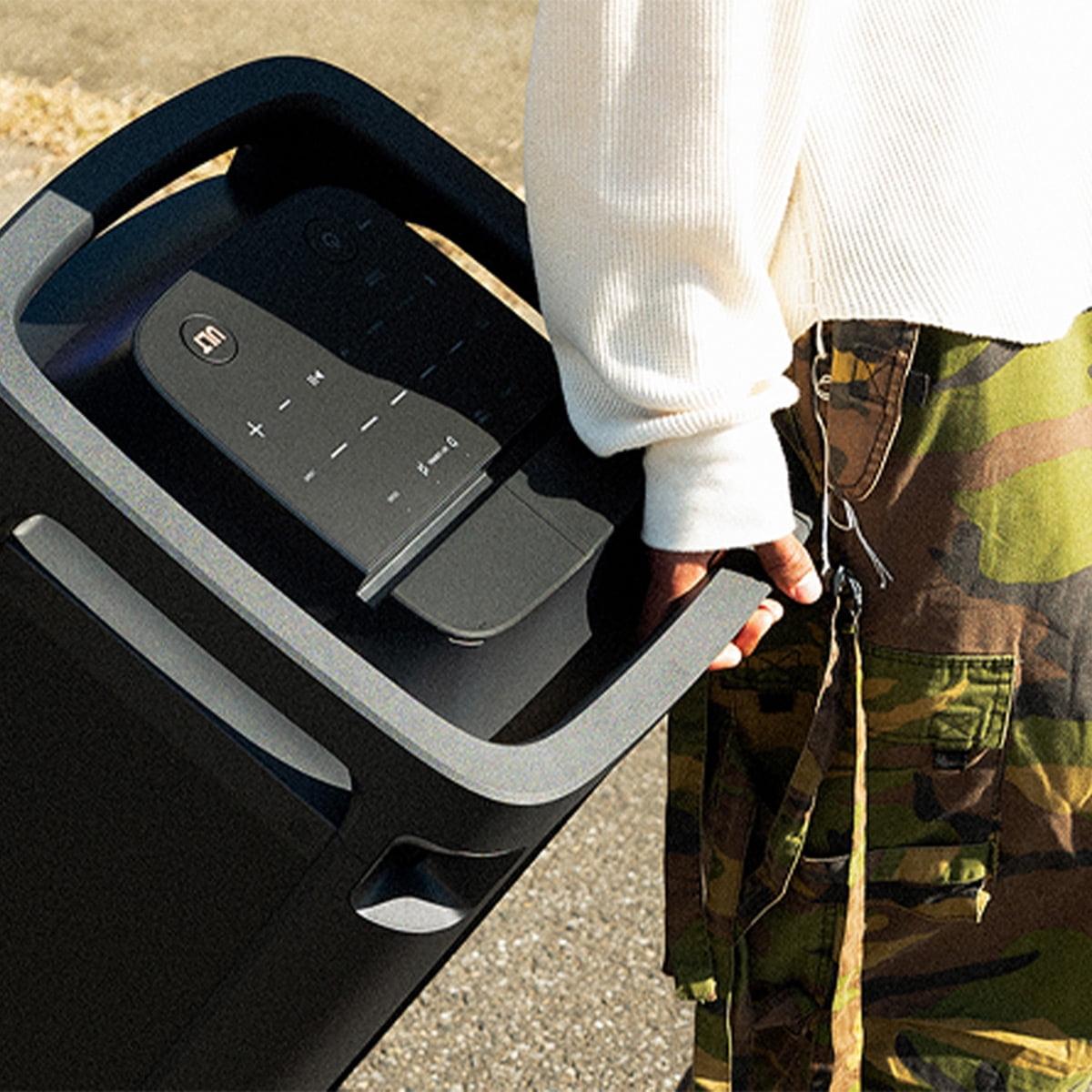
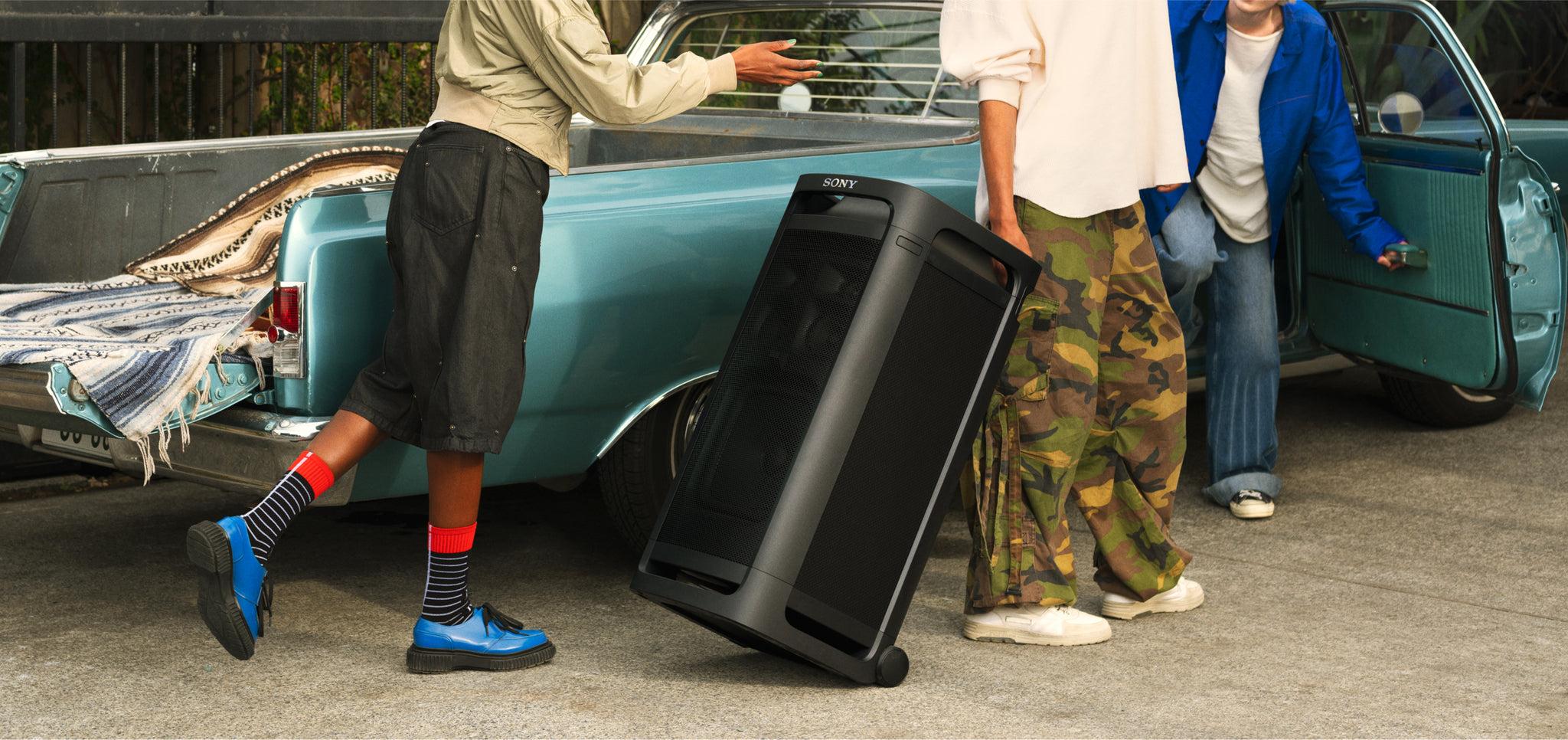
This fundamental difference affects everything else about these speakers. The JBL weighs in at a manageable 24 pounds with a foldable handle, while the Sony tips the scales at over 62 pounds and stands nearly three feet tall. One you can grab for a beach party; the other becomes the centerpiece of your entertainment room.
The Sony ULT Tower 9AC dominates in sheer audio firepower. Its seven-driver array includes a massive 12.6-inch by 12.6-inch woofer—that's nearly square and significantly larger than typical round drivers. This X-Balanced Speaker Unit design maximizes the surface area that pushes air, creating more sound pressure with less distortion. Think of it like having a bigger paddle when you're trying to move water—more surface area means more efficient energy transfer.
Supporting this monster woofer are two 4.8-inch midrange drivers and four tweeters strategically positioned for 360-degree sound dispersion. This setup means you get consistent audio quality whether you're standing in front of the speaker or off to the side—crucial for party environments where people are scattered around the room.
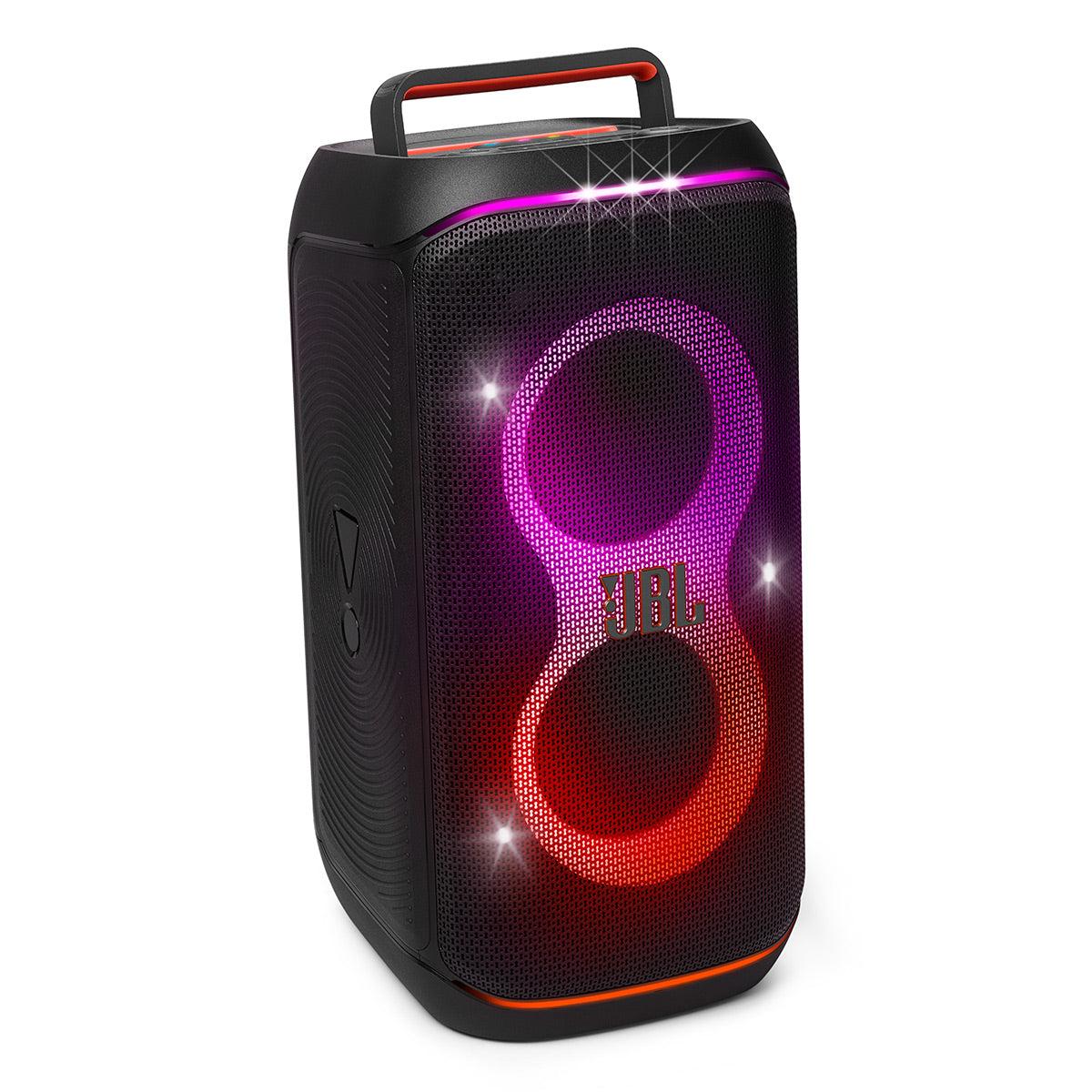
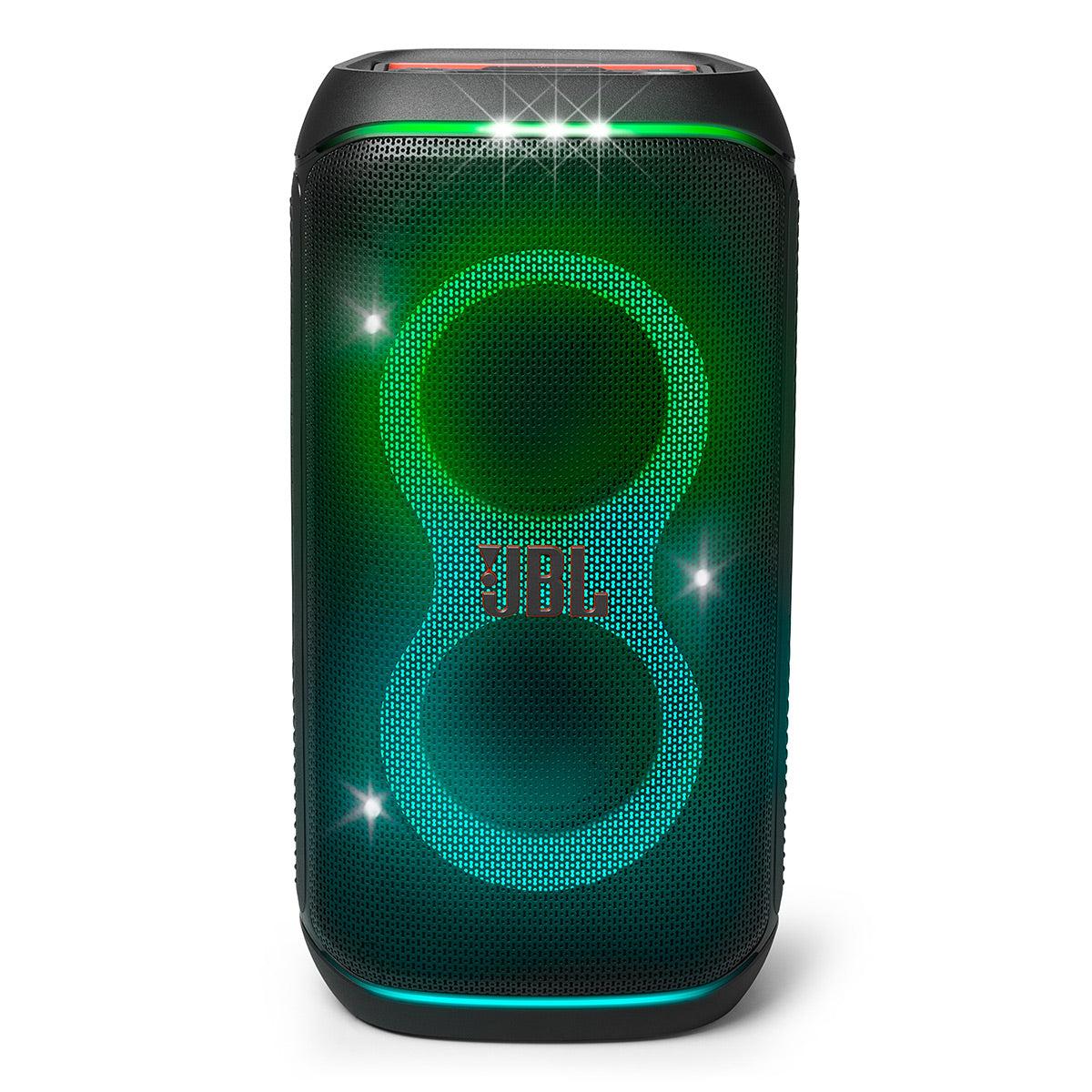
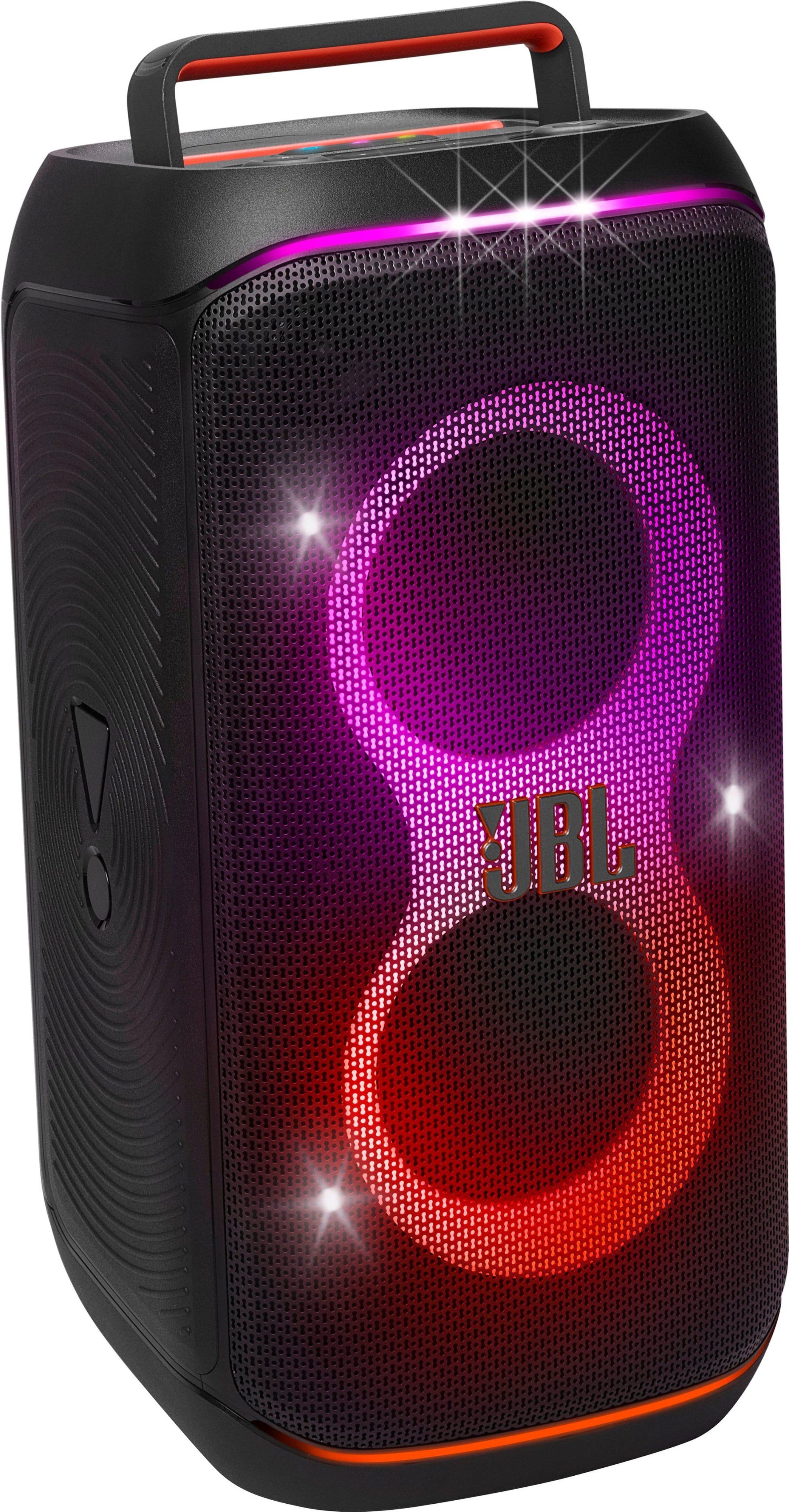
The JBL PartyBox Club 120, despite its smaller size, still packs serious audio punch with dual 5.25-inch woofers and dual 2.25-inch tweeters. What it lacks in raw driver size, it compensates for with AI Sound Boost technology. This feature uses real-time analysis to predict when the drivers might distort and automatically adjusts the signal to maintain clean sound. It's like having a smart limiter that prevents the speaker from pushing into harsh, unpleasant territory while still maximizing volume.
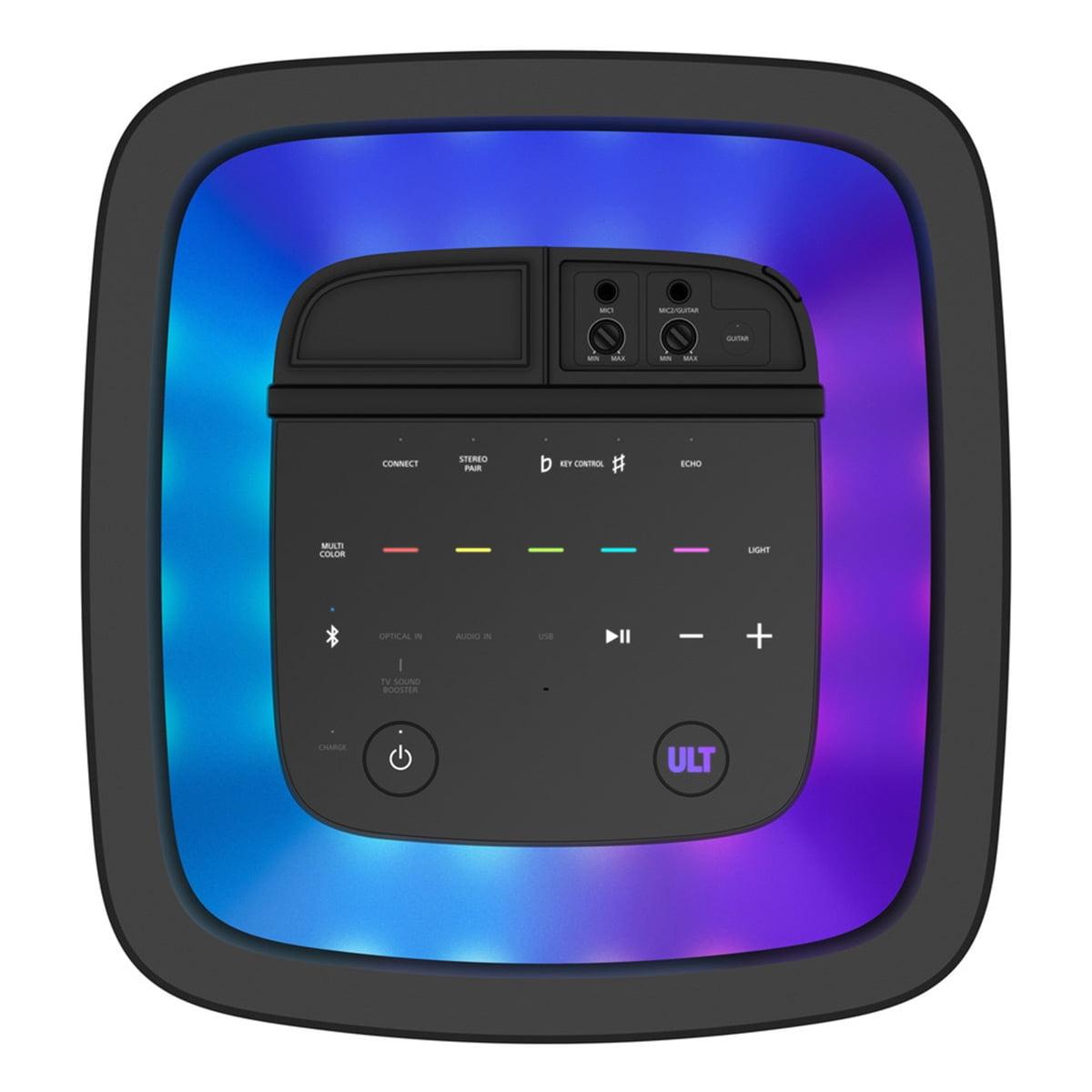
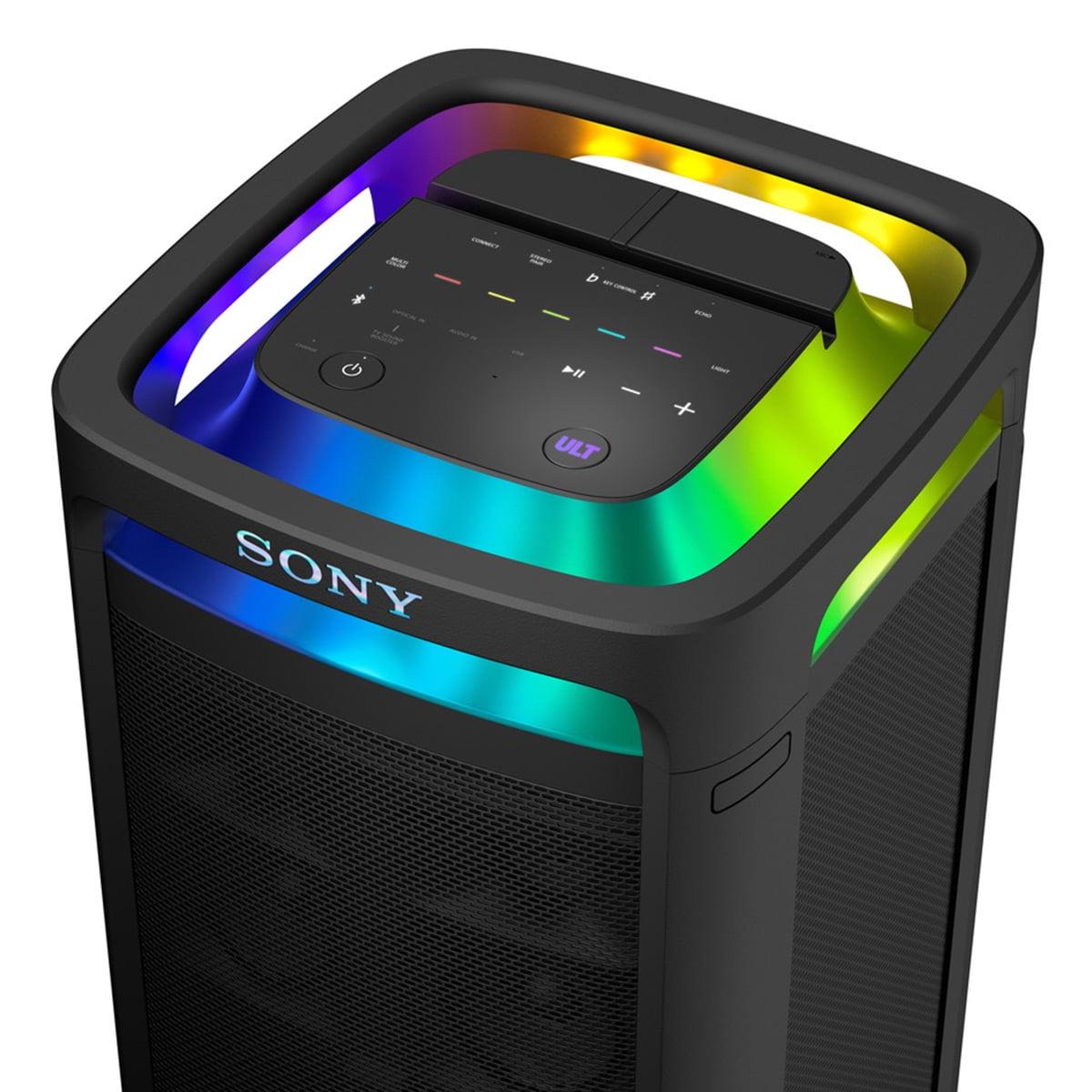
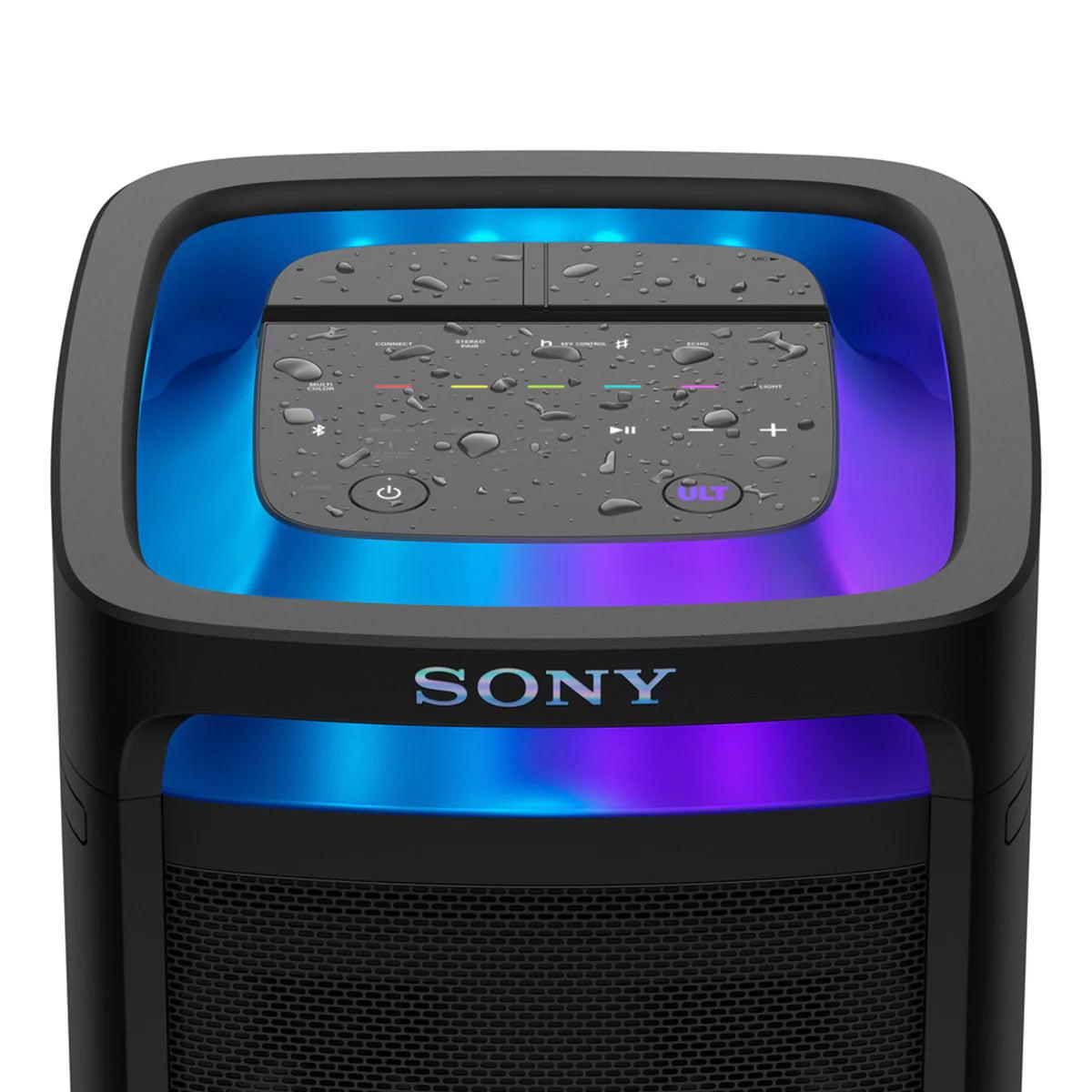
Bass response is where these speakers reveal their different personalities. The Sony offers two distinct bass modes through its ULT Button—ULT1 for deeper, room-shaking sub-bass, and ULT2 for punchier, more aggressive bass that cuts through crowd noise. This aggressive bass tuning makes the Sony ideal for electronic dance music, hip-hop, and any genre where you want that chest-thumping low-end impact.
The JBL takes a more balanced approach with its adjustable Bass Boost feature. Rather than overwhelming the midrange frequencies (where vocals and most instruments live), it maintains clarity while still delivering satisfying low-end thump. This makes it more versatile across different music genres—your indie rock will sound as good as your trap beats.
Based on expert reviews and user feedback, the Sony produces noticeably more bass output, but the JBL maintains better overall frequency balance. If you're hosting a rave, go Sony. If you're playing diverse playlists for mixed crowds, the JBL's restraint becomes a strength.
Maximum volume capabilities differ significantly between these speakers. The Sony ULT Tower 9AC can fill large venues and outdoor spaces with its superior sound pressure output, thanks to its larger drivers and AC power supply that provides consistent, unrestricted power delivery. The physics are straightforward—bigger drivers moving more air equals louder sound with less strain.
The JBL PartyBox Club 120, while impressive for its size, operates within the constraints of battery power. However, its 160W RMS output proves more than adequate for most residential parties and medium-sized gatherings. The AI Sound Boost technology helps it punch above its weight class by preventing power waste through distortion.
Here's where these speakers diverge most dramatically. The JBL PartyBox Club 120 offers genuine portability with its 12-hour battery life and replaceable battery design—a rare feature that extends the speaker's long-term usability. The 10-minute fast charge capability that provides 80 minutes of playtime is particularly clever for those "oops, forgot to charge it" moments we've all experienced.
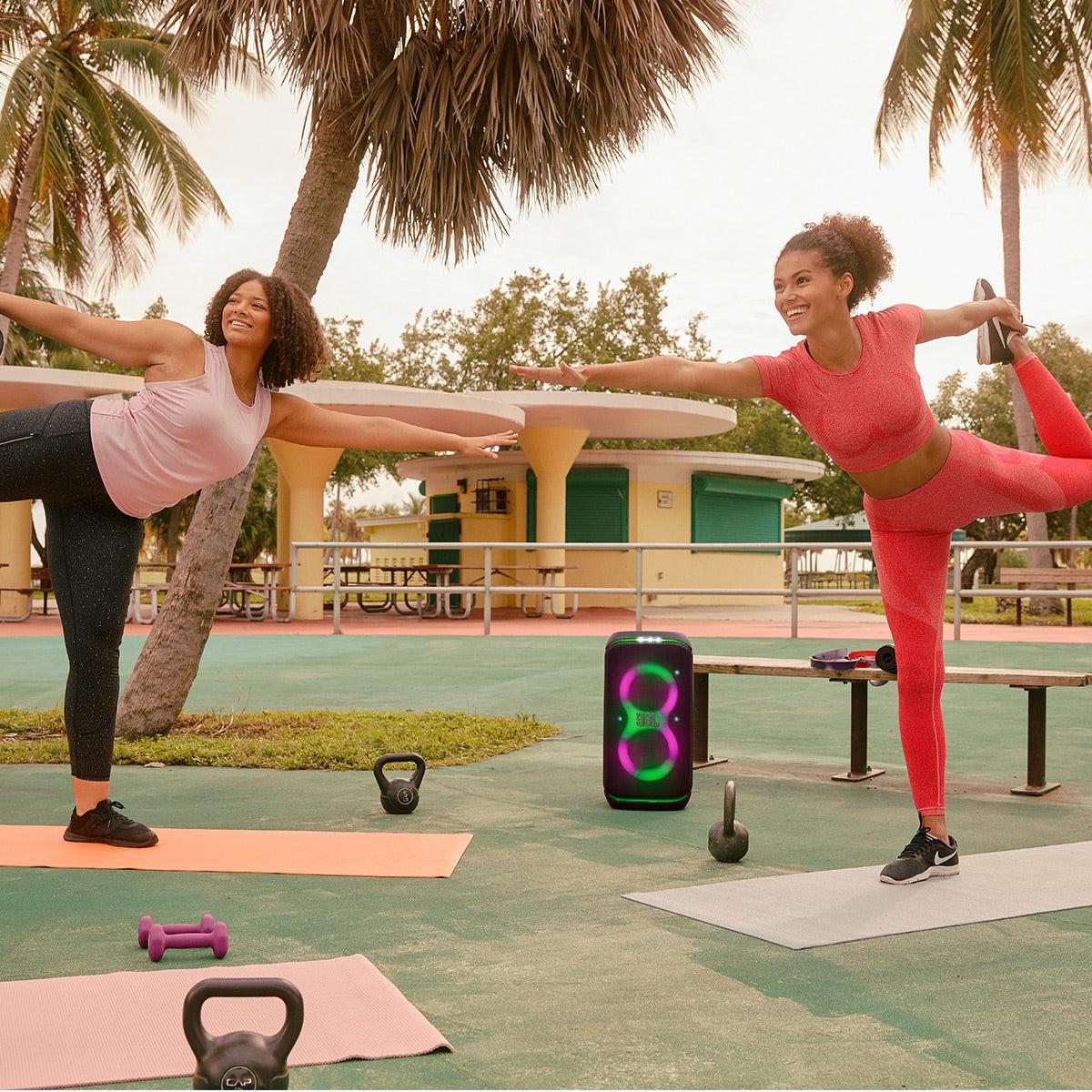
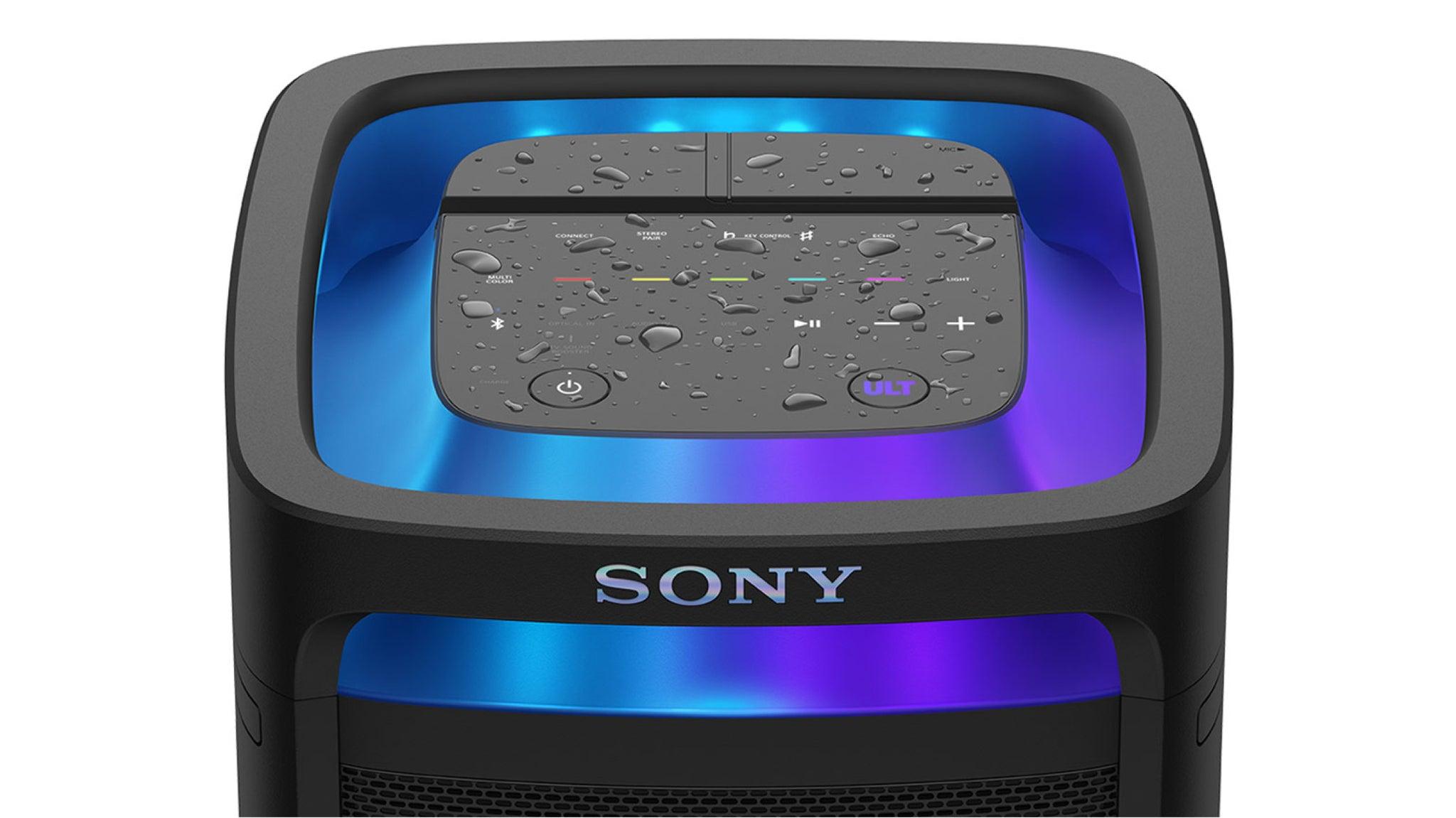
The IPX4 splash resistance rating means the JBL can handle poolside parties, beach gatherings, and outdoor events where moisture is inevitable. This weather protection, combined with the foldable ergonomic handle, makes it a true grab-and-go solution.
The Sony ULT Tower 9AC, by contrast, requires constant AC power and offers no battery backup whatsoever. While it includes transport wheels and a handle for moving between rooms, calling it "portable" stretches the definition. This AC-only design does provide advantages—no battery degradation over time, no concerns about running out of power mid-party, and unlimited operating duration.
Both speakers offer smartphone apps for advanced control, but with different strengths. The Sony's Sound Connect app provides a comprehensive 10-band equalizer, allowing precise frequency tuning. This granular control appeals to audio enthusiasts who want to dial in specific sound signatures for their room acoustics or music preferences.
The JBL's PartyBox app focuses more on user-friendly party features, including programmable DJ effect buttons and intuitive lightshow control. The interface prioritizes quick adjustments over deep customization—perfect for party environments where you need to make changes on the fly.
For larger events, both speakers offer expansion capabilities, but through different technologies. The Sony uses Party Connect to link up to 100 compatible Sony speakers—an impressive number that enables massive sound installations for festivals or large venues.
The JBL employs Auracast wireless technology for multi-speaker connectivity, a newer Bluetooth standard that promises better synchronization and lower latency. It also supports True Wireless Stereo pairing with another identical unit, creating true left-right stereo separation for enhanced audio imaging.
The Sony supports Bluetooth 5.3 with LDAC codec, which can transmit higher-quality audio than standard Bluetooth. LDAC provides up to three times more data transmission than conventional Bluetooth audio, resulting in better sound quality from your phone or streaming device—though you'll need compatible source devices to take advantage.
The JBL offers Bluetooth 5.4 with multi-point connectivity, allowing simultaneous connection to two devices. This feature proves invaluable for party scenarios where multiple people want to queue up songs or when you need seamless DJ handoffs between devices.
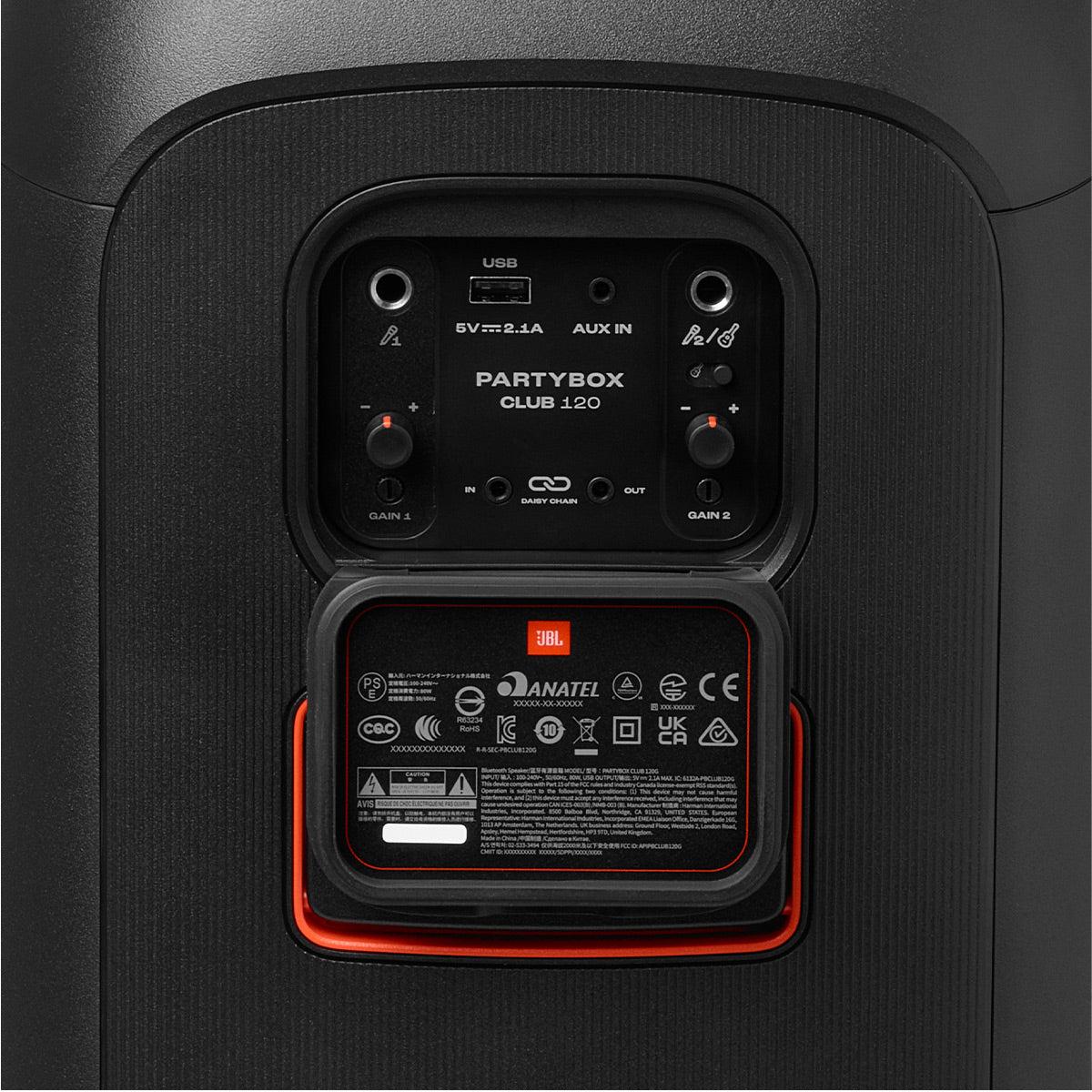
Both speakers cater to karaoke enthusiasts and live performers, but with different levels of sophistication. The Sony ULT Tower 9AC provides professional-grade features including Key Control (pitch adjustment for vocals), dedicated echo effects, and fold-out microphone holders built into the speaker body. The dual 6.35mm inputs accommodate both microphones and guitars simultaneously.
The JBL PartyBox Club 120 offers similar mic and guitar inputs with individual volume and gain controls, but integrates these features through app control rather than dedicated hardware buttons. This approach keeps the physical interface cleaner but might be less convenient during live performance.
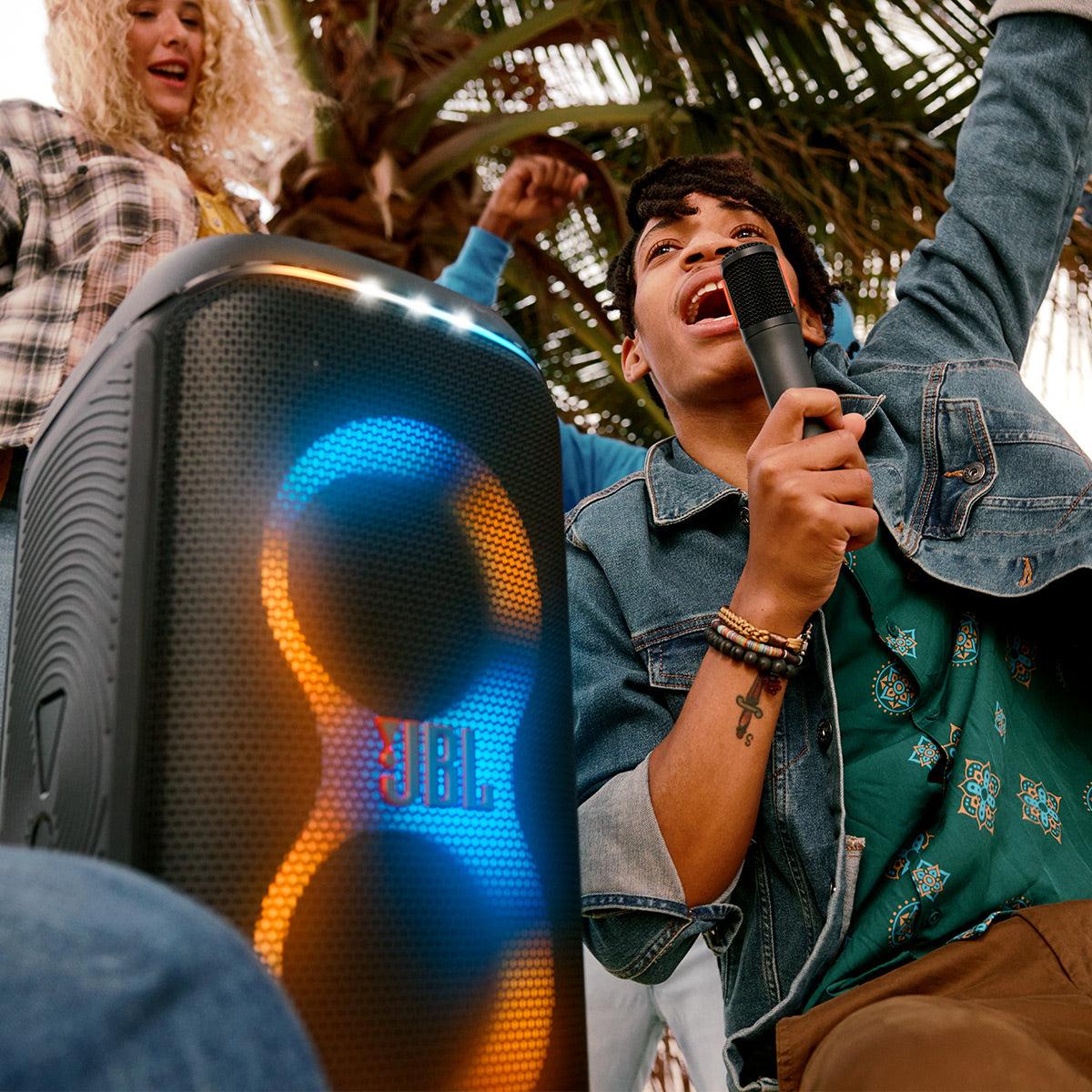
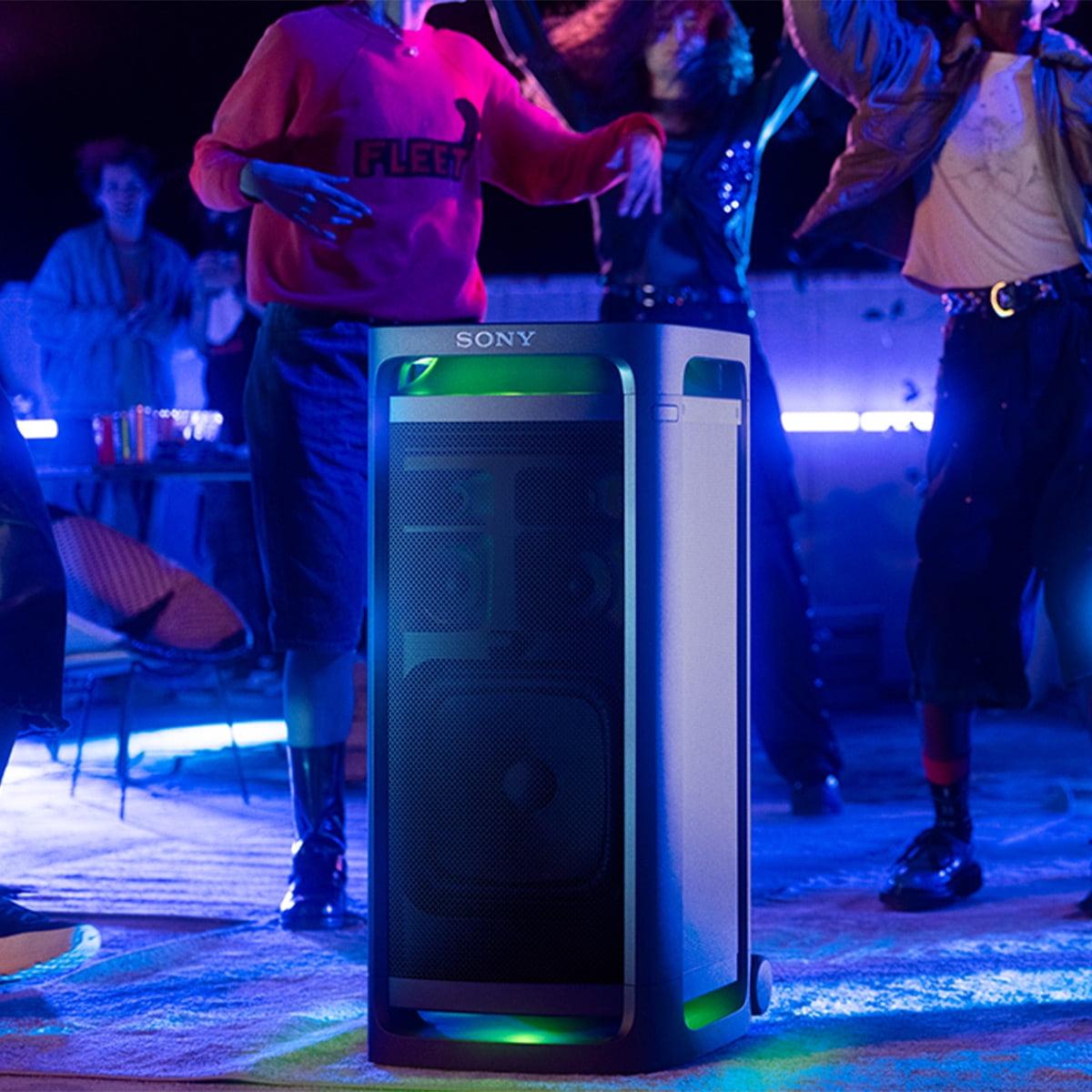
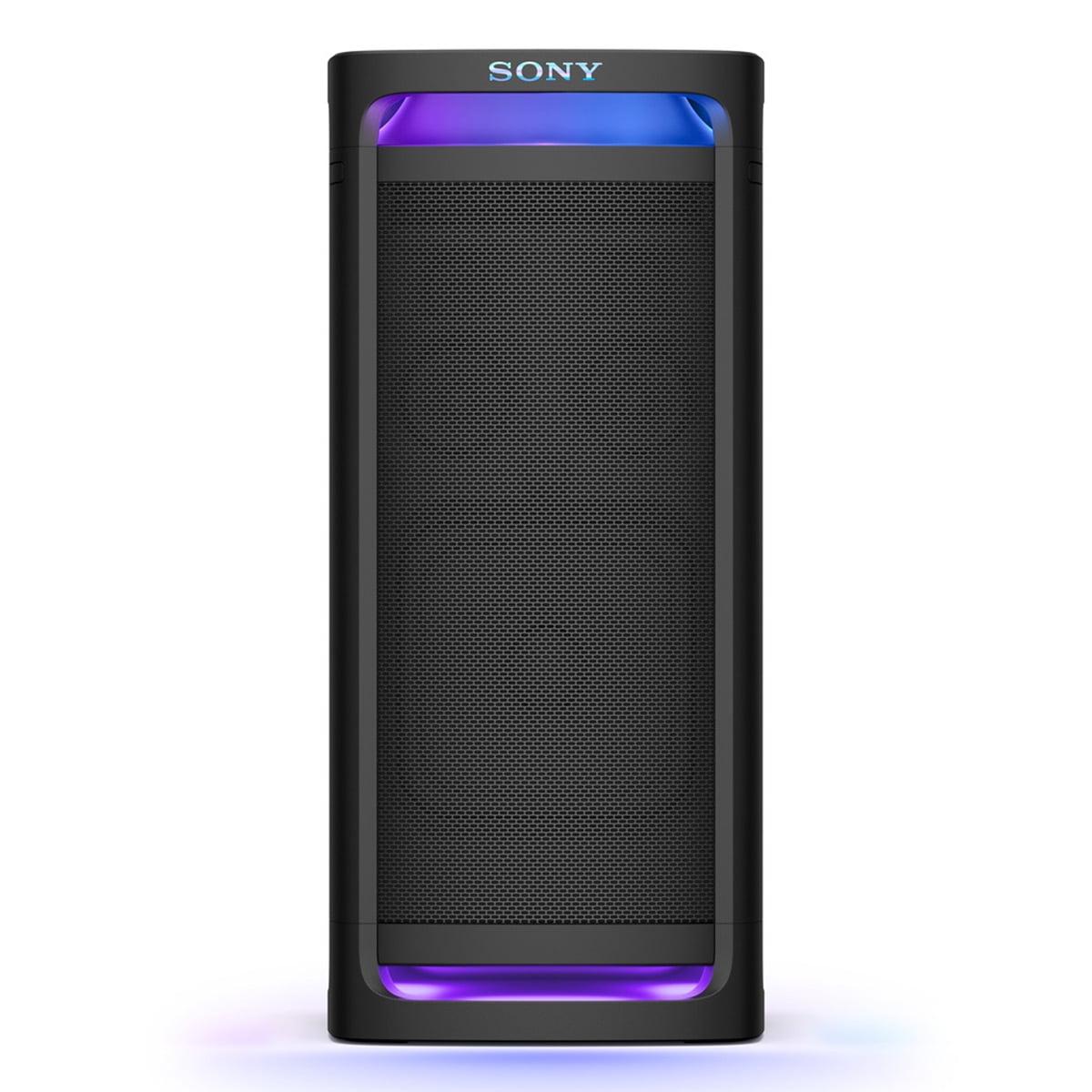
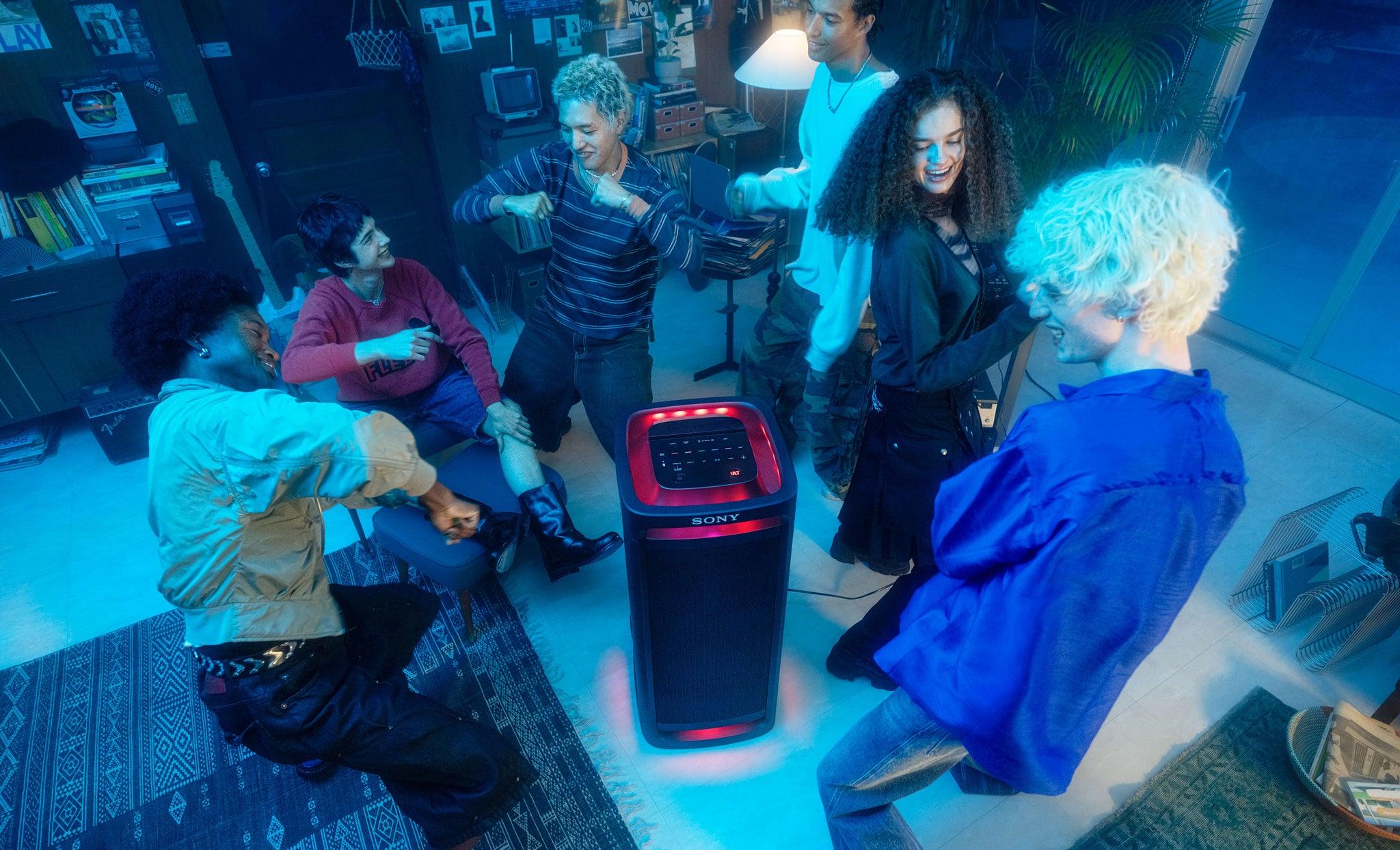
Visual entertainment has become increasingly important in party speakers, and both deliver impressive light shows. The Sony's 360-degree RGB lighting creates room-filling effects with synchronized music response. The lighting rings at the top and bottom of the tower project patterns throughout the space.
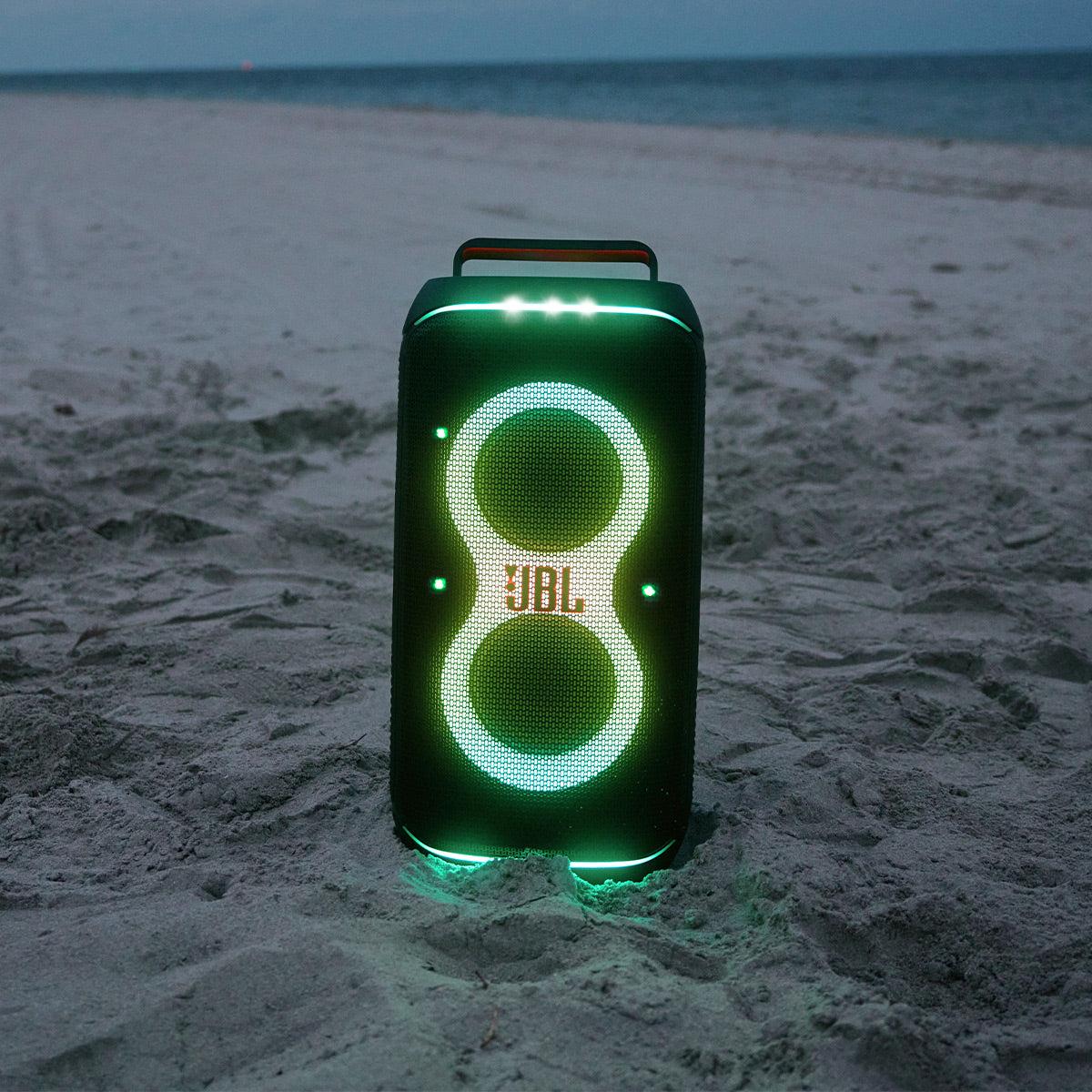
The JBL features customizable RGB effects including starry lights, light trails, and strobe effects. While not 360-degree like the Sony, the lighting still creates engaging visual atmospheres and offers more granular control through the app interface.
For those considering party speakers as part of a home entertainment system, the Sony ULT Tower 9AC offers significant advantages. Its optical digital input accepts high-quality audio from TVs, projectors, and gaming systems, supporting PCM audio up to 96kHz sampling rate. The TV Sound Booster mode uses the rear tweeters to create a wider soundstage when watching movies or shows.
This home theater integration makes the Sony a dual-purpose investment—party speaker by night, entertainment system enhancement by day. The JBL PartyBox Club 120 lacks these connectivity options, limiting its home theater applications to Bluetooth streaming only.
At the time of writing, the JBL PartyBox Club 120 costs roughly half the price of the Sony ULT Tower 9AC, making value comparison complex. The JBL offers exceptional bang-for-buck in the portable category, delivering professional-level features and sound quality at a consumer-friendly price point.
The Sony commands its premium pricing through sheer performance capabilities and feature comprehensiveness. For users who need maximum output and don't require portability, the price difference becomes justified by the substantial performance gap.
Based on extensive review analysis and user feedback, the JBL delivers approximately 80% of the Sony's party experience at 50% of the cost, while adding complete portability. The Sony provides maximum performance for users who prioritize audio output above all other considerations.
After analyzing performance specs, user reviews, and real-world applications, the JBL PartyBox Club 120 emerges as the better choice for most users. Its combination of portability, balanced sound quality, and reasonable pricing makes it incredibly versatile. The freedom to take your party anywhere—from backyard barbecues to beach gatherings—proves invaluable in practice.
However, the Sony ULT Tower 9AC justifies its premium positioning for specific use cases. If you're setting up a permanent entertainment space, host large gatherings regularly, or need the absolute maximum audio output, the Sony's performance advantages become worth the significant price premium.
The 2024-2025 timeframe has brought meaningful improvements to both product lines. JBL's implementation of AI Sound Boost and Auracast technology represents genuine innovation in the portable speaker space. Sony's new ULT series, meanwhile, incorporates lessons learned from years of party speaker development, resulting in more refined bass tuning and better app integration than previous generations.
For most party-goers and entertainment enthusiasts, the JBL PartyBox Club 120 offers the ideal balance of performance, features, and value. It's the speaker that's ready for anything—whether that's an impromptu gathering or a carefully planned celebration.
| JBL PartyBox Club 120 | Sony ULT Tower 9AC |
|---|---|
| Power Source - Determines where you can use the speaker | |
| Built-in rechargeable battery (12 hours playback) | AC power only (requires outlet access) |
| Weight & Portability - How easy it is to transport | |
| 24 lbs (11 kg) with foldable handle | 63 lbs (28.5 kg) with wheels and handle |
| Audio Output - Raw power for filling large spaces | |
| 160W RMS with AI Sound Boost | Higher output with 7-driver array (exact wattage unspecified) |
| Driver Configuration - Impacts sound quality and coverage | |
| 2×5.25" woofers, 2×2.25" tweeters | 1×12.6"×12.6" woofer, 2×4.8" midrange, 4 tweeters |
| Sound Coverage - How evenly audio fills the room | |
| Front-firing stereo separation | True 360° sound with front/rear tweeters |
| Bass Response - Low-frequency impact for party music | |
| Balanced bass with adjustable Bass Boost | Aggressive bass emphasis with ULT1/ULT2 modes |
| Weather Resistance - Protection for outdoor events | |
| IPX4 splashproof rating | No IP rating (splash-resistant control panel only) |
| Bluetooth Version - Connection stability and features | |
| Bluetooth 5.4 with multi-point (2 devices) | Bluetooth 5.3 with LDAC high-quality codec |
| Multi-Speaker Connectivity - Expanding your sound system | |
| Auracast wireless + TWS stereo pairing | Party Connect (up to 100 speakers) |
| Karaoke Features - For live entertainment | |
| Dual mic/guitar inputs with app-based effects | Dual inputs with Key Control, echo effects, mic holders |
| Home Theater Integration - TV and media device compatibility | |
| Bluetooth streaming only | Optical input, TV Sound Booster mode |
| App Features - Smartphone control capabilities | |
| JBL PartyBox app with DJ effects, 5-band EQ | Sony Sound Connect app with 10-band EQ, comprehensive controls |
| Lighting System - Visual party enhancement | |
| RGB lightshow with starry lights, trails, strobes | 360° RGB party lights with music sync |
| Battery Features - Power management and longevity | |
| Replaceable battery, 10-min fast charge (80 min play) | N/A - AC powered only |
| Best Use Cases - Who should choose each speaker | |
| Outdoor events, portable parties, apartment use | Large indoor venues, permanent setups, home theater |
The JBL PartyBox Club 120 is significantly better for outdoor parties due to its built-in rechargeable battery that provides up to 12 hours of playtime. It also features IPX4 splash resistance, protecting it from rain and spills. The Sony ULT Tower 9AC requires constant AC power and has no weather resistance, making it unsuitable for outdoor events without reliable electrical access.
The fundamental difference is portability versus power. The JBL PartyBox Club 120 is a portable, battery-powered speaker weighing 24 pounds, while the Sony ULT Tower 9AC is a stationary, AC-powered tower weighing 63 pounds. The JBL prioritizes mobility and versatility, while the Sony focuses on maximum audio output and comprehensive features for fixed installations.
The Sony ULT Tower 9AC produces significantly higher volume levels due to its larger 7-driver array and AC power supply. Its massive 12.6×12.6-inch woofer and multiple tweeters can fill large venues with powerful sound. The JBL PartyBox Club 120, while impressive for its size, operates within battery power constraints and is better suited for medium-sized gatherings.
Both speakers support karaoke, but the Sony ULT Tower 9AC offers more advanced features including Key Control for pitch adjustment, dedicated echo effects, and built-in microphone holders. The JBL PartyBox Club 120 provides dual mic inputs with individual volume controls and karaoke features through its app, making it capable but less comprehensive for serious karaoke use.
The JBL PartyBox Club 120 offers superior value for most users, costing roughly half the price while delivering excellent sound quality, portability, and party features. The Sony ULT Tower 9AC justifies its premium pricing only if you need maximum volume output, don't require portability, and plan to use advanced features like home theater integration.
The Sony ULT Tower 9AC excels for home theater use with its optical digital input that accepts high-quality audio from TVs and gaming systems. It includes a TV Sound Booster mode that creates a wider soundstage for movies. The JBL PartyBox Club 120 only supports Bluetooth streaming, limiting its home theater integration capabilities.
The Sony ULT Tower 9AC delivers more powerful, room-shaking bass through its massive X-Balanced woofer and ULT bass modes. However, the JBL PartyBox Club 120 offers more balanced bass that doesn't overwhelm vocals and midrange frequencies. Choose Sony for maximum bass impact, or JBL for more versatile, musical bass response.
Both speakers support multi-speaker connectivity but use different technologies. The Sony ULT Tower 9AC uses Party Connect to link up to 100 compatible Sony speakers for massive installations. The JBL PartyBox Club 120 employs Auracast wireless technology and True Wireless Stereo pairing for connecting multiple units with potentially better synchronization.
Only the JBL PartyBox Club 120 has a battery, providing up to 12 hours of playtime with a replaceable battery design for extended use. It also features 10-minute fast charging for 80 minutes of playtime. The Sony ULT Tower 9AC has no battery and requires constant AC power connection.
The JBL PartyBox Club 120 is far more portable at 24 pounds with a foldable ergonomic handle, making it easy to carry to different locations. The Sony ULT Tower 9AC weighs 63 pounds and stands nearly 3 feet tall, requiring wheels for transport and is better suited for permanent installation in one location.
Both speakers feature impressive lighting systems. The Sony ULT Tower 9AC offers 360-degree RGB party lights that project throughout the room with music synchronization. The JBL PartyBox Club 120 provides customizable RGB effects including starry lights, light trails, and strobe effects, all controllable through its smartphone app.
The JBL PartyBox Club 120 is ideal for apartment living due to its compact size, balanced sound profile that won't overwhelm neighbors, and portability for taking parties elsewhere when needed. The Sony ULT Tower 9AC is too large and powerful for most apartment spaces, and its aggressive bass response may cause noise complaints in close-quarters living situations.
We've done our best to create useful and informative comparisons to help you decide what product to buy. Our research uses advanced automated methods to create this comparison and perfection is not possible - please contact us for corrections or questions. These are the sites we've researched in the creation of this article: stereoguide.com - armorsound.com - rtings.com - rtings.com - bestbuy.com - youtube.com - soundguys.com - youtube.com - lbtechreviews.com - youtube.com - youtube.com - versus.com - jbl.com - rtings.com - versus.com - ro.harmanaudio.com - dell.com - jbl.com - jbl.com - projectorscreenstore.com - stereoguide.com - videoandaudiocenter.com - bestbuy.com - electronics.sony.com - rtings.com - youtube.com - hindustantimes.com - helpguide.sony.net - soundguys.com - sony.com - youtube.com - bestbuy.com - youtube.com - youtube.com - youtube.com - shopjetson.com - youtube.com - sony.com - sonyworld.co.za - sony.com

Privacy Policy
Terms and Conditions - Affiliate Policy
Home Security
© Copyright 2008-2026.
11816 Inwood Rd #1211, Dallas, TX 75244