


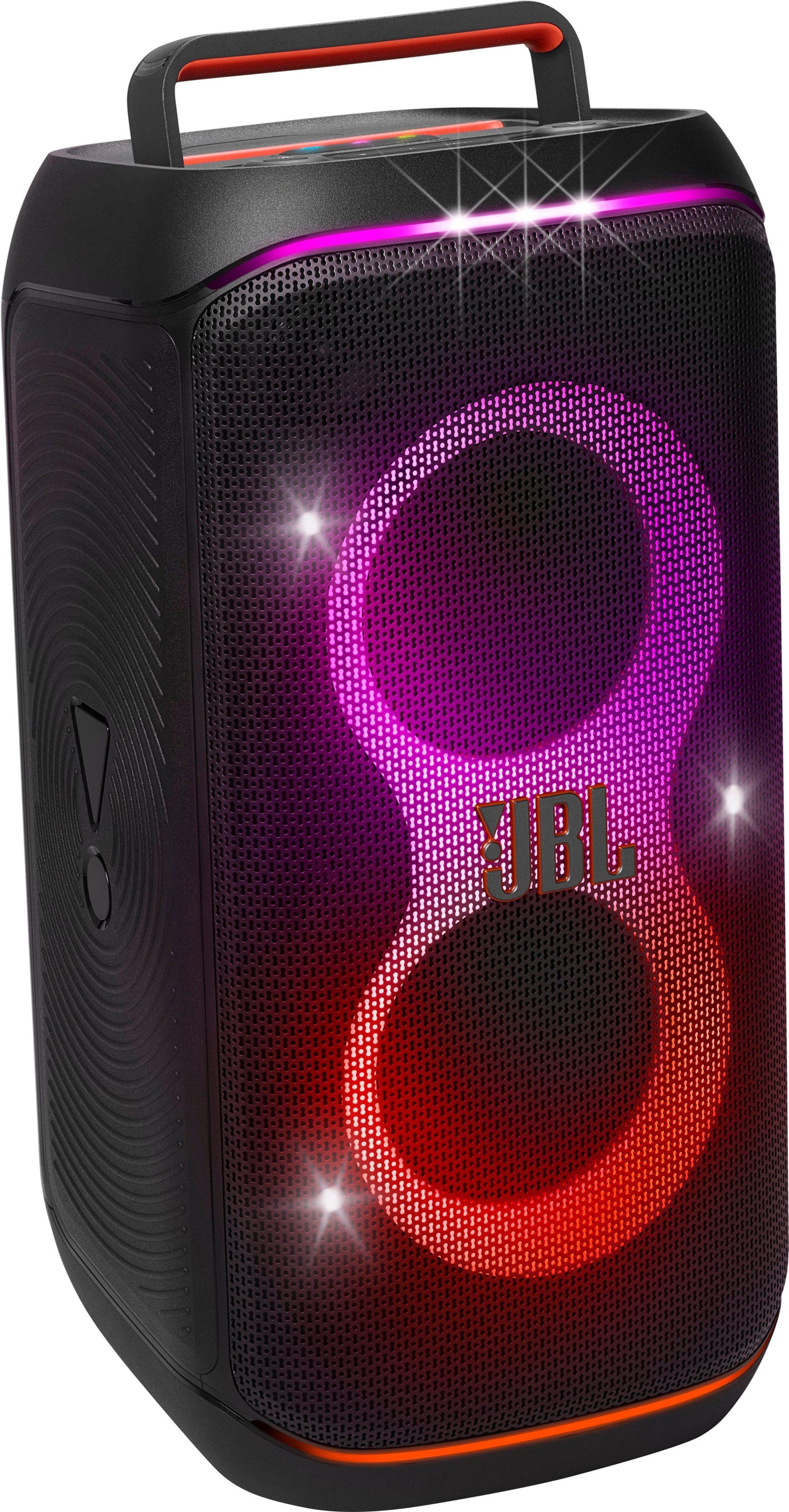
When it comes to throwing a memorable party, few things matter more than getting the audio setup right. Whether you're planning a backyard barbecue, a beach gathering, or an indoor celebration, portable party speakers have become the go-to solution for delivering powerful sound, exciting visual effects, and the versatility to handle everything from playlists to live performances.
Today's party speakers aren't just about volume—they're entertainment systems packed into portable packages. We're comparing two popular options that take notably different approaches: the budget-friendly Philips TAX5206 and the premium JBL PartyBox Club 120. Both were released in recent years (2023-2024), representing the latest thinking in portable party audio, but they prioritize different aspects of the party experience.
Before diving into the specifics, it's worth understanding what separates party speakers from regular Bluetooth speakers. Party speakers prioritize three key elements: power output (measured in watts RMS, which indicates continuous power delivery), entertainment features like synchronized lighting, and connectivity options for live performance including microphone and guitar inputs.
The most critical performance metrics include frequency response (how well the speaker reproduces different sound frequencies from bass to treble), maximum volume without distortion, battery life for portability, and build quality for outdoor use. These speakers also need to handle the dynamic range of party music—everything from thumping electronic dance music to acoustic performances.
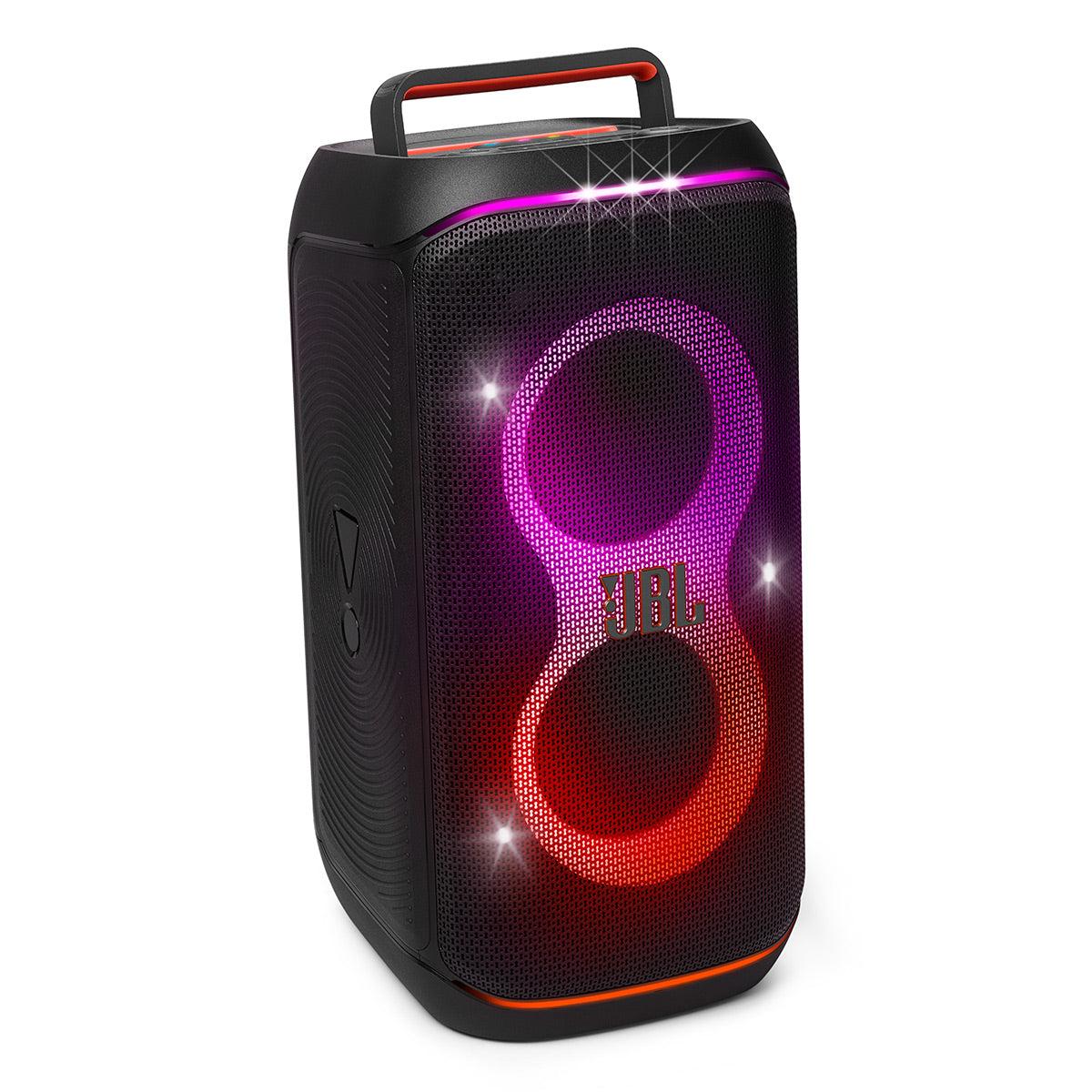
The JBL PartyBox Club 120 takes a clear lead in audio performance, delivering 160W RMS through its dual 5.25-inch woofers and 2.25-inch tweeters. This driver configuration creates what JBL calls their "Pro Sound" signature—a balanced frequency response that maintains clarity even at high volumes. The AI Sound Boost feature is particularly impressive, using real-time analysis to predict speaker movement and maximize dynamic range while reducing distortion. Think of it as having an intelligent assistant that automatically adjusts the audio processing to get the most out of the drivers without pushing them beyond their limits.
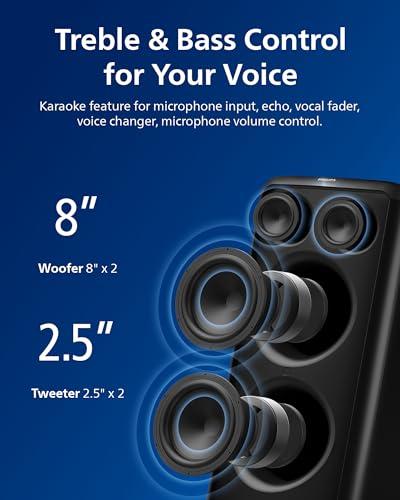
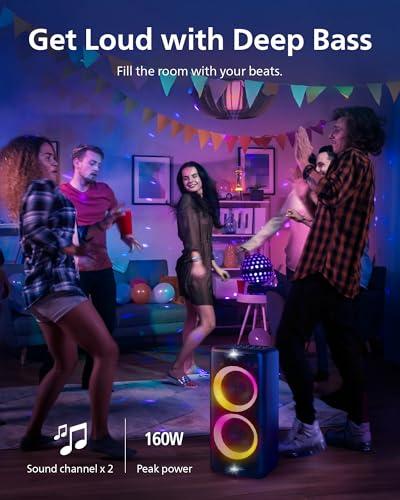
The Philips TAX5206, with its 80W RMS output, takes a different approach. It uses larger 8-inch woofers paired with 2.5-inch tweeters, prioritizing deep bass extension over overall power. The frequency response spans 40Hz to 20kHz, which means it can reproduce very low bass frequencies that you feel as much as hear. However, based on user feedback and professional reviews, the bass performance, while adequate, doesn't quite match the impact you'd expect from those large drivers.
In practical terms, the JBL delivers notably superior midrange clarity—crucial for vocal reproduction—and maintains better balance across all frequencies. The Philips offers deeper bass extension on paper but struggles with overall coherence, particularly in the midrange where most vocal content lives. If you're primarily playing recorded music, the JBL's more refined sound signature provides a better listening experience across different genres.
For home theater use, both speakers fall short of dedicated systems due to their party-focused tuning, but the JBL PartyBox Club 120 would be the better choice if you occasionally use your speaker for movie watching, thanks to its clearer dialogue reproduction and more balanced sound.
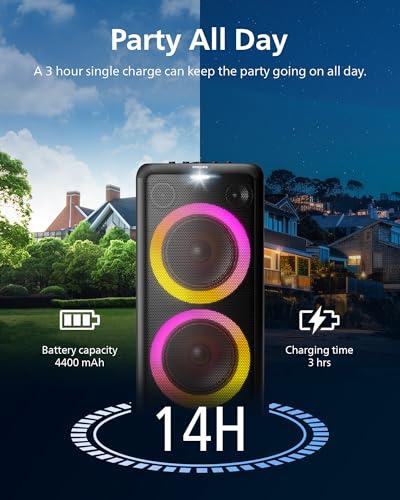
Here's where the Philips TAX5206 shines brightest. Its 14-hour battery life from a 4400mAh lithium-ion battery significantly outperforms the JBL's real-world performance of 6-7 hours at moderate volume levels. This isn't just a small difference—it's the gap between a speaker that lasts through an entire outdoor event versus one that might require charging or power access partway through.
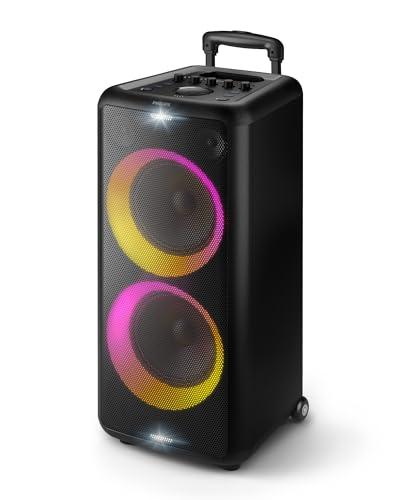
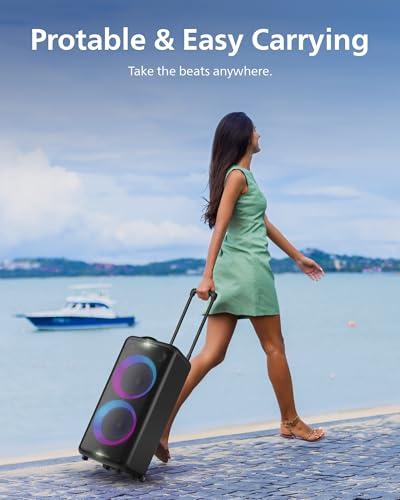
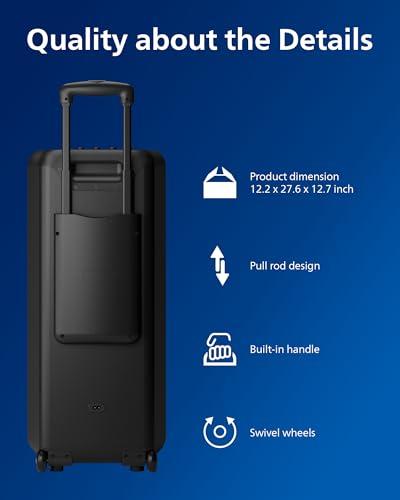
The Philips also wins big on transport convenience with its trolley design. The built-in wheels and telescoping handle make it function like a piece of luggage, which is genuinely helpful when you're moving a 23-pound speaker across distances. Having moved plenty of audio equipment over the years, this practical consideration matters more than spec sheets suggest.
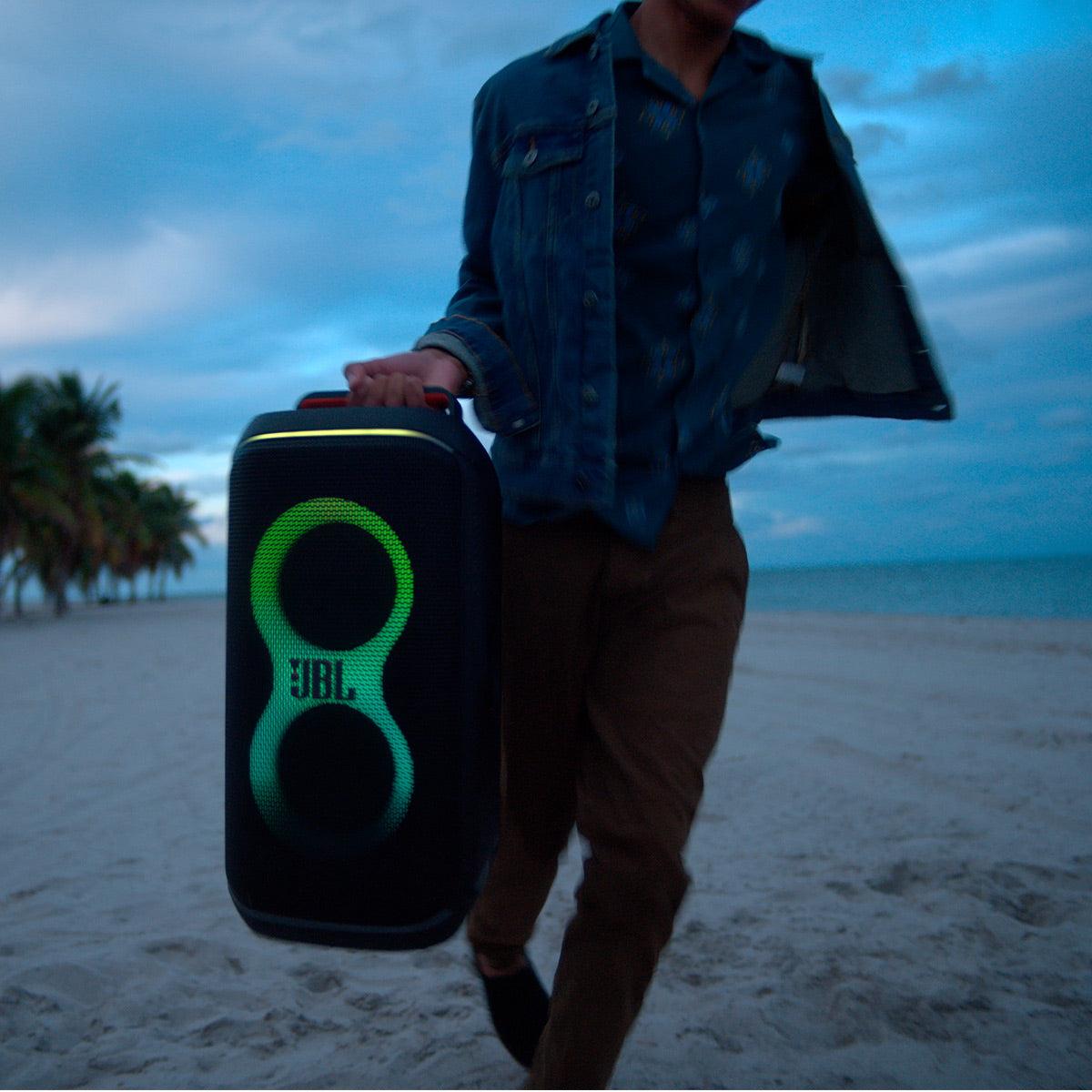
The JBL PartyBox Club 120 counters with a replaceable battery design—a rare feature that extends the speaker's long-term usability. When the battery eventually degrades after years of use, you can swap in a new one rather than replacing the entire speaker. It also includes IPX4 splashproof certification, meaning it can handle rain or splashing water without damage, while the Philips lacks any weather protection rating.
For outdoor enthusiasts or anyone who frequently hosts extended gatherings, the Philips's superior battery life and mobility design provide significant practical advantages. However, if you typically have access to power or plan to use the speaker in potentially wet conditions, the JBL's weather resistance and replaceable battery offer better long-term value.
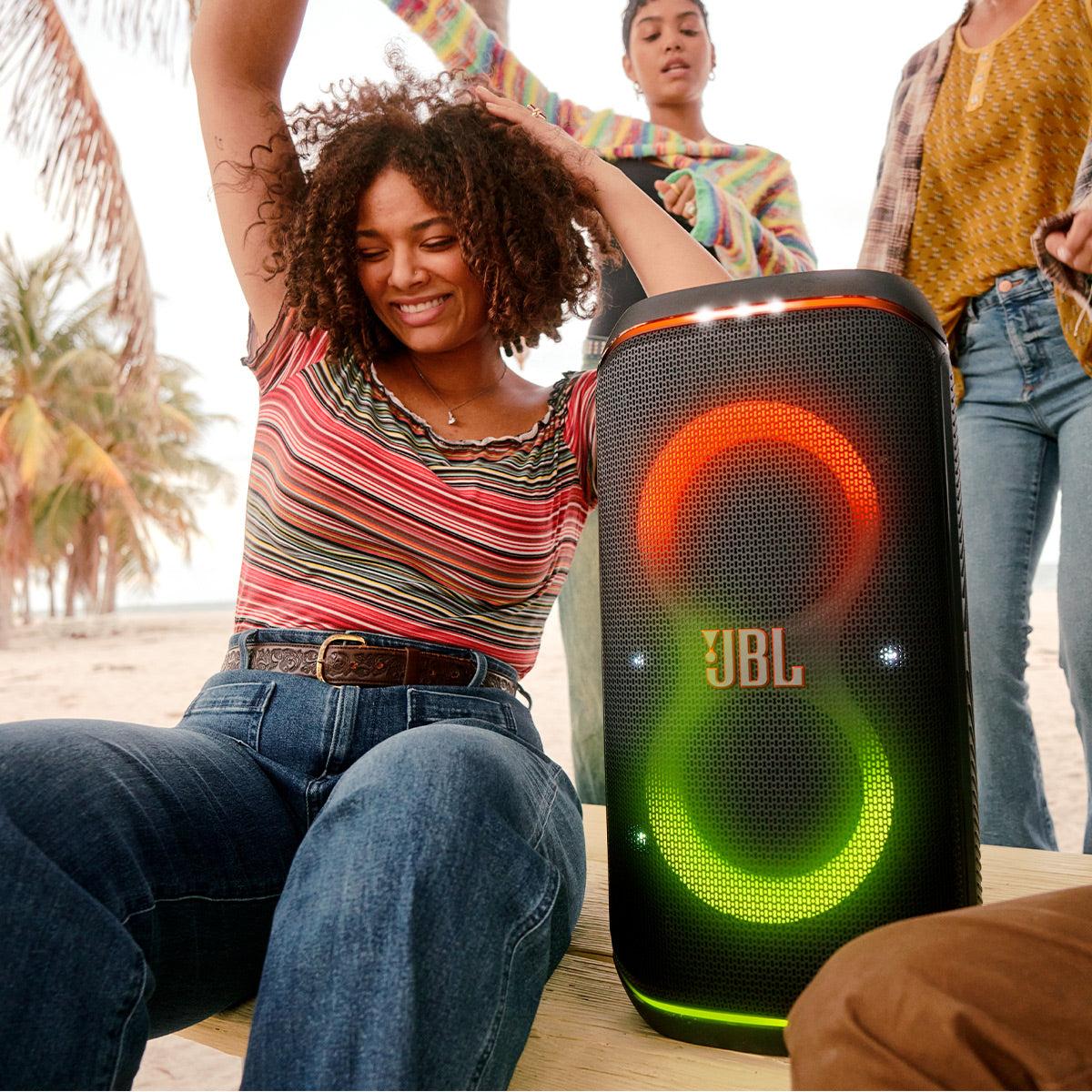
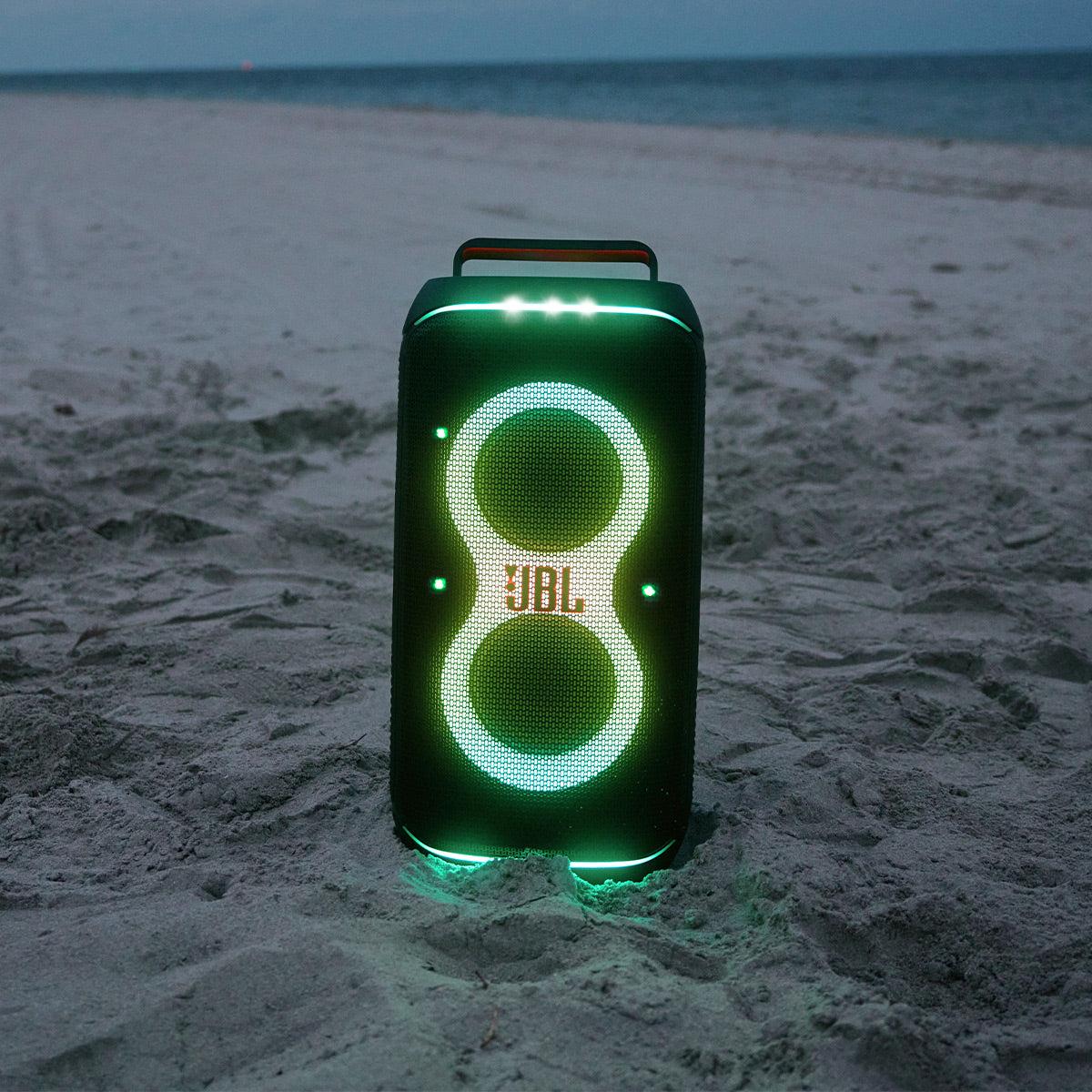
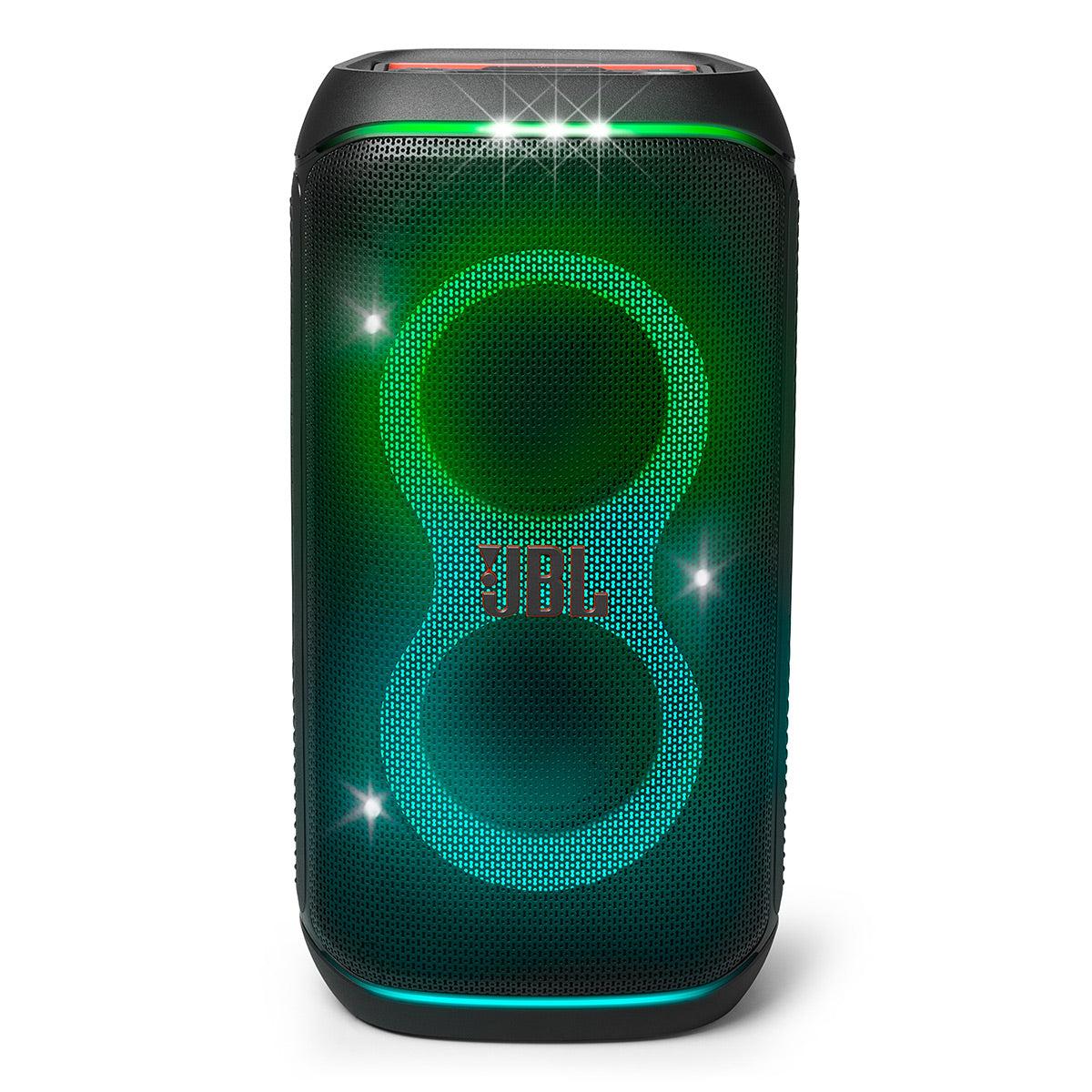
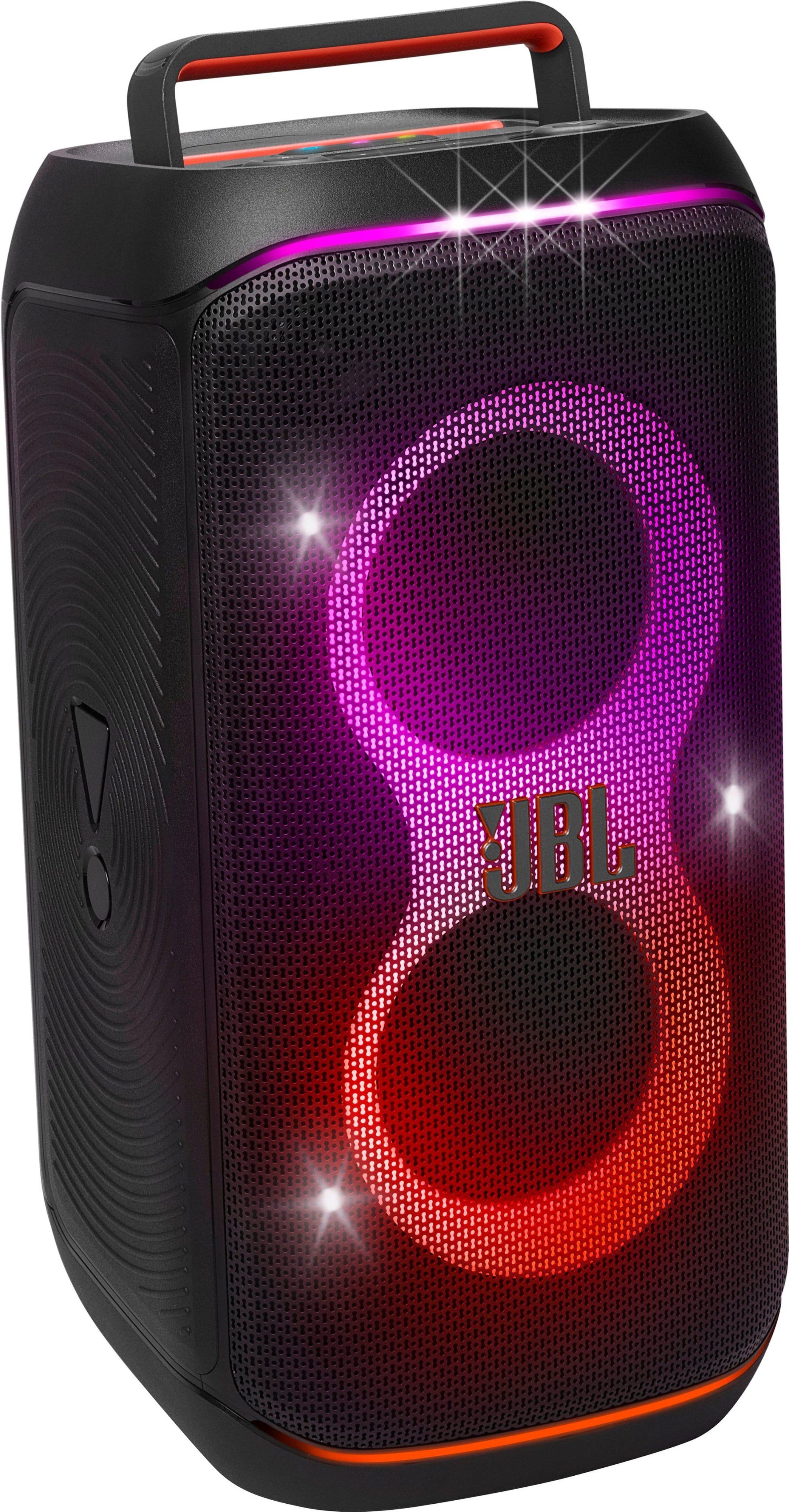
Party speakers have evolved beyond just audio, and lighting effects now play a major role in creating atmosphere. The JBL PartyBox Club 120 offers a dramatically more sophisticated lighting system with four RGB ring lights plus dedicated white strobe lights. The lights sync to music beats and can be fully customized through the JBL PartyBox app, allowing you to adjust colors, patterns, and intensity to match different music styles or moods.
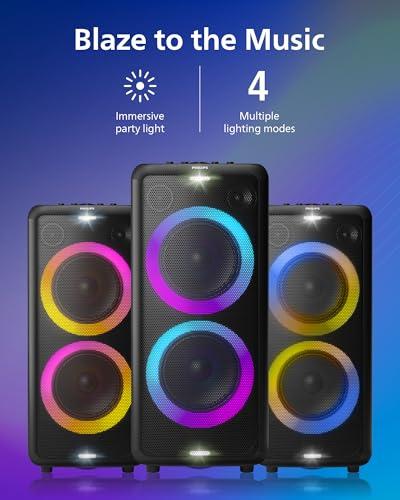
The Philips TAX5206 takes a simpler approach with its ring lighting system offering four preset modes and an independent strobe function. While less customizable, this simplicity means the lighting works without needing app setup or smartphone connectivity—you just turn it on and it responds to the music.
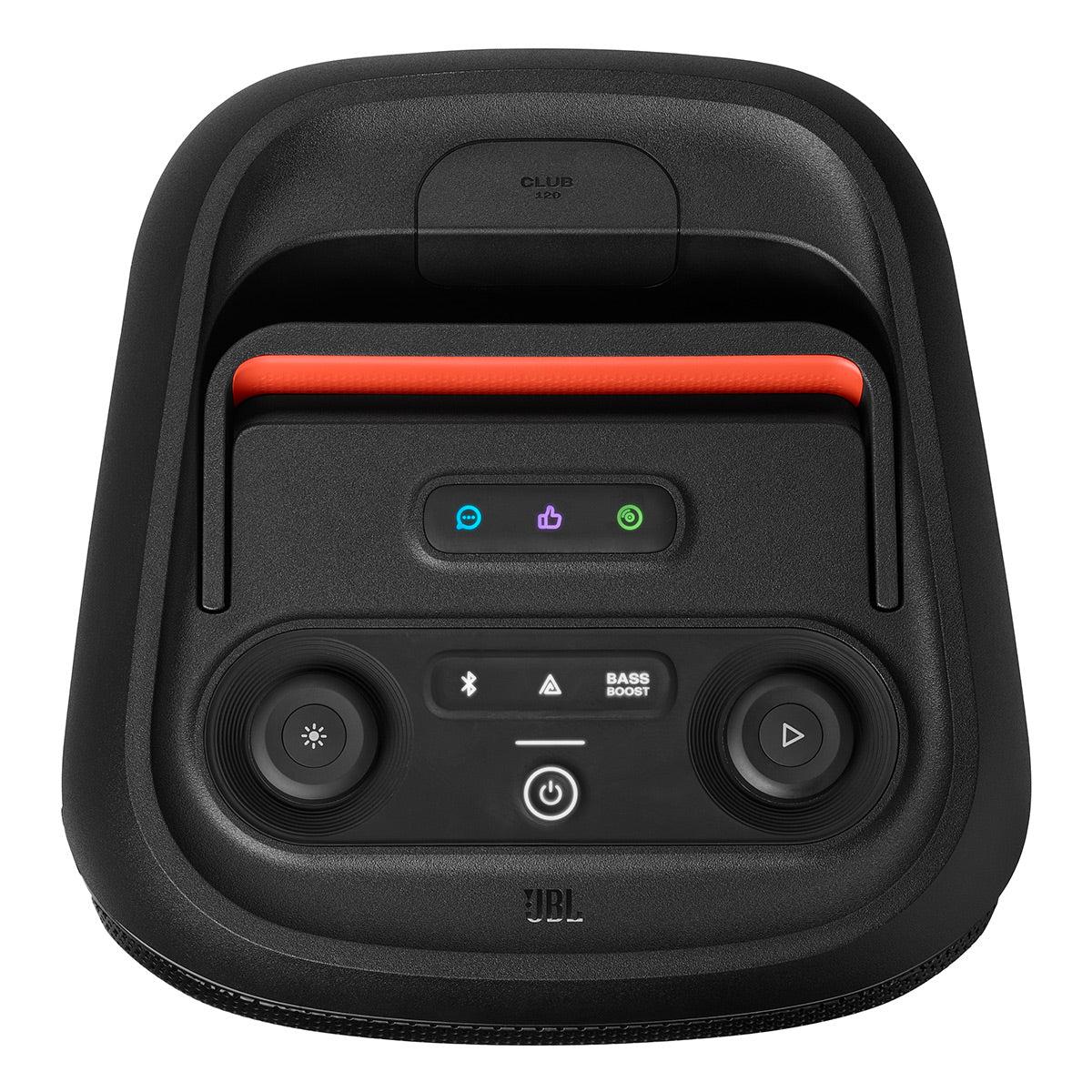
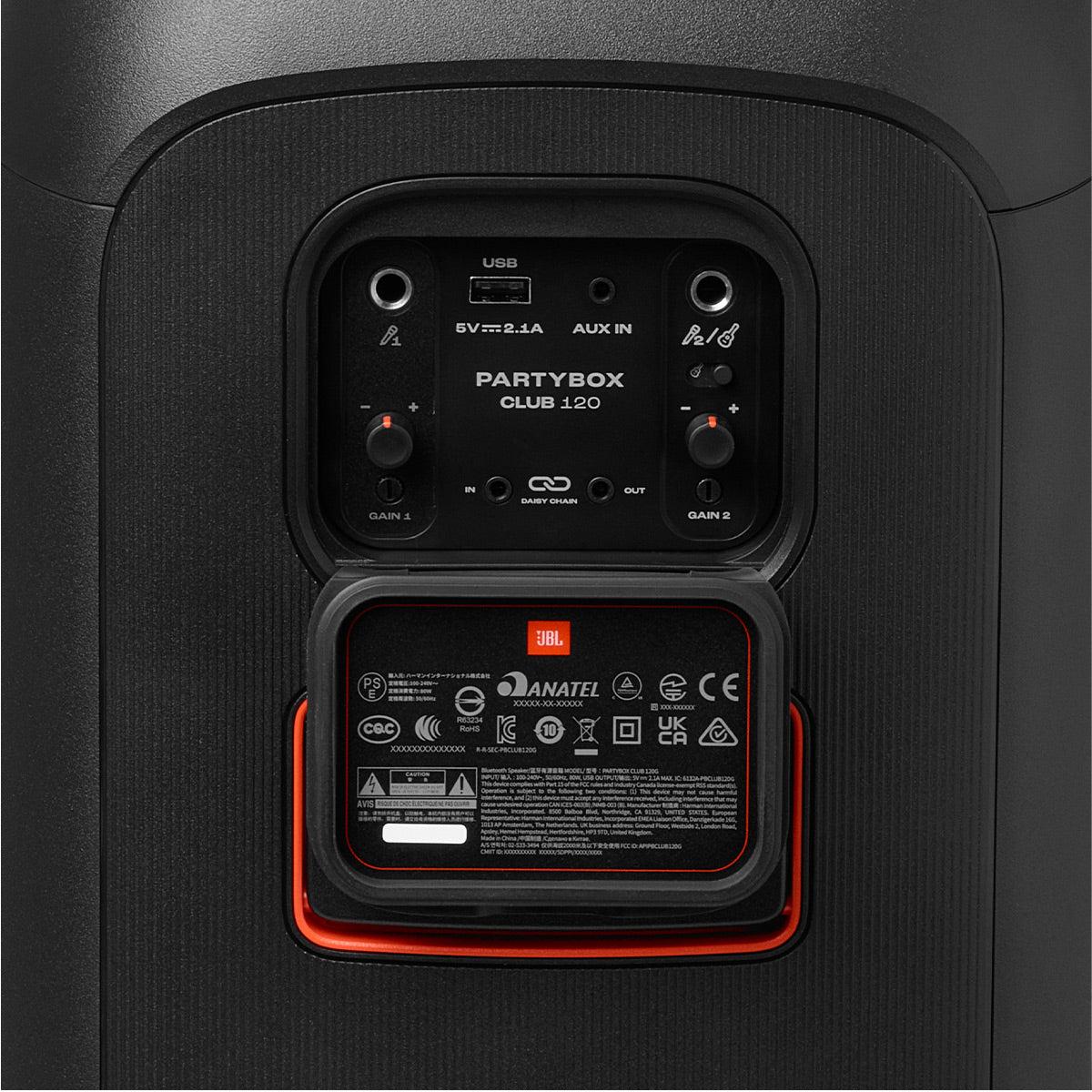
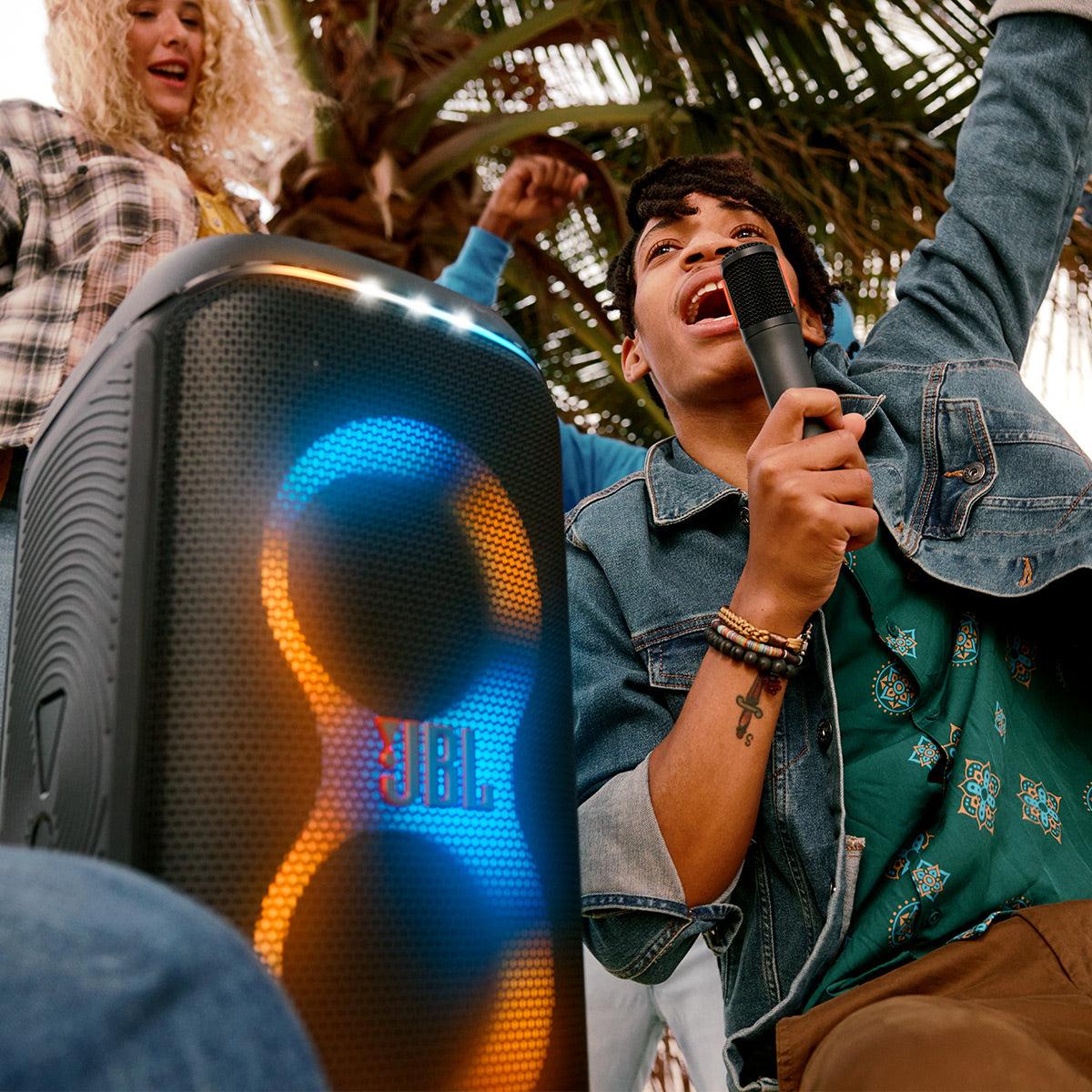
From an entertainment perspective, both speakers excel at karaoke and live performance features, but with different strengths. The Philips includes dedicated voice effects like echo control, vocal fader, and voice changer—features that add fun party interaction. The JBL focuses more on audio quality for live performance, with superior microphone preamps and individual gain controls that provide cleaner, more professional sound for vocals and instruments.
If you're someone who enjoys interactive party features and voice effects, the Philips delivers more built-in entertainment value. For users who prioritize visual spectacle and don't mind app-based control, the JBL's advanced lighting creates a more impressive atmosphere.
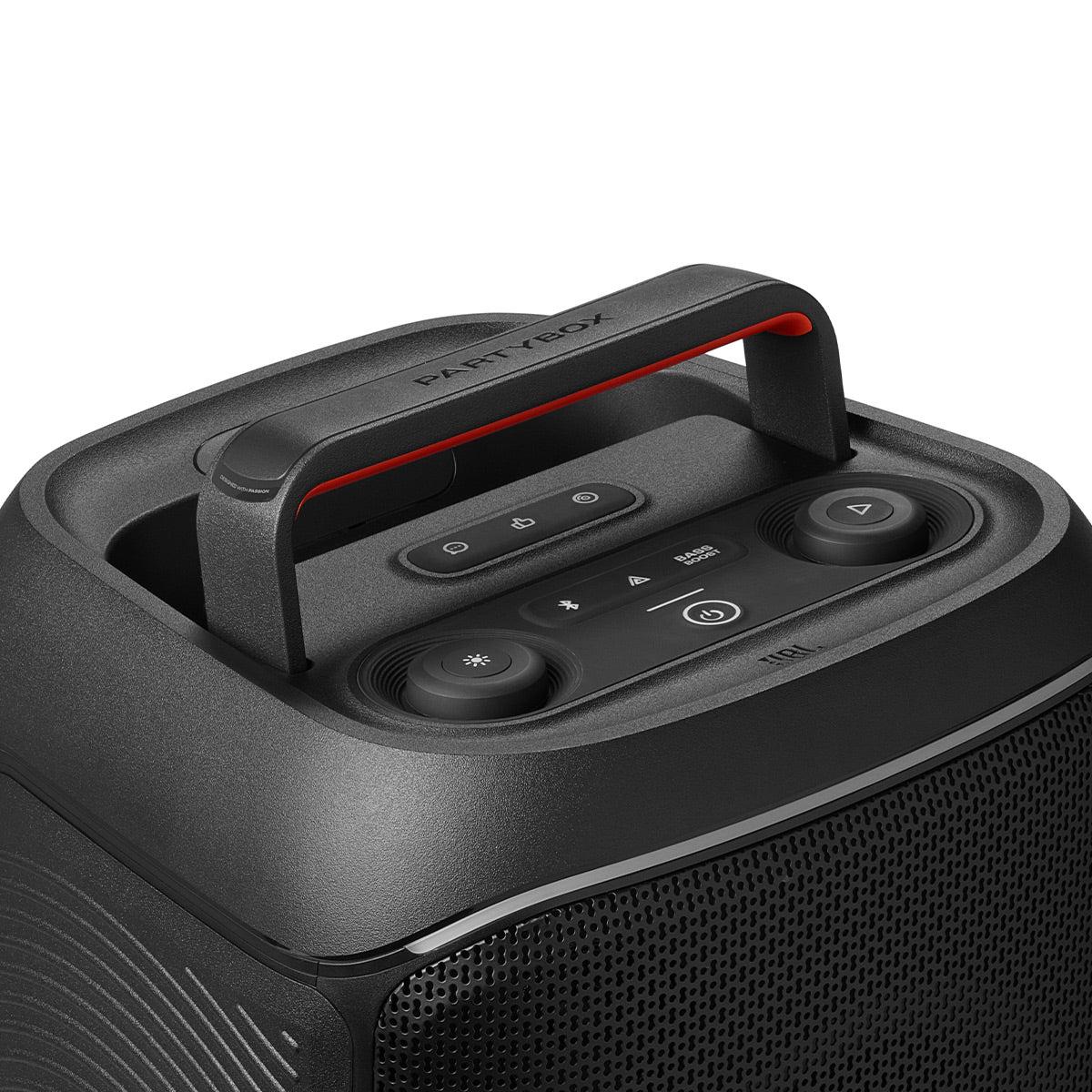
The connectivity differences between these speakers reflect their different design philosophies. The JBL PartyBox Club 120 embraces modern wireless technology with Bluetooth 5.4, multi-point connectivity (connecting two devices simultaneously), and Auracast wireless multi-speaker pairing. This means you can connect multiple JBL speakers wirelessly to create a larger sound system, or easily hand off DJ duties between different smartphones without disconnecting and reconnecting.
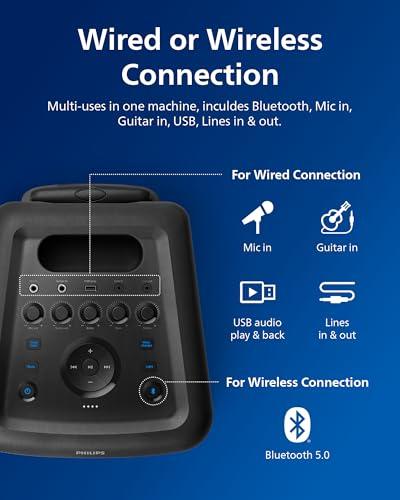
The Philips TAX5206 sticks with more traditional connectivity, offering comprehensive wired options including 3.5mm line-out for chaining additional speakers and broader USB audio format support. It's more straightforward to use but lacks the sophisticated wireless features that make modern party setups more flexible.
For tech-savvy users who want to integrate multiple speakers or frequently switch between different audio sources, the JBL's advanced connectivity features provide significant advantages. However, if you prefer plug-and-play simplicity without needing smartphone apps for basic functionality, the Philips offers a more straightforward experience.
At the time of writing, the Philips TAX5206 typically costs significantly less than the JBL PartyBox Club 120—often $100+ less depending on sales and availability. This price difference makes the value comparison interesting because both speakers target slightly different users despite competing in the same category.
The Philips represents excellent value for users who prioritize battery life and portability above all else. Its 14-hour runtime and trolley design provide practical benefits that directly impact usability, especially for outdoor events or situations where power access is limited. The comprehensive karaoke features and lower price point make it attractive for casual party hosts who want good functionality without premium pricing.
The JBL justifies its higher cost through superior audio engineering, advanced features, and better build quality. The AI Sound Boost technology, replaceable battery design, weather resistance, and sophisticated lighting system target users who view their speaker as a longer-term investment in entertainment equipment.
Understanding the technical differences helps explain the performance gaps. The JBL's AI Sound Boost uses predictive algorithms to analyze audio signals in real-time, adjusting power delivery and processing to prevent distortion while maximizing output. This is sophisticated digital signal processing that wasn't common in portable speakers until recently.
The frequency response specifications tell an interesting story. While the Philips TAX5206 claims broader frequency response (40Hz-20kHz), real-world performance depends on driver quality and enclosure design. The JBL's more conservative specification (40Hz-20kHz at -6dB) combined with its superior driver implementation delivers more accurate sound reproduction across that range.
Driver configuration also matters significantly. The Philips uses larger 8-inch woofers, which should theoretically provide better bass extension, but the JBL's dual 5.25-inch woofers in its optimized enclosure actually deliver more controlled, impactful bass. This demonstrates why driver size alone doesn't determine performance—engineering and tuning matter more than raw specifications.
Choose the Philips TAX5206 if you're a practical user who values battery life above everything else. It's ideal for camping trips, beach parties, outdoor weddings, or any situation where you need music for extended periods without power access. The trolley design makes it perfect for users who frequently transport their speaker, and the lower price point provides excellent value for casual entertainment needs. The comprehensive karaoke features make it particularly appealing for families or groups who enjoy interactive party activities.
The JBL PartyBox Club 120 targets users who want the best possible audio experience from a portable party speaker. It's the right choice if you frequently host indoor parties, have access to power or don't mind shorter battery life, and want impressive visual effects to match high-quality sound. The weather resistance makes it suitable for poolside or patio use, while the advanced connectivity features appeal to users who want to build expandable audio systems.
For home theater supplementation, neither speaker is ideal due to their party-focused tuning, but the JBL would be more suitable for occasional movie watching thanks to its clearer midrange and more balanced frequency response.
Both the Philips TAX5206 and JBL PartyBox Club 120 succeed in their intended roles, making this less about declaring a winner and more about matching capabilities to your specific needs. The Philips excels as a practical, long-lasting party companion with excellent portability and value pricing. The JBL delivers premium audio quality and sophisticated features that justify its higher cost for users who prioritize performance.
The decision ultimately comes down to your primary use cases. If extended outdoor use and maximum portability matter most, the Philips provides unmatched battery life and transport convenience. If audio quality, visual effects, and advanced features are your priorities, the JBL delivers a more refined and flexible party experience.
Both speakers represent solid engineering in the rapidly evolving portable party speaker category, and either choice will significantly upgrade your entertainment capabilities compared to standard Bluetooth speakers. The key is honestly evaluating your usage patterns and priorities to choose the speaker that best matches your party style.
| Philips TAX5206 Bluetooth Party Speaker | JBL PartyBox Club 120 Portable Speaker |
|---|---|
| Audio Power Output - Determines maximum volume and room-filling capability | |
| 80W RMS / 160W MAX (adequate for medium gatherings) | 160W RMS (significantly louder, better for large spaces) |
| Driver Configuration - Affects sound quality and frequency response | |
| 2x 8" woofers + 2x 2.5" tweeters (larger drivers, deeper bass potential) | 2x 5.25" woofers + 2x 2.25" tweeters (better balanced sound, clearer mids) |
| Battery Life - Critical for outdoor events and portability | |
| 14 hours (exceptional endurance, all-day events) | 6-7 hours real-world (adequate but may need charging) |
| Portability Design - How easy it is to transport | |
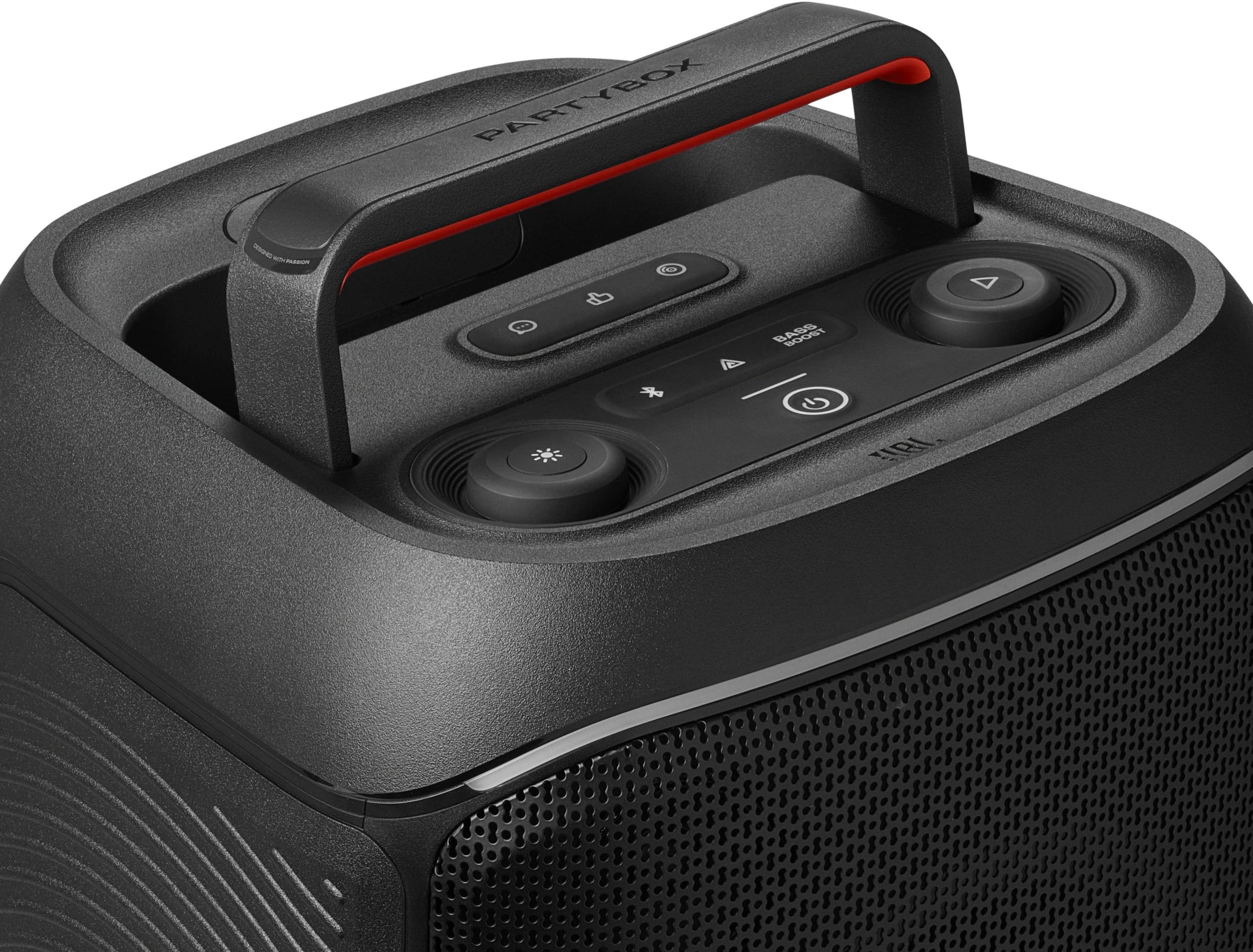
| Trolley with wheels and telescoping handle (effortless transport) | Foldable handle, 24 lbs (compact but heavier to carry) |
| Weather Protection - Important for outdoor use | |
| No official rating (indoor/covered use recommended) | IPX4 splashproof (handles rain and pool splashes) |
| Lighting Effects - Visual entertainment value | |
| Ring lights with 4 modes + strobe (simple, effective) | Advanced RGB with app control + beat sync (professional-grade) |
| Karaoke Features - Live performance capabilities | |
| Voice changer, echo control, vocal fader (fun party effects) | Professional mic preamps with gain control (cleaner sound) |
| Connectivity - Wireless and pairing options | |
| Bluetooth 5.0, basic pairing (straightforward operation) | Bluetooth 5.4, multi-device, Auracast pairing (advanced features) |
| Battery Design - Long-term usability | |
| Fixed 4400mAh battery (eventual replacement requires service) | User-replaceable battery (extend speaker lifespan) |
| Sound Tuning - Audio character and balance | |
| Party-focused with emphasis on bass (fun but less refined) | Balanced with AI Sound Boost (clearer, more accurate) |
| Multi-Speaker Setup - Expandability | |
| 3.5mm line-out chaining (basic wired connection) | Wireless Auracast pairing + TWS (seamless expansion) |
| Value Proposition - Who gets the best deal | |
| Best for extended outdoor use and budget-conscious buyers | Best for audio quality enthusiasts willing to pay more |
The JBL PartyBox Club 120 is significantly louder with 160W RMS output compared to the Philips TAX5206's 80W RMS. This means the JBL can fill larger spaces and outdoor areas more effectively, making it better for big parties or events where maximum volume is needed.
The Philips TAX5206 offers exceptional 14-hour battery life, while the JBL PartyBox Club 120 provides 6-7 hours of real-world usage at moderate volume. If you need all-day outdoor entertainment without access to power, the Philips is the clear winner for extended use.
The Philips TAX5206 is much easier to transport thanks to its trolley design with wheels and telescoping handle - you can roll it like luggage. The JBL PartyBox Club 120 has a foldable handle but requires carrying its 24-pound weight, making the Philips more convenient for frequent transport.
Only the JBL PartyBox Club 120 offers weather protection with its IPX4 splashproof rating, meaning it can handle rain and water splashes. The Philips TAX5206 has no official water resistance rating and should be kept dry during outdoor use.
The JBL PartyBox Club 120 delivers superior sound quality with better midrange clarity, balanced frequency response, and AI Sound Boost technology that reduces distortion. While the Philips TAX5206 has larger drivers, the JBL's engineering results in cleaner, more accurate audio reproduction.
Yes, both speakers support karaoke with microphone inputs. The Philips TAX5206 offers fun voice effects like voice changer and echo control, while the JBL PartyBox Club 120 provides professional-quality mic preamps with gain controls for cleaner vocal sound.
The JBL PartyBox Club 120 has significantly more advanced lighting with RGB rings, customizable colors, and beat-sync effects controlled via smartphone app. The Philips TAX5206 offers simpler ring lights with four preset modes, which work well but lack the customization of the JBL.
The JBL PartyBox Club 120 supports wireless multi-speaker pairing through Auracast technology and True Wireless Stereo, making it easy to expand your sound system. The Philips TAX5206 can chain speakers using a 3.5mm cable connection, but lacks wireless pairing capabilities.
This depends on your priorities. The Philips TAX5206 offers excellent value for buyers focused on battery life and portability at a lower price point. The JBL PartyBox Club 120 provides better value for those wanting superior sound quality and advanced features, justifying its higher cost.
Neither speaker is ideal for dedicated home theater setups due to their party-focused tuning. However, if you occasionally watch movies, the JBL PartyBox Club 120 would be the better choice thanks to its clearer dialogue reproduction and more balanced sound compared to the Philips TAX5206.
For extended outdoor events, the Philips TAX5206 excels with its 14-hour battery life and easy transport design. For outdoor events with power access or shorter duration, the JBL PartyBox Club 120 is better due to its weather resistance and superior sound quality.
The JBL PartyBox Club 120 features more advanced Bluetooth 5.4 with multi-device connectivity, allowing you to connect two devices simultaneously and easily switch between them. The Philips TAX5206 uses standard Bluetooth 5.0 with basic pairing, which is reliable but less flexible for modern party setups.
We've done our best to create useful and informative comparisons to help you decide what product to buy. Our research uses advanced automated methods to create this comparison and perfection is not possible - please contact us for corrections or questions. These are the sites we've researched in the creation of this article: youtube.com - documents.philips.com - cutetechgadgets.com - odpbusiness.com - usa.philips.com - hitechers.com - youtube.com - documents.philips.com - youtube.com - walmart.com - walmart.com - device.report - flipkart.com - brightstarcomp.com - youtube.com - philips.co.in - documents.philips.com - fullspecs.net - documents.philips.com - stereoguide.com - armorsound.com - rtings.com - rtings.com - bestbuy.com - youtube.com - soundguys.com - youtube.com - lbtechreviews.com - youtube.com - youtube.com - versus.com - jbl.com - rtings.com - versus.com - ro.harmanaudio.com - dell.com - jbl.com - jbl.com - projectorscreenstore.com

Privacy Policy
Terms and Conditions - Affiliate Policy
Home Security
© Copyright 2008-2026.
11816 Inwood Rd #1211, Dallas, TX 75244