


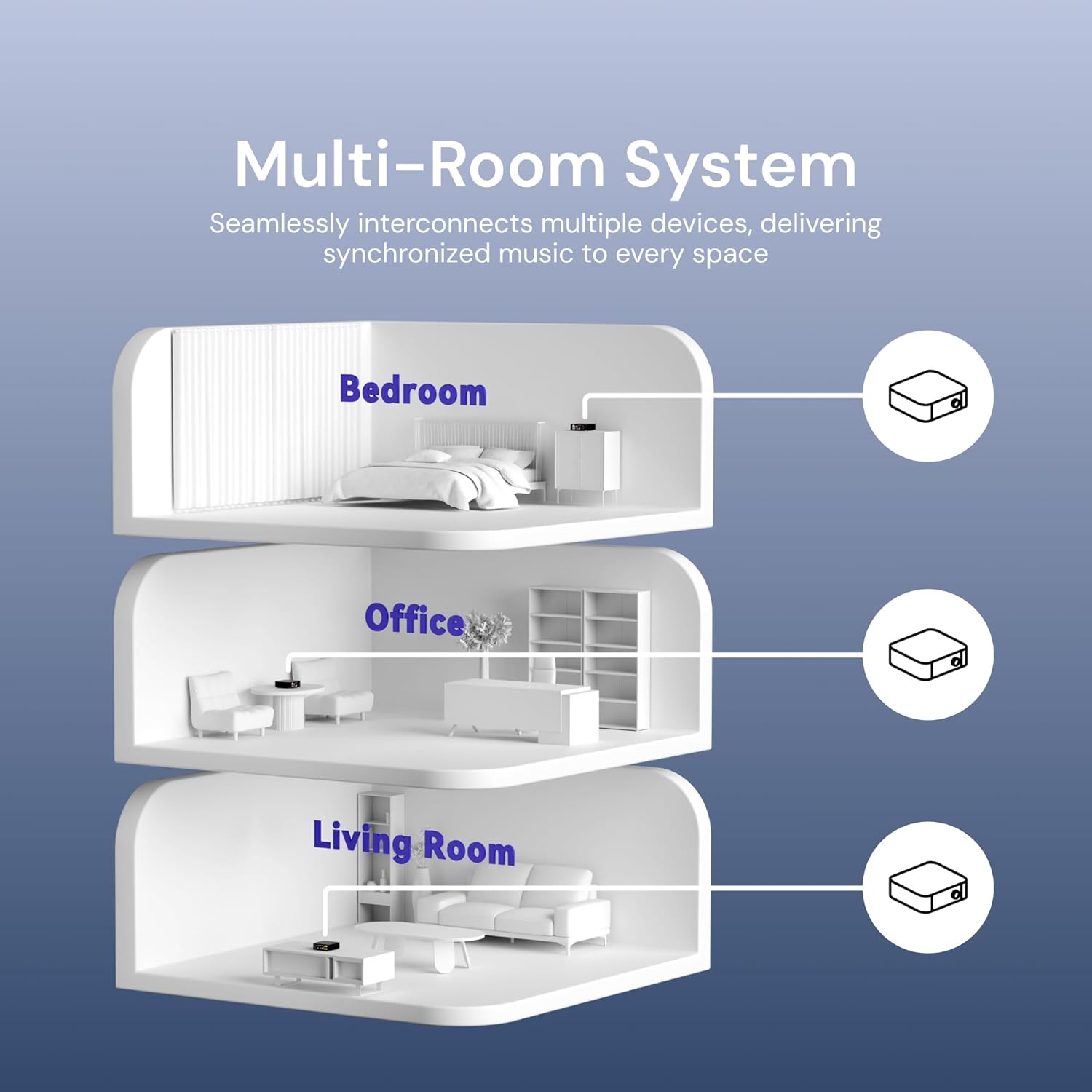

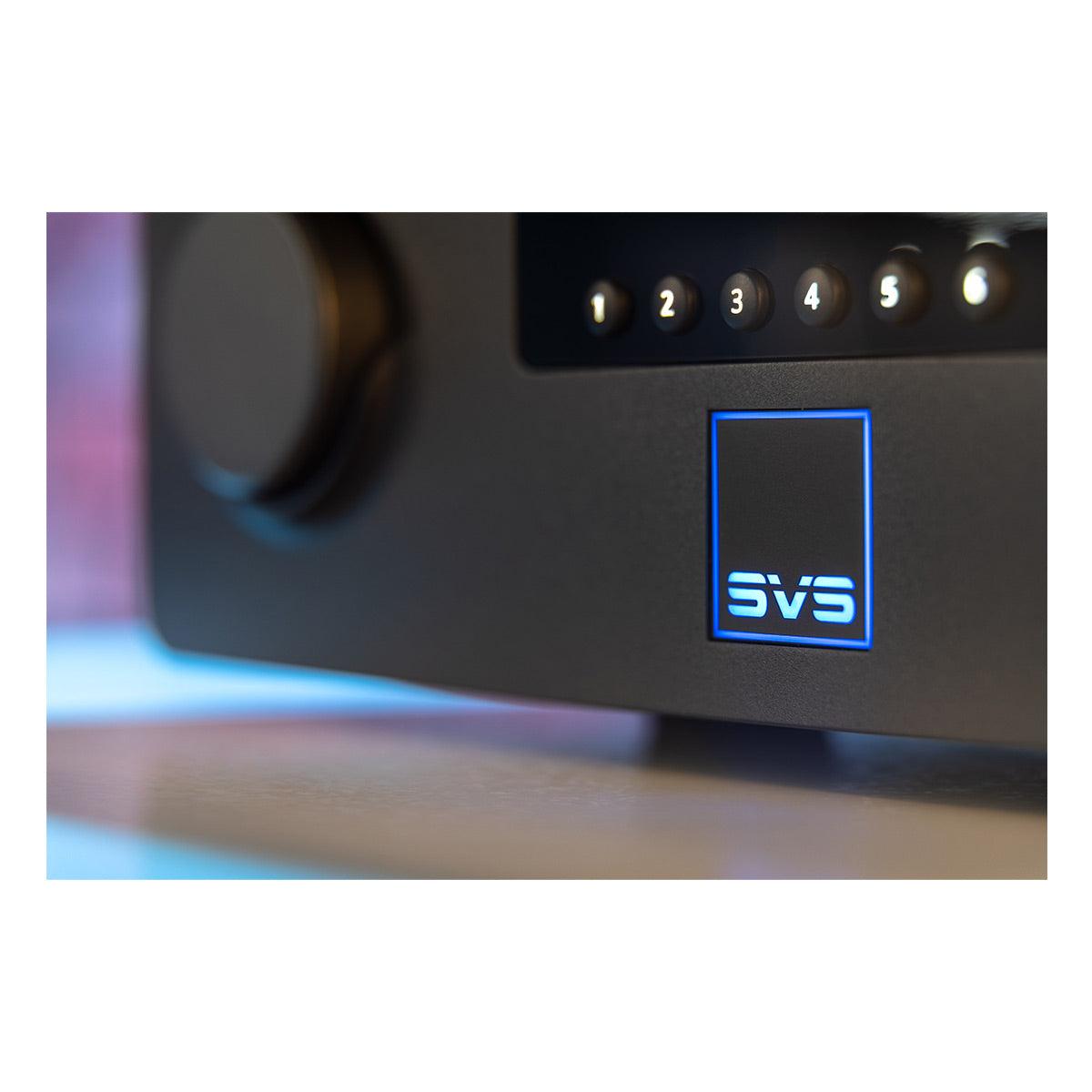
The world of audio equipment can feel overwhelming, especially when you're trying to turn a pair of passive speakers into a complete streaming system. Two products that have caught our attention are the Eversolo Play and the SVS Prime Wireless Pro SoundBase. Both were released in 2022 and represent different approaches to solving the same basic problem: how to get high-quality music from your phone or streaming service to your speakers without needing a rack full of separate components.
At the time of writing, both products are similarly priced in the mid-range category, making the choice between them particularly interesting. After researching user experiences and professional reviews, we've found that while they serve the same basic function, they're really designed for quite different types of music lovers.
Before diving into the comparison, it's worth understanding what these devices actually do. A streaming integrated amplifier combines three separate functions that traditionally required three different boxes:
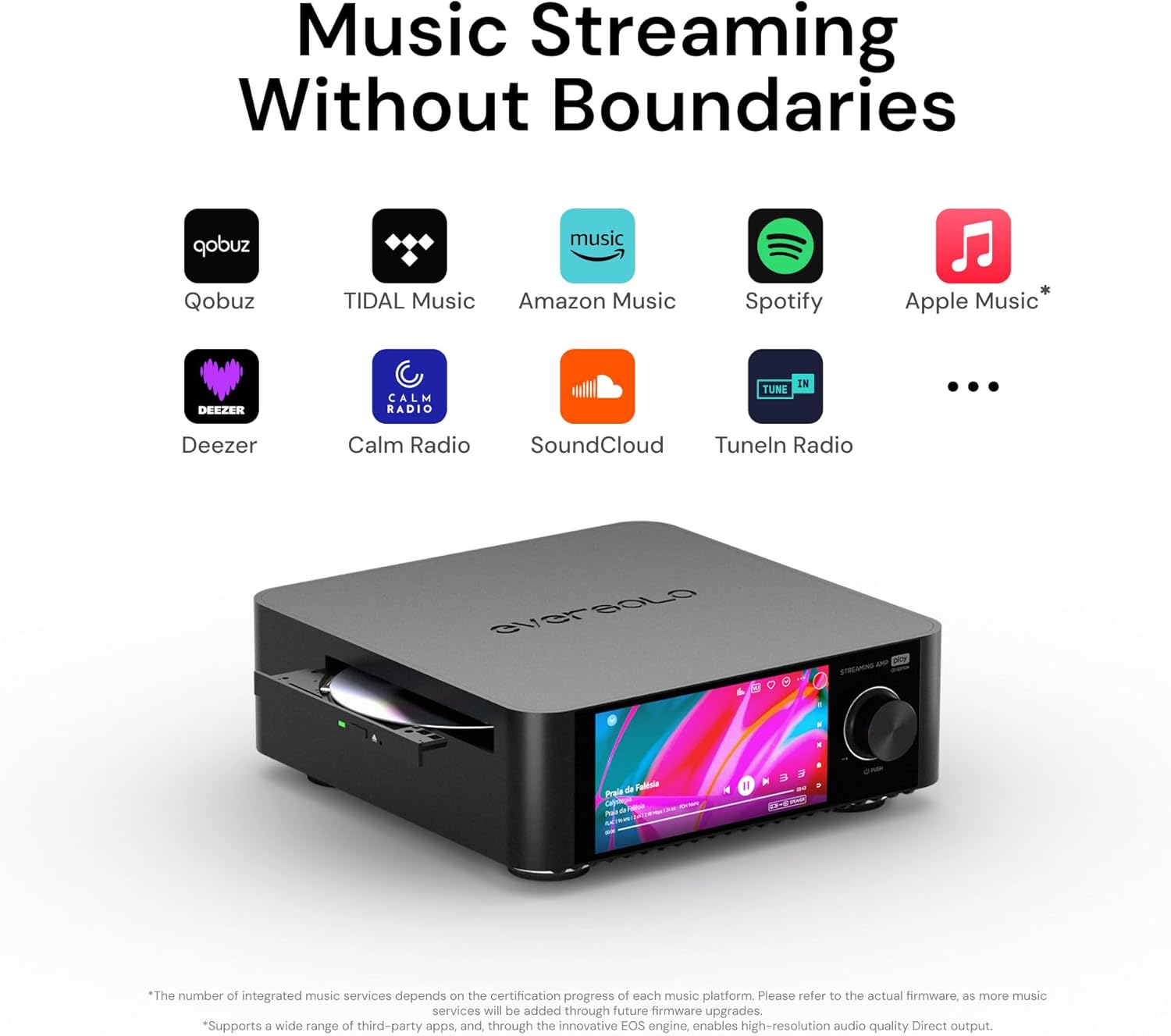
Streaming capability lets the device connect to your Wi-Fi network and pull music directly from services like Spotify, Tidal, or Qobuz without needing your phone or computer to stay connected.
Digital-to-analog conversion (DAC) takes the digital music files and converts them into analog signals that speakers can actually use. The quality of this conversion significantly affects how your music sounds.
Amplification provides the electrical power needed to drive your passive speakers. Without an amplifier, passive speakers are just expensive paperweights.
The appeal of these all-in-one devices is obvious: fewer cables, less clutter, and theoretically better integration between components. But as we'll see, the Eversolo Play and SVS Prime Wireless Pro take very different approaches to achieving this integration.
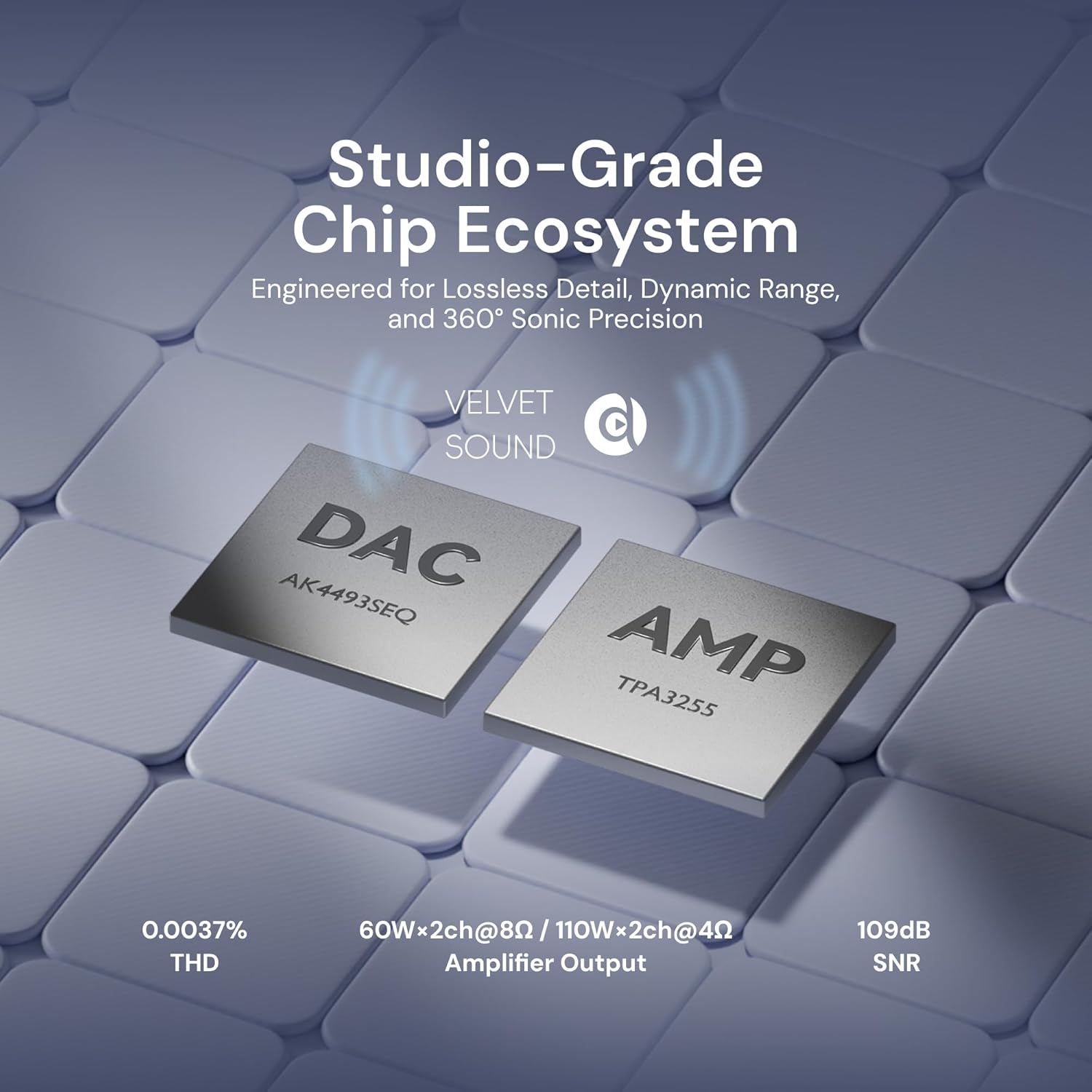
The most fundamental difference between these two products is their power output, and this difference is dramatic. The SVS Prime Wireless Pro SoundBase delivers 150 watts per channel into both 4-ohm and 8-ohm speakers (300 watts total), while the Eversolo Play provides 60 watts into 8-ohm speakers and 110 watts into 4-ohm speakers.
This isn't just a numbers game—it translates to real-world differences in what speakers you can use and how loud you can play them. Think of amplifier power like the engine in a car. A small, efficient engine might be perfect for city driving, but you'll want something bigger if you're planning to tow a trailer up a mountain.
Based on user reports we've analyzed, the SVS Prime Wireless Pro can successfully drive demanding speakers like KEF Q950 tower speakers and Klipsch Heresy IVs to satisfying volumes without strain. One user noted that upgrading from a 50-watt amplifier to the SVS "really transformed the sound," providing "more punch in the bass area." This makes sense—the SVS has roughly 2.5 times more power available than the Eversolo Play.
However, the Eversolo Play isn't underpowered for its intended use. Its 60-110 watts prove excellent for bookshelf speakers in small to medium-sized rooms. The key is matching your amplifier's power to your speakers' efficiency (how loudly they play for each watt of power) and your room size. Inefficient speakers in large rooms need more power; efficient speakers in smaller spaces need less.
The takeaway: if you're planning to use large floor-standing speakers or listen at high volumes in a big room, the SVS Prime Wireless Pro is the safer choice. For bookshelf speakers in typical living rooms, either will work, but the Eversolo Play offers other advantages we'll explore.
While the SVS Prime Wireless Pro wins the power competition, the Eversolo Play dominates in digital audio sophistication. The difference in their DAC (digital-to-analog converter) capabilities is significant.
The Eversolo Play uses an AKM AK4493SEQ DAC chip, which supports incredibly high-resolution audio formats. It can handle DSD512 files (a format used for some of the highest-quality digital audio available) and PCM audio up to 32-bit/768kHz. To put this in perspective, CD audio is 16-bit/44.1kHz, and most streaming services top out at 24-bit/192kHz. The Eversolo's capabilities far exceed what most people will ever need, but they provide genuine future-proofing.
More importantly, the Eversolo Play achieves exceptional measured performance: total harmonic distortion (THD) of just 0.0037% and a signal-to-noise ratio (SNR) of 109dB. THD measures how much the amplifier changes the original signal—lower is better. SNR measures how much background noise you'll hear during quiet passages—higher is better. These numbers place the Eversolo in audiophile territory.
The SVS Prime Wireless Pro uses a 24-bit/192kHz DAC with a 100dB SNR. These specifications are still excellent and more than adequate for all current streaming services, but they don't match the Eversolo's extreme capabilities. For practical purposes, both will sound excellent with music from Spotify, Apple Music, or Tidal, but the Eversolo Play has significantly more headroom for audiophile-grade sources.
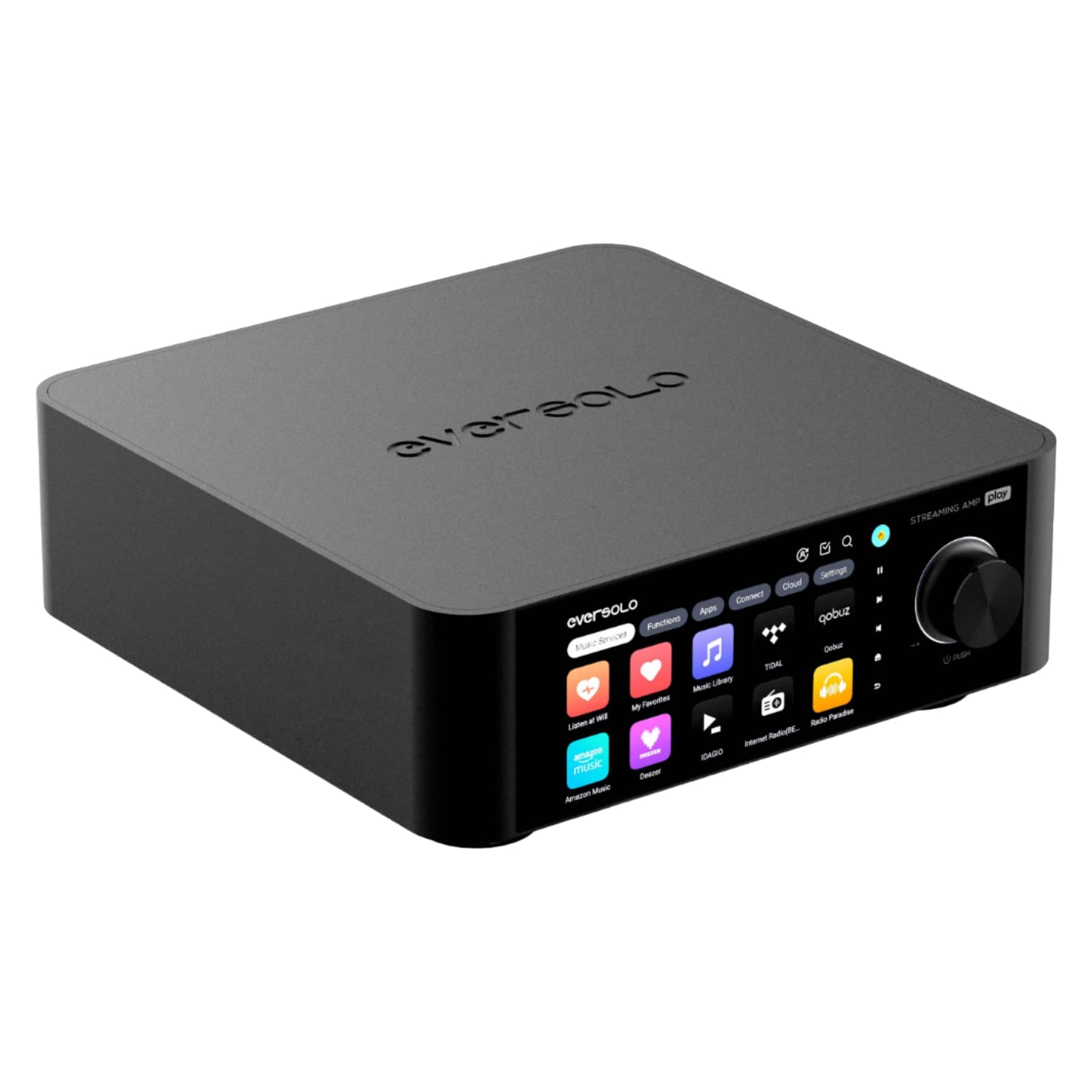
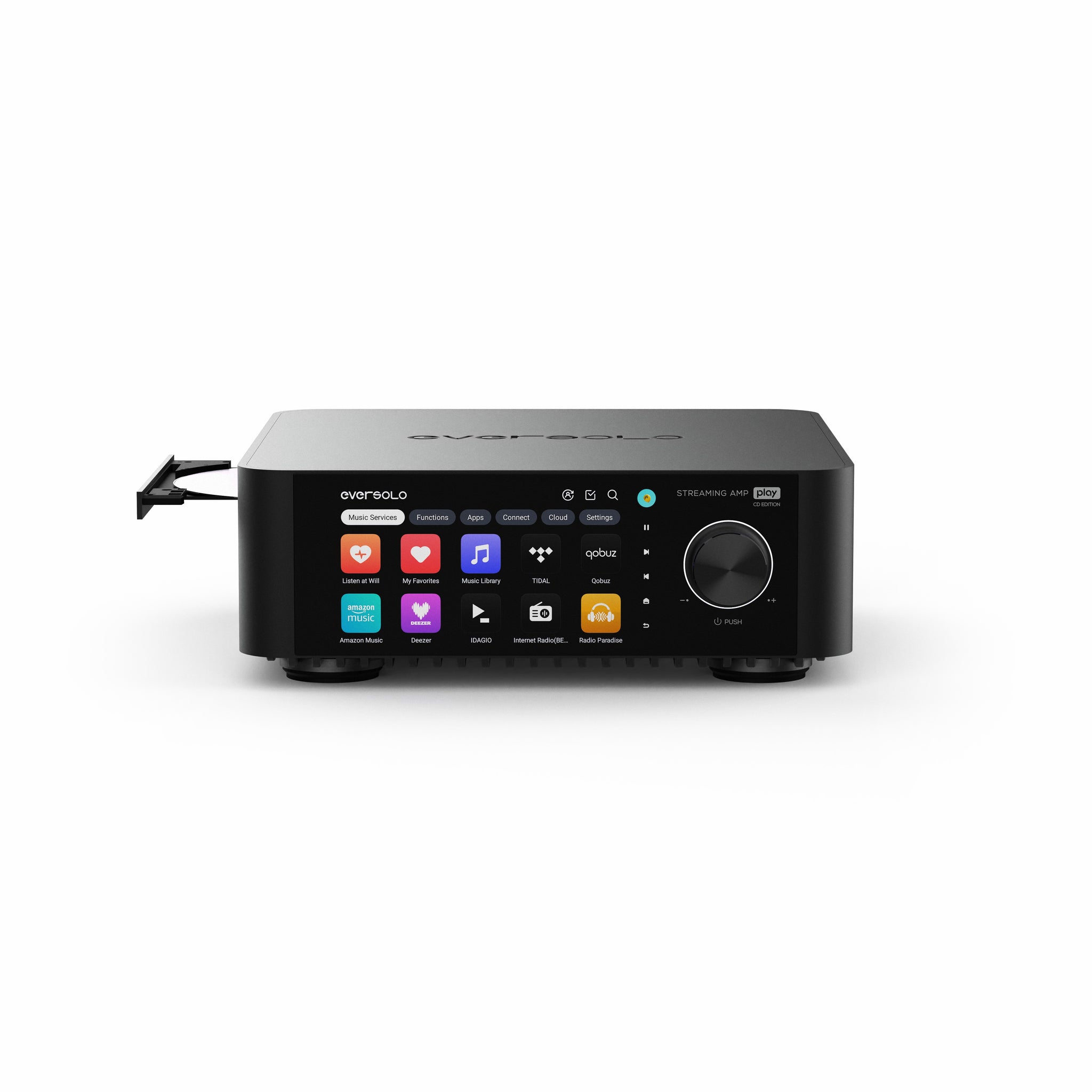
One of the most immediate differences you'll notice is how you control these devices. The Eversolo Play features a 5.5-inch touchscreen on the front panel that lets you browse music, adjust settings, and control playback directly on the unit. This is surprisingly rare in audio equipment and represents a significant convenience advantage.
Think about it: with the Eversolo Play, you can walk up to the device, tap the screen, and start playing music without needing to find your phone or remember which app to use. You can browse your Tidal playlists, adjust the equalizer settings, or switch between different input sources all from the device itself.
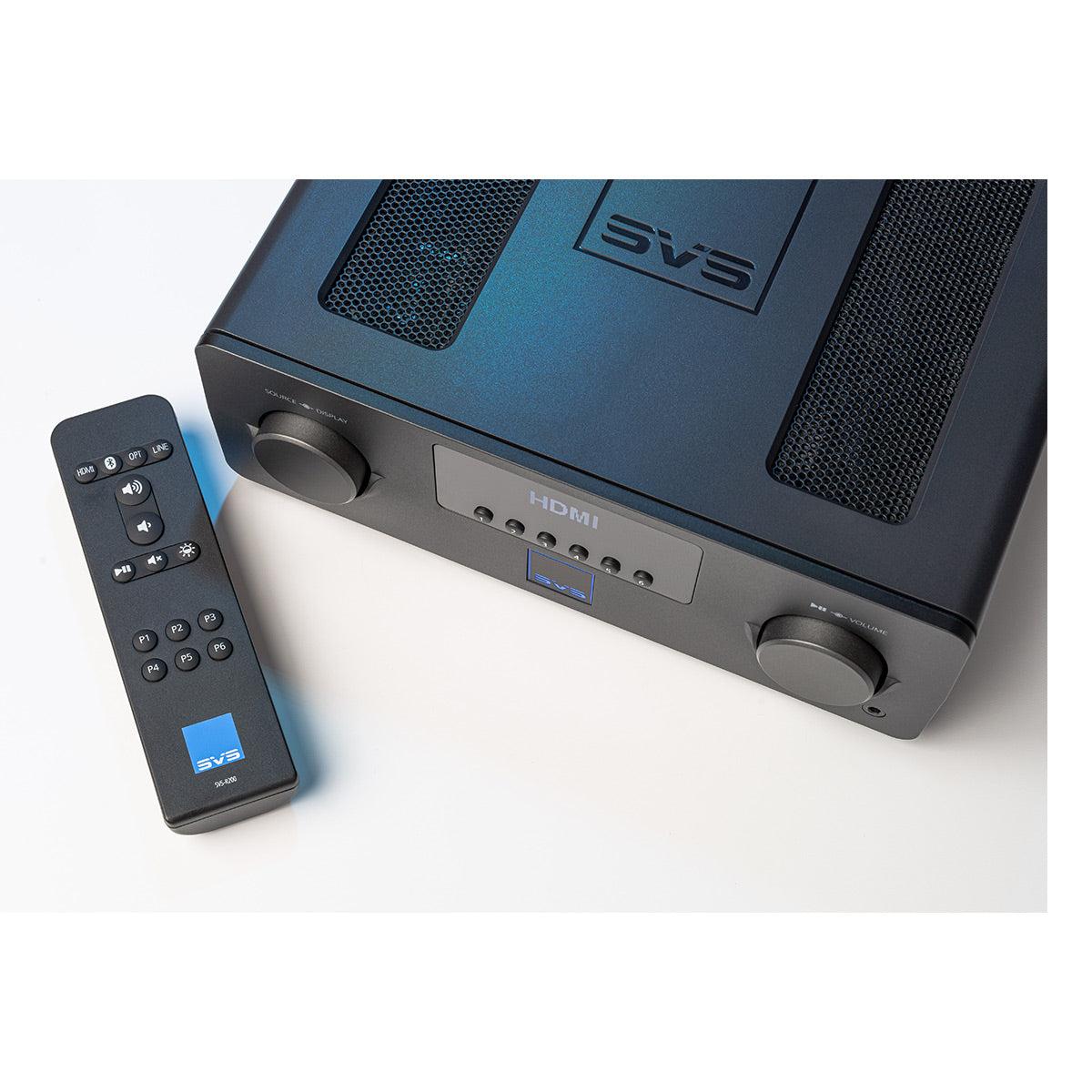
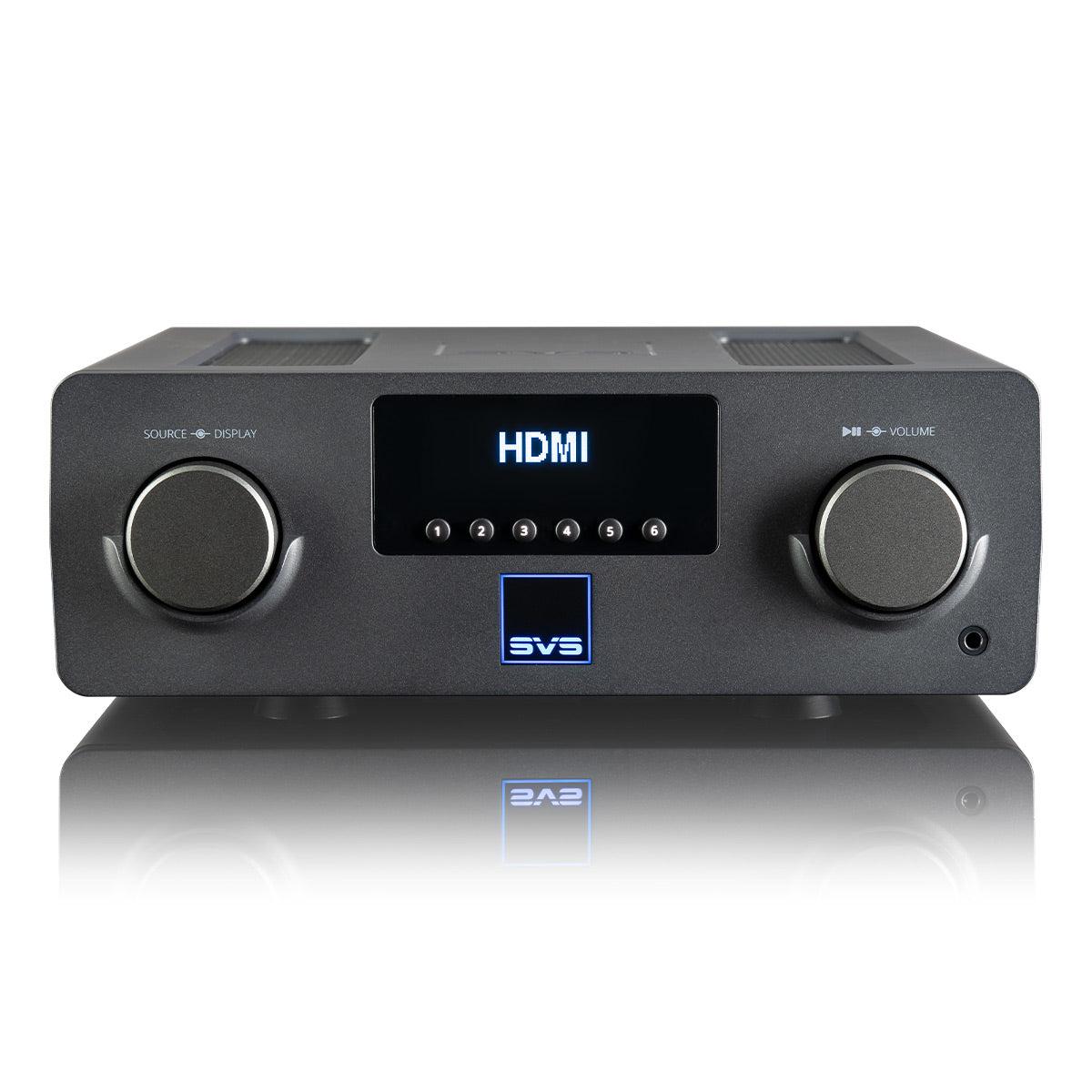
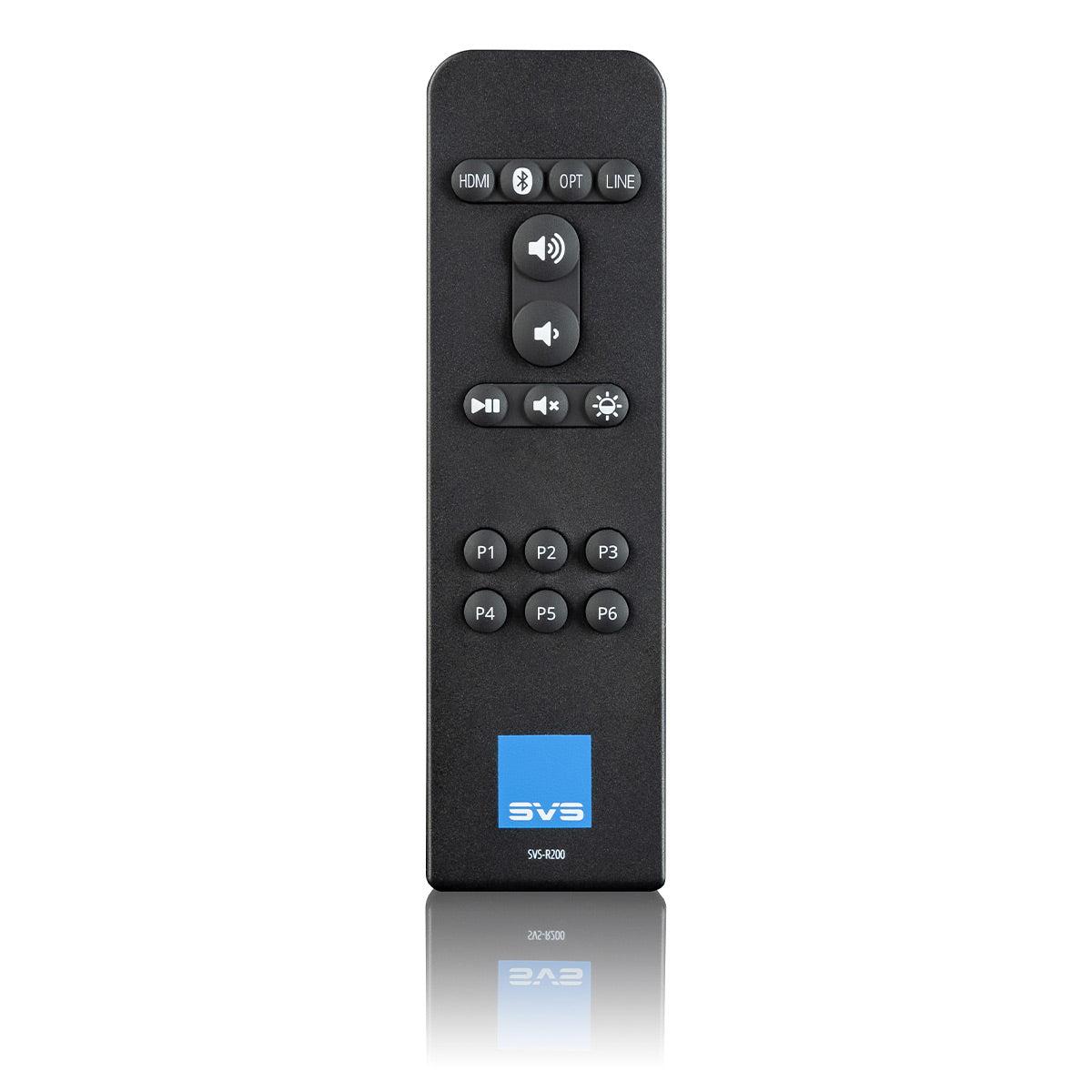
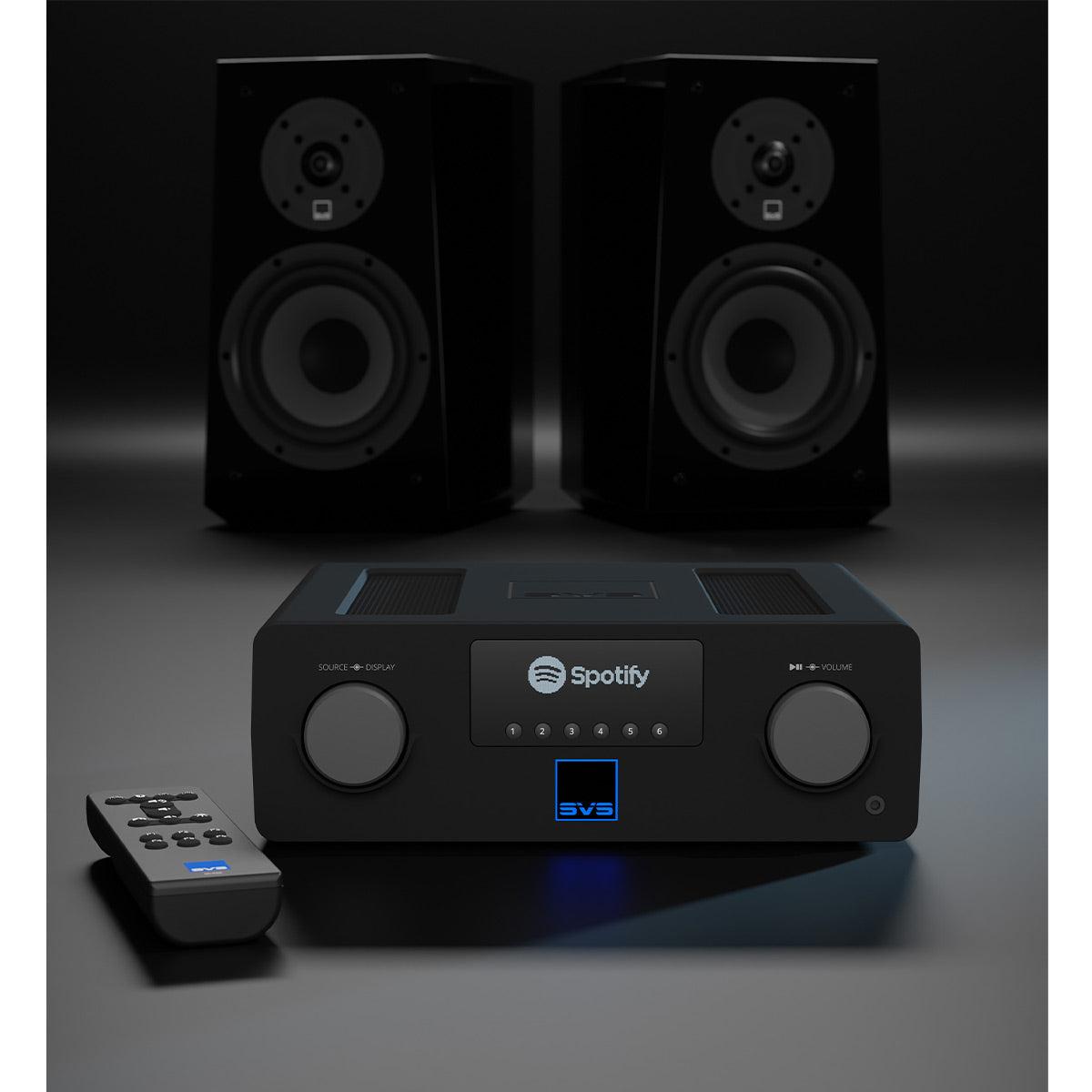
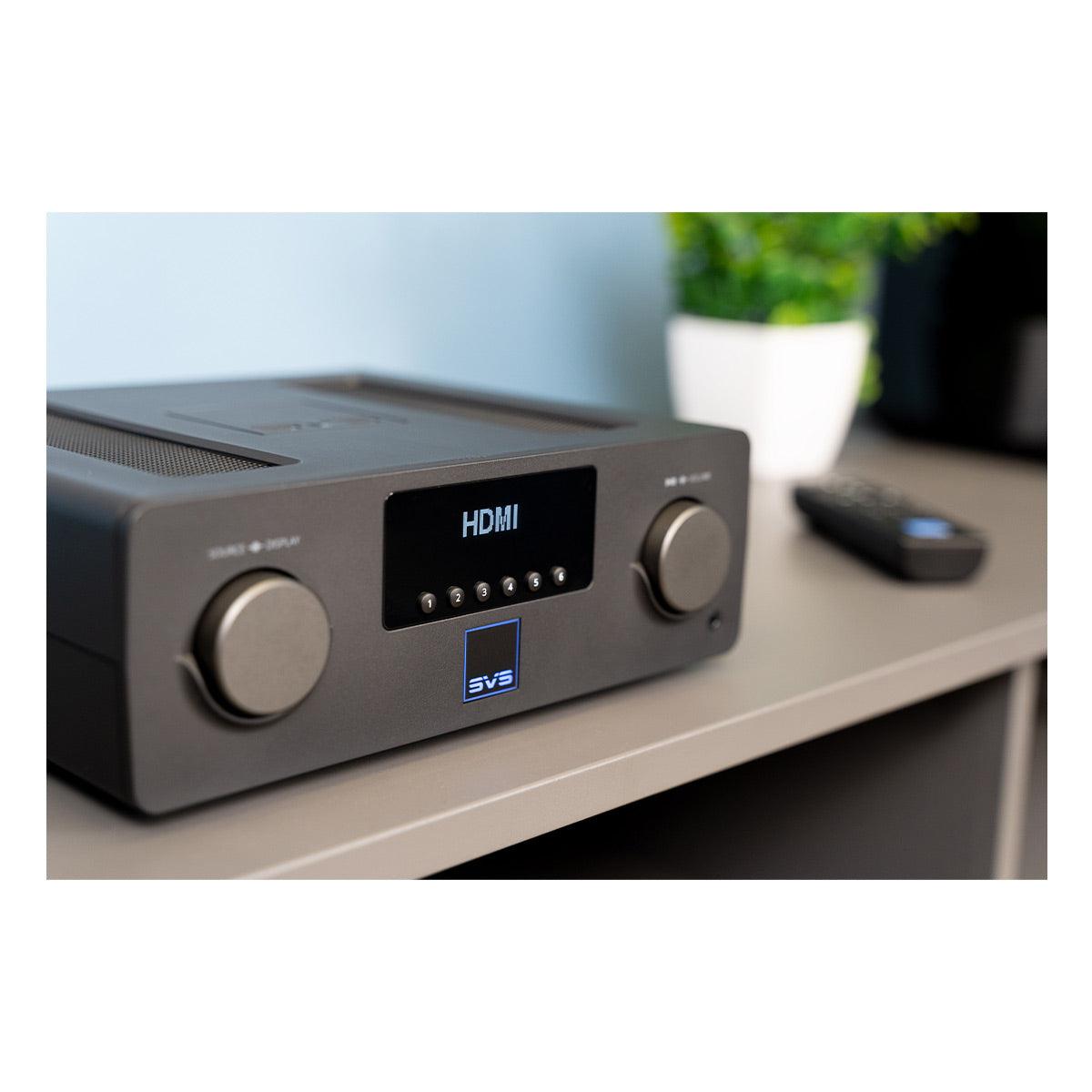
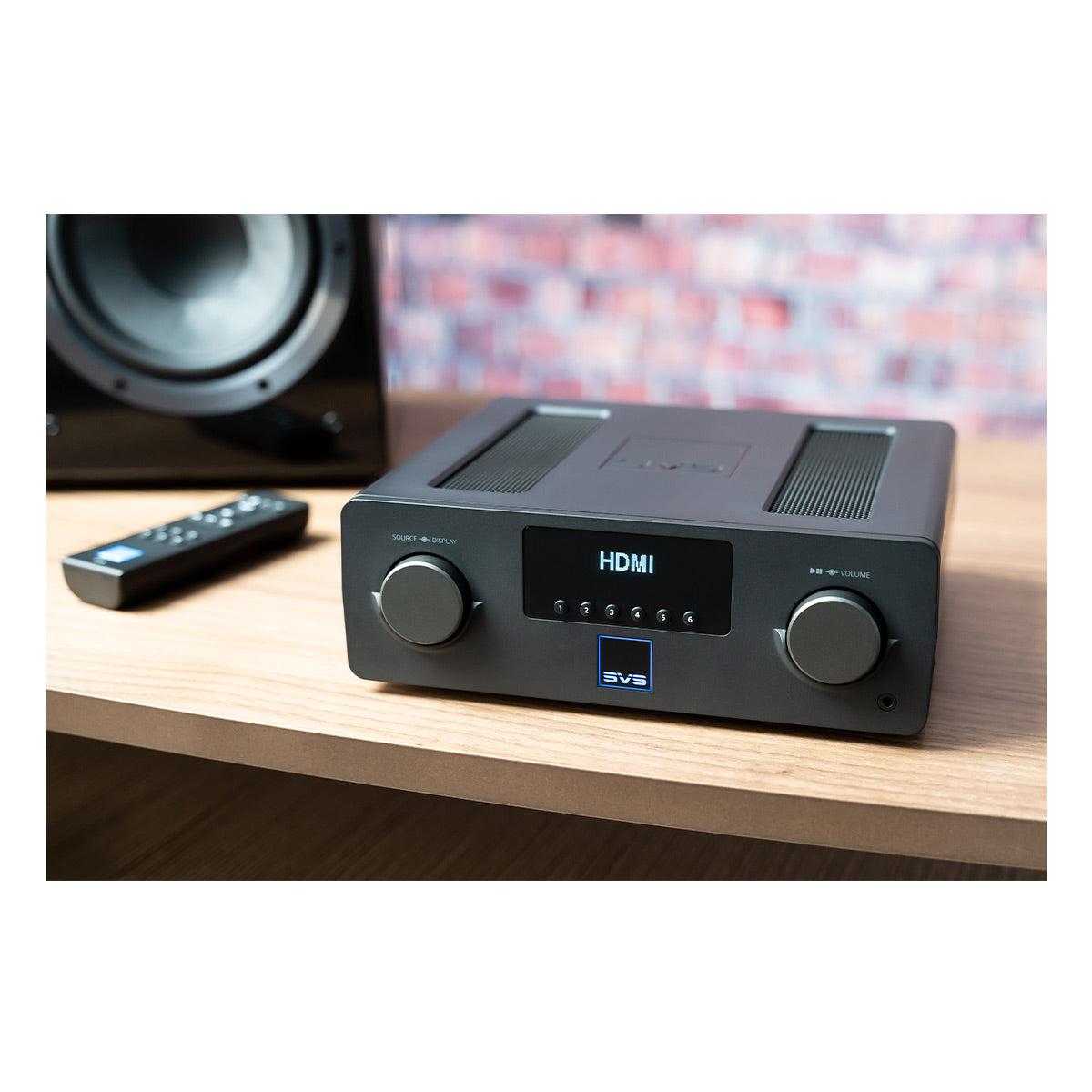
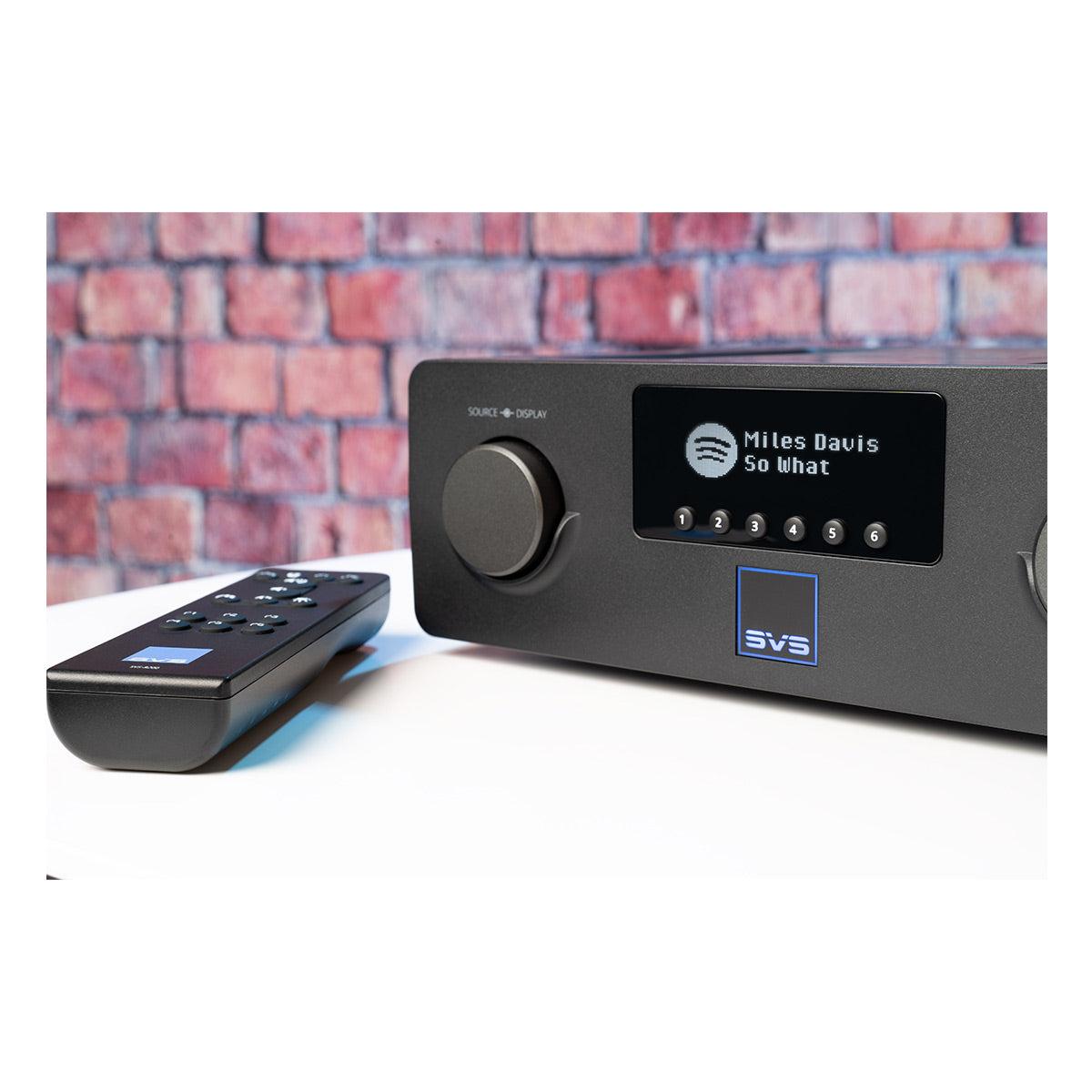
The SVS Prime Wireless Pro takes a more traditional approach, relying primarily on the DTS Play-Fi smartphone app for control. While it has six preset buttons on the front panel for quick access to favorite stations or playlists, most functionality requires the app.
Unfortunately, based on user feedback we've reviewed, the DTS Play-Fi app experience is problematic. Multiple users describe it as "clunky, buggy, and hard to use." This is a significant drawback because you'll interact with this interface every time you want to play music. The app works, but it's not the smooth, intuitive experience you'd hope for at this price point.
For daily usability, the Eversolo Play clearly wins this category. The touchscreen interface removes friction from the music listening experience in a way that's hard to quantify but easy to appreciate.
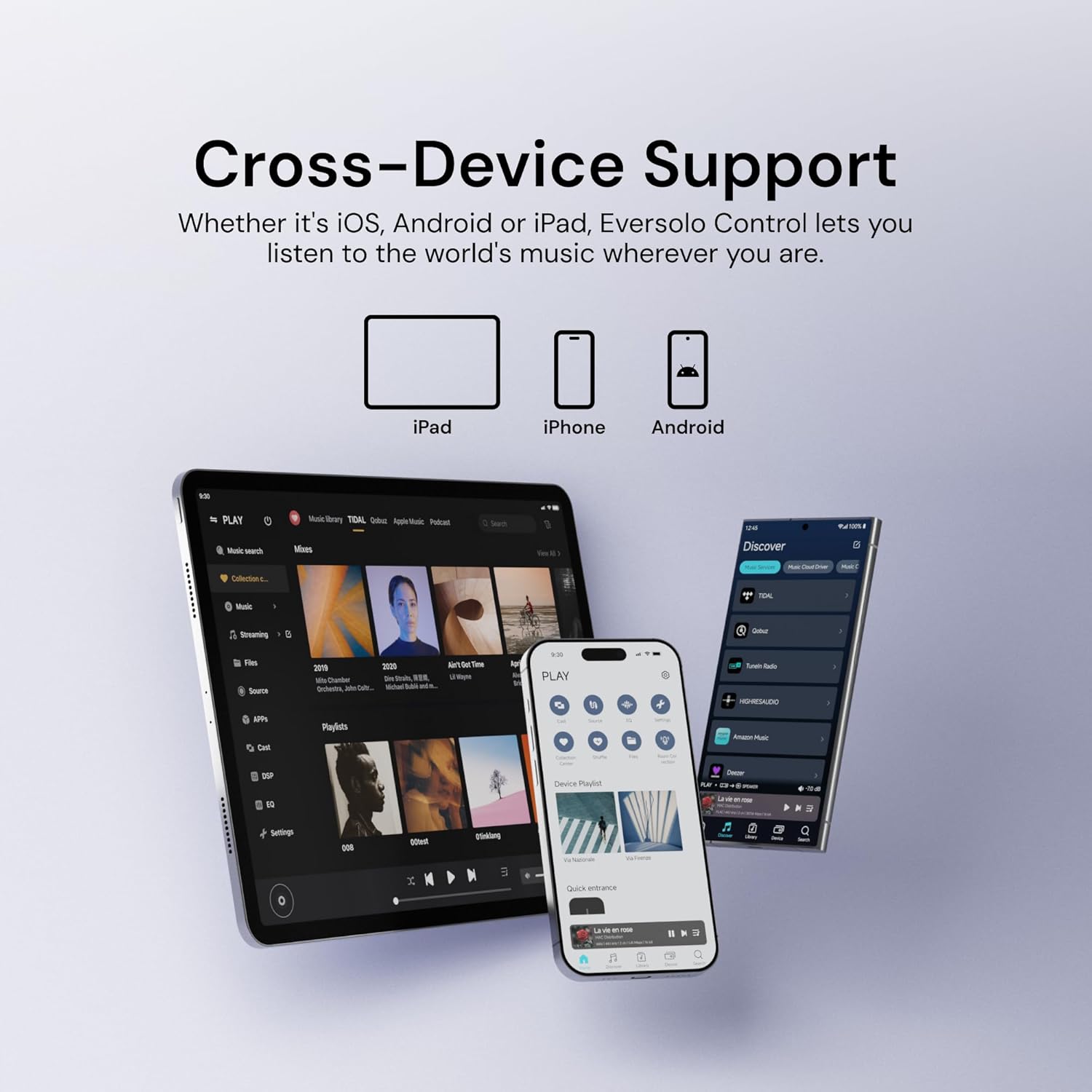
Both devices support all the major streaming services you'd expect: Spotify, Tidal, Qobuz, Amazon Music, and others. However, they differ significantly in how they integrate with broader audio ecosystems.
The Eversolo Play is Roon Ready, which is a big deal for serious audio enthusiasts. Roon is a premium music management platform that provides superior metadata, artist information, and multi-room capabilities. It's like having a personal music librarian that knows everything about your collection and can suggest new discoveries based on sophisticated algorithms. If you're already using Roon or considering it, the Eversolo Play integrates seamlessly.
The SVS Prime Wireless Pro doesn't support Roon, but it offers broader mainstream compatibility. It works with Apple AirPlay 2, Google Cast, and voice assistants like Alexa and Google Assistant. If your smart home ecosystem is built around these platforms, the SVS integrates more naturally into your existing setup.
Neither approach is inherently better—it depends on whether you prioritize audiophile-focused features (Roon) or mainstream smart home integration (voice assistants and casting protocols).
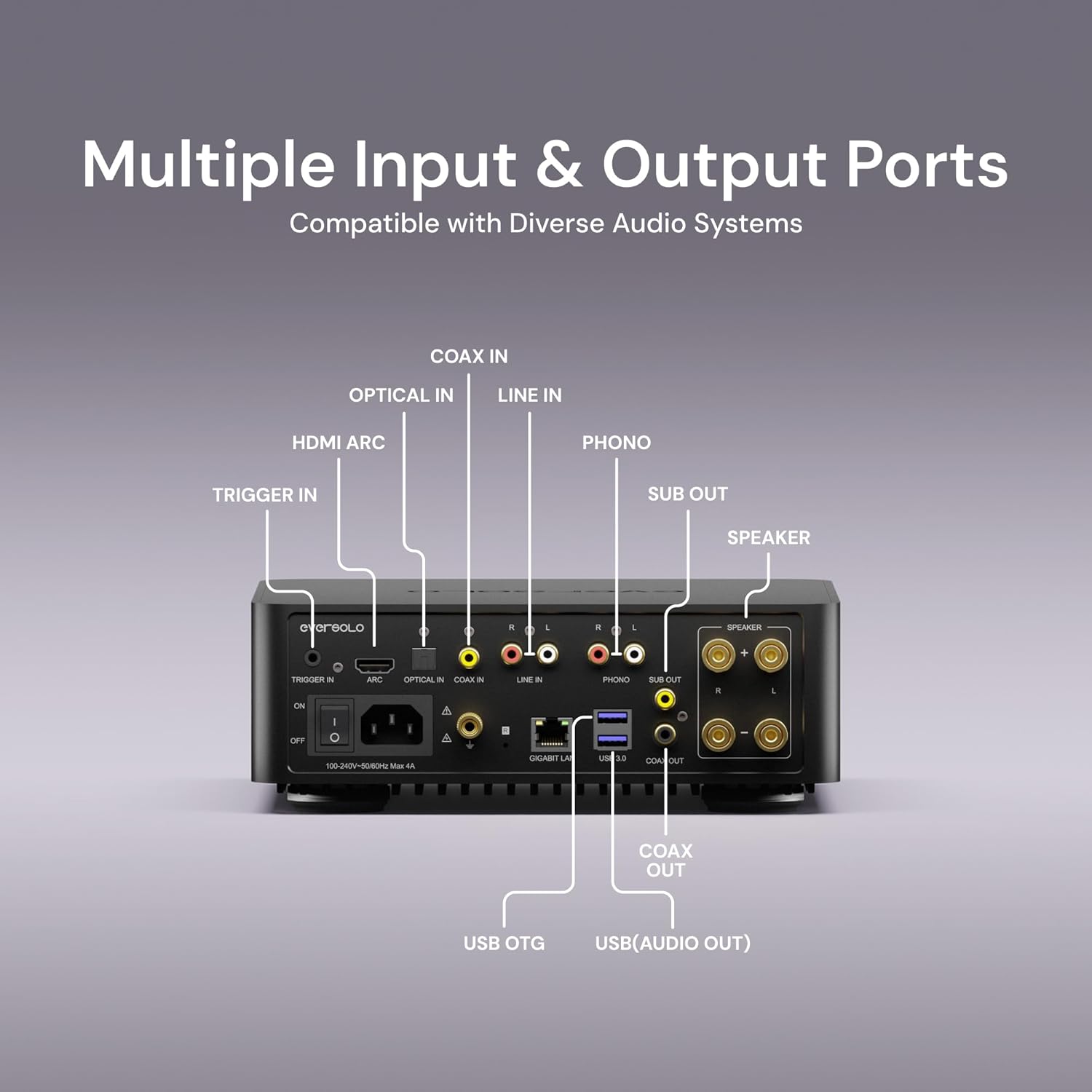
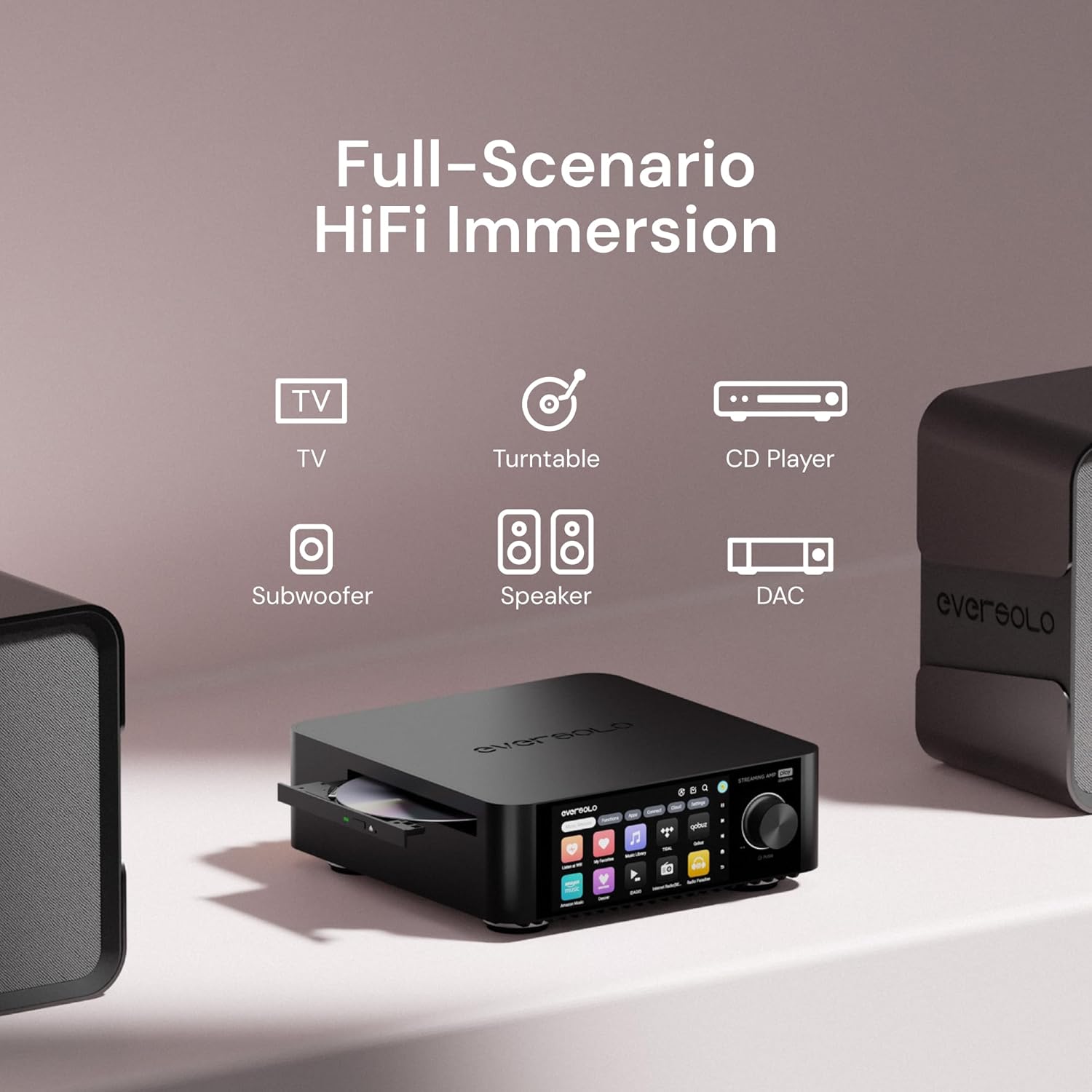
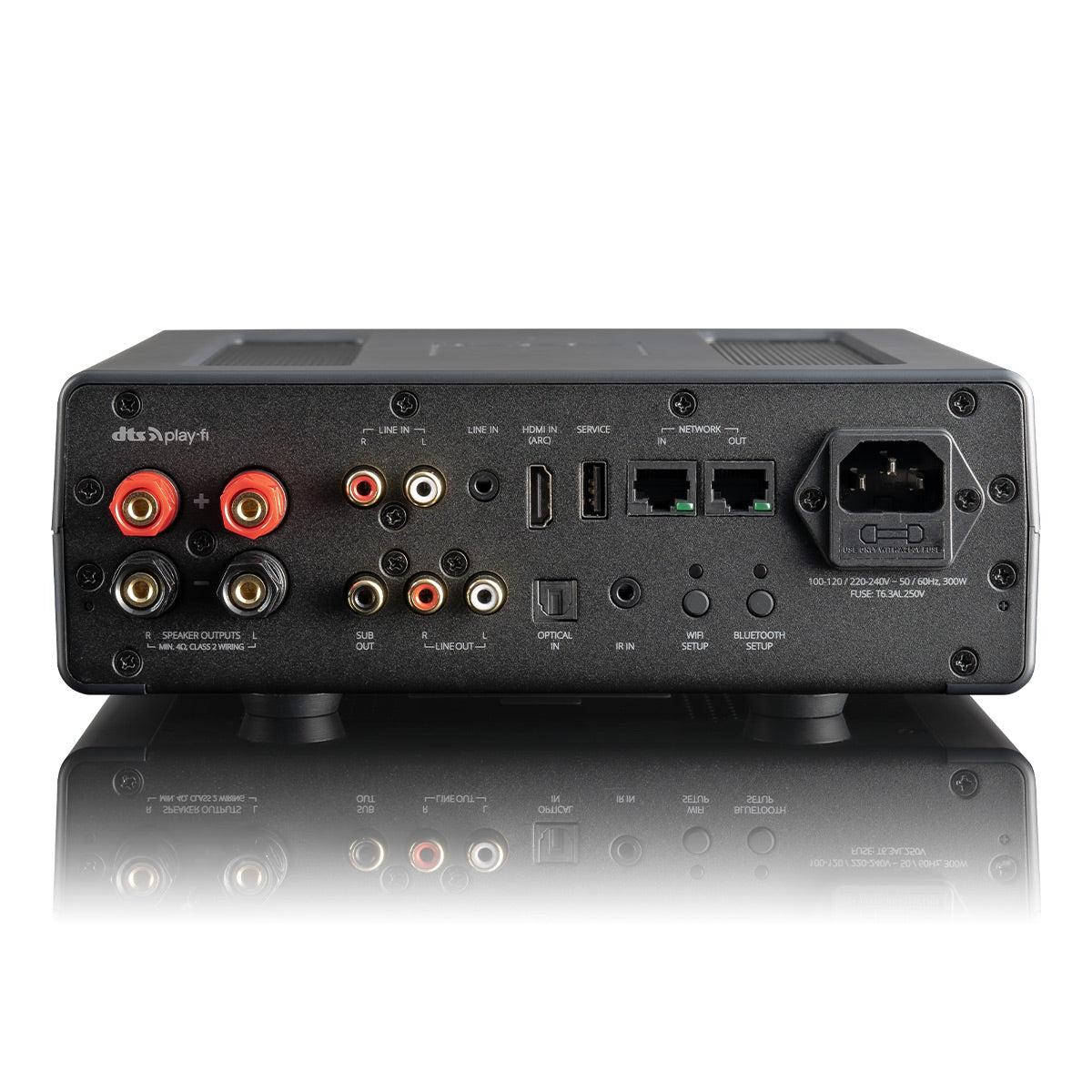
The connectivity options reveal each product's intended use case. The Eversolo Play includes a dedicated phono input for turntables, supporting both moving magnet (MM) and moving coil (MC) cartridges. This means vinyl enthusiasts can connect their turntable directly without needing a separate phono preamp—a significant cost savings and convenience factor.
The Eversolo Play also includes a USB audio output that supports the same high-resolution formats as its DAC. This might seem counterintuitive (why would you want to output digital audio from a device designed to convert it to analog?), but it allows you to use the Eversolo as a high-end streaming transport for an even better external DAC down the road.
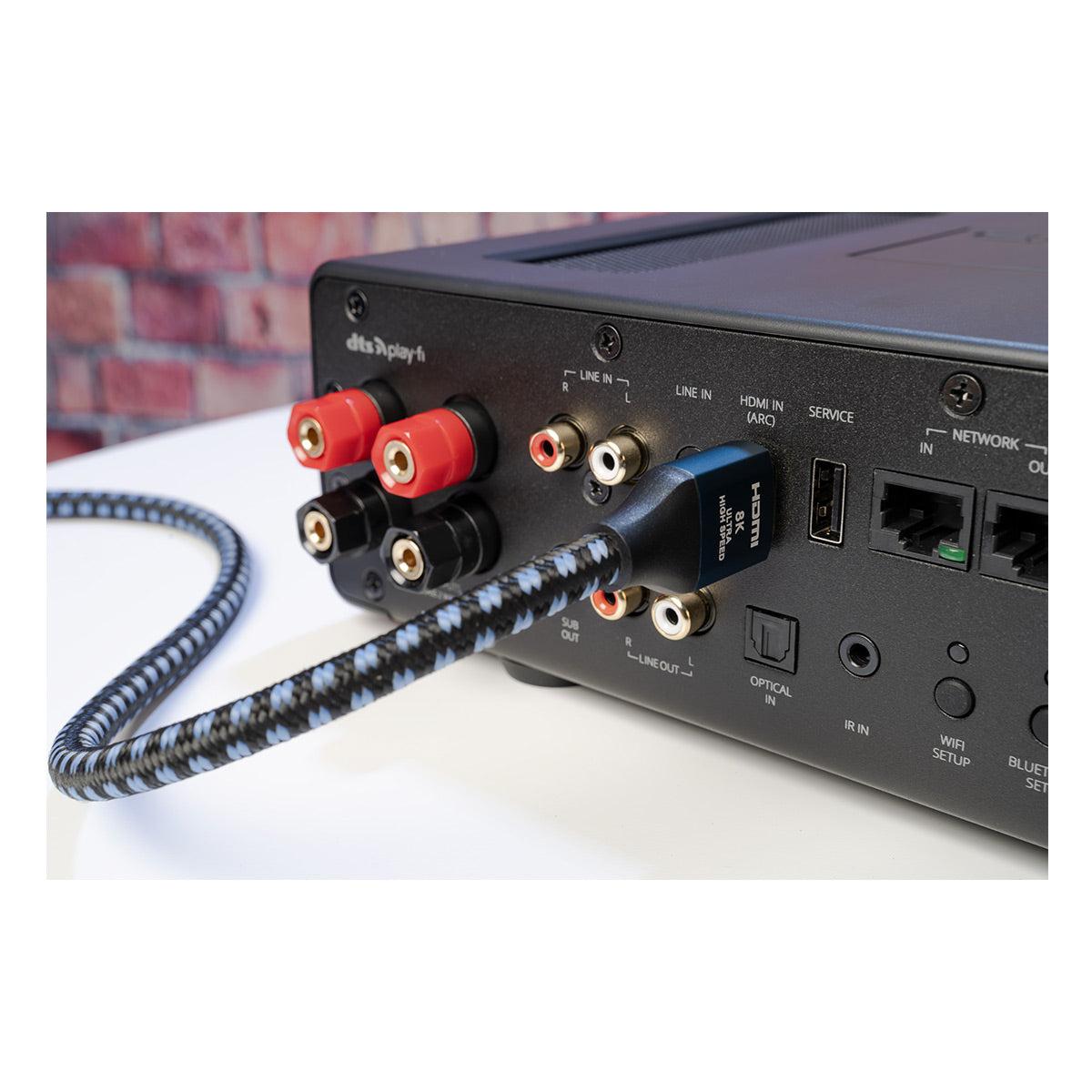
The SVS Prime Wireless Pro takes a more home-theater-focused approach. It includes a 3.5mm headphone output for private listening and emphasizes its HDMI ARC connection for TV integration. ARC (Audio Return Channel) lets you connect the amplifier to your TV with a single HDMI cable, and the TV can send audio back to the amplifier. This makes the SVS an excellent choice if you want to improve your TV's sound while also having a dedicated music system.
Both devices include subwoofer outputs, but with important differences. The Eversolo Play offers adjustable crossover settings (40-500Hz), letting you control which frequencies go to your main speakers versus the subwoofer. The SVS Prime Wireless Pro provides a full-range subwoofer output, meaning you'll need a subwoofer with its own crossover controls.
If you're considering using either device in a home theater context, the SVS Prime Wireless Pro has clear advantages. Its HDMI ARC connection provides seamless TV integration, and its higher power output can better handle the dynamic range of movie soundtracks.
The SVS Prime Wireless Pro can essentially replace a traditional AV receiver for stereo TV watching, providing significantly better sound than built-in TV speakers while maintaining simple operation. Many users report excellent results using it as their primary TV audio solution.
The Eversolo Play also supports HDMI ARC, but its lower power output makes it less suitable for the dynamic range and volume levels typical of home theater use. It's primarily designed as a dedicated music system that happens to support TV audio as a secondary function.
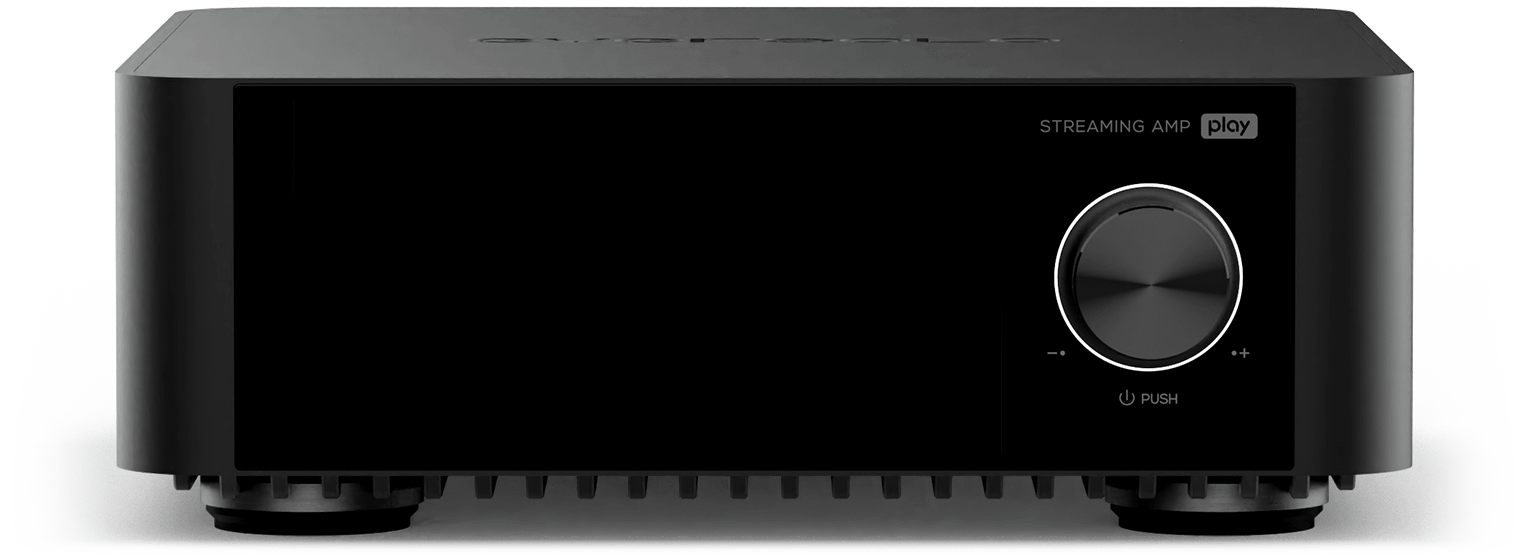
The physical designs reflect each product's intended use. The Eversolo Play measures roughly 3 inches tall by 9 inches wide and deep—almost a perfect cube. It's designed to sit on a shelf or stand as a discrete, premium component. The aluminum construction and glass fascia give it a distinctly high-end appearance that wouldn't look out of place in an audiophile system.
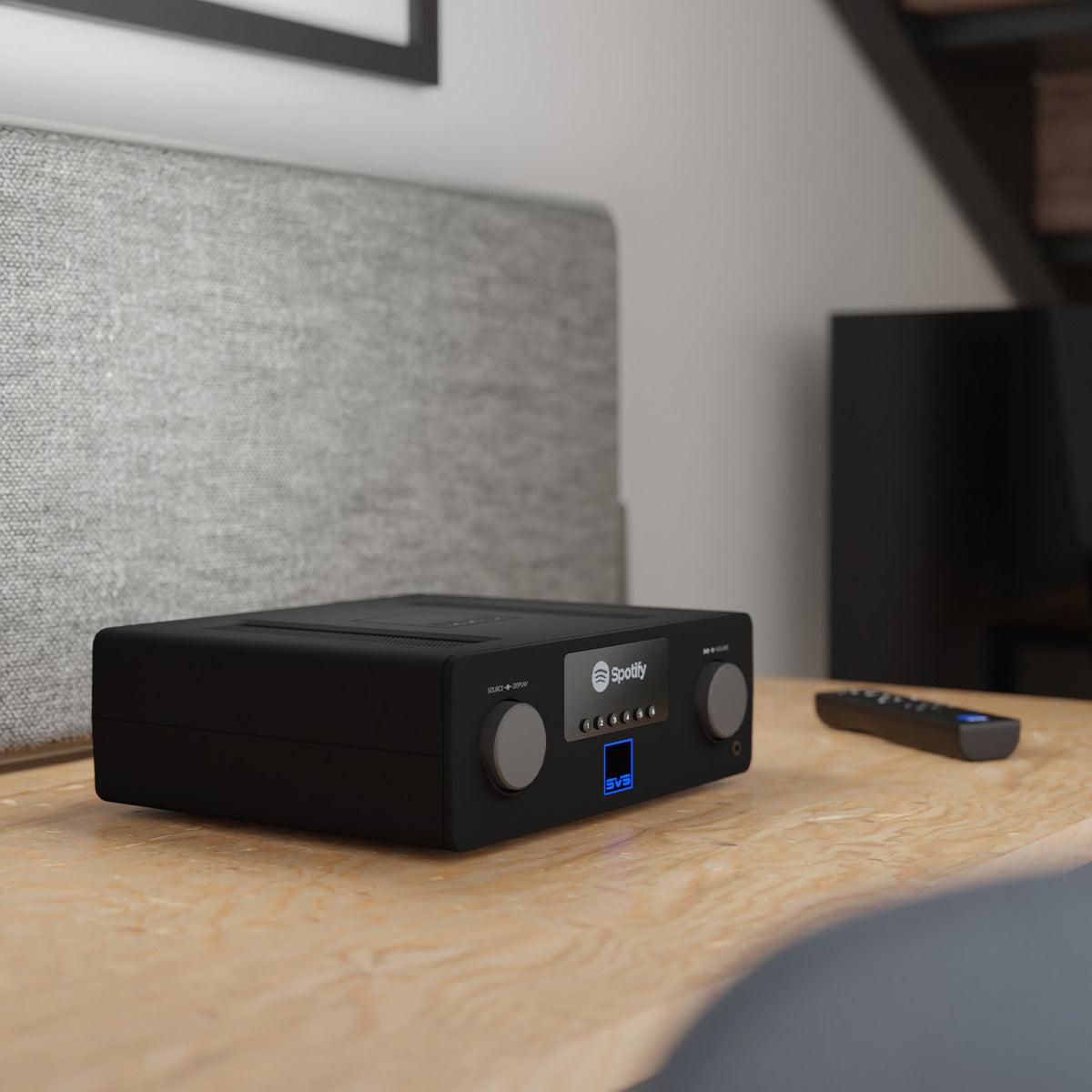
The SVS Prime Wireless Pro uses a flatter "soundbase" form factor that's designed to sit under a TV or computer monitor. At about 3.25 inches tall but over 10 inches deep, it can literally serve as a base for other components while providing better access to rear connections.
Both are well-built, but they clearly serve different aesthetic and practical purposes in a room.
Based on user reports and professional reviews we've analyzed, these devices exhibit different sonic characteristics that align with their design philosophies.
The SVS Prime Wireless Pro consistently receives praise for its neutral, powerful sound. Users describe it as clean and dynamic with excellent bass control and the ability to maintain composure at high volumes. The extra power headroom means it rarely sounds strained, even with demanding music and speakers.
The Eversolo Play earns praise for its detail retrieval and sophisticated sound processing. Users note its ability to resolve fine details in recordings and its sophisticated equalization options (15-band graphic EQ, 10-band parametric EQ). The superior DAC implementation shows up in cleaner backgrounds and more precise instrument separation.
However, some professional reviews, particularly from traditional hi-fi publications, suggest that both devices prioritize technical performance over the more subjective qualities of "musicality" that some listeners prefer. This is typical of modern digital amplifiers versus traditional analog designs—they measure better but might sound more "clinical" to some ears.
The SVS Prime Wireless Pro comes with a two-year warranty, reflecting SVS's established reputation and confidence in their product. However, we've noted some concerning user reports about quality control issues, including units that run excessively hot at low volumes and occasional random volume spikes. These appear to be isolated problems, but they're worth considering.
The Eversolo Play includes a one-year warranty. Eversolo is a newer brand building its reputation in the audiophile market, so there's less long-term reliability data available. However, early user feedback has been generally positive regarding build quality and reliability.
After analyzing user experiences and professional reviews, clear usage patterns emerge.
Choose the Eversolo Play if you:
Choose the SVS Prime Wireless Pro SoundBase if you:
Both products represent excellent value in the streaming integrated amplifier category, but they serve distinctly different purposes. The SVS Prime Wireless Pro is the better choice for most people—it provides more power, better home theater integration, and covers more common use cases effectively.
However, the Eversolo Play is the clear winner for dedicated music enthusiasts who value format support, direct control, vinyl integration, and sophisticated digital audio processing over raw power. Its touchscreen interface alone makes it worth considering for those who find smartphone app control frustrating.
At the time of writing, both products occupy similar price points, making the choice largely about matching features to your specific needs rather than finding the better value. The SVS Prime Wireless Pro offers more universal appeal, while the Eversolo Play provides deeper satisfaction for the right user.
The key is honestly assessing your speaker requirements, room size, and usage priorities. Power requirements aren't negotiable—if you need the SVS's extra watts, the Eversolo's additional features won't compensate for inadequate volume or dynamics. But if your power requirements are modest, the Eversolo's superior digital capabilities and user interface make it the more sophisticated choice.
| Eversolo Play Streaming Amplifier | SVS Prime Wireless Pro SoundBase Integrated Amplifier |
|---|---|
| Power Output - Critical for matching speakers and room size | |
| 60W @ 8Ω / 110W @ 4Ω (suitable for bookshelf speakers) | 150W @ 4Ω & 8Ω per channel (drives large speakers easily) |
| DAC Quality - Determines digital audio fidelity and format support | |
| 32-bit AK4493SEQ, supports DSD512/768kHz PCM (audiophile-grade) | 24-bit/192kHz DAC (excellent for all streaming services) |
| User Interface - How you control the device daily | |
| 5.5" touchscreen with direct control (no phone required) | DTS Play-Fi app + front panel presets (app criticized as clunky) |
| Roon Support - Essential for serious music library management | |
| Roon Ready certified (seamless integration) | No Roon support (uses DTS Play-Fi ecosystem instead) |
| Phono Input - For vinyl enthusiasts with turntables | |
| Built-in MM/MC phono preamp (no external preamp needed) | No phono input (requires separate phono preamp) |
| HDMI Integration - For TV audio improvement | |
| HDMI ARC supported (secondary feature) | HDMI ARC emphasized for home theater use |
| Smart Home Integration - Voice control and casting | |
| AirPlay, limited voice control | AirPlay 2, Chromecast, Alexa/Google Assistant support |
| Headphone Output - For private listening | |
| None | 3.5mm headphone jack included |
| High-Res Audio Streaming - Maximum quality over WiFi | |
| Up to DSD512/768kHz via WiFi | Up to 24-bit/192kHz via WiFi |
| Equalization Options - Sound customization capabilities | |
| 15-band graphic + 10-band parametric EQ with room correction | No built-in EQ or tone controls |
| Warranty Coverage - Protection and brand confidence | |
| 1 year standard warranty | 2 year parts and labor warranty |
| Target Use Case - Who this product serves best | |
| Dedicated audiophiles with bookshelf speakers and vinyl | Power users with large speakers and home theater needs |
The SVS Prime Wireless Pro SoundBase delivers significantly more power with 150 watts per channel into both 4-ohm and 8-ohm speakers, compared to the Eversolo Play Streaming Amplifier's 60 watts at 8 ohms and 110 watts at 4 ohms. This makes the SVS Prime Wireless Pro better suited for driving large floor-standing speakers and filling bigger rooms with sound.
Yes, both the Eversolo Play and SVS Prime Wireless Pro SoundBase support all major streaming services including Spotify, Tidal, Qobuz, Amazon Music, and others. The key difference is that the Eversolo Play is Roon Ready for audiophile music management, while the SVS Prime Wireless Pro focuses on mainstream platforms like AirPlay 2 and Google Cast.
The Eversolo Play Streaming Amplifier includes a built-in MM/MC phono input that can connect directly to turntables without needing a separate phono preamp. The SVS Prime Wireless Pro SoundBase lacks a phono input, so vinyl enthusiasts would need to purchase an additional phono preamp to connect their turntable.
The Eversolo Play features a 5.5-inch touchscreen on the front panel for direct control without needing a smartphone. The SVS Prime Wireless Pro relies primarily on the DTS Play-Fi smartphone app, though it has six preset buttons on the front panel for quick access to favorites.
The SVS Prime Wireless Pro SoundBase is better suited for home theater applications due to its higher power output and emphasis on HDMI ARC connectivity for seamless TV integration. While the Eversolo Play also supports HDMI ARC, its lower power output makes it less ideal for the dynamic range typical of movie soundtracks.
The Eversolo Play Streaming Amplifier offers superior digital audio quality with its 32-bit AK4493SEQ DAC supporting DSD512 and PCM up to 768kHz, compared to the SVS Prime Wireless Pro's 24-bit/192kHz DAC. However, both provide excellent sound quality for streaming services, with the Eversolo offering more headroom for audiophile-grade sources.
Only the SVS Prime Wireless Pro SoundBase includes a 3.5mm headphone output for private listening. The Eversolo Play does not have a headphone jack, so users would need to connect headphones through their speakers or use Bluetooth headphones if supported.
The Eversolo Play provides extensive sound customization with 15-band graphic EQ, 10-band parametric EQ, and room correction capabilities. The SVS Prime Wireless Pro does not include built-in EQ or tone controls, focusing instead on delivering clean, neutral sound without digital processing.
Both support high-resolution audio, but the Eversolo Play Streaming Amplifier goes much further with support for DSD512 and PCM up to 768kHz over WiFi. The SVS Prime Wireless Pro SoundBase supports up to 24-bit/192kHz, which covers all current streaming services but doesn't match the Eversolo's extreme format capabilities.
The SVS Prime Wireless Pro comes with a 2-year warranty compared to the Eversolo Play's 1-year warranty, reflecting SVS's established reputation. However, both products are relatively new to market, with the SVS having more user feedback available due to its longer market presence.
The SVS Prime Wireless Pro SoundBase offers broader smart home integration with support for Alexa, Google Assistant, AirPlay 2, and Chromecast. The Eversolo Play supports AirPlay and some casting protocols but focuses more on audiophile ecosystems like Roon rather than mainstream smart home platforms.
Both the Eversolo Play and SVS Prime Wireless Pro offer excellent value at similar price points, but serve different needs. The SVS Prime Wireless Pro provides better value for users prioritizing power and home theater integration, while the Eversolo Play offers superior value for audiophiles wanting advanced digital capabilities and direct device control.
We've done our best to create useful and informative comparisons to help you decide what product to buy. Our research uses advanced automated methods to create this comparison and perfection is not possible - please contact us for corrections or questions. These are the sites we've researched in the creation of this article: blog.son-video.com - audio46.com - upscaleaudio.com - audioadvice.com - musicdirect.com - audio46.com - whathifi.com - whathifi.com - bloomaudio.com - youtube.com - the-ear.net - whathifi.com - soundstagesimplifi.com - youtube.com - stevehuffphoto.com - darko.audio - youtube.com - eversolo.com - soundandvision.com - crutchfield.com - futureaudiophile.com - dreamediaav.com - crutchfield.com - svsound.com - soundstageaccess.com - skybygramophone.com - hometheaterhifi.com - av-connection.com - crutchfield.com - soundstagenetwork.com - svsound.com

Privacy Policy
Terms and Conditions - Affiliate Policy
Home Security
© Copyright 2008-2026.
11816 Inwood Rd #1211, Dallas, TX 75244