


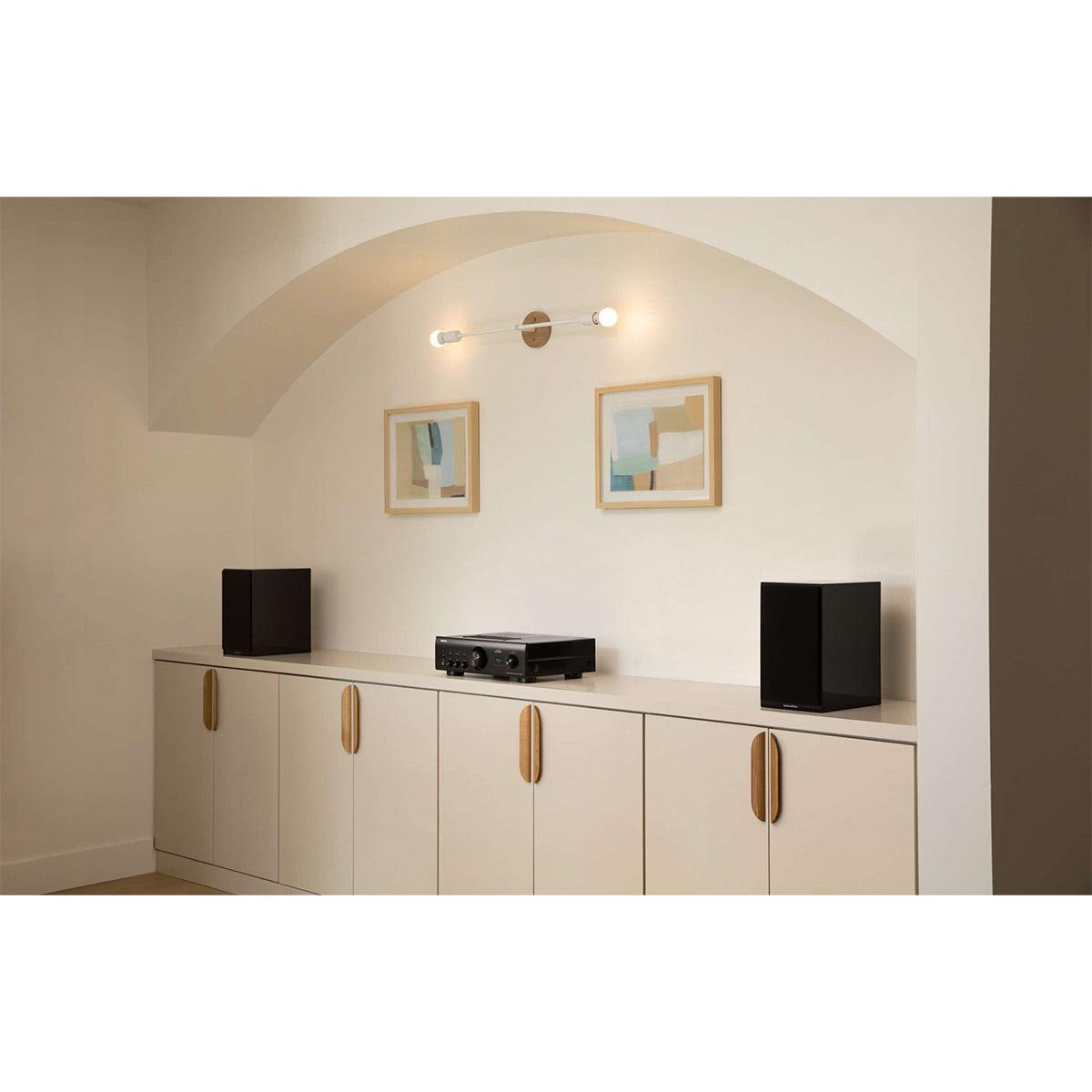
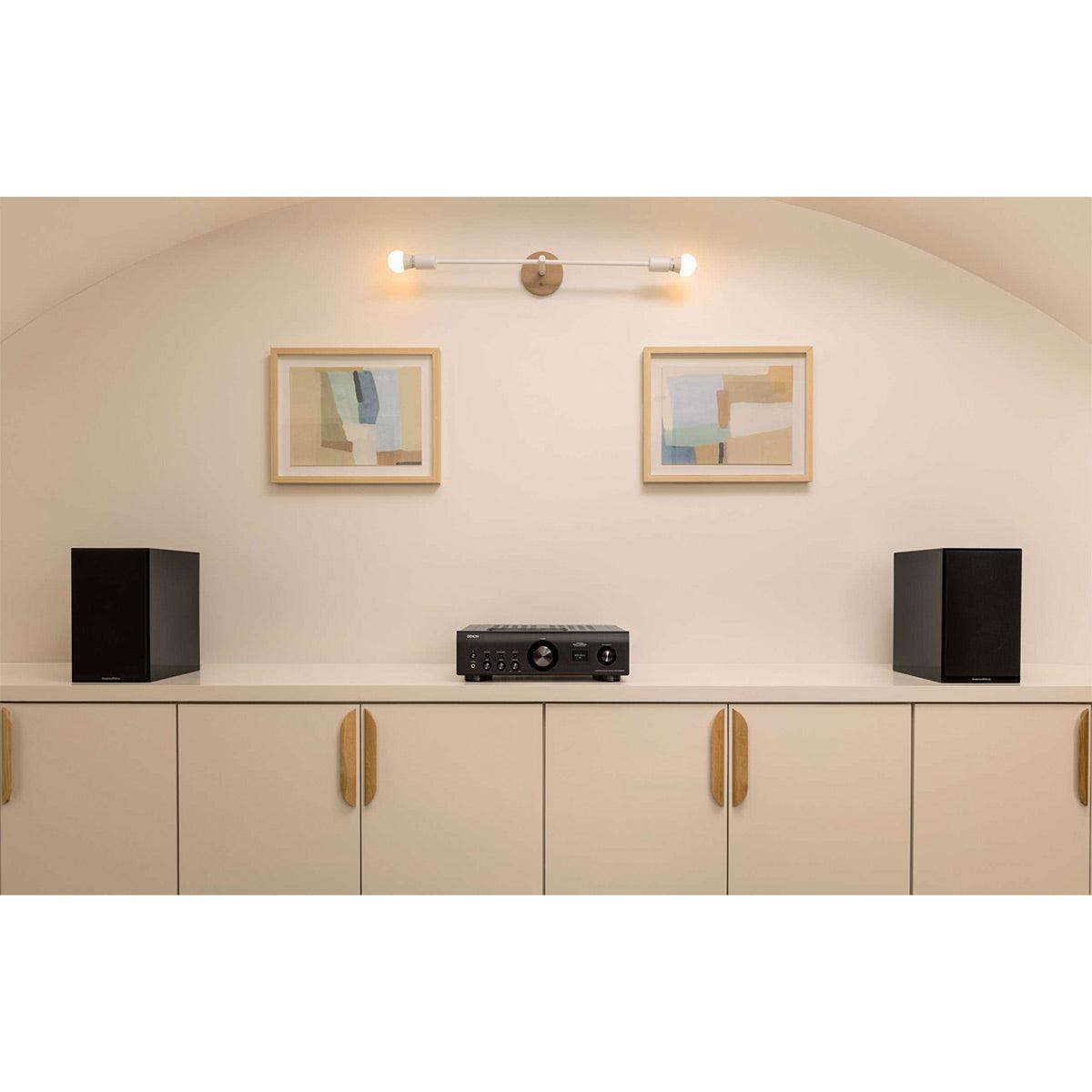
The world of hi-fi audio has transformed dramatically over the past decade. Gone are the days when you needed a separate amplifier, streamer, and DAC cluttering up your entertainment center. Today's streaming integrated amplifiers pack all these functions into a single, elegant box that can drive your speakers directly while pulling music from Spotify, Tidal, or your local network storage.
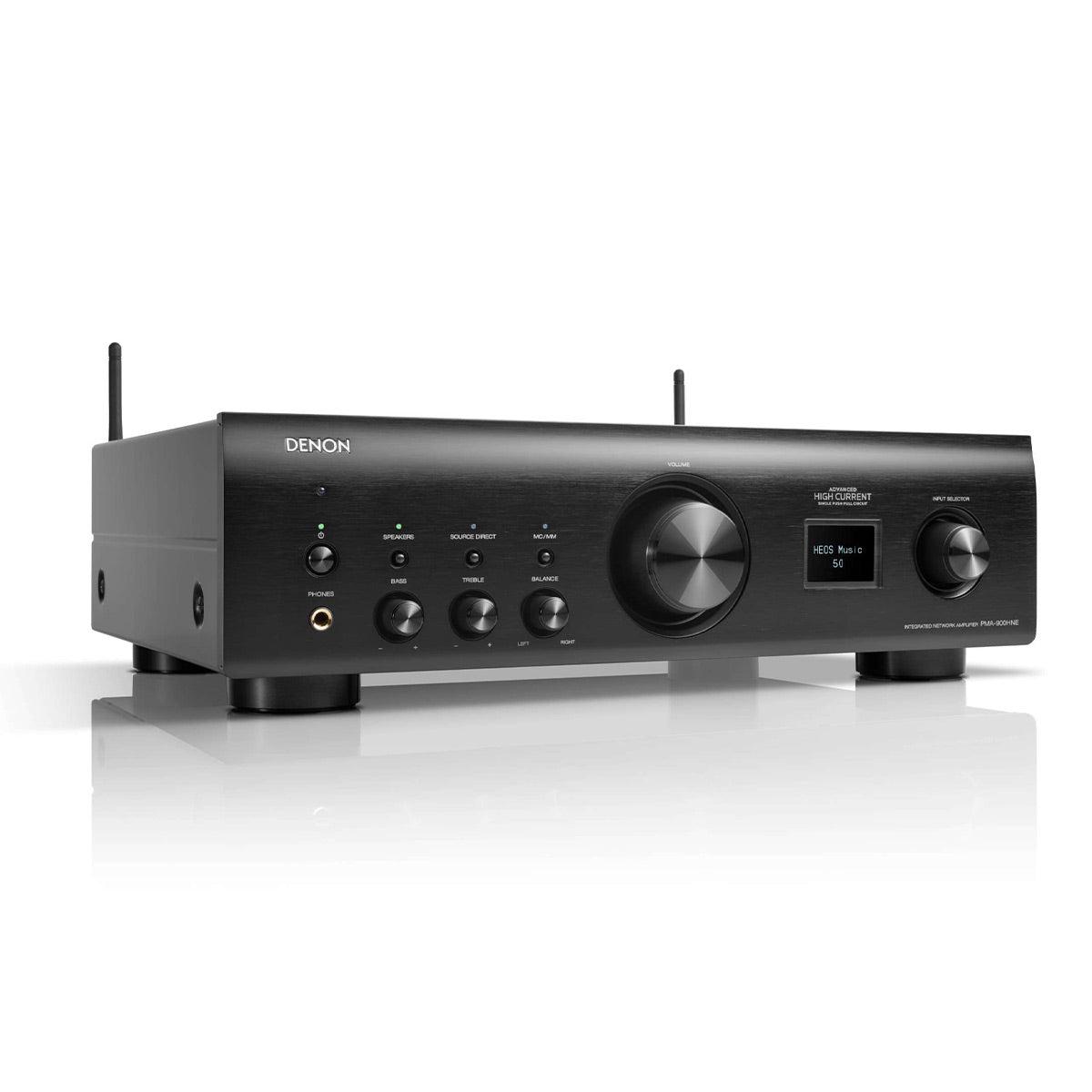
Two standout products in this space are the Eversolo Play and the Denon PMA-900HNE. Both promise to simplify your audio setup while delivering excellent sound quality, but they take notably different approaches to get there. Understanding these differences is crucial to making the right choice for your specific needs and budget.
Before diving into the specifics, it's worth understanding what makes these products special. A streaming integrated amplifier combines three traditionally separate components: a network streamer (which connects to internet music services), a digital-to-analog converter or DAC (which turns digital music files into analog signals your speakers can use), and an amplifier (which provides the power to drive your speakers).
The main considerations when evaluating these products center around power output, streaming capabilities, connectivity options, user interface design, and overall value. The amplifier needs enough clean power to drive your speakers effectively, while the streaming platform should work seamlessly with your preferred music services. Connectivity determines how many sources you can connect, and the user interface affects your daily experience with the device.
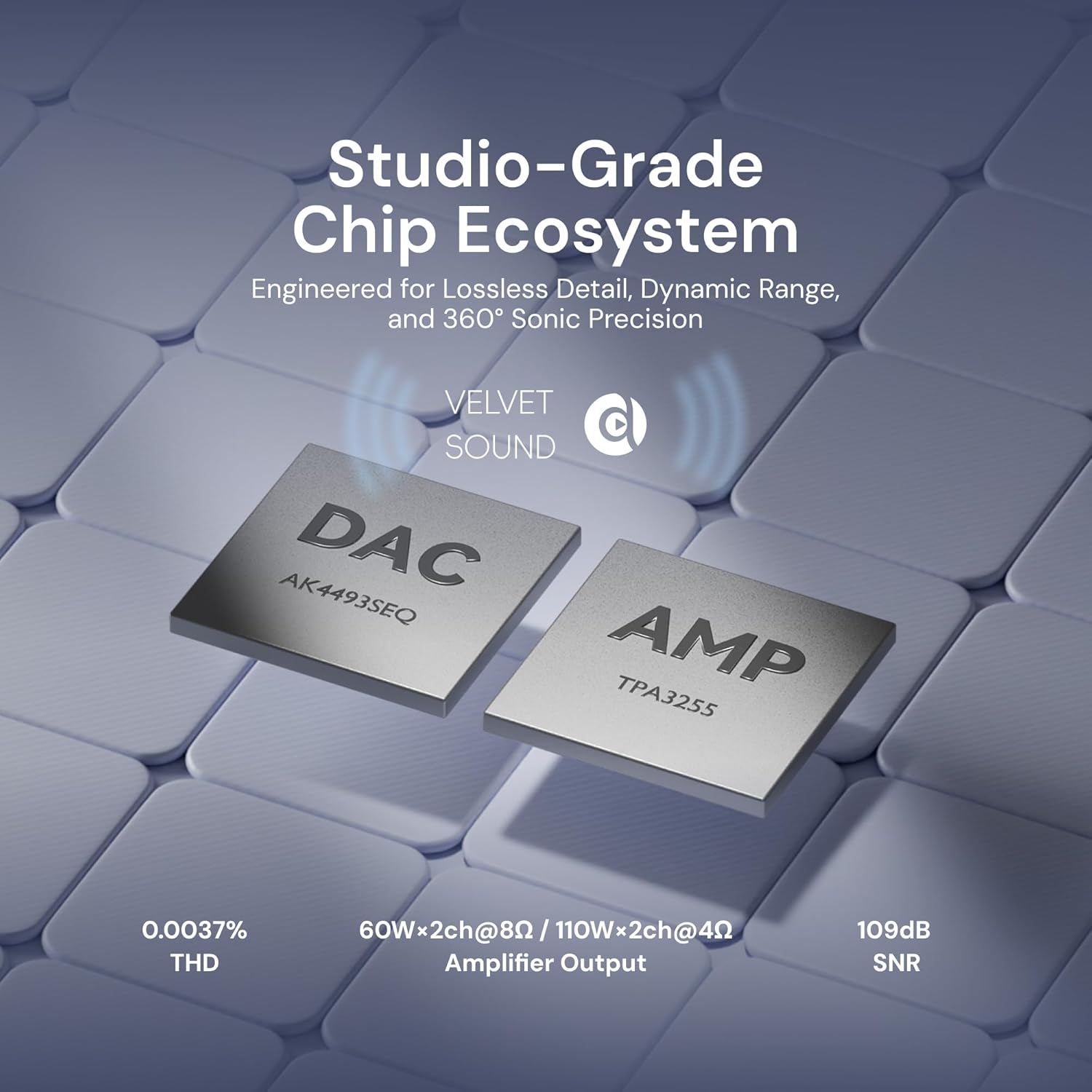
When it comes to driving speakers, the Eversolo Play takes a clear technical lead. Its Class D amplifier delivers 60 watts per channel into 8-ohm speakers and 110 watts into 4-ohm loads. These numbers matter because speakers with lower impedance (measured in ohms) require more current to perform well, and many modern bookshelf speakers fall into the 4-ohm category.
The Class D amplifier design in the Eversolo Play uses what's called PurePath Ultra HD technology. Class D amplifiers work by rapidly switching the power on and off thousands of times per second, which makes them incredibly efficient and generates less heat than traditional designs. The PurePath system includes advanced feedback mechanisms that correct for distortion in real-time, resulting in exceptionally clean sound with just 0.0037% total harmonic distortion (THD) – that's the amount of unwanted noise added to your music signal.
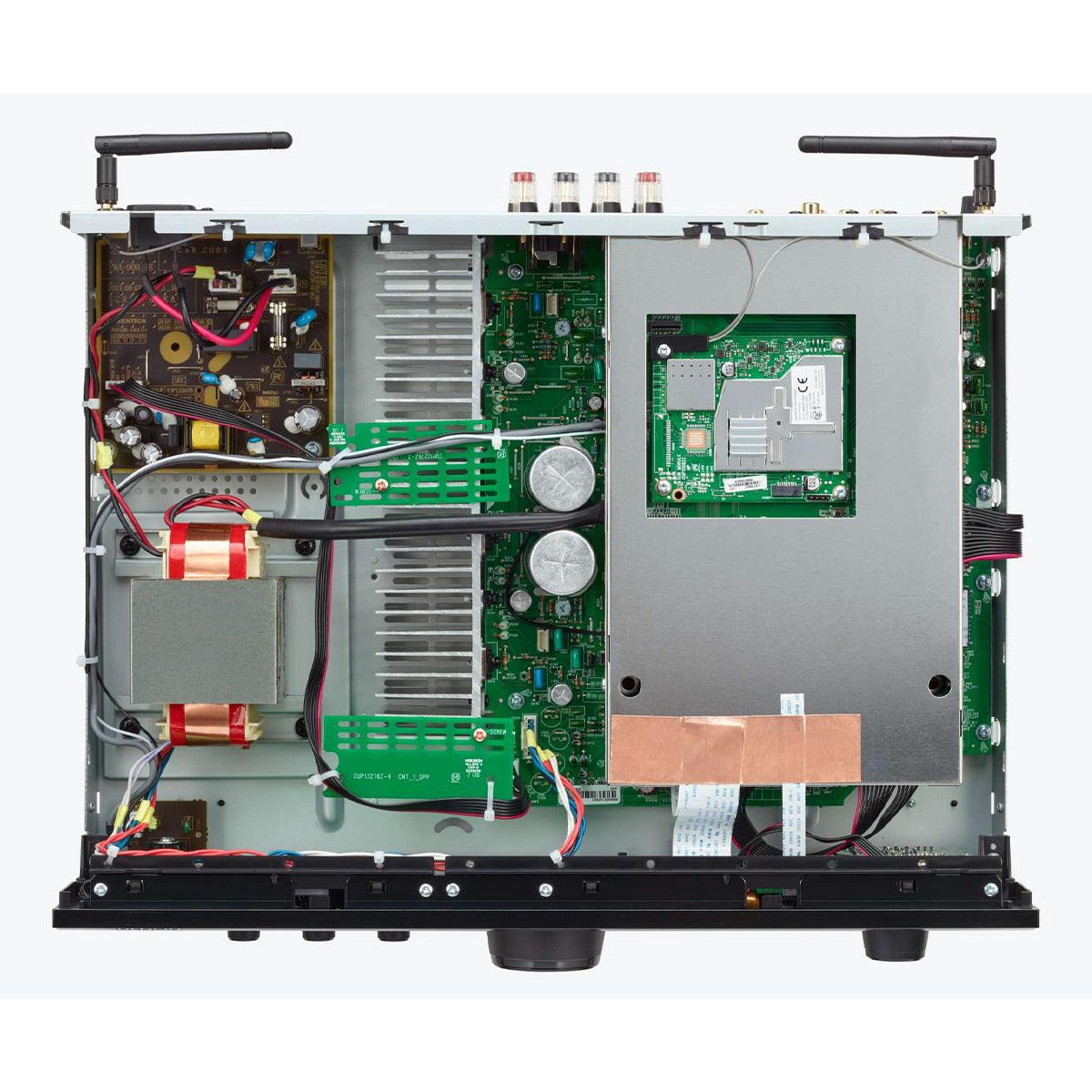
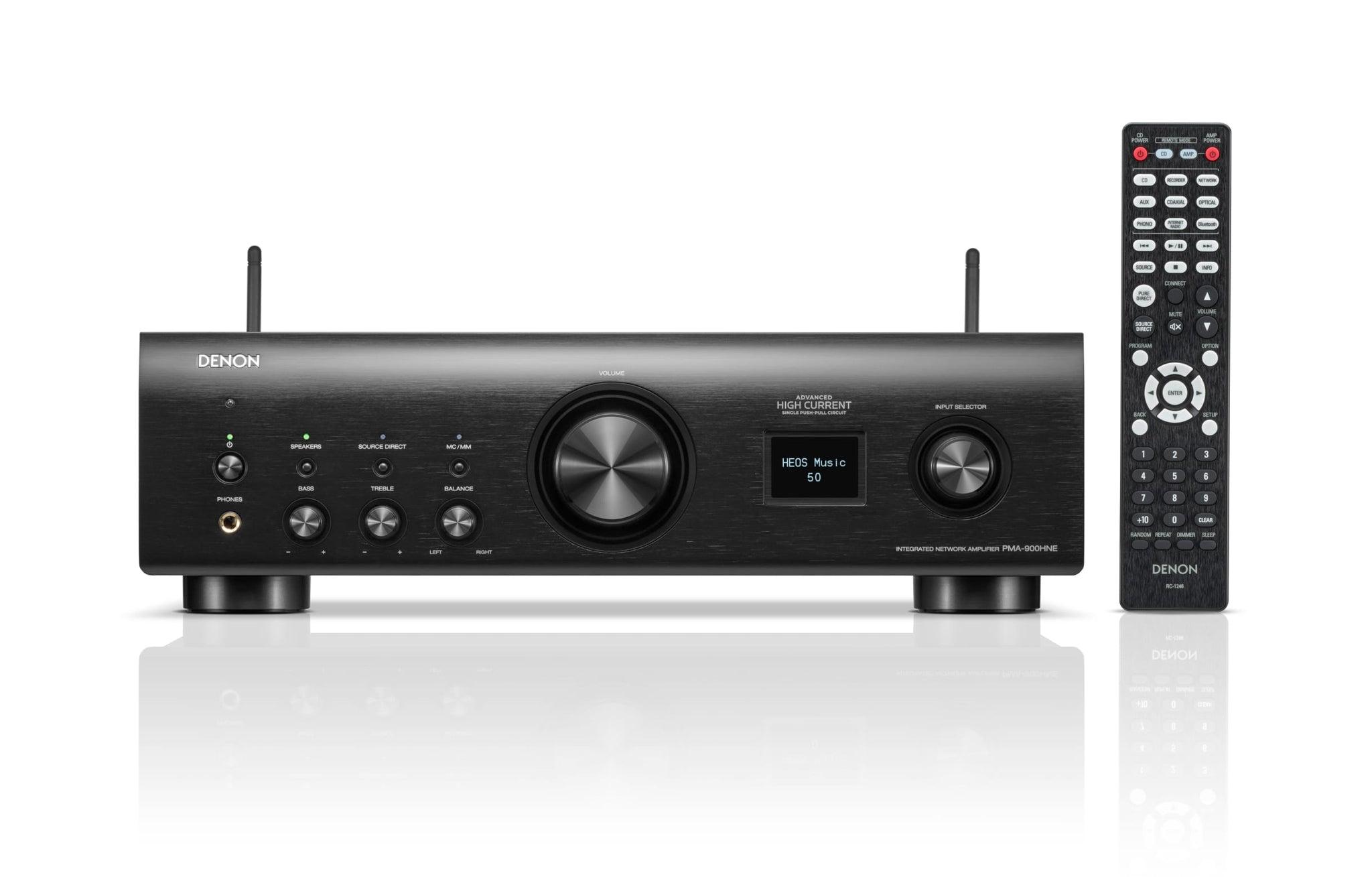
In contrast, the Denon PMA-900HNE employs a more traditional Class AB amplifier producing 50 watts into 8 ohms and 85 watts into 4 ohms. Class AB amplifiers keep their output transistors partially "on" all the time, which traditionally provides better sound quality but uses more power and generates more heat. Denon's Advanced High Current (AHC) design uses specially selected transistors that can handle two to three times the electrical current of standard components, which helps maintain control over demanding speakers even at lower power levels.
While the Eversolo Play wins on paper with higher power output and lower distortion measurements, real-world performance depends heavily on your speakers and listening habits. The Denon's high-current design often provides better speaker control and dynamics, especially with difficult loads. For most bookshelf speakers in typical listening rooms, both amplifiers provide more than adequate power, but the Eversolo offers more headroom for larger speakers or higher listening levels.
The digital-to-analog conversion is where these products really start to diverge. The Eversolo Play features an AKM AK4493SEQ DAC chip with something called VELVETSOUND technology. This DAC can handle incredibly high-resolution audio files – up to DSD512 and PCM signals at 768kHz with 32-bit precision. To put this in perspective, standard CD quality is 44.1kHz/16-bit, so we're talking about dramatically higher resolution capability.
DSD (Direct Stream Digital) is a different way of encoding audio that some audiophiles prefer for its smooth, analog-like sound. The numbers (like DSD512) refer to how many times higher the sampling rate is compared to standard CD. PCM (Pulse Code Modulation) is the more common digital audio format used by most streaming services and files.
The Denon PMA-900HNE uses an ESS 9018K2M DAC with Denon's AL32 processing, but it's limited to PCM signals up to 192kHz/24-bit – still well beyond what most streaming services provide, but significantly lower than the Eversolo's capabilities. Denon's approach focuses more on the musicality of the conversion process rather than chasing the highest technical specifications.
In practical terms, most streaming services max out at 24-bit/192kHz (Qobuz, Tidal) or even lower, so the Eversolo's extreme capabilities mainly benefit those with high-resolution local music libraries. However, having that overhead often translates to better performance even with standard-resolution content, as the DAC isn't working at its limits.
Both products released in recent years – the Eversolo Play in 2024 and the Denon PMA-900HNE in 2022 – benefit from modern streaming platform integration, but they take different approaches.
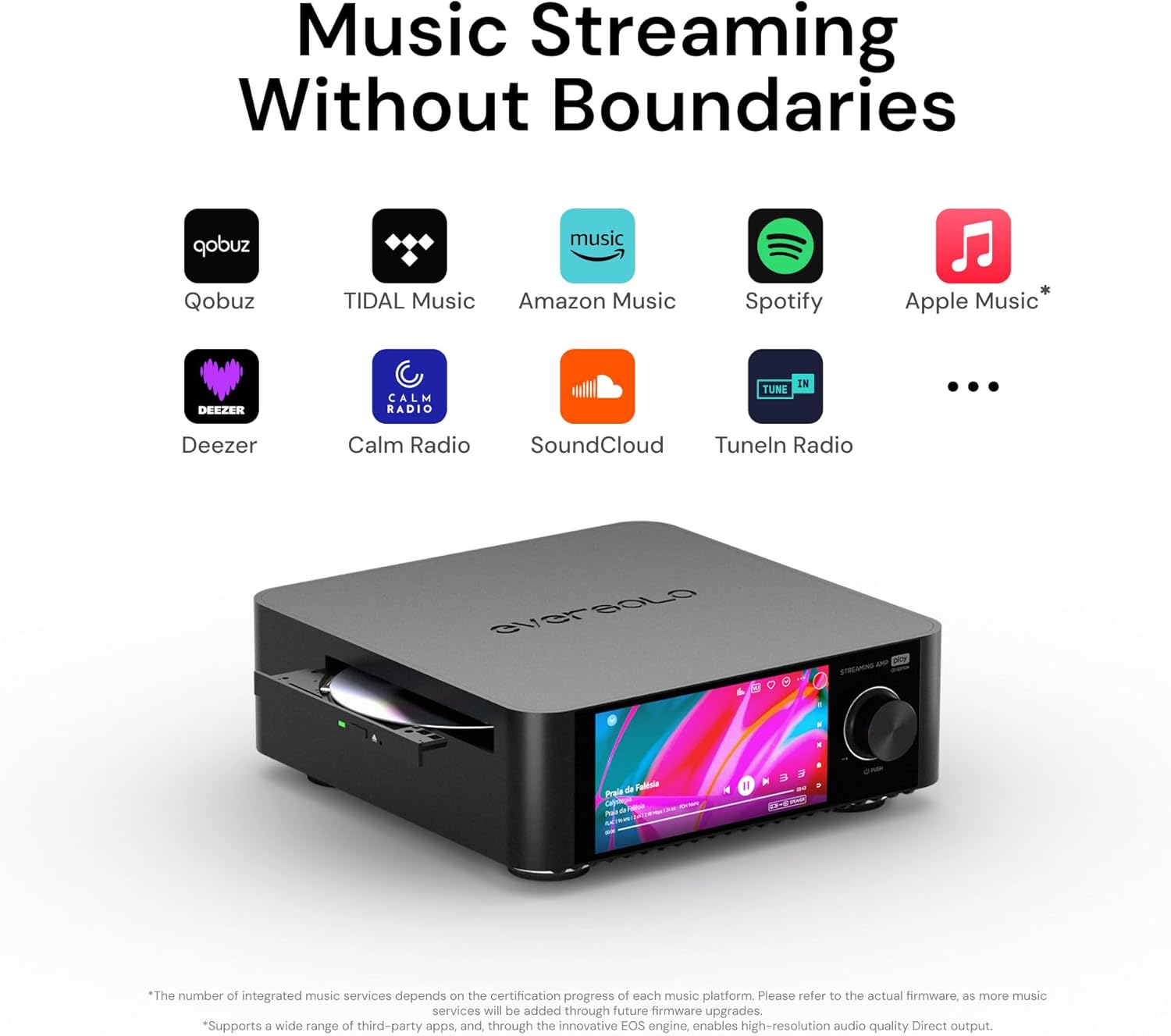
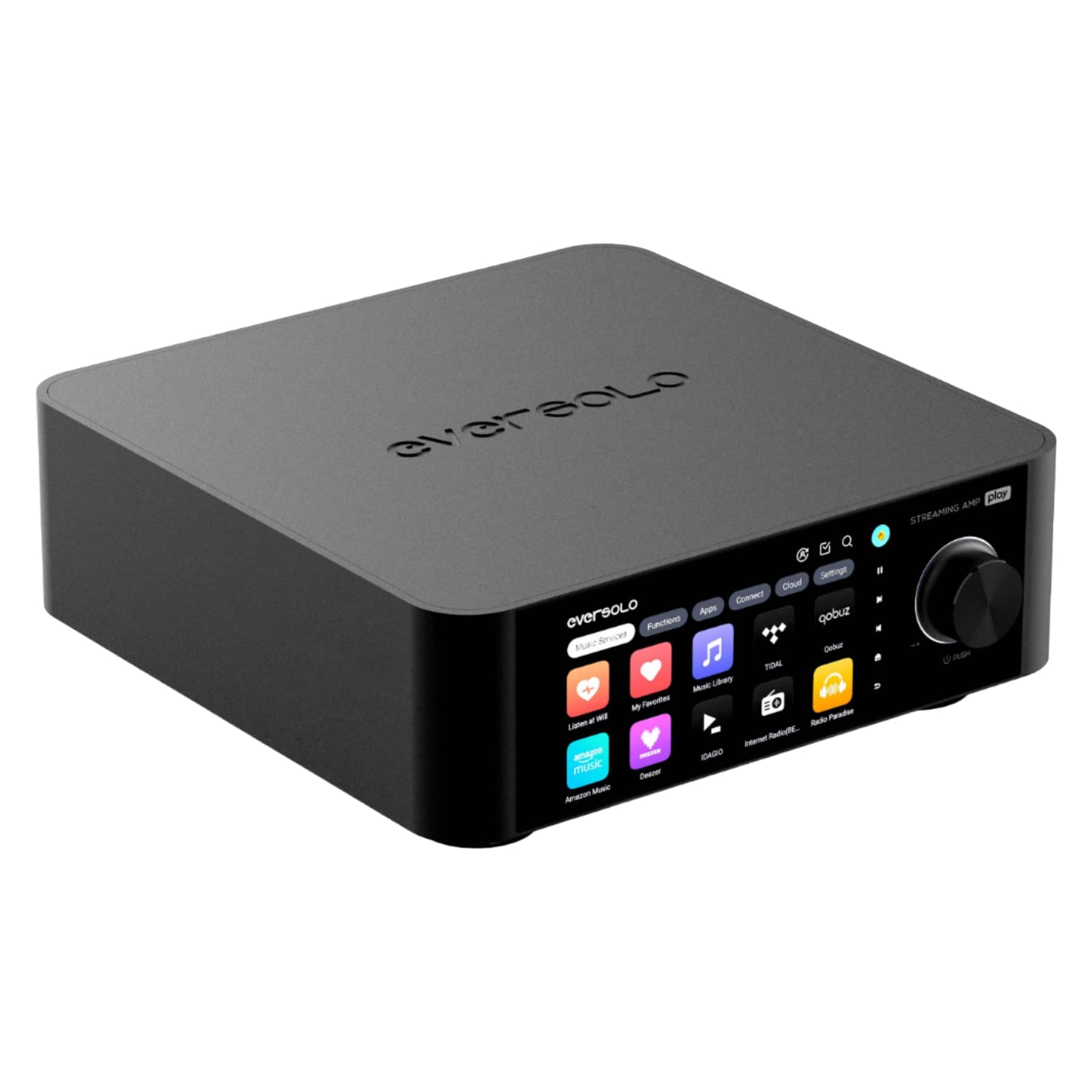
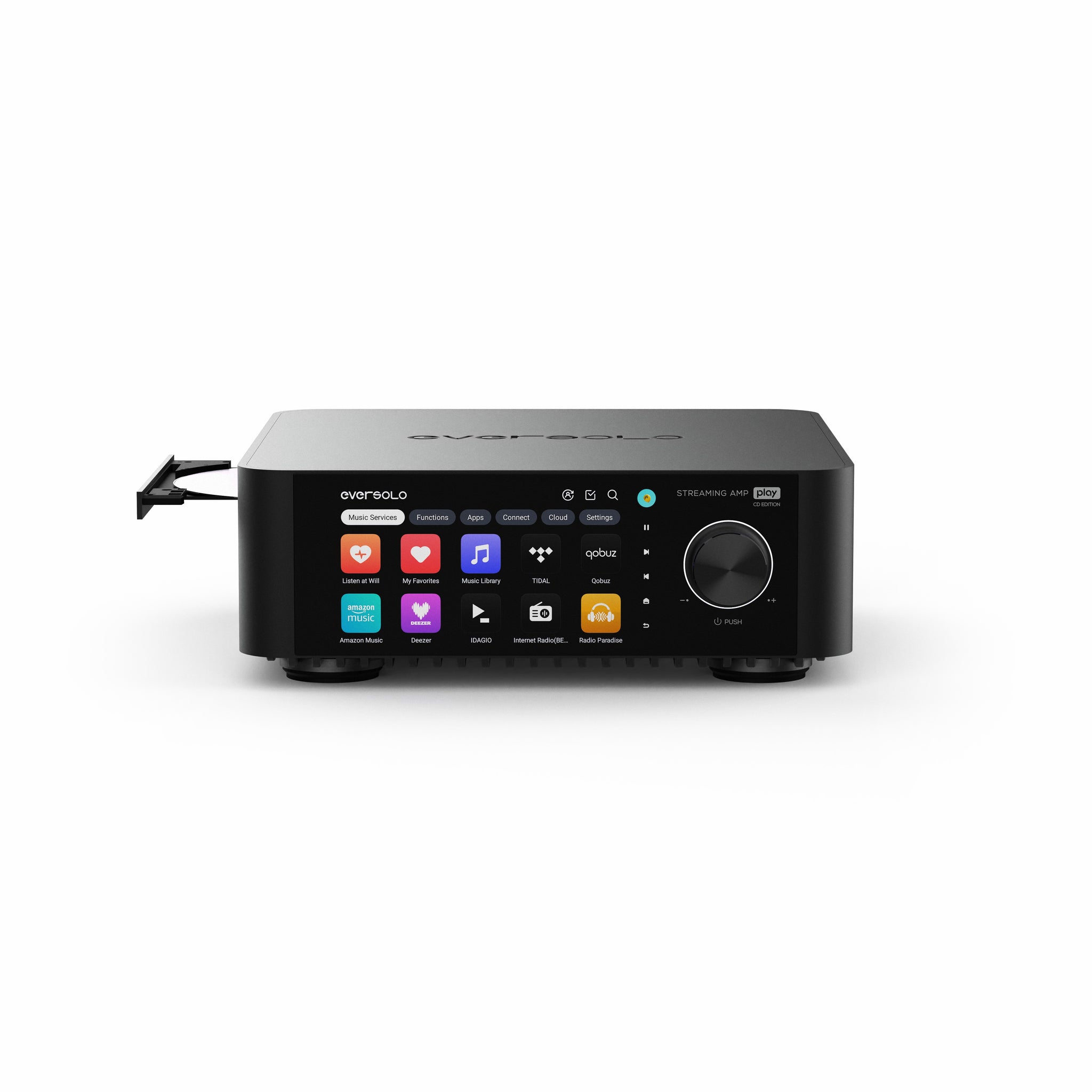
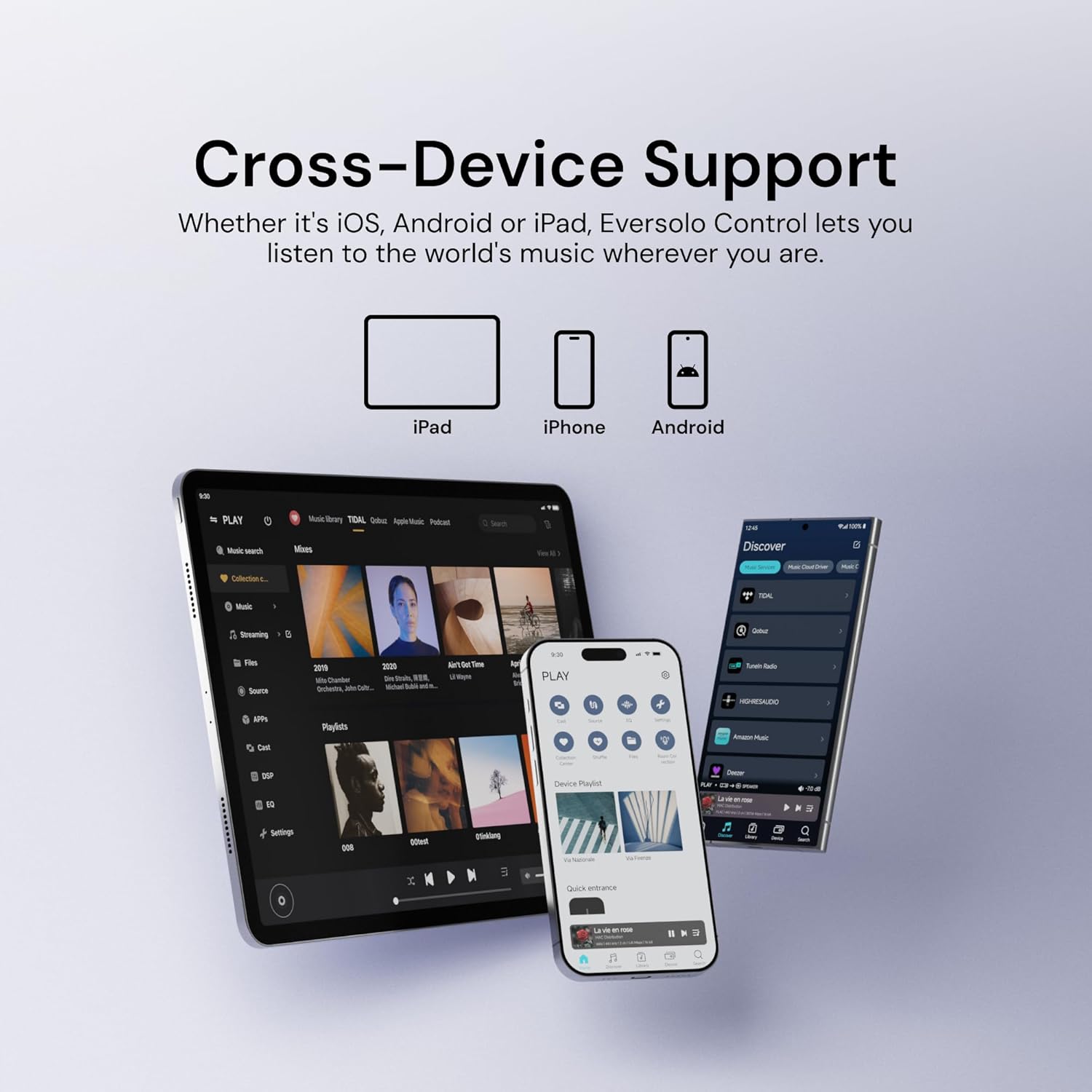
The Eversolo Play runs what's essentially a custom Android operating system with a beautiful 5.5-inch touchscreen. This allows direct access to streaming services like Tidal, Qobuz, Amazon Music, Spotify, and Apple Music without needing a separate app on your phone. The interface supports features like TIDAL Connect and Qobuz Connect, which means you can start playback on your phone and hand it off to the Eversolo for direct, bit-perfect streaming.
The device also supports Roon Ready functionality. Roon is a premium music management system that creates a beautiful, magazine-like interface for your music library and can enhance audio quality through advanced signal processing. Having Roon Ready certification means the Eversolo can receive audio directly from a Roon server without any quality compromise.
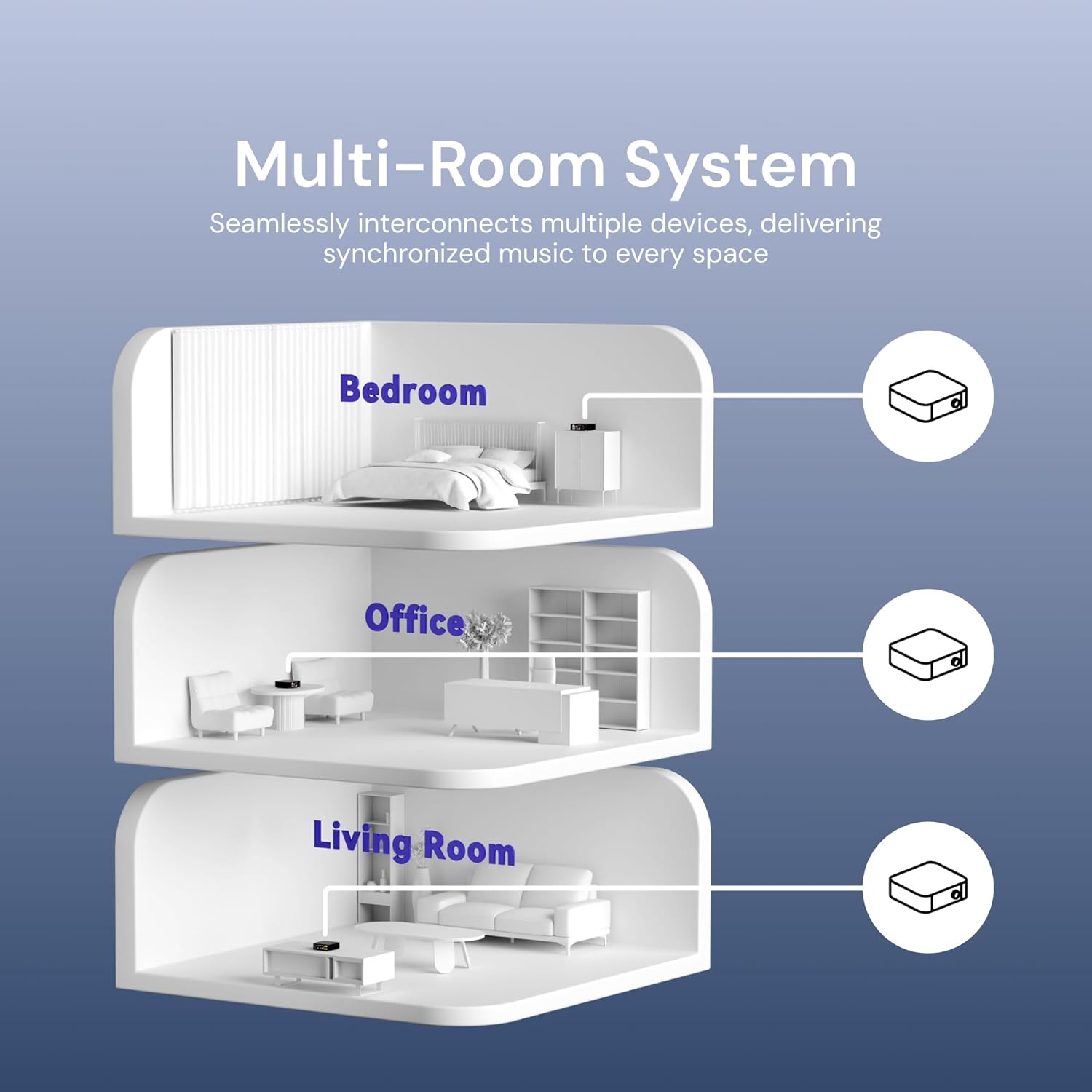
The Denon PMA-900HNE takes a more traditional approach, relying on Denon's HEOS platform. HEOS provides access to the same major streaming services but requires control through a smartphone app rather than offering a built-in touchscreen interface. HEOS's strength lies in multi-room audio – if you have other HEOS-compatible Denon or Marantz products throughout your home, you can synchronize music playback across all of them.
The Denon also supports Apple AirPlay 2, which provides excellent integration with Apple devices and allows for multi-room playback with other AirPlay 2 compatible speakers. It's Roon Ready as well, putting it on equal footing with the Eversolo for serious digital music enthusiasts.
One notable limitation of the Denon is its Bluetooth implementation – it only supports the basic SBC codec, not the higher-quality aptX or AAC codecs that provide better wireless audio quality from phones and tablets.
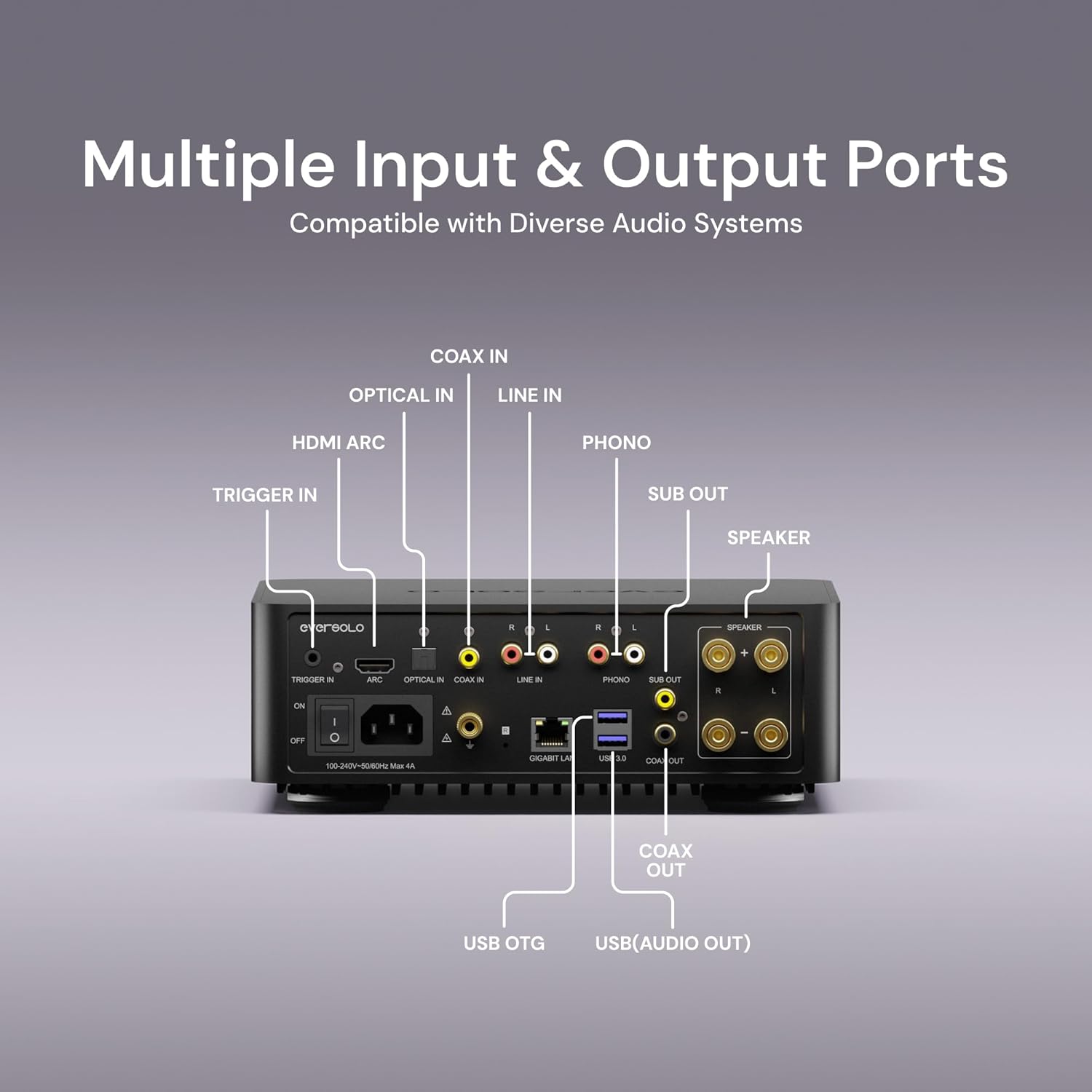
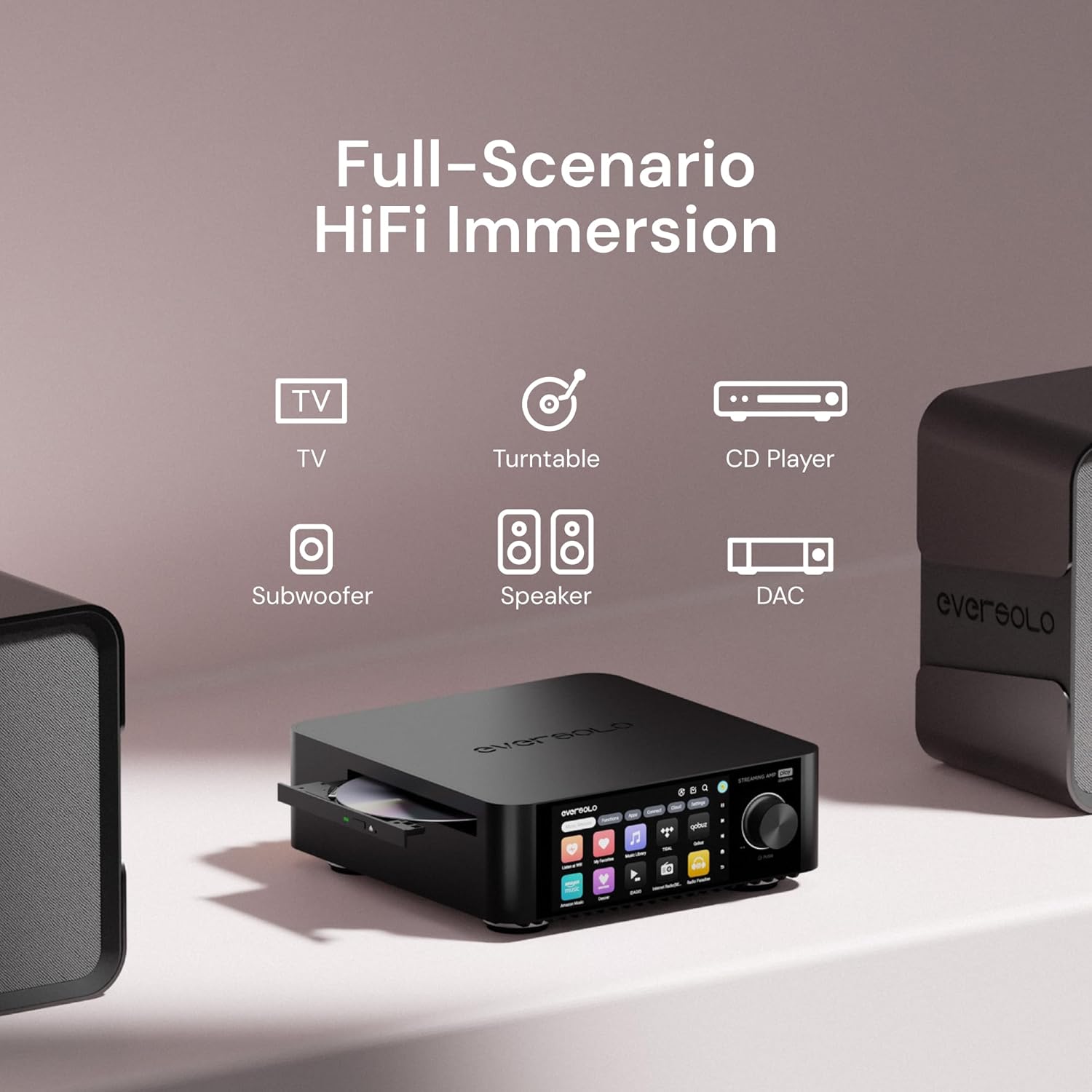
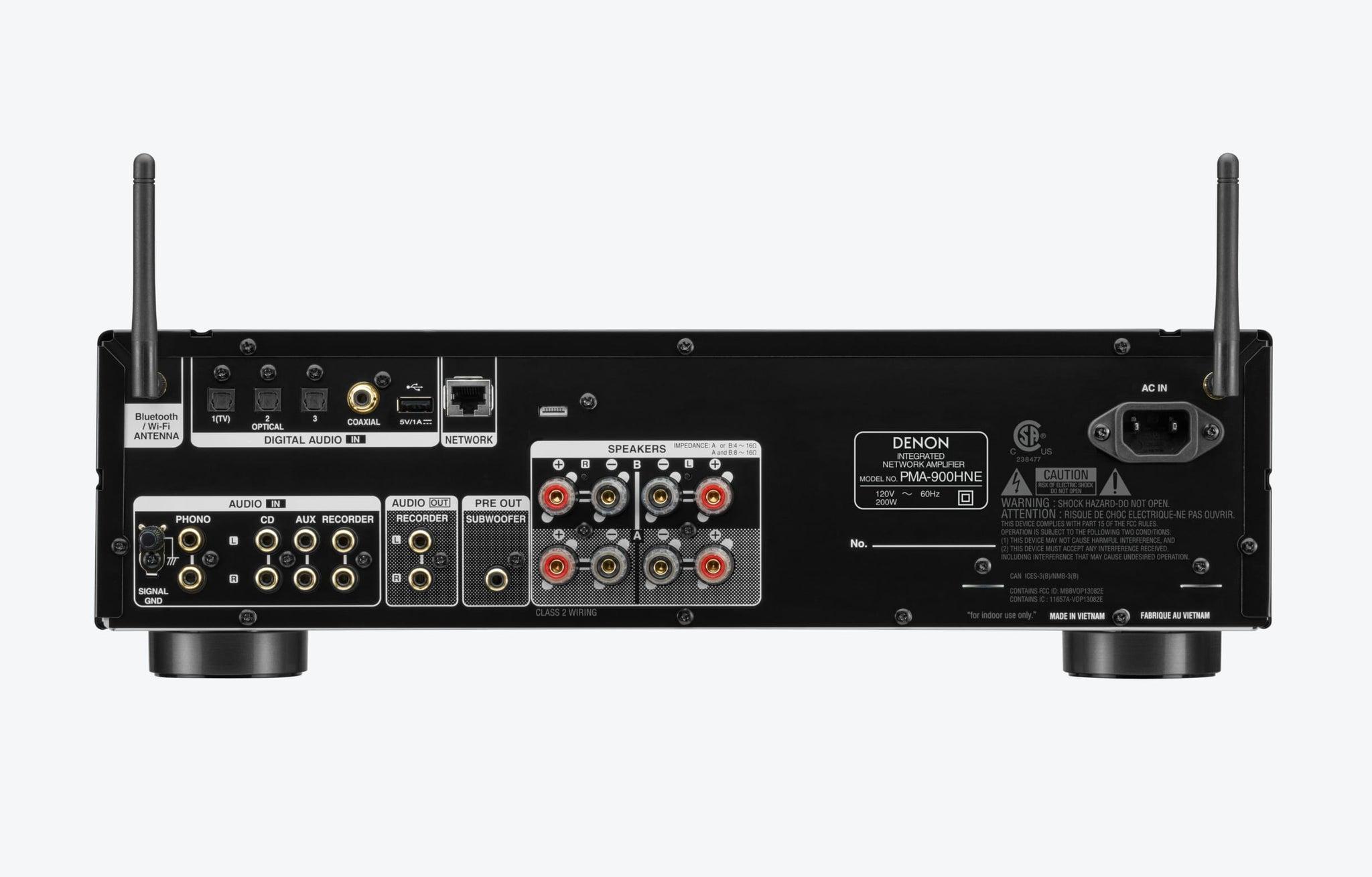
The connectivity story reveals each product's design philosophy clearly. The Eversolo Play focuses heavily on digital sources with HDMI ARC (which allows direct connection to your TV for high-quality audio), multiple optical and coaxial digital inputs, and USB connectivity for external storage devices. It even includes USB audio output, allowing you to use it as a high-end digital transport feeding an external DAC if you want to upgrade later.
The Eversolo includes both moving magnet (MM) and moving coil (MC) phono inputs for turntables, with an integrated phono preamp that handles the delicate amplification and equalization needed for vinyl playback. This covers both the most common cartridge types – moving magnet cartridges are standard and affordable, while moving coil cartridges are typically higher-end but require more amplification.
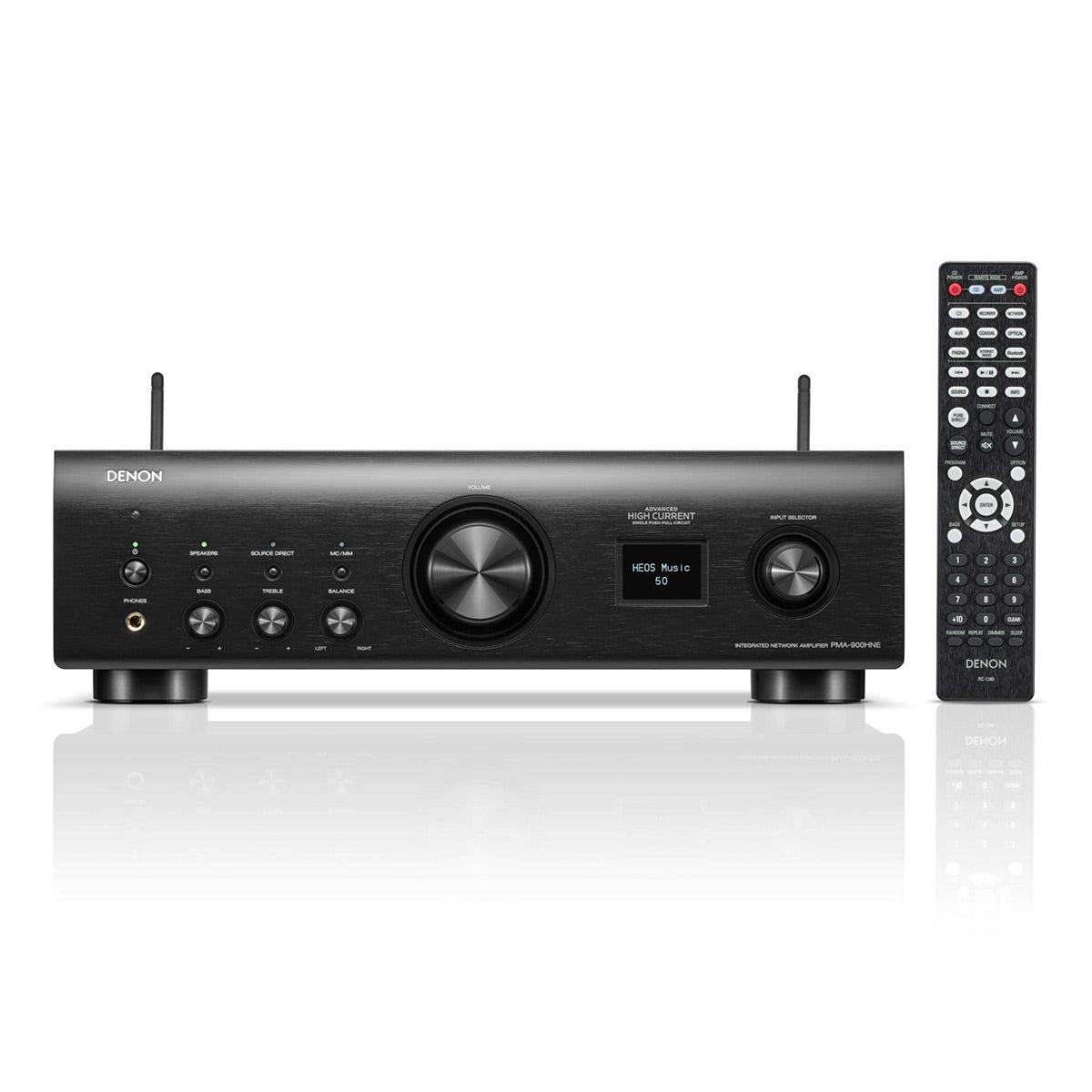
The Denon PMA-900HNE takes a more traditional hi-fi approach with extensive analog connectivity. Its MM/MC phono stage is particularly noteworthy – Denon has decades of experience in phono stage design, and this implementation receives consistent praise from vinyl enthusiasts. The Denon also includes multiple analog RCA inputs, a subwoofer output with bass management, and even A/B speaker switching that lets you connect two pairs of speakers and choose between them.
For home theater integration, the Eversolo Play has a significant advantage with its HDMI ARC input. This allows direct connection to your TV, automatically switching to TV audio when you turn on your television and providing much better sound quality than your TV's built-in speakers. The Denon lacks HDMI connectivity, requiring you to use optical or coaxial connections from your TV, which may not support the newest audio formats.
This is where the Eversolo Play truly shines. It includes comprehensive digital signal processing with a 15-band graphic equalizer and 10-band parametric equalizer. The difference between these EQ types is important: graphic EQ adjusts fixed frequency bands (like the familiar bass and treble controls but with many more bands), while parametric EQ lets you choose exactly which frequencies to adjust and how broadly those adjustments affect neighboring frequencies.
The Eversolo goes further with automatic room correction. Using either an external USB microphone or your smartphone's microphone, it can analyze your room's acoustic properties and automatically adjust its output to compensate for problematic resonances or frequency response issues. Room acoustics dramatically affect sound quality – even expensive speakers can sound mediocre in a problematic room – so this feature provides real value.
The system includes over 23 genre-based EQ presets and allows independent adjustment of left and right channels, which can help compensate for asymmetrical room layouts or speaker placement constraints.
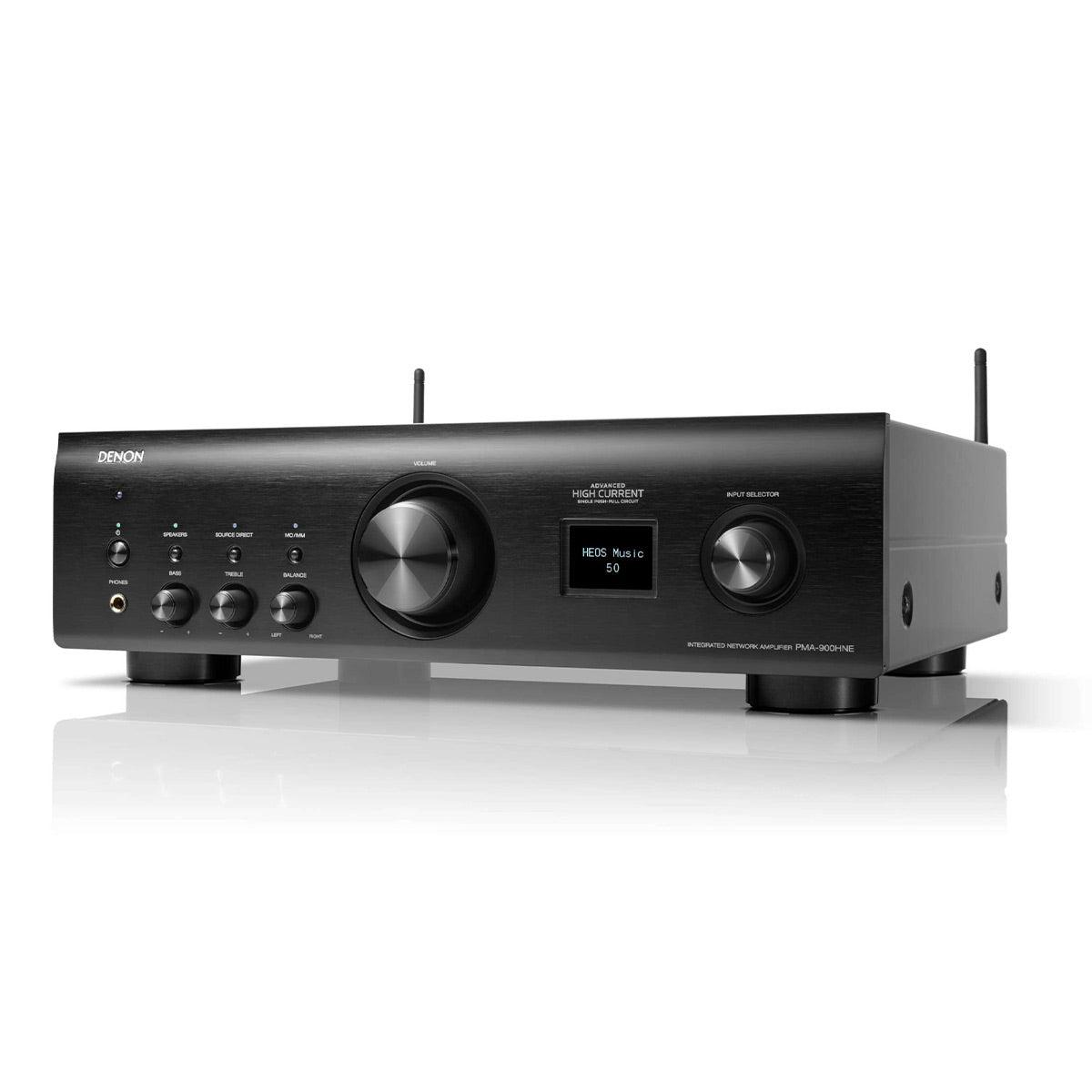
The Denon PMA-900HNE takes a purist approach with simple bass and treble controls adjustable by ±8dB, plus a Source Direct mode that bypasses all tone controls for the cleanest possible signal path. This reflects traditional hi-fi philosophy where room treatment and speaker positioning are preferred over electronic correction.
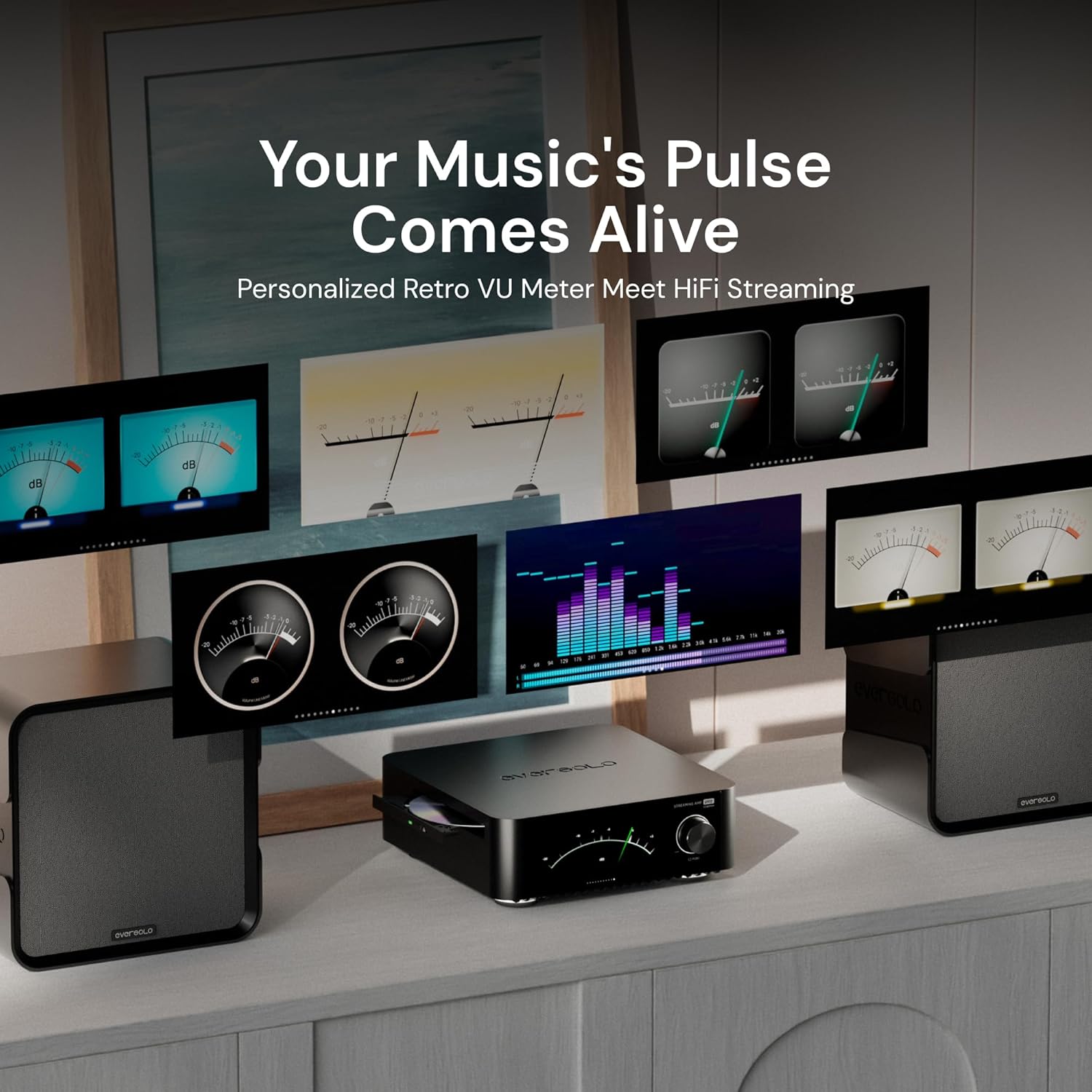
The daily experience with these products differs significantly. The Eversolo Play's touchscreen interface provides immediate access to all functions, streaming services, and settings. The screen displays album artwork, playback information, and even animated VU meters or spectrum analyzers that respond to your music. An RGB light ring changes color based on the music genre, adding a subtle visual element to your listening experience.
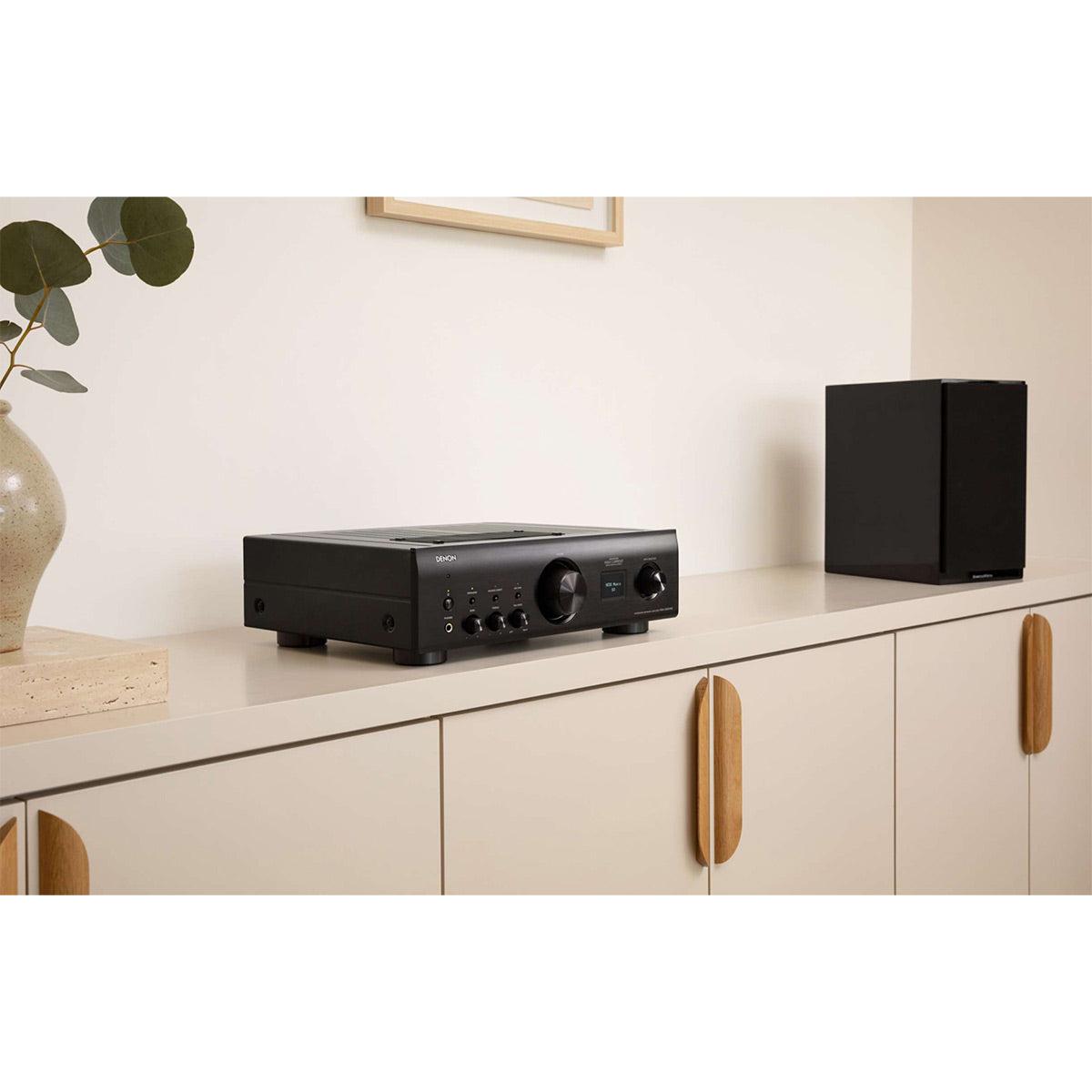
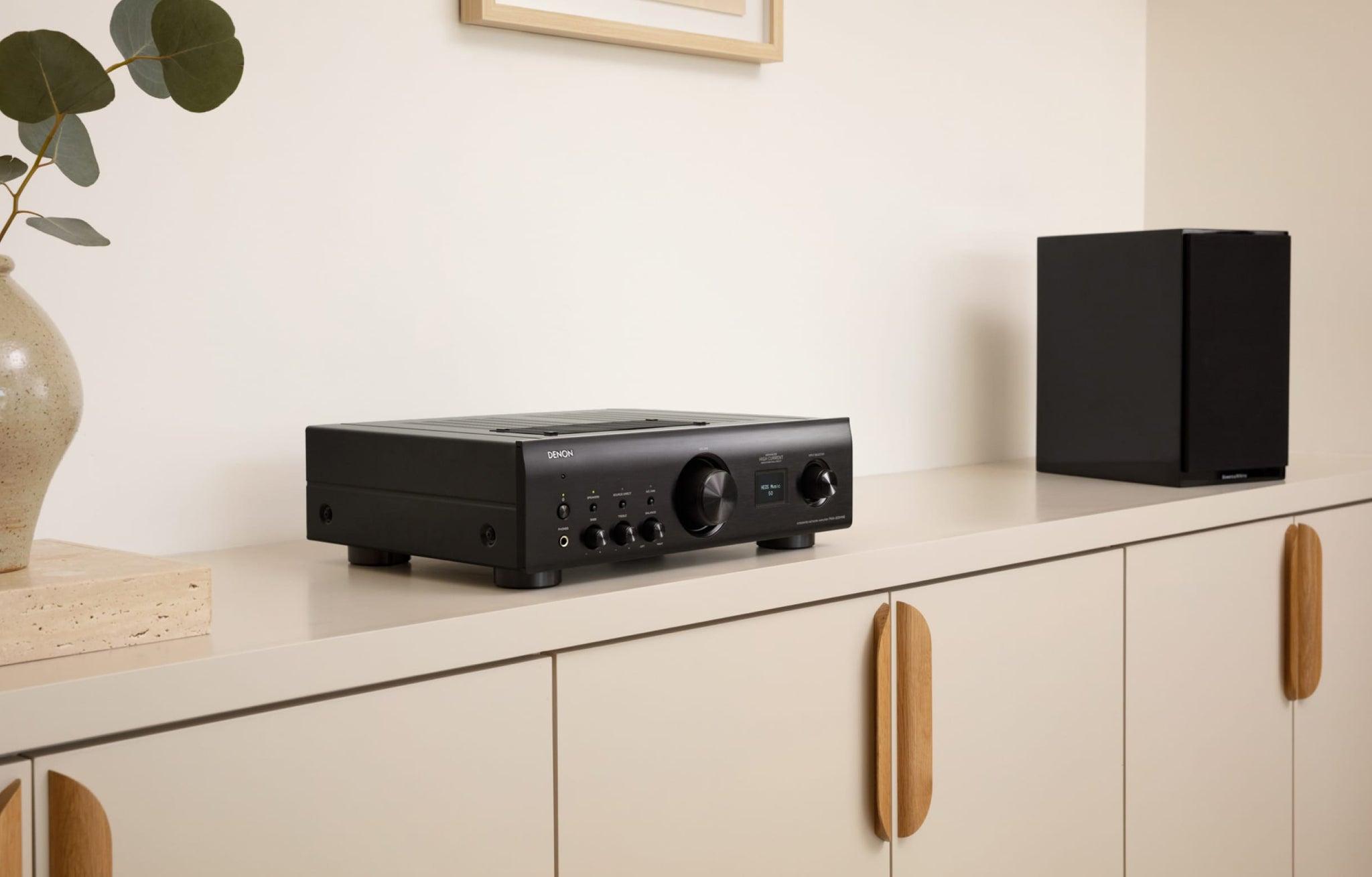
The Denon PMA-900HNE uses a small OLED display with traditional physical controls and relies primarily on smartphone app control for streaming functions. The HEOS app receives mixed reviews – it's functional but can be clunky compared to native streaming apps. However, many users appreciate having physical volume and input controls rather than reaching for their phone for basic functions.
Setup complexity varies between the products. The Eversolo Play handles most configuration through its touchscreen, while the Denon requires more smartphone app interaction for network setup. Both support voice assistants, but the Denon provides more comprehensive integration with Amazon Alexa and Google Assistant.
At the time of writing, the Eversolo Play typically costs several hundred dollars less than the Denon PMA-900HNE, making it an exceptional value proposition for the features provided. You get higher power output, more advanced DAC technology, comprehensive room correction, and modern connectivity features for significantly less money.
However, value isn't just about features per dollar. The Denon represents an established audio company with decades of amplifier design experience and a robust service network. Denon's reputation for reliability and the quality of their analog circuit design shouldn't be underestimated.
For home theater integration, the Eversolo Play wins decisively thanks to HDMI ARC connectivity and room correction capabilities. You can connect it directly to your TV and use its room correction to optimize both music and movie audio for your specific listening space.
For vinyl enthusiasts, the Denon PMA-900HNE has the edge with its superior phono stage design and traditional analog signal path. While the Eversolo includes phono inputs, Denon's decades of turntable and phono stage development show in the implementation.
For streaming-focused listeners, both products perform well, but the Eversolo Play's touchscreen interface and direct service integration provide a more seamless experience than the Denon's app-dependent approach.
Choose the Eversolo Play if you prioritize modern features, value, and convenience. Its touchscreen interface, comprehensive EQ and room correction, HDMI connectivity, and higher power output make it ideal for tech-savvy listeners who want a single device that can handle everything from TV audio to high-resolution streaming. The significant cost savings compared to the Denon make it particularly attractive for budget-conscious buyers who don't want to compromise on features.
Choose the Denon PMA-900HNE if you value traditional hi-fi principles, plan to play a lot of vinyl records, or want multi-room audio integration. The superior analog section, established brand reliability, and HEOS ecosystem integration make it worth the premium for listeners who prioritize these aspects over cutting-edge digital features.
Both products represent the current state of streaming amplifier technology, but they serve different philosophies of music reproduction. The Eversolo embraces digital processing and customization, while the Denon maintains traditional hi-fi values with modern streaming added thoughtfully. Your choice should align with your listening habits, technical preferences, and budget priorities.
| Eversolo Play Streaming Amplifier | Denon PMA-900HNE Integrated Network Amplifier |
|---|---|
| Power Output - Determines how loud and clear your speakers will sound | |
| 60W @ 8Ω / 110W @ 4Ω (more power for demanding speakers) | 50W @ 8Ω / 85W @ 4Ω (adequate for most bookshelf speakers) |
| Amplifier Type - Affects efficiency, heat, and sound character | |
| Class D with PurePath Ultra HD (efficient, cool running) | Class AB with Advanced High Current (traditional hi-fi approach) |
| DAC Resolution - Higher numbers support better quality digital files | |
| Up to DSD512 / PCM 768kHz/32-bit (future-proof for any file) | Up to PCM 192kHz/24-bit (handles all streaming services) |
| User Interface - How you control the device daily | |
| 5.5" touchscreen with built-in streaming apps | Small OLED display, smartphone app control |
| Streaming Integration - Access to your music services | |
| Native apps: Tidal, Qobuz, Spotify, Apple Music + Roon Ready | HEOS platform: major services + multi-room capability |
| Room Correction - Automatically optimizes sound for your space | |
| Advanced room correction with mic calibration | None (traditional tone controls only) |
| EQ Options - Fine-tune sound to your preferences | |
| 15-band graphic + 10-band parametric EQ with presets | Basic bass/treble controls (±8dB) |
| TV Integration - Connecting to your television | |
| HDMI ARC (direct, high-quality TV audio connection) | Optical/coaxial only (requires TV's digital output) |
| Phono Stage - For connecting turntables | |
| MM/MC support with integrated preamp | Premium MM/MC stage (Denon's specialty) |
| Wireless Connectivity - Modern standards affect audio quality | |
| Wi-Fi 6E, Bluetooth 5.3 with advanced codecs | Wi-Fi 802.11ac, Bluetooth 4.2 (SBC only) |
| Physical Build - Affects longevity and heat management | |
| Compact aluminum chassis with efficient cooling | Traditional hi-fi construction with extensive shielding |
| Multi-Room Audio - Playing synchronized music throughout home | |
| Basic multi-device support | Full HEOS ecosystem integration |
| Brand Heritage - Support and reliability considerations | |
| Newer brand focused on streaming innovation | Established 50+ year audio company |
The Eversolo Play delivers more power with 60 watts per channel into 8-ohm speakers and 110 watts into 4-ohm speakers. The Denon PMA-900HNE provides 50 watts into 8 ohms and 85 watts into 4 ohms. Both offer sufficient power for most bookshelf speakers, but the Eversolo Play provides more headroom for demanding speakers or higher listening levels.
The Eversolo Play includes HDMI ARC connectivity, allowing direct connection to your TV for high-quality audio. The Denon PMA-900HNE lacks HDMI inputs and requires optical or coaxial connections from your TV's digital outputs. For home theater integration, the Eversolo Play offers a more seamless solution.
Both support major streaming services like Spotify, Tidal, and Qobuz. The Eversolo Play features native apps accessible through its touchscreen interface, while the Denon PMA-900HNE uses the HEOS platform controlled via smartphone app. The Denon excels in multi-room audio if you have other HEOS-compatible devices.
Yes, both include MM/MC phono stages for turntable connection. The Denon PMA-900HNE has a particularly well-regarded phono stage, benefiting from Denon's decades of turntable expertise. The Eversolo Play includes phono capability but focuses more on digital sources.
The Eversolo Play offers more intuitive daily use with its 5.5-inch touchscreen providing direct access to all functions and streaming services. The Denon PMA-900HNE relies on smartphone app control for streaming while offering traditional physical controls for basic functions like volume and input selection.
The Eversolo Play provides extensive sound customization with 15-band graphic EQ, parametric EQ, and automatic room correction using microphone calibration. The Denon PMA-900HNE offers traditional bass and treble controls with a Source Direct mode for purist listening without any processing.
The Eversolo Play supports significantly higher resolution files up to DSD512 and PCM 768kHz/32-bit. The Denon PMA-900HNE handles PCM up to 192kHz/24-bit, which still exceeds most streaming service quality. Both handle all current streaming service formats without issues.
The Eversolo Play includes Bluetooth 5.3 with transmitter capability for wireless headphones. The Denon PMA-900HNE has a front-panel headphone jack but cannot transmit to Bluetooth headphones. The Eversolo offers more flexibility for wireless listening.
The Eversolo Play typically costs several hundred dollars less while offering higher power output, advanced room correction, and modern connectivity features. The Denon PMA-900HNE commands a premium for its established brand reputation, superior analog section, and multi-room capabilities.
The Eversolo Play includes USB audio output supporting up to DSD512 for connecting external DACs, making it useful as a high-end digital transport. The Denon PMA-900HNE focuses on its internal DAC without digital outputs for external conversion.
The Denon PMA-900HNE excels in multi-room setups through the mature HEOS ecosystem, allowing synchronized playback with other Denon and Marantz products. The Eversolo Play supports basic multi-device functionality but lacks the comprehensive multi-room integration of the Denon.
Both are complete streaming amplifiers requiring only speaker connections to function. The Eversolo Play handles everything through its touchscreen interface, while the Denon PMA-900HNE benefits from smartphone app control for streaming functions. Neither requires separate streamers, DACs, or preamps for basic operation.
We've done our best to create useful and informative comparisons to help you decide what product to buy. Our research uses advanced automated methods to create this comparison and perfection is not possible - please contact us for corrections or questions. These are the sites we've researched in the creation of this article: blog.son-video.com - audio46.com - upscaleaudio.com - audioadvice.com - musicdirect.com - audio46.com - whathifi.com - whathifi.com - bloomaudio.com - youtube.com - the-ear.net - whathifi.com - soundstagesimplifi.com - youtube.com - stevehuffphoto.com - darko.audio - youtube.com - eversolo.com - crutchfield.com - e-catalog.com - theaudiotailor.com.au - extremehifi.com - whathifi.com - speakerdecision.com - youtube.com - audiosciencereview.com - sound-advice.online - crutchfield.com - crutchfield.com - sweetwater.com - watthifi.com - youtube.com - accessories4less.com - soundstageaccess.com - icav.us - safeandsoundhq.com - listenup.com - accessories4less.com - audiosciencereview.com

Privacy Policy
Terms and Conditions - Affiliate Policy
Home Security
© Copyright 2008-2026.
11816 Inwood Rd #1211, Dallas, TX 75244