


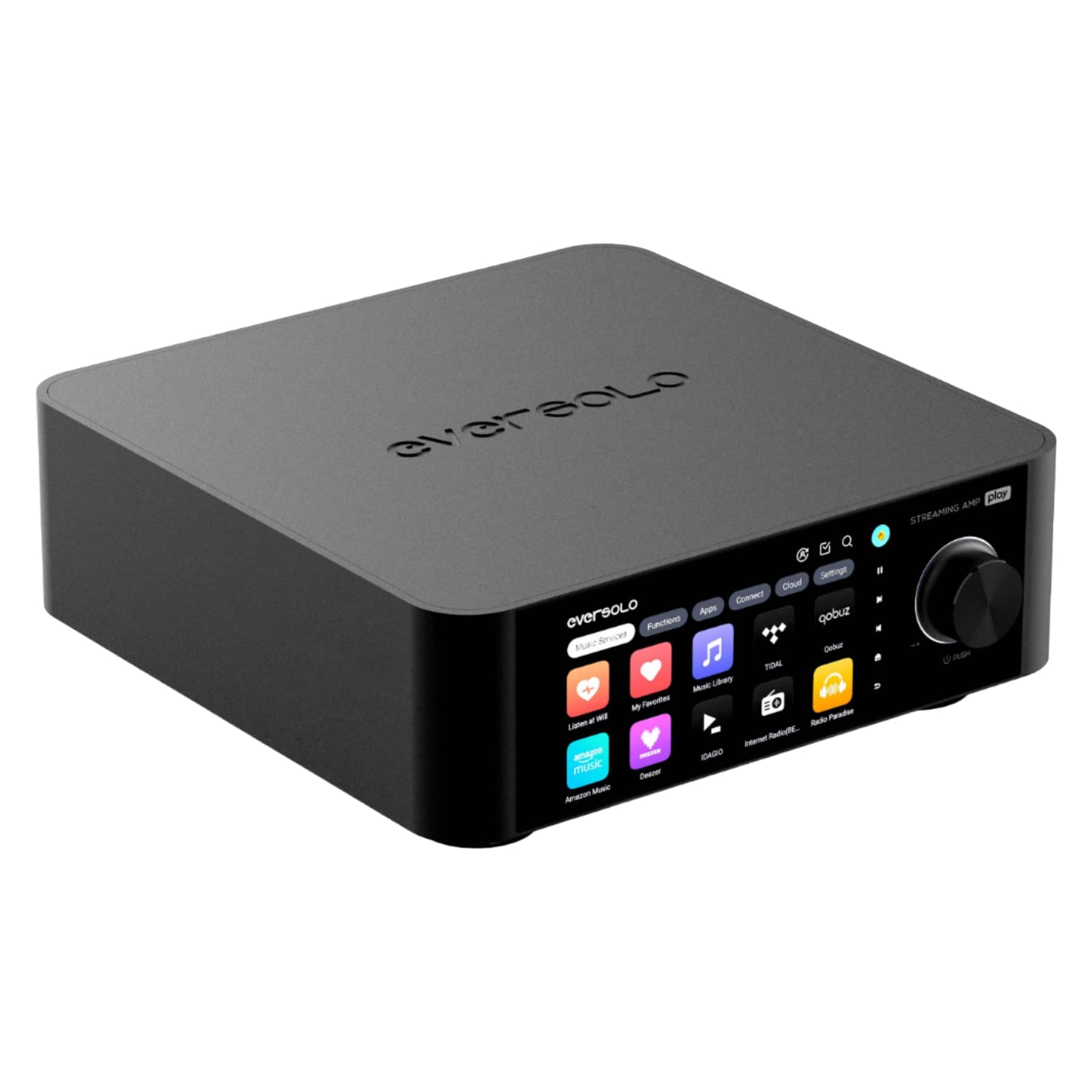
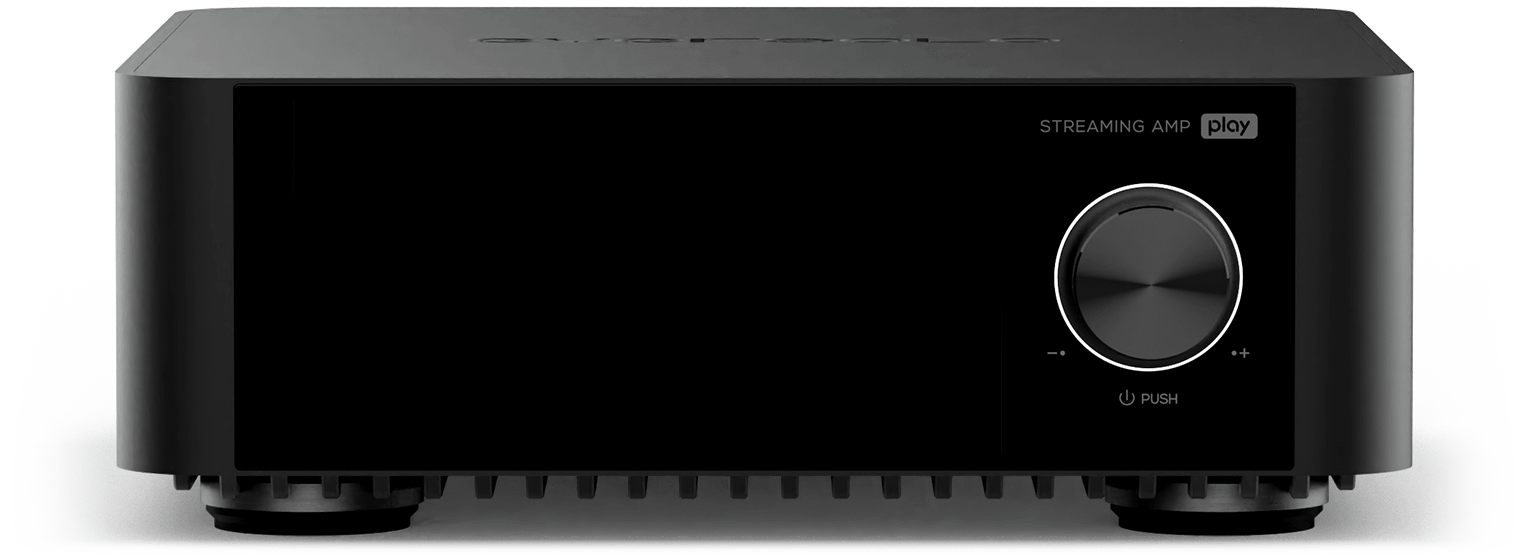
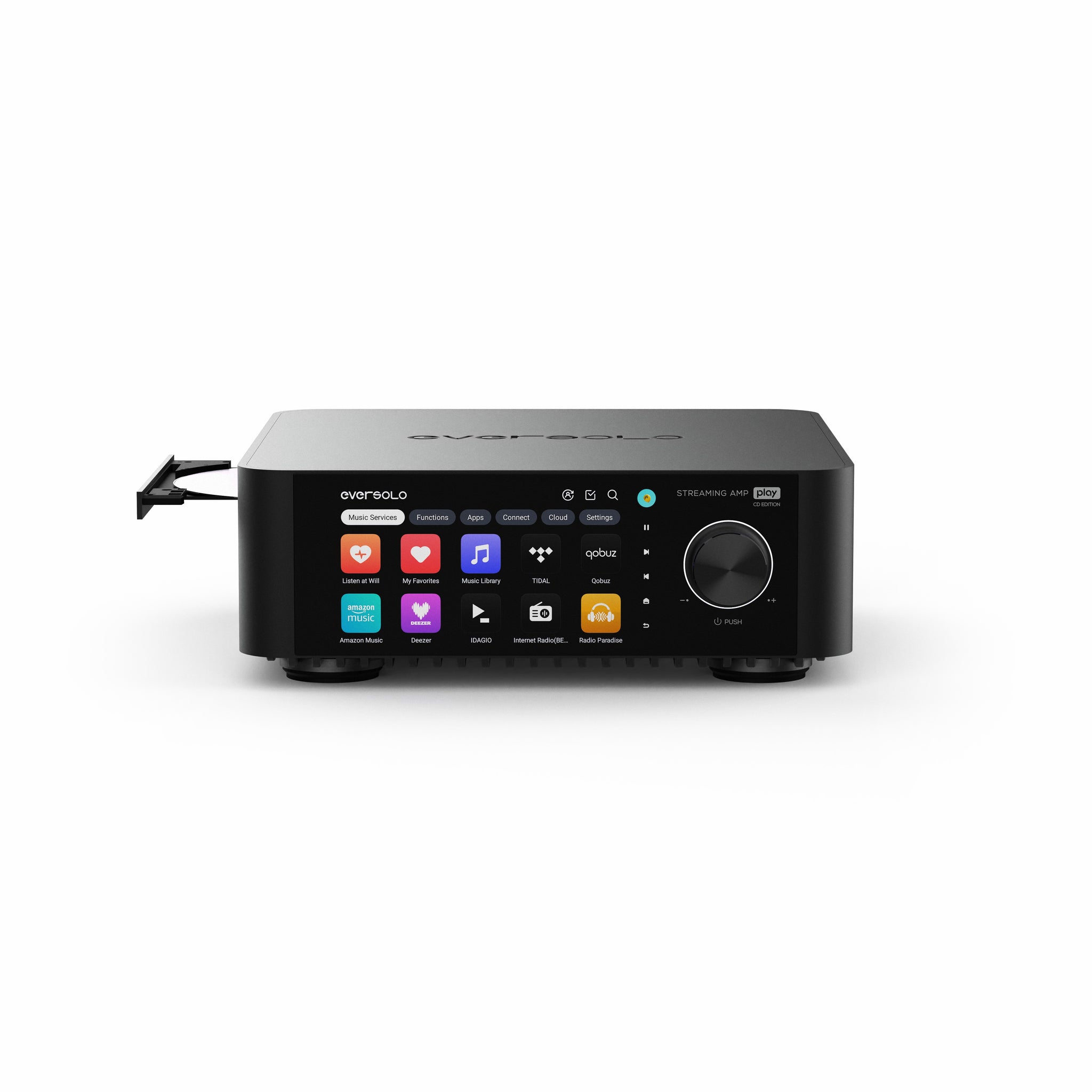
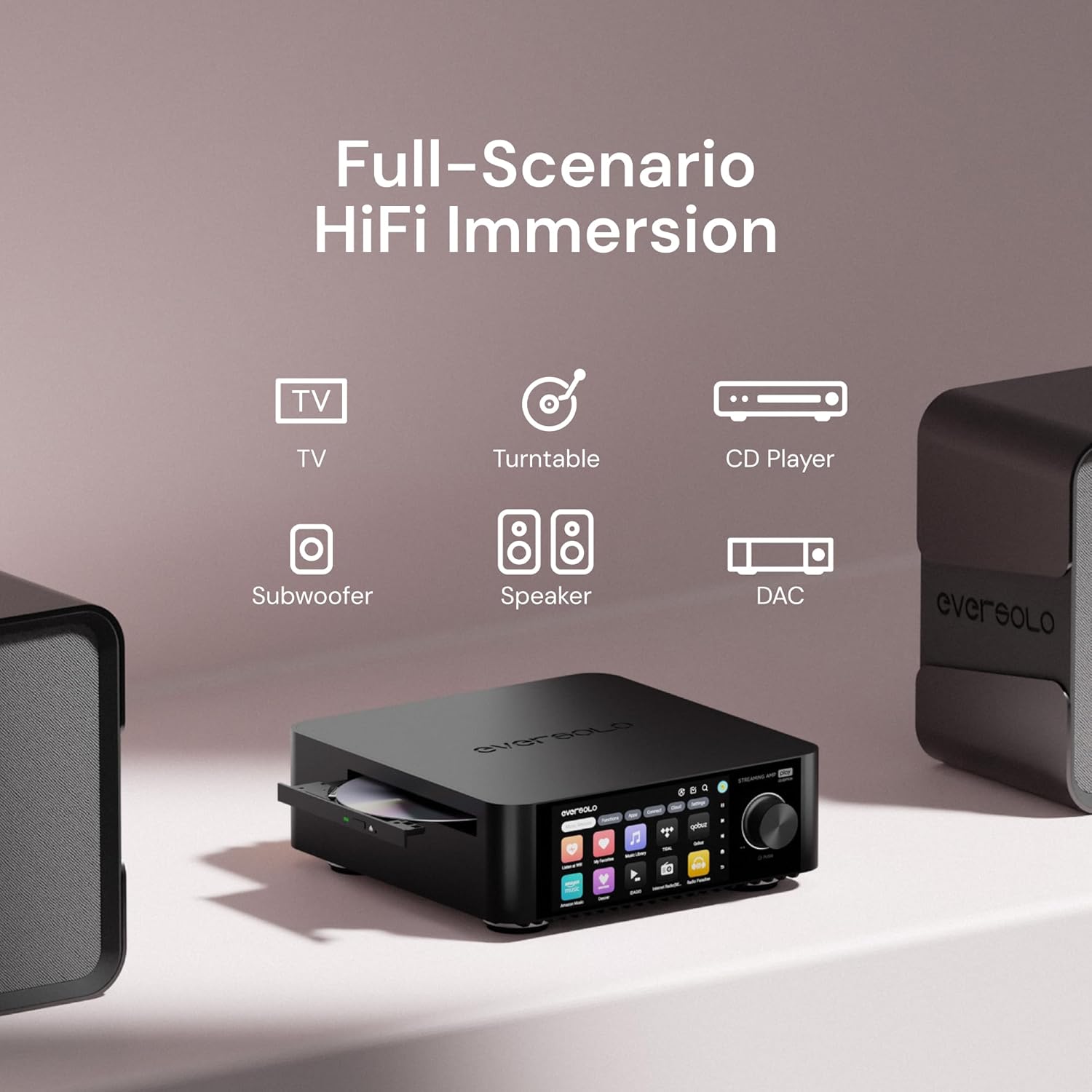



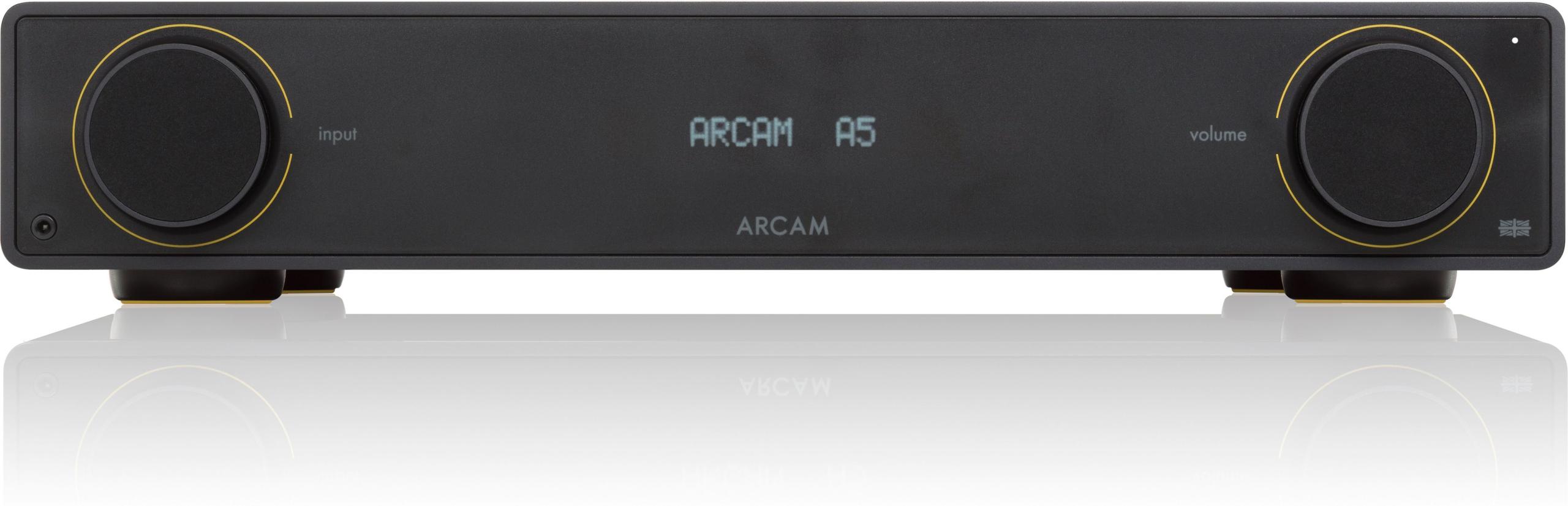
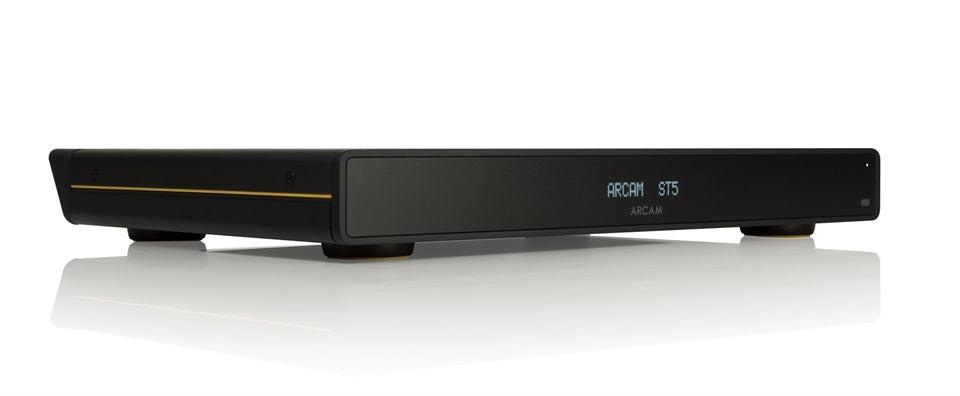
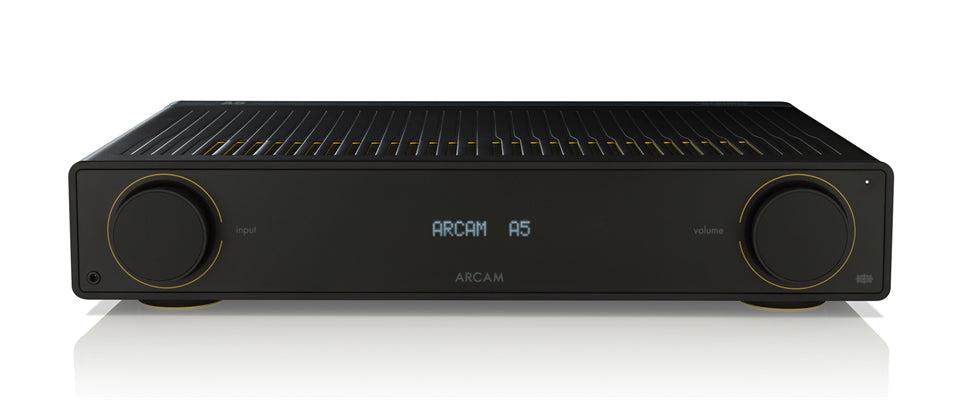
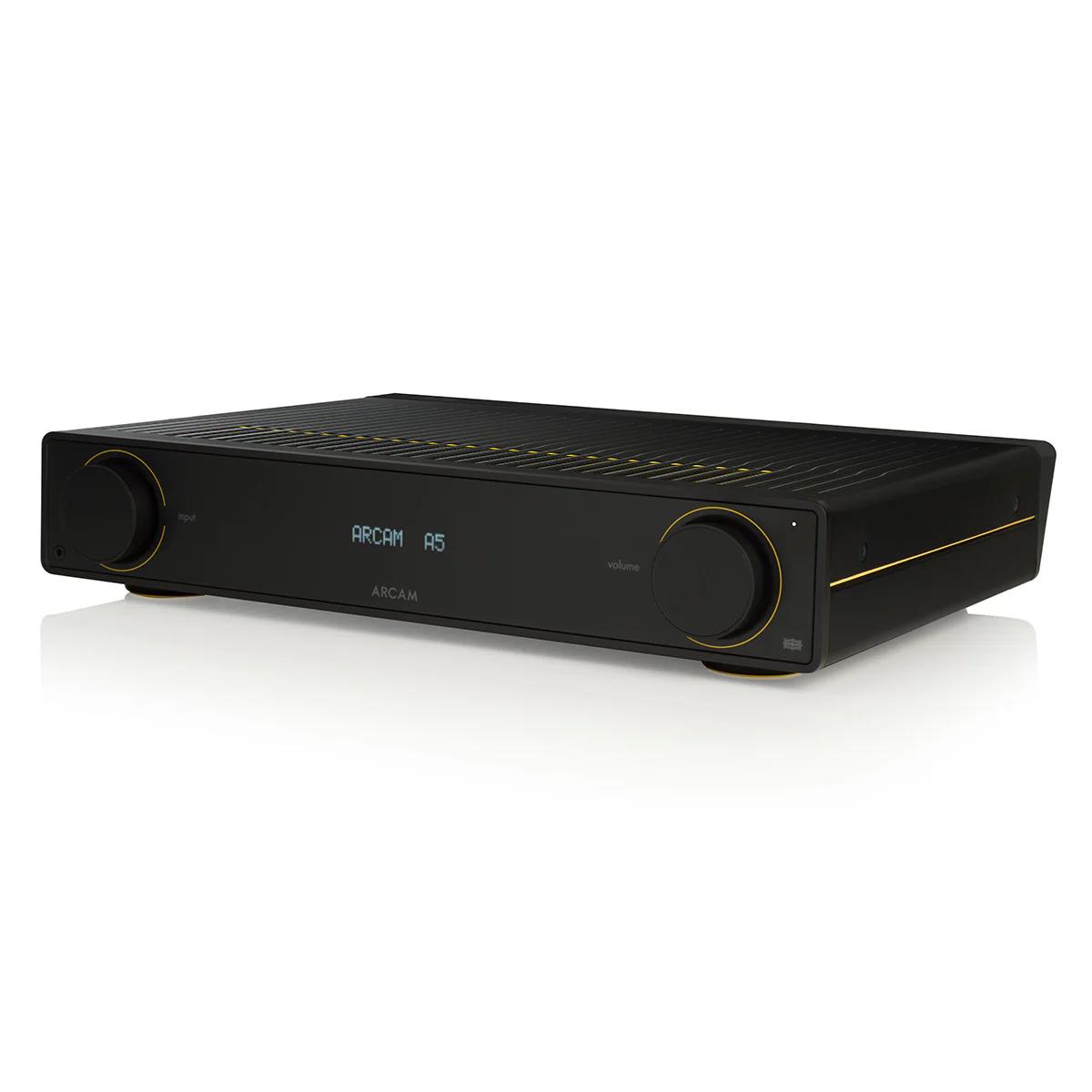
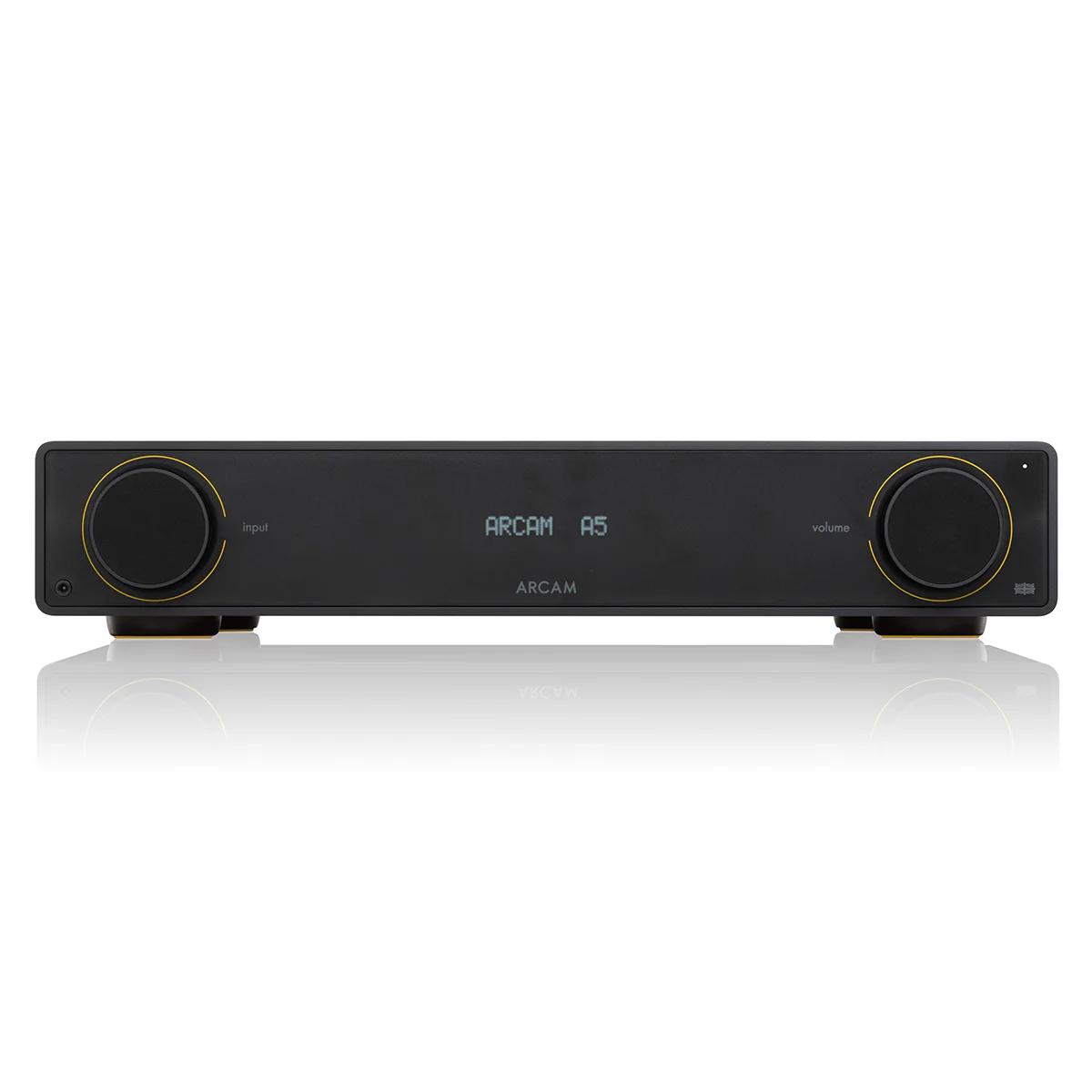
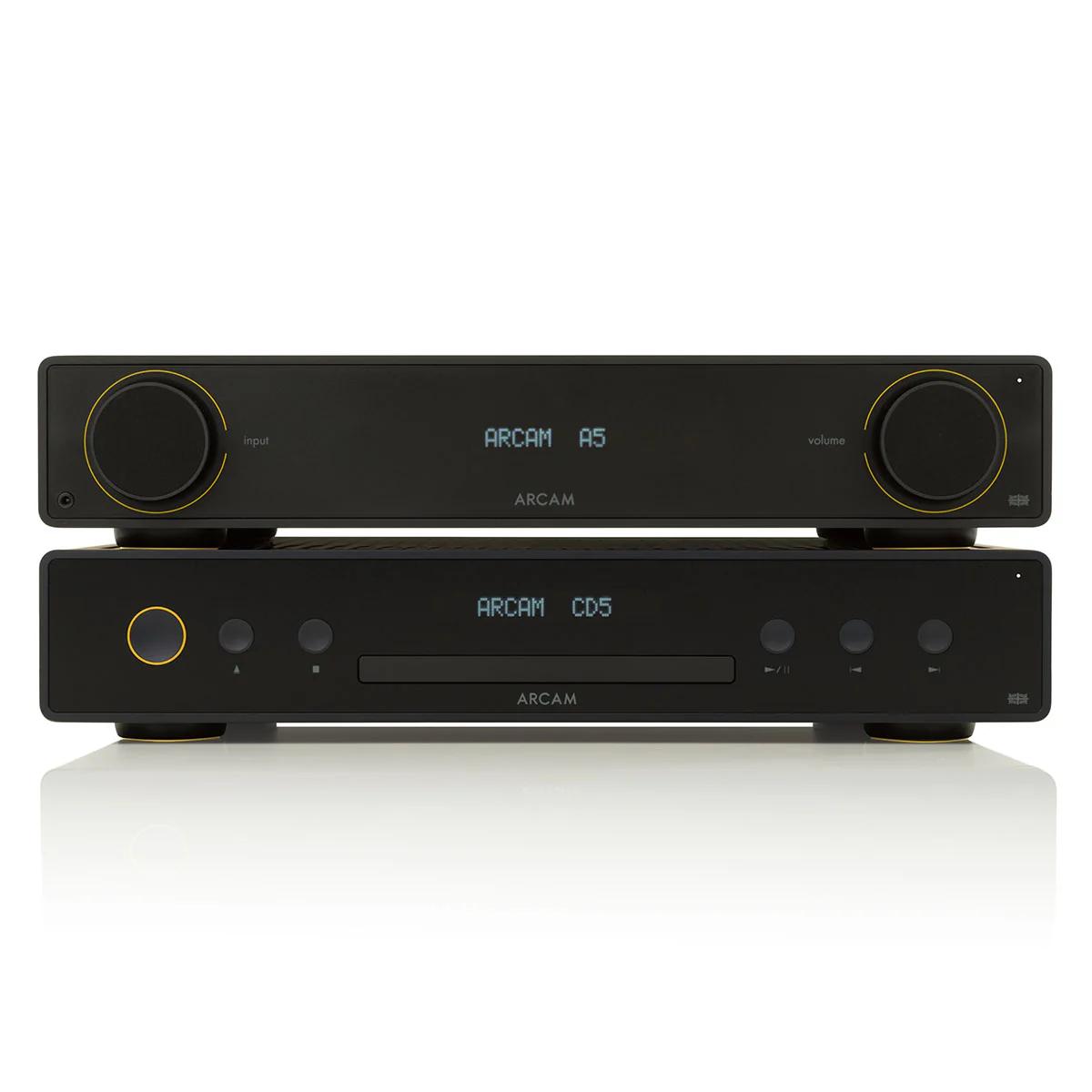
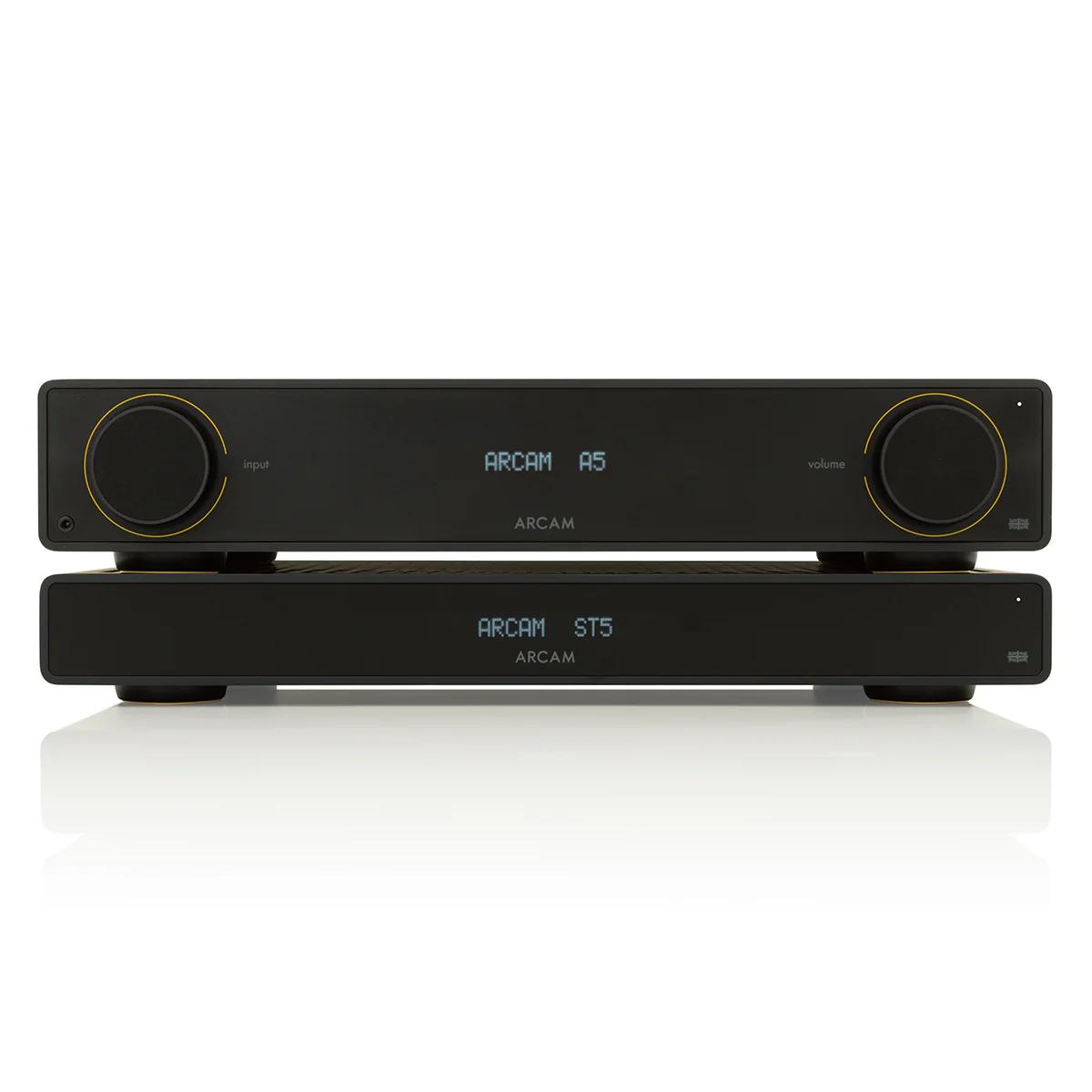
The amplifier world has split into two camps, and the choice between them reveals a lot about how you listen to music. On one side, we have streaming amplifiers like the Eversolo Play that cram everything into a single box—streaming services, digital conversion, and amplification. On the other, traditional integrated amplifiers like the Arcam Radia A5 focus on doing one thing exceptionally well: amplifying your music with minimal compromise.
At the time of writing, both products compete at similar price points, but they represent fundamentally different philosophies. Understanding these differences will help you pick the right foundation for your music system.
When Arcam released the A5 in 2024, they doubled down on their 45+ years of amplifier expertise, building what many consider a spiritual successor to their legendary DiVA series. The Eversolo Play, also arriving in 2024, took the opposite approach—integrating every modern digital audio technology into a single, touchscreen-equipped unit that looks more like a tablet than traditional hi-fi gear.
This split reflects how we consume music today. Streaming services now dominate music consumption, but the quality of amplification still determines how that music actually sounds through your speakers. The question becomes: do you prioritize the convenience of having everything in one box, or do you want the flexibility and performance that comes from purpose-built components?
The answer isn't straightforward, because both approaches have merit depending on your priorities, listening habits, and long-term plans for your system.
The most critical difference between these products lies in how they amplify your music. This matters more than any spec sheet can convey—poor amplification can make even the highest-resolution music sound flat and lifeless.
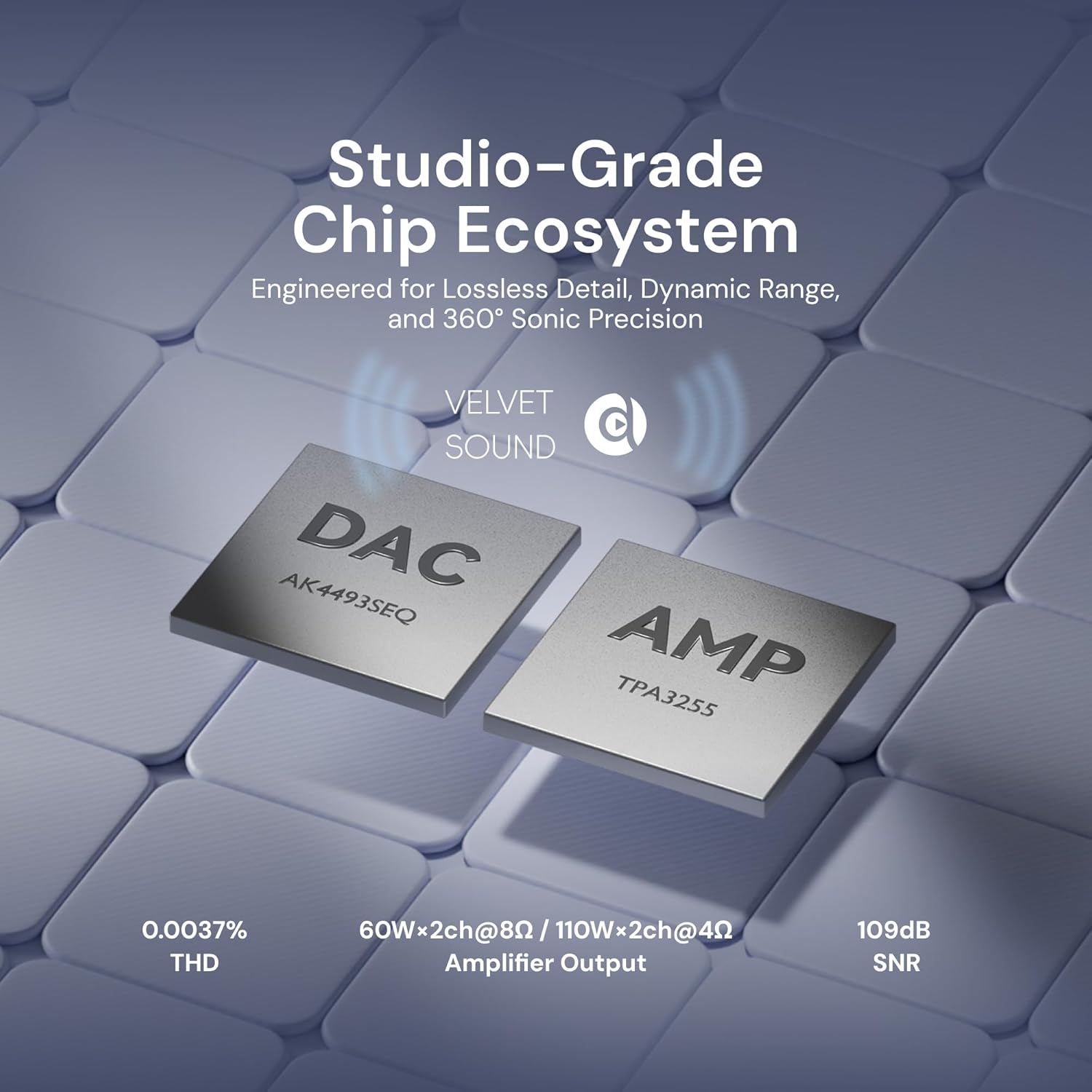
The Eversolo Play uses Class D amplification, delivering 60 watts per channel into 8-ohm speakers (110 watts into 4-ohm loads). Class D amplifiers work by rapidly switching the power on and off thousands of times per second, creating the audio signal through this switching pattern. This approach is incredibly efficient—generating little heat while consuming minimal power—and allows manufacturers to pack serious wattage into compact chassis.
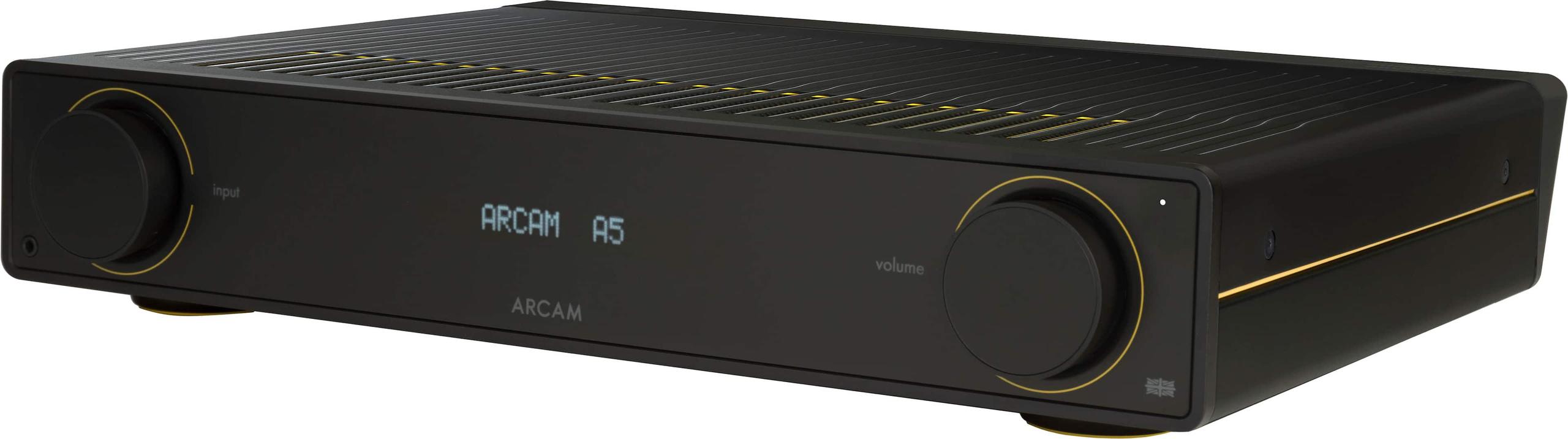
The Arcam A5 employs Class AB amplification, providing 50 watts per channel into 8-ohm speakers (75 watts into 4-ohms). Class AB amplifiers work more like traditional analog circuits, with the amplifying elements constantly conducting current in proportion to the music signal. This generates more heat and requires larger power supplies, but typically delivers more natural, dynamic sound reproduction.
Our research into professional reviews and user experiences reveals a stark difference in musical satisfaction. The Arcam A5 consistently receives praise for its "brilliant musicality" and ability to deliver engaging, dynamic sound that draws listeners into the music. Professional reviewers note its smooth, controlled bass response, clear midrange presentation, and sparkling high frequencies that never turn harsh or fatiguing.
The Eversolo Play, despite impressive specifications, faces consistent criticism for its amplification section. Multiple professional reviews describe its sound as "perfunctory" and "listless," lacking the rhythmic drive and emotional engagement that makes music compelling. What's particularly telling is that when reviewers connected the Eversolo's digital outputs to external amplifiers like the Arcam A5, the streaming section "came to life" with improved detail and dynamics—confirming that the amplifier section holds back the overall performance.
While the Eversolo Play technically delivers more power on paper, the Arcam A5's Class AB design provides superior current delivery and speaker control. This translates to better bass control, more precise imaging, and the ability to maintain composure during complex musical passages. Many users report that the A5 drives demanding speakers more effectively than its modest 50-watt rating would suggest, while the Play's 60 watts often sound less powerful in real-world listening.
The harmonic distortion specifications tell part of the story: the Arcam A5 achieves just 0.003% total harmonic distortion at 80% power, while the Eversolo Play measures 0.0037% THD. These are both excellent figures, but the Arcam's slightly lower distortion, combined with its superior implementation, contributes to cleaner, more natural sound reproduction.
Both amplifiers include digital-to-analog conversion (DAC) capabilities, but their approaches differ significantly.
The Eversolo Play features an AKM AK4493SEQ DAC with support for extraordinarily high-resolution files—up to 32-bit/768kHz PCM and DSD512. These specifications far exceed any currently available music content and represent impressive technical capability.
The Arcam A5 uses an ESS Sabre ES9018 DAC, supporting up to 24-bit/192kHz PCM. While these specifications appear more modest, they're more than adequate for all current high-resolution music sources, and the ES9018 has earned an excellent reputation among audio enthusiasts for its musical, natural sound quality.
In practice, DAC quality depends more on implementation than raw specifications. The Arcam's careful circuit design and power supply likely deliver more satisfying musical results than the Eversolo's higher-spec chip, though both are capable of excellent digital-to-analog conversion.
This category represents the Eversolo Play's strongest advantage and the Arcam A5's most significant limitation.
The Eversolo Play includes comprehensive streaming capabilities that would require separate components in a traditional system. It supports all major streaming services—TIDAL, Qobuz, Amazon Music, Spotify, Apple Music—with direct integration that provides bit-perfect audio delivery. The unit also handles internet radio, local network music libraries, and USB storage devices.
The 5.5-inch touchscreen interface receives consistent praise for its responsiveness and intuitive operation. Users can browse music libraries, adjust settings, and control playback without reaching for their phone or a separate remote. The screen can display album artwork, VU meters, or spectrum analyzers, adding visual engagement to the listening experience.
The Play also includes Wi-Fi 6E connectivity, ensuring stable, high-bandwidth streaming even in congested wireless environments. This modern wireless standard provides better range and reliability than older Wi-Fi implementations.
The Arcam A5 includes no built-in network streaming capabilities. For comprehensive streaming service access, you'll need to add an external network streamer, which typically costs $200-500 depending on features and quality level. This adds complexity and cost but provides important advantages.
However, the A5 does include Bluetooth 5.2 with aptX Adaptive technology, which provides higher-quality wireless audio than standard Bluetooth implementations. More uniquely, it offers two-way Bluetooth functionality—you can stream music to Bluetooth headphones or speakers directly from the amplifier, a feature not commonly found at this price level.
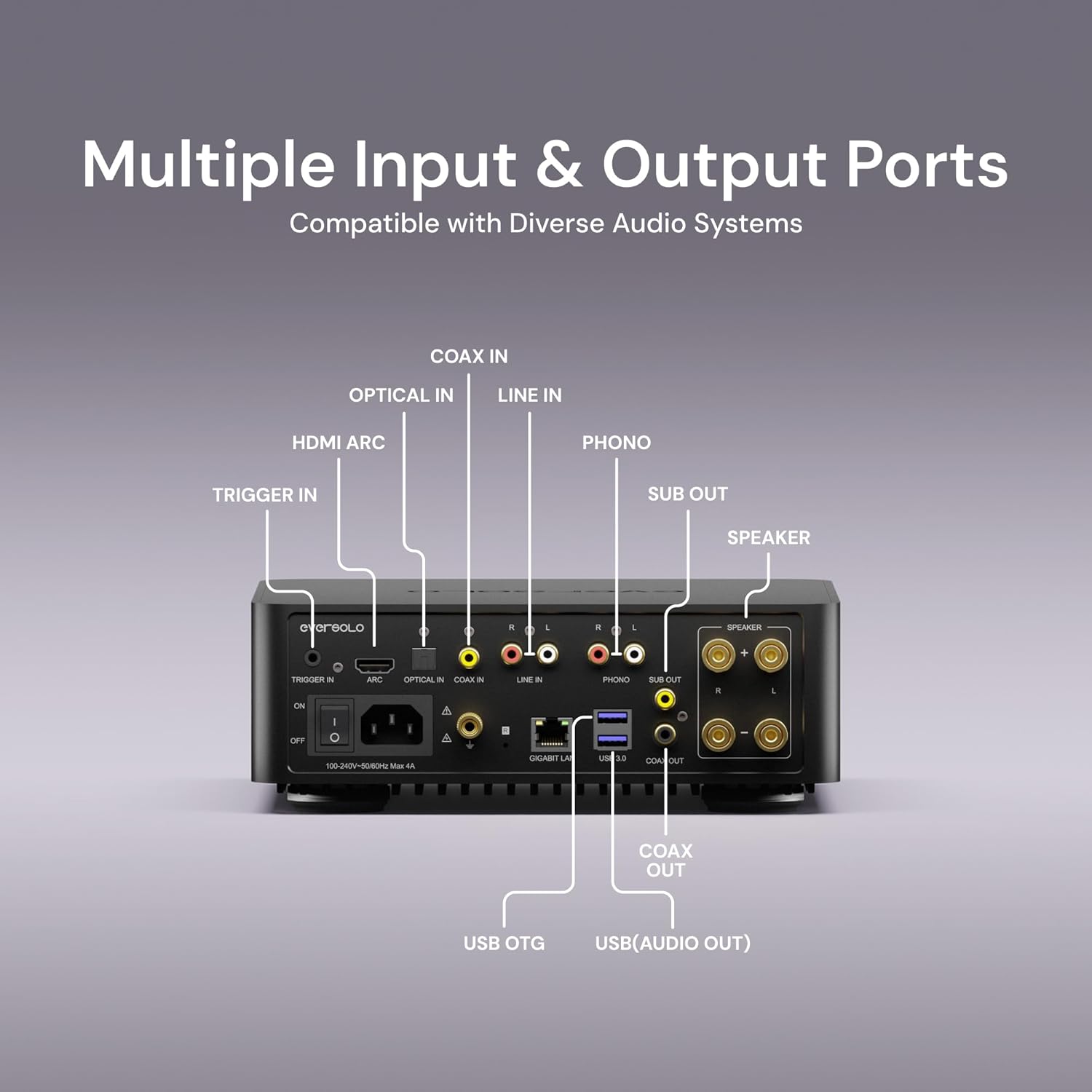
The Eversolo Play offers more comprehensive modern connectivity. Its HDMI ARC input allows direct connection to modern TVs, automatically switching to TV audio when you turn on your television. This makes it excellent for combined music and home theater use. The unit also includes both moving magnet (MM) and moving coil (MC) phono inputs for turntables—MC compatibility is unusual at this price point and valuable for serious vinyl enthusiasts.
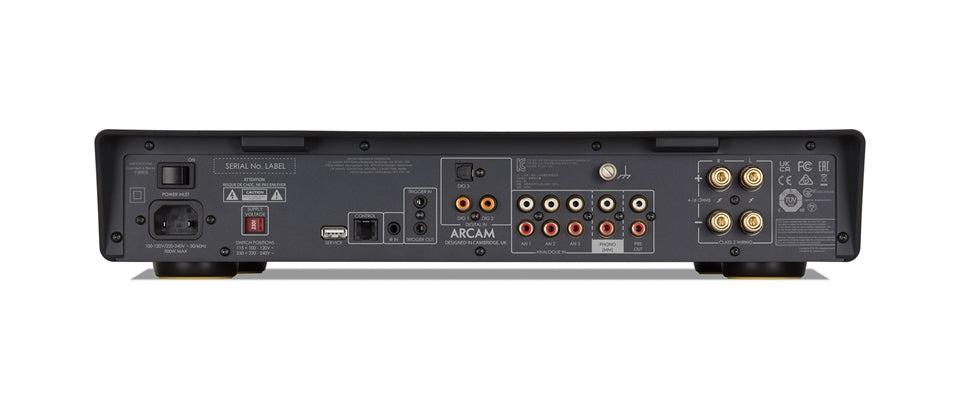
The Arcam A5 takes a more traditional approach with three analog RCA inputs, one optical digital input, and two coaxial digital inputs. Crucially, it includes stereo RCA preamp outputs, which allow you to add an external power amplifier later for system upgrades. It also features a high-quality 3.5mm headphone output with variable output levels to match different headphone impedances.
The interface differences reflect each product's design philosophy and target audience.
The Eversolo Play's touchscreen interface feels familiar to anyone accustomed to smartphones or tablets. Navigation is intuitive, with customizable home screens, album artwork display, and responsive touch controls. The companion smartphone app provides additional functionality and allows control from anywhere in your home.
Users consistently praise the interface quality, describing it as "sharp, bright, and responsive" compared to competing products. The visual feedback—VU meters, spectrum displays, and album art—adds engagement to the listening experience.
The Arcam A5 employs a minimalist front panel design with physical controls and a simple display. Operation relies primarily on the included remote control, which provides access to all functions and inputs. This approach appeals to users who prefer tactile controls and don't want to depend on smartphone apps or touchscreen interfaces.
While less visually impressive than the Eversolo's touchscreen, the traditional interface offers advantages in reliability and simplicity. Physical controls don't require software updates and won't become obsolete as operating systems evolve.
The construction differences reflect each product's design priorities and hint at long-term reliability.
The Eversolo Play weighs 2.6 kilograms (5.7 pounds) and measures relatively compactly. Its aluminum chassis with glass fascia feels solid and modern, but the lighter weight reflects the efficient Class D amplification that doesn't require massive heat sinks or transformers.
The Arcam A5 weighs 8 kilograms (17.6 pounds)—nearly three times heavier than the Eversolo. This substantial weight comes from the robust Class AB amplifier circuitry, large transformer, and extensive heat sinking required for traditional amplification. The build quality feels appropriately substantial for serious hi-fi equipment.
Arcam backs the A5 with a five-year warranty, demonstrating confidence in the product's long-term reliability. This extended coverage is unusual at this price level and suggests that Arcam expects the amplifier to provide many years of service.
The warranty difference matters because integrated amplifiers often serve as the foundation of audio systems for many years. A longer warranty period indicates the manufacturer's commitment to supporting the product and suggests more robust internal construction.
For users combining music listening with television audio, the connectivity differences become crucial.
The Eversolo Play excels in home theater integration with its HDMI ARC input. This single connection handles audio from your TV, automatically switching inputs when you turn on the television and supporting volume control through your TV remote. The subwoofer output with adjustable crossover settings makes it easy to add a powered subwoofer for enhanced movie dialog and effects.
The Arcam A5 can connect to televisions through optical digital inputs, but this requires manual input switching and doesn't provide the seamless integration that HDMI ARC offers. However, its superior amplification quality will deliver more engaging sound for both music and movie soundtracks.
At the time of writing, both products compete at similar price points, but they deliver value in different ways.
The Eversolo Play provides exceptional feature density—you get streaming, digital conversion, amplification, room correction, and comprehensive connectivity in a single purchase. For someone building their first serious audio system, this represents tremendous convenience and immediate functionality.
However, the Arcam A5 requires additional components for equivalent streaming functionality, typically adding $200-500 to the total system cost. This makes the complete system roughly 30-50% more expensive, but delivers meaningfully better sound quality and upgrade flexibility.
The Eversolo Play includes sophisticated digital signal processing with 15-band graphic EQ, 10-band parametric EQ, and automatic room correction using either an external microphone or your smartphone's microphone. These features help optimize the sound for your specific listening room and personal preferences.
The Arcam A5 takes a purist approach with no built-in room correction or digital EQ. This reflects the traditional hi-fi philosophy that high-quality amplification should reproduce the source material without additional processing. Room optimization must be handled through speaker placement, acoustic treatments, or external processors.
The upgrade potential differs significantly between these approaches.
The Eversolo Play represents a complete, integrated solution. While you can connect external sources through its various inputs, the amplification section cannot be bypassed or upgraded independently. If you want better amplification later, you'd need to replace the entire unit.
The Arcam A5 includes preamp outputs that allow you to add external power amplification while retaining the A5's DAC and input switching capabilities. This provides a clear upgrade path—you could add a more powerful Arcam power amplifier or even separate mono amplifiers for ultimate performance.
You're building your first serious audio system and want immediate access to all modern streaming services without additional purchases. The comprehensive feature set, modern interface, and single-box convenience make it ideal for users who prioritize simplicity and integration over ultimate sound quality.
The Play also makes sense if you primarily stream music, need TV integration through HDMI ARC, or want room correction capabilities without external processors. Users with efficient speakers in smaller listening rooms will find its amplification adequate for satisfying volume levels.
Sound quality is your primary concern and you're willing to add external components for comprehensive functionality. The superior amplification will provide more musical satisfaction and better speaker control, particularly with demanding speakers or in larger listening rooms.
The A5 is the better choice for users who already own or plan to purchase a separate network streamer, have multiple analog sources like CD players or turntables, or want the flexibility to upgrade components independently over time.
An interesting option is using both products together—the Eversolo Play as a digital source feeding the Arcam A5 through coaxial or optical connections. This combination provides the Play's streaming convenience and modern interface with the A5's superior amplification.
While this doubles the cost and complexity, it addresses the Play's amplification shortcomings while retaining its streaming strengths. Professional reviewers noted significant improvements when using this configuration, suggesting it might be worth considering if your budget allows.
These products represent two valid but different approaches to modern audio. The Eversolo Play prioritizes convenience, integration, and modern features, while the Arcam A5 focuses on amplification quality and traditional hi-fi values.
Your choice should align with your listening priorities, technical comfort level, and long-term system plans. If you want to start listening to high-quality streaming music immediately with minimal complexity, the Play delivers impressive capability at its price point. If you prioritize sound quality above convenience and don't mind assembling a system from separate components, the A5 provides a superior foundation for serious music listening.
Both approaches can deliver musical satisfaction, but they'll satisfy different users in different ways. The key is honestly assessing your priorities and choosing the approach that best matches your listening habits and system goals.
| Eversolo Play Streaming Amplifier | Arcam Radia A5 Integrated Amplifier |
|---|---|
| Amplifier Type - Determines sound quality and efficiency | |
| Class D (efficient, compact, but can lack warmth) | Class AB (warmer sound, more natural dynamics) |
| Power Output - How loud and controlled your speakers will sound | |
| 60W @ 8Ω, 110W @ 4Ω | 50W @ 8Ω, 75W @ 4Ω |
| Sound Quality Reception - Based on professional reviews | |
| Criticized as "listless" and lacking engagement | Praised for "brilliant musicality" and dynamics |
| Built-in Streaming - Convenience for modern music consumption | |
| Comprehensive: TIDAL, Qobuz, Spotify, Apple Music, Roon Ready | None - requires external streamer |
| User Interface - How you'll control your music daily | |
| 5.5" responsive touchscreen with app control | Traditional remote control, no touchscreen |
| DAC Specifications - Maximum digital audio quality supported | |
| AKM AK4493SEQ, up to 32-bit/768kHz, DSD512 | ESS Sabre ES9018, up to 24-bit/192kHz |
| Wireless Connectivity - Modern streaming convenience | |
| Wi-Fi 6E, Bluetooth 5.3, AirPlay | Bluetooth 5.2 with aptX Adaptive only |
| TV Integration - Important for combined music/TV systems | |
| HDMI ARC input for seamless TV audio | Optical input only, manual switching required |
| Phono Input - For turntable users | |
| MM/MC support (rare MC compatibility at this price) | MM only, but high-quality implementation |
| Headphone Output - For private listening | |
| None | 3.5mm front panel with variable output levels |
| Upgrade Path - Future system expansion options | |
| Limited - amplifier section cannot be bypassed | Preamp outputs allow external power amplifier addition |
| Build Quality Indicators - Long-term reliability expectations | |
| 2.6kg weight, aluminum construction | 8kg weight, substantial build, 5-year warranty |
| Room Correction - Acoustic optimization features | |
| Advanced: 15-band EQ, parametric EQ, auto room correction | None - purist approach |
| Best For - Target user profiles | |
| Streaming-focused users wanting all-in-one convenience | Audiophiles prioritizing sound quality over features |
The Arcam Radia A5 delivers significantly better sound quality for music. Professional reviews consistently praise its "brilliant musicality" and engaging dynamics, while the Eversolo Play receives criticism for sounding "listless" and lacking emotional engagement. The Arcam's Class AB amplification provides more natural sound reproduction compared to the Eversolo's Class D design.
The Eversolo Play includes comprehensive built-in streaming for TIDAL, Qobuz, Spotify, Apple Music, and more—no additional components needed. The Arcam Radia A5 has no network streaming capabilities and requires an external streamer for accessing music services, adding to the total system cost.
The Eversolo Play excels for home theater with its HDMI ARC input that seamlessly connects to TVs and automatically switches inputs. It also includes a subwoofer output for 2.1 setups. The Arcam A5 only offers optical input for TV connection and lacks subwoofer output, making it less convenient for combined music and movie systems.
The Eversolo Play delivers 60 watts per channel into 8-ohm speakers (110W into 4-ohm), while the Arcam Radia A5 provides 50 watts into 8-ohm speakers (75W into 4-ohm). Despite lower power ratings, the Arcam often drives speakers more effectively due to its superior Class AB design.
Yes, both include phono inputs, but with different capabilities. The Eversolo Play supports both moving magnet (MM) and moving coil (MC) cartridges—rare MC support at this price. The Arcam A5 only supports MM cartridges but offers higher-quality phono stage implementation.
The Eversolo Play offers more modern connectivity including HDMI ARC, Wi-Fi 6E, comprehensive streaming, and both MM/MC phono inputs. The Arcam Radia A5 provides traditional connectivity with multiple RCA inputs, optical/coaxial digital inputs, and crucially includes preamp outputs for system expansion.
The Eversolo Play includes advanced room correction with 15-band graphic EQ, parametric EQ, and automatic acoustic calibration via microphone. The Arcam A5 takes a purist approach with no digital processing or room correction features.
The Eversolo Play offers easier daily operation with its responsive 5.5-inch touchscreen, smartphone app control, and automatic TV switching via HDMI ARC. The Arcam Radia A5 uses traditional physical controls and remote operation, appealing to users who prefer tactile interfaces.
The Arcam A5 offers better upgrade flexibility with preamp outputs that allow adding external power amplifiers later. The Eversolo Play is a complete integrated solution where the amplifier section cannot be bypassed or upgraded independently.
The Arcam Radia A5 shows superior long-term construction with its 8kg weight, substantial build quality, and 5-year warranty. The Eversolo Play weighs only 2.6kg and uses more compact construction appropriate for its efficient Class D design.
The Eversolo Play is truly all-in-one—just connect speakers and start streaming immediately. The Arcam A5 requires an external network streamer (typically costing $200-500 additional) to access modern streaming services, increasing the total system investment.
Value depends on priorities: the Eversolo Play provides exceptional feature density and immediate functionality in one purchase. The Arcam Radia A5 requires additional components but delivers superior sound quality and upgrade flexibility, making it better long-term value for serious listening despite higher total system cost.
We've done our best to create useful and informative comparisons to help you decide what product to buy. Our research uses advanced automated methods to create this comparison and perfection is not possible - please contact us for corrections or questions. These are the sites we've researched in the creation of this article: blog.son-video.com - audio46.com - upscaleaudio.com - audioadvice.com - musicdirect.com - audio46.com - whathifi.com - whathifi.com - bloomaudio.com - youtube.com - the-ear.net - whathifi.com - soundstagesimplifi.com - youtube.com - stevehuffphoto.com - darko.audio - youtube.com - eversolo.com - whathifi.com - upscaleaudio.com - hifiverse.io - theaudiotailor.com.au - crutchfield.com - musicdirect.com - crutchfield.com - listenup.com - audioadvice.com - houseofstereo.com - skybygramophone.com - arcam.co.uk - fidelity-magazine.com - arcam.co.uk - sweetwater.com - skybygramophone.com

Privacy Policy
Terms and Conditions - Affiliate Policy
Home Security
© Copyright 2008-2026.
11816 Inwood Rd #1211, Dallas, TX 75244