



The world of home audio has evolved dramatically in recent years. Where once you needed multiple components to build a quality sound system, today's integrated amplifiers are packing more features than ever before. Two approaches have emerged: the traditional integrated amplifier that focuses on pure amplification with some modern conveniences, and the new breed of streaming amplifiers that bundle everything into one compact package.
This fundamental split in philosophy is perfectly illustrated by comparing the Eversolo Play streaming amplifier with the Arcam A15 integrated amplifier. Both aim to be the centerpiece of your audio system, but they take vastly different approaches to get there.
Integrated amplifiers have been the backbone of home audio systems for decades. They combine a preamplifier (which controls volume and switches between sources) with a power amplifier (which actually drives your speakers) in a single chassis. Think of them as the conductor of your audio orchestra - they take signals from your various sources and deliver them to your speakers with the right amount of power and control.
Modern integrated amps have evolved to include digital-to-analog converters (DACs) - the circuits that convert digital music files into the analog signals your speakers need. Some also include wireless connectivity, but traditionally, you'd connect separate components like CD players, turntables, and streaming devices.
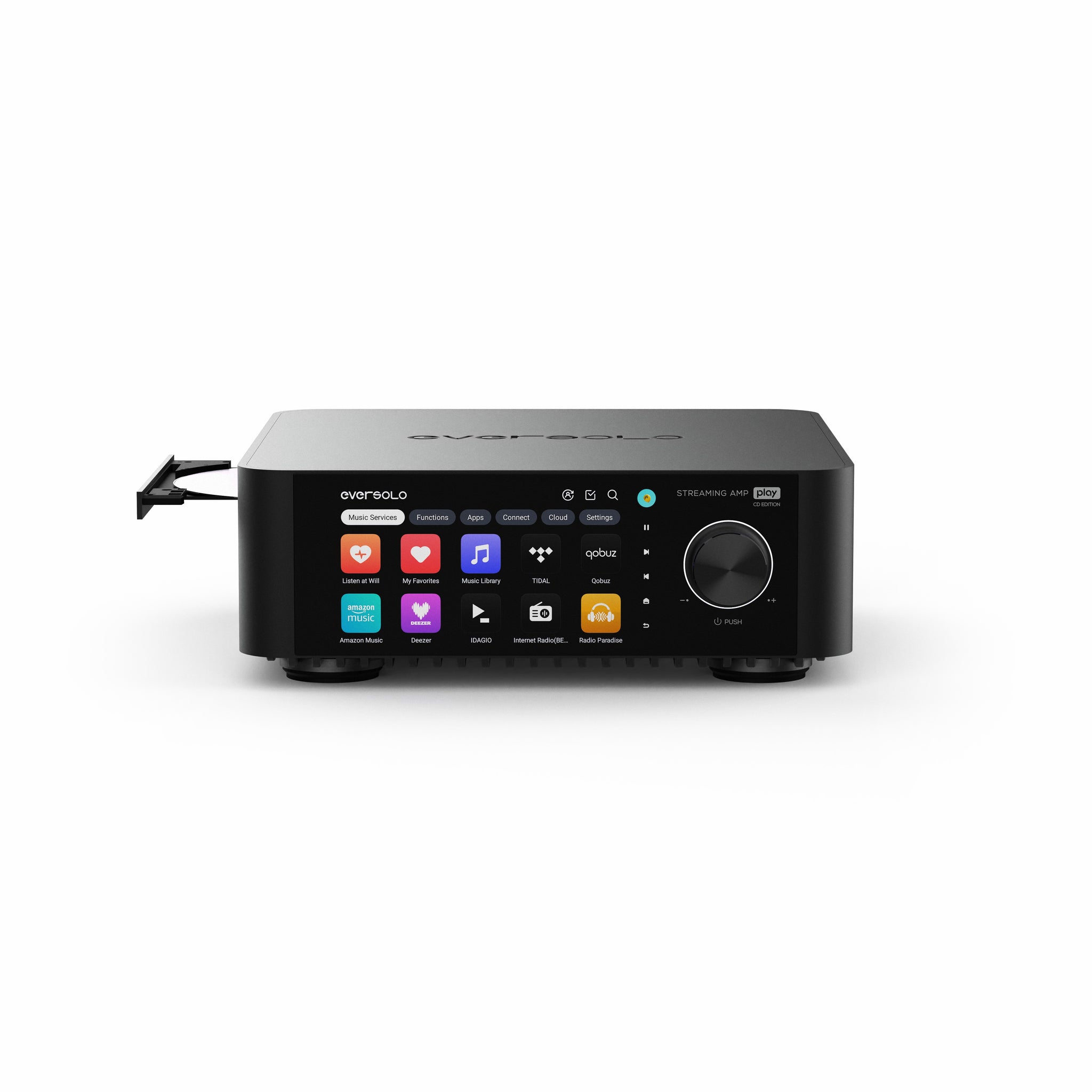
Streaming amplifiers represent a newer approach entirely. These devices integrate high-quality streaming capabilities directly into the amplifier, often with touchscreen controls and dedicated apps. Instead of needing a separate streaming device, everything is built in. The Eversolo Play exemplifies this approach - it's essentially a high-end network streamer, DAC, and amplifier all rolled into one compact package.
The key considerations when choosing between these approaches include power output (how loud and dynamic your music can be), source integration (how you'll connect and control your music sources), sound character (the tonal signature and detail level), connectivity options, physical size, and overall value proposition.
The Eversolo Play, released in 2025, represents Eversolo's first venture into streaming amplifiers. The company has built a solid reputation since the early 2020s for innovative digital audio devices that punch above their weight class. At the time of writing, it's positioned as a premium yet accessible option in the growing streaming amplifier category.
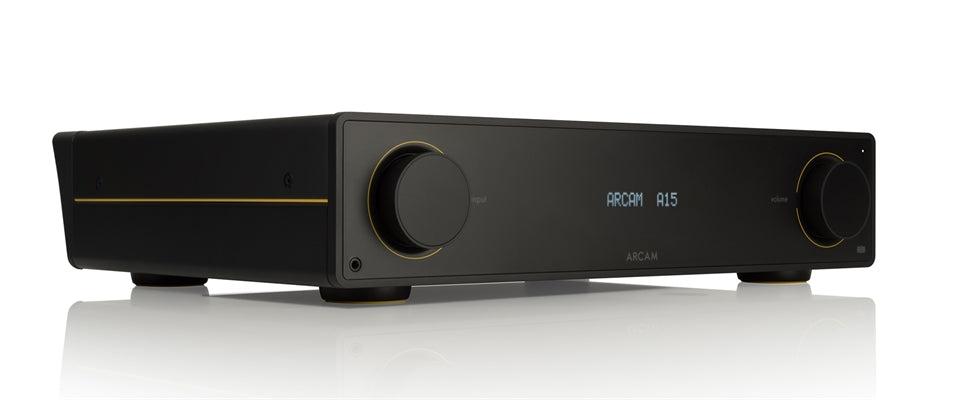
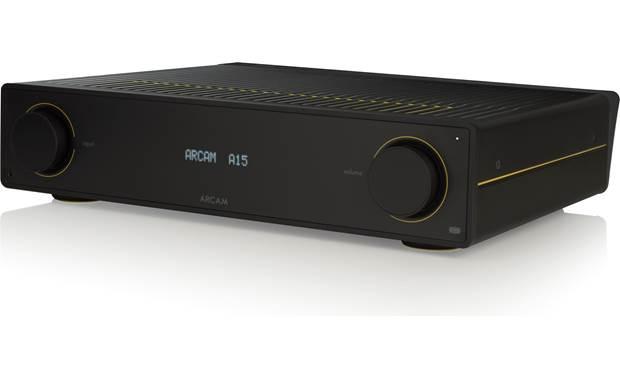
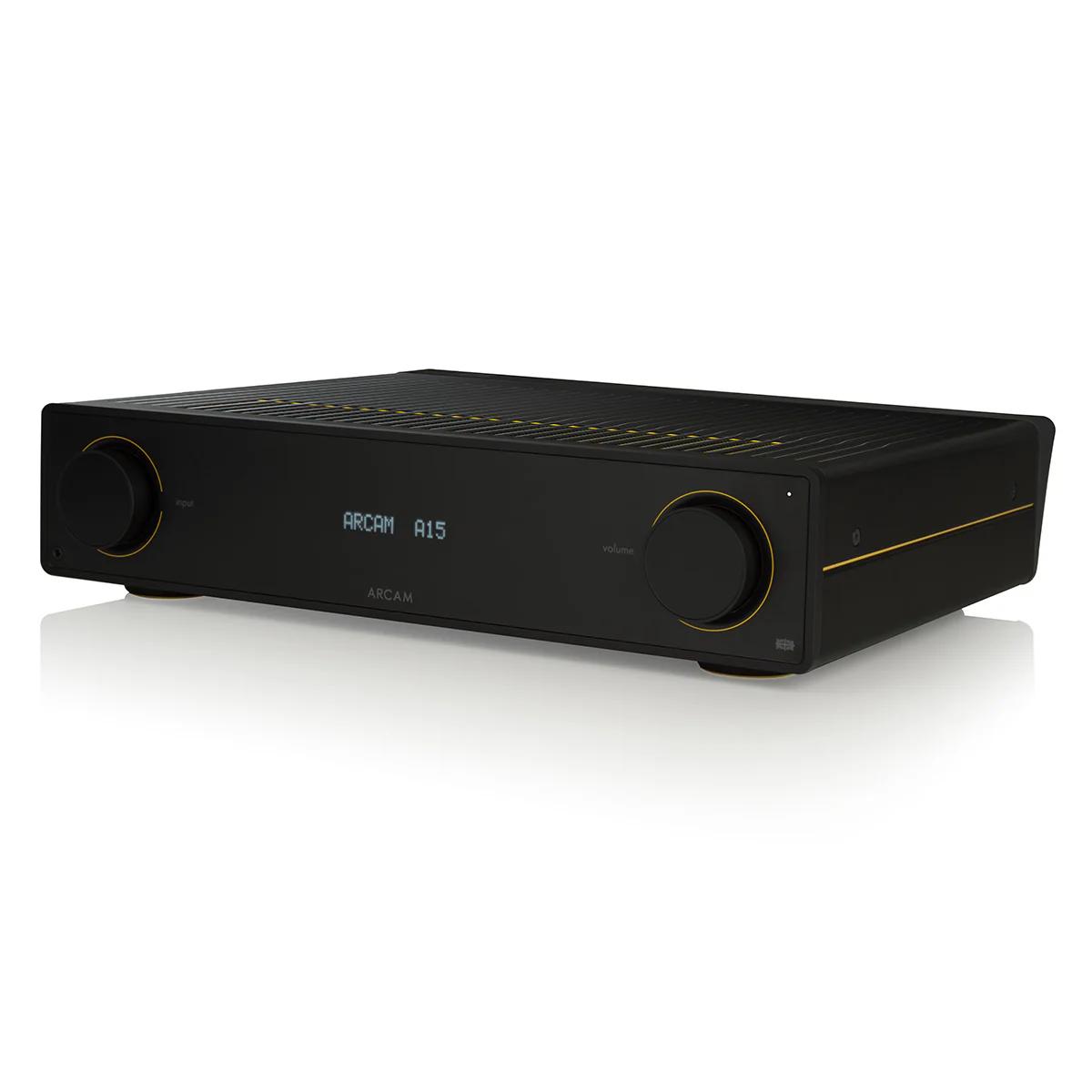
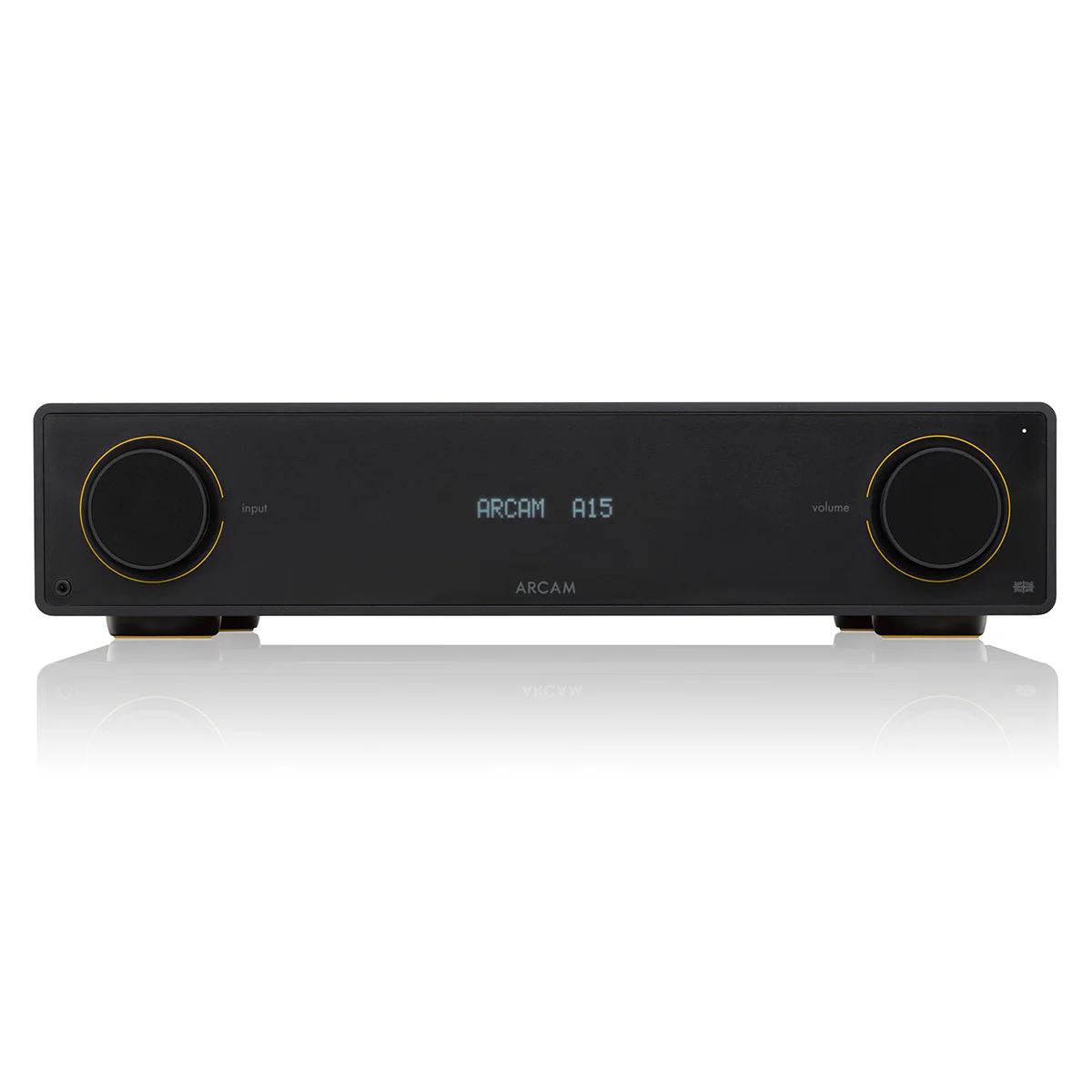
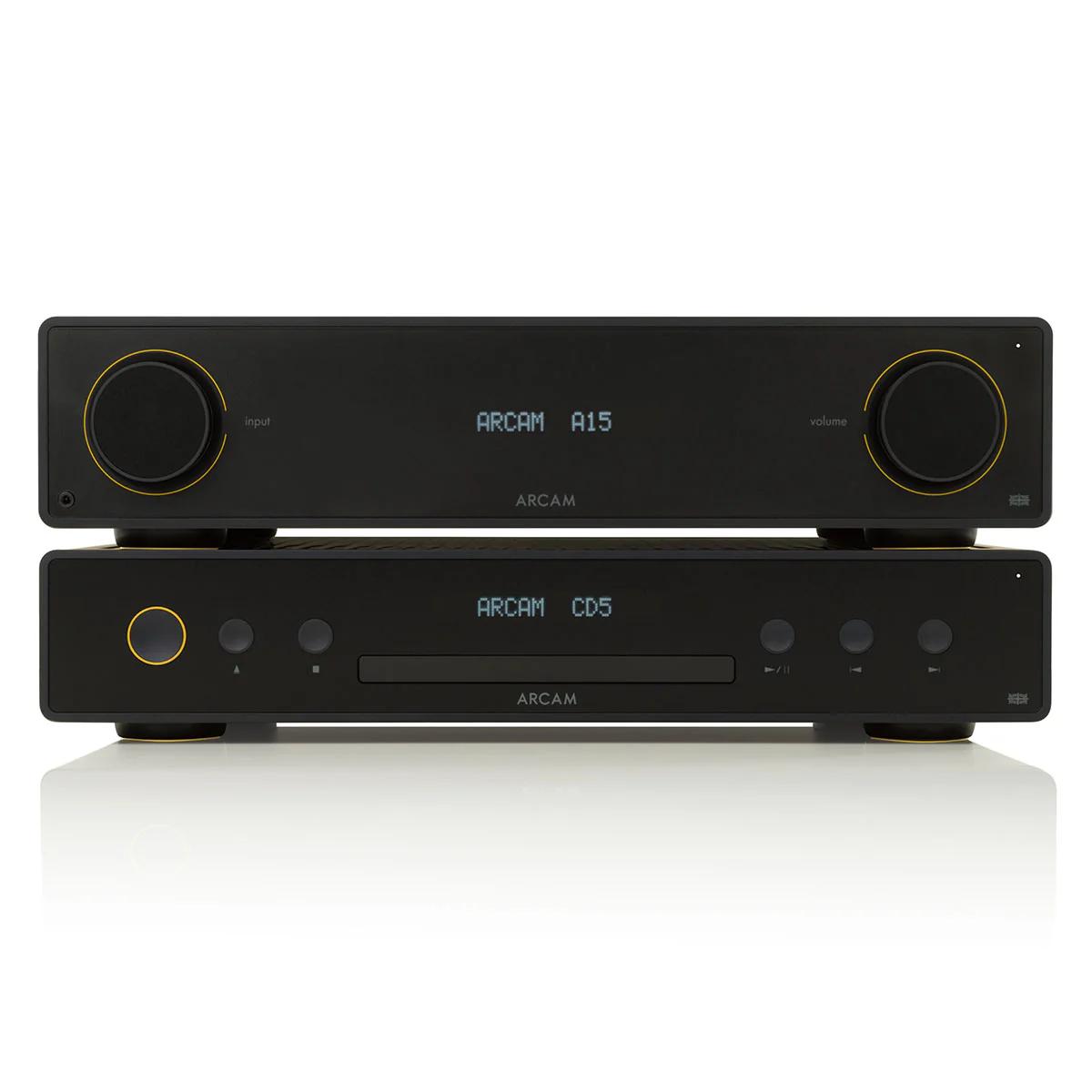
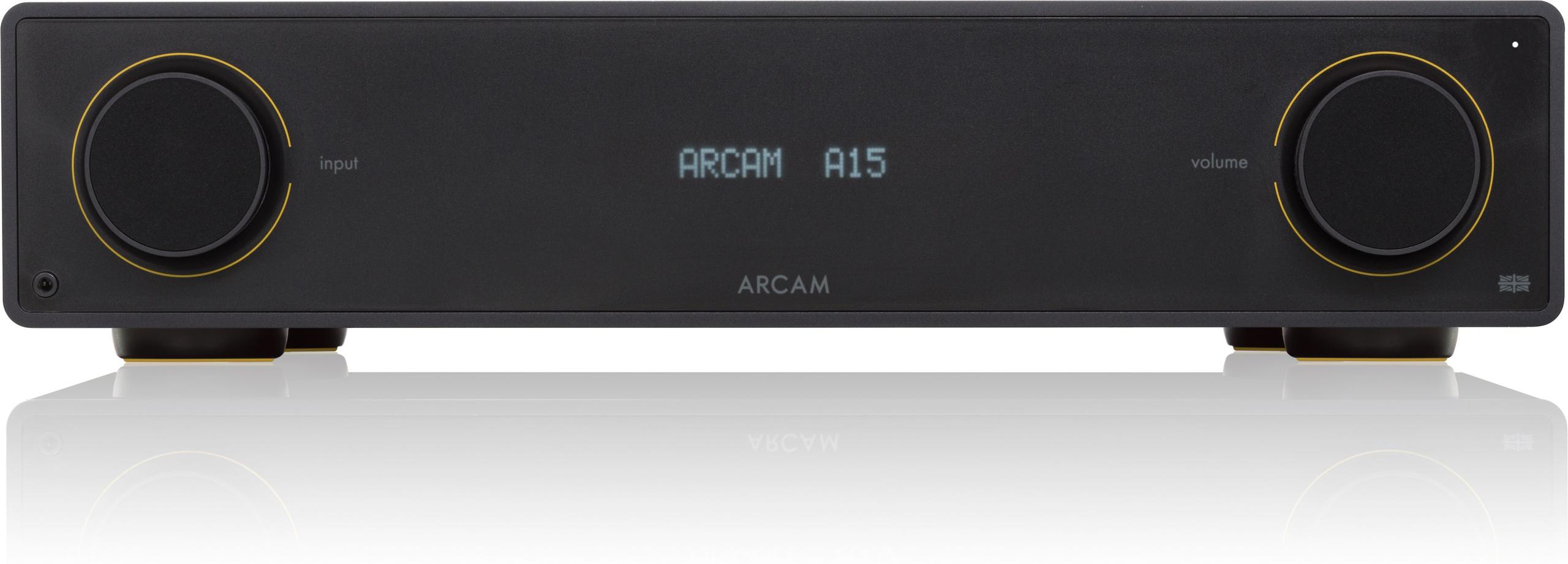
The Arcam A15, part of Arcam's Radia series, comes from a company with over 45 years of amplifier expertise. Arcam has been refining integrated amplifiers since the late 1970s, and the A15 represents their modern take on the traditional approach - excellent amplification with carefully chosen digital conveniences.
The price difference between these units reflects their different philosophies. The Eversolo Play costs significantly less than the Arcam A15 at the time of writing, but when you factor in the additional streaming components needed for the Arcam, the total system cost equation changes dramatically.
This is where we see the most fundamental technical difference between these approaches. The Arcam A15 uses Class AB amplification, delivering 80 watts per channel into 8-ohm speakers and 120 watts into 4-ohm speakers. Class AB is the traditional amplifier topology that's been refined over decades - it's linear, predictable, and tends to have a warm, engaging sound character.
Here's how Class AB works: the amplifier uses two sets of transistors that work together, with each handling half of the audio waveform. This creates some heat (which is why traditional amplifiers get warm) but provides excellent linearity and low distortion. The Arcam A15 achieves an impressively low 0.002% total harmonic distortion (THD) at 80% power - that's exceptionally clean reproduction.
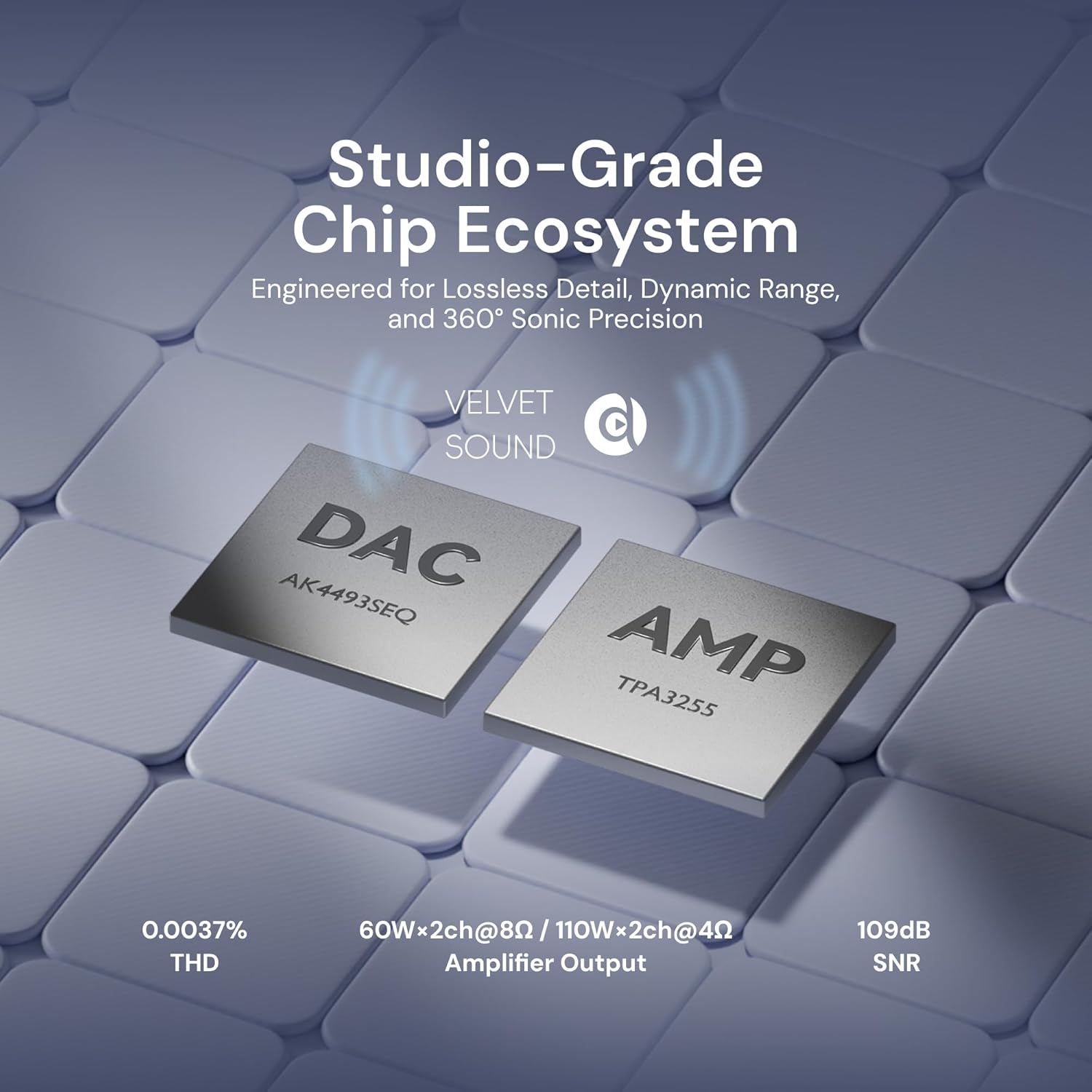
The Eversolo Play, in contrast, uses Class D amplification with 60 watts per channel into 8 ohms and 110 watts into 4 ohms. Class D amplifiers work more like digital switches, rapidly turning on and off thousands of times per second to recreate the audio waveform. This makes them incredibly efficient (they run cool and use less power) but historically they've been criticized for sounding sterile or harsh.
However, modern Class D designs like the one in the Eversolo Play have largely solved these issues. It uses PurePath Ultra HD technology with advanced feedback correction that monitors and corrects distortion in real-time. The result is 0.0037% THD - slightly higher than the Arcam but still excellent for a Class D design.
From a practical standpoint, both amplifiers provide sufficient power for most home listening scenarios. The Arcam A15's extra 20 watts might matter if you're driving difficult speakers in a large room at high volumes, but for typical bookshelf speakers or efficient tower speakers, either will work well.
The digital-to-analog converter (DAC) might be the most crucial component in today's music systems since most of our music comes from digital sources. Both amplifiers include high-quality DACs, but they take different approaches.
The Eversolo Play uses an AKM AK4493SEQ DAC with VELVETSOUND technology. This is a 32-bit DAC that supports incredibly high-resolution formats - up to DSD512 (a super high-resolution format used for audiophile recordings) and PCM audio up to 768kHz/32-bit. To put that in perspective, a CD is 44.1kHz/16-bit, so this DAC can handle files with roughly 17 times the resolution.
The technical advantage here is significant. The 32-bit processing allows for much finer volume control and lower noise during digital processing. The signal-to-noise ratio (SNR) measures 109dB - that's the difference between the quietest and loudest sounds the DAC can reproduce. Higher numbers mean you'll hear more detail in quiet passages without noise.
The Arcam A15 features an ESS Sabre ES9018 DAC, which is also an excellent chip but limited to 192kHz/24-bit maximum resolution. It achieves the same 109dB SNR for digital inputs, so in terms of noise performance, they're equivalent. However, if you have high-resolution music files or want to future-proof your system for ultra-high-resolution streaming, the Eversolo Play has a clear advantage.
This is perhaps the biggest difference between these approaches, and it significantly impacts both cost and convenience.
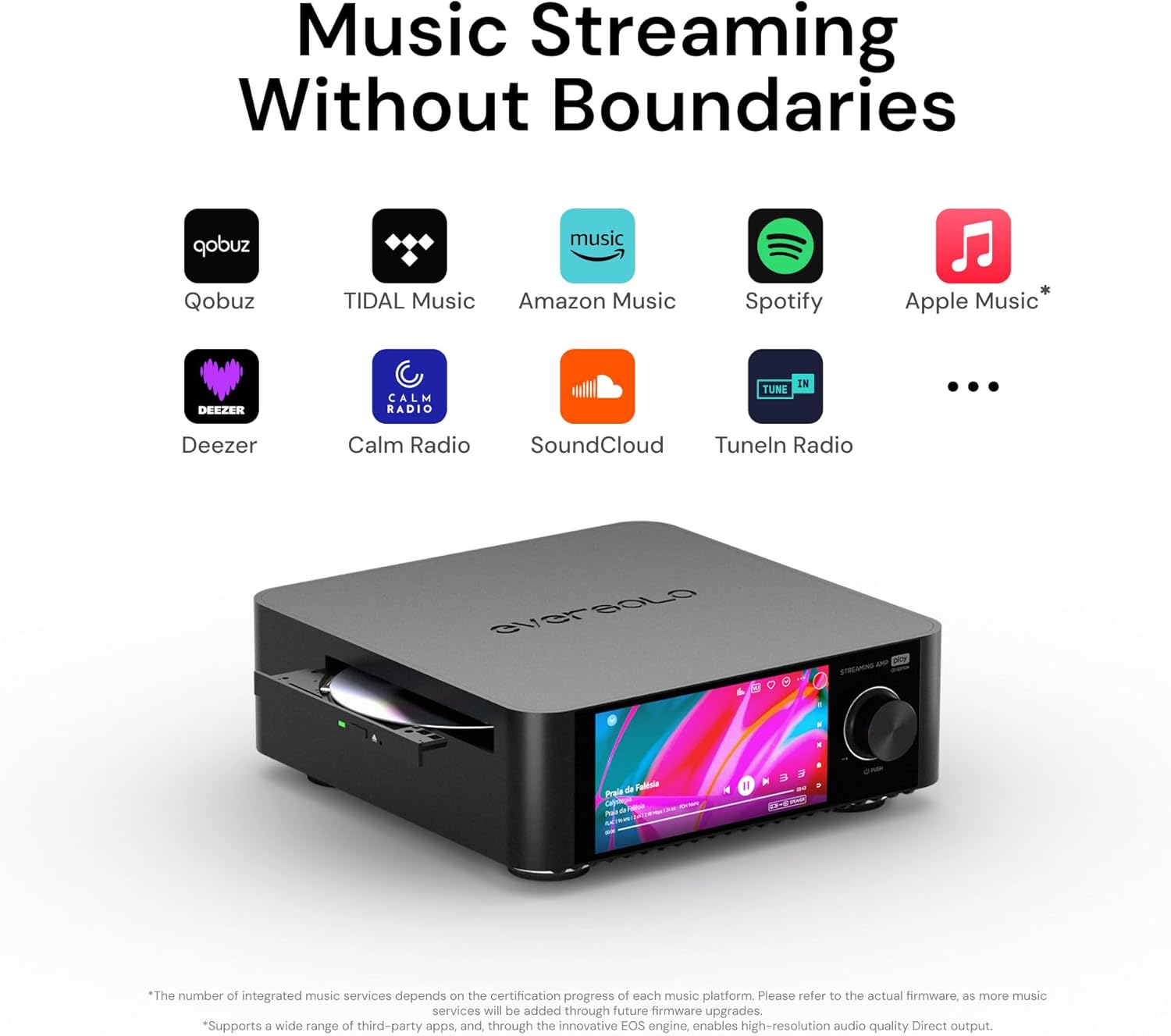
The Eversolo Play includes native support for virtually every major streaming service: TIDAL Connect, Qobuz Connect, Deezer, Amazon Music, and others. "Connect" services are important because they allow the streaming service to send audio directly to the device without going through your phone or computer - this typically means better sound quality and more reliable connections.
More importantly, the Eversolo Play is Roon Ready certified. Roon is a premium music management system that audiophiles love because it can organize music from multiple sources (streaming services, local files, etc.) with rich metadata and multi-room synchronization. Being Roon Ready means the device can receive bit-perfect audio directly from Roon without any quality compromises.
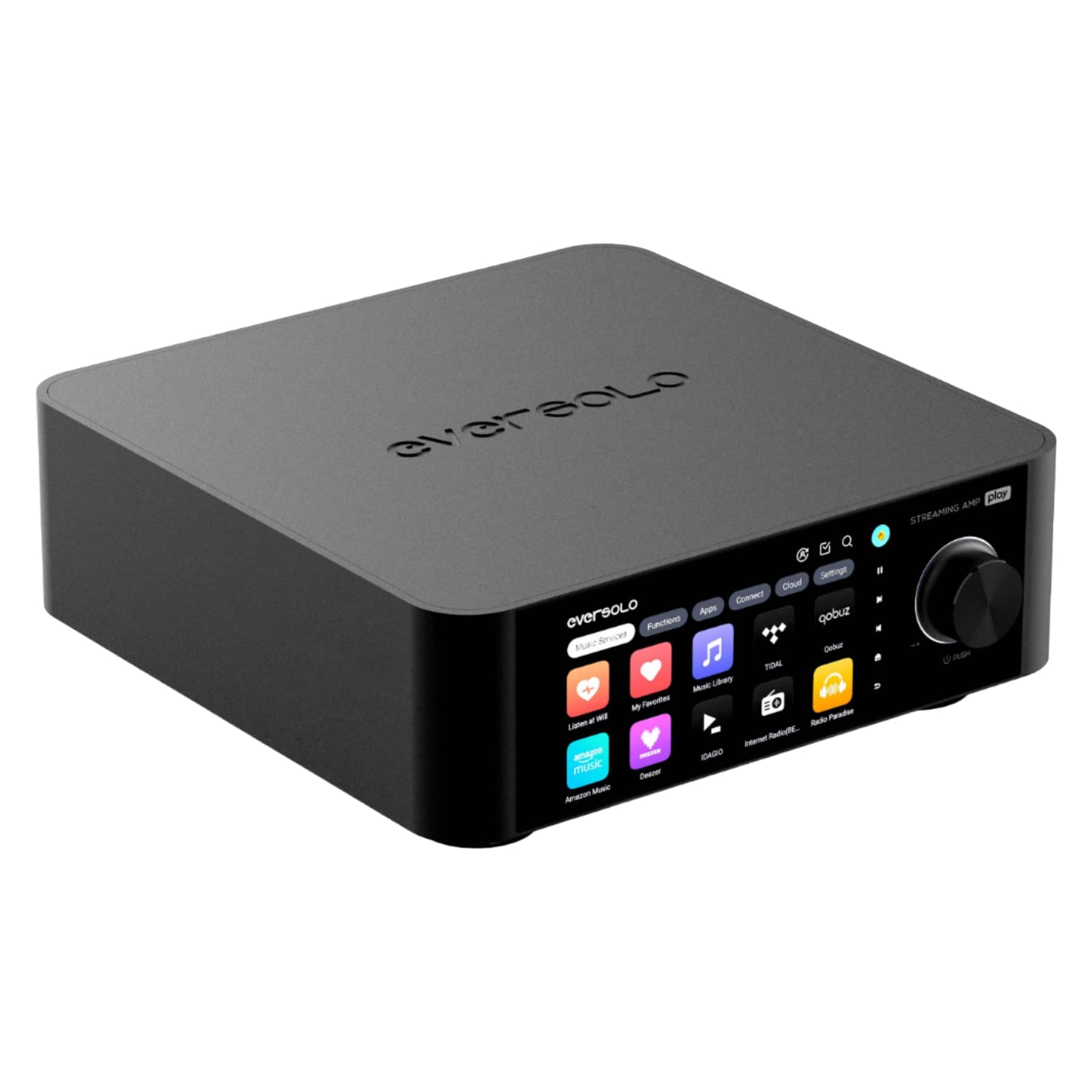
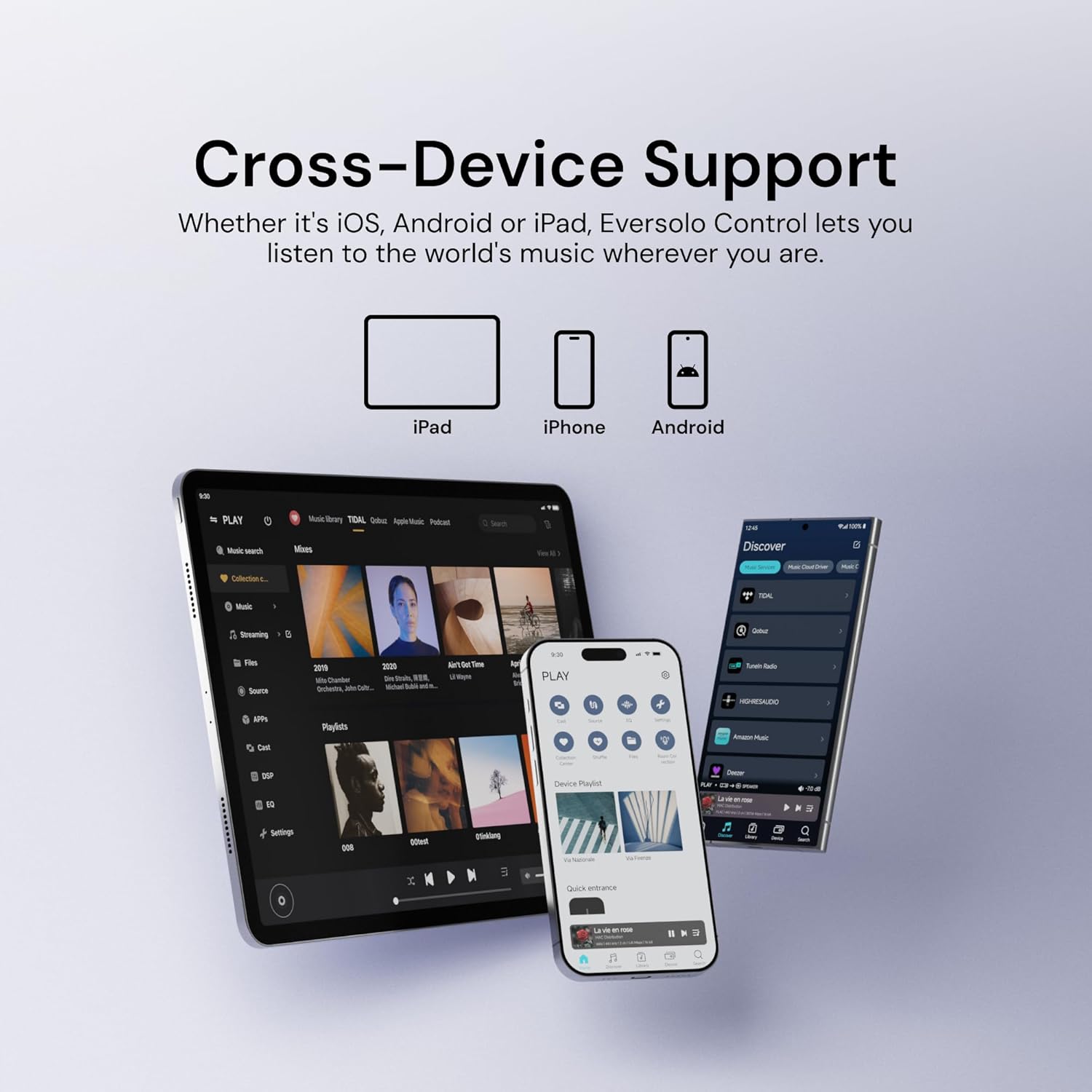
The device also includes a 5.5-inch touchscreen running a customized Android-based operating system. This provides access to streaming services directly on the device, plus comprehensive EQ and room correction controls. You can also control it via smartphone apps for iOS and Android.
The Arcam A15 takes a more traditional approach with Bluetooth 5.2 and aptX Adaptive support. AptX Adaptive is a high-quality Bluetooth codec that can deliver near-CD quality audio wirelessly, and the Arcam A15 uniquely offers two-way Bluetooth - you can stream music to it or from it to Bluetooth headphones.
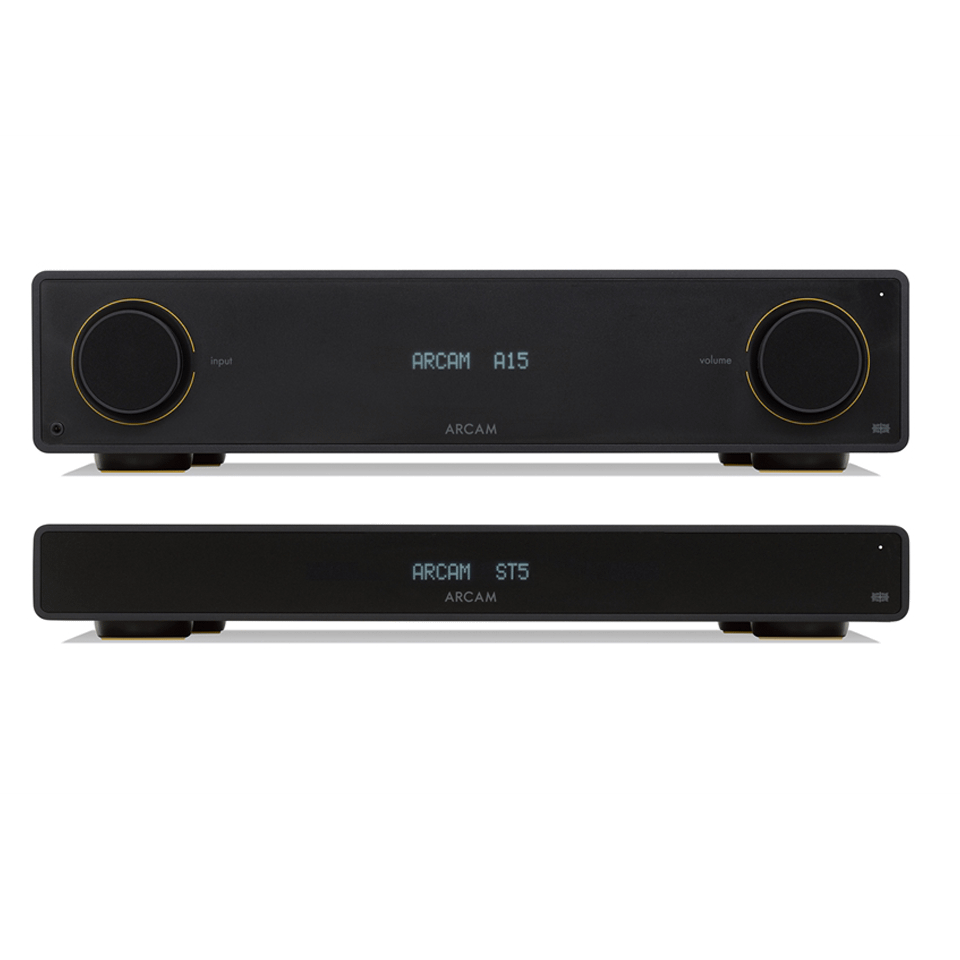
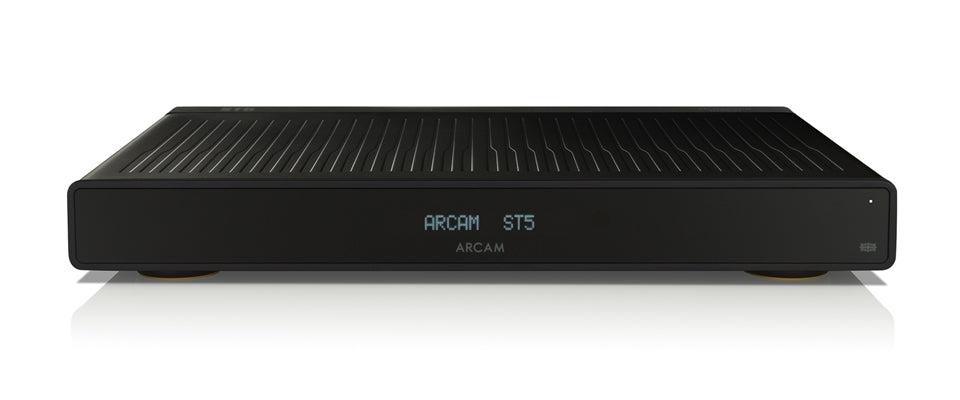
However, for serious streaming service integration, you'd need to add an external streamer. Arcam makes the ST5 streaming DAC specifically for this purpose, but it adds significantly to the total system cost. The modular approach has advantages - you can upgrade components independently - but the financial reality is that a full streaming system with the Arcam A15 costs substantially more.
Both amplifiers offer comprehensive connectivity, but they prioritize different use cases.
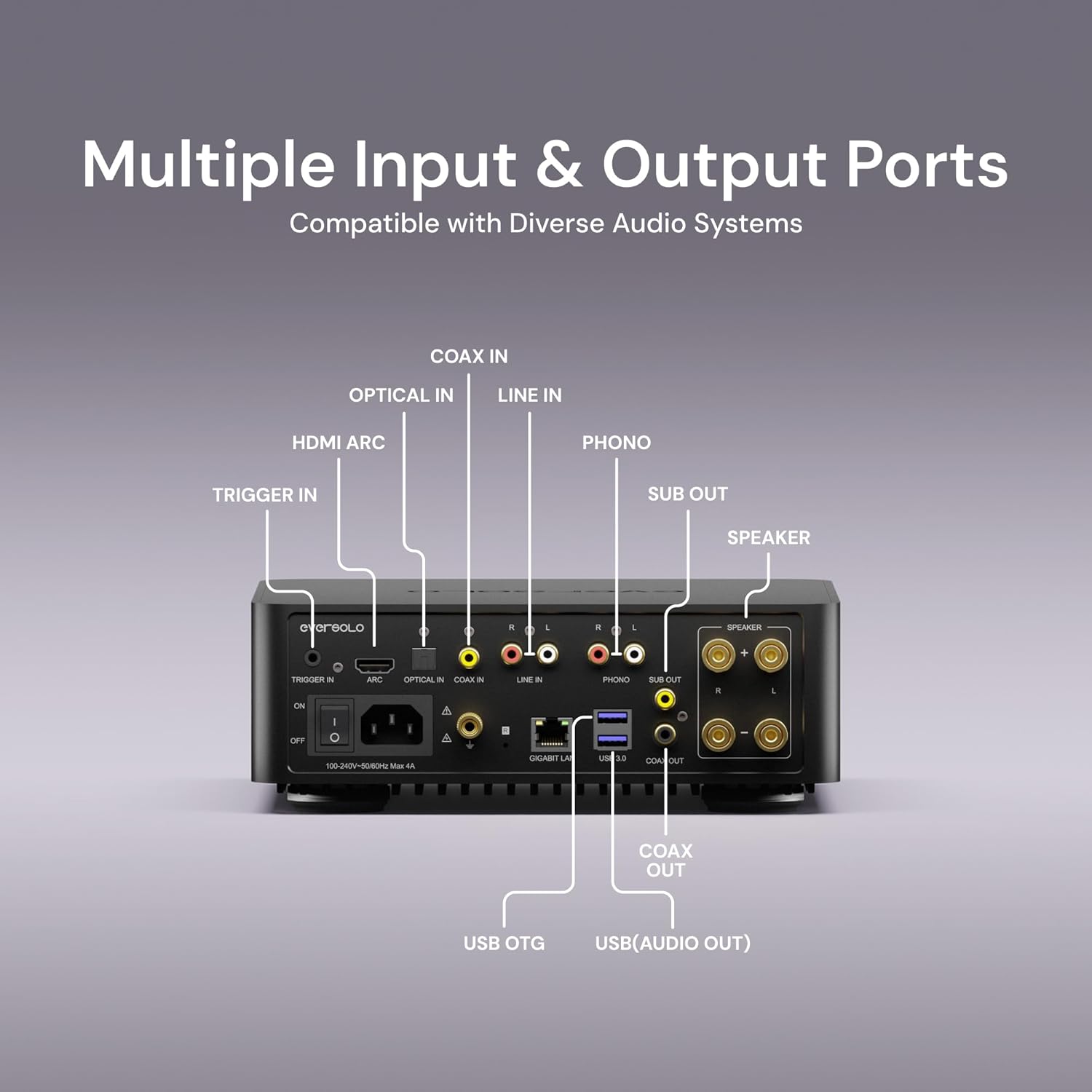
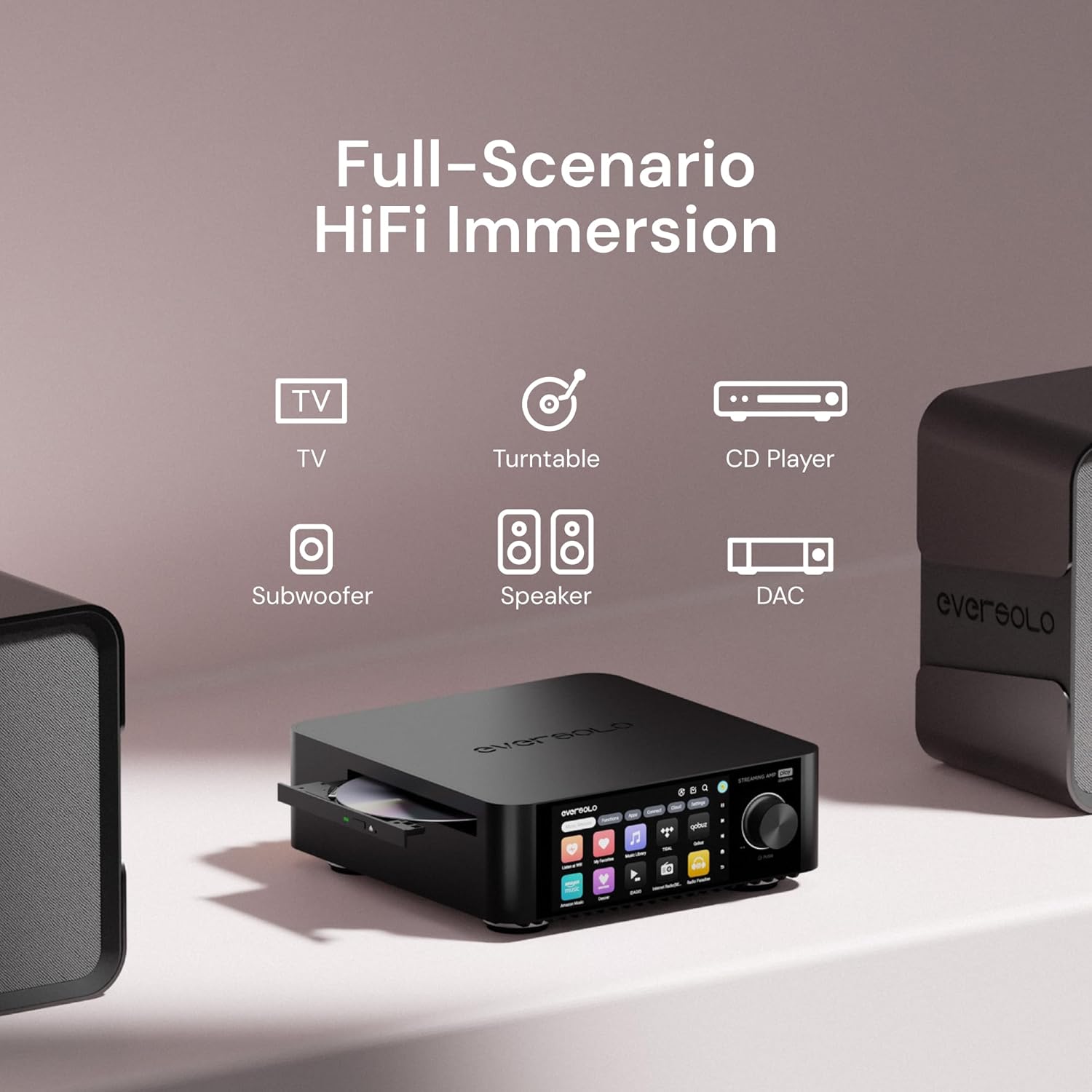
The Eversolo Play includes HDMI ARC input, which is increasingly important for home theater integration. This allows you to connect it directly to your TV and get high-quality stereo audio (up to 192kHz/24-bit) from all your TV sources - streaming apps, cable boxes, gaming consoles, etc. This is a huge convenience factor that traditional amplifiers rarely offer.
For vinyl enthusiasts, the Eversolo Play includes a phono input that supports both moving magnet (MM) and moving coil (MC) cartridges. This is noteworthy because most integrated amplifiers only support MM cartridges, which are more common but not always the best performers. MC cartridges typically offer better detail and dynamics but need more amplification - having both options gives you flexibility.
The Eversolo Play also provides a subwoofer output with adjustable crossover frequency (40-500Hz). This lets you integrate a powered subwoofer seamlessly, with the amplifier handling the frequency division automatically. This is particularly valuable for bookshelf speaker setups where you want to add deep bass extension.
One significant omission on the Eversolo Play is the lack of a headphone output. In our research, this consistently comes up as a complaint from users who want the convenience of private listening without additional equipment.
The Arcam A15 takes a more traditional approach with three analog RCA line inputs (versus one on the Eversolo), two coaxial digital inputs plus one optical input, and an MM-only phono stage. Importantly, it includes a front-panel 3.5mm headphone output and preamp outputs that allow you to connect an external power amplifier if you want to upgrade later.
The Arcam A15 also includes a remote control, which might seem obvious but the Eversolo Play doesn't include one - you're limited to the touchscreen or smartphone app for control.
These products represent very different approaches to industrial design and construction.
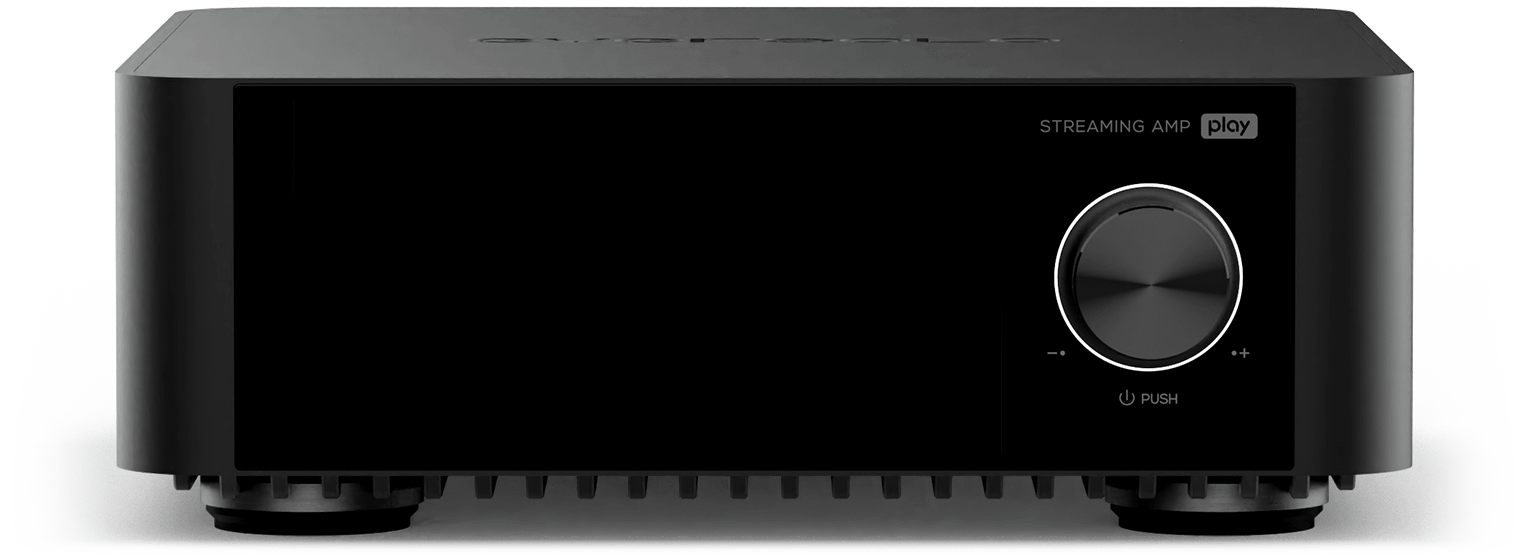
The Eversolo Play embraces modern minimalism with a compact 9" × 9" footprint that's only 3.25" tall and weighs just 5.7 pounds. The aluminum and glass construction feels premium despite the compact size, and it includes customizable RGB lighting that changes color based on music genre - a feature that's either charming or garish depending on your taste.
This compact size makes it perfect for desktop setups, small apartments, or situations where traditional hi-fi components would be overwhelming. However, some users prefer the substantial feel and visual presence of traditional audio equipment.
The Arcam A15 follows classic hi-fi proportions at 17" wide, 14" deep, and nearly 4" tall, weighing a substantial 22 pounds. The aluminum construction includes beautifully machined rotary controls that provide satisfying tactile feedback. Based on user feedback, the build quality feels appropriately premium for the price point, though the frosted front panel can make the display harder to read than ideal.
The substantial construction serves both aesthetic and functional purposes - the mass helps with vibration control, and the larger chassis provides better heat dissipation for the Class AB amplifier.
While both amplifiers measure well technically, they have different sonic signatures based on their design philosophies.
The Arcam A15, with its Class AB design and decades of Arcam voicing, tends toward a slightly warmer, more traditionally "musical" presentation. Class AB amplifiers often excel at portraying the natural flow and dynamics of music - that sense of musicians playing together in real time. The extra power headroom also means it maintains composure better at higher volumes with demanding speakers.
The Eversolo Play, with its modern Class D design and advanced DAC, presents a cleaner, more analytically detailed sound. Users consistently report excellent separation between instruments, tight bass control, and crystal-clear highs. The advanced DAC contributes to exceptional detail retrieval, particularly with high-resolution source material.
Neither approach is inherently better - it's about matching your preferences and speakers. The Arcam A15 might be more forgiving with bright or harsh speakers, while the Eversolo Play could reveal more detail with warmer, more polite speakers.
For users wanting to integrate music listening with home theater systems, the Eversolo Play has a clear advantage with its HDMI ARC input. This allows seamless integration with TVs and AV receivers, letting you enjoy high-quality stereo music playback and TV audio through the same speakers.
The built-in subwoofer management is also valuable here - you can create a 2.1 system easily without needing a full AV receiver. For many users, this provides the perfect balance of music quality and home theater functionality.
The Arcam A15 can certainly work in home theater systems through its analog inputs, but you'd need additional equipment to handle TV audio sources effectively.
The software experience has become increasingly important as streaming services evolve. The Eversolo Play benefits from regular firmware updates that can add new streaming services, improve existing features, and refine the user interface. The Android-based operating system provides flexibility for future enhancements.
Based on user feedback, the Eversolo Control app has improved significantly since the company's early streaming devices, with cleaner navigation and more intuitive controls. The ability to search across multiple streaming services simultaneously is particularly well-regarded.
The Arcam A15, being more focused on amplification, has a simpler software footprint but correspondingly fewer opportunities for feature evolution through updates.
At the time of writing, the Eversolo Play represents exceptional value in the streaming amplifier category. When you consider that a quality standalone streamer typically costs $300-800 or more, and the Eversolo Play includes streaming, DAC, and amplification, the value proposition becomes compelling.
The Arcam A15 costs more initially and requires additional investment for equivalent streaming functionality. However, it offers superior build quality, a longer warranty (5 years versus 1 year), and the flexibility of modular component upgrades over time.
For budget-conscious users or those prioritizing convenience, the Eversolo Play is hard to beat. For users who value long-term upgradeability and traditional hi-fi build quality, the higher total cost of the Arcam A15 system may be justified.
Choose the Eversolo Play if you prioritize streaming service integration, want maximum convenience in a compact package, need HDMI ARC for TV integration, or are working within a more limited budget. It's particularly well-suited for users who primarily stream music and want everything integrated seamlessly.
The compact size makes it perfect for desktop systems, small apartments, or secondary listening rooms where traditional hi-fi components would be overkill.
Choose the Arcam A15 if you need more power for demanding speakers, prefer traditional hi-fi build quality and controls, want a dedicated headphone output, or already own quality source components. It's the better choice for users who plan to build a modular system over time or who prioritize the specific sound character of Class AB amplification.
The Arcam A15 also makes sense if you're skeptical of all-in-one devices and prefer the upgrade flexibility that comes with separate components.
Both approaches have merit, but they serve different types of users and listening situations. The Eversolo Play embraces the future of integrated, streaming-centric audio systems, while the Arcam A15 represents the evolution of traditional hi-fi values with modern conveniences. Your choice should depend on your listening habits, space constraints, budget, and long-term system goals.
| Eversolo Play Streaming Amplifier | Arcam A15 Integrated Amplifier |
|---|---|
| Power Output - Determines how loud your system can play and which speakers you can drive | |
| 60W @ 8Ω, 110W @ 4Ω (sufficient for most bookshelf and efficient tower speakers) | 80W @ 8Ω, 120W @ 4Ω (better for demanding speakers and larger rooms) |
| Amplifier Technology - Affects sound character, efficiency, and heat generation | |
| Class D with PurePath Ultra HD (efficient, runs cool, modern sound) | Class AB (traditional warm sound, proven linearity, generates more heat) |
| DAC and High-Resolution Support - Critical for digital music quality | |
| AKM AK4493SEQ, supports up to DSD512/768kHz-32bit (future-proof for ultra-hi-res) | ESS Sabre ES9018, supports up to PCM 192kHz/24-bit (excellent for current formats) |
| Built-in Streaming Services - Determines if you need additional components | |
| Native TIDAL, Qobuz, Amazon Music, Spotify Connect, Roon Ready (complete streaming solution) | Bluetooth 5.2 with aptX Adaptive only (requires separate streamer for services) |
| Control Interface - How you'll interact with the system daily | |
| 5.5" touchscreen + smartphone app (modern, no remote included) | Physical controls + remote control + basic display (traditional hi-fi approach) |
| Size and Form Factor - Important for placement and room aesthetics | |
| Compact: 9" × 9" × 3.25", 5.7 lbs (desktop-friendly, modern aesthetic) | Traditional: 17" × 14" × 3.75", 22 lbs (requires hi-fi rack, substantial build) |
| TV Integration - Essential for home theater use | |
| HDMI ARC input (seamless TV audio integration up to 192kHz/24-bit) | No HDMI input (requires separate connections for TV audio) |
| Phono Input for Turntables - Important for vinyl enthusiasts | |
| MM/MC support (works with both moving magnet and moving coil cartridges) | MM only (limited to moving magnet cartridges) |
| Headphone Output - Necessary for private listening | |
| None (significant limitation for headphone users) | Front-panel 3.5mm jack (convenient for private listening) |
| Subwoofer Integration - Important for full-range sound with bookshelf speakers | |
| Dedicated output with adjustable crossover 40-500Hz (seamless bass management) | No subwoofer output (requires external crossover or full-range speakers) |
| Expandability - Future upgrade potential | |
| All-in-one design (limited upgrade options, but includes everything) | Preamp outputs for external amplifiers (modular system building) |
| Warranty Coverage - Reflects manufacturer confidence and support | |
| 1 year (shorter coverage but newer technology) | 5 years (extensive coverage reflecting build quality confidence) |
The Eversolo Play Streaming Amplifier is significantly better for streaming music services. It has built-in native support for TIDAL, Qobuz, Amazon Music, Spotify Connect, and is Roon Ready certified. The Arcam A15 Integrated Amplifier only offers Bluetooth streaming and would require a separate streaming device to access these services directly.
The Arcam A15 Integrated Amplifier delivers more power with 80 watts per channel into 8 ohms (120 watts into 4 ohms), while the Eversolo Play Streaming Amplifier provides 60 watts per channel into 8 ohms (110 watts into 4 ohms). The Arcam's extra power is better for driving demanding speakers in larger rooms.
The Eversolo Play Streaming Amplifier is much better for home theater integration because it includes an HDMI ARC input that connects directly to your TV for high-quality stereo audio. The Arcam A15 Integrated Amplifier lacks HDMI inputs and would need additional equipment for TV audio connections.
Both amplifiers support turntables, but the Eversolo Play Streaming Amplifier has a more versatile phono input that works with both moving magnet (MM) and moving coil (MC) cartridges. The Arcam A15 Integrated Amplifier only supports MM cartridges, which limits your turntable upgrade options.
The Eversolo Play Streaming Amplifier is much more compact at 9" × 9" × 3.25" and weighs only 5.7 pounds, making it perfect for desktop setups or small spaces. The Arcam A15 Integrated Amplifier follows traditional hi-fi dimensions at 17" × 14" × 3.75" and weighs 22 pounds, requiring a proper equipment rack.
Only the Arcam A15 Integrated Amplifier includes a dedicated front-panel headphone output. The Eversolo Play Streaming Amplifier notably lacks any headphone output, which is a significant limitation if you plan to use headphones regularly.
The Eversolo Play Streaming Amplifier offers exceptional value because it includes streaming, DAC, and amplification in one package at a lower cost. While the Arcam A15 Integrated Amplifier costs more initially and requires an additional streaming device for equivalent functionality, it provides superior build quality and longer warranty coverage.
The Eversolo Play Streaming Amplifier uses modern Class D amplification that runs efficiently and cool with clean, detailed sound. The Arcam A15 Integrated Amplifier uses traditional Class AB amplification known for warmer, more musical sound character. Both achieve excellent technical performance, but with different sonic signatures.
The Eversolo Play Streaming Amplifier supports much higher resolution formats up to DSD512 and PCM 768kHz/32-bit, making it more future-proof for ultra-high-resolution audio. The Arcam A15 Integrated Amplifier is limited to PCM 192kHz/24-bit, which still covers most current high-resolution music formats.
The Eversolo Play Streaming Amplifier includes a dedicated subwoofer output with adjustable crossover frequency (40-500Hz) for seamless bass management. The Arcam A15 Integrated Amplifier lacks a subwoofer output, so you'd need speakers capable of full-range sound or external crossover equipment.
The Arcam A15 Integrated Amplifier offers better upgrade flexibility with preamp outputs that allow you to add external power amplifiers later. The Eversolo Play Streaming Amplifier uses an all-in-one design that limits individual component upgrades but includes comprehensive features from the start.
The Arcam A15 Integrated Amplifier comes with a generous 5-year warranty reflecting Arcam's confidence in build quality and long-term reliability. The Eversolo Play Streaming Amplifier includes a 1-year warranty, which is shorter but typical for newer technology products with regular firmware updates and feature improvements.
We've done our best to create useful and informative comparisons to help you decide what product to buy. Our research uses advanced automated methods to create this comparison and perfection is not possible - please contact us for corrections or questions. These are the sites we've researched in the creation of this article: blog.son-video.com - audio46.com - upscaleaudio.com - audioadvice.com - musicdirect.com - audio46.com - whathifi.com - whathifi.com - bloomaudio.com - youtube.com - the-ear.net - whathifi.com - soundstagesimplifi.com - youtube.com - stevehuffphoto.com - darko.audio - youtube.com - eversolo.com - theaudiotailor.com.au - skybygramophone.com - crutchfield.com - arcam.co.uk - youtube.com - listenup.com - upscaleaudio.com - arcam.co.uk - whathifi.com - sweetwater.com - musicdirect.com - device.report - hifidaydreaming.com - listenup.com

Privacy Policy
Terms and Conditions - Affiliate Policy
Home Security
© Copyright 2008-2026.
11816 Inwood Rd #1211, Dallas, TX 75244