



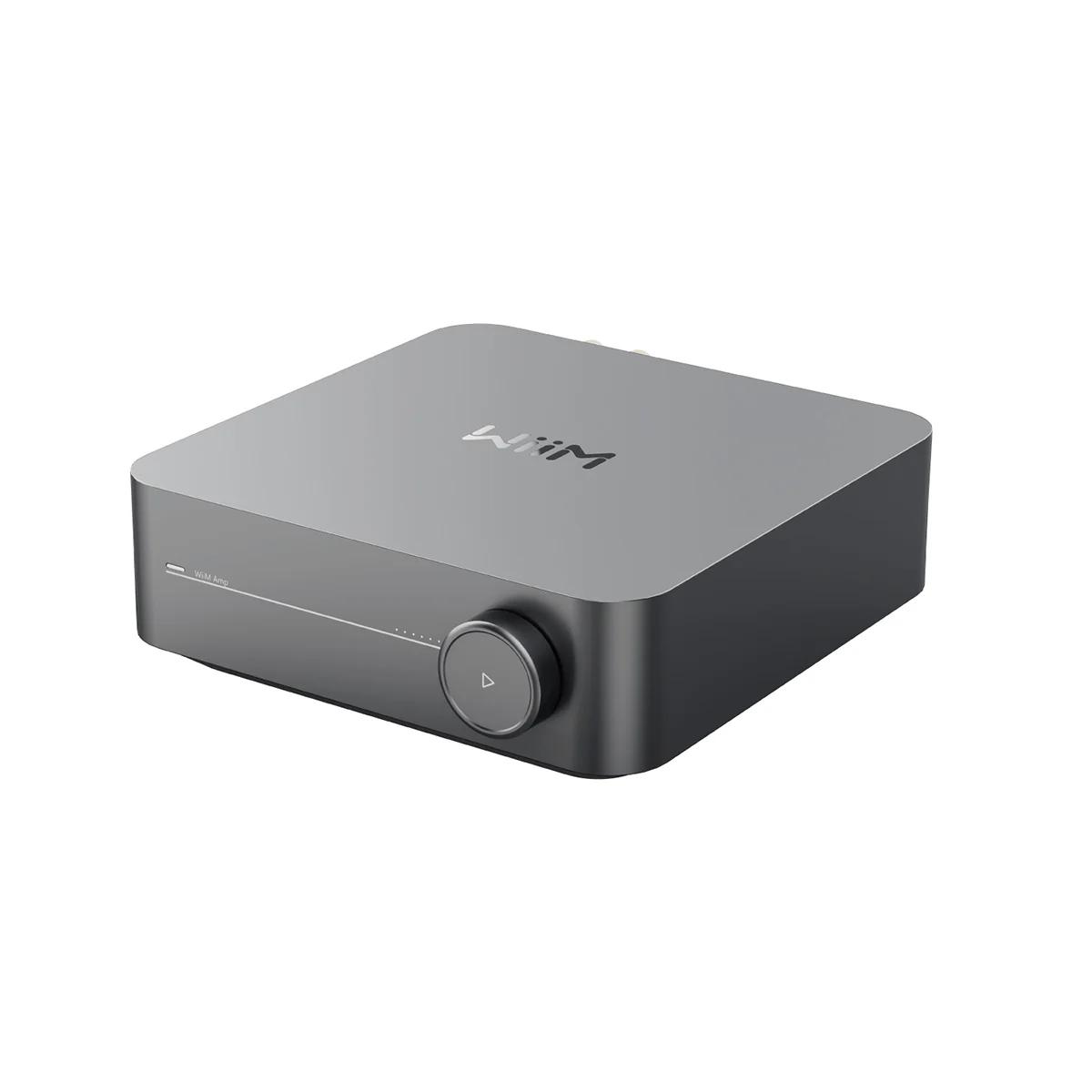
The world of home audio has been revolutionized by streaming amplifiers – devices that combine a music streamer, digital-to-analog converter (DAC), and amplifier into one compact box. Think of them as the Swiss Army knife of audio: instead of needing three separate components to get sound from Spotify to your speakers, you get everything in one sleek package.
This consolidation makes perfect sense for most people. Why deal with multiple boxes, power cables, and interconnects when you can get excellent sound quality from a single device? The streaming amplifier category has exploded in recent years, with manufacturers racing to pack more features and better performance into increasingly affordable packages.
Today we're comparing two standout options: the Eversolo Play and the WiiM Amp. These represent different philosophies in streaming amplifier design – one prioritizes premium features and refinement, while the other focuses on exceptional value and smart home integration. Both launched in the mid-2020s as manufacturers refined their approaches to all-in-one audio solutions.
Before diving into specifics, let's establish what makes a streaming amplifier great. The most crucial consideration is integration – how well the device balances convenience with performance. You're trading the flexibility of separate components for simplicity, so that trade-off needs to deliver real benefits.
Sound quality remains paramount, determined largely by the DAC implementation and amplifier design. The DAC (digital-to-analog converter) is the component that turns digital music files into analog signals your speakers can reproduce. Different DAC chips have distinct sonic signatures – some prioritize technical precision, while others aim for musical engagement.
Power output needs to match your speakers and listening habits. Most streaming amplifiers target bookshelf speakers in small-to-medium rooms, but insufficient power leads to compressed dynamics and distortion at higher volumes.
Streaming ecosystem compatibility determines daily usability. The best technical specs mean nothing if the device can't access your preferred music services smoothly or integrate with your smart home setup.
Finally, connectivity options affect both current flexibility and future expandability. More inputs mean easier integration with existing equipment, while digital outputs preserve upgrade paths.
The most significant difference between the Eversolo Play and WiiM Amp lies in their DAC implementations, which fundamentally shape their sonic characters.
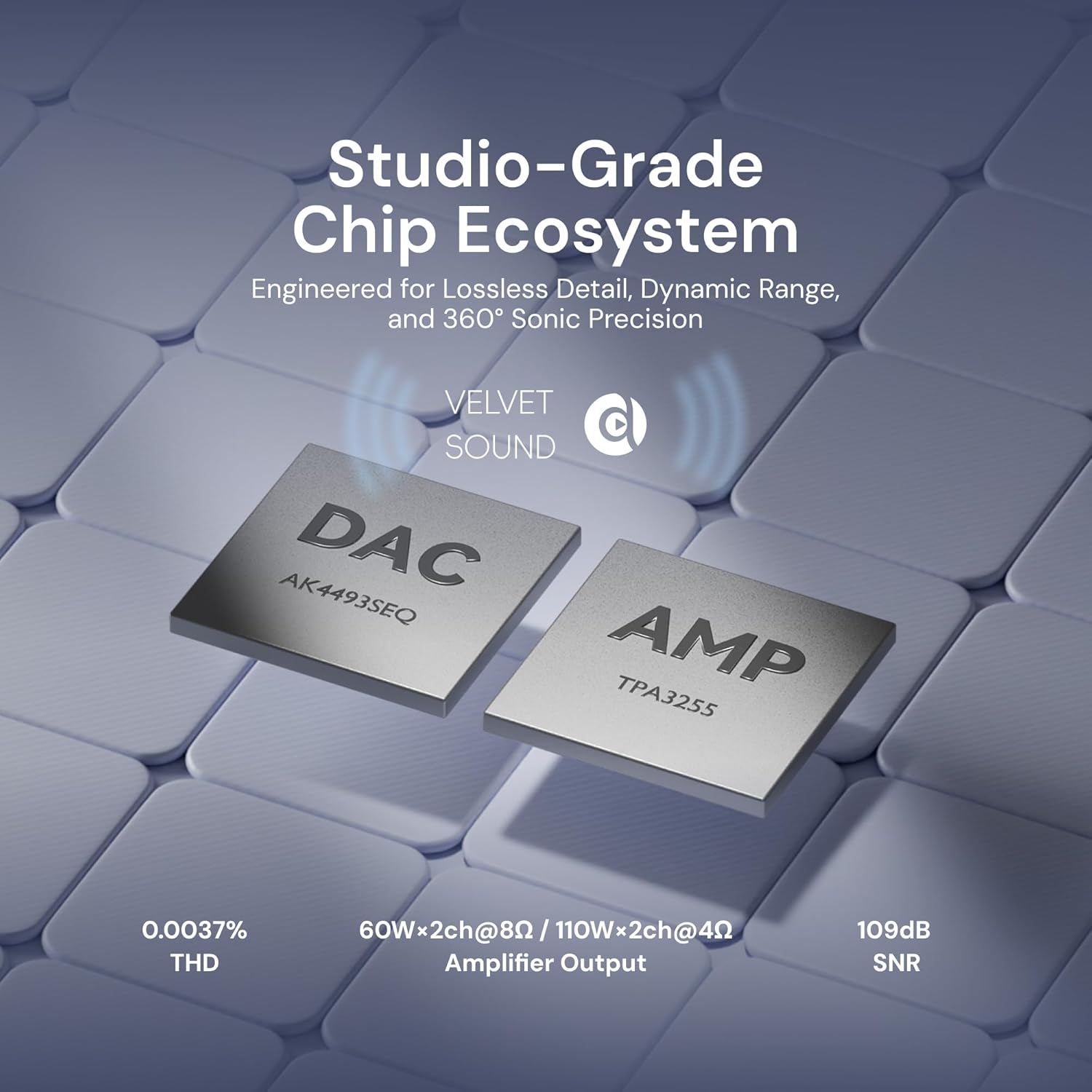
The Eversolo Play uses AKM's AK4493SEQ DAC chip with VELVETSOUND technology – a sophisticated 32-bit converter known for its smooth, musical presentation. AKM chips traditionally emphasize tonal richness and natural sound reproduction over clinical precision. In practical terms, this means the Eversolo Play tends to make music sound more engaging and less fatiguing during long listening sessions.
Our research into user experiences reveals consistent praise for the Eversolo Play's exceptional stereo imaging – the ability to precisely place instruments in a three-dimensional soundstage. This translates to a more immersive listening experience where you can clearly distinguish individual instruments and their positions within the recording. The bass response is described as controlled and musical, though some note it can sound slightly softer compared to more aggressive implementations.
Technical specifications support these subjective impressions. The Eversolo Play achieves a total harmonic distortion (THD) below 0.0037% and signal-to-noise ratio exceeding 109dB. THD measures unwanted distortion added to the original signal – lower numbers mean cleaner sound. The signal-to-noise ratio indicates how much background noise the device produces; higher numbers mean a quieter background, allowing subtle musical details to emerge.
The WiiM Amp takes a different approach with ESS Sabre DAC chips (the ES9018 K2M in the standard version, ES9038 Q2M in the Pro). ESS implementations typically prioritize technical precision and dynamic range over tonal warmth. Users consistently describe the WiiM Amp's sound as more vivid and immediate, with particularly tight bass control and forward midrange presentation.
This difference in sonic philosophy creates distinct user experiences. The Eversolo Play excels with acoustic music, jazz, and classical recordings where soundstage depth and tonal naturalness matter most. The WiiM Amp shines with rock, electronic, and pop music where impact and precision take precedence over ultimate refinement.
Both approaches have merit – the choice depends on your musical preferences and listening priorities. If you find yourself getting fatigued during long listening sessions or prefer a more relaxed presentation, the Eversolo Play's smoother character might appeal more. If you want music that grabs your attention with immediate impact and precise detail retrieval, the WiiM Amp's more forward approach could be preferable.
Both devices deliver identical power specifications: 60 watts per channel into 8-ohm speakers, increasing to 110-120 watts into 4-ohm loads. This output level suits most bookshelf speakers and many smaller floorstanding models in typical living spaces.
However, power ratings only tell part of the story. The quality of that power delivery – how well the amplifier maintains control and composure as volume increases – matters more than raw wattage numbers. Both use Class D amplification technology, which offers high efficiency and compact size compared to traditional Class A/B designs.
Class D amplifiers work by rapidly switching power on and off thousands of times per second, using the average switching time to control output level. Modern implementations have largely overcome early Class D limitations like switching noise and harsh upper frequencies, though sonic character still varies between designs.
User feedback suggests both amplifiers handle typical listening levels (70-80dB) with excellent composure. The Eversolo Play maintains its smooth character even at higher volumes, though some users note limitations when pushing levels above 90-95dB – the point where many people experience listening fatigue anyway.
The WiiM Amp demonstrates slightly better dynamic range and impact at moderate volumes, which aligns with its more forward sonic character. Both devices include protection circuitry to prevent damage from overdriving, though reaching these limits requires either very inefficient speakers or unreasonable volume levels.
For most users in typical rooms, power differences between these devices will be negligible. Speaker efficiency and room size matter far more than the small variations in amplifier output.
Perhaps nowhere is the philosophical difference between these devices more apparent than in user interface design.
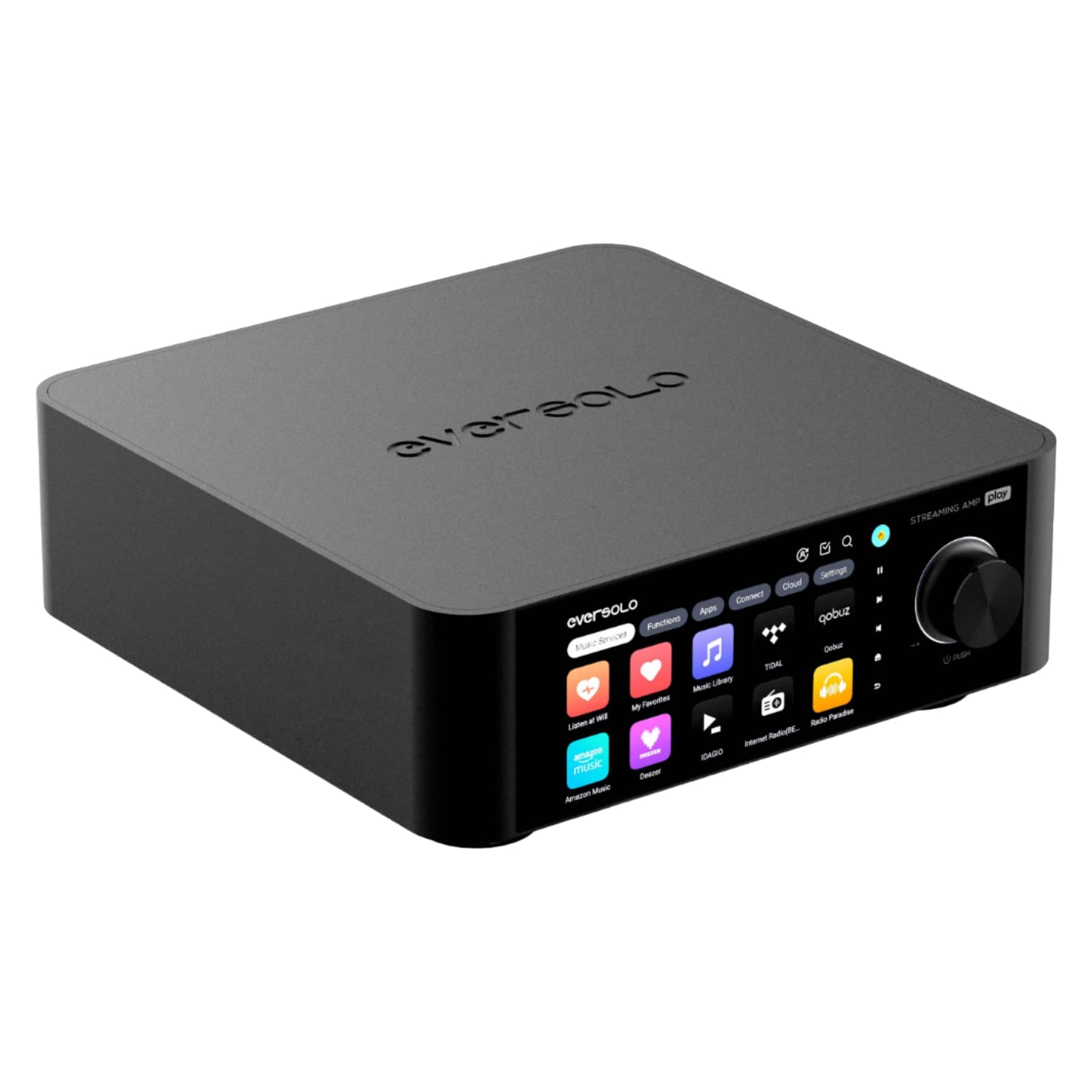
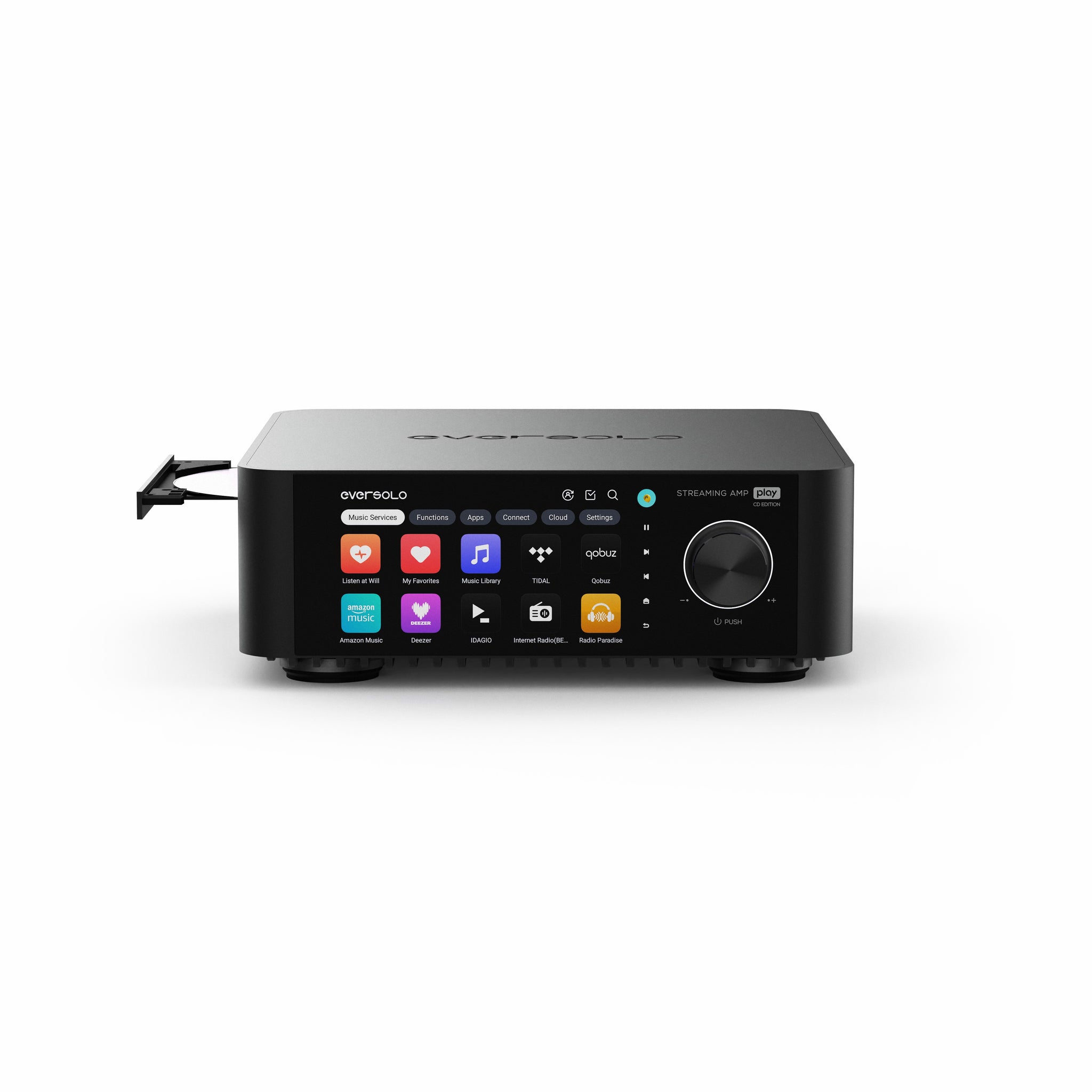
The Eversolo Play features a stunning 5.5-inch HD touchscreen that dominates the front panel. This isn't just a display – it's a complete control interface running a customized Android-based operating system. The screen quality matches what you'd find on flagship smartphones, with vibrant colors, sharp text, and responsive touch sensitivity.
This touchscreen approach offers several advantages. Navigation feels intuitive and immediate – you can browse music libraries, adjust settings, and control playback without reaching for your phone. The visual feedback helps with setup and troubleshooting, while customizable displays (including classic VU meters and spectrum analyzers) add visual appeal during music playback.
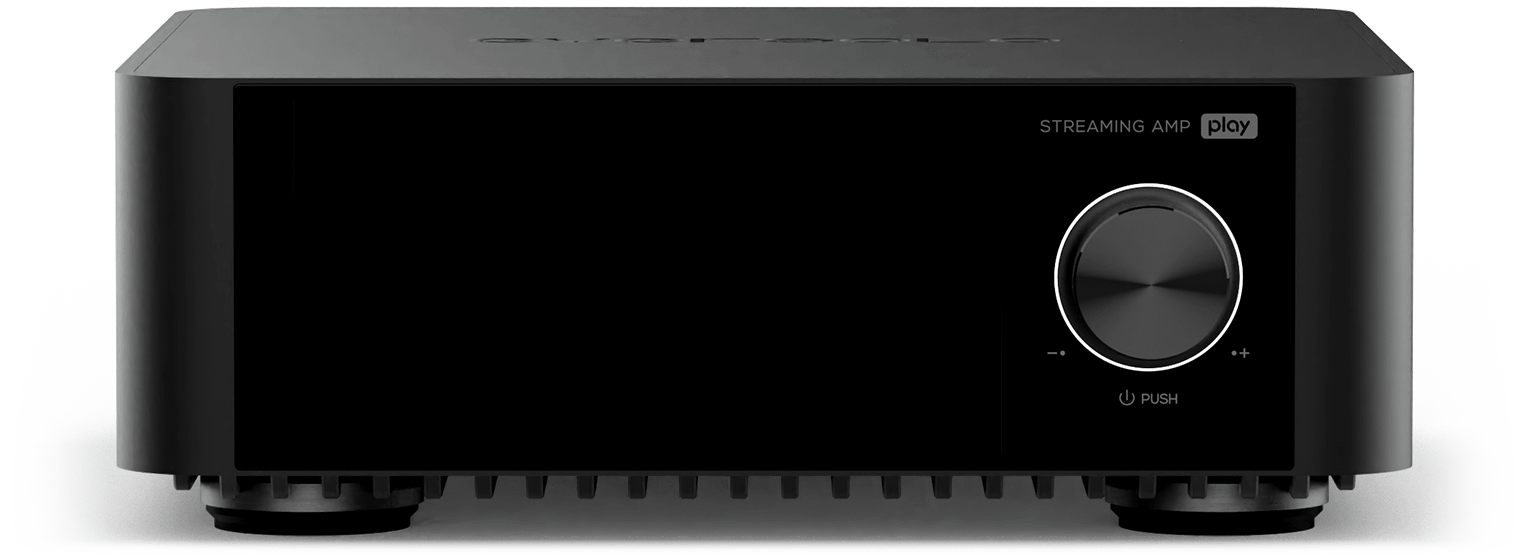
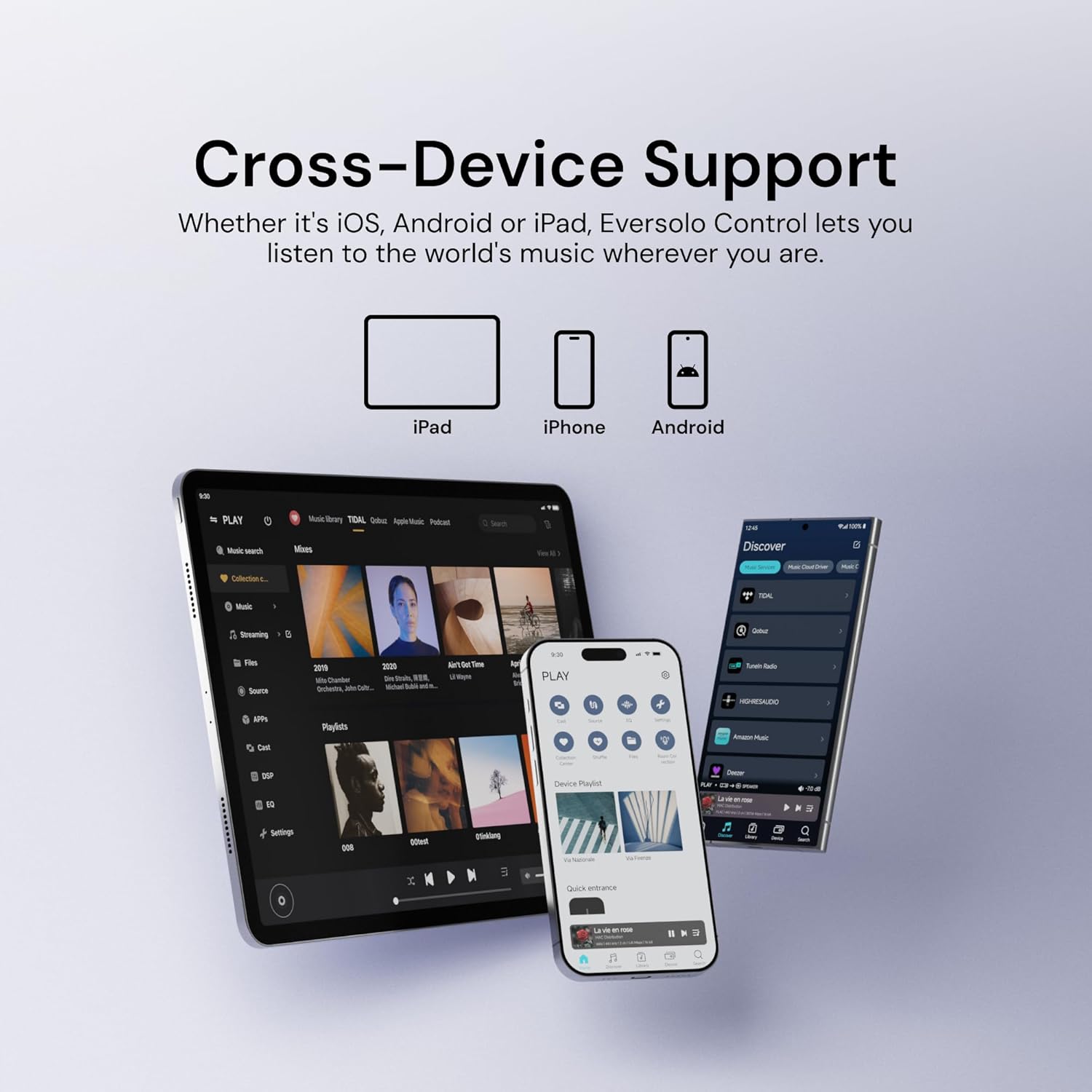
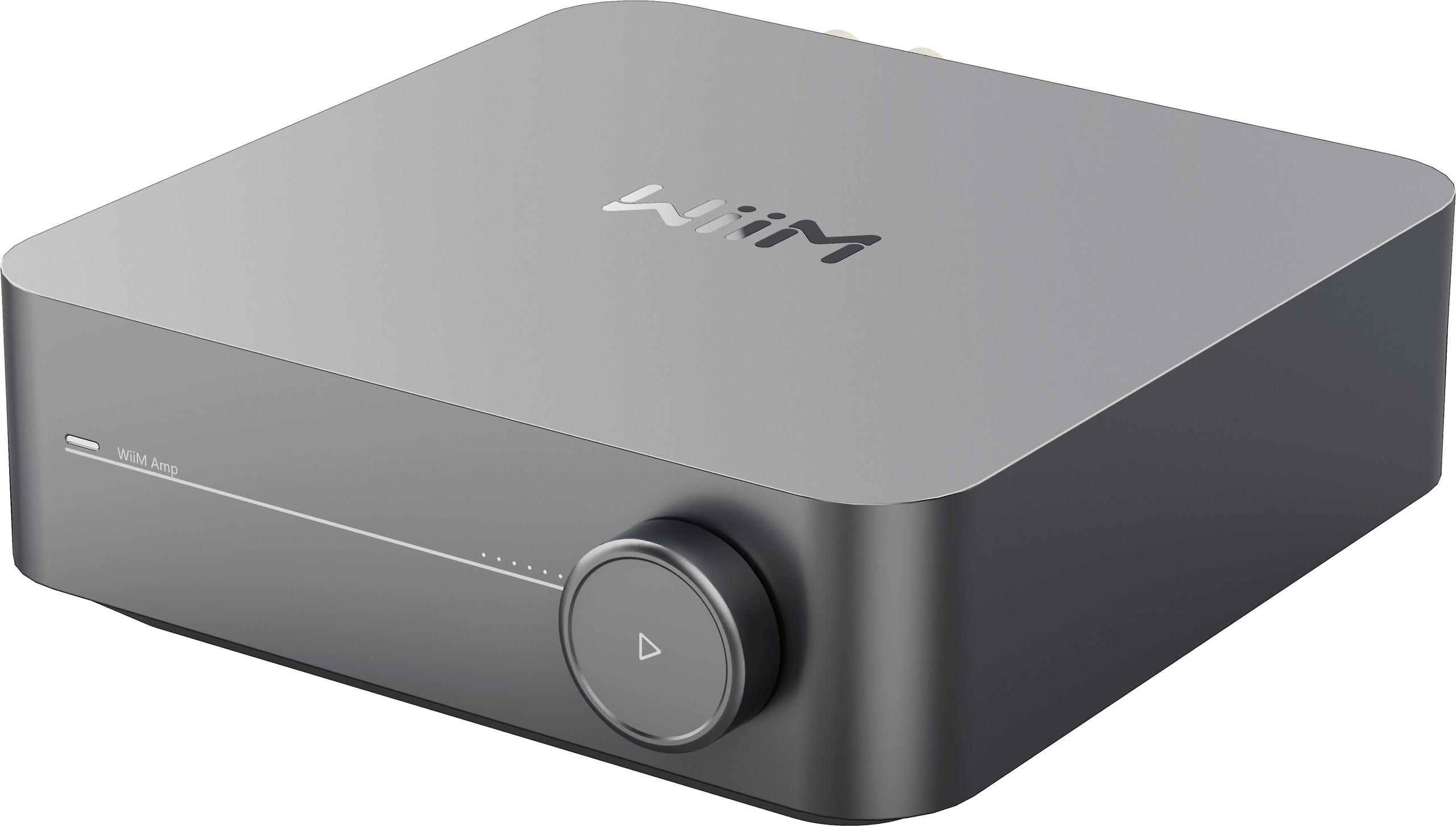
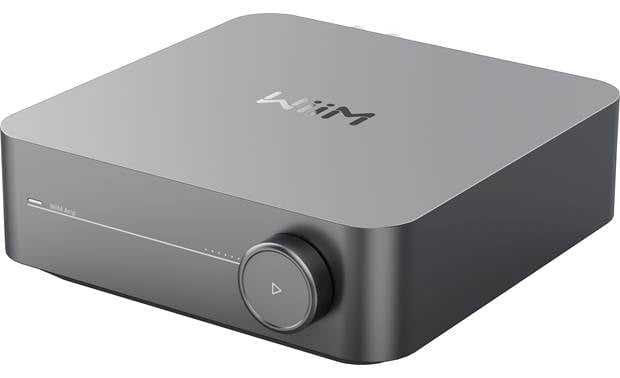
The WiiM Amp takes the opposite approach, featuring minimal physical controls – essentially just a volume knob with integrated play/pause functionality and basic LED indicators. Primary control happens through the WiiM Home smartphone app, which our research suggests is well-designed and reliable.
This app-centric approach has its own benefits. Smartphones offer more processing power and screen real estate than embedded displays, enabling more sophisticated interfaces and regular updates. The WiiM Amp's lower manufacturing costs also contribute to its competitive pricing.
Both approaches work well in practice, but serve different user preferences. The Eversolo Play appeals to users who appreciate physical interfaces and premium aesthetics – particularly those who remember dedicated hi-fi components with comprehensive front-panel controls. The WiiM Amp suits users comfortable with smartphone-centric control and those prioritizing value over premium materials.
Modern streaming amplifiers must navigate an increasingly complex landscape of music services, control protocols, and smart home ecosystems. Both devices handle the basics well but excel in different areas.
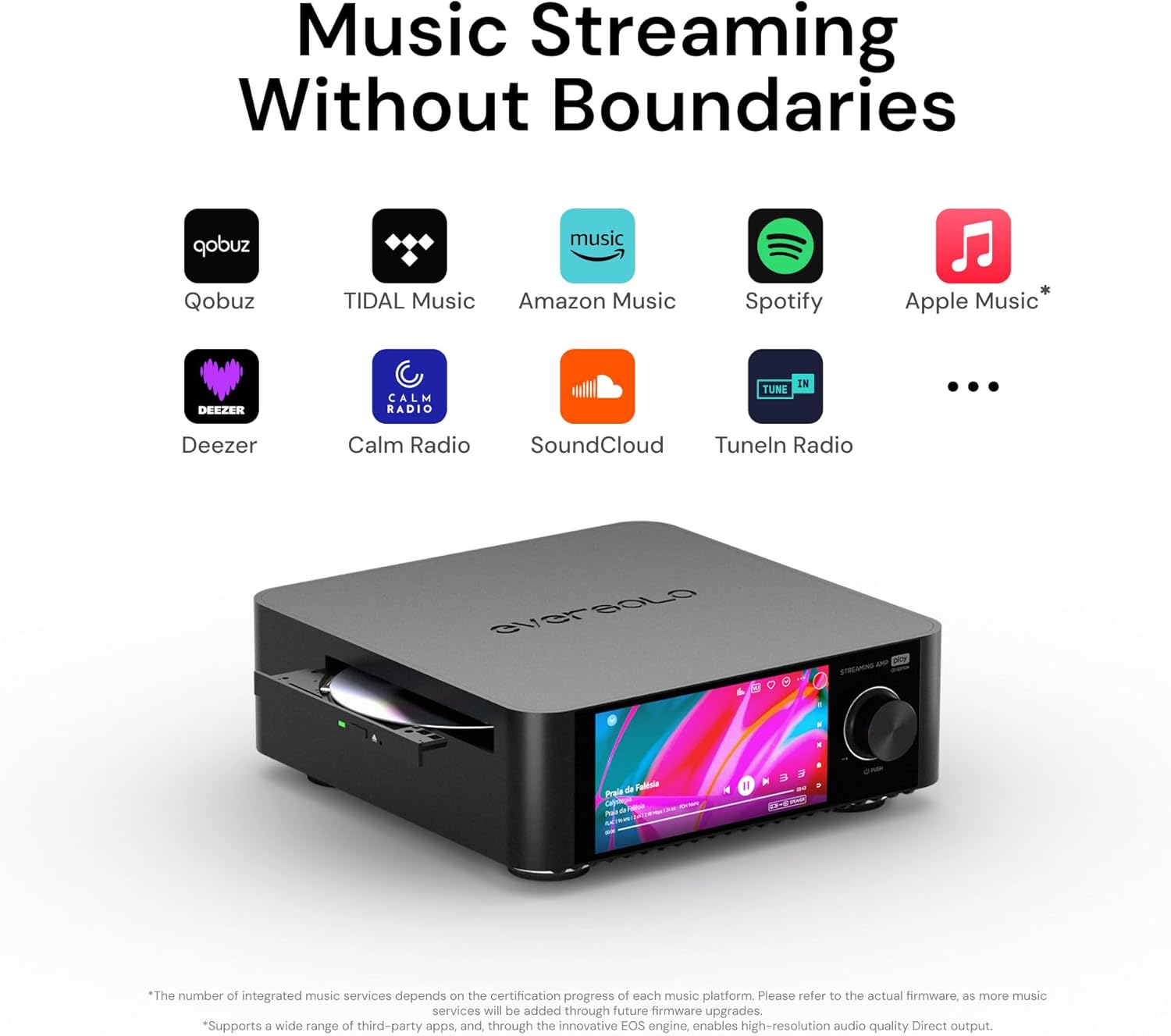
The Eversolo Play offers broad streaming service support including TIDAL, Qobuz, Amazon Music, Spotify, and notably, hi-res Apple Music streams. This Apple Music capability matters because Apple has been expanding their hi-res catalog, and the Eversolo Play can handle these streams with full quality preservation – something not all streaming devices manage properly.
The device also supports incredibly high-resolution audio formats, including DSD512 native and PCM up to 768kHz/32-bit. While such extreme formats remain niche, this capability future-proofs the device and ensures compatibility with the highest-quality source material available.
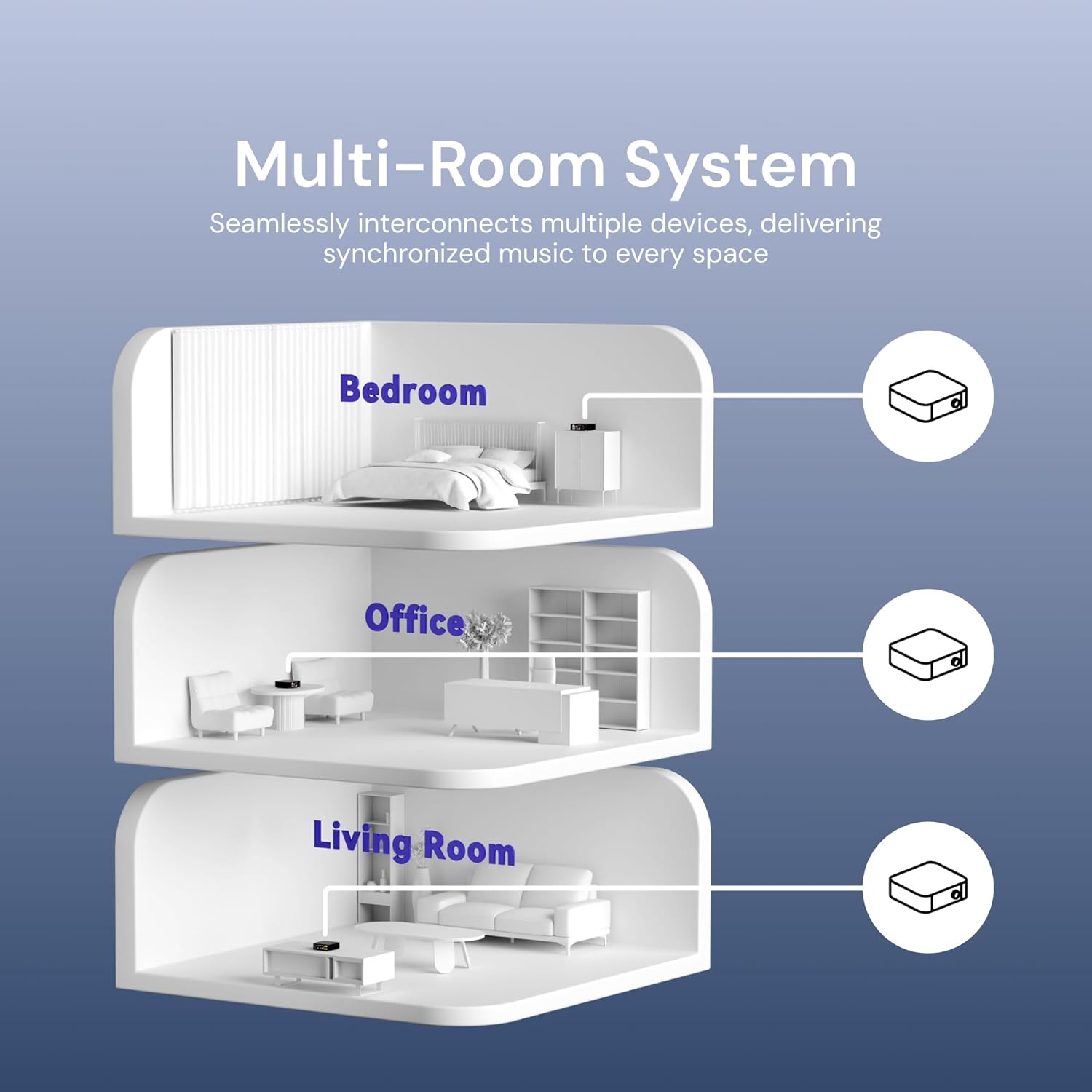
The WiiM Amp focuses more heavily on smart home integration and voice control. Native Alexa and Google Assistant support means you can control music playback, volume, and basic functions using voice commands. This integration extends to multiroom capabilities – the WiiM Amp can group with Amazon Echo devices, Google Nest speakers, and even Apple HomePods for synchronized whole-home audio.
This cross-platform compatibility represents a significant advantage for users already invested in smart home ecosystems. Instead of requiring proprietary speakers throughout the house, you can integrate the WiiM Amp with existing smart speakers for seamless multiroom operation.
Both devices support Roon, the audiophile-focused music management platform that's become increasingly popular among serious listeners. Roon provides sophisticated music discovery, detailed metadata, and bit-perfect audio streaming, though it requires a separate subscription and server setup.
Physical connectivity reveals another key difference between these streaming amplifiers.
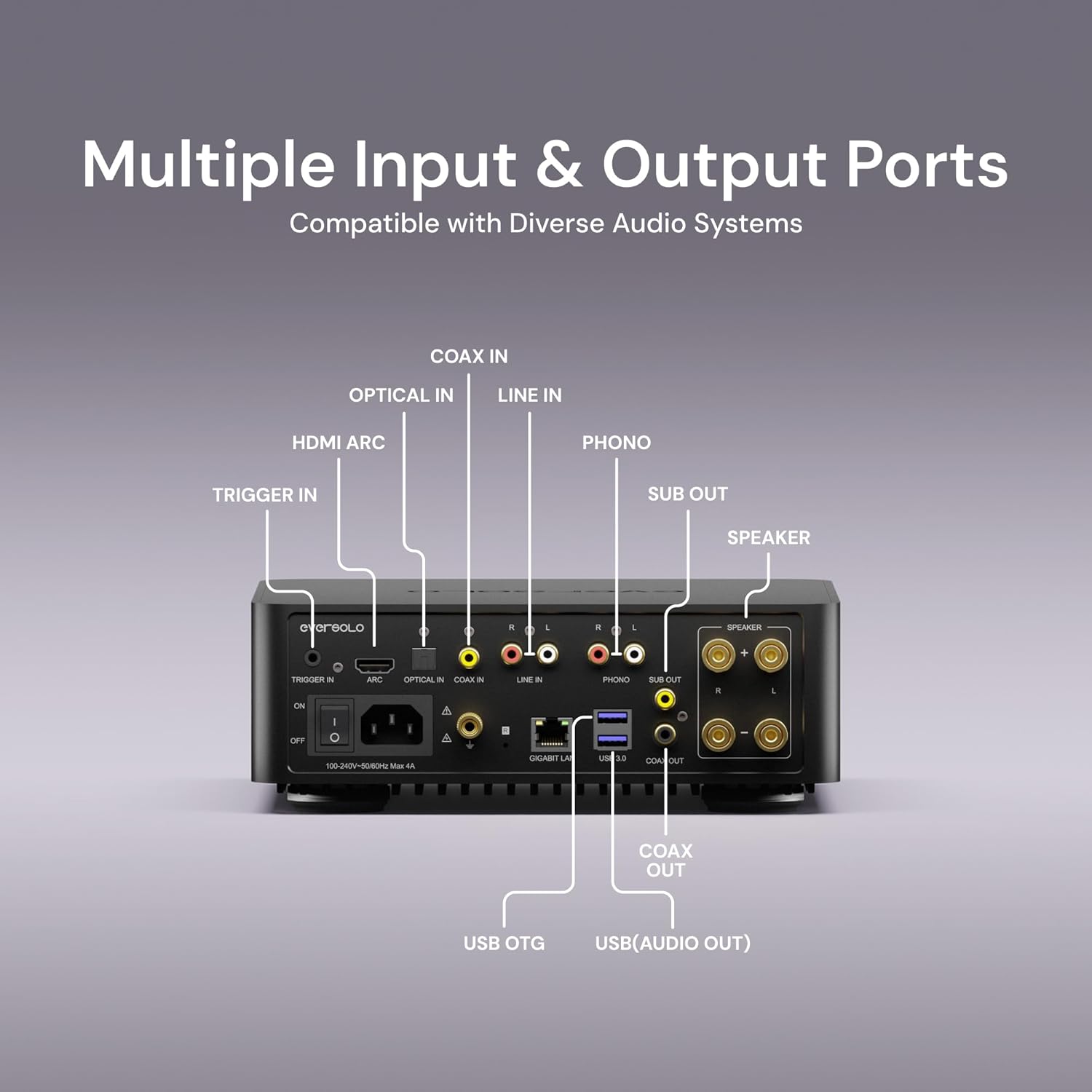
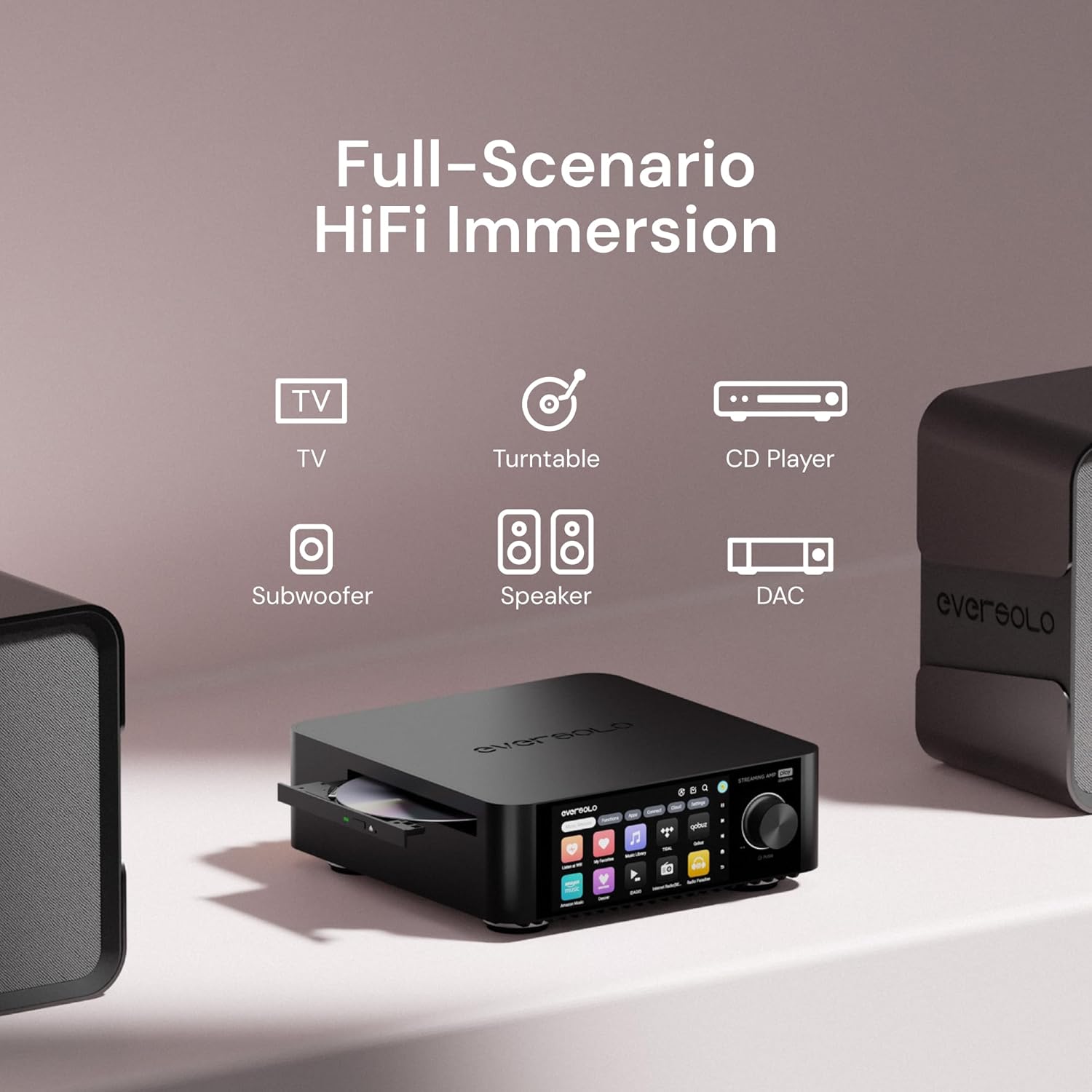
The Eversolo Play includes a built-in phono stage supporting both Moving Magnet (MM) and Moving Coil (MC) turntable cartridges. This feature transforms the device from purely digital to a complete analog/digital hub. The phono stage quality reportedly matches dedicated units costing significantly more, making this particularly valuable for vinyl enthusiasts.
This analog focus extends to other inputs – the Eversolo Play provides comprehensive connectivity for various analog sources while maintaining excellent digital input options. The device even offers a CD Edition variant with an integrated CD player and ripping capability, appealing to users maintaining physical media collections.
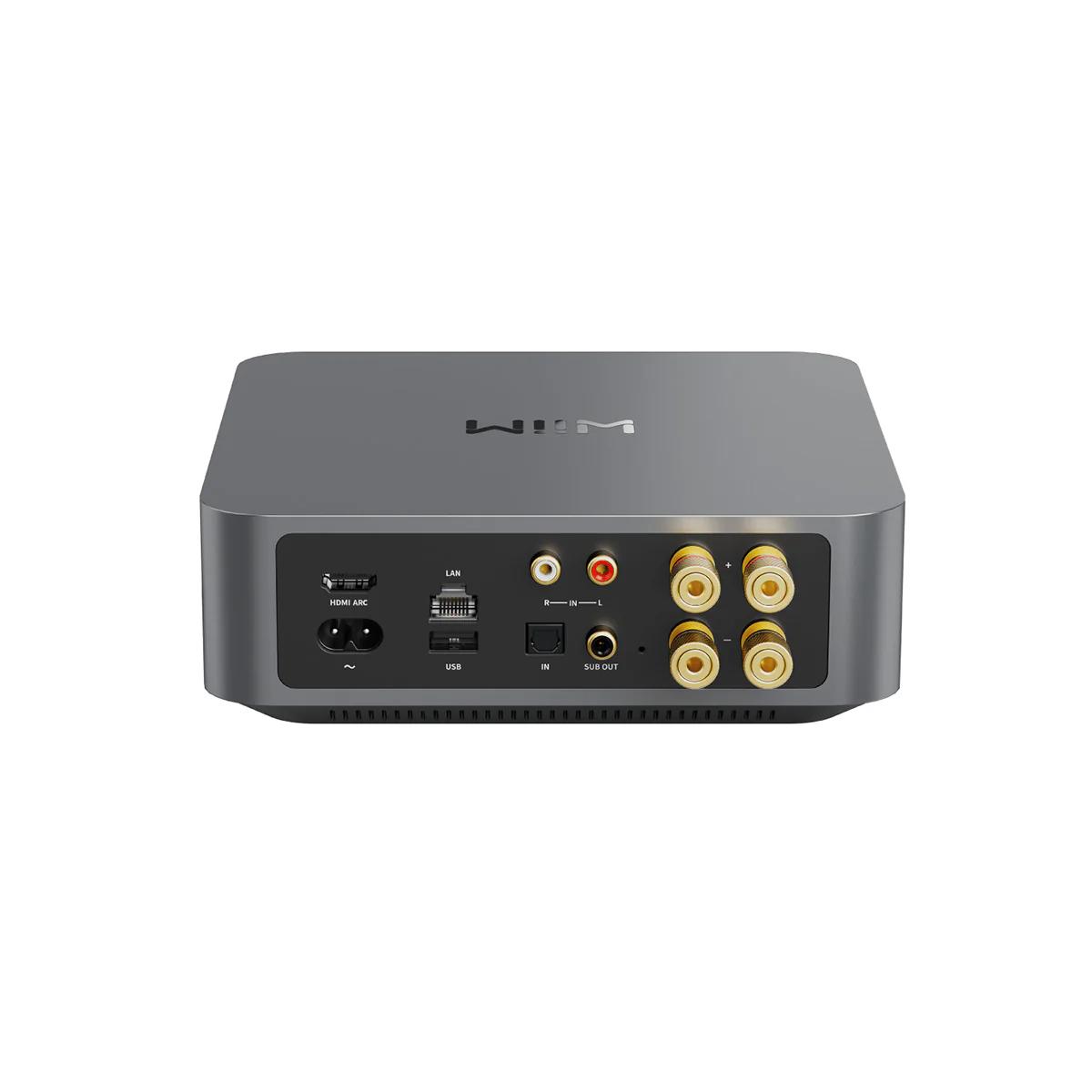
The WiiM Amp takes a more streamlined approach, focusing primarily on digital inputs with basic analog connectivity. While this reduces complexity and cost, it also limits flexibility for users with extensive analog source collections.
Both devices include HDMI ARC connectivity for TV audio integration – increasingly important as more people use streaming amplifiers in combined music/home theater systems. HDMI ARC (Audio Return Channel) lets your TV send audio back to the amplifier through the same cable carrying video, simplifying connections and enabling TV remote volume control.
For home theater use, both devices include subwoofer outputs with adjustable crossover settings. This allows integration with powered subwoofers to extend bass response beyond what bookshelf speakers can provide. The Eversolo Play offers more sophisticated bass management with adjustable crossover points from 40Hz to 500Hz, while the WiiM Amp provides auto-detection and basic crossover adjustment.
Room acoustics dramatically affect sound quality – even excellent speakers sound mediocre in poorly treated rooms. Both streaming amplifiers address this through room correction and equalization, though with different levels of sophistication.
The Eversolo Play supports dedicated room correction microphones for precise acoustic measurements. This approach allows the device to analyze your room's acoustic signature and apply corrective EQ to compensate for common problems like bass peaks, midrange dips, or excessive treble brightness.
The parametric EQ implementation is particularly sophisticated, offering 10 bands with adjustable frequency, bandwidth, and gain controls. This level of control allows precise correction of specific acoustic problems rather than broad-brush frequency adjustments.
The WiiM Amp includes room correction using your smartphone's microphone – more convenient but less precise than dedicated measurement microphones. The EQ options remain comprehensive with both graphic and parametric options, though the measurement accuracy depends on your phone's microphone quality.
For most users, either approach provides meaningful improvement over no room correction. However, the Eversolo Play's more sophisticated implementation offers greater potential for fine-tuning, particularly in challenging acoustic environments.
Physical construction affects both aesthetics and long-term reliability. Our research into user experiences reveals notable differences in build quality between these devices.
The Eversolo Play uses CNC-machined aluminum construction with premium materials throughout. The substantial feel and refined finish suggest manufacturing quality typically associated with much more expensive equipment. This premium construction likely contributes to better thermal management and longer-term reliability.
The WiiM Amp uses more cost-optimized construction while maintaining solid engineering. The lighter weight and simpler materials reflect the different price positioning but don't necessarily indicate poor quality – just different manufacturing priorities.
For devices expected to operate continuously for years, build quality matters beyond mere aesthetics. Better thermal management, higher-quality capacitors, and more robust power supplies typically translate to longer operational life and more stable performance over time.
Both streaming amplifiers work well in combined music/home theater systems, though with different strengths.
The HDMI ARC connectivity in both devices simplifies TV audio integration considerably. Instead of running separate optical cables or dealing with TV headphone outputs, HDMI ARC provides bit-perfect digital audio directly from your TV's streaming apps or connected sources.
However, both devices are fundamentally stereo amplifiers. For true home theater use requiring surround sound processing, you'd need additional amplification for center and surround channels. That said, many users find high-quality stereo reproduction more satisfying than poorly implemented surround sound, particularly for streaming content and music listening.
The subwoofer integration capabilities help bridge this gap by enabling 2.1 systems that provide satisfying low-frequency impact for movies while maintaining stereo simplicity. Both devices handle this integration well, though the Eversolo Play's more sophisticated bass management offers greater flexibility.
At the time of writing, these devices occupy different price segments that reflect their design priorities. The WiiM Amp positions itself as exceptional value – delivering performance that previously required much more expensive equipment at an accessible price point. This approach democratizes high-quality audio streaming for users who previously couldn't justify the cost.
The Eversolo Play costs significantly more but delivers tangible improvements in build quality, user interface sophistication, and feature depth. The premium mainly buys refinement rather than dramatically superior performance, though the accumulated improvements create a notably more polished experience.
This pricing dynamic creates clear decision points. The WiiM Amp represents the sweet spot for most users – excellent performance without premium pricing. The Eversolo Play justifies its higher cost for users who will utilize its advanced features and appreciate its refined presentation.
The WiiM Amp makes sense for users seeking exceptional performance per dollar spent, particularly those already invested in smart home ecosystems. If you want comprehensive streaming capabilities, solid build quality, and reliable performance without premium pricing, this device delivers remarkable value. It's also the better choice for users who prefer smartphone control and appreciate voice command integration.
The Eversolo Play appeals to users prioritizing refinement and advanced features. If you maintain a vinyl collection, want the most sophisticated room correction available, or simply appreciate premium build quality and interfaces, the additional cost delivers meaningful benefits. It's particularly compelling for users who view their audio system as both functional equipment and aesthetic statement.
For most people building their first high-quality streaming system, the WiiM Amp offers a sensible entry point that doesn't compromise on essential performance characteristics. You can always upgrade later if your needs or budget evolve.
However, if budget allows and you value the enhanced experience, the Eversolo Play provides a more complete, refined solution that's likely to satisfy for years without feeling the need to upgrade.
Both represent excellent choices within their respective market segments – the decision ultimately comes down to your priorities, budget, and how you prefer to interact with your audio equipment.
| Eversolo Play Streaming Amplifier | WiiM Amp Streaming Amplifier |
|---|---|
| Power Output - Determines which speakers you can drive effectively | |
| 60W @ 8Ω / 110W @ 4Ω (sufficient for most bookshelf speakers) | 60W @ 8Ω / 120W @ 4Ω (virtually identical performance) |
| DAC Technology - Core component that shapes overall sound character | |
| AKM AK4493SEQ with VELVETSOUND (smooth, musical presentation) | ESS Sabre ES9018 K2M (vivid, precise presentation) |
| User Interface - How you'll interact with the device daily | |
| 5.5" HD touchscreen with Android-based OS (premium feel, intuitive control) | Volume knob + smartphone app control (simple, cost-effective) |
| Sound Signature - Choose based on your musical preferences | |
| Smooth, engaging, excellent soundstage depth (ideal for jazz, classical, acoustic) | Dynamic, immediate, tight bass control (great for rock, electronic, pop) |
| Streaming Platform Support - Ensures compatibility with your music services | |
| TIDAL, Qobuz, Spotify, Apple Music hi-res, Roon Ready | TIDAL, Qobuz, Spotify, Amazon Music, Roon Ready |
| Smart Home Integration - Important if you use voice assistants | |
| AirPlay support, no voice control | Alexa, Google Assistant, cross-platform multiroom grouping |
| Analog Inputs - Critical if you have turntables or other analog sources | |
| MM/MC phono stage built-in (eliminates need for separate phono preamp) | Basic line input only (requires external phono preamp for vinyl) |
| Room Correction - Helps optimize sound for your specific listening space | |
| Advanced correction with dedicated microphone support | Basic correction using smartphone microphone |
| Hi-Res Audio Support - Future-proofing for highest quality sources | |
| Up to DSD512 native, PCM 768kHz/32-bit (extreme format support) | Up to 24-bit/192kHz (covers all practical hi-res needs) |
| Build Quality - Affects longevity and premium feel | |
| CNC-machined aluminum, premium materials throughout | Solid engineering with cost-optimized materials |
| EQ and DSP Features - Customization options for fine-tuning sound | |
| 15-band graphic, 10-band parametric, 23 genre presets | 10-band graphic/parametric, 26 presets |
| HDMI Connectivity - Essential for TV audio integration | |
| HDMI ARC (up to stereo PCM 192kHz/24-bit) | HDMI ARC with standard TV audio support |
| Value Proposition - Consider your priorities and budget | |
| Premium experience with advanced features justifies higher cost | Exceptional performance per dollar, best value in category |
The Eversolo Play delivers a smoother, more musical sound with exceptional soundstage depth, thanks to its AKM DAC chip. The WiiM Amp provides a more dynamic, precise presentation with tighter bass control using ESS DAC technology. Choose the Eversolo Play for relaxed listening and acoustic music, or the WiiM Amp for immediate impact with rock and electronic genres.
Both the Eversolo Play and WiiM Amp deliver 60 watts at 8 ohms and around 110-120 watts at 4 ohms, making them suitable for most bookshelf speakers in small to medium rooms. This power output handles typical listening levels with excellent control and clarity.
The WiiM Amp excels in smart home setups with built-in Alexa and Google Assistant support, plus the ability to group with Echo, Nest, and HomePod speakers for multiroom audio. The Eversolo Play offers AirPlay support but lacks voice control integration.
The Eversolo Play includes a built-in MM/MC phono stage, allowing direct turntable connection without additional equipment. The WiiM Amp requires a separate phono preamp for vinyl playback, adding to the overall system cost for vinyl enthusiasts.
Both the Eversolo Play and WiiM Amp feature HDMI ARC connectivity for seamless TV audio integration. They work equally well for stereo TV sound, though neither provides true surround sound processing. Both include subwoofer outputs for enhanced movie audio with a 2.1 setup.
The Eversolo Play features a premium 5.5-inch touchscreen with intuitive controls directly on the device. The WiiM Amp uses smartphone app control with a simple volume knob on the unit. Choose the Eversolo Play for hands-on control or the WiiM Amp for streamlined app-based operation.
Both the Eversolo Play and WiiM Amp support major platforms like Spotify, TIDAL, and Qobuz. The Eversolo Play adds hi-res Apple Music support, while the WiiM Amp includes Amazon Music and broader smart speaker integration options.
The Eversolo Play offers advanced room correction with dedicated microphone support and sophisticated parametric EQ controls. The WiiM Amp provides basic room correction using your smartphone microphone with comprehensive EQ options, sufficient for most listening environments.
The WiiM Amp delivers exceptional performance per dollar, making high-quality streaming accessible to more users. The Eversolo Play costs significantly more but provides premium build quality, advanced features, and refined user experience that justifies the higher investment for discerning listeners.
The Eversolo Play supports extreme hi-res formats up to DSD512 and PCM 768kHz/32-bit for future-proofing. The WiiM Amp handles standard hi-res audio up to 24-bit/192kHz, covering all practical high-resolution needs from streaming services.
The Eversolo Play uses premium CNC-machined aluminum construction with flagship-level materials throughout. The WiiM Amp employs solid engineering with cost-optimized materials that still ensure reliable performance. Both offer excellent longevity, with the Eversolo Play providing a more premium aesthetic.
Choose the WiiM Amp if you want exceptional performance at an accessible price point with smart home integration. Select the Eversolo Play if you prioritize premium features like vinyl support, advanced room correction, and refined build quality, and your budget allows for the investment in long-term satisfaction.
We've done our best to create useful and informative comparisons to help you decide what product to buy. Our research uses advanced automated methods to create this comparison and perfection is not possible - please contact us for corrections or questions. These are the sites we've researched in the creation of this article: blog.son-video.com - audio46.com - upscaleaudio.com - audioadvice.com - musicdirect.com - audio46.com - whathifi.com - whathifi.com - bloomaudio.com - youtube.com - the-ear.net - whathifi.com - soundstagesimplifi.com - youtube.com - stevehuffphoto.com - darko.audio - youtube.com - eversolo.com - audiosciencereview.com - faq.wiimhome.com - av-export.com - sound-advice.online - av.com - whathifi.com - youtube.com - forum.wiimhome.com - erinsaudiocorner.com - audacityaustralia.com.au - stereophile.com - audiosciencereview.com - audioadvice.com - smarthomesounds.co.uk

Privacy Policy
Terms and Conditions - Affiliate Policy
Home Security
© Copyright 2008-2026.
11816 Inwood Rd #1211, Dallas, TX 75244