


The world of hi-fi audio has undergone a dramatic transformation over the past decade. Gone are the days when building a quality music system required a tower of separate components—CD player, preamp, power amp, and maybe a dedicated streamer if you wanted to play music from your phone. Today's streaming integrated amplifiers pack all of these functions into a single, compact box that can sit on your desk or bookshelf while delivering surprisingly sophisticated sound.
These all-in-one solutions represent more than just convenience. They eliminate the cable spaghetti between components, reduce electrical interference, and often cost significantly less than buying separate pieces. But like any compromise, they come with trade-offs. The key is understanding which approach best matches your listening habits and technical needs.
At the heart of this category sit two compelling but philosophically different products: the Eversolo Play and the NAD D 3045. Both launched in recent years as manufacturers recognized the growing demand for simplified, high-quality audio systems, but they take distinctly different approaches to solving the same problem.
Streaming integrated amplifiers combine three critical components: a network streamer (the part that connects to the internet and music services), a digital-to-analog converter or DAC (which turns digital music files into analog signals your speakers can reproduce), and an amplifier (which provides the power to drive your speakers).
The magic happens when these components work together seamlessly. Instead of worrying about which digital cable to use between your streamer and DAC, or whether your preamp matches your power amp, you get a single device engineered to work optimally as a complete system.
When evaluating these products, the most important considerations are streaming integration (how easily you can access your music), amplifier performance (how well it drives your speakers), digital audio quality (how accurately it reproduces high-resolution files), connectivity options (what sources you can connect), and overall user experience.
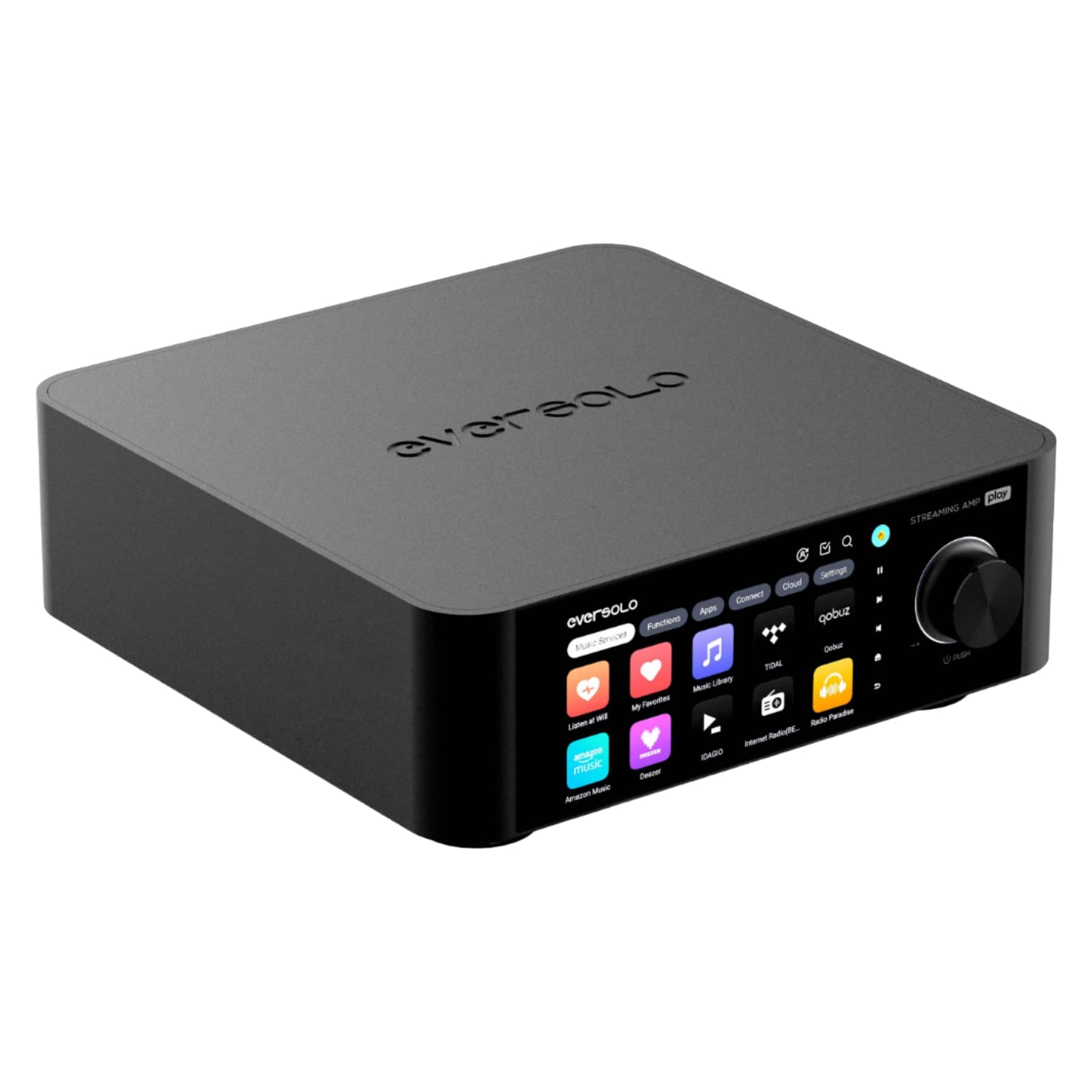
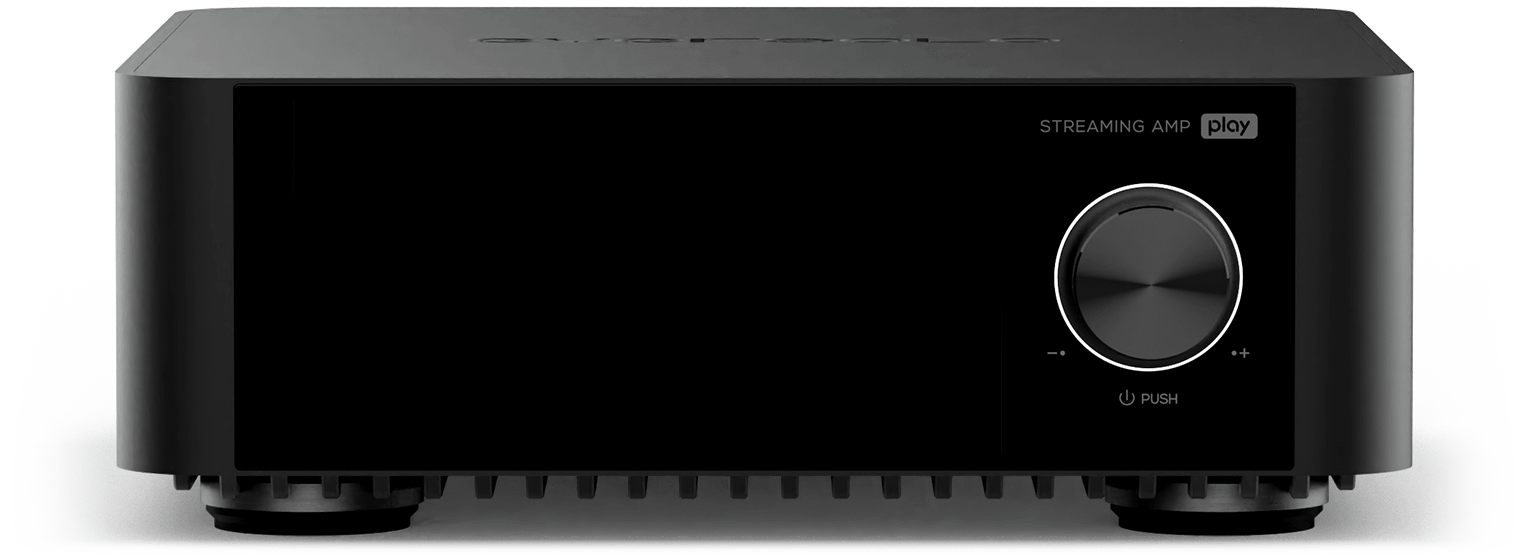
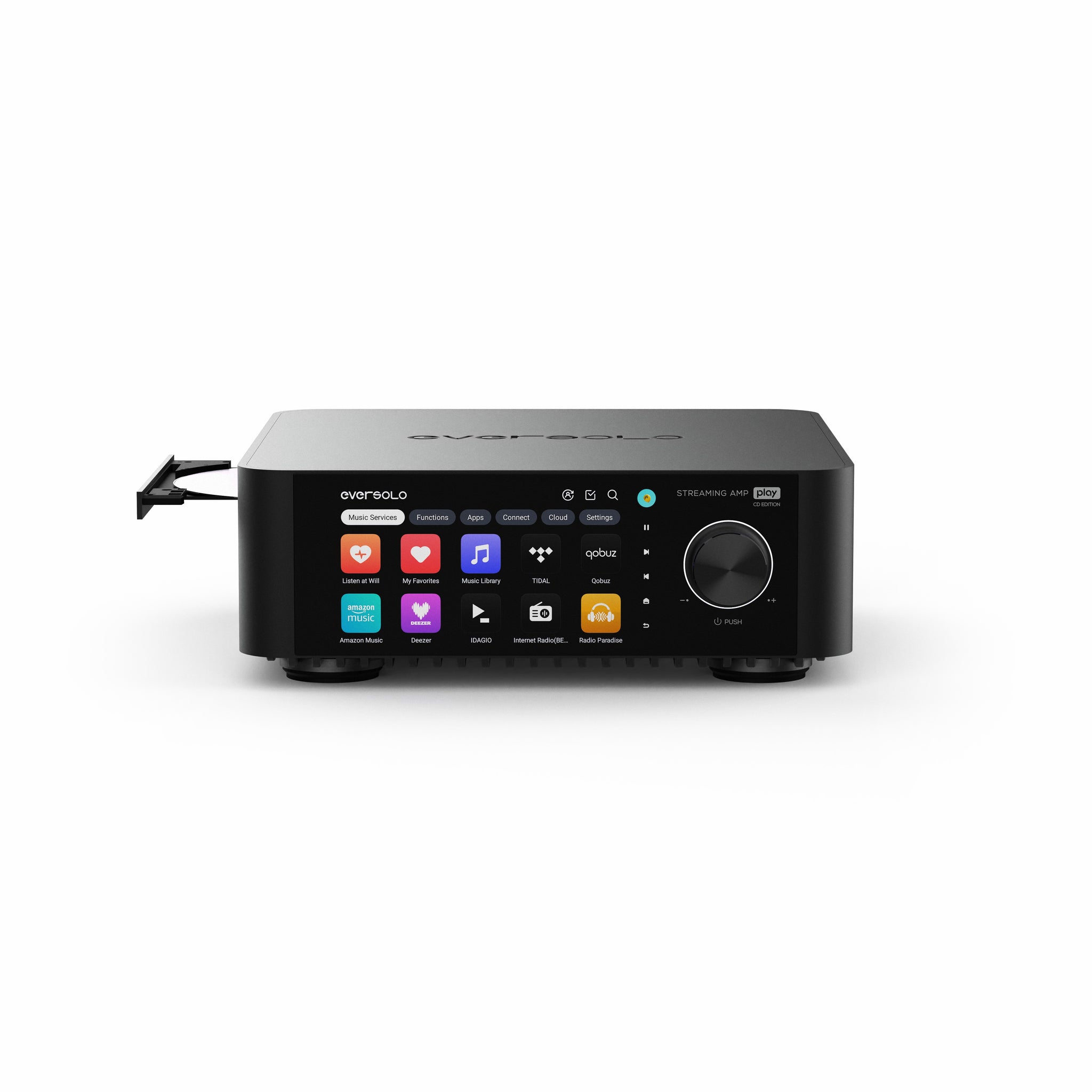
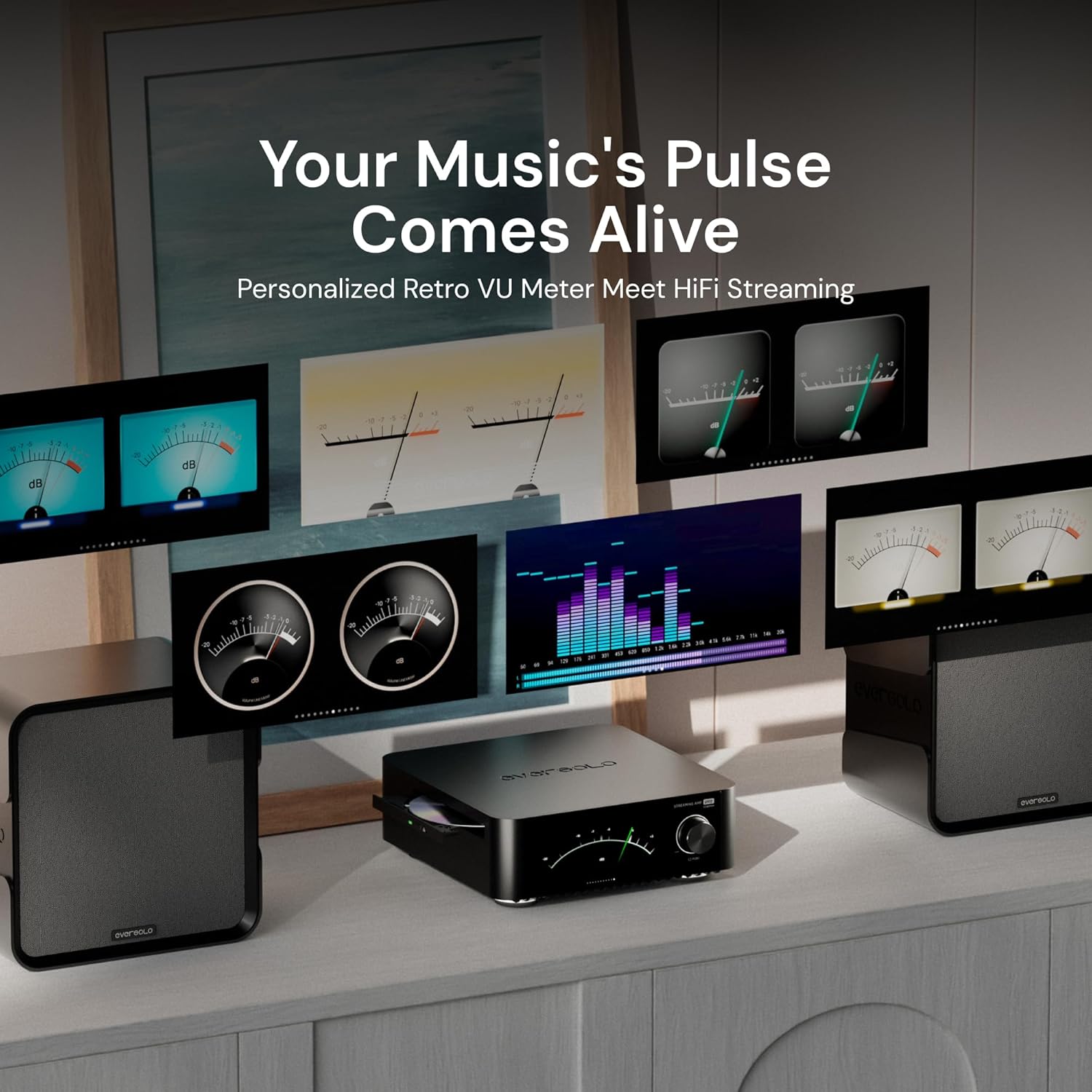
The Eversolo Play, introduced in 2024, represents the smartphone generation's approach to hi-fi. It features a large touchscreen interface, built-in streaming apps, and Wi-Fi connectivity that lets you start playing music within minutes of plugging it in. Think of it as an audiophile-grade smart speaker that connects to your existing speakers instead of having its own built-in drivers.
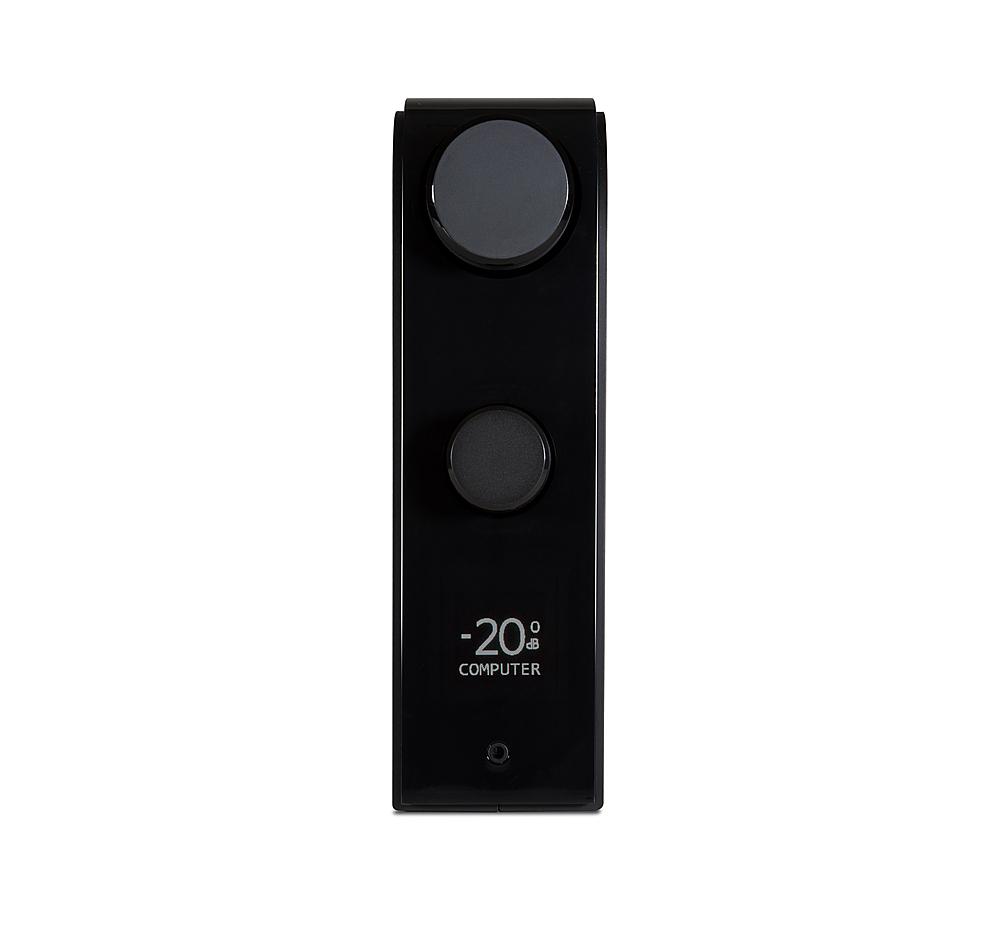
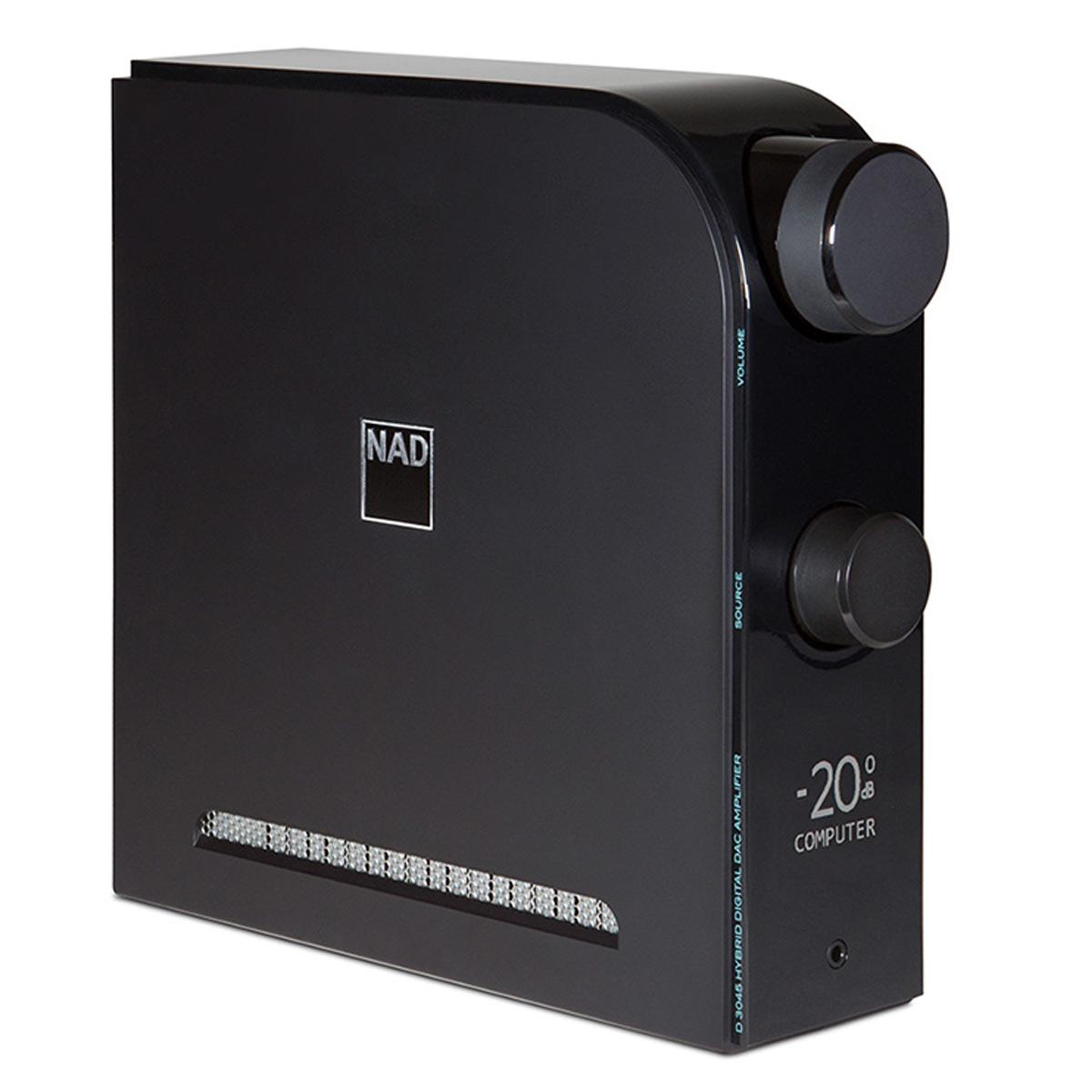
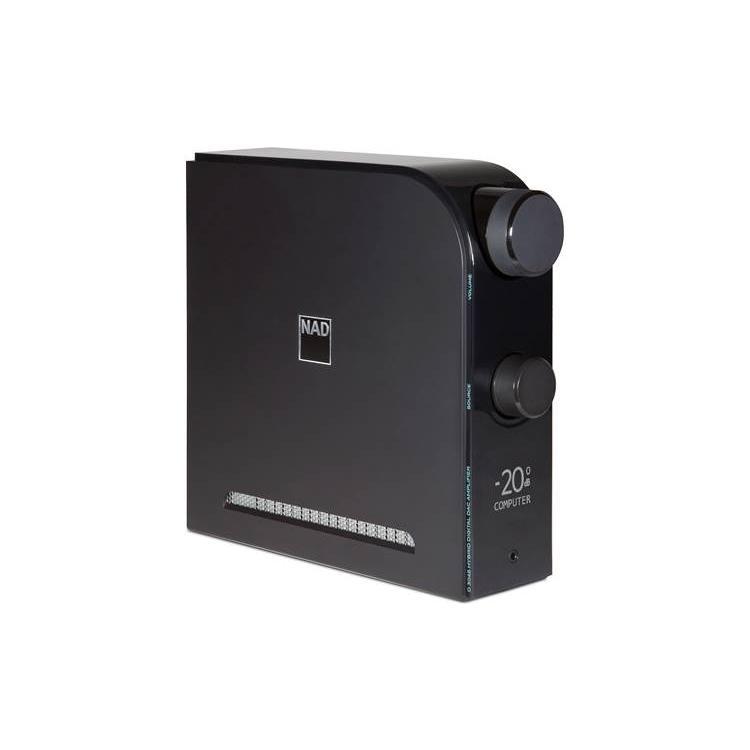
The NAD D 3045, which debuted a few years earlier, follows a more traditional hi-fi philosophy. NAD has been building amplifiers since the 1970s, and their approach reflects decades of experience in making components that work reliably with a wide variety of sources. The D 3045 assumes you'll connect external devices—your computer, a CD player, or a separate network streamer—and focuses on amplifying those signals as cleanly and powerfully as possible.
At the time of writing, both products occupy similar price points in the premium compact amplifier category, but they deliver that value in fundamentally different ways.
The most critical job of any integrated amplifier is driving your speakers with sufficient power and minimal distortion. Both the Eversolo Play and NAD D 3045 use Class D amplification, a modern approach that's far more efficient than traditional analog amplifiers. Class D amps generate very little heat and can deliver substantial power from compact chassis—perfect for desktop or bookshelf placement.
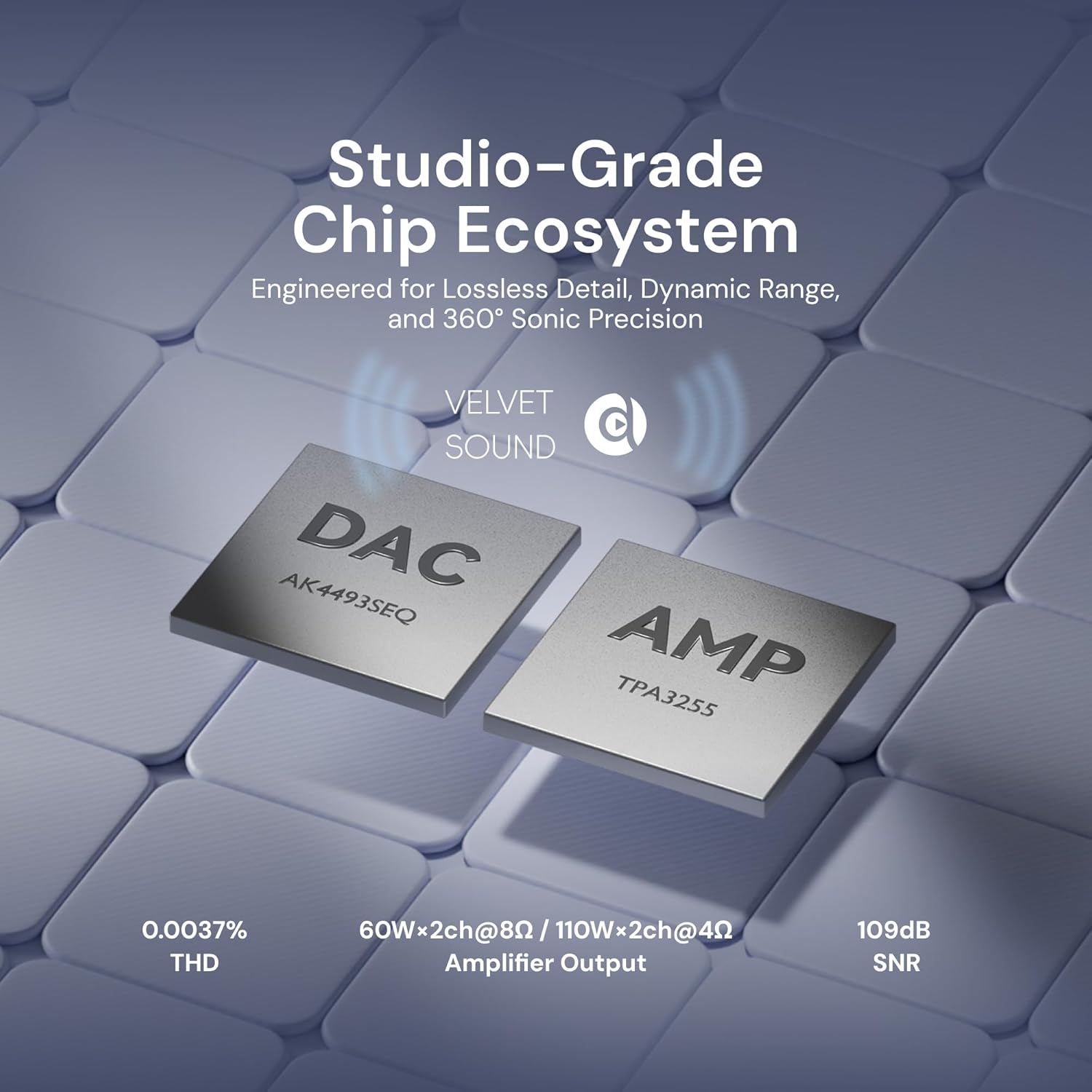
However, their power delivery characteristics differ significantly. The Eversolo Play outputs 60 watts per channel into 8-ohm speakers (the standard impedance for most bookshelf speakers) but nearly doubles to 110 watts when driving 4-ohm loads. This behavior indicates a robust power supply that can handle demanding speakers. Many high-end bookshelf monitors are designed with 4-ohm impedances specifically because they can extract more power from capable amplifiers.
The NAD D 3045 takes a different approach, delivering a consistent 60 watts regardless of speaker impedance. NAD's PowerDrive technology prioritizes stability and consistency over peak power output. This philosophy reflects NAD's long experience with real-world speaker loads, where impedance varies with frequency. A speaker might be 8 ohms at 1kHz but drop to 4 ohms in the bass region, potentially stressing amplifiers that aren't designed to handle such variations.
Both specifications tell us something important about the intended use cases. The Eversolo Play's higher 4-ohm output makes it particularly well-suited for driving premium bookshelf speakers that benefit from extra power. The NAD D 3045's consistent output suggests it's designed for long-term reliability with a wide variety of speakers, including those with challenging impedance curves.
From a measured performance standpoint, the Eversolo Play demonstrates superior specifications on paper: a signal-to-noise ratio exceeding 109dB compared to the NAD's 98dB, and total harmonic distortion of just 0.0037% versus 0.005%. These numbers might seem academic, but they translate to a darker background between musical notes and cleaner reproduction of complex passages.
The digital-to-analog converter is arguably the most important component in any modern audio system, since virtually all music today starts as digital files. Both amplifiers use high-quality DAC chips from AKM (Asahi Kasei Microdevices), a Japanese company renowned for its audio converters.
The Eversolo Play incorporates the newer AK4493SEQ, a 32-bit converter with AKM's VELVETSOUND technology. This DAC can handle native DSD512 files (a super-high-resolution format used in some audiophile recordings) and PCM files up to 768kHz/32-bit. To put this in perspective, most streaming services deliver 16-bit/44.1kHz (CD quality) or 24-bit/96kHz files, so this level of capability provides substantial headroom for future format developments.
The NAD D 3045 uses the earlier AK4490, a 24-bit converter that handles formats up to 384kHz/24-bit via USB input. While not as cutting-edge as the Eversolo's DAC, it's still far more capable than necessary for current streaming services and most high-resolution downloads.
Both devices support MQA (Master Quality Authenticated), a controversial format that promises to deliver studio-quality sound in smaller file sizes. While MQA's technical merits are debated among audiophiles, having support means you can take full advantage of TIDAL's MQA-encoded tracks if you subscribe to that service.
The practical difference between these DACs is likely inaudible with most music, but the Eversolo Play's superior specifications provide better future-proofing and potentially cleaner performance with already excellent recordings.
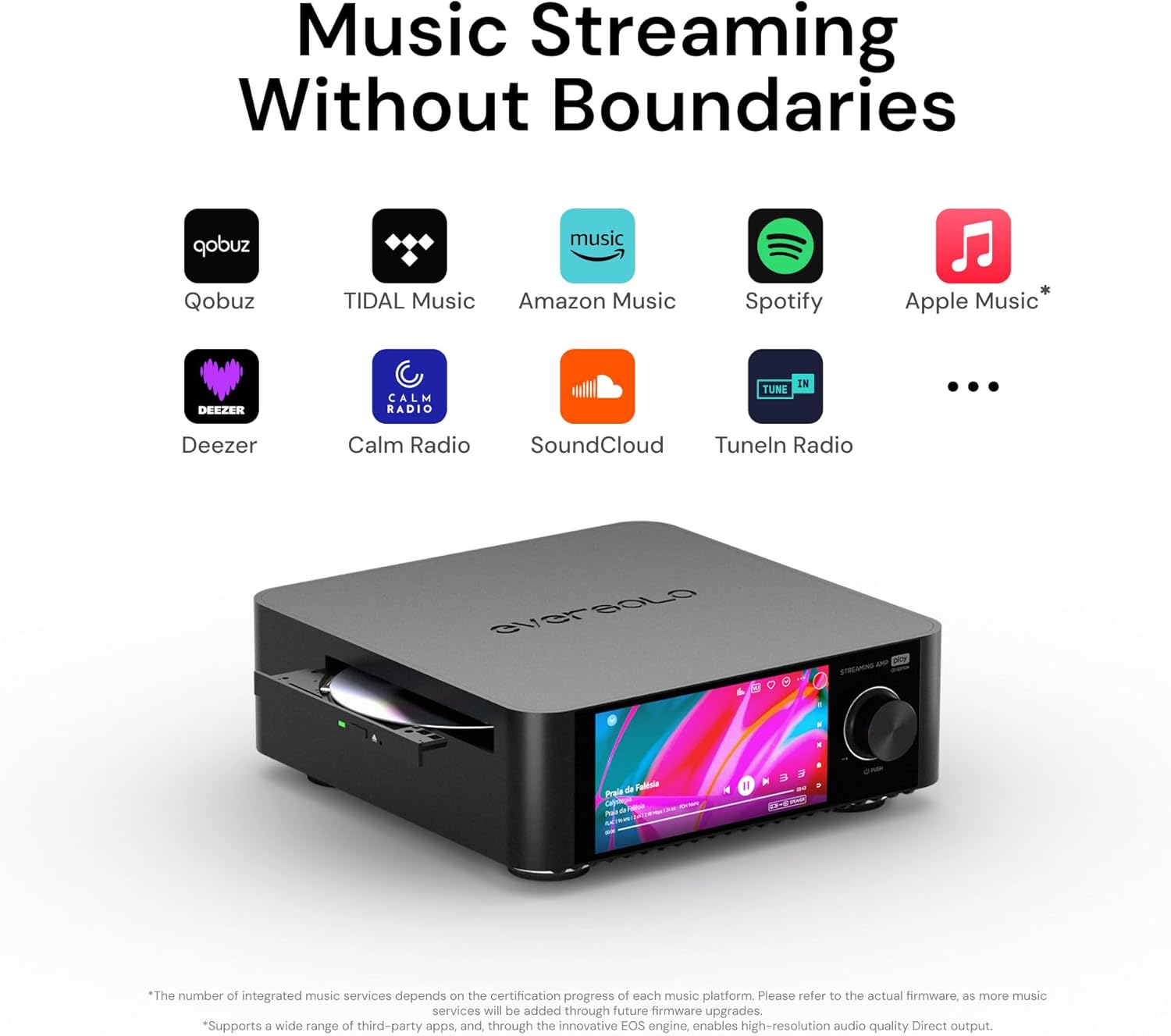
Here's where these products diverge most dramatically. The Eversolo Play is essentially a complete streaming ecosystem in a box. Its 5.5-inch touchscreen runs a customized Android-based interface with native apps for major streaming services: TIDAL, Qobuz, Amazon Music, Deezer, and Spotify Connect. You can browse your playlists, discover new music, and control playback directly from the unit's screen.
More importantly, the Eversolo Play is Roon Ready, meaning it integrates seamlessly with Roon's music management software. Roon is popular among serious listeners because it provides detailed information about recordings, suggests similar music, and can manage both streaming services and local music libraries in a unified interface. Having native Roon support eliminates the need for a separate endpoint device.
The NAD D 3045 takes the opposite approach: it assumes you'll use external sources for streaming. You might connect your computer via USB, use Bluetooth from your phone, or add a separate network streamer later. This philosophy offers more flexibility but requires additional components and setup complexity.
For most users in 2024, the Eversolo Play's integrated streaming represents a significant convenience advantage. You can start listening to music immediately without needing to figure out computer audio drivers or purchase additional components. However, if you already own a preferred streaming solution or like the flexibility of upgrading components independently, the NAD D 3045's approach has merit.
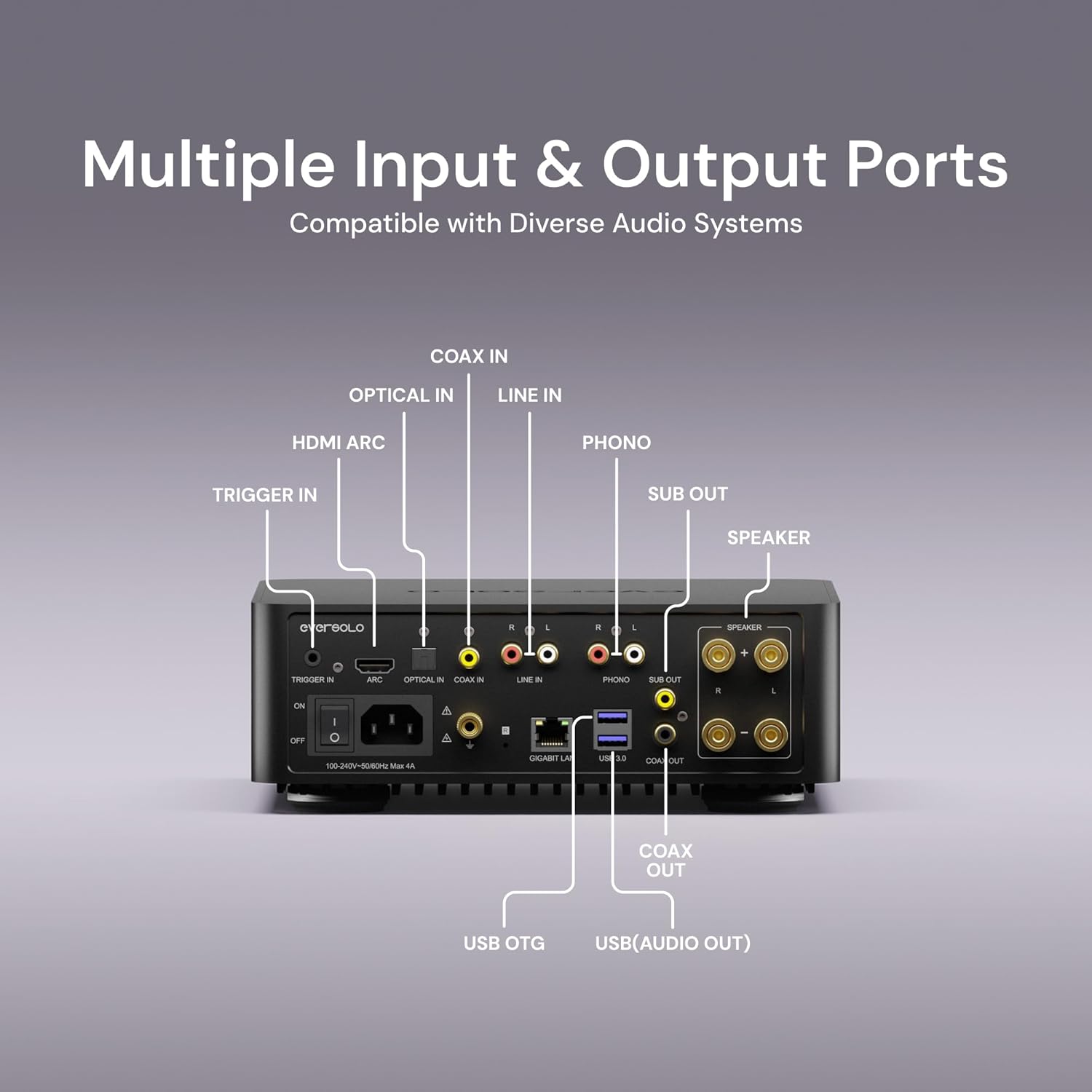
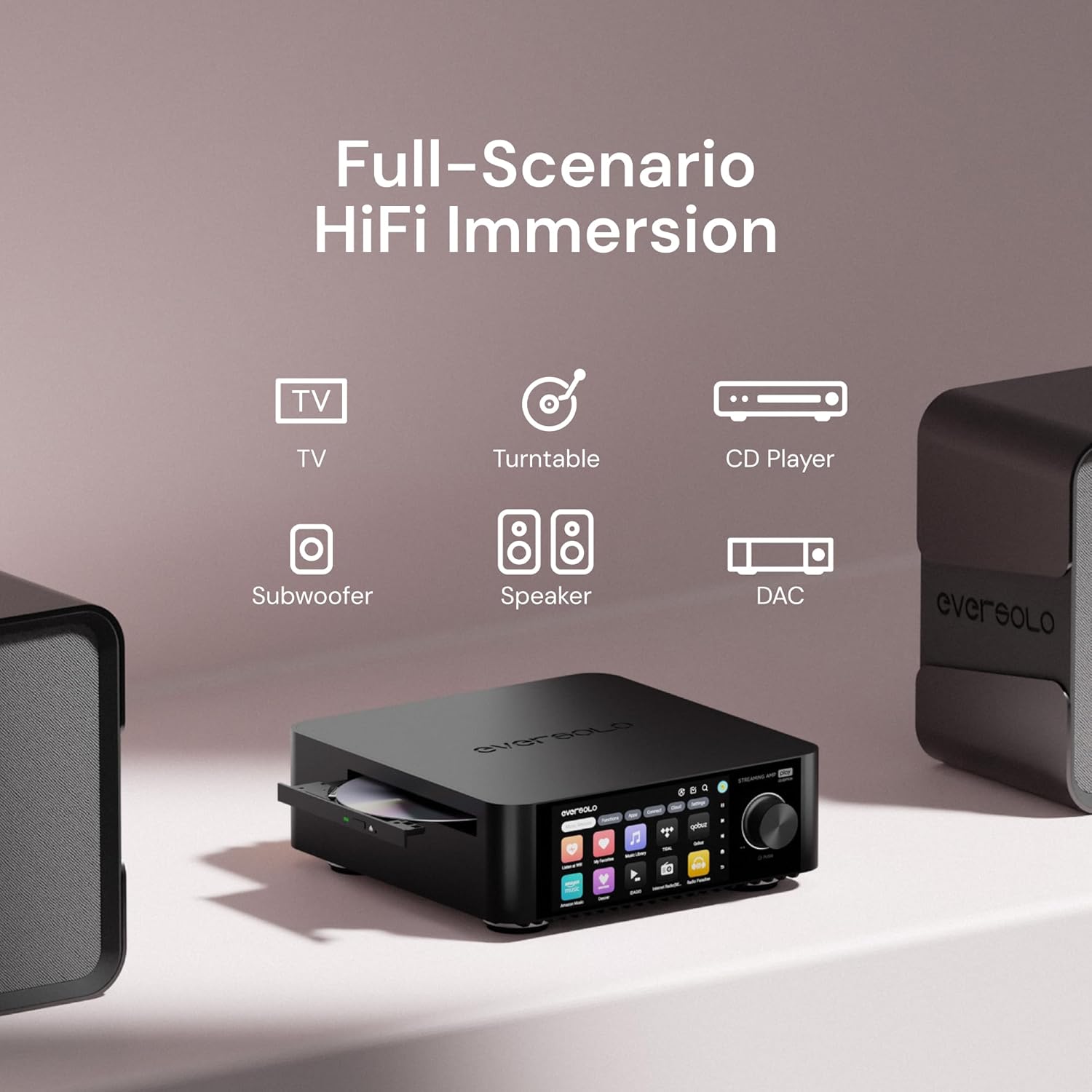
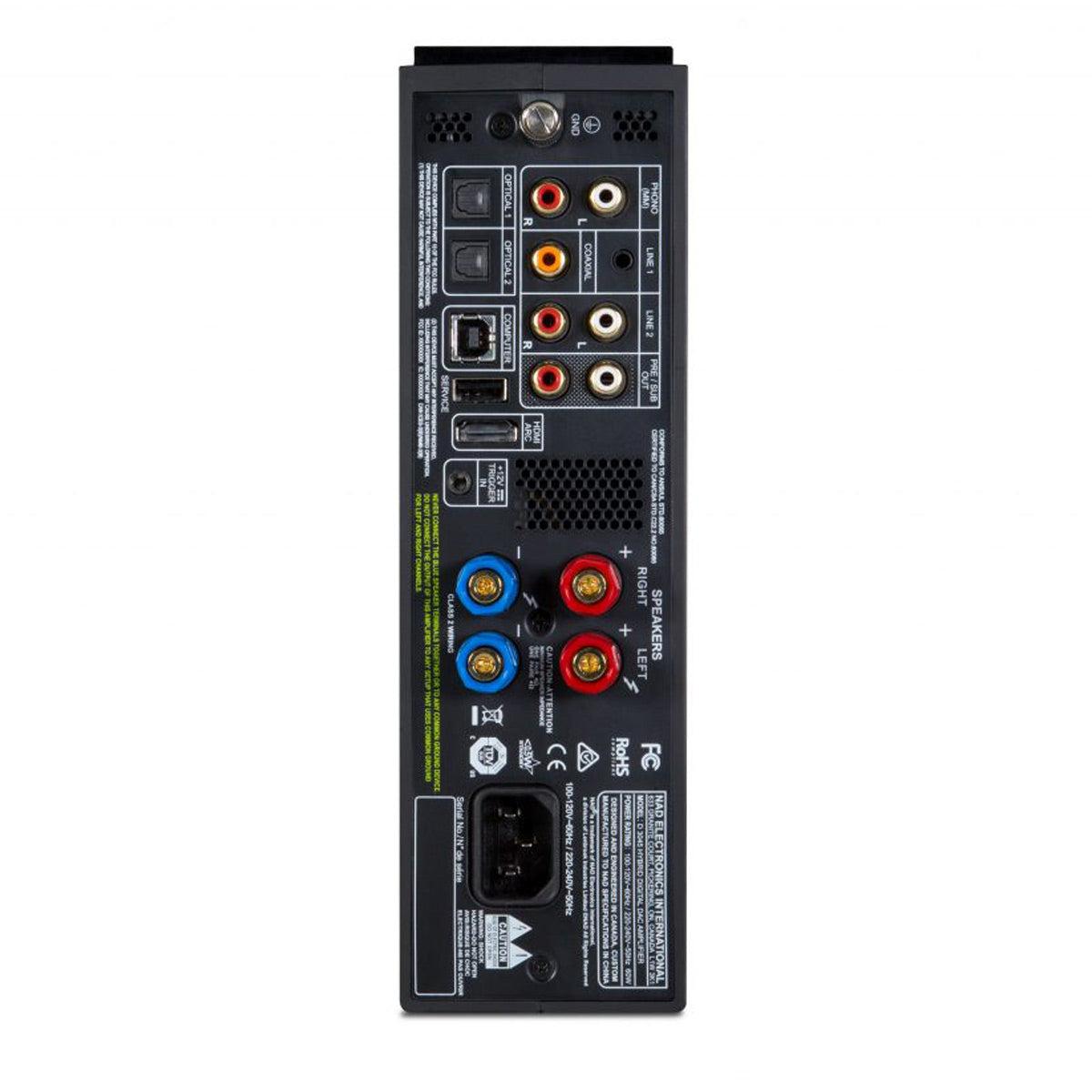
Both amplifiers offer extensive connectivity, but with different emphases. The Eversolo Play includes HDMI ARC input, which allows direct connection to modern TVs for simplified home theater integration. When you're watching Netflix and want the audio to play through your hi-fi speakers instead of your TV's built-in drivers, HDMI ARC makes this seamless—the TV can even control the amplifier's volume.
For vinyl enthusiasts, the Eversolo Play supports both moving magnet (MM) and moving coil (MC) phono cartridges. MC cartridges are typically found on higher-end turntables and require more sophisticated amplification than MM cartridges, so having MC support expands your turntable upgrade options significantly.
The NAD D 3045 includes MM phono support but not MC, though it compensates with other features. Its two-way Bluetooth with aptX HD is particularly noteworthy—it can receive high-quality audio from your phone and also transmit to Bluetooth headphones, essentially functioning as a Bluetooth hub for your system.
NAD also includes specialized audio processing that's especially valuable for smaller speakers. The Bass EQ circuit can boost low-frequency response by up to 6dB, making bookshelf speakers sound fuller without risking driver damage. The High-Pass filter allows you to set cutoff frequencies (40Hz, 50Hz, or 120Hz) when using a subwoofer, ensuring your main speakers don't waste power trying to reproduce deep bass they can't handle effectively.
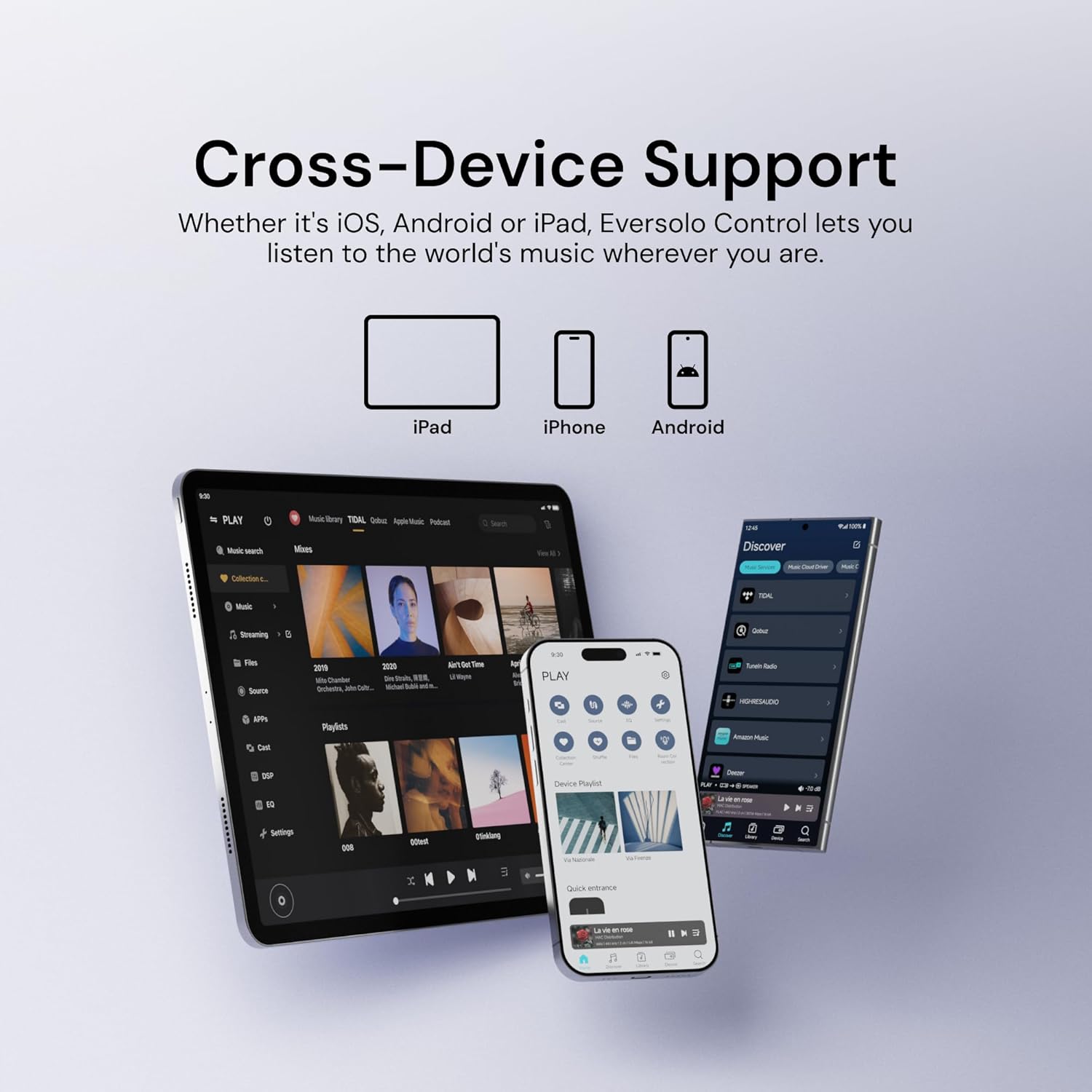
The user interface difference between these products couldn't be more stark. The Eversolo Play's touchscreen interface feels modern and intuitive, similar to using a tablet. You can see album artwork, browse your music library visually, and adjust settings without memorizing button combinations or navigating text menus.
The mobile app extends this experience, offering room acoustic analysis that uses your smartphone's microphone to measure your listening space and suggest EQ adjustments. This kind of automated room correction was previously available only in much more expensive systems.
The NAD D 3045 relies on a traditional infrared remote control and provides no visual feedback beyond a simple LED indicator. This might sound limiting, but it also means the device never becomes obsolete due to software updates or app compatibility issues. The remote control that works today will work the same way in ten years.
Both approaches have merit depending on your preferences and technical comfort level. The Eversolo Play feels more like a modern consumer electronics device, while the NAD D 3045 embodies traditional hi-fi values of simplicity and longevity.
Both amplifiers can serve double duty in a home theater system, though with different strengths. The Eversolo Play's HDMI ARC input makes it particularly well-suited for this role. You can connect it to your TV's ARC output and use your TV remote to control volume, creating a simplified two-channel system for music and TV audio.
The NAD D 3045 also includes HDMI ARC, plus additional digital inputs that might be useful if you have multiple sources like a gaming console or streaming device that you want to connect directly rather than routing through your TV.
For dedicated two-channel listening in a living room that sometimes hosts movie nights, either amplifier can work well, but the Eversolo Play's integrated streaming and modern interface might feel more natural for family members who aren't audiophile enthusiasts.
Based on extensive research into professional reviews and user feedback, both amplifiers deliver excellent sound quality that punches well above their size and price class. The Eversolo Play consistently receives praise for its energetic, detailed presentation with well-controlled bass and spacious imaging. Reviewers note that it doesn't sound like a budget Class D amplifier—there's none of the harshness or flatness that plagued early switching amplifiers.
The NAD D 3045 earns accolades for its neutral, unfailingly accurate reproduction. Professional reviewers consistently mention its dark noise floor and ability to reveal details in recordings without adding any coloration. The phono stage, in particular, receives praise that rivals dedicated phono preamps at similar price points.
Where they differ is in character. The Eversolo Play tends toward a slightly more engaging, dynamic presentation that works well with a wide variety of music. The NAD D 3045 prioritizes accuracy and neutrality, which is excellent for critical listening but might sound slightly restrained with some musical genres.
At the time of writing, both amplifiers occupy similar positions in the premium compact amplifier market, but they deliver value in different ways. The Eversolo Play provides significantly more functionality out of the box—native streaming, touchscreen control, advanced EQ and room correction, and superior technical specifications. If you're building a system from scratch, it offers a complete solution at a competitive price.
The NAD D 3045's value lies in its flexibility and build philosophy. NAD's reputation for long-term reliability means this amplifier could serve as the foundation of a system that evolves over time. You might start with computer audio and Bluetooth, add a dedicated CD transport later, then upgrade to a high-end network streamer as your budget allows. Each upgrade improves your system's performance without requiring you to replace the amplifier.
Choose the Eversolo Play if you want a modern, complete streaming solution that works beautifully out of the box. It's ideal for apartment dwellers, desktop systems, or anyone who prioritizes convenience and modern features. The touchscreen interface and built-in streaming make it particularly appealing if you're not interested in tweaking and upgrading components over time. Its superior power output into 4-ohm loads also makes it the better choice for driving high-end bookshelf speakers.
The NAD D 3045 makes more sense if you value component flexibility, already own streaming sources you prefer, or appreciate traditional hi-fi values of simplicity and longevity. Its specialized features like Bass EQ and High-Pass filtering make it particularly attractive for optimizing smaller speakers, and its two-way Bluetooth capability adds unique functionality that some users will find invaluable.
For most people building their first serious audio system in 2024, the Eversolo Play represents the better value proposition. Its integrated streaming, superior specifications, and modern user experience align well with how people actually listen to music today. However, if you're coming from traditional hi-fi or prefer the flexibility of separate components, the NAD D 3045's proven amplifier technology and component-friendly design might be worth the trade-offs.
Both represent excellent examples of how modern technology can deliver high-end audio performance in compact, affordable packages. The choice ultimately comes down to whether you prefer the convenience of integration or the flexibility of traditional component-based systems.
| Eversolo Play Streaming Amplifier | NAD D 3045 Integrated Amplifier |
|---|---|
| Power Output - Critical for driving different speaker types effectively | |
| 60W @ 8Ω, 110W @ 4Ω (excellent for demanding bookshelf speakers) | 60W @ both 8Ω and 4Ω (consistent but less headroom for low-impedance loads) |
| Streaming Integration - Determines ease of accessing your music services | |
| Native apps for TIDAL, Qobuz, Amazon Music, Spotify Connect, Roon Ready | No native streaming - requires external sources (computer, phone, separate streamer) |
| User Interface - How you control and interact with the system | |
| 5.5" touchscreen with visual feedback, mobile app control | IR remote only, no display (traditional hi-fi approach) |
| DAC Technology - Affects sound quality and future format compatibility | |
| 32-bit AK4493SEQ, supports up to DSD512/768kHz PCM | 24-bit AKM AK4490, supports DSD/384kHz PCM |
| Audio Performance Specs - Technical measurements of sound quality | |
| 109dB SNR, 0.0037% THD (superior measured performance) | 98dB SNR, 0.005% THD (excellent but slightly lower specs) |
| Phono Input - Important for vinyl enthusiasts | |
| MM/MC support (works with high-end moving coil cartridges) | MM only (limited to moving magnet cartridges) |
| Digital Connectivity - Variety of sources you can connect | |
| HDMI ARC, optical, coaxial, USB 3.0 | HDMI ARC, 2x optical, coaxial, USB-B (more optical inputs) |
| Audio Processing Features - Tools to optimize sound for your room/speakers | |
| 15-band graphic EQ, 10-band parametric EQ, smartphone room correction | Bass EQ (+6dB boost), High-Pass filter (40/50/120Hz), optimized for small speakers |
| Bluetooth Capability - Wireless audio flexibility | |
| BT 5.0 receive only (standard smartphone streaming) | BT 4.0 with aptX HD, two-way (can transmit to wireless headphones) |
| Physical Design - Installation flexibility and space requirements | |
| Compact square footprint, horizontal placement only | Lighter weight, can be oriented vertically or horizontally |
| Headphone Support - Built-in headphone amplification | |
| No headphone output | Dedicated 3.5mm headphone output with powerful amplification |
| Setup Complexity - How quickly you can start enjoying music | |
| Plug-and-play streaming, works immediately with Wi-Fi | Requires external streaming sources, traditional component setup |
The Eversolo Play Streaming Amplifier is significantly better for beginners. It includes built-in streaming apps, a touchscreen interface, and works immediately after connecting to Wi-Fi. The NAD D 3045 requires external streaming sources like a computer or separate network player, making it more complex to set up initially.
Both the Eversolo Play and NAD D 3045 include HDMI ARC inputs that connect directly to your TV for simplified home theater audio. Your TV remote can control the volume, and you'll get much better sound quality than built-in TV speakers for movies and shows.
The Eversolo Play Streaming Amplifier has native apps for TIDAL, Qobuz, Amazon Music, Spotify, and is Roon Ready, allowing direct streaming without additional devices. The NAD D 3045 has no built-in streaming and relies on external sources like your phone via Bluetooth or computer via USB.
No, both the Eversolo Play and NAD D 3045 include high-quality built-in DACs. The Eversolo uses a newer 32-bit AK4493SEQ DAC, while the NAD uses a 24-bit AKM AK4490. Both are excellent and eliminate the need for external digital conversion.
The Eversolo Play Streaming Amplifier delivers 60W at 8 ohms and 110W at 4 ohms, making it better for demanding bookshelf speakers. The NAD D 3045 provides 60W consistently regardless of speaker impedance, prioritizing stability over peak power output.
Both amplifiers include phono inputs for turntables, but the Eversolo Play supports both moving magnet (MM) and moving coil (MC) cartridges, while the NAD D 3045 only supports MM cartridges. This makes the Eversolo more flexible for high-end turntable upgrades.
The NAD D 3045 Integrated Amplifier includes specialized Bass EQ that boosts low frequencies by up to 6dB and High-Pass filtering to optimize small speakers. While the Eversolo Play has more comprehensive EQ options, the NAD's features are specifically designed for smaller driver optimization.
Only the NAD D 3045 includes a dedicated headphone output with powerful amplification suitable for demanding headphones. The Eversolo Play Streaming Amplifier has no headphone output, requiring separate headphone amplification or wireless options.
Both deliver excellent sound quality, but with different characters. The Eversolo Play offers more dynamic, engaging presentation with superior measured specifications (109dB SNR vs 98dB). The NAD D 3045 Integrated Amplifier provides neutral, accurate reproduction with NAD's renowned amplifier technology.
The NAD D 3045 features two-way Bluetooth with aptX HD, allowing transmission to wireless headphones. The Eversolo Play Streaming Amplifier only receives Bluetooth audio from devices like phones but cannot transmit to wireless headphones.
The Eversolo Play provides better value for most users, offering integrated streaming, touchscreen control, superior specifications, and comprehensive connectivity in one package. The NAD D 3045 offers better long-term flexibility and component upgradeability for traditional hi-fi enthusiasts.
Both work well on desks, but the Eversolo Play Streaming Amplifier is better suited with its touchscreen interface and compact square footprint. The NAD D 3045 Integrated Amplifier can be oriented vertically to save desk space and includes a powerful headphone output for desktop listening.
We've done our best to create useful and informative comparisons to help you decide what product to buy. Our research uses advanced automated methods to create this comparison and perfection is not possible - please contact us for corrections or questions. These are the sites we've researched in the creation of this article: blog.son-video.com - audio46.com - upscaleaudio.com - audioadvice.com - musicdirect.com - audio46.com - whathifi.com - whathifi.com - bloomaudio.com - youtube.com - the-ear.net - whathifi.com - soundstagesimplifi.com - youtube.com - stevehuffphoto.com - darko.audio - youtube.com - eversolo.com - crutchfield.com - crutchfield.com - audio-head.com - safeandsoundhq.com - hifiplus.com - nadelectronics.com - whathifi.com - hometheaterhifi.com - audiosciencereview.com - soundstageaccess.com - soundandvision.com - youtube.com - turntablelab.com - audiosciencereview.com

Privacy Policy
Terms and Conditions - Affiliate Policy
Home Security
© Copyright 2008-2026.
11816 Inwood Rd #1211, Dallas, TX 75244